MILLION DOLLAR BABY

By Marc S. Sanders

Clint Eastwood has one of the most remarkable careers in Hollywood history.  As his appearance has aged, so have the roles he’s occupied. He’s got these long lines that run down his cheekbones and across his forehead that compliment his signature scowl and white hair.  These facial features lend to a background in many of the characters he’s portrayed over the last thirty years ranging from a “Frank” in In The Line Of Fire to a “Frank” in Million Dollar Baby, his second film to be a recipient Oscars for Best Picture, Best Director, and Best Supporting Actor.  A Best Actress Oscar was also garnered for Hilary Swank. 

Swank won her second Oscar as Maggie Fitzgerald, a backwoods product of a hillbilly upbringing, who only lives for one dream and that is to be a championship boxer.  When she’s not waitressing to collect coins and singles for tips, she is spending every waking moment at Frank’s boxing gym, The Hit Pit.  Maggie keeps to herself by punching a bag, but she is persistent at convincing a closed off Frank to become her trainer.  Frank has no interest in training a girl, but maybe there’s more to why he’s reluctant to take her on.  The lines on Eastwood’s face seem to metaphorically hint at a challenging past.

Frank’s best friend is Eddie, or otherwise known as “Scrap Iron,” played by Morgan Freeman in a very long overdue Oscar winning role.  Some may argue that Freeman was bestowed with an award for such an illustrious career.  That’s fine.  I still believe that this performance is just as worthy as his other celebrated works (Driving Miss Daisy, The Shawshank Redemption).  Eddie lives in a small room in the gym and manages the place by day.  Frank is a crank towards Eddie, but they’re the best of pals. Frank carries the responsibility for Eddie losing an eye in the ring while under his coaching. 

Frank also suffers from the loss of a relationship with a daughter.  He writes her but the letters come back “return to sender.”

Million Dollar Baby is a boxing movie but the film, written by Paul Haggis, serves a much deeper and intimate purpose.  Eastwood, as director, gives beautiful and sensitive focus towards a relationship between Maggie and Frank.  Maggie has an ungrateful family with a mother (Margo Martindale) who spits the gift of a purchased home back in Maggie’s face.  Hilary Swank offers silent, yet agonizing hurt at the rejection and Haggis writes a simple line for her to share with her coach by asserting “You’re all I have, Boss.”  In turn, without his daughter, Maggie is all Frank has.  Their commonality is “Scrap Iron” who is there to offer insight into what Maggie needs from Frank, and what Frank needs from Maggie.  As well, Scrap even suggests that Maggie seeks out another manager to salvage both of their souls.

Haggis and Eastwood go even further with the setting of The Hit Pit.  A mentally disabled kid who proudly identifies himself as Danger (Jay Baruchel) relies on the gym for his own personal glorification.  Danger is a kid with no experience and no business being a boxer, but he glorifies himself as the next all-time great champion while the other boxers (Anthony Mackie, Michael Pena) tease and jeer him.  Frank hems and haws at Scrap Iron to get rid of him.  Danger doesn’t belong here.  Scrap Iron just lets the kid come and go.  The two old guys are both protecting Danger.  One doesn’t want to see another kid get permanently injured, but the other is well aware this kid has nowhere to go.

Million Dollar Baby is a film of acceptance when every other direction leads to rejection for its characters.  Every main character is destined to serve a purpose for another character.  The surprisingly heartbreaking third act is an ultimate test for a dare-to-dream fighter and her coach, however. 

A grizzled old trainer like Frank will laugh in the face of one of God’s ministers with his daily visits to Mass to hide the guilt he feels responsible for, while a girl boxer who wasn’t even much of a fighter until Frank reluctantly accepted her is forced to question how useful she is for herself or Frank or Scrap Iron after she’s been trained to be an elite.

There is so much to appreciate of the sins and curses that weigh on Frank, Scrap Iron and Maggie.  Accompanied with their anguish is a quiet, tearful piano soundtrack composed by Clint Eastwood, himself.  To complete the picture is the dark shadowed cinematography from Tom Stern.  So often, Eastwood with Stern shoots the cast in silhouette. A narrow beam of white light points down on Maggie punching the bag with earnest, but no rhythm.  It could also be Scrap Iron looking from a window upon his friends who accept the pain they live with.  The characters show only a small portion of profile while they are involved in their character.  You’ll catch a glimpse of Frank’s chiseled lines, or Maggie’s black eye and broken nose, or the rough texture of Scrap Iron’s dark complexion.  Other moments, Eastwood follows himself walking through the front door of Frank’s home to find another letter on the floor coming back to him, unopened, returned to sender.  The pain never gets numb.  The darkness of Stern’s photography is haunting, and yet it’s blanketed as comfort for these lonely souls.

Morgan Freeman as Scrap Iron narrates this bedtime story, and we eventually learn who he’s actually speaking to.  It’s the last element of the picture needed to complete Million Dollar Baby.  Freeman is the best candidate for any kind of voiceover.  He only draws attention to these people, in this beat-up old boxing gym, who never acquired acceptance from who they once thought should matter most in their lives. 

This film takes place in and out of a boxing ring.  However, it’s not so much about the sport as it is about surviving through personal battles that’ll never be won. 

Million Dollar Baby is one of the best films Clint Eastwood directed as well as performed in, and it belongs at the top of Freeman and Swank’s career best as well.  It’s just a beautiful piece.

CLOSER

By Marc S. Sanders

Mike Nichols is a director for those actors who really grind their teeth into the craft of performing with crackling dialogue.  Often, he goes for what makes a person drive awkwardness into a moment.   Equally he focuses on those folk who sustain the discomfort so apparent in a room.  Prime examples are his classic films Who’s Afraid Of Virginia Woolf? and The Graduate.  There’s even some of instances in his slap happy comedy, The Birdcage. Towards the end of his career, Nichols adapted Patrick Marber’s biting play, Closer, into a film.  

Closer carries a four-pronged approach in the shapes of Jude Law, Natalie Portman, Julia Roberts and Clive Owen.  Law plays Dan who catches the eye of Alice (Portman), an alluring stripper who gets hit by a car on the streets of London.  Beginning with playful flirtation in the hospital waiting room, they develop a relationship mostly based on sex for the following year.  Later, Dan gets distracted by a beautiful, much more mature photographer named Anna (Roberts).  She rejects Dan’s horny advances and by some manipulation with online anonymous sex talk, he sways a sex starved doctor named Larry into meeting Anna at an aquarium.  Then, to Dan’s surprise, Anna and Larry get married. There’d be nothing more to discuss if these four lived happily going forward.  What follows, however, is a manipulative chess match of lies and deceit among the four.  

One after the other disarms somebody who they valued and thought they could live with at any given time.  Alice leaves Dan after he reveals an affair with Anna.  Larry has a regretful one-night stand with a woman in New York. Anna doesn’t mind because she’s been having an illicit affair with Dan.  Larry is miserable but begs Alice the stripper to justify his torment, assuming she’s also anguishing over being betrayed by Dan. Not likely the case as she erotically teases him in a private stripping room. This scene with Natalie Portman in control establishes as the best actor in the film.

The four players on the game board all start in their respective corners, only to go around the perimeter or advance diagonally across and pounce on what they don’t have. At any given moment someone is drawing the top card or rolling the dice, and it’ll have a direct effect on one of the other three or all of them at once.

Patrick Marber’s script gets more layered as the partners change hands, but it’s his dialogue that keeps you engaged.  Alice believes “Lying is the most fun a girl can have without taking her clothes off – but it is better if you do.”  An angry Larry confronts Anna by asking about Dan.  “What does it taste like?”  Anna’s reply: “Like you, only sweeter.” Ooooo!!!! Lines like these sting, and I’ve never met someone in real life who can think that quick on their feet with such savviness.

Just as in other scripts like Steel Magnolias and Glengarry Glen Ross, I think the characters in Closer (initially a stage play) speak a little too instinctively.  They’re just so quick with their hurtful insults, comebacks and seething expressions.  Therefore, should I like plays that perform on a higher, smarter plane; plays that work quicker than most minds can register with what to say next?  Well, I appease myself with a constant reminder that a piece like Closer is more performance art than truly authentic. These four characters are so quick with a verbal jab, while engaging in some foolhardy actions that promises to make their circumstance appear worse. How can they be so smart with a comeback while acting so stupid at the same time?

The cast of four are so sharp, alert and precise.  Most of the scenes in Nichols’ film are performed in different combinations of pairs.  Every one of them is expertly rehearsed and Roberts, Law, Owen and Portman are of course the strongest assets in the production.  However, Nichols wisely uses his lens in zoom close ups, practically justifying the quirky title of Patrick Marber’s work.  I never trusted a single character was entirely genuine in Closer.  How should anyone? They’re always stabbing one another in the back. However, when an actor leans in and Nichols meets their expression halfway, I’m being ordered to look that person straight in the eye.  Still, I won’t know what to believe, but that’s the point.  

Dan, Alice, Anna and Larry move the scenes along with question after question because every answer is so dubious.  You’ll likely never get a more skeptical response when a common inquiry such as “Do you love him?” is asked.  It can be frustrating, but thanks to the cat and mouse play of Mike Nichols’ stage direction, on film, I wanted to dig deeper into the bottomless rabbit hole.

You might conclude there is a surprising twist at the end of the film.  I don’t know if it holds much weight to what I learned during the course of the story.  Nevertheless, it reinforces the theme of Closer.  Being bad can be fun, offering an immediate high, and part of being bad is lying and betraying, and maybe the ending reveals who actually won this board game with four players at the table.

Look Closer and tell me what you think.

COLLATERAL

By Marc S. Sanders

A salt and pepper haired gentleman in a knitted suit with sunglasses arrives at LAX before the sun sets.  He exchanges bags with a man he runs into, played by Jason Statham. Elsewhere, a driver does a polish and check on his taxi cab before beginning his evening shift.  He picks up an attractive, overworked attorney named Annie (Jada Pinkett Smith) and before she hands him her business card, the driver has at least convinced the woman to re-examine her life’s purpose and consider simple ways to escape reality.  The man in the suit is Vincent played by Tom Cruise.  The cab driver is Max played by Jamie Foxx.  They are about to collide with one another on this night and put Michael Mann’s film, Collateral, into play.

Following being a massive fan of the TV show Miami Vice, and the films Thief, Heat and The Insider, I remember my anticipation sky rocketing when I saw the trailers and write ups for Collateral.  Mann, Cruise, Foxx, and crime in a cool looking L.A. with a symphonic soundtrack? I’m there!  It seemed like a perfect formula.  When I finally saw the movie, I think I was let down because it was too formulaic following a step-by-step recipe.  The editing for Collateral is abundantly cookie cutter, never taking any risks with its story.

Vincent chats with Max as soon as he gets in the cab.  He offers eleven hundred dollars to occupy Max’ evening, transporting him from one location to the next. Max has dreams of running his own limo company one day and this easy money is too good to resist.  It’s only when Vincent tosses someone out a fourth-floor window to land on the roof of the cab that Max realizes there’s a hitch to this arrangement.  

Vincent is a hitman out to check off a list of targets before sunrise, and he needs Max as a cab escort.  Threats to Max’ ill mother in the hospital will keep the driver in check, and if inconveniences like a shattered windshield draw the cops’ attention then Max will have to abide by Vincent’s demand for no interference with his plans.  

The two hour running time of Collateral is structured on one stop after another.  Mann abides by side scenes from Stuart Beattie’s script to look at the undercover night detective (Mark Ruffalo) who is one step behind the pair’s frequent stops within the city.   I guess it’s fortunate for this guy that ballistics and coroner’s reports are quickly and readily available within minutes and hours to connect some dots.  

In between the kills, Vincent and Max chat in the cab.  Standard stuff really where Tom Cruise is at one time charming and other times sociopathic.  Jamie Foxx is the bright but frightened guy with dialogue that doesn’t amount to much in convincing this unwanted passenger to either let him go free or to give up on his mission.

Ironically, the many scenes shared between Tom Cruise and Jamie Foxx are the least interesting parts of the film.  When the sound editing isn’t failing by making their dialogue sound like incoherent mumbling, neither guy is ever convincing the other to look in a new direction or consider another idea.  Therefore, the conversations never go anywhere.  Look at films like The Silence Of The Lambs, Cape Fear, Seven, and especially Mann’s best picture to date, Heat by comparison.  Those films work when either the antagonist or protagonist allow themselves to consider the arguments, even if it’s just for a second, against the ones they are debating.

There is action and violence in Collateral, but it’s really a talking piece.  Still, the best exchange of dialogue occurs with Foxx and other cast mates besides Cruise.  A great scene occurs when Vincent insists that Max act under the guise that he is Vincent when he has to report to the drug kingpin employer who originally hired him (a surprise welcome from an at the time unknown Javier Bardem); great acting and writing happening here.  The early scene between Jada Pinkett Smith and Jamie Foxx also works at a thought provoking and interesting level.  These scenes are short one act plays that belong elsewhere.  Jamie Foxx is doing some great work in these moments.

Unfortunately, when Foxx and Pinkett Smith reconnect later in the film, they are not written with the same kind of intelligence during a run and hide third act climax.  The suspense is absent here because the setup is ridiculous.  While standing on the top level of a parking garage, Max can easily see Annie in a fourteenth-floor office window, blocks away across the city, and specifically direct her where to run from the dangerous killer who is a few floors below, all while using a dying cell phone.  

More to the point, why is Annie still wearing a suit and heels, with her hair and makeup done up, at four o’clock in the morning? I know an aggressive lawyer never stops working, but don’t they go home, pour a glass of white wine, get into sweats and pop open the laptop while Miles Davis plays softly on the stereo?  How would these guys even know this is where Annie would be at four in the morning? Reader, you might tell me to dismiss what’s merely circumstantial here, and normally I would.  Yet, if I’m an expert hitman like Vincent is supposed to be, my first instinct is to go to Annie’s home first before the office in the middle of the night.  It’s the circumstances that negate the believability of the main character.  

As expected, Los Angeles looks moody and cool like in any other Michael Mann picture.  He’s got blazing overhead shots that emit a white glow in the thick of night.  The wolf is holding a fang and claw to the neck of the sheep as they careen through this endless city maze.  In that respect, the environment of this film works like a great character game master. What turn or straight avenue or bridge is going to work in either saving Max or getting him killed?

The technique of this filmmaker, who I usually favor, is here.  It’s been seen many times before for the other sharp, well-dressed killers in Michael Mann’s worlds. I welcome it back, but it’s not new or inventive in Collateral.  I guess that’s why the film is ordinary.  It lacks the depth that other productions from Mann rely upon.  The setups are quite amateurish and most of the talking is wholly uninteresting.

In spite of a phenomenal and reputable cast and crew, it’s a shame this Michael Mann installment is only ho hum in its finished product.  Collateral needed another script rewrite, followed by some additional reshoots.  There was a better movie to made here. 

GARDEN STATE

By Marc S. Sanders

The irony of Zach Braff’s Garden State is that the protagonist he portrays is heavily medicated to subdue any variation of depression or anger induced mood swings.  Yet, it seems like everyone else in the picture should be off the drugs, and those that aren’t taking any, should revert to some appropriate pharmaceuticals.  STAT!

Braff wrote and directed this quirky comedy-drama loosely inspired by his upbringing in northern New Jersey.  He plays Andrew “Large” Largeman.  He’s an actor living in Los Angeles when his father calls him to let him know that his quadriplegic mother has drowned in the bathtub.  Andrew seems like what Cameron from Ferris Bueller’s Day Off might have become a few years after he kicked his dad’s prized Ferrari out the glass garage.  This guy is sullen, sedate and when speaks or responds to a question, you might think he’s catatonic as well.  He’s just so numb from the medicinal products he takes.  They were prescribed by his psychiatrist, who also happens to be his father, Gideon, played with quiet tension by Ian Holm.

At the graveside funeral, Andrew comes upon some childhood friends who never left Jersey behind.  Peter Sarsgaard is Mark who vaguely remembers Andrew and invites him to a party later that night which is likely just like last weekend’s party and the weekend before that.  Mushrooms, weed, coke, alcohol.  It’s all there.

The next day Andrew meets a precocious young lady named Sam (Natalie Portman) who recommends he fend off a humping seeing eye dog by kicking him in the balls.  This unexpected introduction is what will meaningfully break Andrew of his stupor. The bond between Sam and Andrew will carve out the rest of Garden State following a meanderingly weird exposition.  I’m grateful for that because just when you think this film is going nowhere fast, even if it is told at a slow pace, the story absorbs a sweet narrative shared between two very likable characters.

There’s a lot of eccentricities in Zach Braff’s film which he admirably wrote and directed as well.  Living in New Jersey for fourteen years of my childhood, I don’t recall anything within my nearby Jewish suburban neighborhoods being this oddball.  Then again, Braff is maybe a little too ambitious to have one strange character turn up after another.  A woman at the funeral makes him a shirt that matches the wallpaper of the hallway.  A dim-witted cop asks how he did when he procedurally pulls Andrew over.  Another guy shoots flaming arrows into the air in the backyard of his mansion for Sam and Andrew to haphazardly dodge their descent. 

Mark is not only a grave digger in the cemetery, but a robber as well, stealing the jewelry from the remains in the coffins.  Sam lives with her mom and adopted Nigerian brother amid Dobermans and a hamster jungle gym that stretches the entire course of the house and serves as a hazard for one poor rodent after another.  Sam has a well populated little pet cemetery out back.

Amid all these strange visuals and discoveries, there is a background to Andrew’s need to be drugged by his father.  He was the cause of his mother’s disability when he was age nine and pushed her down, causing permanent paralysis. 

There are colorful backgrounds to Andrew and Sam and a curiosity to learn more about them.  Still, the film seems to stretch its running time with too much unusual, oddball material.  I responded to most of it with a smirk or chuckle, but I ask myself why.  Why is so much of this here?  It builds up a setting, perhaps.  I’m just not sure.  There’s an overt weirdness to every single character seen in this film.  Nevertheless, I don’t believe Braff’s intentions were to duplicate a Wes Anderson formula.

Fortunately, Zach Braff offers a wonderful character arc where Andrew becomes more and more awakened as the film moves on, while clinging to Sam’s company and abandoning his father’s prescriptions.  Natalie Portman seems to mature over the course of the picture. Sam’s quirk is that she tells tall tale lies in rapid succession.  That façade nicely breaks down to show the genuine person Sam truly is later.  When her mother boasts a video recording of an ice-skating routine that Sam did while dressed as an alligator, the embarrassment on Natalie Portman’s face is so naturally telling.

Ian Holm should also be recognized as he portrays the opposite of whatever dialogue Braff wrote for the father character.  That’s a great challenge.  A scene in the kitchen has Gideon dressed in a bland, beige sweater and tie and he seems to hide within the pale walls of the room.  There’s no life to the guy.  Nothing stimulating, despite how educated the man may appear.  So, it seems unjustified for Gideon to tell his son later that he wants them to be happy like they used to be.  Braff’s character wisely responds by being unable to recall any time when they were ever happy.  Moments like these are the strength and intelligence immersed in Garden State.  The assortment of side quirks does not have this kind of staying power, though.

I like Garden State but there’s no way I could love it or embrace it.  There’s just too much moroseness within the strange residents amid their sleepy conversations to make me want to stay with any of these characters.  The benefit of watching the film is to see what Zach Braff, Natalie Portman and Ian Holm lend to the picture – three wonderful performances.

MAN ON FIRE (2004)

By Marc S. Sanders

A movie that has eluded me until now is Man On Fire featuring Denzel Washington in another Tony Scott film.  I say eluded because with this director/actor combination I’m usually satisfied with the finished product.  That wasn’t the case here, though.

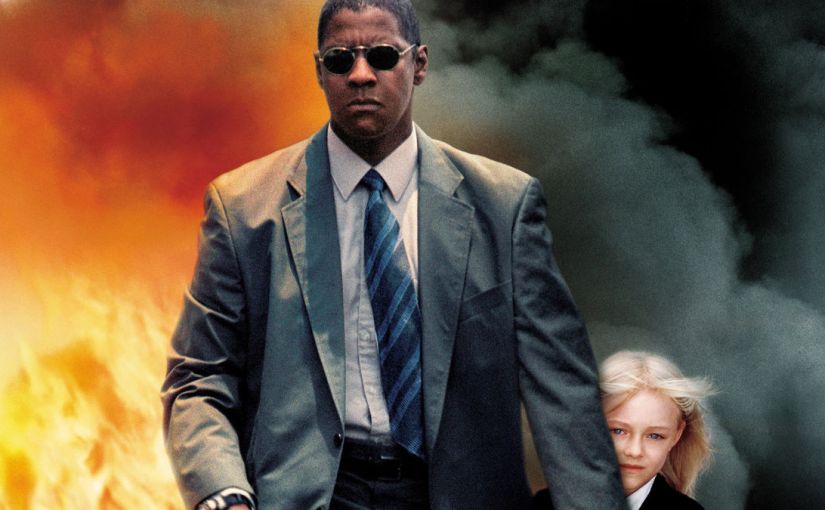
Washington portrays a hard drinking bodyguard named John Creasy.  He’s recruited by his war buddy, played by an uninteresting Christopher Walken, to protect a young girl named Pida (Dakota Fanning), daughter of an automobile industrialist and his always fashionable wife (Mark Anthony, Rahda Mitchell).  Creasy is a cold fish at first who refuses to accept Pida’s friendship.  Jump to a couple of quick scenes later and he’s become her surrogate father and swimming coach.  In a matter of seven minutes of running time, I’m supposed to accept that this guy has turned into a cuddly teddy bear for this kid.  As soon as that happens, Creasy is ambushed and Pida is kidnapped following her piano lesson. We are not even a quarter of the way through the picture, but the remaining hour and forty minutes play like an awful how-to documentary on effective means of torture for bad guys before ruthlessly killing them.

Tony Scott is a director who always seeks to demonstrate that glossy film styles are more significant than the screenplays he directs or the characters who reside within.  (Two exceptions come to mind though, Crimson Tide and True Romance.  Maybe some of Top Gun too.)  Man On Fire is a frustrating watch as Scott’s camera performs like a narrator with attention deficit disorder.  It can never sit still.  The movie jerks around so much with ridiculous quick cuts and deliberately grainy and distressed cinematography.  Just when I’m trying to comprehend a new player who enters the fold, the camera jumps to something else like a street corner or a moving car or Denzel Washington’s sunglasses. There are subtitles for the Spanish speaking characters that appear in a block letter font that looks like it came from a karaoke machine.  There’s also subtitles for what somehow appear to be “important” or “powerful” statements.  A line like “pass the salt” might read like “PASS the SaLt…PLEASE!!!!”  Tony Scott is obviously going for some kind of MTV music video approach, but it’s awfully distracting and downright annoying.  As well, I must ask why.  Why go through all this effort? The cameramen must have been getting motion sickness while fumbling and shaking around their equipment to shoot this picture.  So why bother?

The most interesting plot point happens in the first three seconds of the movie.  A statistic pops up describing how often kidnappings occur in Mexico (one every sixty seconds), and how as many as seventy percent of those incidents end up with a dead victim.  That’s a shocking dilemma, worthy of attention. Through his career, Washington’s selection of scripts has allowed him to tackle important issues with moments of debate and smart dialogue, as well as suspenseful action if there is a call for it.  However, Tony Scott and screenwriter Brian Helgeland are not interested in using these facts as a springboard with Man On Fire

Once the expected kidnapping occurs, and following a very quick healing – as in less than two days – of multiple gunshot wounds to the chest and back, John Creasy goes on a war path of revenge when he learns that Pida is dead.  Creasy doesn’t get to perform with much intellect here.  Having only a partial license plate number, he’s able to follow the breadcrumbs that lead to a crime syndicate notorious for winning millions in ransom demands.  Creasy simply goes up the food chain from one member to the next until he gets to the top of the pyramid.  That’s the movie!  That’s it!

He’ll cut a guy’s fingers off and cauterize them with a car cigarette lighter.  He somehow has access to a rocket launcher to use within the city.  Sadly, the most novel technique is to stick a rectal detonator (yes, I said rectal) up a man and set a timer for the guy to come clean with information before it goes off.  We can thank Tony Scott for putting up a countdown digital clock on the screen to gauge how close this thug is to his demise.

My past experience with movies like these have taught me that there’s always a traitor.  Someone set the plan in motion to abduct the little girl.  That’s not hard to figure out.  Once the character appears on screen, it could not be more obvious.  The motivation is just as ridiculous.

Man On Fire is only imaginative in how the protagonist dispatches one guy after another.  It lacks any effort in creativity towards its hero.  The guy drinks. He torments his enemies.  He’s got nothing interesting to say.  There’s a neglect for a very real and common problem within the country of Mexico.  The only design that is given attention is “artistic style” that Tony Scott adopts to mask away what is not there in any of the writing or character development.

I’d like to learn more about how the Mexican government responds to these kidnappings and maybe the experience that survivors endured.  Show me the torment that the families go through.  Can I see the method to the kidnappers’ plots or how they select their next target?  A very real predicament was offered with Man On Fire, but then it was tossed aside so I could see the effectiveness of an explosive suppository.  Now, is that really a movie that any of us want to see?

THE BOURNE SUPREMACY, THE BOURNE ULTIMATUM, THE BOURNE LEGACY, JASON BOURNE

By Marc S. Sanders

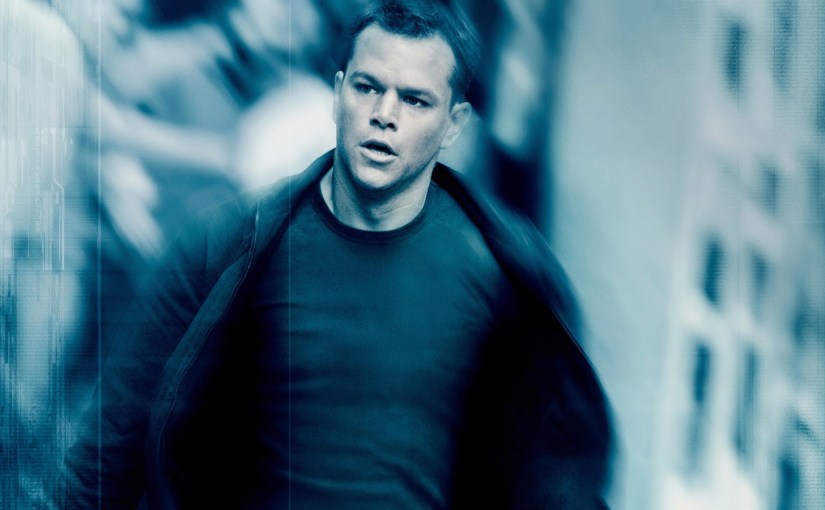
Sometimes the same old thing is all we want, right?  It’s like comfort food.  That’s what the Jason Bourne films offer.  The first time (The Bourne Identity) it is original.  The second time (The Bourne Supremacy) it is familiar.  The third time (The Bourne Ultimatum) it is what we expect.  When you get to the fourth and fifth time (The Bourne Legacy and Jason Bourne), well then perhaps you’ve overstayed your welcome.

The second and third films in the Matt Damon action series function as one long four-hour film.  They are absolutely gripping in high octane, fast cut editing, pulse pounding music from James Newton Howard, and taut direction from Paul Greengrass.  They work because at least two thirds of the material is shown through the eyes of the former assassin Jason Bourne who is trying to learn of his past and who he worked for and why.  Plus, though he may hide deep undercover on the other side of the world in places like populated India, he only resurfaces when he discovers someone is trying to kill him.

The other third of these two pictures function on the other side of the coin with clandestine departments within the CIA who only consider Bourne being alive as a threat to the integrity of their black operations.  He must be eliminated.  There are great acting scenes with Joan Allen first up against an intimidating Brian Cox, and later she’s going toe to toe with David Strathairn.  If you are not part of the chase for Bourne, then you are engrossed in the cause these three supporting players offer with government politics and debate.  With each passing film, it’s an old, grey haired white gentleman in a suit who is insistent on eliminating Bourne and anyone who he associates with.  This started with Chris Cooper in the first film followed by Brian Cox (my favorite) over to David Strathairn.  The baton is then passed to Albert Finney.  A new film moves over to Edward Norton and then Tommy Lee Jones.  Scott Glenn and Stacy Keach are in the recipe too, but they are not as prominent.  All these guys start to look alike and when you watch the films in succession, one after the other, like I recently did, you start to question when this actor and this actor entered the fold.  Best way to describe it is that it is a ladder climb.  There was one guy in charge, then another above him and so on.

The appreciation for the Bourne series comes mostly from its action and the absolute cleverness of its hero.  Jason Bourne functions with ease about staying one step ahead of those trying to kill him.  They think they have a lead on him, but in reality, he has the lead on them.  Do you know how satisfying it is when he calls these people to talk to them and they play dumb? Jason will simply say “If you were in your office right now, then we would be having this conversation face to face.”  Moments like this are what gets an audience to clap and cheer.  The old white guy has been duped.

The action works because, once again I lay claim to the lack of CGI.  So, the overabundance of car chases seems nerve wracking like they are supposed to.  That door on that car is actually getting bashed in.  That taxi cab is really getting t-boned and turning into a 360 tailspin.  Jason can grab a seatbelt, lie down on his side and when the car careens over the barrier onto the landing fifty below, upside down, I’ll believe he gets out with only just a slight limp and a dribble of blood on his brow.  Only Jason Bourne can drag a wrecked rear bumper on a stolen police car through a busy Times Square and bash an SUV into a concrete barrier.

Fight scenes are not just fight scenes in the Bourne films.  It’s not just fists and punches and karate kicks.  Creatively speaking, the films construct their fight scenes to have the hero arm himself with a ball point pen or a magazine that’s wrapped up ready to wallop an opponent in the nose.  I’ll never forget when my colleague Miguel and I saw Ultimatum in the theatres and witnessed Jason punching a book into the face of a dangerous bad guy.  How many times have you seen a guy get punched in the face?  How many times have a seen a guy punch a book into the face of another guy?  There’s a difference. 

Matt Damon has been quoted as saying he believes the Bourne films carried the least amount of dialogue for him to memorize.  Yeah.  That’s likely true.  These films are visual feasts.  They rely on watching Damon move.  They are paced by how he walks, drives a car or tinkers with props.  Even how he listens and observes move with a kinetic progress. 

The locales are spectacular, spanning the globe from India, to Russia, to London, to Morocco, to the Philippines, and on to New York City and Las Vegas.  Following the first film, Paul Greengrass directed three of the next four.  (Writer Tony Gilroy directed the fourth film, The Bourne Legacy with Jeremy Renner taking the lead while Damon’s character was only talked about.) Each film takes every advantage of the atmosphere, using the overpopulated extras as obstacles and means to hide and weave away from the antogonists while on foot, behind a steering wheel or saddled upon a motorcycle.  Greengrass practically invents the concept of putting the viewer so much within the environment, you can almost smell the diesel or the food trucks within the area.  Zoom in overhead shots offer quick glances of the playground and traffic we are engrossed in.  Approximately twenty-five minutes within the center of The Bourne Ultimatum go by with no dialogue as Jason Bourne pursues a bad guy through a labyrinth of apartment tenements and rooftops, while the bad guy pursues actor Julia Stiles.  Finally, when all three catch up to one another, with a leap through a window, do you let out the deep breath you never realized you were holding on to. 

The first three films in the series (Identity, Supremacy and Ultimatum) work as a tight trilogy.  Each film ends with hanging threads to consider and lend to the next film.  By the time Ultimatum concludes, you feel as if all that needed to be told has been covered.  The next two (Legacy and Jason Bourne) function as cash grabs for the studio.  Legacy is entertaining and it boasts a good cast with Jeremy Renner and Rachel Weisz trying to outrun the government adversaries.  It hinges on operating as parallel material that occurs in the prior Damon installment.  While Jason Bourne is being pursued, this is happening over here.  It’s not unwatchable, but it is also truly unnecessary as it doesn’t advance the universe of the series at all.  A thrilling motorcycle chase closes out the film, but it’s a retread of what we’ve seen before.  It gets old quickly.  The film demonstrates that guys like Jason are trained to become dependent on drug enhancements for their highly trained arts of warfare and instinct.  Renner’s character is just another kind of Jason Bourne.  I was more impressed when I thought Jason was just a highly skilled fast learner to all that he’s capable of.  If you tell me blue and green pills lend to what he’s capable of, well then, he’s not much of a superhero in my eyes anymore.

With the final film, Jason Bourne, Greengrass returned to the director’s chair and Damon agreed to come back (paycheck had to be right, I’m sure), though he was significantly greyer and older than his prior films.  It was a weak return.  Just when we think Bourne has learned everything he needed to know and he could now live comfortably underground as a street brawler for bucks, he is informed that his deceased father knew and did some things for these secret agencies that put Jason on this path of special operations.  It doesn’t hold much weight and the payoff is nothing special.  Another car chase occurs in Vegas that appears nearly shot for shot similar to what we already saw in Damon’s prior installments. 

I wrote in an earlier review of The Bourne Identity, that Matt Damon works so well in the role because he’s such an unexpected surprise.  He’s not the muscle guy like Stallone or Schwarzenegger.  He comes off common.  In the first three films, he’s simply a kid.  When you place him in action or see how he gets the drop on a bad guy who is surveilling him, it is so satisfying.  The Bourne films work best with the locales they choose to shoot from.  Bourne will spy on his pursuers from a rooftop building across the street from where they are.  This is inventive filmmaking not just found in the pages of the script.  Paul Greengrass strategically shoots his players.  Director Doug Liman planted the seeds for this series’ potential (The Bourne Identity), very loosely based on the Robert Ludlum novels with creative adaptations from Tony Gilroy, primarily.   Greengrass enhanced the characters and their motivations by use of scenic locales, skillful shaky cameras to make it look like the audience is running at the same pace of Bourne and his adversaries, and quick cut, real time editing.  He applied this approach to his 9/11 film United 93.  The last two films are good even if they seemingly peter out the series, but overall, the four sequels hold up very well. 

If you’re asking, the best of the series is The Bourne Ultimatum, followed very closely by The Bourne Supremacy.  Either way, no matter which film you’re watching, you’re in for a good time when Jason Bourne shows up on the grid.

MEAN GIRLS

By Marc S. Sanders

I say it again, unless it is a Quentin Tarantino film, it’s all about the characters, people!!!!!

Take Lindsay Lohan’s character Cady, just returning from living in the wilds of Africa, only to arrive at a much more treacherous natural habitat, High School!!!! Cady quickly learns who belongs with what crowd but she is challenged to learn where she belongs, or who she’s welcome to be with, or how to respond, or who to trust. Tina Fey’s brilliant (should have been Oscar nominated) screenplay, Mean Girls, makes it all so confusing for our protagonist, as well as the clique known as “The Plastics,” and even the teaching staff. Tina Fey conveys important lessons in identity while never forgetting to laugh at the story’s agenda.

“We will stay here all night.”

“We have to dismiss them at 4.”

“We will stay here until 4.”

Great portrayals abound from Lacey Chabert as an insecure Plastics follower, Amanda Seyfried hilariously emoting stupidity in the best way possible (she’s psychic because her boobs can tell when it is raining), and especially Rachel McAdams who never compromises the coldness of Regina George, the MEANEST GIRL at school.

McAdams is great at any range from showing screaming fits with ease to completely owning the duplicity of Regina. She makes this mean girl dangerously intelligent and all together deceitful.

I recall declaring this film being one of the best pictures of 2004. I haven’t changed my mind on that observation. It’s hard to find a script thinking three steps ahead of itself. Cady makes a choice and the consequences won’t translate for another 30 minutes or so. Everything circles back on itself. No thread is left hanging and thus you are treated to a character arc – the spine of the best stories in any medium.

Bravo Tina Fey.

KILL BILL VOL. 2

By Marc S. Sanders

Kill Bill Vol. 2 offers an entirely different narrative than Volume 1, and that is why Quentin Tarantino is an electrifying storyteller. No two moments seem similar, even if the elements of the scenes (or chapters) seem the same with samurai swords, quick close ups, snap of the finger changes in cinematography and gonzo music cues.

I do prefer Volume 1 over 2 simply because it is a leaner film. This installment has just a little too much fat layered in, such as a storyline focusing on Michael Madsen’s “Budd” character. Not sure it was necessary for a scene where he is getting docked work hours from his boss because he was late. Not sure I needed a scene close to the third act where The Bride meets up with a South American contact before going to meet Bill. The dialogue in a few scenes like these offers nothing and didn’t even bring me the typical smirk I naturally get from QT’s films. They seemed more catered for bathroom breaks during the run of the movie.

Still, there’s a lot of glee and atmosphere in this picture, from a rehearsal wedding in gorgeous black and white with a nice Samuel L Jackson appearance to an enclosed, flashlight lit interior of a buried coffin. Best of all is the centerpiece of the film, The Cruel Tutelage Of Pai Mei (the best scene of both volumes and the salute that sends Tarantino’s love letter for Kung Fu cinema home). I love the Kung Fu Master Pai Mei, easily one of Tarantino’s best characters in all of his films combined. Tarantino works in the extreme close ups that Japanese filmmakers might have used for EXTREME DRAMATIC effect. Everything about Pai Mei is graciously recognizable and hearken back to these movies I’d catch while flipping channels on Saturday afternoon. Frankly, I never stuck with those flicks until the end, but for the fleeting seconds I watched, I got a white robed Kung Fu master Pai Mei to now fully appreciate in Kill Bill Vol. 2.

The Bride could arguably be Uma Thurman’s best role of her career. She’s a great carrier of the Tarantino heroine. The fighting skills she offers and what are deceptively edited in (thanks to Sally Menke) look so natural with her at the lead. You can’t take your eyes off of her, and you love to look at her.

David Carradine is another attraction. It’s rumored that Warren Beatty was up for the role of the sadistic, yet charming, Bill. No way could I see that working out. Carradine was the star of the series Kung Fu. How do you go with anyone else but David Carradine???? Carradine has a gorgeous, gravely stiletto voice that sounds awesome in stereo; deep and guttural. His facial features lend to a history of a villainous, but wise leader.

SPOILER ALERT: I’d be remiss if I didn’t mention QT’s smart imagination for disarming Daryl Hannah’s one eyed deadly assassin, Elle Driver. Find me another movie where an enemy is left in a trailer located in the desert with her remaining eye ripped out while a deadly black mamba snake slithers somewhere nearby. Tarantino closes this storyline by leaving her screaming alone with no eyes…in a desert…WITH A DEADLY BLACK MAMBA SNAKE. Does the audience need to see her die? Definitely not. Use your imagination of this being worse than stranded, and worse than dead. Pardon me but that’s fucking brilliant!

Again, QT’s characters are two dimensional. The Bride and Bill might have a little history behind them but that’s about it. It’s okay though, because this is pulp fiction (pun intended) that comes alive on the screen. No writer/director has ever elevated this kind of material so well.