FLASH GORDON (1980)

by Miguel E. Rodriguez

DIRECTOR: Mike Hodges
CAST: Sam J. Jones, Melody Anderson, Max von Sydow, Topol, Timothy Dalton, Brian Blessed
MY RATING: 2/10
ROTTEN TOMATOMETER: 83% Certified Fresh

PLOT: A hotshot quarterback for the New York Jets, an aviophobic travel agent, and a borderline-mad scientist try to save the Earth from the evil cosmic emperor Ming the Merciless.


I could try to intellectualize myself into analytical knots to explain why Flash Gordon is not a good film, but that’s not really in question, even to its fans.  Aficionados readily affirm its badness, its cheesiness, its willingness to go so far over the top it’s on its way up the other side.  That’s WHY they like it.  “I enjoy it for what it is,” a fan told me recently.

Well, after watching it for a third time, mildly against my will, I can easily say that I know and understand what Flash Gordon is, but I still can’t find it in myself to enjoy it the way so many others do.  I remember being amazed by it when I was 10 or 11, but that was a very long time ago, and watching it now gives me no more enjoyment than what I might get from eating a stick of Fruit Stripe® chewing gum.  I get a burst of flavor when I hear the iconic Queen score and/or theme song, but the rest is like chewing on a wad of overdone steak. That this movie came from the same director as the gritty Get Carter (1971) is flabbergasting.

Do I really need to summarize the story?  No.  I’m sure anyone who’s taking the time to read this has already seen the movie, so I’ll just assume we all know how cheesy the plot is.  I was informed by a fellow Cinemaniac that what we see on film is all taken from the first, and only, draft of the screenplay.  Brother, I believe it.

The only thing worse than the so-called dialogue is the quality of the so-called visual effects.  Now, I’m prepared to forgive low-quality VFX from older films when there’s a story I can care about, but when Flash Gordon’s filmmakers ask the audience to suspend their disbelief when a supposedly distant city is being bombarded by what looks like Roman candles, or any number of equally absurd VFX shots…I can’t do it.  I laugh, and not in a “I’m-having-fun” kind of way.

Before you ask, yes, there ARE bad movies that are SO bad that I actually recommend them to people simply BECAUSE of their badness.  Birdemic: Shock and Terror (2010), for example, which features a scene where the heroes are being attacked by a huge number of Windows Clip-Art.  Or the uber-terrible Troll 2 (1990), which gives new meaning to the word I just made up, “corn-ography.”  However, some films either cross an invisible line or fall short of it, I don’t know which, and are so bad that I can’t enjoy or recommend them.  For example, the infamous The Room (2003), which was such an unpleasant viewing experience that I didn’t even enjoy the movie about its making, The Disaster Artist (2017).

That’s where Flash Gordon sits for me.  It’s terribly cheesy and campy, but it’s either not cheesy enough, or it’s TOO cheesy, for me to enjoy myself while watching it.  There may be a cerebral, intellectual way for me to try to parse the reaction I have to it, but if there is, I can’t think of it.

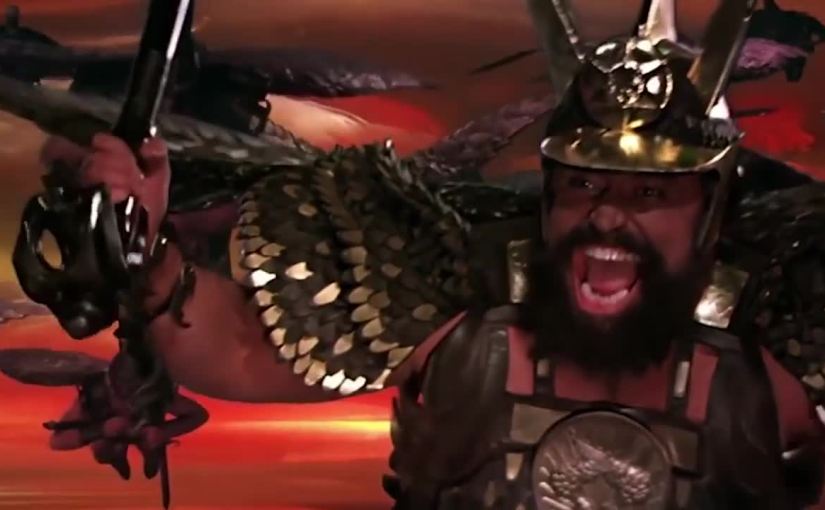
I will say that I thoroughly enjoyed watching one actor out of the entire cast, who seemed to be having way more fun than was needed or expected.  No, not Max von Sydow, whose sneering turn as Ming the Merciless is a master-class in remaining professional in the face of lunacy.  (Timothy Dalton deserves kudos for doing the same as the stoic Prince Barin.)  No, I’m referring to Brian Blessed as Prince Vultan, whose screeching battle cry will forever be stored in my memory banks: “Hawkmen…DIIIIIIIIVE!!!”  Examine his performance next time you watch the movie.  Look at his face, his eyes, the canyon of his mouth when he laughs.  There is a sparkle of delight that, to me, reveals someone who has realized the only way to stop himself from firing his agent is to go completely, full-blown, bull-moose gonzo.  Everyone else is playing it straight, or attempting to.  Brian Blessed is the only one who seems to be having any fun.  What a different movie this might have been if EVERYONE had taken his cue.  Alas.

To the fans of this film, I don’t apologize for my point of view, but I do admit to a tiny, VERY tiny, twinge of regret that I can’t see past its shortcomings enough to enjoy it the way its fan base does.  For me, it’s two hours of tedium enlivened only occasionally by a random chuckle or a smile when Queen’s music makes an appearance.  And by Brian Blessed’s manic smile.  DIIIIIIIIIVE!!!

[editor’s note: this review appears only by special request from the author’s best friend.  You’re welcome, Marc.]

FAME

By Marc S. Sanders

Sometimes a movie can only be accepted of its time.  The storylines, the music, the performances and the direction no longer appear as genuine or innovative in comparison to films that arrived later, after its own appreciation has floundered.  That is especially true of movies that stand on the heels of the pop culture it pioneers.  

I believe Alan Parker’s high school hit Fame was a landmark film.  Jumping forty-five years into the future though and I’m sad to say it has lost much of its staying power. 

Perhaps, as the 1980s were just beginning I’d believe that Christopher Gore’s script would get an Oscar nomination.  Maybe I’d cheer on a performance by a not yet Tony award winner named Barry Miller whose praises were sung by the media along with the likes of Barbra Streisand and John Travolta for a performance that mirrors a lot of what comedian Freddie Prinze experienced, both successfully and tragically.  Today however, I find much of what is preserved in the final cut of Fame to be unforgivingly cheesy, overacted and oversaturated with one “very special episode” trope after another.  

Parker and Gore outline Fame around four aspiring students within all kinds of performing arts from dance to song to acting and scene writing.  The film cuts from one storyline to another broken down over five sections of life within a Manhattan performing arts school – Auditions followed by Freshmen, Sophomore, Junior and Senior years.  We see the students move from nervous, unsure personalities to mature young adults comfortable in the cloth of a school with artistic passions and confident of where they want to steer their futures that hold no promises.  However, just because they have dreams on their horizons following graduation, it does not automatically spell out financial success and fame.  The purpose of Fame is to demonstrate an ongoing uphill battle while these teens try make it either on Broadway or in Hollywood.

In 1980, there’s attention drawn to what was not expected to be customary like the gay student who’s certain to be an outsider.  There’s the Jewish kid and the kid who can’t read and will flunk out.  There’s also the one who realizes he could become a great stand up comic and the young lady who must face the hard truth from a teacher that she’s not cut out to be a dancer.  There’s hints of suicide and drug use.  For one of the most likable characters named Coco (Irene Cara who famously sings the unforgettable Oscar winning theme song), she gets caught in a disturbing casting couch experience.

Watching Fame today, you can easily predict what’s coming as each new scene begins. Many of the stories are anecdotes limited to these brief episodes.  Storylines don’t wrap up just as life doesn’t.  We are simply reminded that these are the pains of enduring as one of any kind of performing artist during the throes of high school.  Because I’ve seen Blossom and The Facts Of Life and all of John Hughes movies, all which came after Fame, I was never moved or surprised with Alan Parker’s film.  Today, Fame looks like it’s just going through the motions.

What still works though is the independence to freely express a love for theatrics.  All of these kids take what they do very, very seriously.  I never underestimated or doubted one character’s passion.  They are especially in love with this stage of life when they can joyously storm out of the school to dance on top of cars and in front of traffic to the film’s title song.  They turn lunch time into their own personal orchestra of piano, saxophone and yes, more dancing.  These are the moments that remain timeless.

In 2023, Fame was inducted into the Library of Congress’ National Film Registry for preservation of its historic significance in the world of film.  It belongs there.  I have no doubt that in 1980, as the disco era of the 70s were waning in interest,  Fame set a gold standard for themes and presentations of movies released during the decade that followed with adored soundtracks and well edited needle drops that memorialized classic scenes in other films like Flashdance, The Breakfast Club, Back To The Future, Beverly Hills Cop, Ghostbusters and Dirty Dancing.  

Ironically, those other films, at least for me personally, have the staying power to…ahem…”live forever.” Yet, one thing is certain.  Whatever those movies accomplished…

…ultimately…

Fame did it first!  

KAGEMUSHA (Japan, 1980)

by Miguel E. Rodriguez

DIRECTOR: Akira Kurosawa
CAST: Tatsuya Nakadai, Tsotumo Yamazaki, Ken’ichi Hagawara
MY RATING: 7/10
ROTTEN TOMATOMETER: 88%

PLOT: A petty thief with an utter resemblance to a samurai warlord is hired as the lord’s double. When the warlord later dies, the thief is forced to take up arms in his place.


Kagemusha is a double-edged sword for me, no pun intended.  On the one hand, its visual beauty is virtually peerless.  Only the films of Kubrick, Lean, and those shot by Vittorio Storaro are even in the same league as Kurosawa.  There are shots in Kagemusha that will remain in my mind long after the details of the story have been purged by old age.  In particular, there’s a shot with Japanese soldiers crossing a ridgeline in the background, more soldiers in the foreground, and the setting sun positioned perfectly, so the shadows of the soldiers in the background reach out towards the viewer and interact with the foreground soldiers.  It’s a masterpiece.

On the other hand, the pacing is so sedate that newcomers to Kurosawa or foreign films in general might wonder, my god, when is something going to happen?  At one point, a key figure is taken out by musket fire from an enemy soldier.  This happens so early that we haven’t been introduced to all the main characters just yet, so the conversations surrounding the gunshot were a mystery to me until later in the film.

On the other hand, Kurosawa proves himself over and over again to be a master of the visual aspects of cinema.  In addition to the shot I mentioned above, there is a trippy dream sequence that looks as if it were painted with an explosion at the paint factory (I mean that in the best possible sense), a wonderful camera move that reveals two characters who are conversing in a plain room are actually overlooking a stormy lake, and an eerie moment when the contents of a large vase are revealed after a lengthy burglary attempt.  There are way too many other examples, you simply have to see the film to appreciate what I’m talking about.  I suppose the way to get the most out of the Kagemusha experience is to surrender to the visuals, much like I do with Barry Lyndon or Doctor Zhivago.

I wouldn’t advise anyone to completely ignore the story, though.  There is immense food for thought here.  A condemned thief is conscripted to act as a warlord’s double.  We never learn the thief’s real name.  He is credited only as “Kagemusha”, aka “The Shadow Warrior.”  He must present an outward face to the other generals, friends and foe, in the event that the real warlord is injured or killed, which (SPOILER ALERT) inevitably happens.  There is portentous dialogue about how a shadow only exists if the man is alive.  Remove the man, and how can a shadow remain?

There are several close calls where Kagemusha’s secret is almost revealed.  His grandson – well, sort of his grandson, it’s a long story – immediately yells, “THAT’S not my grandfather!” when he sees him after a long absence.  The real warlord, Shingen, had a huge black horse that only he could ride.  The inner circle who knows Kagemusha’s secret agrees immediately that he should never try to ride it; you can fool some of the people some of the time, but you can never fool a horse.  Shingen’s mistresses present a real danger.  Kagemusha squirms for a few moments as they slowly start to question his identity during tea, but he brilliantly defuses the situation by telling them the one thing they would never believe: the truth.

There’s also a much larger issue at work in Kagemusha.  Shingen’s own generals (the ones outside of the inner circle), and the opposing warlords, all believe Shingen is still alive when they see him on the battlefield.  They have no reason to think he’s an impostor.  There are some skeptics, but their spies are helpless to discover the ruse.  For all intents and purposes, that is Shingen, and they behave accordingly.

There is one battle at night where this, I don’t know, philosophy becomes all too real for Kagemusha.  In the darkness, Shingen’s forces can hear enemy armies approaching, and then musket fire breaks out.  Instinctively, Shingen’s bodyguards leap to shield Shingen/Kagemusha from enemy bullets.  Some are killed.  The look of horror on Kagemusha’s face as the dead bodyguards are piled on top of other bodies is indescribable.  They gave their lives for him.  Or, more importantly, they gave their lives for the idea of Shingen, their belief that he was the most important person on the battlefield.  I was reminded of a bit of dialogue from American Sniper, of all things, when the lead character, an accomplished sniper, is asked to cover some soldiers on a raid.  He is told that the soldiers feel invincible with him up there.  He says they’re not, and the reply is eye-opening: “They are if they think they are.”  Just like the soldiers in American Sniper, the soldiers in Kagemusha are prepared to lay down their lives for a concept.  The man is nothing, a thief.  They don’t know that, though.

This took me down a little bit of a rabbit hole.  I thought of Secret Service agents whose literal job is to protect our President and take a bullet for him if necessary.  It doesn’t matter whether he (or she) agrees with the President’s policies.  That is secondary.  Their job boils down to one thing: I will die to protect this person if that’s what it takes.  The dedication on display by these men and women humbles me, and it makes me think.  Surely, they have opinions about world and national policies.  Doesn’t matter.  It’s not part of the job.

Watching those bodyguards fall in front of the imposter warlord made me think really hard about those kinds of jobs, about anyone in any branch of the armed forces.  Ready to kill and die for what they believe in.  In the case of Kagemusha, these people died for a fake.  It makes their deaths sad, but are they any less honorable?  Like I said, food for thought.

The film ends with a massive battle where, curiously, we are not shown any deaths, only the aftermath.  (The opposing general is especially cruel: “Shoot the horses first.”)  Then there is a dreamlike coda that recalls that philosophy of dying for the right cause.

To recap, though, the movie is slow going, at least as slow, if not slower, than Kubrick’s Barry Lyndon.  I can see that Kurosawa has a lot to say with this movie.  He employed thousands of extras and lavish costumes (financed thanks to the involvement of Francis Ford Coppola and George Lucas, which is this whole OTHER thing).  It’s not my favorite Kurosawa film.  That spot is reserved for Ran (1985), which I consider his career-capping masterpiece.  Kagemusha sort of lays the groundwork for that movie, in my opinion.  It was one of his first films in color (I think) and it shows a natural talent for the medium.  Like I said before, surrender to the visuals and contemplate the story, and the slow pacing will take care of itself.  (That doesn’t make much sense, but I’m sticking to it.)

CADDYSHACK

By Marc S. Sanders

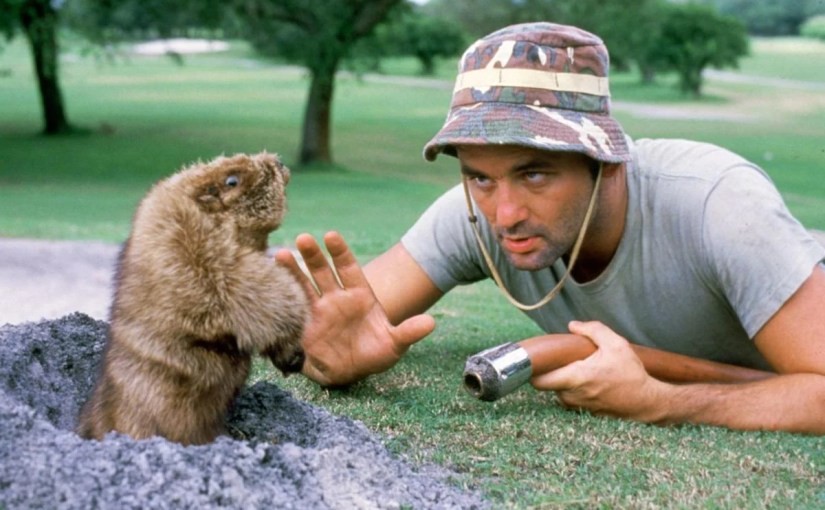
Do you think in 10 years or even 50 years from now, people will remember that Harold Ramis was one of the funniest writers in film history? Animal House, Stripes, Scrooged, Groundhog Day (I hate it, but I won’t deny its legacy every February 2nd), and Ghostbusters. One film that cemented the stage for his success in the 1980s is arguably Caddyshack, which focuses on the snobs vs slobs at a high-end golf country club known as…ahem…Bushwood. It’s okay to laugh. Your mother is not in the room.

Caddyshack is more or less a vehicle for the comedic talents of Saturday Night Live players to put out their best material seemingly made up on the fly. Bill Murray is the demented grounds keeper tasked with getting rid of a damaging gopher. Chevy Chase seems to be the charmer with a delivery of wit in every word he says. He’s more or less good looking here but just as deliberately stupid as everyone else. Rodney Dangerfield goes beyond his stand-up routines, or maybe he doesn’t. He’s just shoved into the film and let loose to anger and harass the head snob, Ted Knight. Knight is unquestionably the best of the bunch here. He’s got such great timing with his outbursts and delivery. I even love how he pronounces the car maker Audi. It’s more like “ottie.”

Ramis has a thin storyline about one caddy (Michael O’Keefe) trying to win a college scholarship. Meh. So what! Caddyshack works best when it’s just playing for skits and raw laughs. There’s gross out comedy like doodie in the swimming pool, compliments of a Baby Ruth candy bar, and vomiting in cars. Dangerfield’s one liners are fast and loose. The judge’s daughter is a sly minx for the dweeby male cast to ogle, and the gopher footage with Murray is straight out of Looney Toons. I do love the irony of the Catholic priest going out to play 9 holes in the middle of an electrical storm; a prophet who will spit in the face of God. “OH RAT FARTS!!!!”

Caddyshack is not my favorite of Ramis’ films, but it’s become a touchstone in comedy quotes and repeat viewings. It’s stupid and coarse and silly and belongs nowhere in the Parthenon of great filmmaking efforts but it’s a favorite of almost anyone’s for how brash it truly is. It’s an R rated interpretation of The Three Stooges. If not for nothing, I’m sure that somewhere there is an esteemed judge of the cloth who was proud to sentence young men to the gas chamber as a means of “owing it to them.”

Harold Ramis with co-writer Brian Doyle Murray (Bill’s brother) conceived of Caddyshack as a push back against that system of order. Well done, men. Tee up!

AIRPLANE!

By Marc S. Sanders

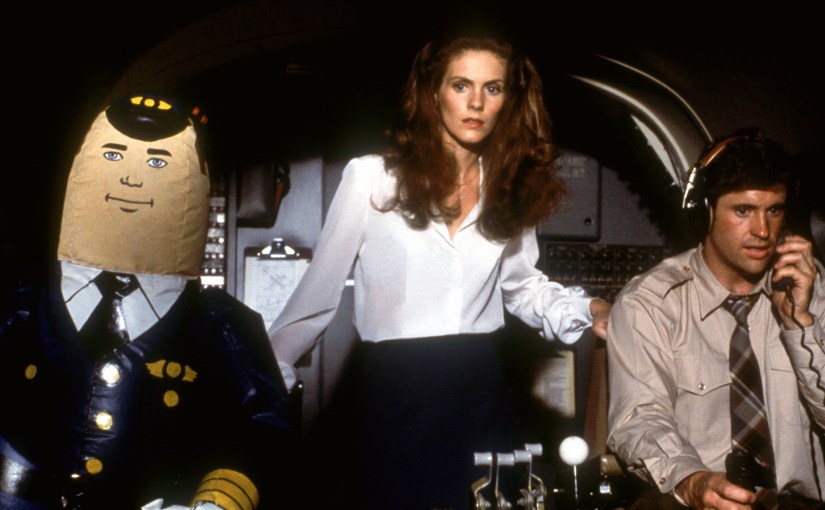
Having finally shown my 12-year-old daughter one of the greatest comedies of all time, the disaster film spoof, Airplane!, lo and behold, what do I realize? I uncover gags that I had never noticed in the zillions of times I had seen the movie before. Did any of you notice the ice cream cone amid all of the reporters’ microphones, or that Captain Ouever (a very straight-maybe not so straight-Peter Graves) flipping through a men’s magazine called “Men’s Sperm Monthly” from the “Whacker Material” section of an airport magazine rack?

That’s the beauty of this film. You see something new every single time. EVERY SINGLE TIME!!!! I swear Jerry Zucker, Jim Abrahams and David Zucker are secretly editing my DVD copy and inserting new gags into the film. Nothing comes close to matching the slapsticky, spoof magic of Airplane! Countless films were skewered to ridiculous levels of far-reaching hilarity ranging from Airport, (of course) to From Here To Eternity and Saturday Night Fever. Steven Spielberg’s Jaws is the film’s first casualty.

The picture is stitched together with former fighter pilot Ted Stryker (Robert Hays) pining to rekindle his romance with airline stewardess Elaine Dickinson (Julie Hagerty). Ted buys a literal “smoking” ticket on Elaine’s next flight to mend things with her (my god, I’m hearing the deliberately sappy string music in my head as I write this), but unfortunately many of the passengers and the pilots ate fish for dinner and now the plane is destined for doom. (Cue the “doom music.”)

The beauty of the film is that no one aims to announce the joke. Every cast member, including Leslie Nielsen, Robert Stack, Lloyd Bridges and Kareem Abdul Jabbar, plus Otto The Automatic Pilot plays it straight, never announcing the joke and sending the punchline into the rafters. If you’re serious while looking ridiculous to everyone else…well then that’s funny. Surely, a film like Airplane! can’t be serious, only don’t call me Shirley.

Airplane! still holds up after forty years. It had such a way about it that had never been done before. Disaster films were in abundance by the end of the ‘70s. Disco music was becoming cheesy to the greater populace. Zucker, Abrahams and Zucker had to respond to these trappings. Airplane! upended everything done before.

Heck you could be bed ridden in a big building with patients and die laughing at Airplane! but that’s not important right now.

NOTE: Ever notice the propeller sound of the multi engine plane or have you truly figured out where some of the film’s all time classic lines come from? If not, then find the disaster flick Zero Hour! You’ll be amazed at the inspiration that film gifted to “Airplane!”

Zero Hour! is sometimes shown on Turner Classics. Be sure to check it out.

THE SHINING

By Marc S. Sanders

Stanley Kubrick’s The Shining has become a legendary film that set the standard for haunted house films. It’s a spooky story with a musical soundtrack never destined to be played at weddings or bar mitzvahs.

The whole movie is unsettling, beginning with a long winding road drive through the Colorado mountains as the title and credits unconventionally roll up the screen, one at a time. Kubrick was never typical. Here he was frighteningly weird.

The film, based of Stephen King’s bestseller, consists of four characters. Three of them are novelist Jack Torrance (Jack Nicholson), his wife Wendy (Shelley Duvall) and their son Danny. He’s one effed up kid with a mop top haircut. I think I’d be disturbed if I uncovered what Danny grew up to be hereafter.

The fourth character is the main attraction, the isolated Overlook Hotel; left empty during the harsh winter months to take advantage on reviving its morbid history of harsh violence by means of ghosts, bleeding elevators and hacked up innocent looking, pig-tailed, young girls. Don’t ask me to explain the guy with the gold lion mask about to go down on a happy partygoer. No. I also can’t explain what exactly happened in Room 237. Perhaps King’s book covers all of this. Kubrick opts not to and focuses on the naivety of Wendy while Danny and his imaginary friend Tony talk to the consciousness of the hotel only to understand it is gleefully influencing Jack into an obsession of murderous incentive, eventually leading him to charge his ax through some doors.

I once visited the Louvre in Paris. I couldn’t fully enjoy or appreciate it. It was too big and too overwhelming. I didn’t know where to start or where to end. I had a panic attack, but I didn’t know it at the time, and I was eager to leave. Kubrick works on that anxiety during the long exposition of the film. Effectively disturbing tracking shots are provided that shoot deep hallways, vast ballrooms, large furniture pieces, and loud colors of reds, browns, yellows and whites along with emerald, green in the bathroom of room 237. The pastel blues of the young girl’s dresses and pigtail ribbons are also deliberately garish. Colors are normally cheerful for me. Here, they are unwelcome and intrusive and when I say loud, I mean to say the colors scream at you,

You just want to get away with Danny on his Big Wheel that he pedals around the property, softly on the carpet and thunderously loud on the tile and wood.

The character of the setting continues its disturbing details by means of a maze. Kubrick offers a great transition when Wendy and Danny enter the maze while Jack overlooks (pun intended) on a small-scale model. The hotel’s haunts have its prey in sight by means of its possession of Jack. Kubrick clearly shows that with his camera work. There are wide shots both overhead and facing Jack, and narrow, trapped captions of Danny and Wendy lost in the labyrinth.

I won’t say The Shining is a favorite of mine. I think this is only the second time I’ve seen it. I’ll watch horror movies, but they often bother me; leaving me distraught and stressed, unrelaxed. Occasionally, while Kubrick is vague with his imagery, Nicholson is blatantly obvious in his urge to terrify; maybe a little too blatant. He is in direct competition with John Belushi in the facial expression department. He’s disturbing even before the hotel’s influence is available to take hold, and so I didn’t necessarily get a good character arc from him. Same with Duvall or the boy. This family is downright weird all on their own from the moment you meet them until the film’s cold, wintery end arrives. Kubrick gets you curious about what this hotel is capable of. Then he shows you. Then the end literally tires the story out.

The Shining is best when you have an urge for fear and frights. A house of horrors tale where a cat or bird will not suddenly fly into focus for a cheap jump-scare. Rather your vision and hearing will still feel shocked, leaving butterflies in the stomach, and shortness of breath. Repeat viewings will leave you awake at bedtime, and worried and agitated. There’s so much to explore, but do we really want to know what’s in that room, or down that hall or around that corner, or even how that photograph of a July 4 celebration from the 1920s ever came to be?

FLASH GORDON

By Marc S. Sanders

How can anyone not like Mike Hodges’ camp celebration of a savior hero vs a destructive villain?

Flash Gordon was penned by Lorenzo Semple Jr, writer on the 1960s Batman TV show. His first draft is the one and only draft which producer Dino DeLaurentis approved for shooting. A glossy, flashy and fetishistic approach was adopted for the film, and it became timelessly memorable.

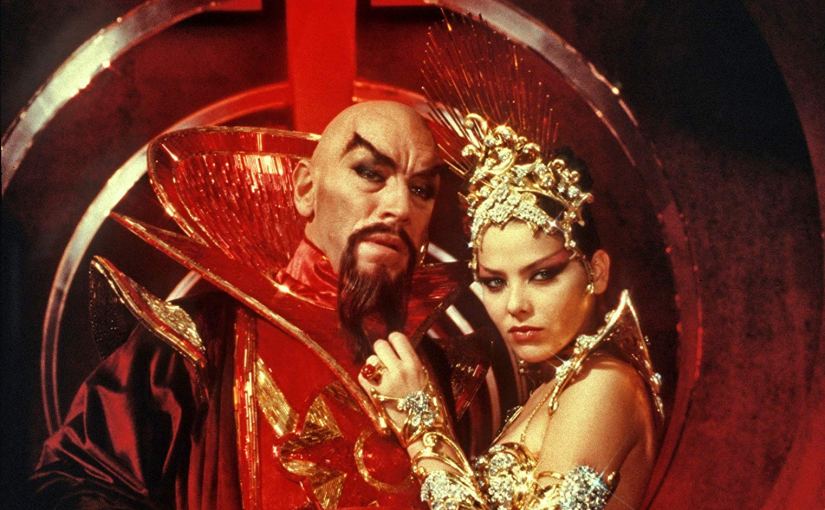
What thrills me about the film is its appreciation for the original, pioneering comic strips on which the film is based. Max Von Sydow’s Ming The Merciless is pulled right from the newspapers in his gloss pinks, reds, golds and blacks costume wear. The inflection of his voice is otherworldly from the start (“Klytus, I’m booooored. What do you have for me to play with today?”)

Sam Jones is a level down in the relatable hero of Christopher Reeve, but he’s enjoying every minute of his hero character schtick. He’s perfect for Semple’s playful writing and he looks like a champion.

Timothy Dalton and Brian Blessed are great side characters on opposite ends; one distinguished, the other gluttonous and proud.

The best flavor of the film is its soundtrack. Thank you Queen!!! Their musical touch is an early inspiration to some modern Marvel films like Guardians of the Galaxy, and Thor: Ragnarök, clearly showing direct influence from Flash Gordon. Freddy Mercury, Brian May and company relish in heavy pounding drums and special effect sounding guitars to deliver a cheerleading rock anthem. “Flash…aaaah!!! He’s a miracle!”

Dino DeLaurentis saw opportunity following the success of science fiction with Star Wars. He produced Flash Gordon with his own style, not as a copycat. The film became a fantasy with characters bleeding rainbow colors, pet midgets, cat fighting concubines, great hall football fighting with aluminum watermelons, weird lizard creatures, hawkmen, half egg-shaped planets, and even a thrilling fight to the death on a tilting platform with protruding spikes, the best scene amid all the camp craziness.

It’s all great. Flash Gordon is the savior of the universe. “He’s a miracle!!!!”

THE EMPIRE STRIKES BACK

By Marc S. Sanders

My absolute favorite film of all time is the Star Wars sequel The Empire Strikes Back.

It is a film that brilliantly reinvents the outstanding product that George Lucas introduced to the world three years prior. The dialogue is sharper for every single character from Han Solo (Harrison Ford giving a breakneck, adventurous performance) to C3PO (Anthony Daniels, masterfully giving the perfect and necessary inflections to a golden droid with a sole expression of worry, but still quite intelligent) to the man in black, Darth Vader (with David Prowse’s hulking physicality playing much more aggressively, and James Earl Jones’ voice giving a more sophisticated nuance to the character’s coldness). Lawrence Kasdan, the screenwriter, uncovered new ways to apply story to these characters above the incredible special effects of miniature models and matte paintings, as well as set design. Just look at the underground tunnels of the Hoth rebel base for convincing set pieces. Director Irvin Kershner knew how to apply the beats. A director and screenwriter make a perfect duet of cinematic filmmaking.

For one thing, settings were unlimited. While the first film showed a great contrast of sandy, sun-drenched desert and lack of development against the industrialized steel of a massive space station, Empire opts to introduce new, previously unseen environments for the characters to play in. A planet made of snow? Yup! There’s that. A planet mired in mud and swamps? Yup there’s that as well. A planet with a city in the clouds? Yup, got that too!

As the film opens, the Rebellion, heroically led by Jedi in Training Luke Skywalker (a terrifically believable Mark Hamill) is in hiding from the evil Empire on the desolate snow planet Hoth (filmed in Norway, accompanied by realistic matte paints in post production). The first battle sequence moves with a kinetic pace as the band of heroes are defeated and forced to retreat when the Empire’s giant four legged walkers (inspired by the monster films of King Kong and Godzilla) locates them.

From there, the film really lives up to its title as the heroes never win the advantage over the domineering bad guys. Han Solo with Chewbacca desperately escorts Princess Leia (a fiercely sarcastic Carrie Fisher to play against Harrison Ford) out of danger, only to find worse encounters to come as Vader remains hot on their trail. There’s a spectacular sequence that includes John Williams beloved score involving the Millennium Falcon in a crowded asteroid field. Meanwhile, at the request of Obi Wan Kenobi (Alec Guinness, in spirit), Luke visits the swampy planet of Dagobah to be trained by a mysterious Jedi Master named Yoda.

Assuming you can avoid focusing on all that you may already know of the film, including events that lead to discoveries in Empire, you have a film that never stops surprising you. Sure, by now we all know who Yoda is and what he looks like. What I remain curious about is Luke’s own image of what Yoda could be before it’s revealed midway through the film. Isn’t it a brilliant surprise and sleight of hand that Lucas, Kasdan and puppet master Jim Henson, with the voice of Frank Oz, to offer up the most unlikely person to be this great warrior or Jedi Master? It’s refreshing and it remains that way to me, no matter how many times I’ve seen the film. No matter how small or odd looking any of us could be in the eyes of someone else, our true strength and wisdom and bravery will show itself in unexpected ways. Yoda must be the most unlikely hero ever to grace a film. It’s smart storytelling when two entire scenes in Luke’s story arc come before the curtain is lifted on who Yoda actually is. Later, we are treated to a demonstration of the small creature’s strength and skills. It’s done beautifully with the absence of a lightsaber or any kind of attention-grabbing fight scene. The moment Yoda lifts Luke’s ship out of a swamp still raises the hair on the back of my neck. This scene shows that the mysterious “force” is more than simply sword fighting. There’s something more intrinsic in the willingness to believe in this element of fantasy. For us, I think it reminds us to believe in unlimited possibilities. I’m comfortable with that philosophy.

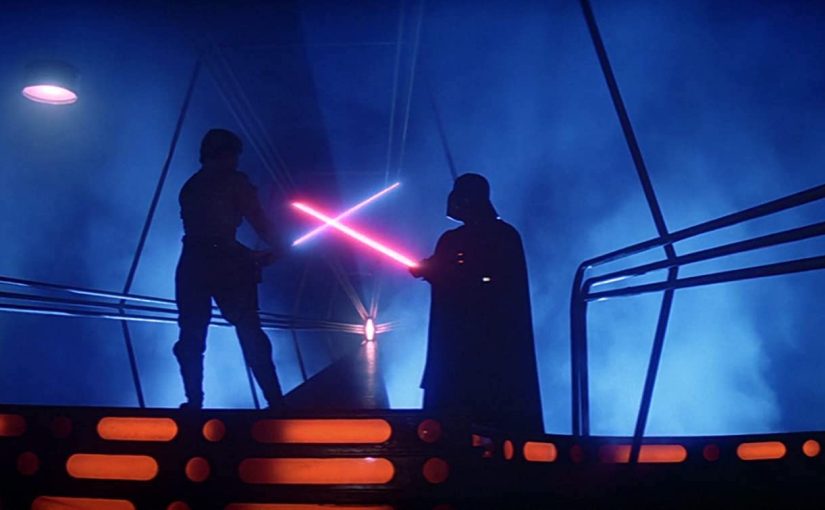
Masks are a theme I’ve always embraced in the Star Wars films. It’s not discussed enough actually. It’s ironic to me. Characters like C3PO or Darth Vader or Chewbacca and Boba Fett have these blank facial images to them. However, with the economics of Kasdan’s dialogue they say so much with brief statements of anger, despair (including a howl from Chewbacca) or worry. The expression physically never changes on C3PO’s face and yet I see different moods in the character thanks to the miming techniques of Anthony Daniels, the actor. A nod of the head will say something. With the practically silent Boba Fett agreeing to a contract with Vader, you see how methodical this bounty hunter dressed in dented armor really is. The character hardly gets any action scenes, yet you know how threatening he is. Every dent and scratch of his green armor tells a story. An aggressive walk shows a fear inducing Vader, one who is intolerant of any shortcomings. Sometimes Vader is simply matter of fact. If a minion fails in their assignment, he’ll force choke them and just walk away. As he duels with Luke, he simply puts his saber down when Luke is struggling with a massive wind current. We know that Darth Vader is cunning. So he hardly ever pushes himself further than necessary. We understand all of these characters’ emotions and motivations, and yet they are covered by masks.

The big surprise at the end of the film is the main crux that’s sustained the success of this sequel. It’s an absolute surprise out of nowhere but it seems to belong, as it is consistent with my belief in the mask motif throughout the whole film. There’s a veil draped over many developments of the film.

Allow me to digress. I’ve already discussed Yoda. Also consider other elements of the film though. Han decides to hide his ship from the Empire in the deep cavern of a large asteroid. Later, we learn it’s no cave. We also meet a charming new character named Lando Calrissean (Billy Dee Williams, who’s also great). He might not be what he seems as well. Since the first film came out, we’ve never had a full grasp of what or who Darth Vader is. He murdered Luke’s father and he’s someone or something in black. So, he must be the villain. That’s all we know, however. Yet, we eventually discover there’s something more. Because this is fantasy and science fiction with no roots in Earth based science, Lucas and Kasdan are well aware that they can color outside the lines and make up their own rules to this unfamiliar galaxy we are immersed in. Why not, actually? There are simply no boundaries.

A favorite scene of mine is when the Millennium Falcon makes a daring escape from that cave. It turns out to be the stomach of a giant slug…living in a rock…that floats in space! That’s the beauty of the original trilogy of Star Wars films, nearly anything could be put on the table, and it would be easy to accept and believe. In The Empire Strikes Back, almost every scene is layered and then further layered in imagination. Other storytellers would stop at just making this setting a cave and nothing else. It just might be shocking though. Put it this way, I’ll never forget taking my dad to see the special edition of this film in 1997. When the space slug revealed itself, dad burst out laughing. He didn’t see it coming. Kasdan hooks his audience with the furthest thing from your mind. When we got to the surprise ending, dad turned to me and actually asked me if he heard what he actually heard. When I showed the film to my daughter at age 6, her jaw dropped. How could a being dressed in complete black have any more depth to himself when I can’t even see what he looks like? The storyline of this film in particular is not aimed at any one demographic. Anyone could absorb the merits of surprise stuffed into this piece.

Empire is also admired for its firm stance to wrap up the film with an unhappy ending and cliffhanger. No other film has ever accomplished that so well. Much uncertainty is left to our imaginations. Will a character turn out to be dead? Is Vader’s revelation true, and if so then how does that explain the exposition delivered from Obi Wan? What does this “Jabba The Hutt” I keep hearing about actually look like? Was I looking at Vader’s brain or a human head underneath his helmet? What is Luke’s destiny? He didn’t do so well here. Could that lead to a worse fate? That scene for Luke in the Dagobah cave seemed quite foreboding, after all. Yoda implies “there is another.” Who could he be talking about, and what does that even mean? What about the conflict between the Rebellion and the Empire?

In the year 1980, the internet was not available as a means to spoil certain surprises and dismiss our own theories. We simply had the storytelling to work with. We had to wait three long years, speculating and discussing among our friends and family. It’s what maintained the strength of George Lucas’ space saga. The idea that we could play in the sandbox over a six-year period made these films more than just movies. They were events and they symbolized turning points in our lives. Personally, I discovered the magic of imagination. When I’m the writer the only rules I need to abide by are my own. That is most especially true with The Empire Strikes Back.

ORDINARY PEOPLE

By Marc S. Sanders

Psychiatry is regarded as a stigma within the world of Ordinary People.

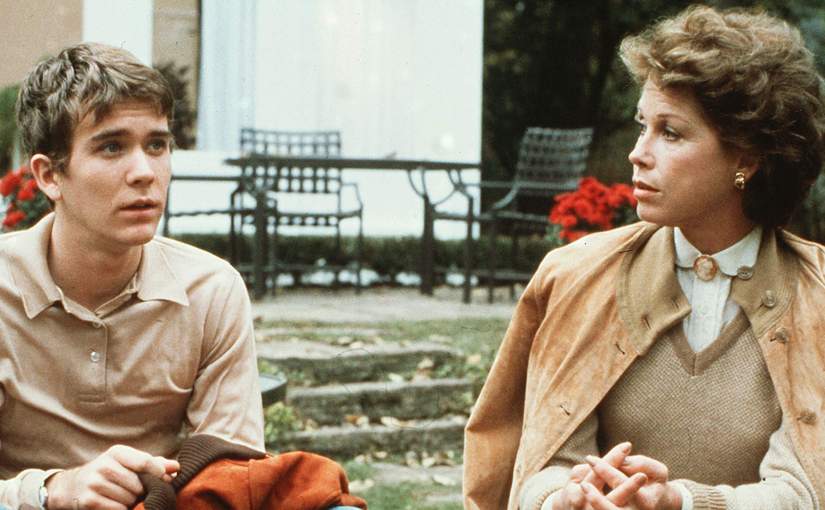
Robert Redford’s Oscar winning directorial debut centers on a troubled high school student named Conrad (Timothy Hutton in an Oscar winning role) who finally gets the gumption to see Dr. Berger (Judd Hirsch) following a suicide attempt brought on by the guilt he carries when he could not rescue his older brother, Buck, in a stormy boating accident. His parents, Beth and Calvin (Mary Tyler Moore and Donald Sutherland), accept this action with differing viewpoints.

For Beth it’s shameful and unnecessary to see a doctor. Her stance is made all the more clear when her own mother frowns upon this, especially with this doctor being a Jew. On the other hand, Calvin looks at it as an opportunity for a breakthrough. This doctor could really be good for Conrad. Beth is embarrassed when Calvin has a few drinks at a neighborhood dinner party and shares these developments with some friends.

For a WASP community, seeing a psychiatrist is not regarded well. It shows that Beth’s image of a perfect lifestyle is tainted. Any problems they have should be resolved in the home. What never occurs to Beth, however, is the resentment she fails to hide for her second son. There’s nothing breaking through Beth’s exterior to allow her true feelings to come out. By contrast, Conrad gradually lets his inner struggle loose and the film shows that it helps, as challenging as it could be.

In 1980, the prior year’s Best Picture winner was Kramer vs Kramer. Three years later it would be Terms Of Endearment. Hollywood was recognizing an audience’s interest in the domestic life. The Vietnam War was now in the past. Reagan economics were taking over and middle-class America seemed to be doing well. Redford’s adaptation of Judith Guest’s novel with a screenplay by Alvin Sargeant showed what was happening behind closed doors. Dramatic moments occur and they can offer a terrible shock in the moment but as days move on, so does everyone around you. You make efforts to do so as well, but you’re still weighed down by that one moment of loss.

Redford directs Hutton with quiet moments of anguish. Quick cut flashbacks offer a glimpse of what’s running through Conrad’s mind. Fortunately, it doesn’t run too long and upstage Hutton’s performance. Timothy Hutton is astonishing with his twitches and stutters and struggle to simply sit still. His blank stare of his blue eyes covey his deep depression. When a girl classmate takes notice of him, you feel the remedy of his sessions starting to make a difference. Where his mother refuses to recognize his need for love, someone else does and you feel better about yourself as well.

There’s always a reason to live. Dr. Berger reminds Conrad of that. Judd Hirsch is right for his role against the waspy wealth of Conrad’s upbringing. He encourages a “not giving a shit” attitude to how people perceive Conrad. We all want a mother’s love, but it doesn’t always work out that way. We want to be accepted at school. That might not work out either. With his sloven stature and chain-smoking manner, Hirsch is very convincing in reminding Conrad to say it’s okay to tell someone to fuck off, and most importantly to stop punishing himself for saying it.

Mary Tyler Moore and Donald Sutherland work incredibly well at conflicting with each other while also convincing us that before this terrible accident they likely complimented one another perfectly. Yet, as the film explains, life gets messy. The question is how best to respond when the mess appears and stays with you. Conrad finds the benefits in seeing a therapist like Dr. Berger. Beth will hear nothing of the idea. A magnificent scene done with one tracking camera comes out of nowhere while Beth and Calvin are playing golf with relatives. A slight mention of their son by Calvin gradually explodes into what really sets Calvin and Beth apart from one another. All of their sub conscious thoughts explode on a crowded golf course in front of the community they’ve absorbed their history and marriage within. Redford gets the best beats out of his actors because the shields that maintain their personas will only hold for so long. It’ll break down at a time when it’s never opportune or convenient. This scene occurs near the end of the film as we see Conrad’s recovery, while Beth and Calvin are still mired in both individual and shared heartache and resentment. It’s a crescendo moment that the film builds to for these characters.

Within film discussions, Ordinary People is often sadly regarded as the film that once again denied Martin Scorsese of a well-deserved Oscar (for arguably his greatest work Raging Bull). I don’t think that’s fair, however. Some might say Ordinary People may be dated. However, now that I’ve finally seen the film, I can’t deny it’s importance. Mental health has become more apparent through all kinds of different social classes. Yet we still hide ourselves, and are encouraged to shelter ourselves under a facade of happiness. That can’t always be true for any of us. We, as humans, all suffer. We all feel pain or embarrassment or sadness. If anything, a piece like Ordinary People reminds us that we are all typical, and must succumb to dealing with issues far beyond our mental capacity at one time or another.