MOONRAKER

By Marc S. Sanders

Roger Moore’s fourth outing as James Bond was supposed to be For Your Eyes Only. However, producer Albert R. Broccoli made a last minute switch before production was to take place. Two little known films called Star Wars and Close Encounters Of The Third Kind broke box office records and Broccoli went with “Moonraker” to piggy back on the science fiction trend. James Bond needed to launch into outer space. The effort proved profitable even if the story mostly fails.

A Moonraker shuttle is mysteriously hijacked from the Americans. After Bond survives being thrown out of an airplane with no parachute by the hulking assassin Jaws, he is assigned to determine what happened to the ship, and what purpose it is being used for.

Bond travels to California to introduce himself to Hugo Drax (Michael Lonsdale) with his samurai henchman Chang, and to Dr. Holly Goodhead (yes you read that right) played by Lois Chiles.

The issue with Moonraker is it suffers from a number of boring elements including Lonsdale, Chiles and even Jaws is watered down as he falls in love with a nerdy, pigtailed, blonde. Eventually, Jaws becomes a good guy and that’s when your eyes roll. Lonsdale is hardly any fun in his villainy. Chiles is not any more interesting than her character’s last name. Action scenes are bland beyond the airplane drop in the title sequence which has outstanding camerawork accompanied by the staple Bond theme.

Broccoli and returning director Lewis Gilbert (The Spy Who Loved Me) focused more on the science fiction cinematic trend with laser guns and laughable lack of effective zero gravity.

Broccoli became guilty of going with what was trendy with Moore’s 007. Blaxploitation with Live And Let Die, martial arts with The Man With The Golden Gun, Steven Spielberg’s Jaws, in The Spy Who Loved Me, and now science fiction in Moonraker. The sci fi doesn’t work so well for Bond or Drax’ diabolical scheme to destroy all human civilization and begin a new life in space.

Q provides Bond with a cool wrist band that shoots darts. That’s pretty fun.

As well, travel sites still hold up with destinations along the California coast, Italy with a gadget filled gondola and a glass shop fight, and Rio De Janeiro where Bond faces off against Jaws along the tops of two cable cars and engages in a boat chase. Then of course Bond eventually reaches Drax’ satellite base in space. None of it is unwatchable. It’s fun. It’s just not comparatively as exciting as prior Bond adventures before, and still to come.

Moonraker is just a little too weightless.

It should be noted as well that sadly, we also say goodbye to Bernard Lee as M, head of the Double O section for the last eleven films. He’s here to remind 007 that the British government can’t afford any slip ups. The whole series thus far was only better because of Lee to emit humorous aggravation in response to Bond’s relaxed and sarcastic response to the government risks at hand. Bernard Lee deserves recognition.

KRAMER VS KRAMER

By Marc S. Sanders

Probably the most personal film for me, the one that I watched for the first time with adult eyes even though I was only age 8 or 9 at the time, was writer/director Robert Benton’s 1979 Best Picture winner Kramer vs Kramer.

Though my parents never divorced, somehow I recognized the character of Ted Kramer, an extremely busy New York City advertising executive who could be having a great day while staying flirtatious but then also having an outburst of frustration when things are not going his way. My father was a busy man and a hard worker. He was a man who was always very proud of his work. He loved his work so much that he wasn’t as present in my life during my adolescent years. My mother on the other hand was my best friend who could make me laugh and demonstrated unconditional and very natural love for me. I learned about humor and love from my mother during those early years. I learned about responsibility from my father and some of his own humor later on. So, as I reflect on this film I imagine what life could have been for me had my mother walked out with no notice, leaving my father to tend to my needs while having to suddenly make sacrifices with his work.

On countless occasions, I’ve written about the importance of a character arc where a protagonist will start out one way and completely change through the middle and end of the film. In Kramer Vs Kramer, the arc is not focused on a character but rather a relationship between father and son. When Billy (Justin Henry in an Oscar nominated performance) at age 6 wakes up to discover mommy is not there, he sees how lost daddy is with waking up and trying to make coffee much less crack an egg properly for french toast. Ted and Billy have been blindsided and without any warning they need to adjust to one another very quickly.

Later, Benton does an insightful tracking shot of their apartment as they wake and we see they’ve grown accustomed to a routine together of getting each other up, setting the table and reading their newspaper and comic books side by side while never uttering a word. Benton realized that the comfort of living with each other does not have to be evoked with dialogue. This routine is offered one last time at the end when an inevitable and unwanted conclusion has befallen Ted and Billy. Again, no dialogue because now as a viewer I’ve become comfortable with this special relationship. Truly, I envisioned my father and I in these three moments.

Meryl Streep is the other Kramer, Joanna. She won the Best Supporting Actress Oscar and its well earned. Benton opens the film on her sad expression in a quiet darkness. When Ted finally comes home with good news from work, Streep is really good at holding her firm stance at leaving the household permanently. It doesn’t matter that Ted has gossip to share of a co-worker’s suicide or that he got a huge promotion. She just up and hurries for the elevator despite Ted’s resistance in allowing her to leave.

Benton follows afterwards with a good long portion of the film to display the struggles that Ted and Billy need to overcome, and in a second act finally has Joanna return stating her desire for Billy to live with her. Ted will not allow that to happen. For a real actor’s showcase, it’s important to watch the scene when they meet for the first time in 18 months. The conversation is cordial and they appear pleased to catch up with one another. Seconds later, the opposite sides on what’s best for themselves, and more importantly Billy, surface and the back and forth is so perfectly timed. Streep and Hoffman have those stutters and talking over one another that seem so natural. The scene ends with a broken glass that was not rehearsed and fortunately Streep’s shocked expression remains before the scene is cut.

Hoffman is extremely good in his role. He runs a gamut of emotions to bring humor, sadness, anger, warmth and love to this part. Another powerful scene is when he desperately must find a new job within three days before Christmas. Benton makes sure that Ted appears completely strong in a disarming situation when he squeezes in a four o’clock Friday afternoon interview during a raucous office Christmas party. I love how Benton focuses a still camera on Ted sitting quietly in a lobby chair amid partiers while waiting to hear if he gets a job offer. This is determination of a very full degree. Nothing will allow Ted to lose his little boy during this custody hearing.

Kramer vs Kramer is a simple and brisk film. It moves with a fast pace, and I believe the reason for that is it takes place in a home with a father, a child and a mother. So, I like to think it was very open to relating to viewers of all ages including my preteen self. There are many different and recognizable facets to Kramer vs Kramer. Billy compares Ted’s rules to what “all the other mothers” do. There’s the school play. Ted running late for work and picking up Billy from a birthday party complete with a goody bag. Of course, there’s also the heightened drama of the courtroom custody hearing. It’s like watching stage work monologues from Streep and Hoffman. It’s brilliant.

I especially took a scene very personally where Billy falls off the monkey bars, and Ted rushing through the streets of New York to get him to the emergency room for stitches. I had a door slammed in my face once that required stitches in my bottom lip. Just like in the film there was blood all over my clothes and there was a terrible fear for this 8-year-old kid who now still feels a bump in that area. Billy’s anguish and Ted’s terrible fear and guilt seem so genuine.

I find it interesting that this film won Best Picture in 1979. A year prior it was The Deer Hunter and Patton was a few years before that. In 1980, Robert Redford’s Ordinary People won the award and in 1983 it was Terms Of Endearment. Hollywood didn’t forget the impacts of hellish war and combat films. However, with the 1980 Reagan years of much decadence and pop culture positivity, a middle-class domestic life was becoming more honest and apparent. These films were not just Father Knows Best. Films like Kramer Vs Kramer were ready to show the hard parts of living a yuppie life. Things seem so normal on the outside when really there’s a struggle to love and live on the inside.

Cinderella like films showed my eight year old eyes that if a prince and princess finally meet and dance together all will be well in the kingdom. However, Kramer Vs Kramer told me that marriage and family life do not equate to happily ever after. Don’t mistake me. I’m not being pessimistic here. What I learned at that young age is that the story really only just begins after the prince and princess fall in love with one another. Thereafter, the conflicts settle in and the happy ending arrives only when the characters adjust to the evolution of their futures together, or if necessary, without one another.

MAD MAX

By Marc S. Sanders

What is the fascination with George Miller’s original 1979 film, Mad Max?  I don’t get it.  I know this film shot in the Australian outback was made a on budget less valuable than even a shoestring.  The fast-paced camera shots of cars careening down long stretches of highway are high octane (pun, most certainly intended) and the crashes are completely in your face.  Yet, I need more than this. 

When the film pauses for albeit very brief moments of storytelling such as a motorcycle gang apparently out for revenge against dystopian future cop Max (Mel Gibson’s breakout role), how is this ever even learned among the characters?  When Max opts to resign from the police force and take his wife and young son on holiday, how does this motorcycle gang led by a savage named The Toecutter (great name) catch up with them, and then after a narrow escape, how do they catch up yet again with one another, while making a sudden appearance on the back of these noisy motorcycles?  Miller’s film never goes from A to B to C.  Rather it goes from W to S to Q and then Z.  It’s a mixed up mess.

I’m all for throwing logic out the window when watching a thrilling action piece…if it’s thrilling.  When it’s not, well then, I’m asking for the logic.  Miller’s film feels like a bunch of want ads cut out of old newspapers, and then scotch taped together into a film reel.  I’d be curious to see an original script.  I can only imagine it being no more than three pages long. 

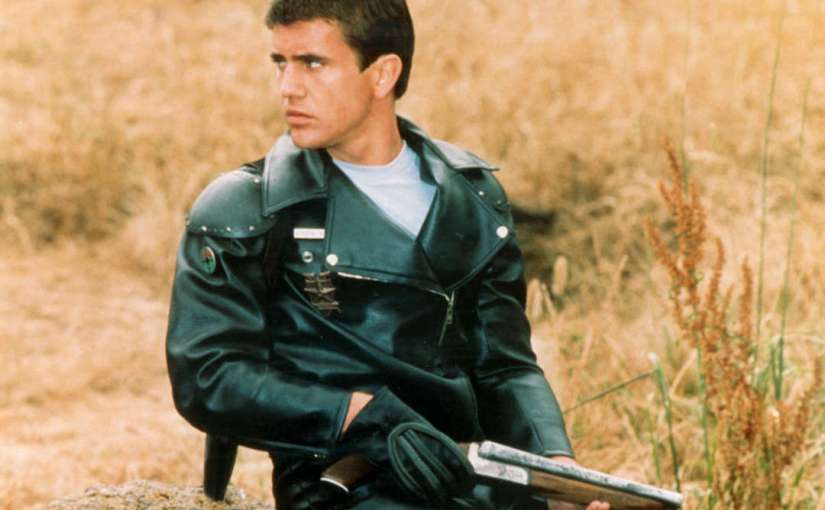
The appeal in 1979 and the years thereafter when the Max character blossomed into a franchise must have come from Gibson on film.  Yes, the stunts in this film with quick edit action pieces are daring.  I still think so forty years later.  This wasn’t CGI after all.  This was all the crunched up metal, rubber tires and flames that Miller could muster.  Still, the one artistic achievement had to be Mel Gibson’s image.  He wears the costume well.  A blue t-shirt enhancing his blue eyes under all black leather with a sawed off shotgun in his right hand while driving a souped up black Pursuit Special automobile with the engine sticking out of the hood.  Just writing that out reminds me of how iconic that image is, and this is before the similar looking Terminator that came along a few years later. Still, that’s where George Miller’s inventiveness stops. 

There is nary a character to consider.  The villains are nothing more than leather clad with bleached hair and dark mascara under the eyes riding Kawasaki bikes.  I know this was made with next to no money.  These guys don’t have to look like Darth Vader, but could they at least offer up something interesting to say?  Max has a couple of partners in the police squad.  They have no camaraderie.  One of them gets burned to a crisp.  Max takes a look at him in the hospital.  Why should I care though?  It’s not like I saw these guys share a Coke together.  Max is married.  They lie side by side each other in bed and their toddler sits on the floor nearby.  So?  Anything else?  Could one of them start a pillow fight or kiss or something, please?  A shoestring budget can still allow relationships to happen.  Miller doesn’t care about that though.  John Woo may show a nonstop bloodbath in any of his films with next to no story.  His films can work however, because he won’t get sidetracked with showing two people in their bedroom doing nothing.  He’ll remain focused on the mayhem.  Miller is not doing that here.  He shows a house with a bedroom.  Yet he doesn’t show the story in that bedroom that’s in that house.  That’s the difference.

I know the subsequent films in the franchise vastly improve upon the original Mad Max.  I’m just amazed they ever saw the light of day.  I’m more amazed that this became one of the most profitable films in worldwide history.  How did 1979’s Mad Max have the legs…no…the wheels…to maintain this ongoing velocity of interest?  What do I know?  I guess I’m a Debbie Downer for wanting people to talk to one another before handcuffing them to a gas guzzling fiery wreckage.  Is it too much to ask for a little sensitivity?

ESCAPE FROM ALCATRAZ

By Marc S. Sanders


Okay.  I’m gonna give this a shot.  Granted Escape from Alcatraz came out over a decade prior to that other famous prison movie with Morgan Freeman, but how do you not avoid a comparison?

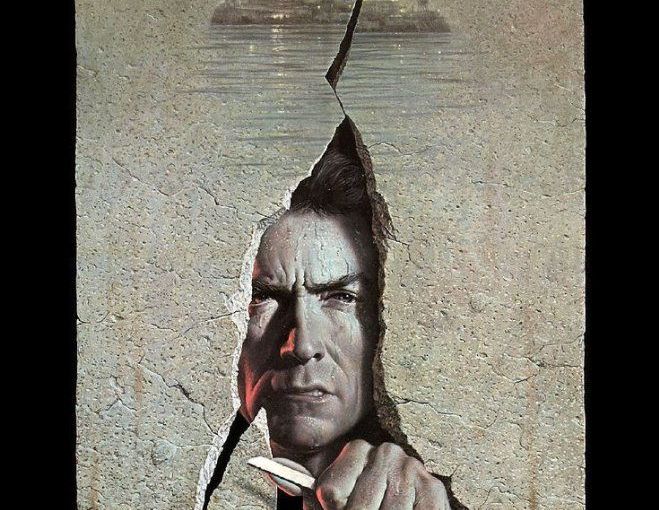
Clint Eastwood is Alcatraz inmate Frank Morris who believes he’s uncovered a way to break out of the most inescapable prison located on an island that’s at least a mile away by San Francisco Bay sea water from civilization.  The film is directed by Don Siegel (“Dirty Harry”) who depicts the true life inspired events that occur in the early 1960s.

Even before Morris begins to plot his steps to freedom with three other inmates, Siegel shows the brutal life of living in the Federal Government’s most notoriously secure prison.  The Warden assures Frank that escape is impossible.  Others who have tried were either shot or drowned in the ice cold waters of the bay.  Still, Frank Morris, who has accomplished prison escapes in the past, is certain that he’s found a way.

“Escape from Alcatraz” isn’t just about digging through walls with a makeshift tool combo of a nail file and spoon.  Siegel shows what occurs in a day in the life in the cafeteria, out in the yard and in the work shop.  Prison guards patrol with rifles.  The black prisoners have their spot on the bleachers.  An old guy paints portraits to occupy himself.  There’s even a library.  Look!!! There’s Danny Glover accepting a book from Clint. 

Actually, it comes off pretty tame all these years later when compared to many other prison films.  Frank is bullied by one bruiser, but also remember this is Clint Eastwood.  So this big guy doesn’t have a chance in a bare knuckle brawl.

The prison escape is calculated and you see step by step of how the guys climb through piping and vents and over fences and down walls.  Frankly, it looks a little too easy.  As Frank digs, all he has to do is turn off his light in his cell and the guards never catch a glimpse of what he’s up to in the dark.  Same could be said with the papier mâché dummy heads he and his cohorts make up to lie in bed.  The guards just don’t catch on.

“Escape from Alcatraz” doesn’t give me all the feels like “The Shawshank Redemption” or “The Green Mile.”  It’s simply another easy go-to watch of many of Eastwood’s 1970s tough guy flicks.  I did find it interesting, however, that this is based on a true story and when the conclusion arrives, I’m informed how in real life the result of the escape remained open and uncertain of what happened after the events of the film.  So I appreciate that the story kept me curious.  That’s saying something, and therefore I’m glad I watched the film.