JAWS 2

By Marc S. Sanders

The last movie, the masterpiece of masterpieces, told us that a great white shark is rare for the kinds of waters that surround the New England area of Amity Island.  Well, Jaws 2 disproves that fictional theory as Chief Martin Brody (Roy Scheider) ascertains that another man eater has arrived with a large appetite for chomping on swimmers, scuba divers and water skiers.  It’s ridiculous but it’s an entertaining sequel with a supporting cast of young actors ready to effectively tremble and scream while trying to survive the clutches of a hungry great white.  

Things appear tranquil yet prosperous for Amity.  A developer has completed a large Holiday Inn hotel that will magnify tourism profitability.  To Martin’s chagrin, his wife Ellen (Lorraine Gary) works for this guy.  Mayor Vaughn (Murray Hamilton) somehow got reelected following that terrifying Fourth of July weekend from a few years ago.  (Well…his kids were on that beach too.) Chief Brody’s biggest concern though is his oldest son Michael’s penchant to laze around sailing with his friends for the summer when he should be getting a job.  Michael just wants to score with the new girl in town.

All is well until an abandoned boat is discovered off shore with an underwater camera dropped on the ocean floor, near Captain Quint’s shipwrecked Orca.  Thereafter, is an explosive water skiing accident.  The most hideous eyesore must be the beached, partly devoured corpse of a humongous killer whale.  The bite sizes are enormous.  Chief Brody is getting terribly suspicious, but once again his intuition is being disregarded until the truth reveals its blood in the waters. 

Jaws 2 is effective suspense.  The teens are straight out of familiar slasher movies, but this film actually released ahead of Halloween and Friday The 13th fare.  Director Jeannot Szwarc captures good close ups of the whole cast and magnificent pace with a speeding fin that slices through the ocean surface.  These kids are mostly nameless but the director gives them good moments to put their greatest fears on.  When the sailboats capsize and the kids topple into the water, there’s a nervous tension all the way to the end of the picture.

It’s no secret that Scheider hated making this movie.  Universal contractually beheld him to it after he dropped out of Michael Cimino’s The Deer Hunter.  Nonetheless, I like the direction the character takes with returning script writer Carl Gottlieb.  Brody’s job is in jeopardy and maybe his marriage, along with the paternal strife he gets in the way of his eldest boy.  Roy Scheider does fine with the material.  Perhaps his personal frustrations lent to the performance.

What doesn’t work is Bruce II – the shark.  To this day I’m still stricken with fear of the shark from Spielberg’s film, even after we finally get to see it.  It truly is a scary monster.  In Jaws 2 however, the animal looks like something you buy at a beach novelty store for your grandson to play with in a kiddie pool.  The texture of the shark never feels authentic particularly after it survives a fire.  I am not fond of how it swims or raises its head above water.  Even when a helicopter gets in its crosshairs, the shark looks small and literally mechanical, never seeming strong or powerful enough to kill, maim and destroy. The magic trick just appears entirely too transparent.  Fortunately, I bought into how this town’s worst fears eventually come true again.  The perception of Brody and the kids is the mightiest strength of the film.

A brief mention is given to Matt Hooper (famously played by Richard Dreyfus in the first picture).  That always left me curious with why Universal did not pursue a sequel based on his character instead of Brody.  It’s hard to swallow that another monster shark is terrorizing Amity again.  Wouldn’t it have more plausibility for the actual shark specialist to pursue another brutally unforgiving Carcharodon Carcharias elsewhere in the world?  I think a story moving in this direction could have opened a lot fresher possibility.

Regardless, Jaws 2 is a fun summertime escape with one of the most familiar taglines in cinematic history: “Just when thought it was safe to go back in the water.”

Only watch Jaws 3 & The Revenge when you’re ready to get your itch for a Mystery Science Theater 3000 kick to commiserate with some friends on a Saturday night.  Save Jaws 2 for when you want more shark chum after having watched the classic original for the five thousandth time.    

THE WIZ

By Marc S. Sanders

It always surprised me that Sidney Lumet is the credited director of The Wiz, the black cultured musical interpretation of L Frank Baum’s celebrated fantasy The Wizard Of Oz.  Now that I’ve seen it with adult eyes and a tremendous appreciation for the director, it’s template makes sense knowing that I’m looking through the lens of Lumet.  Dorothy might arrive in the land of Oz, but Oz sure looks like a journey through the five boroughs of New York City, and of course Sidney Lumet is one of the all-time great storytellers of what happens within one of the greatest cities in the world.

With electrifying music penned by Quincy Jones and a screenplay by Joel Schumacher, The Wiz follows the step-by-step moments of the beloved tale.  However, everything looks like a new invention. 

Diana Ross was a sensation at the time this film was in the making and she campaigned so hard for the role of Dorothy that the script modified the age of the character to 24, thus allowing a thirty-something to convincingly play the role of an unsure kindergarten teacher with an opportunity to move on to high school academics.  On a snowy Thanksgiving night, our heroine is cast off in a twisting blizzard, landing in the Munchkinland of Oz.  Toto, a gray schnauzer, has accompanied her.  These munchkins are graffiti figures who come alive out of the concrete walls of a Harlem basketball court and neighborhood park.  It’s a brilliant invention of set design that deviates from the familiar.  The Wiz opts to maintain an urban theme.

Michael Jackson is the Scarecrow, though made of paper garbage, not straw.  A peanut butter cup wrapper enhances his nose.  He’s heckled by street guys garbed in crow likenesses when Dorothy comes upon him.  Lumet maintained a 70’s vibe to this film to fall in line with Jones’ music.  All of this design works, including the cartoon like cabs that ritually appear and abandon the characters as they embark on the Yellow Brick Road with the Chrysler Building rising in the distance.

The Tin Man is portrayed by Nipsey Russell.  He’s discovered in an amusement park junkyard where he’s crafted out of rickety old junk.  Terrific makeup here.  Ted Ross breaks out of the lion shelled statue famously erected outside of the New York Public Library.  Within the land of this Oz, a New York flavor answers for all of Baum’s familiar creations. 

Not everything works so well in The Wiz.  I’m impressed among these great talents of black entertainment that Lena Horne is cast as the Good Witch Of The South, but her one true moment at the end of the film is wasted with baby angels floating in the background of a very false looking starry backdrop.  Lena Horne is shown for the briefest of moments as Dorothy crash lands in Oz but then does not come back until the end of the film.  She sings a message to Dororthy about believing in herself.  It’s an awful moment and drains a lot of the energy from the film. Cheesy and awkward.

The course of the movie is invested so well by hundreds of costumed extras along with Diana Ross and Michael Jackson.  Nipsey Russell keeps up just fine. Ted Ross could have done more as he transferred from the live stage to this film.  His portrayal is not a standout from what Burt Lahr did with the role of the Cowardly Lion.  Diana Ross with Jackson are the leaders with nonstop energy, though.  Michael Jackson’s performance is clumsy but falls beautifully in line with all of the music.  His physical prowess in dance is part of what made him a star.  Diana Ross does not stop.  She never looks out of breath, and she puts such gusto into leading this company of musical performers.  It’s such a joy to watch both of them strut to Ease On Down The Road and Everybody Rejoice/Brand New Day.  These are two of the best and most memorable songs in the picture because of what Diana Ross does on screen with the numbers.  I especially love Brand New Day.  I’m hearing it now in my head as I write and fondly recall the wide shots that Lumet devotes to the enormous feats of choreography.  May be the best scene in the film.

Lest I forget Mabel King, as Evillene – this story’s Wicked Witch.  She is not introduced until after the great Wiz orders the four travelers to kill her.  When she does arrive, in her home based “Sweat Shop” it’s an amazing moment.  Mabel King is best known as Raj and Dee’s strict mother on the TV show What’s Happening!!!  Growing up, I’ve always been a fan and Mabel King is a sensational performer.  Her vocals give off such power and demand during her song Don’t Nobody Bring Me No Bad News.  Evillene marches down the stage in her puffed-up costume wear of glittered red with a large updo to command her little Winkees.  She certainly hijacks the picture from Diana Ross and Michael Jackson.  This is a performance that is Oscar worthy.  An absolute scene stealer.

As for The Wiz himself, it is Richard Pryor.  He’s cute in what was supposedly his first film where he donned his familiar mustache.  He’s silly but not so much fun.  Sometimes he’s just garbling like he forgot his lines and does his Richard Pryor schtick that he’d later rely on in The Toy and Superman III.  What impresses me is the costume choice for the character.  He’s eventually revealed to be the phony Wiz who operated the giant intimidating head, and he’s dressed like a literal homeless person from the streets of Harlem. 

Sidney Lumet worked with Jones and Schumacher to help us envision a modern New York as a world of urban, but colorful, fantasy.  The Yellow Brick Road goes down into the subway tunnels for some threatening moments of suspense as well as through an old amusement park, maybe located in Coney Island.  The Emerald City appears on the other side of the Verrazano Bridge, and it is Manhattan lit up in green.  The centre of the city is Lincoln Center where the inhabitants dance in red, yellow and green depending on the traffic light raised high above the famous circular fountains.  I believe the mysterious Wiz is located at the top of one of the Twin Towers.  Lumet used what he knew and applied a colorful brush of fantasy over the entire Metropolitan area.  I say it is brilliant.  Familiar like it should be, but still a fresh idea as Dorothy leaves her home of Harlem for the more extravagant of locales where she seeks out the famous Wiz hoping for a way home.

A Broadway and touring stage company of The Wiz is performing currently and I hope not too much of what is featured in this film has been washed over. 

The Wiz is dated to a disco era but most of the songbook still works with high energy and passion.  A strong appreciation remains, and maybe that’s because L Frank Baum’s original story is so timeless.  This cast along with Quincy Jones and Sidney Lumet, plus creative inventions in makeup from Stan Winston still hold up.  You’ll tap your foot if you turn this soundtrack on your radio or you opt to take in the visuals of this kaleidoscope of color and sound on your flat screen.

BLUE COLLAR (1978)

by Miguel E. Rodriguez

DIRECTOR: Paul Schrader
CAST: Richard Pryor, Harvey Keitel, Yaphet Kotto, Ed Begley Jr.
MY RATING: 6/10
ROTTEN TOMATOMETER: 96% Certified Fresh

PLOT: Three financially strapped automotive factory workers rob their own labor union, but when they get more than what they bargained for, their friendship and loyalty are tested.


There may come a day when I revisit Blue Collar and revise my current opinion.  It’s not impossible.  I’ll be a different person five or ten years from now.  I may have a different job with different bosses and co-workers, or I may be living in a different neighborhood in a different house.  All sorts of things could change that will affect my perception differently.  Until that happens, though, this is what I think:

Blue Collar, the directorial debut of eminent screenwriter Paul Schrader, author of Taxi Driver (1976), Raging Bull (1980), and American Gigolo (1980), is a film with a good story to tell.  Not just good – important.  This is an important story about loyalty, friendship, and duty to your family.  Richard Pryor turns in a great performance, flexing his dramatic muscles as he seldom did, unfortunately.  Schrader’s screenplay, co-written with his brother, Leonard, and using source material from Sydney A. Glass, pulls no punches regarding corruption within the powerful auto workers union.  Character motivations are crystal clear from the opening scene to the final, cynical freeze frame.

But…but…I wish this story were contained in a film that made me care about these characters while the movie itself was playing.  Intellectually, I see the value of the story.  But as a moviegoer, I was less than moved.  Schrader’s direction is competent, but the film moves from beat to beat with the energy of a sloth.

Zeke (Richard Pryor), Jerry (Harvey Keitel), and Smokey (Yaphet Kotto) are three working-class friends on the line at an automotive plant in Detroit.  Their closeness is established in a bar scene that gave me hope for the rest of the film.  It plays almost like an Altman film, with some overlapping dialogue, simple but clear direction, and conversations that give us an instant picture of who these three disparate characters are.

It’s unclear what Smokey’s financial situation is until later in the film, but Zeke has back-taxes to pay because he has declared too many dependents for the last three years, and Jerry has a teenage daughter who is so desperate for expensive braces that she tries making some herself, with exactly the kind of results you’d expect.  Their union, which is supposed to help them, is a joke as far as they’re concerned; they can’t even fix Zeke’s broken locker door.  So, after Zeke makes some observations at the union’s local office, he and his pals hatch a plan to rob the office vault.

What they find there drives the rest of the plot, so I’ll tread lightly from here on out.  But the vault robbery is a good example of where the movie is lacking for me.  The plan is simple and relatively risk-free, but I was hoping for at least SOME suspense during the robbery.  A moment occurs when they’re about to be discovered, so they don their masks…but the masks that Zeke bought aren’t masks.  They are, in no particular order, plastic vampire fangs and a funny hat, a pair of sunglasses covered by an American flag design, and a pair of googly-eye glasses – you know, the ones where the eyeballs are attached to the glasses by long springs?  This crucial moment was ruined by the utter ridiculousness of their “costumes”; it felt like a transplant from some other Richard Pryor comedy about incompetent criminals.

After that, the screenplay feeds us important chunks of information, but there is no dynamic energy to the editing or the direction or something.  It just felt…boring.  Which is a shame because, again, there is a good story here.  The union local blatantly lies about the contents of the vault after the robbery.  An FBI agent tries to get Zeke, Jerry, or Smokey to spill what they know about union corruption, but they are too loyal to turn stool pigeon.  Zeke has to make some hard choices in one of the movie’s better scenes towards the end.  Smokey displays strength when threatened by union thugs, but he pays for it later.  And Jerry just wants to do the right thing without anyone getting hurt.

But there was just zero energy to the narrative.  I never felt carried along by the tide of the story.  And without that forward momentum, every scene felt like it was just marking time before the next.  To the degree that I understood the plight of these blue-collar workers, the movie just didn’t make me care enough to feel anything about it.  I did feel empathy for Zeke, mostly due to Pryor’s powerful, angry performance, but even that empathy was turned on its ear by the time we got to the closing credits.

There is, I guess, something to be said about how the screenplay is constructed so that, at any given point, you could say that any of the three main characters are the true lead of the film.  The story is truly balanced, and I give it credit where it’s due.  I just wish the storytelling was more dynamic.  Like I said, the day may come when my opinion of this movie will change.

Today is not that day.

…tomorrow’s not looking good, either.

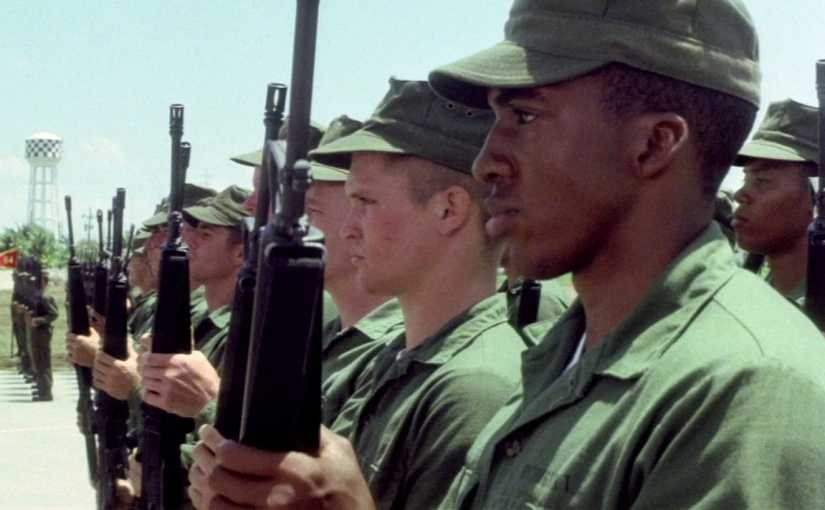
THE BOYS IN COMPANY C (1978)

by Miguel E. Rodriguez

DIRECTOR: Sidney J. Furie
CAST: Stan Shaw, Andrew Stevens, James Canning, Michael Lembeck, Craig Wasson, Noble Willingham, R. Lee Ermey
MY RATING: 9/10
ROTTEN TOMATOMETER: [no score]

PLOT: In 1967, five young men undergo Marine boot camp training before being shipped out to Vietnam. Once they get there, the experience proves worse than they could have imagined.

[This review contains MILD SPOILERS concerning the film’s finale.]


I remember a short while ago, when I watched the original The Taking of Pelham One Two Three (1974) for the very first time.  I remember asking myself, “Why did it take me so long to finally watch this movie?  It’s fantastic!”

I’ve just had the same exact experience after watching Sidney J. Furie’s The Boys in Company C, which I think (someone correct me if I’m wrong) is the first attempt by Hollywood to provide a genuinely realistic portrayal of being a combat soldier during the Vietnam War.  There are some obvious parallels to Kubrick’s Full Metal Jacket (1987) and Fuller’s The Big Red One (1980), but this one was first out of the gate.  Company C is just as visceral, just as riveting, and just as entertaining to watch as those other films.  I have only seen a handful of Furie’s other films (including Iron Eagle [1986] and Superman IV: The Quest for Peace [1987]), so I can’t make a 100% informed opinion, but in my limited experience, this is far and away his masterpiece.  It goes on the list of my favorite war movies ever made, and I think it’s a real shame that it appears to have been nearly forgotten.

Like so many other war films that came after it, The Boys in Company C begins at boot camp.  More properly, it begins right outside the recruitment center (I think?) in late 1967, as several young men – boys, really – kiss their loved ones goodbye before getting on a bus.  In a weird way, this sequence reminded me of the opening scene in The Breakfast Club (1985) as each student is dropped off for detention by their parents (except for Bender, of course).  We are introduced to the boys who will become the key players: Washington, the angry black man (Stan Shaw); Pike, the country boy (Andrew Stevens); Foster, the aspiring writer (James Canning); Fazio, the Italian American from Brooklyn (Michael Lembeck); and Bisbee, the pacifist who is put on the bus in handcuffs (Craig Wasson).  Stereotypes?  Sure, I guess.  But the screenplay doesn’t limit them to JUST their stereotypes.  Washington, for example, starts out in camp as a guy who is looking out for himself, but after a surprisingly passionate speech from his drill instructor (R. Lee Ermey in his film debut!), he assumes the mantle of leadership and wears it exceedingly well.

We get the by-now standard scenes of the recruits getting their heads shaved, struggling through exhausting training runs, being called names that would’ve made George Carlin blush, and, eventually, graduation, where their reward for making it through boot camp is being assigned to combat duty in the ‘Nam.  Their problems begin even before they disembark from their troop carrier when the Vietnamese port comes under artillery fire.  It all sort of goes downhill from there.

The movie so far is nothing incredibly new, at least not to someone watching in the present day, but I had to keep reminding myself that this was probably the first time American audiences had seen a relatively honest representation of combat that wasn’t filtered through layers of self-censorship and jingoism.  M*A*S*H (1970) did show us the bloody reality of surgery in the field, but it didn’t concern itself too much with actual combat – plus it was set in Korea, not Vietnam.  A minor quibble.

There are a LOT of plot details I won’t relate here – the clueless captain, the “vital” convoy, Washington’s drug trafficking plans – because of the soccer subplot that reveals itself to be the film’s beating heart and real cry of protest.  Much like Kilgore and the California surfer in Apocalypse Now (1979), the squad captain learns that Pike, the country boy, is pretty good with a soccer ball.  There is a squad of elite Vietnamese military men who are also good at soccer.  The captain dreams up a plan: put together a soccer team of American soldiers who will play the Vietnamese men in an exhibition match.  If the American team wins, they will get a reprieve from combat and go on a “goodwill” tour of southeast Asia, including Tokyo and Bangkok.

Sounds good, right?  But complications arise when, at the match, the American general watching the match is approached by his opposite number in the Vietnamese army.  With the Americans leading at the half, the order is passed to the team: lose the match so the Vietnamese can save face in front of their own people.  If they throw the match, they will still get reprieved from combat to go play mare matches against Vietnamese teams…and lose every time.

The Americans can’t believe it.  Pike (and everyone else) wants to get back home, but he is afraid he can’t live with the shame of intentionally throwing a match, no matter what the big picture looks like.  But the orders contain no ambiguity.  Throw the match and go on tour, or win and go back to frontline combat the next day.

This is what the movie has been driving towards the whole time.  The squad has to collectively decide what is more important: winning or surviving.  I hope I don’t come off like an amateur historian here, but to me, that is the same question that could have been asked about the entire Vietnam conflict.  As a country, we had a chance to ask ourselves: is winning this war worth the price we’re paying?  How much more are we willing to spend, in money and lives?  In the film, the squad is asked to balance that equation themselves on a smaller, but no less important, scale.

Is this about honor?  Should they win the match to preserve their own personal integrity, even if it means going back to fighting in the jungle and maybe never making it back home?  Or should they throw the match, increasing their odds of making it home alive and boosting morale for their Vietnamese allies, but leaving them with a stain on their integrity?  Is this kind of thinking the reason the American government participated in possibly the most unpopular war in American history?  Because losing face was worse than losing lives?

These are questions I would not presume to think I could answer.  I know, of course, what I would have done in that situation, but I can only speculate because I have never been a soldier in a time of war.  The Boys in Company C put me right there and allowed me to understand the whys and wherefores of each major character in a way that we’ve seen in every notable war film ever since.  This is an incredibly important artifact in the history of war films, and it deserves to be seen by every movie fan.

[Trivia note: this movie was executive produced by none other than Raymond Chow, the man behind Enter the Dragon (1973) and nearly 200 other Hong Kong films, and virtually the entire movie, including the boot camp sequences, was filmed in the Philippines.]

THE DEER HUNTER

By Marc S. Sanders

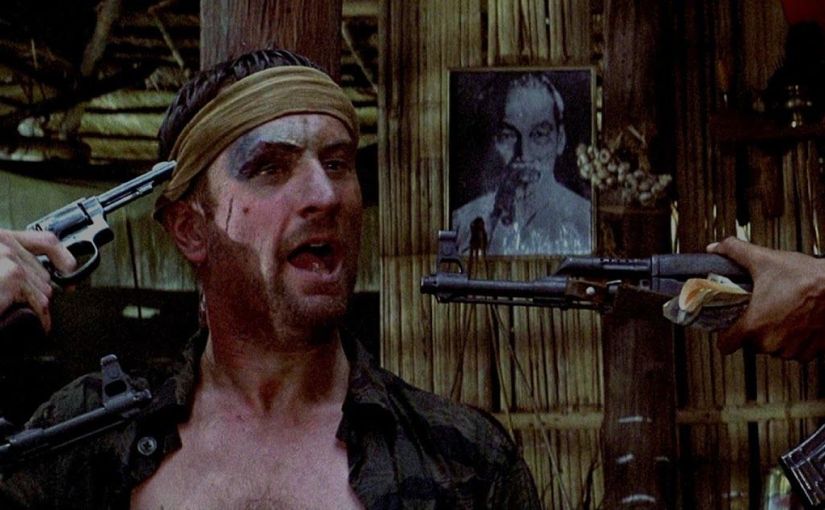
After watching the 1978 Best Picture winner, The Deer Hunter, I followed up by reading some of the trivia about the film on IMDb.  Please do not think I’m a terrible person, but the racial overtones within the portrayals of the Viet Cong never occurred to me.  I guess I can only surmise that war is hell, and I suppose that when any one of us are being held in captivity our prejudices go out the window, and the hatred we feel towards another human is directed at the ones who are exercising their sadistic torment upon us.  It does not matter where they come from or what they look like or even if they are related to me.  Being held prisoner and forced to participate in games of Russian Roulette must allow my seething abhorrence. 

Another important factor that was questioned in Michael Cimino’s film is whether games of Russian Roulette were in fact forced upon POWs during the Vietnam War.  Many veterans insist it wasn’t, therefore holding a strong grudge against the filmmaker.  Cimino argued that he had testimony and photographic evidence to its validity.  I will not even give you an opinion.  I do not know enough about that terrible conflict, and I will not disrespect the service that so many men and women devoted during its time.  I can only focus on the context of the three-hour film. 

In this movie, I see a perspective of three buddies from a small Pennsylvania steel mill town who voluntarily enlist in the army in the late sixties to serve in the Vietnam War.  Thereafter, they are held as prisoners of war, confined in submerged bamboo cages infested with rats and mosquitoes.  They are only let out to compete against one another in face to face Russian Roulette by a forceful unforgiving Viet Cong.  Upon escape, the three men are separated with different measures of terrible destinies to live with afterwards.

Mike, played by Robert DeNiro, is the Green Beret Army Ranger who returns home to a lifestyle he can no longer lead.  Steve (John Savage) has been permanently traumatized both mentally and physically as he has lost both legs.  Nicky’s (Christopher Walken) whereabouts are unknown.

Before any of this occurs, there is a lengthy first act to The Deer Hunter.  The three men are celebrating their send off to serve, but more specifically Steve is getting married.  Michael Cimino takes much of his time focusing on the ceremony, which contains orthodox Russian traditions, and the party with an enormous amount of wedding guest extras (probably the whole town) to carry out endless, drunken celebrations. 

The first time I saw this film I grew bored with the wedding footage.  It seemed to be overly long and tiring.  Pointless, even.  On this most recent view, however, I found it completely absorbing.  There’s an unbeknownst future to all of these people, not just the three eventual servicemen.  None of the people in this Pennsylvania town live extravagantly.  It’s special for the ladies to wear their formal pink bridesmaid dresses but they run through the wet streets of the town on their way to church.  The men throw on their tuxedos that they likely wore only one time before during their prom.  Once the reception begins for Steve and his wife, Angela, everyone is sweaty and out of breath, happily drunk and wobbly.  They lean on one another in a sloppy way for a group photo. They never stop drinking.  More importantly, they never think about how scary or horrifying the Vietnam War could be for them.  They are celebrating a happily wedded future for their buddy Steve and their soon to come legacies as American war heroes.  Nicky even takes a boozy moment to propose to Linda (Meryl Streep).  Already an abused woman, she immediately accepts.  Mike can only gaze with inebriated amazement at a uniformed serviceman who is disturbingly quiet as he sidles up to the bar.  Mike insists on buying him a drink. 

Late into the night and onto the next morning, the guys are doing their traditional favorite activity with a ride into the mountains for some deer hunting.  They change out of their tuxes and into their hunting gear as they tease one another and gorge themselves on Twinkies with mustard.  None of these boys have a care or worry in the world, except for nerdy Stan (John Cazale) who has once again left his hunting boots behind.

There’s a relaxation and calmness to these people; to the men who are staying behind, to the ones getting ready to leave and to the women who share in their lives.

Regardless of the questions of racism or authenticity, Michael Cimino, with a joint screenplay written with Deric Washburn and Louis Garfinkle, show how the war not only directly changes those that served but also the ones who welcome them home.  Steve’s wife is not only separated from him but also appears mute and inactive.  Linda attempts to move on with her life but is absent of comfort from Nicky, the man who proposed to her on a whim.  Mike is not capable of being the drunken party leader or precise deer hunter he used to be.  The deep scars of the three also draw scars for everyone else back home.

The Deer Hunter is a very difficult film to watch.  The picture ends leaving you feeling traumatized because it stretches from innocent celebration and debauchery over to some of the worst images that could ever be fathomed.   Wars end in a truce, a victory or a defeat, but the conflict does not cease for many of those who participated as pawns for a governing power. 

Nicky never comes back to Pennsylvania.  He tries calling home, but he can never follow through.  He has been changed permanently by his time as a killing soldier and captive who was being forced to use his life for stakes.  Mike returns dressed in his uniform with his medals signifying his achievements but as soon as he sees the “Welcome Home Mike” banners he insists the cabbie drives on by and he does not enter Linda’s trailer home until he sees all the guests leave the next morning. 

There’s a haunt that Cimino’s film ends with as the remaining members of the group assemble following a funeral and segue into singing “God Bless America” together.  I don’t ask this question as a means to minimize anyone who has served or lives as an honored citizen of our country; should these folks who must endure loss from now on be chanting about blessing America, or should they be pleading for a blessing upon themselves? The characters of The Deer Hunter struggle internally and are desperate for a salvation and peace. 

War may be a chaotic, unforgiving hell, but living thereafter is another kind of hell that you cannot escape from.

HALLOWEEN (1978)

By Marc S. Sanders

Finally, I saw it.  I had never seen any of the Halloween movies.  At last, considering the time of the year, I chose to watch the original John Carpenter classic slash fest from 1978.  Granted, I believe I have seen every scene of this picture by flipping channels or watching Netflix documentaries.  I have just never stopped to watch the film from beginning to end.  So, if the surprises didn’t grab me as much you, when you first watched, well my apologies for having an advantage.  Let’s just say I can see why the picture is still regaled so much, nearly fifty years later.  Nevertheless, I think Halloween is full of plot holes and short sightedness.

Understand reader, I know what to likely expect when I watch a slasher flick.  Man in a mask who walks at even pace while the girl victim sprints as far away as possible.  Still, the girl can’t get away, right?  Well, normally she would be able to.  This is a horror movie, though.  The suspense is heightened in any film if the storyteller elongates what you fear as much as possible.  So, yeah, it is much more effective to show the ominous killer as far away as possible while the camera cuts away to a helpless Jamie Lee Curtis fumbling with the lock on the door.  Even more effective is if you have a pulse pounding soundtrack to get you fidgeting in your chair while you bite down on your last fingernail.

I think Carpenter’s film stands as the granddaddy of the modern-day slasher film (though not besting Hitchcock’s Psycho) because of the methods he adopts with his camera work and editing.  The opening sequence is skillfully executed as we watch one Halloween night unfold in 1963 where a six-year-old Michael Myers, dressed in a clown costume, takes a kitchen knife to his naked older sister in her room upstairs.  Carpenter gives us the literal point of view from the killer kid.  We watch through his eyes from the outside of the Myers’ home, then as he enters, he picks up a kitchen knife, dons a mask and heads upstairs.  Now we are looking through eye slips in the mask. Then he moves down the stairs and out on to the sidewalk.  Carpenter then reveals we’ve been watching through the eyes of a child with murder on his mind while he holds a bloody knife by his side.  For me, one of the scariest things I can think of is a murderous child.  Children are made up of innocence, devoid of corruption.  When you poison the mind of a child, it seems like the most heinous act a writer can take with a character.  Look at The Exorcist and The Omen, as perfect examples in addition to Halloween.

Fifteen years go by to present day 1978, and Michael has escaped from a mental institution on the night before Halloween.  This is where I lose my suspension of disbelief.  He terrorizes his psychiatrist, Dr. Sam Loomis (Donald Pleasence) and a nurse driving in middle of a dark and stormy night and steals their station wagon.  Michael is now driving back to Haddonfield, Illinois where he committed his first crime.  You know I would have dismissed this trope of Michael being able to drive had I never seen the car again.  However, Carpenter uses the car as a character itself, much like the rampaging truck in Duel.  For the first half of Halloween, this car drives up and down the Haddonfield neighborhood stalking three high school girls as they walk to and from school.  Where did Michael, who has been institutionalized since age 6, learn to drive a car?????  The movie even asks the question at one point and I don’t recall getting a satisfactory answer.  Every time I see this car, slowly keeping up with the girls walking the sidewalks or riding in their own car, I can’t help but ask how Michael so skillfully pilots this station wagon.  I’m teaching my 15-year-old daughter how to drive right now.  Maybe Michael should give me some pointers, because it isn’t going so smoothly.

The structure of the film centers on three teen girlfriends, two of which are babysitting on Halloween night across the street from one another (Jamie Lee Curtis, Nancy Kyes).  The third (PJ Soles) is out and about with her boyfriend, ready to get laid.  What’s appreciative of Carpenter’s craft is that the film is not occupied with buckets of blood spilling all over the place.  Instead, the audience is repeatedly teased in a dark neighborhood, where trick or treaters appear on occasion, and these girls are being looked at from different angles.  We all know Michael is there.  His heavy breathing under his mask tells us that he is hungry for death.  What messes with our senses is figuring out when he’s finally going to strike.  Will it be when one of the girls finds herself clumsily stuck in a window?  What about when a couple is having sex upstairs?  A quick trip to the kitchen, maybe?  New tricks are pulled with each attack and Carpenter wisely stretches these episodes of terror out. 

Michael Myers never speaks.  Other than at age 6, he is masked the entire length of the film.  We really never get a sense of his physicality either.  We don’t know why he has the urge to kill.  The best we can count on is Dr. Loomis.  Donald Pleasence does a good job of heightening the terror.  He is not forgiving with his patient as he simply describes him as the worst kind of evil imaginable.  He describes the black eyes that Michael has, and I couldn’t help but think of Captain Quint describing his experience with a man-eating shark in Jaws.  The worst kinds of monsters are the ones you can’t beg and plead with; the ones who have no comprehension of compromise.  If you are caught in their sight, you will be killed.  That’s it. 

Now, I’ve already discussed the deal with the car?  I’ll never get past that.  Never.  It’s ridiculous.  There’s also the fact that the parents/homeowners these girls are babysitting for seemingly never come home.  This is one long night.  Where the hell are mom and dad, already?  I have to give up my grudge with these oversights.  It’s not fair to the strengths of Halloween

A magnificent third act involves Curtis’ character taking it upon herself to seek out what she fears may have occurred.  She goes across the street to the dark house where her friends are supposed to be.  Carpenter takes his time with his protagonist walking deeper and deeper into darkness, calling out her friends’ names.  I’ve seen things like this before, but it works all the better, the longer the sequence plays out, sometimes in silence and sometimes with music cues from Carpenter’s synthesized soundtrack.  What she finally uncovers is more terrifying than the killer we know has always been there. 

When the chase picks up from that point, a horrifying moment with Curtis taking refuge in a closet is likely the scariest moment of the film.  Carpenter focuses on the interior of the closet with the fragile wooden folding doors violently rattling and getting torn apart by the killer.  When he’s able to reach inside fumbling with the light bulb, darkness is disturbed by intermittent light to toy with your senses.  It shakes up your nerves.  How does a helpless victim escape a narrow closet with a faceless killer standing in the way?  An absolutely unsettling scene.

Michael Myers is referred to as the “boogeyman” in the film.  We all have our cognition of what a boogeyman is.  He hides under our bed or in our closet or maybe behind a bush or shrub.  Carpenter’s film works like Spielberg’s Jaws where the environment is what is really terrifying.  The ocean water is the first unsettling element before we encounter the monster that occupies it.  In Halloween, a dark neighborhood with a haunted past keeps us at bay before it comes alive with a killer in its shadows.  We know there’s a shark somewhere.  We know there’s an evil, murderous presence somewhere too.  When is it going to come out, and attack us already??????  This is where Halloween succeeds.  Imitations that were made afterwards only set up the moments, one kill after another.  Carpenter wasn’t setting up kills so much as he was preparing mood and darkness.  There’s nothing to gain symbolically from Halloween.  It’s three girls, with one having a sneaking feeling that something doesn’t feel right, a killer, and a man who dreadfully knows what’s to expect.  John Carpenter assembles the elements together and we see what’s to come of it from there. 

I’ll likely not return to Halloween anytime soon.  Slasher fests are not my style.  Yet, if anyone asks for the best of the best, I’m going to highly endorse Psycho first, and then I will turn their attention to the original Halloween.  There have been gorier releases since.  There have more jump scares since.  All of that is nothing but cheap tactics lacking imagination. 

Halloween chills you with its menacing approach.

THE DEER HUNTER (1978)

by Miguel E. Rodriguez

THE DEER HUNTER (1978)
Director: Michael Cimino
Cast: Robert De Niro, John Cazale, John Savage, Christopher Walken, Meryl Streep
My Rating: 10/10
Rotten Tomatometer: 86% Certified Fresh

PLOT: An in-depth examination of the ways in which the Vietnam War impacts and disrupts the lives of several friends in a small steel mill town in Pennsylvania

[Author’s note: This will be the first in an ongoing series of reviews inspired by a book given to me as a birthday present by my long-suffering girlfriend.  Entitled Everyone’s a Critic, it challenges readers to watch a movie a week within a given category, then answer questions like, “Why did you choose this particular film” or “Do you feel this film deserved the award? Why or why not?”  Clearly designed to inspire discussion.  This category was “A Film That Has Won Best Picture.” This format is a work in progress, so I hope you’ll bear with me on future installments.

I am going to assume, for the most part, that most readers will have seen the movies being reviewed in this series.  Therefore, some spoilers may or will follow.  You have been warned.]


Once about every couple of years, I like to pick up and read Stephen King’s The Stand in its original uncut version.  My paperback copy runs to 1,141 pages, not including King’s foreword and a brief prologue.  Even Tolstoy would look at that thing and go, “Dude…edit yourself.”  But having read it numerous times now, I cannot imagine what could possibly have been excised from the edited version of King’s novel.  Every detail of that apocalyptic saga feels necessary.  Reading it is like falling into a fully realized alternate universe.

That’s what watching The Deer Hunter is like.  I can still remember the first time I watched it.  I knew its reputation as one of the greatest Vietnam War movies ever made, had heard of its harrowing Russian Roulette scene, and was intensely curious.  I popped it into the VCR, hit play…and for the first 70 minutes I got a slice-of-life drama about steel workers in a tiny Pittsburgh town (Clairton, for the detail-oriented) where, mere days before three friends ship off to Vietnam, one of them is getting married.  And the centerpiece is the wedding reception.  Ever watch a video of a wedding reception?  How high do you think a young teenager would rate its entertainment value on a scale of 1 to 10? 

I could not appreciate, as I do now, how vital this scene is.  Relationships are stated, expanded upon, and brought to a kind of cliffhanger.  Take the mostly non-verbal interplay between Linda (a luminous young Meryl Streep) and Michael (Robert De Niro).  Linda is clearly in a relationship with Nick (Christopher Walken), but it is painfully obvious that Michael and Linda have eyes for each other.  Mike watches intently from the bar as Linda dances at the reception, and whenever their eyes meet you can almost hear their hearts stop beating.  The oblivious Nick even pairs them on the dance floor while he visits the bar himself.  The awkwardness as Michael forces small talk and Linda shyly reciprocates is palpable.  And…is that Nick giving the two of them the eye at one point…?

As a kid, I wondered why this soap opera nonsense was necessary in a Vietnam film.  Of course, I didn’t know what was coming.  That’s the beauty and wonder of The Deer Hunter.  It challenges you to follow along with this miniature melodrama to give meaning to what comes next.

There is a key moment during the reception when an Army soldier wearing a green beret stops by the reception.  Mike, Nick, and Steven (John Savage), who are gung-ho about serving their country, yell their support and let him know how much they’re looking forward to killing the enemy.  The steely-eyed soldier raises his glass, looks away, and says, “Fuck it.”  It’s not terribly subtle, but the ominous nature of this moment always fills me with a sense of foreboding, even having seen the film many times by now.

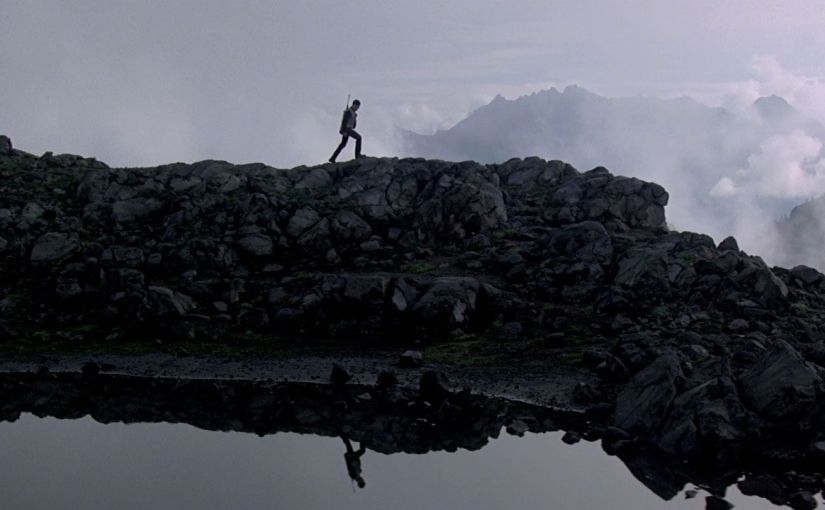
But even after the reception is over, there is one more small-town pit stop to make before the movie gets to Vietnam.  (In fact, The Deer Hunter spends surprisingly little time in Vietnam.)  Michael and a group of friends including Nicky and Stan (John Cazale) go hunting for deer in the mountains as a kind of ritual before Nick, Mike, and Steven are deployed.  It is in this sequence that Oscar-winning cinematographer Vilmos Zsigmond’s talents are put to stunning use.  We are shown vistas of the Allegheny Mountains that are simply breathtaking, with Mike and his friends seen as mere dots in the mountainsides.  Choral music with a men’s choir singing in Russian is heard on the soundtrack, giving the sequence a majestic aura that must be seen and heard to be believed.

Then the hunt is over, and the boys all have one last drunken night at the bar owned by another friend, John (George Dzundza in an under-appreciated, realistic performance).  Here they all sing along to Frankie Valli and listen somberly as John plays a sad classical tune on his piano.  And then, in one of the film’s masterstrokes of editing, we slam-cut immediately to the jungles of Vietnam – no boot camp, no footage of them being trained or flown over there, just suddenly they’re there and the contrast between the carnage we experience in the first few minutes of Vietnam versus the rhythms of their lives in Clairton could not be more extreme.

In a horrific but mercifully brief sequence, we watch as a Viet Cong soldier calmly walks into a burned-out village, discovers a hidden pit holding terrified villagers, and remorselessly tosses a grenade inside.  We then watch as Mike, now a battle-hardened soldier, emerges from a hiding place with a flamethrower and burns the VC soldier alive.

The effect of this scene cannot be understated.  To witness Michael torching a soldier, even after that soldier committed a brutal act himself, is jarring.  And why is it so jarring?  Because we have seen Mike as a civilian, as a friend, as a would-be lover, during that lengthy sequence at the wedding reception and while hunting with his friends.  Admittedly, you got the sense that he could or would get violent if necessary.  (He’s clearly the alpha male of his “clique.”)  But this…I mean, damn.

Then, in one of those Hollywood conveniences that never get old, Mike is unexpectedly reunited with Nick and Steve who just happened to arrive at that very same village with another platoon of US soldiers.  And then, immediately after being reunited, they are captured by enemy forces, imprisoned with several enemy combatants in a riverside compound, and forced by their sadistic keepers to play Russian roulette with each other as the guards bet on the outcome.  Michael comes up with a horrifyingly logical escape plan: convince the guards to put THREE bullets in the chamber instead of one.

Much has been made regarding the historical inaccuracy of this scene.  To those arguments, I say: who cares?  As someone once said, riffing from Mark Twain, “Never let facts get in the way of truth.”  The truth of the matter is, the Vietnam experience was a modern-day horror show, leaving physical and psychic scars on its participants and on our country.  In my opinion, the Russian roulette scene can be interpreted as a symbol of how those soldiers, or ANY soldiers, must have felt every single day.  Going on a routine patrol in the jungle could have potentially lethal circumstances.  They rolled the dice every time they called in an airstrike, betting they didn’t get firebombed themselves.  Booby traps were everywhere.  How is life in a war zone that much different from being given a one-in-six chance at living or dying?

I’ve already gone into far more spoilers than I am accustomed to, so let’s just say this happens and that happens, Michael winds up making it back home, Steven is grievously wounded in the escape attempt, and Nick goes AWOL when, after making it back to a military hospital in Saigon, he wanders the streets at night and discovers an underground ring of lunatics who run a high-stakes game of Russian roulette.  And we’re still just at the mid-point of the film.

When we see Michael back home, the earlier sequences establishing the rhythms of small-town life and his feelings towards Linda, for example, all come into focus.  We need that reception and the hunting scenes so we can see how much Michael has changed.  For example, when Michael is arriving back home by taxi, still in full military dress, he spots a huge banner: “WELCOME HOME MICHAEL”.  He tells the driver to keep going.  In a hotel room later that night, he sits on the edge of his bed and rocks back and forth, winding up crouching against the wall.  He is completely unable to process how to deal with people anymore.  Or, at least, he doesn’t trust what he will or won’t say.  I watch that scene, and I feel such intense sympathy and empathy.  What he’s feeling, what he’s been through, what he’s seen, is so huge that he knows he’ll never be able to explain it to anyone who hasn’t been there.  He knows he’ll get questions like, “What was it like?  Did you kill anyone?  How are you feeling?  Where’s Nicky?”  I’ll never know what it’s like to fight in a war, but if I had gone through what he’d gone through, I wouldn’t have stopped either.

There is a heartbreaking scene where Linda, who is more than a little distraught that Nicky is AWOL, hesitantly suggests to Michael that they go to bed.  “Can’t we just comfort each other?”  Mike rebuffs her, but in a way that makes it clear he’d like to, regardless.  De Niro’s performance here is staggering.  As he walks out, he makes a statement, showcasing how much he is feeling but also how unable he is to articulate it: “I feel a lot of distance, and I feel far away.”  I knew exactly what he was talking about.

The very end of The Deer Hunter is one of the most emotionally shattering finales of any movie I’ve ever seen.  It ends with a simple song, first sung as a solo, then joined by everyone else at the table.  I will not reveal what happens to get us there.  Is it shameless manipulation?  Yes.  Does it work?  Yes, so I can forgive the “shameless” part.

One of the criticisms I’ve read more than once about The Deer Hunter is how “one-sided” it is.  To which I say, “Well, duh.”  The Deer Hunter is not presented as a history lesson or a lecture on the internal politics in the country of Vietnam during the war.  The Deer Hunter is intended to make us feel something.  It wants to show us what happens to a person who is exposed to the very worst side of human behavior and lives to talk about it.  It wants to remind us that a country can wave a flag and stand for what’s right and be willing to sacrifice its best and brightest souls for a righteous cause…but it must also be prepared for the aftermath.  The Deer Hunter is a somber prayer that our country remembers the cost it demands, and that it will take care of its own when the dust settles.

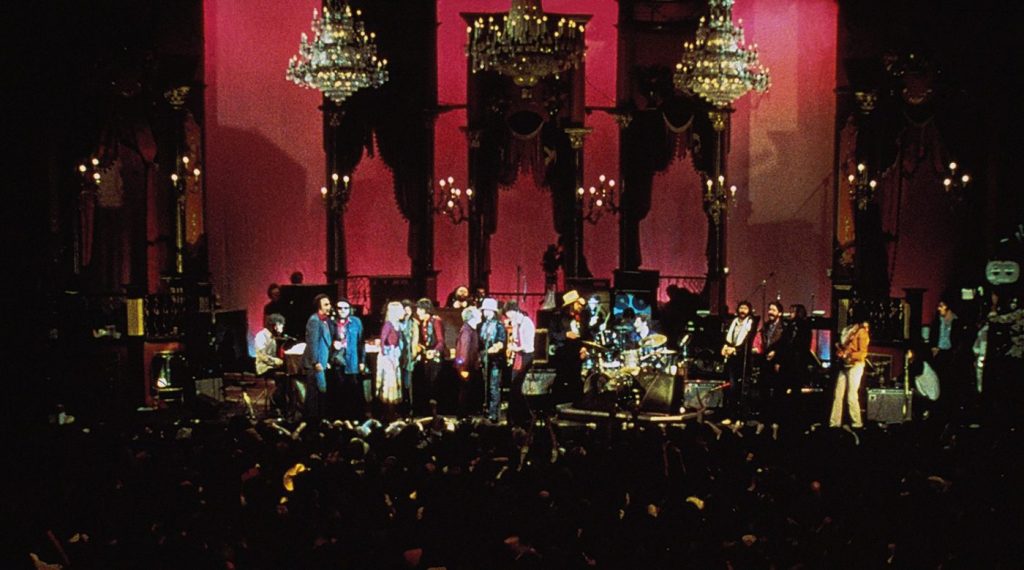
THE LAST WALTZ (1978)

by Miguel E. Rodriguez

Director: Martin Scorsese
Cast: The Band, Eric Clapton, Neil Diamond, Bob Dylan, Joni Mitchell, Neil Young, Emmylou Harris, Ringo Starr, Dr. John, Van Morrison, Ronnie Hawkins, Muddy Waters, Ronnie Wood
My Rating: 8/10
Rotten Tomatometer: 98% Certified Fresh

PLOT: In 1976, American rockers The Band performed their last concert ever with an unforgettable guest list.  Director Martin Scorsese filmed it, and the rest is history.


I mean, 16 years on the road, the numbers start to scare ya. I mean, I couldn’t live with 20 years on the road. I don’t think I could even discuss it.
– Robbie Robertson, vocals and lead guitar, The Band


Martin Scorsese’s film of The Last Waltz, the Band’s epic final concert in 1976, is a curious exploration of the highs and lows of what it means to be a rock star.  Or not just a rock star, but one of the stars of a touring band, one of those perpetually traveling bands like The Grateful Dead or Phish or, God help us, The Rolling Stones.  In their performances, you can clearly see the heedless joy with which every musician plays their part, whether it’s a rockin’ guitar solo or a yell during the refrain or a keyboardist getting lost in his own world for a minute or two.  There are smiles and grins and humble bows to the cheering audience in the dark.

But Scorsese makes an important choice with The Last Waltz not to show just the highs of live performance.  With intercut interviews, filmed some months after the concert itself, we get quiet, introspective feedback from band members who clearly love performing, but who recognize just how much touring has taken from them.  They have no desire to follow in the footsteps of predecessors who paid the ultimate price for fame.  “You can press your luck,” says Robbie Robertson at one point.  “The road has taken a lot of great ones.  Hank Williams.  Buddy Holly.  Otis Redding.  Janis.  Jimi Hendrix.  Elvis.  It’s a goddamn impossible way of life.”  Here is a man who has decided it’s time to end the show before it jumps the ultimate shark.

In this way, The Last Waltz becomes more than just a concert film or a pretentious exercise in cinéma verité.  It clearly presents both sides and asks the viewer: how much would you give to achieve the fame and fortune of a rock star?  Certainly, the highs are deliriously addictive.  But in their interviews, members of The Band seem diffident or downright dismissive of their fame and fortune.  One band member is happier when they’re OUT of the spotlight.  “And as soon as company came, of course, you know, we’d start having fun.  And you know what happens when you have too much fun.”

But in focusing on their interviews, I don’t want to give the impression that The Last Waltz is anything but entertaining from beginning to end.  Let’s be honest: the concert footage is what’s going to amaze you at the outset.


Scorsese sets the tone right at the start with a title card in huge letters: THIS FILM SHOULD BE PLAYED LOUD.  The ensuing concert footage proves his point.  Especially on the newest Blu-ray from the Criterion Collection, the music coming out of the speakers is crisp and clean and begs to be blasted.  One number in particular, “Mystery Train”, is a pounding rockabilly song that felt and sounded most like I was really there.  The other guest performers do their part.  Muddy Waters gives a lesson on where the blues came from, putting pretenders to shame.  Joni Mitchell brings a more delicate touch with a heartfelt ballad about a wanderer who is imprisoned by the white lines on the road.  Van Morrison, whom I’ve never seen in any concert footage anywhere else, gives a damn good impression of Joe Cocker in his tight flared bellbottoms and low-cut T-shirt over his ample stomach – an image I would never have connected to Morrison.

I could go on, but you get the picture.  On the basis of the music and the performances alone, The Last Waltz is easily in my top three favorite concert films of all time, with first and second place rounded out by Monterey Pop and Gimme Shelter, respectively.  (For the record, I have never really cared for Woodstock…go figure.)  Combine that stirring music with the inside information from the interviews, and you’ve got a movie that captures a moment in time, a so-called “end of an era.”  Punk and disco are right around the corner.  Did The Band know it?  Watching it this time around, I couldn’t help but think of the ending of Peckinpah’s The Wild Bunch, with the gang walking to their certain doom because the world is changing, and they know they can’t change with it.  The Last Waltz isn’t quite that gloomy, of course.  But the sentiment is there.

NATIONAL LAMPOON’S ANIMAL HOUSE

By Marc S. Sanders

When a film opens with two students walking across a college campus as the classical horn music of proud alumni accompany them, and then one of the students stops to pull up his fly, you know you are probably in for a contrast of ideals.

Animal House set a new standard in comedy featuring a John Belushi whose expressions and improvisations appeared too fast for the camera to catch everything he’s doing. The script never gave him much dialogue because his routines of smashing beer bottles, smashing guitars, smashing beer cans and just getting smashed merited no dialogue. He might have looked like a dirty slob, but he was a craftsman of facial expressions.

Every scene of Animal House plays like an episode of an ongoing sitcom; a raunchy one at that. A dead horse, a pledge ceremony, a toga party, a sabotaged parade, and a food fight. Each topic is the title of a sitcom’s various episodes.

John Landis directed the snobs vs slobs script co-written by Harold Ramis, and 40 years later the material still holds up. Then again, 40 years later, I wonder if this film would even get made. I’d rather not dwell on that.

What I do know is that this movie is still funny. Outrageously funny.


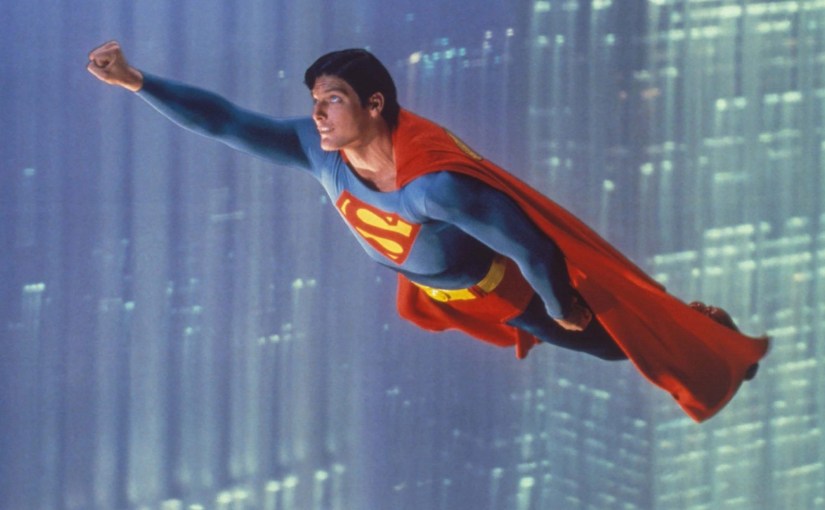
SUPERMAN: THE MOVIE

By Marc S. Sanders

Richard Donner’s Superman: The Movie is one of the best biographical films of a fictional character ever made.  Yes.  It absolutely is a biography.  How can you call it anything but?  The visitor from the planet Krypton is embedded so deeply within the lexicon of worldwide pop culture and historical significance that he rests within all of our subconsciousness.   When we think of ongoing problems in the world from natural disasters to destructive wars or famines and disease, or to even kittens stuck in trees, for a split second we all consider how simple we could go on with our lives if only Superman were here to rescue us. 

By 1978, forty years after Joel Siegel and Joe Shuster created the character, visual effects were at a more than adequate level to convince us that a man could fly. Thus, the man with the red cape was ready to appear on the big screen.  With creative input from writer Mario Puzo, Donner’s film goes through various stages of life from when the extra terrestrial is a new born baby, to a toddler, then a teenager and on to a thirty something adult.  While living on the planet Earth, his powers may make him virtually invincible, but he’s far from godlike.  He cannot prevent the unforgiving nature of death.  He can’t be everywhere all at once.  He can’t even perform on the same level as his colleagues or friends, who are skillfully beneath him.  It would be unfair to have Clark Kent on your football team.

To watch Superman is to see a mini-series over a span of nearly two and a half hours.  We begin on the white crystal planet of Krypton featuring one of the greatest actors of the twentieth century, Marlon Brando, cast as the father of the superhero to be.  Brando is Jor-El.  He serves the planet as a prosecutor and a political leader with an expertise in science.  He’s championed for his knowledge, but he’s also challenged by his peers when he is certain of his planet’s demise. Thus, he must release his newborn son, known as Kal-El, into the far reaches of space to survive.  The script here takes an almost Shakespearian approach in debates of facing inevitability.  Brando’s authoritative screen presence is perfect here. 

Kal-El moves on to Earth, particularly Smallville, Kansas, and the nature of the film changes personality.  1950s Americana becomes our main character’s environment with endless plains of crop fields and farm land as Kal-El becomes identified as Clark Kent, the teenager who develops a crush on the high school cheerleader and gets bullied in the process while he must deliberately withhold all that he’s capable of by influence from his adoptive parents (Glenn Ford and Phyllis Thaxter).  Life for any of us is never complete until we experience the death of a loved one and Donner showcases that here to demonstrate that Kal-El/Clark can not prevent what’s meant to happen when biologically our bodies shut down.  Not even a super man can save us. 

Clark reaches age 18, usually perceived by most as a turning point into adulthood and through a means of Krytonian process he’s educated until his thirtieth birthday upon the rules and boundaries he must function within while on Earth.  He learns of his ancestry and then Donner changes the setting of his film once again into the furthest extreme from quaint Smallville. 

We have transitioned to sprawling Metropolis where Clark works as a mild-mannered reporter at The Daily Planet.  Christopher Reeve plays Clark/Superman and there was no one who could have filled the role better.  Physically, Reeve is the example by which all super human character portrayals still look towards.  Yet, the Julliard trained actor performs the dual personality so well.  When he dons Clark’s glasses you feel as if you are looking at another actor from when he’s dressed in the blue and red costume of Superman.  His posture and voice inflections are so distant from each character he’s playing.  Christopher Reeve was a stellar actor of versatility. 

In Metropolis, we are also introduced to an impure villain, Lex Luthor (Gene Hackman, who never got enough praise for this role) focused on greed and individual power for him to consume at the expense of everyone else on Earth. 

As well, just as life must bring us towards the experience of loss, it also must introduce us to love in the form of Lois Lane. Margot Kidder does a magnificent job of the hustle and bustle career woman with a sense of romance and need for ongoing adventure.  A reporter’s life will only give you that some of the time.  Superman will let you live that every day.  In life, we all start with valuing one person in our lives beyond our immediate family, and Lois serves that purpose to Clark’s perspective. 

Donner takes advantage of comedy and slapstick when Metropolis comes into play.  It’s not as polished as Krypton.  Nor is it as calm and reserved as Smallville.  Again, the personality changes.  Reeve plays Clark as a persona of the inept and gullible newcomer nerd to hide his powerful alter ego.  Hackman’s Lex is accompanied by Ned Beatty as a bumbling sidekick to play off of. (This same actor was a frighteningly powerful and intimidating corporate CEO in Network just a few years prior!) Valerie Perrine holds her own against Hackman as Lex’ alluring dame to have a tete a tete of sarcasm with. Kidder is the leader of Metropolis’ populace always on the go so much that she’s not even aware of her insensitivity to poor Clark.  A great gag is that as a good as a reporter as she is, Lois has terrible skills in spelling.  (There’s only one p in ‘rapist’.)

Maybe you’ve never seen Superman from 1978, or maybe it’s been too long since you last took it in.  It remains a watch that’s worthwhile.  Donner’s film covers so much of this one individual’s life that also includes two separate ancestries.  I get hot and cold on biographical films, sometimes.  It’s a tough scale to measure.  Sometimes filmmakers don’t show you enough.  I thought the film Ray, ended too suddenly on its depiction of Ray Charles.  Sometimes, it’s an overabundance of material.  The Last Emperor and Chariots Of Fire seemed to never end, and became mired in long, drawn-out, sleep-inducing pieces of dialogue.  Superman allows just the right amount of time to live within these different parts of Kal-El/Clark Kent/Superman’s life that you get familiar with who the main character encounters and how he responds to those around him. You also witness how these environments respond back to him.  You get a sense of what he stands for and where he feels insufficient and where feels strong and secure, as well as valued by others. 

It might be crazy to believe, but biographical writers and filmmakers should turn towards Richard Donner’s film for an outline that perfectly establishes every scene and moment that’s cut into its mold.  Superman: The Movie?  When I want to tell the life story of Golda Meir, or Barack Obama or Joseph Stalin or Jesus Christ?  Yes, Superman.  If we are crazy enough to follow the exploits of a man who wears a cape and flies through the sky, then why can’t we believe he can provide the answers to the great mysteries of life better than any of us?