THE LEOPARD (Italy, 1963)

by Miguel E. Rodriguez

DIRECTOR: Luchino Visconti
CAST: Burt Lancaster, Claudia Cardinale, Alain Delon, Paolo Stoppa
MY RATING: 9/10
ROTTEN TOMATOMETER: 98% Certified Fresh

PLOT: The Prince of Salina, a noble aristocrat of impeccable integrity, tries to preserve his family and class amid the tumultuous social upheavals of 1860s Sicily.


Visconti’s intimate epic The Leopard evokes the spirit of so many other films, in all the best ways, that it’s hard to know where to begin.

It’s epic in scope and intimacy, like Doctor Zhivago.  The opulent costumes reminded me of Amadeus, and the lush scenery reminded of Barry Lyndon.  The final ballroom sequences must have influenced the wedding party in The Deer Hunter.  The literate screenplay refining tons of background exposition resurfaces in movies like JFK and Nixon.  The theme of a grizzled older man facing his own obsolescence is echoed in scores of Westerns from The Wild Bunch to Unforgiven to Butch Cassidy and the Sundance Kid.

In short, The Leopard takes bits and pieces of many of my favorite films and consolidates them into an absorbing movie that held my interest from beginning to end, despite its esoteric setting: Italy during the tumultuous years of the “Risorgimento,” when the aristocratic ruling classes were faced with extinction as the middle classes rose up, rebelled, and created a democratic Italy.

We first meet Prince Don Fabrizio Salina (Burt Lancaster) as he and his extended family are attending vespers in an upstairs room of their palatial mansion.  Their ritual is interrupted by sounds of commotion and argument coming from outside the room; turns out the dead body of a soldier has been found in the garden.  (In retrospect, this seemed to me an elegant metaphor for the entire rest of the film: a family’s stability and comfort in ceremony and formality being interrupted by outside forces intent on tearing down the old order in favor of the new.)

The dead body is forgotten very shortly amid the return home of a beloved nephew, Tancredi Falconeri (the dashing Alain Delon).  His return is short-lived as he intends to leave and join the middle-class army under General Garibaldi.  Meanwhile, Prince Salina comprehends the way the wind is blowing in his country and befriends a man, Don Calogero Sedara (Paolo Stoppa), who USED to be in a lower class, but who is now on the same social footing as the Prince himself.  As the newly instated supervisor of elections, Sedara wields considerable power in the imminent new society on the horizon, and the Prince knows what must be done, despite his misgivings.

From there, The Leopard evolves into a vivid tapestry of life in the rustic Italian countryside, set among some of the most beautiful Tuscan/Sicilian backdrops I’ve ever seen.  Some of the exteriors, showing seas of wheat or olive groves with peasant workers in the foreground, looked like museum-quality oil paintings.  Some soapy material is introduced, but it never panders, never descends into schmaltz.  For example, Tancredi falls in love with Don Sedara’s daughter, the luscious Angelica (Italian knockout Claudia Cardinale), at the expense of breaking the heart of Concetta, one of Prince Salina’s daughters.  We watch as the Prince boldly strides into a seedy quarter of town to visit the rundown apartment of his mistress.  When his priest rebukes him for this transgression against his wife, the Prince explodes: “What do you want from me?  I’m a vigorous man.  I can’t be content with a woman who crosses herself before hugging me!  …I had seven kids with her.  You know what?  I never saw her navel!”

While this dialogue is both funny and not, it highlights the way the Prince has always viewed himself: as a man of noble birth whose behavior is no one’s business but his own, regardless of morality or social niceties.  But this same man is intelligent enough to know which way the wind is blowing and how to modify his behavior accordingly.

Everything concludes with a magnificent ball held by a neighboring nobleman, attended by “anybody who’s anybody” including the Prince, his family, Tancredi and Angelica, and literally hundreds of others, decked out in some of the greatest costumes I’ve ever seen on film.  During this lavish party, some final decisions are made, and the Prince contemplates what will happen to him and his family, and his entire class, after his death.  The live orchestra plays several waltzes and dances by the one and only Nino Rota, the scorer for Coppola’s The Godfather and numerous Fellini films.  As a result, yet another great film is evoked: as the celebrants dance in a line and weave their way throughout the great house, I was reminded of the famous ending of Fellini’s [1963] and its conga line of circus performers.

Some time ago I read Donna Tartt’s Pulitzer-prize winning novel The Goldfinch.  While it didn’t deliver breathless thrills like a Crichton technothriller, it was nevertheless engrossing.  The language of Tartt’s prose transported me into the world of her hero and his morally complex journey like few other books had before or since.  That’s exactly what happened with The Leopard.  I expected it to be a “spinach” movie [good for you, but yucky taste], so my expectations were a bit low, despite its massive reputation in film circles.  But, like the other Visconti film that I’ve seen [Rocco and His Brothers, 1960], it breaks free of the mold I had created for it and becomes something grand and operatic.  I have a slight issue with the very final scene (I was hoping for something a little less open-ended), but if you have the patience for it – and if you don’t mind watching Burt Lancaster overdubbed into Italian – The Leopard is a treasure worth digging for.

TOM JONES

By Marc S. Sanders

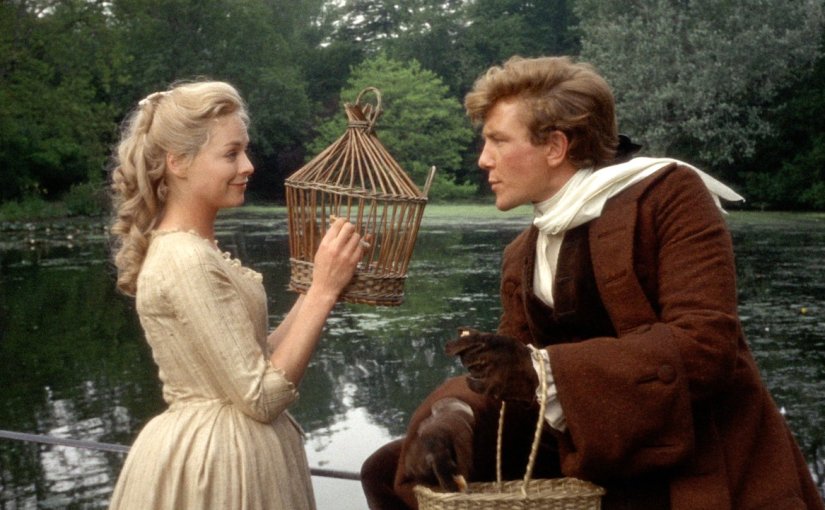
Watching Tom Jones I wondered if the Monty Python troupe took inspiration from producer/director Tony Richardson’s film.  It’s all quite madcap.  With Albert Finney as the lead title character, there’s a zany quality to this eighteenth century piece adapted from Henry Fielding’s novel The History Of Tom Jones, A Foundling.

The film opens like a silent movie with title cards being used to emote dialogue.  The Squire Allworthy (George Devine) returns to his estate and upon retiring for bed, he discovers newborn Tom beneath the blankets.  Allworthy decides to raise the child. 

The film transitions to a talkie picture and Tom grows up to be portrayed by Albert Finney.  The orphan man gets himself into all kinds of predicaments, notably with an assortment of women but his true affections are directed towards Sophie (Susannah York), the daughter of the neighbor Squire Western. The cad known as Blifil (David Warner, in his very first film role) convinces Allworthy that Tom is a villain and thus he’s excised from the estate with cash to seek out his own fortune.  Interactions lead to unexpected circumstances for Tom, including being robbed penniless, crossing paths with the butler who was presumed to be his father, and being sentenced to death for murder after he rescues an endangered maiden from the assault of a British red coat (Julian Glover).

Tom Jones takes unexpected turns in its narrative, and it leads to big laughs.  Upon discovering that his wallet is stolen, Albert Finney breaks the fourth wall seeking the viewers assurance that he is not making it up.  Other characters are depicted in freeze frame silliness as they eavesdrop on Allworthy.  There’s lots of running around escapades as Tom flees from being caught with a couple of mistresses.  I was waiting for the Benny Hill music to cue in, though John Addison’s score suffices well to keep it all lighthearted during such times when the film speeds up with a Keystone Kops kind of pace.

A film like Tom Jones is not what I normally gravitate towards.  Going back and forth, there’s lots of screaming banter and deep English dialects that swallow the words being uttered.  Drunken debauchery is relied upon for Hugh Griffith as Squire Western; he was one of five actors nominated for the film.  At one point, Griffith falls off his horse and the animal lands on top of him.  Apparently, this was not stunt work as Griffith notoriously showed up drunk each day on set and the horse easily overtook him.

Albert Finney, though, is a comedy gem as he innocently portrays Tom with no ill intent.  Watching him here in his youth, he’s adorable with an occasional prince and pauper romantic interpretation of his performance. A memorably hilarious scene involves Tom and a lady mistress seducing one another from both sides of the table as they gorge themselves with a bevy of food including pheasant, pears, potatoes and so on. Without Finney’s fearlessness in leading this sloppy, drooling scene, I’m not sure it would have worked as well. Richardson elongates the moment between the two to build the laughter.

I’m impressed with much of the filmmaking from Tony Richardson.  Cameras must have been mounted on horseback to get up close pursuit during a sporting hunt of a deer that also included a large number of rabid dogs.  Still, I was a little queasy in the follow up scene when the deer is slaughtered amid the canines barking for a portion. Technically speaking though, the film works on many levels.

As well, I could not help but consider that a modern filmmaker like Yorgos Lanthimos (Poor Things, The Favorite) adopted some of Richardson’s comedic approach.  Tom Jones is proudly weird and obscure just like Lanthimos’ storytelling.

Yet, I cannot comprehend the praise awarded to this movie, including Best Picture and Director as well as the nominations in cast performances by critics, Oscars and BAFTAS.  I’m convinced of the period timing and what the script and actors lend to the film, but I’ll never say any of it left me enraptured in the novelty.  It’s a cute story, but that’s all.  Kind of like Arthur with Dudley Moore, where the innocent man child happily lives within his sophomoric mentality while uncovering who he truly loves.  There is likely more to take away from Tom Jones, but I didn’t recognize it.

If anything, as I continue my trek towards watching and reviewing every Best Picture winner in Oscar history, I’m at least glad I got Tom Jones checked off my list.  At times, it’s delightful and it’s also proudly oddball in its execution.  What constitutes it as the best film of 1963? Reader, I’m just not sure.  Yet, it is at least entertaining with much praise for Albert Finney and cast.

THE BIRDS

By Marc S. Sanders

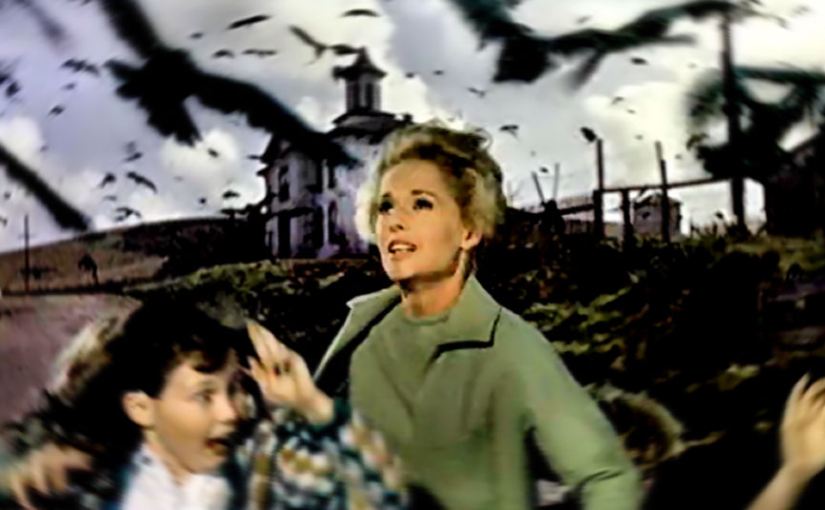
Alfred Hitchcock’s monster movie is The Birds from 1963.  There’s really not much to the piece as far as a story goes.  Characters are just given a purpose to be with one another so that they can be tormented together.  In this case, the film offers up a near hour introduction of newspaper heiress Tippi Hedren playing meet-cute with attorney Rod Taylor.  How ironic that they begin a flirtation in a bird shop of all places only to reconnect at Taylor’s harbor island home in Bodega Bay, located on the outskirts of San Francisco.  Still, as only Hitchcock can demonstrate there’s an ominous feeling sprinkled throughout before the real terror takes flight in the movie’s second half.

While I don’t rush for repeat viewings of The Birds, there’s no doubt as to its influence.  Each time there’s a shot of a bird soaring in the sky, your eyes open wider.  Something will eventually take effect.  At the beginning of the film, Hedren looks out into the San Francisco sky to see large flocks of birds soaring overhead.  Later, while taking a boat in Bodega Bay towards Taylor’s home that he shares with his mother and sister (Jessica Tandy, Veronica Cartwright), she’s attacked by a random gull.  It’ll raise the hair on your arms for sure. 

I’ve noted before how Alfred Hitchcock builds suspense.  The audience knows there’s a bomb under the table.  The characters in the film don’t. So, the audience is nervous as to when the bomb is going to go off or if the characters are even going to discover the explosive.  An outstanding sequence in The Birds includes Tippi Hedren sitting on a park bench near the jungle gym, outside of a school house.  The children are singing along inside.  One crow lands upon the jungle gym.  Then Hitch returns to a shot of Hedren calmly lighting a cigarette.  Then back to the jungle gym and there are four more birds perched just behind her.  Then back to Hedren, unaware.  Then back to the jungle gym for Hedren to turn around and there are suddenly hundreds of crows congregated together.  Effectively, other than the innocent harmonies of the children nearby, Hitchcock opts not to use any music to shock his audience as the scene develops.  The visuals lend to the fear.  The danger that threatens Hedren and the children heard off screen is at the forefront of the viewer’s mind.  No more is needed.  It’s scary, and you want to be as quiet and unalarming as Hedren so as not to instigate the monsters right next to you.

A later scene has Hedren ascend a dark staircase to open a bedroom door.  The roof has been torn open and suddenly the blackness comes alive with flapping wings from every direction.  That’ll make you shift in your seat.

Hitchcock offers plenty of set pieces for bird attacks, but another effective device is to show dissention among the ranks.  From a character perspective, the picture takes a sideways route to imply an oedipal complex between Rod Taylor and Jessica Tandy, who plays his mother.    Therefore, the script suggests Hedren as a threat to their relationship.  Before the film is over, they are likely going to have to develop a united front or it could be their undoing.  (Maybe it’s a nod to Hitchcock’s popularity with Psycho. A cute wink and nod.)

There’s also Suzanne Pleshette as the school teacher that we learn had a tryst with Rod Taylor’s character at one point.  That doesn’t spell out too well for Hedren, either.  As this bizarre epidemic becomes clearer, a scene in the town diner goes so far as to suggest that these random bird attacks didn’t start until Hedren arrived the day before.  Yes!!!!  It’s all her fault!!!! 

None of this will eventually matter though.

Other disaster films and monster movies later relied on exchanges like these, from Jaws to The Towering Inferno.  Hitchcock was wise enough to build tension.  Not a single bird in the scene, but still the fear and doubt among each other bares the strain.  There’s even an advocate for the birds with a strange elderly woman proudly debating her ornithological expertise, while a drunkard at the end of the bar declares the world is coming to an end.  All of these characters could have come from different movies, only to be pasted on to this canvas thereby lending to the frenzy.  Chaos must ensue among the masses.

Often, I get frustrated when there’s no explanation for a film’s central story.  I gave up on the TV show The Walking Dead many years ago because there never was a cause revealed for the zombie epidemic.  It became a smut of soap opera cliché accompanied with ridiculous gore.   Forgive the SPOILER ALERT, but I commend Hitchcock’s film for not providing a wrap up to The Birds.  The film ends with an uneasy final caption.  Nearly every inch of space on the screen is occupied with birds as the cast makes their way to the car to slowly drive out of town, careful not to disrupt the now dominant species of this universe.  Hitchcock provides a picture where the laws of nature declared a winner.  As intelligent as humans are considered to be, they have not won out.  They have had to surrender.  Why the birds attacked, we’ll never know.  Odd phenomena can happen.

There’s nothing thought provoking about The Birds.  It’s simply a film based on heightening your discomfort.  Often, I find the material and dialogue laughable.  The townsfolk notice a man lighting a cigarette right over a stream of gasoline and urge him to put out the flame.  Wouldn’t the dumb guy smell the diesel?????  However, then we wouldn’t get a fantastic fire ball to observe up close as well as from Hitchcock’s “God shot” in the sky with the birds looming into frame over the town below. 

The visual effects look outdated of course, but they still hold because of how Hitchcock demands they are used.  I noticed that his reliable composer Bernard Hermann is credited, but as a “sound consultant” this time.  The shrieking of the birds is what sends the chills down your spine.  Also, there’s the fact that Hitchcock offers up birds flying right at the screen or the windows.  A great sequence includes the front door of a house being gradually shredded apart by the bird masses.  The wood proceeds to splinter.  You don’t see the monsters but you know they’re right there on the other side.  Once that door breaks open or those windows shatter, then it’s likely all over for our heroes.  George A Romero exercised bits like this in Night Of The Living Dead.  Very, very effective.

The Birds is just okay for me, honestly.  The fright material is what keeps its legacy.  Yet, there’s a lot of soapy material among the cast of characters that’s not all that interesting.  Again, a purpose has to be served for these people to occupy the story.  Just offering a movie where birds hover and peck at people wouldn’t be enough.  So, we have to follow Rod Taylor and Tippi Hedren’s trajectory.  It’s fun to see screaming kids run from these animals turned menace, though.  I found it hilarious to watch a birthday party run amok.  I also yelp when I see a flock storm into Jessica Tandy’s house from the chimney turning the living room into a contained disaster area.  An especially gruesome discovery by Tandy later in the film is absolutely eye opening (pardon the pun, if you know what I mean), and clearly an inspiration to a well-remembered scream out loud moment in Jaws.

The Birds is fun, but it’s not the artistic merit you’ll find in other Hitchcock classics like Rear Window, Vertigo, Suspicion, or even Psycho. What I can promise is that once you get through the plodding character connection build up, you’re allowed to forget about any of their value to the picture and simply relish in the mayhem. 

FROM RUSSIA WITH LOVE

By Marc S. Sanders

Terence Young returns to direct the second installment in the James Bond franchise, From Russia With Love.

Sean Connery is back as 007 and he is assigned to escort the beautiful Russian Tatiana Romonava with the Lektor, a secret Soviet computer.

Tatiana (Daniela Bianchi, one of the most beautifully charming Bond girls) claims to be wanting to defect, but she is under duress from the terrorist organization SPECTRE to trap Bond (revenge for the demise of Dr. No) and cause a conflict between England and Russia.

Ian Fleming’s story is deeply rooted in the Cold War climate of the mid 1960s. It only makes sense that SPECTRE, with leadership from the mysterious Blofeld, would become a formidable opponent to Bond. Moments like the Cuban Missile Crisis and other events of the time were on everyone’s mind. I imagine it was easy to relate to in this film.

The story primarily takes place in one of Fleming’s most favorite known locales, Istanbul, Turkey. Young has great shots within enormous cathedrals and museums and even underground in 16th century tunnels, as well as outdoors on the ferry. It’s a fascinating, scenic tour.

Connery is at his best here. He looks great in his fitted suits, letting the suave and dry humor of Bond come naturally. 007 even disapproves of one ordering red wine with fish. Yet he’s also a great player, as his chemistry with gadgets like his quick assemble sniper rifle and trick briefcase (complete with explosives, gold coins, and dagger) really works well. A great fight scene aboard a train against Red Grant (Robert Shaw, in a great toughie role, nowhere recognizable compared to his later portrayal as the shark fisherman Quint in Jaws) is brutal and bare knuckled; well choreographed within the close quarters of a small train compartment.

Another killer comes in the form of Rosa Kleb (the miserly Lotte Lenya) with the shoe knife that’ll kill you in 12 seconds. She’s a lot of fun.

From Russia With Love is the most unusual of the Connery/Moore films. There’s no giant fortress for a villain, or global domination plot that is speechified to Bond over dinner.

The film is more like a Hitchcock interpretation as a pursuit is the driving force. People turn up dead just feet away from Bond and he doesn’t confront or acknowledge the villains himself. He knows they are there, but he doesn’t pick them out of the crowd. Young’s film relies on the suspense that Hitchcock introduced time and again as in North By Northwest, for example. A great scene pits Bond against an aggressive helicopter dropping grenades.

The gadgety playfully exists however, as does Bond’s chauvinism for great puns and tongue in cheek material.

The future of the franchise was looking even more promising here thanks to Connery and EON productions upping the stakes in action and more forthright innuendo.

Bond was going to be here to stay for quite a long time.