ALL ABOUT EVE

By Marc S. Sanders

Today’s actresses can lobby and vie to be Wonder Woman or Black Widow or Jane Bond. Yet, what so many filmmakers and actors fail to recall are the powerhouse performances of yesteryear that didn’t require guns and magic lassos. Movies shouldn’t simply be super heroes and villains in spandex and leather. No movie is a better example of this argument than Joseph L Mankiewicz’ 1950 Best Picture winner All About Eve.

This is also the only film in history to have four actresses nominated for acting awards – Bette Davis, Anne Baxter, Celeste Holm and Thelma Ritter. What an accomplishment!!!

Davis is Broadway legend Margo Channing, a sexy, tough, cigarette smoking broad who grew up and keeps her social life within the limelight. She’s a warrior among the Hollywood and New York elite. When her friend Karen Richards (Holm) welcomes a mousy young girl in a raincoat backstage to meet the famous Miss Channing, it becomes more than just a quick hello. This girl is Eve Harrington who proudly admits to following Margo’s career from San Francisco all the way to Broadway waiting outside the theatre on each performance night for that opportunity to meet the legend in person.

Upon introduction, Eve shares her tragic story of growing up poor and losing her husband in the war. Margo and Karen are taken with Eve, and now the young ingenue has wielded her way into the upper crust life among the pomp and circumstance. Margo’s test of her own celebrity seems to come unexpectedly as it occurs to her and her smarmy personal assistant Birdie (Ritter) that maybe Eve is angling for a way to fill Margo’s big shoes along with her wardrobe and stage costumes.

The elite are intruded upon by this outsider. Karen’s friendship to her playwriting husband Lloyd (Hugh Marlowe) and her friendship to Margo is tested by Eve’s surprising manipulations. As well, Eve is making herself more aware to Margo’s younger lover and stage director Bill (Gary Merrill). Eve also finds ways to build an acting career on the shoulders of these show biz upper class by eventually winning the opportunity to be Margo’s understudy.

The outsider who narrates these developments is the famed theatre critic, Addison DeWitt (a charming and cultured George Sanders who won the Oscar). DeWitt might not get welcomed to every exclusive black tie party in town as he’s “the critic” but that’s fine for it’s how he survives in his career. He’ll recruit a young naive actress like a newcomer played by Marilyn Monroe to maintain a stay within the social circle, and soon he’ll ride along on Eve’s journey for personal gain.

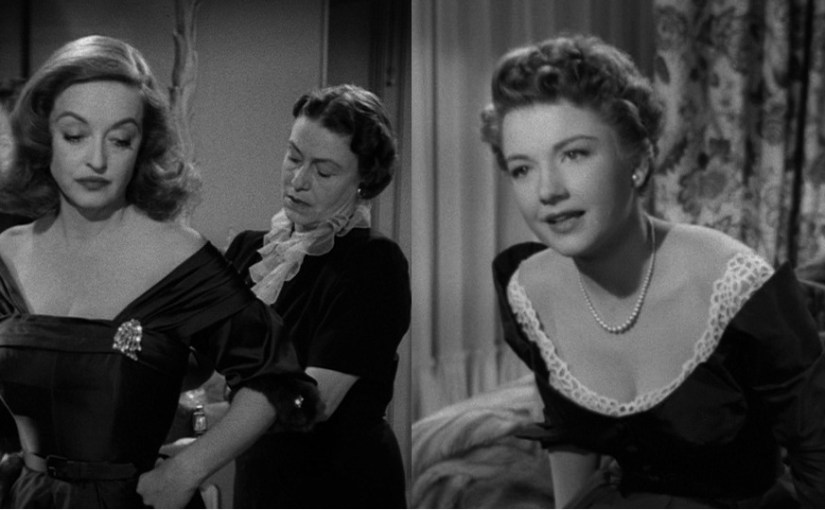
Mankiewicz’ script is brilliantly witty, absolutely biting and sharp. One of the best moments in film belongs to Bette Davis wearing a gorgeous dark evening gown designed by the legendary costumer Edith Head, and used as Margo’s armor ready for social battle. Davis declares “Fasten your seatbelts. It’s going to be a bumpy night.” No line could be so forthright in what to expect of a film like “All About Eve.”

This picture is ranked at the top of many “greatest film” lists. As it should be. This is not a sweeping biographical epic. Rather, it’s a lot of story branches that begin at the introduction of one character and expand in various directions among a handful of others who become disarmed by her ongoing presence. It’s not even that simple as Mankiewicz writes about Eve’s duplicity and how she manages to collide one piece of her destruction with another kind of destruction elsewhere, and the victims are simply blindsided.

Anne Baxter certainly had me fooled as Eve. She’s sweet and innocent on the surface and soon an inner and more evil shell emerges. Bette Davis looks spectacular and delivered one the best female performances of the last hundred years. She can carry herself and keep her guard up and authority in place. There’s a rich and commanding history about Margo that seems easy to believe. She is the queen of Broadway at the film’s beginning. Yet, for a moment her guard is let down and Mankiewicz gives us that window of time for his showcase.

Mankiewicz effectively opens his picture with Eve winning a very exclusive show biz award. She graciously approaches the podium to accept and deliver her speech. However, there are a select handful of individuals who withhold their applause of celebration. Then he flashes back to how we’ve come to this particular moment. It’s a great opening leaving me curious with a bunch of why questions. To watch this sequence the first time leaves you curious. To watch it on a second or third time is to be in on Addison DeWitt’s exclusive story of show biz scheming and diva one-upmanship. I only wonder if Joseph L Mankiewicz was as keen as George Sanders’ character to foresee how much life will come from Eve Harrington’s intrusion upon the lives of Margo & Bill and Karen & Lloyd. Before the age of desperate “if it bleeds, it leads” gossip rags, All About Eve was the real storyteller. 

THE APARTMENT

By Marc S. Sanders

You ever come across a film that begins as sweet screwball, and then segues into serious sensitivity?  If you have, then maybe you have seen Billy Wilder’s classic film The Apartment.  Beyond the film being an Oscar Best Picture winner, Wilder’s film demonstrates that there is a screwball mentality in all of us, but we also know when the party must end.

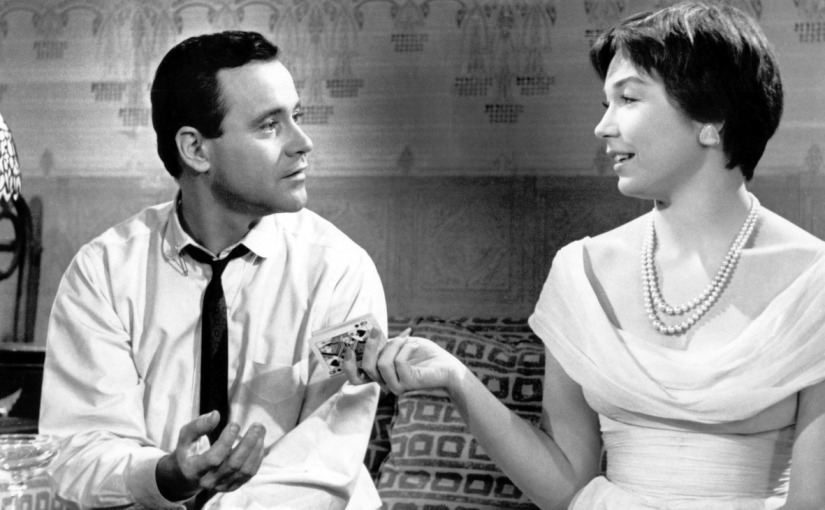
Jack Lemmon plays C.C. Baxter, one of over 31,000 people who works for Consolidated Life in a Manhattan high rise.  He’s a likable fellow who happily does his work with a typewriter amid a sea of other desk jockeys on a floor that seems to expand beyond the architectural limits of the building.  When his eight hour day comes to a close, he’s normally the last one to leave for home because it is likely his apartment located outside of Central Park is occupied with one of the company big wigs that liberally uses his pad to entertain a lady friend beside their respective wives.  Baxter has been relegated to a door mat who holds out hope that any one of these ranking supervisors may one day promote him to an executive position with a private office and a view of the city.  Promise finally opens up when the President of the company, Jeff Sheldrake (Fred MacMurray), summons Baxter to his office to commend him on the positive feedback from the other men in the office and to request some time with the apartment himself.  Sheldrake would like to have some time away from his wife and children to host Fran Kubelik (Shirley MacLaine), the building’s elevator operator.  If Baxter had the availability to his own apartment and a little bit of bravery, he may have asked Fran for an evening out together on another occcasion.

The Apartment begins almost like a farce or sitcom as the revolving door of Baxter’s apartment welcomes one new executive after another.  You may be expecting confusion and misunderstandings that’ll lead to outrageous laughter.  However, poor Baxter is the victim to all of this coming and going by even surrendering his home to Joe Dobisch (Ray Walston) who calls unexpectedly at eleven o’clock at night requesting the place for an hour.  Baxter takes shelter on a park bench in the December cold. The humor of this arrangement is not so funny any longer.  After Sheldrake’s regard for Fran is more apparent, then it’s more clear that these characters are not spawned from the happy home life scenarios of 1950’s television programming.  Sheldrake is only charming to an adorably likable woman like Fran for as long as he cares.  Some might say he’s not terribly cold hearted though.  After all, though he forgets to shop for a Christmas gift for Fran, he offers her a hundred dollar bill from his wallet instead.  Up until this midway point, Shirley Maclaine has been so good at maintaining a cheerful disposition that suddenly her self worth seems a whole lot less than a hundred dollars following Sheldrake’s latest disregard.  Surprisingly, Fran overdoses on a bottle of sleeping pills.  When Baxter discovers her in his bed, he races to revive her with the aid of a doctor neighbor.  Baxter does not give up on helping Sheldrake make this right, while tending to Fran’s recovery on Christmas Eve.  Yet for Sheldrake, this is all an inconvenience and now without even looking for a better way to live, Baxter finds an opportunity to allow his own personal strength to come through against the executives at the office, as well as Mr. Sheldrake, and most importantly with the woman he cares for, Fran.

Jack Lemmon has a energetic method to his performance, as I find he does with most of the roles in his career.  He plays men who never break to sit and breathe.  They are always on the go.  They almost never sleep.  So, his fast paced delivery and flirtation with Shirley MacLaine let Wilder’s film perform at a fast pace.  The range of both Lemmon and MacLaine really work for The Apartment, because they can be naturally funny and intensely serious when the moment calls for it.  Lemmon can sell me as a guy who will use a tennis racket to strain his spaghetti while at the same time standing up for his convictions when life can not allow humor for a moment.  MacLaine can portray a woman with a menial job like an elevator operator and yet still be considered valued and recognized as genuinely hurt when disregarded.  For Fred MacMurray, I think it’s fair to say he actually makes for an effective villain, someone you love to hate, with his portrayal here.  I knew of MacMurray with his television program My Three Sons before I ever saw The Apartment.  What a departure the two roles are.  Here, he is a charming fellow on the outside with a hollow mentality inside.  He’s a man who only cares for his immediate needs.  He can not be inconvenienced with someone else’s feelings whether it is Baxter’s inconvenience or Fran’s despair.  Nothing else matters.  No one else matters.

The film may be called The Apartment, but office politics seems more at play here. Billy Wilder’s film is surprising but it’s honest too.  I doubt many of us would ever surrender our own home night after night to the more powerful and influential.  However, many of us, with a drive to climb a corporate ladder likely have compromised our ideals to get to a higher plateau at one time or another.  Personally, I have to shamefully admit that I have committed such an act.  The Apartment questions when enough is enough.  What’s special about Wilder’s film is that C.C. Baxter must discover if he lives to work or works to live.  

PATTON

By Marc S. Sanders

You may find this hard to believe but as I was watching the epic Best Picture winner of 1970, Patton, I was actually thinking of a dreadful film I had seen the day before called Under The Cherry Moon, featuring and directed by Prince.  How in the hell could that be?  Well, both films are laced with the vanity of their films’ main characters to the umpteenth degree.  However, I’ll save Prince’s piece for another column, when maybe I’m out of excuses to avoid death or a root canal.  The point is both films never tire of the close ups of its featured player to enhance the pride, ego and conceit they do not hesitate to thrive off of.  The difference is that director Franklin J Schaffner knew that to really show what motivated General George S Patton you had to drill for the American warrior’s drive, and Patton’s motivation was truly his own self-worth.  (Prince just wanted one more close up on top of one more close up as a means of self service.  Sorry but that’s not enough of a reason for a character to live.)

Patton is portrayed by George C Scott in an Academy Award winning performance.  No one else could have played this role.  No one else should ever play this role again.  Scott and Patton are symbiont in a camera’s lens.  One can not be imagined without the other.  Schaffner’s film opens in front an American flag that fills the entire screen.  Patton steps up in front.   Somehow, his figure seems like a bigger, more prominent figure than the large backdrop of the stars and stripes.  He delivers a monologue that was aimed at the troops fighting in the second World War, but this is really an introduction to the audience of what to expect for close to the next three hours.  He reminds us that the blood and guts of the Nazis will be used to grease down the tread of our tanks and he will be proud to lead his men on any battlefield that calls for the bloodshed of Hitler’s regime.  In the film’s first five minutes, you know that this biographical character will never sway from what he stands for.

The theme of the film tests the egotism of General Patton.  We see him get dressed in his military uniform before heading in to battle.  His subordinates put his military jacket on.  Another one places his helmet upon the great battalion leader’s head, but it is done with great detail.  This helmet will never fall off.  I can promise you that.  Early in the film, the two star general takes it upon himself to decorate his shirt collar with three stars.  He’s reminded that President Eisenhower has not made his promotion official yet.  Patton proudly dismisses that detail.  None of this has to do with the strategist Patton became known for on the battleground.  George C Scott demonstrates that the General knew when to bestow himself with another honor in his proud military career.  No one else, not even the Commander in Chief, would determine when the General was worthy of another star.

In the heat of battle, Patton happily volunteers historical facts about the regions he is fighting on.  He even insists that he knows for sure what happened before.  He, General George S Patton, was there.  He’s not kidding.  He truly believes that.  History did not deliver General George S Patton.  Rather, General Patton delivered history. 

All throughout the film, Patton is seen in moments of great pride.  He’ll be standing as his jeep caravans his military forces through conflicts in Tunisia and war torn Europe.  General Patton loved to lead, but his leadership was specific to sending a battalion into one conflict after another and what was most important was earning the glory for himself.  The British couldn’t have the accolades.  Certainly, his fellow generals couldn’t either.  Patton is who the Nazis feared.  Patton is the towering six foot tall man who must be seen walking off the bow of a ship into battle when the US back home gets film updates. 

Scott’s character is tested however as Ike loses confidence in the great general.  Patton’s mentality on war does not mesh well with the propaganda of the United States with the other allied countries, particularly Russia.  Patton is not interested in making friends with Russia as he is more concerned with anticipating an eventual disagreement with them and thus, we must be prepared for war.

More significantly, Patton only cared for the bravery of his men.  Early on in the film, Patton arrives at the camp site of a US battalion to take over its leadership.  George C Scott’s presence is all that needs to be said as he visits the mess hall followed by an office and then an infirmary.  Men will no longer show up late for breakfast.  If other men are going to sleep, well then that’s fine as long as it is a means to end with an advantage towards military victory.  Doctors will don their helmets even if it means drilling holes in them to continue properly using stethoscopes, and any man who is being treated for self-inflicted gun shot wounds will not be entitled to a bed for healing.  Get those cowards out immediately.  Hospitals are for those soldiers who proudly shed their blood in the name of the United States of America. 

This last detail is further echoed at a pivotal point in the film.  Patton chastises a crying soldier who is simply terrified of the shelling of war.  No man who dons a military uniform should ever be crying in fear.  Following slapping the boy around, Patton orders that the soldier be sent to the front lines.  My question is how useful is this kid going to be on the front line if he is crippled by his own fears.  Patton would have then slapped me around, most likely.  The front line will certainly wake this kid up and load his weapon to spill some enemy blood. 

The other interesting dynamic to the film falls upon the role of General Omar Bradley played with contradictory delicateness by Karl Malden.  The script by Francis Ford Coppola and Edmund H North display Bradley as a man who came up through the ranks of General Patton.  Yet, because of Patton’s controversial nature as a proud war hero and not a politician representing the ideals of Ike’s administration, Bradley is eventually put in charge of the United States’ positions in the War.  By the time this arrives, the film is only approaching the beginning of its second hour and I could only imagine how Patton is going to take this. He’s advised by his friend Bradley to calm his nature and maybe even question his motivations for battle.  Yet, Patton can only see that his apprentice has taken over and he has been grounded or meant to serve as a decoy to Hitler’s armies.  This is a complete misuse of his skills and his pride as an American symbol.  Patton is relegated to delivering speeches to gracious European women.  This is beneath him.  Adding insult to injury, the dog he proudly walks by his side is a fraidy cat when confronted with a woman’s little yappy pup.  The great general’s ego has been terribly bruised.

General Patton might have been controversial but the film serves as a means to show his imperfections ahead of his historical conquests.  When Patton is questioned as to how he can overthrow Hitler’s positions in various parts of Europe within two days of heavy snowfall, Patton is proud to say that he alone has trained his men to overcome any ordeal they are faced with.  His men are killers; killers of Nazis.  The doubt of other military leaders is proven wrong thanks to the General’s insistence.  Sure, the old general might have been a pain in the ass for the United States, but how would the war have really ended for the Nazis if they hadn’t have had to deal with the great leader?  Periodically, during the course of the film we see how the Nazis try to gage what Patton will do next.  It makes no difference how the United States are censoring their general.  The Nazis stare at a proud photograph of him, knowing he is still out there.  Where is Patton leading his forces to, and how will they ever explain it to their Fuhrer? 

George C Scott is truly a great presence here. Schaffner’s work with the camera must also be recognized.  The film is epic because of its scale.  Years before the age of CGI and a great war film like Steven Spielberg’s Saving Private Ryan, this film from 1970 showed vast settings populated with tons of extras and infinite tanks and vehicles, as well bomber planes.  It’s astounding.  How was this all accomplished?  Other films like …Ryan or The Thin Red Line would show more intimate fights among the opposing forces.  Shootouts and one on one grappling.  Patton shows the enormous battles.  Tanks are overturned, bombs are dropped right in the middle of a sea of extras.  The film was also awarded for its art direction and its hard to question why.  It’s unbelievably impressive.

As the film directly says, Patton lives for the love of war.  Therefore, the ending is a little sad.  The war ended.  The Nazis fell to the triumph of Patton, the United States and their allies.  Schaffner simply offers a wide shot of Scott walking alone into a field of no significance.  Other biographical films would resort to a death bed moment.  That’s too easy an escape sometimes.  In a way, the film could be a tear jerker.  Mind you, I didn’t cry at the end of Patton.  However, any film must have a certain sense of sorrow when a character no longer serves any meaningful purpose in life.  The heart might continue to tick, but the soul no longer has anything left to accomplish.  Coppola and North knew that, as well as Schaffner, and George C Scott knew so as well.  Once the war had ended, a proud (very, very proud) man was put out to pasture.  That has to be more meaningful than any physical passing.

TERMS OF ENDEARMENT

By Marc S. Sanders

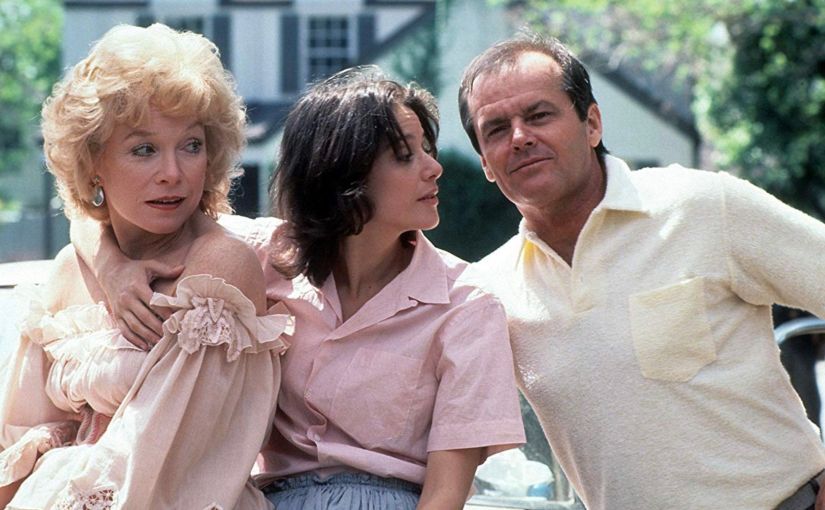
Acclaimed television writer James L Brooks’ first feature film was the 1983 Best Picture Winner Terms of Endearment.  The movie succeeds in more ways than one because of its varied relationships among the characters.  You have Aurora Greenway (Shirley MacLaine) and her daughter Emma Greenway-Horton (Debra Winger).  There’s Emma and her husband Flap Horton (Jeff Daniels).  There’s Aurora and Flap, and then there is Aurora and her neighbor Garrett Breedlove (Jack Nicholson).  Sounds like a lot to take in for a two hour picture, and yet Brooks manages to adapt a script from Larry McMurtry’s novel that smoothly covers realistic depth and dimension among these characters, and how they connect with one another.  Brooks is at least an incredibly efficient writer/director.  Honestly, I’m not complimenting him nearly enough.

Shirley MacLaine provides one of the best female performances to ever grace the silver screen.  She doesn’t have to utter a word of dialogue to say so much about how Aurora feels.  One of her greatest facial expressions is when she is addressed by her grandson as “Grandma!”  This moment is so utterly hilarious that the studio selected it to close out the original theatrical trailer.  If anything is going to get you in the seat at the theatre it’s this moment.  Aurora is a widow who can be difficult to please, judgmental and always conscious of her part in the world-even while she is hosting multiple gentlemen suitors in her Houston, Texas home.  This character is so powerful that it is hard to understand why Hollywood really never followed suit with presenting more films focused on the middle age woman or man.  There are still interesting things to be found in being a widow and dealing with ageism, motherhood and a resurrection of sexuality.  Think about The Golden Girls which dominated television sets on Saturday nights for most of the decade.

Aurora disapproves of Emma marrying Flap.  Flap has no imagination or drive and is as devoid of affection as his name suggests.  Best he can do for Emma and their three children is find whatever college professor job he can muster and uproot his family from one mid-western state to another.  Emma knows of her mother’s disdain for Flap, and can’t disagree with her.  She knows Flap is a loser, but if it means aggravating her mother then it is worth it at least to marry him.  Early in the film it amuses Emma to frustrate her mother a little more and a little more.  Contrary to Aurora’s instincts, Emma is naively unaware that life settles in soon enough and the happy nuptials fade away.

Still, Aurora and Emma have a strong mother/daughter relationship where numerous phone calls each day happen between them.  These conversations consist of Emma reluctantly telling her mother that she may be pregnant, yet again, or that Aurora is proud to let her guard down and approach the boorish, drinking next door neighbor astronaut, Garrett, played with a devil may care seductiveness from Jack Nicholson.  Aurora’s serene peacefulness in her beautiful backyard garden and home is always disrupted by Garrett’s loud bellow before diving into his swimming pool.  Still, she can’t help but be attracted to him while putting on a façade of disapproval in his presence.  The first lunch date that Aurora and Garrett share must be one of the best dates ever depicted on film.  The scene might have been written and staged by Brooks, but it is thankfully hijacked by Nicholson and MacLaine.  One of the funniest moments to ever come out of 1980s cinema for sure.  There’s much reason that MacLaine won Best Actress and Nicholson won Best Supporting Actor.  These actors easily stage a scene of realistic comedic chemistry while later expressing deep rooted drama and affection with one another.  Not easy to do all in one film.

Brooks masterfully writes these characters with such authenticity that you find yourself legitimately laughing at a scene or a piece of dialogue, while the person sitting next to you might embrace the dramatic element of the very same moment.  Both responses to random moments in Terms Of Endearment allow varied reactions like that.  When Emma suspects Flap of committing adultery, pay attention to the dialogue and the performance from Winger and Daniels.  Emma allows Flap to dodge a lie he’s about to tell by warning him that he may have just lost his senses, but if he continues down a wrong path, then he will end up worth less than he already is.  He doesn’t fight her on that observation.  Hard to explain here but listen to the vocabulary Brooks applies to Emma’s dialogue and watch how Winger traps Daniels.  You may nod with a smirk, or you may feel frightened for Emma and her marriage. 

I always say Terms Of Endearment is a comedy first and a drama second.  The film steers towards a frightening fate for the Aurora and Emma.  However, before that third act sequence there is so much to treasure, love and laugh at in the film.  When a cloud of imminent loss feels like it may approach, that is when the dramatic elements step forward.  To truly feel loss, you had to treasure wonderful moments with a loved one or a friend.  You had to value something important in your heart and soul to feel so terribly frightened and mad and hysterical when days might seemingly appear numbered.  James L Brooks and Larry McMurtry remind us of that.  Every person on the planet is destined for this feeling at one point or another.  What happens when the inevitable arrives is what sustains Terms Of Endearment to it’s satisfying end.  A character may appear on a hotel staircase to reconnect with support.  A hug goes a little longer than expected, and for the first time the one who normally lets go first actually tries to keep the moment frozen in time.  A gift from long ago is recovered to touch someone emotionally.  Brooks includes all of these moments in his film and that’s what I embrace most importantly.  Cinematically speaking, these points in the film are heightened by a memorable soundtrack of quirkiness and passage of life from composer Michael Gore.  His music is so effective that it has been used countless times over to enhance trailers for other films marketed at audiences that this picture was catered for.

Yes, after numerous viewings, Terms Of Endearment never fails to me put me in tears.  Like ugly crying!  I prefer to watch it alone actually, because I connect with the characters differently than most people I know, including my wife.  It’s a very personal film for me.  It reminds me of loss that I have felt and experienced.  More importantly though, it reminds me of all I’ve had, and all I continue to hold on to.  Terms Of Endearment is one of my favorite films.

RAIN MAN

By Marc S. Sanders

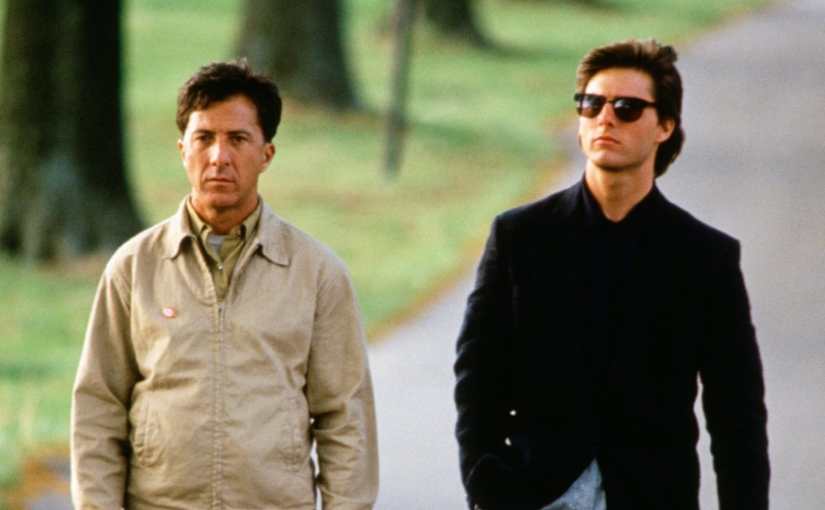
It may surprise some people that I don’t find Dustin Hoffman’s performance of autistic savant Raymond Babbitt to be the best feature in Barry Levinson’s Rain Man.  On the contrary, the best thing about the film is Tom Cruise’s cynical, hyper active portrayal of Raymond’s younger brother Charlie.  I’m not knocking Hoffman.  He’s absolutely memorable, authentic and brilliant.  It’s so brilliant though, that it overshadows what Cruise accomplished with his part. 

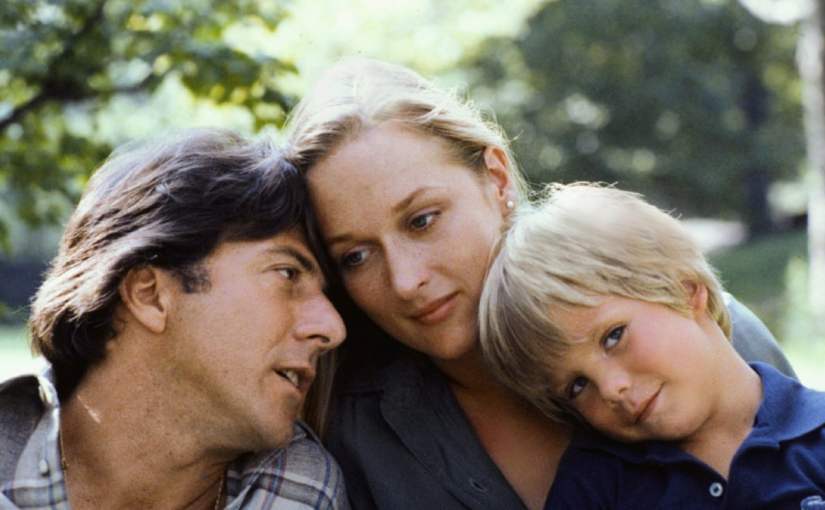
Those of you who have read some of my reviews before, may recall how much I praise the best character arcs to be found in stories.  The character starts out one way and by the time the conclusion arrives, this person is completely different; practically unrecognizable.  Hoffman did this in Kramer Vs Kramer and Tootsie, Al Pacino did this in The Godfather.  Bryan Cranston used five seasons of television to do this in Breaking Bad.

Before I ever saw Rain Man for the first time, many years ago, I never knew what autism was.  I don’t even think I ever heard the word autistic before this film arrived.  I guess I was wrapped in my naïve bubble.  Now watching it years later, I see the special talents that autism can present for a person living with it, as well as the challenges that come with a person nearby who cannot comprehend the diagnosis, and carries no patience for it. 

Screenwriters Barry Morrow and Ronald Blass are wise to show an odd pairing of brothers in this film.  The movie begins when Charlie, deep in debt with his high-performance sports car dealership, learns that his estranged father has passed away.  Dad only leaves him with a gorgeous 1949 Buick Roadmaster convertible.  A $3 million estate is awarded to a trust fund meant to support Raymond; the autistic brother Charlie does not recall ever having.  Charlie’s arrogance and desperation to cover his insurmountable debts drive him to yank Raymond out of his care facility and embark on a cross country road trip back home where he intends to settle the estate by how he thinks he deservedly sees it.  During the course of the trip, Charlie gets a quick education about himself and Raymond’s condition. 

Tom Cruise might look like late 1980’s cool and stylish in his linen suits and button up silk shirts with sunglasses, but his glamour does not overshadow how bitter of a guy Charlie really is.  That’s what I embrace in his performance here.  It should have been nominated for an Oscar; definitely a glaring oversight by the Academy.  Charlie looks like a guy always moving at super speed, about to collide with a wall.  He bosses around his assistant salesman with outbursts and disruptive clapping hands.  Levinson is good at showing close edits of that.  He gives no attention to his girlfriend, Sussana (Valerie Golino), even when she is trying her best to have him stop for a second and realize the special condition and attention that Raymond needs.  As Charlie’s journey continues down the back wood roads of western America, he has no choice but to uncover a realization in his own hyperactivity, and even recognize a different kind of hyperactivity that Raymond possesses. 

Raymond is the autistic person whose mental capacity must follow strict guidelines of watching The People’s Court and Jeopardy.  He has to have to certain meals on certain days.  He can not ride in a car when it is raining.  He can not fly on airlines that carry historical statistics of crashing.  Fire alarms and hot faucet water are violently upsetting.  There is a rigid, uncompromising pattern to Raymond’s behavior and lifestyle.  Because he can’t compromise, Rain Man carries some humorous and outrageous scenes where Charlie must adjust to Raymond’s limitations.  I still feel sorry for the woman who has no choice but to surrender her television and living room in the middle of day so that Raymond can watch his program, while her children are deprived of their cartoons.

Hoffman is great in focus and concentration.  Much like when he adopted the persona of a woman in Tootsie, you never see him sway from the performance of severe autism in his Raymond character.  Because he is so straight down the line here from beginning to end, I have to really admire Cruise’s change in character over all.  Rain Man really is a story about Charlie Babbitt.  Not so much Raymond Babbitt. Charlie changes during the course of the film.  Raymond does not. 

There are a lot of eye-opening moments in Levinson’s film.  You get an education in what autism really is, or at least the unique case that Raymond possesses.  He can memorize a phone book in one night or count the number of tooth picks that have fallen on the floor with simply a glance.  Complex multiplication can instantly be done in his head.  It’s fascinating.  Charlie even discovers a way for Raymond to resolve his financial crisis, thereby leading to an energetically satisfying jaunt in Las Vegas. 

Barry Levinson has assembled two fantastic actors for an engaging film that avoids preachiness and sorrow.  Yet, Rain Man is rewardingly sensitive.  Levinson says a million words with simply a close up moment of Hoffman gently leaning his head on Cruise’s temple.  Quiet moments like that which arrive following scatter brained moments earlier make for a range of emotions I treasure in a picture like this.

I look at Rain Man or Magnolia or Born On The Fourth Of July, and I wish Tom Cruise would take a break from the endless Mission: Impossible films.  Heck, there’s even another Top Gun film on its way!  Why doesn’t he focus on the roles that welcome his skills as a very effective actor?  (American Made was a recently oddly different kind of character for him. Great film by the way!)  I have an affection for most of his films, regardless of the category. I really do.  If only his action pictures could take a rest for a change, and allow the acting scenes to come back into play.