NETWORK

By Marc S. Sanders

Without question, what would become the absolute most prophetic film ever made is Sidney Lumet’s biting, satirical masterpiece called Network with its script from Paddy Chayefsky. 

Network works on all cylinders because it was released following a shedding of maybe the last of pure American innocence.  The country had finally pulled out of a losing war in Vietnam.  Our President Nixon was shamed out of office.  Happy housewife programs like The Donna Reed Show and Leave It To Beaver were behind us.  The outright, prejudiced Archie Bunker was who Americans were tuning in to each week.  There was even an incident of a newscaster, named Christine Chubbuck, who shot herself dead on live television.  Looking back, today in 2022, it all seems inevitable that we would arrive at where we are now; where we are always seeking some semblance of showmanship and we’ll get our own brand of infamy no matter how desperate we become.

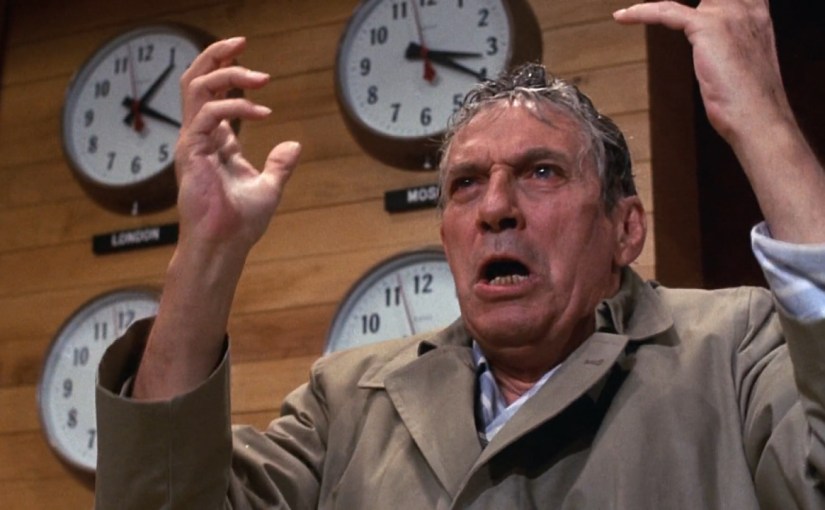
Chayefsky’s script focuses on the fictional network of UBS in present day, 1976.  Well known newscaster Howard Beale (Peter Finch) announces on air that the following week will be his last broadcast as the network has opted to let him go due to poor ratings.  So, he entices his viewers to tune in when he will kill himself live on the air.  It’s a hilarious scene actually due to the ignorance of everyone else in the studio.  The director is flirting with his assistant. Another crew member is eating a sandwich.  No one is even paying attention to the centerpiece they have on the air.  Howard Beale has been taken for a granted as a has been for so long, it really doesn’t matter what he has to say as long as he’s reading the cue cards.  Who’d ever announce on live television in front of millions of viewers that he was intending to kill himself?

Max Schumacher (William Holden), the head of the news division, takes his friend into hiding from the media frenzy suddenly created.  Yet, the next night and after much convincing, Beale is permitted to go on the air again, and make a statement to undo whatever outlandish damage this has all become.  Instead, he decries that life is bull shit.  Max, fed up with the corporate tugs of war already, opts to leave him on and ironically a new opportunity presents itself.  Beale’s moment of insanity and his gradual mental breakdown might be real, but man, this could also pull the UBS news division out its ratings slump and bring it ahead of CBS, NBC and ABC. 

The young and energetic Diana Christensen (Faye Dunaway) in the entertainment division, works her way into the news division and takes over its programming from Max.  She convinces the corporate honchos like Frank Hackett (Robert Duvall) to use Beale as a ratings appeal.  The entire company eventually understands what Diana foresees could actually work when a rain-soaked Beale storms on to the studio set urging his viewers to shout out their windows that they are “mad as hell, and I’m not going to take this anymore.”  Now, the evening news consists of sections featuring Howard’s ranting and ramblings, as well as Sybil The Soothsayer and other such nonsense, most notably a new program from an actual terrorist group known as The Ecumenical Liberation Army. 

From there, the detritus of what UBS commits to for lead ratings night after night only validates that television is not about morals and objectivity in the industry of news reporting.  A slight telling moment has Beale come to Max with an old black and white photograph of them posing with the likes of Edward R Murrow and Walter Cronkite.  They reflect joyfully on the memories, but now they are just memories. These kinds of men of the airwaves no longer exist. Beale is now a jester to the masses who tune in for his mad man speeches labeled as “news.” 

Long before the buffoonery of out of touch Presidential Candidates and over opinionated newscasters who lacked any merit or research to uphold their viewpoints, Chayefsky and Lumet were nervy enough to actually believe moviegoers would buy this satire. 

No matter the medium, satire is maybe the riskiest category of entertainment.  Someone is going to be pissed off and offended.  Others won’t believe this could ever be possible.  In elementary school, I remember reading a short story that proposed cutting down on overpopulation by having people eat their young.  You know what?  After much discussion with fellow classmates at the time, the idea had some logic to it.  Recently, Adam McKay wrote and directed a film called Don’t Look Up that presented a what if scenario to the inevitable end of the world by means of an incoming comet crashing down into Earth.  Unlike Network, some of the elements in that film didn’t work for me.  So, satire is a crap shoot.

Had I seen Network when it was first released, I wonder what I would have thought.  Would I have bought all of its absurdity?  I believe I saw it before reality television became such a novelty and ever since that first time watching, I truly accepted the logic that comes across the decision makers at the UBS network.  Corporate functionality, no matter the industry, relies on monies.  Nothing else matters.  UBS quickly learns that image can be spared.  Money is what keeps everyone happy and afloat.  If the performance of the company falters, changes need to be made; no matter how desperate those actions may appear to be. 

So, Howard Beale becomes a sensation for the UBS network and he is at least besting or tying with top rated shows like All In The Family and Little House On The Prairie.  Yet, Howard is also a mentally ill raving lunatic who needs treatment.  What happens when he declares something to the public that is detrimental to the corporate future of UBS, its top one percent, and its shareholders.  You can’t censor a lunatic with reason.  Ned Beatty as Arthur Jensen, the all-powerful, emperor like CEO, delivers a commanding scene that is one for the ages in response.  He truly deserved his sole career Oscar nomination here…all for one scene perfectly staged in a dimly lit board room with his giant stature poised behind rows of green banker lamps.  He turns Beale into his own prophesized pawn.  Now, that may satisfy the man at the top of the pyramid, but at the end of the day, what about the ratings?????

Chayefsky’s script is one of the greatest ever written.  Not only are the satirical ideas so clearly drawn, but the dialogue is biting with truth in its sarcasm and wit.  When Diana suggests giving The Ecumenical Liberation Army its own weekly program depicting real life footage of their massacres and kidnappings across the country, a staffer retorts “What do you wanna call it?  The Mao Tse Tung Hour?”  When Beale asks the god like image of Arthur Jensen “Why me?”, the response is simply “Because you’re on television, Dummy!”

Maybe we thought the limit of influence stopped with television.  The script for Network felt sure of that.  Yet, we’ve graduated from the simplicity of television and we’ve entered the age of the internet.  Suicides and violence, pornography, slander, opinions and viewpoints can all easily be conjured up by the devices we use to access the internet and we can slant our own news stories in our own way.  News is no longer reported with an objective, omnipotent narration.  It’s dramatized.  I may be a resident in Florida but if someone captures a live on-going police car chase happening on the freeways of Los Angeles, it’s brought to my attention for the thrill of the story.  From a news perspective how is a car chase on the other side of the country relevant to me?  I don’t know the drivers or what motivated them.  I don’t live there.  So, it’s not going to affect my commute home.  Yet, my local news station finds it imperative to show it to me.  No matter the heights of insanity a subject may be, if it’s watchable with a ratings potential, I can rely on my local journalists to bring it to me fast and immediate with zoom in close ups and hi definition.  They’ll even replay it for me in slow motion a hundred times, just to stretch the story until the commercial break.

Network also explores the corporate obsession America entered into by the mid-70s.  Chayefsky uses the Diana Christensen character as a departure from the wholesome Donna Reed image.  Women are working in the offices now.  They are beautiful, smart, strong and assured.  Yet, have they also lost their humanity?  Has this happened to only women?  Diana uses her edge to sleep with her mentor, Max, a much older married man of 26 years.  The aging Max surrenders to his libido but is it worth it?  Diana is too quick in bed and while she’s love making, she’s orgasming to the latest ratings poll from her wunderkind, Howard Beale.  Chayefsky demonstrates how maddening corporate America has become by sucking any emotion of love, loss, happiness and sadness that people are heretically born with.  It’s as if a cancer has killed whatever natural stimuli people were gifted with, and he’s not wrong.  People don’t work 9 to 5 jobs any more.  They work 12 to 12.  When they are not working, they are enhancing their “social status” by means of social media. 

Network is one of the greatest films ever made.  Lumet and Chayefsky put everything on display in its no holds barred honesty.  Still, the performances must be recognized.  This film has one of the greatest casts ever assembled.  Dunaway is magnificent as the young woman with the drive to turn the television industry on its ear.  She deserved her Oscar.  Robert Duvall never received enough credit as the unforgiving corporate lackey resting just under the top while making sure profit is provided before anything else.  William Holden was already in his golden years of film acting by this time.  With Beatrice Straight, playing his wife (in her brief but Oscar winning role), they represent an honorable profession and household that is now long gone.  His character is fired twice within the first hour of the film by the modern corporate mentality, and then he’s resigned to write a tired book about his journalistic accomplishments because there is simply nothing left to do.  He’s a dinosaur in the modern age of television and business.  Peter Finch was the first to win a posthumous Oscar for his turn as Howard Beale.  If this character were real and was televised as the film demonstrates, I can’t deny that I would buy into his raving rhetoric.  I’d have no idea what he’s talking about.  I wouldn’t care, but I would tune in later in the week when John Belushi would mimic him on Saturday Night Live.

With each viewing of Network, you find something new to relate with every time.  The reason is that it stays consistent with the evolution of our planetary function.  Even in this age of Covid where stories are never consistent yet always hyped for dramatic impact, there is something to nod at and understand from the messages of Network.  It could be a world war, a new president, an assassination, a school shooting, a police chase, a riot or a pandemic.  Network had already considered the response to any topic that’s ever been the top story. 

Network is one of the most important films ever made.

THE GODFATHER

By Marc S. Sanders

Probably the greatest character story arc in all of film is of Al Pacino’s portrayal of Michael Corleone in Francis Ford Coppola’s The Godfather based upon Mario Puzo’s best-selling novel. (The film is a thousand times better than the book.)

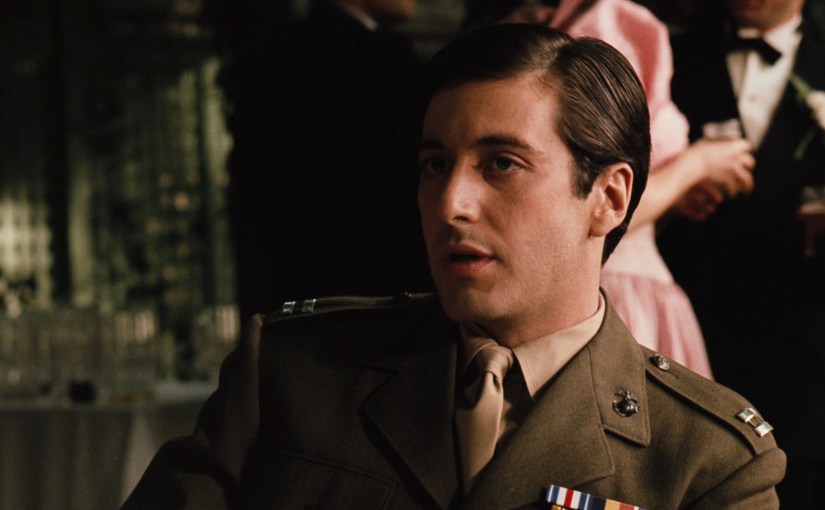
Michael is the youngest of three sons intended for a legitimate life separate from his Mafia family. The masterful opening sequence of his sister’s lavish wedding show him courting his eventual wife, Kay (Diane Keaton), and never feeling proud of the actions of his notorious father, Vito (Marlon Brando), nor his brother Sonny (James Caan) or their consigliere, Tom (Robert Duvall). He’s an innocent war hero in uniform with an open mind of an untarnished future. It is only when bad blood circumstances are tested that he feels forced to strike with the same intent that the Corleone family is infamous for.

Coppola presents quiet, subtle moments of expression in Pacino on camera. You see the change in Michael sneak up on you and you see a character develop into something else entirely. What starts as a false impression to appear as if he’s carrying a gun in his pocket, soon after leads to murder, by means of nothing personal but “strictly business.” From there, he retreats and hides until he is blessed with carrying on an evil legacy.

Yes, the first chapter in the operatic trilogy of crime, is mostly known for a grandstanding performance by Marlon Brando but the story relies on Pacino as Michael. Michael Corleone at least must be one of Al Pacino’s greatest roles. He arguably has one of the most impressive resumes in all of film. Here is where it jump started.

The direction by Coppola is a film student’s required studying. With Puzo’s script, the best idea was to open the film with a wedding. As the film offers so many characters and much back story among all of the guests, the interaction and workings of the family are efficiently condensed into this 25 minute opening sequence. Don Vito meets with people needing favors while outside the home, the crew is dancing, doing their jobs and minding who is watching. By the end of this opening you have a full grasp of the family tree and who works for who and what their characters are like. Sonny is the hot head. Michael is the innocent. Fredo (the middle son played by John Cazale) is not doing much but being a cut up, Momma Corleone is the valued matriarch and Tom is the well managed advisor. You even get a glimpse of some “very scary guys,” some competing hoods, who’s cheating on who, and some people who need help with citizenship and film casting.

Art direction from Alex & Dean Tavoularis is magnificent, depicting a post WWII New York, and a historical Sicily stagnant in open plains, romance and murderous pasts.

The cinematography is better today than it was originally. Gordon Willis returned decades later to (for lack of better word) lighten up the picture. The interiors remain dark in secret and comfort, but the characters are more illuminated. The Blu Ray restoration is a fantastic return to the classic film and its two sequels.

The Godfather is endlessly quotable and never dull no matter how many times you watch it. Puzo’s screenplay plays like the biography of a real person and family, much like his adaptation for the screen of 1978’s Superman: The Movie. It is an American classic rich in a history we believe has been told and carrying on the tradition over the course of a 10-12 year period.

I return to praise Pacino to remind you how his appearance even changes as he gradually builds his strength and accepts his title of Don. I feel like I’m looking at two physically different people from the beginning in his Marine uniform with boyish looks, to his independent walkabout way during his Sicily retreat, to a more broad shouldered, slicked back hair, dark suit tailored appearance during the film’s third act. It’s an uncanny transformation that is built on performance and expert direction and writing from Coppola and Puzo. I still get chills as Michael in his college boy sports jacket volunteers himself to satisfy a family vengeance. Coppola zooms in on him slowly as he sits in a leather arm chair, arms at his side, legs folded. We are seeing a new man in charge for the first time. It’s chilling.

The Godfather is one of the greatest pictures that will ever be made. It’s a perfect chemistry of technical achievement, attentive storytelling and sensitive, yet powerful performances from probably the best cast ever assembled.

I’m amazed that I know of some friends who still have yet to see it.

The Godfather is the film that everyone should see before they die.

PHILADELPHIA

By Marc S. Sanders

Tom Hanks most certainly deserved the first of his two Oscars for his portrayal of Andrew Beckett, one of the first protagonists to be an AIDS victim on screen in Jonathan Demme’s 1993 film, Philadelphia. Its a good film but not a great film.

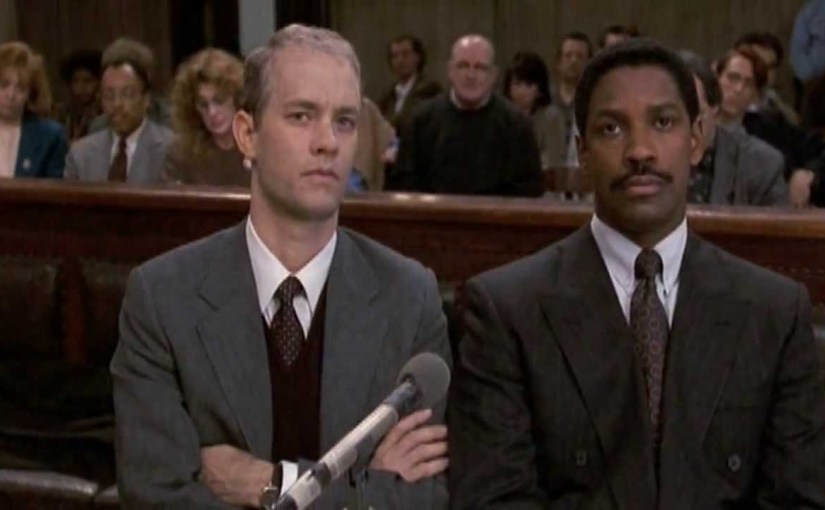
I recall seeing Philadelphia when it was originally released. Seeing it today, my opinion hasn’t changed. I don’t believe the film takes enough risks and the script from Ron Nyswaner is too cookie cutter and simple. Beckett hires Joe Miller (Denzel Washington) to represent him when he proceeds to sue the law firm who wrongfully fired him for having AIDS, and most likely being gay as well. The argument hinges on proving that having AIDS is a handicap that never interfered with Andrew’s work performance. Andrew is clearly made out to be the firm’s best of the young attorneys when he’s assigned their biggest client. Nine days later he’s sabotaged, and soon after he’s fired for an attitude problem and carelessness. Eventually, Andrew and Joe assemble, despite Joe’s prejudices against homosexuals.

The trial, Andrew’s struggle of living with AIDS, and Joe’s own inner debate with associating and defending a homosexual, AIDS victim are the three main storylines.

The first storyline is the best. Demme does a masterful job of showing the evolution of the disease. Andrew could be looking at papers on a desk and when he turns his head, a lesion appears on his neck. Makeup artists Carl Fullerton and Alan D’Angerio deservedly were Oscar nominated as Hanks’ appearance seems to change from one scene to another and another. He’s thinner in one moment with very fine ash gray hair. In another scene, he’s got a full head of hair with an energetic way about him. I cried for Andrew’s deterioration. Hanks and Demme carry that aspect very, very well. The actor does great work of changing his voice when he’s fighting a cold with a terrible cough or evoking massive weakness. As the film progresses and Andrew gets sicker, he’s incredibly pale with a droopy eye. The makeup artists tell the story with Hanks’ performance and Demme’s direction.

The 2nd and 3rd storylines don’t offer much of a challenge. The law firm primarily represented by head partner Jason Robards is too easily “evil.” There’s no subtlety here. Robards gets right in the face of the film – “Andrew brought AIDS into our office.” A better script would wait for the bad guys’ momentous third act Freudian Slip. This case was unchallenging really. It was too easy to win. Especially true considering this great and powerful law firm hires Mary Steenburgen as defense counsel. Steenburgen plays her part very mousy and unaggressive though. This case is too lopsided and uneven and I just couldn’t get past that.

Joe’s own reservations are too apparent as well. He’s meant to represent those that simply never understood the mentality of gay love, nor the scientific evidence of the AIDS virus. He rushes to his doctor following an initial meeting with Andrew. Demme does an extreme close up of this doctor to teach the audience the basics of AIDS. This guy is right in your face with his dialogue. I didn’t care for moments like this. Too patronizing.

A side story attempts to show the intimate relationship of Andrew with his boyfriend Miguel (Antonio Banderas). I still feel the same about this part. The script holds back. Hanks and Banderas give each other “bro hugs” and kisses are done on the bottom cheek. Back in’93, filmmakers were not prepared to go all the way with depicting the true nature of homosexuality. I found it insulting. You finally want to make a film that shows AIDS and homosexuals at the forefront but you stop short at the finish line.

Ironically, Joe has a repetitive line “Explain this to me like I’m a 4 year old…” Demme adopts that method throughout the film with major “in your face” close ups to glaringly make the beliefs of what any character values or has to say as obvious as possible. I felt as an audience member that Demme didn’t have to take it this far. I get it. You don’t have to be THAT FORTHRIGHT.

Washington is a great actor as always. He’s likable even if he’s tripped by the fault of misunderstanding. His “TV GUY” ambulance chasing lawyer is comic relief at times within a film of very heavy subject matter.

Demme’s filmmaking does make some wise choices despite some of my issues. The opening credits offers a lot of footage of the city with people carrying on their daily lives while waving to the camera, selling fish at the market, street dancing, etc, all accompanied by Bruce Springsteen’s sweet, yet haunting theme “Streets Of Philadelphia.” I like this opening as it shows what we see on the surface of the people we live with does not necessarily reveal the struggle any one of us might be enduring. This is a moment where the script is not so easy to grasp. There’s a challenge to accepting Demme’s footage blended with Springsteen’s overture.

Jonathan Demme is a good director, who is sadly no longer with us. I appreciate Philadelphia for showing the illness but not much else. It’s a film that should be seen. I’d argue most would embrace more of the movie than I did. I just felt the envelope could have been, actually should’ve been, pushed further. It was too careful with its subject matter.

A great observation though was recognizing the many faces that appear in the film from Demme’s other film, The Silence Of The Lambs. As well as naming Joe’s baby daughter “Clarice.” I also recognized an identical tracking shot that Demme offers. When Joe goes to visit Andrew in the hospital, it is a shot for shot remake of the tracking movement when Clarice goes to visit Jack Crawford in his office, at the beginning of Lambs. This might not be original, but I had fun recognizing it, nonetheless.

FORREST GUMP

By Marc S. Sanders

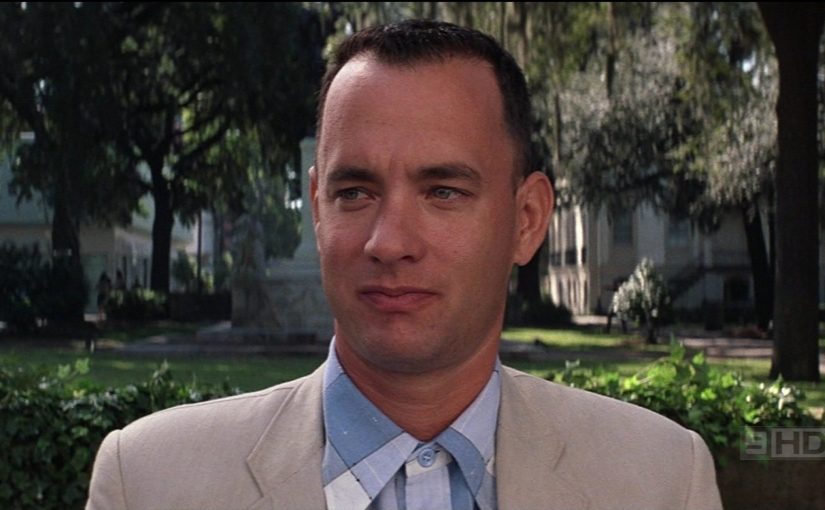
There’s not much that I can say to further praise the merits of Robert Zemekis’ Forrest Gump. It’s a film of legend though it’s a sore spot for die-hard fans of Pulp Fiction, which competed for Best Picture in 1994. Guess which film won. Tom Hanks won the Oscar for the second year in a row, following his outstanding turn in Jonathan Demme’s Philadelphia. Zemekis won Best Director. Eric Roth’s screenplay won as well.

What holds a lasting impression for me about Forrest Gump is the sweeping travel through time of a man with limited intelligence but unlimited willingness to explore and participate, whether it be as a Ping Pong Champion, a Medal of Honor recipient for heroism during the Vietnam War, a millionaire entrepreneur of a shrimping boat business, or a man who just felt like running from one corner to the next of the North American continent. Forrest Gump never knew to compromise a belief he had, probably because he was never aware of the capability to compromise in the first place.

An interesting theme occurs throughout Roth’s screenplay (adapted from the novel by Winston Groom). The people that Forrest encounters are always shouting their ideals and agendas. Yet no one seems to listen. Not just Forrest though. No one at all listens to each other. Lieutenant Dan (Oscar nominee, Gary Sinese) shouts for an immediate evacuation of a hostile territory under attack and no one on the other end of the line, appears to be listening to him. He orders Gump to leave him there, but Forrest does not listen. Forrest only focuses on rescuing his friends, Lt. Dan and Bubba (Mykelti Williamson). What exactly were Americans like the Hippie movements, the War Veterans, the Black Panther party, even the men in the burlesque nightclubs, as well as the various assassinations attempting to accomplish really? Did they accomplish anything? Did any of these parties make an impactful change, or did they just like to hear themselves talk? Did they just want the recognition for only themselves and no one else? When Forrest meets up with his love Jenny (Robin Wright), in a gorgeous caption in front of the Washington Monument (often shown during Oscar film compilations), he has just shared his thoughts over a loudspeaker, unaware that not one of the thousands of war protestors could hear him because the microphone had been unplugged. Later that day, a Black Panther participant only cares to wave his finger and shout his agenda in Forrest’s face. Is Forrest interested? Is he even listening? Is the Jenny, the hippie and her protestor boyfriend listening? Like many Americans, Forrest was only concerned with what was most important to him; Jenny. When Forrest develops a following during his cross country run, everyone is looking for his purpose and his message, and Forrest is unaware that he needed to offer one. Americans are always looking for the next best following. When Forrest passes the Grand Canyon and stops running, the parade of lost souls behind him shouts, “Now what are we supposed to do?” Forrest doesn’t listen. He just walks away and declares he’s tired. America during the mid twentieth century was lost. Forrest was not. Forrest just went in the direction in front of him.

Zemekis pulls an interesting trick of contrasting Forrest against other regulars. The nurse who sits on the bench next to Forrest is more interested in reading a mundane two dimensional issue of “People Magazine.” A man listening to Forrest’s tale of rescue in Vietnam was only concerned with the bullet that struck Forrest in the butt, not the men he saved or the loss of his dear friend Bubba. The old codgers who hang around the local barber shop in Greenbough, Alabama just watch the exploits of Forrest as the years go by. Their hair gets grayer and their skin gets more wrinkled, and life just passes them by while Forrest passes life by. It’s a subtle, yet effective, device that I appreciate on repeat viewings.

Sally Field contributes to the disregard Forrest has for menial issues. If Forrest is going to be denied going to a regular school because his intelligence level falls a few points below average, she will make certain that does not interfere even if it means pleasuring the principal. Mama Gump has the wit and intelligence. Forrest does not. However, their commonality shows in their disregard for what keeps us from living life to the fullest. Without Mama as his influence, Forrest would never have met the President again, and again, and again.

Mama reminds Forrest that “Life is like a box of chocolates…” You know the rest! It doesn’t matter what we get, as long as we get what we pursue.

THE SILENCE OF THE LAMBS

By Marc S. Sanders

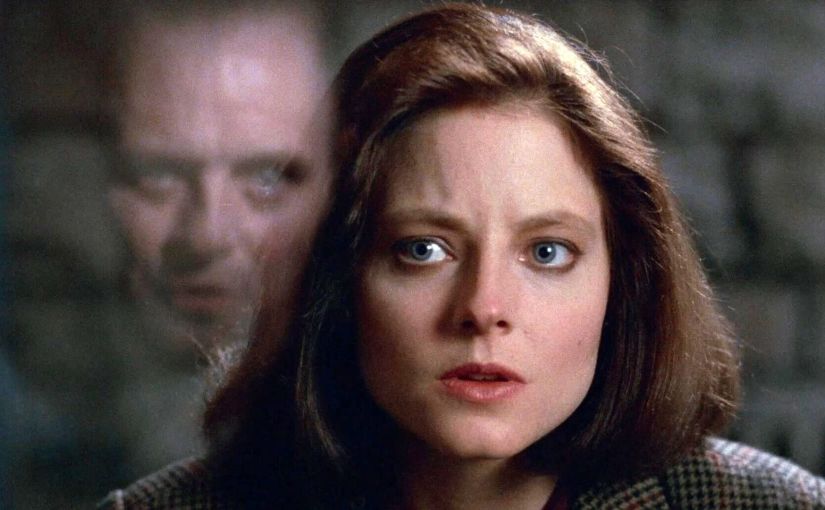
Everyone remembers Anthony Hopkins’ memorable turn as the infamous Dr. Hannibal Lecter in The Silence Of Lambs.  He was “Hannibal The Cannibal;” a renowned and brilliant psychiatrist who was eventually captured for being the one who ate his victims with sophisticated glee.  The real attraction, though, is how director Jonathan Demme delivers the film adaptation of Thomas Harris’ best selling novel through a lens that only finds one strong heroine amid a sea of intimidating men.  The heroine is the intuitive, but petite Clarice Starling.  The men are nearly everyone else cast in the film, and I mean everyone all the way down to the extras; the extras, here, are a perfect example how necessary they are towards any film’s palette.

Ever since the film was released in 1991, the dialogue of Ted Tally’s script is worthy of repeating and mimicking in social circles.  Lecter remains spoofed in nearly every pop culture medium.  Hopkins’ character is unforgettable and he’s been ranked among the greatest film villains of all time with the likes of Darth Vader and Harry Lyme.  It’s a worthy honor.  His timing is subtle and mischievous while he remains silently dangerous.  You can’t take your eyes off the actor and you can’t erase the devilishly fun and evil character from your sub conscious.  Opposite this performance though is Jodie Foster in a top billing role as an FBI trainee named Clarice Starling, assigned to interview and maybe study Lecter as a means to a solid lead in finding a serial killer that has been identified in the media as “Buffalo Bill.”  Bill has been skinning and killing girls with large physicalities, around the east to mid-west portion of the United States.

So, there is a detective story at play here as Hannibal aids Clarice in her search for the killer, but only under his rules.  Demme paints the film with Clarice ably performing her job no matter the towering strength or perverted fantasies found in nearly any man.  An outstanding image early on shows her small frame entering an elevator.  She has been summoned to her supervisor’s office from the outdoor obstacle course.  She is sweaty, and looking tired.  The elevator is full of a dozen men in red uniform polo shirts that hug every muscle; they are strong, fit and healthy.  Clarice stands front and center and she has no reluctance to stand among this exclusive group.  Later in the film, Clarice is invited by her supervisor, Jack Crawford (Scott Glenn in a deservedly dark and quiet performance), to investigate one of Bill’s victims that turned up in the swampy waters of West Virginia.  The coroner’s examination room is filled to the max with sheriffs who believe they serve a purpose to stay there to witness what’s uncovered.  The strength of Clarice is really shown here as she shoos them away.  The men’s facial expressions tell us they don’t care for this request, but Clarice isn’t going to allow them to remain.  Most importantly are her encounters with the head of the Baltimore psychiatric ward that houses Lecter.  He is known as Dr. Chilton played by Anthony Heald.  Chilton – a great character name that clearly colors in the twisted perversion of this guy.  Chilton is happy to boast of his prized attraction, Lecter, as if he’s a rare tiger and he has no reluctance to hit on Clarice when she comes to visit with Lecter.  Always, Clarice will not allow herself to be succumbed, patronized or victimized by any of these towering figures of masculinity in what is unfairly regarded as a man’s world in law enforcement, crime or psychiatry.  Starling easily reminds Chilton that she was a student at the University of West Virginia, not a charm school.  With Tally’s script, Jodie Foster uses these deflective techniques of her character without effort.  Her methods of fencing with these men are a natural ability.  Even when she’s in film transition periods of training at the Academy, Clarice can maintain her stance against a hard-hitting male boxer pounding away at her boxing shield.  She just won’t fall over. As well, she doesn’t wince as the male students give her a glance from behind when she’s jogging on the grounds. 

Demme is an outstanding director who uses these interpretations of this woman to drive his film.  This very same year, 1991, Ridley Scott directed Thelma & Louise.  In that film, the title characters had to realize that they didn’t have to take any shit from a man.  They started out weak, though, and had no choice but to eventually get stronger.  Here, it’s already part of the woman’s instinctive nature. 

Hannibal Lecter is shown to be well versed in the finer things of art, literature, music and, forgive me, cuisine.  At one point, Demme focuses on a picture Lecter has sketched depicting Clarice in an almost angelic nature.  I’ve never forgotten that image.  Nearly all of the settings in The Silence Of The Lambs include stairways that always lead us in the down direction, to an assortment of various hells.  Clarice, the pure angel with nary a fault beyond limited experience as an FBI agent peels the onion away on her quest for a killer by entering into the treacherous depths beneath her; pits of hells.  The opening shot of the film has Clarice pulling herself up with a rope on an obstacle course as if she is ready to enter the heavens, ready to stand above everything, but then she is summoned to Crawford’s office located at the Department of Behavioral Sciences at the FBI.  She has to take an elevator down and then various stairways further down into a labyrinth of claustrophobic offices with no windows, surrounded by cinderblock and populated with men in uncharacteristic suits that don’t appear warm or cuddly.  Crawford may seem like her ally, but really, he’s using her as a sacrificial pawn on a chess board putting her in an arena with psychotically dangerous prisoners, in particular, the worst of them all, Hannibal The Cannibal. 

When Clarice goes to visit Hannibal, she is escorted by Dr. Chilton, who relishes in describing how careful he handles his prized thing, and willingly shows what this monster is truly capable of by providing an unwelcome photograph of how Lecter brutalized a female nurse.  This conversation is played upon a much more frightening descent of unlimited stairways and bars that clang loudly and are painted red and rusted, eventually leading to a stone walled dungeon for these unimaginable beings of death and perversion.  Clarice is left all alone to navigate her way down a long corridor until she reaches Lecter’s cell.

Yet, an even more frightening third descent into hell occurs in the final act as Clarice’s pursuit leads to Buffalo Bill.  Bill’s home is dark, lurid, filthy and maze like; but always seeming to go down further and further into one doorway after another and down one staircase after another, including a deep well where his latest victim is kept.  Like the other descents, Clarice uses her femineity as a tool of strength to survive.  I can claim without any hesitation that Clarice Starling is one of the greatest heroines in the history of film. 

The one man who rattles her, and weakens her, though is Hannibal Lecter.  Watch their tete a tete when they meet for the first time.  Starling demonstrates some overconfidence against Lecter’s seemingly polite demeanor.  With her white trash Virginia dialect, she even gets a little smarmy with the Doctor, but then he disarms her immediately with a comeback that shakes her very core.  Demme’s reliance on close ups for both characters serve this scene and others so well.  Clarice’s encounters with Hannibal are the most important and vital moments in the film because they are the only opportunities for Jonathan Demme and Ted Tally to show the main character’s weakness.  Every hero has to have a weakness if they are to remain compelling.  Clarice is not, in fact, undefeatable. 

The film could have simply worked as a basic detective story.  Put up the clues and the narration of the picture will eventually assemble all together for a resolution where the bad guy is captured.  Yet, Thomas Harris’ character creation uses Hannibal as a defiant obstacle blocking the path for Clarice.  Hannibal lacks much stimulation in a cold, specially designed prison cell.  He’s maybe only honored with impenetrable plexiglass to contain him as opposed to traditional bars.  He needs to be enthralled.  On the surface, Clarice appears as a frail prey that he can take his time munching on.  He’s happy to help Clarice catch Buffalo Bill with the case files she provides, but in exchange he wants to uncover what haunts her psyche.  Such a strong character Clarice is, but she has to be willing to weaken and expose herself to desperately find a dangerous killer.  Can she do it?  She’s never allowed herself to do that before.  And thus, we come to comprehend the obscure title of this film and the book it stems from.  (Anthony Hopkins actually thought it was a children’s fantasy when he was sent the script to read over.)

This write up is not necessarily a review, but a means to honor the careful film and storytelling technique that Jonathan Demme strives for with The Silence Of The Lambs.  You might say, yeah, there’s a lot of walking in this picture, but pay attention to the direction of the walking.  Always going down, somewhat reminiscent as Little Red Riding Hood entering a dark and spooky forest and encountering the biggest and baddest wolf.  Jodie Foster might be in a company of men here, but the film works as a dual of femineity vs masculinity.  It’s strange to believe that Demme actually had Michelle Pfeiffer in mind for the Starling role initially, a more than capable actress, but one who at the time was more glamourous (The Fabulous Baker Boys and The Witches Of Eastwick).  Beyond the silly Disney films, Foster was known for lurid pieces like Taxi Driver and her first Oscar winning role as a rape victim in The Accused.  Clarice Starling is a character beyond a pop culture appearance of the time, and Jodie Foster emanates that portrayal.

The writing of The Silence Of The Lambs is so intelligent.  There’s a witty, yet deliberately poor taste, of sarcasm to Hannibal Lecter as he thrives off his superior intellect over Jack Crawford and the FBI.  It’s only enhanced when he’s dealt a lowly, formally white trash female student to play with.  Ted Tally offers precise timing in the dialogue with Clarice and Hannibal.  Thomas Harris’ drive to further a cameo appearance of Lecter in a prior novel (Red Dragon) with this book is a gift to readers and eventually movie watchers.  The Silence Of The Lambs doesn’t follow formula with a Law & Order technique of ballistics and witness interviews.  It drives into other directions to feed its development. 

Jonathan Demme’s film is pioneering.  I recall seeing it in theatres with other high school friends.  I was not enthused to see it.  The title was too odd.  The picture was primarily a talking piece.  There were gross and unwelcome images within the film.  It’s very ugly at times.  I was frankly accustomed to the likes of Dirty Harry and Lethal Weapon films for my cops pursuing the robbers ideals.  I recall not even liking the film when we left, and I couldn’t comprehend its appeal that followed for the remainder of nearly an entire year, all the way up to when it was awarded the five main categories of Oscar wins (Actress, Actor, Screenplay, Director and Picture).  I definitely wasn’t accustomed to a strong character like Clarice.  Later that year, I saw Thelma & Louise and fell in love with their eventual triumph.  I needed to be spoon-fed their initial weaknesses at first.  Who was this Clarice in this picture, though?  I could not identify her strength that displayed right from the get go.  I wasn’t even 18 years old at the time and now I can say I just wasn’t mature enough for this film back in 1991.  Now, it’s thankfully clearer, though I still appreciate its subtlety so much. Jonathan Demme had such a clear vision of where he was taking this film and because it’s not dated, The Silence Of The Lambs stands as thriller, and an intelligent thought provoking piece that stays with you for a long time after each viewing.

THE ARTIST (2011, France)

by Miguel E. Rodriguez

Director: Michel Hazanavicius
Cast: Jean Dujardin, Bérénice Bejo, John Goodman, James Cromwell, Penelope Ann Miller, Missi Pyle, Malcolm McDowell
My Rating: 10/10
Rotten Tomatometer: 95% Certified Fresh

PLOT: A hugely popular silent film idol must adjust to culture shock when “talkies” suddenly invade the movie business.


Is there a movie more in love with the First Golden Age of Hollywood than The Artist?  I can’t think of one.  Sunset Blvd. comes close, but that was a caustic commentary on the heartless tendencies of studio executives to reject the Old and embrace the New.  The Artist covers the same ground, but in a much more comic fashion.

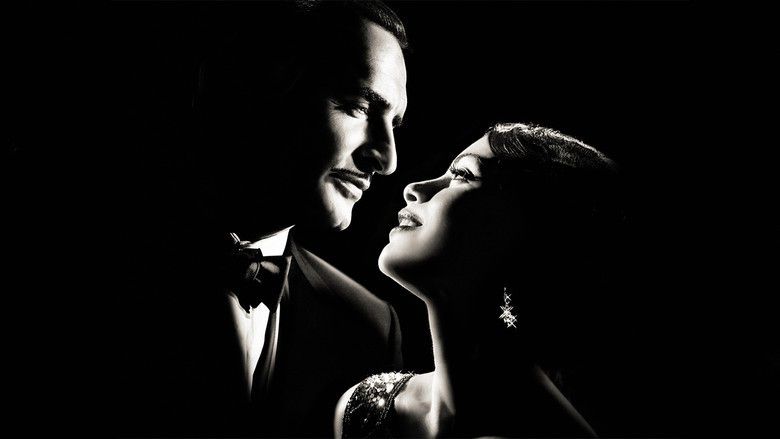
Not to say The Artist pulls its punches.  Not at all.  It tells the story of a silent film idol, George Valentin (Jean Dujardin), who has a meet-cute with a fan, Peppy (the stunning Bérénice Bejo), outside of a movie theatre.  Long story short, she becomes a bit player in numerous silent films and eventually becomes a superstar when the talkies take over Hollywood.  And George?  He struggles, as so many other silent actors did, to acclimate himself to a brave new world where faces and title cards aren’t enough anymore for an audience who is always looking for something new.

And, oh, yeah, did I mention The Artist is itself a silent film?  Shot in black and white?  Filmed in the old 1:33 aspect ratio?  Yeah.  It’s actually pretty cool.  It takes a little while to get used to seeing modern actors moving their mouths and not hearing their voices, but after a while, my brain acclimated itself to this “new” way of watching a movie.

As I was saying, The Artist doesn’t pull its punches in exposing Hollywood’s appetite for the New (in ways I don’t want to give away here), but it is still far more whimsical and audience-friendly than Sunset Blvd.  I’d compare it more to Singin’ in the Rain, if I had to compare it to anything at all.  But The Artist is a singular achievement, and well worth the Best Picture Academy Award for 2011.

There are two scenes in particular that elevate The Artist. In one, Peppy, who has always adored George from afar, finds herself alone in his dressing room.  She spots one of his jackets hanging on a coat rack and embraces it, imagining his arms inside it.  She then slips one of her own arms into the jacket, and voila!  She has a brief love scene where it really feels like she’s interacting with another person’s arm.  It’s a little hard to describe, but the effect is magical.

The second scene is one of my favorite scenes of all time.  George has just gone to see one of Peppy’s new films, a talkie.  The audience loves it, but he is still resistant to the idea.  He retreats to his dressing room, but something bizarre happens.  Remember, up until now, the movie has been completely silent (except for a musical score).  But this time, when he puts a glass down on a table…it clinks.  He stares.  What the heck was that???  He does it again.  Clink!  What’s going on???  He picks up a comb and drops it.  Thunk!  What the hey?!!  He opens his mouth to yell…but nothing comes out!

It’s a wonderfully comic moment, and a perfect way to demonstrate George’s anxiety at what this new technology will mean for him.

The more I think about The Artist, the more I’m realizing that the only way to properly discuss it is to go almost scene by scene, and I certainly don’t want to go down that road, especially for anyone who may not have seen it.  I mean, there’s the dog, George’s butler, the release date for one of his movies (October 24th, 1929, oh dear), the auction, the fire, and the deliriously happy ending, the kind of ending that tends to only exist in movies.

That’s really all The Artist is.  It’s an efficient engine designed to pull at our heartstrings and deliver a feel-good ending after teasing us with darker possibilities here and there.  The fact that it’s black-and-white and silent is a bonus, especially for film buffs.  It may not be realistic, but when it comes to Hollywood’s Golden Age…I mean, who really cared about realism back then?  (Back then, they didn’t need words, they had faces.)

JOKER (2019)

by Miguel E. Rodriguez

Director: Todd Phillips
Cast: Joaquin Phoenix, Robert De Niro, Zazie Beets
My Rating: 10/10
Rotten Tomatometer: 68%

PLOT: In early-‘80s Gotham City, mentally-troubled comedian Arthur Fleck, disregarded and mistreated by society, embarks on a bloody downward spiral of crime and social revolution.


Most comic book movies, by default, require at least a little pre-existing knowledge of the universe inhabited by these characters, in order for the stories to make sense.  There are precious few exceptions.  Batman Begins (2005) is one.  Superman (1978) is another.  And now we have Joker, an origin story like no other, presented to the viewer as if no previous Batman movies existed, as if the Joker was a creature as new and original as Hannibal Lecter was nearly thirty years ago.  (Or, dare I say, Travis Bickle, over FORTY years ago…)

It’s incredible, if not impossible, to believe this film was directed by a man (Todd Phillips) whose most famous movies to date have been the Hangover trilogy and Old School.  There is nothing in this gritty psycho-drama that bears any resemblance to anything Phillips has directed before.

And I haven’t even mentioned Joaquin Phoenix’s performance yet.  More on that later.

The story: Arthur Fleck (Phoenix) is an everyman, your average nobody, living in Gotham City in the early ‘80s, a time of garbage strikes, graffiti-riddled subways, and a porno theater on every downtown corner.  He lives with his invalid mother and pays the bills as a clown-for-hire, doing everything from entertaining bedridden children to sandwich-boarding on the street.  His real dream is to be a stand-up comedian and appear on a late-night talk show hosted by Murray Franklin (Robert De Niro), whom he idolizes like a long-lost father.

(The similarities of this plot point to The King of Comedy [1983] have been well-documented and need not be explored here; that would require a whole separate article.)

So far, this is really heavy material, a real downer.  But then the screenplay strikes gold.  It turns out Arthur suffers from an unsettling, but very real, affliction, although it’s never quite named in the film: Pathological Laughter or Crying (PLC). Also known as the pseudobulbar effect, it is a neurological condition defined by episodes of uncontrolled laughter or crying.  People with PLC often laugh out loud or cry for no apparent reason.

In other words, Arthur simply bursts out laughing for no reason, and often, as we’ll see, at the most inopportune or inappropriate moments.

To me, this was genius.  It gives a legitimate grounding for the Joker’s iconic laugh.  What would normally be comic-bookish or hammy in previous incarnations becomes a little sad.  I felt empathy towards this guy whenever his affliction overcame him, especially in the scene on the bus when he’s amusing a little kid by pulling goofy faces, and the kid’s mom tells him to stop bothering her child, and he starts laughing despite his obvious disappointment.  The empathy for me came when I could see through the laughter, could see Arthur’s face contorting with genuine sadness and misery even as he guffawed helplessly.  It was touching.

The real turning point of the movie comes when he is accosted by three drunken yuppies on a subway, and he starts laughing uncontrollably, and the yuppies start beating him up…but they don’t know about the gun he’s carrying for protection.

But that’s enough of the plot.  I think I’ve described only the parts of it that you might have guessed anyway from the trailers.  The sensationally well-told story, not to mention the complexity of the story itself, is only one half of the movie’s greatness.

The other half, it must be said, is Joaquin Phoenix’s performance.  The trailers don’t do it justice.  A lot of the performance has to do with his tortured facial expressions when he has a laughing fit.  There are a couple of extraordinarily long shots where Arthur SHOULD be crying, but is instead laughing, and his agony is evident.  He WANTS to cry properly, but he can’t.  I don’t know how he pulled it off, but you can see both emotions on his face at the same time.  It’s a masterstroke.

Another remarkable factor at work in his performance is his subtle nods to previous Jokers in movies, and even TV.  If you watch really carefully, you’ll notice a quick reference to Mark Hamill’s celebrated voice work as the Joker in the Batman animated series and films; Cesar Romero’s eccentric dance moves from the ‘60s television series; and Heath Ledger’s hair.  (If there’s a reference to Nicholson, I must have missed it.)  I just thought it was a brilliant touch to bring in all of those influences and incorporate them into this newest incarnation, as if to acknowledge the pop-culture roots of this character, while still breaking new ground.

Joker is the comic-book movie for people who don’t like comic-book movies (even Deadpool).  It’s The Dark Knight crossed with Se7en and Taxi Driver.  It’s utterly unlike any comic-book movie I’ve ever seen, and I doubt anyone will ever be able to make another one like it without comparing it to this one.

SCENT OF A WOMAN

By Marc S. Sanders

When it comes to Thanksgiving films, majority turn to that John Hughes road picture.  However, there’s another film that is just as meaningful to the spirit of the holiday and that is Martin Brest’s Scent Of A Woman which features Al Pacino’s Oscar winning Best Actor performance; at last!!!!

Before Chris O’Donnell became Robin in some tired Batman movies or a tough guy on NCIS, he was the staple prep school achiever (see also School Ties).  Here he plays Charlie, a student attending a prestigious boarding school in New Hampshire.  He does not have the wealthy background of his classmates and without the funds to go home for Thanksgiving, he opts to accept a weekend job tending to retired Lt. Col. Frank Slade, U.S. Army (Pacino).  Frank is a frightening lost soul with Pacino’s signature outbursts.  What’s even more challenging is that Frank has been plagued with blindness following a reckless accident with a hand grenade.  Unbeknownst to Charlie, Frank assumes control once his niece’s family leaves town for the weekend and sends himself with Charlie in tow to New York City.  Frank plans to enjoy a pleasant stay at the famed Waldorf Astoria, have a nice meal, crash his older brother’s holiday dinner, get a new tailored suit, bed a beautiful girl and drive a Ferrari.  Afterwards, he’s going to blow his brains out in full dress uniform.

This is not a problem Charlie needs to be dealing with right now.  The pressure is on the young man to identify the students of a prank that occurred just before the holiday break.  The Dean of Students (James Rebhorn) has given Charlie and another student, the privileged George Jr. (Phillip Seymour Hoffman, in a very early role) the weekend to ponder how they should respond.  Charlie, however, seems to face expulsion and likely an opportunity to miss out on admittance to Harvard.  George Sr., a former student and benefactor, will likely save his son.  Frank has predicted this outcome, and Charlie can’t deny that it is likely the truth.  Charlie’s dilemma is in his own morals as a man.  He’s not a snitch who will sell out his future to satisfy the esteemed integrity of the prep school and the ego of the Dean.

I miss the director, Martin Brest.  He has some magnificent films on his resume (Beverly Hills Cop, Midnight Run & Scent Of A Woman).  His other two popular films are broader in action comedy.  Here he is much more sensitive, and he uses the legacy of Pacino’s craft to the highest level.  He allows Al Pacino the freedom to be intimidating and frightening and intrusive.  A most uncomfortable Thanksgiving dinner at Frank’s brother’s house begins with awkwardness and ends in terrifying fear for Frank and all at the dinner table. 

Brest also lives up to the title of the picture.  There’s really not a main female character in the picture.  However, the camera captures a woman entering the frame at random times for Frank’s heightened senses to kick in.  If Frank is going to end his life soon, then he will at least absorb the finest things the world has to offer and that is a beautiful woman.  Charlie doesn’t realize this yet, having spent most of his days at an all-boys private school.  Martin Brest does such good work.  He’ll position his close up on Pacino doing his work and then a brown-haired young lady will enter from behind.  The scene will shift gears from morose to eye opening. Simple, yet great technique at play here.

Pacino may have won the Oscar, where some debate this was not his finest material and that it was a more likely a long-time coming career award at this point.  The portrayal has also become spoofed so many times over since the release of the film (Seinfeld) and “Hoo Ahh!”.  Still, look at the individual scenes on display here.  There are so many different angles to this guy.  Frank Slade is a lonely man who doesn’t directly identify his sorrow, but rather masks it with drill sergeant persona.  Yet, Frank is also a charming man who graciously does a sensual tango in the middle of a dining room with a beautiful young girl (Gabrielle Anwar).  Reader, if you are a regular subscriber to my write ups, then you know I adore a dance scene that occurs within a non-musical.  Scent Of A Woman may feature the number one ranked scene in that category.  Try not to grin or smile during this marvelous centerpiece.  How fortunate for Anwar – the one woman who got to do a tango on film with the great Al Pacino.  I’m thankful it is cemented in my consciousness for eternity.  It’s an amazing scene; one that can be taken out of context from the film and adored on You Tube, many times over.

Pacino and O’Donnell have brilliant chemistry together and it makes sense that the story takes place during the Thanksgiving weekend.  These are two men from very different backgrounds and neither realizes how much they need to be rescued by one another.  Charlie will have to literally save Frank’s life, no matter how intimidating he appears.  Frank will have to save Charlie’s future against an established school that’s offered up some of the country’s most brilliant minds.  Poor Charlie from Oregon, without the coat tails of a legacy to ride upon doesn’t fit the mold for the next President or championship football coach.  Both issues have insurmountable odds of being overcome, and yet these two are the only ones who plow through the challenges.

Scent Of A Woman has delightful moments to simply watch, such as a blind Frank driving a Ferrari through So Ho district and of course that tango scene, but this is an actor’s piece for sure.  The climax confirms that distinction.  The holiday weekend has come to an end and Charlie must face his peers and the Dean and confirm what he will do, but Frank will make sure to attend this makeshift trial. Then the opportunity is given for an outstanding monologue performance that only confirms one simple notion.  Al Pacino is one of the greatest film actors in history. I imagine the dialogue for this wrap up scene is quite something to read on a page.  However, to watch Pacino bring it to life is something else entirely. 

Therefore, on this Thanksgiving, I’m thankful for Al Pacino and Chris O’Donnell and Martin Brest, along with the tango, and I’m especially thankful for Scent Of A Woman.

THERE WILL BE BLOOD (2007)

by Miguel E. Rodriguez

Director: Paul Thomas Anderson
Cast: Daniel Day-Lewis, Paul Dano, Ciarán Hinds
My Rating: 10/10
Rotten Tomatometer: 91% Certified Fresh

PLOT: A story of family, religion, hatred, oil, and madness, focusing on a turn-of-the-century prospector in the early days of the business.


My first draft of this review got up to nearly 1300 words before I realized I was just spinning my wheels.  This is quite simply one of the most original, most daring, most engrossing films of the new millennium that I have ever seen.  And after a while, my first draft became just a list, ticking off and describing scenes that I feel make it great, rather than a precise review.

So instead of giving a full film summary, which you can find elsewhere online, I’m going to try and instead give an actual review.  I’m going to gush a little bit (no pun intended), because it’s a masterpiece, but I’m just going to have to live with that, I guess.

When I first saw this movie (with my good friend Marc Sanders, as it happens, at a free preview), I remember leaving the theater feeling inspired.  Daniel Day-Lewis’s Oscar-winning performance in There Will Be Blood has, to this day, been in the back of my mind every time I’m on stage, whether it’s a drama, comedy, or whatever.  It genuinely makes me want to be a better actor.  Oh, I’ve seen great performances before from the likes of Nicholson, Hoffman, O’Toole, and the rest, but there’s something about the laser-like intensity of Day-Lewis’s performance as Daniel Plainview that had me gawping at the screen in awe as the film played out.  I can’t fully explain it.  It was, and remains, a religious experience to behold.

(For those of you unfamiliar with the story, Daniel Plainview is a turn-of-the-century prospector who thrives in the early days of the oil boom in America, but when his ambition crosses paths with a fire-and-brimstone preacher named Eli Sunday, things get a little testy.)

So, there you go, the acting is not just top-notch, it’s revelatory.

But then there’s the movie itself, exhibiting a level of craftsmanship I haven’t seen since the heyday of Stanley Kubrick.  The plot itself reads like one of those summaries of films that great directors dreamed of making, but were unable to for various reasons, like Kubrick’s unrealized biography of Napoleon.  I mean, who wants to see a 160-minute movie about oil drilling?  Why would anyone care?  Why should anyone care?

Director Paul Thomas Anderson’s ingenuity relies heavily on the acting and casting choices, and of course the ingenious screenplay, but any discussion of the film also has to mention the score.  As much as any other element, the film’s musical score creates and sustains a mood of dread and suspense over such banal scenes as pipeline being laid, oil derricks being built, men surveying land, etcetera.  The atonal and urgent score suggests that what we’re seeing is the prelude to some sort of apocalyptic event or incipient bloodshed.  It keeps you on the edge of your seat, as if around the corner an earthquake or mass murder is waiting.

(Sometimes the ABSENCE of the score is just as disturbing, as in the scene in a church when Daniel Plainview is reluctantly baptized, or most of the scenes in the finale, taking place in 1927.)

But ticking off these technical details still feels lacking.  This is the second draft of this review, and I still feel as if I’m not getting across how much this movie works on the viewer.  Or, at least, how it worked on ME.  This was only the third time I’ve watched the movie since first seeing it in 2007, and I was hooked all over again, right from the opening shot, with those dissonant strings playing over a panorama of sunbaked hills and scrub brush.

The movie just FEELS perfect.  It’s anchored by Daniel Day-Lewis, who is in literally every scene except two that I can recall.  But the artistry of everything else at play is just…I am at a loss for words.  It is, as another review puts it, “wholly original.”  There is just nothing else like it.  Sure, it’s definitely inspired by Kubrick, but it takes things to another level.

It’s one of the best films I’ve ever seen.

THE FRENCH CONNECTION

By Marc S. Sanders

Popeye’s in town.

“You been picking yer feet in Poughkeepsie?”

One of the first gritty crime dramas.

With modern cinema offering huge bravura performances a la Daniel Day Lewis or Christoph Waltz these days, it’s any wonder that today’s generation of movie goers would be puzzled that Gene Hackman won the Best Actor Oscar for this film, The French Connection, which also happened to win Best Picture. His character has no big monologues, no huge crying scenes. In fact for most of the film, he’s slamming guys up against a wall or following them up and down the dirty Brooklyn streets. Yet, his accolades were nothing short of deserved.

Watch as Hackman’s Popeye Doyle gradually exhausts himself in pursuit of “Frog 1.” His character starts out as a thrill seeking detective only to find his limits pushed against a better cat and mouse player. Dialogue isn’t sophisticated here to show his state of mind, but rather his expressions offer everything. Simply look at his close up following the extensive car search (an incredibly satisfying scene for me as a viewer).

If that’s not enough, the car/foot chase through Brooklyn is one that still has not been matched. See how it was done before CGI.

A simple drug deal is plotted perfectly from Marseille to New York, and best of all, it is all true (well mostly).

What’s most curious is the film provides one of the oddest and most unforgiving endings in a film ever. Perhaps you’ll agree (????). But, remember…THAT IS HOW IT HAPPENED!!!!

This was a film from 1971 that was raw in its language, gritty in its setting, spiteful and unafraid of the image it would leave, and that is why it won Best Picture, Best Director and Best Actor.

Bottom line, it would never have been made today. Never!

(Word of advice, ignore the sequel. A prime example of Hollywood shamelessly cashing in.)