IT’S A WONDERFUL LIFE

By Marc S. Sanders

I have finally righted a serious wrong and watched Frank Capra’s It’s A Wonderful Life, and what a pleasurable experience it has been.  Reader, if this movie lover who gets hopped up on science fiction gobbley gook with laser swords and spaceships can watch an old black and white movie feeling sorrow for its main characters, and elation when the film finishes, then it’s easy to understand how timeless and impressionable Capra’s classic film truly is.

I recall when I had finally seen It Happened One Night, originally released in 1934 and arguably the pioneer of the romantic comedy genre.  I could not help but connect certain moments and pieces of dialogue to the films released while I was growing up, like When Harry Met Sally… and Bull Durham.  Those films took inspiration from Capra’s comedy with Clark Gable and Claudette Colbert.  Capra pioneered storytelling once again with It’s A Wonderful Life.  As my wife and I watched the movie late last night until nearly two in the morning, I said to her this is like Back To The Future.  My wife said A Christmas Carol.  Both true statements.  So perhaps while Capra was revolutionary with his own storytelling, he might have been adopting some inspiration from what came before as well.  Regardless, I applaud his approach.  Frank Capra is a tremendous gift to the cinematic medium.  If there was a Mount Rushmore for filmmakers, Capra would most certainly be sculpted alongside the likes of Hitchcock, Chaplin and Disney.

George Bailey (James Stewart) has big dreams of leaving his sleepy little town of Bedford Falls and building grand designs of skyscrapers while also exploring the world, beginning with Europe and Alaska and whatever else needs discovering.  Like any of us, our yearning for adventure and the destinies we wish for get interrupted. Before you know it, we ask ourselves if life has passed us by.  It takes a guardian angel named Clarence (Henry Travers) to remind George that life has been with him all along; maybe not the life he envisaged, but certainly a life of purpose and significance beyond just himself.

George watches as his high school chums go on to grand accomplishments that pay off in enormous amounts of wealth.  His younger brother Harry (Todd Karns) goes to college, gets married and becomes a celebrated war hero.  However, George remains in Bedford Falls offering loans to his fellow townsfolk that he can’t afford to honor with a business he inherited from his father.  To lend and support comes involuntary to George.  He’s just a good man. 

On the other end of the spectrum is the mean, wealthy miser Mr. Potter (Lionel Barrymore).  Barrymore plays Potter like one of the worst villains in the history of cinema.  An unforgiving, jealous wretch of a man.  His cruelty is long and unmatched, even if he is relegated to a wheelchair.  He knows how destitute George is, despite his unending generosity, but Potter won’t tolerate the admiration George receives.  To squash George’s stature, he’ll buy out his business.  He’ll make every effort to silence George Bailey’s influence.  Potter will even try to take George under his wing where he can maintain complete authority as a big fish in the small pond of Bedford Falls.  Yet, Potter’s never-ending wealth cannot crush the love for George’s humbleness and giving nature.

A favorite device of mine in movies is when the filmmaker can turn the story’s setting into a character all its own.  Examples of this are shown in pieces like Spielberg’s Schindler’s List where the use of thousands of extras and piles of rubble bring testimony to the atrocities of the Holocaust.  In James Cameron’s Avatar (which I just watched as a refresher for the just released sequel), an imaginary neon glowing planet awakens our senses, and we learn that its inhabitants form a symbiont circle with the plant life and animals that dwell there.  In many films, the time and place speak to the viewer.  Bedford Falls is a main character to the story.  Capra makes wonderful use of the Main Street where each business building quickly becomes very familiar as if we have walked into these small town structures a hundred times.  It hearkened me back to my time in Fair Lawn, New Jersey where I would accompany my grandmother on her daily errands to the bank, the kosher deli and the Woolworth’s.  Wherever she went, everyone knew Helen.  In Bedford Falls, the pharmacy with the soda jerk doesn’t look new to me.  It appears like I’d seen it a hundred times before.  Martini’s, the bar, felt like I knew every hob knobber in the joint.  I could smell the ink and feel the creak of the wooden floors in Bailey Building and Loan. 

The townsfolk are also assembled wisely by Capra.  An old man sitting on his porch at night takes in the flirtations that George and soon to be wife Mary (Donna Reed) exchange with one another.  This man represents Bedford Falls taking stock in what’s to come next for our protagonist.  The people in this town have a rhythm to their gatherings.  Capra offers a magnificent shot where the camera is overhead behind George, wearing his overcoat and hat, and the townspeople are facing him at the other end of the sidewalk.  They expect of George, but does George have anything left to give?  I can only see the back of Jimmy Stewart, but I know all too well the expression he’s sending to the people opposite him.  Look at the scene where they march over to George Bailey’s business demanding their monies back.  How one delivers a line followed by another is perfectly timed to James Stewart’s despair.  The ending is beautifully cut as these same folks come into George’s home to offer their sense of giving during a desperate hour of need for George. 

I always knew the story of It’s A Wonderful Life.   Years ago, I saw a stage production where Miguel portrayed George opposite his girlfriend in the role of Mary.  Yet, I was not familiar enough with the surprises that Capra’s film offers.  I just didn’t realize how much fantasy is embedded in the movie as Clarence is meant to be a naïve angel who has yet to earn his wings.  Seems a little too childlike for me on the surface.  I’ll admit I didn’t take to the angels represented as blinking stars early in the picture.  That’s hokey!  However, when Clarence is personified in the latter half of the film, Henry Travers brings a sense of clarity to the purpose of life when he forces George and maybe anyone watching the movie to imagine what things would be like had they never been born.  Reader, I think I’ve seen story adaptations like this on episodes of Family Ties and The Golden Girls.  In this movie, it becomes frightening as we realize the actions we take carry impacts with them.  Had George not rescued his brother Harry from a skating accident, what would have happened to a squadron of soldiers during the war?  Had George not had the nerve to dance with Mary at his high school dance, what would have happened to her?  Had George not existed, then he wouldn’t be available to lend monies to people and what would have happened to a beautiful collection of new homes that would never be erected?  These questions are incorporated into roughly a thirty-minute last act that remind you to appreciate all that you saw earlier in the film.  I want to say its cheesy, but Travers and Stewart really don’t make it that way.  The sequence comes through with forthright honesty from Travers, never going big or outlandish, and genuine anguish from Stewart who convincingly appears like he’s lost everything when earlier he felt like he had nothing. 

I read that Jimmy Stewart did this film shortly after returning from serving in World War II.  He was suffering from PTSD and much of the torment and agony that George exhibits was coming through naturally on film.  This has to be one of the all-time greatest performances on screen.  Jimmy Stewart’s timing in practically every scene of the picture is perfection.  He’s a wide eyed optimist with big enthusiasm to get his life going.  Then he transcends into a teasing flirt with the girl he was not expected to hook up with.  When George tells Mary he wants to throw a lasso around the moon and give it to her, I really believe he could do it.  We have Jimmy Stewart to thank for that.  Later, he’s unexpectedly frightening as he is on the verge of being charged with fraud and penniless.  Stewart is uncompromising in front of Donna Reed and the young actors playing his children.  When he kicks over the table with the train set and gifts, on Christmas Eve, it’s terribly shocking.  Sadly, it’s relatable.  A film from 1946 presents personal problems and struggles that exist today.  That is why It’s A Wonderful Life is such an important piece.  We struggle to live with our struggles.

Frank Capra’s film is necessary to remind each of us to never give up, no matter how hard it gets.  We have value.  We have importance to ourselves and to others.  We are loved.  Yes, it’s only a movie and it conveniently solves itself in its made-up fantasy.  However, those that enrich and occupy space in our daily lives are real and they are folks who depend on us for their fulfillment and happiness.  We are necessary to making their lives better and sustainable.  Reciprocally speaking, they are just as important to mine and your satisfactions.  It might be drippy to claim that Frank Capra’s film is a “feel good movie,” but I prefer to believe that the writer/director, along with Stewart, Reed, Travers and the rest of the company served a higher purpose. They demonstrate that we have all been blessed with an enormous gift filled with the riches of love and friendship that life absorbs and treasures. 

Happy Holidays!!
FOUR CHRISTMASES

By Marc S. Sanders

I love Christmas cookies.  Those Santa, snowman and tree shaped sugar cookies with the frosting and sprinkles.  They are my weakness come every December.  Cookie cutter, however, is not necessarily a compliment when talking about a movie.  Four Christmases is as cookie cutter as they come.

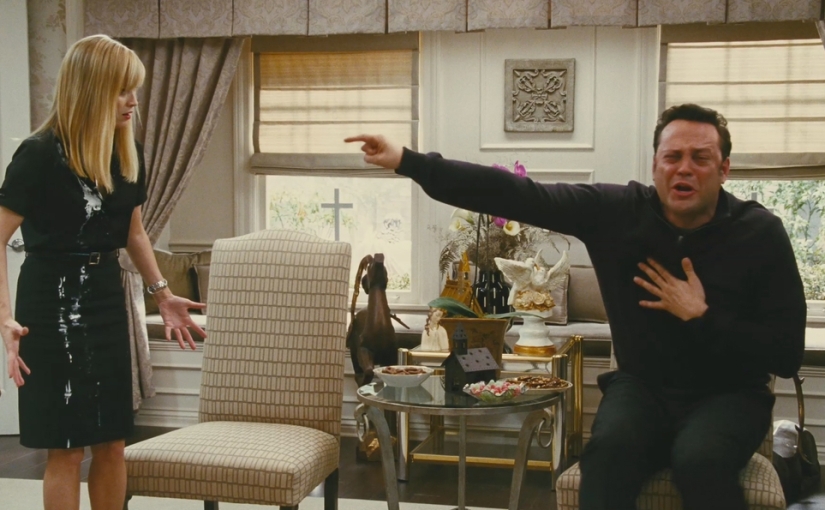
Reese Witherspoon and Vince Vaughn are Kate and Brad, an unmarried couple happily going on three years and ready to celebrate the holidays alone in Fiji while lying to their divorced parents, on both sides, about doing charitable service within poorly developed countries.  However, when they arrive at the airport and learn that their flight is cancelled, wouldn’t you know it?!?!  A news reporter is there to capture them on live television revealing their ruse.  Now Brad and Kate have no choice but to visit each parent’s home on Christmas.  With less than an hour and a half running time, let’s chop this up evenly, shall we?  Figure there will be about 15-20 minutes devoted to each parent.  Hence the title… (say it with me now) …Four Christmases.

Let’s go see Brad’s dad first, Robert Duvall, who lives with Brad’s aspiring MMA fighting brothers played by Jon Favreau and Tim McGraw.  They live a simple life with a Zenith television set and Christmas presents that are purchased with a ten dollar or less limit. A gift of a satellite dish is not gonna go over well, and will likely mean a fall off the roof.  Side note: doesn’t falling off a roof seem to happen a lot in Christmas movies?  Also, if the bros are into MMA fighting, well you know that Brad is going to have to endure body slams galore while Kate simply gasps in shock at her boyfriend’s demise.

Transition time in this film happens in the car while going to the next Christmas celebration.  Brad and Kate take these opportunities to question the purpose of their relationship.  They think they have relationship troubles licked by NOT getting married and not devoting themselves to time with family, but are they kidding themselves? 

Next stop is at Mary Steenburgen’s house, Kate’s mom.  Kate’s older sister played by Kristin Chenoweth is here too.  Kate’s agonizing childhood is brought up for laughs like attending a fat camp and reminiscing about her being the one with the cooties and fearful of bounce houses.  Oh, look what’s in the backyard!  A bounce house!  How ironic!  Know where this is going?  A visit to the church of an overzealous evangelist (Dwight Yoakum), where Kate and Brad are quickly recruited to participate in the Nativity play, happens. 

This is about midway through the film and I gotta say I can’t blame Brad and Kate for always lying about going somewhere else for the holidays.  Who wants to live with this kind of torment?  There’s some truth to the adage “You can pick your friends but you can’t pick your family.”  The movie wants me to recognize the oversight of Brad and Kate and their disregard for family time, but I don’t see it.  These are cruel people that they are confronted with.

Next up, let’s go see Sissy Spacek, Brad’s mom, who is sharing coitus with Brad’s high school best friend.  Enough said there. 

There’s more transitional driving to happen where the question of if Brad wants to get more serious about their relationship is discussed following Kate’s reveal that she took a pregnancy test.  Often in films, it’s the baby factor that tests the relationships.  I wish Hollywood would think outside that box a little.  Having children is not the end all be all, all the time, in building a loving relationship.  Components involving work, religion, and money also come into play.  Mustn’t forget about love too.  Just once, I’d like to see something else.  So many couples live happily without children.  We are even reminded how it’s rude and intrusive to ask “when are you going to have a baby?”  In fact, it is rude to ask that question because it’s too standard and presumptuous.  Hollywood should account for that.  I digress though.

The fourth and final Christmas visit occurs at Jon Voight’s house, Kate’s dad.  Not much wrong here, as we are in the final act of the movie where it’s more about a will they or won’t they conundrum for Brad and Kate.  So, cue the insightful commentary from Voight dressed in a comfy blue sweater.

Look, I can’t deny it.  I laughed at several moments in Four Christmases.  Favreau is hilarious in his tattooed, buzz cut, intimidating presence.  The Nativity play with Brad dressed as Joseph and getting caught up in the hallelujah enthusiasm is funny too.  Duvall is doing his old man redneck routine like he does in Days Of Thunder, and well…c’mon it’s ROBERT DUVALL!!!!

I just wish I didn’t know what was coming from one scene to the next.  In a film this structured, you don’t even have to try to predict what will happen.  You have an involuntary instinct to just know. 

As well, I don’t get a kick out of seeing how uncomfortable characters are made out to be when they are doing nothing but paying a visit.  Poor Brad gets outnumbered by his fighting brothers and suffers the Home Alone slapstick body blows.  Later, a baby spits up all over Kate’s dress, and Brad starts to dry heave at the sight of the mess. That’s not funny.  That’s a shame.  In life that happens.  Babies spit up, but we should feel awful for the victim.  How uncomfortable that must be.  Kate is not Joe Pesci trying to rob a house and getting a deserving paint can to the face.  Kate isn’t laughing at her misfortune.  She’s in shock.  Steenburgen and Chenoworth cackle hysterically, though.  I can’t bring myself to do that.    I feel bad for these two, and all I’m thinking is that it really sucks that they couldn’t make it to Fiji.  I wish they made it to Fiji.  What a shame they never got to Fiji.

Like Home Alone or Planes, Trains and Automobiles, Four Christmases wants to deliver the message that there is nothing better than to spend the holidays with the family, or get married and start a family of your own.  Yet the campaign seems to defeat itself in its demonstration.  I love my family and I love being married, but if I saw this film ahead of what I have now in life, twenty years going strong, I might have thought otherwise. 

Quick reminder: THEIR FAMILIES ARE FRACTURED IN DIVORCE ALREADY!!!!  So, all that Four Christmases tells me is TO HELL WITH FAMILY.  I JUST WANNA GO TO FIJI!!!!!

GO

By Marc S. Sanders

Character perspective is so vital to a story.  It becomes even more important when you are telling multiple tales.  When you have a collection of five or six characters in your screenplay and they each have a circumstance that overlaps with one another, a smart way to narrate one reckless evening is by chopping up the time period into multiple plotlines.  Numerous stories offer several perspectives and then you may appreciate what director Doug Liman accomplishes with one of his earliest career films, Go.

Go focuses on an assortment of early twenty-somethings scrounging for money while also taking in the nightlife during an evening close to Christmas.  Two supermarket cashiers, Ronna and Simon (Sarah Polley, Desmond Askew) have different things on their mind.  Ronna, who is exhausted having worked double shifts, is on the verge of getting evicted from her apartment because she has no money to pay the rent.  Simon just wants to go with his buddies for a good time in Las Vegas, but he’s got to work.  So, the two swap shifts. 

The script follows the Ronna avenue first where she meets up with some acquaintances of Simon’s looking to score some ecstasy.  Ronna thinks of a get rich quick scheme to meet with Simon’s drug supplier, Todd (Timothy Olyphant), and then sell to Simon’s buddies directly.  Naturally, it doesn’t work out so neatly.

The second act of the film focuses on Simon with three buddies (Taye Diggs, Breckin Meyer and James Duval).  Because Simon is written as happy go lucky, but also careless, he’ll get into his own kind of adventures and mischief.  It can only happen in Vegas.

The third act turns the viewpoint over to those acquaintances that approached Ronna, two soap opera actors named Zach and Adam (Jay Mohr, Scott Wolf).  These guys weren’t just looking to score some drugs.  They’re up to something else entirely.

I’ve never been one to take to movies where the characters are intoxicated or high through most of the film.  I can only handle so much of Seth Rogen’s drug episode schtick like with Pineapple Express, released years after Go.  What’s most appealing about Liman’s film, however, is that you are moving along one path, and then suddenly you are reversed and driving down the other side of the fork in the road.  This routine occurs again for a third time. 

Much like Quentin Tarantino’s Pulp Fiction, you can argue that the writer/director could simply take the straight route from beginning to end.  Yet is that really interesting?  Would Pulp Fiction have worked as well or better than its final composition?  Don’t we usually see that approach in everything else out there?  As well, these characters are not following a storyline that contains gripping material with symbolism or intense dialogue and circumstances.  So, how exactly do you heighten a kid buying drugs off another kid while keeping the viewers’ attention span?  You stir the pot.  (No pun intended.)

Following a rage dance club effect of opening credits, Liman does a close up of Katie Holmes as Claire, Ronna’s friend.  She’s talking to someone, who we can’t see, about how fun the surprises are with opening Christmas presents.  Go works from beginning to end because it turns in surprise encounters that you would never expect.  Call it a butterfly effect.  A flap of the wings leads to this encounter which leads to that encounter and so on.  If you are taken with the film, you just might smirk with pleasant surprise when you uncover who Claire is actually speaking to.

Early on in the film, we will see a one-sided conversation on the phone.  Later we will see the other side of that same call and I get a kick out seeing a story running parallel to another story I just got done seeing. (Forgive the redundancy of that sentence, but that’s the point!)

Another moment will have a character draw a gun on another character, only a hit and run with a car disrupts the moment.  Thankfully, we’ll meet the personalities behind that car later on.  As the picture becomes more and more clear, you might cheer “Bravo!” at the invention of Go.

As noted before, Doug Liman’s movie has been compared to the drive behind Pulp Fiction.  I understand the temptation to make that association.  However, this movie stands on its own.  Where Tarantino will show perspective of different characters, he will branch off into forward thinking with new events.  Go steers its focus to parallel plot points.  We see what’s occurring in Los Angeles right now with Ronna.  Later, we will see what’s happening in Las Vegas at that very same time with Simon.  Tarantino picks up where we left off.  Liman documents what’s happening elsewhere.  While these two characters are going along their own paths simultaneously in different parts of the universe, what happens to one of them will bear on what happens to the other as the trajectories continue. 

I might be making this out to be fancier than it ever needed to be, but it’s a kick ass good time, nonetheless.  The soundtrack is absolutely fun.  You get absorbed in the settings, almost wanting to be in the Christmas night club party with strobe lights and neon colors, or the Vegas casinos and strip joints.  The personalities and dialogue are super smart and witty with hilarious comebacks.  “If you were any more white, you’d be clear!”

At the time Go was released in 1999, from a marketing perspective, it did not appear all that attractive.  Lots of club music and symphonics surround the picture.  The most marquee name in the film, probably still, is Katie Holmes who is not exactly on the same level as an Angelina Jolie or even a Jennifer Lawrence of today.  Yes.  Nearly twenty-five years later many of these young actors are more recognizable.  I dare you to come up with their names though as soon as you see them in the picture.  However, because I’m not watching Tom Cruise or Brad Pitt, I have no expectations of how any of these various storylines are going to turn out.  When the film leaves the Ronna storyline, are we going to get to see what happens to her next?  Will Simon get back from Vegas?  Lots of questions abound as the film moves on.

While Go is reveling in its debauchery, it’s performing as a smart machine that hits all the right notes where it will lay the groundwork for comedy, but then segue into serious material where the protagonists find themselves in a situation they might not be able to escape.  Go is a movie that keeps you alert, even if you’re high, during one sleepless and irresponsible night. 

JEANNE DIELMAN, 23, quai du commerce, 1080 BRUXELLES

By Marc S. Sanders

You ever see a movie that feels like utter torture while watching it, and then when you have time to reflect on it later, you at least appreciate the message it delivered?  I guess this can apply to my experience with Sight & Sound’s recent selection of Jeanne Dielman, 23, quai du commerce, 1080 Bruxelles as the greatest film of all time; number one on their list of the best 100 films of all time.  This picture usurped other achievements like Citizen Kane (number one for close to five decades) and Vertigo (which held the top spot since 2012).

Chantal Ackerman directed this feminist film in 1975, produced in Belgium, about a widow named Jeanne Dielman (Delphine Seyrig) who lives a very mundane life.  The running time of 3 hours and 21 minutes positions a still camera depicting her everyday activity over three ordinary days.  We see Jeanne boil potatoes, prepare soup, and escort gentlemen callers behind her closed bedroom door.  One man per afternoon.  In the evening, her non talkative adult son Sylvain (Jan Decorte) arrives home and she serves him soup and dinner.  The viewer watches them eat their whole meal with Jeanne barely able to hold conversation with her son who remains mostly unresponsive.  After dinner, the sofa in the living room is unfolded into a cot for Sylvain to prepare for bed.  The following morning, Jeanne takes time to fold her son’s pajamas and shine his shoes.  Jeanne will then run errands like seeking out a particular color of yarn for sowing, or a button to replace on her coat.  She also waits for a colleague (maybe another woman in her line of work) to drop off her baby to be watched for a short period of time, before Jeanne’s next afternoon appointment with another gentleman.  After the appointment, she will fold up the little towel in the center of the bed for where her customer positioned himself.

This is a very tedious film to watch with little dialogue that is delivered in French with subtitles.  There is insight to be gained however, and as I reflect on the film, it mostly comes through in the deliberately long running time.  I believe Ackerman was attempting to make a viewer’s experience with the piece feel as lonely and mundane as the main character.  There are very few cuts in the film.  Often, for long periods of times, maybe as long as four or five minutes, we are watching Jeanne sit in a chair staring into space.  We will watch her walk down her hallway or across the street to the post office.  We will watch her button every button on her coat or house robe.  We observe her take a routine bath.  We see her peel potatoes.  We watch her enter the kitchen to find a utensil and then leave while turning off the light.  She’ll then return to the kitchen for something and turn the light back on.  Near the end of the film, she receives a package and has trouble with a knot while undoing it.  After nearly three hours of this routine kind of activity, I knew she would leave the room, walk down the hall, enter the kitchen, pull open a drawer and look for a pair of scissors. There is nothing special in any of this, but it remains in the final print to be witnessed.  Nothing you see in this film is enhanced with stimulating devices like dialogue, music cues, lighting effects, close ups or strategic editing.  Even the title of the film, Jeanne Dielman, 23, quai du commerce, 1080 Bruxelles, is very, very boring and ordinary.  We are simply watching how a lonely widow lives from day one to day two and on to day three.

I am one of four members of a movie watching group of friends who get together (hopefully once a month, if our schedules allow it) to watch three movies on a Saturday or Sunday.  One member selected this film out of curiosity with Sight & Sound’s notable recognition of late.  (We also watched Shane Black’s Kiss, Kiss, Bang Bang and Doug Liman’s Go.)  While we are watching these selected movies, we respond like any audience member should to a film.  We’ll laugh or scream.  We’ll comment in moments that seem appropriate and keep the mood lively.  Much commentary was tossed around among the four of us while watching Jeanne Dielman, 23, quai du commerce, 1080 Bruxelles.  At times we sounded like locker room boys.  On multiple occasions I told my good friend Anthony how much I hate him for selecting this slog of a picture to watch.  We even started to look for symbolism or inconsistencies in the film.  On several occasions, we see Jeanne enter the kitchen and there is only one chair positioned at the table.  She walks out of the room and when she returns there will be two chairs, only we never saw her or Sylvain bring in a second chair.  What could that mean?  Is this film suddenly going to reveal itself with a supernatural characteristic?  Could there be someone else in the house?  Will Sylvain and Jeanne have dinner at the kitchen table tonight, instead of in the dining room.  Is there something symbolic about this disappearing and reappearing kitchen chair?  I’ll save you the trouble, Reader.  It means nothing.  I could only draw that it is an error in editing or continuity.  Yet, that is where our minds would go to, as we absorbed these long moments of ordinary life.  Blame us for yearning for the quick fix that most movies offer.  We are simply weak, very weak, men.

Bear with me as I tell you that to watch Jeanne Dielman, 23, quai du commerce, 1080 Bruxelles is sheer torture.  To listen to a faucet drip into an empty tin pan or watch a strand of grass grow in real time is at least as entertaining.  Movies serve to make us laugh or cry or scream in fear and heighten our suspense.  Movies serve messages that we choose to agree or disagree with.  Movies teach us about a kind of person or industry we may never come across and movies allow us into the mind of an artist’s own imagination.  Movies can disgust us.  Movies can anger us, and movies are also there to frustrate us, like Jeanne Dielman, 23, quai du commerce, 1080 Bruxelles.

To think back on this film, I’m taken with Jeanne, the character, and what she ultimately does before the film concludes.  I’d never spoil the movie’s ending.  However, it stands as the most memorable moment in the picture.  It’s a scene I won’t forget and it certainly is the most eye opening.  Most importantly, it’s understandable having lived as a witness to Jeanne’s seemingly worthless and boring lifestyle. We’ve all endured boredom.  I’d argue at times we’ve all felt a lack of worth to ourselves and those around us.  I certainly have questioned my value on this earth more times than once.  Therefore, to really feel how hollow Jeanne is with whom she caters to each day, like an unresponsive son or gentlemen callers that lack loving affection while they pay for a quick tryst, a viewer must endure the long running time of the film.  It’s the most assured way to embrace the authenticity of Jeanne’s empty livelihood.  The most important element to Chantal Ackerman’s film is likely the running time.  How else to truly understand how mundane a lonely widow is than to live through a near full three days with her?  Therefore, Ackerman is successful in getting across what she wanted to with her film.

Credit should be recognized for the actress Delphine Seyrig.  To simply sit in a chair staring into space with a camera (likely positioned on a tripod) at the other end of the room and not break character for long periods of time requires extreme concentration and endurance.  To share a scene with another actor that does not respond to anything you are doing, is equally challenging.  Seyrig is a professional actress, whose career I’m not familiar with.  She has likely portrayed more stimulating characters with more hyperactivity in other pieces of work.  To bring a performance down to a level of this most extreme kind of monotony is certainly dexterous while requiring complete focus. 

I’ll likely never watch Jeanne Dielman, 23, quai du commerce, 1080 Bruxelles ever again.  I don’t need to.  I won’t gain anything new on a second or third viewing.  I won’t ever forget the film, however.  It stands apart from most other films I have watched because the construction of the piece is intentionally unexciting and the performances are deliberately ho hum.  There are people who live completely uninteresting lives, and it is certainly sad to acknowledge that.  Movies will tell me that a deranged man will kill people.  They will also tell me that heroes go searching for treasure or that employees have a desire to exact revenge on their boss.  Movies will demonstrate how families will love each other or how two people fall in or out of love.  Movies will also explain how sorrowful it is for a person to experience loss.  Movies will also tell me that people live within a mind that offers no self-worth while their heart beats and beats from one mundane and ordinary day to another.  The best example of that is Chantal Ackerman’s Jeanne Dielman, 23, quai du commerce, 1080 Bruxelles.  An admirable accomplishment for a film dependent on the study of a woman’s sheer emptiness. 

MAN ON FIRE (2004)

By Marc S. Sanders

A movie that has eluded me until now is Man On Fire featuring Denzel Washington in another Tony Scott film.  I say eluded because with this director/actor combination I’m usually satisfied with the finished product.  That wasn’t the case here, though.

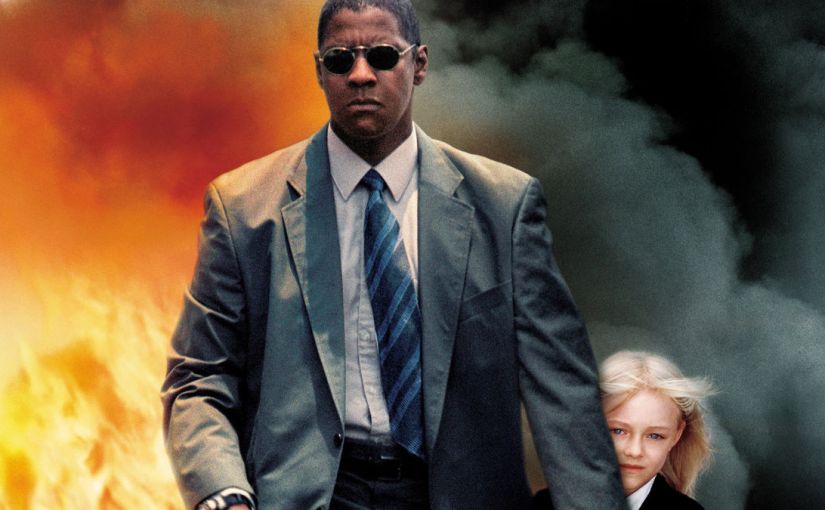
Washington portrays a hard drinking bodyguard named John Creasy.  He’s recruited by his war buddy, played by an uninteresting Christopher Walken, to protect a young girl named Pida (Dakota Fanning), daughter of an automobile industrialist and his always fashionable wife (Mark Anthony, Rahda Mitchell).  Creasy is a cold fish at first who refuses to accept Pida’s friendship.  Jump to a couple of quick scenes later and he’s become her surrogate father and swimming coach.  In a matter of seven minutes of running time, I’m supposed to accept that this guy has turned into a cuddly teddy bear for this kid.  As soon as that happens, Creasy is ambushed and Pida is kidnapped following her piano lesson. We are not even a quarter of the way through the picture, but the remaining hour and forty minutes play like an awful how-to documentary on effective means of torture for bad guys before ruthlessly killing them.

Tony Scott is a director who always seeks to demonstrate that glossy film styles are more significant than the screenplays he directs or the characters who reside within.  (Two exceptions come to mind though, Crimson Tide and True Romance.  Maybe some of Top Gun too.)  Man On Fire is a frustrating watch as Scott’s camera performs like a narrator with attention deficit disorder.  It can never sit still.  The movie jerks around so much with ridiculous quick cuts and deliberately grainy and distressed cinematography.  Just when I’m trying to comprehend a new player who enters the fold, the camera jumps to something else like a street corner or a moving car or Denzel Washington’s sunglasses. There are subtitles for the Spanish speaking characters that appear in a block letter font that looks like it came from a karaoke machine.  There’s also subtitles for what somehow appear to be “important” or “powerful” statements.  A line like “pass the salt” might read like “PASS the SaLt…PLEASE!!!!”  Tony Scott is obviously going for some kind of MTV music video approach, but it’s awfully distracting and downright annoying.  As well, I must ask why.  Why go through all this effort? The cameramen must have been getting motion sickness while fumbling and shaking around their equipment to shoot this picture.  So why bother?

The most interesting plot point happens in the first three seconds of the movie.  A statistic pops up describing how often kidnappings occur in Mexico (one every sixty seconds), and how as many as seventy percent of those incidents end up with a dead victim.  That’s a shocking dilemma, worthy of attention. Through his career, Washington’s selection of scripts has allowed him to tackle important issues with moments of debate and smart dialogue, as well as suspenseful action if there is a call for it.  However, Tony Scott and screenwriter Brian Helgeland are not interested in using these facts as a springboard with Man On Fire

Once the expected kidnapping occurs, and following a very quick healing – as in less than two days – of multiple gunshot wounds to the chest and back, John Creasy goes on a war path of revenge when he learns that Pida is dead.  Creasy doesn’t get to perform with much intellect here.  Having only a partial license plate number, he’s able to follow the breadcrumbs that lead to a crime syndicate notorious for winning millions in ransom demands.  Creasy simply goes up the food chain from one member to the next until he gets to the top of the pyramid.  That’s the movie!  That’s it!

He’ll cut a guy’s fingers off and cauterize them with a car cigarette lighter.  He somehow has access to a rocket launcher to use within the city.  Sadly, the most novel technique is to stick a rectal detonator (yes, I said rectal) up a man and set a timer for the guy to come clean with information before it goes off.  We can thank Tony Scott for putting up a countdown digital clock on the screen to gauge how close this thug is to his demise.

My past experience with movies like these have taught me that there’s always a traitor.  Someone set the plan in motion to abduct the little girl.  That’s not hard to figure out.  Once the character appears on screen, it could not be more obvious.  The motivation is just as ridiculous.

Man On Fire is only imaginative in how the protagonist dispatches one guy after another.  It lacks any effort in creativity towards its hero.  The guy drinks. He torments his enemies.  He’s got nothing interesting to say.  There’s a neglect for a very real and common problem within the country of Mexico.  The only design that is given attention is “artistic style” that Tony Scott adopts to mask away what is not there in any of the writing or character development.

I’d like to learn more about how the Mexican government responds to these kidnappings and maybe the experience that survivors endured.  Show me the torment that the families go through.  Can I see the method to the kidnappers’ plots or how they select their next target?  A very real predicament was offered with Man On Fire, but then it was tossed aside so I could see the effectiveness of an explosive suppository.  Now, is that really a movie that any of us want to see?

THE FABELMANS

By Marc S. Sanders

Often, coming-of-age stories are narrated through the eyes of the child on the cusp of becoming a teenager or a grown up.  It’s important you realize that I say through the eyes, however.  It’s what the protagonist observes that allows him or her to appreciate, and comprehend.  Steven Spielberg will tell you he came of age by learning how to make movies.  It stands to reason however, that he did not come of age by looking with just his eyes, but rather with his 8mm and 16mm cameras.  The Fabelmans is a fictionalized, loose interpretation of how the celebrated filmmaker transitioned from adolescence into young adulthood with dreams of telling stories with movie making inventiveness.

Sammy Fabelman (Gabriel LaBelle, the older version; Mateo Zoryan, the younger version – both performances are magnificent) is escorted for the first time to the movies by his parents Mitzi and Burt (Michelle Williams and Paul Dano) on a wintery New Jersey night in 1952, where he sees The Greatest Show On Earth.  For eight year old Sammy, what starts out as nervous fear of what to expect in a dark theater with a giant screen turns into exhilaration as a car does a head on collision with a locomotive.  Shortly thereafter, a series of eight Channukah gifts assemble a Lionel train set for Sammy.  It’s exciting to see it go around on an oval track.  It’s more electrifying to preserve it on film with a toy car driven by a Mordecai figurine crash right into the steam engine and the boxcars hitched to it.  That was Mitzi’s idea to capture it on film.  That way Sammy can get a thrill out of watching the accident over and over again without causing any further damage.

Sammy only progresses from there.  When Burt gets a job promotion, the family moves to Arizona.  The desert allows a teenage Sammy to continue with his love of filmmaking by shooting his family during the cross country trek and then making westerns and war films with his Scout Troop pals as the actors.  He sets up tracking shots by propping his camera on a baby carriage rolling along cardboard laid out on the ground.  Ketchup becomes blood.  Sammy is even inventive enough to poke holes in the actual film strip at precise moments when his sheriff and outlaws fire their six shooters.  Now it really looks like the cowboys are shooting real rounds of gunfire.  Mom and dad, his sisters, his teachers, and friends are all impressed. 

His Uncle Bennie (Seth Rogen) is also dazzled by Sammy’s natural talent.  Bennie is Burt’s best friend and co-worker, and per Mitzi’s insistence he moves to Arizona with the family.  By use of his camera and editing machine, Sammy will soon learn that Bennie actually means more to Mitzi than he does to Burt. 

With a script that Spielberg constructed with Tony Kushner, the director/writer depicts a kid, much like he was, who expressed his honesty and learned the truth about the people around him when his projector was on.  The camera doesn’t lie, ever.  A motion picture camera will even hold on to the final beats of a person’s pulse before they finally expire.  That one moment in time where there’s life and then suddenly there’s death can be eternalized on film, forever.  It’s through this storytelling device that allows The Fabelmans to stand apart from other coming-of-age films like Rebel Without A Cause or Splendor In The Grass or any of the John Hughes brat pack films.  The childlike quality yearning for adventure and fantasy shines through with Sammy’s westerns or John Wayne inspired war pictures.  Sammy also realizes though that he can pick up on real life and emotion with his 8mm, like on a family camping trip.

Michelle Williams gives an outstanding, sometimes ethereal performance.  It’s real.  She’s not doing fantasy.  Yet, she lives for the fantasy and adventure.  I recall a well known anecdote of Spielberg where he described in his youth, his father woke up the family in the middle of the night to watch the skies for a meteor shower.  (Watch The Skies was the original title for his film Close Encounters Of The Third Kind.)  In The Fabelmans, Mitzi enthusiastically takes her children in the car to pursue a tornado.  Later moments will have her dancing freely in her nighty in front of the car headlights while the family is camping; uncaring over the fact that her dress is see through.  Sammy will notice how awkward his father Burt feels, while at the same time seeing how enamored Bennie is at the sight.  Williams has a beautiful balance though of a woman trying her best to appear happy and collected for the sake of her children and husband, but not living the story she wants.  This will influence Sammy as he maps out his own future.  He’ll live the life he wants.  Learning the merits of algebra will never hinder his destiny to make movies.

Later occurrences will show evidence as to how well Sammy can capture reality with his camera.  Following a series of bullying and antisemitic teasing after the family transitions to northern California, Sammy is welcomed to shoot the senior ditch day at the beach.  A telling moment occurs when the film is shown at the prom.  The taller bully is overwhelmed by how championed he’s depicted in the film.  He’s bordering on furious with Sammy, though.  The mean kid knows he’s cruel to the scrawnier, Jewish Sammy, and it immediately eats away at him with guilt over his past treatment.  Sammy’s film has changed and disrupted this kid.  Another kid bully is shown to look like the jerk he is and nothing else.  He walks alone on the beach.  He’s not an athlete.  He’s nothing but a no talent, unlikable antisemitic jerk.  This kid is also changed because now he can see what he truly is as the viewer looking at his own cruel behavior shown on film for the whole world to see.  Movies will bring out what we harbor deep down, inside. 

Ironically, Sammy is so well versed with camera work and follow up editing that he is practically unaware of how durable his theme of honesty through the lens truly is.  What Sammy captures comes without even trying and it sends a raw emotion to the viewer, whether it’s a mean-spirited bully or even his own mother watching.

Steven Spielberg could never be anything else except a movie maker.  Yet, after over five decades he’s still introducing audiences to new kinds of accomplishments.  He started as a director with adventure and fantasy on his mind with the likes of monster trucks, killer sharks as well as swashbuckling treasure seeking and visitors from outer space.  Later, he had to reinvent his craft and think outside his fanciful dreams to show brutality and hope through horrifying moments in history like the abuses endured by black southern plantation dwellers, slavery, the Holocaust and the unglamorized harshness of war, political unrest, and terrorism.  Further on, he carried out the romance of stage musical performance and even learned to poke fun at his own past accomplishments.

In the short period of time that we get to know Sammy Fabelman, we see transfers of perspective in this young boy’s outlook through a camera.  Sammy goes from making silly mummy monsters of his sisters to intimate hand holding shared by his unhappy mother and the man she truly loves, a man who is not his father. 

Whether he is watching his own films, or it is his friends, or his mother, his father or even his tormentors at school, Sammy realizes that a film will always do one thing and never falter away from that one thing.  His camera will always, always, always tell the truth. 

Thankfully, a truly inspired epilogue moment, which left me with a big, enthusiastic grin, has Sammy still learning that as frank as his filmmaking may be, it’s important that it is also never boring.  I don’t think I have ever been bored with a movie made by Steven Spielberg.

THE USUAL SUSPECTS

By Marc S. Sanders

There’s something inviting – or maybe intriguing – about seeing a person in a hat with a dark trench coat on.  Just the person’s silhouette will leave you asking for more.  What is it to this guy?  Steven Spielberg does that in the first few minutes with Indiana Jones in Raiders Of The Lost Ark.  Before Indy, there was Orson Welles as Harry Lyme in The Third Man.  Guys like these have a danger to them, and we can’t look away.  In The Usual Suspects, one of many variations of a legend called Keyser Soze has a dangerous reputation that carries him, and we want to know more about the figure in the hat and coat.  In the first few minutes of the film, we see this mysterioso extinguish a kerosene flame by urinating on it.  Who is this guy?  Maybe we, as the viewers, are Icabod Crane looking at an updated inspired spawn of The Headless Horseman.  Perhaps, we are actually catching a glimpse of that boogeyman who hid in our closets or under the beds.

Bryan Singer’s modern day film noir, masterfully written with inventive riddles by Christopher McQuarrie, works towards its ending as soon as the opening credits wrap up.  Each scene hops from a different setting or time period and as a viewer you feel like you are sitting at a kitchen table turning puzzle pieces around trying to snap them together.  Not all of it makes sense by the time the picture has wrapped up.  That’s okay though, because one of the players in the story perhaps played a sleight of hand and we can do nothing but applaud when we realize we’ve been had.  Magic is fun when you never quite realize where or when the deceit began.

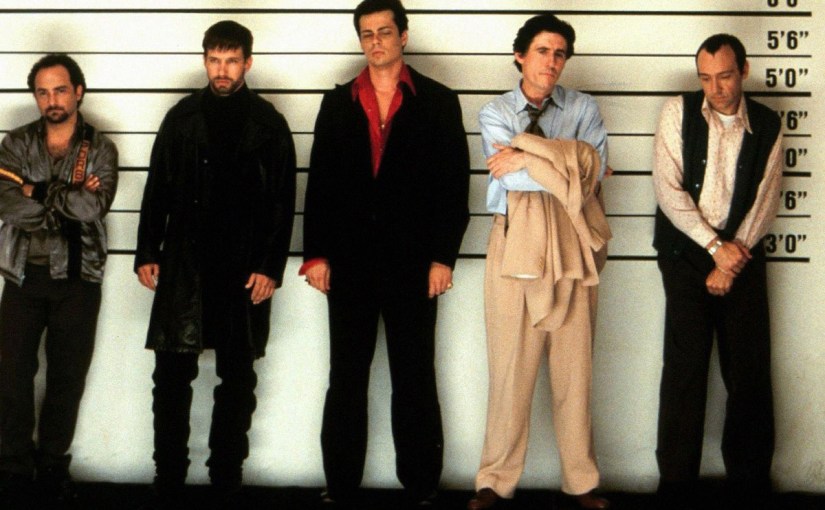
A scenario is set up early on that assembles five different kinds of criminals in a police lineup.  It works as a device to team these guys together to pull off additional heists.  A prologue to the film depicts the aftermath of their last job together.  One holdover, a hobbled cripple named Verbal Kint (Kevin Spacey) is brought into a police precinct to be interviewed by a determined detective named Kujan (Chazz Palminteri).  Verbal might ramble on endlessly in circles about nothing, but Agent Kujan is going to get to the bottom of what happened the night prior on a shipping dock that turned up several corpses.  How did it all go down, and where is the money and cocaine that was expected to be there?

Verbal was one of the five in that lineup, along with McManus (Stephen Baldwin), Hockney (Kevin Pollack), Fenster (Benicio Del Toro) and Keaton (Gabriel Byrne).  Each carries a different specialty or personality, but Keaton is the guy that Kujan is really after.  He’s a master criminal who’s been known to fake his own death, supposedly turn legitimate while dating a high-priced lawyer, and now may be the lead suspect in an armored truck heist.  On the other hand, maybe it was one of these other four guys. 

Amid all of this back and forth and side stepping stories, there is mention of a name – Keyser Soze.  Whenever he comes up in the vernacular of the script, the mood seems to change.  These criminals, usually comfortable in their own cloth of transgressions, get noticeably frightened and concerned if there is even a remote possibility that this Soze character is the engineer behind what follows them. 

It’s fun!  The Usual Suspects is fun.

McQuarrie’s script will toss out names of people we never meet.  It will quickly imply an anecdote from another time.  It’ll share a bunch of short stories with how these five guys work together, like upending a secret criminal sect of the New York City police force while robbing them of their fortunes. Yet, a tall tale of lore will intrude on their typical heists to derail what we may normally be familiar with in other crime dramas or noir films.   

Spacey is the real star of The Usual Suspects.  He earned the Academy Award for Supporting Actor because Verbal Kint is so well drawn out as a weak, unhelpful, and frustrating man.  Often, you ask yourself what the heck is this geeky looking crippled guy even talking about. 

On other occasions, I’ve noted that sometimes with movies I can not determine if I just watched a superior film or dreadful nonsense until I’ve reached the final five minutes.  The final five minutes of a movie can be the verdict.  Sometimes you’ll claim the journey getting there was great, but the conclusion was a big letdown.  If you have never seen The Usual Suspects, then you likely won’t know if the path towards its end is good until you’ve reached the culmination. 

Roger Ebert couldn’t stand this picture, and I’m not going to say he didn’t know what he was talking about or that he was wrong.  Bryan Singer and Christopher McQuarrie’s assembly of scenes don’t make for a well-defined picture, even after the movie is over.  Ebert was less than fond of that technique.  I think that was their intent, though.  Everything you have seen doesn’t have a suitable answer.  Certain parts don’t link well with others.  However, the director and screenwriter were always working towards an ending while piloting the film in swerves and unexpected knee jerk turns.

Unlike Ebert, however, I’m wholly satisfied with the film.  In fact, the first time I saw the movie, I cheered for the conclusion that got more than just one over on me.  On repeat viewings, knowing how the picture wraps up, I treasure the path towards its finale. 

If you study Verbal Kint, you’ll realize that he doesn’t offer easy answers and explanations for what’s occurred, thereby lending to the frustration of Agent Kujan who only demands cookie cutter, fall-into-place arrangements. What can I say Roger Ebert?  How else should I lay it out for you Agent Kujan? Life is messy with no easy answers sometimes.  Especially, in film noir.  

Ironically, one of Ebert’s favorite cinematic characters is Harry Lyme.  So, I guess Keyer Soze couldn’t live up to that threshold or repute.  If that’s the case, then I forgive you Roger.

THE CONVERSATION

By Marc S. Sanders

To watch Francis Ford Coppola’s The Conversation from 1974 is to feel the paranoia of what Harry Caul, the protagonist played by Gene Hackman, endlessly feels as a surveillance expert. Harry is so skillful at his job and yet so modest, that he only believes someone may actually be better. Even he doesn’t believe he’s that good. Still, his own expertise can drive him to insanity.

Coppola opens the picture on a wide lens that gradually zooms in, looking down on a sunny afternoon in a crowded park. There are musicians and mimes. Bums that sleep on a park bench and food vendors, and then there is a couple (Cindy Williams, Frederic Forrest) who we are drawn to to get some sound bites of their random conversation. Their voices are muffled at times. Feedback and background noise interferes as well. Harry is spotted trying to keep within a perimeter to allow his hardware to function and get every tidbit of the conversation.

Following this sequence, Harry is back at his fenced in warehouse operation that he shares with a loudmouth partner named Stan (John Cazale) attempting to clean up the recording for his client, only known as The Director. It’s a skill that only Harry has the means to do. Hackman plays the part as a quiet and reserved man, unlike his competitors who proudly boast of their next, great invention to eavesdrop and capture the actions and discussions of any subject. With an awareness of what he’s capable of, I’d argue he trusts no one, even when he’s being praised. Does he even trust Stan, who he works with?

To be good at this kind of work requires the ability to separate yourself from the content of what you’re listening to. Just get an audible recording and move on. The content should be for someone else to stew over. For Harry, this becomes a challenge. He uncovers a hint in the couple’s exchange that suggests perhaps their lives are in danger. When he goes to drop off the recordings and collect his fee, he is not met by The Director. Instead, he comes across a lackey (Harrison Ford) who insists that he was instructed by the client to make the exchange. His paranoia sets in, when the lackey keeps on appearing at random, unexpected moments with Harry. None of it feels right for Harry. So he violates what should be his own rules and investigates further. The risk is whether his own capabilities will undo his sense of humanity and decency, including his connection with God.

Coppola, who also wrote the script for his film, puts Harry to the test in nearly every scene. He writes Harry to be the best at what he does, and yet that doesn’t prevent failure from occurring. He even fails to recognize when he’s being victimized and listened to. A midway point features a party among the men who specialize in surveillance. Harry quietly flirts with a girl only to feel embarrassed when his East Coast competitor reveals that he recorded their conversation from across the room. Seems like a harmless prank, as sophomoric as playground or locker room teasing, but it’s enough to maybe drive Harry into madness.

Harry Caul is one of Gene Hackman’s best roles. It stands apart from other films he’s been in. Harry is very much a three dimensional character who values his religious connection and his sense of morality. The problem is that Harry is a specialist in something that’s really not very moral or ethical. His Catholic beliefs might suggest what he does is sinful. Sure, he goes to confession, but he still pursues actions that are deemed inappropriate in the eyes of God.

Francis Ford Coppola depicts a very telling moment as Harry tries to find a listening device in his apartment. He takes apart everything in the place by either breaking it or unscrewing it. What do you think he’ll do when he comes upon his figurine of the Virgin Mary? Is there anything left to trust? Anything of value or purity in Harry’s world? He doesn’t trust others. He doesn’t trust himself? Does he trust a higher power that he’s leaned on his entire life?

Because The Conversation does not delve too much into the now dated-very dated– technology from the early 1970s, it is a film that is especially relevant in today’s age of cell phone recordings and devices that are relied upon for everyday use. While Harry is possibly thinking he’s on a noble pursuit with his means to eavesdrop, either by servicing a client or even rescuing someone from what appears to be imminent danger, is this the right way to go about it? What will it cost Harry? As well, what does it cost our society to embark on the convenience of what we are now capable of? Does the ability to record someone’s actions contain absolute merit, or are we violating a civil mentality within ourselves and among our fellow human beings?

There’s a lot of hard questions to answer in The Conversation. I think that’s why especially now it’s an important picture to see.

BULLITT (1968)

By Marc S. Sanders

The car chase with the movie attached to it is Bullitt from 1968, directed by Peter Yates, featuring Steve McQueen in the title role.  Why do I phrase it that way?  Well, as far as I can tell in the three or four times that I’ve seen the movie, the main attraction is the well-known, and pioneering, car chase at the crux of the film.  Otherwise, the plot is very thin, with characters that have next to no complexity or dimension.

Frank Bullitt has been summoned on a Friday afternoon to the home of a prosecutor/politician named Chalmers (Robert Vaughn).  He’s been requested to guard a key witness over the weekend ahead of giving a deposition on Monday morning that will expose “The Organization.”  Frank lays out the shift schedule with his precinct partners, and soon after the witness is gunned down and sent to the hospital with life threatening injuries.  Now it’s up to Frank to find out how the organization located the witness and who is behind the conspiracy. 

Bullitt moves at a slow pace.  There are some foot chases through the hospital.  Chalmers gives the standard frustration with how the protection assignment has fouled up, and plenty of close ups are given to the marquee actor, McQueen.  For some sex appeal, Jacqueline Bisset appears as Bullitt’s girlfriend offering up a speech that shows resentment for his occupation amid a world of death and violence.  A better monologue of this sort would come later in Michael Mann’s Heat with Diane Vinora expressing her disdain for Al Pacino’s determination as an obsessed detective.

Nevertheless, Bullitt is an important film to watch, if for nothing else then to see what it has inspired since its time.  The legendary car chase between Bullitt’s dark green Ford Mustang and the silent villains’ black Dodge Charger is nearly ten minutes long, and still holds as one of the greatest ever filmed.  The fact that the film takes place in San Francisco only lends to the scene.  The best car chases take place among the sloping streets of San Francisco.  Fortunately, the chase is not accompanied by music, but rather by well timed sound editing of burning rubber and screeching tires, revved up engines, side swipe banging and chassis slams on the hilly pavements. Yates also includes good close ups of McQueen and the villains in the Charger.  They were not always driving the cars.  There were stunt doubles, but I’m not seeing the difference while I’m watching.  I might see the cars pass by the same green VW Beetle three times, but the editing is so perfectly assembled here that it is fair to argue this is one of the greatest scenes in film history. 

In later years, directors would pull moments from Bullitt to use in their own films like the Dirty Harry pictures, The Seven-Ups, and Heat.  One moment during a foot chase in an airport seemingly inspired moments for later films like The Fugitive and Skyfall.  The hero is looking amidst a sea of crowds for the antagonist.  Peter Yates films bystanders in this moment going from one walking face to another.  He cuts back to McQueen moving his eyes from left to right and back again, looking and looking.  The bad guy that Bullitt is trying to find is just an ordinary white guy with brown hair; no discernable features like you might notice in an Alfred Hitchcock movie or a James Bond entry.  So how do you find the guy who just looks like everyone else?

Bullitt sets up a twist or two.  Honestly though, I can’t recall where those moments are resolved.  The witness being protected undoes the chain lock on the door just before he’s gunned down.  Why?  What was the exact purpose to do that?  As well, who exactly gave away the secret location of the witness, and again, why?  These questions weigh on my mind after watching the film.  Bullitt is not a confusing or multi-layered movie.  It’s pretty simple with very minimal dialogue and works like a showpiece for scenes.  So, I have yet to uncover where I got lost or what I missed that could answer those questions.

Best I can say is that if you’re a film buff seeking out where certain standards started, it’s best to watch Bullitt.  After you watch Nicholas Cage supposedly drive a yellow Ferrari through the streets of San Francisco in The Rock, you’ll at least say, “Uh uh.  Bullitt did it better the first time.”

BLACK PANTHER: WAKANDA FOREVER

By Marc S. Sanders

Marvel does it right.  DC doesn’t.  Black Panther: Wakanda Forever  is not a perfect film, but it’s not Black Adam.  The latest Marvel production offers sharp visual effects and action scenes, along with thought provoking moments that reflect on loss.  Black Adam offers a crusty, yellow lightning bolt on the chest of The Rock.

Director Ryan Coogler was faced with a terrible challenge to make the follow up to his smash hit, Black Panther.  The star at the center of the film, Chadwick Boseman, unexpectedly passed away from colon cancer.  A screenplay for the film’s sequel had to suddenly be rehashed.  A unified cast had to work with a hole in its structure.  Coogler opted not to recast the role of T’Challa, the King of the fictional African nation, Wakanda.  That was a smart choice.  Boseman’s portrayal was so embraced in that film, as well as three other Marvel chapters, that he was seemingly irreplaceable.  T’Challa was not just another James Bond or Batman.

I liked most of Wakanda Forever.  First and foremost, the primary cast is mostly female and Marvel’s early reputation with female characters left a lot to be desired when all they would do is flirt with the action star and scream for help.  As well, none of the women characters were very diverse.  The African influence of the Black Panther characters demonstrate that the Marvel universe is unlimited in appearance and style.  (Star Wars productions of late prove that as well.) 

The design of the picture is also gorgeous.  I still yearn for Wakanda to be a real locale that can be toured.  I’m sure Disney is already giving this some thought.  At times, it was hard to know what overhead locations were mere CGI and what was real.  The backdrops are seamless.  The whole movie is gorgeous. 

The sensitivity to the loss of Boseman is especially handled beautifully.  The opening sequence is a ceremony we have all been waiting for since the actor’s death two years prior to the release of the film.  Some of the customs and practices might be fictional, albeit inspired by what has been researched in other factual nations and observances, but it is also endearing.  The silence of the Marvel logo montage will especially grab you.

Wakanda Forever is carried primarily by Letitia Wright as Shuri, T’Challa’s sister.  The film takes place one year after T’Challa has passed away from a disease and she is not ready to burn the funeral garb she wore when his soul was sent off to the ancestors.  However, while Wakanda was once thought to be the sole resource of Vibranium, the most powerful element in the world, a new character is introduced from under the ocean.  Namor (Tenoch Huerta) is the mutant who leads a nation of underwater dwellers with their own source of Vibranium.  He proposes that his nation works in conjunction with Wakanda to protect what they possess from other nations (like the United States and France; though why must Marvel show these countries in a bad light?) who could potentially use this commodity for nefarious purposes. 

From this seed in the storyline, subplots are branched out.  They just don’t work, though.  Wakanda’s American ally, Agent Everett Ross (Martin Freeman), is brought back into the fold.  He only adds unnecessary running time to a very long film.  First, he provides a lead on to a new character, that’s expected to fill the hole left by Robert Downey Jr’s Iron Man.  A character named Riri Williams (Dominique Thorne) who I have learned becomes the super hero Iron Heart with a new Iron suit.  After that Ross is left to watch Anderson Cooper on CNN as we have already seen the plot unfolding for ourselves, and have conversations with a character named Valentina Allegra de Fontaine (Julia Louis Dreyfus, looking at her most uninteresting and boring).  I know. This character serves as teaser fodder for what the MCU promises in future installments, but why is it necessary?  I believe this is her third appearance between the films and Disney + shows.  All she does is drag the stories down.  Wakanda Forever is a 2 hour and 40-minute film, that could have saved thirty minutes without the characters from Freeman and Dreyfus, and likely Thorne as well.  Let’s just stick with the Wakandans and forget about advertising what’s coming next from the Marvel factory, please.

Another issue with the film is the delay of showing the new Black Panther.  That’s what we ultimately paid for.  The middle section of this long running time had me yearning for when I could see the new suit in action, and who was going to wear it.  When it finally arrives in the third act, I gotta say I was let down.  While there’s a newly inventive design, like each time there was with Iron Man, we don’t see much of what’s new in action and there’s hardly anything that’s novel about it.  Does this Black Panther suit offer any new tricks? 

What’s fortunate for the film is the cast.  Letitia Wright has a good balance of youth segueing into maturity as she toils with loss.  I love this angle in the same way I appreciated the cancer storyline written for Natalie Portman in Thor: Love And Thunder.  Superpowers do not shield us from what slowly dwindles our lives away.  Angela Basset remains a very strong actor after an over forty-year career as the surviving Queen of Wakanda.  She commands a powerful presence of authority.  Danai Gurira as the spear wielding acrobatic Wakandan warrior Okoye is absolutely cool in action scenes.  She also has well written scenes to perform with the other two leads, as her character’s commitment to country is tested. 

Ironically, the Namor character is one of the oldest Marvel characters in print, introduced long before Spider-Man or the Hulk came on the page.  I was never a fan of the character though.  He just didn’t have a cool enough costume for me as it was only a bathing suit and he had wings on his ankles.  Meh.  I feel the same way here.  The back story of the character is altered to fit the mold of the script, and that’s okay, but I didn’t feel for this antagonist’s plight.  In the prior film, I was more on the side Eric Killmonger’s (Michael B. Jordan) cause than I was on T’Challa’s.  In this film, Namor is just a guy to do battle with while he flies and swims.

Ryan Coogler is a detailed director.  When I’m in Wakanda, I want to explore every building and hop aboard each vehicle that hovers overhead.  He leaves no stone unturned.  I would have chosen for some of the action scenes to be shot in the daytime so I could get a better look at what goes on.  I feel that way about all action and adventure films.  However, a darkened action scene in nearly any Marvel film is much more articulated than any scene, daylight or otherwise, in Black Adam from DC.

Black Panther: Wakanda Forever is a good film, but not great, mostly due to its overstayed running time.  What should have been cut from the final reel is obvious.  Yet, good writing and acting allows for the film that many Marvel fans needed after one of their heroes left us.  Losing Chadwick Boseman likely equates to how we lost our Superman, Christopher Reeve.  It seemed so unfair that someone who offered such heroic optimism and joy could be taken from our reach so early in life.  At least, the loss of Boseman was thankfully not washed over with a replacement that could never fill his void.