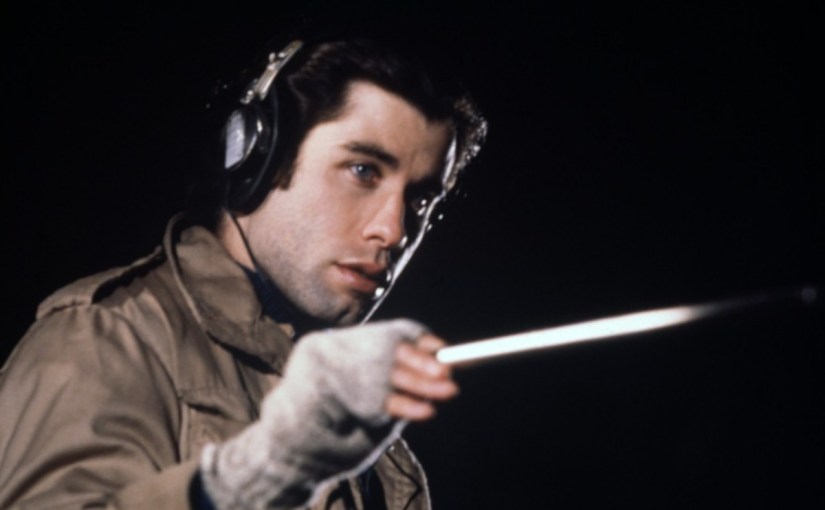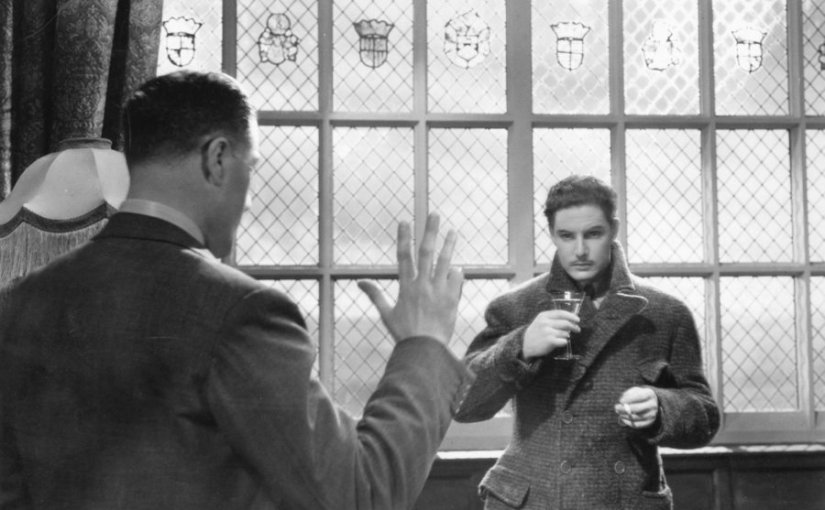
ARLINGTON ROAD

By Marc S. Sanders

Arlington Road is a disturbing and all too real glimpse into how domestic terrorism in the United States operates.  The film from director Mark Pellington becomes more intriguing with repetitive views. Evening news shows and commentators’ programs airing nightly on outlets like FOX, CNN and MSNBC will delve ad nauseam into the hows, whys, and whos of a startling attack upon a populated area within the country.  Theories are pronounced, explored, and fault is found with someone, somewhere.  The protagonist of the film suggests that a name and face must be declared to ensure the country is at peace once again and punishment is rightfully delivered.

What surprises me about Pellington’s film is that it was released in 1999, two years before 9/11.  The worst, modern tragedy at that time was the Oklahoma City bombing.  School shootings were not even as prominent; practically unheard of.  We were only on the brink of Columbine High School’s terrible massacre.  At this precursor moment in time, I have to believe it was especially complex and required meticulous strategizing to bomb a government building.  

When I watched Arlington Road for the first time in theaters, I went with a last resort option for a ritual Sunday movie outing with dad.  We had seen everything else that was playing.  Title is lousy.  (Really lousy – Arlington Road??? That’s the best name they could come up with???) The marquee actors are meh to my twenty-seven-year-old psyche.  (Where’s Harrison Ford or Tom Cruise or Schwarzenegger???). Who’s the director????  Well, for dad and I this film was a huge surprise because of its taut, compelling screenplay and magnificent performances from Jeff Bridges, Tim Robbins and Joan Cusack.  The acting is what stands out the most while you forgive all of the conveniences that intersect to keep the story on its tracks.  

However, when I watch the picture on repeat viewing every couple of years, I realize that other than a random encounter in a parking garage for two characters, everything had been well planned ahead by the villains.  Roger Ebert and even the other unpaid critic, Miguel, took issue with minor happenstances that occur at just the right time.  Well, sorry to disappoint them but Arlington Road has an explanation for nearly every detail that seems contrived when in fact it was all part of a villains’ orchestrated construction.  The bad guys are especially smart in this movie.

Jeff Bridges plays Michael Faraday, a college professor who teaches a history class about domestic terrorism in relation to bombings, shootings, and assassinations.  He lectures his students about the faults and responsibilities of the FBI and other law enforcement departments.  He also provides insight into the people responsible for these heinous acts and often questions if these nefarious figures were lone wolves capable of such madness or were they scapegoats or were there others involved to help carry out these acts.  

Michael is a widower and a father to a ten year old son named Grant (Spencer Treat Clark).  After his FBI wife is killed in the line of duty, Michael has not fully come to grips with the loss.  He is dating Brooke, a former graduate student (Hope Davis), but he is clearly obsessed with what went wrong on that fateful day when his wife perished.

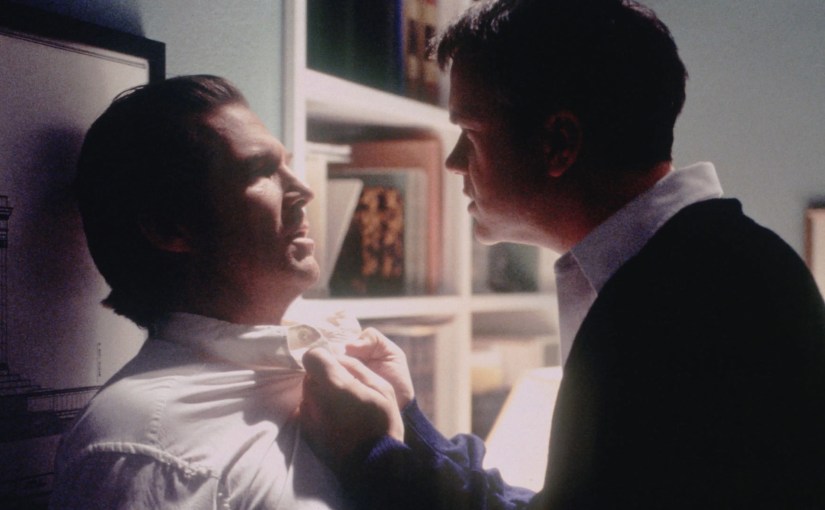
Oliver and Cheryl Lang (Tim Robbins, Joan Cusack) are the happy neighbors who recently moved in across the street.  Michael becomes acquainted with them when he saves their son’s life following a fireworks accident.  The Langs quickly become enmeshed within Michael’s space with child sleepovers, barbecues and evening dinners.  However, the friendlier the Langs seem the more suspicious Michael feels about them.  

Oliver’s backstory seems inconsistent with what Michael observes.  Soon, the professor’s hysteria becomes increasingly amplified.  As wholesome as Oliver and Cheryl are with big, toothy grins and neighborly charm, could they actually be plotting for an act of violence to occur?  As Michael becomes more skeptical around them, Grant, Brooke, plus his wife’s former FBI partner, seem all the more dismissive.  Whatever Michael is beginning to believe is nowhere near as apparent as his own expressive paranoia with big outbursts and unkempt appearances.  Jeff Bridges delivers a manic performance that leaves you breathless and uncomfortable.  He’s so focused on how unhinged this guy is even when he’s just trying to move on with a new normal as a surviving spouse and parent.

One of the many strengths of Arlington Road is reliant upon its ongoing build.  More is learned with each passing scene.  When you feel like you’ve grasped everything, new material presents itself and the actual truths may be more disturbing than what’s already been revealed.  

Joan Cusack is freaky frightening.  She performs to the camera with wool over the viewers’ eyes and she says so much by doing so little.  Before you die, the last thing you want to see is a Joan Cusack with a crooked, unwelcome grin. I salute the simple costuming of Tim Robbins character.  He dresses like Mr. Rogers with a lanky, thin build covered by earth tone sweaters and khakis.  He’s so plain and corny that its terribly awkward. These friendly neighbors hide in plain sight.  

On a first view, Arlington Road may feel like a paint by numbers formula with a few jump scares as the hero sneaks around for clues along with a high stakes chase through Washington DC.  However, I encourage anyone to watch Mark Pellington’s thriller more than once.  The first time you are focused on Bridges, Robbins and Cusack.  The second time you are likely to find what explains the conveniences of the characters and the story.  Then you realize that Pellington and screenwriter Ehren Krueger have done thorough research into what realistically upholds the actions of these characters and situations.

Arlington Road only suffers from a terrible and misleading title.  It’s simply unattractive.  However, the film is compelling and authentically conceived long before a dark trend of American terrorism and mass violence dominated social media and evening newscasts.  It’s a mixed compliment to suggest that the cast and filmmakers got so much right with a topical story that was not yet so commonplace.  

This is an absolutely engaging thriller that I only wish was more fictional and exaggerated than it actually is.

KLUTE

By Marc S. Sanders

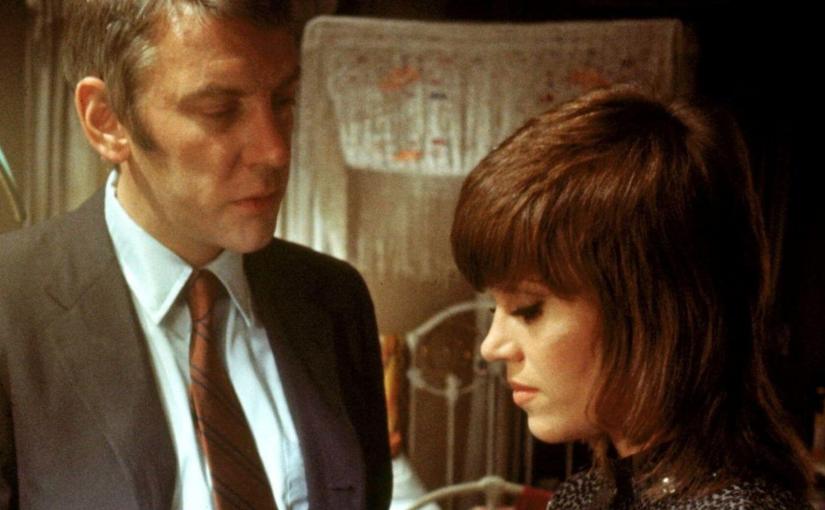
Perhaps Klute, directed by Alan J Pakula, was one of the earliest erotic thrillers to hit the cinema.  In 1971, with Jane Fonda portraying a call girl who briefly goes topless on screen, the daringness of the picture likely garnered a lot of attention.  I bet it was perceived as controversial and elevated the common murder mystery to a grittier more forthright and sleazier height.  Even John Klute, the investigator, played by Donald Sutherland, did not possess the theatrical disposition of a Sam Spade like Bogart or even a Jake Gittes that was just a few years away.  The case at hand in Klute felt real and disturbing.  The actions of the characters were unmentionable and unfathomable.

A highly respected married man named Tom Grunerman turns up missing.  The most unusual clue into his disappearance are letters found in his desk that were written to a New York City prostitute named Bree Daniels (Jane Fonda).  According to his wife and the CEO of his company, the letters seem out of character for a man like Tom.  Six months go by and there is still no sign of the man.  So, John Klute voluntarily goes to New York to investigate for himself while becoming acquainted with Bree.  

Bree is a very high-priced call girl who estimates she does between five hundred and six hundred calls each year.  She’s trying her best to step away from this lifestyle and work as a professional actress and model.  Yet, to uphold her means of living and to make up for the various rejects at auditions, she can’t help but return to what she’s best at.  Occasional visits to a therapist help her justify why she maintains this seedy occupation.  Various recordings of Bree’s observations and conversations with her Johns are about her regard for the profession. She claims that she is capable of catering to any particular vice a man might have. Most impressive is that she does not get turned on by the trysts she shares with these men. She also does not cast much judgment on whatever niche her various clients are into.  She’s positively cold to the demands of her job. Tom does not sound familiar to her, but he might have been the guy who beat her up a year earlier.  

I like the slow burn wait of this story.  A picture like Sea Of Love with Al Pacino works this way.  That’s a better movie though.

Donald Sutherland has significantly less dialogue than Jane Fonda.  He’s got a disturbing expression with large eyes and closed lips, not to mention a tall stature, that allows him to seem alert as an observer and a listener, particularly to Fonda’s character who is protective of herself even if she has much to say.  So, while the two get to know one another with Bree offering some possible leads for Klute to follow, there is an eerie and deliberately meandering pace to the story.  I knew I had to keep up my patience with Klute because an unexpected payoff would eventually arrive.

What bothered me though is that the twist of the mystery is revealed midway through the movie.  You brought me my steak before I had time to finish my salad.  Now, for the rest of the story I’m smarter than the characters and I’m only watching everything unfold. That left me feeling unchallenged through the whole second half of the film. Klute became boring and less inviting.

In 1971, this was a bold kind of picture though, not a common 1990’s erotic thriller like Basic Instinct or Color of Night.  It was seedy, unheard of and therefore fascinating.  At the time, the intrigue for a picture like this must have been off the charts.  Pakula even shows off how novel a tiny tape recorder was in 1971. Imagine what this recorder is capable of!

Had Klute been released today, I’m certain many would take issue with its final edit of story development.  I would also argue that a young Jane Fonda would never be accepted in a role like this.  Frankly, twelve years after this film, Jamie Lee Curtis was more convincing to me as a call girl in Trading Places.  Fonda’s inflection and voice of maturity just did not work for me in this role.  I did not find her alluring in the part, and I think she was too organized and educated to be Bree the call girl.  I was surprised to read afterwards that Jane Fonda won the Oscar for Best Actress for this film because I considered her miscast. Fonda’s voice always sounded overly patronizing to me.  I read later that the actress’s moments with the therapist were primarily improvised by Fonda, shot after the bulk of the picture was completed. Pakula honored her wish to shoot the therapist scenes later because Fonda wanted to have more of a grasp on this call girl character. The therapist scenes definitely look unpolished, particularly for the woman portraying Bree’s counselor. I could detect the improv going on before I knew that it was so. I was watching Jane Fonda, the actress, making a case for the research she collected to prepare for this role.  I wasn’t convinced Jane Fonda was playing the role, though.

The film provides moments where Bree is catering to a couple of clients.  Pakula is honest with his staging.  One client breathes heavily with nervousness about the trouble he’s about to indulge in and then there is the awkward business agreement between Bree and the man followed by the necessary construction of turning the hotel sofa into a bed. It’s weird and unromantic. All this business interrupting this guy’s ultimate fantasy. Very good direction by Alan J Pakula.

Another client hires Bree to pose like a woman from a pre-World War I era where she simply narrates a scenic moment from his past. He does not touch her. He does not undress. This old man from the city’s fabric district simply takes it all in, allowing Bree to do the heavy lifting while he remains stoic in his chair surrounded by the darkness provided by famed cinematographer Gordon Willis (The Godfather).  Still, Fonda seems out of place in these episodes.  Even her fear of a possible killer on her trail left me unsatisfied.  This woman always looks like she has it altogether. She arrives on John Klute’s doorstep in the middle of the night because she’s apparently haunted by what he’s pursuing and also, she’s getting prank calls at odd hours. Nevertheless, I’m still not convinced that Jane Fonda as Bree the call girl is truly shaken by any of this. Jane Fonda is just too put together and hardly evokes any convincing weakness.  

It is ironic the film is named after Sutherland’s character, Klute.  The story begins with his perspective.  I liked his detective.  Almost like the guy could’ve branched off into other stories, like Sherlock Holmes or Sam Spade or Mike Hammer.  The fact that the picture is called Klute leaves me wondering if a series of mysteries would have been paved for this character.  To my knowledge, I do not believe that ever came to be.  I’m sorry the trajectory of the movie veers off into Fonda’s character primarily when she enters the story.  Little is revealed about John Klute.  I only know his experience as a detective is limited, and he’s actually never visited New York City before.  Some interesting challenges for this guy, but none of this hardly becomes obstacles or factors for the rest of the film.  Much is learned about Bree Daniels, but hardly anything is absorbed about the title character, John Klute.

Klute starts off with a lot of promise.  I was excited to tag along with a new kind of brooding investigator who is impervious to influence and looks like he could not get easily overwhelmed. The mystery to uncover why a man went missing but not murdered is very intriguing.  My curiosity was there from the start.  Unfortunately, my interest dwindled as the picture carried on.  Jane Fonda talks a lot with not much to say and when the real culprit is unmasked at the midway point, my attention span is no longer demanded by the film.

Klute was likely a risky, pioneering kind of picture at the time of its release.  A sexy thriller.  Nowadays, it’s like any Saturday night midnight kill thrill of the week where the tempos are foreseen several minutes before they come to life.  Klute just loses its lust–ahem–sorry luster.

NOTORIOUS

By Marc S. Sanders

In 1946, Alicia Huberman (Ingrid Bergman) is numbing the shame of her father being convicted for treason by drinking herself silly at a party she’s hosting.  We see the back of the head of a nameless guest, eventually revealed to be a man named Devlin (Cary Grant).  Once Alicia is sobered up, she awakens to the handsome image of this man entering her room with her point of view turning like a clock in a hundred- and eighty-degree direction.  This mysterious fellow is about to escort her into a dizzying labyrinth that will test the limits of her loyalty to him and the patriotism she has for her country.

Devlin is an American agent who has been assigned to recruit Alicia as an insider to an associate of her father’s.  His name is Alexander Sebastian (Claude Rains) and he’s likely a Nazi stooge with a deadly plot ready to set in motion.  Alicia is tasked with reacquainting herself with Alex and uncovering who he is working with and what they all have in mind.  Devlin will check in with her on occasion.

Complications ensue however because just before Alicia begins her mission in Rio De Janerio, she has fallen in love with Mr. Devlin.  Normally, I would not be able to buy into the quick whirlwind romance of Alicia and Devlin.  I never liked it when Sydney Pollack would wedge a love story into his thrillers (Absence Of Malice, Three Days Of The Condor).  However, this is Ingrid Bergman and Cary Grant we are talking about here, and they are being directed by Alfred Hitchcock in the classic film, Notorious.  The famous three-minute kiss in the picture seals the argument.  

Standard film practice of the time would not permit a kiss lasting longer than three seconds.  The actors though expand on this romantic moment with inserted dialogue, none of which is altogether memorable, and focus on a prepared chicken dinner to have on the balcony overlooking the coastline.  This scene occurs early in the film just after the exposition of Alicia and Devlin’s assignment is established.  I still don’t know either of character very well.  So why do I care about them?  Well, it’s how Hitchcock films the script by Ben Hecht.  There’s disturbing shadows and ominous mystery to the world that Alicia is seduced into entering after her drunken binge has ended.  As well, Devlin is warned that he will have to keep his distance from her so as not to alarm Alex or any of his Nazi associates.  Now, I’m genuinely nervous for Alicia’s safety.

Once Alicia is ingrained in Alex’ world, a new romance arrives, and she willingly marries the German aristocrat to uphold her ruse while making efforts to uncover the Nazis’ plot.  Devlin enters and exits her life to collect whatever information and access Alicia can supply.

As Notorious played out for me, sadly the first thing that came to mind was that Tom Cruise’s second Mission: Impossible film is nearly a scene for scene remake of Hitchcock’s classic, minus the over-the-top stunts and rock climbing.  Yet even before that thought popped into my head, I thought this is a film that could be remade into a wonderful modern update, but only in the hands of select filmmakers like Martin Scorsese or Christopher Nolan.  Keep the guns and blood and car chases out of it though.  Notorious succeeds without a single punch, gunshot, curse word, or ball of fire.  It’s the characters and Hitchcock’s use of brooding light, mood and shadows that maintain the suspense.  Select props and costume wear are scarier than Godzilla or The Birds.

Nearly twenty years before he made Psycho, the director was terrifying audiences with a maternal element already.  Madam Sebastian (Leopoldine Konstantin) is such an intimidating force within the castle like estate she shares with her son Alex, who easily falls in love with the beautiful Alicia.  The Madam is upholds a watchful eye on all activity. Bergman’s fear of this foreboding mother is just one of the dynamics she brings to her portrayal.  

Suspense is what Hitch relies on.  Sometimes I felt like I could not trust Mr. Devlin.  The name Devlin bears a sinister reminder of a beast within its spelling. Cary Grant is at first aloof with how Devlin regards Alicia’s potential for self-harm.  Hitchcock eerily introduces Cary Grant in the picture.  First, by only shooting him behind his head, not revealing his face. A little later, I felt reluctant to trust his upside-down appearance as Alicia awakens from her drunken stupor.  Thereafter, he will take a measured risk with Alicia riding horseback and never attempt to rescue her.  He leaves it to someone else to save her. He’s a tricky sort of fellow.

Conversely, Claude Rains as Alex, the supposed Nazi, is utterly charming and attentive towards Alicia.  Despite what he might be involved with, he’s ready to begin a newly loving and glamorous life with her.  I trust Alex.  He maintains a genuine affection for Alicia and it’s hard to presume he is anything else, especially of the sinister sort.

Ingrid Bergman is captivating as soon as she appears on screen, exiting her father’s courtroom sentence.  In fact, she resembles her most famous portrayal as Elsa from Casablanca that easily can be part of this cinematic universe.  With Claude Rains on screen with her again, could this have been a sequel of sorts?  I have much more experience with Meryl Streep’s career and therefore Bergman gives me a lot to reminisce about Streep both when she’s a strong and confident person or a fearful subject.  Either way, the bravery of the character upholds.

There are eye opening camera tactics of Hitchcock working here.  I’m amazed at a zoom in that lowers its focus from a great height at Alex’ mansion down to the grand foyer below where Alicia stands with a vital prop key hidden in her fist.  Amidst all of the traffic of an evening party, this tiny key is what’s most important.  A teacup is given greater scale to enhance a monstrous threat of what’s inside the drink.  A wine bottle suddenly becomes a mystery.  Some elderly, petite men dressed in perfectly tailored tuxedos spell a likely outcome of doom.  The darkness of rooms shot in black and white feels inescapable.  The absolute final shot of the picture is unforgettable.

For years, the adventurers of North By Northwest with Cary Grant in his beautifully fitted blue suit held the crown as my favorite Alfred Hitchcock picture.  That title has now been surrendered to Notorious.  It is signature Hitchcock with twists in character, reasons for mistrust, a MacGuffin (that item that drives the story, yet bears hardly any importance), motherly instincts of fear, obscure camera angles, shadows and dim light which is particularly chilling when shot in black and white.  All of these elements add up to the director’s expert craft at suspense.  

Notorious is a hundred percent perfect example of why Alfred Hitchcock remains celebrated as one of the best directors to ever film a motion picture.  

NOTE:  I am surprised that neither IMDb trivia, nor Roger Ebert in his Great Movie review, ever acknowledged that the story of Notorious begins on April 20, also known as Adolf Hitler’s birthday. A curious date for a spy thriller centered around Nazi espionage.

NOTE: I want to also draw attention to a move that Cary Grant does in the film.  Following Alicia’s drunken party, several guests are passed out on the sofa.  Devlin finishes a drink and rests the glass on the upper torso of a passed-out woman where it balances perfectly.  We may be going after dangerous Nazis, but Grant and Hitchcock still found opportunities to make audiences smirk at their mischief.

JAWS 2

By Marc S. Sanders

The last movie, the masterpiece of masterpieces, told us that a great white shark is rare for the kinds of waters that surround the New England area of Amity Island.  Well, Jaws 2 disproves that fictional theory as Chief Martin Brody (Roy Scheider) ascertains that another man eater has arrived with a large appetite for chomping on swimmers, scuba divers and water skiers.  It’s ridiculous but it’s an entertaining sequel with a supporting cast of young actors ready to effectively tremble and scream while trying to survive the clutches of a hungry great white.  

Things appear tranquil yet prosperous for Amity.  A developer has completed a large Holiday Inn hotel that will magnify tourism profitability.  To Martin’s chagrin, his wife Ellen (Lorraine Gary) works for this guy.  Mayor Vaughn (Murray Hamilton) somehow got reelected following that terrifying Fourth of July weekend from a few years ago.  (Well…his kids were on that beach too.) Chief Brody’s biggest concern though is his oldest son Michael’s penchant to laze around sailing with his friends for the summer when he should be getting a job.  Michael just wants to score with the new girl in town.

All is well until an abandoned boat is discovered off shore with an underwater camera dropped on the ocean floor, near Captain Quint’s shipwrecked Orca.  Thereafter, is an explosive water skiing accident.  The most hideous eyesore must be the beached, partly devoured corpse of a humongous killer whale.  The bite sizes are enormous.  Chief Brody is getting terribly suspicious, but once again his intuition is being disregarded until the truth reveals its blood in the waters. 

Jaws 2 is effective suspense.  The teens are straight out of familiar slasher movies, but this film actually released ahead of Halloween and Friday The 13th fare.  Director Jeannot Szwarc captures good close ups of the whole cast and magnificent pace with a speeding fin that slices through the ocean surface.  These kids are mostly nameless but the director gives them good moments to put their greatest fears on.  When the sailboats capsize and the kids topple into the water, there’s a nervous tension all the way to the end of the picture.

It’s no secret that Scheider hated making this movie.  Universal contractually beheld him to it after he dropped out of Michael Cimino’s The Deer Hunter.  Nonetheless, I like the direction the character takes with returning script writer Carl Gottlieb.  Brody’s job is in jeopardy and maybe his marriage, along with the paternal strife he gets in the way of his eldest boy.  Roy Scheider does fine with the material.  Perhaps his personal frustrations lent to the performance.

What doesn’t work is Bruce II – the shark.  To this day I’m still stricken with fear of the shark from Spielberg’s film, even after we finally get to see it.  It truly is a scary monster.  In Jaws 2 however, the animal looks like something you buy at a beach novelty store for your grandson to play with in a kiddie pool.  The texture of the shark never feels authentic particularly after it survives a fire.  I am not fond of how it swims or raises its head above water.  Even when a helicopter gets in its crosshairs, the shark looks small and literally mechanical, never seeming strong or powerful enough to kill, maim and destroy. The magic trick just appears entirely too transparent.  Fortunately, I bought into how this town’s worst fears eventually come true again.  The perception of Brody and the kids is the mightiest strength of the film.

A brief mention is given to Matt Hooper (famously played by Richard Dreyfus in the first picture).  That always left me curious with why Universal did not pursue a sequel based on his character instead of Brody.  It’s hard to swallow that another monster shark is terrorizing Amity again.  Wouldn’t it have more plausibility for the actual shark specialist to pursue another brutally unforgiving Carcharodon Carcharias elsewhere in the world?  I think a story moving in this direction could have opened a lot fresher possibility.

Regardless, Jaws 2 is a fun summertime escape with one of the most familiar taglines in cinematic history: “Just when thought it was safe to go back in the water.”

Only watch Jaws 3 & The Revenge when you’re ready to get your itch for a Mystery Science Theater 3000 kick to commiserate with some friends on a Saturday night.  Save Jaws 2 for when you want more shark chum after having watched the classic original for the five thousandth time.    

INSOMNIA

By Marc S. Sanders

Insomnia is an unusual kind of crazed killer pursuit because the hero is initially implied to be compromised, and before the first act of the picture ends, we see that he truly is not as noble as he is described.  This Christopher Nolan film, one of the few that neither he nor his brother Jonathan wrote, is headlined by three Oscar winners and they beautifully absorb this insightful script from writer Hillary Seitz.

Al Pacino is a celebrated Los Angeles Detective named Will Dormer.  When we see him arriving aboard a propeller plane into the foggy town of Night Mute, Alaska with his partner Hap Eckart (Martin Donovan), he looks weary and worn out.  Greeted with warm welcomes by a fan of his is Ellie Burr (Hilary Swank) and his old friend Chief Nyback (Paul Dooley).  Will has been special requested to investigate the murder of a young girl found in a trash heap, strangled to death.  Happenings like this do not occur often in Night Mute.  So, it is best to use the assistance of an expert.

Right away, Will is ready to get to work by visiting the girl’s boyfriend at school.  What he doesn’t realize is that it is ten o’clock at night. At this time of year, a midnight sun lasts twenty-four hours over this little getaway.  After he’s had a chance to investigate the victim’s body and go over the autopsy notes, the discovery of her bookbag leads to the prime suspect, mystery writer Walter Finch (Robin Williams).  A raid on his home near the beach is initiated and it does not go as planned.  Will screws up while chasing down the guy who gets away. 

While it seems that with some cover up, Will can keep his terrible error in judgment to himself, Walter knows everything. Now, with taunting phone calls in the middle of broad sunlit evenings, Will’s insomnia is becoming a hinderance as he tries to do his job while suppressing his own personal guilt and egregious acts.

The duality of Pacino versus Williams is reminiscent of Eastwood against Malkovich in In The Line Of Fire.  It works very well especially because of the departure that Robin Williams takes from his usual fare.  Ironically, he portrayed another creepy guy in the year of this release with a movie called One Hour Photo.  Williams is just a different kind of cut from Al Pacino and that’s why their conflict works well.  Pacino’s gruff tone, which is all too familiar within the second half of his career, has a roughness against the smooth and calm demeanor that Robin Williams relies on with his dialogue.  Walter Finch appears relaxed, rested and neat.  Will Dormer is wrinkled, tired, and lonely with guilt.  This killer has an inescapable edge over the cop, and thus Insomnia stands apart from the other fare of its time from the likes of Fincher, Demme or the Scott brothers’ respective films.

Christopher Nolan captures a creepy and uncomfortable setting for an environment bright with daylight amid a corner of the world that still embraces the nature of Earth.  He is thorough explorer with his go-to director of photography, Wally Pfister.  Clouds and the blurs of fogs keep moments unclear.  The sun blaring through windows is disorienting.  You can also feel the chill of Alaska, even if you are like me and have never visited the state. 

Though the film was primarily shot in Canada, there are amazing bluish/white overhead shots of snow-capped mountains and expansive rocky lakes surrounded by green woods.  A foot chase midway through the picture uses this unusual environment as Dormer chases after Finch across an expanse of floating logs that trap him underwater.  As Pacino desperately looks for an opening to the surface, Nolan really makes you feel like you are drowning amid this unexpected trap.  (Try to watch Insomnia on with at least a 5.0 surround sound.)

Hilary Swank’s role appears like a forgettable partner early on, but her significance opens up later in the story as more is revealed.  I look at her character of Ellie and it occurs to me that a theme of mentorship builds the backdrop of Insomnia.  Ellie has studied Will’s most famous cases and he’s much like a celebrity in her presence.  Finch is a well-known author that built a connection with the murder victim who avidly read his novels.  This film is a good reference to the adage that perhaps it is best to never meet your heroes.

I was very surprised by the directions that Insomnia takes, and quite early on.  There are unexpected moments that occur very quickly after the exposition is covered.  Nolan’s film is not a carbon copy of the tough cop working to nab the intelligent killer that’s on the loose.  Bodies do not just turn up before the final showdown, and the office Captain does not unleash on the detective threatening to pull him from this case.  What you observe in Insomnia is not what you have seen a thousand times before. 

Will Dormer is in an unsolvable conundrum of doing the right thing, but can he afford to surrender to his own misgivings after a decorated thirty-year career?  I could not predict how he would get himself out of this situation where Walter Finch, his antagonist, has got the clear advantage. 

Insomnia is a well thought out script superbly brought to vision by Christopher Nolan.  A thinker’s thriller.

NOTE: It’s a nice touch to call Pacino’s character “Dormer” which in French and Latin means “to sleep.”

FOLLOWING

By Marc S. Sanders

A young filmmaker scraped up six thousand dollars to make a short movie clocking in at just over an hour called Following.  The writer/director is Christopher Nolan.  While he may have been very limited on resources, his reach for imagination was already infinite at the start of his career.  Following is…well…challenging to follow, and I had to watch it twice to grasp the novel curves in time jumps and twists.  However, on my second go round I enthusiastically applaud its brilliance.  The wrap up to this short film is genius.

Gone for nearly fifty years, Alfred Hitchcock’s attempts at pursuing the questionable temptations that people undergo remain wholly intriguing.  His movies are still watched, studied, referenced, and duplicated.  Most importantly, they inspire filmmakers like Christopher Nolan.  Following leaps into its story with parallels from Rear Window and then segues into brief encounters like Strangers On A Train commits.  Mischief is at play which gradually develops into deceit and maybe murder.

Nolan makes an hour and ten minutes feel like a breezy fast moving two hours.  The script for Following throws a lot of information at you at a fast pace, which is something the famed director continued to do with the majority of his later films.  It’s to your advantage to stay alert and explore what’s shown in every frame.  Much of what comes at you will circle back for a twist or two.

Bill (Jeremy Theobold) is an unemployed writer who occupies his time by simply shadowing random people going about their lives within the streets of London.  There’s no particular reason for his behavior.  He relays to an older man that perhaps he’ll learn or become inspired by what he sees people do during their day-to-day business.  

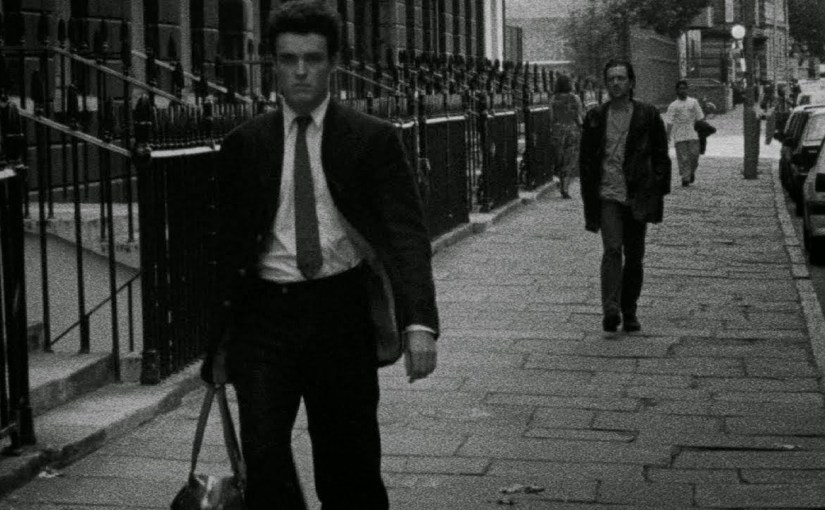
A man in a suit carrying a large tote bag (Alex Haw) becomes Bill’s latest observation.  Bill keeps his distance and follows the man into a cafe.  As the man gets up to leave, he makes a surprising stop at Bill’s table.  He calls himself Cobb, and he has an unusual habit of his own.

Cobb demonstrates to Bill how he takes interest in learning about random people by entering their flats when they are not home.  He’s not there to necessarily burglarize.  Though he will tease the owners by planting a pair of women’s panties in their laundry or emptying their little box of knick knacks on the desk.  Maybe he’ll hide one earring to turn up later. In particular, he shows Bill how much you can learn about people by looking at how they keep their home, what they collect or what they furnish the place with.  So, how about the gentlemen pop the cork on a bottle of wine and have a chat while they stay a while.

These two strangers build a warped kind of mentality for this behavior, but as Bill becomes more natural at what Cobb has introduced him to, so do the risks become more apparent.

Following has some unusual ideas; the kind that are perverted enough to only see in the movies.  If I were to meet guys like Bill or Cobb at a bar and they started telling me of their derring do, I might excuse myself as subtly as possible.  In Christopher Nolan’s film though, I’m intrigued of what these men gain or how they entrap themselves.  

On occasion, it is hard to follow where the film turns its attention.  There are time jumps that come out of nowhere.  We see Bill with a different haircut.  At another time he has cuts on his face.  His wardrobe is different. Because of the small budget, the editing and cinematography must have suffered making these time jumps feel seamless.  So, on my first watch I was confused and wondered if the movie had some scenes cut or if I dozed off while watching it.  Then again, this is Christopher Nolan who is notorious for not keeping a straight and narrow narrative.  His well-known movies like Memento, Interstellar or Oppenheimer have all of his best tools at play to emulate different periods of time.  Following is presented in black and white and so it’s a challenge to focus on where you are in the story and where you left off.

The second time I watched the movie, it was much clearer to bridge everything together and you recognize when one twist occurs at the halfway mark followed by something else until it reaches its fascinating conclusion where every prop you see or line that was uttered serves their ulterior motives.

Following is a thrilling play on your thought process where one character might be performing a cruel sleight of hand on another.  Do not trust anything you see or hear.

Currently, Following is on You Tube and streaming on TUBI, but I had to watch with some limited commercial interruptions.  I encourage you to deal with it because Christopher Nolan’s first film shows some of the storytelling tricks he’s most appreciated for.  What you see in Memento, The Prestige or Inception was attempted early on with Following.  It was not as flashy, but it was just as inventive and brainy.

At just over an hour, Following is that perfect story to watch just after you’ve crawled under the covers and turned off the lights.  It’s a thrilling bedtime story.

TIGHTROPE

By Marc S. Sanders

The most recognizable cop Clint Eastwood portrayed is of course Dirty Harry Callahan, San Francisco’s finest.  Tightrope introduces a different kind of policeman though.  Wes Block covers New Orleans, and he balances the seedy underworld of crime in and around the French Quarter while being a single dad to two preteen daughters (the elder one played by Eastwood’s real life child Alison Eastwood).

There’s a serial killer on the loose whose victims of choice are ladies who work in the sex industry.  A skeleton in Wes’ closet is his penchant for getting involved in the world of kinky sex for satisfaction.  This killer seems to follow closely behind Wes’ investigation and his personal trysts.  Best he knows about this creep is he wears tennis shoes and he’s likely a Caucasian.  If Wes didn’t know any better, he could be as likely a suspect as the mayor.

Tightrope is a surprising film considering Eastwood’s resume in the nineteen seventies through eighties.  Usually, his tough, quiet persona never emulated weakness or questionable morals pertaining to rough sexual treatment of women.  Tightrope is not an action picture, but it implies ugly portraits of victimization for women.  It does not hold back on the nudity or the peril that the killer’s victims find themselves in.  It’s an uneasy crime thriller that does not compromise.  

On the flip side of Wes Block’s kinky obsessions is a genuine relationship he begins with a woman named Beryl (Geneviève Bujold). She specializes in helping women protect themselves from rape attacks as well as recovery.  The two have a good chemistry that begins with different interests with sex crimes. Later, they find a mutual appreciation for one another.  Wes might carry shame and fault, but considering Beryl’s background she might be the only grown woman who understands his personal demons.

What I like about this section of the story is that Wes and Beryl’s relationship does not rush itself.  He has an armor that covers his weakness.  She has a bold strength and will not be intimidated.  In order for them to connect, they’ll need to alter their nature when it comes to affection and respect.

There’s also a good dynamic with the two daughters.  To watch Clint Eastwood try to maintain composure while explaining a hard on to his youngest daughter is both hilarious but also stands for another conflict for this protagonist with a checkered background.  This is a different kind comedy routine than his prior connections with an orangutan or a bulldog named Meat Head.

I like that his older daughter played by Alison Eastwood offers empathy with little dialogue.  A great moment has her lie down on her father’s back while he’s in an anguished, drunken stupor. A young girl lending comfort to her pained father.

Eastwood lends a convincing portrayal of guy dealing with personal torment as both a parent and a cop.  The more he digs into what makes this psycho tick the more he seems to endanger what could be another victim for prey and even his own children, plus Beryl.

Writer/director Richard Tuggle captures great location shots of New Orleans along Bourbon Street and within the French Quarter, sometimes celebratory and frequently frighteningly lurid.  Jazz trumpets deliver an atmospheric soundtrack.  A lot of cuts, edits and photographic shots seem reminiscent of Eastwood’s techniques. It would not be surprising, especially since he’s a producer, if he sat in the chair behind the camera to bring the film to completion.

Tightrope is a slow burn potboiler with convincingly ugly material.  It’s disturbing but wholly engaging with different reasons for a familiar Clint Eastwood to quietly brood.  The suspense and frustration build as the danger heightens.  This is the kind of movie you watch after midnight when the rest of the household has gone to bed.

ABSOLUTE POWER

By Marc S. Sanders

As Clint Eastwood’s Absolute Power was unfolding I started to think this plays like one of those hardcover bestseller political thrillers from the 90s that my dad would scoop up off of the neatly designed stack at the front of Barnes & Noble.  You know with the glossy book jacket that has the blood stain and a dead girl’s nail polished hand next to a bloody letter opener.  The graphics are elevated to feel the crime scene with your fingertips.  The intrigue is summed up on the inside tab.  You turn to the back of the book to see the picture of the author.  Then you buy it with your membership card.  Go figure!  William Goldman adapted the screenplay from a novel by renowned author David Baldacci. Absolute Power has an engaging set up, a who’s who of a cast, it’s directed, produced and starring Eastwood. Still, it evolves into utter eye-rolling preposterousness.

Eastwood directs his own portrayal Luther Whitney, an expert jewel thief.  He might be getting up there in age but he scopes out the mansion of a billionaire tycoon (E.G Marshall, in his final on-screen role) and locates the vault hidden behind a large two-way mirror.  Everything is going to plan as Luther bags up the valuables and a lot of cash but then a drunken couple enter with Luther hidden behind the mirror to watch their tryst turn deadly.  The President of the United States (Gene Hackman) avoids being stabbed to death by the young lady (Melora Hardin) when his secret service detail (Scott Gleen and Dennis Haysbert) enter to shoot the girl dead.  The President’s Chief of Staff (Judy Davis) arrives soon after.  Luther observes the four as they rush the Commander In Chief out of the house and alter the crime scene.  They get careless and just as Luther makes a quick exit, he retrieves evidence that will hopefully work to his advantage.  Now he’s in danger of the President and the other three as they work to permanently contain the situation.

Elsewhere is Ed Harris as the detective out to solve the murder and uncover everything we already know.  When he realizes a thief must have been at the scene of the crime, he actually approaches Luther for some guidance as to who could have been there.  Later, he will use Laura Linney, playing Luther’s daughter, for assistance as her father seems to be the prime suspect. 

The tycoon, the President’s biggest supporter, also wants to resolve his personal vendetta by hiring his own sniper (Richard Jenkins) to take out Luther. 

Absolute Power has all of these players, with recognizable actors in the roles, and yet cannot work the magic necessary to fix this outrageous conundrum.  I can believe that a President could get in more trouble than he needs with a one-night stand and a dead girl on the floor.  I can believe members of his staff will work to tie off all the loose ends, even if it means more murder and mayhem must occur. 

What is hard to swallow is how neatly the story wraps up literally within one afternoon leading into an evening.  It’s fortunate that window washers are present to throw off a couple of snipers with an inconvenient glare at the most inopportune time.  Otherwise, there will be no more movie.  It helps that a character with remorse happens to take his own life, thus exposing the conspiracy, just as Eastwood’s character is steering his own way to exoneration.  All in the same night!!!!

To ramp up the suspense, the bad guys go after Linney’s character, the one person Luther cares for the most.  She ends up in a hospital.  Message has been sent.  Luther better surrender himself along with what he knows to the President’s squad.  Yet, they try one more time to permanently eliminate her and I asked why.  What purpose does that serve to kill her now?  If you kill her, then Luther has nothing to protect or care about anymore.  He can just reveal the entire breakdown of what really happened complete with evidence and so on.

A few years earlier, Eastwood starred in In The Line Of Fire where John Malkovich played a master of disguise assassin.  Luther is also a craftsman at hiding in plain sight.  However, there’s no way I can believe that.  We are looking at Clint Eastwood here.  He’s got his own unique and very tall and square stature.  Put a white mustache and a pair of glasses on the guy, and it is still Clint Eastwood.  Put a hat and beard on him and it is still Clint Eastwood.  Wrap him up in a trench coat and have him walk the city streets in broad daylight where fifty cops are awaiting his arrival and you’ll be able to see the one and only Clint Eastwood.  It just can’t work.  James Bond can hide in disguise.  John Malkovich can hide in disguise.  Go anywhere in the world and Shaquille O’Neal and Clint Eastwood would never be hidden in plain sight. 

William Goldman (The Princess Bride, Butch Cassidy And The Sundance Kid) is one of Hollywood’s most celebrated screenwriters.  He did not think this story all the way through.  You may believe Gene Hackman (second billing behind Eastwood) would have had more of a presence in this picture but oddly enough he’s hardly there. The real bad guy roles belong to Judy Davis and Scott Glenn who are not nearly as exciting as what Hackman could have delivered.

There was a potential for a good conspiracy thriller. The problem is the audience knows too much following the first fifteen minutes of the film.  We know everything that happened and therefore I could care less about the progress that Ed Harris’ detective makes.  Absolute Power likely would have performed better had it opened after the crime had occurred.  Run the opening credits over the dead girl in the room and open the two-way mirror for Luther to enter the frame.  He makes a run for it and then the film can gradually reveal what precisely happened.  A mystery for the characters and the audiences who are watching them only works if the questions are offered before the answers are revealed.

Absolute Power offered a lot of promise with a lot of talent but it’s devoid of both.

SINNERS (2025)

by Miguel E. Rodriguez

DIRECTOR: Ryan Coogler
CAST: Michael B. Jordan, Miles Caton, Delroy Lindo, Hailee Steinfeld, Wunmi Mosaku, Jack O’Connell
MY RATING: 9/10
ROTTEN TOMATOMETER: 98% Certified Fresh

PLOT: Trying to leave their troubled lives behind, twin brothers return to their hometown to start again, only to discover that even greater troubles are waiting to welcome them back home.


“You keep dancin’ with the devil…one day he’s gonna follow you home.” – Jedidiah in Sinners

Ryan Coogler’s Sinners pulls one of the best head-fakes I’ve seen in a long time.  The initial trailers would have had you believe the film was basically a character study (albeit an intense one) of identical twin brothers trying to run an illegal business in 1932 Mississippi.  Since both brothers are being played by the excellent Michael B. Jordan, aided by a stellar supporting cast, I got the impression it would be a hybrid of Heat, The Cotton Club, and Michael Mann’s Public Enemies.

Sinners does cover much of that fertile ground…for its first half.  Read no further if you’ve been lucky enough not to have seen what the main attraction is, plot-wise, for the film.

We first get a prologue depicting a bloodied young black man bursting into a Sunday church service while holding the top half of a broken guitar neck.  This is Sammie Moore, played by Miles Caton in his film debut.  The rest of the film is a flashback to the previous day.

The Smokestack brothers have returned home.  Smoke and Stack are identical twins, although one of them (Smoke, I think?) has some visible gold in his smile, so that helps distinguish them from each other.  They are both sharply dressed, having returned from Chicago after working for Al Capone for a spell.  They plan to open a juke joint in a building they purchased from a smarmy character named Hogwood, a white man who grins and assures them they won’t have any trouble from the Klan ‘round here.

This whole first half of the movie is masterfully told.  We are presented with fully drawn characters, not generic placeholders to be shuffled randomly later on.  We find out that Sammie is cousin to Smoke and Stack.  We meet Mary (Hailee Steinfeld), a mixed-race woman who was left high and dry romantically when Smoke left for Chicago.  There’s Delta Slim (Delroy Lindo), a nearly-ancient man who plays a mean blues harmonica, whom the brothers want to hire to play in their new joint.  There are the Asian owners of a grocery store, hired to cater their grand opening.

And then there’s actress Wunmi Mosaku, who gives a luminous, heartbreaking performance as Annie, a woman who bore Smoke a child that died as an infant.  One of the highlights of the film shows Smoke reconnecting with Annie in a scene that at first invites some crude jokes, but which later provides a deep emotional resonance in the movie’s closing passages.  I only remember Mosaku as a sizable presence in the one-and-done HBO series Lovecraft Country (2020), but she was also apparently in Deadpool and Wolverine (2024), so now I gotta go back and watch THAT again.  Twist my arm.

The movie plays more like a really good Stephen King novel than any other movie I can think of since Pan’s Labyrinth (2006).  The film’s canvas is painted beautifully and crisply, moving smartly without rushing.  I would hope Sinners gets nominated for its film editing (provided by Michael P. Shawver), not because of the thrilling later sections, but because of how economically the first half of the film provides us with the perfect amount of information to understand everyone’s motivations when the second half arrives, when all hell breaks loose.

I must also mention the film’s, I guess, “mystical” content when it comes to African American history.  Early on, Annie, who is a “hoodoo” practitioner (I don’t think “witch” is the right word here), tells a lovely story about how, every once in a while, a musician comes along who can play so beautifully that their music “pierces the veil” between past, present, and future, inviting the spirits of all three to come together and enjoy the music as one.  There is a magnificent sequence where we get a visual representation of exactly that when Sammie starts to play the blues in the juke joint.  Trying to describe it in print is a fool’s errand, but it is one of the film’s many visual highlights.  Trust me.  You’ll know it when you see it.  It’s as elegant a representation of Black history as I’ve ever seen, and I don’t know how anyone will be able to top it in the future.

All of that, though, is just prologue for the main event: the vampires.  If you’ve read this long and didn’t know that was coming, I’m sorry I spoiled that for you, but you were warned.

The whole second half of Sinners flirts with becoming a straight-up genre picture, which is not a bad thing in itself, but which would have been almost disappointing when stacked against what came before.  However, because we have been given such a thorough grounding in all the characters beforehand, there are real stakes involved in trying to predict who will live and who will die.  Some deaths are almost foregone conclusions, but even those are more affecting than they would have been in other similar films.

Traditional vampire lore is very much at play, especially the bit about having to be invited into a house.  But the filmmakers did add one new bit, which I thought was EXTREMELY effective.  As a vampire is about to feed (or thinks it’s about to), it begins to drool…a thick, gooey saliva that drips from its mouth like ectoplasm.  This is a cool touch, and it makes perfect sense, a Pavlovian response to an imminent meal.  Don’t be surprised if another vampire film in the future steals that from Sinners.  I’d steal it.  Wouldn’t think twice about it.

Sinners undoubtedly has some deeper meanings that I am not qualified to unpack, and I leave it to you to find them.  This is one of the best films I’ve seen this year, and it is deservedly making bank at the box office.  (Over $200 million globally as of May 3rd, 2025.)  It is surprising, it is dramatic, it is thrilling, and it is worth seeing on the big screen.  Trust me.

SILKWOOD (1983)

by Miguel E. Rodriguez

DIRECTOR: Mike Nichols
CAST: Meryl Streep, Kurt Russell, Cher, Craig T. Nelson, Fred Ward, Ron Silver, Bruce McGill, David Strathairn, M. Emmet Walsh, James Rebhorn
MY RATING: 8/10
ROTTEN TOMATOMETER: 77% Fresh

PLOT: On November 13, 1974, Karen Silkwood, an employee of a nuclear facility, left to meet with a reporter from the New York Times. She never got there.


The tagline for Silkwood (quoted above) almost feels like it gives the game away, but it doesn’t really.  Even if Karen Silkwood’s name isn’t exactly part of the cultural zeitgeist anymore, I am willing to bet that a lot of people know what her name signifies in one way or another.  So, it’s not like the movie’s poster or trailers are spoiling what happens at the end of the film because most of us know.

In any event, Mike Nichols’ film isn’t a nuclear-based thriller, like The Day After (1983) or WarGames (1984), that depends on an unexpected resolution.  Silkwood isn’t about theatrical heroics or bombastic personalities.  It’s a quietly intense character study of an everywoman with an untidy personal life who experiences a seismic shift in her perception and decides she simply can’t stand by and do nothing.  This isn’t a crowd-pleaser like Erin Brockovich (2000), but this film’s story and central character are no less important.

The film goes to great pains to show us how ordinary and messy Karen Silkwood is.  The incidents at the Oklahoma nuclear facility where she works (along with her live-in boyfriend, Drew, and her roommate, Dolly) are almost secondary to the plot, at least for the first half of the film.  Karen has kids that live with her ex-husband and his girlfriend in Texas.  Her relationship with Drew isn’t stormy, but it’s not perfect.  Dolly seems tolerable as a roommate, but is not shy about speaking her mind.  Dolly brings a girlfriend home one night, and there is a slyly amusing conversation between Karen and Drew about Dolly’s sexual preferences.  (“I can handle it.”  “Me, too.”  “…so why are we talking about it?”)

I don’t want to go into too many details about the true-life incidents that occurred at the facility where Karen worked because, if you’re not intimately familiar with the facts of the story, they should be as surprising to you as they were to me.  Plutonium is involved, but probably not in the way you’re thinking.  Karen learns enough to know she should be more involved in the factory’s union…a LOT more.  One plot thread almost feels like it’s ripped off from The China Syndrome (1979), until you realize Syndrome was released four years after the events of Silkwood, so if anything, Syndrome was probably inspired by Karen’s discoveries.

I also have to mention Cher as the roommate, Dolly.  Of course, Meryl Streep is amazing and convincing as an everyday, average divorced mom, but Cher more than holds her own in every scene.  There is absolutely no hint of the pop music megastar of the ‘70s in this film.  Director Mike Nichols insisted she wear little or no makeup in her scenes, which went against every fiber of her instinct as a performer.  She understood the assignment: she never upstages anyone.  This is not a grandstanding kind of supporting role, like Tommy Lee Jones in The Fugitive (1993) or Cate Blanchett in The Aviator (2004).  It required subtlety and understatement, and Cher delivered.  I tried to spot her “acting,” and I never could.  She was unbelievably natural and, at times, heartbreaking.  The movie is almost worth searching out just to see her performance.  It’s a clinic in how to own a small role and make it stand out by doing less than you might expect.

Silkwood may not feel as thrilling as some of the other thrillers I’ve already mentioned, but it is just as compelling, specifically because we’re watching an ordinary person under extraordinary circumstances.  We’re not watching a hero triumphantly rise to the occasion.  We’re watching a struggling divorcee who’s trying to do the right thing after years of inaction, even if it means losing the trust of her co-workers or sacrificing her other personal relationships.  I identified more with Karen Silkwood and her situation than I did with Jane Fonda in The China Syndrome or Julia Roberts in Erin Brockovich

The ambiguous nature of the film’s ending mirrors what happened in real life, and when the credits rolled, I felt a surge of empathy for the people left behind and the unanswered questions they live with to this day.  That doesn’t happen to me very often.