PRIDE & PREJUDICE (2005)

By Miguel E. Rodriguez

Director: Joe Wright
Cast: Keira Knightley, Matthew Macfadyen, Rosamund Pike, Carey Mulligan, Donald Sutherland
My Rating: 9/10
Rotten Tomatometer: 86% Certified Fresh

PLOT: Jane Austen’s immortal novel receives yet another makeover, with Keira Knightley as the headstrong Elizabeth Bennet, who finds herself reluctantly falling for the brooding, distant Mr. Darcy.


The words “sumptuous” and “painterly” came to mind repeatedly while watching director Joe Wright’s delightful version of Pride & Prejudice.  Much like Kubrick’s Barry Lyndon, the images in Pride & Prejudice appear lifted from paintings of landscapes and portraits you’d find hanging in any given museum.  The details are as stunning as anything you’d find in a Merchant Ivory film.  It’s just gorgeous to look at.

The screenplay clips along at a nice pace, and the English accents are a tad thick at times, so you’ll definitely want to be paying close attention to the dialogue.  While the cinematography is masterful, this is above all a film of words.  It’s not exactly Shakespearean, but there are times when sentence construction coils on itself like a highway cloverleaf.

Other random thoughts:

  • The casting of Keira Knightley is utterly perfect, but Matthew Macfadyen looks JUST a shade too old for her, although it’s entirely possible that was normal for the period.  Who WOULDN’T fall in love with this woman?
  • Carey Mulligan makes her screen debut in this film as one of the Bennet sisters.  Both she and Jena Malone are suitably obnoxious and giggly playing teenage girls, but they do look a little too old for the part.  Just sayin’.
  • Donald Sutherland is magnificent as the patriarch of the Bennet family.  His love for his wife and daughters is supremely evident, as is his frequent exasperation at their nattering and chattering.  His somewhat frazzled wardrobe is the perfect indicator of his inner self.
  • I just have to mention the cinematography again here.  There are one or two long takes (not Goodfellas long, but long nevertheless) that are like a master class in conveying information using minimal dialogue.  It doesn’t hurt that the costuming and production design are flawless.
  • Two words: Judi Dench.  Reportedly, the director convinced her to be in this movie by writing her a letter in which he stated, “I love it when you play a bitch.”  She delivers in spades.
  • In today’s world, I wonder what folks would think of Mr. Darcy’s actions.  He falls for Elizabeth, but she rebuffs him when she believes he ruined her sister’s prospects of marriage.  He then proceeds to assist her family enormously, but behind the scenes, and then tells her, “Surely you must know…it was all for you.”  Today’s PC watchdogs might call that stalking.  Discuss.

As a general rule, I am not a huge fan of Jane Austen adaptations.  It is a measure of the quality of this movie that I felt compelled to make it part of my collection (along with Ang Lee’s Sense & Sensibility and Patricia Rozema’s under-appreciated Mansfield Park).  As period pieces go in general, I would rank it comfortably with Amadeus and Barry Lyndon.  It’s a gem.

ANNIE HALL

By Marc S. Sanders

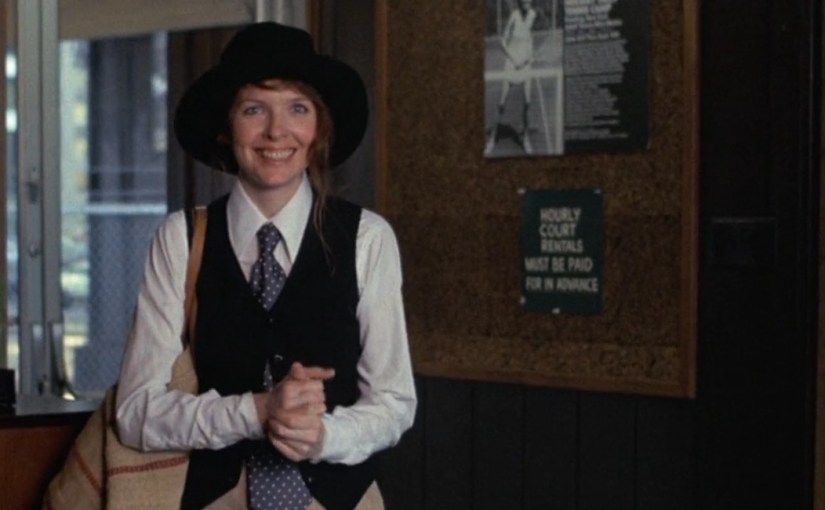
Some of the best comedy comes from watching the suffering of others. One of the best examples of this is Woody Allen’s Best Picture winner Annie Hall. Allen directs and stars in the film, and the suffering his character Alvy Singer endures is by his own mindset. Alvy could never be happy unless he is finding another opportunity to be unhappy. At one point he marries a terrific girl played by Carol Kane. Yet that doesn’t work out. As a child, he finds an allegorical reason to live his life as he does by riding the bumper cars where his father works on Coney Island. Alvy just sees life as one crash after another.

Neurotic doesn’t even begin to describe what Alvy puts himself through. Most especially he becomes insecure with himself as he dates Annie Hall (Diane Keaton, who won her Best Actress Oscar for arguably her best career role). Annie is fun loving and a little flighty. Still, there’s nothing not to love about Annie. She wants to be a singer and Alvy showers her performance with compliments despite a very rough bar crowd. However, when Annie gets reassurance of her talent from others, Alvy is not so encouraging to advance a promising future for Annie.

We see a handful of women that Alvy dates, but most of the ninety minute film focuses on Alvy’s relationship with Annie. Woody Allen penned the script with Marshall Brickman as a loose interpretation of the real life relationship he had with Diane Keaton.

Alvy is a mess. As a child he frustrated his mother with the idea of world ending events yet to come, and thus not much reason to apply himself for a fulfilling life. As an adult, he can’t even wait patiently in a line for a movie because the gentleman standing behind him is aggravatingly wrong on his viewpoint of the films of Marshall McLuhan. The best response to a hilarious scene like this is realized by actually welcoming the real life McLuhan into the frame of the picture to tell off the snobbish jerk standing behind Alvy. I must admit I never heard of Marshall McLuhan myself. Still it’s the idea of running through with a depicted scene like this that’s so dang hilarious. Wouldn’t it be so satisfying to any of us to just have our heroes interrupt a conversation to shamelessly put down our enemies?

That’s what makes Annie Hall a much more special romantic comedy than anything before or thereafter really. Woody Allen breaks the fourth wall at times. He welcomes his adult self into his childhood classroom to debate with his elementary school teachers. Later, he tries to provide a source to his neuroses by bringing both Annie and his best friend Rob (Tony Roberts) into his home to see the relatives Alvy grew up with. These intrusions into scenes of Alvy’s childhood are daringly funny and like nothing I’ve ever seen.

Alvy’s neuroses are so intense that he’ll randomly stop people in the middle of New York to inquire about their sexual experiences. He even unloads his endless dialogue of some of the greatest wit on a horse being ridden by a police officer.

Keaton is perfect for Allen to play against. There’s the hilarious moment of the two of them trying to boil live lobsters. Just between the two of them they are going to be cooking SIX LOBSTERS. Why six? Who cares? The point is to demonstrate a hilariously loving memory at being surrounded by creatures they are both terrified to handle. One lobster even crawls behind the refrigerator and that’s an amusing problem. Annie takes advantage of getting action photos of Alvy with the lobsters. Later in the film, we see that Annie has displayed a collage of this moment on her wall.

Alvy and Annie know they don’t belong together. Yet, it’s hard for them to live without one another too. Annie feels no choice but to call Alvy over at three in the morning to get rid of a spider in her apartment. Alvy obliges without hesitation to leave the bed he’s sharing with his current girlfriend to rush right over to Annie’s aid.

The trying misery they have within themselves is what keeps Annie Hall alive. Interestingly enough is that Allen and Brickman write in a conclusion for the relationship between Alvy and Annie, and show their respective aftermaths. Alvy is a professional stand up comic. Annie dreams of being a singer. What comes of their destinies is refreshing.

I don’t think I could be a close friend to Alvy or Annie. I’d get tired of their ongoing kvetching. That certainly doesn’t mean I don’t like them. I love them actually, and I want them to be happy. Maybe Annie ends up being happy following the events of Annie Hall. For Alvy, I know for sure he’ll be happy so long as he continues to be miserable, and that’s completely fine with me, and I’m certain that’s completely fine with Alvy too.

UNDER THE CHERRY MOON

By Marc S. Sanders

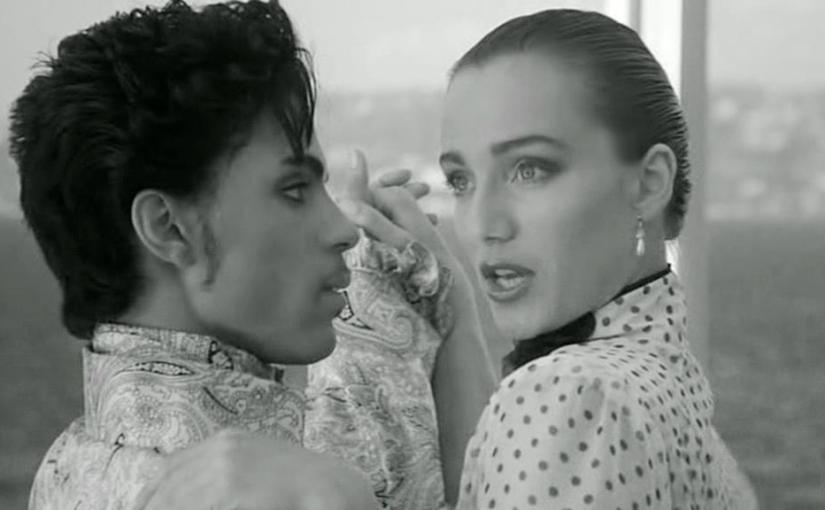
Prince!  The vanity on this guy!!!!!  Watching his second film, Under The Cherry Moon, is to indulge in Prince’s pride, Prince’s ego, Prince’s conceit, Prince’s vanity.  The Purple One, of which I’m an admitted fan of his music, directs his own picture here in beautiful black and white cinematography, compliments of Michael Ballhaus.  That is where the accolades end though.

The film is set along The French Riviera.  Prince never speaks French in the film, nor does anyone else.  So why are we in France again?  He plays a kid named Christopher and along with his best pal, Tricky (musician Jerome Benton) spend their days glorifying Christopher (or Prince as Christopher) and swindling wealthy heiresses as they continue to live a life decadence in outrageous outfits, high heels and a modicum of makeup to especially keep Prince-I’m sorry-Christopher looking gloriously sexy, pretty and handsome.  At night, while putting on music acts in various drinking establishments, they seek out their female prey. 

When Christopher notices Mary (Kristin Scott Thomas, in her feature film debut), he and Tricky go to work.  Somehow Tricky falls instantly in love with Mary.  (I think.  The two hardly have a scene alone together.  Prince monopolizes most of the space.)  Chris plays the “Prince Adonis” with teasing flirtations, ridiculous get ups and so on.  Later, he will fall in love with Mary.  We are supposed to believe Mary falls in love with Chris too.  But let’s come down to reality here, please.  Tricky grows angry and blah blah blah.  You’ve seen this tripe in better fare from the minds of Looney Toons shorts.  A side story character is Mary’s wealthy possessive father, Isaac (Steven Berkoff, playing the same kind of villain he did in Rambo and Beverly Hills Cop).  What do you think he’s here for?  Right!!!!!  He disapproves of Christopher and refuses to let Mary see him.

Beyond the terrible acting of this piece with vomit inducing kissing scenes involving Prince and Thomas, the film is an annoying, pesky love letter from Prince to Prince.  It’d be impossible for me to count how many close ups he does of himself.  Prince is a poet and a brilliant lyricist as well.  However, the script is littered with expressions and slang that feels like they popped into Prince’s head at one time or another.  He must have jotted it down on napkins, and then he passed it all on to the credited screenwriter, Becky Johnston,  instructing her to work this stuff into the dialogue.  Things are uttered out of nowhere, for no reason.  Conversations don’t make sense at times.  Certain words feel like the have a good rhyme.  So, make it work Becky! Mmmkay!

On other occasions, Prince and Kristin Scott Thomas will share scenes together just sitting there with nothing to say, as if it is a director’s (Prince’s) own artistic choice.  Prince is no Terrance Malick.  The gaze and the pose (of Prince!) says it all.  Calvin Klein commercials have more depth.  A phone call scene between the two goes on for a good three minutes.  They never speak into the phone.  They just hold it to their ears.  The edit goes back and forth on them and again…they don’t speak!  Prince makes it exciting by chewing on a cracker.  In another film, this would’ve been cutting room floor material.  You would think this is behind the scenes stuff and the actors were waiting for the sticks to snap and “Action!” to be called out.

Samples of Prince’s music are peppered throughout the movie.  The sounds are good for the most part, but that’s all they are.  Just random sounds.  Most of the music is not complete and seem like samples that were experimented on in a kid’s garage.  The music does not cue up anything.  None of it heightens any developments or drama or comedy.  At times the tunes will obnoxiously interrupt a scene, much like a mariachi band may intrude on an intimate dinner at a quiet restaurant.  Prince loves his music though.  So, he wakes up and tells his film/sound editors to put this and this and this into the film.  Context man.  Context!!!!!!!  What about the context?????

Under The Cherry Moon is an immature film, made by an immature filmmaker with a very mature photographer (Ballhaus).  It’s tripe of the most shamelessly vain kind.  It’s been three days since I saw the picture, and I have yet to think of another film more ridiculously conceited and egotistical.  My Cinephile colleague, Anthony, is a proud Prince fan.  He has a wealth of knowledge on the famed musician.  He’s learned to be forgiving of this film’s shortcomings.  I assured him when we sat down to watch this that I was going in with an open mind, especially when the gorgeous black and white shows up on the screen.  When the movie was over, however, I explained that this might have become something with an admirable B movie cult following, had Prince at least agreed to welcome another director to oversee the picture.  Someone needed to be watching the one in charge and humble the poor guy because if I want to look at various captions of Prince, all I need to do is lay out his album covers on my bed and pick up a Rolling Stone magazine.  I did not have to subject myself to Under The Cherry Moon.

FALLING IN LOVE

By Marc S. Sanders

It goes back to what I’ve always said. If you don’t have a good script, you got nothing. I don’t care if you have powerhouse actors like Robert DeNiro and Meryl Streep in the lead roles, as well as Harvey Keitel and Dianne Weist for support. Without a script without even just a crumb of intelligence, a film will be terrible. In fact, these magnificent actors actually did a romantic film together in 1984 called Falling In Love, and yes it’s got the talent and nothing to say.

This might as well have been a Ferrari with no oil and no gas. DeNiro and Streep are Frank and Molly who meet cute during a hectic Christmas Eve shopping spree in New York City. Director Ulu Grosbard sets up moments through the opening credits and a good long 20 minutes of the players actually crossing paths on the train and then various streets and stores in the city, unaware of each other, before they finally collide their shopping bags with one another in Rizzoli’s Book Store. Wouldn’t you know it? After they’ve collected their things, they realize on Christmas morning that they took each other’s gift for their respective spouses. So Frank’s wife Annie (Jane Kaczmarek) got the book about sailing, and Molly’s husband Brian (David Clennon) got the book about gardening.

Since Frank and Molly ritually take the same train into the city, naturally they will circle back with each other. Frank is an architect working at a construction site, while Molly goes to visit her sick father in the hospital. They sit with one another, exchange phone numbers and have lunch together. A chance at kindling a romance arrives, but can they violate their marriages?

None of this is new. We’ve seen this a million times before. That’s not a reason to give it another try for a story like this. Only don’t make it so dull, and man o’ man is Falling In Love dull. REALLY DULL! Lifetime TV trash is more exhilarating than this.

The script from Michael Christofer has absolutely nothing to say. There’s no life to any of the dialogue. There’s no monologue offered for DeNiro or Streep to recite, that maybe would explore the conflicts they are having within themselves. There’s no time devoted to their connections with Kascmarek and Clennon, respectively.

Falling In Love is nothing more than a series of moments spliced together for Streep and DeNiro to just physically sit with one another. They go to Chinatown. So what? They don’t share any character dimension with themselves. They sneak away to Frank’s friend’s (Keitel) apartment to make love. The scene lacks any kind of passion or yearning. They sit on the train or god forbid fall in despair that they missed each other at the station. Falling In Love is only an empty void of a film.

I can’t compliment DeNiro or Streep because they are not given any tools to work with to bring those bravado performances we are so accustomed to. Christofer’s script gives them friends to talk to. Keitel goes with DeNiro. Wiest goes with Streep. Nothing is shared with these confidants. Keitel’s character is getting a divorce. So? It has no influence on DeNiro’s character. Wiest’s character is a wall to talk to. Nothing more. I know absolutely nothing about her.

What a let down this picture is. This could have been a Fatal Attraction or a When Harry Met Sally… for these two magnificent actors. There could have been, and should have been, something exciting here. It could have had humor, suspense, fear and heck…let’s just say it…love! Nothing is said of any significance. No moment is shown that grabs the viewer. There’s no big scenes to gear up for, and the ending is simply vague in its delivery. Falling In Love is like chewing on cardboard with no seasoning. It’s tasteless, boring, and I’ll remind you once again, it’s really, really, really dull.