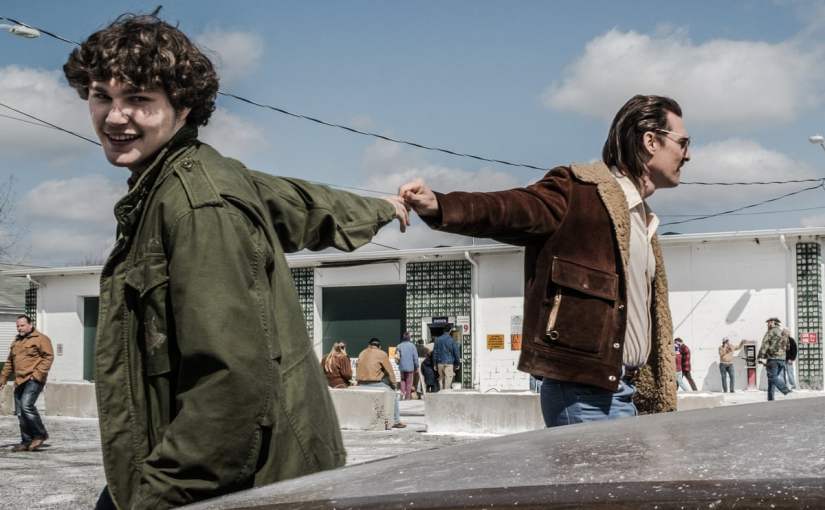
EXTRACTION

By Marc S. Sanders

Why do some filmmakers find it to be of such “impactful dramatic narration” to show a snippet of the end of the story or film within the first two minutes of its beginning? That’s what disappointed me in the latest Netflix release Extraction featuring Chris Hemsworth as a skilled Australian mercenary hired to rescue an Indian drug lord’s son that has been kidnapped by a competing drug lord.

Hemsworth plays Tyler Rake, action hero name!!! He’s an alcoholic that manages to maintain his buff physique. I’d like to know the secret to these big action brutes, and how they stay so fit while downing bottles upon bottles of liquor and pills. Tyler has two days to get Ovi Mahajan Jr (Rudhraksh Jaiswal) out of an area of Bangladesh that is completely controlled by Amir Asif (Priyanshu Painyuli) the most powerful drug lord in Dharma, Bangladesh. Ovi Sr is another drug lord trapped in prison. Cops, civilians, street kids, practically everyone in the area operates under the command of Amir.

The rescue happens early with Tyler taking out over a half dozen guys that are holding Ovi in a run down apartment. He kills them every which imaginable. Fist, gun, knife, rake (in a top floor apartment?), you name it. From there, the bulk of the film focuses on how Tyler and Ovi are going to get safely out of the area.

Extraction is directed by Sam Hargrave and produced by Hemsworth’s Marvel super hero producer pal, Joe Russo. It is based on a graphic novel and it’s easy to recognize that. The violence is fast and gory and unforgiving. A major player gets a head shot assassination while standing at a urinal. Hargrave freezes the scene for a moment like a comic book panel. Dialogue throughout the film is somewhat limited to what could only fit in one of those speaking bubbles you find in comics.

Hargrave had me going with a number of long steady cam moments. One in particular has Tyler driving a Mercedes down a busy street while getting shot at, crashed into and rocket launched. The camera goes in and out of the car from the back seat to the front seat to the hood and the trunk and around the bad guys surrounding them. It reminded me of that celebrated sequence from Children Of Men directed by Alfonso Cuaron. Only thing is, Hargrave is not as seamless as Cuaron. I give an ‘A’ for effort, though you easily catch the breaks in the flow.

Tyler gets some assistance from David Harbour, who plays another sleazy kind of cut up, just like in Quantum Of Solace. Can this guy do anything else? (I know…Stranger Things. How about something even more that that though?). He just didn’t do anything for me here.

Tyler also gets some welcome assistance from a female mercenary named Nik Khan (Golshifteh Farahani). She’s completely bad ass, and her character really comes alive in the last 30 minutes.

Extraction is decent entertainment. Honestly, I was getting a little bored as the killings went on and on. How many different ways can a guy be shot in the head? I guess that’s why Tyler swings a dead body like a baseball bat to take out another guy or mashes a guy’s head into a car door window. You know, to mix it up a little bit.

Hargrave’s film does go beyond the normal conventions of action films at times. There are a few twists that got my attention but it’s mostly a film narrated in body count and bullets.

However, because of these mild surprises, again I ask why show me obvious material from the story’s ending as a quick pre title sequence? It would have been a much more satisfying surprise for me as a viewer had I not known what was to eventually come into play.

ONWARD

By Marc S. Sanders

I’m thinking director Dan Scanlon could very well be the next Chris Columbus or JJ Abrams or maybe…well maybe not Spielberg. But still! His new film Onward from the genius labs of Disney/Pixar is better than I ever expected.

Think about it. The imagination of the film all goes in reverse. Magic and sorcery once ruled in a land of mythical creatures. But then the automobile was invented, along with cell phones, video games, exercise machines and every other every day to day invention known to mankind. Who needs magic anymore?

When two elf brothers, Ian and Barley, voices by Tom Holland and Chris Pratt, come upon their deceased father’s magical staff, they realize that as nerdy as he was, he was in fact a wizard. Some exposition allows them one day to revive him and spend only that particular day with him. It’s an opportunity for older brother Barley to reconnect and Ian to meet him. Something goes awry though when dad is only resurrected up to his waste, legs dressed in khakis with chino shoes and black leather belt. Hilarity and adventure ensue as they must embark on a quest to find a precious gem that will complete the resurrection before time runs out and the sun sets.

As the boys hop into Barley’s van called Guinevere. Adventure inspired of the level of The Goonies fare takes place. There are caverns with booby traps, maps and Holland and Pratt give up good vocal chemistry as they sort out their brotherly issues.

Julia Louis Dreyfus is mom and basically doing the typical Pixar mom but she has a great sidekick. Octavia Spenser as Corey the monstrous Manticore who runs a restaurant. To give side story filler, Dreyfus and Spenser are brought in to be on the trail of the boys. They have some good moments.

Onward has good, often funny and sentimental writing from Scanlon along with Keith Bunin and Jason Headley. It’s ironic actually. So many films from Harry Potter to Star Wars to Marvel focus on mysticism and magic that as movie goers we’ve become inundated with the gimmicks. Onward reminds us that ordinary dependence in a more grounded reality can actually lead to adventure too.

I liked it.

BIRDS OF PREY

By Marc S. Sanders

Margot Robbie is a champion actress. Just look at Bombshell (I thought she was more memorable than Oscar winner Laura Dern.). Look at I, Tonya. (I thought she should have won the Oscar that year.) Harley Quinn? She’s perfect in the role as a ditzed out, mallet carrying party gal villain turned anti hero from the Batman universe. Only problem is that as good as she is in the role, I can’t stand Harley Quinn. This is a child who just won’t sit still.

Robbie takes on her second turn in the role following the abysmal Suicide Squad. This time she produces Birds Of Prey (and The Fantabulous Emancipation of One Harley Quinn). It’s an improvement from Squad but it still seems to be all over the place. It happily acknowledges that it time jumps and corrects itself. It is happy to drop F bombs because the producers wanted a R rated female driven equivalent to Deadpool. (It never had to be Deadpool.) It even goes in rewind mode (you know, with the cassette tape sound) because the viewer or the fans of Harley need to experience the lunacy of Harley. She talks looney so we need to feel looney while she voiceovers the story that’s going on here.

The Gotham gangster Black Mask (Ewan McGregor – the next candidate in line trying to replicate Jack Nicholson’s Joker, just like Jim Carrey and Tommy Lee Jones and Arnold Schwarzenegger and on and on), wants to find a diamond that was swallowed by a kid named Cassandra Cain. Harley recruits herself to protect Cassandra, while waiting for her to shit it out. Hilarious material here. Side stuff tells us that Harley has split from the Joker.

The problem with Birds of Prey is that it does the work for the audience. I was constantly reminded that Harley is cuckoo, that I didn’t get the chance to discover it for myself. Robbie’s delivery is perfectly on point. The issue is the writing by screenwriter Christina Hodson is hackneyed. The character’s antics are too in your face. Look at Heath Ledger. The Nolans only revealed so much about the Joker. When their film ended, I wanted to learn more. Where did that guy actually stem from? He was a Joker like no other before him. The character wasn’t shoved in my face like Harley is. I had to think about him during and after the film.

The supporting cast is nothing of interest either. Rosie Perez, a great actress, plays third or fourth fiddle here as a Gotham cop who doesn’t get the credit she deserves from a department of mostly men. Mary Elizabeth Winstead just carries a crossbow that people mistake for a bow and arrow, and she gets frustrated with that. Yeah that’s ironic, I’m sure.

Still, despite the title, Harley is the main protagonist. Warner/DC got the right actor for the part. So why couldn’t they write her with more depth than this? The film starts out fun with a silly Looney Tunes animated update but then it gets all scattered with Harley breaking a thug’s legs and blowing up a chemical factory. She also shoves cheese whiz in her mouth. You go, girl!!!

Think about it. Harley used to be a renowned psychiatrist who is dropped in a vat of acid and abused terribly by Joker, only to break free of him and find her own way. This film really only TELLS us this. A better film would have SHOWN that to me. A better film would have made this the story from beginning to end. I’d love to have seen Harley before she went nuts.

You know what? I might’ve then become Harley Quinn’s biggest fan.

CRASH (2005)

By Marc S. Sanders

Paul Haggis’ vignette themed script for Crash should not have won Best Screenplay. The film he directed should not have won Best Picture. Could it be that because this picture is masked as that special movie with that especially poignant message that it got the recognition I don’t think it ever deserved? I can appreciate the attempt at bringing hot button social issues like racism and injustice to light, but it does not need to be as immaturely contrived as this picture.

Crash occurs over two days within the city of modern day Los Angeles. A select group of characters of different social classes and ethnicities are covered, and the film circumvents back and forth among their perspectives. For the most part, all of these people have major social hang-ups with people outside their race. The first example shows us that if a white woman who is simply cold on a winter night hugs her husband tightly for some warmth, apparently a couple of black men will automatically believe this woman is fearful of their approach.

Especially today, I know that prejudice exists, but to this extreme and this contrived…I’m not sure. I guess I’m not sure because I have not experienced it enough to be convinced yet. When I read a friend’s testimony of falling victim to racial prejudice I lean towards believing everything they tell me. I guess it’s this movie, Crash, that left me feeling dubious and maybe that’s because the circumstances seem way too forced.

A racist cop (Matt Dillon) will pull over a well to do Muslim man (Terrence Howard) driving a high priced SUV and perform a sobriety test for no reason. Then the cop will deliberately frisk the man’s wife (Thandie Newton) with digital penetration. The next day, it’ll just happen to be that this woman will have no choice but to be rescued from a burning car by this same racist cop. Now I’m supposed to believe that the racist cop is not so bad, and the woman learns to become more tolerant. Well gee, thank heavens for coincidences!

The Muslim man (a television show director) gets car jacked the following day, and in a tense pull over moment he’s mistaken as the criminal. Fortunately, the partner of the racist cop (Ryan Phillipe) is there to subdue the situation. I’m sorry, but life doesn’t work out to be this tidy. Call me cynical, but more often than not we are not given a second chance at first impressions.

One of the real car jackers (Chris “Ludacris” Bridges) gets a moment of clarity and suddenly he’s generously giving out his last forty dollars to a group of Asian people being held in a van for human trafficking. Forgive me. If I want to begin respecting this car jacker who has held multiple people at gun point and even runs over a man, only to toss him out on the drive up to the Emergency Room, I’ll be more apt to do so if the criminal turns himself in.

I dunno. Maybe I’ve got a personal issue with Crash. It could not be more apparently preachy in how it patronizes me to simply understand the seething hate and criminal violations of its characters. I’m supposed to empathize with the racist cop because his ill father can’t get the health care he’s entitled to? I’m supposed to understand the prejudicial anger that the WASP wife (Sandra Bullock) of a District Attorney (Brendan Frasier) expresses because she no longer trusts her dedicated Hispanic housekeeper or the locksmith (Michael Pena) changing the locks on their house following a car jacking?

No. Paul Haggis didn’t earn that response from me in almost all of the short story scenarios his film offers. Maybe it’s because I tend to compartmentalize my episodes. I like to think that I don’t allow one experience with one kind of person cloud my judgement on the next person I encounter. A waiter can totally screw up my order and can even mouth off to me in a heated moment. Yet, I’ll return to the restaurant on another occasion because it’s likely I’ll run into a different waiter.

Haggis depicts people who appear to have a blanket opinion of other people with different backgrounds. These are all extremely prejudiced people with next to no understanding of where each of them stem from. An angry Persian man (Shaun Toub) puts blame on the locksmith after his convenience store is ransacked. The locksmith was only trying to explain that the back door needed to be replaced. The Persian refused to listen because his English is limited. So he just gets angry and curses the locksmith out. Haggis opts to insert a language barrier between the two men to serve up an eventual tense and dramatic moment in a neighborhood driveway with a loaded gun and a little girl. A loaded gun and a little girl! Yup, I think they teach these are the true ingredients for effective drama on the first day of screenwriting class. Again, it all comes about a little too forced.

The conveniences and ironies that bubble up at times are surprising. “Oh that guy is that guy’s brother! I see.” Things like that. However, I don’t think that is necessarily the strength of the picture.

In a film like Magnolia, we are treated to the vignettes of a handful of people too. However, not every single one of those people are sketched by means of their prejudiced natures. They are drawn by a variety of different elements whether it be a traumatic past or an inclination to do good. Then it’s kind of fun to uncover how each player is connected to one another.

In Crash, the players are only connected by the hate they carry within themselves, and Paul Haggis forces a redemption upon most of them with small gestures or a line of dialogue or the purity of a welcome snowfall to close out the film. Sorry, life is lot more messy and complicated than that. I guess I’m saying I may have learned a lot more about human nature from a downpour of frogs than a downpour of snow.

INCREDIBLES 2

By Marc S. Sanders

Disney/Pixar and (yeah, let’s single him out) Director Brad Bird continue to impress with marvelous feats of imagination. Yet I’m not necessarily referring to the art of their animation, outstanding action scenes or the colorful superhero names. Rather, it’s the story that usually stands above all else in each entry that’s released year after year.

Allow me to sidetrack for a moment. Consider a film like Lethal Weapon 2. It’s a fun movie that I’ve always liked, but it was not just an action movie. I mean, think about it. There’s a reason the first film was on Roger Ebert’s Top 10 list of 1987. It focused on the trauma and suicidal tendencies of a burned out cop along with some great action and humor. It’s sequel however, just did the same thing. Just more of the same stuff, despite a very capable partner that was featured in the film. The partner remained the sidekick again. Not much effort in thought the second time around (or 3rd or 4th).

Incredibles 2 avoids the same trap. While the first one focused on Bob Paar and his alias, Mr. Incredible, this new film relies on Holly Hunter’s Elastigirl, known by day as housewife Helen Paar. Yeah, as I’m writing this, I’m realizing she’s kind of recruited for a mission the same way her husband is, but the perspective seems fresh; consistent in step with other female hero protagonists like Wonder Woman and Katniss Everdeen.

Adding to the effectiveness of this film is that these larger than life characters are humanized. Dad is out of work, following a government mandate. So he stays home with the kids and mixes the pinks with the whites while trying to get the atomic demon baby Jack Jack to sleep. Side note: Jack Jack is an awesome scene stealer. There’s a reason this kid was on every toy shelf and t-shirt in countless variations from the end of summer through Christmas. He’s now up there as one of my favorite Pixar characters.

A surprise reveal is no surprise at all. So don’t set yourself up for disappointment. Just relish in a very cool new villain known as The Screenslaver. He’s no Syndrome but he’s pretty intimidating nonetheless.

As a major comic book geek, another thing I appreciated was that Bird’s script and direction follow a pattern of the golden and silver ages of comics without all the heavy drama that comic film adaptations depend on today. There’s a bad guy wreaking havoc and the superheroes come in to save the day. There’s no heavy pseudo tragedy to get in the way. Often I don’t mind that, but here it’s absence is refreshing. Just make it about a bank robbery and a bad guy with the “mwah ha ha” maniacal laugh and it’ll satisfy. It kept the movie light, playful and especially funny.

So glad that I was able to take time out to see Incredibles 2. Go find your super suit and soar to seat in front of the screen.

NOTE: there is a scene midway through the film that might be disruptive for people prone to having seizures. It contains the equivalent of an actual strobe light effect and it lasts a good 2-3 minutes. Please take that into consideration. If you want to know when it takes place, message me and I’ll clue you in when you might want to excuse yourself from the viewing.

DEADPOOL

By Marc S. Sanders

Okay….so here’s where I risk getting the “What!?!? You’ve got to be kidding me!!!!” response from fellow nerds.

Sorry, but I don’t get the hype or the reason why this stupid character called Deadpool continues to have legs in mainstream comics or, now, movies.

I was hoping to see something more fun than just one wisecrack after another.

Granted, the movie consistently breaks convention of everyday blockbuster movies beginning as early as the opening credits, but it also mires in absence of story…..I mean ZERO story. NONE!!!! NADA!!!! ZILCH!!!!

I like spoofs like Airplane! especially. Now I see that I like spoofs as long as there is some narrative. I guess I want the movie to hold my hand a little as it takes me on the journey. Sue me….okay?!?!?!?

This movie has no direction, and jumps in flashbacks and forwards countless times. I can not remember a movie before this one that had, I think 4 beginnings, sorry, maybe 5 beginnings. LET’S GO ALREADY!!!!

Yes, there are some good gags that I smirked at or goodness me, even laughed at but those moments ended quickly. Ryan Reynolds is trying waaaaaaayyy too hard to channel the smart alec ways of Robert Downey Jr and he’s boring trying to do it. He makes the character and the movie Deadpool look like a stand up comedian who wore out his welcome. I was waiting for the cane to yank him off screen. (In a movie like this, that could’ve happened.)

Here’s what I recommend, buy a ticket to The Big Short (a real movie; a genuinely funny movie that demonstrates how to break the 4th wall effectively), only before it starts, sneak into the end of Deadpool to watch the secret scene at the end of the credits. For fans of John Hughes 80s movies, that’s the best part.

THE GAME

By Marc S. Sanders

David Fincher is a director always focused on playing tricks with the viewer’s mind. His earliest films from Alien 3 (a poor installment in a celebrated franchise) to Se7en (an unrealistic yet frighteningly suspenseful serial killer story) to his third motion picture The Game, a movie that throws you off from the beginning of each scene to the end of each scene are best examples of this technique. It’s a little jarring, and I’m happy to watch it that way.

This film only works if you mask what’s really happening by showing you what’s fake instead. I know I sound vague but those that have seen The Game would probably agree that is the point. It’s based off a screenplay (by John Brancato & Michael Faris) that strategizes itself like a Dungeon Master setting up a Friday night in the basement with some buddies to play some role playing games with a 20 sided die.

Michael Douglas is really the only guy who could play Nicholas Van Orton, a millionaire with everything but really has nothing; no friends, no spouse (any longer), no one to care about. Beyond his fortune, all he has are a weirdly estranged brother, played by Sean Penn, and his attorney only there to ask Nicky “Should I be worried?” The film takes place during Nick’s 48th birthday. Normally, the song would go “Happy Birthday Nicky.” However, for Douglas’ cold protagonist, the lyrics are “Happy Birthday Mr. Van Orton.” A man with everything, who really has nothing.

Penn gives him a card with a number to call. This is his birthday present to Nicky. Then the paranoia presents itself little by little; a wooden clown doll, a tv that talks to Nick, a leaky pen, spilled drinks, and soon Nicky’s life is threatened.

Why are these things happening? What’s with the keys? What’s with the waitress who keeps turning up, played by Debra Kara Unger so effectively that she arguably carries the riddles most convincingly? Unger is brilliant at twisting the story over and over. Another great player is well recognized character actor, the late James Rebhorn (also known from Scent of a Woman) who gets the ball rolling and then wraps up the answers later on.

Fincher plays with the mind quietly but never at a slow pace. There’s a consistent tinkling of piano keys that seem to work as puzzle pieces being matched up. It’s much more disturbing to go this route than with grand horns and bass.

When I saw The Game initially in 1997, I started to piece together how to write multi dimensional characters. There’s a past that gnaws at Nick’s psyche sprinkled with glimpses of his father committing suicide. Fincher offers up a background to Nick by means of grainy home movie footage. It all seems quick and taken for granted but it’s necessary to understand Douglas’ cold demeanor and it circles back beautifully towards the film’s unexpected ending. It works so well as a motivator for Nick that I often circle back to its presentation when I write my own scripts.

There’s a great, short scene that sets up the 3rd act. Probably Michael Douglas’ best scene ever in a film, in my opinion. Nick walks into a diner in a dirty suit with scratches on his face. He asks for everyone’s attention and offers up his last $18 to anyone who can offer him a ride. The character is humbled and changed. An arc is completing itself on the other end. It’s a scene that maybe doesn’t belong here until you realize it does. In another director’s hands, a scene like this would be cut or never shot. Fincher took advantage of Douglas’ technique for substituting intimidating power with humble gratitude to simply be able to just ask for a favor. A new character is born in a most efficient 90 seconds of film. It’s a great moment.

See The Game whether you haven’t seen it yet or to watch it again to remind yourself how all the pieces come together.

You might argue that this can’t be realistic but suspend your disbelief because that is what David Fincher always strives for. You’ll be glad you did. Trust me, or maybe…don’t trust anyone?!?!?!?

BRAVEHEART

By Marc S. Sanders

Mel Gibson’s Braveheart is a barbaric film. It’s barbaric in its nature, its violence and its characters. It’s also a magnificent piece of moviemaking.

It’s incredible how Gibson can depict himself in violent battle sequences swinging his sword and tumbling over enemy extras while directing the film. Braveheart is truly one of the best films to be directed and produced by its lead actor.

In the 13th century, King Edward Longshanks keeps a firm rule of British monarchy over Scotland. He finds the Scottish to be unruly and out of order. Taxes alone will not keep them at bay. So he declares it noble to have any Englishman bed a newly Scottish bride before her husband has the opportunity. Therefore, to avoid this experience, William Wallace (Gibson) marries his true love Murron (Catherine McCormick) in secret from the British Empire.

Following the escape from rape by an English captain, Murron is taken, with her throat slit to draw out Wallace. From that point on, Wallace never puts down his sword as he begins the Scottish uprising for freedom from British rule.

Braveheart is not a complex film and we’ve seen films like this before with swords and shields over wide open battlegrounds. However, the construction of Gibson’s film is outstanding. The extras that make up the British and Scottish armies are dense with breadth. The battle scenes are bloody and fierce with axes, swords, bows & arrows and burning tar.

It’s also a moving piece as Wallace remains steadfast with drive to deliver freedom for his people. It’s not so much a character arc for Wallace. He only changes once Murron is killed from wanting to remain peaceful to war torn and strategic in his attacks.

Instead, a good arc comes from Angus McFayden as Robert The Bruce, a confused Scottish nobleman who allies with William but whose judgement is clouded by his aging father. McFayden gives some brief voiceover narration. His character delivers a few surprises as Wallace continues to do damage to Longshanks’ territorial control.

Patrick McGoohan plays Longshanks and he’s another good villain in a long line of English antagonists. He’s determined to keep his rule and bloodline intact despite his gay, weakling for a son whom he forces into wedlock with the princess of France, Isabella (Sophie Marceau).

There’s a lot of dynamics to Braveheart. Battle scenes of blood and gore with burning flames and garish makeup are the main attraction. However, Gibson’s film offers up conflicts of interest found in Randall Wallace’s script. Romance between William and Marron as well as the rich history that led to Scotland’s independence and the almighty power of England and its conceit that would lead to the country’s defeat against a man’s will to lead his brute army to something greater which they never envisioned.

Braveheart is good entertainment.

MISSISSIPPI BURNING

By Marc S. Sanders

Alan Parker’s Mississippi Burning opens with two water fountains side by side. One is labeled “White” and the other is labeled “Colored.” That tells me enough about what life was like in the state of Mississippi in 1964.

The very next image I see is a burning church. Parker keeps his camera focused on the fire as the blazes get bigger and more out of control. Then I realized I’m only just getting to know what life is like in the state of Mississippi in 1964. It’s only now in the year 2020, that Mississippi is opting to remove the Confederate symbol from its state flag. It really has taken this long?

The script written by Chris Gerolmo centers on three young civil rights activists (one black and two white) who turn up missing. Two FBI agents named Anderson and Ward travel down to Jarrett County to investigate the activists’ disappearance and come to learn they are engrained within a dense populace of the Ku Klux Klan that dangerously spreads as far as the local sheriff’s department.

The events in Mississippi Burning are fictionalized, but Gerolmo’s script is based on actual facts. The feds plainly see they are not welcome in Jarret. Ward (Willem Dafoe) is the young crusader in charge of the investigation. He is adamant about being thorough and he will not be intimidated to sit with the colored section in the town diner to ask some questions. Problem is no one dares answer his questions. Worse, simply because Ward approaches a black man, he’s opened up a world of hurt for this man.

Anderson (Gene Hackman) is a former Sheriff of the south who knows that to get anywhere down here means not being so direct on a personal level. Hackman is one of cinema’s finest actors. He’s adept at handling tricky dialogue like circumventing with flirtation or good ol’ boy humor to arrive at some facts. He shares great moments with Frances McDormand as the meek wife of a brutal Klan deputy (Brad Dourif) that the Feds suspect was the ring leader of what happened to the missing men. This is one of Gene Hackman’s best roles. It’s also one of Frances McDormand’s best roles.

Ward orders hundreds of men from the FBI to join the investigation. That only heats things up in the process. Black men are pulled from their homes in the dead of night to be beaten and lynched. More churches and homes are bombed and burned down.

Mississippi Burning is a very disturbing film, as it should be. Alan Parker is unrelenting in showing the brutality of the deep south who are not simply satisfied with just segregation. An obsession of power and evil is rooted in this film. The violence is terribly frightening. More so, Parker wisely gets close ups on the innocent faces of young children embraced in their mother and father’s arms as they proudly listen to a white Klan businessman (the great character actor Stephen Tobolowsky in a truly unexpected and surprising performance) preach his justification for where he believes the colored belong in order to uphold a purity to his proud state of Mississippi. The film reinforces the idea that hatred is taught. Hatred is an unfair misguidance that brainwashes a young mind and passes from generation to generation.

Watching so many movies, I really thought I’d become desensitized to most images. Then I watch a film like Mississippi Burning and I see Confederate flags draped just about anywhere and I honestly wince. Its so ugly to me; as ugly as a swastika. It’s not just on a license plate or hanging on a flagpole. There’s at least three in the local beauty shop and the diner next door. It’s remained a proud tradition. So proudly the symbol hangs, that it seems to cheer for the culture of dragging a young black man into the woods for a beating. When the Feds find this man, Agent Ward asks “What the hell is wrong with these people?” I’m still asking that question over 50 years from the time setting of this film, over thirty years after this film was made.

Like Steven Spielberg’s Schindler’s List and Spike Lee’s Do The Right Thing, Alan Parker’s Mississippi Burning should be a must see for parents to show their children. There’s a terrible madness to this film. It’s incredibly sad that this deep hatred is so alive with a passion. Seriously, what the hell is wrong with these people?

THE COLOR PURPLE

By Marc S. Sanders

Steven Spielberg’s production of The Color Purple, adapted from Alice Walker’s novel is an absolute triumph of the human spirit. It is evidence that physical and mental beatings cannot break a person’s determination to live her life to the fullest.

The film takes place over roughly forty years during the early part of the 20th century in the rural plains of Georgia. The community consists of African Americans who own property farm lands where men feel justified in requesting possession of young girls. Celie, along with her sister Nettie, are two of those girls. Both girls were molested by their father. Celie was forced to give up the two children she carried.

A landowner named Albert (Danny Glover) takes Celie to live on his property as a means for endless housework and upkeep, and to use as a disposal for his sexual gratification. Albert also violently forces Nettie off his land when she refuses his advances. The sisters are separated from that point on.

Celie in her teen years through adulthood is astonishingly played by Whoopi Goldberg, and this must rank as one of the greatest all time debut performances on film. Like most of Spielberg’s heroes, Goldberg looks perfect in the director’s signature close ups of light. Watch as Goldberg gives a radiant smile or a wise look from behind her glasses. Spielberg’s camera is owned by the protagonist.

Beyond that, is Goldberg’s performance. There are so many reactions to play with here. She is a victim to Albert’s cruelty. She only will address him as “Mister.” Yet, she’s also denied the right to any kind of personal value or confidence. Albert pines for a traveling lounge singer named Shug (Margaret Avery) who drunkenly calls Celie ugly when they first meet. That’s more crushing to Celie than Albert’s beatings. Perhaps because the observation comes from another woman of color and not a blatantly obvious cruel man. Later, Shug finds the undeniable warmth within Celie and in a tender moment together demonstrates the personal worth that Celie has, as well as how to feel treasured in a sexually intimate moment. It’s a major turning point for Celie who eventually builds up her own strength to fight back against Mister’s oppression, and declare her independence.

Contrary to Celie’s plight is Sofia (Oprah Winfrey in her own magnificent debut role). Sofia is introduced as nothing but solid strength. Nothing will topple her spirit. Not even Albert when he objects to Sofia’s marriage to his son, Harpo (Willard E Pugh), a weak man who only knows to resort to Albert’s ways with treating women. Albert learned his own means of abuse from his father. Sofia won’t tolerate any of that, and leaves with their son. Later, upon telling the prejudiced white mayor and his wife to go to hell with a punch, she is sent to jail for a number of years, blinded in one eye. Afterwards, she is forced to degrade herself as the personal servant to the mayor’s unaware and over the top, ditzy wife. This once immovable object to outside forces is absolutely broken.

In this rural south, Celie ascends from weakness to strength, while Sofia takes a very surprising and heartbreaking descent.

Spielberg offers gorgeous landscapes of wide open fields and grassy plains, particularly areas of purple flowers for the sisters to escape to and dance together. The flowers may have been delivered by God whom Celie resorts to writing to since she has no idea where her loving sister is located. Albert is cruel enough to hide Nettie’s letters from Celie. Spielberg has a few breathtaking shots of a perfectly round and orange sun, choosing even to close his film on that sun in the background of his final shot. His treatment of the sun in this particular film reminded me of his famous decor of a full moon in E.T. The Extra Terrestrial. There are a few parallels with both films. Broken homes and personal connections or the want for personal connection are thematic in both pictures. Celie is denied to be with her loving sister Nettie, or even to know her whereabouts. Elliot in E.T. is eventually denied his bond with his new alien friend. Through an earthly environment within nature do the pairs of characters within each respective film eventually get their personal moments together. When they’re torn apart from one another, it’s absolutely crushing. Spielberg has a way of putting you in the place of Celie and Elliot, where you can almost imagine those perfectly quiet and treasured moments you’ve experienced with your loved ones, and then the heartache of being torn apart from them. When those characters can be reunited at last it is an absolutely rewarding experience. It’s a moment when you cry tears of joy.

The Color Purple is inspiring for anyone suffering from loss or weighed down by what seems like the most insurmountable obstacles. There are thrilling scenes within this film that’ll make you applaud at Celie and Sofia’s will to lift themselves up and declare their freedom. It couldn’t be more evident during one of the best dinner table scenes I’ve ever seen. There’s a force of genuine power and might in that scene.

There are also great opportunities for laughter. Spielberg reminds you that humor and music, compliments of Quincy Jones and company, are part of what keeps us alive.

These women are told they are nothing and worthless. Their only purpose is to serve the men forced into their lives and to be used for unconscionable abuse. Yet Spielberg demonstrates with Menno Meyjes’ script that each time they are reminded of their lack of self worth, they are only made that much stronger.

Again, The Color Purple is a triumphant film.