CAPTAIN MARVEL

By Marc S. Sanders

Anna Boden & Ryan Fleck directed the Captain Marvel installment of the Marvel Cinematic Universe. The film has some successes, but some failures as well. Fortunately, where it lacks happens early on and then the film continues to get better.

Boden & Fleck must have directed a film that was never released because this Captain Marvel begins in the middle of a story with exposition that’s terribly hard to follow. I’ve seen it three times now, and it’s still hard to piece the first 40 minutes together. The title character is known as “Vers” (pronounced “veers”) played by Brie Larson. She dons a green uniform space suit and is part of a civilization called Kree. Her mentor is Yon-Rogg played by Jude Law. They head a team on a mission to rescue a spy of their own held captive by the shape shifting Skrulls. The mission goes awry and Vers is captured. Small snippets of a life lived on Earth flash in her subconsciousness as the Skrulls study her mind. When Vers manages to escape, she ends up on Earth in 1995. Gradually, with the assistance of a young Nick Fury (Samuel L Jackson with hair, a clean CGI complexion and no eye patch), Vers learns of her true history that she seems to have forgotten. Reader, I just summed up the first third of this film better than the movie ever did.

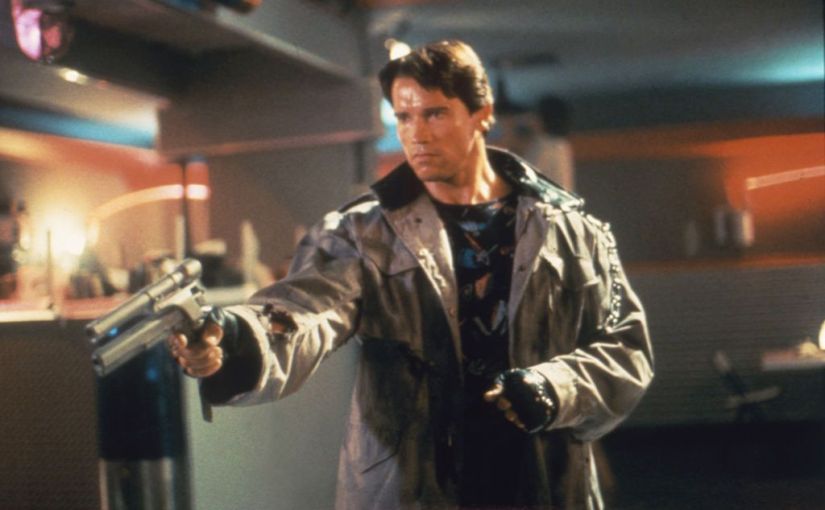
Boden & Fleck have some nice touches to this film but only in the second and third acts. Captain Marvel salutes the grunge music of the 90s while also taking inspired narratives from films like The Terminator. There’s some nice twists in the film too.

However, the whole first act should be thrown away and redone. It’s terribly confusing with dark cinematography on what is to be an alien planet at night and a dimly lit unfamiliar space ship. Hardly any characters are fleshed out yet but they talk in conversations that lose me. The Skrulls are shape shifters that can adapt the image of another person or creature but because it’s all so dark, it’s difficult to decipher who is who. Not much payoff comes when you are finally able to piece some material from this whole sequence later on, based on what Vers uncovers about herself, the Kree and the Skrulls.

Brie Larson is fine in the role while primarily playing it straight. Nothing special, but nothing terrible either.

Samuel L Jackson plays this Nick Fury with more naivety than seen before. He’s a younger version of himself after all. So that’s somewhat humorous, especially his chemistry with an odd cat called Goose.

Ben Mendelsohn continues to break into these mainstream film franchises as an antagonist of some sort but sadly no one remembers him, I would think. He needs to be regarded in the same league with guys like Gary Oldman and Christopher Walken. What’s next for him? How about a James Bond villain?

Annette Bening is a welcome presence as the “supreme intelligence” for Vers. Accompany her sashaying to Nirvana’s “Come As You Are,” and I’m entertained.

There was a better film here. Due to a weak beginning, I can only mildly recommend Captain Marvel. Pop culture references and a redeeming two thirds of the film rescue it from utter confusion. Still, if I have to pause the film on occasion to explain to my wife and daughter what is going on, I think that is more an issue with the film than with the viewer.

PARASITE

By Marc S. Sanders

I first discovered director Bong Joon-Ho when I watched his futuristic sci fi adventure Snowpiercer. I loved that film despite how absurd the set up was. Absurdity, though, is a credit to his craft. That’s why his latest film Parasite is a hugely successful interpretation of class warfare within South Korea. It might all appear drastically unlikely. Yet, it’s all absolutely possible when you reflect on the film after you’ve seen it.

Parasite begins almost like a farce and ends in deep, realistic horror that you’d never expect, even after you surpass the films midway surprise.

It’s best I leave much of the film’s details out. The less you know the better. I knew nothing at all about the film beyond the numerous accolades it has received. I was better off for it.

Joon-Ho’s film makes its point quickly that there is always someone better off than us and always someone worse off. (This was a theme carried over from Snowpiercer.). A poor family living off scrap money for folding pizza boxes while living in a cramped, bug ridden basement is still better off than the drunk who pisses on the street, outside their window. Just as an upper class family with all the best things in life are better off than them.

It’s only when this poor family find opportunity to dupe their way into this wealthy home through jobs they are hired for that we eventually see how lighthearted material, compliments of Joon-Ho and his writing collaborator, Jin Wan Han, can convincingly escalate into class warfare politics that even their characters ever hardly acknowledge, or are aware of. Is the wealthy matriarch really aware where her family chauffeur stems from or where he lives? The off putting scent of someone’s presence can quickly turn a tide or an impression.

I might sound vague, but I have no choice. It would be a betrayal to the imagination of the best film of 2019 if I spelled the film out for you.

Simply know that I truly appreciate the symbolic research Parasite presents as it makes note of a Korean child’s fascination with Native Americans, and how their plight parallels the story. Even that drunk taking a piss on someone else’s territory. Even the gift of a stone sculpture told me how one can be crushed or weighted down by his own country.

Parasite begins as one movie and ends as maybe five other different movies. It’s a farce. It’s wry and conveniently ironic; maybe silly at one point. It’s suspenseful and surprising. It’s also shockingly horrific.

I recently declared Clint Eastwood’s film Richard Jewell the best film of year. I stand corrected.

Parasite is the best film of the year.

THE BEST LAID PLANS

By Marc S. Sanders

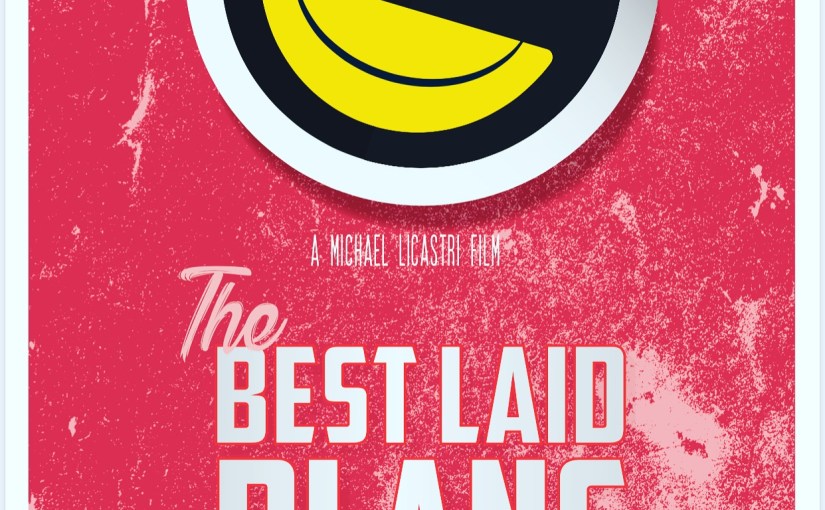
Michael LiCastri writes and directs The Best Laid Plans, a film shot on location in Tampa, Florida and available on Amazon Prime – https://smile.amazon.com/Best-Laid-Plans-Linnea-Quigley/dp/B07P83YB6K/ref=sr_1_1?keywords=the+best+laid+plans&qid=1580527934&rnid=2941120011&s=instant-video&sr=1-1

LiCastri also headlines the cast as Kevin. When Kevin’s parents are threatened to be evicted following losing their jobs, he recruits Allen and John (David Plowden, Keith Surplus) to carry out ridiculous schemes to get the money he needs fast. Naturally, the first thing to come to mind is to become a pimp.

A winning sequence has the boys do a little research to play their new roles. A trip to Ybor City has them observe a toughie pushing around one of his girls (Yvelisse Cedrez in a ditzy scene stealing role). The moment discourages them from following through with the plan.

Next up, how about kidnapping Tommy (Brian Ballance) a former friend who has won the lottery. Ballance plays the role smart with biting sarcasm and wit that becomes a challenge for the trio.

Bridging this comedy together is a lot of small talk inside dialogue like references to Buffy, and Dancing With The Stars, and an analogous reference to Jessica Alba and what she could do if she gets caught. As well, I think this is the first time I’ve ever seen a dick shaped bruise on a character’s thigh. Watch the film to understand why it’s featured. The efforts in making the film is reminiscent of Kevin Smith’s early films like Clerks and Mallrats.

The schemes of our three main heroes are absurd and it lends to the comedy. The dialogue doesn’t necessarily flow naturally though. It’s a little too stilted to appreciate. The delivery needs work.

Objections aside, LiCastri and his crew must not stop with their filmmaking efforts. The script for The Best Laid Plans has the seeds of something fun, but LiCastri’s script comes off like a first draft. It needs a second set of eyes to make it grittier or maybe sillier. Something to make it more outrageous in one direction or another.

It’s a good, short film, even if there’s a better interpretation waiting to present itself.

1917

By Marc S. Sanders

Sam Mendes’ World War I drama 1917 is a cinematic achievement in film artistry. Watching the picture, which I highly recommend in a Dolby theatre, is exhilarating, leaving me to ponder how this type of filmmaking was ever accomplished.

Mendes, along with legendary cinematographer Roger Deakins (Blade Runner) primarily shot the film in one long-real time-take with no breakaway until about two thirds of the film is complete. Then, it resumes into another long take for its final act.

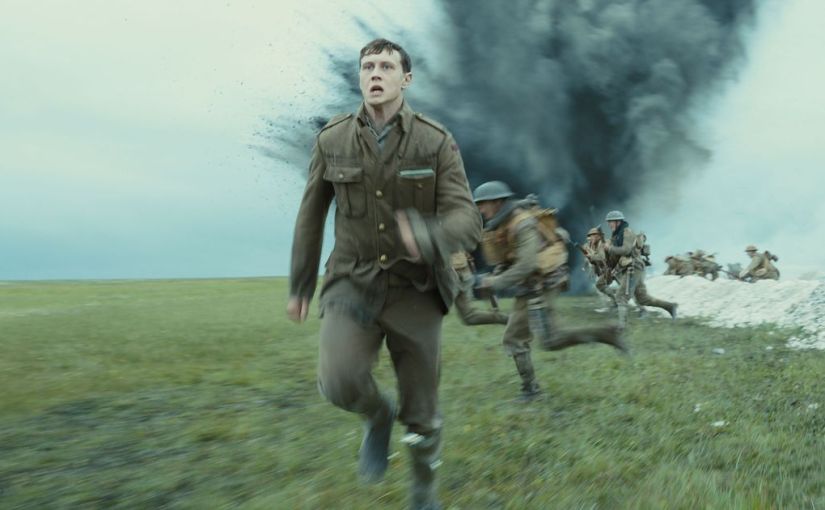
We accompany two British soldiers assigned to trek across the front line into enemy territory and warn a unit of 1600 fellow soldiers that a planned attack has been set up as an ambush against them by the German army.

Mendes is also credited as screenwriter with Krysty Wilson-Cairns and the story and characterizations remain pretty basic. Almost too basic, actually. Because the film is shot in close to real time, 1917 doesn’t allow for much complexity or dimension beyond the now of the mission at hand, and that’s where it suffers slightly. There are moments where we are just walking the countryside and are expected to look at the splendor of war torn Europe. We wind a corner and suddenly we are entering a bunker where a rat hanging from a ceiling enters the frame. We climb a ladder out of a trench, and we immediately come face to face with the aftermath of a violent battle that leaves behind torn up bodies and piles of shell casings.

The achievement with camera work is impossible not to admire and become in awe of it. Eventually, however the novelty wears a little thin. There’s little emotional connection to the two soldiers played by Dean Charles Chapman and George Mackay. Brief appearances by Benedict Cumberbatch, Colin Firth and Mark Strong are fleeting for but a second.

I was highly impressed with 1917, but I was never moved by the film, even when an emotional confrontation comes up near the end. I never got to know these characters beyond the urgent sojourn they take. So much of the conversations didn’t matter much to me.

Again, this is a master class in filmmaking. Mendes will likely win a directing Oscar because I am dumbfounded with his accomplishment. His steady camera could not have been mounted on a ground track against the rough terrain. So how did he do it?

Oscar recognition must also go to Mendes’ team of 6 art directors. The battlefields are strewn about with corpses, barb wire, deep trenches, underground bunkers, dirt, mud, dust, blood, and so on. War is hell is what we’ve all heard. 1917 brings that mantra to life in sickening, shuddering detail.

I recommend the film while it remains in theaters, but I won’t say it is the best picture of the year because for each great feat of technical work, there’s a lack in the emotional punch that other war films have provided.

ABSENCE OF MALICE

By Marc S. Sanders

Maybe more often than not, the films I see about journalism seem to convey the reporters as heroes seeking the truth despite the threats and the strict laws of the first Amendment and so on.  They meet informants in dark garages and outrun speeding cars trying to run them down before the story hits the papers.  They accept being held in contempt of court to avoid revealing a source.  They’re heroes!!!! It’s movie stuff, right?  We’ve seen it all before.  What about films where the newspaper writer gets it wrong from the start, and then sees the ramifications of the recklessness committed?  Absence of Malice, from 1981, is that kind of picture.

Sally Field is a hungry thirty something reporter named Megan Carter with connections in the Miami prosecutor’s office.  When she gets a whiff of a story that implies a man named Michael Gallagher (Paul Newman) is the prime suspect in the disappearance of union head, she runs with it and her editor is happy to make it front page news.  However, just because Mr. Gallagher is the son of a deceased and reputed bootlegger with mob connections doesn’t make him guilty of anything.  Also, has an investigation into his affairs even begun to happen yet?  Just because it walks like a duck, well….

Sydney Pollack goes pretty light on a serious subject matter here.  It’s just awful to see a film legend like Newman be a cold blooded killer.  Worse, it’s beyond reason to see Sally Field as a woman without scruples.  They’re too likable.  So, Pollack with Kurt Luedtke’s Oscar nominated screenplay, play it safe.  Forty years ago, when this film came out, I might have accepted what’s on the surface with Absence of Malice.  Today, however, I appreciate the conundrum, but the residual effects offered up by the film never seem to carry much weight.  The stress doesn’t show enough on Newman and Field.  A suicide of another pertinent character hardly seems monumental to either of them.  Heck, there’s even time for romance between the two leads despite the slander committed by one against the other.  Another film by Pollack, Three Days Of The Condor, committed this same mistake.  It’s hard to accept a romantic angle when the characters barely know each other and what they do know of one another is hardly favorable for each of them.  I can imagine the marketing campaign for this ahead of the film’s release.  If you got “Blue Eyes” and “The Flying Nun” in a film together, well then, they gotta hook up and never, ever make them ruthless.  Audiences would hate that!!!!

The film reserves the shiftiness of the situation for other actors in the film like Bob Balaban.  He certainly plays the part well as a manipulator in search of a guilty party, even if it means indicting an innocent person.  The best surprise is the appearance of Wilford Brimley in the big close out scene who sums what has occurred and then lays out who is responsible for what and who is not responsible.  It’s the best written role in the film and it reminds me what a shame it is that Brimley did not get any Oscar recognition during his career.  (I still say he was one of the greatest unsung villains in film for his turn in Pollack’s The Firm.)

Even the soundtrack music from Dave Grusin feels inappropriate here.  It’s too energetic and full of life with piano and trumpets.  When you consider the term “absence of malice” and what it means to a reporter questioning her journalistic integrity, and then furthermore what significance it has to a newspaper article’s bystander, it seems to hold a lot of weight with disastrous repercussions.  Grusin’s music says otherwise.

It’s always a pleasure to go back and watch Paul Newman, and Sally Field in her early career.  These are great actors.  They do fine here, but the material is not sharp enough for what they can do.  They’re too relaxed.  On the other hand, the subject matter is perfect for heightened movie drama.  I can only imagine what Sidney Lumet would have done with this picture, considering films like Network, Serpico and The Verdict.  The execution of Pollack’s film simply does not live up to the terrible dilemma of an innocent man being publicly smeared.  Think about it.  At the end of Absence of Malice, I don’t think the intent is to wish and hope and yearn for Paul Newman and Sally Field to sail away on his beautiful boat into the sunset.  Yet, that’s what Pollack and Luedtke seem to have left us with.

DRIVING MISS DAISY

By Marc S. Sanders

Mainstream films released by big studios suffer from a major problem these days.  Too often, they don’t allow their characters to breathe.  Films today rush to the climax or the action or the cliffhanger that’ll whet our appetites for a sequel or a crossover or a toy product.  Bruce Beresford’s Driving Miss Daisy escaped all of those conventions.  In fact, I’d argue that Beresford made a buddy picture with his Best Picture Winner based upon Alfred Uhry’s well received play.

Daisy Werthan (Jessica Tandy, who won the Oscar, and held the record for oldest recipient) is an insistently independent old southern Jewish woman living in Georgia.  She drives her car where she wants to and whenever she wants to go somewhere.  However, following an accident in her driveway, her son Boolie (Dan Aykroyd in a very surprisingly good performance) breaks the hard truth to Daisy that her driving days are over since it’s likely no insurance company will ever affordably cover her.  Boolie recruits Hoke Colburn (Morgan Freeman in one of the most gentle and delicate performances of his amazing career) to chauffer the proud woman around her Georgia neighborhood.  Naturally, Daisy does not take well to Hoke at first.

The film begins in the 1950’s and then spans roughly 20 years from that point.  I love how Beresford presents the passage of time.  The cars that Hoke carries Daisy in change as the years go by.  As a new car is shown parked in Daisy’s garage, the relationship and eventual friendship of Hoke and Daisy become stronger and, on some occasions, franker and more honest.  With Hans Zimmer’s energetic score that seems to accelerate the speed of the automobiles Hoke drives, Driving Miss Daisy feels like a very sweet and tender film.  It is.  Moreover, it’s an alive picture.  However, the film does not ignore the prejudiced mentality that’s embedded within the south.  A telling moment occurs when Hoke is driving Daisy to a family gathering in Alabama.  Why would an elderly black man with an elderly Jewish woman sitting in the back seat be met with such disdain by policemen who question their presence while eating lunch on the side of the rode?  I won’t repeat the officer’s comment here, but it is ugly and a sad reflection of how things were.  Are things still that way?

Uhry’s script adaptation from his play does not stop there though.  He questions Daisy’s own stance.  She takes no issue with black people catering to her and her home on regular basis, and she becomes enamored with Martin Luther King’s inspiring wisdom.  So, when she is given the opportunity to see Dr. King speak in person, it only makes sense that Hoke will question why he was invited last minute to join her.  After so many years of servitude, why did Daisy wait until Hoke literally drove up to the location of the speech to invite him in?  I’d argue that it never occurred to Daisy, and I think Alfred Uhry believed that is part of the problem.

Both Daisy and Hoke experience anti-Semitism and racism in the mid twentieth century south.  Ironically, the film demonstrates that common victimization is one reason why they need one another.  I’m thankful that Beresford does not show a burning synagogue for dramatic effect.  Instead, he relies on Uhry’s dialogue as Hoke breaks the news to Daisy when they are on their way for morning Shabbat services.  How does Daisy feel in this circumstance?  The synagogue can be rebuilt.  The horror of knowing this kind of hate exists will never be erased.  That’s the terrible shock.  As well to empathize, Hoke describes how as a child he saw his uncle get lynched and hung from a tree.  Daisy and Hoke unite in the hate that surrounds them.

The performances of Freeman, Tandy and Aykroyd are exquisite.  Their dialect for each of their respective characters rings so true of the Georgian southern regions they stem from.  Freeman has an enunciation that rings of a black man who never learned to read.  He even develops a laugh that seamlessly works into his dialogue and reaction to Daisy’s stubbornness.  His posture is marvelous as an elderly gentleman who will walk slowly while hunched over.  It just looks so natural. Aykroyd is in no way doing one of his comedy characters.  He carries the gut of a well-fed southern man who’s become successful with his family business while not taking every fit that his mother has so seriously.  If any of us have had to tend to an elderly relative, then we can certainly relate to Boolie’s position.  Tandy is wonderful at method acting; it should be studied in performance art classes.  She was an elderly woman already when cast in the role.  Yet, as the years carry on through the story, she changes her gait to how this woman’s bones might become more brittle, or how she might speak slower or smile or frown or chew her food.  She has such a fire in every one of her scenes.  A heartbreaking scene where she appears to be having a frantic form of dementia is very eye opening as she paces her historic two-story home looking for papers she graded years earlier as a teacher.  The younger Freeman (playing a far older man) has to keep up with Tandy in this moment; even Beresford’s steady cam has to move quickly to keep focus.

Recently, I had reviewed Terms Of Endearment, and I alluded to the fact that not enough films about middle age people are focused upon, or at least given the commercial attention that they should be given.  Why is that?  So many middle age and elderly characters are so interesting.  I said it before.  Look at The Golden Girls sitcom.  After all, characters with more years behind them have had more moments to live and breathe. Actually, they have a longer history with more nuances and meaningful events they have already encountered, as opposed to twenty somethings with hot cars, pecs and guns.  Film studios are missing out on a wealth of great storytelling. 

Driving Miss Daisy is well paced story of friendship and fear, and often natural comedic material within its three lead roles.  It’s never boring.  It’s only more and more interesting as the years of the story pass by.  It’s simply an endearing buddy picture of the finest quality. 

STAR WARS: THE RISE OF SKYWALKER

By Marc S. Sanders

Star Wars: The Rise Of Skywalker is a well packaged thrilling adventure of spectacle, emotion, thrill and salutations to a film saga that’s lasted nearly a half century. JJ Abrams, with backing from the franchise’s new owner Disney, invents a storyline that bears consistency with the episodes that have been seen before. There’s just so much to appreciate.

To get the story rolling, it appears the villainous Emperor Palpatine (Ian McDiarmid in a role that has never garnered enough deserving praise) returns from the dead, intent on recruiting the confused Kylo Ren to kill Rey. From there, it becomes a race for Rey and her allies (Finn, Poe, Chewbacca C3PO & BB8) to find “wayfinders” (like directional compasses) that will lead to Palpatine’s location. Naturally they get sidetracked with some unexpected encounters like flying Stormtroopers (“They fly now!”) and Lando Calrissean (a very welcome and delayed return for Billy Dee Williams). As well, Rey gradually learns more of her back story and there are some quite surprising moments to see.

ROS is really a beautifully shot piece of cinematography. Abrams still loves the occasional lens flare but it’s never distracting. Outer space flights and battles have a clear exactness to them. The moments between Rey and Kylo Ren are well edited conversations and lightsaber duals that occur at two different parts of the galaxy as background settings seamlessly change at times. This is an element from the prior often sour Episode VIII known as Rian Johnson’s The Last Jedi that still works for these new characters.

Abrams and company really get everything right here by neglecting wasteful narratives from Johnson’s installment to allow reflections on the other films in the series with fan loved cameos of characters and ships from before.

Episode IX is bound to displease some fans who carry their own vision that challenge them to accept something satisfying. I dare not consider what those thousands of possibilities could be.

All that I know is that the newest chapter is never boring, often surprising and in the most capable hands possible with the Mouse House engineers.

Major applause for the Daisy Ridley giving her best performance to date followed by John Boyega & Oscar Isaac offering terrific buddy chemistry with fun, wry dialogue and major kudos to Anthony Daniels who is given much material that reminds the audience that the Skywalker saga is quickly approaching closure. Daniels has always offered a quite humane performance to a character that can show one expression but still carries dimensions of fear, wisdom and humor. An actor limited in expression who only provides a vastness of emotion.

The Rise of Skywalker delivers a lot of story and some new, albeit unnecessary characters (except for new merchandising to sell), but everything is a visual treat.

Abrams’ contributions offer opportunities of laughter and tears and messages of redemption and sacrifice for a greater good.

There’s much to this to consider and appreciate. I absolutely loved Star Wars: The Rise of Skywalker.

A BEAUTIFUL DAY IN THE NEIGHBORHOOD

By Marc S. Sanders

Marielle Heller directs A Beautiful Day In The Neighborhood, but it’s not the movie I wanted, nor is it the movie most admirers of Mr. Rogers would want either. A film that boasts one of the most beloved actors of our generation, Tom Hanks, portraying one of the most influential figures of our youth, Fred Rogers, falls very short of offering anything entertaining much less insightful.

The problem with Heller’s film is we learn next to nothing about Rogers and we learn way too much about the depressive state of a fictional Esquire journalist named Lloyd Vogel (Matthew Rhys). He’s a pretty unlikable guy with daddy issues (Chris Cooper). The most eye opening thing about Lloyd is when he gets into a fistfight at his sister’s wedding with Dad. Beyond that, he’s a repetitive close up of sunken eyes and five o’clock shadow. I couldn’t even tell you if Lloyd is actually a good journalist, or a good husband or a good father.

The script by Micah Fitzerman-Blue & Noah Harpster is misguided in its subject matter of Lloyd’s struggles at the forefront of course, but also in delivery. I felt like I was watching Tom Hanks, not Fred Rogers. Hanks really doesn’t hide in the role very well. I only heard Hanks’ voice which is not pleasant for singing and lacks the comforting whisper the real Rogers had. I solidified my opinion when I saw a clip of the real Fred Rogers in the closing credits.

A scene midway through the film has Fred inviting Lloyd into his New York apartment. He tries to console Lloyd and get him to be comfortable with his feelings by use of his famous puppets Daniel The Tiger and King Friday VIII. It’s an absolute failure of a moment between the two leads of the film. What’s meant to be therapeutic and consoling comes off as creepy. Call me cynical, but this Fred Rogers is not a guy I would want to be left alone with. I know that wasn’t the intent, but that’s what was processed. A comparable scene occurs between Matt Damon and Robin Williams in Good Will Hunting (“It’s not your fault!”). You’ll quickly see the difference in effective acting and sensitive direction.

An uplifting moment occurs when they ride the subway together. A few kids recognize Rogers and soon the whole car (construction workers and police officers included) is singing his theme song in harmony. No, I don’t believe this ever occurred, but this is often why we go to movies; to see those opportunities that raise our spirits and help us escape. There are not enough moments like this in A Beautiful Day In The Neighborhood.

The screenplay always teeters on better story potential that never arrives. When we first meet Fred at his studio, he is interacting with a child banging a toy sword while his producer is once again frustrated with his delay in filming. Here are two angles I would have rather seen; how Fred interacts with his impatient producer and how he manages to converse with children. Yet, we don’t go any further than that. We have to be bogged down with Lloyd.

Another moment has Fred sharing with Lloyd better ways to let out your anger like slamming on the percussive notes on a piano. The final moment of the film shows Fred at the piano, alone, tickling the ivories, and then he too slams down on the keys. Fred is angry, and as he tells us repeatedly during the film, “that’s okay,” except now I’m angry. I’m angry because I want to know what Fred’s angry about.

Couldn’t a film that prominently features the human side of Fred Rogers privilege me to the Fred Rogers beyond his studio of make believe?

KNIVES OUT

By Marc S. Sanders

Rian Johnson’s new film Knives Out is an attempt to reinvent the Agatha Christie blueprint of The Who Done It? Murder Mystery. It primarily succeeds even if it is a little cookie cutter in its screenplay.

Famed best selling mystery writer Harlan Thrombley (Christopher Plummer) is discovered by his maid in his reading room to have slit his throat. All evidence points to suicide. Police follow through with simple procedural questioning of his next of kin, and yet a private detective (Daniel Craig) with an outstanding puzzle solving reputation is hired with a delivered envelope of cash from an unknown source. If it’s suicide, then why a detective, and who had reason to hire him?

Craig as Detective Benoit Blanc (great name) adopts a hilarious Kentucky southern drawl to rattle the cages of possible suspects, assuming that perhaps this wasn’t suicide. Could it have been…MURDER?

The suspects consist of family members and each is well exaggerated in their physical descriptions. Johnson wrote these connivers with possible motives to set them apart from one another-first by casting well known actors and then giving most of them a garish appearance or unusual trait. Jamie Lee Curtis as Linda with a short white as snow haircut and black circled glasses looks like no one else I can recall. Michael Shannon as Walt with a cane and exaggerated limp, not too bright but also quite discomforting. Don Johnson as Richard only with a goatee, Toni Collette as Joni putting on a bug eyed expression with ditzy delivery. Chris Evans as Ransom, with clean shaven good looks and a toothy smile in preppy, yet snobbish looking sweaters. Finally, Ana de Armas as Marta, Harlan’s nurse, who seems to be the only one devastated by what has transpired, and somehow inadvertently ends up being more involved than she ever expected. She can’t lie. If she does, she can’t help but vomit. A disadvantage perhaps but maybe a convenient advantage at times as well.

Early on, interviews are shown and it appears everyone has reason to maintain a grudge against Harlan. So if Harlan was in fact murdered, well then it’s fair to presume one of these people might have reason to commit the crime. A will is eventually read and then even more twists present themselves. Someone definitely wanted Harlan out.

Rian Johnson spells it out easily for the viewer. Each suspect has his/her own place in the film to toy around with. While I didn’t find it too challenging to predict a likely suspect that has orchestrated what’s occurred, it was more fun for me to watch how it was all pieced together. I kept asking myself what’s so important about the dogs or the baseball or the silent “Great Nana” (K Callan) who sits around the house but surely must have something to contribute.

Agatha Christie or Dashiell Hammet still hold as the much more clever writers. Still, Daniel Craig is having a blast in his role, conceived by Johnson. I’d like to see another mystery with this character. He’s funny at appearing unconcerned with new developments that could be occurring while he’s really just waiting for the inevitable fact that reveals the absolute truth.

Following leaving the scene of an arson a potential suspect makes an unexpected stop. Craig as Detective Blanc opts to wait in the car and put his ear buds on to sing show tunes. Who would do that? Yet, that’s what’s hilariously fun about this picture. A man has died but the shallowness of his surviving family and the disconnect of the detective are the entertainment factor.

Rian Johnson knows how to keep Knives Out amusingly interesting with a curiosity that does not stop.

FROZEN II

By Marc S. Sanders

You’re not going to see anything you haven’t seen before in Frozen II. All that that you have witnessed in other Disney classics, particularly in the original film, is back again. Still, that doesn’t mean you’ll be disappointed either. Walt Disney Studios has become so meticulous and masterful at putting out project after project that they have literally altered the blueprint of the world’s pop culture psyche. Elsa is the modern day Cinderella. Anna is the modern day Ariel.

Frozen II opens with a flashback story involving young Anna & Elsa frolicking together before bed only to be told a story by their Father of a time when their grandfather led the people of Arrendelle to an enchanted forest and encountered the people of Northuldra. A dam is built as a gesture of peace to help Northuldra, and soon after both peoples witness the spirits of Earth, Wind, Fire & Water. It’s probably a more nuanced story in the visual sense, than I can describe here. Actually, the film gradually shows more to this tale as it progresses. Yet I dare not spoil anything.

Jump to present soon after where the last film left off and everyone is living happily ever after. Elsa is at peace but concerned over a repeatedly harmonious call from far away. Kristoff is stressed over how to propose to Anna-an overdone story only new to kids under 10. He is given too much story and is the weakest element of the picture. Even his solo number, though sung well, is even way too corny for a genuine laugh.

The call that Elsa hears doesn’t stop and is soon followed by a disturbance within the kingdom causing the streets to come up and strong winds to overtake everyone. It is up to Anna, Elsa, Olaf and the rest to journey into the enchanted forest where grandfather explored and uncover the source of the problem.

Frozen II is almost as good as the first film. The characters remain likable and colorful. The music is very strong and easy to learn. Maybe that’s because many of the songs seem to have an identical tempo to every number from the first film. “Show Yourself” sung by Idina Menzel as Elsa is this film’s “Let It Go.” “When I’m Older” is an adorable variation of “Summer” sung by Josh Gad as Olaf, the lovable, comic relief little snowman.

Again, you’re not gonna find anything new here, but the experience is lighthearted fun that’s impossible to resist.

Beyond the uninteresting Kristoff storyline-he gets an opportunity to ask for Anna’s hand in marriage, stutters and stutters, and gets interrupted…again! Yeah! You know what I’m talking about.

Frozen II has glorious animation that makes you wonder if the Swarovski franchise has an actual mine for all of its crystal products. Gorgeous animation of glass like cathedrals within the land and snowflakes in the sky offer prisms of color in blue, purple and pink. Directors Jennifer Lee & Chris Buck, using a script penned by Lee, give you something eye popping to take in with nearly even caption. It’s positively beautiful.

I took my daughter to see The Addams Family animated update. It was good. Had a message I appreciated. Yet, I couldn’t feel wowed by anything. When you are seeing a Disney production like Frozen II vs a Universal production like an Addams Family retread, you can’t fully appreciate what Universal settled for in its artwork of skinny legs and fat heads for its characters. I’m paying the same price for both films. I’m devoting comparably the same amount of time to both films. Universal gave me an overcooked hamburger. Disney gave me a juicy steak.

Make the right choice. Go see Frozen II. It’s a terrific experience for all ages.