AVENGERS: AGE OF ULTRON

By Marc S. Sanders

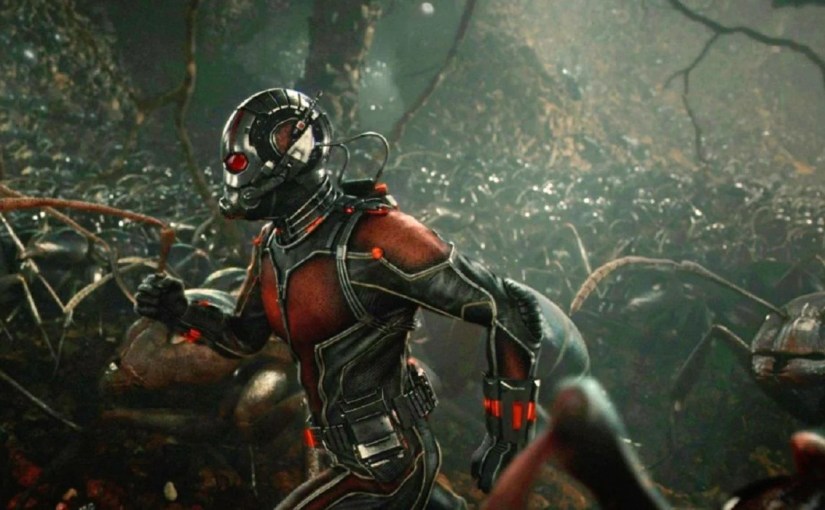
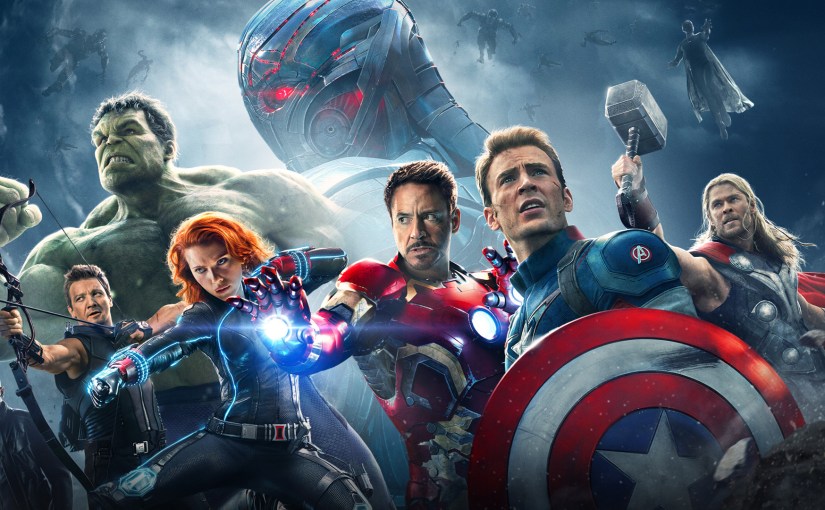
The character of Ultron, a terrorizing cyborg, has been a favorite Marvel Comics villain of mine ever since I discovered him in 1984 during the Secret Wars 12 issue limited run. He looked sinister with a devilish face in the shape of a metallic claw. His sonic blasts appeared more destructive than anything else ever drawn on the page. Ultron was a badass!!! (“Language!”). That being said, the cinematic interpretation is quite different, yet he’s modeled on a much more grown up sculpt.

Ultron is still a terrorist bent on utter destruction, but now he has a disregard for man. He’s written quite inventively as a direct contradiction to arguably the favorite of all the Marvel cinematic characters, Iron Man aka Tony Stark. How fitting that James Spader is cast opposite his former brat pack cast mate (Less Than Zero), Robert Downey, Jr. It is really uncanny how the dialect of Spader’s limitless Ultron can sound just like Downey’s genius Stark but with a means of annihilation; “All of you against all of me.” Ultron is smart first, powerful second. He’s not just a monochromatic android. There’s a means to his end and an inventive science to his purpose; uproot a country high in the sky and then DROP IT BACK DOWN INTO THE PLANET, like an anvil flattening Wile E. Coyote. It’s actually more novel than I’m giving it credit for.

Most Marvel afficianados from the blogs, and fellow colleagues as well, do not care much for this chapter in the MCU. I have yet to understand why. Again, each character is really drawn out beautifully by Joss Whedon with a respective storyline. Finally, Jeremy Renner’s Hawkeye is given some oomph to his back story. So is Paul Bettany as the other cyborg, Vision, formerly J.A.R.V.I.S, the artificial intelligence.

Vision/J.A.R.V.I.S. outshines Data (“Star Trek: TNG,” apologies to my friend, Jim Johnson), but will never top C-3PO. I like how he’s introduced as an amalgamation of all of the film’s main characters’ abilities. Bruce Banner and Tony Stark, Thor, Ultron, Scarlet Witch, some brilliant doctor friend, and even the nation of Wakanda. They all have a piece of themselves in Vision. It’s a better story than the comics ever suggested. Maybe I’m biased having grown up on these stories, but the Vision element makes me want to clap every time I see it. So inventive and economically told for a two-hour film with a ginormous cast. Vision’s introduction is one of the best scenes in all of the Marvel Cinematic Universe.

A great device to unhinge most of the Avengers comes through by means of Elizabeth Olsen’s Scarlet Witch (identified as Wanda Maximoff) who cripples them with mind control. How else should a sorceress take out a whole lotta muscle? It works and it gives Olsen conflict to play with. The visual effects surrounding her are also pretty cool. Sure, it might be just some neon red mist, but the cinematography and CGI surrounding her look gorgeous.

This installment also serves as neat set up for what’s to come. Quick Easter Egg in Age Of Ultron: Tony Stark Name drops the term “Endgame.” Oooooooo!!!!!!

It is really admirable what Marvel and Disney have done with the MCU, and especially watching this film. It’s ironic how filmmaker James Cameron made a statement hoping for “Avengers fatigue” so the phenomenon can die down in movie houses, etc. Funny! For me, seeing all of Ultron’s toys and wit seemed to outshine quite a bit of the residuals spawned from Cameron’s Terminator franchise.

Whedon wrote and directed a film with much more intelligence, wit, at least as much action, and threat than I ever got from Cameron’s reputation of clunky dialogue and plot hole time travel storytelling. It would do Mr. Cameron well to maybe not throw stones at the glass Avengers towers. I’m skeptical that his upcoming FOUR Avatar films will carry the smirk inducing cues the MCU has used to its advantage.

FANTASTIC BEASTS AND WHERE TO FIND THEM

By Marc. S. Sanders

I really do like the Wizarding World of J.K. Rowling.   The attention to detail is marvelous.  The landscapes she has painted over eight best-selling books that follow the adventures of a boy wizard, are limitless.  A new kind of fun vocabulary was invented thanks to her colorful imagination.  Still, she needs an editor!  Even if it is not a novel, her recent screenplays that follow the escapades of another magical protagonist, Newt Scamander, and his small, distressed suitcase drift off into so many side stories, it is difficult to focus on a central plot at play.  While some might appreciate the assortment of distractions, for me it grows a little frustrating.

Fantastic Beasts And Where To Find Them (great title) is the first of what will become five new films that focus on an earlier time before the famous boy who lived was ever born.  Rowling takes the magic to New York City for the odd, but adorably likable Newt (Eddie Redmayne) to accompany his suitcase that carries the most unusual creatures that any other fantasy has likely ever introduced.  There’s a platypus duck thing that has a penchant for stealing jewelry and coin; perfect for stuffed animal merchandising at Universal Studios.  There’s a purplish-blue mosquito that twittles around.  There’s a dragon and an elephant/rhino combo thing.  There are bright green grasshoppers that hide in Newt’s jacket pocket.  It’s an encyclopedia of Rowling wildlife.

Newt arrives in Depression era New York and some of the creatures flip the buckles on the suitcase open, and before you know it, he’s chasing them through the streets.  Soon after, he gets his bag mixed up with another one belonging to a lovable baker “No Maj” (American term for “Muggle” or non-magic person) named Stanley Kowalski (Dan Fogler).  From there, a partnership is forged, and the men are pursuing the missing animals through the city bank, the zoo, tenement buildings and jewelry shops.  Romantic angles serve the men by way of magical sisters, Tina and Queenie (Katherine Waterston and Alison Sudol).

Parallel to all of this are concerns of a magic criminal known as Grindlewald who is making headlines for his various worldwide offenses.  The North American magic congress is disturbed by these events and rely on a man named Graves (Colin Farrell) to investigate.  As well, there is a No Maj woman (Samantha Morton) leading a chorus of city folk and politicians (including Jon Voight) in the hunt for what are believed to be witches and those that are committing crimes of witchcraft.  This woman serves also as a foster mother to numerous children, two of which are known as Credence and Modesty (Ezra Miller and Faith Wood-Blagrove).  These two in particular are curiously quiet with a dark way about them. 

So, yeah!  There’s a lot going on here.  There are a lot of stories to explore and a lot of characters to meet. As well, there are a lot of animals to learn about.

David Yates has become the go to director for the Harry Potter franchise and he takes up the mantle here as well.  This first film in the new series is gorgeous to look at with its period piece art design and the CGI special effects blend nicely with the human actors. 

However, the film loses itself over and over again with the different avenues it takes.  One moment we are supposed to feel the tension of Grindlewald on the loose. Then we are getting into madcap mischief with two other characters chasing down silly creatures seemingly inspired by a Jumanji theme.  We are also treated to an opportunity to literally step down into the suitcase for a whole other world of different settings where these animals are meant to be housed.  It’s wonderous for sure and Yates simply allows time for observation and nothing else.  Intermittently within the film, we also end up following these two dark children who are altogether disturbing, and we wonder why.  How and when do they come into play?  Rowling’s script is more concerned with painting broad strokes of new environments, rather than staying focused on one trajectory.  At times, I’m asking myself, where did we leave off with this storyline or that storyline.

Eddie Redmayne is adorably quirky, but maybe a little too much.  He has the “Willy Wonka” palette to his wrangler occupation. Though, his dialogue gets swallowed in his modified English accent and it is difficult to comprehend what he is saying.  He’s deliberately mumbling his words to build upon the oddities that come with Rowling’s character.  Newt has a name for each creature in the film, but there’s no way I could understand what he calls them.  I don’t even think his acting partner, Dan Fogler, understands everything being said to him.  On this latest viewing with my wife, we opted to turn the subtitles on our 4K player.

The characters are suitably atmospheric for the dark and unusual that stems from Rowling’s imagination.  Colin Farrell always plays well as the handsome, yet brooding man of mystery.  Ezra Miller seems to come from the cloth of a Tim Burton iteration.  Fogler’s character is the best though.  His expressions of stare at the amazements he’s witnessing for the first time represent the audience.  He’s not the bumbling fool that other storytellers might depict him to be.  He truly can’t believe his eyes at first, but eventually builds an affinity for the fantasy in front of him.

The ending somehow brings all of these characters together. It is engaging for sure with an action-packed encounter with a black cloud blob within the underground subway tracks. Then it is concluded with a celebrity cameo that teases of what’s to come. 

Fantastic Beasts And Where To Find Them is not unwatchable, but it requires extra attention so that you can recall where one story leaves off and then later resumes itself.  Often, I found myself asking how did I get here, and then my mind would wander and I’d get distracted from the continuing narrative. 

There’s no doubt of the kind of power and influence J.K. Rowling has.  If only someone would be brave enough to offer her a little constructive criticism, though.  The Fantastic Beasts series was originally meant to be a trilogy of films.  Then her contract with Warner Bros expanded to five films.  You know what?  With all that Rowling has to share with us, I think she might need ten or twelve films.

THE LOST CITY

By Marc S. Sanders

Sandra Bullock’s film The Lost City is nothing more than rollicking fun at the movie theater.  A popcorn movie.  You can simply focus on gorging yourself with endless amounts of popped kernels and large fizzy drinks and you’ll never find yourself lost in a complex plot.  It’s a screwball adventure in the same vein of Romancing The Stone.  What I appreciate is that it is not a duplicate blueprint of Romancing The Stone.  Maybe just the opening scene, but no matter.

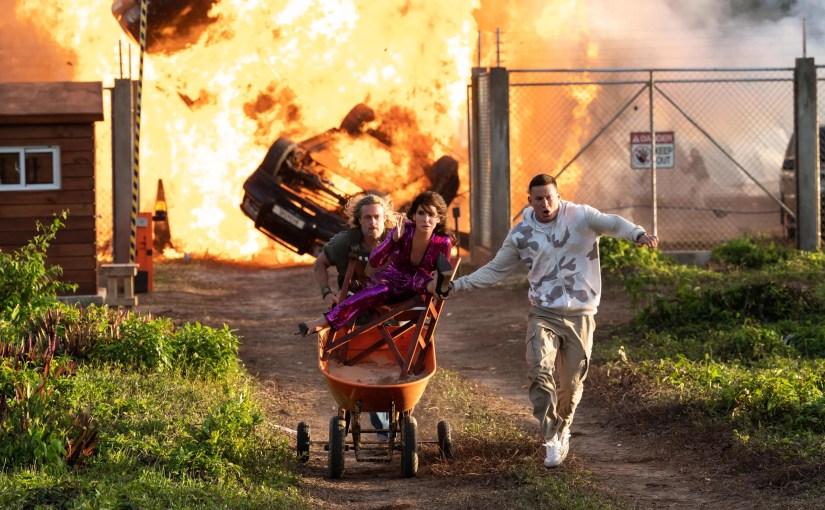
Bullock is Loretta, a reclusive romance novelist, who knows that her books are nothing more than cheesy pulp material to the umpteenth degree.  Her agent Beth (Da’Vine Joy Randolph) keeps a positive attitude as she encourages a book tour to promote Loretta’s newest installment in a series that follows the adventures of Loretta’s fictional swashbuckler.  That hero is preserved on the covers of her novels in the image of fashion model, Alan (Channing Tatum) – a Fabio inspiration.  Alan dons the gorgeous blond locks wig with the beefcake chest and the fans seem to go wild for him more than they do for Loretta’s work.  Even the glittery purple jumpsuit with stiletto heels that Loretta dons for an appearance at a book fair doesn’t deter the screaming fans away from Alan’s muscular build and chiseled chin.

When Loretta is captured by a spoiled brat of a villain known as Abigail Fairfax (Daniel Radcliffe), she finds herself having to research the location of a lost city on a remote island rumored to possess treasures beyond anyone’s wildest dreams.  Somehow, within Loretta’s fiction she implied the actual location of this place.  Abigail needs her to delve even further towards the destination.

This all sounds cliché.  It is, actually.  So what!

What saves The Lost City is the screwball comedic approach to the film.  Bullock and Tatum are nearly twenty years apart in age.  Yet, they make a great pair in the same way that Hepburn and Grant did in Bringing Up Baby.  I could care less about the actual lost city and whatever treasure was there.  The symbols etched on an old piece of parchment that Loretta attempts to decipher never mattered to me.  Two days after seeing the movie, I don’t even remember what the lost city revealed when they eventually got there.  I did like the endless pratfalls of Tatum and Bullock, however. 

Channing Tatum looks like the adventurer of a romance novel.  Yet, he’s nothing more than a pretty boy or a “mimbo” as Jerry Seinfeld might describe him.  He’s actually got a crush on Loretta and upon determining that she’s been kidnapped, he recruits the legendary problem solver Jack Trainer (who could only be encapsulated in the form of a gorgeously blond, tan and muscular Brad Pitt) to rescue Loretta.  It’s important to Alan, though, that he gets recognized as the savior.  So, he kind of learns as he goes. 

Adventures in the jungle abound.  There are bad guys on motorcycles.  Guns, of course.  Fires within Alastair’s luxury SUV. Rock climbing.  Rivers with leeches.  Dark caverns and on and on and on.  Yeah.  I’ve seen this all before.  Again, I say so what!  It’s just a fun time at the movies that brought me back to the fast-paced escapades found in the 1980’s films I grew up on.  Yet, it has its own spin thanks to the relationship of Alan and Loretta.

Daniel Radcliffe and his beard are also great characters.  It’s a nice departure from the shoe horned role that’ll never leave him as a certain boy wizard who will not be named here.  He just brings out his fun bratty side.  His beard seems to wink along with him.

A better side story could have come with Da’Vine Joy Randolph though.  As the agent goes from one traveling step to the next as she attempts to find Loretta herself, Randolph just doesn’t look comfortable in the role with her sky-blue pant suit and big breasted physique that is intentionally in your face.  Where’s the slapstick that should be accompanying her?  She’s specifically made up to look like diva luxury and you’re waiting for one disaster after another to befall her. Beyond having to fly on a puddle jumper plane carrying farm animals, she simply survives her trek unscathed.  Either this storyline should have been excised all together, or it should have been rewritten to be just as silly as what Bullock and Tatum are delivering.  A flop in the mud or a slip in the river would have helped this plotline. 

The Lost City is just a cute film for Sandra Bullock and Channing Tatum to look…well…cute together, and in a world where celebrities are slapping each other silly on live television, isn’t this a much better escape on a Saturday afternoon?

THE ACCUSED

By Marc S. Sanders

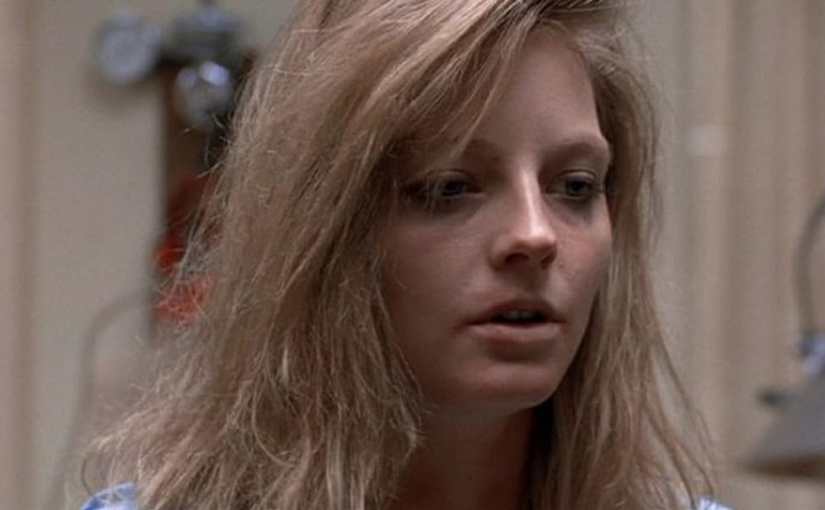
Jodie Foster won her first of two Best Actress Oscars for playing Sara Tobias, a victim of a barroom gang rape in The Accused, directed by Jonathan Kaplan and written by Tom Toper.

Kelly McGillis portrays prosecutor Katherine Murphy. Murphy initially makes a deal with the three men accused of the rape. An agreement is made for a lighter conviction “reckless endangerment,” rather than “rape,” and a trial is avoided. What happened to Sarah is never put on public record.

Circumstances thereafter motivate Katherine to go another step further and prosecute the men in the bar that encouraged and cheered for the rape to continue. Her own office questions if it will be worth it though and demand she walk away from this seemingly no win scenario.

Kaplan’s film is more or less paint by numbers until it reaches the moment a material witness takes the stand to testify on the exact sequence of events that actually occurred in the back room of a neighborhood bar. Foster is hard to watch at times and that’s the point. There’s nothing glamorous in a film centered on a rape victim, and she puts out all the ugly parts of her character first physically, and then with temper, habitual drinking, and the sense of a poor upbringing. Toper does equip his character with likability though. Sarah tries to get through the tough exterior of Katherine’s no nonsense lawyer ideology with her interests in astrology. Through the film, Katherine shows no interest but we all know that’ll change. Nothing is shocking in the developments of Toper’s story.

What is jaw dropping though is how Kaplan depicts Sarah’s post rape examination. Deep cuts and bruises are shown in various parts of her body. She is propped on stirrups for evidence retention (hair, skin and semen samples for example), even the annoyingly repetitive click and flash of a Polaroid camera are disturbing. You can’t help but be concerned or taken aback.

No. A movie will never measure up to what victims endure following incidents like this. Still, the footage early on in The Accused certainly got me emotional.

The big shock is towards the end when the re-enactment of the rape is presented. Kaplan doesn’t hold back with his crew of extras playing the bar mates. Drinks are abundantly consumed, then a song in the jukebox, some weed, pinball, a wink, then a sexy dance, and suddenly Sarah’s skirt is lifted to reveal her panties and she’s propped on a pinball machine with her arms restrained and her mouth covered by a hand. Then the woo hooing is disturbingly brought on.

Why do I document all of this? I want to show how subtle Kaplan is with the rape scene. Innocent laughs and drunken play can suddenly turn on any one of us, man or woman. A song plays. People are stoned and drunk, and before any of us realize it, there’s a sexually assaulted victim, and a rapist, or three rapists actually. Moreover, there are those who wish for this moment to last and egg it on. For one woman, none of it is fun anymore.

Again, the storyline development of The Accused is nothing we haven’t seen before. It’s step by step, connect the dots within the courtroom and law offices. The crimes (rape for one, cheering & persuading – a crime for another) are terribly shocking though, especially when we see it first-hand.

Every man and woman should watch The Accused. It’s important we remember that we are capable of subjecting ourselves or being subjected.

More so, regardless of our age or experience, we all have something to learn about what a rape victim endures. I imagine this film doesn’t come close, but it’s a solid start.

BULL DURHAM

By Marc S. Sanders

How Susan Sarandon did not even get nominated for an Oscar for Ron Shelton’s Bull Durham, I’ll never know. Shelton writes the character of the lustrous, Annie Savoy with grace, wisdom and silky sex appeal. It remains one of the best female characters to ever appear on a screen and no one else could have played the part other than Sarandon.

Shelton’s sensational script opens with Annie’s declaration that she believes in the “church of baseball” and from there it waxes poetic on the sport’s religion and traditions as Annie uses her charm to seduce the Durham Bulls’ newest talent, dim witted pitcher Eppy Calvin “Nuke” Laloosh (Tim Robbins) leaving the team’s experienced catcher Crash Davis (Kevin Costner) wanting more. That is until Annie realizes that she’s the one who wants more.

Davis is recruited to groom Nuke for the big leagues. Nuke has got a million dollar fast ball arm but he “…fucks like he pitches. Sort of all over the place.” Crash is the frustrated player with talent but the sun is setting on his opportunity for the big leagues. Dumb Nuke has a future that just doesn’t seem fair to Crash. Annie is no help when she chooses Nuke over Crash to hook up with for the season.

Shelton explores so many dimensions in his script. It does not solely focus on the three primary characters. The screenplay stirs in a mixture of what it’s like to serve on a minor league team with bats and gloves that are cursed, the urge for a rain out game or what present to get Bobby and Millie for their wedding. A call to the mound might settle some of these things.

Shelton directs his script with a very natural approach. Watch Crash and Annie flirt in a batting cage. Costner and Sarandon don’t even flinch as the balls whiz between them. Baseball is a part of these characters. They live and breathe baseball and they relish sex.

Shelton’s last 15 minutes of film offer a celebration of sexual release that appears pleasant, fun and somewhat religious as the chemistry between Costner and Sarandon remains strong. They rattle the whole house it seems and the kitchen will never be the same.

Robbins is great with his idiocy. He wasn’t as well known when this film was released in 1988. His surprise appearance of stupidity is so lovable and welcome. When he tries to think he gets himself in trouble. When he listens to his coaches, Annie and Crash, he excels. The pains he goes through upon their advice is ridiculously hilarious. Don’t forget to breathe through your eyelids, Nuke.

I also gotta recognize Robert Wuhl and Trey Wilson as the managers of the team. They are hilarious but not overt. Wuhl is great as he bellows out encouraging but incomprehensible cheers from the dugout. Wilson looks on with tired facial expressions.

This cast is invested in the cloth of America’s pastime. They know the batting averages. They read the signs. They play for the crowds. It’s as if Shelton moseyed into the town of Durham, North Carolina, put his camera up and watched how another season all played out. His lens could have been working with a documentary mindset.

Bull Durham is one of the best scripts ever written full of brilliant one liners and philosophies that I might not entirely understand what any of it is referencing. Yet when Annie or Crash carry on, I can’t help but suddenly get interested.

Bull Durham is the best baseball film ever made performed by an outstanding cast led by a director with a clear, wide-open vision.

Play ball!!!

MAJOR LEAGUE

By Marc S. Sanders

Never seen it before!!!! Finally at the behest of my colleague Miguel Rodriguez and company I sat down to take in the view.

Tom Berenger was a B leading man of the 1980s. Rugged with shaggy hair and a hoarse voice in films like Platoon, Someone To Watch Over Me and Shoot To Kill (a secret favorite of mine). Here in Major League, he carries on that tradition as an aging ball player with bad knees. He’s not given many of the gags, but he sure is likable. I didn’t need the inevitable romantic subplot with Rene Russo. Nothing great there. When he’s playing the ball player in a catcher’s uniform though, Berenger is at his best.

Wesley Snipes shows the future of his albeit temporary star power. He’s not on the level of Eddie Murphy funny but he made me laugh nonetheless, as the base stealer. His entrance into the film is hilarious. A cross between a Bentley & Volkswagen Beetle perfectly sums up his character. Looks like class when really he’s got none.

Dennis Haysbert is one guy I never knew was featured. Now, this guy can bring the comedy as a Voodoo believer trying to get his idols to help him hit a curve ball pitch. He was my favorite.

Charlie Sheen is the Wild Thing. It’s not so much Charlie Sheen’s talent. It’s how his character is written that’s hilarious. Writer/Director David Ward (The Sting) doesn’t rely on dialogue for his 2nd billing star. Sheen doesn’t say much actually. Sheen brings the image of a near sighted, out of control, felon with a power arm teetering on 100mph. Throw in some nerd glasses, a punk haircut and an anthem song, and now you’ve got a gag to carry you through a good comedy.

Major League screams of an 80s picture, most especially with the synthesized keyboard soundtrack, Berenger’s Miami Vice sports jacket over a t-shirt, Bob Uecker (great timing as a sports announcer), and 80s mainstay Corbin Bernsen (TVs L.A. Law). Sure, it’s dated but I found the movie to be fun.

Not my favorite baseball film. That belongs to Bull Durham. Still, I’m glad I finally saw Major League.

Oh yeah. As in many sports movies, the team sucks (hey…it’s the Cleveland Indians), the owner wants to stay that way for profit and the team eventually unites themselves to victory.

Exactly!!!! Rene Russo has nothing to do with any of this.

DO THE RIGHT THING

By Marc S. Sanders

inally, after 30 years, I’ve caught up to a film that has eluded me, Spike Lee’s masterpiece Do The Right Thing. Here is a film from 1989 that really could have been made in 2019. At the very least, it should be rereleased in the theatres. We desperately need this film right now.

My view of Spike Lee has gradually changed over just the last year. It must be due to the current political and socioeconomic climate. I’ve become terribly sensitive to what I see in the news these days.

Following seeing BlacKkKlansman and now this film, Lee really is aware of how low humanity can go. Do The Right Thing offers just a little push that leads to an endless fall, however.

Lee’s film was shot on location in the Bedford-Stuyvesant neighborhood in Brooklyn. The story takes place on a day where the heat wave has reached a record high, so the predominantly black community has turned on the fire hydrant and Sal’s Pizzeria is open for business. Sal is played by Danny Aiello in an Oscar nominated performance. The main character that everyone knows is Mookie, Sal’s trusted delivery guy, played by Spike Lee. Mookie is well aware of Sal’s mild prejudices towards his customers; mild compared to Pino’s blatant racism (John Turturro), Sal’s older son who works for him along with Vito, the other son.

The film is a day in the life when it appears the same daily routines occur yet again. Mookie delivers pizzas while getting chastised by his son’s mother (Rosie Perez’ debut) for not making more of himself. The middle age men sit on the corner talking about anything random. The kids roam up and down the street goofing off and teasing. Da Mayor (Ossie Davis) seems a little crazy even if we can recognize a life of experience as he’s sipping on a bottle while trying to charm Mother Sister (Davis’ real life wife Ruby Dee) who stays perched on her window sill, and Radio Raheem (Bill Nunn) and Buggin Out (Giancarlo Esposito) are on their own mission to make sure black celebrities appear on Sal’s wall along with the Italian Americans, and “Fight The Power” is rightfully blasting on the boom box.

Each scene in the film plays like a vignette and Lee often times will be as direct as possible with his characters to honestly show what they stand for, whether they are racist or intrusive or even naively annoying. The heat index is nicely displayed through the random commentary from the local DJ portrayed by Samuel L Jackson, and it’s easy to grasp that the temperature serves as a threatening metaphor for what we fear will eventually happen. Our communal mentality is about to boil over.

I easily saw the still controversial ending coming. What’s sad is that it is no longer surprising in today’s era. It’s probably one of the best endings to a film that I’ve ever seen. That’s a bold statement but having watched the film just a week ago, I’ve repeatedly had an internal argument with myself. Who is right? Who is justified? Who is wrong? Why do these activities continue to happen? If I’m still turning this film over in my head after a week, then I can’t deny the impact Spike Lee accomplished. I’m angry. I’m annoyed. I’m sad. Don’t get me wrong. I was also entertained with the film. It’s a great script and a great cast.

Beyond the messages of Do The Right Thing, the film is an assortment of bright colors in costumes and backdrops within the neighborhood. Bedford-Stuyvesant really looks like a beautiful area. It looks clean and the residents really never appear terribly intimidating. Lee finds qualities in all his characters to like, even Pico the most racist of all. Mookie even tries to make a point to Pico about just how racist he seems. It’s a great conversation about the status quo of a black celebrity vs simply another “N-word” who walks into Sal’s for a slice of pizza. I found charm among most of the various conversations in the film. So much so that I said to myself, this is a film that truly could be adapted into a musical or a stage play. There’s so much to tell and so many ways to say it. I wouldn’t be surprised if Lee likely had a hundred more pages of dialogue and a dozen more characters that never made it into the final product.

In 1989, and all the years thereafter, I dismissed this film. I never cared for Lee’s commentary during public interviews. I can’t stand his response to certain issues, and admittedly I just do not like hip hop and rap music. I also may have naively thought that Spike’s viewpoints were a little over the top. I still do, at times. Nevertheless, I was blind, Reader. I truly was.

There’s a terrible truth to Do The Right Thing. A frightening truth. We are very, very far out of reach of racial harmony.

We learn best, only when we fall. Spike Lee’s film shows the shortcomings of the human spirit. Spike Lee’s film makes you think and debate. You have no choice but to question a moral compass.

Whether you have already seen it or not, watch Do The Right Thing today. More importantly, watch it with your children.

FOUR LIONS (2010, Great Britain)

by Miguel E. Rodriguez

Director: Christopher Morris
Cast: Riz Ahmed, Arsher Ali, Nigel Lindsay, Kayvan Novak, and a very special guest star
My Rating: 9/10
Rotten Tomatometer: 83% Certified Fresh

PLOT: A small group of incompetent British terrorists set out to train for and commit an act of terror.


The world of cinema has a long history of taking subjects traditionally considered taboo and turning them into comedy.  German concentration camps?  Life Is Beautiful mines it for comedy.  P.O.W. camps?  Ever hear of Hogan’s Heroes?  What about Hitler himself?  The Great Dictator and Look Who’s Back lampoon him perfectly.  Race relations?  Look no further than Blazing Saddles.  In recent years, even 9/11 has become a kind of punchline for jokes, with varying degrees of success.  As with all comedy, context is king.

Such is the case with Four Lions, a British film from director Christopher Morris.  In it, the subject and especially the philosophy of suicide bombers are, forgive the pun, exploded with equal doses of logic and ruthless humor.

Omar (Riz Ahmed) is a member of a “cell” of extremists who imagine themselves to be part of a glorious Jihad against Western civilization, but who, as Omar himself puts it, can’t even “stir their tea without smashing a window.”  In the opening scene, Waj (Kayvan Novak) is trying to make one of those videos claiming responsibility for a terrorist act, but the cameraman points out that the gun he’s holding is too small.  It’s actually a replica of an AK-47, but it’s about half scale.  Waj solves the problem by first saying he has big hands, then by simply moving closer to the camera.  Can’t argue with that logic.

Their leader, Barry (Nigel Lindsay), is a Caucasian man who has converted to Islam and become a true believer – “radicalized”, I think is the word.  (Director Christopher Morris says he’s based on a man who was once a member of a far-right, fascist party in the UK; in an attempt to “out-knowledge” the Asian youths he regularly assaulted, this man studied the Qur’an in depth…and as a result “accidentally” converted himself and became a Muslim.  Talk about truth being stranger than fiction.)  Barry is no prize either.  He knows all the proper buzzwords and catchphrases, but he is convinced the best way to defeat government surveillance when walking outside is to constantly shake your head back and forth.  So your face will come out blurry.  Once again, unassailable logic at work.

The fourth member is Faisal (Adeel Akhtar), who buys up large quantities of bleach and liquid peroxide for bomb-making, but to do so he had to make several trips to the same store.  To make sure no one at the shop suspected, he used different voices every trip, including a woman’s voice.  Barry objects: “You’ve got a beard!”  Faisal explains he covered his beard with his hands when he used the woman’s voice.

“So why has she got her hands on her face, Faisal!?”
“…cos she’s got a beard.”

Again…impeccable logic leading to ridiculous actions.  The movie is chock full of these kinds of perfectly logical reasons for doing absurd things.  A movie with only two dimensions would simply use that same lens, point it towards the actions of suicide bombers, and congratulate itself on its cleverness.  But Four Lions, hilarious though it is, goes another level deeper.

Omar has a wife and young son.  They are both totally on board with Omar’s plans for becoming a suicide bomber.  All three are convinced that his act of martyrdom will ensure his place in Paradise where he will eventually be reunited with his family.  When Omar discusses his plans with his wife, Sofia, she is calm, cool, and collected, as if they were discussing when and where to buy their next house.  When Omar tells his son a bedtime story, he makes changes to the story of The Lion King, so it more closely reflects his own beliefs, and the son smiles and eats it up.  Chilling.

But then Omar’s brother, Ahmed, pays a visit.  Ahmed is what I would call an “orthodox” Muslim, wearing the robes and head coverings and the longer beard.  By contrast, Omar is dressed in far more “Western” gear and trainers.  Ahmed has gotten wind of Omar’s plan and wants to try to talk him out of it because the Qur’an teaches non-violence…but his orthodox beliefs also state he can’t be in the same room as Omar’s wife.  Omar makes a point that, according to Ahmed’s beliefs, there are “60,000 opinions saying we can’t fight back!  We must measure our beard with a ruler and lock our wives in a cupboard!”

What you’ve got here is a key lesson in great comedy.  Be funny, but have a point.  What is the point here?  In my opinion, the point of this scene is to single out the vast contradictions possible in any kind of religion where extremists have staked out territory on the fringes.  A man believes in non-violence but can’t be in the same room as a woman.  Another man believes in martyrdom but has water gun fights with his son and wife.  They’re both right and they’re both wrong.  We tend to see one viewpoint as being hand in hand with the other by default, but Four Lions makes the case that great variety is possible.  A man in a robe and a long beard is not automatically a terrorist.  A man with a loving wife and family is not always the “good guy.”  Nothing is black and white.

But I don’t want to make the movie seem like it’s some kind of grand polemic on religious intolerance.  It has its serious moments, yes, but damn, is it funny.  I’m trying hard to think of another movie where a bunch of terrorists wind up running in a fictional “fun-run” marathon dressed as a ninja turtle, a cowboy riding an ostrich, an upside-down clown, and an orange bear.  (Actually, I’m not quite sure that’s a bear…that would be a question for the police.)  Or where one terrorist’s master plan involves strapping a bomb to a crow.  Or where a short discussion is held to determine exactly which parts of a car are Jewish.  As they say in the clickbait ads, the answer to that question may SURPRISE you!

(Also, if you’re a fan of Star Wars, I apologize in advance for any trauma you may experience…you’ll see what I mean.)

Admittedly, the subject matter of this comedy may turn off some viewers.  That is their right.  But if you’re an admirer of sharp-edged comedy that takes no prisoners and follows its own logic to its inexorable conclusions, Four Lions is gold.

CAVE OF FORGOTTEN DREAMS (2010)

by Miguel E. Rodriguez

Director: Werner Herzog
My Rating: 9/10
Rotten Tomatometer: 96% Certified Fresh

PLOT: Filmmaker Werner Herzog is granted a rare opportunity to film a documentary inside France’s Chauvet Cave, where the walls are covered with the world’s oldest surviving paintings, dating back some 30,000 years.


Over the last several years, I’ve had the opportunity to travel to some amazing places, including London, England, where we toured the famous Tower of London.  When I lived in Virginia, we used to visit colonial Williamsburg, where some structures and artifacts exist from the 1600s.  But at the Tower of London, we saw walls and structures that have existed since the 1400s.  Six-hundred-plus years old, man!  Wild!  We saw Anne Boleyn’s final resting place.  THE Anne Boleyn!  Was buried right there.  Freaky.

Then we traveled to Greece, and that really put the zap on me.  We walk to the Acropolis and a tour guide tells us, “And that rock over there is Mars Hill, where the apostle Paul preached to the Greeks over two thousand years ago.”  TWO THOUSAND YEARS.  And in a museum, we saw artifacts dating back to 5,000 BCE, objects that were so old the archaeologists weren’t even sure what they were for.  Religious totems?  Toys for children?  Purely decorative?  Who knows?  I love this kind of thing!  Looking at things that have survived for millennia, created by people who were probably just satisfying a hobby, for all we know.

Now comes Werner Herzog’s documentary Cave of Forgotten Dreams, in which he was allowed to film inside the famous Chauvet Cave in France.  Inside are the oldest known artistic renderings of any kind on the planet.  How old?  Approximately thirty thousand years old.  To put that number in perspective, when Paleolithic humans made these paintings, the surrounding area was covered with a glacier that was so huge, when it finally melted, the ocean levels rose three hundred feet.  A hunter could have crossed what is now the English Channel by walking on dry land from coast to coast.  It’s an abyss of time that is utterly incomprehensible to me.

These paintings are indescribably cool to observe.  I’d seen photos before, but to see them on film is an indescribably stirring experience.  There are drawings of horses and wild rhinoceros that look as if they were drawn yesterday.  One animal was drawn with a total of eight legs.  A mistake?  No.  It was an attempt by the artist to convey movement or motion.  PROTO CINEMA.  Mind.  Blown.

There are handprints by some of these drawings.  Were they intended as a signature by the artist?  Perhaps so, because further into the cave are more handprints by other drawings, and we can tell they’re handprints from the same person because of a crooked pinky finger.  A maker’s mark from three hundred centuries ago.

I can’t stop.  On the floor of the cave, nearly obscured by eons of calcification and crystals, are visible footprints of a wolf and a 7-year-old child.  Was the wolf stalking the child as prey?  Were they maybe companions?  Or are the footprints separated by years, or decades, or centuries?  Near what used to be the entrance to the cave – the actual entrance was blocked by a rockslide an unknown number of years ago – is a rock with a flat top like a table, and on the table, facing the entrance, is the skull of a cave bear.  Traces of charcoal at the base hint that incense may have been burned there.  Was this a temple?  A holy place?  Or did they just think it looked badass to have a skull on a table?

This stuff fascinated me.  I found myself thinking about, of all things, a scene from Star Trek: First Contact, when Picard, having traveled back in time, is able to reach out and touch the very first vehicle to achieve warp speed.  He explains to a confused Data that touching something old is a way of somehow reaching back across the centuries and identifying yourself with the people who created it.

That’s what these cave paintings are like.  They’re a conduit back through time.  Along with the paintings, archeologists also discovered remnants of what look like flutes.  One enterprising guy recreates one of these instruments and plays it for the camera.  Using a 30,000-year-old design, this guy knocks out the first stanza of The Star-Spangled Banner.  On a flute made from BONE.

Why did Herzog even want to make this movie?  To be a social activist?  The cave is in no environmental or man-made danger.  There are only two weeks out of every year when anyone is even allowed inside the place.  He filmed it in 3-D.  Was he looking for a fast buck by capitalizing on the 3-D craze around that part of the decade?  It only grossed $5.2 million, a pittance, even by documentary standards.  (Although that was the highest box-office return of any independently released documentary of 2011…so there’s that, I guess.)

So why do this?  Because I believe Werner Herzog is one of the last remaining filmmakers who will make a film simply because he feels he must do so.  He latches onto an idea, and it will not release him until he commits it to film.  He doesn’t particularly care if it’s commercially viable or mainstream or anything.  If he gets an idea (and the funding), he finds a way to get it filmed.  It may not reach everyone, but you know what they say: “If you only reach one person, you succeeded.”

Man, did this reach me.  I was fascinated from beginning to end.  There’s one sequence that is nothing but, I think, 5 or 10 minutes of the camera simply regarding the paintings, slowly panning and tilting, just looking at them, while strange, but appropriate, music plays in the background.  Under any other circumstances, this would be boring.  Here, it was almost holy.

NOSTALGIA FOR THE LIGHT (2010, Chile)

by Miguel E. Rodriguez

Director: Patricio Guzmán
My Rating: 10/10
Rotten Tomatometer: 100% Certified Fresh

PLOT: This award-winning documentary juxtaposes the search for answers about the history of the cosmos with Chilean women searching the Atacama Desert for the remains of loved ones killed by a despotic regime decades earlier.


I am going to look at the stars.  They are so far away, and their light takes so long to reach us…all we ever see of stars are their old photographs. – Dr. Manhattan, Watchmen


If Nostalgia for the Light has one flaw, I might point to its rather abrupt ending.  It comes so quickly it almost cuts off the sentence being spoken by the film’s narrator.  Perhaps it’s metaphorical.  The film is over, but there is no resolution.  The riddles of the cosmos remain unanswered, and the bodies of cherished loved ones remain undiscovered.  If they don’t get a resolution, why should we?

The Atacama Desert in Chile is one of the driest places on earth, with an average annual rainfall of 0.5 inches.  With its virtually zero percent humidity, the skies remain remarkably clear at night, making it one of the prime spots on the planet for astronomical observatories.  From these perches, astronomers use massive visible light and radio telescopes to probe the outer reaches of the cosmos, searching for clues to the origins of life, the universe, and everything.  (Sorry, couldn’t resist.)

One astronomer points out that many times, when science finally answers a question, two more pop up to replace it.  He says some people even consider it an exercise in futility.  If every answer only reveals more questions, why bother?  You might as well ask NASA why we sent men to the moon.  Because it’s in man’s nature to know, to try to find out what’s over the next hill or what is beyond the farthest galaxy.

Another scientist explains that the calcium in our very bones literally comes from the stars.  Everything on earth today is descended in one form or another from the Big Bang.  Radio telescopes can measure the calcium levels in distant stars.  (Calcium in stars?  You learn something new every day.)  That calcium came from the Big Bang, and so did Earth’s.  As Carl Sagan said, “We are star stuff.”  We may die, and we will.  The stuff in our bodies remains, and will eventually help a tree to grow, or a vegetable, and so on and so on.  The circle of life, as it were.

All this information in the film is presented in a very straightforward without flash or fanfare, at least in terms of the narration.  Visually, the filmmakers use great editing with the interiors of huge observatory domes and the immense telescopes within, cut together with stunning vistas of starfields, including shots of our own Milky Way.  Indeed, the film’s narration informs us that, night after night, “slowly, impassively, the center of the galaxy passes over Santiago.”

But this is not simply an overblown episode of “Nova.”  Nostalgia for the Light is divided almost schizophrenically into two parts bumping into each other for the duration of the film.  It’s this second part that gives Nostalgia its heart and soul.  I’ve been thinking about it ever since I finished watching it this afternoon.

In 1974, Augusto Pinochet rose to power in Chile.  His dictatorship lasted for 17 years.  During that time, he imprisoned as many as 80,000 people in concentration camps in the Atacama Desert, killing anywhere from 3,000 to 4,000 dissidents.  To cover his tracks, he ordered his military to truck the bodies into the desert and dump them in unmarked mass graves.  It was rumored that he also had many of them thrown into the ocean.  Families were torn apart.  One young woman in the film tells how, when she was 12 months old, her grandparents were forced to reveal the whereabouts of her mother and father, using her as leverage.

For decades since then, women have come to the desert with spades and pickaxes, searching the dry ground for clues to the whereabouts of their loved ones.  The desert is enormous, and there are very few of these women.  In the film, they talk about the people who try to convince them of the futility of their actions.  Not just their friends or family, but public figures, politicians.  They are embarrassing.  They are dredging up a painful past others would prefer to forget.

One of these women wishes the giant telescopes on the distant hilltops could be designed to see through the ground instead of into space, so they wouldn’t have to dig.  They could find the secrets of their past much more quickly.  But of course, that’s exactly what the telescopes are designed to do.  They’re just pointing in a different direction, reaching to a far more distant past.

When I was younger, I was of the belief that a good documentary had to be completely impartial.  It simply documented what was happening without commentary from the filmmakers.  You could use editing to make a point, but it was against the “rules” to editorialize your subject.  And never use a narrator.  Let the audience make up its own mind, right?  The fancy word for this kind of strictly observational filmmaking is “cinéma verité.”

Nowadays, with most modern documentaries I’ve seen, the strictures of “cinéma verité” have gone by the wayside.  Instead of being a passive observer, the director is free to edit together disparate footage and interviews to make their point of view heard loud and clear.  This director, Patricio Guzmán, is using this documentary as a tool for social activism, or at least awareness.  I wouldn’t normally care for this kind of in-your-face, this-is-my-point documentaries.  I have never been a fan of Michael Moore’s films (at least not anything after Roger and Me), and I think Morgan Spurlock’s films are nothing but glorified Jackass stunts.

But Nostalgia for the Light affected me in a way I did not expect.  There is a sequence where an astronomer explains how “the present” isn’t technically real.  Light from the sun takes eight minutes to reach earth.  The light we see from the distant stars are years, decades, centuries old.  What we see in the sky is not the stars’ true position.  It’s where they were years and years ago.  It’s almost as if we’re looking at the memory of light.  This concept, which I’ve heard before, simply boggled my mind this time around.  I don’t know how to explain it.  And then when the film draws parallels between the astronomers searching for answers in the cosmos to the sad, determined women searching for closure in the desert, and the perceived futility of both ventures in the minds of so many…it’s very difficulty to put into words.  I felt that I was watching, or perceiving, something that transcended my poor abilities to describe it.

The astronomers search for answers to better our world and themselves.  The women in the desert search to bring closure to their lives and to the lives of the ones they lost.  They cannot forget, as so many in their country have willingly forgotten.

Director Guzmán also narrates the film, and I believe the crux of the entire film can be explained in one of his lines: “…those who have a memory are able to live in the fragile present moments.  Those who have none don’t live anywhere.”