CITIZENFOUR (2014)

by Miguel E. Rodriguez

Director: Laura Poitras
My Rating: 9/10
Rotten Tomatometer: 96% Certified Fresh

PLOT: Documentarian Laura Poitras captures the first week or so of Edward Snowden’s leaks to the press and the ensuing aftermath.


Over the last month or two, I have watched two stirring documentaries (Cave of Forgotten Dreams and Nostalgia for the Light) that redefined my idea of what a “good” documentary should be.  Instead of being passive observers, those filmmakers documented what they saw and then commented on it with definite viewpoints and biases.  Narration was used heavily.  That’s not normally my favorite kind of documentary, but they were clear exceptions to my rule.

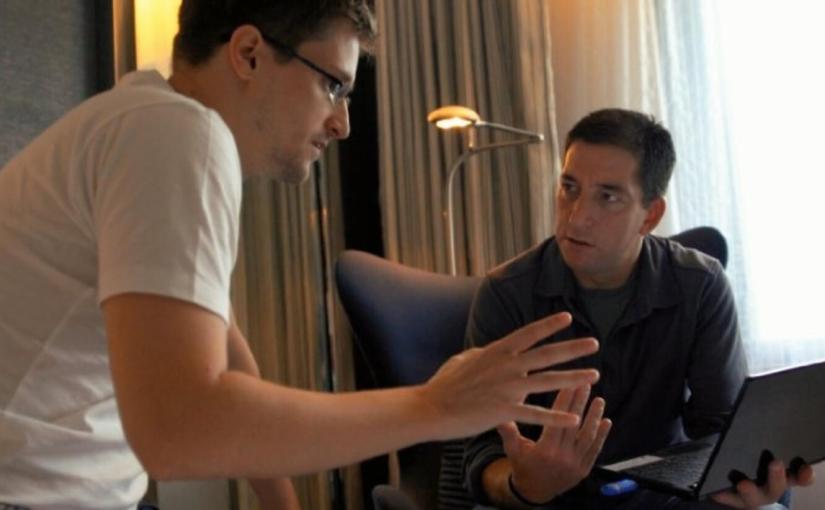
Tonight, I finished watching Citizenfour, a documentary about the first week or so of the Edward Snowden whistleblowing controversy.  In direct opposition to the other documentaries I’ve seen recently, this film steadfastly avoids narration and simply presents the facts as they happen.  As I was watching, I was simply absorbed in the storytelling, and after it was over, it occurred to me that this documentary captured something incredibly rare: the first few days of a national scandal, behind the scenes with the actual person blowing the whistle, BEFORE the story breaks.  It was captivating.

But that sense of being a fly on the wall is nothing compared to the revelations Snowden made.  If you’re politically-minded, Citizenfour is not just revelatory; it’s chilling.  If one-tenth of what he discusses just in this film is true, the ramifications are vast.  I don’t want to sound like a conspiracy theorist, but the secret surveillance programs Snowden describes are exactly the kind of tools needed to create a dictatorship.  When a government is using a program/algorithm/whatever that can follow your movements via phone calls, emails, e-payments, cell phones, laptops, etcetera…that’s a police state, empirically.

Snowden’s revelations are so mindblowing and voluminous that paranoia is the rule of the day.  He contacted Poitras and a reporter from The Guardian, Glenn Greenwald, via encrypted emails and air-gapped laptops and arranges to meet them in a Hong Kong hotel.  He makes a quick call to room service, then disconnects the phone.  Why?  Because, according to Snowden, the NSA has technology to listen in on conversations via a telephone handset, even when it’s hung up.  Later, the hotel’s fire alarm starts going off sporadically.  Snowden reconnects the phone and asks the front desk what’s going on, and he’s told it’s a scheduled test.  “Nice of them to let us know,” Snowden says.  Random event?  Who knows?  It’s a mark of how well the movie is constructed that seemingly innocuous events are transformed into, “They’re listening…”

The film follows the story, including the publication of the reports that eventually resulted in Snowden being forced to live in Russia for the better part of a year after his passport was revoked.  We meet Julian Assange as he organizes Snowden’s legal strategy along with a squad of ACLU attorneys, all working pro bono.

The genius of the film is how it simply presents the facts and allows the viewer to draw their own conclusions.  Is Snowden an attention-seeking charlatan?  Or was the US government actively spying – spying – on American citizens without their knowledge?  After a while, without really trying to, the movie takes on the air of one of those classic paranoid thrillers from the 1970s like The Parallax View and Three Days of the Condor.  At one point, Snowden logs into a laptop while covering his upper body with a blanket like a tent, presumably to make sure no one would be able to tell where he was by using the camera on his laptop.  Or something.

(Admittedly, we only hear snippets of opposing viewpoints, one from then-President Obama where he agrees that Snowden created a much-needed discussion but declines to call him a patriot because of his methods.)

But surely some of this stuff is a little too sensational, right?  The cynic in me wants to believe that’s the case.  But consider: The material in Citizenfour was so sensitive at the time that the director, Laura Poitras, had to move to Berlin because she kept getting detained by border authorities when trying to re-enter the US.  All the film footage was kept on encrypted drives to prevent access from…whomever.  In fact, she edited the movie completely in Berlin so the FBI couldn’t serve a search warrant for the drives.  Just in case.

At one point, Snowden and reporter Greenbaum carry on a conversation about another whistleblower, apparently inspired by Snowden, who seems about to release information about drone strikes and watch lists under Obama.  They are careful to censor themselves by not saying certain words and phrases out loud.  Instead, they write key phrases on pieces of paper and hand them back and forth.  And then the paper is torn to pieces.  Normally, this kind of thing would reek of paranoia, but considering what has come before, it seems perfectly reasonable, in light of what they’re discussing.

I gotta say…in all honesty, I may not be the best person to review this movie.  I think it’s well-made and eye-opening and informative, but is it going to make me change my online or cell phone habits?  Probably not.  I’m in my 50s, and I enjoy the convenience of Amazon Prime and paying my bills online and using my phone to pay for things when shopping.  Am I worried I’m being spied upon?  I suppose I should be.  But I’m not.  I guess I’m willfully ignoring facts, at least the ones based on this documentary.  I’m not saying I like it.  I’m definitely against it.  But is it enough to make me change my behavior?  If I’m being honest, no.  (And if I can’t be honest in an online review, where CAN I be honest?)  But, bottom line, Citizenfour is one of the finest documentaries I’ve seen in recent years. If you’re running short of things to be outraged about, look no further.

BLANCANIEVES (2012, Spain)

by Miguel E. Rodriguez

Director: Pablo Berger
Cast: Daniel Giménez Cacho, Maribel Verdú, Macarena García
My Rating: 9/10
Rotten Tomatometer: 95% Certified Fresh

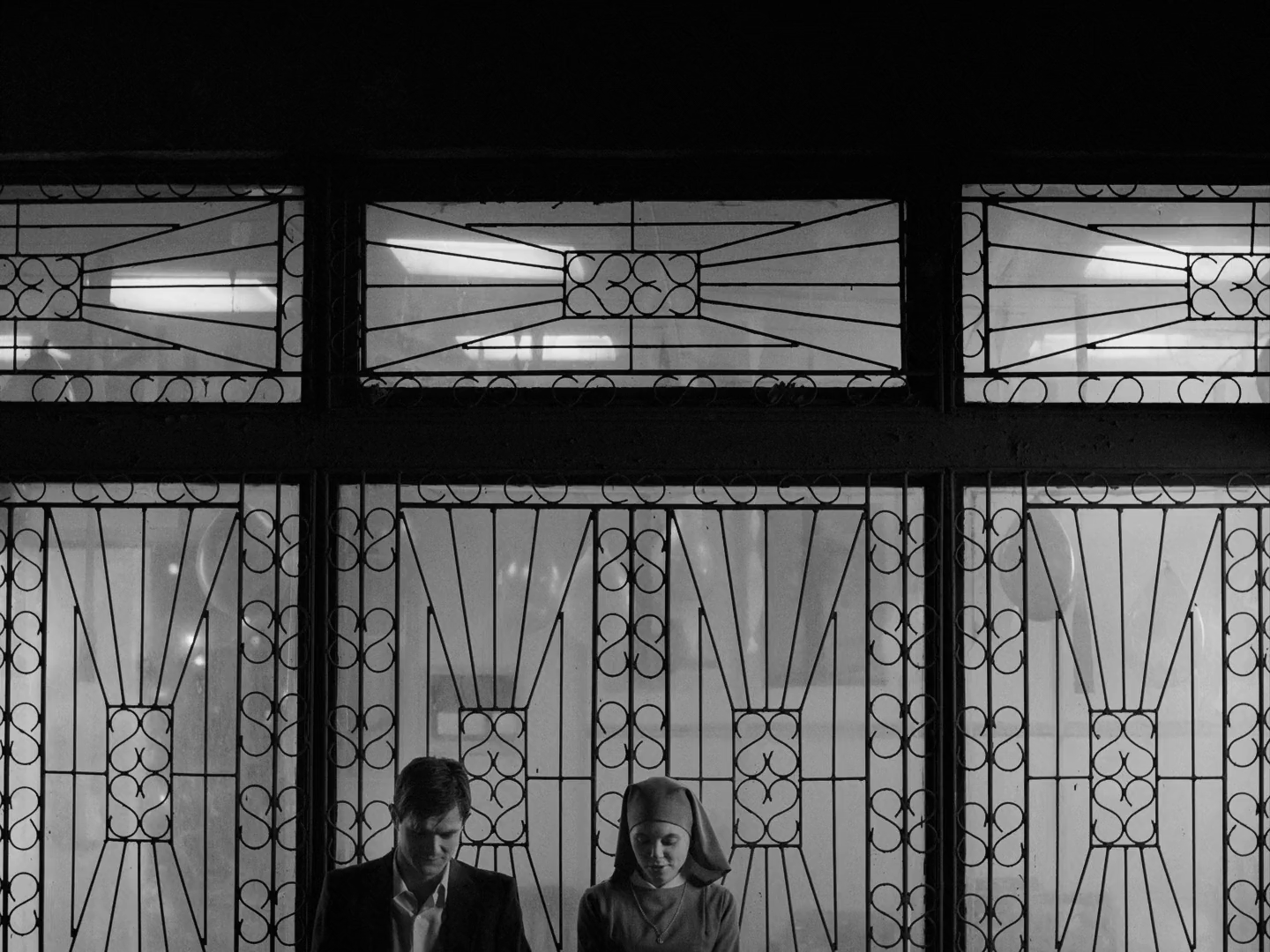
PLOT: A re-telling of the classic Snow White, Blancanieves is a beautiful homage to the black-and-white Golden Age of European silent cinema, set in a romanticized 1920s Seville.


If you are one of the 3 or 4 people in the world who have ever wondered what would happen if Terry Gilliam and Guillermo del Toro collaborated on a black-and-white silent film, your prayers have been answered.  Blancanieves is a beautiful anachronism, a black-and-white silent film created as a tribute to the silent films of nearly 100 years ago that gave birth to the motion picture industry as we know it.  The filmmakers have remixed the classic Snow White fairy tale by the Brothers Grimm into a movie that puts all the recent Disney remakes to shame.  THIS is how you pay tribute to your predecessors.

The updated story takes place in Seville during the 1910s through the 1920s.  Antonio, a famous bullfighter, is gored in the ring and paralyzed.  Traumatized by her husband’s injuries, his pregnant wife goes into premature labor and dies after giving birth to a daughter, Carmencita.  Antonio remarries to a scheming nurse, Encarna (Maribel Verdú, whom you may recognize from Y tu mama tambien or Pan’s Labyrinth).  Encarna, who gives gold diggers a bad name, manages to keep Antonio from ever seeing his daughter, who is raised by her grandmother.  But true to Brothers Grimm fashion, Carmencita (and her pet rooster, Pepe) eventually must come to live with her father and her evil stepmother, whose idea of caring for her paralyzed husband is to leave his chair in a sunny spot of the house while she indulges in a little S&M with the chauffeur.  Why didn’t we see THAT in the Disney version?!

If you know the story of Snow White, you know what happens next.  The insane jealousy, the trip into the forest, the attempted murder, her discovery by a group of little men (only six this time, and they’re bullfighter/clowns).  But everything is turned on its head slightly.  For example, she loses her memory, even forgetting her own name.  She remembers the steps to bullfighting, but she doesn’t know why.

We even get a scene with the infamous apple and the “Sleeping Death,” although the resolution to Blancanieves’s predicament is not quite what I was expecting.  It will take you by surprise, too.  I guarantee it.

This was such a charming movie to watch.  It was full of the kind of shots and edits that are typical of silent films of the ‘20s.  I won’t catalog them all here, but their usage really put me into the “vibe” of that bygone era.  I especially liked the liberal use of double-exposure shots to reinforce a state of mind, or to remind the audience of a piece of “dialogue.”  Or, most effectively, when Antonio reminisces about his dead wife.

And the actress who plays the adult Carmencita, aka Blancanieves, is one of the most beautiful actresses I’ve seen in a while.  For the record.  Films are heavily reliant on faces, silent films even more so.  They found the perfect face for this character.  A true beauty.

There were some nice quirks, too, that reminded me of Terry Gilliam more than anything or anyone else.  Among the six dwarves is one named Josefa.  Josefa is either a really ugly woman or a really bad drag queen.  In miniature.  Her name is mentioned, and that’s it.  No explanation given for her appearance.  We move on.

A word of warning: you know those stories you hear about how the Grimm fairy tales have been “cleaned up” or edited over the years either to remove the more gruesome elements or to tack on happy endings for kids?  Yeah.  Keep that in mind.  That’s all I’ll say.

I used to tell people that, if they’ve never seen a silent film before, The Artist (2011) is the place to start.  Having seen Blancanieves, I think I have to update my statement.  The Artist is a great deconstruction of the art of silent films, but it would be even better to start with a great example of the medium itself.  Sure, there’s always Chaplin and Lloyd and Keaton, but for someone who has historically shunned silent films, Blancanieves is an even better entry point.  It’s a little harder to find, but it’s worth the effort.

AMOUR (2012, Austria)

by Miguel E. Rodriguez

Director: Michael Haneke
Cast: Jean-Louis Trintignant, Emmanuelle Riva, Isabelle Huppert
My Rating: 9/10
Rotten Tomatometer: 93% Certified Fresh

PLOT: Georges and Anne have known a lifetime of love within their intimate marriage. Though their bond has survived the test of time, it’s about to meet its greatest challenge.


I’ve only seen three films by famed German director Michael Haneke.  The first was Caché (2005), which some may consider maddening, but which I think is a masterpiece of open-ended storytelling designed specifically to provoke arguments at the nearest Starbucks after the movie is over.  The second was The White Ribbon (2009), a pre-World War I fable about what happens when children give in to their tribal appetites.  I thought it was well made but a little too sedate, but it also won an unheard-of FOUR awards at Cannes that year, so what do I know.  (One day I’ll watch Funny Games [1997], but today is not that day.  Tomorrow is not looking good, either.)

Last night, I finished watching Amour, Haneke’s 2012 film that won Best Foreign Film at the Oscars that year, and the Golden Palm at Cannes.  After seeing three of his films, the one thing I can say about Haneke as a director is that he is apparently a perfectionist, who edits and composes shots as well as Kubrick, and that his subject matter is all over the place…also like Kubrick.  He also does not shy away from shocking the audience by lulling them into a kind of complacency before presenting them with a moment of violence or revelation.  Like Hitchcock, he plays the audience like a grand piano.

Amour tells the story of an octogenarian couple, Georges and Anne, still very much in love with each other.  They are retired music teachers living a quiet life of piano concerts, meals at the kitchen table, and reading the newspaper.  Georges might be a little more straightforward or curt than Anne, but they clearly know each other’s rhythms.  The style of the film clearly indicates their routines with a brilliant economy of editing and camerawork, not to mention the subtle performances from the two main actors.

One day, something happens at the breakfast table.  Anne and Georges are having a conversation over a boiled egg when Anne simply stops and stares into space.  Unable to get a response, even after dabbing a wet towel on her face, Georges prepares to fetch the doctor.  Suddenly Anne snaps out of her trance and wonders where Georges is going.  When he tries to explain what’s happened, she gets confused and angry with him for torturing her.  But when she tries to pour herself a cup of coffee, the coffee goes everywhere except in the cup, and suddenly her right hand seems to be trembling…

At this point, in years past, I would have probably turned this movie off, or returned it to Blockbuster without finishing it.  I can hear my inner monologue now: “Why do I need to watch an ultra-depressing movie about someone who’s dying?  I mean, I can hope that it has a life-affirming message at the end like Philadelphia or Angels in America, but this is a foreign film that won awards at the Oscars AND at Cannes, so chances are it’s going to end on a down note.  Who needs it, am I right?”

Well, Amour may not have the kind of crowd-pleasing finale one might hope for, but it is nevertheless engrossing, quietly devastating, and even a little terrifying.

…you can’t see it, but I’m very frustrated right now.  I’m trying to figure out how to write the rest of this column and it’s eluding me.

With a movie like this, an analysis of its technical prowess seems irrelevant.  I learn from the extras on the Blu ray that the couple’s apartment was constructed entirely on a set with a big green-screen backdrop.  Haneke wrote the script with his parents’ apartment in mind, so it seemed appropriate to just recreate it on a soundstage.  How does this contribute to the story?  I honestly don’t know.  I would imagine it enabled the filmmakers to control every aspect of lighting so that anything involving scenery through the windows felt as if it was real.  So I guess there’s that.

My problem is that this movie is intended very specifically to make you empathize with the characters.  It does this job very well.  It was a pleasure to watch a great film with great characters in the hands of a great director.  But if I’m going to talk about how the movie made me feel…I guess I must be honest and say it didn’t exactly make me feel good.  It didn’t make me feel bad, exactly, just really, really sad.

There is a kind of sadness I can feel at certain kinds of films (The Remains of the Day and Requiem for a Dream come to mind) where the endings are so mind-blowingly sad, and so unexpected, there is a kind of emotional exhilaration that accompanies the sadness.  I am so wrapped up in the story I have left real life behind, but after the movie is over, I am back in the real world, and I am stoked to tell someone about how great the movie is, despite its dark material.

With Amour, though, when the end of the film arrives, and I’m back in the real world…I still felt like I was in the movie.  Because, in a way, the movie is about me.  About all of us.  One day, I will (finally) grow old and eventually die.  Watching the scenes where Georges stares into Anne’s eyes as her body functions waste away and he reluctantly hires a nurse who is stronger than he is because Anne has lost the use of her right side and must be carried out of the wheelchair to be bathed?  Listening to the conversation when Anne says point blank that she sees no point in going on living if she’s going to be such a burden?  Watching Anne’s face when the nurse turns her in her bed to demonstrate to Georges how to put on her diaper?

Watching these scenes, I wondered how I would feel myself if I were to succumb to something similar.  I tell myself I would want to live.  There’s a line in Full Metal Jacket: “The dead know only one thing.  It is better to be alive.”  But what if I got as sick as Anne does?  What if I lost the power of speech?  What if I lost the ability to type with both hands, as I’m doing right now?

I’m not even sure that is the point of the movie, to make me reflect on my own mortality.  It’s said that Haneke made this movie to honor his aunt who suffered a degenerative disease as Anne does.  The title of the movie is Amour, so maybe I should be writing about the great love between Georges and Anne.  But whenever I think about that aspect of the film, I fall back into thinking about myself again.  It’s a vicious cycle, and I’m not sure how to break it.

I’m making this movie sound depressing to the nth degree.  I suppose it is, by default, but it is still definitely worth your while to watch.  It is so well made and so thought-provoking.  It deserves to be seen and discussed, ideally with someone you love.  I don’t agree with every decision made by the characters in this film.  But I understand why they were made, so I do not judge them.  One day, I will get old, and I will think back to this movie and say to myself, “Now I really know how they feel.”


P.S.  The only reason I don’t rate this movie 10/10 is because there’s a brief prologue involving an empty apartment and a bedroom with a single occupant that, to me, telegraphed a key moment that I saw coming a mile away as the scene unfolded.  But that’s just me.

FANTASTIC BEASTS: THE SECRETS OF DUMBLEDORE

By Marc S. Sanders

That’s it.  I’ve had it.  Enough already.  After three unnecessarily long movies, if you can’t get it right then what’s the point anymore?

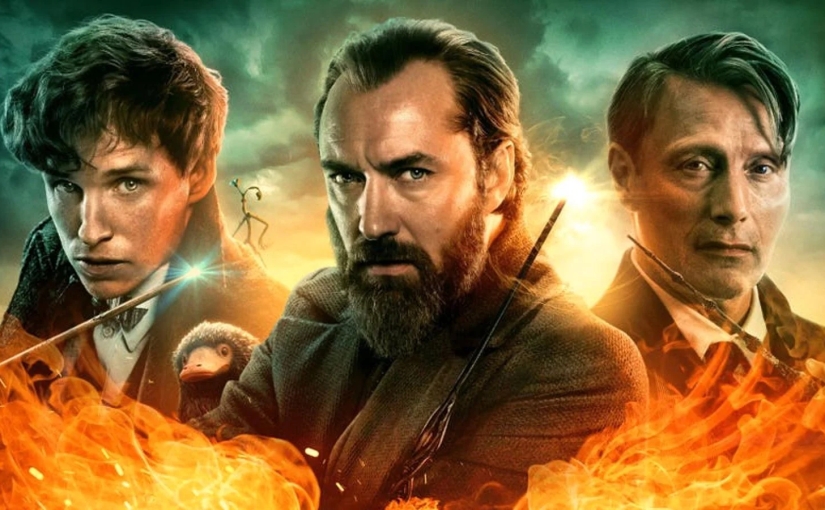
Fantastic Beasts: The Secrets Of Dumbledore, the third film in the Harry Potter prequel series, is an absolute failure beyond any magical or Muggle measure of comprehension. It operates with the same handicaps that crippled the prior installment, The Crimes Of Grindelwald, and maybe picked up an additional dozen or more problems along the way.

I don’t understand it Warner Bros.  Following the abysmal reviews of the prior film and the tepid overall assessment of the first, why, with all the monies at your disposal, would you settle for a boring piece of production work like this, all over again? This new film’s main attraction is simply men in dull grey wool suits and overcoats speaking to one another in quiet English whispers.  Every so often they do something quirky like pull a wand out of their pocket.  Fleetingly, they use them.  How novel. 

It boggles my mind that this world from Rowling’s colorful imagination was at one time intended for pre-teens and young adults.  I’ve seen political debates or Sunday morning commentary programs with more flair.

The fault in these films holds primarily with the creator, J.K. Rowling, and David Yates, the director that’s helmed the last four Potter films and all of the Beasts films up to date.  I’m so exhausted in saying it.  ROWLING NEEDS AN EDITOR!!!!!  There is so much fat on this meat that is impossible to swallow.  Someone needs to speak up and advise her to save this scene and that scene for the DVD extras.  One curse that this film suffers from is the exact same thing that the second film dealt with.  A background story is told, with a majestic fade up and fade down and fade up again flashback.  It takes a good five minutes to tell this tale, and then someone else chimes in and says hold on, that’s not how it happened at all.  Then a new character starts from the beginning and apparently tells us the real story as it truly occurred.  Why in the hell should I trust this new character if you’re now telling me not to believe the lies of the former?  Fodder like this stretches this fantasy towards a distant two- and half-hour mark, though it feels like four.

David Yates has always been a problem.  Look, I know nothing about a camera or the most up to date technology in filmmaking or digital making, but I’ve seen enough special effects laden films in my time.  The prologue to this film commits the same visual atrocity as the prologue to the prior film.  Here, our main hero, Eddie Redmayne’s Newt Scamander – a magic zoologist – is observing a magical deer like creature deliver her offspring.  Suddenly, some other magic figures come upon the sight and attempt to zap the creature and Newt with their wands.  It’s the middle of the night amid a dense forest/jungle of thick plant life and trees.  We see flashes and blurs.  We hear ear piercing sound effect swishes, and the music from James Newton Howard (which is quite good) carries to a high volume.  Just like the last film, though, action scenes like this are murky.  It’s like the lens is covered with the bottom of a soda bottle filled with vinegar.  I can’t tell who is chasing who or who is zapping who, who dies or who lives.  Yates is not doing any favors for what bills itself as fantastical adventure.  When he isn’t shooting action scenes like this, his direction seems to perform on cruise control at a top speed of 15 mph.  There’s little drama or interest in any of the speaking scenes that drag on and on.

The movie’s story picks up with whatever cliffhangers were left from the last time.  It’s really not necessary for me to recap.  They hold little relevance here. 

Basically, Grindelwald (Mads Mikkelson, now taking over from a controversial Johnny Depp) is getting his bearings together with the troubled young man Credence (Ezra Miller) who we were told earlier is the brother to the Albus Dumbledore (a well-cast Jude Law).  Once again, Dumbledore recruits his former prized pupil Newt Scamander to locate the criminal Grindelwald and defeat him.  Newt assembles his brother, his assistant (neither of which we hardly get to know; so why should I disclose their names) and his Muggle baker friend Jacob Kowalski (Dan Fogler). Two more new characters round out this fellowship.  However, if you are looking for a real, solid fellowship, go back to those movies where the characters go after a plain gold ring.  That is fantasy at its finest.  This is the back story of a National Geographic issue found in your grandmother’s attic.

A whole lot of nothing happens for long stretches of time.  Grindelwald has managed to get the criminal charges against him dropped, and arranged to become a viable candidate to be elected the head of the magical world.  That spells trouble though, as he believes in complete genocide of the entire Muggle/No Maj population.  Dumbledore, his former lover, stands on the other side of that debate.  What does this have to do a with a magic deer that was delivered many moons ago when this movie started?  Well, you find out……….eventually, but your patience will be shot to hell.

Only one good scene in the film works on a sort of mischievous Spielberg direction (like the Cairo sequence in Raiders) where a “shell game” with various suitcases is passed around through a small village.  This turns up in the third act and finally we see some fun magic arrive.  Wands are lit up that trap one wizard in a transparent brick wall.  Props are turned into glass globes to trip over, and the characters smirk at one another through the hijinks.  This one scene provides some welcome reminiscence of Quidditch and other prop pieces from earlier Potter films. Until this moment, no one is enjoying themselves in this movie.  There’s next to no humor or cuteness from Newt’s assortment of magic wildlife. There’s no discovery from any magic spells.  Dumbledore doesn’t even have any secrets to disclose, save one. 

Yates and company fail as well with the details.  When we get to visit Hogwarts, it’s terribly boring and dull.  There’s no interesting Easter eggs or wonderment to savor.  No new rooms or tunnels to uncover.  No silly spells or magic props or ghosts to engage with. 

A glaring part of this new series is also conspicuously missing.  Tina (Katherine Waterston), puppy love interest of Newt, is hardly seen nor acknowledged.  Her role was a large part of the first film, minimized in the second film and only welcomed this time as a close up with no more than four words of dialogue.  Maybe not even that much.  Why establish this romance angle for the hero, if she’s hardly to be used?

The one error that really stands above all else is Grindelwald played by Mikkelson.  This is such an underrated character actor destined to be in every popular film franchise.  He’s done Marvel, James Bond, Star Wars, now Potter, and he’ll be in the new Indiana Jones film.  I welcome him to have this role in the Beasts series.  Yet, he looks nothing at all like Depp’s appearance.  Mikkelson just wears a grey wool suit and tie with an overcoat.  Depp had bleach blond hair and pale white skin for a foreboding albino characterization.  I’m not suggesting a complete duplication of what was formerly seen, but there’s a huge difference in looks between the two actors who have now occupied this part.  Reader, when there’s an absence of story, mundane dialogue and distorted visuals to settle for in a big budget movie, this is where my mind is going to run off to.  Mikkelson looks like he’s showing up for a read through rehearsal before the full-dress performance.  At the very least, couldn’t you dress the guy in the same unusual silk vests and fabrics that the other guy wore?  Put the different colored lenses in his eyes?  It truly makes me wonder if there was a stipulation in Mikkelson’s contract – he’ll do the role, but he refuses to look like a clown.  You just can’t not see how far apart this is from what’s been traditionally shown already.

Two more films are promised to be released in this prequel series.  Really? Another two more near three hours pieces of tripe?  Well, according to my Potter versed daughter, it has to be that way.  These films take place near the end of the 1920s.  There’s the climactic showdown that must be depicted between Dumbledore and Grindelwald though, and according to Rowling’s timeline, that occurred in the late 1940s. 

So, we got another twenty or so years of this.  Friends, watching these three films, I feel as if I’ve gone about sixty.

A SEPARATION (2011, Iran)

by Miguel E. Rodriguez

Director: Asghar Farhadi
Cast: Payman Maadi, Leila Hatami, Sareh Bayat, Shahab Hosseini
My Rating: 10/10
Rotten Tomatometer: 99% Certified Fresh

PLOT: A married couple in Tehran are faced with a difficult decision – to improve their daughter’s life by moving to another country or to stay in Iran and look after a deteriorating parent who has Alzheimer’s disease.


The above plot description, paraphrased from IMDb, is rather brilliant because it is misleading in all the right ways.  When I read it, I assumed I would be in for a depressing domestic drama, a la Marriage Story or Kramer vs. Kramer.  It won Best Foreign Film at the Oscars that year, so that only strengthened my belief that it would be a fine film, but also a bit of a slog.

Boy, was I wrong.  That plot description covers just the opening four or five minutes of the movie, an incredibly nuanced, brilliantly acted, uncut take of the two spouses, Nader (husband) and Simin (wife) arguing in front of a judge.  Simin wants to move out of the country so their daughter, Termeh, can have a better quality of life.  Nader has no problem with them leaving, per se, but he cannot go because he must stay and take care of his elderly father who suffers from Alzheimer’s.  If Simin wants to go so bad, let her go, he says, but he won’t give permission for Termeh to go with her.  And Simin won’t leave without Termeh.  It’s a pickle.  (For her part, Termeh wishes to stay with her father, but Simin says that’s only because she doesn’t know any better…how depressingly typical of parents going through a separation.)

After this brilliant scene, I was ready for the movie to settle into a series of one scene after another showing Nader and Simin arguing over custody of Termeh.  Instead, the script ingeniously takes a bit of a left turn and focuses on the woman Nader has hired, Razieh, to be caretaker for his sick father, because Simin, in a move unexpected by me, packs up and moves out.  Razieh wears a traditional chador, and so Nader is unable to tell she is pregnant, which might have affected his decision to hire her.

Razieh does her best with Nader’s father, but the long commute and the difficult work takes its toll.  One day, Nader comes home from work and discovers his father has fallen out of bed, with one hand tied to the bedpost with a piece of cloth, and Razieh is nowhere to be found.  He also discovers some money is missing.  When Razieh returns, she is cagey about why she left, but she insists she stole no money.  Nader is furious and tries to throw her out of his house.  When she insists she be paid for the day’s work and continues to maintain her innocence of the theft of the missing money, Nader loses a little control and pushes her out the front door of their third-floor apartment and onto a staircase.  She walks away, but later winds up in the hospital – she has suffered a miscarriage.

What follows is one of the most engrossing social dramas I’ve ever seen in my life.  I suspect part of my insane interest in the story was the fact that it takes place in a country thousands of miles away, in a culture that is utterly alien to me, and yet the people there are just like any parents and children and husbands and wives we meet every day here in the States.  Razieh’s husband, Hodjat, even has a line: “Why do you think we beat our wives and children like animals?  I swear on this Qur’an, we’re humans just like you!”  He’s talking to his accuser, but he was also talking to me.

The film is shot with mostly handheld cameras, a technique that works extremely well by making everything feel like a documentary.  It makes things feel more real in a story that only works the more you empathize with the characters.  I empathized a great deal, not because I am a husband or a father, but because I recognized their situation, faced with an impossible decision where each person is right and wrong simultaneously.  In the ensuing plot developments, which I will not disclose here, I was so wrapped up in the lives of these people that I found myself reacting the way old school sit-com housewives might respond to watching their favorite soap operas while folding laundry.  “No WAY did he just say that!  …oh my god, lady, you’re just making things WORSE!  …jeez, this guy is CRAZY…!”

This was an unexpected reaction for me.  In years past, I have tended to shy away from foreign dramas after watching one called 4 Months, 3 Weeks, and 2 Days about women in ‘80s-era Romania forced to seek illegal abortions due to their country’s ban on the practice.  I’m not denying that film’s power, but it was so insanely depressing that I swore off foreign films for a while.  It’s only in the last couple of years that I’ve started to come back around to giving films like A Separation a chance.  It hasn’t always paid off, but I’m happy to say it did this time, in spades.

I should note that the story is also extremely revealing in terms of the legal system in Iran.  I can’t vouch for its accuracy, of course, but it all feels very authentic.  In a governmental system so intertwined with religion, it’s easy to see how decisions that are made based on religious statutes may be technically correct without being just.  Just another dimension to the film that makes it even more compelling to watch.

But there is another aspect of A Separation that I believe is even more profound than the engrossing domestic drama.  I’m not even sure if it was intended by the filmmaker.  I’ve read snippets of reviews from other top critics, and none of them seem to have touched on my theory.

[SPOILERS FOLLOW]

In my opinion, A Separation could be interpreted as an allegory of the impossible choices faced by anyone living in such a country or circumstances who yearn for a better (or at least different) life elsewhere, but whose ties to their roots and traditions make such a decision extremely difficult.

Look at the husband in the story, Nader.  He states repeatedly that he has no problem with his wife leaving.  If his father weren’t sick, he would be more than happy to go with her.  But his father needs constant care, and so his familial connection dictates his decision.  There is a telling moment when Nader is bathing his father by hand, while the father sits in a wheelchair, virtually oblivious to his surroundings.  Nader dutifully rinses his father’s body and leans him forward to so he can reach the bottom of his back…and he abruptly stops and starts to weep.  Is he weeping for his father?  Or himself?  It’s one of the film’s many “fill-in-the-blank” moments that we must interpret for ourselves.  For me, I believe it was over the fact that his decision to stay, motivated by love and duty, has resulted in years of caretaking.  He’s committed to it.  But it’s also profoundly sad.

Now look at the wife, Simin.  She believes her daughter, Termeh, will be better off in another country where she doesn’t have to worry that some man might take out his anger on Termeh while at school or walking home from school.  But Termeh insists on staying with her father.  Simin’s choices are to stay and be unhappy, or leave…and be unhappy without her daughter.  She adopts a middle ground by simply moving to her mother’s apartment while she works on convincing Termeh to come with her.  In the grand scheme of things, as a function of the allegory I have in mind, she represents the person who wants to leave and is held back, not by duty, but by the fact she won’t leave her daughter behind.  There’s a piece of her in this place, and she’s free to leave it if she wants, but she’ll never be the same.

How many people in other countries and other circumstances are faced with similar choices?  How many people in our own circles are stuck in marriages or family situations where leaving appears to be the best option on one hand but an impossibility on the other?  I could say that I’ve had similar situations in my own past with such a decision, but it was certainly nothing on the level of leaving my roots behind and moving to another country.  I can’t imagine the struggle and conflict for anyone facing that kind of choice.

A Separation takes that struggle and wraps it up in a movie that, even if it weren’t so perfectly symbolic, could stand on its own with any other film from any other country.  At the end of the film, the daughter is asked, point blank, which parent she would rather live with.  In what would ordinarily be a frustrating moment, we are not shown what she chooses.  It is left to us to imagine her choice.  Or maybe not.  Maybe we are meant to see what it’s like to be faced with an impossible choice, when neither option is better than the other and someone will get hurt either way.

The question isn’t, “What will she choose?”  The question is, “What would you do?”

THE PRINCE OF EGYPT (1998)

by Miguel E. Rodriguez

Directors: Brenda Chapman, Steve Hickner, Simon Wells
Cast: Val Kilmer, Ralph Fiennes, Michelle Pfeiffer, Sandra Bullock, Jeff Goldblum, Danny Glover, Patrick Stewart, Helen Mirren, Steve Martin, Martin Short (whew!)
My Rating: 10/10
Rotten Tomatometer: 80% Certified Fresh

PLOT: Egyptian Prince Moses learns of his identity as a Hebrew and, somewhat reluctantly, realizes his destiny to become the chosen deliverer of his people.


I sat down to watch The Prince of Egypt for the umpteenth time today, ostensibly in honor of Passover, but really it’s just an excuse to watch it again.  In the 24 years since its release, it’s become one of my favorite animated films.  I started out thinking it was a gimmicky cash grab.  Then I realized how majestic the score and songs were (by Hans Zimmer and Stephen Schwartz, respectively).  Then I came to appreciate how effectively it humanizes the Exodus story, so it becomes something more than just an excuse for some crazy visual effects.  Then I looked more closely at those visual effects and realized how magnificent they are, too.

So now it’s a treat when I watch it.  But something rare and unexpected happened to me when I watched it today.  Before I get into that, though, for anyone who may still be unfamiliar with this marvelous film…

Moses (Val Kilmer), a prince of Egypt, younger brother to Rameses (Ralph Fiennes) and son to the great Seti (Patrick Stewart), is comfortable with his place in the world.  One day, he comes across Miriam (Sandra Bullock), a Hebrew slave who boldly informs him he is not Egyptian.  He is, in fact, the son of a Hebrew slave woman who set him adrift on the Nile River to spare him from the bloody purges ordered by Seti, the man he calls father.  Disturbed and conflicted, Moses unthinkingly kills an Egyptian slave driver in a heated moment and leaves behind the only family he’s ever known to face his fate in the desert.

There he meets Tzipporah (Michelle Pfeiffer), a Midianite girl on whom he showed mercy earlier, and her family.  Embracing his new Hebrew identity, he marries Tzipporah and becomes a shepherd.  Time passes.  One day, Moses is searching for a lost sheep when he is confronted with a strange sight: a bush that appears to be, not burning, but covered in cold white flames, nevertheless.  To his shock, a voice speaks from the bush.  It is the God of his ancestors, and He is displeased with how His people are being treated in Egypt.  He commands Moses to go to Egypt and tell the pharaoh to let His people go…

Need I go on?  The staff, the plagues, the blood, the angel of death, the pillar of fire…it’s all presented here in spectacular fashion.

When DreamWorks first announced plans to make what basically amounts to a musical version of The Ten Commandments, I was skeptical to say the least.  I even remember what theatre I saw it in: the Ybor Centro movie theater in 1998.  I sat through the movie, and I allowed my skepticism to color my entire viewing experience, right up until the sensational Red Sea parting, which even now is one of the great animated sequences of all time.  But aside from that, I felt The Prince of Egypt was all flash and no substance, a way for an upstart movie studio to get people into theaters with an overabundance of star power and little else going for it.  But after watching it on home video repeatedly…I mean, REPEATEDLY…I started to analyze it a little more.

The first thing that really renewed my interest and appreciation for the film was the humanization of the main characters, particularly the relationship between Moses and Rameses.  Moses is no movie idol in this film.  He’s just a man.  Kind of a scrawny man, too, not classically handsome like his brother, Rameses.  Where Moses looks a little spindly and frail, Rameses looks like he lifts weights, or whatever folks did back then on “arm day.”  I also like how the movie allows these two men to behave and relate to each other like real brothers might.  They race chariots down city streets, needle each other, call each other names, play pranks on the high priests, the whole nine yards.  It’s a dynamic the two men surely must have shared as brothers growing up, but it never gets addressed in other interpretations of the story.  Because we get to see how much they love each other, the scene where Moses reluctantly turns his back on Rameses carries so much more weight than we might be accustomed to seeing.

This dynamic comes full circle when Moses returns to demand freedom for the Hebrew slaves.  Rameses is now pharaoh, and laughs at Moses’ demands, wondering what his “angle” is.  And then, when the plagues are visited upon Egypt and the city has nearly crumbled, the two men share a scene of astonishing power.  Rameses sees his city in ruins, but ruefully remembers how Moses used to get him out of trouble when they were younger.  It’s a wonderfully human moment.

The second element of the film that sparked my renewed interest was the music.  At the end of the opening number, which is itself emotionally powerful on several levels, a solo female voice sings out, “Deliver us!” right at the end of the song.  I can no longer remember a time when that moment didn’t give me goosebumps.  The score by Hans Zimmer is magnificent.  There is one particular motif of a choir of voices that we hear whenever we are in the presence of something holy or mystical, and even that gives me goosebumps.  Another moment that deservers recognition is during the big number, “When You Believe,” as the Hebrews are flowing out of Egypt.  At one point, the song is replaced by a Hebrew folk song, “Ashira L’Adonai,” sung by a little girl.  Her voice is joined by several others, and then a few more, and then a whole choir, and then the whole orchestra comes in for a reprise of the chorus, and if you don’t get goosebumps at that moment, you need a vacation.

The third element that keeps me coming back to this movie is the visuals.  True, the CGI visuals are relatively primitive compared to what was going on at Pixar around the same time.  The chariot race between Moses and Rameses features CG chariots which you may notice have wheels that don’t always turn while the chariot is moving.  This was an aspect of the film that led to my early dismissal of it.  But then came the Angel of Death scene, with a hole literally torn in the sky and sinister tendrils pouring out of it and into the village streets.  And then came the eye-popping Red Sea sequence.  More so than any other version I’ve seen, The Prince of Egypt made me feel in my bones that, yes, THIS is what it would have looked like if uncountable tons of water were parted down the middle, clearing a path large enough for the entire Hebrew nation to walk across.  (Depending on who you ask, that number could have been up to two million people, so we’re talking about a WIDE path.)  As they walk between the two massive walls of water on either side, lightning flashes illuminate sea life swimming alongside them, including some really large fish.  Now THERE’S something you don’t see every day.

So, yeah, the movie is amazing.  People may quibble about its historical inaccuracy, or the liberties it may take with certain religious beliefs.  But that does not diminish its power in the slightest bit.

Which brings me back to what I mentioned in the opening paragraph:

I sat down to watch the movie today, and for reasons I can’t explain, the opening scenes were bringing a lump to my throat.  That solo female voice singing “Deliver us!” nearly brought a tear to my eye.  And it nearly happened again after a wedding song.  And again, when Moses is leading the Hebrews out of Egypt to the strains of “When You Believe.”  And when Moses slams his staff into the shallow waters on the banks of the Red Sea, and those waters shot up into the air and kept going and going…my God, man, I nearly lost it.  I was one thread of self-control away from going full-on blubber-fest.  I mean, I grabbed my chest like a Victorian lady reading a Jane Austen novel.  In the middle of my emotional experience, I kept asking myself, “What is WRONG with me?!”

The answer is, of course, nothing is wrong with me.  I was just in exactly the right frame of mind to have a borderline religious experience while watching a movie.  It’s the same when I watch the finale of Fantasia 2000, when the sprite erupts from the ground in a gesture of pure joy.  Or when Riley learns the importance of experiencing sadness at the end of Inside Out.  Or any number of other transcendent films that can put me right in the middle of the story emotionally.  The Prince of Egypt does exactly that through a well-managed mixture of story, visuals, and music.  It may not be perfect from a technical standpoint, but it gets me where it counts, and that’s all that matters.

WITNESS

By Marc S. Sanders

Recently, I viewed The Last Emperor and one issue I had was that it was challenging to comprehend the in-depth culture of the people it depicted. I really wanted to learn and pass the final exam with flying colors. Sadly, this was an AP class that I just wasn’t qualified for.

Now that I have watched Witness for the first time in many moons, I can honestly say there is an approach where you can get absorbed in a thrilling crime drama while also appreciating the core values of the community the film focuses on, namely the Amish who reside in the state of Pennsylvania. It’s a much easier film to learn from. That’s for sure.

Peter Weir directed Harrison Ford to his only Oscar nomination to date. Ford plays police officer John Book, opposite Kelly McGillis as Rachel Lapp, a widowed Amish mother traveling by train from home to visit family. At a layover stop in Philadelphia, her young son Samuel (Lukas Haas, in one of the best child performances I’ve ever seen, so bright, observant and wide eyed) witnesses a murder committed by a decorated narcotics police officer (Danny Glover). When Book gets wind of who the cop is, all three of their lives are in danger and they are forced to flee and hide back at the Lapps’ home among the Amish community. Book, however, has taken a gun shot wound following an attempt on his life. The Amish see no choice but to heal him, especially at Rachel’s insistence.

Weir, with a marvelous script by Earl & Pamela Wallace and William Kelley, shows the intersection of two extremely different ways of life where an “Englishman’s” belief in aggressive tactics conflicts with the peaceful nature of people looking to never get involved with any other culture. A romance may seem inevitable between the two leads but it’s a difficult one to embrace. It’s truly forbidden, not simply by the elder Amish and their respective code, but both Book and Rachel know it can’t happen either.

Because we are aware of this forbidden romance that seems to break through anyway, there’s a terrific dance scene at night lit only by headlights within the barn. Ford and McGillis really shine through in this scene as it is the first escape from the fear they have for their lives and the code they honor and are reluctant to violate. It’s the best scene in the whole film. It presents possibilities for different people to interact despite the barriers that prevent such feelings and actions. They laugh and swing naturally. It’s a different kind of moment for Harrison Ford, unconventional when compared to a large majority of the action film roles he’s widely recognized for.

With a biting soundtrack of suspense from Maurice Jarre, Peter Weir also focuses on the theme of intrusion. When the climactic and certainly expected shootout sequence on the farm is to begin, it’s frightening and disturbing to actually see men in suits holding shotguns amid an unarmed society. There’s a masterful shot at dawn of the three men marching down the hill quickly approaching the farm. These aren’t cops being covert. These are cops storming a palace of peace and tranquility. It’s hard to watch because of the stain it leaves.

Josef Sommer is the lead dirty cop and he plays a great villain, truly an uncelebrated bad guy character, as the years have gone on. He’s a decorated officer who comes off with an intent that looks like it’s noble, until nobility will no longer work and intimidation has to set in. Weir shoots Sommer at a lower angle to give him an imposing height.

Ford is terrific. You see some of the Han Solo vibe in the character. He’s a tough cop after all, but then he transitions into an awakened man healed by the more primitive methods of the Amish and their drive to simply build and nurture. Another good moment occurs when Book contributes to building a barn with the other men. He shares lemonade with them. Assists with lifting the framework and hammering along. Two communities are no longer clashing. They are now blending.

McGillis is also very good in her role. She is determined to honor her background, but questions if she is capable of sin and defends her position later.

Witness gives an in depth look into the daily life of the Amish, literally how they farm, build and dress. Book wakes up with them before sunrise to milk the cow and he experiences what they endure from pesky tourists looking for photo ops. It makes for some funny moments as well as an opportunity to cheer for the stand he eventually takes.

Another funny moment is when Ford dons the Amish attire for the first time; it doesn’t exactly compliment him well at first. Book’s adaptability to his new community is awkward to grasp.

Witness presents a bird’s eye view into a very private way of living, and I saw a very large picture.

Beyond that, it’s also a crackling, good thriller.

THREE DAYS OF THE CONDOR

By Marc S. Sanders

Sydney Pollack is such a hero of Hollywood filmmaking. He was a terrific actor and a better director. As Three Days Of The Condor opens I got completely engrossed in its simple, yet frightening set up.

Joseph Turner (Robert Redford) arrives at his office where he works day to day as a “book reader.” He chats a little with his colleagues, jots a few notes down, and steps out the back door to pick up lunch for everyone. When he returns, he finds the entire office staff has been shot to death. This seems like a common day in the life of an Everyman, until it’s not. Alfred Hitchcock capitalized on this motif over and over again.

Turner makes a phone call and is asked for his code name, but before he reveals he’s known as “Condor,” he asks a very good question to the man on the other end of the line. Why is it so important that Turner reveals his code name, but the man he called doesn’t feel the need to share his own?

Having recently watched the film adaptation of The Firm with Tom Cruise, made almost twenty years after this film, I can see that Sydney Pollack knows how to not only build suspense very, very quickly but also how to maintain it too. Still, in both films the complications of the why and how become overbearing. With Three Days Of The Condor, it’s best to just watch the tight editing and well drawn characterizations all the way from Max Von Sydow as a disciplined assassin to John Houseman as the elder authority who relaxes himself with his tweed suit and bow tie behind a large table as the problems unfold. Cliff Robertson is Higgins, the contact for Turner. He’s serviceable in the part.

The entire first hour of the film is perfection; taut and gripping as we uncover what purpose Turner as a book reader serves, and for whom. The second hour found me feeling less engaged, regrettably. To aid himself, Turner kidnaps a woman shopping in a sporting goods store. Faye Dunaway plays Kathy Hale. He forces Kathy to take him back to her apartment where he hides out. Never would it occur to me that these two characters over the course of a day and a half would fall for one another and make passionate love. This is not that kind of movie, and yet there it is. Some producer must have said “Fellas, we’ve got Dunaway and Redford on screen. This is a no brainer.” Faye Dunaway is fine in the part. I bought that out of desperation Redford would hold her at gun point and force her to help. But, c’mon! Really? They gotta bang each other too????

As for the plot behind killing people, the film doesn’t work its way into car and foot chases. It relies on its wording. The problem for me is that Turner works it all out himself. There’s little reference back to earlier moments for an audience to connect the dots along with the hero. So when Turner realizes one of the motivations is in regards to oil trading, I was trying to figure when anyone said anything about oil to begin with. Revelations just seem to be pulled out of a rabbit’s hat at times. They could have said people had to be murdered because the price of milk went up by fifty cents, and that would’ve held about just the same amount of weight as oil. What ABOUT oil????? Nothing ever needed to be so explicitly discussed here.

Part of the fun sometimes in Hitchcock films, for example, is simply seeing the man unexpectedly on the run and then watching how he outwits his adversaries. Harrison Ford does that in The Fugitive. Tom Cruise did it in The Firm. Cary Grant did it plenty of times with Hitchcock. In this film, however, I never felt there was any need to explain. Once it tried to grow a brain, I thought sometimes less is more, because now I’m stuck feeling frustratingly confused amid a lot of convoluted mumbo jumbo, on top of an out of left field, unsubstantiated love sequence.

Three Days Of The Condor was one of the best, edge of your seat suspense stories I’d seen…until it wasn’t.

MEATBALLS

By Marc S. Sanders

Director Ivan Reitman with Bill Murray and writer Harold Ramis made a fantastic team. Their summer camp comedy, Meatballs, from 1979 is not one of the all-time greats but it’s still a fun romp through the life of young campers peddled off under the supervision of teen counselors for eight weeks.

Meatballs works as an excuse to allow Bill Murray to break free from his SNL restraints and allow his off the cuff humor to improv its way through. As the head counselor named Tripper, Murray gives hilarious loudspeaker announcements about the cafeteria lunch or daily activities. He also uses his CITs, with names like Spaz, Crockett and Fink to carry Morty (“Hi Mickey!”) the camp manager who’s sleeping in his bunk out into the woods, or the lake or high up in a tree for his morning wake up surprise. This is all Animal House lite.

A touching secondary story involves a lonely teen camper named Rudy (Chris Makepeace) to bond with Tripper. Though I enjoyed my summer camp days, I was much like Rudy, not an athlete. I was a fast runner though, and Tripper with the Bill Murray personality builds Rudy’s confidence during the film leading up to the climactic inter camp big race. It’s not necessarily a well-rounded storyline. It tidies itself up pretty neatly by the end, but it’s a break from the material shenanigans, in between. Look, even a film like Meatballs needs some semblance of story somewhere.

The fun comes in brief skits with Meatballs. There’s sing along songs like “Are You Ready For The Summer?” and the campfire favorite “We’re The North Star CITs!” There’s the hot dog eating contest, Spaz’ spoon water relay and the basketball game against the wealthy, neighboring camp who can’t keep their shorts up.

Meatballs is a movie that would be shot with better quality on an iPhone today, but the dated camp days of the late ‘70s remain cherished here, before we became reliant upon technology. It’s a time where we depended on the outdoors, without mom and dad, and getting into harmless trouble while making new friends and discovering our freedom and ourselves.

The original Meatballs still has some material that’s worth a watch, and it still makes me yearn for my cabin bunk days. It’s nice to reminisce and it’s all just fun.

THE BLACK HOLE

By Marc S. Sanders

In 1979, Walt Disney Studios must have felt compelled to respond to the resurgence of science fiction, following 2001: A Space Odyssey, Star Wars, Close Encounters…, and even Moonraker, with The Black Hole. Their contribution to the genre falls flat however with shiny looking, helmeted, stiff robots that hardly use their joints and even more stiff performances from the human cast. If these actors didn’t have dialogue to speak, I would have thought they were dead.

Maximillian Schell is the deranged James Bond villain reject Dr. Reinhart, resigned to helm the mad plot of this film. His long-lost space craft is found at the border of the mysterious black hole. His intent, now that he has converted his entire human crew into mind-controlled humanoids, is to enter the unknown void that’s ahead and discover its secrets.

The small crew of another ship that discovers him consists of Robert Forster, Anthony Perkins, Joseph Bottoms and a poor imitation friendly robot named V.I.NC.E.N.T. who resembles R2D2 in shape and talks in cliche with C3PO’s voice. Their lack of personalities boards the ship simply to listen to Dr. Reinhart’s insane plan to fly into the black hole. Then in the final 30 minutes, the band of heroes run away across the pointlessly long platforms of the lost vessel as it crumbles apart during its slow-very slow-descent into the hole.

This is a film that lives up to its title. There’s no one to really rescue here. No romance or swashbuckling. No one for the villain to threaten. No reason to stop this nut job from committing his own mad suicide; Reinhart could care less if this band is with him or not. Even John Barry’s (“James Bond”) music lacks harmony, as the film contains at most two of his compositions to play over and over again.

When none of the mainstay ingredients for adventure carry any weight, then what’s the point really?

The Black Hole was Disney’s way of pushing action figures with the menacing razor blade bearing red robot Maximillan and the hardly lovable V.I.N.C.E.N.T. I recall when I was a kid the merchandising hardly made a dent in pushing the agenda for this film. A film catered towards kids, but barely entertaining for kids. There’s a lot, a whole lot, of speechifying going on here, mom and dad. What kid would be interested in listening to old farts like Ernest Borgnine or Maximillan Schell just yak away?

The Black Hole is as nothing as its title suggests. A void of a film. A franchise or cultural impact never came to be from this movie, and rightly so.

Though I do recall my mom buying me the pop-up book adaptation of the film. I wonder if that’s a valuable collector’s item these days.