VALERIE

By Marc S. Sanders

Stacey Souther’s short documentary, Valerie, explores the colorful life of Valerie Perrine. 

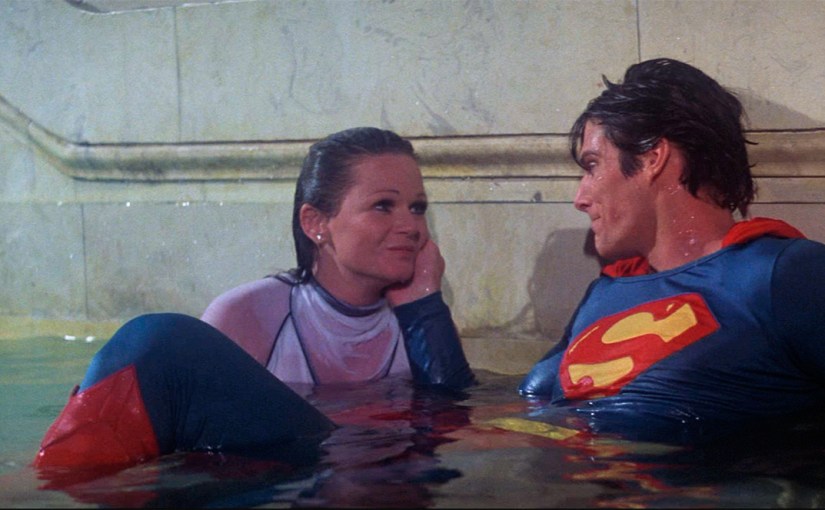
I must confess, up until I saw the film, the most I knew about Ms. Perrine was as “MISS TESCHMACHER!!!!!,” the adorable sidekick dame of Gene Hackman’s Lex Luthor from the first two Superman films.  Yet, in just 36 minutes, Souther offers a wealth of knowledge about the famed star that only motivates me to uncover her other accomplishments and films.  I already have her Oscar nominated turn in Bob Fosse’s Lenny, with Dustin Hoffman, cued up on my Roku.

Having watched Valerie twice, it stands to reason that this life could be covered quite well in a full-length biographical film adaptation.  I petition Souther to direct if that ever comes to light.  He provides a large selection of pictures and video footage that cover Perrine from childhood through her late teens and early twenties as a Vegas showgirl, on through her prime of adulthood in Hollywood films and then finally reaching her most recent years as she bravely lives with Parkinson’s disease.

On top of the photos, testimonials are weaved into the movie from co-stars like Jeff Bridges (The Last American Hero), directors like Richard Donner (Superman) and George Roy Hill (Slaughterhouse-Five), friends like David Arquette, Loni Anderson, Angie Dickenson, George Hamilton and Howard Hessman.  All have nothing but celebratory words of their experiences with her.  The comments are provided over film footage and photos of smiles and non-stop energy.  Souther makes it seem as if you could never be in a bad mood if you are standing next to Valerie.  Just watch her own the stage on The Tonight Show with Johnny Carson.  She belts out a scream of absolute fire that Johnny and Ed can’t help but applaud and cheer for. 

How fortunate that Stacey Souther was able to recover old interview footage and glimpses of times where Valerie offered up a comment on her philosophy of life.  In one televised interview, Valerie answers a question with “I have no worry about tomorrow…the fact that I don’t know what’s going to happen tomorrow, I’ve grown up with (it).”  Once the film concluded, this observation stayed with me.  Souther depicts Valerie in the past and her present time, as only being concerned with the now and never focusing on the unpredictability of what’s to come.  It takes real strength to approach each day you awaken with a purpose.  One time in her younger years, she’s captured answering a question with “It’s karma…look at the good things in life…”  Things like that are said to us all the time in fortune cookies or greeting cards, maybe.  When Valerie said it, I believed her.

Tragedy has also crossed paths in her lifetime having lost two boyfriends to violent and unexpected deaths.  Jay Sebring was one of the victims of the infamous murders committed by Charles Manson’s followers, which also included actress Sharon Tate and her unborn child.  According to the film, Valerie was actually meant to be at that gathering.  Yet was called away at the last minute for work.  These incidents are hard for her to recall, but it also opened a transitional door for Valerie to move on from Vegas and go to Hollywood for acting.  She may not have had any formal training, but that didn’t stop her from trying, and she succeeded.

Valerie is quite debilitated by the year 2014.  Her Parkinson’s wants to upstage her life and dominate her with uncontrollable shaking.  Still, she puts on her makeup and Souther inquires about her daily routine.  By this point it takes her a good forty-five minutes before she can finish applying.  It’s involuntary to notice her shaking before anything else, yet that doesn’t ever stop Valerie from maintaining a proper appearance. 

We see her eating a salad and her fork shakes in her hand as she brings it to her mouth.  Valerie comments on how this is not so easy when trying to eat soup.  Her delivery offers a sense of humor to this annoyance.  For my own attempt at empathy, I found it annoying for Valerie.  For the camera, Valerie will never admit it is annoying.  It’s just what she is living with today.

Valerie is described and admits to never having any inhibitions when she was a Las Vegas Showgirl, wearing revealing outfits or appearing topless.  She was also comfortable with the well-known Playboy shoot she did.  From this film, I learned that’s a skill of hers.  Because she does not carry insecurities, she is able to offer up the unglamourous life she endures today as a woman with Parkinson’s.  Souther captures moments where health professionals are getting her comfortable in bed and she may not be completely dressed.  There are times where she is lifted in a harness and it looks anything but graceful.  Often, she is responding to interview questions and her voice is raspy and shakes.  The film shows that Valerie Perrine does not carry one bit of bashfulness.  She has never been shy.  So, whether she’s breathtakingly beautiful or physically unhealthy, she does not perform for the camera.  She only shows herself. 

I have to praise Stacey Souther for an especially telling moment in his short film.  Valerie goes in for surgery in an attempt to alleviate the shaking and tremors she’s experiencing.  Like always, she welcomes Souther’s camera in the hospital room just before she’s to go under.  Soon after the procedure is completed, we learn that Valerie is suffering from a Transient Ischemic Attack (TIA).  Blood was not flowing properly to her brain and thus she was dealing with neurological issues like poor vision, confusion and frequent unconsciousness.  To get an idea of this moment, Souther fades his film in and out of blackness.  At one moment, Valerie is tasked with simply saying her name and counting to three, but she just can’t do it.  As best as a film medium can provide, we get a sense of how lost Valerie must be during this period.  It’s a frightening moment, but again I went back to how she was described best; lacking any inhibitions.  Other subjects would have insisted that sequences like this be removed from the final cut of the film.  For Valerie Perrine, if a film is going to cover her life of ups and downs, then it’s going to cover everything.  This is quite brave of both Valerie and her director, Stacey, to cover.

Valerie’s younger brother, Dr. Ken Perrine, recollects memories of a vivacious childhood, as well as accompanying her to the Oscars, and then witnessing the health challenges she’s been facing since before 2014.  He’s as forthright as his sister.  A hard moment to watch is when he describes what it’s like to leave her home on any given day.  He wonders will this be the last time he ever sees her.  The film explores the beginnings of her illness in 2014 and goes through 2018.  Now, in 2022, Valerie is still with us and this feeling has likely never escaped Ken’s subconsciousness.  Illness of any kind is hard on the victim, but it’s also so trying on the loved ones as well.

I found out about this film from Valerie’s Facebook page.  I was only following her because she was a member of the Superman cast.  When she posted about the completion and upcoming release date for this picture, I jumped at the chance for an advance screening so that I could offer up a review.  The fact that Valerie still connects with her fans by means of social media with pictures and anecdotes inform me that she still lives life to the fullest.  The Parkinson’s never pushed her into hiding.  She stays out front with her makeup applied, adorable headpieces to wear and with her friend Stacey by her side, a camera pointing right at her.  Valerie Perrine is nothing less than an exceptionally triumphant woman.

Valerie is available now to stream on Amazon, iTunes, Appletv, google play and Youtube.   
STAR TREK III: THE SEARCH FOR SPOCK

By Marc S. Sanders

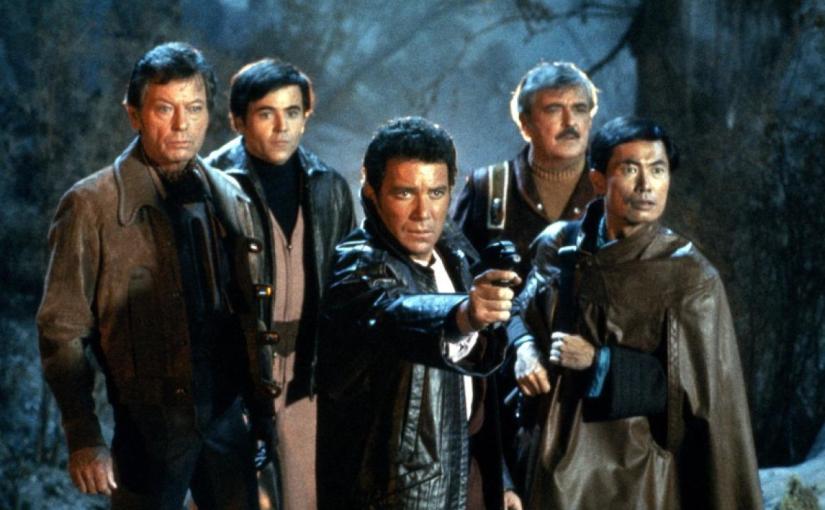
Leonard Nimoy accepted the director’s chair for Star Trek III: The Search For Spock.  Though background stories dictate that he was done with the famous character especially following the end of the previous film in the franchise, one hanging thread was left untouched to permit another chapter.  It’s fortunate that Nimoy worked with so much good, solid and well written material for him to oversee on this follow up picture.

The Enterprise is returning to Earth following its entanglements with Khan.  Admiral James T. Kirk (William Shatner) is morose following the loss of a close colleague. In addition, Dr. McCoy (DeForest Kelley) is mysteriously unwell.  Meanwhile, the newest invention, Project Genesis, is being thoroughly studied by Kirk’s son David and Lt. Saavik, now that it has formed a planet of its own.  Genesis has become a clandestine and highly politicized issue among the Federation Of Planets and it is not to be discussed in public arenas. 

Shortly after Kirk arrives home, he is approached by Spock’s father, Sarek (Mark Lenard).  They both realize that before Spock’s unexpected self-sacrifice, he left his “spirit” within the mind of McCoy.  Now McCoy is unstable in the current life and Spock’s afterlife is not settled as well.  Kirk and crew must find a way to escort McCoy to the planet Vulcan, along with Spock’s corpse that is resting on the Genesis planet.  So, without authorization, they hijack the Enterprise and off they go into the far reaches of space all over again.  It won’t be easy as Christopher Lloyd has been cast as a vicious Klingon who commands a Bird Of Prey ship that can cloak itself just before an attack. 

Due to the enormous popularity of The Wrath Of Khan and The Voyage Home (even numbered installments in the movie series), The Search For Spock doesn’t get the recognition it truly deserves.  People love to point out how the odd numbered installments are the weaker films.  Star Trek III negates that observation for me, though.  Maybe whatever dismissal it carries is also in part because it’s a short film and doesn’t feature the main attraction for many Trek fans, Spock.  Yet, Nimoy with a script written by producer Harve Bennett tackles some shocking developments in the continuing adventures of Kirk, Bones, Scotty, Sulu, Uhura and Chekov.  All these years later and two eye opening moments occur in the film’s third act where I tell myself, “Wow, I can’t believe they actually went there.”

The film has a very gratifying ending.  Yet, it ends with a couple of big cliffhangers.  Look, when Darth Vader revealed his big secret, moviegoers had to wait three long years to find out the backstory and what was really the truth.  With this third Star Trek film, there’s much to account for as to what will become of our first favorite science fiction crew.  Leonard Nimoy hit all the right notes leaving audiences wanting more.

Nimoy has directed a well-versed picture.  The film doesn’t just belong to Shatner this time. Though he’s just as marvelous as the last film.  He just has such a likable charm to him, and his dramatic moments can be heart wrenching.  DeForest Kelley is given good material here.  At times, his mental dilemma is a struggle for the character.  In other areas, his curmudgeonhood comes out for humor as he curses Spock for what he’s left him with.  It’s a humorous kind of sci fi prejudice (sort of like Archie Bunker) that made Spock and McCoy a good pair to traditionally watch spar with each other.  George Takei, Walter Koenig, Nichelle Nichols and James Doohan are blessed with moments as well that feature some funny one liners (“Up yer shaft!” and “Don’t call me Tiny!”).

It’s easy to regard the third film of a “geek culture” as just another film.  However, in its brisk ninety-minute running time, The Search For Spock explores facets of religion, albeit fictional, and debates with science and discovery.  If that’s not good enough for you, at least it’s also a helluva great adventure.

ROB ROY

By Marc S. Sanders

In Scotland, in the year 1713, Robert Roy MacGregor, the chief of the Clan MacGregor, protects his people from cattle thieves while trying to endure against starvation and minimal resources. Rob Roy was a leader but never looking to herald a cause. He just wanted to live day by day with his clan, along with his wife Mary and their two children.

Michael Caton-Jones directs Rob Roy with Liam Neeson as the title character and Jessica Lange in a strong performance as Mary. The film doesn’t move with the sense of sweeping adventure that I was expecting. However, that’s the point. Caton-Jones shoots Alan Sharp’s screenplay as a Rob Roy reluctant to rebel or wage war against a selfish monarchy that rules Scotland.

James Graham, Marquess of Montrose (the always effective John Hurt) agrees to lend Robert 1000 pounds to be paid back with interest. Rob is most grateful for the assistance that can help his clan. However, when Rob’s trusted friend Alan (Eric Stoltz) picks up the money, he is brutally murdered on his way back by Archibald Cunningham (Tim Roth, in maybe his best role ever).

Montrose, unaware of what has truly occurred, carries no sympathy for Rob’s predicament and obligates him to the original contract. Eventually, it becomes ugly as Montrose permits Archibald to carry out violent intimidation including slaughtering the clan’s cattle and burning down Rob’s home as well as raping Mary.

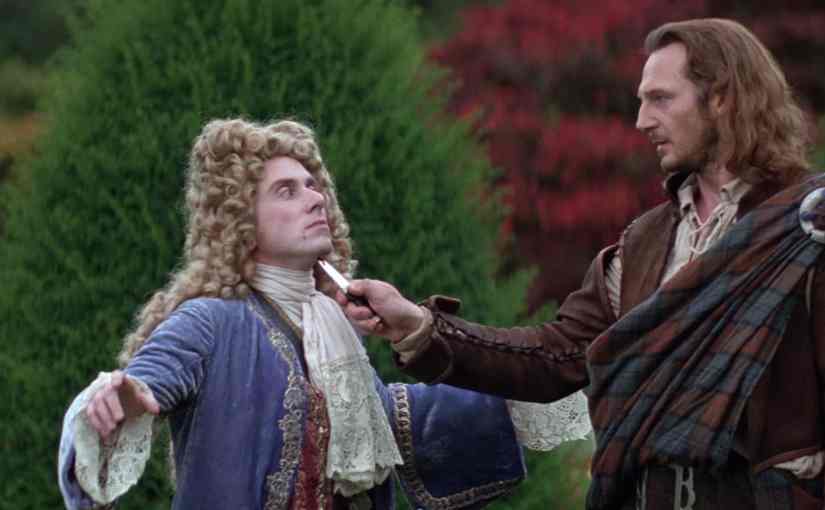
Rob Roy moves at a slow pace at times, but that doesn’t take away from brilliant characterizations. Roth as Archibald is a blazing villain. He’s introduced as a snobbish brat dressed to the nines though living off the prosperity of the mother who sent him to Montrose for a better royal upbringing. He carries an effeminate way about him in his long, curled, flowing wigs and garish pink and blue aristocratic wardrobes. He is a bastard though, yet a master swordsman. Like many great scene stealing performances before, Tim Roth has just the right timed expressions for the camera. Caton-Jones captures every best shot of Roth’s presence. Tim Roth, at the very least, deserved his Oscar nomination. I couldn’t get enough of him.

Jessica Lange gives another reason why she is such a celebrated actor for women. She picks smart roles over and over again. I was going into the film thinking she would be playing the dutiful wife and mere damsel. However, as Mary MacGregor she’s incredibly strong before and after she is victimized. She is torn with conflict to share the whole truth with Rob as to what has occurred to her. How will Rob respond? Will it make it worse for him with the monarchy? Will he feel ashamed of Mary? A fascinating character piece.

Brian Cox appears as Killearn, Montrose’s aid and factor. Yet, he is also secretly serving to Archibald’s underhandedness. He’s quite good in his role too.

Liam Neeson is fine as Robert Roy MacGregor; tall, built and athletic. He looks like a real hero. However, I’m not sure if I got a dense enough character from Alan Sharp’s script. Much of the film only comes alive when the other performers are on stage, like Hurt, Cox and especially Lange and Roth.

I was always aware of the famous sword fight in the film and it is quite spectacular. However, maybe hearing the hype over all these years watered down my expectations. The choreography is spectacular and often it really is Neeson and Roth in the moment; not stunt doubles. Yet, I remain more impressed with the work of Errol Flynn and scenes from The Princess Bride and The Empire Strikes Back.

Rob Roy takes some patience to watch. A very good film but not necessarily wall to wall action to consider it a popcorn flick. Watch the film for the performances and take in the gorgeous countryside footage.

I recommend it.

GUARDIANS OF THE GALAXY VOL. 2

By Marc S. Sanders

James Gunn continues his Looney Tunes odyssey helming Guardians Of The Galaxy Vol. 2. The silliness is grander, the story is weirder and the characters are now comfortably fleshed out.

Vol 2 is probably not better than the first installment. However, it is more inventive as Gunn takes his film along the hanging thread left over from before. Peter “Star Lord” Quill (Chris Pratt) meets his father at last in the persona of Kurt Russell who goes by the moniker Ego. This is all enthralling to Quill, though his love interest, Gamora (Zoe Saldana) sees beyond the facade.

Ego has invited them to his planet that he created. It pops with colors, serenity and cheer. This plays for a good story; maybe as a better and more developed Star Trek episode.

What differentiates this film from other Marvel films comes out in the third act. This does not consist of just space battles, laser swords and shootouts. The end is something else, something new, entirely. Thus, you are given the film’s greatest strength. I found it to be very imaginative.

Gunn however falls a little bit into his own trap along the way. There are too many relationships and characters that work as filler for side stories. Gamora vs her bitter sister Nebula. Drax (Dave Bautista) with a new, weird antenna on the head character named Mantis and Rocket Racoon and his big mouth with Yondu (Michael Rooker, in a bigger more significant role this time). Oh yeah! There’s also Yondu vs Sylvester Stallone (huh? why? how?) and Yondu vs his mutinous army, The Ravagers. It’s all a little too much for an already busy looking film.

I found it funny that The Ravagers reminded me of the motorcycle gang, The Black Widows, from Clint Eastwood’s Every Which Way… bare knuckle comedies. Those guys were much funnier than these Ravagers. Gunn overstays their welcome as they randomly cackle and heckle poor Baby Groot, the toddler tree thing. That gets old quickly.

Gunn approaches a special kind of humor here. Repeatedly, because these are outer space characters, it’s apparently funny to lend them explaining the punchline of a gag. So if Drax realizes that Peter has the hots for Gamora, he’ll belly laugh and explain literally how Peter feels and do it bigger and louder. Variations of that gag occur quite often among most of the characters. Sometimes it works. Sometimes it gets old.

GOTG Vol 2 is a fun watch. I don’t foresee this installment carrying the legendary status the first one did or even standing out among the best of the Marvel series, but I will give props to the outcome of what Ego truly is and what his intent depends on. (I won’t spoil that here, of course.)

The cast is great. Saldana is one of the stronger female characters in the MCU. She captures a background to Gamora that is blatantly absent from other Marvel ladies. Bautista has become a great character actor as well. He’s a smart guy with good timing. With his extensive child and adult film resume Kurt Russell is perfectly cast as Pratt’s father. Their personalities lend to some good chemistry.

James Gunn owns the Guardians films. No one else can capture his blend of humor and pop culture salutes. Yet, he overreaches a little trying to incorporate so much story and so many gags into one film. His vision is well defined, though.

Plus, Gunn stages another dance scene for Pratt and Saldana, and it’s great. As I noted in my Vol 1 review, that’s how you get to a viewer’s heart. Everyone loves to dance.

As well, Gunn accompanied his sequences with some tunes both fresh and familiar from Fleetwood Mac, Electric Light Orchestra and George Harrison to name a few.

James Gunn was always going to make sure never to take his films seriously. So, when you see a baby tree groove along while trying to detonate a bomb, I defy you to be so serious as well.

RUNNING ON EMPTY

By Marc S. Sanders

Director Sidney Lumet’s 1988 film, Running On Empty, depicts Judd Hirsch and Christine Lahti as former radicals against the Vietnam War. They have been running from the authorities for 15 years after bombing a Napalm laboratory as part of their cause. They have two sons, one of them played by River Phoenix with a chance to attend Juilliard. His opportunity does not seem likely however as it would mean he could never see his family again, and his family is reluctant to set him free.

In a film about criminals, this is a story lacking in crime or violence. Lumet’s film is a narrative of a family and how they live by constantly changing their identities, backgrounds, and residences. It’s not a life for an innocent child, especially one with a promising future.

Phoenix was nominated for an Oscar for his conflicted role. He’s quiet, but he’s torn and he’s accepting of what fate brings him. Sadly, he prevents himself from making his own destiny. A bright element comes in the form of fellow student Lorna, played beautifully by Martha Plimpton. This is her best role as Phoenix’ girlfriend who falls in love with him and shows him pure happiness. She’s the fulcrum that introduces him to what possibilities are available, but he’ll have to sacrifice his current life for a better one, and his parents will have to accept his decision.

There’s no easy wrap up in screenwriter Naomi Foner’s Oscar nominated script. A painful outcome is inevitable. Yet, that’s what makes this a great drama. The conflict is too great for an easy resolution.

What a terrible shame that 5 years after this film, at age 23, River Phoenix died of a drug overdose. Imagine what he would evolve into as an actor. Here in this role, as well as films like The Mosquito Coast, Stand By Me, and even as a young Indiana Jones, he was more than just a child actor or a teen magazine cover. He performed with a mystery to his characters where he would never reveal every dimension that his parts possessed. In a film like Running On Empty you almost wish his real life fate never came true.

THE SHINING

By Marc S. Sanders

Stanley Kubrick’s The Shining has become a legendary film that set the standard for haunted house films. It’s a spooky story with a musical soundtrack never destined to be played at weddings or bar mitzvahs.

The whole movie is unsettling, beginning with a long winding road drive through the Colorado mountains as the title and credits unconventionally roll up the screen, one at a time. Kubrick was never typical. Here he was frighteningly weird.

The film, based of Stephen King’s bestseller, consists of four characters. Three of them are novelist Jack Torrance (Jack Nicholson), his wife Wendy (Shelley Duvall) and their son Danny. He’s one effed up kid with a mop top haircut. I think I’d be disturbed if I uncovered what Danny grew up to be hereafter.

The fourth character is the main attraction, the isolated Overlook Hotel; left empty during the harsh winter months to take advantage on reviving its morbid history of harsh violence by means of ghosts, bleeding elevators and hacked up innocent looking, pig-tailed, young girls. Don’t ask me to explain the guy with the gold lion mask about to go down on a happy partygoer. No. I also can’t explain what exactly happened in Room 237. Perhaps King’s book covers all of this. Kubrick opts not to and focuses on the naivety of Wendy while Danny and his imaginary friend Tony talk to the consciousness of the hotel only to understand it is gleefully influencing Jack into an obsession of murderous incentive, eventually leading him to charge his ax through some doors.

I once visited the Louvre in Paris. I couldn’t fully enjoy or appreciate it. It was too big and too overwhelming. I didn’t know where to start or where to end. I had a panic attack, but I didn’t know it at the time, and I was eager to leave. Kubrick works on that anxiety during the long exposition of the film. Effectively disturbing tracking shots are provided that shoot deep hallways, vast ballrooms, large furniture pieces, and loud colors of reds, browns, yellows and whites along with emerald, green in the bathroom of room 237. The pastel blues of the young girl’s dresses and pigtail ribbons are also deliberately garish. Colors are normally cheerful for me. Here, they are unwelcome and intrusive and when I say loud, I mean to say the colors scream at you,

You just want to get away with Danny on his Big Wheel that he pedals around the property, softly on the carpet and thunderously loud on the tile and wood.

The character of the setting continues its disturbing details by means of a maze. Kubrick offers a great transition when Wendy and Danny enter the maze while Jack overlooks (pun intended) on a small-scale model. The hotel’s haunts have its prey in sight by means of its possession of Jack. Kubrick clearly shows that with his camera work. There are wide shots both overhead and facing Jack, and narrow, trapped captions of Danny and Wendy lost in the labyrinth.

I won’t say The Shining is a favorite of mine. I think this is only the second time I’ve seen it. I’ll watch horror movies, but they often bother me; leaving me distraught and stressed, unrelaxed. Occasionally, while Kubrick is vague with his imagery, Nicholson is blatantly obvious in his urge to terrify; maybe a little too blatant. He is in direct competition with John Belushi in the facial expression department. He’s disturbing even before the hotel’s influence is available to take hold, and so I didn’t necessarily get a good character arc from him. Same with Duvall or the boy. This family is downright weird all on their own from the moment you meet them until the film’s cold, wintery end arrives. Kubrick gets you curious about what this hotel is capable of. Then he shows you. Then the end literally tires the story out.

The Shining is best when you have an urge for fear and frights. A house of horrors tale where a cat or bird will not suddenly fly into focus for a cheap jump-scare. Rather your vision and hearing will still feel shocked, leaving butterflies in the stomach, and shortness of breath. Repeat viewings will leave you awake at bedtime, and worried and agitated. There’s so much to explore, but do we really want to know what’s in that room, or down that hall or around that corner, or even how that photograph of a July 4 celebration from the 1920s ever came to be?

SUPERMAN: THE MOVIE

By Marc S. Sanders

Richard Donner’s Superman: The Movie is one of the best biographical films of a fictional character ever made.  Yes.  It absolutely is a biography.  How can you call it anything but?  The visitor from the planet Krypton is embedded so deeply within the lexicon of worldwide pop culture and historical significance that he rests within all of our subconsciousness.   When we think of ongoing problems in the world from natural disasters to destructive wars or famines and disease, or to even kittens stuck in trees, for a split second we all consider how simple we could go on with our lives if only Superman were here to rescue us. 

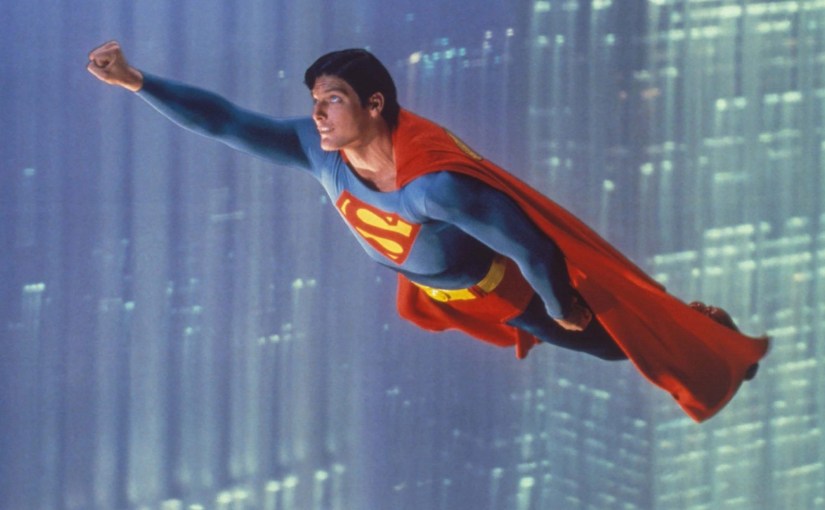
By 1978, forty years after Joel Siegel and Joe Shuster created the character, visual effects were at a more than adequate level to convince us that a man could fly. Thus, the man with the red cape was ready to appear on the big screen.  With creative input from writer Mario Puzo, Donner’s film goes through various stages of life from when the extra terrestrial is a new born baby, to a toddler, then a teenager and on to a thirty something adult.  While living on the planet Earth, his powers may make him virtually invincible, but he’s far from godlike.  He cannot prevent the unforgiving nature of death.  He can’t be everywhere all at once.  He can’t even perform on the same level as his colleagues or friends, who are skillfully beneath him.  It would be unfair to have Clark Kent on your football team.

To watch Superman is to see a mini-series over a span of nearly two and a half hours.  We begin on the white crystal planet of Krypton featuring one of the greatest actors of the twentieth century, Marlon Brando, cast as the father of the superhero to be.  Brando is Jor-El.  He serves the planet as a prosecutor and a political leader with an expertise in science.  He’s championed for his knowledge, but he’s also challenged by his peers when he is certain of his planet’s demise. Thus, he must release his newborn son, known as Kal-El, into the far reaches of space to survive.  The script here takes an almost Shakespearian approach in debates of facing inevitability.  Brando’s authoritative screen presence is perfect here. 

Kal-El moves on to Earth, particularly Smallville, Kansas, and the nature of the film changes personality.  1950s Americana becomes our main character’s environment with endless plains of crop fields and farm land as Kal-El becomes identified as Clark Kent, the teenager who develops a crush on the high school cheerleader and gets bullied in the process while he must deliberately withhold all that he’s capable of by influence from his adoptive parents (Glenn Ford and Phyllis Thaxter).  Life for any of us is never complete until we experience the death of a loved one and Donner showcases that here to demonstrate that Kal-El/Clark can not prevent what’s meant to happen when biologically our bodies shut down.  Not even a super man can save us. 

Clark reaches age 18, usually perceived by most as a turning point into adulthood and through a means of Krytonian process he’s educated until his thirtieth birthday upon the rules and boundaries he must function within while on Earth.  He learns of his ancestry and then Donner changes the setting of his film once again into the furthest extreme from quaint Smallville. 

We have transitioned to sprawling Metropolis where Clark works as a mild-mannered reporter at The Daily Planet.  Christopher Reeve plays Clark/Superman and there was no one who could have filled the role better.  Physically, Reeve is the example by which all super human character portrayals still look towards.  Yet, the Julliard trained actor performs the dual personality so well.  When he dons Clark’s glasses you feel as if you are looking at another actor from when he’s dressed in the blue and red costume of Superman.  His posture and voice inflections are so distant from each character he’s playing.  Christopher Reeve was a stellar actor of versatility. 

In Metropolis, we are also introduced to an impure villain, Lex Luthor (Gene Hackman, who never got enough praise for this role) focused on greed and individual power for him to consume at the expense of everyone else on Earth. 

As well, just as life must bring us towards the experience of loss, it also must introduce us to love in the form of Lois Lane. Margot Kidder does a magnificent job of the hustle and bustle career woman with a sense of romance and need for ongoing adventure.  A reporter’s life will only give you that some of the time.  Superman will let you live that every day.  In life, we all start with valuing one person in our lives beyond our immediate family, and Lois serves that purpose to Clark’s perspective. 

Donner takes advantage of comedy and slapstick when Metropolis comes into play.  It’s not as polished as Krypton.  Nor is it as calm and reserved as Smallville.  Again, the personality changes.  Reeve plays Clark as a persona of the inept and gullible newcomer nerd to hide his powerful alter ego.  Hackman’s Lex is accompanied by Ned Beatty as a bumbling sidekick to play off of. (This same actor was a frighteningly powerful and intimidating corporate CEO in Network just a few years prior!) Valerie Perrine holds her own against Hackman as Lex’ alluring dame to have a tete a tete of sarcasm with. Kidder is the leader of Metropolis’ populace always on the go so much that she’s not even aware of her insensitivity to poor Clark.  A great gag is that as a good as a reporter as she is, Lois has terrible skills in spelling.  (There’s only one p in ‘rapist’.)

Maybe you’ve never seen Superman from 1978, or maybe it’s been too long since you last took it in.  It remains a watch that’s worthwhile.  Donner’s film covers so much of this one individual’s life that also includes two separate ancestries.  I get hot and cold on biographical films, sometimes.  It’s a tough scale to measure.  Sometimes filmmakers don’t show you enough.  I thought the film Ray, ended too suddenly on its depiction of Ray Charles.  Sometimes, it’s an overabundance of material.  The Last Emperor and Chariots Of Fire seemed to never end, and became mired in long, drawn-out, sleep-inducing pieces of dialogue.  Superman allows just the right amount of time to live within these different parts of Kal-El/Clark Kent/Superman’s life that you get familiar with who the main character encounters and how he responds to those around him. You also witness how these environments respond back to him.  You get a sense of what he stands for and where he feels insufficient and where feels strong and secure, as well as valued by others. 

It might be crazy to believe, but biographical writers and filmmakers should turn towards Richard Donner’s film for an outline that perfectly establishes every scene and moment that’s cut into its mold.  Superman: The Movie?  When I want to tell the life story of Golda Meir, or Barack Obama or Joseph Stalin or Jesus Christ?  Yes, Superman.  If we are crazy enough to follow the exploits of a man who wears a cape and flies through the sky, then why can’t we believe he can provide the answers to the great mysteries of life better than any of us?

SELMA (2014)

by Miguel E. Rodriguez

Director: Ava DuVernay
Cast: David Oyelowo, Carmen Ejogo, Tom Wilkinson, Common, Tim Roth
My Rating: 8/10
Rotten Tomatometer: 99% Certified Fresh

PLOT: A chronicle of Dr. Martin Luther King, Jr.’s campaign to secure equal voting rights via an epic protest march from Selma to Montgomery, Alabama, in 1965.


In one of the special features on the Selma Blu-ray, Oprah Winfrey, one of the film’s producers and co-stars, says that Selma is the first feature film with Dr. Martin Luther King Jr. as the central figure.  (She is presumably not counting TV movies or miniseries.)  There have been one or two other films where King appears as a “side” character, but never as the star of the film.

I’m not exactly sure what that means, but I found that tidbit of information fascinating, especially after watching Selma, which carries all the cinematic heft of any Oliver Stone biopic.  For example, I never knew there were two previous attempts to make the iconic march from Selma to Birmingham, some fifty miles away.  The first attempt, at which King wasn’t present, was violently turned away by local police with batons, tear gas, and honest-to-God bullwhips.  The second attempt, this time with many white participants, mostly clergy, was aborted by King himself after he had second thoughts about asking people to potentially lay down their lives for the cause.

That right there is indicative of far more conflict than I ever thought existed in the mind of Dr. King, played with poise and pent-up energy by David Oyelowo.  In my mind’s eye, King never wavered.  He was always 100% sure of his actions because his cause was just.  But, surprise, he was also a human being who was clearly affected by the injuries – and fatalities – sustained by the folks who were marching for that cause.  Selma brought that dimension home to me in a potent, well-made film.

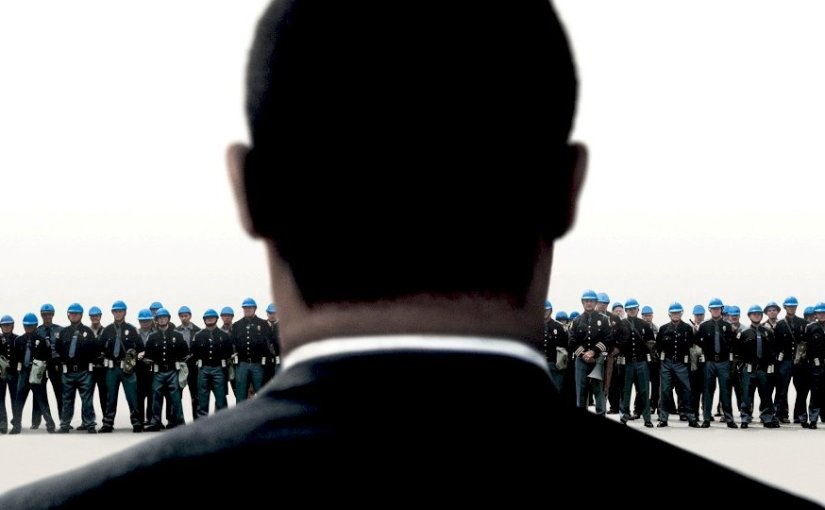
The beginning of the movie sets the tone poetically and tragically.  After a scene with Dr. King receiving the Nobel Peace Prize for his civil rights activism, we are shown the truth of the situation in the American South in the mid-60s.  A black woman tries to register to vote in Selma and is turned away by a racist registrar.  In Birmingham, a bomb goes off at the 16th Street Baptist Church, killing four young girls.  When King arrives in Selma to organize a protest, he is greeted in a hotel lobby by a friendly-sounding white man who proceeds to punch him in the face.  King even meets opposition from a separate civil-rights group in Selma who are uncomfortable with how most out-of-state protesters march for King, not necessarily for the issues.

Nor is King portrayed as the perfect husband to his wife, Coretta Scott King (Carmen Ejogo, who incidentally also played Coretta Scott King in a 2001 HBO movie, Boycott).  Their home life is troubled right from the get-go.  That’s a factor that I learned about years and years ago, but it’s still something that takes a little getting used to.

No one likes to hear that great men were human, too.  We want our heroes, whomever they might be, to be spotless.  Selma doesn’t shy away from the less flattering, more human side of Dr. King.  After the FBI taps his phones, they send an audio recording to Coretta with the sounds of two people having sex.  Martin listens in dismay but insists to Coretta that’s not him on the tape.  She agrees with him (“I know what you sound like, Martin.”), but you get the idea that she’s still upset that this kind of thing would be an issue.

I loved the scenes where King is invited to the Oval Office to speak directly to then-president Lyndon B. Johnson, who desperately tries to get King to back off Selma.  Johnson wants what every President in history has always wanted: a second term.  King reminds him that, if he would simply pass a law removing any and all voting restrictions, he would win a second term in a landslide…thanks to the black vote.  Johnson urges King to wait, King urges Johnson to act, and they make little progress for most of the film.


I am no historian, but I have no doubt that Selma is at least as accurate as Nixon or JFK or any other big-budget historical film.  That is, mostly true.  When it comes to film, I’m a big believer in the credo: “Don’t let facts get in the way of the truth.”  If Selma were to show each and every incident that led to that march, I’d still be watching the movie because it would be 10 hours long.  I feel that the movie captures exactly what needed to be captured and did it in such a way that not only was I entertained, but I also learned some things I didn’t know.  (I never knew about the death of a white protester, for example.  Or about the “night march” that occurred somewhere between the first two attempts, and which also resulted in someone’s death.)

After having just watched movies like Whiplash or The Prince of Egypt that got me genuinely emotionally invested, so that their finales had me floating a few inches above my sofa, I must be honest and say that the finale of Selma did not quite inspire that same reaction in me.  It was compelling to see the march finally taking place, especially when intercut with shots of the actual marchers making their way to Birmingham.  I enjoyed King’s speech on the steps of the capital building (although I learn from IMDb trivia that director DuVernay allegedly reworked some of the speeches to make them more cinematic).  I thought it worked well as a climax to the film.  But honestly, I wanted to see a little more of the march itself.

I suppose it could be argued that the march was not quite the point of the film.  Selma highlights the struggle more than the victory.  It demonstrates the terrible hurdles and living conditions faced by black Americans during those dark days.  Have things improved since then?  Well, I’d say things have evolved into something different.  Some things change more easily than others.

The struggle continues.

UNLAWFUL ENTRY

By Marc S. Sanders

The boogeyman is dressed as a police officer!

In 1992’s Unlawful Entry, Jonathan Kaplan (The Accused) directs a well-played Ray Liotta as a psychotic cop named Pete Davis who is terrorizing a yuppie couple named Michael & Karen Carr (Kurt Russell, Madeleine Stowe). The Carrs experience a home intruder who puts a knife to Karen’s throat. Officer Davis offers comfort to the pair and happily volunteers the arrangements for a high-tech alarm system. The first mistake that Michael makes is sharing the password with trusty Pete. You’ll expect that to come into play later on. Maybe what inspired the password will work itself into the film as well. Hmmmmmm?????

It’s difficult for Pete to resist the obsession he has for Karen and so he begins a campaign to get Michael out of the way. First, he demonstrates his brutality by offering Michael the opportunity to senselessly beat up the home intruder for no other purpose than personal satisfaction. When Mike refuses, Pete finishes the job. Later, Mike makes efforts to keep Pete out of their lives. It’s hard to do that when a highly decorated cop is involved. Karen, his own loving spouse, won’t even truly believe Mike; neither will the police chief.

As Pete continues with his intentions, Mike’s credit cards are maxed out, he loses a high priced client that Pete has been talking to, parking tickets add up, and so on. Pete also appears at the house at inopportune times like when Karen is taking in a swim or creepily stepping into their bedroom while the married couple is having sex. Eventually, Mike is put out of the way when he’s imprisoned after being framed as a drug dealer. Now Karen is all alone for a terrifying third act that you’ve likely seen hundreds of times before.

Unlawful Entry is engaging while you’re watching, but it does not convey much. The happenings all appear probable if a deranged cop wanted to go through all this trouble. Therefore, Ray Liotta owns the picture. Yet, what did I learn here? Don’t call the police?

For Kurt Russell, this is the first of two “husband is being terrorized” roles for him. Later, Russell would headline the cast of a better film to fall in this genre called Breakdown. Still, I like Russell here. He starts out as a guy who is not capable of fighting for the sake of his wife. He regrettably admits that shame to Pete early on. Pete pounces on that advantage to win Karen. Later, the strength of Mike’s short temper followed by his fear push him to do what he must to protect himself and his wife.

Madeleine Stowe is a good actress. There’s just not much for her to do with this part. She’s the spouse who opts not to believe her husband’s concerns. If she did, there wouldn’t be much of a movie. The third act is all action and blood and falling down the stairs and running back up the stairs. It’s no surprise really. Though it is convenient that Michael is finally able to post bail and get home in time for a final confrontation with Pete.

One thing that kept echoing in my head though was that as good as Ray Liotta is (he’s very, very good actually; very primal and deceiving), he is terrorizing a woman named “Karen.” Every time he says the name Karen, all that comes back to me is the film Goodfellas where he more or less tormented and disrespected Lorraine Bracco known as, you guessed it, Karen. A rule should be put in place, Liotta can no longer be cast with other characters named Karen. His Karen quota is maxed out.

MISSION: IMPOSSIBLE

By Marc S. Sanders

Brian DePalma directed the first installment of Tom Cruise’s film adaptation of the Mission: Impossible series. It’s good, but not necessarily the best of the bunch.

DePalma’s approach with a script by screenwriter Robert Towne (Chinatown) & David Koepp opens with last ditch effort at a Cold War setting. (By 1996, Pierce Brosnan’s James Bond had already abandoned that point in history.)

Cobblestone streets in Prague glisten under wet street lamps as a team of spies, led by Jim Phelps (the “Captain Kirk” of the original series) with Cruise’s Ethan Hunt as point man. They are attempting to prevent a buy/sell exchange of a disc containing identities of undercover agents spread across the globe. There are shadows. People walking covertly and other people watching people through cameras on eyeglasses and computer monitors. Everything is going according to plan, until as we expect, nothing goes according to plan, and Tom Cruise seems to be the only one surprised by it all. Now he’s accused of being a traitor having gotten his whole team murdered and he must go rogue (he does this a few times in the M:I films). DePalma’s opening is straight out of a John LeCarre novel. All good stuff.

More good stuff appears in act 2 when Ethan Hunt has to infiltrate CIA headquarters to retrieve another disc and allow himself to cable down into the most high tech secure room in the…well lets just say the world, that is conveniently run by the most incompetent dweeb in the…well let’s just say the world…again. The primarily silent sneak is as beautifully choreographed as a Russian ballet. It’s spectacular.

Even more good stuff occurs in act 3 in a high speed super train crossing through the Chunnel in Europe. There’s a helicopter and Tom Cruise on the roof of the train and even some exploding chewing gum. Act 3 is where DePalma, Towne & Koepp opt to leave the Cold War behind because let’s face it, no spy can remain covert when a helicopter gets tethered to a high speed train in a tunnel.

So yeah, there’s lots of goodies in Mission: Impossible, but it falls terribly short because Tom Cruise produced the film with his ego in the way. For example, he sets up a team of four, all with different specialties. They get properly introduced and then they are given not much to do except watch Tom Cruise “Ethan Hunt” his way out of one dangerous situation after another. Ving Rhames seems like an especially interesting character but all he’s reserved to is typing on a keyboard. Vanessa Redgrave puts on a charming mystery about herself for one short scene as an arms dealer only to do nothing else but sit on the train later on.

Lots of talent was assembled for this film including Jon Voight, Emilio Estevez, Jean Reno and Kristen Scott Thomas but they’re only here to be a live studio audience for Cruise’s heroics.

Compare this film to Eddie Murphy’s Beverly Hills Cop. Murphy is no doubt the centerpiece, but he does not own every scene. Big moments come from the supporting cast as well. There’s more variety to that picture, which Murphy produced, than Cruise’s production.

A well utilized cast can be the difference between a good picture and a great picture.