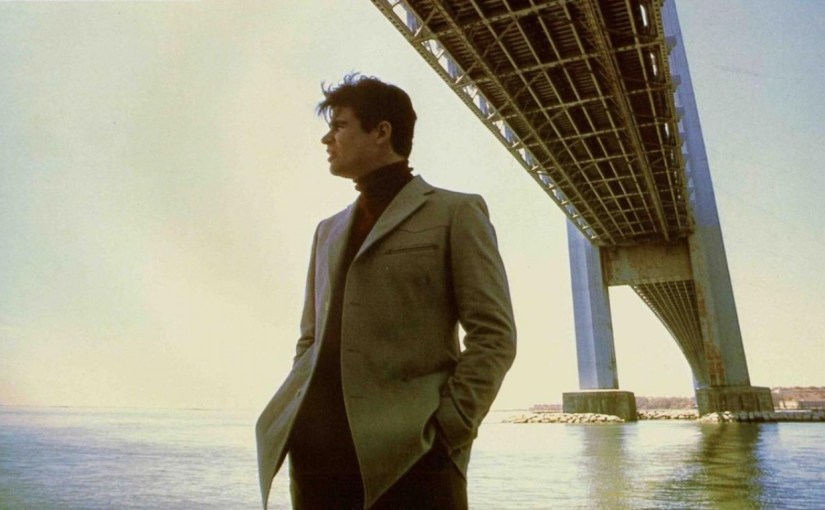
BOY AND THE WORLD (Brazil, 2013)

by Miguel E. Rodriguez

DIRECTOR: Alê Abreu
CAST: Vinicius Garcia, Alê Abreu, Lu Horta
MY RATING: 10/10
ROTTEN TOMATOMETER: 93% Certified Fresh

PLOT: A little boy goes on an adventurous quest in search of his father.


Filmmaker Brad Bird, the mind behind The Iron Giant, Ratatouille, and The Incredibles, once said something that occurred to me multiple times while I was watching the Brazilian animated film, Boy and the World.

“…animation is not a genre.  And people keep saying, ‘The animation genre.’  It’s not a genre!  A Western is a genre!  Animation is an art form, and it can do any genre.  You know, it can do a detective film, a cowboy film, a horror film, an R-rated film, or a kids’ fairy tale.  But it doesn’t do one thing.”

Boy and the World proves Bird’s statement correct by delivering a succinct, poignant film, virtually without words, that defies classification.  Is it a kids’ film?  It’s colorful, vibrant, and contains no long words, but it was rated PG in America.  Is it a “grown-up” film?  There is absolutely some thematic material that might require some parental explanation, but the style of the film’s images is almost like a children’s book come to life.  Boy and the World is quite unique in animation, at least in the animated films I’ve seen.  The only film I might possibly compare it to is Walt Disney’s Fantasia…or more accurately, I’d say Boy and the World was inspired by Fantasia’s core concept.  It’s a fairy tale and a cautionary tale and a coming-of-age story and a visual tour-de-force all in one.


We first meet the titular Boy in this story as he seems to be hearing music coming from under a colorful rock in a field.  The Boy is never named.  Indeed, what little dialogue we ever hear in the movie is conveyed either by grunts and coughs and harrumphs, or by a peculiar, unrecognizable language.  I turned on the Blu-ray’s subtitles, and it only said “SPEAKING FOREIGN LANGUAGE.”  But the film’s story is so well-constructed, a literal understanding of their speech is never necessary.  (Trivia note: I learn from the disc’s special features that the language we hear is Portuguese…spoken backwards.)

The Boy lives with his mother and father in a humble dwelling in the Brazilian countryside during an unspecified time period, though his clothing indicates something close to present day.  One day, his father simply decides to leave, boards a train, and is gone.  We are not given a clear reason for his departure.  The Boy is distraught, so one night he packs a suitcase (its only contents: a photo of him with his mother and father) and sets off to find him…

From there, the movie becomes an absolute visual feast.  I do not wish to give further plot details – and there IS a surprisingly compelling plot – but I do want to give some idea of the startling originality on display during the film.

  • The Boy has a unique ability that no one else in this world seems to have: he can see music.  Whenever his mother hums a tune, or his father (in flashback) plays a song on a recorder, the Boy sees the music appear in the air as little balls of color, like cotton balls or tiny clouds.  Later, he watches a parade go down a street, and the music clouds rise and swirl together in the sky, forming a huge multicolored bird.  Later still, a military formation marches down another street.  The boy sees that music as blacks and greys, and the bird it forms in the sky is far more imposing and ominous.
  • Nothing in the film is a literal representation of what it’s depicting.  For example, when the Boy sees a big city for the first time, most of the vehicles appear to have faces.  The language on all the ads and billboards doesn’t make any sense.  The sports he sees on the TV sets in the shop windows are confusing and nonsensical.  It is more like an impression a child might have of a big city, and it feels more real because of its stylistic liberties.  When he sees large industrial machines in operation for the first time, they look more like elephants and dragons than tow trucks and construction cranes.  This is something animation can do better than any other medium.

  • There is a heartbreaking scene when the Boy sees a train pull in at a station and sees his father step out.  The Boy runs forward…and then his father steps out of another car.  And another, and another.  And soon the platform is crowded with scores of men, all identical to the Boy’s father, and the Boy falls to his knees in frustration.  I interpreted this as an eloquent analogy of how anyone in the Boy’s situation might see a recognizable figure in the distance, only to be disappointed again and again.  Instead of it happening 15 or 20 times in the movie, we got it all at once, and it was an unexpectedly powerful moment.
  • Listen closely, and you’ll hear that a lot of sound effects, from birds in the jungle to car horns honking to clattering machinery, are made by musical instruments or the human voice and/or body.  Yet another unique element to an already unique film.
  • The resolution of the boy’s search took me completely by surprise.  There were little visual clues that had me believing the movie was not going to have a happy ending.  But then it unfolded, and the effect was eye-opening.  I won’t say one way or the other if he found his father or not, but I will say the ending felt earned, authentic, and very satisfying.

All told, Boy and the World is a marvelous little discovery, one that I plan to re-watch soon to drink in its marvelous visual concoction once more.  My colleague, Marc, is a playwright who once wrote a short play as a pantomime.  He believed (and still does, I think) that the main purpose of the visual arts is to show us something new and exciting whenever possible.  Boy and the World would be right up his alley.

ENTER THE DRAGON (Hong Kong, 1973)

by Miguel E. Rodriguez

DIRECTOR: Robert Clouse
CAST: Bruce Lee, John Saxon, Jim Kelly
MY RATING: 8/10
ROTTEN TOMATOMETER: 95% Certified Fresh
Everyone’s a Critic Category: “Watch a ‘B’ Movie”

PLOT: A Shaolin martial artist travels to an island fortress to spy on an opium lord under the guise of attending a fighting tournament.


I have just finished watching the quintessential ‘70s chop-socky kung fu flick, Enter the Dragon, Bruce Lee’s fitting, if all-too-early, swan song.  I now sit in front of my computer terminal and try to figure out how to review this movie that screams low-budget, from its liberal use of zoom shots and slow-motion, to the gloriously cheesy score from Lalo Schifrin, interspersed with kung fu yells during the opening credits, to the cookie-cutter nature of the bare-bones screenplay.

I sit.  I ponder.  By any “serious” metric of film criticism, this is not a “good” film.  Sure, it was probably groundbreaking for its time, but in the years since its release, other movies have trumped it on many levels.  I’ve seen movies with WAY more kung fu action (Drunken Master II, Kung Fu Hustle), movies with way higher production values (Crouching Tiger, Hidden Dragon, Big Trouble in Little China), and movies with way better screenplays (Everything Everywhere All at Once, Kill Bill).

But Enter the Dragon has one thing those other movies don’t: the sheer charisma and magnetism of the master, Bruce Lee.  In every scene he’s in, Lee’s eyes always seem to be working, working, working, whether he’s having a conversation with a British official or defeating an opponent twice his size in a kung fu tournament.  His intensity radiates off the screen.  In one scene, he instructs a young pupil in short, clipped tones, exhibiting nothing but concentration and admonition.  Then later he wins a bet on an unusual animal fight – praying mantises – and check out his cocky smirk as he reaches out for his winnings.  He may not be subtle, but who cares.  He’s Bruce freaking Lee.

He is the single “x-factor” that elevates Enter the Dragon into the pantheon of hallowed action films.  If it had been made with another actor in the lead, it would have been forgotten a long time ago, the second half of a double bill for all eternity.  The story is decent enough, although it feels cribbed from more than one Bond movie, or maybe all of them at once.  The screenplay is…well, let’s say it doesn’t give its characters very good things to say.  One of my favorites is when Williams (Jim Kelly) looks at the vast squalor of the “boat cities” in Hong Kong Bay.  He shakes his head ruefully and says, “Ghettoes are the same all over the world.  They stink.”  It’s not exactly Tennessee Williams.

Then again, that may be one of the factors that works in the film’s favor.  We must come back once again to Bruce Lee.  With his imposing presence throughout the film, that fierce stare, that iconic yell, that chiseled physique, perhaps more realistic or polished dialogue wouldn’t quite fit.  If you’ve got an actor swinging for the fences, don’t try to hinder him, or anyone else in the film, with exquisitely crafted lines.  Accept the fact that all the characters, not just Lee’s, are intended, nay, EXPECTED to behave in very specific ways, and just switch your brain to “low-power mode.”  That’s where Enter the Dragon lives.

By the way, I’m a big Jackie Chan fan (he has a VERY brief appearance in Enter the Dragon as “Thug in Prison”).  I love the intricately choreographed, unbelievably long action sequences in his films.  Enter the Dragon has multiple fight scenes, but none of them are very long when compared to Chan’s movies.  Truth be told, some of the fights in Dragon feel a little…stagey.  But that staginess is balanced by, once again, Bruce Lee’s intimidating aura that brings believability to every scene because, by god, HE certainly believes it.

Is Enter the Dragon the end-all/beat-all of kung fu movies?  In my opinion, no.  That title goes to Jackie Chan’s Drunken Master II with its mind-boggling battles that go on forever.  However, Enter the Dragon is an excellent example of how any movie, however badly written or shot, can be improved with the right actor in the starring role.


QUESTIONS FROM EVERYONE’S A CRITIC

Best line or memorable quote?
[after watching an opponent trying to intimidate him by smashing a board in mid-air:]
“Boards don’t hit back.”

Why did you choose this particular film?
First, I had to Google search “notable B movies” to see what would fit the bill.  I’ve seen Birdemic, Troll 2, and the execrable The Room, but I don’t own any of them.  I saw a lot of 50’s monster movies on the lists I found, but I don’t own any of them, either.  Suddenly, pay dirt.  Turns out Psycho qualifies as a B movie…who knew?  But that movie is too darn good to be lumped with movies like The Blob and The Tingler.  I needed a movie that exhibited its low-budget restrictions on its sleeve and still managed to be unironically entertaining.  Voila: Enter the Dragon.

PLAY MISTY FOR ME

By Marc S. Sanders

Before Fatal Attraction and countless other stalker/possessive lover thrillers that continue to monopolize all kinds of entertainment mediums, there was Clint Eastwood’s directorial debut, Play Misty For Me.  Watching it for the first time in modern day, I can say that it pushes all the standard buttons of this kind of thriller formula.  The over enthusiasm of the mentally disturbed stalker, the uninvited appearances at inopportune times, the late night phone calls, and of course the knife wielding.  Nevertheless, I remain impressed with Eastwood’s interpretation.

Eastwood also headlines the cast as a late-night disc jockey named David.  Each night he gets a call from a devoted fan named Evelyn (Jessica Walter) requesting he play the jazzy tune, Misty by Erroll Garner.  Included in Dave’s regular programming are stanzas from poetry that he reads to his listeners and endorsements of favorite hang outs and bars that he frequents within the breezy coastal town of Carmel-By-The-Sea, California.  (Years later, Clint Eastwood would be elected Mayor of this community.)  Naturally, Evelyn shows up at one such regular hangout and the two have a one night stand under the presumption of no strings attached.  Of course, there would not be much of a film if Evelyn adhered to that policy.  Thus, the pattern begins.

Evelyn follows Dave around town.  She shows up uninvited at his house ready to prepare a steak dinner.  She’s knocking on his door in the middle of the night, naked under an overcoat.  There are phone calls along with disturbing, unexpected outbursts as well.  Complicating matters for Evelyn is that Dave is on his way to rekindling a romance with a former flame named Tobie (Donna Mills).  Then, it really gets frightening.

For a first time director, Clint Eastwood really shows some expert skill in Play Misty For Me.  The film opens with an overhead shot above the cliffs adjacent to the coastline, and then the camera circles around through the sky and finally zooms in on Eastwood standing on a veranda looking out to the sea.  It’s a glorious scenic shot and the director carries this theme throughout the course of the film.  A locale that impresses me is The Sardine Factory.  It is where Dave and Evelyn first meet, and Eastwood’s friend, mentor and often director, Don Siegel makes an appearance as a bartender.  The Sardine Factory is still there to this very day. 

Eastwood seems to offer a tourist guide and a photographic devotion for this quiet little town, and it contrasts well with the disturbing storyline.  Carmel-By-The-Sea seems like a comfortable and trusting area to live.  Therefore, it is all the more easy for an intruder to lay claim within the unguarded setting.  This film might be from 1971, over fifty years ago, but it makes me want to go visit.  We are treated to live footage at the Monterey Jazz Festival, and it does not overstay its welcome.  Eastwood’s film work is gorgeous throughout the whole picture. Particularly during a midway music sequence featuring Roberta Flack’s The First Time Ever I Saw Your Face, playing over footage of Dave and Tobie spending time and making love together. 

Jessica Walter is especially good in her role as the menace to this man’s livelihood.  She’s alluring and relaxing with her first encounter with Dave.  Then, she’s upended by the disruption and unwelcome halt of her romantic tryst and outbursts come from out of nowhere.  Eastwood lives up to the thriller characteristics of the film by the way he shoots Walter in close ups that appear with no build up.  He includes shots of her face and brunette hair in nothing but darkness with an agonizing scream.  It’ll shiver you.  It just makes Evelyn’s appearances even more shocking. 

The film that comes to mind when I watch Play Misty For Me, is Adrian Lyne’s Fatal Attraction from 1987.  I think that would be the go-to response for most viewers today.  However, it would be unfair for me to say I know what happens next.  Yes, I did know where everything was leading to.  However, Eastwood’s film is the pioneering installment, released years ahead of the other film.  I’ve always had mixed feelings about Fatal Attraction honestly.  I can’t take my eyes off it, especially because of the performances from Michael Douglas, Glenn Close and Anne Archer, but I frown heavily on the slasher ending that was pasted on to film.  Glenn Close did too.   Now that I’ve seen Eastwood’s movie, it astounds me how much Lyne’s picture lifts from the 1971 thriller.  Both films incorporate references to Madame Butterfly.  There’s a suicide attempt for attention.  There are phone calls and knocks on the door in the middle of the night.  There’s another lover who may be in harm’s way.  There’s an abundance of similarities in both films.

I have to wonder.  Should I now go back and revise my review of Adrian Lyne’s film? 

SAFE (1995)

by Miguel E. Rodriguez

DIRECTOR: Todd Haynes
CAST: Julianne Moore, Xander Berkeley, Peter Friedman
MY RATING: 4/10
ROTTEN TOMATOMETER: 87% Certified Fresh

PLOT: An affluent but unexceptional homemaker in the suburbs develops multiple chemical sensitivity.


From Wikipedia:  “Multiple chemical sensitivity (MCS)…is an unrecognized and controversial diagnosis characterized by chronic symptoms attributed to exposure to low levels of commonly used chemicals…Blinded clinical trials show that people with MCS react as often and as strongly to placebos as they do to chemical stimuli; the existence and severity of symptoms is seemingly related to perception that a chemical stimulus is present.”

I lead off with that because the disease showcased in Safe is utterly unknown to me.  To me, it sounds like a fancy term for bad allergic reactions, but I’m not a pharmacologist, so there you go.  I don’t mean to suggest it isn’t real, despite the blinded trials.  For the people afflicted by it, their symptoms are real enough for them, so it’s good enough for me.

And yet, despite the fact that Carol (Julianne Moore), the protagonist of Safe, is clearly suffering from something – clinically, mentally, or otherwise – affecting her health in unusual ways…I simply didn’t care.  Safe is one of those movies probably best discussed with a group so I can get opposing viewpoints, because mine is fairly negative.  Apart from Julianne Moore’s effective performance, the movie is a well-photographed but ultimately confusing slog.

Carol is an affluent housewife – sorry, homemaker, she makes that correction herself in the film – whose days are filled with making sure the 2-piece sofa she and her husband ordered is the right color, tending to her rose garden, lunching with friends, baby showers, and Jazzercise (the film takes place in 1987).  Her speaking voice sounds as if she’s internally apologizing for filling the gaps in conversations.  Her relationship with her stepson isn’t the greatest, and the role of her husband (Xander Berkeley) seems to be little more than that of a breadwinner and baby-maker.  Moore is a great actress, and in Safe she succeeds in making Carol a void, which is not an easy task.  (I was sometimes reminded of Anthony Hopkins in The Remains of the Day where his one goal as a butler was to make sure everyone forgot he was there.)

One day, Carol suffers a coughing fit after driving behind a dump truck that spews vast amounts of smoke.  Later, she zones out at a dinner engagement with her husband’s clients.  She has trouble breathing after drinking a glass of milk.  She gets a spontaneous nosebleed after getting a salon perm.  The way the movie and Carol’s character are constructed, I got the idea that her illness was directly related to her nearly crippling ennui.  Actually, Carol reminded me of the main character in Jeanne Dielman 23, Quai du Commerce 1080 Bruxelles, that semi-obscure Belgian film that was recently named the best film of all time by Sight & Sound magazine.  In both cases, a woman goes through the routine of everyday life while something percolates beneath the surface.  Safe attacks the story directly while Jeanne Dielman takes the long, long, LONG way around the barn, but the principle is the same.

Carol sees her family doctor who pronounces her perfectly healthy, aside from her apparent reactions to chemicals.  She starts wearing a mask when going outdoors.  One day, she walks into her local dry cleaner’s wearing her mask before realizing the place is being fumigated for pests.  She immediately falls to the floor with convulsions; blood suddenly appears in her mask.

So far, it’s looking like a “Disease-of-the-Week” Lifetime movie.  Ah, but here’s where it gets sort of interesting.  In a nearly throwaway line, it is revealed that the blood in Carol’s mask didn’t come from her lungs or her nose.  Apparently, she bit her lip.  No one can fathom why she bit her lip, least of all Carol herself.  So, I’m thinking, “Okay, she’s really suffering, but it’s not from anything real.  She bit her lip because she saw the exterminators and their masks and their sprayers and she needed to be sick.”

Mind you, despite the sensational nature of that plot description, the movie up to this point is slow as molasses.  It seems to want to create a sense of creepiness or dread, but because I was pretty sure she wasn’t truly sick, based on the information provided in the story, it didn’t really grab me.

Eventually, Carol winds up at Wrenwood, a kind of “rehabilitation clinic” she saw in a commercial on TV.  If the movie was weird and confusing before, it gets more so from here on out.  Wrenwood is not so much a clinic as a metaphysical/holistic retreat.  Its leader, Peter Dunning (Peter Friedman), speaks to his patients/slash congregation with a curious message that can be distilled down to this: if you’re sick, it’s because your negative emotions – anger, fear, envy, etc. – have gotten the best of you and are affecting your immune system.  In other words, it’s your fault.  And to get better, you just have to be more positive.

This philosophy is insidious to the extreme.  I have a friend right now who was just recently diagnosed with ALS, a disease for which there is no known cure, and which is invariably fatal.  I wonder how he would respond if someone told him that, not only is this disease his fault, but he would get better if he would only be more positive.  Pardon my French, but that’s a load of horseshit.  ALS and cancer kill many thousands of people a day, no matter how positive their attitudes are.  Are you telling me they died because they didn’t smile enough?  Give me a break.

So, here Carol is, with this guy, and she listens to his orientation speech (which is followed by a musical duet right out of a stereotypical hippy commune from the late ‘60s), and she goes back to her cabin and cries her heart out.  And I’m thinking, “Finally, she’s come to her senses.  She realizes, like we the audience do, that this guy isn’t going to help her illness, imagined or not, because he’s a charlatan.”

But no!  She buys into it.  The movie keeps throwing these plot-related curveballs that made it difficult for me to understand what the filmmakers are getting at.  I’ve read that Carol’s illness is a metaphor for AIDS.  Okay, if that’s the case, what is Safe trying to say?  That there’s no cure?  What else is new?  This movie was made in 1995, long after AIDS first invaded the cultural zeitgeist, and two years after the movie Philadelphia brought it into the cinematic mainstream.

But let’s say that is the message.  Okay, let’s talk about how Safe delivers the message.  Short answer: it doesn’t.  At first, the movie would have you believe Carol’s illness is motivated by hysteria and not pharmacological.  Then it isn’t.  Then it is again.  Then she finds a haven that might provide a cure.  Then the haven turns out to be a fraud.  But she goes along with it anyway.  But then her condition seems to get even worse…

Safe wants to have it both ways.  Maybe it’s a Rorschach test.  Or maybe it’s more accurate to call it Schrodinger’s movie, where both solutions are equally possible, depending on who’s watching.  Are there movies that can pull this off?  Maybe you can list other examples besides 2001: A Space Odyssey, because I can’t.  By the time the cryptic ending rolled around, my chains had been yanked so many times that I just didn’t care anymore.  Carol is suffering from her illness, imagined or not, so it’s real to her.  But if the movie isn’t going to come down either way, what is it actually saying?  Having no perspective is worse than having one I disagree with.

Like I said, I need to watch this movie with other people, and we need to discuss it afterwards.  Maybe other viewpoints will broaden my mind a little bit to grasp Safe’s message, whatever the heck it is.  Viewed by itself in a vacuum, much like Carol herself, I was bored sick.

[P.S. The trailer for Safe is one of the most misleading trailers in film history, yet another in a long line of scenarios where a studio cuts the trailer for the movie they thought they’d get as opposed to the one they have. Watching it, you’d think you were in for another Outbreak. But, alas, no.]

MONSTER (2003)

by Miguel E. Rodriguez

DIRECTOR: Patty Jenkins
CAST: Charlize Theron, Christina Ricci, Bruce Dern
MY RATING: 9/10
ROTTEN TOMATOMETER: 81% Certified Fresh Fresh
Everyone’s a Critic Category: “A Movie Based on a True Story”

PLOT: Charlize Theron gives a searing, deglamorized performance as real-life serial killer Aileen Wuornos in Monster, an intense, disquieting portrait of a profoundly damaged soul.


The first time I tried watching Monster, some years ago, I watched it with my girlfriend, but we never finished it.  The scene where Aileen Wuornos (Theron) is attacked and raped, leading to her first murder, was so visceral that my girlfriend had to leave the room before it had finished.  Since that time, she has watched hours and hours of “true crime” documentaries about Wuornos and Bundy and Manson and Speck and so many others.  Go figure.  Having finally finished Monster on my own this morning, I believe she could be ready to give this movie another try, although I’m not sure the version of Aileen Wuornos portrayed in the film will have much resemblance to the one seen in all those documentaries.

In the past, I’ve enjoyed movies like Se7en and Silence of the Lambs and even Zodiac, featuring implacable, inhuman murderers with unfathomable motives and blank faces.  I enjoyed David Fincher’s series Mindhunters far more than I thought I would, despite its disquieting subject matter, partially because the killers portrayed in that series may seem normal at first, but they are eventually revealed to have massive personality disorders, genuine sociopaths with little to no consciences to speak of.  But in Monster, director/screenwriter Patty Jenkins (who wouldn’t direct another film until 2017’s Wonder Woman) denies us the ability to pigeonhole Aileen Wuornos so easily.  She pulls a Hitchcock/Psycho on the audience: getting us to root for the ostensible villain even as she commits one murder after another.

Jenkins accomplishes this by showing how a dysfunctional home life and a sometimes apathetic and cruel society ground down a young girl with the same kinds of hopes and dreams we’ve all had into a damaged woman desperately looking for a connection.  One such apathetic soul in the film says what I’ve thought so many times in my own past about anyone who makes questionable life choices: “Lots of people have bad lives, and they still choose to move towards the light.  Otherwise, we’d all be hookers and druggies.”  Well, sure, that’s easy for me to say, with two loving parents, a private school education, living in a 3-bedroom house and a steady job, etcetera.  But what choices would I have made if my father knew his friend had been molesting me for years and not only did nothing, but beat ME up for it?  What if, in my first job interview, the office manager hadn’t taken a chance on a teenager with no job experience and instead berated me for not having a master’s degree or my own apartment yet?

Monster is not a typical serial killer movie because, while it absolutely does NOT approve of Aileen’s murders, it does not try to pretend she is a mindless, man-hating predator.  She is motivated by hopelessness and, as it happens, love.  Aileen meets and falls desperately in love with a naïve young woman, Selby Wall (Ricci), the first bright spot in her otherwise bleak existence, and will do anything to keep her in her life.  If “anything” happens to encompass hooking and murdering the occasional john, for her it’s a small price to pay for the happiness she has been denied for so long.

Monster has the look of a film shot on a shoestring, much like Henry: Portrait of a Serial Killer, which enhances its authenticity, especially when it’s clear the movie was shot in the real locations visited by Aileen and Selby in real life.  Having lived in Florida for over 35 years, I recognized the feel of the locations, the city streets crowded with convenience stores and car dealerships and seedy motels.  I’m pretty sure I’ve actually been to the “Fun Stop” where Aileen and Selby ride the Ferris wheel.  The usage of these real locations made everything feel legitimate, almost like a documentary.  (Full disclosure: Selby Wall is loosely based on Aileen’s actual girlfriend, Tyria Moore, but Moore refused to allow her name or likeness to be used in the film and divulged little-to-no information about her personal life, so Selby’s character is an estimation at best.)

And then, of course, there’s Charlize Theron’s Oscar-winning performance as Aileen Wuornos.  Anyone familiar with the Wuornos story has seen her most famous photos.  Take it from me: the makeup department used every trick in the book to make Theron look like Wuornos’ double.  It’s uncanny, on par with Rami Malek’s transformation for Bohemian Rhapsody, down to the false teeth that subtly alter her profile.  She even shaved her eyebrows.  But those cosmetic marvels are nothing, nothing compared to Theron’s performance itself.  I recently watched Cate Blanchett in Tár and called that the greatest performance I had ever seen by a woman.  I must now amend that statement.  Theron completely sublimates her famously glamorous persona into a chaotic jumble of nervous speech patterns and a fake swagger and the rambling patter reminiscent of a junkie looking for her next fix.  The only time she ever seems at peace is in the arms of her lover.  This performance is even more remarkable considering how “non-flashy” it is compared to other movie killers like Hannibal Lecter or John Doe.  Sure, she has her outbursts, but rather than feeling like hammy histrionics, they felt raw, like watching hidden camera footage of someone genuinely losing their shit because of some deep personal loss and not because they got the wrong size coffee at Starbucks.  It’s a phenomenal performance.


Attention should also be paid to Christina Ricci’s performance as Selby.  It’s easy to lose sight of Ricci in a film that clearly belongs to Theron, but she pitches her performance just right as another needy soul looking for a connection and all too willing to overlook (initially, at first) the red flags of a girlfriend who comes home in a different car every other night.  Her home life may not have been as scarring as Aileen’s, but she will take any port in a storm offering relief from oppression.

I enjoyed Monster in almost the same way I enjoyed Aronofsky’s Requiem for a Dream.  These people are not the most sympathetic characters ever, or the most relatable, or even the most likable.  But I see how their dysfunctional backgrounds brought them to their desolate situations step by step, and it makes me wonder whether I would have done anything differently in their situation.  I’d like to think I wouldn’t turn to murder and/or drug use in my despair, but Monster made me realize there’s no way to know for sure unless I walk a mile in their shoes.  The last lines spoken in Monster, which I won’t spoil here, lay out the kind of misery Aileen Wuornos seems to have faced at every stage in her life.  Imagine how things might have turned out if she had just been given a chance.


QUESTIONS FROM EVERYONE’S A CRITIC

Best line or memorable quote?
“‘All you need is love and to believe in yourself.’  Nice idea.  It doesn’t exactly work out that way.  But I guess it was better to hear a flat-out lie than to know the truth at 13.”

After watching this film, did you want to learn more about the true story?  Why or why not?
I must be honest and say, no, I did not.  I do not claim that Monster tells the 100% true story from beginning to end.  It’s not a historical document.  It’s a piece of entertainment that strives for truth at the expense of slavish dedication to factual accuracy, and I’m okay with that.  I’m one of those people who believe JFK is a marvelous film, inaccurate though it may be, because it captures the feeling of what it was like during that timeframe.  The same with Monster.  I could watch however many documentaries on the life and death of Aileen Wuornos, and I can’t imagine any other piece of filmmaking approaching truth to any greater degree than this movie did.

EXECUTIVE DECISION

By Marc S. Sanders

A commercial passenger plane carrying a bomb with enough explosives to wipe out the entire eastern seaboard of the United States has been hijacked.  Fortunately, Steven Seagal has come up with an idea to get his squad of commandos on board and contain the threat.  It’s also a blessing that in the first twenty minutes of Executive Decision, Seagal dies during the midair transfer.  There!  I spoiled it for you.  I’m not big on spoilers, but this is worth it because I believe it’ll entice you even more to watch this scrappy, under the radar action picture directed by Stuart Baird.

Before all of the action gets started, Kurt Russell makes his introduction attempting to land a small plane during a flying lesson.  I wonder if that’ll play into the story later.  Hmmm!!!! Russell plays David Grant, a consulting analyst for the US Army. Dressed in his tuxedo, he’s swept up from a dinner party and informed of the terrorist hijacking at play.  Grant is familiar with the lead terrorist and his ideals.  For whatever reason he’s instructed to board a specialized jet with Seagal’s crew.  This jet carries a tube that will attach to the hull of the captive plane in midflight. The soldiers will climb aboard and go to work.  Complications ensue though, and after that harrowing scene is over, four members of the elite squad (one becomes paralyzed) have made it on board along with Grant and the design engineer (Oliver Platt) of the jet.  Now the fun begins. 

Baird invests a lot of moments with the commandos (led by John Leguizamo) sneaking around, and drilling small holes in the ceiling and floorboards of the plane to insert tiny cameras and get a look at the activity going on.  Every so often the terrorists threaten or give scary looks and we hope they don’t look down that hallway or in the elevator shaft.  The bomb also has to be deactivated but it’s never as easy as knowing to cut the blue or red wire, and there’s a “sleeper” passenger who can detonate the bomb by remote.  Where on the plane is that guy, though?  As well, the government debates with shooting down the plane of 400 passengers before it reaches America.  So, there’s a lot going on here.  Kurt Russell is especially good as a “work the problem” kind of leader who manages to earn the assistance of a flight attendant (Halle Berry).  We may know how this standard story will end up.  However, that doesn’t mean the journey can’t keep us on pins and needles. 

Executive Decision is never boring.  It’s engaging from beginning to end, even if we’ve seen this very basic formula countless times before.  Credit has to go to Stuart Baird and his lengthy experience as a film editor (the Superman and Lethal Weapon films), as well as the cast.  Kurt Russell is always reliable with upholding the tension of a situation.  Like Harrison Ford, he’s really good at playing the everyman caught up in a jarring, nerve-wracking situation.  Look at his film Breakdown for further evidence. 

Beyond Seagal’s early demise, the most amusing part of Executive Decision is watching Marla Maples Trump as another flight attendant emoting the worst panicked expressions for Halle Berry to act off.  Marla never delivers a single word of dialogue.  Even in 1996, long before the Trump name became regarded for many other reasons I need not discuss here, this likely unintended joke generated so much amusement for me, personally.  It must be seen to be believed.

That being said. Don’t watch Executive Decision just for Marla Maples Trump and Steven Seagal.  Watch it for the taut, suspenseful story it is, with a fantastic lead role performance from Kurt Russell, a solid supporting cast and a gripping assembly of tension from Stuart Baird.

CHICAGO

By Marc S. Sanders

When you are a sexy, sultry lady killer, infamy can just about save you from a hanging.  That’s what Rob Marshall’s Oscar winning adaptation of Bob Fosse’s Broadway jazz musical capitalizes on in Chicago. The movie is hot, steamy, dazzling and blazing with magnetic song and dance numbers that are easy to follow while getting your pulse racing.  The design, direction, music, and choreography are magnificent.  The cast is outstanding too.

During the glitzy 1920’s in the Windy City, Roxy Hart (Renée Zellweger) is a wanna be night club performer who gets arrested for the murder of her extra marital lover (Dominic West).  She’s thrown in the pokey where the well known warden Matron Mama Morton (Queen Latifah) oversees all of the other murderesses, and often profits off of their sensationalistic crimes.  Roxy’s loser schlub of a husband, Amos (John C Reilly), manages to hire the hottest defense attorney in town, the handsomely slick and underhanded Billy Flynn (Richard Gere), to represent Roxy at trial.  Billy has never lost a case because his specialty is to manufacture drama for his accused clients, generating sympathy in the papers and among the jury.  In the film, there is a scene where Billy is literally pulling the strings on his puppets, particularly a marionette appearance of Roxy on his lap while he does the obvious ventriloquism.  A memorable moment for both Gere and Zellweger.  On the side is Velma Kelly (Catherine Zeta-Jones), a double murderer of her husband and performing partner/sister.  Velma owned the public outcry until Roxy’s name was splashed along the headlines.  Now, the spotlight is quickly moving away from Velma.

Rob Marshall choreographed and directed Chicago.  He demonstrates the fun that can be had with murder.  Call it a new kind of excitement that normally we take jubilant delight with episodes of Murder She Wrote or Agatha Christie tales. 

The theme of this picture is how the story is narrated in a colorful reality.  On a parallel level it is performed on a stage nightclub with a bandleader (Taye Diggs) introducing the players who then breakout into their own testimonial song amid large choruses and dancers to enhance the attraction of headlines and sleazy, operatic narratives.  Christine Baranski is the reporter whose front and center, trying to collect the next big chapter development of whoever leads the hottest storyline at any given moment. 

Marshall will turn a courtroom proceeding led by Billy Flynn into a three-ring circus, while at the same time he’ll cut away to the nightclub.  Billy will be on stage, but he’s now wearing a glittery three-piece suit and doing a ragtime song and dance with a chorus of scantily clad, Burlesque women to apply a little Razzle Dazzle for the judge and jury.  Richard Gere is not who you think of for stage musicals, but he is positively charming.

Queen Latifah has a scene stealing moment to show off her entrance into the picture.  Mama Morton is in a skintight evening dress, complete with a swanky boa while performing When You’re Good To Mama on stage at the nightclub. Frequent cut aways have her dictating her powerhouse tune to the inmates.  John C Reilly performs Mr. Cellophane. He lays out certainty that there’s nothing inauthentic about the pushover loser husband he really is.  Both actors got well deserved Oscar nominations.

Catherine Zeta-Jones and Renée Zellweger are a perfect pair of competitors.  They each have their individual moments and they act with such solid gusto; tough broads not to messed with.  The confidence they exude on screen with character acting, singing, and dancing is second to none.  The script will offer moments when Roxy and Velma think they are high and mighty, and winning the court of public opinion.  Then it will be undone when their hotshot attorney, Billy Flynn, knocks some sarcastic sense into them and a dose of reality sets in.  Roxy isn’t so fond of wearing a conservative black dress with a white collar in court until she sees a fellow cellmate lose her last motion of appeal, and there’s nothing left but to be punished by hanging.  She might be putting on a helluva performance, and signing autographs while souvenir dolls of her likeness are selling on the streets, but none of that ain’t gonna mean a thing if the jury finds her guilty of murder.

Just like I began this article, infamy is the word that kept coming back to me while watching Chicago.  Infamy bears celebrity.  Granted, it’s enhanced for a lively musical motion picture and stage show.  However, there’s a very, sad, and no longer surprising truth to that ideal.  A few years back, I recall news reports about a criminal’s sexy mug shot where he had donned a tattooed tear drop below his eye.  This guy was prime for runway modeling.  However, he was proven to be a violent car thief. He actually got signed by a talent scout following his bail out.  (I think the agent posted the bond.)  Later, he got arrested for some other crime. 

I never saw the reality program Chrisley Knows Best, about a God loving family who proudly live among the finest that money can buy.  Recently, the ultra-vain mother and father were sentenced to over a decade in federal prison for fraud and tax evasion.  Yet, their brand is stronger than ever, as the gossip columns can’t get enough, and their adult daughter’s podcast has millions of listeners.  Word is that a new program is being designed as a follow up to their prison sentences. 

Infamy bears reward.

Chicago pokes fun at the obsessions adhered by the media, the public, the courts and within the penal community.  The well known musical is now decades old, but the topics contained within clearly identify how news is not reported in a simple, objective Walter Cronkite kind of way, anymore.  Everything is heightened.  Everything is dramatized.  It’s not enough that Roxy kills her lover.  That will get her only so much mileage, until the next lady killer comes along (in the form of Lucy Liu, for example).  Roxy must stay relevant.  Announcing she’s pregnant will keep her on the front page (It could help that she faints while doing it). Velma knows all too well that the public favoritism she once had, accompanied with Billy’s sleazy promotion, is even further away. 

Rob Marshall presents a film where any song can be pulled out of context just for its sizzling entertainment.  Try not to forget the Cell Block Tango with solos from Zeta-Jones, as well as her fellow inmate chorus girls, each proudly describing how their guy “Had it coming!!!”.  All That Jazz is arguably one of the best opening numbers to a show, and Catherine Zeta-Jones owns the performance.  Individually, these songs and the performers win my attention in the car or the shower or during a workout.  Assemble them together with the overall storyline, and Chicago becomes a fast paced, kinetic roller coaster that makes you think while you smirk at all the scruples and vices being dismissed. 

The last time I saw Chicago was in theaters in 2002.  I had also seen a stage production of it before then.  I loved it both times.  Rewatching it recently gave me such a jolt of energy.  It is why theatre is a vital source of escapism. Here is an example where you can feel positively entertained while reflecting on a sad truth.  It might be sad, but you’re smiling all the way through while you mouth the brilliant lyrics and tap your feet.

Roxy Hart, Velma Kelly, Billy Flynn and the rest of the cast of characters make Chicago red hot and gleefully sinful.

EMILY THE CRIMINAL

By Marc S. Sanders

Aubrey Plaza becomes Emily The Criminal, a woman down on her luck with mounting debts, who resorts to credit card fraud with some low level hoods in the Los Angeles underground in order to make ends meet. 

This movie popped out at me while searching through Netflix.  It’s a little over a brisk ninety minutes, made on a shoestring budget, but it has twice the intelligence of whatever crumb of a story Avatar: The Way Of Water has with the two billion dollars spent to make big screen exhausting blue junk.  Goes back to what I always say. If you have an intelligent script, the movie will more than likely be worth watching.  Emily The Criminal is worth watching.

Normally, I don’t look at the running time of a movie before seeing it.  However, this happened to catch my eye in the screen summary just as I was about to hit play.  It’s an hour and 37 minutes.  Once the movie starts, there is a lot piled on to Emily.  First her excessive bills are established. She also has a proclivity for flying off the handle when she’s questioned about her prior arrests for assault and DUI.  Then, she is recruited with a group of others to take a fake credit card and driver’s license into a store and buy a flat screen TV.  A fast two hundred dollars is made.  The ringleader behind this scam is a guy named Youcef (Theo Rossi) who entices Emily with a more complex transaction the next day that’ll earn her two grand.  That works out, but frightening complications intersect.  Still, the cash was better, quicker, and easier to come by than her day job delivering UBER meals.  Eventually, Youcef and Emily connect with one another and she’s learning the tricks to manufacturing the cards and pulling off her own scams.  She’s good at it but not perfect, and when she trips up, a rift in trust between Youcef and his partner comes into play.  Emily is compelled to protect Youcef.

On the side, Emily also reunites with a high school friend (Megalyn Echikunwoke) who offers a line on a professional day job that could use her talents for graphic art.  Emily’s personality might not be suitable for that environment though, and the criminal underworld seems more attractive, despite the danger and risks involved.

I was never looking at my watch but as the movie progressed, I knew I had covered a lot of mileage and there still seemed to be a lot of road left to travel.  My expectations were that some questions will be left unanswered as the ending is approaching.  The cops have yet to make an appearance.  Will Emily be able to go legitimate, or does she even want to?  Most importantly, will her new friend Youcef survive his strained relationship with his business partner?  Thankfully, everything does conclude satisfyingly, and the ending ties together believably, even if there are a few conveniences that enter the frame.

I’m not familiar with Aubrey Plaza’s work prior to this film.  (I’m one of the few who didn’t get into her TV show Parks & Recreation.  My colleague Miguel refuses to let me live that down.)  However, she’s a good actor with lots of range, going from quick bursts of anger to showing mental toughness on screen against some scary people she encounters.  When she meets with a criminal in an empty parking lot who is twice her size and says a flat screen is $600, but the thug insists he’s taking it for $300, I was wondering how she’s going to get out of this one.  Plaza shows her character’s inexperience with such entanglements, but what opportunity will rescue her?  An even scarier episode happens later when Emily is getting robbed.  Plaza is sensational in both scenes.  First time writer/director John Patton Ford sets up these acts, but Aubrey Plaza always delivers it believably.  She’s brash, tough, and smart.

Ford’s film and script work because it doesn’t get too grand with itself.  The criminal world does not open itself up to the highest and wealthiest on the food chain.  Ford was smart to keep the complications of his story within this low-level demographic of delinquent offenders.  Other films would have taken the new student who quickly capitalizes over to the highest mansion on the highest mountain to where the kingpin of everything sits in his hot tub throne on the thirtieth floor overlooking a city.  Ford’s script is wise not to go beyond its reach and mire itself in flashy bloodbath violence.  Also, the window of time from when Emily first dabbles in this shady activity toward the film’s conclusion and epilogue is succinct, not spanning years or decades.  The contained routes that Ford takes with his debut film allow the misdeeds and outcomes to be convincing.

I especially took great pleasure with how the ending of Emily The Criminal circles back on itself to the beginning.  That tells me that John Patton Ford thought this storyline and his protagonist all the way through with good insight. 

Emily The Criminal is an under the radar film to look out for.

ANT-MAN AND THE WASP: QUANTUMANIA

By Marc S. Sanders

Ant-Man And The Wasp: Quantumania is a fun frolic through the Quantum Realm, another dimension that was uncovered in previous chapters within the Ant-Man series of films.  I’m not watching a potential Best Picture nominee for 2023.  I’m watching a glorious kaleidoscope of colors and visual effects with likable characters, and the setup of a new big bad villain for upcoming installments for the Marvel Cinematic Universe.  It’s not a perfect movie.  It’s corny and hokey at times, but I was with the picture the whole way.

I do believe these sci fi superhero franchise films are getting way too diluted.  I think there are more Marvel films now, all working within a shared universe, then there are episodes of single seasons of television shows.  A lot of these films do not stand apart any longer and hinge on events or hanging threads that occur in prior installments.  It makes for a lot of homework and time spent on the consumer to keep track of everything, and where everyone was last left off.  With Disney + adding in multiple Marvel streaming series to watch as well, I’m sorry but my days feel like they need to be extended beyond the standard 24 hours.  The economic term known as “The Law Of Diminishing Marginal Utility” hearkens back to me at this point, all these years later after we first met Robert Downey Jr. as Iron Man in 2008.  Are viewers getting tired of the superhero phenomenon?  Superhero movies rule the box office these days.  Westerns did it four or five generations ago.  How many new westerns do you now see each year?

The blessing of Quantumania is that it does not rely abundantly on other material in the Marvel Cinematic Universe.  Scott Lang (Paul Rudd) reintroduces himself in a very adoring Paul Rudd-like way with a voiceover and thereafter, he is unexpectedly sucked into the Quantum Realm, along with his daughter Cassie (Kathryn Newton), his current partner Hope Van Dyne (Evangeline Lilly), aka The Wasp, and his mentors Hank Pym and Janet Van Dyne (Michael Douglas, Michelle Pfeiffer).  The gang must primarily depend on Janet to navigate them through this world of inconsistency and oddball inhabitants where no two characters seem to look alike.  Janet was marooned in the Quantum Realm for thirty years before finally being rescued.  What concerns her the most is one who is first referred to as “The Conqueror,” and later identified as the frightening superman known as Kang (Jonathan Majors), who was mysteriously exiled to this place.  As Janet describes, Kang has made the prison of the Quantum Realm his empire and now he wants to use the technology that our heroes possess to break free of this dimension and cause all kinds of chaos in the real world and other parallel universes.

The best assets to the film are the scenes between Jonathan Majors and Michelle Pfeiffer.  Granted, their dialogue could apply to any other kind of movie.  A lot of ping pong arguments between the villain and hero, which if I remember correctly go something like “You don’t understand.” and “I’ll never let that happen.”  This verbiage could also be suitable in a Meryl Streep tearjerker or a courtroom drama.  It’s pretty standard.  We’ve seen discussions like this a million times before.  Fortunately, my state of mind was not demanding of thought-provoking conversation.  The magnetism of their acting in front of the expansive CGI environment kept me hooked.   Jonathan Majors simply looks like a very frightening threat.  He’s calm at one point and later raging like a lunatic.  The man has levels.  If he were reciting the ingredients of chocolate chip cookies, I’d be on pins and needles. 

I do not think Quantumania is going to wow most audiences.  In fact, it’ll be a divisive film.  It’ll go half and half.  Though I really do not like to rank films any longer because it feels so pointless, I got into a debate with my wife and daughter about which one was better.  Quantumania or Wakanda Forever.  Both films have their merits, but I left the latest Black Panther film feeling a little depressed and exhausted.  That was a long time to feel morose for a superhero film.  The ladies, however, appreciated the story of that film over this one.  (I wanted to see the Black Panther suit a lot sooner.  I wanted a handful of people to be cut from the film, and I thought the Namor character was very boring.  Look for my review on this site.)

With Quantumania, audiences are either going to like the weirdness that is splashed all over the screen.  Splashed is not a strong enough word.  Try SPLATTERED!!!! Everywhere you look there is something abnormal to see from one corner to the next.  On the other hand, viewers will think the Quantum Realm and its inhabitants are just too bizarre, and the Marvel filmmakers are scraping the bottom of the barrel in imagination.  Sorry, but I got a kick out of the tall stilt guy with a spot light lamp for a head.  I thought the pink goo guy was cute.  I also giggled at the fat head henchman, with scrawny arms and legs, known as M.O.D.O.K. (with Corey Stall, making an MCU return).  The functionality of this character is deliberately lacking and comes off like Looney Tunes cutting room material, but that’s also why he is here.  If there was anything looking remotely normal in the Quantum Realm, well then it isn’t the Quantum Realm, I guess.  Bill Murray even shows up, but if you need a bathroom break, this is when you should go.  All of this looks way too stupid, yes!  Then again, stupid can be entertaining and stupid is often taken with subjectivity. So, I’m just one guy’s opinion. 

Quantumania is maybe the most unsophisticated of all the Marvel films.  More so than the Guardians movies, or the most recent Thor installment.  With a happy go lucky Paul Rudd, an army of ants and some of the most bizarre CGI extras found anywhere it proudly stands tall on that pedestal of ultra, ultra, ULTRA weird.  I think director Peyton Reed accomplished what he set out to do with this film.  The question is will the film win majority of approval within the nerd land of keyboard warriors like myself, who share their perspectives on the internet.  Well, the movie gets my vote at least.

SOUTH PARK: BIGGER, LONGER & UNCUT (1999)

by Miguel E. Rodriguez

DIRECTOR: Trey Parker
CAST: Trey Parker, Matt Stone, Mary Kay Bergman, Isaac Hayes
MY RATING: 9/10
ROTTEN TOMATOMETER: 80% Certified Fresh
Everyone’s a Critic Category: “Watch a Movie Based on a TV Series”

PLOT: When the overprotective mothers of South Park convince America to go to war with Canada over a Canadian R-rated cartoon (wink, wink), they unwittingly set off a chain of events that could lead to global apocalypse.


I sat down and watched South Park: Bigger, Longer & Uncut for perhaps the fifteenth or twentieth time in my life.  My mind went back to the first time seeing it in movie theaters in 1999, one of the single greatest years of American cinema since 1939.  [Fight Club, The Insider, American Beauty, The Sixth Sense, The Iron Giant, Galaxy Quest, Three Kings, need I go on?]  I recall laughing and laughing and laughing, then forcing myself to be quiet so I could hear the next joke, and then laughing some more.  I recall being shocked, yes, SHOCKED to hear such salty language coming from the mouths of animated children.  I had seen the first season or so of the TV series, especially the pilot featuring the battle between Santa Claus and Jesus, and the aliens who force Cartman to sing, so I was not unfamiliar with the formula.

And yet, as transgressively funny as the TV show was, here comes the movie, which featured, among other things I’m sure I’m forgetting:

  • Several uses of the “F” word.  (Not THAT one, the OTHER one.)
  • A socially unacceptable use of the word “retard.”
  • A very brief glimpse of a white character in blackface.
  • A character who uses very naughty language to describe God.
  • Satan and Saddam Hussein having conjugal relations in Hell.
  • A song with a passage containing musical farts.

…the list goes on.  (One of my favorite exchanges: “Haven’t you heard of the Emancipation Proclamation?!”  “…I don’t listen to hip-hop.”)

These are the kinds of jokes you only repeat to your friends when you’re certain there are no eavesdroppers.  Heck, some of them I wouldn’t repeat to my best friend on a desert island.  But I must be honest: I laughed and laughed again.

Naturally, the satirical elements are bloody ingenious.  The story revolves around our lovable heroes – Stan, Kyle, Cartman, and Kenny – sneaking into a Canadian R-rated film based on one of their favorite television shows, “Terrance and Phillip.”  The aptly named Asses of Fire seems to contain three hours of nothing but two goofy-looking characters farting, making fart jokes, and singing songs about farting and having carnal relations with your mother’s brother.  Our heroes walk out of the movie thoroughly entertained and sporting a new profanity-laden vocabulary that would be right at home in The Aristocrats.  When their mothers hear where their precious children heard such foul language, they form a protest group against Canada and sing the Oscar-nominated song (true story!) “Blame Canada,” which contains this revealing line: “We’ve got to blame Canada, we’ve got to make a fuss / Before someone thinks of blaming us!”

To everyone’s great surprise, it turns out these events might bring about a Biblical apocalypse in which Satan will escape Hell and cleanse the Earth, with Saddam Hussein by his side.  Because, you know, why not?  How this crisis is averted, and how it involves a Clockwork Orange-esque “V-chip” implanted in Cartman’s brain, I would not dream of revealing.

The cleverness of this plot is breathtaking, skewering the concept of forced morality with wit and poop jokes, but something tells me they’re preaching to the choir.  The folks who most need to see this film are clearly the ones who will stay the farthest away from it.  (In one of Hollywood’s supreme ironies, since “Blame Canada” was Oscar-nominated, that meant it was to be performed at the Oscar ceremony, but the network censors would not allow the singer, Robin Williams [!], to sing the word “fart” on national television.  How they got around that absurd logic, I leave it to you and Google to discover.)

This is one of those “review-proof” films, like the Jackass or Scary Movie franchises.  You could line up established critics around the block, telling everyone how juvenile and crude and offensive this movie is, and it will not matter a tiny, tiny bit; they made money, and lots of it.  I might even agree with those critics to a certain degree.  But I cannot deny the fact that tears of laughter rolled down my face when Cartman sang “Kyle’s Mom Is a Big Fat Bitch.”  I cannot deny that watching Saddam Hussein’s idea of foreplay made me first recoil, then cackle with more laughter.  I cannot deny that my best friend and I still laugh today if one of us starts singing, “Shut your ******* face, uncle ****** / You’re a *****-biting bastard, uncle ******.”

It’s juvenile.  It’s rude.  It’s socially unacceptable.  But sweet baby Jeebus, it is funny.


QUESTIONS FROM EVERYONE’S A CRITIC

Best line or memorable quote?
[I already said what my favorite exchange was, but what the heck I’ll double-dip:]
“Remember what the MPAA says: Horrific, deplorable violence is okay, as long as people don’t say any naughty words! That’s what this war is all about!”

If you have seen the television series, do you prefer the movie or the TV version?  Why?
Another moment of full disclosure: I haven’t watched the South Park TV series since shortly after they introduced “Mr. Hanky, the Christmas Poo.”  Honestly, the show’s style of humor started wearing thin, at least for something that aired weekly.  I thoroughly enjoyed 80 minutes or so of the movie, but the show itself just got tiresome.  (You can’t see it, but I just shrugged.)  Even Parker and Stone’s next movie project, Team America: World Police, had its laugh-out-loud moments, but the pinpoint satirical accuracy was missing, and it just seemed mean-spirited compared to the South Park movie.  Apparently, my taste for fart jokes and pervasive profanity does have its limits.  Who knew?