BOUND (1996)

by Miguel E. Rodriguez

DIRECTORS: The Wachowskis
CAST: Jennifer Tilly, Gina Gershon, Joe Pantoliano, Christopher Meloni
MY RATING: 10/10
ROTTEN TOMATOMETER: 89% Certified Fresh
Everyone’s a Critic Category: “Watch an Independent Film”

PLOT: A petty thief and a mobster’s girlfriend get romantically involved and plan to steal $2 million from the mobster, but, as with all simple plans, complications arise.


My girlfriend and I have found ourselves walking out of a lot of movies over the last 5 or 6 years talking animatedly with each other about how we would have done something differently.  For example: At the end of Avengers: Infinity War, we came up with an amazing lost opportunity to have Black Widow be one of the characters who got “blipped.”  Then, when Bruce Banner discovers her fate, his shock triggers him to finally “hulk out” again, but out of grief instead of anger.  Now THAT would have been a tearjerker.

By contrast, Bound is one of those letter-perfect thrillers where the plot has been worked out so neatly, so thoroughly, and everything proceeds with such perfect logic, that it’s impossible to see how anything in the movie could have happened in any other way.  I can see no way how this thriller shot on a shoestring with such exquisite creativity could have been improved by a bigger budget or bigger stars.  It recalls the heyday of film noir – Double Indemnity, The Big Sleep, Pickup on South Street – but it also feels fresh and modern, due in no small part to the fact that the protagonist couple is composed of two women.

But before I get to the nuts and bolts of the movie, let’s talk about that same-sex plot device for a second.  Corky (Gina Gershon) is a petty thief fresh out of the slammer.  Violet (Jennifer Tilly) is arm candy for a mid-level Mafia hood named Caesar (Joe Pantoliano).  I can vaguely remember when this movie came out in the mid-‘90s, and this lesbian relationship caused a minor sensation.  It even included – gasp! – a sex scene.  An explicit sex scene!  Not pornographic, mind you, but nothing more or less explicit than the coitus featured in other notorious sexy potboiler/thrillers, like say, Basic Instinct or Fatal Attraction or Jagged Edge.

One of the things that makes Bound so cool is that the whole lesbian angle, even though it’s a huge part of the plot, is never really…what’s the word I’m looking for…exploited in any kind of way that might now be described as progressive or, dare I say, woke.  There are no melodramatic scenes showing anyone getting fired because they’re gay, or being bullied because she’s gay.  Nor is the movie making any kind of statement that that kind of ugly behavior doesn’t exist.  To me, Bound is simply saying, “Here is a great thriller, and the two romantic leads are women.  We are showing people that it’s possible for a movie to be a superior genre film with two clearly gay characters as the leads.  Let’s get on with it.”  If the main couple had been a man and a woman, the overall effect of the movie might have been diminished to a degree, but the underlying story is so good, the movie might still have worked.

Then again, it probably wouldn’t have the notoriety that turned it into a cult classic, so what do I know.

Anyway, the movie.  In a tale as old as noir itself, Corky and Violet hatch a scheme to steal $2 million from Caesar.  How that plan leads to an astonishingly tense scene with a trio of corpses in a bathtub and two policemen in the living room standing on a blood-soaked carpet is only one of the delicious little joys on display in this film.

Take the little details.  The $2 million in question gets unexpectedly splattered with some unlucky bastard’s blood.  Caesar is forced to literally launder the money, then steam-dry every single $100 bill with an iron and hang them up throughout the apartment like the most expensive load of laundry in history, resulting in one of the coolest, most surreal shots in any neo-noir I’ve ever seen:


Then there are the wicked little visual innuendos scattered throughout the movie as subtle – and sometimes not-so-subtle – references to Corky and Violet’s sexual preferences.  At one point, Corky visits a lesbian bar called…wait for it…The Watering Hole.  That’s one of the not-so-subtle jokes, but one which I did not “get” until maybe the third or fourth time watching the movie.  Sometimes I am not…smart.  Or how Corky is unscrewing the pipe in the U-bend under a sink to retrieve an earring.  As Violet, wearing a tight skirt, stands provocatively close to Corky while she works, we get a close-up of Corky’s hands as water from the sink suddenly splashes onto them.  Or note the shot that slowly pulls out from inside the barrel of a revolver.  (You know, maybe NONE of these visual jokes are subtle…I might just have been really dumb when I first saw the movie…)

And the dialogue…if there were a way for me to phoneticize a chef’s kiss in prose, I would.  (<mwah>…that’ll have to do.)  It puts a modern spin on the best of the old film-noir tough guy talk, that heightened kind of realism that really only exists in the movies.  Take this bit when Corky is talking to Violet, formulating her plan to steal the money from Caesar:

“For me, stealing’s always been a lot like sex.  Two people who want the same thing: they get in a room, they talk about it.  They start to plan.  It’s kind of like flirting.  It’s kind of like…foreplay, ‘cause the more they talk about it, the wetter they get.  The only difference is, I can f*** someone I’ve just met.  But to steal?  I need to know someone like I know myself.”

Nobody actually talks like that, but that’s one of the greatest passages in any crime movie, ever.  I could cite example after example, but I don’t want to ruin any surprises.

Another beautiful example of how well this screenplay was constructed is how it plays with your expectations, especially if you’re a fan of the classic noir genre.  In classic noir, a hero or heroine comes up with a plan, only to be betrayed by random chance or their own hubris.  Sometimes someone who seemed trustworthy at first reveals themselves to be nothing but a conniving opportunist.  Bound addresses that concept head-on in a conversation between Corky and Violet, where they talk about trust and ask each other very specific questions.  “How do I know you won’t just run once you get the money?”  “How do I know you didn’t just plan this whole thing to get me to do your dirty work for you?”  In classic noir, these kinds of questions usually lead to mistrust, betrayal, and a very non-Hollywood ending, and so the Wachowskis almost seem to be telegraphing what’s going to ultimately happen.  But believe me: nothing in this movie telegraphs anything.  Not even those snatches of conversation we hear in Corky’s head at the very top of the film when we first discover her bound and gagged in a closet.

And even THAT’S not really giving anything away…that’s how inventive this screenplay is.

I would be remiss if I didn’t also mention the sound design of Bound.  Watching it the first time around, it’s subtle enough to be unnoticeable.  Watch it again, though, and really listen, and you can hear the unmistakable way the Wachowskis manipulate sound effects to create a unique atmosphere in the same way they would go on to do in the Matrix trilogy.  There are many instances where, for example, in the two or three seconds before a phone rings, you’ll hear the ring in a crescendo, quiet at first, then peaking at the exact second the phone rings.  It’s a little hard to describe in a review but trust me.  Watch it at least once while paying attention to the sound, and you’ll hear a lot of things that sound exactly like The Matrix.

(Which might mean that Bound actually takes place in the Matrix universe…?  …nope, not pulling on that thread.)

There’s quite a bit more I could say about Bound, but I think I would start spoiling some of its real surprises if I did.  Put it this way: I recently compiled a list of my 100 favorite movies of all time, as a “challenge” from one of my fellow cinemaniacs.  Bound wound up at #73, ahead of movies like The Lord of the Rings: The Return of the King, The Dark Knight, and Finding Nemo.  I don’t know if that cuts any ice if you haven’t seen Bound yet, but if you haven’t, it’s my sincerest hope that I have encouraged you to seek out this movie on Amazon or Ebay and make it part of your collection.  You won’t regret it.


QUESTIONS FROM EVERYONE’S A CRITIC

Why did you choose this particular film?
One, I’m not sure a lot of people realize this was an independent film (released through Gramercy Pictures, now defunct), and two, it’s a movie that doesn’t get mentioned enough, or at all, when folks list their favorite crime dramas.  This movie deserves way more recognition than it currently gets, in my opinion.

Best line or memorable quote:
“You know what the difference is between you and me, Violet?”
“No.”
“Me, neither.”

APOCALYPSE NOW

By Marc S. Sanders

Francis Ford Coppola’s Vietnam War masterpiece, Apocalypse Now from 1979, focuses on a madman assigned to find another madman and assassinate him.  I look at the film as a spiral into a dark, demented psychosis.  Each section of Coppola’s film appears like some variation of insanity within an environment and period of time where there was no end in sight for a war that was going out of control.

Captain Benjamin Willard (Martin Sheen) is first shown in a hotel room that he has ransacked during a drunken rage, going so far as to smash his fist into a mirror.  His voiceover explains the horrifying experiences he has already endured.  Now he is at a point where killing is all he is capable of performing. He is summoned to a General’s lunch where he is assigned to seek out a highly decorated Special Forces soldier named Colonel Walter Kurtz (Marlon Brando).  Kurtz has taken his squad over to Cambodia without authorization.  It is believed that he has gone insane with his will to harbor people over there into a cult that he controls while engaging in his own actions against the Vietcong.  The army needs this problem contained and Willard has been selected to terminate Kurtz.

Apocalypse Now is primarily about the journey, rather than its destination.  Willard is to be escorted by patrol boat up the Nang River to find Kurtz and complete his mission.  Along the way he will encounter a variety of scenarios and characters. 

The standout character is Lt Colonel Kilgore (Robert Duvall) the commander of a helicopter calvary battalion.  Willard meets up with Kilgore early on as he will provide an opening on the river for the long journey to begin.  This is the most memorable section of Coppola’s film.  Robert Duvall is truly maddening as he relishes in the destruction he commands.  Kilgore is amused to blare Wagner’s The Ride Of The Valkyries as his choppers blast the shore line where Vietnamese villagers and farmers reside.  Duvall almost seems god like during this sequence because he does not even flinch as explosions and armory are set off mere inches away from him.  He’s crazed enough to even send his troops out into the ocean to surf while the mayhem is still occurring.  When he takes off his shirt while proudly wearing his calvary hat, sunglasses and yellow scarf around his neck, he utters the famous line “I love the smell of Napalm in the morning.”  There is no hint of sarcasm in that line.  Kilgore truly means it.  The commands of war are his absolute pleasure.  The only human feeling that Kilgore shows is when his personalized surfboard turns up missing.  Otherwise, the carnage he leaves behind is a job well done.

Why do I focus on this sequence so much?  First, it is a perfect construction of filmmaking and acting combined.  Coppola’s clear daylight shots of the choppers advancing on the surf are an amazing sight to behold.  To have that much control of so many vehicles in the air so that a select number of cameras can take in the sequence amazes me.  It is feats like these that show why I love movies so much.  The moment is more enhanced with Wagner’s piece accompanying it.  This could all be appreciated as simple documentary style filmmaking.  However, when you combine the mayhem Coppola stages with the proud march of The Ride Of The Valkyries, and Duvall’s crazed glee of commanding this episode of mass destruction, you start to see a pretense.  The hypocrisy of all the elements contained in this sequence tells the story. This country and its people are being obliterated by a crazed individual arriving from the heavens above.  As the scene progresses, my mind returned to the overall plot of the film; the mission of the protagonist which is to kill a lunatic.  At this point in the picture, I have yet to meet Colonel Kurtz.  So, how much of a madman must Kurtz be when compared to a maniac like Kilgore?

Later sequences carry on the insanity theme.  A trio of Playboy playmates are brought in to entertain the troops during one of Willard’s stop overs.  Yet, the crowd of soldiers gets out of control and the entertainers are forced to flee by helicopter with some of the men grasping on to the chopper as it takes flight.  My thoughts were you must be insane to continue hanging on while it gets higher into the air.  Let go for heaven’s sake before you plummet to your death.  Nevertheless, these half naked women are the purest, most angelic thing that these boys have ever seen since being recruited into this hellish nightmare. 

Willard’s crewmen on the patrol boat seem too green with the impacts of war.  They are not as battle weary as Willard.  There’s a guy named Lance (Sam Bottoms) who seems happy go lucky to play the Rolling Stones.  There’s a chef by trade (Frederic Forrest) and a young kid who goes by the name of “Clean” (Laurence Fishburne).  Chief Phillips (Albert Hall) drives the boat.  Willard must keep his mission classified.  These men are only supposed to get him to his destination no matter how far up the river it takes them.  These soldiers are riding into the unknown, escorting a crazed fellow who knows that a positive outcome is not likely.  Coppola provides moments where the men lose control of their senses.  These boys don’t come as informed about what is right and wrong within the parameters of war.  Innocent lives are taken as the patrol boat continues its horrifying tour.  Their lives might be taken as well.  The question is what is the worse cost?  Death, or the horrors they encounter, act upon, and live with thereafter?

It’s notable to watch Frederic Forrest’s performance as he transitions into a mindset with no other option but to slaughter as he dons camouflage makeup later in the film.  Albert Hall’s performance lends some sensibility to the picture.  However, how does Chief Phillips’ receptivity measure up to the crazed obsession that Willard has for completing his assignment?  It’s all quite tragic as the film moves from one moment to the next.

As expected, the third act of the film focuses on Willard’s encounter with Kurtz.  Before all of this, we follow along as Willard reads through the extensive files of Kurtz’ history and career.  This man seems like a giant among giants and in 1979 it seems only befitting that a giant of an actor portrays the mysterious Colonel.  So, that actor had to be none other than Marlon Brando.  Oddly enough, this portion of the film is where the film starts to wear out for me.  Kurtz is insane in a quiet and dark way.  Coppola shoots much of Brando’s performance in darkness.  I’m aware of the purpose with that kind of filmmaking, but it is a long section of film to watch an actor move in and out of the light.  Brando comes off mysterious with lines of dialogue that make little sense at times.  Some allegories work as he describes Willard’s purpose as that of a clerk delivering groceries.  Yet, Kurtz seems the least crazed of all the crazies provided within Coppola’s film. 

A babbling, hippie photographic journalist (Dennis Hopper) greets Willard upon his arrival.  He’s talking in circles with envy for Kurtz, his leader, who resides within the tomb like structure along the banks of the river.  The natives also seem to heed towards Kurtz’ influence.  Willard is taken captive and tormented.  Still, when Kurtz speaks he doesn’t come off so kamikaze like the others we’ve seen before.  I can only presume there are levels to insanity.  Madness is not a well-defined ailment.  I find it ironic that Kurtz, the great soldier and decorated war hero, is deemed the greatest threat to the armed forces’ image within this conflict.  Kilgore, on the other hand, has free reign to slaughter helpless women, children, and farming communities all in the name of victory while commanding his underlings to surf along the coastline. 

What is so mystifying about Apocalypse Now is how thematic the movie seems to be.  It follows this common pattern demonstrating how crazed the effects of war can have on people.  The killing and bloodshed are the most apparent of course.  However, the military declares early on that there is a loose cannon within their ranks that must be contained.  The only option is to kill this man, who has done his bidding for the progress of its army for so long.  This man, Colonel Kurtz, has sacrificed promotions in ranking and a return to a quiet life with his wife and children, so that he can continue with carrying out the agendas administered by his government.  Yet somehow, he crosses a border, and he no longer kills the way his superiors want him to, and now he must be terminated.  The hypocrisy is to send a madman to do a madman’s bidding, as if that will preserve some sort of sanity within this out-of-control conflict.

I could not get away from that impression during the whole three-hour running time of the film.  Practically every caption, scene, expression, or scenario is rooted in madness.  Francis Ford Coppola wrote the script with John Milius and it’s been said that much of the filmmaking was done on the fly.  Still, with Coppola’s direction along with a strong cast, particularly from the quietly, reserved Martin Sheen, the message comes through clearly.  War begins with a difference in politics and a need for further control.  Pawns are the collateral damage used at will to settle the argument.  Rules of engagement may appear formally on paper.  However, is anyone with a gun in his hand or facing the end of a loaded barrel going to pause and consider what’s just and appropriate before taking action? 

Apocalypse Now speaks to an end of days where the soldiers sent to do the bidding of others respond by doing what they ask of themselves.  Therefore, I’ll end this piece on a vague note. 

There is no organized effort when it comes to war.

NOTE: This article is based on my viewing of Coppola’s third iteration of his film, entitled Apocalypse Now: The Final Cut.

A BRIDGE TOO FAR (1977)

by Miguel E. Rodriguez

DIRECTOR: Richard Attenborough
CAST: Sean Connery, Ryan O’Neal, Gene Hackman, Michael Caine, Anthony Hopkins, James Caan, Maximilian Schell, Elliott Gould, Denholm Elliott, Laurence Olivier, Robert Redford, and MANY others
MY RATING: 7/10
ROTTEN TOMATOMETER: 63% Fresh
Everyone’s a Critic Category: “A Movie Set During an Historic War”

PLOT: A detailed account of an overly ambitious Allied forces operation intended to end the war by Christmas of 1944.


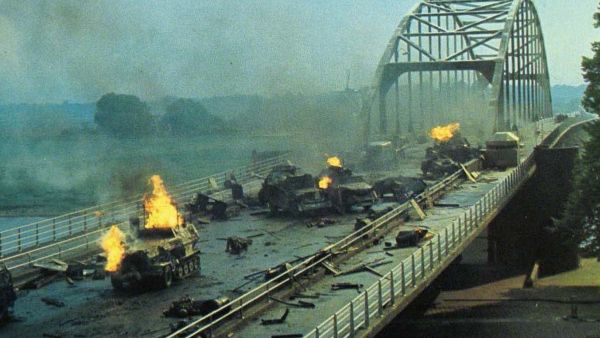
In September of 1944, in an attempt to land a finishing blow to Germany following D-Day, Allied forces launched Operation Market Garden, a bold offensive that would drop over 30,000 soldiers behind enemy lines.  The objective was to capture and hold three strategic bridges in the Netherlands, over which a massive column of British tanks would then roll straight into the Ruhr, the heart of Germany’s industrial complex.  Neutralize the Ruhr, and taking Berlin would be inevitable.  However, as with so many other simple plans in history, multiple factors led to the operation getting bogged down at the third bridge, and after massive Allied casualties, the offensive was abandoned.

Based on a bestselling novel by Cornelius Ryan (who also wrote the novel The Longest Day), the movie of A Bridge Too Far resembles the actual Operation Market Garden, not just in appearances, but also in its ambition, scope, and ultimate failure to achieve its goal.  However, as a pure combat movie, I give it credit where it’s due.

First off, look at this cast.  There had not been an assemblage of so many of Hollywood’s leading men since 1962’s The Longest Day (“42 International Stars”, that movie’s posters proclaimed).  Naturally, most of the actors are pitch perfect in their roles, with one glaring exception.  Whoever thought Gene Hackman was just the right guy to play a Polish general was either desperate or foolhardy, or both.  Hackman is a talented actor, without question, but his attempt at a Polish accent is a MAJOR distraction from whatever he’s saying.  Every once in a while, it even pulls a disappearing act, not that it matters.

ANYHOO.  The all-star cast.  To offset the lengthy running time, the story is told in semi-episodic fashion, which makes me wonder if someone hasn’t thought about rebooting this movie as a Netflix/HBO/streaming miniseries.  I’d watch it.  Within each of these episodes, it helps if we remember right away that Michael Caine is the leader of the tank column, Sean Connery is heading up one of the ground units, Anthony Hopkins is holding the bridge at Arnhem, and Elliot Gould is the cigar-chewing American trying to get a temporary bridge put together, and so on.  It’s a rather brilliant way of using visual shorthand to keep the audience oriented during its nearly three-hour running time (including an intermission at some screenings).

There is one “episode” featuring James Caan that has literally – LITERALLY – nothing to do with the plot.  He plays an Army grunt who has promised his young captain not to let him die.  After a grueling ground battle, Caan finds his captain’s lifeless body and, after improbably running a German blockade, holds an Army medic at gunpoint, forcing him to examine his dead captain for signs of life.  I read that, unlikely thought it may seem, this incident really did happen as presented in the film (more or less).  All well and good.  But what does it have to do with capturing bridges?  I’m sure the story is in the novel, but the movie takes a good 10-to-15-minute detour from the plot to follow this bizarre story.  Did director Richard Attenborough think we needed comic relief or something?  I remember liking that story as a kid, but watching it now…is it necessary?  Discuss amongst yourselves, I’ll expect a summary of your answer at tomorrow’s class.

I want to mention the combat scenes in A Bridge Too Far.  First off, I never served in the armed forces.  Well, never in combat.  I was in the Air Force for about a week.  (Well, Air Force boot camp in Oklahoma for about a week…LONG story.)  So, my observations of the combat scenes are less about historical accuracy and more about how they compare to other films.  While some of the combat portrayed is rightfully horrific in its own way – the river crossing in those ridiculous canvas boats, the slaughter of the paratroopers, the seemingly endless holdout at Arnhem – a lot of the combat, particularly the tank shelling and the skirmishes at Arnhem, is…I have to say, it’s kind of fun to watch.  There’s something, I don’t know, charming about it all.  It reminded me of how I used to play with my army men and Star Wars figures, or how I used to run around with neighborhood friends wearing plastic helmets and pretending we were “good-guys-and-bad-guys” while throwing dirt clods at each other and making fake explosion noises.  It was movies like A Bridge Too Far that shaped my young impressions of what wartime combat was like, and whether it was realistic or not was irrelevant.

Anyway, enough nostalgia.  Here’s the sad truth: A Bridge Too Far, despite its thrilling combat and all-star cast, falls short of delivering a truly meaningful war film.  There are half-hearted attempts to drum up some dramatic impact with scenes in a makeshift field hospital and a speech in Dutch from Liv Ullman wearing her best “isn’t-war-awful” expression, but for some reason those scenes fall flat.  (I did like the “war-is-futile” scene with that one soldier who runs out to retrieve the air-dropped canister, only to discover…well, I won’t spoil it, but it’s a good scene.)

After writing almost 1,000 words, I’m no closer to explaining why A Bridge Too Far falls short.  It’s still an entertaining watch, but I’ve really got to be in the mood for it.  It’s rather like reading a historical novel that isn’t particularly thrilling like a Crichton or a Clancy, but it does deliver some eyebrow-raising information.  It doesn’t hit me in the heart, but it does feed my brain.  Maybe that’s not such a bad thing in the long run, but if movies are about stirring emotions, I must say: A Bridge Too Far is no Saving Private Ryan.

(Sure, I probably could have just said that instead of writing this long-ass review, but where’s the fun in that?)


QUESTIONS FROM EVERYONE’S A CRITIC

Best line or memorable quote:
“Remember what the general said: we’re the cavalry. It would be bad form to arrive in advance of schedule. In the nick of time would do nicely.”

Would you recommend this film?  Why or why not?
Ultimately, I would recommend it to film buffs who have not yet seen it.  If nothing else, it’s an interesting time capsule movie.  This would be the last time for a VERY long time that anyone would attempt to make an epic film with a truly all-star cast.  …come to think of it, I can’t think of a major, epic drama since A Bridge Too Far with an actual A-list cast.  Can you?

GUESS WHO’S COMING TO DINNER

By Marc S. Sanders

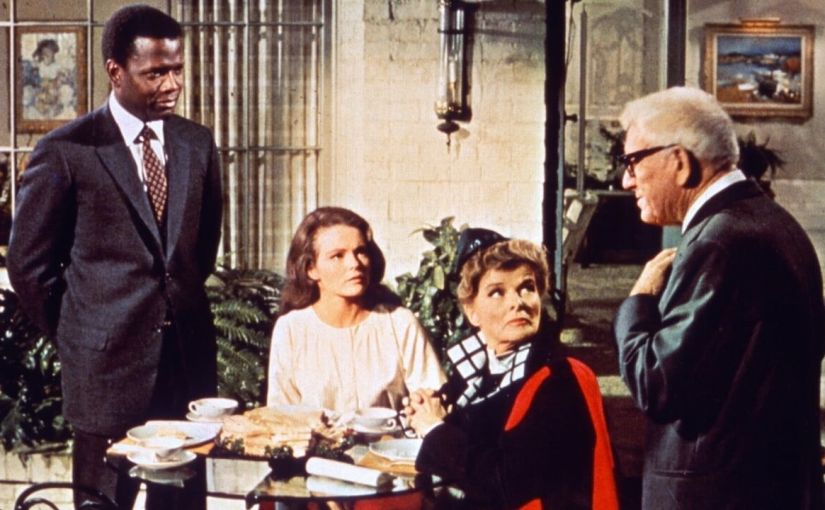
Watching Stanley Kramer’s Guess Who’s Coming To Dinner had me reflect on a brief encounter I had many years ago.  I was a head teller in a bank and approached the drive thru window to collect a customer’s transaction.  The junior teller who was part of my team got there before me and as she reached for the checks and deposit slip she commented “That’s disgusting!”  I was so engrossed in a busy day that it didn’t register until later what she was referring to.  In fact, I’m proud it did not register.  The customers in the car were a mixed couple with two children in the back.  I guess I’m happy to be naturally color blind.  Sadly some others still live with such an ailment.  We’ve come a long way, but I think we have a lot further to go.

Guess Who’s Coming To Dinner is a classic American film that should be watched by anyone with a pulse.  If not for anything else, then to realize that somehow our human nature is held back by prejudices that we can not keep from considering.  So, let’s learn to overcome whatever foolhardy thinking stands in the way of happiness for ourselves and our loved ones.

Sidney Poitier portrays Dr. John Prentice, a gentlemanly successful, polite, and brilliant physician with an educational background from Johns Hopkins, a professorship at Yale and internships with the World Health Organization in Africa and Asia.  He has just flown into San Francisco from a Hawaiian vacation with the young girl he has fallen madly in love with, Joanna Drayton (Katharine Houghton).  Joanna is the daughter of Matt and Christina Drayton (Spencer Tracy, Katharine Hepburn).  She is a highly energetic twentysomething with an optimistic view on life.  Everyone else has to take a second look at the fact that Joanna is paired up with a Negro or a colored man (as the movie indicates).  Even their cab driver has to offer an odd glance while the happy couple kiss in the back seat.  John is even aware that it can be a little startling at first.  Joanna doesn’t give it a second thought as she was raised by liberal parents who taught her that no race or creed is better than any other.  Everyone is equal.

The test for Matt and Christina however is whether a black man can be a husband to their white daughter?  It’s much different when you are on the outside looking in.  How do you respond when such a scenario occurs within your own household.  Even the black loyal housekeeper to the Draytons, Tillie (Isabel Sanford), takes a serious contempt towards the situation, more vocally than Joanna’s parents.  For Tillie, this is a hairbrained stunt by a wild-eyed young girl.  John’s parents fly up to meet Joanna and they have reservations as well.  It does not help that John doesn’t share with his mom and dad that Joanna is white ahead of meeting her in person.  Joanna also did not offer the same courtesy to Matt and Christina about John.  Curiously, for Joanna it should not even make a difference.  For John, he’s hesitant because he knows this will not play out well, initially. John is okay with his new, loving relationship.  He’s wise enough to know that his parents, particularly his father, will not be, however.

What caught my attention more than anything was the difference in age between John and Joanna.  He’s 37.  She’s 23. 

In Stanley Kramer’s film, there isn’t so much a prejudice towards whites or blacks.  It’s more so that there is a reservation toward a mixed race couple.  Should blacks only belong with blacks, and whites only belong with whites?  Of course not.  However, biting sarcasm is tossed into the script suggesting that what Joanna and John are doing would be considered illegal in 14 states.  It wasn’t at the time of the release of this film in 1967, but this was just ahead of when Dr. Martin Luther King Jr was assassinated amidst the civil rights movement spreading throughout the country.  Joanna even makes reference to the fact that she would not let go of John even if her mother was Governor of Alabama, who at the time was Governor Lurleen Burns Wallace, wife of notorious segregationist and former Governor George Wallace.  As well, let’s face it.  While it might be legal on the books, many in the United States were still intolerable of a living situation like this. Legally, a mixed marriage can happen.  Yet not everyone settles for just accepting what is law. 

Spencer Tracy as Joanna’s father Matt is the one who most prominently struggles with this situation.  He’s insisted upon to offer his blessing on John and Joanna’s upcoming nuptials.  However, he’s on a deadline to approve as they are flying out of town later that night and will get married in ten days while John is working in Geneva.  This is all contrived to contain the story within one day where a beginning is offered that must arrive at an end that provides closure.  It’s kind of sitcomy.  Christina warms up to the idea.  She likes John very much.  It’s Matt who has the problem.  It’s also John’s father (Roy Glenn) who takes issue as well.  His mother (Beah Richards) approves if the children are happy simply because she loves her son.

Spencer Tracy closes the film with his reasoning on the subject.  Arguably it is one of the most well thought out soliloquies in film history.  What I took away from it the most is that he stressed his concern for how hundreds of people across this country will look upon John and Joanna with unjustified derision.  Yet, the young couple will have to plow on and survive through those challenges. 

As a film, I could not help but account for a common theme in the picture which did not have so much to do with race as it did with a change in generations.  First, Kramer offers a quick escapist scene where a white delivery truck driver is bopping along to the latest rock music.  Tillie’s daughter joins in and hops in the truck for a ride with the fella.

Matt drives to a diner with Christina and orders an ice cream float.  Upon leaving, he accidentally backs his car into a young black man’s hot rod.  The older white man has to negotiate and accept fault with the younger, frustrated black man.  Once it is settled, Matt vents to his wife that he runs into one of them everywhere he looks.  Times have changed.  Matt has taught his daughter that no race is better than any other.  Does he realize that as well, though? 

Later in the film, Sidney Poitier as John has a stern conversation with his father.  John says in no uncertain terms that he owes nothing to his father.  He does not owe it to his father to not fall in love with a white woman.  His father owes everything to him for having him as a son, and he will commit that same mindset to his own children, if he should ever have any, regardless of the changes that come of that future generation.

There’s a reason Sidney Poitier is noted as a pioneer for black actors in cinema.  He was the first African American man to win an Academy Award for Lillies In The Field.  He also performed in Guess Who’s Coming To Dinner in the same year he made In The Heat Of The Night, which focused on a black Philadelphia cop headlining a murder investigation in the racist state of Mississippi at the time.  Both films were nominated for Best Picture. Heat won.  Poitier was well aware of the racist strife permeating throughout the country.  Per his insistence for his own safety, In The Heat Of The Night had to be shot primarily in the state of Illinois, away from the southern states that were not ready to accept a black man in an authoritative role.  I recall reading that Poitier refused to be cast in roles as the clown where the black man was treated as the punchline for white people’s entertainment.  He kept to a policy of adhering to roles demonstrating the intelligence of black men the same as other colleagues in his profession who were of the Caucasian race.  What an influence he was because of his doctrine.

Guess Who’s Coming To Dinner does not take daring risks with its story.  Every single character is likable, other than the racist colleague memorably dismissed early in the picture by Hepburn.  At times, the story does play like a sitcom ready to welcome a laugh track.  Nevertheless, it is an important film to see nearly sixty years later when racism and prejudice remain uninvitingly prominent.  The script, written by William Rose, is so sensible.  What is so wrong with a man, any man, in love with a woman, any woman?  Yes.  It feels unconventional when your household has consisted of one race for so many years or decades.  However, despite the difference in the pigments of two people’s skin, happiness is what is most important.  Matt testifies towards his unconditional love for Christina in his closing remarks and determines that is the one true factor in a relationship that must always be questioned whether it is the start of something new or something that has reached its twilight years.

As I come to my conclusion, again I reflect to that incident I had working in the bank with that teller.  What exactly was so “disgusting?”

NOTE: On this second viewing of the film, I specifically paid attention to Spencer Tracy’s closing monologue.  George Clooney recalled on Inside The Actor’s Studio with James Lipton, a story he heard.  Tracy was very ill during the making of this picture.  So ill, that Katharine Hepburn contributed financing to making this film to appease the insurance company that was concerned about the actor being unable to finish the project.  She drove him to and from the studio and often left early with him when she could see he could not go on much longer in the shooting days. During Spencer Tracy’s monologue, you can see him looking down frequently as he delivered his dialogue.  He was reading lines and blocking cues on the floor.  Clooney was just so impressed.  Typically, an actor would be directed to avoid looking down so much and focus on the camera in front of him or the other performers in the scene.  Spencer Tracy was just so impressive with his timing in this moment.  His glances down at the floor were embedded into the behavior of the character.  Sadly, Spencer Tracy passed away 17 days after filming was completed on Guess Who’s Coming To Dinner.  He received a posthumous Oscar nomination for Best Actor.  I like to think the challenge he endured lent itself to an adoring, beautiful and unforgettable performance. 

THE MENU

By Marc S. Sanders

Whether you’re the storyteller or the viewer/reader, you take a chance with satire.  The darker the satire is, the even greater the risk you take. A film like The Menu, from director Mark Mylod, is one such example. You’ll hate it…like my wife did, despite the lively conversation we had afterwards.  On the other hand, you might love its invention to strike back at an upper class that lacks any clue or respect for the talents of others. Then again, you just might only like it.  Well…at least I liked it.

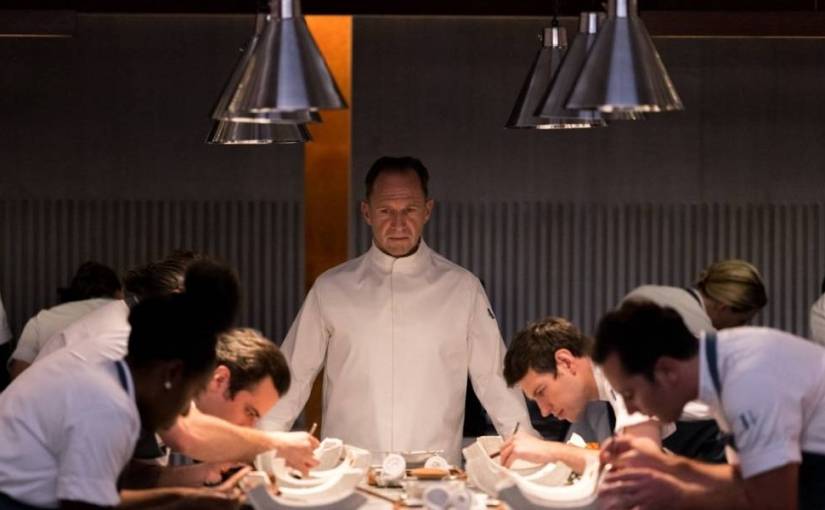
Ralph Fiennes’ résumé has earned a reputation to intimidate an audience. He is a superb actor who can be absolutely frightening as a Nazi in Schindler’s List, or heartbreaking as a torn affiliate of a deceitful plot like in Quiz Show. He can also go toe to toe as a Greek god against Liam Neeson, or he can demand that James Bond “Stand down!” and strike with snake like glee at Harry Potter. He can also teeter along the antics of the devil himself as he portrays the world’s most esteemed chef in The Menu.

A collection of guests is escorted by boat to a remote island where the finest restaurant is located and run by Chef Slowik (Fiennes), with assistance from Elsa (Hong Chau).  There’s Tyler (Nicholas Hoult), a die-hard fan of the chef’s craft with his date Margot (Anya Taylor-Joy), who is nowhere near as impressed.  Tyler has to remind Margot not to smoke, otherwise it’ll destroy her palette for taste.  There’s an older couple who has frequented the Chef’s dining establishments before and are back for another visit.  There are a pair of restaurant critics. There’s a movie star (John Leguizamo) with his young assistant.  Finally, there is a trio of sophomoric, yuppie businessmen who are here because their last monthly commission likely afforded this exclusive opportunity, and their favorite hockey team was out of town.

When the guests arrive on the island, Elsa gives them a tour ahead of the restaurant where they will eventually dine.  A cabin is displayed to show how the meats are aged over a period of 152 days. Quite specific! One of the yuppies has the audacity to ask what happens if you age it to day 153. I don’t recall Elsa’s response.  I do remember her disdain for the question though. They walk through the lodge where Elsa explains that the entire staff reside and sleep in the one room together. One cot for each person. Odd, but okay. Moving on is a quick pass by the cottage where the Chef resides, and no one is permitted to enter. Oooo!!!! I know one thing I expect to happen.

It is important to note that I opted not to read up on anything The Menu was about.  I didn’t know if I was to see a comedy, drama or horror film.  As this tour continued though, I had eerie recollections of the film Midsommar, directed by Ari Aster. That movie still gives me the bejeebees.  So much so that I could not bring myself to write an article about it.  Like that film, our cast has become isolated in a desolate locale, and the guide could not be more unsettling.  When they arrive at the restaurant, a large horizontal door is thunderously closed behind them. Margot gives a quick look back over her shoulder. This cannot be good.

Lending to the structure of the film, courses are presented with a startling clap of the hands from Chef Slowik. Mark Mylod executes a nice pattern of gracefully displaying text across the screen describing what the next featured course is, along with its fine ingredients.  It is elegant but also only partially revealing of some of the guests. Tyler isn’t the kind of fan that Chef would welcome.  After a request has been made not to take pictures of the dishes, he does so anyway.  He is uncouth with his commentary and clumsy as well.  Additionally, bewildering for Chef Slowik is the presence of Margot. He was not expecting her to attend. Yet, here she is and he cannot understand why.

The Menu does not deviate from its intent to be strange. A bread dish is presented without any bread! Only the dips. Tyler is absolutely impressed. Margot thinks it is ridiculous. By the time, the fourth course has arrived, a shocking presentation is exhibited to the guests and that is where the film takes a graphic turn.

It’s best not to reveal much about the movie.  Its features work if you share the perspective of the guests, particularly Margot. What you are left to decide though is if you accept that dark satirical nature of the piece.  You will or you won’t.

I did not find The Menu to be very symbolic, allegorical, or even a reflection of the natures of social classes who partake in exclusive high-end cuisine.  Chef Slowik has prepared a specific plan for this assortment of guests. The execution and outcome cater to his personal satisfaction and no one else’s.  I guess that’s why I only liked the wit behind the message of the film.  I just could not fully embrace its invention.

My experience with satire typically allows me to think about how people behave and what they can learn from outrageous proposals or extreme actions. Network explores how the world responds to what is proposed for satisfying television audiences while generating business profits.  A film like The Menu delves into grandiose, unheard of actions that will satisfy the one puppet master behind everything you are seeing.  Maybe I was looking for the message the Chef delivers to include my own misgivings and sins and temptations in his overall delivery.  Instead, his machinations rely on these specific guests on this particular night, and so I kind of felt left out of the circle. As the guests are specifically affected by the developments of the evening, I can’t say I had any care or sense of suspense for them.  Nor did I care for Chef’s own satisfaction as the evening carries on.

The cast is a terrific eclectic assortment. Anya Taylor-Joy is a smart and forthright hero against Ralph Fiennes’ antagonist. A well written conclusion that made me applaud is included by her character’s deductive reasoning. The other players though are not given much fat to chew on in terms of dialogue or scenes.  Their purpose is specifically explained, and then they are left to watch and wait for the climax of the film. I like the veil that is lifted from Margot’s character.  I would have welcomed a little more subtext on the other characters, however. Again, their purpose is laid out, but I think the film, which clocks in at around an hour and forty-five minutes, could have dug a little deeper into the guests sitting at the other tables. Not to mention those few who also serve on the Chef’s cooking staff.

The Menu is an unusual film, like an episode of Tales From The Darkside or The Twilight Zone.  It is limited like a TV episode. I just think it needed two or three more courses to savor just a little more meat on the bone.

THE BANSHEES OF INISHERIN

By Marc S. Sanders

You ever hear of the modern term “ghosting?”  Normally, it applies to social media, like with Facebook, Instagram and every other brain cell sucker app we occupy ourselves with on our electronic devices.  It’s where suddenly, for no reason at all, a friend or acquaintance will stop speaking to you.  They will ignore your attempts to talk.  If they do talk to you, they simply will say stop talking to me and do not call me again. They will never share a reason for this new perspective they have for you.  They just want to continue with their lives without you being a part of it.  I have been ghosted on two separate occasions.  It hurts.  It really hurts, and I constantly must remind myself not to dwell on these people.  They don’t care.  They lack any further regard.  It’s just unbelievably puzzling when it happens.

With The Banshees Of Inisherin, director Martin McDonagh reunites Colin Farrell and Brendan Gleeson, who shared the screen together in the well received In Bruges, to portray these two former friends.  Farrell plays Padraic.  Gleeson is Colm.  The film takes place in 1923 on the fictional Irish coastal island of Inisherin.  Padraic strolls over to Colm’s house to walk with him to the pub for their daily 2pm pint together while they chat.  Upon arrival, Colm is seen sitting in his home, ignoring Padraic’s knocks on the door and window.  It’s odd and unexpected. 

When Padraic shows up at the pub alone and later Colm arrives, the other regulars ask Padraic if the two lifelong friends are “rowing.”  Not to Padraic’s knowledge.  Maybe this is an April’s Fools joke?!?!

Colm holds true to his new position.  He explains to Padraic, with no uncertain terms, that he no longer wants to speak with him.  Padraic makes attempts to open up to Colm hoping they can hash this out, but there is nothing penetrating Colm’s stance.

What lends to the sustenance of the near two-hour film is the setting that Padraic resides within.  An island in the middle of nowhere where he has no interests or hobbies or specialties for anything.  He really has only happily lived with his friendship with Colm, which is now suddenly yanked away from him.  He lives well with his sister, Siobhan (Kerry Condon), and his adoring miniature donkey, Jenny.  Siobhan truly loves her brother, but not Jenny or the other animals who reside on their property.  As the Irish Civil War is coming to a close, an educated Siobhan is ready to move on from the nothingness of Inisherin.  Padraic is not.  He’s lived so comfortably on the Irish coastal island his whole life.

Colin Farrell is an actor you want to embrace in this film.  As I’ve experienced something similar to what Padraic endures, I can relate to what stuns him at his sudden loss of friendship.  Padraic is a good man.  Colm knows this which is seemingly why extremes needs to be undertaken to stress exactly how Colm feels about Padraic going forward.  Colm cannot simply plead for Padraic to move on.  He first makes the request.  Later, he has to do something else to deliver his point.  When I say extremes are taken, you can not even imagine what occurs.  It’s shocking, but believable. 

Brendan Gleeson normally offers an intimidating presence on screen.  He falls into roles of men you’d likely only cautiously approach.  The same goes for his character of Colm here.  McDonagh wrote the character with no compromise. Only when a significant turn occurs, does Colm violate his feelings with how he regards his former friend.

Kerry Condon should get an Oscar nomination along with Gleeson and Farrell. Siobhan is both a loving sister but while she’s the younger sibling, she is also the more sensible.  As Siobhan, Condon’s timing for losing patience in the part is well paced.  Condon is awarded with some of the best dialogue in the script.  McDonagh could have written this film from the perspective of her role, rather than Padraic’s, and I bet it would still work thanks to what she lends to the piece.

Barry Keoghan plays a young regular around Inisherin named Dominic.  Kind of like a local idiot who is undeservedly abused by his policeman father.  Keoghan’s role is a side story, but he plays it so well.  Despite Siobhan’s protests, Padraic takes Dominic in.  He’s not meant to replace the void that Colm left in Padraic’s life but it further reminds you of the kindness of Farrell’s character.  It begs the question why someone would ultimately stop speaking with a good person like Padraic, at a given instant.

My wife was not interested in watching this film and asked me to give her a rundown of what happens from beginning to end.  When you describe The Banshees Of Inisherin out loud, you sound ridiculous even though you’ve appreciated some of the surprising moments you just watched.  I told my wife; you have to see it to understand.  I understand Padraic’s yearning for the friendship he once had.  I understand the measures he takes in response to the one thing he valued beyond his sister and his pet donkey.  When you live in a low populated island town with little stimulation beyond the people who have been a part of your entire life, to suddenly lose that is devastating.

Martin McDonagh has crafted an unusual script.  Often, break ups in films go the traditional route of the loving relationship going through a split.  If it’s a friendship, I’d argue I’ve seen it occur more often between two women.  McDonagh’s film acknowledges the impasse among two grown men.  His script could have been occupied only with dialogue constructed of standard duet scenes between two very strong actors.  Fortunately, he doesn’t just rely on that.  McDonagh stretches his imagination further to drive home the point of how these two men respond to this unfortunate outcome.  The actions they take are startling, but as I reflect on the script for the film, I cannot deny how alert McDonagh is with crafting the motives of his characters. At the very least, I’m empathetic for poor Padraic who struggles with the loss of a friend. 

To lose a friend is to lose a part of your soul. What can I say? I’m an overly sensitive guy.  It’s always been my Achille’s heel.  How do I survive, though? I think back to what my father once told me.  He said “Marc, if you have one friend in life, then you’re the luckiest guy in the world.”  Thankfully, I’m rich in many friendships.

Forgive my digression though.  It’s important to know The Banshees Of Inisherin is a very good and a very sound film.

MIGUEL’S FAVORITE MOVIES/TV SHOWS OF 2022

by Miguel E. Rodriguez

Another challenger arrives! This challenge comes from Anthony Casale who asked us (me, Marc Sanders, and the estimable Mr. Thomas Pahl) what our 10 favorite movies and/or TV shows were from the 2022 calendar year.

Below are my answers, along with a few cherished honorable mentions. Let me know how I did in the comments. And thanks for reading!


10. BABYLON – Recipe for making the movie Babylon: Take three parts Singin’ in the Rain, three parts Boogie Nights, two parts Moulin Rouge!, two parts The Artist, and a dash of Goodfellas.  Throw everything into a Cuisinart and mix it all together into a frenetically-edited dough.  Smooth it out into a bread pan, being careful to leave a VERY few uneven spots.  Throw it into an oven that’s hotter than a poor guy locked in a sound booth.  Bake until everything is a golden brown with a tinge of debauchery, insanity, and highly questionable morals.  Serve while sizzling.  (Wait…is this a good review or a bad review?  The answer is: yes.)

9. CLERKS IIIAs a fan of all things Kevin Smith…well, MOST things Kevin Smith…this was one of my most highly-anticipated films of 2022.  I was not disappointed.  Clerks III retains all the irreverent humor from the first two installments, wrapped in a surprisingly touching screenplay that goes so meta it becomes almost impossible to identify what’s fiction and what’s autobiography.  Mr. Smith has sometimes said he CAN make “good” movies when he wants to.  It would seem this good movie escaped the editing room without him realizing it.

8. LIGHTYEAR – Okay, I’m not going to change anyone’s mind about this movie, so just move along if you didn’t like it.  As for me, I didn’t just like it, I loved it.  I thought it was an intriguing thought experiment that fits extremely well into the Toy Story-verse.  (If that’s not a word, it should be.)  Not only was the story compelling on its own, but the filmmakers also threw in multiple throwbacks and Easter eggs referencing specific moments and shots from the first two Toy Story films.  I will acknowledge the negative opinions of this film, but I cannot say I understand them.  This was a treat.

7. HOUSE OF THE DRAGON, Season 1 – Due to the trash fire that was the final season of Game of Thrones, my hopes were very, very low for House of the Dragon.  Rumors abounded: it’s been axed, it’s been delayed, it’s been transferred to Netflix, etcetera.  So, I was very pleasantly surprised when I found myself drawn back into the Thrones-iverse (patent pending) with this prequel series set nearly 200 years before the original.  Like the original, the very first episode reaches out and grabs you, then settles in for palace intrigue, bloodshed, betrayal, and boobs.  (It’s not porn…it’s HBO.)  I couldn’t tell you any of the names of the main characters if pressed right at this moment, but while it plays, it’s compelling television.  I hope the remaining seasons can live up to the promise of this first one.

6. TURNING RED – One of Pixar’s best, funniest movies since Inside Out.  Most of the negative reviews of the movie that I read had one thing in common: they all called the lead character “irritating.”  Well…the lead character is a rebellious, hormone-stricken 13-year-old girl.  Of COURSE, she’s irritating.  That just makes her character feel more real and grounded.  Some folks also had problems with a kid’s movie addressing feminine hygiene, however briefly.  Well, gee whiz, heaven forbid we introduce a daily – monthly? – fact of life into a film.  That element of the movie made it feel like an animated film written by John Hughes.  This is not a bad thing.  (Read my full review here: TURNING RED (2022) – 2 UNPAID MOVIE CRITICS!!!! )

5. SUCCESSION, Season 3Succession is basically Game of Thrones without the dragons, incest, nudity, and gory violence.  All the other elements are there: power struggles, betrayals, conspiracies, double-crosses, family loyalty, explosive secrets, etc.  Season Three was just as entertaining as the first two seasons, with more twists and turns than the Monaco Grand Prix.  Brian Cox’s performance as the family patriarch, Logan Roy, stands with the best work he’s ever done.  His brood of conniving children are every bit his equal…but they just can’t seem to get him out the door.  Every time they think he’s cornered, he pulls a Houdini by being even more lowdown than they would ever suspect.  It’s a breathtaking feat of writing, acting, and direction.  My favorite HBO series since, you guessed it, Game of Thrones.

4. TOP GUN: MAVERICK – The sequel NOBODY wanted…but when it finally arrived, miracle of miracles, it was actually good.  No…not just good.  It was GREAT.  The film’s creators wisely realized they needed to inject this sequel with a healthy dose of nostalgia for fans of the original 1986 film.  (Thirty-six years previous!)  As one of those fans, let me tell you: when the first notes of the “Top Gun Anthem” started playing over the opening credits, a ridiculous grin was plastered on my face, and it stayed there for almost the whole movie.  Attention must be paid to the fact that virtually all the cockpit scenes in the film are 100% real, filmed with the real actors in the real cockpits of real Navy jet fighters.  The effect of this method cannot be overstated.  The aerial combat scenes felt absolutely authentic, creating a vibe that green/blue-screen trickery simply cannot duplicate.  True, the story/screenplay isn’t exactly Oscar material…but who cares?  What a ride!  (Trivia note: this is one of the most financially successful sequels of all time, if not THE most successful.  Total global box office take from May thru December 2022: nearly $1.5 billion.  I think this Tom Cruise guy may have a future in movies…)

3. ANDOR, Season 1 – It’s finally here: the Star Wars series for people who hate Star Wars.  Purists have been heard to lament the fact that Andor has very little in it to identify it as part of the Star Wars universe.  No Jedi.  No lightsabers.  Very little mention, if any at all, of the Force.  Only one space “battle”, if you’d even call it that.  As for me, I thought all those absences worked in Andor’s favor.  Created by Hollywood veteran Tony Gilroy (screenwriter of, among many others, the Jason Bourne franchise, Michael Clayton, and wouldn’t you know it, Rogue One), Andor presents us with a more realistic version of the Star Wars universe.  Did you know there are desk jobs in the Imperial bureaucracy?  Well, why wouldn’t there be?  Fighting a rebellion costs money – where does that money come from?  Who funds it?  A highly placed senator has a plan, but she must find a way to keep it a secret, not just from Imperial oversight, but also from her husband and daughter.  These people couldn’t give two figs about the Force; they’re just trying to stay one step ahead of the bad guys.  There are so many brilliant details, I could literally go on and on.  Andor is the most compelling new series I watched all year.

2. THE BATMAN – Wow…and I thought Joker was dark.  A serial killer goes on a spree, leaving behind notes and riddles for the Batman.  Putting his considerable deductive skills to work, Bruce Wayne follows the clues, but the killer manages to stay one step ahead.  Do these seemingly random murders have a connection?  Does the killer have a master plan?  Is water wet?  What made this new version so thrilling was the fresh screenplay, yes, but also the visual style.  This new version of Gotham City seems to inhabit the same universe as Blade Runner, where the rain is more or less perpetual, and the nights are lit like an early episode of Miami Vice.  Robert Pattinson’s take as a younger, but equally tortured, Bruce Wayne felt even more “organic” than Christian Bale’s Batman.  Pattinson pulls off a younger, even angrier vibe, and it’s interesting to see that part of the Batman’s evolution.  The serial killer’s methods and personality felt like something right out of Se7en.  Colin Farrell’s Penguin is a master class in knowing just how far is too far to go with a big character.  Zoë Kravitz as Selina Kyle is every bit as dangerous as her predecessors.  And holy crap, that Batmobile…?  DAYAM.  Nolan’s The Dark Knight is still my favorite Batman film overall, but The Batman stands as an impressive example of the right way to reboot.

  1. EVERYTHING EVERYWHERE ALL AT ONCEFar and away the single best movie I saw from 2022.  I’ll keep it short by saying, read my full review here: EVERYTHING EVERYWHERE ALL AT ONCE (2022) – 2 UNPAID MOVIE CRITICS!!!!


    HONORABLE MENTIONS, in no particular order:
    The Bob’s Burgers Movie
    Doctor Strange and the Multiverse of Madness
    Stranger Things, Season 4
    The Fabelmans
    She-Hulk, Season 1
    The Menu
    Strange World
    Avatar: The Way of Water
    Solar Opposites, Season 3
    Moon Knight, Season 1

MARY AND MAX (Australia, 2009)

by Miguel E. Rodriguez

Director: Adam Elliot
Cast: Toni Collette, Philip Seymour Hoffman, Barry Humphries, Eric Bana
My Rating: 10/10
Rotten Tomatometer: 95% Certified Fresh
Everyone’s a Critic Category: “Watch a Stop Motion Film”

PLOT: A tale of friendship between two unlikely pen pals: Mary, a lonely eight-year-old girl living in the suburbs of Melbourne, Australia, and Max, a forty-four-year-old severely obese man living in New York.


“Mary Dinkle’s eyes were the color of muddy puddles. Her birthmark, the color of poo.”

Thus begins the narration of one of the most poignant movies I’ve ever seen, Mary and Max, a 2009 stop-motion animated film made in Australia.  It never got a wide release in America; were it not for the fact it appeared on the IMDb list of the top 250 favorite films worldwide, I might never have heard of it.  Thank goodness I found a copy online and bought it…one my best “blind-buy” purchases ever.

At this point in an earlier draft of this review, I launched into a plot description which veered into a discussion about the movie’s color palette, its tone, its agenda, etcetera.  But that somehow didn’t feel right, and I got bogged down.  What I really want to impart upon you, the reader, is how it made me feel.

It’s a drama about mental illness wrapped in the trappings of a Tim Burton-esque dark comedy.  What this means is, some of the visuals are right out of The Nightmare Before Christmas: oversized flies with googly eyes, suicidal goldfish, main characters whose body shapes resemble vegetables more than people.  But the story and emotional beats rival any Merchant Ivory film or James L. Brooks weepie.

Eight-year-old Mary Dinkle, who lives in Australia, starts up a pen-pal correspondence with Max Horovitz, a 44-year-old obese single man with undiagnosed (at least initially) Asperger syndrome.  After his initial panic attack at receiving a letter from a complete stranger, which throws his carefully controlled equilibrium out of whack, he writes her back, and they wind up having a decades-long correspondence.  She has no friends due to her prominent forehead birthmark.  He has no friends because he can’t relate to people.

The movie is mostly an unseen narrator bridging gaps between their letters, while the letters are read as they’re being written/typed by Mary and Max.  The relationship between the two is as touching as anything I’ve ever seen on film.  She sends him a hand-drawn picture of herself, which he keeps in his mirror to remind himself how people are supposed to look when they’re happy.  He sends her his recipe for chocolate hot dogs (a chocolate bar in a hot dog bun).  She asks him all the important questions, like: if a taxi drives backwards, does the driver owe YOU money?  He explains a long gap in their correspondence: “I was hospitalized, won the lottery, and my next-door neighbor died.”

These two lonely souls reaching out to each other just made me feel sunny inside, even amid the small tragedies they each faced.  Mary’s father dies.  Max keeps having to buy goldfish.  Mary falls in love with the Greek boy across the street, a boy who stutters, wants to be an actor, and, when they become engaged, makes her wedding dress for her.  Uh, huh.

The way in which the stories of these two people were written to complement each other without being identical is a delicate balancing act that threatens to veer into farce, then rights itself at the last second.  As I say, it’s hard to describe.

A turning point occurs when Mary gets a bit older, goes to school, studies mental disorders, and writes a book about her American pen-friend with Asperger’s.  She sends him the very first copy…but Max’s reaction is not what she anticipated.  She falls into a depression…

And here the movie takes a brilliantly dark turn.  I remember watching it for the very first time thinking, “Are they really telling THIS kind of story in a stop-motion film?”  Yep, they are.  There is a key scene where Mary has a kind of fever-dream hallucination choreographed to a haunting version of “Que Sera, Sera”, and my jaw dropped.  I cannot claim to have intimate knowledge of mental illnesses, but this scene just feels right.  This is a great representation of what someone’s mind might look and sound like on the brink of a terrible decision.

I realize I’m not making this movie sound like a lot of fun.  I can assure you that it is entertaining and fun, with a nasty (in a good way) habit of getting a chuckle while juxtaposing it against a scene of subtle awfulness.  The way Mary’s mother dies gets a laugh…but only as you’re listening to her death throes in the background.  The way Max’s various goldfish die is alternately funny and gruesome, or both at the same time.

And the REAL kicker is the final sequence, where Mary finally discovers where Max has kept all her letters through the years.  This moment is one of the greatest revelations I’ve ever seen, and I nearly shed a tear when she did.

Portrayals of mental illness in films have had varying degrees of success.  For every Rain Man, there’s an I Am Sam.  With Mary and Max, the filmmakers used the stop-motion medium to present hard-hitting material without totally getting bogged down in the inherent trauma or pathos of the illness being portrayed.  It’s an ingenious combination, but I’ll be damned if I can explain exactly WHY it works.  It just does.  Mary and Max remains one of the most unique animated films I’ve ever seen.  Seek this one out if you can.


QUESTIONS FROM EVERYONE’S A CRITIC

Were you surprised by the ending? What would you do differently?
I was bamboozled by the ending. I do sort of wish we had some idea of what happened to Mary after her trip, but I guess that’s okay. I wish her well in her future endeavors, wherever she may be.

Why do you think stop-motion was chosen for this film rather than animation?
As I mentioned, I believe it was to leaven the deep, potentially dreary material with the inherent oddness of the medium. Even a man in a wheelchair with no legs looks undeniably goofy…but it’s tragic. But he looks kinda funny.

THE GOONIES

By Marc S. Sanders

You know how there are some movies designed for that unexpected thunderous rainy, Saturday afternoon?  Maybe a Star Wars flick or an Indiana Jones.  James Bond or Marvel?  For me the best candidate is probably The Goonies, where the rascally kid in all of us comes alive, yearning for adventure like riding our bikes through the paths of the sleepy town we live in over to a hiding spot on the other side of the woods where a once long lost treasure map begins an unknown journey.  Quick on our tales though are the bad guys with the humped back, crooked nose and clicking revolver.

Richard Donner did more for The Goonies than I think a lot of people realize.  It’s no wonder to me that the film is officially inducted into the National Film Preservation Archives since 2017, the same year that pictures like Guess Who’s Coming To Dinner, Ace In The Hole and Titanic also received their recognition.  Maybe Donner had help from producer Steven Spielberg and screenwriter Chris Columbus.  Granted, ahead of the age of cell phone addiction, these guys knew how twelve and thirteen year old kids ticked.  The Goonies bond over insulting each other, shoving one another, telling each other to shut up and freely dropping the s-word.  It’s a rite of passage.  It’s how I bonded with my buddies at that age.  Heck, I still maintain contact with my best friend at the time, Scott, and we still trade barbs like that even if we live over a dozen states away from each other.

Sean Astin plays the asthmatic leader of the gang, named Mikey.  A son of actors Patty Duke and John Astin, he made his film debut with The Goonies, and I think it holds as one of the best child performances to grace a screen.  He’s such a genuine little guy, who is passionate about making any last ditch effort to save his house and home town from being bulldozed by greedy golf course developers.  On a rainy Saturday afternoon, Mikey’s buddies ritually come over to the house and with his older brother Brand (Josh Brolin, another celebrity son making his film debut) make their way into the attic and uncover a treasure map written by the infamous pirate from the 16th century, One Eyed Willie.  Soon after, Mikey along with Mouth, Data and Chunk (Corey Feldman, Ke Huy Quan and Jeff Cohen) embark on adventure that leads them to the underground caverns of an old restaurant off the Pacific coast.  Two high school girls, Andy and Stef (Kerri Green, Martha Plimpton) join the gang.  Andy and Brand have adorable puppy love crushes on each other. 

One Eyed Willie’s map supposedly leads to a treasure of enormous wealth that Mikey and the gang believe can save their small town of Astoria from being razed.  However, there are inventive booby traps along the way, and the nasty Fratelli brothers with their cranky old mother (Robert Davi, Joe Pantoliano and Anne Ramsey) are hot on their trail.  The Fratellis are straight out of those old Hardy Boys and Nancy Drew mysteries.  They are hilarious with their bickering, and scary at the same time. Anne Ramsey was a special kind of character actor with her ugly appearance and craggily voice. It eventually even got her an Oscar nomination (Throw Momma From The Train).  

We may know how the story will end up, but Donner, Spielberg and Columbus advance with one unpredictable scene after another.  Reader, when I feel the height of suspense in a film, I actually tear up and I get a very nervous laugh.  The shootout scenes in Heat (1995) and Lethal Weapon will do that to me every time.  The lightsaber dual in The Empire Strikes Back and the snake pit scene in Raiders Of The Lost Ark!!!!  I’ve been watching The Goonies since I was the age of most of these characters.  I still get this natural reaction when Andy has to play the correct notes on a skeletal piano to open a passageway.  Each time she plays the wrong note though, a tease of impending doom appears.  It works so well in the ensemble performance of the cast bellowing “Oh no!” and “Oh shit!” and “My God!” and “Hurry up!”  Edited with the quickly advancing villains getting closer, and the pulse beat music accompanied by composer Dave Grusin, and you are so caught up in their escapades now, that it feels like you are there.

All these kids become your best friend quickly.  Data is the inventor with the tripped out gadgets, inspired by James Bond, ready to set his own booby traps.  Mouth is the Spanish interpreter who gleefully causes trouble and mischief, but Feldman the actor is allowed some tender moments as well.  Jeff Cohen is like the Curly of The Three Stooges who gets sidetracked on his own adventure with a monstrous but loving, and sadly rejected son of the Fratellis.  A chained-up ghoul named Sloth (John Matuszak).  Cohen might have the best comedic moments in the film.  When I moonlight in Community Theater, I still must remind myself that just once I’d like to audition with his hysterical crying monologue where he confesses to stealing his uncle’s toupee to use as a beard to dress up as Abraham Lincoln, while another time he used fake vomit to sicken an entire movie house.  Hilarious stuff! 

There are dropping boulders, rattling pipes, a waterfall wishing well, scary skeletons, that creepy piano, and fun water slides to circumvent around One Eyed Willie’s maze onward to his legendary treasure aboard the most spectacular pirate ship ever seen.  Rarely are kid’s adventures constructed like this anymore.  I dunno.  Maybe it’s the script.  More likely, maybe it is the cast of kid actors doing one of the best ensemble performances together on screen.  Their timing could not be more perfect among the seven Goonies. 

The Goonies is a much more honest and transparent look at how kids behave with one another than you might find in a bleached-out Disney flick.  These kids get dirty and unsophisticated, yet thoughtful.  They are not age 21 playing age 14.  They don’t have fashionable haircuts and designer clothing. They are not pop singers trying to be actors.  Most importantly, the conversations among the gang are more natural in pal around rudeness.  You’re not really a friend unless you are telling the kid next to you to shut up and exclaiming “Oh shit!” when another encounter with danger lurks ahead. 

The Goonies is just a fun ride to watch over and over again. It succeeds with its own interpretation of The Little Rascals, and it’ll give you all the feels as you watch Mikey plead with One Eyed Willie for the next clue, or when he stops to remind his Goonies that there’s more at stake than just a play date on a Saturday afternoon. 

My advice is to keep the rose colored glasses off your children’s eyes.  Let them know it’s okay to get in trouble and make mischief.  Make sure your kids know they should be the best Goonies they can be.

BABYLON

By Marc S. Sanders

Director Damien Chazelle has come a long way since his first major motion picture, Whiplash, a small film about a young, tortured drummer.  Since that accomplishment, he seems to get more and more elaborate with each project.  Babylon certainly exceeds ambition in any select 3–5-minute scene it offers within its grand opus.  The main title card doesn’t appear on screen until after the first thirty minutes and by then you are exhausted, yet completely awakened.

Babylon begins in the mid-1920s, during the pioneering times of Hollywood filmmaking where silent films were fresh and were regarded outlets for escapism and entertainment.  Big studios like MGM were not quite on the scene just yet and movie makers experimented with their films having no regard for rule and caution while constructing them.  On a busy day of shooting at around 3:15pm, an open field sword and sandal battle might turn up an extra in an accidental death with an impaled spear.  No matter.  Must keep shooting before daylight is lost and everything runs off schedule. 

It was at this time that a star like Jack Conrad (Brad Pitt), rugged with a square jaw and dashing with a pencil thin mustache, offered greatness in movie houses that showed silent pictures.  A new discovery like Nellie LaRoy (Margot Robbie) who seemingly came in off the street captured producers and patrons alike with her wide-eyed expressions and lanky, yet appealing posture.  These were the first celebrities of the advancing twentieth century.  They were starlets that brought people back and back again to the cinemas to witness battles of roman conquest or dancing on top of a bar while batting their long eyelashes for a mug at the camera.  The filmmakers loved to work with them. 

These performers ruled Hollywood until the Talkies appeared on the scene.  Movies with sound revolutionized the industry, but these famed individuals couldn’t keep up with the evolution.  Audiences and filmmakers couldn’t accept a compatibility.  Try to imagine a Jack Conrad listen to a packed movie house chuckle at one of his romantic speaking scenes.  It’s heartbreaking to watch.  He was admired, but now he’s a joke.

When the sun would set, the parties soaked–make that drenched–in orgy and debauchery would begin and nothing was off limits.  Naked women would happily get high and drunk and tossed over a large crowd.  Prop penises would be inserted into one partygoer and then another and then another.  Fat ugly men would happily accept getting urinated on.  Endless amounts of liquor and especially cocaine would be gulped and snorted and the greatest dares imaginable would always try to top themselves.  Have you ever heard of a party getting so out of control that someone would go so far as to wrestle a rattlesnake in the middle of the desert?  Jack happily watched all this decadence go down.  Nellie joyfully became the outrageously intoxicated and fearless ringleader. 

I have offered only a sliver of description for Chazelle’s over three-hour film.  To sum up, Babylon offers a hard-edged response to the family friendly interpretation found in Singin’ In The Rain.  Both films delve heavily into the transition of silent filmmaking to talking pictures and those who were left behind.  Gene Kelly and Stanley Donen’s G rated picture will have you giggle at their Lina Lamont with the squeaky voice and pratfalls who’s all wrong for the next phase.  The heavy R rated dramatic interpretation is offered in Chazelle’s script with Margot Robbie’s Nellie LaRoy and her Jersey accent, accompanied by unrefined posture and behavior.  Her drug binges are no help either.  Margot Robbie is fearless in her performance.  She is messy, sloppy, harsh and frenzied with her character.  One thing that came to mind as she is snorting line after line of coke is that at that time, there was no such thing as a means for rehabilitation like today.  No one was even looking out for the harm that drugs and alcoholic binging could have on people.  People were left to their vices to just drown in their poison of choice.  For silent pictures, you could plaster them in makeup and costume and let them mug and bat their eyes for the camera.  It didn’t matter if their speech was slurred.  Talkies required much more concentration of their performers.

The main player of the film is newcomer, Diego Calva, as Manny Torres.  A Mexican who inadvertently finds himself in the Hollywood nightlife while pushing an elephant up a steep hill only to get shit on.  (The elephant serves no purpose except to make an appearance at one of these crazy parties.)  Manny has an instinct for what’s to come in the movies and builds himself up into a studio executive.  While he’s dangerously falling in love with Nellie, he’s also discovering next big things like a Negro entertainer who’s magnificent with a trumpet, Sidney Palmer (Jovan Adepo).  Manny is a good man who swims above the dangerous life of Hollywood partying and decadence.  He’s an innovator that’ll never receive credit for what he uncovers.  That’s for the white executives to profit from.

A minor but welcoming story is Sidney’s.  He’s soon hung on posters outside movie houses, and performing with big bands.  Hollywood awards him with riches he could never imagine and never asked for.  However, ironically, his complexion comes off too white against some of his other band players and the idea of caking himself in charcoal makeup is insisted.  How will Sidney respond to this humiliating request? The wealthy also have a particular regard for him.  His status as an entertainer.  Do they see him as a showboat clown or the artist he values himself to be?  How does Sidney want to be considered?

With all of the parties and drinking and drug use to go around, Babylon goes off in a hundred different directions before it finds an even keel outline that switches storylines from Jack to Nellie to Manny and Sidney.  Chazelle strives to one up what other filmmakers before have attempted.  I could not help but think about Paul Thomas Anderson’s Boogie Nights which follows the porn industry in the late 70s and early 80s.  Happiness abounds until time and technology and constant self-abuse cause everything to unravel.  Babylon follows a very similar trajectory.

A friend of mine found Babylon too be overly gratuitous.  She’s not wrong, but while she took it as a complaint with the film.  I take how superfluous the movie is as a major compliment.  There are long scenes where Chazelle will not surrender for the audience.  He shows how drug raged Nellie is when no one will fight that rattlesnake by having her violently pick it up, swing it around and thus it will eventually latch on to her neck while she’s running around amid a gang of naked partygoers.  Then we get to see another starlet cut the snake off below it’s head, rip its fangs out of Nelly’s skin and proceed to suck the venom out.  Oh, you’ll squint and squirm through the whole scene.  What do we learn from this?  Drugs are bad.  Really bad, and they will delude you into acting with no vices or boundaries.  So, let’s be completely honest about it.

When Nellie is recruited for a talking film, we see take after take after take of her trying to make her mark while it is shouted over and over again to the crew to shut the fuck up.  There can be absolutely no noise from anywhere that the mikes can pick up and it doesn’t matter if a crewman is getting dangerously overheated in a soundbox.  (No air conditioning could be allowed because the hum would be picked up by the microphones.)  It’s a brilliantly, well edited, long and tortuous scene of flaring tempers, sweat, heavy light and stress.

I remember reading an interview with Henry Hill, the mobster who was the focus of Martin Scorsese’s Goodfellas.  Hill said with no uncertainty that the characters portrayed by Joe Pesci and Robert DeNiro were not even close to how frightening and violent their real-life counterparts were.  So maybe even Scorsese glossed over how harsh that world ever was.  Damien Chazelle is a relentless filmmaker with Babylon.  Nothing is whitewashed.  Most of what you see is shock value, but that’s the message he’s conveying and per his research he must be convinced the life of this era was actually this outrageous and way over the top. He’s certainly not forgiving with how manic these people lived, particularly with Margot Robbie’s character.

At the same time, he calms the film down to offer a harsh truth to a quickly becoming has been like Jack Conrad, Brad Pitt’s character, no longer in his prime.  Jean Smart portrays a gossip columnist reminding Jack that the height of his career is long gone, but fifty years from now, new generations will be rediscovering his achievements.  He will be a legend for all eternity.  Chazelle is speaking to us, those that appreciate what Turner Classic Films and other formats like videotape and DVD offer to see the first of these kinds of pictures where it all began with legends like Jack and maybe Nellie and especially Chaplin. Chazelle was an important student of this later generation.  This is the best scene of the picture with a magnificently written monologue, and I won’t be surprised if Jean Smart gets an Oscar nomination that no one ever saw coming.  I’m inclined to declare she should just get the award.  It’s such a telling moment for all kinds of movies.

Chazelle loves to make films.  The epilogue to Babylon demonstrates his affection as his story jumps to twenty years later, and an older Manny watches Singin’ In The Rain in a theatre. From what he inadvertently brought to the fold all those years ago, movies have evolved and continue to develop into bigger scales of what we could never have thought possible.  Chazzelle edits in a sequence where it started with silent films like A Trip To The Moon and Keystone Kops over to grand musical ensembles and adventures like Ben-Hur and then on to special effects with quick cuts of Raiders Of The Lost Ark, Terminator 2, and Avatar.  Flashes of color appear on the screen and then quickly cut back to these captions in celebrated films and film stock.  I don’t believe any of this spoils anything of the film, but I like to recognize how Chazzelle takes inspiration from Stanley Kubrick’s bewildering conclusion to 2001: A Space Odyssey.  Movies are going on and on and on.  Whoever is hot now and presently significant will have to adjust to an ever-changing industry.  Once celebrated puppeteers working for guys like George Lucas have no value in an age of computer graphic engineering.  Big box office stars might not be able to uphold their careers during a time of streaming films that come to us by means of our flat screen TVs we can affordably buy at Walmart.  Kardashian girls are more widely recognized than maybe a Jack Nicholson or a Meryl Streep.  (Someone I know had no idea who Carol Burnette is.)

It’s hard to sum up everything captured in a film this big and ambitious and yes, gratuitous.  Perhaps, the best I can tell you is simply that a hard truth to accept is that casualties come from discovery in a film like Babylon