NO HARD FEELINGS

By Marc S. Sanders

Jennifer Lawrence goes the route of Farrelly Brothers comedy with No Hard Feelings.  She’s a thirty something gal named Maddie Barker who gets by sleeping around with the men of Montauk, New York while being an Uber driver and a bartender on the side.  It’s easy enough to do because her mother left her with a completely paid for house.  What she didn’t account for was taxes, and now that her car has been towed away (and shortly after totaled – just watch) and the past due bills start arriving, she’s got to find some means to uphold her Uber career so she doesn’t lose her house.  Problem is the best Uber drivers drive cars.

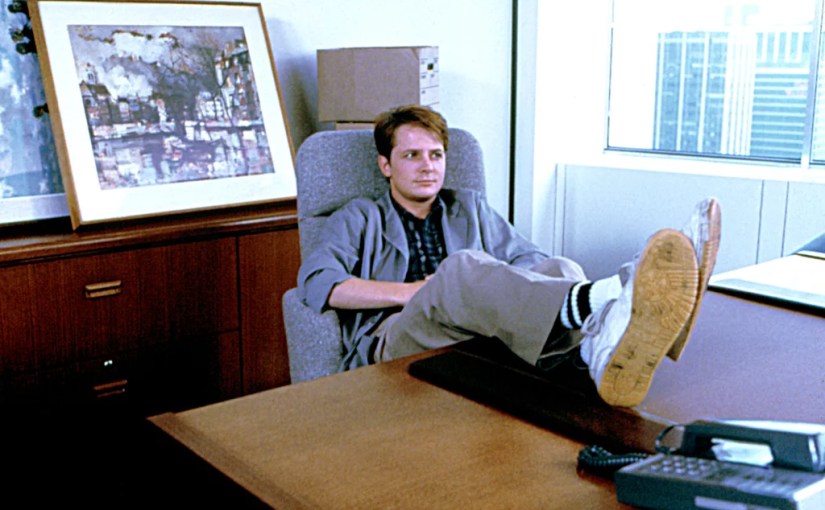
A seasonal annoyance of Montauk occurs when the ultra-wealthy WASPS come to reside in their summer homes.  A lot of these folks are helicopter parents for their spoiled kids who have futures awaiting them at Ivy League universities.  One such couple is portrayed by Laura Benanti and an especially flaky Matthew Broderick.  (Yes!  Ferris Bueller!)  Maddie answers the ad to literally get their dweeby son primed and ready for Princeton college life by sleeping with him and breaking him out of his shell of just video games and volunteer work at the homeless pet shelter.  In return, they will transfer the title over to a run-down Buick sedan that Maddie can own outright and catch up on her bills.  If life were only this easy.

The kid is Percy Becker played by newcomer Andrew Barth Feldman.  He’s quite good in this role and I imagine when he started on the first few days of filming he felt as awkward as he appears next to the confidence and experience emulating from Oscar winning Jennifer Lawrence.  You could never imagine pairing these two up in a film.  I mean, like they wouldn’t even work as a brother and sister.  Still, the comedic premise is so absurd like a Farrelly Brothers movie, that you just have to go with what this picture offers. Thankfully, the situations are hysterical.

It’s not easy for Maddie to break Percy of his introverted personality.  Poor kid doesn’t know how to drink or how to dress at an island bar.  He has no friends. He definitely doesn’t know how to talk to girls and even a naked Maddie accompanying him on an empty beach in the middle of the night for skinny dipping has disastrous results. 

Like a lot of romantic comedies, Maddie believes she just has to quickly lay this kid, collect the prize car and no feelings of love or like will ever get in the way.  Not so fast.  Soon, we get to see the attributes Percy possesses, and he’s hard to get off Maddie’s mind.  I read that Feldman played the title character in Dear Evan Hanson on a stage tour for a year. I can completely envision that after witnessing Percy perform a sultry rendition of Hall & Oates “Maneater” on the piano.  Close ups go over to Lawrence watching from across the room and I don’t believe she was acting.  This kid is a talented performer.  Suddenly, Lawrence and Feldman are great scene partners doing some very fine work together.

I hope to see Andrew Barth Feldman in more films.  He can do both drama, and of course comedy.  Moreover, Jennifer Lawrence has officially widened her range.  Her resume is certainly eclectic and this film only enhances her record.

The premise of No Hard Feelings is near impossible to swallow.  Fortunately, the gags that follow and especially the chemistry between the two leads allow for a sweet story with broad, raunchy,  slapstick R-rated material.  Many of the more successful comedic films followed this formula like Coming To America and There’s Something About MaryNo Hard Feelings has just enough substance to be grouped within that fraternity. 

THE QUICK AND THE DEAD

By Marc S. Sanders

The Quick And The Dead is a gritty, stylish western that boasts a who’s who of great actors.  Some of which went on to magnificent careers.  I wish the story was a strong as the cast list though.  It’s watchable.  It’s intriguing. It’s also too repetitious.

Sharon Stone is Elle.  Otherwise known in these parts as The Lady.  Two minutes into the picture and my suspension of disbelief is withering away.  Not because this gunslinger cowboy is a cowgirl, but because Stone does not look like she fits in the Old West.  Her blond locks are shampooed and conditioned.  Her complexion perfectly made up without a hint of grime or dirt or sunburn.  Stone looks like she took one step off the Oscars red carpet and onto this set. Her costume with a scarf, leather pants, black rimmed hat, and spurred boots looks like its attempting its own kind of Clint Eastwood stranger.  Frankly, it appears to have leaped off the pages of an Old Navy catalogue.

Below Stone on the credit lineup is a much more redeemable list of characters.  Gene Hackman is Mayor Herod who has amped up his level of sinister from his Oscar winning performance in Unforgiven.  There’s also Ace Hanlon played by Lance Henrickson with a rare on-screen giddy grin, whose personal deck of cards consists of aces of spades for every man he’s killed. Sgt Cantrell is the flamboyant personality with the handlebar mustache, deep voice and toothy grin that actor Keith David proudly bears.  A kid named Leonardo DiCaprio plays up the youthful cockiness of an outlaw named The Kid.  All these folks are gunslingers participating in the sport of gunslinging.  Last one left standing is the winner.  Midway through though, Herod will up the ante and deem that the last one left alive is the winner.  Each one challenges another until a final winner is recognized.  One reluctant participant is played by a very youthful looking Russell Crowe.  Cort is a former fast draw, who is now a remorseful preacher for all of the killings he’s committed.  Herod is not entirely convinced and will antagonize Cort to throw his hand in the game.

Sam Raimi directs and Sharon Stone produces this slick small town modern day High Noon.  The problem though is that Raimi and screenwriter Simon Moore choose to only send up the climax of that classic Gary Cooper western over and over.  Time and again, two opponents line up at opposite ends of the street.  The townsfolk observe with close up tension shots.  The hands twitch their fingers next to the holsters and when the clock strikes twelve, the guns go off.  Raimi often gives you the impression that the one expected to live is the one who is going to topple over dead and then an edit shows the match went exactly like you thought it would. 

This whole supporting cast has enough presence and charisma to keep my attention, but the set ups are the same over the course of the film.  Cut in between are discussions within the saloon or the hotel rooms where Herod or the Lady rest.  Cort remains chained in the town square.  When the movie breaks away it goes to flashbacks of Stone’s character as a child when she once crossed paths with the devilish Herod. 

I like the polish that Sam Raimi brought to The Quick And The Dead.  Before Quentin Tarantino was glamourizing his pulp fiction to his own two dimensional westerns and war movies, Raimi was daring enough to let us look through literal bullet holes from the front to the back of his victims.  Holes through the hand, the chest and the head.  It’s fun.  There are also countless closeups of haunting music from Alan Silvestri as a new stranger enters a saloon to click his spurs on the wooden floor.  Quick draw action is how these pistols perform too.  Hangings are a part of any day as well.  All of this is familiar and standard to the B movies brought to us by Sergio Leone’s spaghetti westerns during the mid twentieth century, but now we have a modern day cast and some glossy cinematography.

I was ready for a worthy salute.  It just comes up short due to a lack of any depth in story.  Gunslinging quick draws are not as dynamic as a gunfight at the OK corral.  How much different is one dual draw going to be from the last one we watched five minutes ago?  Raimi’s camera points from behind each challenger.  The music builds louder and louder.  Zoom in shots of townsfolk cut in.  The minute hand on the clock tower moves closer and closer to the roman numeral twelve, and then…BANG BANG!!! (I’ve said this before, haven’t I?  Well, so does the movie.)

The Quick And The Dead is worth seeing especially for another scenery chewing villain from the great Gene Hackman.  I’ll never tire of watching him.  To see the beginnings of Russell Crowe and Leonardo DiCaprio’s potential is a real treat as well.  They all certainly have some acting moments that I loved digging up from this time capsule.  Character actors Keith David and Lance Henrickson break from the standard personas you’ll find on the rest of their resumes.  I just needed more of a variety to this town setting they got play in.  The déjà vu is too overdone.

Sharon Stone usually looks like she’s giving a so so community theatre audition.  It’s hard to take her seriously, the same way I would had Uma Thurman, Susan Sarandon or Geena Davis been cast as The Lady.  Those actresses work for their appearance to be appropriate for the setting of their films.  Look at Sharon Stone here in the dusty Old West.  Then look back to what Sarandon and Davis did in Thelma & Louise.  You’ll see right away, practically anyone else would have been more suitable for the lead of The Quick And The Dead.

THE TWO OF US (France, 1967)

by Miguel E. Rodriguez

DIRECTOR: Claude Berri
CAST: Michel Simon, Roger Carel, Paul Préboist, Alain Cohen
MY RATING: 10/10
ROTTEN TOMATOMETER: 94% Fresh

PLOT: In German-occupied France during World War II, a Jewish child is sent away from his family and conceals his religious affiliation from the anti-Semitic elderly man that takes care of him.


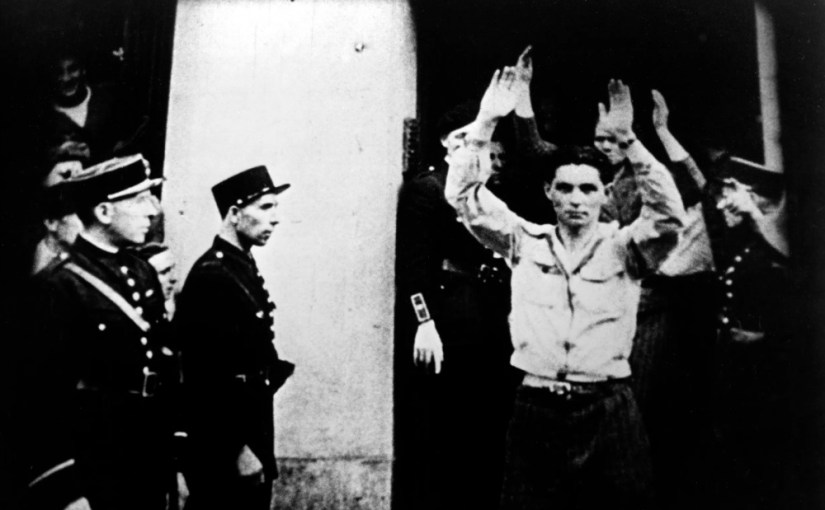
What are we to make of Pépé Dupont, the grandfatherly old man at the center of Claude Berri’s film The Two of Us?  Here is the kind of craggy, crotchety, yet endearing old man we’d like to turn into when we get to be his age.  He loves his 15-year-old dog almost as much as he loves his wife, if not more.  He’s a vegetarian who doesn’t like it when his wife cooks rabbit for dinner.  “Cannibal!” he exclaims.  He makes friends easily with Claude, the little 9-year-old boy who comes to live with him and his wife in the French countryside in late 1943, sent away by his Jewish parents who feared for his safety during the German occupation of Paris.

But Dupont makes some comments at the dinner table about Jews that makes it very clear: he is anti-Semitic.  He quotes statistics about how the percentage of Jews in political office is vastly higher than the percentage of Jews in France.  The little boy, Claude, is instantly cautious and tentatively asks Dupont, how can you tell if someone is a Jew?  “Why, by their smell, and their large noses, and their flat feet that keeps them out of the army, but look how fast they run to make money!”

These scenes and others like them are intentionally jarring because they emerge from a man who is utterly unaware he’s talking to a Jewish child.  Dupont’s deep-seated bigotry is as much a part of him as his beloved dog, Kinou, but it is so blindingly wrongheaded that he completely overlooks the fact that Claude is Jewish himself.  It’s a situation that is both funny and heartbreaking at the same time: funny because we laugh at the ignorance of someone blinkered by his prejudices, and heartbreaking that such attitudes are harbored by a man who would otherwise be the perfect picture of a loving grandfather.  (Or surrogate grandfather in this case, but you get the idea.)

The Two of Us is based on the actual experiences of director Claude Berri, which makes the film even more poignant.  Over the course of the film, little Claude will cautiously befriend Dupont, but he is careful to never let Dupont’s wife wash him (it wouldn’t do for her to see he has been circumcised).  He memorizes the Lord’s prayer.  He assumes a new last name – Longuet instead of the more Jewish “Langmann.”  Over time, he even becomes bold enough to tweak Dupont’s ignorance.  When Dupont says all Jews have large noses and curly hair, Claude gleefully points out Dupont’s own bulbous nose and frazzled hair and runs away in mock terror: “You’re a Jew!”

Perhaps I’m making this film sound like a dreary exercise in pointing out the obvious – anti-Semitism is wrong, DUH – but it’s far more than that.  Berri’s film is very careful to never, ever include a scene in which Dupont is shown the error of his ways.  The closest we get is when Dupont’s son refuses to enter his house because Dupont supports the Vichy (pro-German) Prime Minister Pétain as opposed to Charles de Gaulle.  Aside from that, we are simply allowed to observe Dupont’s behavior and Claude’s reactions.  Berri is smart enough to realize that people (generally) know right from wrong on an instinctive level and do not need to be preached at.  So few films dare to assume their audiences have a brain that it’s a relief when one is discovered, waiting in some long-forgotten corner of cinema history.

The dichotomy between Dupont’s beliefs and his obvious affection for Claude define the word “provocative.”  It forces us to realize that not all bigots are loud-mouthed blowhards.  They can be just as charming and effusive and loving as your best friend’s favorite uncle or aunt.  Is Dupont evil in The Two of Us?  Some of his core beliefs are rotten, for sure, but I started to take pity on him a little bit.  Like so many other racists, his attitudes were probably taught to him by his own parents, and he simply accepts them as reality without realizing how deeply wrong he is.  The phrase “the banality of evil” has perhaps been overused of late (especially in the wake of Jonathan Glazer’s brilliant film The Zone of Interest), but it occurred to me time and again during scenes showing Dupont playing with Claude, doing chores with Claude, helping Claude with his first crush, and so on.  We get lulled into the idea of a wonderfully jolly fellow…and then he says something anti-Semitic, and it all comes crashing down again.

Not only that, but we get hints and omens of what is occurring on the wider world stage during the war.  At Claude’s new school, children’s heads are checked for lice.  When they are discovered on another boy’s head, the teacher immediately sits him down and shaves his head, right then and there, using a pair of uncomfortable-looking clippers, to the amusement of the other schoolchildren.  As the boy’s hair falls to his feet in clumps, and the other kids are laughing, Berri cuts to Claude, who observes the process without a trace of emotion.  What is he thinking?  Is he aware of the concentration camps?  Or were they still just rumors to everyone else in France in 1943?

The Two of Us feels like a Fellini film (poignant reminiscences of childhood) cross-bred with a Stanley Kramer message picture, minus the sermonizing.  It shifts between delight and solemnity with no warning, making each shift stand out that much more, and enhancing the storytelling by making us passive observers, letting us make our own judgements without guidance from an overanxious screenplay.  This movie was made to be discussed around the water cooler, or on a podcast, or in a movie chat room, just so we can try to wrap our heads around exactly what this film is trying to say by making the kindly old man at the center of the film the source of all of its moral and ethical conflict.

THE TAKING OF PELHAM ONE TWO THREE (1974)

by Miguel E. Rodriguez

DIRECTOR: Joseph Sargent
CAST: Walter Matthau, Robert Shaw, Martin Balsam, Hector Elizondo
MY RATING: 9/10
ROTTEN TOMATOMETER: 98% Certified Fresh

PLOT: An NYC transit chief must outmaneuver a gang of armed professionals who have hijacked a New York subway train and threatened to kill one hostage per minute unless their demands are met.


How?  How is it possible that it’s taken me this long, until fifty years after its release, to finally watch the original The Taking of Pelham One Two Three?  Until now, my knowledge of the film included only its title, its basic plot, and the fact it was remade with John Travolta and Denzel Washington.  Now that I’ve seen the original, my desire to watch the remake has dwindled from microscopic to zilch.  This is one of the most thrilling heist films I’ve ever seen, and its influences are clearly felt in the best thrillers in the decades since its release, from Die Hard to Speed to Reservoir Dogs.

In the first half of the 1970s, widely regarded as one of New York City’s worst decades (at least by me, anyway), four armed men methodically hijack a subway train, decouple the engine from the rest of the train, and bring it to a stop between stations.  Their leader, known only as Mister Blue (Robert Shaw), radios the transit system authorities with his ultimatum: deliver one million dollars to the train in one hour and leave quietly or he and his companions will kill one hostage for every minute the money is late.

The chaos that ensues is sprinkled with the kind of humor I did not expect from any cop thriller made before Die Hard.  The transit chief, Lt. Garber (Walter Matthau as an unlikely but strangely convincing action hero), must interrupt a tour he is giving to a visiting cadre of Japanese subway officials.  Colorful dialogue is provided to the transit system engineers and administrators as their carefully maintained schedule is destroyed by the hijackers.  One of Garber’s associates shows where his priorities lie when, in the middle of a hostage crisis, he complains, “Jesus…you realize the goddamn rush hour starts in an hour?!”  This and many other moments provide welcome comic relief, but they are also firmly grounded in the reality of career officials under a great deal of stress.  There is never a moment that doesn’t feel exactly right.

When it becomes clear the hijackers mean business and will have no compunction about following through on their threats, important logistical questions arise.  Where will they get the million dollars from?  The bedridden city mayor (who bears an uncanny resemblance to Ed Koch, four years before the real Koch was elected) doesn’t know.  The hijackers want it in specific numbers of bundles of fifties and hundreds.  How long will it take to assemble the money correctly, assuming they even GET the money?  Lt. Garber raises an interesting question: where will the hijackers go once they get their money?  They can’t simply get off at the next station, and they can’t leave the controls of the train while it’s in motion, thanks to the “dead man’s switch” that prevents such a thing.  What’s their end game?  Another transit official, played by Jerry Stiller, has the answer: “They’re gonna fly the train to Cuba.”

These and many other questions (including why the train is called Pelham One Two Three) are answered during the film’s running time, although one of them is answered without getting too specific because either it really is impossible to do so, or the filmmakers had no desire to lay out a step-by-step procedural for budding criminals.

One of the most important factors in the film’s success is its slam-bang pacing.  I’m not saying it’s cut together like Run Lola Run or an MTV video, not at all.  But the flow of the film is meticulously managed to keep the suspense going even when not much is happening on the train for their one-hour waiting period.  This is accomplished by having a local beat cop happen upon the train and provide close-cover reconnaissance to the transit authorities.  There’s also suspense among the passengers, obviously, as they plead with their captors.  (They provide more comic relief when one of them asks how much their captors are asking for their release.  “One million dollars,” one of them answers.  The hostage takes a perfectly timed beat, then says, “That’s not so terrific.”  Welcome to New York, ladies and gentlemen.)

Everything comes together so efficiently, so elegantly, that it’s a bit depressing that the film’s director, Joseph Sargent, would return to his roots and make a string of TV movies with only one other high-profile film to his name 1987’s Jaws: The Revenge.  That these two movies were made by the same director is mind-boggling.

I do have one quibble, though, and I will do my best to spoil as little as possible.  It involves a showdown where one man has a gun and the other doesn’t, and the infamous “third rail” in New York’s subway system.  If someone can successfully explain to me why one of those two men makes the choice he does, I will be happy to mail them a shiny new penny.  As it stands, that man’s decision made zero sense to me.  It almost felt like the screenwriter had written himself into a corner.  It was the one questionable moment in the entire film for me, but it did not ruin the movie, for what it’s worth.  It’s still an amazing ride.

The Taking of Pelham One Two Three deserves to be mentioned on any list of great ‘70s thrillers like The French Connection and Dog Day Afternoon, especially the latter with its tricky mix of humor and suspense.  It grips you with its realism and credibility right from the opening scenes and barrels along with barely a minute to breath right up to the literal final image.  This is superior filmmaking, and any fan of film, at any level, needs to add this to their must-watch list.

AIR FORCE ONE

By Marc S. Sanders

On the day I write this article, July 12, 2024, the new trailer for Captain America: New World Order premiered and Harrison Ford (whose birthday is tomorrow; Happy Tiding Dr. Kimble, Dr. Jones, Captain Solo, Mr. President, Dr. Ryan) is back in the Oval Office playing the President of the United States.  Don’t know what kind of Commander In Chief he’ll be this time around.  He might be as heroic as James Marshall from Air Force One. Then again he could be a challenge of hulk like proportions.  However, let’s at least fantasize that we have Mr. Marshall running for the top job this year against both the criminal buffoonery and geriatric disqualifications we are left to choose from.  Just look at James Marshall’s qualifications. 

Following an American Special Ops capture of a Russian radical, Marshall is bestowed an honor from the Soviet government. His acceptance speech insists his administration will never negotiate with terrorists.  Now that the line has been drawn, away he goes with his staff, his wife (Wendy Crewson) and pre-teen daughter aboard the most protected and safest plane in the world, Air Force One.  Yet, an element of careful process does not go according to plan and Gary Oldman’s team of Russian radicals hijack the plane with demands to free their leader from captivity.  Oldman’s screaming hysterical character, Ivan Korshunov, won’t have it so easy though because his team of men failed to capture the President.  As well, it requires the Vice President (Glenn Close) and Secretary of Defense (Dean Stockwell) who are on the ground to coordinate with Russia to free the prisoner.  Oldman’s response is to kill a hostage every half hour and if that does not work, then just blow up the plane.

This is not good.  BUT WAIT!!!!!  Is that…?  Could it be???  Is the President alive, sneaking around the bowels of the plane while taking out one terrorist at a time?  Raise your fist for Harrison Ford!!!!

‘Murica!!!!!!

There are two narratives going on with Air Force One.  One is the standard Die Hard formula action onboard the plane.  Then there is the endless debates of authority between the Vice President, the Secretary of Defense and the military leaders about if the President is in a proper state of mind to lead and act upon his aggression with a high level of threat to the country at stake, and more personally his wife and daughter in harm’s way?   None of this is nothing new.  It’s all familiar from the likes of many late 80’s and 90’s action pictures.  The politics are much more simplified than what you’d find in a Tom Clancy novel.  There’s even time for a which color wire to cut scene.  Yet, the movie is entertaining.

Director Wolfgang Peterson is best at showing the real star of the picture and that is Air Force One itself.  He’s got long shots down endless corridors and aisles. Within the underbelly, as well as the hollowed-out cockpit, there’s more for us to explore amidst the gunfire.  We see where the weapons are stored as well as the luggage and food supply.  We get to watch the football game in the President’s office too.  Heck, before the terrorists reveal themselves they are given a tour of the massive plane as their guide boasts that it is even impervious to a nuclear blast.  Color me impressed in Patriotic Red, White and Blue.

I think some of the acting is a little overdone at times. Not by Ford, but by almost everyone else.  Watching the debates within the government conference room, I’m seeing a little too much melodrama around the table.  A little too much hand clasping, pacing around the room, whispering,  and deep sighing.  On the plane, Oldman goes over the top but he’s one of our best character actors and its expected from him.  He’s the evil villain after all.  On the ground though, Dean Stockwell has done better work elsewhere, with much more complicated material. 

I like the idea of including political debates and a response to an unfathomable crisis like this, but a lot of the dialogue from guys like Stockwell, Phillip Baker Hall and Bill Smitrovitch comes off as textbook boring.  Same goes for Close, but she fits the role perfectly.  Let her be Ford’s running mate and they got my vote.  The only thing that upholds these scenes are due to Peterson’s hyper Steadicam.  So, when one more person in a suit makes a mad dash into the room, the director sweeps his camera right over there to get the latest news. 

Harrison Ford is doing his standard everyman/tough guy routine, always knowing how to stay one step ahead of the bad guys. President Marshall is much more capable than his entire trained Secret Service Squad and it’s fortunate that he gets the convenient shard of broken glass to cut the tape that binds his hands.  How often do we see that in movies?  The film definitely belongs to Ford, but it’s also nice to see some familiar faces participating like Xander Berkley, William H Macy and Paul Guilfoyle. 

The most unforgiving moment of the film occurs in the final minutes.  I don’t spoil everything by saying the plane nosedives into the sea, but this crash has to land at the top of some of the worst CGI ever assembled.  Yes, I know this was back in 1997, two years before what George Lucas accomplished with, at the time, pioneering effects on his return to Star Wars.  However, the final climax to Air Force One looks so obscurely animated and unfinished, it begs for the screenplay to find another way to wrap up its simplistic story.  It is downright terrible.  I recall it looking terrible on the big screen.  It looks just as bad on a 65” flat screen.  A toy plane crashing into a bathtub would look more convincing.

Air Force One is solid action.  Nothing more.  It’s not a thinking picture or one needing deep concentration and analysis. It does make you yearn for Harrison Ford to at least consider a run for the Oval Office, though.  He’d still be better than what will be on the ballot this year.

WISH

By Marc S. Sanders

Disney’s Wish seems to stand out from many other films within the studio’s vault because the lack of filmmaking confidence appears so obvious.  What does it tell you when a newly original story is continuously guided by winks and nods from past successes?  We see this thing can’t stand on its own two feet.  So, let’s dress a character up like Peter Pan and literally name a random deer Bambi.

A sorcerer trained in the arts of magic oversees his newfound Mediterranean island kingdom known as Rosas.  He is King Magnifico (Chris Pine) and he has attracted people from all over the world to reside under his rule on the condition that he collects their wishes to be held by him in glittering, floating blue bubbles.  The people of Rosas lose all memory of their respective wishes and now live month to month with anticipation that Magnifico will award them the wishes he holds as a kind of equity or collateral.   

Asha (Ariana DeBose) is a seventeen-year-old who is eager to finally witness her grandfather Sabino’s (Victor Garber) wish come true as his 100th birthday finally approaches.  She also aspires to meet the great sorcerer and hopefully become his apprentice.  As soon as she meets the King though, Asha realizes Magnifico is a greedy, selfish individual who thrives off the admiration of the people of Rosas while savoring the wealth of everyone’s longings.  In other words, Magnifico is a cult leader.

Chris Pine does good voice work here.  He’s gleeful and manipulative and uncaring and evil all at the same time.  Disney’s colorful animation lends to his vocal performance of course with Maleficent inspired glows of green spells which the character conducts.  Yet, my adult mindset could not get past the fact that I’m looking at an animated inspiration of David Miscavage, long time head of the Church Of Scientology.  Magnifico’s wife Amaya (Angelique Cabral) is the quietly naïve representation of David’s wife, Shelly (who has not been accounted for in years).  The poor people of Rosas are the brainwashed disciples believing in this false prophet.  I guess it’s not a terrible concept to apply to a fantasy, but once I see the allegorical connection, Wish makes me feel uneasy.  My fault I guess for watching too many HBO documentaries and listening to former Scientologist Leah Remini too much.

Asha is the hero of this story who makes a wish upon a star.  Actually, a literal character named Star enters the picture.  Star squeaks like a precious darling, ready to be your children’s next plush toy acquisition.  He shoots sparkling trails of gold out of his pointed appendages.  With Star’s help, Asha will reach the standard showdown with the villain by the film’s end and the awakening of the people below.  It’s all trite material that’s been done before.

Wish relies on the vast history of fantastical stories, believing you can fly and be heroic or simply a sidekick tagging along with the protagonist.  Asha has seven friends.  One is referred to as grumpy.  Huh!  How do you like that? Must it be so apparent so often though?  Thanks to Star, forest animals talk and one even makes an inside gag to Zootopia.  You’re practically asked “Get it?  See what I did there?” Magnifico bears a striking resemblance to Jafar and even resides in a similar castle to the Aladdin villain with stone spiral staircases to explore.

The colors and animation are just as engaging as nearly any other Disney film.  A few songs work, but there’s nothing on the level on what was accomplished during the days of Rice and Menken, or even more updated fare like Frozen.  I can’t recall the title of a single number from Wish.  Magnifico sings.  Asha sings multiple times.  The two duet together and it’s not terrible. Ariana DeBose could sing the phone book and I’ll feel swooned.  The supporting people of Rosa sing in choral support as well.

Still, what tainted my experience was turning a very real epidemic of cultish culture into a fantasy catered for all ages to enjoy.  The wishes the people offer up are the endless “donations” that a cult mentality always requests.  While I appreciate being accepted into a fraternity of Disney loving storytelling, I did not need to be banged over the head with so much saluting either.  The end credits contain one classic Disney character after another appearing next to the ongoing scroll.  Hi Dumbo.  Hi Genie.  Hi Peter.  Hi Belle. 

Disney always reminds us to believe our wishes will come true and yet with Wish the studio chose to go with what is blatantly familiar.  It’s time for some fresh ideas again that especially do not source themselves from the reality of harmful sects spreading false doctrines. 

NOTE: I still have a fresh idea from a very popular legendary story that Disney, nor Universal or Warner Bros has yet to touch.  Maybe it’s time I get it down on paper.  Hmm.

ROCCO AND HIS BROTHERS (Italy, 1960)

by Miguel E. Rodriguez

DIRECTOR: Luchino Visconti
CAST: Alain Delon, Renato Salvatori, Annie Girardot, Claudia Cardinale
MY RATING: 8/10
ROTTEN TOMATOMETER: 90% Fresh

PLOT: An impoverished family from rural southern Italy moves north in search of a better life in Milan, a “big city” that puts their familial bonds to the test.


Movies like Visconti’s celebrated Rocco and His Brothers are much-needed reminders that films need not provide explosions or alien invasions to be interesting or exciting.  I won’t say it’s perfect (several scenes could have been trimmed and still been effective), but I was as absorbed in the story as I am when reading a particularly good novel.  (For some reason, I was reminded of my headspace while reading Donna Tartt’s The Goldfinch; the story and style grabbed hold of me and had me riveted the whole time, despite the fact my preferred tastes run to Crichton, Clancy, and King.)

Since I make no claims to be a historian, filmic or otherwise, I cannot vouch for the verisimilitude of Rocco and His Brothers in terms of Italy’s social and demographic picture in the late 1950s/early 1960s.  I seem to remember reading something somewhere about how this period reflected to some degree the Dust Bowl era in the United States when displaced midwestern families flocked to the West coast in search of better lives.  In the world of this film, we are led to understand that families like the Parondis, faced with financial hardships, were migrating north to Milan and other larger, modernized cities.  Some folks were able to adjust, others were not, and that was that.  The Parondis – Mamma Parondi and her five sons – are determined to make the move work no matter what.

The tone of constant struggle is set near the beginning when the Parondis arrive in Milan and, ominously, no one meets them at the station.  The eldest brother, Vincenzo, was supposed to be there, but he was distracted by a gathering of his girlfriend’s family.  When the Parondis arrive unannounced to the gathering, they are initially met with open arms, but innate prejudices about “country folk” get the better of everyone and they leave in a huff.  They find cheap lodging and the brothers make their first bits of money by shoveling snow.  A revealing scene shows the mother rousing her sons out of bed in the middle of the night at the first sign of snowfall so they can beat everyone else to the jobs.  Rocco and his brothers are reluctant at first, but they rally together and stay positive because, well, they must.  These strong ties will be tested as never before by the time the credits roll.

The film is broken up into sections, one for each brother.  The first section, “Vincenzo”, shows how his life seems to have changed for the better after relocating himself to Milan some months before the rest of his family, but their sudden arrival puts a crimp in his personal life when he is obliged to move in with them.  The next, very lengthy chapter focuses on Simone, a handsome, outgoing fellow who is spotted by a boxing coach and achieves local fame by winning a high-profile match soon after he begins training.

Shortly after this win, the family gets entwined with a local prostitute named Nadia who arrives unexpectedly on their doorstep in need of some clothes.  Before long, she becomes involved romantically with Simone, but tells him outright that she’s not interested in anything long-term, despite his obvious desire to be near her whenever possible.  The affair ends, and Nadia leaves town after having a crucial conversation with Rocco.

The third chapter, “Rocco”, follows Rocco after he serves a brief tour of duty in the military, after which he fatefully reconnects with Nadia after over a year.  They fall in love, and Nadia surprises herself by truly falling for Rocco despite her previous wishes not to be involved in anything permanent.  But when Simone discovers their relationship, events are set in motion that are as devastating as they are unexpected.

(The last two chapters, “Ciro” and “Luca”, focus on the fallout of the previous three sections.)

Rocco and His Brothers feels like it was adapted from an Italian opera.  It wouldn’t surprise me in the slightest if I learned that someone had turned it into an opera.  There are emotions and reversals and shocks and tragedies on display here that rival anything on American daytime television, but it rarely feels like soap opera.  Yes, there are some moments when the characters and the filmmakers take the time to deliver speeches that don’t seem to spring out of any true motivation other than to pound home the point the director is trying to make at that stage in the film.  (I’m thinking especially of Ciro’s final scene.)  But I am inclined to forgive these momentary lapses in momentum because, in retrospect, they lend emotional weight to the characters.  Novels can achieve this with a paragraph or two detailing the inner thoughts of their characters, but in film, the characters have to tell you what they’re thinking, verbally or nonverbally, or the audience gets lost.

I have hinted only vaguely about certain tragic aspects of the story.  This is because Visconti and his editor took great pains to allow them to arrive organically in a way that took me completely by surprise, so it would be wrong of me to give those surprises away.  For those of you who have seen the film, you know what I’m talking about.  It’s these moments that elevate Rocco and His Brothers into something more than a mere soap opera.  Some of the acting will strike modern audiences as exercises in histrionics, especially as exhibited by Mamma Parondi and Nadia.  To that I would say: “What do you want from opera, subtlety?”

Rocco and His Brothers is one of those elusive films that I’d heard and read about for some time now, and I’m grateful that I’ve finally seen it.  I’ll be honest, it’s not exactly a film I’ll take down and rewatch multiple times in a year, but it’s worth seeking out if you’re looking for a good old-fashioned family drama that’s not quite a tear-jerker, but it’s certainly no bed of roses, either.  Martin Scorsese once deemed it one of 39 foreign films every moviegoer should see before they die.  And if you can’t trust Marty, who can you trust?

BEVERLY HILLS COP: AXEL F

By Marc S. Sanders

It took thirty years for Eddie Murphy’s best on screen character, Detroit Detective Axel Foley, to make a return.  He should have waited another thirty years. 

Reader, I got what I expected from Beverly Hills Cop: Axel F.  Yes, it was better than the third film in the franchise, but then again so was Morgan Stewart Is Coming Home (a Jon Cryer flick, directed by Alan Smithee).  There are moments in this latest flick, offered up by Netflix, that work, but it’s not enough to save the picture.

With Murphy producing, the smartest tactic the film takes is to gather up most of the surviving members of the other films, Judge Reinhold, John Ashton, Paul Reiser and Bronson Pinchot.  The problem is they are hardly used.  Axel F opts to go in the direction of feelings for the wisecracking cop from Detroit who always wreaks havoc in 90210.  Axel has a daughter named Jane Saunders (Taylour Paige).  I certainly know her last name because in the few moments that Murphy is shooting off his mouth, he takes time to repeat her last name and actually spell it out.  S-A-U-N-D-E-R-S.  Yes.  That’s a whole scene.  This is supposed to be comedy?  Saunders is not ranked up there with Focker.  That’s for sure.

Axel’s buddy Billy (Reinhold) is a private detective now and he’s come upon some kind of conspiracy.  He recruits Jane (a Beverly Hills criminal attorney) to represent a kid who is being framed.  When Axel gets word that Jane is being threatened, out to California he goes, but then Billy turns up missing and I mean missing throughout the whole movie.  Now Axel has to uncover the bad guys while trying to reconnect with Jane.  Of course they are estranged.  Axel also partners up with Jane’s ex, a cop named Bobby, an unfunny Joseph Gordon-Levitt.  Every so often Axel also marches into Taggert’s office (John Ashton) to just remind us that Taggert is back. 

Beverly Hills Cop never functioned on complex mysteries or storylines.  The films hinged on Eddie Murphy’s schtick, which used to be very, very funny and addicting.  As well, the smart route was always taken when the comedy of the first two pictures didn’t just rely on Murphy.  There was also material for Ashton and Reinhold, and on the side was Reiser and Pinchot as well. 

The glaring error in Axel F is that Murphy hardly does anything with these guys.  Instead, there are repetitive conversations with Paige’s character and how Axel put his career ahead of being a father.  Twice within the script, they remind one another that he’s been a father as long as she’s been a daughter.  How much thought was put into this dialogue?

The Cinemaniacs gathered together to watch Axel F, and we all agreed the film would be a half hour shorter had the storyline with Jane been completely stricken from the script.  Who says Axel Foley had to have a daughter?  The guy already has enough members within his world to work with.  Ashton, Reinhold and Murphy do not share a single moment together until an epilogue scene before the closing credits.  This is as egregious as when the new Star Wars pictures opted never to have Han, Luke and Leia reunite.  You got everyone back for Axel F and you opt not to use them or use them together.  Why?  This kind of success couldn’t have been served up better and yet it’s squandered.

Part of the fun in Axel Foley is his ability to con his way into a place.  At one point he returns to the Beverly Hills hotel from the first picture.  He approaches the counter and as he’s about to start a routine, but then he says fuck it, never mind and just chooses to pay for a room.  The script and Murphy could not have made their laziness in making this movie more apparent. 

Another staple was always the outrageous chases that would happen with unconventional vehicles.  The best moment in Axel F is when Murphy and Levitt pilot a police helicopter.  Levitt gets terrified and I think a little sick.  Murphy shoots his mouth off and here is a reason to watch Axel’s return.  Other moments do not work as well including a snowplow truck careening through Detroit and a big rig crashing through the glass front doors of a mansion.  There’s also a three-wheel motor scooter that does some tricks.  I recognize the attempts at recapturing the big moments from the first two films, but the editing does not work as well with a beginner director named Mark Molloy.  Martin Brest and Tony Scott were the MVPs who cemented the success of those other pictures.

I could not help but also take issue with some minor details.  Harold Faltermeyer was the symphonic composer of the other films.  You’ll certainly recognize his tunes this time around but they are annoyingly mixed with unnecessary overlays.  At times, the needle drop of music is so distracting to what you are watching that you might think there is something wrong with your sound system. 

In addition, and I can’t believe I’m saying this about a Beverly Hills Cop film, but the costumer had to be someone who was just fired from Old Navy.  Murphy dons a Detroit Lions jacket and a pair of jeans that look two sizes too big on him.  His clothes look so baggy on his frame.  As well, for some reason, he’s given a bright orange t-shirt to wear against the black and blue Lions coat and it could not be a worse eyesore.  Any color you want and you choose orange?

Miguel’s input was that it was better than three, but what kind of endorsement is that really?  Over the last decade, the franchises that were so beloved in the 1980s are making returns with the near geriatric stars of those films.  Some work (Top Gun: Maverick, and yes Indiana Jones).  Some definitely do not (that last Die Hard movie, Rambo and Terminator).  Axel F slides into the latter category.  It has some moments to laugh at along with send ups of some of the franchises best songs.  Yet, while I’m happy to hear the picture open to Glenn Frey’s “The Heat Is On,” it’s also indicative of little thought applied to making this movie. 

Ultimately, though, why did this picture have to get so watered down with an uninteresting father/daughter soap opera while neglecting the other favorites of this franchise?  What will these filmmakers do next?  Reinvent the Three Stooges, only the trio will be split up, and you’ll only follow Larry around for two hours?

THE HUSTLER

By Marc S. Sanders

To get inside the turmoil that Fast Eddie Felson feels requires witnessing his highs and lows, all within a forty-hour time span, which equates to about thirty minutes in movie time.  Fast Eddie is The Hustler, and he was famously portrayed by Paul Newman, arguably his breakthrough role as a top billing super star.

Felson is a cocky, hard drinking pool player.  He’s got talent, but no matter how much he wins he’s always the loser because he has no discipline.  Eddie and his partner Charlie (Myron McCormick) travel from town to town, entering pool halls and setting up a bait and catch for some quick cash.  Charlie keeps his cool and treats the act like a profession.  Eddie has no subtlety.  Because he’s so how high on his expertise and what it earns him, he now only has his eye on dethroning the best in the country.  Eddie wants to take on Minnesota Fats (Jackie Gleason, in his only Oscar nominated role).

Fats sure looks intimidating.  Gleason handled his extra weight beautifully throughout his whole career, whether it be with his outrageous Ralph Kramden comedy, or when he was just being stand up Gleason for a live audience.  As well, his large frame appears kingly when he enters the pool hall.  He’s dressed to the nines with his hat, overcoat, silk tie, cuffs and studs, a cigarette in his hand, and the red carnation confidently tucked in his lapel.  The movie is in black and white, but that little flower had to be red if adorned by Minnesota Fats.  No question about it.

Newman versus Gleason in the first section of Robert Rosen’s drama is stunning to witness.  Like the actors who portray these characters, the antagonist was already a legend, while the up and comer was on the brink of higher class.  Both are the best of the best at pool, but as this scene progresses, with the regulars at Ames Pool Hall watching with their burning cigarettes and stained whiskey glasses in hand, the competition becomes a fierce and eerily quiet test of endurance.  Fast Eddie can keep on winning and winning, round after round, hour after hour, taking thousands of dollars out of Fats’ pockets, but if the fat man doesn’t surrender, has anyone really won or lost?

The Hustler isn’t so much about pool playing as it is about being a hustler or a con man who has no way to be genuine with himself or others in his life.  After the showdown between the two has finally concluded, Eddie gets acquainted with a woman who frequents the nearby bus depot.  Her name is Sarah (Piper Laurie), another hard drinker and someone who is not looking for love or companionship but will get trapped in Eddie’s charm.  What’s at play though is if their relationship, based initially on sex and booze, has anything more substantial to uphold their quick connection.  That is about to get tested by another member of this cast.

Bert Gordon (George C Scott) is the high stakes investor ready to front Eddie with a lot of money to go on the road and clean up on other wealthy players at the table.  Bert recognized a thoroughbred when Eddie went against Fats.  Now he wants to use him, but will Sarah serve a purpose or become a distraction in Bert’s plans for himself first, and Eddie second?

There’s a lot to think about when summing up The Hustler.  It’s not a typical sports film with the standard training montages.  The protagonist doesn’t necessarily get a beat down, only to triumph by the end.  Rosen’s film goes deeper than the pool playing that rests on the felt table surfaces.  Rosen co-wrote this script based on a novel by Walter Tevis, about a man overcoming the demons pecking at his attributes and skills.  When he’s not the trickster, he must ensure that he’s not getting tricked.

I was first introduced to Fast Eddie Felson with Martin Scorsese’s follow up picture called The Color Of Money, released twenty-five years after this film.  I like the coolness and rhythm of that film, but it’s mostly an exercise in Tom Cruise machismo.  It was only later that I saw The Hustler per my dad’s advice.  I didn’t care for it the first time I saw it.  Once the first act was over between Newman and Gleason, I found the picture to be slow moving and devoid of much energy.  I could not relate to the long sequence of Eddie getting involved with Sarah.  Unlike Scorsese’s film, Rosen does not rely on much music and quick edits to keep you alert.  It felt more like a movie drowning in the characters’ own drunken stupors.

Now that I have seen the film for a second time though, many years later, I can’t help but recognize the themes that carry over to The Color Of MoneyThe Hustler works better than its sequel because it functions as a character study in maturity and endurance.  The Color Of Money sets itself up that way for the Cruise character. Yet, I’m not sure it reaches a conclusion to any of the arcs or transitions for either an older Eddie Felson or for the hot shot 1980s kid, Vincent, the Tom Cruise character that Eddie mentors.

The Hustler has triumphs, but it has some shocking heartache for several characters as well.  Eddie has much to overcome internally as well as physically throughout the course of its narrative.  This fictional story had to be captured within this certain section of time (six months to a year, I think) to show how these appealing, yet cursed, individuals forever change one another.  After the film has closed, Rosen brings up the closing credits in the quiet pool hall allowing his characters to pack themselves up and walk out of frame.  There is something open ended to when the film chooses to stop. The viewer may think for a while after it’s over.  Rosen allows the viewer to take his last gulp of whiskey or bourbon and put out his cigarette and throw on his overcoat before stepping out into the cold late hours on the wet sidewalk below.

There are many impressive pool shots on display, thanks especially to the professional Willie Mosconi.  Shots are also done beautifully by Newman and Gleason.  Absolutely amazing to watch what they accomplish with a cue stick.  However, you don’t watch The Hustler for just trick billiard shots.  Rather you look at this intense drama to see a man struggling to be a winner or remain a loser.  What you realize very early on is that the outcome is never measured by how much money is wagered or what lines a man’s pockets.  Instead, The Hustler is assessed by what these people choose to do next.  Play or not play.  Bet or not bet.  Hustled or not get hustled.

KELLY’S HEROES

By Marc S. Sanders

There’s gold in them thar Nazi castle.  Hence the plot is set in motion for a World War II romp called Kelly’s Heroes.  It’s easy to get acclimated to the lightheartedness of this comedic war picture from director Brian G Hutton (Where Eagles Dare). 

The movie opens during a dark and rainy evening within a German occupied France. The on-screen credits pop up revealing an all-star cast of tough guy actors who are also quite funny.  Clint Eastwood is the title character who sits behind the wheel of a jeep. When the Nazis take notice, he hits the gas, makes a sharp left through the muddy road, and zooms away while avoiding shell fragments coming down on him. The film’s catchy theme song marches in – “Burning Bridges” performed by the Mike Curb Congregation.  The chorus of singers speak as a soldier who does not even care about authority or the rules of war.  The lyrics are rather simple to understand, and you want to just join in on the revolutionary merriment.  The song enters the film again and again over the next two and a half hours, reminding you to just enjoy the ride against this tragic capsule of time from the first half of twentieth century history.  Hawkeye Pierce couldn’t have said it better.

In his capture, Kelly has brought back a Nazi commandant and when he sees a fourteen-karat gold bar in the German’s possession, it’s easy to surmise that there must be more where this came from.  Turns out there is a stash worth roughly sixteen million dollars crated in a bank vault in the center of a stopover town, located across enemy lines in war torn France.  Kelly and his squad, led by Big Joe (Telly Savalas), are under heavy fire and forced to retreat for safety, but that isn’t going to stop him from making a snatch and grab.

Joe has been given orders to get the unit to safety and allow them a three-day reprieve of R & R.  However, he’s just as enticed as Kelly and gradually a small team of men assemble to pull off the heist.  First, they’ll need tanks to fight off the nearly indestructible Nazi Panzer machines they expect to encounter.  Fortunately, Crapgame (a scene stealing Don Rickles) and Kelly come across the hippie loving Oddball (another scene stealer – Donald Sutherland) who can supply the tanks they need and fend off what stands in the unit’s way.  What’s also important is Oddball find a bridge for the squad to cross before the allies destroy it.  That’s not so easy.  Sutherland is somewhat of a spaz; maybe an ancestor of Cosmo Kramer.

Meanwhile, a blood and guts two-star General Colt (Carroll O’Connor) is screaming for results from his subordinates.  When he intercepts the guys’ communications, he can’t help but be impressed with their progress and strategies of attack.  He’s ready to go into the field with a handful of medals for every American soldier that’s giving a damn. 

The looniness of Kelly’s Heroes is hilarious. Eastwood carries his signature quietness about him.  So, he’s the straight man leaving the loudmouth material for Savalas, Rickles, and a bevy of supporting actors.  Plus, there’s O’Connor in his own side story.  Sutherland is another kind of comedy – the free spirit who appears to have taken one too many shells to the noggin. 

It’s not a slapstick kind of movie.  It operates like the doctors from M*A*S*H.  These draftees have no loyalty to a cause.  They look out for each other.  They know how to survive the battles and they know that some will not make it.  Brian Hutton does not forget the frightening impact of war.  A memorable scene occurs when the unit realizes they are dead center in a mine field, offering up the life and death factor blended in both the comedy and drama that comes with a heroic war picture. 

There are some inconsistencies to Kelly’s Heroes.  Often, it feels like some scenes that would connect certain dots must have been edited out of the final print.  As the men come close to the to the bank where the gold is stashed, two of the soldiers are already in the overlooking bird’s nest tower giving a low down of the area to Kelly and Big Joe.  Yet, how did those guys ever get up there?  It’s not a terrible violation.  There are sequences like this that make the movie feel a little uneven. Clint Eastwood even went on record expressing his disappointment with the film as there were excised moments that drew more out of Rickles and Sutherland’s characters, and a few of the other supporting characters played by Gavin MacLeod (The Love Boat, The Mary Tyler Moore Show), Stuart Margolin (a very underrated character actor who had memorable episodes on the M*A*S*H tv series) and a young Harry Dean Stanton (here credited only as Dean Stanton). 

This film was shot in Yugoslavia simply because the country still had possession of many tanks and vehicles from the story’s time period.  The art design and battlegrounds are very impressive.  Before CGI, Brian G Hutton and his team were reenacting a lot of these loud, bombastic battle scenes complete with big fireballs of explosions along with the aftermath wreckage left behind of rubble and blasted out walls and craters.  Hutton positions his cameras either on top or right behind the cannons and guns mounted on the tanks.  So, you are actually getting a first person view of these massive war machines driving across the plains while shooting off their firepower.  The filmmakers did not hold back on making World War II look authentic in its battle wear.  I’ll be bold enough to say the settings are comparable to what Spielberg accomplished with Saving Private Ryan, and what Eastwood depicted in Letters From Iwo Jima.  The lens is just not as serious as those films.

The cast is a magnificent fraternity of brazenly funny tough guys, in the same vain as The Dirty Dozen, though much more lighthearted.  They’re a motley sort who all stand out among their similar appearances in green army fatigues and netted helmets. 

Kelly’s Heroes is a lighthearted comedic adventure where the heist is what you come to see against a historical backdrop when nothing was ever sensationalized fun.  History offers up a cruel world of pain and suffering, but who says we can’t enjoy ourselves through all the blood, guts and misery as our heroes ride off into a ravishing orange sunset?

Go for the gold and catch up with Kelly’s Heroes.