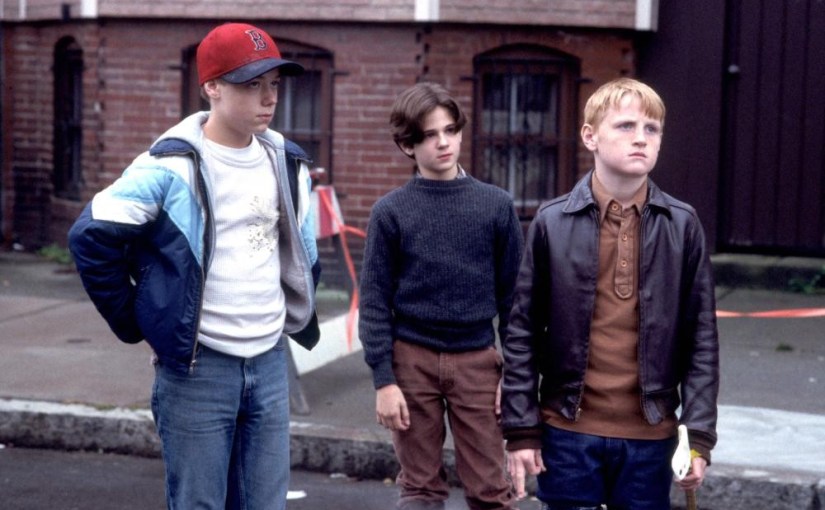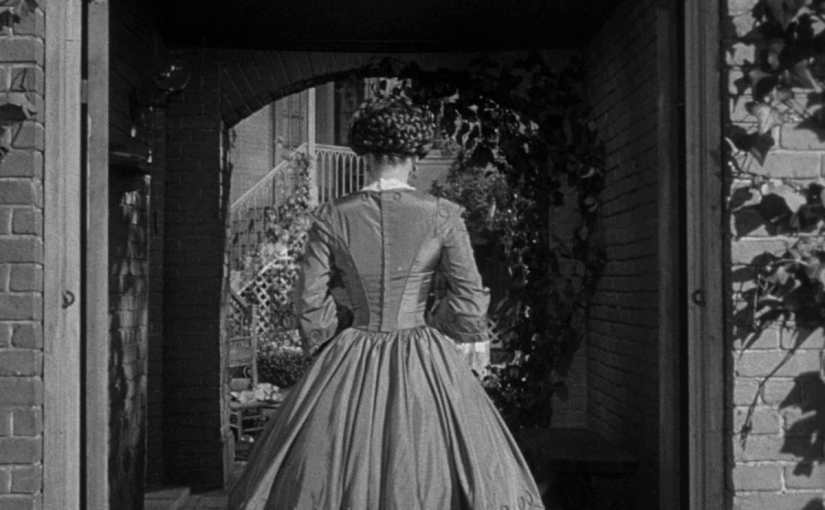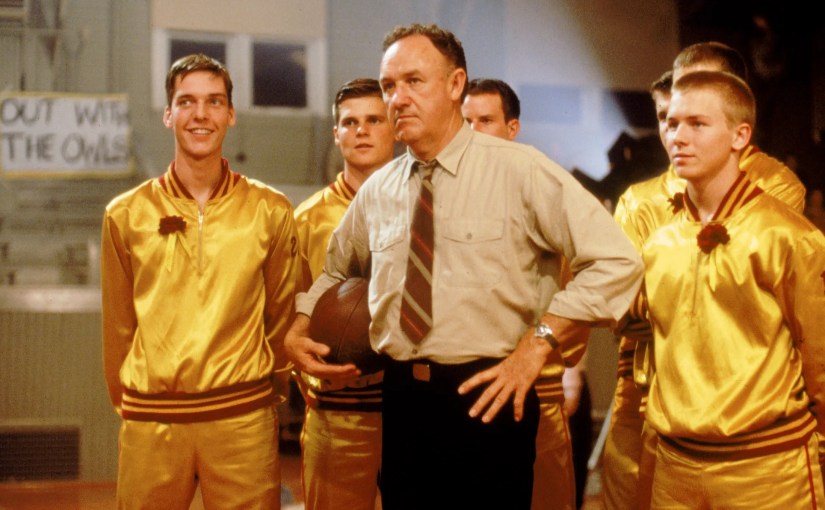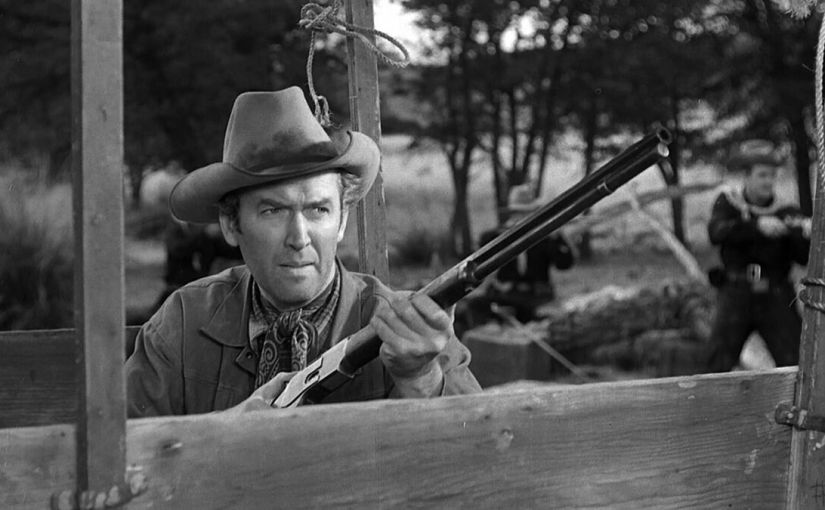
NICKEL BOYS

By Marc S. Sanders

Colson Whitehead’s Pulitzer Prize winning novel, Nickel Boys, is now an Oscar nominated film for Best Picture and Best Screenplay. It is based on a true story that needed the exposure of a film.  However, a better adaptation than what director RaMell Moss did with it should have been completed. 

The Nickel School of Southern Georgia is the setting for a boys school where various forms of abuse took place during the civil rights era.  Apollo 8 was making new discoveries in space, but racial prejudice and crimes of adolescent abuse were not being revealed to a greater public.

Elwood (Ethan Herisse) is a bright student who has been accepted to a prestigious school for gifted learning.  Upon walking to his destination, on the outskirts of Atlanta, Elwood inadvertently gets blamed for a crime he did not commit and is sent to the Nickel Reform School.  The black students are relegated “to the other side of the nickel” in less favorable quarters than the white students. 

At the school, Elwood develops a friendship with Turner (Brandon Wilson) and together they do their best to survive the harsh challenges that go with living at Nickel.  Elwood remains positive that he will be able to leave the school one day and return to his loving grandmother Hattie (Aunjanue Ellis-Taylor).  Turner knows differently.  These boys are never leaving, and they will be compelled to obey the harsh tyranny of living at the school.

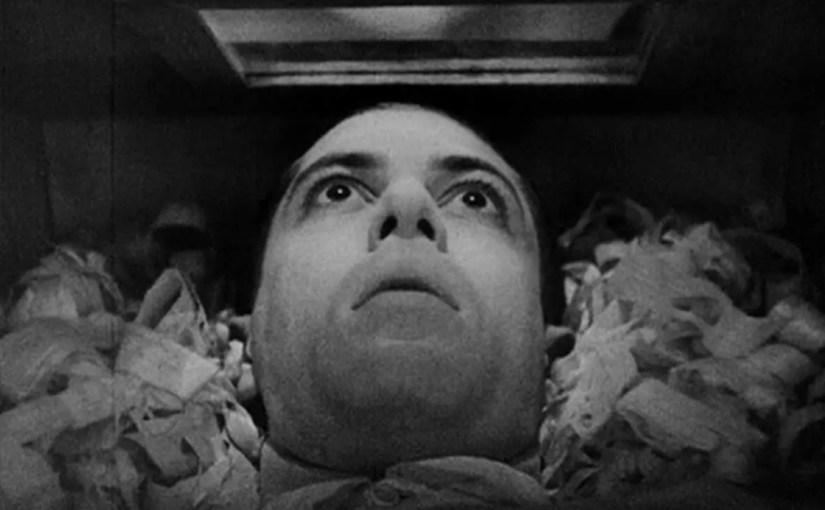
What helped me get through the near two and a half hour running time is that sadly this is an all too familiar story, especially for black youth.  The challenge though is the construction of the film.  RaMell Moss takes an unconventional approach where the viewer is the point of view of the two boys.  For about the first third of the picture, we are seeing what Elwood sees.  When he nods his head to the floor, the viewer sees the floor.  When he looks up to the sky, we look to the sky above him.  When he is listening or speaking to another person, like Turner or Hattie for example, that’s who we see.  The viewer is restricted to a forced tunnel vision of only what Elwood’s eyes focus on.  Frankly, as soon as the film began, I said to myself, “Oy.  Two and a half hours of this!”

Shortly after Elwood arrives at Nickel and sits down for breakfast, the perspective finally changes to Turner when the boys meet for the first time.  Now we get to see what Elwood looks like because we are looking through the eyes of Turner.  At this point, I told myself to either fall asleep, walk out or get accustomed to this different way of watching a movie.  I selected option number three and I’m glad I did because I started to become engrossed in the picture.  It’s compelling and absorbing. Granted I was still unsure of what this story was about as the film keeps the viewer very limited as to what is seen and told.  Arbitrary moments are shown through the eyes of the boys that do not necessarily progress the story.  These adolescent boys are not directly tormented as much as they are simply living in a captivity they do not fully understand.

A third person perspective is eventually put upon us.  We are watching the film at a different time, during an internet age, as we see a black man with dreadlock hair surfing the internet and pulling up articles about the Nickel Boys School that once existed.  I had an idea of who I was standing behind as he spoke with his girlfriend, but still I was not entirely sure, and other than an attempt at inventiveness, it puzzled me why the film veers occasionally into this direction.

Nickel Boys has an eye-opening story to tell but the experimental narrative of this picture does not entirely work.  It’s more frustrating than admirable.  RaMell Moss works with a very good cast of young actors who are focused on upholding the first-person perspective.  They are speaking the language of his camera.  Nevertheless, that doesn’t mean as a viewer that I like it.  These young actors deserve a more conventional means of telling this story.  I am confident they can handle that kind of direction just as well.

Nickel Boys ends with a mild twist.  While it might not have seemed necessary, and with Moss’ unusual approach I was not even sure what happened, it’s interesting for at least a beat.  However, to be sure I understood what occurred I turned to my resident Cinemaniac, Thomas Pahl, for assurance that I was accurate in what I think happened. 

I also took issue with RaMell Moss breaking his own rule of filmmaking.  The film limits itself to three different kinds of perspectives: a first-person view from either Elwood or Turner, and a third person sight from a character we meet in a more modern time.  Yet, for one concluding and significant moment that occurs near the end of this story, Moss changes his camera angle for a standard conventional approach.  Why do this?  Was Moss finally at the end of his rope and could not fathom how to demonstrate the story’s end unless he broke away from his own unique approach?  For me this shows the filmmaker could not stay consistent all the way through with the final cut of his picture.

Forgive the presumption, but I recall the Academy considering nominating films only if there is a minority representation contained somewhere within the finished edit.  I’m uncertain if that remains an unspoken rule or if it is set in stone.  Honestly, I think it’s simply considered with a lack of justified merit. 

I do not find Nickel Boys to be worthy of the best of 2024.  A handful of films that were not as recognized did not get the accolades this film received.  Is the picture being honored because it depicted a black experience?  I cannot help but wonder.  It is not a terrible film because there are parallel ideas happening alongside the main storyline and the cast is especially good.  Real life tragic stories are especially appealing to The Academy.  The direction of the piece takes away from much of the benefits of the film though. 

Garner up your patience with the limited view you will have watching Nickel Boys.  I also say this without sarcasm, maybe take a Dramamine.  When watching a production in a first-person narrative, often people are prone to motion sickness.  Surprisingly, it did not happen for me this time.  It should have because I cannot play updated video games that rely on this angle.  Yet, a friend had a different experience with Nickel Boys, and he said it took all his strength not to get up and exit the film.

IT HAPPENED ONE NIGHT

By Marc S. Sanders

If you want to stay on top of how the world of American cinema evolved over the last hundred years, within all its categories, you must find time to watch the one film that paved the way for the romantic comedy, as well as the travel comedy.  Frank Capra’s Oscar winning picture, It Happened One Night, is the first of three films to win Oscars for every major category: Best Picture, Director, Screenplay, Actor and Actress. Nearly a hundred years later, the accolades still feel worthy.

Claudette Colbert is wealthy heiress Ellie Andrews who dives off and swims away from the captivity of her father’s yacht and buses from Miami to New York to reunite with her new husband, King Westly (Jameson Thomas).  Her father, Alexander Andrews (Walter Connolly), never approved of this marriage and insists his spoiled daughter get it annulled once she is found.  A ten-thousand-dollar reward is up for grabs to the person who finds her.

Along the way, a rogue reporter, Peter Warne (Clark Gable) ends up next to this young lady on the bus.  Complications ensue where their money gets lost, bags are stolen, buses are missed, and buses get stuck.  Then this trip becomes a walking experience.  Ellie has agreed to stay by Peter’s side though.  He promises to get her to New York as long as he gets to write about her story firsthand amid the constant headlines that recount Alexander’s desperation to get his daughter back.

It’d be easy enough if only Peter and Ellie were not falling for one another.

Sounds familiar, doesn’t it?  Any Nora Ephron script has the elements of It Happened One Night.  Screwball comedies with Cary Grant and Katharine Hepburn seemed to follow a similar blueprint.  To the best of my knowledge, Frank Capra’s film was first though.  

A famous scene has Colbert and Gable on the side of the road trying to hitch a ride.  Colbert’s bare leg does the trick that Gable’s outstretched thumb could not.  Eventually, this scene for the ages evolved into Meg Ryan and Billy Crystal daring to fake an orgasm effectively while dining at Katz’s Delicatessen.

When Harry Met Sally… is what easily comes to mind while watching It Happened One Night.  Peter will tease this spoiled rich girl. Yet, he will also be gentlemanly enough to put up a blanket to divide a cabin room he shares with Ellie, allowing for some privacy.  In the middle of the night though, the two will stay up chatting from either side of their blanket wall, as both acknowledge sad voids within their personal lives.  It’s parallel to how Harry and Sally would chat on the phone from their respective apartment bedrooms while discussing their newly evolving friendship with Casablanca on TV.  

Ellie and Peter become relaxed as their sojourn continues.  They could be left in the middle of nowhere with no money or food, but Gable and Colbert’s chemistry show an easy comfort to each other.  That is what’s expected of any troubled travel film.  At first Ellie does not want to share a rear bench on the bus with Peter.  She’s married to King and the purpose of this runaway trip is to be back in her new husband’s arms.  Plus, this odd fellow on the bus feels unseemly.  His charm is overbearing to the socialite’s proper petiteness.  He’ll resort to munching on a carrot he finds in a patch. She can’t find the appetite for it. Time together breaks down barriers though, just as movies in later decades eventually accomplished with films like Midnight Run and Planes, Trains & Automobiles.  This kind of formula, with ongoing new settings and circumstances, is almost guaranteed to end in positivity once the mutual antagonism is behind the pair.  

For 1934, It Happened One Night was bold in its content, ahead of an eventual ratings system intent on upholding an acceptable level of conservatism.  Colbert’s leg is the most unforgettable.  Later, Peter feels it necessary to spank Ellie.  Then there is the fact that the two share a room together.  Comedic circumstances and shock lend to the humor of this scenario.  Plus, there’s Claudette Colbert undressing down to her slip while a bare-chested Clark Gable is only one side of a blanket away from her.  

Would It Happened One Night endure an endless admiration if moments like these were contained? I doubt it.  Frank Capra’s film hinges on sexual appeal that feels naughty and rebellious.  

The dialogue remains witty.  Clark Gable’s introduction in the film while on the phone with his editor is a precursor to what an outlandish Bill Murray might have done with the script. The material is sometimes quite brash, and the ending, which has been duplicated hundreds of times since, is a perfect example of romantic escapism.  

Over ninety years have passed but unexpected romance is what remains treasured.  When two people with nothing in common begin an unwelcome journey together, it’s still easy to hope they find a way to like each other.  They have to like one another first before they can even concern themselves with falling in love.  The progress of this east coast bus ride allows for the stages to develop naturally.  Frank Capra, Clark Gable and Claudette Colbert were the first to give it a shot and it works brilliantly and beautifully.

A WOMAN UNDER THE INFLUENCE (1973)

by Miguel E. Rodriguez

DIRECTOR: John Cassavetes
CAST: Peter Falk, Gena Rowlands, Fred Draper, Matthew Laborteaux (for all you Little House fans out there)
MY RATING: 9/10
ROTTEN TOMATOMETER: 89% Fresh

PLOT: Domestic turmoil gets a whole new definition in director John Cassavetes’ landmark portrait of a family in psychological free-fall.


I am a newcomer to the films of John Cassavetes.  The only one of his films I’d seen prior to A Woman Under the Influence is Love Streams (1984), a character study of a woman, played by Gena Rowlands, whose determination to only be herself puts her in conflict with the people and expectations around her.  As a director, Cassavetes seemed only to be interested in putting real people on the screen.  I don’t mean that other great films don’t do that kind of thing, but few directors have made films with scenes so genuine that I had to fight the urge to cough and look away because I felt like I was intruding on a private conversation.

A Woman Under the Influence is about a woman, Mabel Longhetti, a mother of three, who is similar to the woman in Love Streams in that she is constantly waging a battle between how she wants to behave and what is expected of her.  The difference this time is that Mabel is clearly suffering from…well, I’m not going to embarrass myself by putting a name to it because I’m not a psychiatrist.  She seems to be overly anxious all the time.  ALL.  THE.  TIME.  Her husband, Nick (Peter Falk), appears to be sympathetic with her anxiety, almost to a fault sometimes, but he tends to explode at her when she tries to be the life of the party.

How has this relationship lasted through three children?  Nick promises Mabel a romantic night at home, but is unexpectedly called away when a city water line bursts.  (He works in construction.)  She assures him everything’s fine on the phone…and promptly walks out of the house, goes to the nearest bar, and picks up a random dude and brings him home to spend the night.  But hey, Nick’s no angel, either.  After a long shift at work, he impulsively invites his entire crew of roughneck buddies to his modest home for a spaghetti dinner…cooked by Mabel, of course.  Mabel anxiously tries to “act normal” by being friendly and chummy with Nick’s co-workers, but she overdoes it, and Nick blows up at her.

Later, there is a remarkable scene where Nick brings a doctor to the house to see if he can talk Mabel down from one of her episodes.  Gena Rowlands adds these brilliant physical tics and peculiarities to Mabel that, in someone else’s hands, would be showboating, but with Rowlands, they come off as so real that it felt like I was watching a documentary.  I read on IMDb that Cassavetes did very little rehearsing, if any at all, so a lot of what we see in this scene and elsewhere was improvised on the spot.  It’s one of the best performances I’ve ever seen.  Had it not been for One Flew Over the Cuckoo’s Nest (1975), Rowlands would have walked away with the Oscar.

A Woman Under the Influence was one of the first movies to really make waves as a truly independent production, predating the modern indie movement by some fifteen years or so.  Is it a movie I enjoyed watching?  Yes, but not in the same way that I enjoy watching The Goonies or Avatar.  This was like watching There Will Be Blood or Sophie’s Choice.  It’s an amazing example of acting as a craft, as an art form.  Not a single scene felt scripted or contrived.  I never knew Peter Falk had this kind of range as an actor.  I’d heard that Gena Rowland’s performance was the stuff of legend, and now I understand the hype.  If I have to be honest, I didn’t care for the very end of the film, a scene that seems to indicate that nothing will keep Mabel and Nick apart, even though they are not good for each other, in my opinion, especially considering what happens in the scene immediately preceding it.

This is a shorter review than I might normally write, but words are failing me with this one.  I’ll start describing one scene, then another, then another, and soon I’ve just recapped the entire film, which I don’t want to do.  This movie is searing, uncompromising, authentic.  To do it justice, I’d have to go away for a month or two and write an old-fashioned research paper (remember those?) complete with outlines, bullet points, and a bibliography.  Whatever you may have heard about Gena Rowland’s performance is 100% true, and then some.  In an earlier review of Peter Hall’s The Homecoming (also 1973), I mentioned that I did not have a lot of space in my head for blistering dramas about dysfunctional families, but I’m glad I made room for A Woman Under the Influence.  It’s a master-class of direction and performance.

CAPTAIN AMERICA: BRAVE NEW WORLD

By Marc S. Sanders

Captain America: Brave New World does not invent any new motifs you have not seen before, but it maintains the magic that have made all of these movies fun in the mighty Marvel way.  It’s well cast with well-edited direction and there actually are a few surprises that did not appear in the countless trailers that have been spread on line. 

Anthony Mackie took over the title character at the end of a Disney + streaming series.  I like him.  He is very vanilla.  Not smart alecky like Robert Downey Jr.  or revolutionary like his predecessor, Chris Evans, and definitely not brash like Thor’s Chris Hemsworth.  He’s Sam Wilson – a guy with a smile who wants to be a friend to everyone.  Hokey?  Sure.  Though that’s not a bad thing.  It’s nice to just like your heroes again.  Danny Ramirez is the sidekick ol’ chum as a new Falcon named Joaquin Torres, and together the pair soar the skies with outstretched feathered wings while trying to save the world.  Harrison Ford is a welcome replacement in the space left open by William Hurt following his passing.  General Thaddeus “Thunderbolt” Ross is now the President of the United States and I believe this guy could also thrwart a terrorist hijacking of Air Force One if it happened again. 

Following a successful mission that opens the film where a precious cannister has been recovered, a worldwide peace treaty is on the horizon, and this could be a big win for the President.  However, a surprising assassination attempt interferes, and now Sam and Joaquin must go rogue to exonerate a friend who has been framed and uncover the mastermind behind this plot.  The story is simple and after a million and a half Marvel movies, series and cartoons, I’m grateful.  You can follow this picture without having to catch up on details from earlier installments.  Though, if you do you’ll likely appreciate some surprise appearances that turn up going all the way back to the earliest films in the Marvel Cinematic Universe.

My major critique with Captain America: Brave New World is the marketing campaign.  While I’m not entirely confident that Anthony Mackie can carry an entire franchise yet, the Marvel brand sells itself and much of the advertising for this picture threw out some of the best goodies that the picture offers.  Was it necessary?  This franchise has a built in following and name brand.  You likely know what I’m referring to but I won’t surrender to the masses and reveal the best attraction of the film.  You just might be the one person reading this who returned from a desert island where you lived alone in a dark cave.  I had a lot of fun with this movie.  I would have had my mind blown had I not known as much as I did.  Still, there is a major player who has hardly been discussed or tossed around of late who makes a nice return.

Julius Onah directs this time and has assembled a well cut action movie.  Most of the scenes are in bright daylight so every soar through the sky with Cap’s colorful wings is easy to follow.  Punches and acrobatic flips are well choreographed.  Military jets thunder across the screen.  Missiles race towards and away from Cap and Falcon.  It’s as colorful as the Marvel artwork found in the original source materials.  A final battle is lots of fun, but the wrap up looks a little odd with the characters supposedly standing amid the wreckage of a Washington D.C. park amid cherry blossom trees.  Just that material alone looked a little too artificial but no matter.  A close up shot of Mackie in his patriotic regalia looks terribly fake and needed another coat of paint to look more convincing.  On a massive Dolby screen (the best way to watch a movie like this because your seats rattle against the sound design), you can easily see the brief eyesore of this moment.  Maybe that will be improved upon when the film hits Blu Ray and streaming. 

As well, the soundtrack is a little intrusive.  It’s adventurous for sure, but the instrumental music never turns off.  There are moments where the heroes are investigating dark rooms and corridors, or Sam and Joaquin are pondering and the music carries on and just feels unwelcome.  Good one on one scenes between Mackie and Ford work on their own, but the soundtrack is just too much for some of these moments.  Let these guys talk and don’t add what isn’t necessary.

Overall, this is a movie I’d watch on repeat.  I like all of the characters.  I appreciate a Parallax View conspiracy kind of plot which is what caters to the Captain America character the best and the dots connect sensibly. 

Captain America: Brave New World is not the best of the Marvel films.  Never needed to be.  It only has to be entertaining, and it more than accomplishes that feat. 

I’M STILL HERE (BRAZIL)

By Marc S. Sanders

Biographies of terrible truths are fascinating.  Haunting, yet fascinating that circumstances ever got as far as they did when unfairness, immorality and unspeakable tragedy occurs.  Walter Salles’ Brazilian film I’m Still Here recounts the abduction of Reubens Paiva in 1970 when Rio Di Janeiro was under the control of a militaristic dictatorship.  This is a moment in world history that I am completely unfamiliar with, and so I wished that Salles’ movie provided more backstory to paint a clearer picture.

Reubens Paiva (Selton Mello) is a father of four girls and a boy.  Despite a happy marriage to Eunice (Fernanda Torres) and a comfortable life across the street from the coast, the government stronghold of the island looms with planes flying overhead and check point searches at intersections.  Other than this dark overrule, life goes on for the Paiva family as they plan to build a new home, send their eldest off to London for college, and swim daily in the ocean blue.  Ice cream outings are also a treat.

Then Reubens is requested to go with a military escort.  He gets dressed in a jacket and tie and calmly leaves the home.  Eunice is also taken and placed in a dirty cell for days while being put towards intense questioning.  Their daughter, Verona (Valentina Herszage), is stopped at a checkpoint and searched while out with friends.  No explanations come their way for these encounters.  

Following a few weeks in captivity, Eunice is released back to her home.  Reubens is nowhere to be found and assumed to still be held prisoner.  The couple were friends with people much like them who apparently spoke out against the regime.  It is likely Reubens was taken due to his writings and vocal protests as a former Congressman.  It’s also concerning that foreign diplomats are rumored to be kidnapped as well.  There’s definitely an uneasy feeling happening. Now Eunice’s dilemma is to try keeping her children calm and sheltered from news of this arbitrary situation, including her worst fears about her missing husband.  

I’m Still Here is certainly an important story that needs to be told and was more than ready for the big screen.  I’m sorry to say though that Walter Salles’ picture is terribly boring.  Once the captivity sequence is over, Salles relies often on Eunice silently wondering what has become of her spouse.  Colleagues visit with rumblings of what they have heard and in between there is a lot of gazing at photographs and newspaper articles.  It’s challenging to embrace a character looking at documents and pictures over and over with no progress being introduced to the story.

There are moments of paranoia as Eunice observes people watching her and the family from across the street.  Tragedy befalls a loving pet as well.  Yet, I never felt the tension that I’m sure resided with this woman from one day to the next.  Eventually, the film takes two different leaps in time and an older Eunice is now played by Fernanda Montenegro (Fernanda Torres’ real life mother). 

I’m Still Here is very slow moving. I couldn’t help but feel lost with most of this story and it’s not until the second and final epilogue arrives that a televised newscast offers more clarity to what likely happened.  I was glad I walked away with a better understanding, but it does not make up for how lost I was during the first two thirds of the picture.  

I still do not understand how the military coup came into power. A prologue might have helped enhance the threat the family had to face.  I was never clear on what precisely Reubens stood for against this stronghold regime.  What was his platform?  What bothered him specifically?  Anyone could tell me it should be obvious, but again I know nothing about this story that arguably is not shared in schools and is hardly a current event.  Granted, Brazilians likely have a clearer idea.

Without enough knowledge, I’m Still Here is uninteresting.   Viewing characters staring at old photos is not stimulating enough on its own and I’m sure Eunice Paiva was at least a little more aggressive than Fernanda Torres’ performance implies.  I read that Eunice never cried in front of her children and that is demonstrated in Salles’ film.  So, I have to presume this real-life woman, who eventually earned a law degree she used to fight for human rights, would have been much more aggressive than what is on display in this movie.

I can only recommend watching I’m Still Here as another example of tragic unfairness towards human rights.  

Learn about the Paiva family.  However, instead of watching this film, it might be better to rely on the book it’s based on, written by Eunice and Reubens’ son Marcos Rubens Paiva.  I’d expect it to be much more insightful.

THE APPRENTICE

By Marc S. Sanders

No.  This is not a reality show.  This film feels much more authentic than the “reality” of a reality show.

Ali Abassi is the director making broad strokes that cover the early career of one Donald J Trump (Sebastian Stan).  By the time I was finished with the picture, I gathered that Abassi was depicting how one monster created his own monster, and then that creation destroyed the original creator.  This might as well be the story of Darth Plagieus The Wise.  Watch a Star Wars movie for a change, would ya?

The original creator is the infamously corrupt attorney Roy Cohn (Jeremy Strong) who proudly knows how to dodge one indictment after another  while standing on the precipice of his historic conniving.  In a private New York City club one night in the early 1970s, Mr. Cohn will lock eyes with Mr. Trump across a crowded room.  Cohn will mentor this kid about the three rules of business which include denials when necessary and never admitting you’re wrong.  

Trump works for his uncompromising father Fred (Martin Donovan, bearing a striking resemblance to the real person, complete with the bushy mustache, bushy hair, and towering height).  The family is in the business of real estate while fighting accusations of forcing out lower class minorities from their run-down tenement buildings.  Donald is not even fearful of knocking door to door with late rent notices and threats of evictions.  Still, he knows they are up against a wall and if there’s anyone who can exonerate him and his father it is Roy Cohn.  Yet, Roy does not weaponize with legal research and law jargon to uphold a defense.  Instead, he digs up dirt on those figures that are in the way.  To keep skeletons from going public will mean a drop of the case. Thus, Donald has received his first lesson in cutthroat business operations.

From there, Trump gets the impression that with Roy there’s no limit on what can be achieved.  New York City is slum area, but Trump knows he can revitalize the streets with his invested infrastructures, beginning with Trump Tower on 5th Avenue.  It’s time to pressure Ed Koch for tax breaks even if there’s no justification.  If Ed doesn’t want to cooperate, it is to the press Donald J goes with how he truly feels about the Big Apple’s Mayor.

As the fast tracker gets more and more visionary, so does the recognition of a guy who…well may be crazy enough to become a game show host or even President of the United States.

Much of The Apprentice seems legitimate based on the very public image of Donald Trump.  The common gestures like the thumb and index finger held together to drive home a point or the repetitive adjectives that construct much of the man’s vernacular (“…tremendous, tremendous…”).  The junk food eating is covered.  Trump’s hyperactive ranting and slamming of those in his way work towards his drive along with his disregard for not honoring loan payments.  The growth of his empire in casinos and resorts break ground too.  None of this is slander.  The news showed how it happened.

Private moments are where skepticism could be merited.  The prenuptial agreement that Cohn drafts, and a supposed forcible rape on his first wife Ivana (Maria Baklova) by Trump are given attention.  The disdain he has for his alcoholic older brother reveal the workings of a family life never based on love, and only on platforms of business and prestige.  His sneaky approach to get his senile father to sign documents may or may not have happened.  I dunno. When his mother found out about it, she threw him out of the house. Perhaps? Doesn’t sound so farfetched.

Trump’s obsession with his appearance is also given attention.  A constant habit with fixing his hair is redundantly shown. I believe it. If he was not obsessed with his hair, he wouldn’t look like he does, and that haircut begs for some proper attention. If he’s not going to eat right and exercise, then his doctor will conduct surgery to preserve his youth, and a hair transplant will be completed to conceal a bald spot.  Apparently, Trump took diet pills as a means to offset his terrible nutrition. Doc insists they are amphetamines that his patient has to stop using, but for a guy like Donald Trump, he has to keep going and going. No time to sleep when there are worlds to conquer and beach front property to build upon. I don’t suppose any of these private activities away from the paparazzi can be validated with tangible proof beyond heresy. Nevertheless, again as the world knows Donald Trump today and for the last forty years, what is offered in Ali Abbasi’s account, with a screenplay by Gabriel Sherman, seems consistent from what the public sees regularly. Don’t get me started on the board game my dad got me for Hanukkah in the early 1990s, or the fact that Trump eats a filet mignon with ketchup.

As Trump goes up the scale, Cohn is quickly descending and the man who gave the kid access to everything is disregarded during the age of AIDS spreading in the early 1980s when Reagan seemed to inspire the use of disposable income for many middle-class yuppies.  Cohn is a victim of these prosperous, yet unexpected times. Being a closeted homosexual and contracting AIDS did not suit the cloth of this shark. Also, the mounting charges against the lawyer for his unseemly practices eventually caught up to him. Couldn’t have happened to a better guy, quite frankly.

Jeremy Strong is known for his literal method acting and he personifies Roy Cohn, the guy with chutzpah not just found in him but in everyone he associates with including criminal mob bosses.  This is a very powerful guy that no one should underestimate.  The only thing that could kill him is if Donald gets out control…along with Roy surrendering to the residual effects of a secret gay sex life in the early 80s.

This is not so much a polarizing film based on red and blue politics.  Donald Trump actually functions like the one depicted in The Apprentice.  Sebastian Stan wisely steers away from a Saturday Night Live impersonation.  You don’t hear Trump’s voice but with talented hair and makeup artists, you recognize the delivery of dialogue.  It changes from a polite young man who wants to be the emperor he sees in his father, only not as conservative and a lot more aggressive.  Later, with the help of an overly confident ego accompanied with a loud and brash mouth, do you see the person most of us are familiar with. 

The Apprentice has a documentary style narrative with Abbasi’s reliance on hand held cameras.  The grainy photography of the 1970s Nixon years enhance the crime and disruptive unsettling Northeastern America.  Donald Trump, in his beige linen suits and ties, does not fit in this environment.  There isn’t an authority to him yet. He looks too liberal actually. In the 1980s, with much accumulated for the mogul, the graininess changes to look like footage played back on a VCR.  Trump has the tuxedos and overcoats that do not hide his belly well enough.  The navy suit and red tie surface for the first time and his surroundings are often decorated in gaudy layers of gold.  The royalty he’s placed himself in is here to stay.  Roy Cohn used to go all out with his parties and sex orgy binges, but never like this.  This new Donald J Trump is so overinflated that even the great Roy Cohn is drowned out of existence.

Ali Abbasi allows some winks and nods at what we know will become of Donald Trump.  Name drops of other bigger than life businessmen enter the scenes and you nod your head when you see guys like Rupert Murdoch or Roger Stone arrive.  Trump’s brand has always been defined by the power pawns he associates with.

A side story glosses over Donald’s relationship with Ivanna.  I know why it has to be here.  It’s played well by Maria Baklova and Sebastian Stan.  Though in comparison to Donald’s relationships with his father and brother, plus Roy Cohn, the marriage storyline does not carry the same kind of weight.  Much of the material seems conjured up here and not as genuine.  Maybe that is because the general public has never seen how the husband and wife truly treated each behind closed doors.

The Apprentice declares that there are portions of the film that are fictionalized for dramatic effect.  Yet aren’t most biographies?  Sebastian Stan seems to have a lock on his portrayal.  If he judged his character at all, he lent credence to how the real man is satisfied with how he carries himself.  I don’t know how the actor sides politically or how he particularly feels about Donald Trump, but Stan grew a respect for the figure.  He doesn’t make the guy look like a buffoon.  This Trump is passionate about every new project he pursues and just as equally he’s focused on pushing obstacles and enemies out of his way. If he doesn’t push, then he steps on them. It doesn’t matter if it is his wife, his brother, his father, his mother or the one that got him everything he needed, his good friend Roy. Even a once respected mentor can become a casualty in the pursuit of greatness.

I can’t say how any one person might respond to The Apprentice.  A Trump follower, or even Donald J Trump himself, may feel very flattered by this reenactment and how the guy got to the top of his gold pyramid.  Others will be offended and exhausted over even more exposure of the largest ego the world has encountered.  Either way, I attribute my compliments for the outstanding pairing of Sebastian Stan and Jeremy Strong.  A partnership is at the center of this piece, and now we bear witness to how the connection between these two characters moved along, and then eventually very far away from each other.

THE HOMECOMING (Great Britain, 1973)

by Miguel E. Rodriguez

DIRECTOR: Peter Hall
CAST: Paul Rogers, Ian Holm, Cyril Cusack, Viven Merchant
MY RATING: 7/10
ROTTEN TOMATOMETER: 86% Fresh

PLOT: After a nine-year absence, a philosophy professor visits his psychologically dysfunctional family in London to introduce them to his wife.  Let the mind games begin.

[WARNING: This review contains mild spoilers. …not that a ton of people will run out to find this movie right away, but still…just in case…mild spoilers.]


There have been countless movies about dysfunctional families through the ages, so many that I won’t bother listing any.  I haven’t watched them all because there is only so much psychic room in my mind for movies about mean people being mean to each other for the sake of being mean.  There are exceptions to the rule, as always, but that is my general feeling on the matter.  Peter Hall’s The Homecoming, based on a blistering play by Harold Pinter, has an ending that I’m still trying to sort out, and which I felt left me hanging, but I think I may see what Pinter was reaching for, and in order to suss all that out, it will be necessary for me to discuss specifics of that ending.  So, be warned.

In the tradition of Arthur Miller, Edward Albee, and Tennessee Willaims, Pinter’s The Homecoming is a portrait of several unlikable people who are thrown together due to an accident of birth.  Based on the movie, it is unlikely any of them would cross the street to piss on any of the others if they were on fire.  Max (Paul Rogers) is the patriarch, a mean, abusive little man who spews never-ending insults at whomever is in range.  He is a widower with three sons: Lenny (Ian Holm), Joey, and Teddy.  Lenny and Joey are grown but still live at home.  Joey is an aspiring boxer, and Lenny…well, we never quite get to know what Lenny does for money, although it is hinted towards the end that he is involved in some less-than-savory enterprises.  Teddy, miraculously, has made good as a professor of philosophy in the United States, but he hasn’t been home in nine years.

There is also Max’s brother, Sam (Cyril Cusack), a tall, effete man with a high, reedy voice that would probably be comic in different circumstances.  Sam absorbs Max’s tirades with the kind of unruffled calm that only comes after years of experience.  Together, they form one of the most unpleasant family units since Jaime and Cersei in Game of Thrones.  Here’s one of Max’s more pleasant descriptions of his sons: “Look what I’m lumbered with.  One cast-iron bunch of crap after another.  One flow of stinking pus after another.”  How is this guy still single.

One night, they’re surprised by the return of Teddy, the philosophy professor, with his wife, Ruth (Vivien Merchant) in tow.  It’s indicative of Teddy’s relationship with his family that none of them knew he had been married for nine years…with three sons of his own.  After some quote-unquote pleasantries, everyone goes to bed except Ruth and Lenny.  Lenny has the balls to slyly put some moves on her in a weird-ass game of cat and mouse, as if he’s probing her for weaknesses, looking for the best place to stick the knife in.  Ruth is passive at first, but shows a spark of strength before everyone calls it a night.  But the next day…that’s when the feces really hits the fan.

The Homecoming is a great example of a “slow burn” film, the kind of movie that takes its sweet time getting around to its prime directive because it only makes sense because of everything that came before, like Atonement [2007] or Incendies [2010].  We are shown so much of Max’s vitriolic harangues because we have to see how momentous it is when his brother or Ruth finally respond in a meaningful way.  We are shown so little of what Ruth is capable of at the beginning because it is that much more shocking when she proves herself even more adept at psychological warfare than anyone else in the house, including her husband.

But what is the point of all this?  In a movie like In the Company of Men [1997], for example, we spend so much time in the presence of sociopathic monsters so that, at the end, one of them can be shown the error of his ways in an immensely satisfying conclusion.  But, in The Homecoming, we don’t really get that kind of wallop in the face at the end.  Granted, Ruth displays her tenacity in a satisfying manner, putting each and every man in the house in their place in one way or another (some ways more surprising than others), but when that final shot faded to black, I was like, “That’s IT?”

What is Pinter getting at?  Is he demonstrating that, no matter how bad you may think your family is, it could always be worse?  Did he perhaps exorcise some demons in his own past by committing these flawed individuals to paper?  The film is based on a play, but the acting style throughout is very stilted, for lack of a better word.  The only character who displays something vibrant on the screen is Max, but his vibrancy is only defined by his cruelty.  Everyone else (with the possible exception of Ian Holm as Lenny) sounds almost as if they’re reciting their lines at the first read-through of the rehearsal period.  Cyril Cusack gets some jabs in as Sam, but they’re very few and far between.  Why does the meanest character have the strongest voice, at least until the final sequence?

It might be easy to explain it as a Whiplash [2014] thing, where great things can only be accomplished after even greater trials and tribulations.  You can’t appreciate the light unless you’ve spent some time in the dark, et cetera.  As a movie-watching experience, I must honestly report that my patience was starting to wear thin until we finally got to the second act of the film.  I would have enjoyed more color and flair from the other actors.  However, that might have ruined the effect the filmmakers were going for, so I’m of two minds.  It explains my only slightly-above-average rating.  If the entire movie moved and sparkled like its second half, I may have gone a little higher.

It’s also worth mentioning that this film only exists because of a filmmaking project spearheaded by producer Ely Landau whereby fans of stage drama would purchase a subscription to a “season” of films that would be shown simultaneously at 500 movie theaters across America, sort of like what Fathom Events does today.  These were filmed adaptations of stage plays, not a record of a staged production, and 100% faithful to the original scripts.  Notable films in this experiment included The Homecoming, Eugene O’Neill’s The Iceman Cometh [1973, dir. John Frankenheimer], Ionesco’s Rhinoceros [1973, dir. Tom O’Horgan], and Albee’s A Delicate Balance [1973, dir. Tony Richardson and starring Katharine Hepburn and Paul Scofield <!!!>].  American Film Theatre only lasted two seasons, but if you’re a fan of faithful cinematic adaptations of stage plays, these are going to be worth the search on streaming or home video.

The Homecoming is ultimately a rewarding watch, for the performances from Paul Rogers and Ian Holm, if for nothing else.  (Vivien Merchant is appropriately cool, but again, you have to wait for near the end of the film to see her really shine.)  It’s an interesting record of a moment in film history when a group of people had a radical idea and the money to fund it.  And, it must be said, it’s an excellent way to remind yourself that, however bad your family is, it can always be worse.  MUCH worse.

THE LONG GOODBYE (1973)

by Miguel E. Rodriguez

DIRECTOR: Robert Altman
CAST: Elliott Gould, Nina van Pallandt, Sterling Hayden, Henry Gibson
MY RATING: 9/10
ROTTEN TOMATOMETER: 95% Certified Fresh

PLOT: Private eye Philip Marlowe does a favor for a good friend, and as a result he loses his cat, spends three days in jail, and incurs the wrath of a mobster looking for his missing $355,000.


Elliot Gould’s version of Philip Marlowe is a far cry from Humphrey Bogart’s classic interpretation in The Big Sleep [1946], and I’m okay with that.  Who wants to see any actor, no matter how talented, try to follow in Bogey’s footsteps?  Gould resembles no one so much as Walter Matthau as he shambles from one fine mess to another, cracking wise to cops and hoodlums alike, smoking cigarettes like there was no tomorrow, and bemoaning the loss of his cat (played by the original Morris the Cat…no, seriously).

I mention all that because, apparently, there were (and maybe still are) Raymond Chandler fans who were none too pleased with Robert Altman’s film The Long Goodbye when it was released, as Gould did not fit the image they had in their mind of one of fiction’s greatest hard-boiled detectives.  In my opinion, it just doesn’t matter.  Bogey is Bogey and Gould is Gould and, as Marlowe himself repeats throughout the movie, “It’s okay with me.”  Just had to get that out of the way.

The Long Goodbye is one of the finest private eye flicks I’ve ever seen.  With Robert Altman’s trademark style and wit, we first encounter Philip Marlowe as he wakes up in the dead of night to feed his cat.  Much has been made of this opening scene, as the filmmakers apparently intended it to be a metaphor for the Marlowe character being transposed from the ‘50s to the early ‘70s, like a “Rip van Marlowe” suddenly having to deal with a new world after being asleep for 20 years.  I get it, but the movie plays just as well without that kind of metaphysical layering.

Next thing you know, Marlowe’s best bud, Terry Lennox, shows up at his door with bruised knuckles, scratches on his face, and a sudden desire to visit Tijuana, Mexico…indefinitely.  Marlowe does what any friend would do: drives his buddy to Mexico and drops him off at the border.  But when he gets back to his apartment, the cops are already there, interrogate him, and bust him on a phony charge until he tells them where Lennox is.  Three days later, Marlowe is released because Lennox has turned up dead, with a suicide note and a confession to murdering his wife at his bedside.

That’s just the setup.  Next thing you know, he’s hired by a ritzy dame, Eileen Wade (Nina van Pallandt), to find her drunkard husband, famous author Roger Wade (the always dependable Sterling Hayden), who apparently has a nasty habit of taking his drunken frustrations out on Eileen’s face.  That leads to an encounter with a mean little mobster named Marty Augustine (director Mark Rydell) who makes Roger Wade look like Tiny Tim.  HE wants to know where his $355,000 is, that TERRY was supposed to deliver to him in Mexico.  Are these three plot threads connected?  Is the sky blue?

Even if the mystery plot of The Long Goodbye weren’t meticulously plotted and virtually airtight, the movie would still be a pleasure to watch and listen to because, hey, it’s a Robert Altman movie.  I’ve only seen one movie of his that I HAVEN’T liked so far, but I’m reluctant to say what it is for fear I’ll get a deluge of comments about how wrong I am.  Anyway, Altman’s style is in full force in this movie: overlapping dialogue, the occasional cameo (David Carradine as a cellmate, and a certain Austrian bodybuilder as one of the mobster’s muscle men), and characters who never, ever look like they’re acting.

Altman frames his actors and directs them almost as if he’s shooting a documentary, although there are very few (if any?) hand-held shots, so you can tell that there was a method to the…well, not madness, but spontaneity.  Watching them deliver their lines is like watching the scene play out through a keyhole, or like we’re watching them on a hidden camera.  There’s a voyeuristic feel to the whole movie that, while it lacks a certain polish, is nevertheless compelling and absorbing.  I wanted to know what happened next, not because the mystery still hadn’t been solved, but because I simply wanted to see what these characters were going to do or say.  This is a vibe that I don’t even REALLY get, at least not to this degree, in some of Altman’s later films, like The Player [1992] or Short Cuts [1993].  There is something about the synergy between Gould, Altman, and the Marlowe character that struck a chord in me, and I was just happy to be along for the ride.

Naturally, I wouldn’t dream of revealing any of the secrets to the mystery of Terry Lennox and the mobster and the author’s wife.  But I do want to mention one specific scene, between Marty Augustine and his beautiful mistress.  To say that the payoff of this scene was a jolting is a vast understatement.  I can’t even say what other films it reminded me of, but it’s safe to say that it took me completely by surprise.  You’ll know what I mean when you see it.  (And how about that ending!?  Altman had a clause written into his contract specifically stating the ending of the film could NOT be changed by studio interference or whatever…and thank God he did.)

Based on the movie posters for The Long Goodbye, I had always assumed this was Altman’s stab at madcap, screwball comedy.  I could not have been further from the truth.  This is a great film noir, or I guess neo-noir, that does its best (and mostly succeeds) to capture on screen the grittiness and fatalism of only the best dime store detective novels, as well as some of the more highbrow entries in the genre.  Only Altman could have made a movie specifically like this, in this way, and only Gould could have captured that precise mix of “here we go again” and “I’m smarter than you and we both know it”.  I wouldn’t call it a forgotten film, but it’s worth digging up if you’ve never seen it.

ANORA

By Marc S. Sanders

Anora, or Ani as she prefers to be called, had to have been a character that writer/director Sean Baker always intended on loving.  Not in an intimate way though.  Sean Baker had to deeply care about this twenty-three-year-old girl who has no connections or family or solid friendships or kinships.  Baker wrote about Anora, wanting her to be appreciated by someone who would finally embrace her. 

Anora—sorry…Ani…has a good heart.  She may be an exotic dancer at a New York City strip club, but she is someone who has every right to be respected and valued. If you choose to watch the film you’ll know why, as a pertinent prop referenced earlier in the picture suddenly resurfaces when you least expect it.  A minute or two later the closing credits appear amid the sound of flapping windshield wipers and there is no music to cue your emotional response.  You likely will have spent the last two and a half hours laughing loudly, dropping your jaw, and gasping in shock at what unfolds for Ani. In the end though, you’ll realize that you want the best for her, like her creator did when he originally drafted this script and shot the film about Ani’s episodic escapades.

Sean Baker’s film is eye opening right from the start.  Club music blares within the HQ, the name of Ani’s strip joint where she collects an exorbitant amount of dollar bills while she strategically flirts with middle-aged men and frat boys looking for an evening of debauchery.  She has a talent for one on one charm with any customer, as she repeatedly bares her chest and reveals her thong, but she also delivers a very satisfying service.  A young man named Ivan, sometimes it’s Vanya (Mark Eydelshteyn), specifically requests a girl who speaks Russian to cater to his needs.  Ani is the only one who can comply.  Ani and Ivan get to talking, mostly in Russian but limited English too.  She gets invited to his private, deco mansion, which is really owned by his Russian aristocratic parents, and a slap happy relationship of sex and more sex, and money, and drugs and drinking and partying and New Year’s Eve partying and money, and clothes and expensive coats, and travels to Las Vegas ensue.  (Yes! I know that was a run on sentence.  My elaborate text does not even come close to what these twenty-somethings indulge in though.  It must be seen to be believed.)

Anyway, since they’re in Vegas, why not get married?  Vows are taken, the bride is kissed and Ani is emptying her locker at HQ for a promising future of being a spoiled, but loved, aristocratic wife.

In the few times that Ivan calms down, he is only engrossed in his online video games while Anora lies on his chest with an expression of wanting more than to come in second to Call Of Duty. Baker focuses on Ivan’s childish habit a few times.  So be sure to observe how Ani sadly looks upon an inattentive Ivan.

A problem occurs though that neither character could ever expect.  The tabloids have reported that Vanya, this spoiled brat son of a Russian oligarch, has up and married a prostitute. Now the family image is at risk of being shamed.  Mom and dad are on their way back to the states and have summoned Toros (Karren Karagulian), an Armenian Catholic priest and the son’s Godfather, to round up Vanya and the so-called whore to get the marriage annulled immediately.  Not divorced!  Divorce does not happen within the legacy of this family.  An annulment is what is needed. 

Toros rounds up Igor and Nick (Yura Borisov, Paul Weissman) to get over to the house right away, get the marriage license and bring the kids in for the quick annulment at the courthouse.  If only it were that simple.

Watching Anora allowed me to reminisce about other films that catered to outrageous debauchery and led to a domino effect of problems.  Doug Liman’s Go for example, or True Romance written by Quentin Tarantino, or even a super ridiculous comedy known as Very Bad Things with Christian Slater and Cameron Diaz.  The first two examples are very good films because the dialogue is sharp with eclectic casts who elevated simplistic material.  Let’s not talk about the third one, but I will say it is delicious junk food.  With Anora though, just when you think you know where this story should be going it doesn’t.  You think it will turn right, but then it makes a sharp left and Sean Baker knows he just needs to keep the fighting and the screaming and the cursing at an organic natural level.  What do you do when the wards you are put in charge of will not cooperate?  What if one of them goes missing and simply won’t answer his cell phone?

Well, on a cold winter night you may get a broken nose, car sick, and your car might get towed.   Anora is not about big stunts or gratuitous violence.  It’s not mobster movie material either.  Anora works naturally for people in desperate situations, from a handful of different perspectives.

Oh yeah.  Anora—sorry Ani, is played by Mikey Madison and she is bound for marquee attraction over the next twenty or thirty years.  This performance is so concentrated in moments of natural glee, anger, and maybe despair and sadness.  You applaud her character’s strength.  Ani talks like an updated version of Judy Holliday from Born Yesterday, but she’s no dummy and she never succumbs to intimidation.  I’ll confess it right here.  If two hulking Armenian thugs approach me, I’ll do whatever they want me to do. Ani gets all my props though.  She will never settle.  She’s a married woman and no one will deny her of her rights.

Mikey Madison has such wonderous chemistry with Sean Baker’s camera.  There must be over a hundred and fifty close-ups on this young actor and each one is unique.  I was sad for Anora when Ivan would not give her attention.  I was cheerful when the two were overindulging in carefree sex and sin city fun.  I was on Anora’s side when she was restrained. I was admirable of her giving a good fight to the giants that enter her space.  I was exhausted with her as she was forced to sit in Toros’ car while brainstorming where her husband could be.  I was supportive when she makes appeals with the family to offer a good first impression.  She hates her name, but she introduces herself as Anora to Vanya’s steely mother. Ani is willing to make all of this work. Finally, I was angry—very angry–alongside of her whenever she was unfairly treated like garbage. 

Amid all of the chaos that ensues, Sean Baker works like the eyes of the film’s audience. We keep guard over Ani’s condition and state of mind as she’s coerced into looking all over Brooklyn and Coney Island for her new husband that the Armenians need to find before the boy’s parents arrive by noon the next day. 

None of the dialogue is crafty like Quentin Tarantino’s or Neil Simon’s.  I could not quote a single line.  The yelling and conversations and overtalking and interruptions are natural and raw.  Sometimes, the exchanges feel pointless until you arrive at another scene that demonstrates with brilliant insight why certain throwaway moments are preserved in the final print of the film.  It makes complete sense that Sean Baker did not just write, produce and direct this film.  He edited it as well. 

The whole way through the picture I kept wondering how this story would end.  I spelled out variations of doom for any one of the characters.  I considered gratuitous violence or swashbuckling adventure and daring escapes.  Man o’ man, have I become cliché.  Because just as you arrive at the picture’s conclusion, a meaningful prop puts the period at the end of the story and the last audible expression before the picture goes to black comes from Anora. You now realize that this girl, who is as self-reliant as many exotic dancers must be, has feelings too.  As defiant as Anora can be, she can also get pricked and bleed and the big laughs you responded to for most of the film are distant memories. Anora can feel pain like any of us.

When I drove home, I was hurting.  I was hurting for Anora, and my one wish is that I hope Anora will be okay.

Roger Ebert once gave a seminar that lasted for eleven hours as he commented on practically every shot and piece of dialogue in Tarantino’s Pulp Fiction.  My long shot wish is that on a subsequent viewing of Anora, I can deliver a similar kind of observational lecture to others who had already seen the film too.  I believe I could reveal sincerity and perception related to every close up, every chaos-stricken scene of panic or decadence, and especially when that one prop reappears. I’d likely spend a half hour simply discussing the value that this prop carries and what it means to Sean Baker’s film, and especially to Ani.

As messy and gritty as Anora may appear, it is also one of the most adoring and perceptive films to be released in a long time. 

Anora must be in my top five favorite films of 2024.  It might just be my favorite.  There are a few other candidates, but I left feeling so satisfied with Mikey Madison’s performance and Sean Baker’s sloppy, yet astute, little film. 

This is superb filmmaking.

MRS. MINIVER

By Marc S. Sanders

To watch a classic film, usually reserved for Turner Classic Movies, is to get a history lesson while realizing that people’s perceptions have hardly changed.    In the early 1940s as World War II was occurring, happiness in many corners of the world was still moving forward.  Presently, I believe that happens today.  For example, Israeli hostages are only now being released from Hamas.  Until the conflict is over though, a childhood friend of mine chooses to run every Sunday morning.  He declares that he runs because they can’t.  This friend is not a soldier bearing arms.  He is acknowledging a violent and frightening conflict that persists.  On the side, he’s a devoted New York Yankees fan.  In 1942, when William Wyler’s Oscar winning film Mrs. Miniver was released, the well to do characters were performing comparably as Europe was in the thick of staving off the Nazi militia.

Mrs. Miniver opens on a bustling metropolitan district in England.  The title character, Kay Miniver (Greer Garson), is in a mad rush for something.  She hops on and off the double decker bus and weaves her way through the crowd.  Finally, she arrives at the destination.  The glamorous hat she’s had her eye on is still available to purchase.  Her only dilemma now is what will her husband think when he learns of the extravagant purchase.

Upon her arrival home, Clem Miniver (Walter Pidgeon) hides from his wife in a brand new convertible.  When she goes in the house, he makes a decision.  It’s expensive, but he must have the car and so he buys it.

In this tranquil part of England, the most immediate concern among these well to do people is deciding whether or not to treat themselves to gifts that will bring them joy.  Talk of a German invasion seems like a possibility, but the Minivers, with their two young children and their twenty-year-old son at Oxford, insist on living comfortably and happily.

Lady Beldon (May Whitty) is the elderly and intimidating aristocrat who suffers a terrible dilemma.  It seems the bell ringer, Mr. Ballard (Henry Travers), has grown a beautiful rose that looks like no other.  He cherishes it so much that he names the flower “Mrs. Miniver.”  The real person is honored for the personal recognition.  Yet, Lady Beldon’s concern is her yellow rose will not win this year’s prize trophy cup at the village flower festival.  Her granddaughter Carol (Teresa Wright) gracefully asks Kay if she’ll convince Mr. Ballard to withdraw his entry so that her grandmother can win once again.  She’s elderly, she’s accustomed to winning each year, and it would mean the world to her.

This request will also lead to a romance for Carol with the Minivers’ son Vin (Richard Ney), who has just enlisted in the Royal Air Force so he’s ready to fight the Axis forces of World War II.

All of this seems frivolous during the first half of Mrs. Miniver.  These people live comfortably but gradually grow a little more unsettled as they soon hear planes flying overhead their homes while the sounds of battle play off in the distance.   The possibilities of war coming to their front door seems to be an unlikely scenario.  The battles and bloodshed are out of sight, but only partially out of mind. 

I appreciate the editing of this film.  Clem is woken in the middle of the night to join the other neighboring husbands at the local saloon.  They are being requested to join the historic small boat rescue at the battle of Dunkirk.  The men down a drink and sail off without hesitation.  No one gives protest or stands behind their wealth or stature.

Midway through the picture, Kay is reading a bedtime story to her children in a dimly lit room.  We never see the entirety of this cramped space.  The scene simply begins with no transition.  The walls appear to be made of aluminum and then I realize the Minivers have taken shelter in an underground bunker.  Soon, they will be living through one unimaginable night of shelling and bomb dropping. Director William Wyler never turns off the camera through the extended sequence.  The bunker shakes and rattles.  The children cry in fear.  Dirt rains down them.  Books and belongings fall among the family. The pounding explosions carry on outside.  It seems to never end and the concern over a lady’s fashion hat or a beautiful new automobile are distant memories.

When Vin and Carol arrive home from a honeymoon, the Minivers home is wrecked.  So is Clem’s boat following the Dunkirk incident.  However, they happily remain living there with the youngest child playing a welcoming number on the piano.  

Amid all of these episodes, the people of this small English town uphold their positivity, but they never lose sight of what is nearby.  It’s just a house.  The Minivers are surviving and remain together.  Their biggest concern is that one day Vin won’t return from battle. Yet, time and again he does with hugs and kisses for everyone.

I’ve provided a lot of what occurs in Mrs. Miniver because I was not entirely sure of the purpose of all of these happenings until the final act is served and surprising outcomes arrive.  For much of the film, William Wyler delivers an impression of life away from the front lines.  These people live with a devotion to help their country and abandon comfort when necessary. Flower festivals, gleeful children, young romance and materialistic tranquility will carry on regardless of terrible interruptions of war.

Amid turmoil in our present state with political divides, unjust prejudice, natural disasters, and a resurgence of Cold War threats, I can’t help but wonder if many of us live like this family.  I believe we do, and I see nothing wrong with that.  We have to escape and live happily no matter what terrible future might befall us because otherwise what is the purpose of living?  Still, we choose to remain alert and especially empathetic and ready to aid our fellow neighbors when the need arises.

Visually, a shocking set design for the final scene of Mrs. Miniver sends a message that is only enhanced by a sermon delivered by the town minister.  I learned later that this speech was written at the last second by William Wyler and the actor portraying the minister (Henry Wilcoxon).  It perfectly demonstrates the overall purpose of the entire film.  Mrs. Miniver is the story of a fight for ongoing freedom; an independence to live and to treat oneself happily and lovingly.  People perish during the course of the picture.  The minister explains with convincing validity why they had to die so undeservedly and unexpectedly.  It’s an ending that really touched me, and upon the movie’s conclusion a message appears urging Americans to buy war bonds.  

This speech had such an impact at the time that it circulated in propaganda films and on radio airwaves as a means to deliver a shared triumph among the Allied masses.  It reminded people that simply because you live at home, does not mean you are exonerated of the fight for continued freedom.  The fight is not exclusive to hoisting a rifle or dropping bombs from planes.  A unified front of country must be upheld.  

Mrs. Miniver begins as a romanticized film of people living glamorously and happily but it effectively segues to a reality of uncertain times.  I went from questioning what is its purpose to an understanding of a reason to live and to strive.