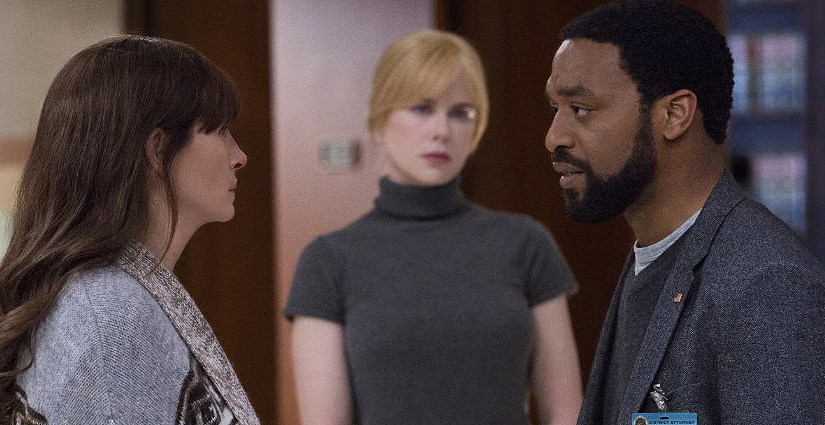
SUSPECT

By Marc S. Sanders

Okay. Fair Warning. I am going to spoil this movie with my review. Why? Well, if you haven’t seen Suspect, directed by Peter Yates, then I’m telling you that you absolutely do not ever need to see Suspect directed by Peter Yates.

What is Suspect worthy of 33 years later? Nothing beyond my personal allowance to spoil the film for you. I know! It goes against my principals as a film critic, but I choose, for YOU, MY READERS, to fall on my sword.

Scripts of any variation whether they be stage plays, television episodes or feature films should always show the unusual. If it’s mundane, it should never be made. You don’t want to watch two hours of someone brushing their teeth. You want to watch epic films like Malcolm X or witness a man that flies in Superman: The Movie or the murderous ways a person will devote his affection for his mother in Psycho. Unusual and special stories make the best stories. Unusual! Not utterly preposterous!

Now, I’m sure in the annals of trial law there had to have been a handful of cases where a defense attorney got involved socially and/or romantically with a member of the jury. Otherwise, we’d never hear of the term “jury tampering.” So, there’s something unusual to sink our teeth into. Preposterous though (AND I WARNED YOU) is that within this very same trial, you know the one where the defense attorney and jury member are getting some from each other on the side, that one, the presiding judge turns out to be the killer. Okay. Now Mr. and Mr. Filmmaker, you’re no longer using your imagination. You’re just throwing spaghetti at the wall, hoping it’ll all stick.

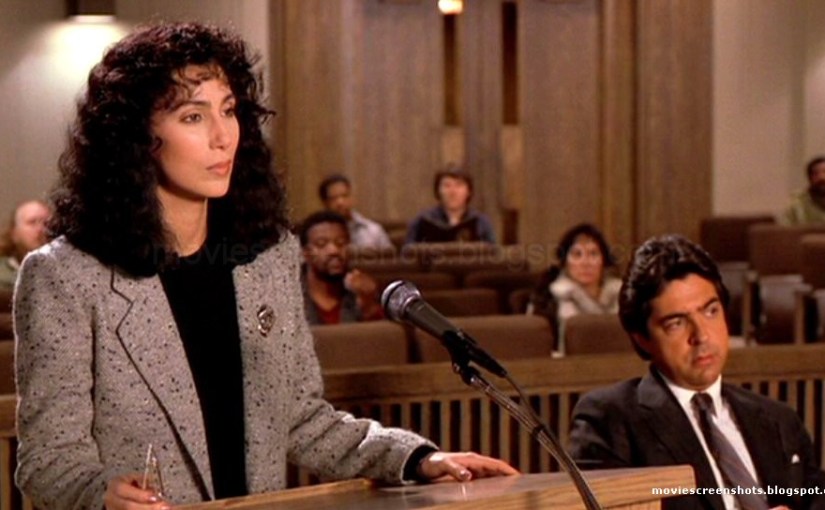
Cher plays a public defense attorney named Kathleen Riley. Dennis Quaid is a handsome DC lobbyist named Eddie Sanger serving on the jury. Liam Neeson is the deaf mute title character who is a vagrant homeless person, and John Mahoney is the presiding judge aka the actual killer revealed at the end. Lawyer and juror meet up outside of court to find clues and eventually make out. The judge is the killer. People please!!!! Washington DC is not this effed up, is it? (Maybe don’t answer that.)

Frankly, Kathleen is not a very good attorney. She’s not aggressive enough with her objections and I don’t think she applies herself well enough to win her case. In fact, without Eddie’s self motivation to dig into the case himself and help her out, then this suspect (Neeson) doesn’t have a chance in hell of being exonerated. The victim, a political staff member, had her throat slashed. Kathleen doesn’t even consider if the killer is right or left handed? Really? Eddie did at least. Still, I’m okay with watching an inept lawyer in a movie. Too often, movies show us lawyers that are too brilliant and quick on their toes. They’re almost too brainy. So, okay yeah, I’ll accept a lawyer whose not the sharpest crayon in the box for a change of pace.

On the other hand, Mahoney, the actual killer, is easy to predict when he voluntarily takes this case and then rules against literally every objection that Kathleen brings up. Every single one! Plus it stands to follow Roger Ebert’s economy of characters. There’s only so many characters in your multiple choice of cast members to consider as the killer. I can’t fathom Quaid, the juror, as the killer, nor Cher the defense attorney. So either Neeson, the suspect on trial, is the killer (not likely because then why have a movie) or it’s the judge. Nah! It couldn’t be the judge. Could it? Hmmmm.

Washington DC makes for a great setting for legal thrillers or courtroom dramas. It’s full of secrets and government and dealings and politics. A million and a half motivations and any one of its residents could find a reason to kill. The script for Suspect, written by Eric Roth, never cares to try that hard though. We are treated to a wasteful side story of Eddie doing some lobbying for milk (I’m sorry. MILK? LIKE DAIRY MILK????) when he’s not in court. He sleeps with a congresswoman to get her vote…and why am I seeing any of this?

There’s no build up in the murder trial either. The few expert witnesses called to the stand are forgettable. Nor do they foreshadow anything. Cher’s character doesn’t seem to work hard enough in questioning a witness. Instead, this dumb lawyer relies on a juror she shouldn’t ever be talking to.

Once again, normally, it’s against my policy to spoil a film. After 40 years, I won’t even spoil The Empire Strikes Back, cuz someone out there still hasn’t seen it. However, this film is ridiculous. This would even be too ridiculous for a Maury Povich episode or a Lifetime TV movie. How absurd must one murder trial be?

Think about it. All in one movie. One murder trial. One case. The defense attorney is involved with a juror AND the judge is the killer????? There are odds….and then there are gazillion to one shots.

THE DA VINCI CODE

By Marc S. Sanders

Akiva Goldsman’s screenplay adaptation of the bestselling novel The Da Vinci Code by Dan Brown suffers from an overabundance of information; like A LOT of information, a TON OF INFORMATION actually. The book is an incredibly fast read with brief chapters and plenty of diagrams and images to study. It surprises me, though, how in depth director Ron Howard’s approach is with the film. Howard must have literally shot every page Brown documented including his edits. Amazingly there is a Blu Ray EXTENDED CUT. It seems Goldsman and Howard at one point couldn’t help themselves. Restraint had to step in for the controversial story’s cinematic debut.

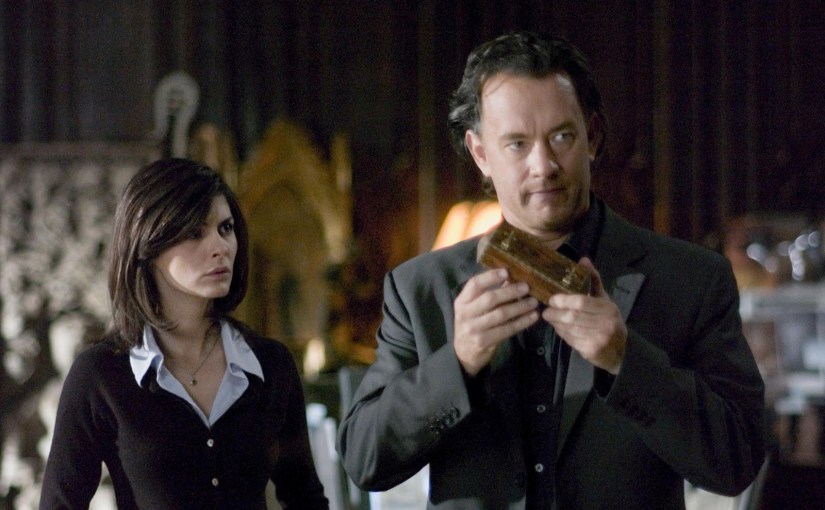
Tom Hanks plays the great modern literary character, Robert Langdon. He is very good in the role of a research expert on historical symbols and cryptology. Hanks even masters Langdon’s self-debilitating weakness of claustrophobia very well, which proves to be a hinderance. It’s maybe an under celebrated part in Hanks’ career because the film is so heavy. Little is talked about this film any longer. (The second sequel, Inferno, flopped at the box office. I’ve yet to see that one.)

Langdon is recruited to go the Louvre in Paris one evening to look over a recently murdered victim left with a pentagram carved in his chest and a gunshot wound in his belly. The victim’s name is Sauniere (Jean-Pierre Marielle). Soon Langdon is teaming up with Sophie (Audrey Tatou), Sauniere’s granddaughter, to uncover one puzzle or clue after another left behind most prominently within the artwork of Leonardo DaVinci, including the “Mona Lisa.” Gradually, a conspiracy is uncovered revealing a strong possibility of how Mary Magdalene and Jesus Christ are actually connected. Amidst all of this, Langdon and Sophie become fugitives under the suspicion of murder. Now the cops (headed by Jean Reno) as well as a secret society within the Catholic Church are hot on their trail to stop them from revealing the truth. A dangerous, self torturing Albino monk (Paul Bettany) also comes into play.

That’s a long ass paragraph I just wrote and it hardly scratches the surface of how in depth The DaVinci Code really is. Because it is so nuanced, I had some major problems with the film. For one thing the cinematography from Salvatore Totino is very dark. I know. Most of the film takes place in the middle of the night within the hallowed halls of the Louvre and the streets of Paris. However, I think certain liberties should have been taken here. The details thrown at the audience never stop. Long summaries of dialogue come into play and at times Totino and Howard will highlight a code or a portion of a piece of art or a passage in a book. Because the story is so deliberately murky, I wish at times what I was looking at could have been presented all the more clearer.

Another issue is with Audrey Tatou who is of French descent and whose character is that way too. Her French accent is too thick to clearly understand every word she is saying. A lot of details become lost because her dialect swallows her words. Natural dialects can be a slippery slope in film. You want the characters to be as genuine as possible but none of that means much if you can’t follow along.

The best surprise of the film reveals itself when Ian McKellen appears, portraying Sir Leigh Teabing, a mentor and friend to Langdon. Yes. He offers up a ton of information too. Too much for any one film really. However, McKellan is so giddy in the role. Leigh relishes the fact that Langdon and Sophie appear at his home. He’s elderly and crippled and excited with glee to come across them so he can share his own theory of Mary, Jesus and what is possibly the real interpretation of the Holy Grail. At ninety minutes into the film, McKellan’s introduction is quite a welcome, relief from the heaviness of everything before.

The DaVinci Code clocks in at over two and a half hours. It feels longer actually. There are multiple endings as surprise traitors need to be revealed, more history and theories need to be uncovered and more European locales need to be visited complete with secret passages and hidden staircases. It took a lot of mental effort to remain patient with the film, and I had already read the book!!!

Ron Howard’s film merits the discussion of whether Brown’s bestseller should have ever been filmed. As good as Hanks and McKellan are, I say no. This is not Indiana Jones with bullwhips and truck chases. This is a treasure hunt that sticks to what is on a page and within an exhibit. To mask what is discovered by dictating endless dialogue from the cast becomes incredibly tedious.

Dan Brown’s story is wildly out there in theory and supposition. It’s what makes it fun, really. So, do I recommend The DaVinci Code? You bet I do. I definitely recommend you read the book.

THE KILLERS (1946)

by Miguel E. Rodriguez

Director: Robert Siodmak
Cast: Burt Lancaster, Ava Gardner, Edmond O’Brien (and William Conrad in a small role…and yes, he was a big fella even then)
My Rating: 8/10
Rotten Tomatometer: 100%

PLOT: An insurance investigator tries to get to the bottom of a strange case involving a man who waited calmly for two men to find him and kill him.


Over the last several months, I’ve been digging a little more into the film noir genre, specifically going back to the ‘40s and ‘50s, and I’ve discovered some gems.  Pickup on South Street (1953), for example, featuring one of the most violent fight scenes to be found outside of a Tarantino film.  Or The Killing (1956), an early Stanley Kubrick film depicting the kind of ruthless behavior that I didn’t think was permitted at the time.  I’m discovering that, for the adventurous moviegoers back then, there were films available to see that might have made their parents or grandparents gasp in horror.

Take the movie I watched today, The Killers (1946), the film noir that introduced Burt Lancaster to the world.  It’s based on a short story by Ernest Hemingway that was also adapted into a film in 1964, starring Lee Marvin, Angie Dickinson, and, in his last film role, Ronald Reagan.  [Watch this space for a review of that film, coming soon.]  At the beginning of this movie, we’re introduced to two thugs who walk into a small town, cloaked in the kinds of shadows and light that only film noir can get away with.  After terrorizing the patrons of a small diner, they walk to a nearby boarding house and up the stairs to a room occupied by Ole Anderson, aka “The Swede” (Lancaster), who has been alerted to their arrival but makes no effort to escape or call the cops.  He simply awaits his fate.

And what a fate.  The two thugs burst into the room and obliterate the Swede in a hail of gunfire that goes on for quite a long time, even by today’s standards.  (Later, the coroner describes the Swede’s body as being nearly “cut in half” by the barrage…yikes.)  This being 1946, we don’t see any of the actual carnage, but the implication is there.

The movie proceeds in a series of flashbacks.  An insurance investigator named Jim (Edmond O’Brien) tries to find out two things: why the Swede named a kindly hotel maid as beneficiary of his life insurance policy, and what happened to the $250,000 payroll that the Swede helped steal from a hat factory.  Now that I think about it, The Killers is almost like a thick-necked, brass-knuckles, gun-toting variation on Citizen Kane.  We never see anything about the Swede that wasn’t directly observed by someone Jim tracks down, and as Jim continues to dig, things just get mysteriouser and mysteriouser.

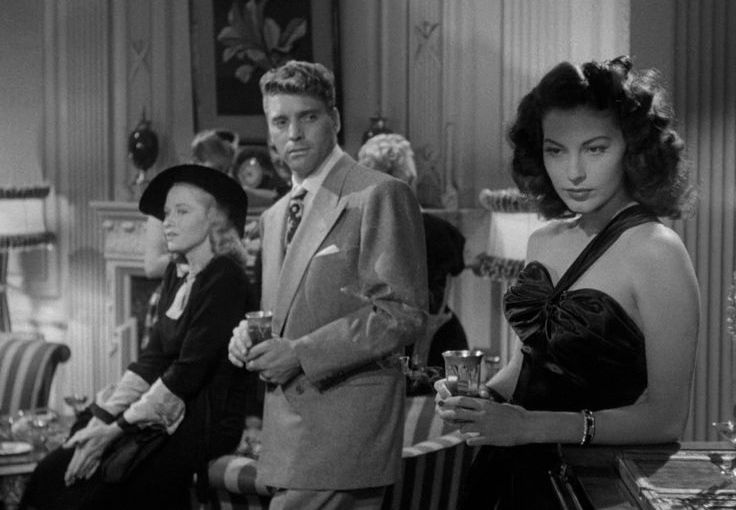
Figuring prominently in the Swede’s backstory is Kitty Collins, played by the ravishing Ava Gardner.  This was not her first film, but The Killers is the movie that put her on the map for good.  We first see Kitty when the Swede goes to a fancy party with his girlfriend, Lilly.  Alas, Lilly is no match for the sultry Kitty, who is wearing the kind of stunning black gown that inspires poetry when it isn’t simply driving men crazy.  How crazy?  At one point, when Kitty is caught by a cop wearing shoplifted jewelry, the Swede claims responsibility, slugs the cop, and winds up doing three years in jail for her.  Talk about being Kitty-whipped.

Naturally, as Jim, the insurance guy, meets more people, the Swede’s story comes more sharply into focus, but there’s still the mystery of what happened to all that money.  The robbery was indeed pulled off by the Swede with three other guys, but none of them have the money, and the Swede doesn’t have the money, so where is it?  As it turns out, the hat factory they stole from is insured by the same company that provided the Swede’s life insurance policy, so it’s in Jim’s best interest to get to the bottom of everything and recover the money, even if it means getting involved with the same kinds of thugs who killed the Swede in the first place.  That’s okay, though.  Jim is prepared.  He carries his own piece, and he comes up with a cool plan to get the guilty parties to confess as much as possible before they wind up dead…or he does.

The Killers is an example of a film that helped define, or at least refine, the relatively new film noir genre.  Similar films centering on crime, criminals, and punishment had been around since the ‘30s, but the real granddaddy of them all, The Maltese Falcon, had only been released five years earlier in 1941.  Since then, World War II came and went, and as dark as noir had been, it got even darker and more violent than Bogey was when he slapped Peter Lorre around.  With this film, director Robert Siodmak turned everything up to eleven.  The shadows aren’t just dark, they’re black, which of course makes the periodic pools of light that much more striking.

And the characters mean business, too.  Among the bad guys, there’s one named Colfax who doesn’t look like much – sort of like a moderately well-built school principal.  But when a genuine thug threatens to fight him, he doesn’t posture like a bully.  He just sits back in his chair and calmly tells the thug: “You’ve got quite a reputation yourself.  You’re supposed to be a troublemaker.  Okay.  Make some.”  And you just know that if the thug so much as lifts a finger, he’ll get it broken for his trouble.  It’s an interesting scene that reminded me of Goodfellas: “Paulie may have moved slow, but it was only because Paulie didn’t have to move for anybody.”

(I should also mention the flashback involving the payroll robbery.  In today’s films, when we marvel at long takes involving complicated camera moves, it’s good to be reminded that, three-quarters of a century ago, The Killers gave us a heist sequence that starts at ground level, follows the robbers up a staircase, shows the actual robbery, follows them back down into their getaway cars, and even provides a small-scale shootout as they drive away – all in one uncut take, using a camera about the size and weight of a SmartCar.)

While I thoroughly enjoyed The Killers, I wouldn’t quite put it in the same weight class as, say, Out of the Past or The Big Sleep, but it’s got all the right ingredients, it tells a good story well, it gives us Ava Gardner in that gown, and it provided a great springboard for the films that came after.  Good film noir is fine; GREAT film noir is better.  This is one of the great ones.

[P.S.  The scene near the beginning of the film where the two thugs terrorize the people at the diner reminded me strongly of the scene in No Country for Old Men when Anton Chigurh quietly tells the store clerk to “call it.”  They were just as calm and serene and tightly coiled as Chigurh.  Pretty creepy.]

REVERSAL OF FORTUNE

By Marc S. Sanders

Claus Von Bülow was not a well liked man. In the 1980s he was put on trial for the attempted murder of his wife Sunny Von Bülow and was found guilty in a courtroom within the state of Rhode Island. However, even guilty men need a lawyer. Alan Dershowitz accepted Claus’ invitation to be his appellate attorney and successfully won the case with the assistance of the best students to come out of his law school classes. Reversal Of Fortune directed by Barbet Schroeder documents the month and a half that Dershowitz had to make a case for overturning Claus’ conviction. The film is based on Dershowitz’ book Reversal Of Fortune: Inside The Von Bülow Case.

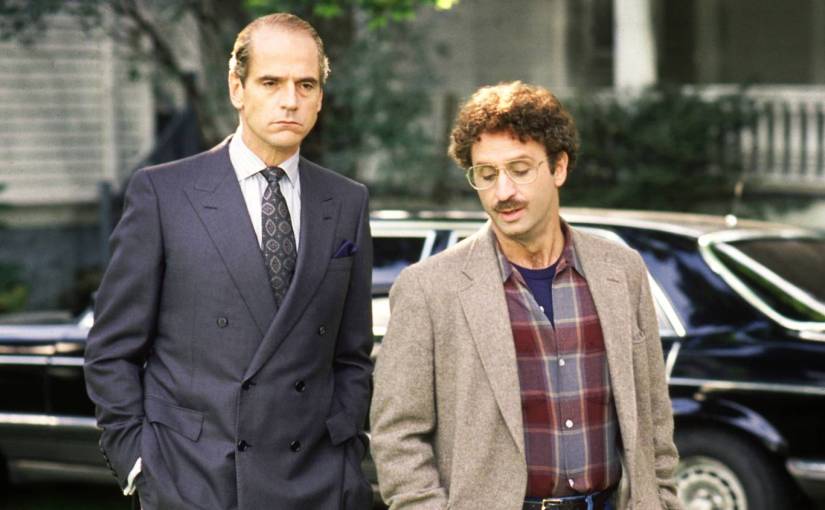
Jeremy Irons won the 1990 Best Actor Oscar for portraying the cold and cavalier Claus. He plays the part as if he looks so completely guilty that it’d be foolish to actually think he committed any sort of crime. It’s too obvious to seriously jump to that conclusion.

Glenn Close is Sunny, Claus’ wife. She serves as a narrator from her permanent, seemingly brain dead comatose state. She also appears in flashback moments that account for either her perspective, or Claus’, or the suppositions of Dershowitz (played very effectively by Ron Silver) and his young legal team. Sunny’s voiceover asks the viewer early on “What do you think?”

Sunny was hooked on various pills, chain smoked, ate an abundance of sweets and drank very heavily. She preferred to stay in bed for most of her days. One instance seems to show her in a comatose state lying next to an unalarmed Claus. The maid is disturbed by the nonchalance of the aristocratic husband. A doctor or the police have yet to be phoned. Sunny comes out of that episode but a year later falls into another comatose state. Flashbacks hint at the theory that perhaps Claus was poisoning Sunny to obtain her fortune and keep up with his extra marital affairs. Following her second coma, Sunny’s children hire a private investigator to obtain evidence that was eventually used against Claus in his trial. As an honorable servant of the law, this infuriated Alan Dershowitz who believed this private investigation was biased from the start. Schroeder uses a debate scene with a student (a young Felicity Huffman) for the lawyer to justify his choice to fight for such a hateful man’s appeal. Why were private investigators permitted in the trial? Where’s the public investigation? It also helps that Claus agrees to a large fee to help Dershowitz fund the defense of two brothers on death row for a crime they did not commit.

Schroeder’s film does not make its own claim on the case or the circumstances that accompany it. Rather, he shows you a process. Dershowitz knows that Claus Von Bülow is a “very strange man.” Claus responds to him by saying “You have no idea.” Yet, that doesn’t add up to guilt. A victim can be a victim by means of numerous possibilities and a court of law is fallible. Dershowitz wants to be sure.

Jeremy Irons’ performance is that of a gentleman of an aristocratic and well dressed nature. He finds the humor in being considered the villain. Irons plays the role with determined vagueness. Vague does not account for guilt.

Glenn Close is very good too. Her intoxicated episodes are so delirious that it seems to work in favor of Claus’ innocence. Yet her voiceover narration is sober and clear, but not necessarily accusatory. So it’s hard to know what to believe.

Ron Silver as Alan Dershowitz only focuses on the law and commanding a team of the best legal minds he ever taught. He turns his two story home into a headquarters where his students are compartmentalized into different aspects of the case from the drugs that Sunny took to the background of the Von Bulow’s turbulent marriage. As a means to keep them alert, the departments have basketball tournaments in his driveway. Dribbling the ball and slam dunking while still weighing evidence and legal precedents. Dershowitz is only interested in seeing if there is a case that shows Claus could have been innocent beyond a reasonable doubt. The case swept the nation and in the court of public opinion this creep was found guilty. Ironically, the one who is closest to him now is the one who does not see guilt, despite disturbances in his client.

Reversal Of Fortune is a different kind of mystery caught up in possible outcomes and nothing else. Barbet Schroeder with the help of Dershowitz’ case notes, book and public records made certain to offer all avenues for what really led to Sunny Von Bülow’s vegetative state.

The only concrete fact that this film does offer is that Claus Von Bülow was an untrustworthy creep draped in elegance and formality. There’s no crime in that. Is there?

DEATH ON THE NILE (2022)

By Marc S. Sanders

It’s time for the murder mystery to maintain an ongoing trend in modern films.  They’re just fun to watch and play with and deduce.  Why do you think the board game Clue has lasted so long in so many households?  Films like Rian Johnson’s Knives Out and a recent retelling of Murder On The Orient Express have already whetted our appetites for the “who done it?” tales.  Endless variations of Sherlock Holmes continue to appear.  Even Steve Martin and Martin Short have gotten in on the mystery circuit.  Adam Sandler with Jennifer Aniston, too.  Kenneth Branagh’s second time as Hercule Poirot (following …Orient Express), in an adaptation of Agatha Christie’s Death On The Nile, is proof positive that the sleuth is the next super hero that movie goers should follow.

Branagh returns to direct his detective character in Egypt, aboard a privately rented boat occupied by the newly engaged couple, Lynette Ridgeway and Simon Doyle (Gal Gadot and Armie Hammer).  As the luxurious yacht makes its way down the majestic river Nile, the couple suspects that someone, particularly Simon’s recent ex-fiancée, Jacqueline (Emma Mackey), is determined to cause harm or even murder towards them.  They ask for the sleuth’s services in uncovering who is scheming against them.  Poirot is on vacation, however, and tells them his services cannot be made available as no crime has been committed.  Yet, he accepts their invitation to board the boat and attempt to relax and recline. 

Naturally, a murder will eventually occur.

Hercule Poirot was not even a character in Agatha Christie’s original novel.  Yet, Branagh seamlessly weaves the detective into an elegant page turner on screen, with a script from Michael Green.  Branagh is a skillful actor/director. 

As this is a murder mystery, there are a wealth of characters with possible motives and red herrings to keep the journey down the Nile tense and engaging.  There’s the doctor (Russell Brand), an aunt (Annette Benning), a nephew (Tom Bateman, returning from Orient Express), Lynette’s housemaid (Jennifer Saunders), a speakeasy blues singer and her niece (Sophie Okonedo, Letitia Wright), as well as Lynette, Simon and Jacqueline, and on and on.  Branagh wisely moves his camera repeatedly at times across the boat panning over the faces of the cast, as if to the remind the viewer of who are the suspects.  There’s a wealth of information to take in, but this is not going to feel like you are cramming for a final exam the next morning. 

Because everyone could have a motive and/or a background with the murder victim, each actor within the colorful cast has various moments to shine.  There are some great acting scenes going on here that the players share with Branagh, and they don’t come off with similar formulas from one moment to the next.  Each character actor is thankfully unique in both appearance and personality.  It’s not hard to keep up, and while I may have known the ending before seeing the film (having read the book and seen stage adaptations over the years), I don’t believe it’s easy to deduce and solve as a viewer.  Different characters and moments that never occurred in the source material turn up.  There might even be few unexpected deaths along the way.  Branagh also keeps the picture alive with outstanding blues numbers that begin in an underground speakeasy bar in Paris and then play over transitional moments throughout the film.  This picture has a great period soundtrack.

Beyond the well diversified mystery, Branagh treats the viewers to gorgeous scenery aboard the boat, but even beneath the surface of the river and within the pyramids and sphinxes of Egypt.  There are spectacular starry night skies and breathtaking sunrises and sunsets to take in with palm trees and wildlife in the desert frames.  Sure, I imagine most of it is CGI, but it’s well done and nothing looks artificial.  Costume work is also magnificent as they lend to the distinctiveness of the suspects.  Whether it is evening wear, or casual garb for post-World War I, each character looks so intriguingly lively and different.

Michael Green’s script even delves further into the Poirot character.  There’s a background to that infamous mustache and tiny goatee.  I recall how people responded to the outrageously grotesque facial hair that Branagh donned in his first film as Poirot.  I appreciated it, however.  His appearance was as unforgettable as the red and yellow “S” on Superman’s chest.  Yet, why go to such great lengths, even if this is the early 1900’s amid an exaggeratingly glamourous murder mystery, to grow a mustache like that? Thankfully, there’s reason given here that draws out a dimension to Hercule Poirot both within a ten-minute prologue, and then implied periodically during the course of the film and wrapping up in a bluesy epilogue before the credits roll.  All I’ll say is that absurd mustache delivers a humanity to the film’s protagonist.

Death On The Nile has already suffered from negative publicity involving controversy with some of its cast members.  Its release was also postponed a number of times due to the pandemic.  Finally, it has arrived in theatres and what a refreshing experience it is to see on a big screen.  It opened to a modest box office response in its first weekend, though it finished at number one.  Normally, I don’t care about rankings at the box office.  How much money a film makes does not lend to the merits or faults of a piece.  However, for this film, I think I do care a little.  I hope it becomes a profitable success only to allow more films of the mystery genre to appear on screen in the future.  I’d certainly welcome another gripping yarn from Agatha, out of service from Kenneth Branagh.  Could And Then There Were None… be next?  That’s the real mystery.

A SIMPLE FAVOR

By Marc S. Sanders

Director Paul Feig has a great approach to directing women and how characters interact with one another. Bridesmaids was one of the best ensemble comedies of the last twenty years. With A Simple Favor, adapted by Jessica Sharzer from the novel by Darcey Belle, Feig goes for the twisty mystery.

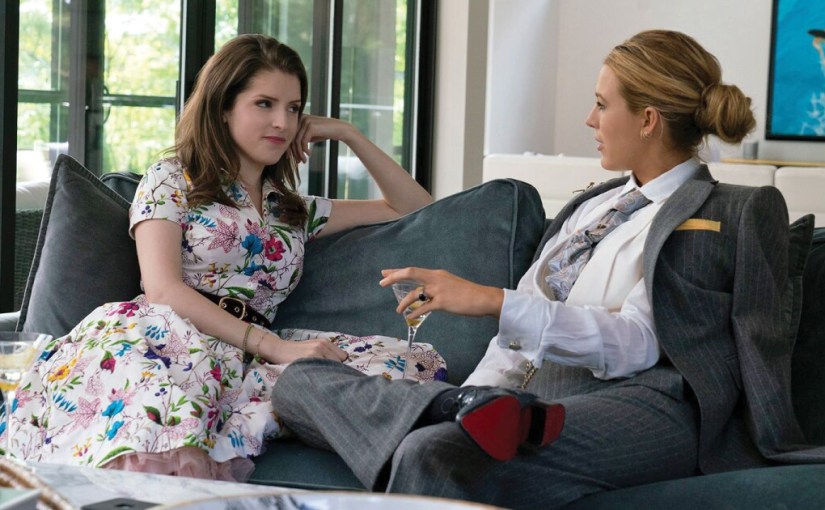
A Connecticut suburban mommy vlogger named Stephanie (Anna Kendrick) befriends an ice cold three piece suit business executive rebel mom named Emily (Blake Lively) when their elementary school age sons become friends. These women couldn’t be more different. Neither really has friends. Stephanie teaches unseen internet surfers the latest recipes or arts and crafts. Emily teaches Stephanie how to make martinis, drink and how to make your place in the world by saying “Fuck you!” to someone’s face, especially if it’s your boss.

As the exposition progresses, Stephanie becomes relied upon to watch after Emily’s son, Nicky, all too often. One day though, Emily doesn’t come to pick Nicky up and all but disappears with no trace. Stephanie attempts to uncover what happened. She talks with Emily’s husband (Henry Golding) who was out of town at the time of the disappearance. She makes the mystery an ongoing theme on her vlog and invites theories from her viewers. Comments range from “I bet it’s the husband.” to “That poor little boy.” Furthermore, Stephanie begins to adopt some of Emily’s aggressive traits to pursue her own investigation. Kendrick’s change in character is one of the more fun elements of the film. She becomes a modern day Jessica Fletcher or Nancy Drew.

The script for A Simple Favor plays like the better seasons of Desperate Housewives, or as mad as the film Wild Things with Denise Richards & Neve Campbell with outrageous sexual episodes that are meant to deceive or play with your mind. Twists that I wouldn’t dare reveal occur to deepen the mystery even further and Paul Feig’s film even seems to have a Jekyll/Hyde personality at times.

Anna Kendrick is bubbly, fun and quirky. Blake Lively is lethal and harsh. Both actresses are great contrasts to each other. What allows these two ladies to get drawn to one another and eventually call themselves “best friends” is their lack of friendship with anyone else and the very, very dark secrets they both possess. When the set ups are done, the ladies’ histories may or may not become instrumental in Emily’s disappearance and Stephanie’s curiosity for the truth.

As ridiculously far fetched as A Simple Favor is, I liked it because it kept me guessing. More so, I was really wondering who the true perpetrator was. I did not trust any of the players in the film, not even Stephanie, and so I was engaged.

A Simple Favor is one of those films where you won’t know if you liked the film until it reaches its conclusion. A mystery must depend on how satisfying the resolution is. Is it believable? No matter how absurd everything is, again, is…it…believable? For a time, I was hoping, UTTERLY HOPING, this was not going to go the way of Fight Club or Secret Window. If you’ve seen those films then you know what I’m talking about.

So again, is it believable? Yeah! I like to think so. Therefore, I gotta recommend the film.

FLIGHTPLAN (2005)

by Miguel E. Rodriguez

Director: Robert Schwentke
Cast: Jodie Foster, Peter Sarsgaard, Sean Bean (who, miraculously, does NOT die in this film)
My Rating: 8/10
Rotten Tomatometer: 37%

PLOT: A bereaved woman (Foster) and her daughter are flying home from Berlin to America. At 30,000 feet, the child vanishes, and nobody will admit she was ever on the plane.


I get it. Flightplan strains at the leash of credibility. A lot. In order for the plot to work, the audience has to believe that a number of people would have to be involved in a massive conspiracy, a cacophony of coincidences that screams “CONTRIVED” to any sane moviegoer.

But, as ridiculous as it seems, the movie still works incredibly well, even upon repeat viewings. Director Robert Schwentke has not exactly distinguished himself since this film (credits include R.I.P.D., Red, and the last two Divergent movies), but Flightplan displays a surefire command of tone, creating a claustrophobic atmosphere while keeping the camera free to move around the plane along seemingly impossible paths.

This film is a classic example of what Roger Ebert called a “locked room” puzzle. A girl is missing on an airplane – admittedly a very LARGE airplane, but still. There are only so many places she can be. The plane is searched, but she’s nowhere to be found, leaving only two possibilities: she was never there to begin with, or someone’s lying. But who? And why? She thinks she recognizes an Arab passenger on the plane…was he staring in her apartment window the previous night? Is she going crazy, or has there been an actual kidnapping? That’s the central mystery, and it carries the movie for most of its brief running time.

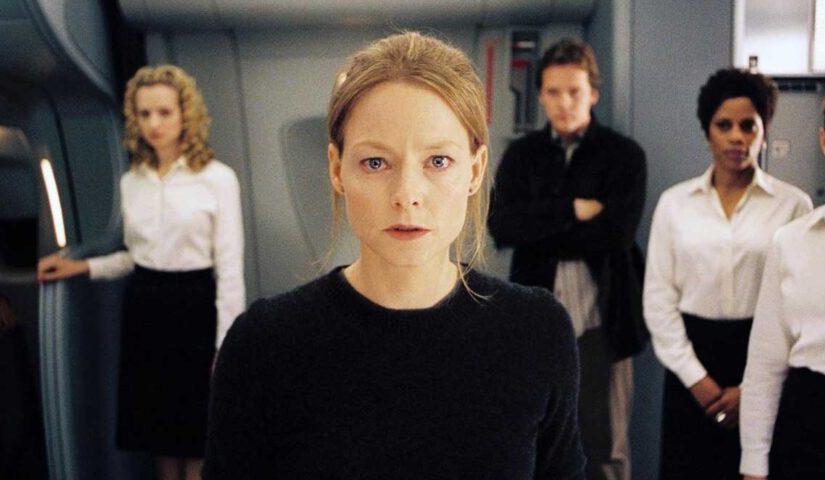
(There’s a neat section where Foster’s character (who, coincidentally, helped design the plane they’re on), monkeys around with the plane’s electronics and gets the oxygen masks to fall, to create a diversion for herself. Tell you what, that would get MY attention.)

The final resolution is…well, let’s say it answers all the questions of what happened without addressing HOW it happened. A lot of folks found that unsatisfactory (thus the 37% on Rotten Tomatoes), but the movie is so well-made and executed that, by the time the credits rolled, I didn’t mind it so much. But, you know…that’s just me.

MIDNIGHT SPECIAL (2016)

by Miguel E. Rodriguez

Director: Jeff Nichols
Cast: Michael Shannon, Joel Edgerton, Kirsten Dunst, Adam Driver, Sam Shepard
My Rating: 10/10
Rotten Tomatometer: 83% Certified Fresh

PLOT: Two men go on the run with a child in tow, pursued by federal agents and by members of a cult who believe the child has special powers.


The general concept of “mystery” in a film is a subtle art.  Not enough mystery, and people will say they’ve seen it all before.  Too much mystery, and people will wonder why they’ve spent good money to be confused for two hours.

Every now and then, though, a movie comes along that shows everyone else how it’s done.  It manages to plunge the viewer headlong into the story with little to no exposition, provides just enough clues to keep things intriguing without giving the game away, and supplies a climax that is not just satisfying, but revelatory.  Prometheus is one of those movies.  So is Freaks (2018).

And so is Midnight Special, from director and screenwriter Jeff Nichols (Take Shelter, Mud).

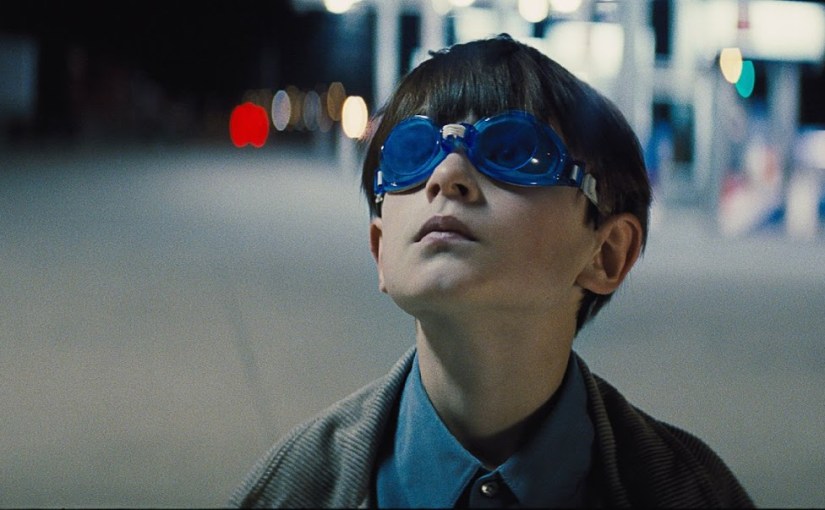
This movie grabs you right from the opening minutes.  Two men appear to be holed up in a hotel room with a young boy wearing blue swim goggles.  Cardboard and duct tape cover the windows.  A news broadcast on the TV reports on the young boy’s kidnapping.  However, he does not appear to be distressed in any way.  One of the men may or may not be his father.  He goes willingly when they vacate the room and hit the road.

In another part of the country, a pastor watches the same newscast with concern.  He later leads a church service, but the scripture reading consists of non-sequiturs and random numbers.  The FBI interrupts the service and hauls each and every church member in for questioning about the missing boy.

What the deuce is going on here?  How is this church connected to the boy?  Where are the two men taking the boy?  What’s with the blue goggles?  What is so important about this boy that the two men with him would be willing to kill for him?

These are all very good questions.  Whenever the movie takes the time to answer one of the questions, two more spring up in its place.  And I may as well tell you now: not every question will get an answer.  But instead of feeling frustrated, I just got more and more involved in the film.  I felt like I was an active participant in figuring out the story, along with the characters.  There’s nothing quite like feeling involved in a movie, rather than simply watching a movie.

When the revelations arrive about where the men are headed with the boy, why they’re headed there, and why the FBI is interested, I’m not gonna lie, I was gobsmacked.  In retrospect, I suppose I should have seen some of the plot points coming a mile away.  But that’s the beauty of the screenplay and the direction.  I wasn’t interested in trying to second guess what surprises were in store.  As a result, when the surprises arrived, I was constantly in a state of jaw-dropping amazement.

I would also like to point out the great restraint used by the filmmakers when it came to the few scenes that required CGI enhancement.  There are a hundred ways these scenes could have gone wrong, resulting in a shot that completely takes you out of the movie.  They avoided all those pitfalls and instead created scenes of startling beauty, even when things seem to be going wrong…or when they at last go right.

This is a movie that deserves to be seen with as clean a slate as possible.  It didn’t exactly make a dent in the pop-culture zeitgeist, so it’s not likely you’ll see any spoilers on the internet without Googling the movie, but why would you want to do that?  Keep an open mind, don’t ask how it ends, and find a way to see this movie.  You won’t be disappointed.

UNDER THE SKIN (2013)

by Miguel E. Rodriguez

Director: Jonathan Glazer
Cast: Scarlett Johansson
My Rating: 9/10
Rotten Tomatometer: 84% Certified Fresh

PLOT: A beautiful, mysterious young woman seduces lonely men in Scotland and takes them to her home, where something very strange indeed happens to them…


Under the Skin captivated me in a way that I did not expect.  It is a sci-fi mystery that stubbornly refuses to supply neat and tidy answers, and yet is spellbinding to watch. How director Jonathan Glazer accomplished this is no less mysterious to me than the origins of the movie’s main character, a solitary young woman played by Scarlett Johansson in a bravura performance that must have required a great deal of courage and trust in her director.

After a cryptic opening sequence involving some trippy visuals accompanied by an eerie musical score, Johansson’s character (listed only as “The Female” in the credits) gets down to business.  With the help of a mute motorcyclist (???), she acquires a van and trolls the streets of Scotland for young men on their own in the city.  She lures them into her van with pleasant conversation and a smile, which is easy enough to do when you look like Scarlett Johansson.  She then takes the men back to a deserted house in the country where I wouldn’t DREAM of revealing what happens.

The appeal of this movie is not the story, although that is obviously a big part of it.  It’s the storytelling.  Director Glazer works from a script that has the bare minimum of dialogue, usually when The Female is convincing men to get in her van.  Everything else depends on visuals.  It’s the kind of movie my friend Marc would enjoy, as it uses the camera to tell the story much more so than the soundtrack.  It shows us images and challenges the viewer to put two and two together to figure out what’s happening.

This visually-heavy strategy is a tightrope walk.  One false step and, instead of a mind-bending masterpiece, you get a head-scratcher that leaves you feeling cheated.  Under the Skin manages it.  There is one specific visual sequence that sealed the deal for me, a scene that provides a more detailed explanation of what happens to the men once they’re inside The Female’s house.  The real genius of the scene is that it provides information without fully answering the questions going through your head.  What is that black liquid?  Are the men hypnotized?  Their behavior would make it seem so.  And exactly how big is that house?

I’m being deliberately obscure because the delight of the film comes from discovering the thread of the story and following it along with The Female.  Her discoveries were just as interesting and scary to me as they were to her, because I felt really in tune with her character while I was watching the movie.  The closest I can get to describing it is…a long, LONG time ago, there was a computer game called Hacker that I got for my Commodore 64.  It came with literally no instructions beyond putting the disk in the drive and loading the game.  Then your screen went blank and it just displayed: “LOGON”.  And that was it.  As the gamer, it was up to you to figure out what to do in order to keep playing.  As you discovered more clues to the object of the game, you became more and more involved.

That’s how I felt watching Under the Skin.  Those opening visuals start you off thinking, “What the f@#k???”  Then the movie progresses, and the wheels start turning, and you realize what’s happening, and what The Female is attempting, and the discoveries she’s making about herself, and before you know it you’re as wrapped up in the story as she is.

I remember there was a lot of talk when this movie came out, but I never really hear anyone discuss it any more, outside of movie-centric blogs and Facebook pages.  If I can convince just one person who hasn’t seen it that this movie is worth their time, I will be happy.  Under the Skin deserves to be seen, discussed, and puzzled over.

P.S.  Under the Skin is, in fact, mildly famous because, yes, Scarlett Johansson gets naked.  But don’t get too excited.  Her nude scenes are utterly drained of any sexuality or eroticism whatsoever, due to their context.  You’ll see what I mean when you watch it.

SIDE EFFECTS (2013)

by Miguel E. Rodriguez

Director: Steven Soderbergh
Cast: Jude Law, Rooney Mara, Catherine Zeta Jones, Channing Tatum
My Rating: 10/10
Rotten Tomatometer: 83% Certified Fresh

PLOT: A young woman’s world unravels when an anti-depressant prescribed by her psychiatrist has unexpected side effects.


Side Effects is a rare creature indeed: a movie released during the first two months of the calendar year that is not only good, it’s stunningly good.  It’s too bad almost no one even remembers this movie exists.

Steven Soderbergh’s film tells the story of a young woman, Emily (Rooney Mara), who suffers from depression after her husband returns home from serving a prison term for insider trading.  After a series of events where she apparently tries to harm herself, she sees a psychiatrist, Dr. Banks (Jude Law) who prescribes a brand new anti-depressant called Ablixa.  While it is effective, it also comes with some side effects, including sleepwalking.

One day, Dr. Banks gets a call: Emily has stabbed someone to death, and she did it while sleepwalking, which was caused by the Ablixa.  Banks interviews her; she remembers nothing of the incident.  But now the doctor’s professional and personal life is in turmoil as well.

What we have here is a classic Hitchcockian story…actually, two stories for the price of one.  You’ve got Emily, the wrong woman in the wrong place at the wrong time.  She didn’t ask for any of this.  She just wanted to feel better, be a better wife, be a better person.  And the drugs were working: she was feeling better, doing better at work, doing better with her husband…but now, thanks to this drug and its unintended side effects, people think she’s crazy.

And you’ve got Dr. Banks, the wrong man also in the wrong place at the wrong time.  He was doing his job, prescribing medication that he felt would help…and it WAS helping.  But thanks to this unforeseeable tragedy, his practice dries up.  Who wants to see a psychiatrist whose patient killed someone due to medicine he prescribed?  This creates problems in his personal life: he just bought a new apartment, but now his income is severely diminished.  He and his wife fight more than they used to.  And so on.

…and that’s where I’ll leave it because, like all the best films, it’s better if you watch Side Effects cold, not knowing what to expect.  No doubt there are people out there who saw the various twists and turns coming, but I am not one of them.  I was utterly hoodwinked, and I loved it.

We are a culture of pills and quick fixes, the quicker the better.  Side Effects is remarkably even-handed in presenting us with both sides of the worst-case scenario involving this culture.  (Or I guess one of the worst-case scenarios, but I don’t want to get sidetracked.)  Not only is this strategy effective in providing mental fodder while watching, but it’s also a great storytelling device.  Whose side should we be on?  Historically, “Big Pharma” has been one of the handiest movie villains since the Nazis.  The public perception of mega-corporations with billions of dollars at their disposal, dollars that are used to cover up embarrassing media stories and pay off corporate whistle-blowers, is just too perfect not to use in movies.  But Side Effects gives us the other side of that coin, the dedicated physicians and psychiatrists who are committed to helping people using the best available methods.  If a pill can help people, who would blame a doctor for wanting to prescribe it?  …unless the side effects turned out to be a little extreme?

That conundrum is at the heart of the movie.  But on the surface, it’s just a fantastic mystery/thriller.  Soderbergh directs with restraint, using very few camera moves.  Everything we see is presented with a minimum of flash and maximum impact, so when you’re watching the third act of the movie, you can remember everything you saw in the first two acts with great clarity.

It’s a little bit like a Gene Kelly dance routine.  You know he must have worked for hours to get those moves down, but when you see him in action, he barely looks like he’s working at all.  That’s what Side Effects feels like.  The film is telling a complicated story, but it doesn’t feel like it’s working hard.  It’s just gliding along, showing you this scene, showing you that scene, ho-hum, pay attention now, all leading to the fantastic payoff at the end.

I don’t know if Side Effects is available to stream or not, but I heartily recommend it regardless.