GREY GARDENS (1975)

DIRECTORS: Ellen Hovde, Albert Maysles, David Maysles, Muffie Meyer
MY RATING: 6/10
ROTTEN TOMATOMETER: 94% Fresh

PLOT: The celebrated Maysles brothers spearhead this cult classic documentary about Big and Little Edie Beale, reclusive and eccentric cousins of Jackie Onassis who occupy a crumbling mansion in East Hampton, New York.


I have seen and loved many documentaries in my life, from the sublime (Baraka, 1992) to the absurd (The Aristocrats, 2005), from the terrifying (Gimme Shelter, 1970) to the edifying (Dark Days, 2000).  But after watching the cult classic Maysles brothers documentary Grey Gardens, I am sitting in front of my computer terminal and I am at a loss of what to say about it, beyond a summary of its contents.

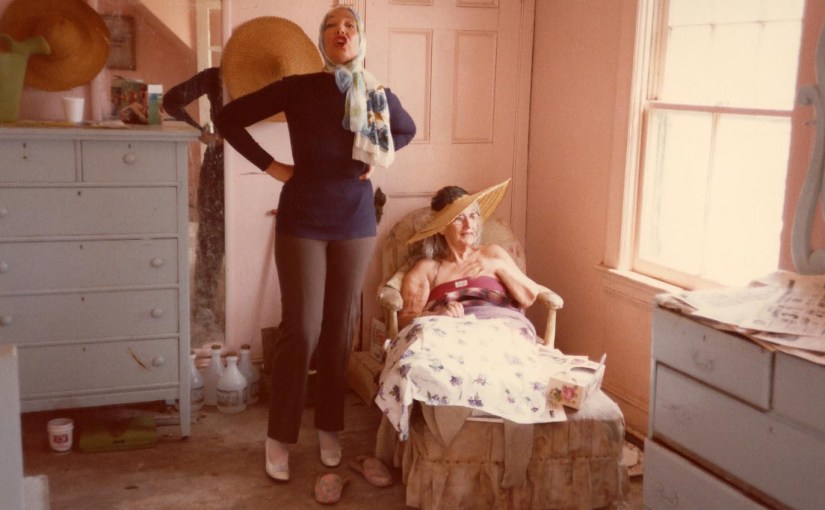
As the film opens, Big Edie Beale, who celebrates her 79th birthday during the film, and her daughter, Little Edie Beale, 52, reside in a sprawling mansion nicknamed Grey Gardens in a high-end East Hampton neighborhood.  Their biggest claim to fame before this film is that they are cousins to Jackie Onassis.  To say their house is a mess is an insult to both the words “house” and “mess.”  It’s a dump, although we are shown newspaper articles that seem to indicate the house was in even worse condition before the Maysles started filming.  The state health department threatened eviction unless the mansion was cleaned up; there’s even a photograph of Jackie O pitching in with the cleanup.  Through the course of the film, the Maysles and their film crew will capture what some have described as “an impossibly intimate portrait” of a relationship between two people whose minds have retreated to a point where they scarcely notice their surroundings as they repeatedly hash out old arguments from years past.

Any fan of film has at least heard the name Grey Gardens or the names of the Beales at some point in their life.  I’m told it’s featured prominently in at least one episode of the television show Gilmore Girls.  The Criterion Blu-ray contains two interviews from noteworthy fashion designers who have both designed clothing lines directly inspired by Little Edie’s clothing in the film.  There are even pictures of a European photo shoot that replicates scenes from the movie.  This is arguably one of the most famous documentaries of all time.

So, I hit play on my Blu-ray player and started watching.  The cameras do indeed capture intimate moments between mother and daughter.  Little Edie’s fashion sense involves never being seen without something covering her head, whether it’s a turban, a sweater, or a dishtowel.  Big Edie spends – based on what I saw – most of her days in bed, leaving only to take in the sun on her porch or to use the restroom.  Sometimes she leaves the bed to eat a meal, but Little Edie usually brings the food to her mother.  In one sequence, Big Edie cooks corn on the cob on a hot plate while sitting in bed.  She shares her bed with one or more of their many cats, as well as various boxes, books, binders, and photographs.  The mattress is dotted with water stains and what appears to be rust.

But wait, there’s more.  There is a hole in the top corner of a wall in one of the hallways.  This is where a raccoon lives.  At one point, Little Edie leads the camera crew to the attic to perform her version of pest “control.”  She empties a loaf of Wonder Bread onto the attic floor.  Then, as an added treat, she empties an entire box of dry cat food on top of the bread.

Now, why am I mentioning the state of their surroundings instead of recounting the delightful (I guess) eccentricities these two women proclaim at each other night and day?  Because I could not take my eyes off the backdrop of the house itself, which is as much a character in the film as the Overlook Hotel is in The Shining.  There is a room that Little Edie is in the process of decorating, but it looks as if her design process is stuck at a fourth-grade level.  The grounds of the mansion appear to be in utter disarray, overgrown and wild, with unchecked vines and bushes threatening to swallow the house itself.  Every corner of Big Edie’s bedroom is laden with stacks of boxes containing old photo albums and vinyl records, many of which feature Big Edie herself.  (She was a recording star back in the day, apparently; she doesn’t sound half bad.)

We are treated to many scenes featuring Little Edie talking to us about her past, how her mother curtailed her ambitions to be a model in Europe in order to come back home and take care of her.  How her mother sent away one of her suitors because she, Big Edie, didn’t want another cook in her kitchen.  We hear from Big Edie talking about how wild Little Edie was, how she was so hard to handle, so she had to treat her sternly.  There’s a scene where Little Edie sings and sings, and it’s clear she is not as gifted as her mother was, but do you think that’s going to stop her?  No, ma’am, not even when Big Edie begs for a radio so she can listen to something else, ANYTHING else.

I’m watching all of this play out, as the directors capture remarkable footage and whispered conversations.  It is undeniably bizarre, yes, and some of it is mildly entertaining.  (Little Edie’s dancing scenes are worth the price of admission.)  But I could not stop asking myself this question while I was watching: “Why?”  Why is this movie necessary for me to watch?  What do I gain by becoming a fly on the wall and being privy to conversations between two people who would be better off if they lived in separate houses?  In separate states?  What am I missing?  I would imagine I could find all those answers in various other online reviews or movie blogs, but if those answers didn’t occur to me while watching the film, who should I blame?  My own preferences, or the film itself?  Yet another answer I don’t have.

I’d like to think my cinematic taste is relatively evolved, although I was a bit of a late bloomer.  I didn’t see the gangster masterpiece The Public Enemy (1931) until recently, and I have yet to see more than one film by Abbas Kiarostami.  But I love a great documentary, and this has a reputation for being one of the genre’s best.  So, why did I not respond to it as enthusiastically as so many other people have?  What am I missing?  How is this entertaining?  This might hit more poignantly with mothers and daughters, but I’m just speculating.

I have no answers.  I can only promise that, at some point, I will watch this movie again because I do think it deserves another chance.  I don’t know when that will be, but when I do, I’ll try to ignore the house and focus more on the characters.  I’ll keep you posted.

ZURAWSKI V TEXAS

By Marc S. Sanders

The topic of the harrowing documentary Zurawski V Texas is abortion.  However, the debate is a different angle than I believe either side of the ongoing argument is accustomed to. 

Filmmakers Maisie Crowe and Abbey Perrault provide extensive up to date coverage on attorney Molly Duane who represents a growing contingent of women who suffered complications during their pregnancies.  The diagnoses might have varied but the commonality was that in most cases these circumstances became life threatening to the point where medical professionals deemed the best resolution was to follow through with an abortion so that an unhealthy child is not delivered and forced to suffer a brief life in agony.  At least just as pertinent is to preserve the health and often save the lives of the mothers.

Amanda Zurawski from Austin, Texas is the first mother to make a claim. Thereafter, a parade of other women sought out her attorney, Molly Duane, to testify of their experiences and plead with the Texas courts to make exceptions to the state’s altogether blanket outlaw of abortions performed within the state.  As soon as the prologue begins, we see Amanda testifying of her suffering at a congressional hearing.  Close ups jump to the expressions of the government officials who appear intent on listening to Amanda’s plight where she describes having gone into septic shock with her life in serious jeopardy.  It’s a very sad story, but Amanda demonstrates that she’s a stronger warrior than these men that she is facing.  They can do nothing but sit there speechless.  Who knows if they are even listening to the woman on the stand.

Later, as Amanda and Molly take their case to another court, the want to be mother describes how one of her fallopian tubes had to be closed up and her uterus needed to be reconstructed.  Because she was not permitted needed abortion, she is unable to try again with another pregnancy. 

Two other women are also focused on in the documentary. 

Samantha Casiano is forced to carry to term, and then at the end of nine months, deliver an anencephalic baby with no chance of living.  The experience comes at a cost of Samantha’s mental health and her marriage when her husband becomes withdrawn.  Following this incident, Samantha follows through with a tubal ligation to avoid the risk of going through this ordeal again.

Another plaintiff is Austin Dennard, an OB-GYN doctor, who as a patient left the state of Texas to terminate her pregnancy following a risk-laden diagnosis.  She eventually becomes a mother, but now she is a doctor not permitted to aid her patients with their ordeals. 

A struggling roadblock continuously reiterated in Zurawski V Texas is the threat that any medical professional faces should they perform or assist in an abortion, regardless of the reasoning behind it.  Molly Duane and her clients are arguing that if there any exceptions to Texas’ unreasonably strict laws that forbid abortions, it is unclear.  The ladies are petitioning for a clarified explanation which never comes.  Can’t they just get a straight answer on why exceptions for continued health care can not be executed?

I watched this documentary after I have already done my early voting ahead of the 2024 election.  Amendment 4 is on the state of Florida ballot and it’s a clear Yes or No vote of whether abortions should be made legal.  Zurawski V Texas goes beyond the typical Pro Life vs Pro Choice debate that will never satisfy this entire country.  This age old argument is split down the middle, and now politicians and lawmakers seem to weaponize the topic to earn constituents’ favors and votes.  In fact, it is the only reason I can figure for why Ken Paxton, the State of Texas Attorney General is always on the trail of each Molly’s wins within the Texas courthouses. 

Molly will win her arguments while standing in front of one judge after another, but then the uncompromising Paxton will overrule the judgment literally within hours afterwards.  Just as you are about to clap for her success, “Five hours later” appears on the screen.

The documentary covers the ladies’ families and friends who ask how can someone be Pro Life, while outlawing a medical procedure to save a life.  Ken Paxton is the villain of this frightening story because any shred of reasoning from him is never provided while he exercises his stubborn authority.  It’s monumentally unfair.

In the film, when Molly Duane takes the case to the Texas Supreme Court, it is astounding to see members of the court question why Molly and her clients are not going after the doctors who are denying the care that is needed.  It’s a direct insult to the intelligence of these women who are suffering physically, mentally, professionally and even domestically.  There are plenty of health care providers on the side of committing abortions to save the lives of the mothers and avoid any further suffering of embryos and newborns that cannot survive.  However, how can doctors be expected to perform when the state threatens them with criminal charges, license suspensions, fines and incarcerations? 

These professionals have earned the training to save lives.  Yet a governing body is not allowing them to make fundamental, ethical and appropriate decisions for best interests of their patients. 

Most documentaries will at least tell you in a byline that the producers reached out for comment from the other side, and usually that contingent declines to speak on the subject.  I cannot assume that the filmmakers reached out to the opposition of this topic.  People like Ken Paxton or even Governor Gregg Abbott and Senator Ted Cruz of Texas.  The film makes no claim to that idea.  So, I wish there was an attempt to get an answer from the opposing parties.  Still, we get footage of the naivety with governing figures asking questions that lack merit or substance, and worse, we get Paxton’s closeminded and unexplained reasoning for his overturning on cases legally ruled in favor of Molly Duane’s clients. 

Maisie Crowe and Abbey Perrault have assembled an informative film that hopefully will influence votes and ongoing petitions for this important argument.  The day after I post this article is Election Day, November 5, 2024.  Abortions do not just fall exclusively into the category of reproductive rights and the right for women to decide what they want and do not want to do with their bodies.  There’s even more at stake than that.

Zurawski V Texas presents a health crisis that never, ever should be a predicament.  Our doctors have the knowledge and experience to do what is necessary to save the lives of mothers who carry with no fault or mistake or lack of sound judgment.  They are women who chose or planned to become pregnant.  Sadly, complications interfered like it can in any kind of health situation.  Complications can occur during an appendectomy.  Are doctors supposed to stop what they’re doing and check to be sure they won’t go to prison before they proceed any further?  The same could be said with heart surgery or brain surgery.  There are resolutions for these patients to escape terrible, life threatening risks.  Yet, the weaponizing of a political argument for campaign wins stands in firmly in their way and disregards the simplicities of what can save human lives.

Last week, I declared one of the film’s at the 2024 AFI Film Fest was the best I’d seen this year, so far.  That was Clint Eastwood’s Juror #2.  Days later however, Zurawski V Texas stands at the top of the list.

This documentary might focus solely on the state of Texas, but the scenarios warn of a nationwide epidemic if the stringent rulings of our governing bodies continue to neglect basic health while the figures of authority work to prolong their political careers, at the cost of their constituent’s lives. 

Zurawski V Texas is without a doubt the most important film made this year. 

BLACK HERCULES

By Marc S. Sanders

Black Hercules is a new documentary short showing at the AFI Film Fest 2024 in Los Angeles, California.  Directed by Emmy nominated director Rodney Lucas, the film manages to provide an in-depth exploration into body builder Craig Monson.  Mr. Monson was raised in the South Central area of Los Angeles where like many people of color he experienced the challenges of oppression and unfair treatment in an often unjust legal system.  Yet, Black Hercules takes an optimistic approach in part because of Craig Monson’s proud recollection of his life.  He did not live an easy life, but he only smiles about his ongoing survival.

In just under ten minutes, Rodney Lucas’ camera covers Craig as an elderly man, who still works out every day maintaining a muscular and healthy figure with a signature grey goatee that only feels as welcoming as Santa Claus.  This is someone I could have a beer with on a Sunday afternoon while listening to his various anecdotes.  With Craig’s voiceover describing his past encounters, Rodney Lucas offers a plethora of home movie footage and photographs that paint a colorful and engaging life that has been well lived among personal hardships.

I could easily tell how much Craig valued his mother.  In South Central, there are no luxuries like an indoor gym with top of the line weights and equipment.  Therefore, Craig’s mother made a gym in their backyard for both her son and the neighboring black men to work on building up their bodies.  The equipment they relied on are described as “concrete weights.” 

As Craig continues on, you not only get an idea of the challenges he faced, but a descriptive sense of what South Central is like.  Rodney Lucas provides quick cuts of people in the community dancing and working in the local beauty shop.  In order to survive, Craig had to resort to dealing dope and weed.  Eventually, he was incarcerated for five years within the infamous San Quentin Penitentiary.  He might have committed drug related crimes, but was his punishment just?  Nevertheless, Craig Monson makes the most of his time there where he earns the respect of his fellow inmates as one of the physically largest residents while helping them to work out as well.  His confidence in himself and the body he’s proud of is only infectious to his fellow peers within prison.

A new chapter arises for Craig upon his release and suddenly this ex-convict is working out with none other than Arnold Schwarzenegger, an actor on his way to stardom with his role in The Terminator.  Though spectators would cheer for the famed Austrian, Craig proudly declares that he was actually bigger than the super star. 

I recently had the opportunity to interview Rodney Lucas who has a deep passion for documentary shorts.  He explained that originally this film consisted of over eighteen minutes of footage, but he’s a filmmaker who prefers to take out a lot of the padding that resorts to only enhancing a message. Mr. Lucas finds a way to get a point across or a description included in a condensed period of time.  That’s where I truly appreciated how the short film wraps up.

A terrific and subtle invention of the film is the framing of the moving picture.  The cut of the film appears as if it is paper or photographs torn from a scrapbook or out of a spiral notebook.  With a wealth of pictures from Mr. Monson’s life and some home movies, Rodney Lucas finds a way right from the start of the film to show a scrapbook narrative of this man’s life.  The editing of the film briskly moves from childhood home life to time in prison and then onto the various show stages where Craig makes a name for himself in the world of bodybuilding competition.

With provided competition video, Craig Monson tells of how he had been adorned with titles of Mr. America Of Pasadena, Mr. Los Angeles, Mr. Orange County and so on.  Yet, he would always come in second place.  As one of the few black bodybuilders competing at the time, he could never achieve first place.  One tale that will make viewers smile though is when he knew the audience considered him the best, despite the final judging, and then later a first-place trophy was delivered to his hotel room. 

Black Hercules is an uplifting story of survival with a strong defiance to remain proud and confident in oneself.  Rodney Lucas found that exceptional subject. Anyone else who lived a life like Craig Monson’s would likely choose to carry on with anger, bitterness and regret.  Yet, Craig Monson had no regrets.  Now, an older man that Rodney confirmed for me was still working out on a daily basis, Mr. Monson declares without compromise that the life he’s lived thus far has been a “helluva run” and he will be remembered forever.

This is a triumphant film destined to inspire a health and drive for bodybuilding, but more importantly to maintain a life of confidence and self-assurance.   

Anyone who sees Black Hercules will never forget Craig Monson. 

Seek out opportunities to see Black Hercules and I invite you to check out the trailer for the film here: https://wdrv.it/0692c7495

THE SORROW AND THE PITY (Switzerland, 1969)

by Miguel E. Rodriguez

DIRECTOR: Marcel Ophüls
MY RATING: 8/10
ROTTEN TOMATOMETER: 100% Fresh

PLOT: An in-depth exploration of the various reactions by the French people to the Vichy government’s acceptance of the German invasion.


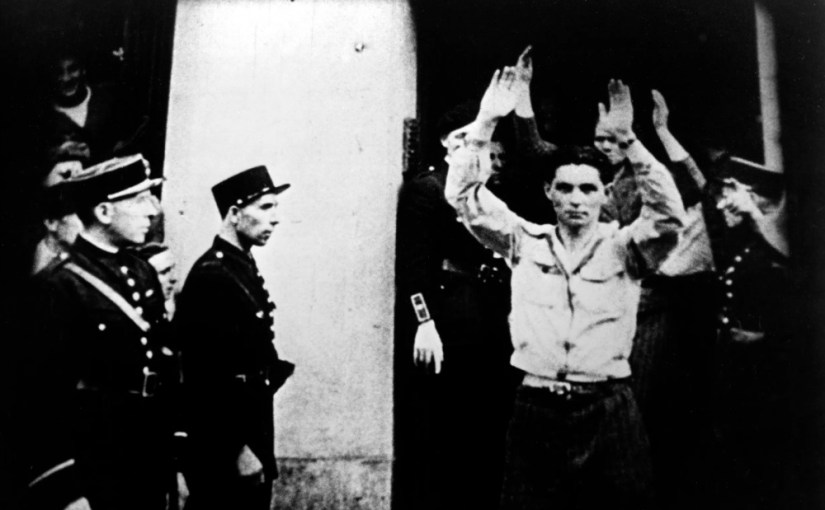
When writing this review, I initially tried to provide a background to the film’s topic, attempting to summarize what Vichy France was, who General Petain was, and how bitterly French resistance fighters resented Petain and others who believed that acquiescence to the conquering German army was key to survival and avoiding further destruction.  That attempt at a “brief” summary ran to two full pages.  So, rather than teach a history lesson, I thought it better to just review the film and assume that readers will have an even better grasp of history than I do.  So here goes.

My enthusiasm for The Sorrow and the Pity, another sprawling film from documentarian Marcel Ophüls, is tempered slightly by my tenuous grasp of French history during World War II, and by the fact that, at least at FIRST, I did not feel I could pass judgement on the people involved.  One English interviewee says exactly that, in response to a question about whether he felt Petain’s life sentence after the French Liberation was unfair: “It is not my place to judge whether or not people’s anger was justified.  We haven’t been through it, so we cannot say.”

After watching the complete film, I have changed my tune a bit.  Under Petain’s leadership, Vichy France did indeed escape total destruction, but since they were essentially under German rule, they did end up deporting approximately 76,000 Jews to concentration camps during World War II.  Only a small percentage survived.  French Resistance fighters attacked when and where they could with immense dedication, believing it was better to fight and die than to live under the thumb of Nazi Germany.  Pro-Vichy Frenchmen denounced anyone they believed was a member of the Resistance.  In the documentary, the bitterness felt by surviving Resistance fighters towards surviving collaborators is palpable.

This documentary was (I believe) the first from a French filmmaker to openly discuss, on a world stage, the conflict between the Resistance and the collaborators.  Up to that time, it had been a virtually taboo subject, something swept under the rug or kept in the basement.  The attitude was one of, “Why bring up such a painful subject?  Why go over something so historically embarrassing?  Let’s just move on.”  This attitude reminds me of the thinking behind those who are in favor of redacting your kid’s history textbook or banning certain books from the school library.  The people interviewed in the film – people on both sides of the debate, mind you – demonstrate clearly that a national policy of polite silence on the matter is unacceptable.

In this way, The Sorrow and the Pity functions less as a film, an entertainment, and more like a historical record, the kind of thing you might see at a museum or on a college campus as part of a homework assignment.  I can’t promise watching this film will be as gripping as a typical Hollywood war film, but I can say I was never bored during the film’s running time.  I found myself intrigued by the fact this film was released in 1969, just 25 years after the end of the war in Europe, so the people appearing in the film were not just experts or college professors.  They literally lived through the events they were discussing.

A woman who sided with Petain was tortured by Resistance fighters after the Liberation; she still holds to her belief that Petain was a good man.  A Resistance member who was denounced and sent to prison returns and is told by a friend that he knows who denounced him and he will avenge him with a nod of the head.  The man refuses to allow that to happen, even though he knows who the denouncer was; in fact, he still lives around the corner from him.  “It’s something you can’t forget.  But what can you do?”

A former Nazi soldier is interviewed at his daughter’s wedding reception.  (I would LOVE to hear how Ophüls managed to wrangle this particular interview.)  Ophüls asks why he still wears his military medals when many Germans refuse to wear them because they were awarded by a Nazi state.  The former soldier says the only people made uncomfortable by them are men and women who never fought.

Another former soldier (now apparently a waiter in a pub) makes this startling statement: “We’re not stupider than anyone else, and yet we lost the war.  Nowadays we have to wonder if we’re not better off like this.  After all, if we had won, Hitler may have continued, and where would that leave us today?  Perhaps we’d be occupying some country in Africa…or America.”  It’s hard to tell whether his statement is remorseful, grateful, or wistful.

The Sorrow and the Pity is a remarkable record of a time when a nation had to choose between subservience or resistance.  That some chose resistance is not hard to fathom for Americans, whose existence is founded on resistance to tyranny.  That some chose to collaborate is perhaps unthinkable, but if I look inward, can I say with certainty I would have chosen differently?  I’d like to think so.  I hope so.

Just recently I was looking at a bookstore’s window display with a “banned books” shelf filled with novels that have recently been banned by school libraries in several states.  A woman walked by, noticed the display, and said as she walked away, “This store is degenerate.  I can’t believe they’re glamorizing this shit.”  I found myself wondering how many of those volumes she had read herself.  I wondered which side she would have taken in France when Nazi policies banned certain texts.  It never occurred to me to start an argument with her right there in the street.  Will there come a time in this country when it becomes our duty to openly oppose those who support totalitarian policies?  I don’t know, I’m not a political Nostradamus.  But The Sorrow and the Pity argues that, if that time does come, sitting on the fence should not be an option.  And the world will not soon forget those on the wrong side of history.

MAN WITH A MOVIE CAMERA (Soviet Union, 1929)

by Miguel E. Rodriguez

DIRECTOR: Dziga Vertov
CAST: Mikhael Kaufman, Elizaveta Svilova
MY RATING: 9/10
ROTTEN TOMATOMETER: 98% Certified Fresh

PLOT: This highly influential quasi-documentary captures a day in the life of a Russian city, as well as the cameraman doing the filming.


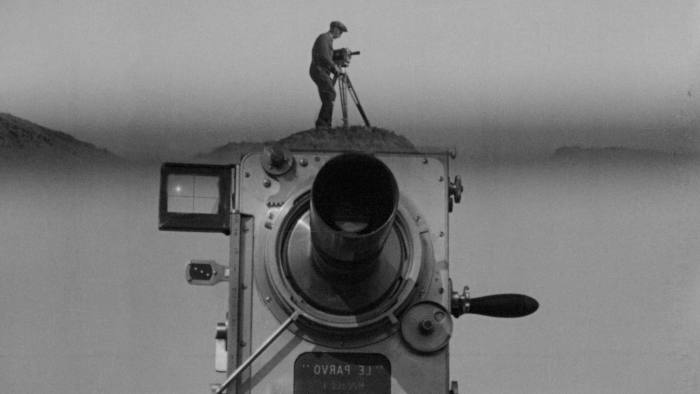
Film scholars more highly educated than I may be able to dispute this, but I think Man with a Movie Camera qualifies as the most “meta” film ever made: a movie about the making of itself.  Filmmaker Dziga Vertov, who cut his teeth on Soviet newsreels, cobbled together three years of footage of everyday life in Moscow and condensed it into a 68-minute quasi-documentary/newsreel that acts as a virtual wormhole into the past, revealing people and activities and life that is not that far removed from our own experiences.  Spliced into this footage are shots of the film’s cinematographer carrying the camera around on a tripod, setting it up, and shooting the footage we’re seeing, sometimes putting himself in mortal danger for the sake of getting the perfect shot.

Vertov used every camera trick available at the time, including [bear with me while I consult IMDb]: double exposure, time lapse/fast motion, slow motion, freeze frames, jump cuts, split screens, Dutch angles, extreme close-ups, reversed footage, and even stop motion animation.  The resulting film is extremely reminiscent of two of my other favorite films, Koyaanisqatsi (1982) and Baraka (1992), though the reverse is clearly more accurate.  When those two movies were hailed as art house masterpieces, fans of Vertov’s film must have been thinking, “Yawn, been there, done that.”

I’m sure entire books and even college courses have been written and designed around Man with a Movie Camera with its metatextual layers and its impossible-to-overstate influence on filmmakers up to and including the present day.  (There was even a small scene that reminded me of those spinning-atom “flashbacks” in Oppenheimer [2023].)  As a wise man once said, “Better to be remain silent and be thought a fool than to speak and remove all doubt.”  I won’t attempt to approach this beautiful movie from an intellectual standpoint.  Rather, I want to convey the emotional effect Vertov’s techniques succeeded in creating in me as I watched.

Basically, the movie can be broken down into several chapters.  We first see a city asleep: Moscow, mostly, though some sequences were shot in Odessa, Kiev, and Kharkiv.  Early morning streets are deserted except for street sweepers and homeless folks on park benches.  Department store mannequins stare blankly onto empty sidewalks.  A young woman lies in bed asleep.  We see a car pull up to a building and pick up a passenger: a cameraman, who is “played” by the film’s cinematographer, Mikhail Kaufman.

The city awakes.  Store shutters are thrown open.  Electric streetcars and motorbuses pull out of their “stables” and head for the city.  The young woman from earlier gets out of bed and, as the quaint phrase goes, “performs her ablutions.”  In a couple of interesting sequences, homeless men on the street awake to discover a cameraman filming them.  Invasion of privacy?  Exploitation?  Perhaps.  But of the two men I recall seeing filmed this way, one of them simply made no reaction, while the other smiled and laughed, then rolled over to snooze for a few more minutes.  Hey, a cameo’s a cameo.

Then the city gets to work.  People arrive at their factory jobs.  Vast machinery is switched on.  Steel mills rumble to life, and smoke belches from towering smokestacks.  We see the cameraman climbing the crude ladder on the side of one such smokestack with no visible safety equipment.  My palms got a little sweaty just watching it.

The city streets become unbelievably congested with mobs of people, herds of streetcars, and only crude manually operated street signals to maintain order.  Trains pull in and out of train stations right on schedule – presumably.  In one absurdly dangerous shot, we watch as the cameraman places his camera directly on the track in front of an oncoming train and then remains behind the camera for as long as possible, checking focus or whatever, as the train gets closer and closer and CLOSER…then we cut to a shot of the train rolling over us as if the camera was right on the ground underneath the train.

(In the first of several such sequences, we then see a series of shots showing the cameraman has dug a hole in the middle of the tracks large enough to fit him and the camera so he can still crank the film while the train rolls over him.  First the magic, then the explanation.)

Here and there in the middle of all this, we also get shots of the film’s assistant editor, Elizaveta Svilova, laboriously poring through endless feet of film, searching for the perfect shot or the perfect splicing point, cutting and pasting, and sometimes storing small reels on shelves marked with categories like “Factory” or “Street” to be used later.  We’re really getting a look at how the sausage is made here.  But to what purpose?  Perhaps Vertov is going to great pains throughout the movie to demonstrate to the audience that the magic of montage and any emotional reactions they may experience while watching is the result of intensely hard work by manual laborers much like themselves.

Vertov even exhibits a wicked sense of timing and dark humor.  We see a short scene in which a man and woman visit a city office to sign a marriage certificate, all smiles and nerves.  This is followed shortly by another couple, who are NOT smiling, visiting the same office…this time to sign a divorce certificate.  At this point I started to wonder if these scenes were being staged.  But there is a third sequence set in the same office, where a woman hides her face from the camera with her purse.  This time they are signing a DEATH certificate.  We’re then treated to a mixed montage showing a wedding, a live birth, and a funeral: ashes to ashes, dust to dust.  Manipulative?  I guess you could make that case, but that does not diminish its power one little bit.

The raw power of the freeze frame is utilized to great effect in several shots of athletes, horses pulling carriages, and children watching a magician.  Time lapse footage shows clouds scudding past a statue, a technique that would not be widely appreciated until over fifty years later.  Workmen push heavy wheelbarrows and walk directly over the camera, followed immediately by a shot showing the cameraman lying on the ground filming the workmen as they walk over him.  This kind of juxtaposition does not ruin the film’s impact, however.  For me, it emphasized something I tend to forget: this movie – in fact, ALL movies – are created by someone with an idea and a movie camera and the chutzpah to do what it takes to make it happen.

Another idea that deserves mentioning is that Vertov created a compelling and enduring film out of vignettes of everyday life in the city.  No melodramatic scripts, no overacting, no impossible coincidences…just life.  Maybe Vertov was reminding the audiences of his day that their lives, their recreation, their struggles, were no less enthralling or exciting than anything that could be dreamed up by a Hollywood screenwriter.  “You want to see something interesting?” he seems to ask.  “Look no further than yourselves and your family and your neighbors.  You are more interesting and unique than you believe yourselves to be.  Watch…I’ll show you.”

To summarize: Man with a Movie Camera is nearly a century old, but it has lost none of its power over the years because of the director’s utilization of groundbreaking techniques that are still being used – and, in some cases, copied – in today’s film industry.  Even more so than any of the silent films by Chaplin or Keaton, it feels like a time machine, beaming images to us today from a bygone world with none of our modern luxuries but all the emotions and experiences that make us human.  There is a quick sequence showing a hospital nursery, giving us closeups of several newborns.  I found myself wondering…it’s been 95 years since the movie was made and released.  It’s conceivable that one or more of those babies might still be alive today.  I don’t really know what that would mean in the grand scheme of things, but wouldn’t that be something?

HOTEL TERMINUS: THE LIFE AND TIMES OF KLAUS BARBIE (1988)

by Miguel E. Rodriguez

DIRECTOR: Marcel Ophüls
MY RATING: 9/10
ROTTEN TOMATOMETER: 100% Fresh

PLOT: A documentary about Klaus Barbie, the Gestapo chief in Lyon, France, and his life after the war.


There is so much to unpack in Hotel Terminus, Marcel Ophüls’ epic documentary, that I am hesitant to even try to write about it.  In terms of the craft of filmmaking, there is nothing to critique aside from the skillful editing, which surprisingly makes its 4.5-hour running time fly by.  In terms of content…I mean, where could I even begin?  Here’s a summary I found online: “Marcel Ophüls’ riveting film details the heinous legacy of the Gestapo head dubbed ‘The Butcher of Lyon.’ Responsible for over 4,000 deaths in occupied France during World War II, Barbie would escape – with U.S. help – to South America in 1951, where he lived until a global manhunt led to his 1983 arrest and subsequent trial.”

Wait, what?  The United States intelligence apparatus smuggled a brutal Nazi officer out of Europe?  Six years after the Nuremberg trials?  Yes.  Ophüls interviews various players from US Army Counterintelligence – known as the “CIC” in the 1940s – who state flatly on camera that Barbie had connections and information regarding Russian communists, so it was in America’s best interests to keep Barbie alive and out of prison and get him to South America.

So, at the very least, today I learned something.

This sprawling documentary also features eyewitnesses to Barbie’s atrocities in Lyon, France, where he was stationed.  I don’t want to recite a laundry list of these terrible acts, but the film does key on two specific events during his tenure: the arrest and execution of Jean Moulin, a French Resistance leader, and the deportation to Auschwitz of 44 Jewish children from an orphanage in a town called Izieu.  Ophüls interviews scores of people who were in the room when Barbie arrested Moulin.  Many of them disagree who was to blame – a rat or someone with loose lips – but they all remember who made the arrest.  The stories from witnesses to the deportation of the children are beyond belief.

What is the point of a documentary like this?  Why should it be important for a filmgoer, or just an average Joe, to block out nearly five hours to watch a series of talking heads tell story after shocking story about the inhuman tactics of a monster?  Well, for one thing, that’s not the whole story.  Hotel Terminus actually has an arc, because Barbie was discovered living in Bolivia in 1972.  In 1983, he was extradited to France where he was convicted on numerous crimes against humanity and sentenced to life in prison, where he died in 1991.  The filmmakers didn’t know that in 1988, of course, but it felt good to throw that factoid in there.  Another interesting factoid: America apologized to France in 1983 for helping him escape to Bolivia in the first place.  Better late than never, I guess?

So, it’s good to know while watching that the man in question will eventually get his just desserts.  But there are times when it almost feels like the “A-story” of Barbie’s eventual arrest gets overwhelmed by the “B-story,” which is the paradoxical attitudes of many of the people interviewed.  One man wonders, what’s the point of it all?  Barbie committed his crimes forty years earlier, and France has a statute of limitations of twenty years, so just let the man grow old and die in obscurity.  Another theorizes that stirring up old memories of the war when many would rather move on actually created more civil unrest in France and Germany.  Barbie’s defense attorney at his war crimes trial (a Eurasian Frenchman) wonders why Barbie is being tried for crimes against humanity while France’s own acts of torture and horrific imprisonment during the Battle of Algiers are discreetly ignored.

And always Ophüls has rejoinders for each of these statements with stories of families separated, men and women tortured, family members whisked away and never seen again.  One woman recalls being tortured as a girl by Barbie, while her mother was told, “This is YOUR fault; if you would just talk, we would stop.”  And so on, ad infinitum.  But I am compelled to point out again how compelling this was.  These and so many other stories like them did not depress me or lower my spirits.  Instead, I was riveted.  I can’t explain why.  For myself, I felt like this was something I needed to hear, and other people needed to hear.  Here was a record of something that really happened, to real people in a real place in a time that was not so long ago, in the grand scheme of things.

There was also a section that really made me take notice.  Many, MANY people said on camera that, in his old age, Barbie was “a good man.”  He was friendly to his neighbors – even some Jews! – and a loving father.  His daughter-in-law is interviewed, and she states that he always had a kind word for her and always tried to include her in his family circle, even after her husband (Barbie’s son) died.  It made me think about the driving force behind last year’s brilliant Zone of Interest: the banality of evil.  Perhaps among many others, Barbie was living proof that evil will not always wear a black hat and have glowing red eyes.  Evil is just as capable of engaging you in friendly conversation as the next man.  (I was also reminded of a line from David Fincher’s Se7en: “If we catch John Doe and he turns out to be the devil, I mean if he’s Satan himself, that MIGHT live up to our expectations.  But he’s not the devil.  He’s just a man.”)  Is that one of the lessons of this film?  That evil is not supernatural or some kind of horrific aberration, but just a small person with delusions of grandeur?  Discuss.

There are echoes of Schindler’s List in the details of these stories, but Ophüls notably never uses any archival footage of concentration camps or of the Holocaust itself.  He apparently felt that audiences had, regrettably, become accustomed to the gruesome imagery of those events.  Instead, he relies on the viewer’s imagination to provide all the necessary details.

He also, tellingly, never provides answers to the stickiest questions that surrounded Barbie’s trial, especially the one about France being willing to charge him with crimes against humanity while ignoring their own history in Algeria.  I thought about that one a lot in relation to America.  Our country is great for a whole host of reasons, but it’s not perfect.  We rise up in vocal disapproval when a foreign country commits genocide, or when a country’s citizenry is threatened by totalitarianism…while ignoring (for the most part) the fact that our country exists because of genocidal practices against indigenous Americans.  Am I suggesting that perhaps Ophüls is wrong to focus on Barbie and not France’s history?  Absolutely not.  Barbie was a monster and got what he deserved, belatedly or not.  But I am suggesting that the film raises questions that deserve further discussion.

Ultimately, I’m glad I saw Hotel Terminus, and I would unhesitatingly recommend it to anyone who asks.  The visceral nature of the stories told by some of the subjects is enough to make it compelling, even without the overarching structure of following Barbie to his downfall.  It’s a challenging watch, to be sure, but I promise you’ll never be bored.  Trust me.

DICK JOHNSON IS DEAD (2020)

by Miguel E. Rodriguez

Director: Kirsten Johnson
Cast: Dick Johnson, Kirsten Johnson
My Rating: 7/10
Rotten Tomatometer: 100% Certified Fresh

PLOT: A documentary filmmaker helps her father (and herself) prepare for the end of his life.


It’s been said that, to understand what a movie is really about, examine how the main characters have changed, and there you go.  When it comes to knowing exactly what a documentary is about, I would say: describe what you’ve learned after it’s over, and that’s what it’s about.

So, what did I learn when Dick Johnson Is Dead was over?

…that’s not so easy to describe.  Several years ago, documentary filmmaker Kirsten Johnson lost her mother to Alzheimer’s.  Not long after that, her aging father, Dick, started to show signs of memory loss.  She realized she was unprepared for how to deal with the reality that, one day, her father would die.  In the film, she describes how important he is to her daily life how the concept of losing him is “unimaginable.”  To help her process this looming fact of life, she decided to make a film about it.

But not just any film.  Aside from the expected footage of conversations with her father and her children and friends and family, Kirsten Johnson stages fictional scenes depicting her father dying or being killed.  Several times.  Starring Dick Johnson himself.  (And the occasional stuntman.)  In one scene, an air conditioner falls from an apartment building onto his head.  In another, he trips down a staircase, winding up at the bottom with a broken leg and blood pooling on the floor.  My personal favorite, adding a nice mystical touch, shows Dick napping in his favorite chair and ottoman…and he simply rises off the ground and out of the frame, chair and all.

What is going on here?  Kirsten’s father is naturally willing to go along with nearly anything his daughter asks him because, you know, it’s his daughter.  But how is this helping Kirsten?  How is this helping her father?  What am I, the viewer, supposed to get out of watching those scenes staging his death?

Most of them are clearly fake.  Kirsten sometimes leaves the camera and sound running while she shouts direction from just off camera; when the scene is over, you’ll often see assistants run on and help Dick stand up and clean the blood off him, or remove his costume, or help him back to his favorite chair between takes.  But a couple of them took me by surprise and were mildly unsettling.

This is hard for me to explain.  I felt as if Kirsten was somehow taking advantage of her father’s developing dementia to help her deal with his passing.  It seemed…unseemly.  Of course, he is a volunteer, and he was never put in any danger or forced to do anything uncomfortable.  But…something about it felt wrong.  It felt self-indulgent in a way.  “I am having a problem dealing with your death, so let me put you in a coffin in a church so I can feel what it’s going to be like when it’s for real.  This will help me with my process when you die.”  I am probably being completely unfair with that analysis, but I would be wrong to omit how I felt at times during this film.

But.  On the other hand…

There are scenes of such lyrical beauty that I was glued to the screen.  One scene Kirsten stages is her father arriving in heaven.  Dick finds himself surrounded by actors wearing big black-and-white cutout masks of people like Bruce Lee, Farrah Fawcett, and Sigmund Freud.  (One wonders if she asked Dick who he would like to meet in heaven.)  And then, in a wonderful moment, a door opens, and in walks his wife, Kirsten’s mother…again, just an actress wearing a big cutout mask, but the picture is of her from when she and Dick first met.  And they dance together.  (With the help of some fancy editing because Dick is not as nimble as he used to be.)

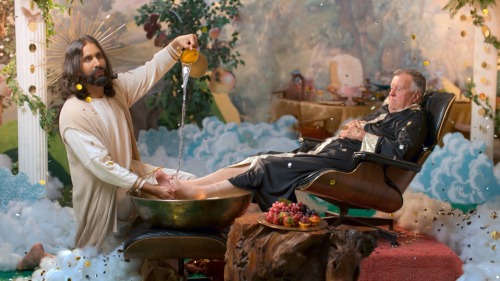
Dick was born with deformed toes, a fact of which he was ashamed for his entire life.  In another wonderful fantasy scene, Jesus Himself anoints Dick’s feet, and presto, his toes are normal again.  The look of shocked delight on Dick’s face is priceless.  …even though, you know, it’s not real, but still.


Interspersed with all this are scenes showing Dick’s slow decline in the real world.  He was once a successful psychiatrist, but he was finally forced to retire when he kept double-booking clients and not showing up for appointments.  He closes his office in Seattle, packs up, and moves in with Kirsten in her New York apartment, which is just a few doors down from the apartment where her two children live with their father and his husband.  (That scenario deserved, I thought, more explanation, but I got none…sounds like the setup for a long-running sit-com.)  Kirsten hires a caretaker with experience in caring for patients in their last stages of life.  Dick starts waking up in the middle of the night thinking he has to catch a train to work.  Multiple times.

These scenes are undeniably powerful because of the extraordinary access we get via Kirsten’s camera.  We see the amused confusion on Dick’s face when she asks him if he remembers getting up in the middle of the night…he doesn’t.  But he laughs.  “Oh, my, your father’s a wreck, sweetheart.”  It’s all doubly poignant because of how his wife succumbed to Alzheimer’s.  And here he goes down a similar road at the far end of his own life.  Powerful stuff.

…and then two extraordinary scenes occur.  I won’t spoil them.  They’re not exactly “extraordinary”, I guess, but the manner in which they occur and what we discover after they happen makes them extraordinary, to me.  And it’s here at the end of the movie that I really started feeling torn.  Yes, it’s a somber, effective look at Death with a capital “D” and how we choose to deal with it.  But…but…a part of me felt like it was shamelessly manipulative, especially those last two scenes.

Perhaps I’m the wrong audience for this movie.  Both of my parents are still alive.  I have not yet experienced that kind of loss.  I’m fifty-one years old as of this writing.  To paraphrase Indiana Jones, I’ve reached the point where life stops giving and starts taking away.  I’ve lost both sets of grandparents, two uncles, and more theatre friends and acquaintances I’d care to think about.  But I still have Mami and Papi.  I am blessed.  And I cannot for one second imagine how my ability to deal with either of their deaths would be improved by filming my mother in a coffin in a church, or by filming a scene where my father is killed after a fall.

I dunno.  It was profound and well made, and it clearly resonated with critics.  Maybe I’ll watch it again in ten or twenty or whatever years when I’ve lost at least one of my parents.  Maybe then I’ll be more in tune with Kirsten’s frame of mind.  Until then…I recommend Dick Johnson Is Dead if for no other reason than it’s one of the most unique documentaries I’ve ever seen.

BACK TO THE DRIVE-IN

By Marc S. Sanders

I have a confession to make.  As much of a movie lover that I am, I have never seen a movie at a drive-in theater.  I should know better.  Fortunately, I had the honor of learning about this well-established culture of Americana while getting a private screening of a new documentary film called Back To The Drive-in, written and directed by April Wright.

Back To The Drive-in covers the resiliency of eleven different drive-in theaters spanning from Massachusetts, down to Texas, across to the state of Nebraska, and California beyond.  All of these institutions have likely been around longer than three times the age of most of their teenage and twentysomething employees.  They may be located in different areas of the greater United States, but many of these outdoor movie palaces have no choice but to contend with the same ailments that accompany a new age of living during the time of the Covid pandemic.  That’s the common theme April Wright covers as she turns on her cameras allowing the owners, their families and staff to discuss experiences, frustrations, worries and uncompromised passion for the drive-in.

The craft of Wright’s film is beautiful.  There are vast overhead shots of each drive-in that transition perfectly into the intimacy of a lived-in office or a concession stand down below.  As her film moves from one drive-in to the next, the chapters open like picture perfect post cards of an American institution that has survived for over 60 years.  My only familiarity with drive-in movies likely stem from episodes of the sitcom Happy Days, where Richie and Potsie would make out with their girlfriends in the front seat during the monster movie.  This insightful documentary, however, showcases how drive-ins operate in an age of new technology or lack thereof.  It also presents problems that have been ongoing since long before Covid arrived. 

The unpredictability of weather abounds for many of these owners. The most interesting story for me comes from the Wellfleet drive-in located near Cape Cod, Ma.  The owner, John Vincent, is a friendly enough gentleman, who tells of his history working for the drive-in first in the ticket booth while he was a teenager back in 1987, all the way up to now being a proud and concerned owner.  Warts and all, he loves the drive-in.  The offensive f-word for him, though, is fog.  With his business located near the ocean, it is hard to tell if the large outdoor screen will offer up a good enough picture for the Saturday night film.  Each time April Wright’s documentary returns to footage from Wellfleet, I was in suspense.  Mr. Vincent talks about how on a good night he’d have 300 cars parked ahead of the feature presentation.  On this night, with imminent fog, it’s lucky he has 117 cars.  Every time Wellfleet appeared in the film, the fog only looked thicker and thicker.  Fog has become an all too real fear.

A common problem for all of the drive-ins is the weather.  Another location is concerned about lightning in the area.  It goes with the territory that the managers and operators regularly monitor the weather apps.  I want to know what they did in the ‘60s to prepare for this uncertainty. 

Supply shortages, inflation, worker shortages.  All of these drive-ins face the same threats.  Wellfleet also contends with out-of-date technology where the speakers are burned out and the underground wiring needs repair.  Yet, that means digging up concrete at a huge expense.

As the time period focuses on the drive-in attractions in response to Covid, it seems to present a small favor for these businesses.  At the start of the pandemic, when new Hollywood pictures were being released in limited supply, there was at least the escapism of the drive-in for consumers who were exhausted over quarantining.  People could at least catch a classic flick like Back To The Future, and maintain social distancing within their own cars.  Still, Brian Smith who owns Coyote out of Fort Worth, Texas has to protect his teenage staff from angry, foul-mouthed patrons unwilling to cooperate with mask mandates while visiting the concession stand.  He talks about how he looks out for the kids who work for him, but even depression and the challenge to keep up with school is overwhelming. 

Now that vaccinations have provided relief from isolation, the struggle is all the more real for these business owners.  Ben and Nora Harroun who operate Galaxy Drive-in Ennis, Texas mention competing with streaming services for new film releases.

Other drive-ins attempt to reinvent what they have.  Field Of Dreams located in Ohio is offering up live concert entertainment.  Quasar in Nebraska was an I-70 drive-in refurbished by Rod and Donna Saunders with the latest technology and architectural designs.  Their friends said they were crazy to invest in this, but for the Saunders it is crazy to let an institution fade away.  Their retirement was meant to sustain the atmosphere accompanied with a drive-in movie.

There’s a culture to this industry.  These owners talk with one another and share their love for this uncertain and struggling industry.  Drive-ins seem outdated in an age of comfortable multiplexes and the convenience and safety of at home streaming.  They share each other’s pain while also appreciating the value a film like F9 (Fast & Furious) can draw on a Saturday night.  They take pride in the specialty food crafts they sell at the counter from funnel cakes to a delectable pulled pork sandwich for seven dollars.   To many of us, selling a box of Nerds candy or not selling chocolate products to avoid the risk of melting, might seem like a mundane awareness, easily taken for granted.  To these folks, it means the difference of the outcome of their current season in the age of Covid.  April Wright captures a young girl describing how she burned a scar into her finger on a popcorn machine.  These are proud war wounds, accepted within the ongoing challenge of keeping a business afloat and a decades long tradition alive.

April Wright’s documentary is breathtaking.  As her camera soars above the wide-open spaces of worn-out grass and cratered concrete with large movie screens at the edge, you absorb the history of places within the United States urging us to rediscover again.  Our eyes only opened a little during a desperate time in 2020, but these preservationists wonder if they will be able to hold on.  I won’t spoil the outcomes some of these businesses face during a footnote of coverage featured in the end credits, but perhaps a follow up piece is on the horizon from Ms. Wright.  These drive-in locales live with unstable fluidity.  Doubt, accompanied with hope, is what I walked away with following my viewing of the picture.  What will the American drive-in theater look like in a year from now?

THE LAST WALTZ (1978)

by Miguel E. Rodriguez

Director: Martin Scorsese
Cast: The Band, Eric Clapton, Neil Diamond, Bob Dylan, Joni Mitchell, Neil Young, Emmylou Harris, Ringo Starr, Dr. John, Van Morrison, Ronnie Hawkins, Muddy Waters, Ronnie Wood
My Rating: 8/10
Rotten Tomatometer: 98% Certified Fresh

PLOT: In 1976, American rockers The Band performed their last concert ever with an unforgettable guest list.  Director Martin Scorsese filmed it, and the rest is history.


I mean, 16 years on the road, the numbers start to scare ya. I mean, I couldn’t live with 20 years on the road. I don’t think I could even discuss it.
– Robbie Robertson, vocals and lead guitar, The Band


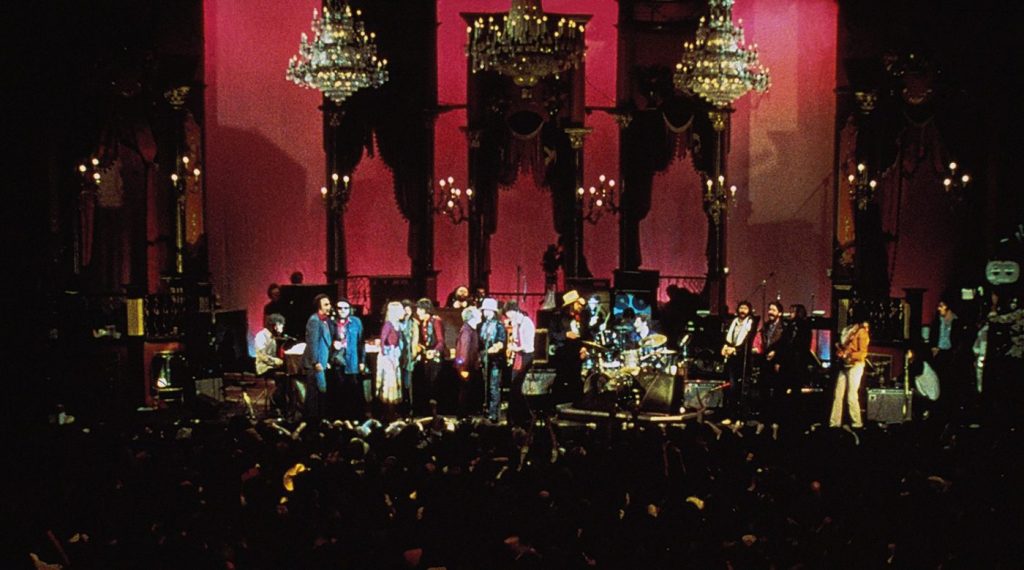
Martin Scorsese’s film of The Last Waltz, the Band’s epic final concert in 1976, is a curious exploration of the highs and lows of what it means to be a rock star.  Or not just a rock star, but one of the stars of a touring band, one of those perpetually traveling bands like The Grateful Dead or Phish or, God help us, The Rolling Stones.  In their performances, you can clearly see the heedless joy with which every musician plays their part, whether it’s a rockin’ guitar solo or a yell during the refrain or a keyboardist getting lost in his own world for a minute or two.  There are smiles and grins and humble bows to the cheering audience in the dark.

But Scorsese makes an important choice with The Last Waltz not to show just the highs of live performance.  With intercut interviews, filmed some months after the concert itself, we get quiet, introspective feedback from band members who clearly love performing, but who recognize just how much touring has taken from them.  They have no desire to follow in the footsteps of predecessors who paid the ultimate price for fame.  “You can press your luck,” says Robbie Robertson at one point.  “The road has taken a lot of great ones.  Hank Williams.  Buddy Holly.  Otis Redding.  Janis.  Jimi Hendrix.  Elvis.  It’s a goddamn impossible way of life.”  Here is a man who has decided it’s time to end the show before it jumps the ultimate shark.

In this way, The Last Waltz becomes more than just a concert film or a pretentious exercise in cinéma verité.  It clearly presents both sides and asks the viewer: how much would you give to achieve the fame and fortune of a rock star?  Certainly, the highs are deliriously addictive.  But in their interviews, members of The Band seem diffident or downright dismissive of their fame and fortune.  One band member is happier when they’re OUT of the spotlight.  “And as soon as company came, of course, you know, we’d start having fun.  And you know what happens when you have too much fun.”

But in focusing on their interviews, I don’t want to give the impression that The Last Waltz is anything but entertaining from beginning to end.  Let’s be honest: the concert footage is what’s going to amaze you at the outset.


Scorsese sets the tone right at the start with a title card in huge letters: THIS FILM SHOULD BE PLAYED LOUD.  The ensuing concert footage proves his point.  Especially on the newest Blu-ray from the Criterion Collection, the music coming out of the speakers is crisp and clean and begs to be blasted.  One number in particular, “Mystery Train”, is a pounding rockabilly song that felt and sounded most like I was really there.  The other guest performers do their part.  Muddy Waters gives a lesson on where the blues came from, putting pretenders to shame.  Joni Mitchell brings a more delicate touch with a heartfelt ballad about a wanderer who is imprisoned by the white lines on the road.  Van Morrison, whom I’ve never seen in any concert footage anywhere else, gives a damn good impression of Joe Cocker in his tight flared bellbottoms and low-cut T-shirt over his ample stomach – an image I would never have connected to Morrison.

I could go on, but you get the picture.  On the basis of the music and the performances alone, The Last Waltz is easily in my top three favorite concert films of all time, with first and second place rounded out by Monterey Pop and Gimme Shelter, respectively.  (For the record, I have never really cared for Woodstock…go figure.)  Combine that stirring music with the inside information from the interviews, and you’ve got a movie that captures a moment in time, a so-called “end of an era.”  Punk and disco are right around the corner.  Did The Band know it?  Watching it this time around, I couldn’t help but think of the ending of Peckinpah’s The Wild Bunch, with the gang walking to their certain doom because the world is changing, and they know they can’t change with it.  The Last Waltz isn’t quite that gloomy, of course.  But the sentiment is there.

DAWSON CITY: FROZEN TIME (2016)

by Miguel E. Rodriguez

Director: Bill Morrison
My Rating: 9/10
Rotten Tomatometer: 100% Certified Fresh

PLOT: In 1978, a treasure trove of lost silent films and newsreels is discovered buried under permafrost in the Yukon.


Time travel is real.  To the past, at least.  The future’s another story.  But you experience time travel every time you watch an old movie or look through photo albums.  Light waves from years, decades, or perhaps just minutes ago are captured and stored on paper or your phone (or the “cloud”) so you or someone in the future can look at it and see what you looked like in your high school yearbook, or an old newspaper clipping, or that one candid shot from your cousin’s wedding.

You ever find an old dusty photo album in someone’s attic or a thrift store?  You open it up, and there are people’s faces, and whether you know them or not, there they are.  They may be long dead, but you are a time traveler, looking through a window into the past.

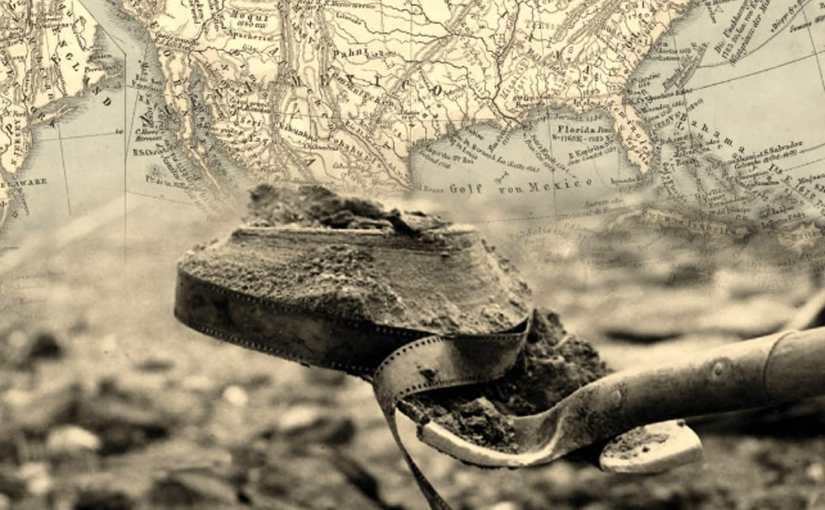
That’s what happened in 1978.  In a small town in the Canadian Yukon called Dawson City, construction workers uncovered an old swimming pool dating back to the 1910s and ‘20s.  Inside it, protected by the harsh permafrost, were hundreds of reels of old cellulose nitrate film.  These reels included old silent films long thought lost, travelogues, and old newsreels, back when the concept of the newsreel was first invented.  Back when cinema was a brand-new art form.

The story of how those films came to be buried for over sixty years is told in Brian Morrison’s documentary.  Dawson City sprouted almost overnight back in 1896 in the wake of the Klondike Gold Rush that brought thousands of prospectors to the area.  When they weren’t prospecting in the hills, all those people needed something to do.  Casinos, restaurants, and dance halls fit the bill, but at some point, someone hit on the idea of building a theater to take advantage of the new art form sweeping the nation: silent films.  Movie distributors down the coast in California included Dawson City on their list of customers, but because Dawson City was so remote, it was decided that it was too expensive to pay to have them shipped back to California.  So they asked the Dawson City officials to just store them away – safely, as cellulose nitrate film was extremely flammable.


At some point, when the storage facility got too full, those old silent films were either chucked into the nearest river or used as landfill for an old swimming pool that was converted into a hockey rink.  And there they stayed until 1978.  When they were uncovered, they were carefully packed away and shipped to facilities in Canada and the U.S. where technicians painstakingly restored the films as best as they could.

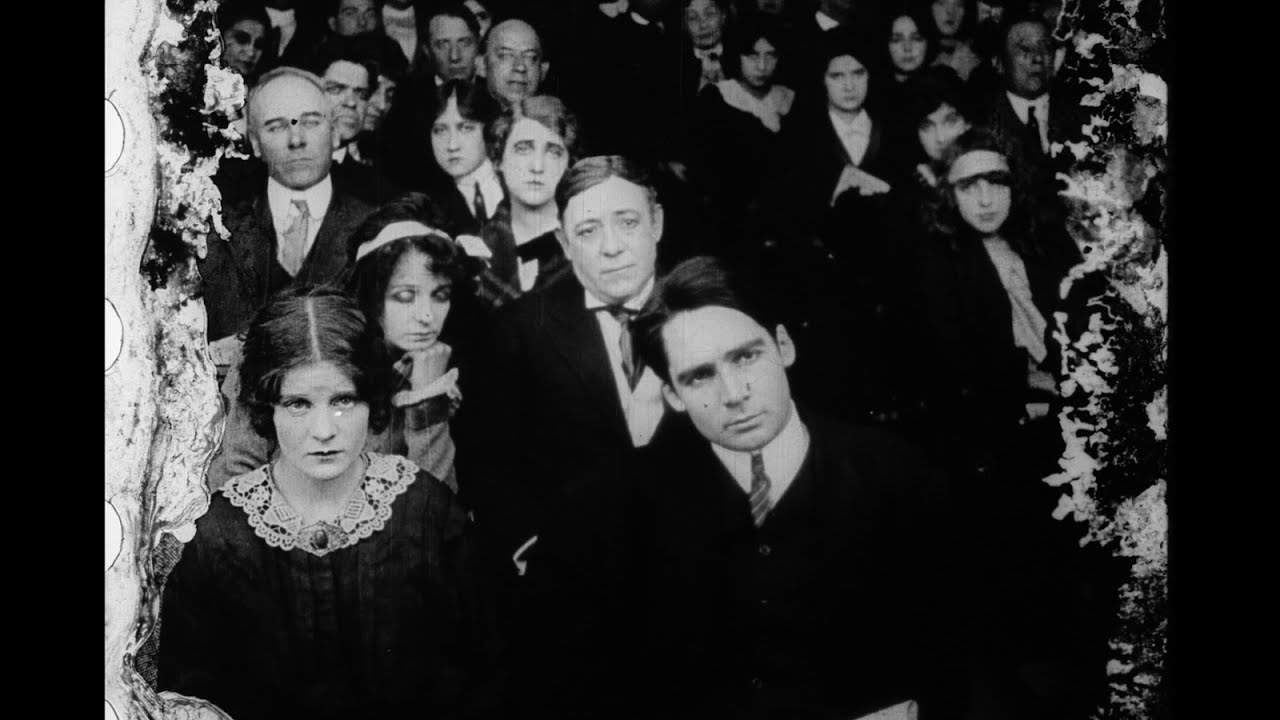
What makes Dawson City: Frozen Time so unique and compelling is the fact that this entire history is told with virtually no narration, using only titles and footage from the restored silent films themselves.  (Old photographs are also used, but these are no less haunting than the film clips themselves.)  There is a romance to seeing these relatively ancient images brought to life once more, especially the documentary scenes showing daily life in a rough boomtown.  We see old clips of men trudging up snowbound mountain passes for their shot at striking it rich.  People walking the streets looking curiously at the camera…what is that thing, they’re probably thinking.


We see newsreels featuring the likes of “Shoeless” Joe Jackson before he and seven other players tarnished themselves with the White Sox scandal.  We see a clip of spectators watching a baseball game from hundreds of miles away with the help of a telegraph and a big play-by-play scoreboard that featured little magnetic markers showing the progress of base runners in real time.  (Ever watch a fantasy football play-by-play on your computer or phone?  Same thing.)  I never even knew anything like that existed.

The silent films themselves, like all the other reels, have varying degrees of damage, especially water damage.  To try to watch one of them as an actual cinematic experience would be extremely distracting.  But as a previously closed window into the past, they are fascinating.  In my mind, it was like someone had opened a portal or a wormhole where we can see the past without interacting with it.  The warps and spots and tears only make the experience even more exotic.  It’s as if the fabric of the space-time continuum was being torn for our benefit, but it can only show us so much.

Maybe my imagination ran away with me.  Who knows?  I think this is the kind of documentary you’ll either love or hate.  All I can say is that, for two hours, Dawson City: Frozen Time made me feel as transported as only film can do.  The idea of knowing that these images were just waiting in a landfill to be discovered, and that here I am watching them now, sort of closing the circuit between past and present…it felt profound.  I don’t know if this is streaming anywhere, but if you’re any kind of film fanatic, you owe it to yourself to check this out.