KILLERS OF THE FLOWER MOON

By Marc S. Sanders

Killers Of The Flower Moon reflects on a period in Oklahoma history that I imagine has hardly been told.  In the early 1920s, the Native American residents, consisting of four tribes, came into a blessing of wealth when oil was discovered on the land they occupied in Osage County.  Almost immediately, white folk from all over the country migrated to this area and built up an infrastructure of capitalism that included private practices, pool halls, movie houses, law enforcement, pharmaceuticals, and even cab drivers.  However, they didn’t want to just stop at developing the area.  They wanted to seize it and they proceeded to do so by wiping out the Native American residents.  Family lineages were all but erased as the whites married into the race and gradually found ways to kill and bring about surprising deaths that would ultimately allow them to legally inherit what was rightfully owned by the Indian people.

Director Martin Scorsese has introduced a new kind of historical education with a film that I believe will be my favorite picture of the year.  I was mesmerized by every photographic shot, closeup, edit, and musical accompaniment contained in this movie.  Everything works so well. 

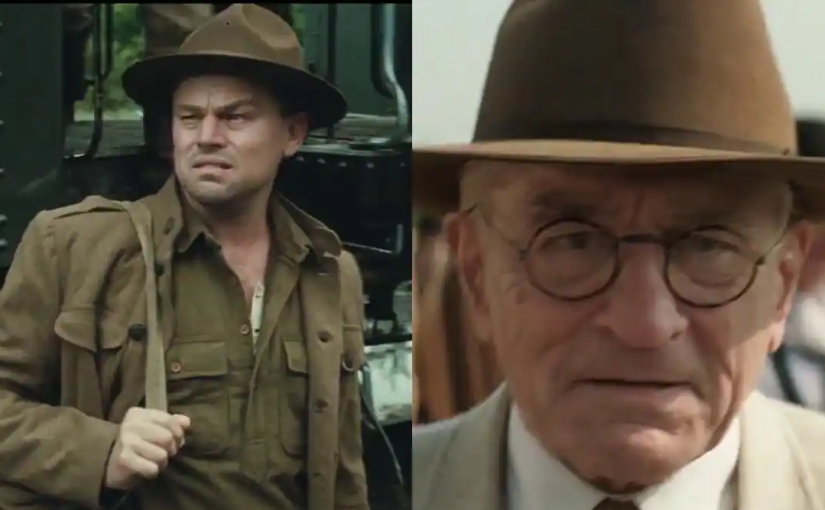
Robert De Niro reunites with the director for the tenth time; an amazing legacy of a partnership spanning fifty years.  He portrays William “King” Hale.  King is a kindly old fellow on the surface, but his intelligence shows as he strategizes how to take over more and more of this area.  He oversees a control of the white gentlemen folk, leading them into quick marriages with the young women of the tribes.  From there, they have children and over time will gradually purify the bloodline.  It’s a ruthless and scheming tactic and it successfully works thanks to how taciturn Mr. Hale is.  De Niro might win his third Oscar for this role.  This character joins that exclusive fraternity of the best villains in cinematic history, ranking up there with The Wicked Witch, Harry Lime, Norman Bates, Darth Vader, Joker, Daniel Plainview and Hannibal Lecter.

Early on in the epic film, The King’s nephew, Ernest Burkart (Leonardo DiCaprio) has returned from the war to work under his uncle.  Ernest starts as a cab driver and meets Molly (Lily Gladstone), the Native American woman he will take as a bride and establish residence together.  DiCaprio does some of his best work following a very boastful career of roles.  He’s also sure to get at least an Oscar nomination.  This is already his sixth film with Scorsese.  Ernest is not very bright, but with The King’s guidance and instruction he’ll also come to own much of this territory.

Mysterious deaths of unexpected natures occur within the tribes of Osage County, particularly in Molly’s family.  Over the course of the film, one relative after another perishes until what’s left of her bloodline is practically only herself.  The children she bears are a mix of Molly and Ernest.  Molly knows something is amiss.  She is starting not to feel well, and her suspicions speak to her.  Others in the community are also suffering peculiar deaths following doctor’s visits or evenings of drunken binging.  An investigation is warranted before it becomes too late.

Lily Gladstone will become a surprise hit at Oscar time as well.  A breakthrough role where her feared silence and bravery matches well against the deceit emanating from the King and even the poorly hidden conniving of her husband Ernest.

Scorsese builds his film with suspense and shock.  A quiet beat of instrumental music haunts certain scenes.  Who will be the next target of the King’s bidding?  The King hides behind his empathy for loss by attending funeral services and allowing the survivors to cry into his shoulder.  On another side, he instructs Ernest to carry out an assignment to some flunky to make a murder appear like a suicide.  A shot in the back of the head will not send a convincing cause and effect though, and the King and Ernest must make up for that. 

The King is everyone’s friend in Osage County, but he’s also a puppet master Grim Reaper.  With the circular rim glasses that DeNiro wears along with his peaceful beige suits, it’s a wonder that this man is an executioner using the hands of others to carry out his bidding.  He dances in the middle of town during festive gatherings.  It even amuses the Sheriff’s office when he voluntarily offers himself up following a warrant for his arrest.  At the risk of getting politically sided, DeNiro was recently interviewed during a press junket for the film.  His animosity towards President Trump is no secret.  I was in the audience at Radio City Music Hall when he led a unified roar of “Fuck Trump” during the Tony Awards.  Still, the skilled actor said he used the enmity he harbors to his advantage for this role.  In the latter half of the film, William “The King” Hale preaches in a similar approach to Trump.  There are figures in our history who just know what buttons to push and absorb massive amounts of influence while earning respect through fear. 

Killers Of The Flower Moon covers a wide berth of its period in history.  Scorsese takes an inspired approach by cutting away on occasion with black and white footage and photographs of the Native Americans coming along with their good fortune and then on to how the white “immigrants” of this area enter this land and assume a daily life within the community, whether they were welcomed or not.  All is depicted from how Osage County quickly changed following the discovery of “black gold,” to how Ernest becomes wise to the advantages of power. 

Leonardo DiCaprio has a great undertaking.  Ernest is not very bright.  He can hardly read.  He’s not subtle with his approach like his uncle.  Yet, the actor maintains an expression of no choice to abide by but what he’s been told is right.  DiCaprio does this incredible expression with long frowned lips and a fat chin that stands out from beneath his nose.  It almost seems like a barrier to finding the humanity he may have once had when he was an infantryman fighting with the allies in Europe.  It is just a haunting performance.

The third act picks up with J Edgar Hoover’s newly established Bureau of Investigation entering the story to investigate the odd happenings in Osage.  Jesse Plemons again plays that guy that you have seen somewhere before.  Often, he occupies similar kinds of roles, and still, I like what he contributes to this picture as Investigator Tom White.  Screenwriter Eric Roth lends the character simple, plainly worded questions for Plemmons to work with and it seems to come off as nothing intimidating.  Rather, the presence of Tom White on Ernest’s doorstep, with Molly mysteriously sick in the bedroom, is enough to rattle Ernest, the King, and the whole county.

It’s no secret that Killers Of The Flower Moon has a long running time at nearly three and a half hours.  However, it is necessary.  This widespread crime is not done in just minutes.  How it is gradually orchestrated needs to be seen, followed by those that uncovered how sinister it became.  Then attention needs to be given to how biased the trials of Ernest and The King had become.  Men who conspired with the King and Ernest serve on the jury.  A lot of unfair wrongs occurred during this time spanning what I believe was at least a decade and a half. 

Roth and Scorsese bring the conclusion of the film with a welcome invention.  In a time where Netflix, Dateline, 20/20 and ABC News thrive off true life crime documentaries that become so addicting, the filmmakers resort to a radio show to sum up what happened to the main players of this devastating episode in twentieth century American history with the director making a cameo to offer his final words for the main victim of the piece, Molly Burkhart.  This bookend to the film has stayed with me since I finished watching the movie, and I applaud Scorsese and Roth for their execution.  Newsmakers of today go for the most sensationalized crimes that have occurred; the ones that leave the most shock and awe and even audaciousness.  What happened in Osage County is unforgivable.  Likely a genocide of bloodlines that were unjustly ceased so that what was rightfully theirs to own could be seized.

Killers Of The Flower Moon is a drama that had to be told because the motivations that led to the series of crimes happens not only to Native Americans, but to practically any other demographic across the globe.  This is a captivating story and one of the best films Martin Scorsese has ever made.

Again, this will likely be my favorite film of the year and Oscars are deserved for DeNiro, DiCaprio, Gladstone, Roth, Scorsese and for Best Picture of the Year. 

NOTE: As I watched this movie, I could not help but think of the film August: Osage County, the motion picture adapted from Tracy Letts’ Pulitzer Prize winning play.  There is one Native American character in the film who is hired to serve the white family living on a wide expanse of land in present day 2013 (2007 for the play).  The first time I watched the movie, I could not recognize the purpose of the character.  On a second viewing, following a conversation among the dysfunctional family of characters about Native Americans, it was much clearer.  Having now watched Scorsese’s film, this picture serves as a great companion piece to watch afterwards.  I’ll be directing a stage production of this soon and much of what I learned from both films will be incorporated into my interpretation.  Even the architectural designs of the homes in both films, interior and exterior, are uniquely similar. 

Look for my review of August: Osage County (featuring Julia Roberts and Meryl Streep) on this site as well.

COLLATERAL

By Marc S. Sanders

A salt and pepper haired gentleman in a knitted suit with sunglasses arrives at LAX before the sun sets.  He exchanges bags with a man he runs into, played by Jason Statham. Elsewhere, a driver does a polish and check on his taxi cab before beginning his evening shift.  He picks up an attractive, overworked attorney named Annie (Jada Pinkett Smith) and before she hands him her business card, the driver has at least convinced the woman to re-examine her life’s purpose and consider simple ways to escape reality.  The man in the suit is Vincent played by Tom Cruise.  The cab driver is Max played by Jamie Foxx.  They are about to collide with one another on this night and put Michael Mann’s film, Collateral, into play.

Following being a massive fan of the TV show Miami Vice, and the films Thief, Heat and The Insider, I remember my anticipation sky rocketing when I saw the trailers and write ups for Collateral.  Mann, Cruise, Foxx, and crime in a cool looking L.A. with a symphonic soundtrack? I’m there!  It seemed like a perfect formula.  When I finally saw the movie, I think I was let down because it was too formulaic following a step-by-step recipe.  The editing for Collateral is abundantly cookie cutter, never taking any risks with its story.

Vincent chats with Max as soon as he gets in the cab.  He offers eleven hundred dollars to occupy Max’ evening, transporting him from one location to the next. Max has dreams of running his own limo company one day and this easy money is too good to resist.  It’s only when Vincent tosses someone out a fourth-floor window to land on the roof of the cab that Max realizes there’s a hitch to this arrangement.  

Vincent is a hitman out to check off a list of targets before sunrise, and he needs Max as a cab escort.  Threats to Max’ ill mother in the hospital will keep the driver in check, and if inconveniences like a shattered windshield draw the cops’ attention then Max will have to abide by Vincent’s demand for no interference with his plans.  

The two hour running time of Collateral is structured on one stop after another.  Mann abides by side scenes from Stuart Beattie’s script to look at the undercover night detective (Mark Ruffalo) who is one step behind the pair’s frequent stops within the city.   I guess it’s fortunate for this guy that ballistics and coroner’s reports are quickly and readily available within minutes and hours to connect some dots.  

In between the kills, Vincent and Max chat in the cab.  Standard stuff really where Tom Cruise is at one time charming and other times sociopathic.  Jamie Foxx is the bright but frightened guy with dialogue that doesn’t amount to much in convincing this unwanted passenger to either let him go free or to give up on his mission.

Ironically, the many scenes shared between Tom Cruise and Jamie Foxx are the least interesting parts of the film.  When the sound editing isn’t failing by making their dialogue sound like incoherent mumbling, neither guy is ever convincing the other to look in a new direction or consider another idea.  Therefore, the conversations never go anywhere.  Look at films like The Silence Of The Lambs, Cape Fear, Seven, and especially Mann’s best picture to date, Heat by comparison.  Those films work when either the antagonist or protagonist allow themselves to consider the arguments, even if it’s just for a second, against the ones they are debating.

There is action and violence in Collateral, but it’s really a talking piece.  Still, the best exchange of dialogue occurs with Foxx and other cast mates besides Cruise.  A great scene occurs when Vincent insists that Max act under the guise that he is Vincent when he has to report to the drug kingpin employer who originally hired him (a surprise welcome from an at the time unknown Javier Bardem); great acting and writing happening here.  The early scene between Jada Pinkett Smith and Jamie Foxx also works at a thought provoking and interesting level.  These scenes are short one act plays that belong elsewhere.  Jamie Foxx is doing some great work in these moments.

Unfortunately, when Foxx and Pinkett Smith reconnect later in the film, they are not written with the same kind of intelligence during a run and hide third act climax.  The suspense is absent here because the setup is ridiculous.  While standing on the top level of a parking garage, Max can easily see Annie in a fourteenth-floor office window, blocks away across the city, and specifically direct her where to run from the dangerous killer who is a few floors below, all while using a dying cell phone.  

More to the point, why is Annie still wearing a suit and heels, with her hair and makeup done up, at four o’clock in the morning? I know an aggressive lawyer never stops working, but don’t they go home, pour a glass of white wine, get into sweats and pop open the laptop while Miles Davis plays softly on the stereo?  How would these guys even know this is where Annie would be at four in the morning? Reader, you might tell me to dismiss what’s merely circumstantial here, and normally I would.  Yet, if I’m an expert hitman like Vincent is supposed to be, my first instinct is to go to Annie’s home first before the office in the middle of the night.  It’s the circumstances that negate the believability of the main character.  

As expected, Los Angeles looks moody and cool like in any other Michael Mann picture.  He’s got blazing overhead shots that emit a white glow in the thick of night.  The wolf is holding a fang and claw to the neck of the sheep as they careen through this endless city maze.  In that respect, the environment of this film works like a great character game master. What turn or straight avenue or bridge is going to work in either saving Max or getting him killed?

The technique of this filmmaker, who I usually favor, is here.  It’s been seen many times before for the other sharp, well-dressed killers in Michael Mann’s worlds. I welcome it back, but it’s not new or inventive in Collateral.  I guess that’s why the film is ordinary.  It lacks the depth that other productions from Mann rely upon.  The setups are quite amateurish and most of the talking is wholly uninteresting.

In spite of a phenomenal and reputable cast and crew, it’s a shame this Michael Mann installment is only ho hum in its finished product.  Collateral needed another script rewrite, followed by some additional reshoots.  There was a better movie to made here. 

THE BIG CLOCK (1948)

by Miguel E. Rodriguez

DIRECTOR: John Farrow
CAST: Ray Milland, Charles Laughton, Maureen O’Sullivan, George Macready, Elsa Lanchester, Harry Morgan
MY RATING: 10/10
ROTTEN TOMATOMETER: 100%

PLOT: A harried magazine editor finds himself in the unique position of trying to track down the person who murdered his boss’s mistress…when all the clues lead back to him.


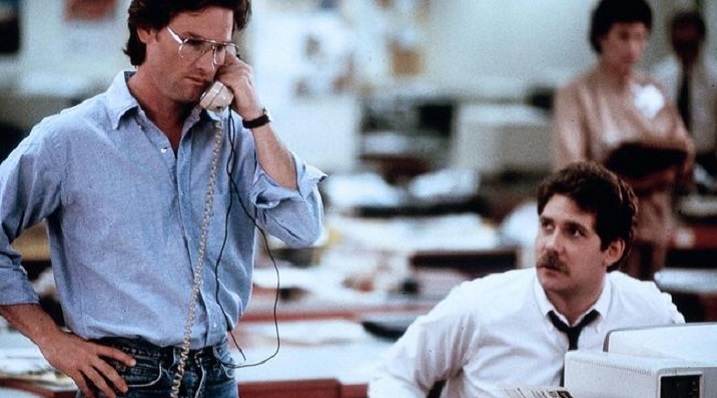
I have been a fan of 1987’s No Way Out since first seeing it on cable umpteen years ago.  The marvelous twists and turns in the script – yes, including that improbable ending – kept me guessing from the moment of the murder to the final pull-away shot.  Having seen it multiple times, I always noted the fact that it was based on a book with an odd title: The Big Clock.  Since No Way Out takes place mostly at the Pentagon, I always wondered what the story has to do with a clock, but I wasn’t motivated enough to track down the book, so I just let it go.

Imagine my surprise when years later, I discovered that No Way Out is not just based on a BOOK called The Big Clock, it’s also a reboot of an earlier film-noir from 1948, also called The Big Clock.  For years I had never been able to track down an affordable copy of the movie until recently.  I just finished watching it a couple of days ago, and wow.  It has all the snappy pacing of a Howard Hawks screwball comedy, the witty dialogue of a Thin Man film, and the coiling suspense of Hitchcock at the height of his powers.  The Big Clock is a forgotten film that deserves to be rediscovered by the public.

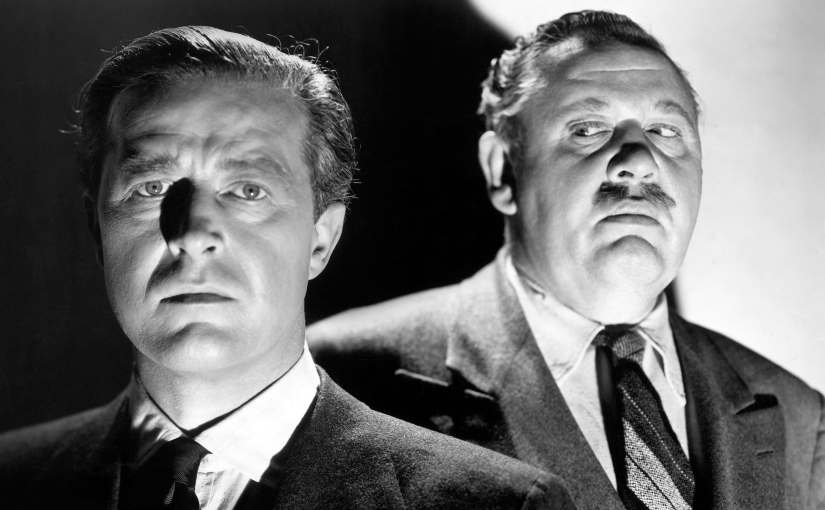
The story opens in typical noir fashion with our hero, George Stroud (the dour-but-likable Ray Milland) avoiding security guards before hiding inside a giant mechanical clock located in the lobby of the office building where he works.  His voice-over narration wonders how he got into this mess and tries to figure out where it all began…and we’re on our way.  So far, pretty stereotypical, not very promising.  But once the prologue ends, the surprises start rolling in.

George’s boss is Earl Janoth (Charles Laughton), a clock-watching, penny-pinching tyrant who doesn’t hesitate to fire an employee who leaves a light on in a broom closet, for example.  George is the editor of a magazine called Crimeways, one of many magazines in Janoth’s publishing empire.  Crimeways specializes in investigative reporting like tracking down murder suspects, allegedly to assist law enforcement, but mostly so they can publish attention-grabbing headlines about captured criminals to boost circulation.

Through a series of events too circuitous to list here, George winds up missing a very important train (he was supposed to finally give his wife a long-delayed honeymoon) and spends a drunken night carousing with Pauline York (Rita Johnson), a blonde bombshell who also happens to be Janoth’s mistress.  He winds up passing out on her couch at her apartment (having NOT slept with her, mind you), but is forced to skedaddle when Janoth unexpectedly shows up.  Janoth catches a glimpse of George in the hallway but cannot see his face.  When Janoth confronts Pauline, things get heated, and Pauline winds up dead.  Instead of going to the police, Janoth confides in his second-in-command, Steve Hagen (George Macready, whom you may or may not remember as the slimy general in Paths of Glory [1957] who charges three men with treason for not following a suicidal order).  Hagen returns to the scene of the crime, “amends” the crime scene, and comes up with a brilliant plan: use the magazine’s considerable resources to track down the mystery man Janoth saw outside Pauline’s apartment.

And who better to lead the investigation than George himself, whose investigative skills are second to none?

There is a delightful thrill of suspense when George receives his assignment and realizes that he cannot reveal the truth of his whereabouts without implicating himself, but he is compelled to lead the investigation as thoroughly as possible.  There is an amusing but highly-charged moment when an investigator reaches a witness on the phone and starts dictating the suspect’s vital features…and they match George almost to a T.

The beauty of the film is the head-fake.  We are shown the details of the drunken night George spend with the dead woman, but we are never tipped off that what we’re watching will eventually come back to haunt him.  Green mint martinis.  The hunt for a green clock.  A sundial.  An antique painting.  An eccentric painter.  A radio actor.  All disparate elements that are almost thrown away while they’re happening, but all of which come back to neatly bite George in the ass at just the wrong moments.

I cannot stress enough how ingeniously the screenplay is constructed.  One of the greatest joys of watching The Big Clock is admiring how airtight it is, how George is forced to fly by the seat of his pants from one moment to the next, putting on a show of doing his job while simultaneously trying to find a way to sabotage the investigation without showing his hand in any way.  I won’t give away how he manages this high-wire act, but it’s brilliant screenwriting.

Eventually, the building gets locked down with George still inside and two or more witnesses who can identify him prowling the hallways, including one who is drawing a sketch of his face.  At this point, even though I’ve seen No Way Out many times, I was 100% sucked into the story: “How can this guy possibly get out of this?”  The answers will be just as unexpected to you as they were to me.

(I should mention a small role played by an impossibly young Harry Morgan.  It’s one of the most sinister performances by a mute character that I’ve ever seen.  One shot in particular feels out of time, like it was shot in a movie from the ‘60s or ‘70s.  Creepy stuff.)

The Big Clock deserves a place among the great noirs like The Maltese Falcon, Out of the Past, and The Big Sleep.  It’s filled with great performances, the visuals are suitably moody and shadowy when necessary, and the plotting is impeccable.  What more can you ask from a great film noir?

PRINCE OF THE CITY

By Marc S. Sanders

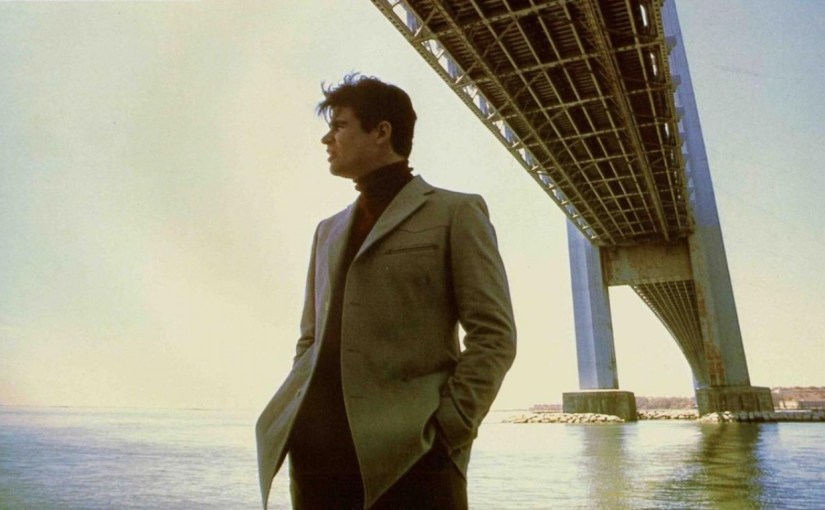
Sidney Lumet made an outstanding career of bringing attention to corruption within the halls of police precincts, amid the offices of politics and the inside the hallows of cherrywood courtrooms with manipulating lawyers and unsympathetic judges. His films are spellbinding with difficult conundrums for his protagonists to overcome and survive.  Prince Of The City is a perfect example.

A handsomely young Treat Williams stars as Danny Ciello.  He’s a famed cop working for the New York City Special Investigative Unit.  He’s part of a squad of partners who are also his best friends.  Jerry Orbach is the standout among the gang.  They make a huge difference in the big busts they accomplish.  In fact, some of them were part of the famed French Connection cocaine takedown.  Their celebrated careers lend to their monikers.  Danny is an especially accomplished “prince of the city.”  Proudly, they march into a crowded courtroom with a packed audience to announce another huge indictment with the criminals handcuffed together in a line.  However, these officers are also immoral in their daily practice. 

A bust of illegal immigrant drug dealers is made early in the film where over ninety-two thousand dollars is uncovered, and the team agree to share half among themselves.  A little later, Danny gets a desperate call in the middle of the night from one of his informants and to appease him he rips some heroin off another street user to give to the other one.  It’s a necessary evil to ensure progress as an accomplished detective.  The snatching of the monies? Well, as his brother frustratingly points out, that’s so he and his partners can live comfortably in furnished homes with nice clothes and jewelry. Yet perhaps all of this is no longer sitting right with Danny.

None of this is unusual for Danny but considering that an internal investigator (Norman Parker) has approached him about going undercover to reveal corruption that’s rampant throughout the police force, his conscience is weighing on him.  Danny agrees to go to work on this assignment.  However, he lays out one important condition. He’ll never give up his partners, including wearing a wire in their presence.  He lives with his wife, but he loves his partners.

Prince Of The City is a long film, but its running time is necessary because there are so many facets to Williams’ character.  Also, the residual effects of Danny’s work branch off in so many directions.  More than once, Danny is warned not to perjure himself.  Legal authorities find it hard to believe that Danny only broke his ethical code just three times in eleven years.  However, Danny insists that’s all there is.  He’s warned over and over it better be.  Otherwise, those that are working with him will later work against him.

Lumet is very good at showing realistic settings.  An abandoned post office is designated as a secret locale to store evidence and wiretap records that Danny collects.  In the beginning, the joint is empty, but over a progression of five years’ time, the shelves fill up quickly and a large staff is assembled, equipped with computers, typewriters and stuffed file cabinets.

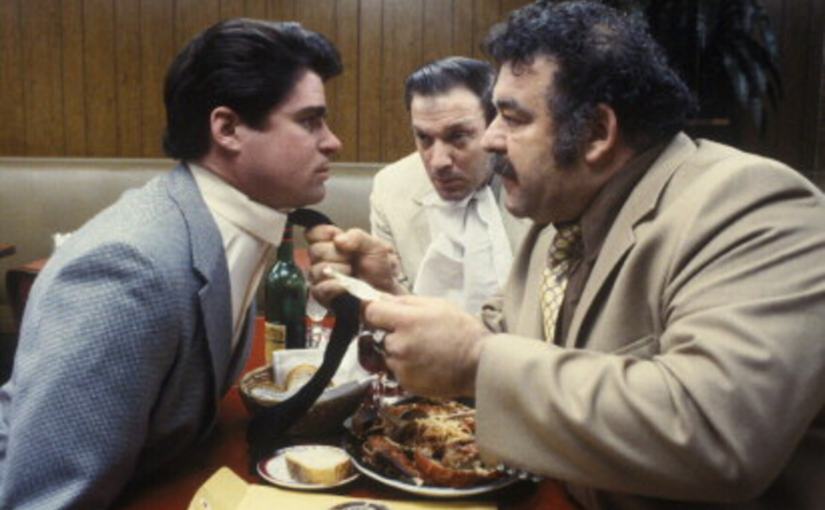
Danny catches cops on the take.  He gets a crooked lawyer on tape.  He’s also taking big risks that amplify his stress.  Lumet showed the increasing agony of a cop against a police department in Serpico with Al Pacino.  I thought the actor was a little overdone in that film.  Here, Treat Williams could not be more authentic, and the transition from cocky detective to paranoid informant, working against his colleagues, comes through much more subtly as the film carries on.  Danny gets caught in a diner sting wearing his wire.  His quick instincts save him, but only after his shirt is torn open showing the wire, and a gun comes out of nowhere.  The sloppy struggle that ensues with a broken glass door and overturned tables loaded with food and dishes is frighteningly realistic.  Lumet shoots the moment with a documentary kind of feel.  Deliberately, there’s no special effect to the camera work here.  It’s all in Williams’ performance and the actors he shares the scene with.

Treat Williams performance is so wired that I am very surprised it did not lead to more recognizable and stand out roles later in his career.  Williams was unknown at the time of this film’s release in 1981, but his lead in this picture is as welcome as Ray Liotta in Goodfellas.

Danny Ciello is a fictional character based on the real-life narcotics detective known as Robert Leuci.  Leuci had a checkered background dating back to when he became an undercover cop informant.  Neither Danny or Robert wears the white hats of pure honor and loyalty.  That is what makes these men so challenging.  Because they are somewhat impure, there is a tipping scale to how they should be regarded. 

A marvelous part occurs in the last act of the film.  Danny’s transgressions as well as what he’s accomplished have all been laid out.  The costs of his partners’ careers have been considered.  The risks and dangers that Danny and his family with two young children have encountered are given their due attention.  Now, as the film is concluding, Lumet along with his co-writer Jay Presson Allen, assemble close to twenty prosecutors and district attorneys in a dark, slightly sunlit office to debate whether Danny Ciello should be charged for violations of perjury.  One prosecutor threatens to resign if Danny is prosecuted.  Another one cannot see how a police officer can be granted pardons for violating the very laws he’s been sworn to uphold. No one is right or wrong in this argument. The collection of actors in this scene is amazing. 

The Oscar nominated script from Lumet and Allen do not provide a straight answer as to whether Danny is a hero or a criminal.  Prince Of The City is never spoon fed to its audience.  Different perspectives and receptions have likely been generated from the picture.  I’d love to hear other people’s viewpoints.

Once again, I commend the running time of Lumet’s film.  Danny Ciello is a complicated man who sacrifices so much that the cost of everything needs to be acknowledged.  The rampant corruption that is uncovered among his colleagues is so extensive that the turnaround response must be depicted.  Some men committed suicide for their crimes.  Some swear they’ll never give themselves up or even Danny.  Danny is expected to do the same in return.  Danny lost friendships and trust over the assignments he accepted. His children and his wife (an excellent Lindsay Crouse) were undeservedly forced to live in fear for their lives, and upend their household, ironically feeling obligated to accommodate those assigned to protect them.  At one time, Danny is relying on men who are heading the investigation, promising to abide by his conditions and guarantee his safety.  Later, these men accept promotions that pull them away to other departments, leaving Danny to deal with people he cannot count on going forward, and who may work against him or refuse to honor original promises.

It’s quite unfair for Danny as he continues to make headway.  An uncaring portrayal by Bob Balaban (really good in everything he does) as a federal prosecutor forces Danny into uncompromising positions where he’s squeezed into offering up everything with little to no options.  Because Danny is no longer the conceited prince that he once considered himself to be, these authorities keep him beholden to his commitments, no matter the cost of his career, his partnerships or how it affects the lifestyle of himself and his family.

Prince Of The City is a very heavy film with much to address.  If this were to be remade, without the guidance of Lumet’s expertise, it could only work as a miniseries.  Though I doubt it would ever compare to Treat Williams’ performance or Sidney Lumet’s specialty in covering the complexities that organically stem from police corruption.  This is a fascinating film that I’m looking forward to watching again.  Because the weight of the material is so thick, I’m certain I’ll discover something new in a repeat viewing.  This is one of Sidney Lumet’s best films.

PRINCE OF THE CITY (1981)

by Miguel E. Rodriguez

DIRECTOR: Sidney Lumet
CAST: Treat Williams, Jerry Orbach, Bob Balaban, Lindsay Crouse
MY RATING: 8/10
ROTTEN TOMATOMETER: 92% Fresh

PLOT: A New York City narcotics detective reluctantly agrees to cooperate with a special commission investigating police corruption, and soon realizes he’s in over his head, and nobody can be trusted.


Sidney Lumet’s Prince of the City is based on a true story, and it never lets you forget it.  In a good way.  The film is defiantly ambiguous when it comes to the main character, Danny Ciello (Treat Williams), who is onscreen in virtually every scene, so we get to see every detail of his epic, tragic fall from a revered cop in the NYPD’s Special Investigations Unit to a glorified stool pigeon for the feds.

…ah, but see what I did there?  Without even realizing it, I’m already sort of siding WITH Ciello, who participated in many, MANY counts of outright theft, evidence tampering, bribery, and so on and so on.  But…in a very Dirty Harry way (but much more realistic), he was helping to cut through the frustrating red tape that would otherwise enable career criminals to get around the system.  But…he had to break the law to do so, and his fellow officers in the SIU were all complicit, some to greater degrees than others.  Their unbreakable code: never rat out your partners.  Ciello has a revealing line at one point: “I sleep with my wife, but I LIVE with my partners.”

This somewhat misguided code of honor is central to Prince of the City.  The film opens as Ciello’s unit makes a lucrative drug bust, confiscates some or most of the cash, and parades the captured criminals into a ramshackle courtroom, whereupon the assorted drug dealers are immediately sent back to Central or South America, bing, bang, boom, no muss, no fuss.  Meanwhile, a special commission, the Chase Commission, has begun questioning officers about police corruption.  Ciello is naturally resistant to cooperating at first, but a feisty conversation between him and his ne’er-do-well brother puts doubts in his mind.  “Look at you in your big house and your two-car garage!  You think I don’t know where this all comes from?  You think I’m stupid, Danny?!”

Ciello’s conscience finally gets a hold of him, and he agrees to cooperate with the commission.  This includes the unbelievably dangerous practice of wearing a wire to meetings between himself and assorted mob-affiliated tipsters.  I’ve seen numerous other films involving wires and mobsters, but Lumet does something different here, and it carries throughout the entire film.  Instead of punching up the suspense with crazy edits or inserts or spooky music, he simply explains the danger and lets the scene play out with as little movement as possible.  In its simplicity, there is as much suspense there as in anything by Hitchcock, accomplished with much less cinematic “pizzazz.”

This simple style pays off in two incredible scenes.  One is where a mobster is dead sure Ciello is wearing a wire and searches him thoroughly…but Ciello’s sixth sense warned him earlier to leave the wire at home.  Another comes when Ciello unthinkingly hands over some evidence to the mobster…wrapped in a post-it that basically says, “From the desk of the State Attorney’s Office.”  Because everything has been presented in such a straightforward style leading up to this moment, this scene has an astonishing effect on the viewer.  There is real danger here, an almost documentary-like feel to it.  The resolution of this scene, including the unexpected appearance of a gun at the worst possible moment, is one of the emotional highlights of this nearly three-hour film.

The casting of Treat Williams in the lead role of this crime epic was also a key to its success.  In the early ‘80s, there were any number of leading men that might have been a much more natural choice for this part: Pacino, De Niro, Hoffman, Beatty, even Travolta.  Putting a relatively unknown, but VERY talented, actor in such a prominent role was a calculated gamble that paid off.  Since he had no major previous roles, Williams was essentially a blank slate.  He hadn’t been typecast as either a villain or a hero yet, so that supports the film’s foundation of maintaining a neutral stance toward the lead character.  The movie isn’t going to come out and tell you if it’s for or against Ciello.  The audience has to make that decision for themselves.

For myself, I would in no way condone his corrupt behavior.  But I admire his decision to at least try to do the right thing.  Despite his adamant stance that he will never, ever turn in his partners, it becomes abundantly clear that the various feds, attorneys general, prosecutors running his case will have no qualms whatsoever about putting him in jail the second he refuses to play ball.  As a result, he winds up being forced to provide crucial evidence that generates indictments for several of his partners.  The aftermath of those indictments varies from partner to partner.  Ciello is being eaten alive by remorse.  He believes he’s doing the right thing, but he can’t stand watching his partners go down one by one.  It’s a fascinating conundrum, manifest at every turn, even in the very last scene of the movie.

In one great scene, a group of prosecutors meet to decide whether to formally indict Ciello and pursue a prison term, even after he has provided them with information that led directly to countless arrests and indictments.  They are divided.  One prosecutor threatens resignation if charges are filed.  But another prosecutor’s argument stuck with me:

“I’ve never known a lawyer to risk his livelihood to expose the crooks in his profession.  And where’s the doctor who ever exposed Medicaid fraud?  Or unnecessary and botched operations?  Or even dope, for that matter?  What doctor ever came in?  Dan Ciello came in, and I don’t care why.  To me, Danny Ciello’s a hero…and we’re trying to decide whether to put him in jail or not.”

For me, that sealed the deal.  The movie is admirably restrained in providing its own standpoint on Ciello, but I would side with those calling him a hero instead of a villain.  I found myself thinking back to Sunday School and the parable of the prodigal son.  After the prodigal forsakes his father and his family, he returns, contrite and humble, begging forgiveness.  The loyal son can’t understand why his father rejoices upon the prodigal’s return, to which the father replies, “We have to celebrate, because your brother was dead and is alive again; he was lost and is found.”

Ciello is that lost soul who desperately wants redemption, no matter how it might hurt himself or his literal partners in crime.  For that, I consider him a hero, not a villain.  Perhaps he’s no longer a prince of the city, but he is at least back on the side of the angels.

THE DEAD POOL

By Marc S. Sanders

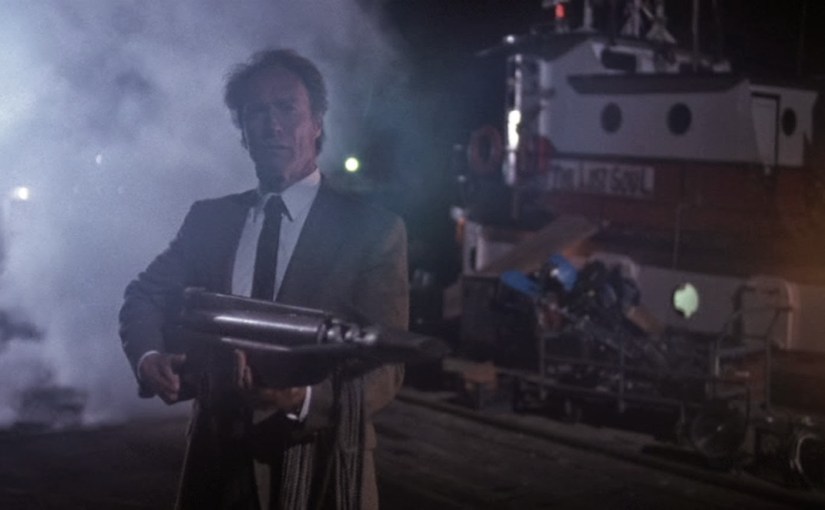
Sometimes five is too much.  It was for Clint Eastwood as Inspector Dirty Harry Callahan.  The Dead Pool was the fifth and final entry in the famed crime drama series.  Eastwood moves slower this time.  He does not come off as much of a rebel any longer.  Most notably, the story doesn’t have the feel of a Dirty Harry film.  The cop who was infamous for questioning the laws set in place seems to be just slotted into this film. 

The Dead Pool is directed by Buddy Van Horn, who had a long career as a stuntman and assistant director for many of Eastwood’s films, and other actors like Charlton Heston and Henry Fonda.  He does a ho hum job with the picture.  I don’t need to be treated to inventive shots or camera angles to enjoy a movie.  I have yet to visit San Francisco, but at least Buddy Van Horn provides enough locales to feel like I’m getting a serviceable tourist view.

A twisted game is being played in the underground scene.  People are making lists and betting on local celebrities they expect to die soon.  One name includes a heavy metal rock star played by James Carey, later to be known as Jim.  There’s also a snobby film critic who is a deliberate inspiration of Pauline Kael.  (Kael’s reviews were not too kind to many of Eastwood’s films over the years, particularly the original Dirty Harry.)  At the bottom of the list is Harry himself, who is surprisingly favored by the police department officials – first time that has happened – for putting away a powerful mob boss.  A side story consists of the boss giving orders out to his crew to take revenge on Harry and provide some escapist shootouts to move the film along. 

The police department want Harry to cooperate as their hero poster boy.  Harry doesn’t care for fame, though.  It’s not his style.  Yet, a persistent television reporter (Patricia Clarkson) wants his story.  A little romance is implied but Harry is not one for gossip fodder.  Unfortunately, Eastwood and Clarkson are really lacking chemistry here.

The rock star and the movie critic are murdered.  Harry must be next, and a horror film director (Liam Neeson) seems like the prime suspect because his dead pool list had included all three names. 

The Dead Pool is not a terrible movie, but it does not live up to other Dirty Harry installments. Primarily because it does not follow the character’s familiar mantra against the bureaucrats and the flawed system of prosecution and law enforcement that he’s always been challenged with.  At times, I’m looking at Eastwood and I’m asking myself who is this guy?  Sure, he’s got a few one liners of dry wit.  The famed eyebrow stare is there too, and the .44 Magnum as well.  However, Harry doesn’t seem to stand apart so much from everyone else as he did in the other films.  Beyond the giant gun, that is what made Harry Callahan so famous on screen. 

The investigation that Harry is assigned to with a Chinese American cop (Evan C Kim) is very bland.  We hardly get to know any of the victims or what they stand for, and when the true killer is revealed, it turns out to be a last-minute introduction of someone we’ve yet to see.  There’s no surprise to the culprit behind all of this. 

The series is also well known for the partners that Harry is forced to work with.  In The Enforcer, Tyne Daly brought out Harry’s regard towards women working in his dangerous field that demonstrated his initial frustration followed by his reluctant acceptance.  In the first movie, Remi Santori came about when it was okay to say that Harry took issue with all kinds of demographics, including Mexicans.  A chumminess nicely developed between those two guys as they tracked down the killer, together.  The second film, Magnum Force, offered a partner to also care about.  These are good side performers that colored in much of the Harry Callahan lore.  In this movie, Evan C Kim has one standout moment in the first ten minutes where he surprises everyone, especially Harry, with how he disarms a robber by use of martial arts.  It’s a great scene.  After that, though, he’s given nothing to do.  This actor had promise for more interactions with Eastwood.  It just never delivered.

The series started in the gritty times of 1971 when political correctness was not ever considered.  By the time the last two films were released in the 1980s of Ronald Reagan, who famously adopted “Go ahead.  Make my day,” for Gorbachev, there was a new wave of sensitivity abound.  I like to believe with the prior installment, Sudden Impact, Harry Callahan learned something new about himself with regards to the rights women had or were denied of while still applying his own code.  With The Dead Pool, the writing seems reluctant to go anywhere near a potential debate, and so it drips itself into a stale slasher movie with the cop ready to fire his six shooter.

The grand highlight of the film is a car chase on the hilly streets of San Francisco, which is the best place for a car chase, always.  What separates this one from the others is a little remote-controlled car that pursues Harry and his partner, ready to activate its equipped detonator at just the right moment.  The editing of this sequence is really fun, and it’s a great salute to Bullitt and other gritty, urban cop films, particularly the Dirty Harry movies.  This toy car flies over fruit stands and careens through sidewalks and over sewer holes.  Meanwhile Harry screeches down one hill after another trying to evade this pesky rapscallion.  It’ll definitely put a smile on your face while the moment lasts.

I recall being eager for another Dirty Harry movie.  I grew up loving many of Clint Eastwood’s films.  Dirty Harry is a favorite character of mine.  Yet, I also remember feeling really let down when my dad and I walked out of the theatre.  The Dead Pool just doesn’t have the same flavor as the other Eastwood products.  Again, it’s not the worst picture.  It’s standard cop fare coming in at a lean ninety minutes.  Eastwood and the rest of the cast are okay with what they’re doing.  I just would’ve changed the name of the main character listed at the top of the cast list.  He could have been Dirty John Doe for all I care.

A PROPHET (France, 2009)

by Miguel E. Rodriguez

DIRECTOR: Jacques Audiard
CAST: Tahar Rahim, Niels Arestrup, Adel Bencherif
MY RATING: 9/10
ROTTEN TOMATOMETER: 96% Certified Fresh

PLOT: A new arrival in a French prison is recruited by the ruling Corsican gang to carry out hits and traffic drugs. Over time, he earns the gang leader’s confidence and rises in the prison ranks while secretly devising plans of his own.


The French film A Prophet, winner of the Grand Prix at the 2009 Cannes Film Festival, plays like the origin story of an alternate-universe version of Tony Montana.  A young, uneducated criminal, Malik (Tahar Rahim), arrives at a French prison and is almost immediately recruited by the ruling Corsican gang and their leader, César (Niels Arestrup), to kill another prisoner, an Arab, who could testify against César.  César’s method of guaranteeing Malik’s participation is ingenious: “Now that you know the plan, if you don’t kill him, we kill you.”

Malik will spend the rest of the film learning the ins and outs of criminal activity within the prison walls and occasionally outside as well, a process explained with great attention to detail.  For instance, for Malik’s first hit, he must seduce his male target into lowering his defenses while they’re alone.  However, since he knows he’ll be frisked first, he must hide the only lethal weapon he can find, a razor blade, in the only place it won’t be found AND be readily available: tucked inside his mouth between his teeth and cheek.  Ouch.

A Prophet doesn’t rush.  It takes its time with its plot development and character building.  It seems to me that the best films set in a prison adopt this strategy, or they should.  The deliberate pacing gives us time to settle into the world of the prison and the prisoner.  It creates the sensation that time is passing a little more slowly, which is exactly what any prisoner must feel every day.  The Shawshank Redemption comes to mind.

Malik’s slow conversion from timid newbie to trusted assistant in César’s gang to eventual dangerous adversary is never less than captivating, but in a weird way…like watching a hungry tiger stalk its prey.  The filmmakers are careful to give Malik human foibles.  At one moment, we watch Malik carrying out a task for César.  The next, he’s studying French in an adult literacy class because he never learned to read.  Or we see him alone in his cell where he occasionally has matter-of-fact conversations with the ghost of his first kill.  I particularly liked the scene where the ghost would predict random events in the courtyard outside of Malik’s prison window.

The idea is to make sure we never lose sight of the fact that, whatever Malik is becoming, he was and is a real person.  There are questions being asked in A Prophet about the efficacy of a prison system that, instead of rehabilitating criminals, seems to embed them deeper into a criminal lifestyle by the time they’re released.  Sure, Malik is a character in a movie, but how many other convicts just like him are chewed up and spit out of the prison system?  I was reminded of a scene in another prison film, Brute Force (1947), when a prisoner is working in the prison mechanic shop working on a car.  Someone asks him, “What have you learned?”  The prisoner says, “I’ve learned that, when I get out, I don’t wanna be a mechanic.”

As A Prophet works its way towards its Godfather-esque ending, Malik’s chilling evolution reaches the point where, with the help of his contacts with former inmates, he can orchestrate the kidnapping and beating of a rival drug dealer outside the prison walls who threatens his own plans for getting out.  Nothing Malik or César did seems outrageous or implausible in any way.  It’s scary how easily they can pull the strings of so many people inside and out.

I am rambling, but I’m simply at a loss to efficiently explain how effective this movie is in its portrayal of the rise and rise of an eventual crime boss.  In the final scene, as a caravan of black vehicles follows a key character as he walks out of the prison for the last time, a chill came over me as I realized the implications.  It’s a brilliant final curtain on a character every bit as chilling as Michael Corleone or Tony Montana.

CHICAGO

By Marc S. Sanders

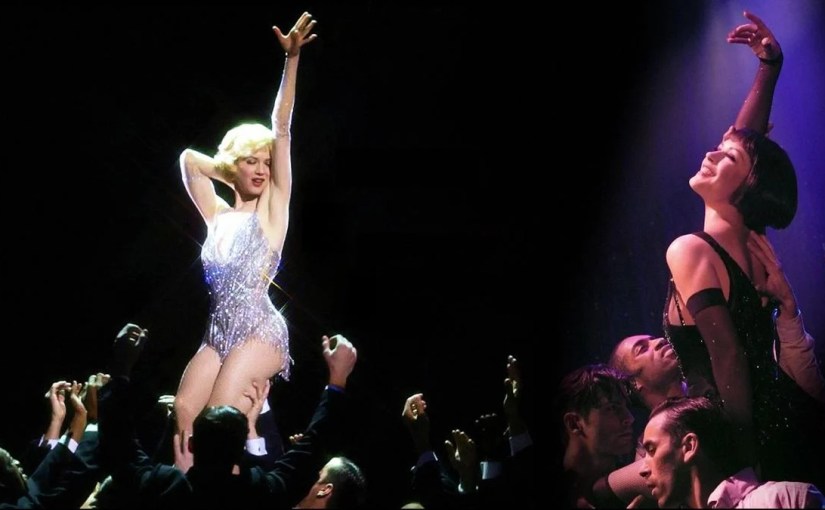
When you are a sexy, sultry lady killer, infamy can just about save you from a hanging.  That’s what Rob Marshall’s Oscar winning adaptation of Bob Fosse’s Broadway jazz musical capitalizes on in Chicago. The movie is hot, steamy, dazzling and blazing with magnetic song and dance numbers that are easy to follow while getting your pulse racing.  The design, direction, music, and choreography are magnificent.  The cast is outstanding too.

During the glitzy 1920’s in the Windy City, Roxy Hart (Renée Zellweger) is a wanna be night club performer who gets arrested for the murder of her extra marital lover (Dominic West).  She’s thrown in the pokey where the well known warden Matron Mama Morton (Queen Latifah) oversees all of the other murderesses, and often profits off of their sensationalistic crimes.  Roxy’s loser schlub of a husband, Amos (John C Reilly), manages to hire the hottest defense attorney in town, the handsomely slick and underhanded Billy Flynn (Richard Gere), to represent Roxy at trial.  Billy has never lost a case because his specialty is to manufacture drama for his accused clients, generating sympathy in the papers and among the jury.  In the film, there is a scene where Billy is literally pulling the strings on his puppets, particularly a marionette appearance of Roxy on his lap while he does the obvious ventriloquism.  A memorable moment for both Gere and Zellweger.  On the side is Velma Kelly (Catherine Zeta-Jones), a double murderer of her husband and performing partner/sister.  Velma owned the public outcry until Roxy’s name was splashed along the headlines.  Now, the spotlight is quickly moving away from Velma.

Rob Marshall choreographed and directed Chicago.  He demonstrates the fun that can be had with murder.  Call it a new kind of excitement that normally we take jubilant delight with episodes of Murder She Wrote or Agatha Christie tales. 

The theme of this picture is how the story is narrated in a colorful reality.  On a parallel level it is performed on a stage nightclub with a bandleader (Taye Diggs) introducing the players who then breakout into their own testimonial song amid large choruses and dancers to enhance the attraction of headlines and sleazy, operatic narratives.  Christine Baranski is the reporter whose front and center, trying to collect the next big chapter development of whoever leads the hottest storyline at any given moment. 

Marshall will turn a courtroom proceeding led by Billy Flynn into a three-ring circus, while at the same time he’ll cut away to the nightclub.  Billy will be on stage, but he’s now wearing a glittery three-piece suit and doing a ragtime song and dance with a chorus of scantily clad, Burlesque women to apply a little Razzle Dazzle for the judge and jury.  Richard Gere is not who you think of for stage musicals, but he is positively charming.

Queen Latifah has a scene stealing moment to show off her entrance into the picture.  Mama Morton is in a skintight evening dress, complete with a swanky boa while performing When You’re Good To Mama on stage at the nightclub. Frequent cut aways have her dictating her powerhouse tune to the inmates.  John C Reilly performs Mr. Cellophane. He lays out certainty that there’s nothing inauthentic about the pushover loser husband he really is.  Both actors got well deserved Oscar nominations.

Catherine Zeta-Jones and Renée Zellweger are a perfect pair of competitors.  They each have their individual moments and they act with such solid gusto; tough broads not to messed with.  The confidence they exude on screen with character acting, singing, and dancing is second to none.  The script will offer moments when Roxy and Velma think they are high and mighty, and winning the court of public opinion.  Then it will be undone when their hotshot attorney, Billy Flynn, knocks some sarcastic sense into them and a dose of reality sets in.  Roxy isn’t so fond of wearing a conservative black dress with a white collar in court until she sees a fellow cellmate lose her last motion of appeal, and there’s nothing left but to be punished by hanging.  She might be putting on a helluva performance, and signing autographs while souvenir dolls of her likeness are selling on the streets, but none of that ain’t gonna mean a thing if the jury finds her guilty of murder.

Just like I began this article, infamy is the word that kept coming back to me while watching Chicago.  Infamy bears celebrity.  Granted, it’s enhanced for a lively musical motion picture and stage show.  However, there’s a very, sad, and no longer surprising truth to that ideal.  A few years back, I recall news reports about a criminal’s sexy mug shot where he had donned a tattooed tear drop below his eye.  This guy was prime for runway modeling.  However, he was proven to be a violent car thief. He actually got signed by a talent scout following his bail out.  (I think the agent posted the bond.)  Later, he got arrested for some other crime. 

I never saw the reality program Chrisley Knows Best, about a God loving family who proudly live among the finest that money can buy.  Recently, the ultra-vain mother and father were sentenced to over a decade in federal prison for fraud and tax evasion.  Yet, their brand is stronger than ever, as the gossip columns can’t get enough, and their adult daughter’s podcast has millions of listeners.  Word is that a new program is being designed as a follow up to their prison sentences. 

Infamy bears reward.

Chicago pokes fun at the obsessions adhered by the media, the public, the courts and within the penal community.  The well known musical is now decades old, but the topics contained within clearly identify how news is not reported in a simple, objective Walter Cronkite kind of way, anymore.  Everything is heightened.  Everything is dramatized.  It’s not enough that Roxy kills her lover.  That will get her only so much mileage, until the next lady killer comes along (in the form of Lucy Liu, for example).  Roxy must stay relevant.  Announcing she’s pregnant will keep her on the front page (It could help that she faints while doing it). Velma knows all too well that the public favoritism she once had, accompanied with Billy’s sleazy promotion, is even further away. 

Rob Marshall presents a film where any song can be pulled out of context just for its sizzling entertainment.  Try not to forget the Cell Block Tango with solos from Zeta-Jones, as well as her fellow inmate chorus girls, each proudly describing how their guy “Had it coming!!!”.  All That Jazz is arguably one of the best opening numbers to a show, and Catherine Zeta-Jones owns the performance.  Individually, these songs and the performers win my attention in the car or the shower or during a workout.  Assemble them together with the overall storyline, and Chicago becomes a fast paced, kinetic roller coaster that makes you think while you smirk at all the scruples and vices being dismissed. 

The last time I saw Chicago was in theaters in 2002.  I had also seen a stage production of it before then.  I loved it both times.  Rewatching it recently gave me such a jolt of energy.  It is why theatre is a vital source of escapism. Here is an example where you can feel positively entertained while reflecting on a sad truth.  It might be sad, but you’re smiling all the way through while you mouth the brilliant lyrics and tap your feet.

Roxy Hart, Velma Kelly, Billy Flynn and the rest of the cast of characters make Chicago red hot and gleefully sinful.

EMILY THE CRIMINAL

By Marc S. Sanders

Aubrey Plaza becomes Emily The Criminal, a woman down on her luck with mounting debts, who resorts to credit card fraud with some low level hoods in the Los Angeles underground in order to make ends meet. 

This movie popped out at me while searching through Netflix.  It’s a little over a brisk ninety minutes, made on a shoestring budget, but it has twice the intelligence of whatever crumb of a story Avatar: The Way Of Water has with the two billion dollars spent to make big screen exhausting blue junk.  Goes back to what I always say. If you have an intelligent script, the movie will more than likely be worth watching.  Emily The Criminal is worth watching.

Normally, I don’t look at the running time of a movie before seeing it.  However, this happened to catch my eye in the screen summary just as I was about to hit play.  It’s an hour and 37 minutes.  Once the movie starts, there is a lot piled on to Emily.  First her excessive bills are established. She also has a proclivity for flying off the handle when she’s questioned about her prior arrests for assault and DUI.  Then, she is recruited with a group of others to take a fake credit card and driver’s license into a store and buy a flat screen TV.  A fast two hundred dollars is made.  The ringleader behind this scam is a guy named Youcef (Theo Rossi) who entices Emily with a more complex transaction the next day that’ll earn her two grand.  That works out, but frightening complications intersect.  Still, the cash was better, quicker, and easier to come by than her day job delivering UBER meals.  Eventually, Youcef and Emily connect with one another and she’s learning the tricks to manufacturing the cards and pulling off her own scams.  She’s good at it but not perfect, and when she trips up, a rift in trust between Youcef and his partner comes into play.  Emily is compelled to protect Youcef.

On the side, Emily also reunites with a high school friend (Megalyn Echikunwoke) who offers a line on a professional day job that could use her talents for graphic art.  Emily’s personality might not be suitable for that environment though, and the criminal underworld seems more attractive, despite the danger and risks involved.

I was never looking at my watch but as the movie progressed, I knew I had covered a lot of mileage and there still seemed to be a lot of road left to travel.  My expectations were that some questions will be left unanswered as the ending is approaching.  The cops have yet to make an appearance.  Will Emily be able to go legitimate, or does she even want to?  Most importantly, will her new friend Youcef survive his strained relationship with his business partner?  Thankfully, everything does conclude satisfyingly, and the ending ties together believably, even if there are a few conveniences that enter the frame.

I’m not familiar with Aubrey Plaza’s work prior to this film.  (I’m one of the few who didn’t get into her TV show Parks & Recreation.  My colleague Miguel refuses to let me live that down.)  However, she’s a good actor with lots of range, going from quick bursts of anger to showing mental toughness on screen against some scary people she encounters.  When she meets with a criminal in an empty parking lot who is twice her size and says a flat screen is $600, but the thug insists he’s taking it for $300, I was wondering how she’s going to get out of this one.  Plaza shows her character’s inexperience with such entanglements, but what opportunity will rescue her?  An even scarier episode happens later when Emily is getting robbed.  Plaza is sensational in both scenes.  First time writer/director John Patton Ford sets up these acts, but Aubrey Plaza always delivers it believably.  She’s brash, tough, and smart.

Ford’s film and script work because it doesn’t get too grand with itself.  The criminal world does not open itself up to the highest and wealthiest on the food chain.  Ford was smart to keep the complications of his story within this low-level demographic of delinquent offenders.  Other films would have taken the new student who quickly capitalizes over to the highest mansion on the highest mountain to where the kingpin of everything sits in his hot tub throne on the thirtieth floor overlooking a city.  Ford’s script is wise not to go beyond its reach and mire itself in flashy bloodbath violence.  Also, the window of time from when Emily first dabbles in this shady activity toward the film’s conclusion and epilogue is succinct, not spanning years or decades.  The contained routes that Ford takes with his debut film allow the misdeeds and outcomes to be convincing.

I especially took great pleasure with how the ending of Emily The Criminal circles back on itself to the beginning.  That tells me that John Patton Ford thought this storyline and his protagonist all the way through with good insight. 

Emily The Criminal is an under the radar film to look out for.

BOUND (1996)

by Miguel E. Rodriguez

DIRECTORS: The Wachowskis
CAST: Jennifer Tilly, Gina Gershon, Joe Pantoliano, Christopher Meloni
MY RATING: 10/10
ROTTEN TOMATOMETER: 89% Certified Fresh
Everyone’s a Critic Category: “Watch an Independent Film”

PLOT: A petty thief and a mobster’s girlfriend get romantically involved and plan to steal $2 million from the mobster, but, as with all simple plans, complications arise.


My girlfriend and I have found ourselves walking out of a lot of movies over the last 5 or 6 years talking animatedly with each other about how we would have done something differently.  For example: At the end of Avengers: Infinity War, we came up with an amazing lost opportunity to have Black Widow be one of the characters who got “blipped.”  Then, when Bruce Banner discovers her fate, his shock triggers him to finally “hulk out” again, but out of grief instead of anger.  Now THAT would have been a tearjerker.

By contrast, Bound is one of those letter-perfect thrillers where the plot has been worked out so neatly, so thoroughly, and everything proceeds with such perfect logic, that it’s impossible to see how anything in the movie could have happened in any other way.  I can see no way how this thriller shot on a shoestring with such exquisite creativity could have been improved by a bigger budget or bigger stars.  It recalls the heyday of film noir – Double Indemnity, The Big Sleep, Pickup on South Street – but it also feels fresh and modern, due in no small part to the fact that the protagonist couple is composed of two women.

But before I get to the nuts and bolts of the movie, let’s talk about that same-sex plot device for a second.  Corky (Gina Gershon) is a petty thief fresh out of the slammer.  Violet (Jennifer Tilly) is arm candy for a mid-level Mafia hood named Caesar (Joe Pantoliano).  I can vaguely remember when this movie came out in the mid-‘90s, and this lesbian relationship caused a minor sensation.  It even included – gasp! – a sex scene.  An explicit sex scene!  Not pornographic, mind you, but nothing more or less explicit than the coitus featured in other notorious sexy potboiler/thrillers, like say, Basic Instinct or Fatal Attraction or Jagged Edge.

One of the things that makes Bound so cool is that the whole lesbian angle, even though it’s a huge part of the plot, is never really…what’s the word I’m looking for…exploited in any kind of way that might now be described as progressive or, dare I say, woke.  There are no melodramatic scenes showing anyone getting fired because they’re gay, or being bullied because she’s gay.  Nor is the movie making any kind of statement that that kind of ugly behavior doesn’t exist.  To me, Bound is simply saying, “Here is a great thriller, and the two romantic leads are women.  We are showing people that it’s possible for a movie to be a superior genre film with two clearly gay characters as the leads.  Let’s get on with it.”  If the main couple had been a man and a woman, the overall effect of the movie might have been diminished to a degree, but the underlying story is so good, the movie might still have worked.

Then again, it probably wouldn’t have the notoriety that turned it into a cult classic, so what do I know.

Anyway, the movie.  In a tale as old as noir itself, Corky and Violet hatch a scheme to steal $2 million from Caesar.  How that plan leads to an astonishingly tense scene with a trio of corpses in a bathtub and two policemen in the living room standing on a blood-soaked carpet is only one of the delicious little joys on display in this film.

Take the little details.  The $2 million in question gets unexpectedly splattered with some unlucky bastard’s blood.  Caesar is forced to literally launder the money, then steam-dry every single $100 bill with an iron and hang them up throughout the apartment like the most expensive load of laundry in history, resulting in one of the coolest, most surreal shots in any neo-noir I’ve ever seen:


Then there are the wicked little visual innuendos scattered throughout the movie as subtle – and sometimes not-so-subtle – references to Corky and Violet’s sexual preferences.  At one point, Corky visits a lesbian bar called…wait for it…The Watering Hole.  That’s one of the not-so-subtle jokes, but one which I did not “get” until maybe the third or fourth time watching the movie.  Sometimes I am not…smart.  Or how Corky is unscrewing the pipe in the U-bend under a sink to retrieve an earring.  As Violet, wearing a tight skirt, stands provocatively close to Corky while she works, we get a close-up of Corky’s hands as water from the sink suddenly splashes onto them.  Or note the shot that slowly pulls out from inside the barrel of a revolver.  (You know, maybe NONE of these visual jokes are subtle…I might just have been really dumb when I first saw the movie…)

And the dialogue…if there were a way for me to phoneticize a chef’s kiss in prose, I would.  (<mwah>…that’ll have to do.)  It puts a modern spin on the best of the old film-noir tough guy talk, that heightened kind of realism that really only exists in the movies.  Take this bit when Corky is talking to Violet, formulating her plan to steal the money from Caesar:

“For me, stealing’s always been a lot like sex.  Two people who want the same thing: they get in a room, they talk about it.  They start to plan.  It’s kind of like flirting.  It’s kind of like…foreplay, ‘cause the more they talk about it, the wetter they get.  The only difference is, I can f*** someone I’ve just met.  But to steal?  I need to know someone like I know myself.”

Nobody actually talks like that, but that’s one of the greatest passages in any crime movie, ever.  I could cite example after example, but I don’t want to ruin any surprises.

Another beautiful example of how well this screenplay was constructed is how it plays with your expectations, especially if you’re a fan of the classic noir genre.  In classic noir, a hero or heroine comes up with a plan, only to be betrayed by random chance or their own hubris.  Sometimes someone who seemed trustworthy at first reveals themselves to be nothing but a conniving opportunist.  Bound addresses that concept head-on in a conversation between Corky and Violet, where they talk about trust and ask each other very specific questions.  “How do I know you won’t just run once you get the money?”  “How do I know you didn’t just plan this whole thing to get me to do your dirty work for you?”  In classic noir, these kinds of questions usually lead to mistrust, betrayal, and a very non-Hollywood ending, and so the Wachowskis almost seem to be telegraphing what’s going to ultimately happen.  But believe me: nothing in this movie telegraphs anything.  Not even those snatches of conversation we hear in Corky’s head at the very top of the film when we first discover her bound and gagged in a closet.

And even THAT’S not really giving anything away…that’s how inventive this screenplay is.

I would be remiss if I didn’t also mention the sound design of Bound.  Watching it the first time around, it’s subtle enough to be unnoticeable.  Watch it again, though, and really listen, and you can hear the unmistakable way the Wachowskis manipulate sound effects to create a unique atmosphere in the same way they would go on to do in the Matrix trilogy.  There are many instances where, for example, in the two or three seconds before a phone rings, you’ll hear the ring in a crescendo, quiet at first, then peaking at the exact second the phone rings.  It’s a little hard to describe in a review but trust me.  Watch it at least once while paying attention to the sound, and you’ll hear a lot of things that sound exactly like The Matrix.

(Which might mean that Bound actually takes place in the Matrix universe…?  …nope, not pulling on that thread.)

There’s quite a bit more I could say about Bound, but I think I would start spoiling some of its real surprises if I did.  Put it this way: I recently compiled a list of my 100 favorite movies of all time, as a “challenge” from one of my fellow cinemaniacs.  Bound wound up at #73, ahead of movies like The Lord of the Rings: The Return of the King, The Dark Knight, and Finding Nemo.  I don’t know if that cuts any ice if you haven’t seen Bound yet, but if you haven’t, it’s my sincerest hope that I have encouraged you to seek out this movie on Amazon or Ebay and make it part of your collection.  You won’t regret it.


QUESTIONS FROM EVERYONE’S A CRITIC

Why did you choose this particular film?
One, I’m not sure a lot of people realize this was an independent film (released through Gramercy Pictures, now defunct), and two, it’s a movie that doesn’t get mentioned enough, or at all, when folks list their favorite crime dramas.  This movie deserves way more recognition than it currently gets, in my opinion.

Best line or memorable quote:
“You know what the difference is between you and me, Violet?”
“No.”
“Me, neither.”