COME DRINK WITH ME (Hong Kong, 1966)

by Miguel E. Rodriguez

DIRECTOR: King Hu
CAST: Pei-Pei Cheng, Hua Yueh, Chih-Ching Yang
MY RATING: 8/10
ROTTEN TOMATOMETER: 100%

PLOT: A highly skilled martial artist (Pei-Pei Cheng) is dispatched to rescue her own brother from kidnappers.


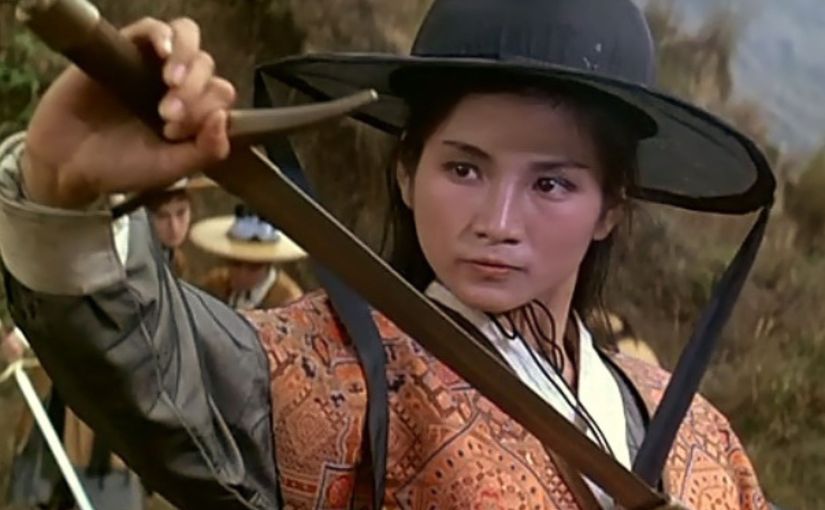
King Hu’s Come Drink with Me feels like a multiverse version of Ang Lee’s Crouching Tiger, Hidden Dragon, and no wonder: Lee, like so many of his countrymen, is a huge fan of the wuxia genre of films that have been around since the 1930s.  Come Drink with Me created the template that was faithfully followed by many other films in the succeeding years, and while I cannot claim to have seen them all, it is plainly visible that this film was their prototype, much like Halloween laid the groundwork for countless other slasher films.

Right from the opening scene, the focus is clearly on action above all else.  We watch a caravan taking prisoners to jail, in the traditionally accepted timeframe of what looks like medieval China.  The caravan is stopped by a lone figure who announces himself as the leader of the bandits known as The Five Tigers.  The gang’s name alone evokes scores of kung-fu films aired on Saturday afternoons on Channel 44. A furious battle ensues in which the prisoners are freed, and a government official is kidnapped by the bandits and ransomed in exchange for the release of another one of their comrades.  Rather than pay the ransom, the government sends a lone warrior, Golden Swallow (Pei-Pei Cheng), to rescue the captured man. (If Golden Swallow looks familiar, that’s because she played the villainous Jade Fox in Crouching Tiger, Hidden Dragon, further enhancing the idea that we’re in some kind of wuxia multiverse.)

That’s all in literally the movie’s first five-to-ten minutes.  Everything that happens afterwards is one action sequence after another, with only two breaks for a breather.  There is a bar brawl that looks curiously similar to the one featured in Crouching Tiger, Hidden Dragon, complete with some impossible acrobatics from the heroine as she leaps from a wall to the upturned legs of a table to the other side of the room.  Granted, it’s not as technically sophisticated as the newer film, but the influence is undeniable.

There is a chase across the rooftops at night, another element clearly appropriated by Crouching Tiger.  Golden Swallow fights off wave after wave of enemy thugs, most of them wielding swords, but some of them hurling wicked needles and darts, one of which finds its mark and lands Golden Swallow in the care of a man, Fan Ta-p’I, who she thought was a drunkard, but who turns out to be a skilled martial artist himself.  These two will eventually cooperate to accomplish their mission, along with a second mission that reveals itself organically.

I must say I wasn’t altogether thrilled with this secondary plot element because it takes the spotlight from Golden Swallow, who dominates three-quarters of the movie.  However, I immediately let it slide when it provided the opportunity to showcase one of Fan’s hidden skills: the ability to manipulate and focus the air so it flows from his hand and can part the cascading stream of a nearby waterfall.  That’s right out of comic books, man.  Or “Avatar: The Last Airbender.”  Take your pick.

To say Come Drink with Me is inferior because it is not as technically sophisticated as modern martial arts films is to overlook its relevance.  Yes, there are a lot of quick cuts used to hide some otherwise impossible-to-perform maneuvers.  Yes, a lot of the dialogue (what little of it there is) is either hammy or overly expository, or both.  Yes, the fight choreography, on close inspection, is not as polished as we’ve come to expect after seeing The Matrix or House of Flying Daggers.

But as an artifact of where today’s martial arts films began, Come Drink with Me is incredibly valuable and still entertaining, even in its relative crudeness.  I loved being able to draw straight lines from specific scenes in this movie to Crouching Tiger, or even all the way to the John Wick franchise.  The last John Wick film featured a scene where Wick fights off an almost literal army of henchmen on a long staircase.  I laughed at the audacity and absurdity of the situation…but I rolled with it, because that’s just what John Wick does: he fights, and he endures.  Why?  Because if he didn’t, he wouldn’t be named John Wick.  Same thing applies to Jason Bourne and James Bond.

And the same thing with Come Drink with Me.  The obviously overmatched Golden Swallow picks off the hordes of attackers one by one because they’re foolish enough to only attack her one or two at a time.  Why?  Because the story demands it.  It’s tradition, even when it looks goofy and unrealistic.  It took me some time to grasp that core concept, but when I did, my enjoyment of these older swordplay films deepened considerably.

THE MARVELS

By Marc S. Sanders

If you just want to join your family to have fun at the movies then go see The Marvels

The thirty third installment in the Marvel Cinematic Universe (33???????? Wow!!!) follows a trio of women donning the superhero costumes and getting caught up in an exchange of bouncing around their respective presences with one another.  One second Ms. Marvel (Iman Vellani) is in her Jersey City home with her family and then suddenly she’s in an astronaut uniform, floating through space, previously occupied by Monica Rambeau (Teyona Parris).  Another minute, Monica is in that uniform and then suddenly she is occupying the space once held by Captain Marvel (Brie Larson).  This happens a lot within the first twenty minutes and its edited so well for laughs and hijinks as the three main characters of the film are constantly having to switch adventures on a dime.

I have not watched the Ms. Marvel Disney Plus TV series yet.  I won’t lie.  This guy who grew up on Marvel comics, cartoons, and toys is getting MCU exhausted and I just have needed a break.   I’m told there are some elements of that show that lead to some things going on in The Marvels.  Didn’t bother me though.  While I like wink and nod subtleties, it is not why I go to the movies.  I’m not watching War And Peace.  I’m watching superheroes who wear spandex and capes and fly.  I trusted myself to pick up on who was who and what was what.

The Marvels works for the most part as a stand-alone story from the rest of the MCU stuff.  Ms. Marvel, aka teenager Kamala Khan, is a diehard fan of Captain Marvel aka Carol Danvers.  Her room is adorned with her idolized hero in various poses and flights.  Kamala finally gets to meet Carol when they share an adventure together.  Her parents and brother are the strangers in a strange world who give poor Nick Fury (Samuel L Jackson, who I think holds the record for most MCU appearances) a hard time for the sake of comedy.  Monica is the niece by friendship connection to Carol Danvers.  Monica was a child the last time she saw Aunt Carol.  Since that time, her mother has passed away from cancer while she disappeared during Thanos’ blip.

A new Kree villain is mounting an offence.  Dar-Benn (Zawe Ashton) has recovered a wristlet of power (meh…it’s a MacGuffin).  Kamala has the other wristlet (meh…another MacGuffin).  Dar-Benn is going to fight the trio and then another MCU film will have been completed.

The Marvels is not a perfect movie.  At times the characters are speaking in their own science fiction scientific speak to tell me what is happening next and honestly I have no idea what in the hell they are talking about.  Meh!  I didn’t care.  Just get to where you need to go.

What serves the film is the set ups of scenes.  Kree bad guys wreck Kamala’s house while the family looks on as one dining room chair or another dish gets bashed.  Holes get smashed through the ceiling as well.  Three Stooges kind of stuff.

There’s also a planet The Marvels travel to for help where the citizens are dressed in pastel colors and ribbons and only communicate in song and harmony.  This could have been a season 3 episode of the original Star Trek series.

The most inspiring and memorable scene is especially catered for lovers of cats and Barbra Streisand.  This sequence that comes late in the film gives new meaning to the phrase “We are herding cats now.”  As silly as this moment is, it should remind you that producer Kevin Feige and his squad of MCU writers have not run out of inventive ideas yet.  This is on the level of the best Saturday Night Live skits you can find. 

Everything is still good in the MCU.  I still enjoy most of what has come down the pike.  The products are just oversaturating themselves by releasing so soon after each other. The MCU is not so enjoyable when it feels like homework to know who and what everything is and where it all left off.

With this installment, the cast is having fun.  The writers are having fun.  The visual effects are having fun.  The story and the bad guy really don’t matter.  The Marvels is simply a kaleidoscope of rainbow color sci-fi silliness and that’s enough to satisfy me.

What would have been a nice touch though is if Babs herself made a cameo appearance.  Then again, the reference joke made in the film during that cat scene left the teenage guys sitting next to me dumbfounded as to why I was laughing so hard at the inclusion of a Streisand number in the film.  Guys, have you not heard of Broadway?????????

THE MARVELS (2023)

by Miguel E. Rodriguez

[Phase Five, #3, for those keeping track]
DIRECTOR: Nia DaCosta (the first African American woman to direct an entry in the MCU, incidentally)
CAST: Brie Larson, Teyonah Parris, Iman Vellani, Samuel L. Jackson, Zawe Ashton
MY RATING: 8/10
ROTTEN TOMATOMETER: 62% Fresh

PLOT: Captain Marvel, Monica Rambeau, and the fledgling Ms. Marvel get their powers “entangled” with each other, forcing them to work together to save the universe.


I’ll get to the actual review in a minute, but first:

The MCU is now so vast – and it’s only getting vaster – that even diehard fans are starting to experience what I’ll call MFS: Marvel Fatigue Syndrome.  The newest entry, The Marvels, is the thirty-third film in a franchise that began in 2008 with Jon Favreau’s Iron Man, not to mention the nineteen streaming and broadcast TV series, starting with Agents of S.H.I.E.L.D. in 2013, with more on the way.  With those hundreds or even thousands of hours of viewing time that are required (more or less) to keep up with current events within the franchise, it’s no surprise that some members of the Marvel fandom are already blogging and writing op eds proclaiming that The Marvels may be the movie that finally sends the MCU into a death spiral, due to its relatively low box-office grosses in its opening weekend.  Enough already, they’re saying.  The people have spoken.

My opinion?  Well, if you were to ask me which two movies were the least fun of the franchise in recent years, I’d have to go with Black Panther: Wakanda Forever and Ant-Man and the Wasp: Quantumania.  That one-two punch of mediocrity would have been my choice of theoretical MCU-killers.  And yet here we are.

I say all this because I think we should all give the MCU a break.  They have no fewer than eleven films in development through 2027 and beyond.  The Marvel Cinematic Universe will be remembered as THE most profitable film franchise in the history of franchises.  They’re gonna keep cranking them out as long as we keep plunking down the money for tickets.  So, if you’re experiencing Marvel Fatigue Syndrome, allow Dr. Rodriguez to offer his expert advice: Don’t go.  Save the hate-watching for the new Aquaman movie in December.  (God knows he’ll need all the help he can get.)

Now, with that in mind:

The Marvels does indeed depend PARTLY on your knowledge of the events in the TV series WandaVision and Ms. Marvel, so if you haven’t watched either of those series, you may want to consider setting aside some binge time before heading to the movie theater.  Otherwise, yes, you may be a little lost.

Given how some of the movies in Phase Four were not exactly sensational (looking at you, Eternals and Thor: Love and Thunder), my expectations were toned down a bit.  However, speaking as someone who did his homework and watched all of the required TV, The Marvels turned out to be far more entertaining and fun than I expected.

Most of the unexpected fun comes from the “entanglement” of powers experienced by three powered individuals: Captain Marvel (Brie Larson), Monica Rambeau (Teyonah Parris), and 16-year-old Kamala Khan, aka Ms. Marvel (Iman Vellani).  For reasons that have something to do with the “cosmic bangle” worn by Ms. Marvel, they switch places whenever one of them (or only two of them?) use their powers at the same time.  I’m at a loss to explain it logically, but the movie deftly handles the transitions visually, so we’re never confused about who is where and why.

No superhero movie is complete without a villain.  In this case, it’s a Kree warrior, Dar-Benn (Zawe Ashton) who has somehow come into possession of the giant hammer first wielded by Ronan the Accuser way back in the first Guardians of the Galaxy movie.  Building on the ancient civil war between her race and the shape-shifting Skrulls, she intends to do whatever it takes to bring her desolate homeworld back to life, even if it destroys a Skrull planet/refugee camp or two in the process.  To do this, she’ll need two quantum bands.  She finds one near the beginning of the film, but where’s the other one?  Why, wrapped around Kamala Khan’s wrist, of course.

(One might wonder how Dar-Benn’s planet was desolated in the first place, and the movie does answer that question, but I’m not saying.)

There is great chemistry among the three leads, although I must confess it felt a little forced near the beginning.  However, they definitely clicked in two sequences: when they start to figure out how to work together and make their “entanglement” an asset instead of a liability, and when they visit a beautiful, almost water-covered planet to warn the population of an impending attack.

If I had my way, this world would be called “Planet Bollywood” forever and ever, amen.  The inhabitants can only communicate through song; plain old atonal speech is indecipherable to them.  Thus, when the Marvels arrive, they are greeted by an elaborate song and dance number with mundane lyrics accompanied by the most dizzying array of dance and colorful costumes outside of a Julie Taymor film.  I’ve never seen a Bollywood movie, but I have to believe this is what they’re like.

Other developments take place involving Nick Fury, Kamala’s family, a giant space station in Earth orbit, and Chewie/Goose, the Flerken cat introduced in Captain Marvel (2019).  There is a scene onboard the space station that absolutely must be seen to be believed involving Chewie, an emergency evacuation, and…Broadway.  ‘Nuff said.

I laughed a lot during The Marvels, and that’s a good thing.  With entangled powers, Bollywood, a sixteen-year-old girl with a bad case of hero worship, and an entirely unexpected “marriage of convenience” …with all that bizarre subject matter, striking a humorous tone works for the film.  Plus, it was, I must admit, refreshing that, with only one minor exception, the story didn’t include any of the three female leads dealing with a crush or a boyfriend or kids back home.  These were just three women kicking ass and taking names.  (The final battle with the villain was amazing, setting up a cliffhanger I didn’t see coming…make sure you stick around for the credit cookie!)

Am I experiencing MFS myself?  Not yet.  Sure, I groan with everyone else when a film doesn’t quite live up to expectations, going all the way back to Iron Man 2 and 3, but for every mediocre sequel, there’s a Black Panther, or an Avengers: Endgame, or…The Marvels.  Movies like this one keep me coming back to the MCU, for better or worse.  It was fun, witty, exciting, and pretty damn smart.  What more could I ask for?

GLADIATOR

By Marc S. Sanders

Ridley Scott’s Gladiator is a terrifically sweeping sword and sandal epic adventure.  It contains well drawn characterizations of its heroes and its one tyrannical villain, along with superbly bloody hack n chop violence and action that live up to its title. 

Rome has finally finished its campaign of conquer throughout at least one quarter of the world.  General Maximus (Russell Crowe) is ready to return to his wife and son to live out the rest of his days as a farmer and family man.  However, the dying Emperor Marcus Aurelius (Richard Harris) begs him to take over his position so the Roman Empire may carry forth with prosperity.  If Maximus does not take over, the empire is at risk of being inherited by Marcus’ spoiled son Commodus (Joaquin Phoenix).  While Maximus ponders the request, Marcus dies and Commodus quickly takes over, and orders the immediate deaths of the celebrated General and his family.  Maximus and Commodus will eventually circle back with one another, however.

Gladiator feels like an epic film in the vein of a David Lean picture that would require time and work to follow through its various developments.  Maximus certainly goes through a widespread arc.  One of the advertising bylines described it as the man who was General, who became a slave, who became a gladiator. Russell Crowe is right for this role.  Not only is he lean and built for the part, but he brings a empathetic approach to the character.  Maximus is loyal to his country, but he also carries pain and longing for his family and when he is wronged, Crowe does very well at displaying his character’s plot of  vengeance against Commodus with strategy and skill.

Joaquin Phoenix rightly earned his first Oscar nomination as a wonderful villain.  The screenplay from David Franzoni, John Logan and William Nicholson offer memorable pieces of dialogue for the bratty son.  “I feel vexed. I am very vexed.”  – a line that sounds so minimal and yet when Phoenix delivers it, it’s only more terrifying.  This little monster captured in an adult body can respond to anything that slightly irks him.

The battle between Commodus and Maximus is hardly physical.  Maximus realizes through his companions that a better and wiser form of revenge is to win Rome’s admiration away from its ruler.  Commodus lives off his ego.  So, when Maximus is encouraged by his slave owner to “win the crowd” amid the games performed in the famed coliseum, it not only lends to the gladiator’s ongoing survival, but it tears away at Commodus’ rule.  A great subplot is included focusing on the ruler’s nephew, Lucius (Spencer Treat Clark).  The expression on Joaquin Phoenix’ face when young Lucius role plays as the great Maximus works like a frozen moment in time.  Imagine a famed quarterback’s child cheering for the defensemen who performs an unforgivable sack during the final ten seconds of a game.  It’s terribly bruising.

When Gladiator was first released in theaters, I found the CGI to lack texture and it appeared very dark like a bad 3D film.  It looked too animated.  This most recent viewing was on a restored 4K transfer and the picture quality is astounding.  Every element of the broad landscapes within the battlefields and especially in the gold sheen photography of the coliseum battles blend perfectly.  If you still don’t understand the importance of 4K, turn to this film to uphold the argument. 

Ridley Scott does not waste a shot in this picture.  Reactionary sequences are just as effective as the cuts to the action.  Blades and barbaric weapons shed gorgeous splashes of blood. Every thrust and parry are easy to see. I’ve never forgotten when a chariot rider is cut in half at the torso from an oncoming blade attached to rolling wheel.  The choreography and editing of the battles are thrilling with sound editing that compliments the moments. 

Beyond Russell Crowe and Joaquin Phoenix, the cast is wonderful.  I’ve always admired Richard Harris’ quiet approach in the twilight years of his career.  He never had to do much to offer a presence.  Connie Nielsen portrays Lucilla, Commodus’ sister who he has affections for.  Her subtle resistance allows Joaquin Phoenix more opportunities to feel “vexed.”  Oliver Reed passed away during the making of this film. Fortunately, Ridley Scott and company did not opt to cut out his role as the gladiator/slave trader, Proximo.  He works well as a kind of mentor to Maximus and the band of other warriors, coaching them on how to stay alive and rise above Commodus’ monarchy.  “Win the crowd and you win your freedom.”  Djimon Hounsou is a loyal sidekick to Crowe’s character. Derek Jacobi is once again that guy you have seen before allowing his expert craft in Shakespearean performance to flesh out the political angle of the story among the Senators.  Every actor serves a valuable purpose in the film.  None of these performances feel like walk on roles.  So, the overall casting of the picture must be commended.

Gladiator is a crowd-pleasing film. Though it is based in ancient history, there remains a fantasy element to the movie when you look at grand designs of the settings, costumes, and dialogue.  Storylines of politics and tyranny hold relatable to modern current events.  What can occur when one man takes over everything for his selfish purposes?  Pointless displays of theatrics can occur at the behest of others who were once heroes, instrumental in placing a despot atop a throne.  I presume Ridley Scott’s film is just one more example of the inherent nature found in humans.  Some of us are destined to rule and control.  That alone is cruel and selfish.  It is even worse when this totalitarian mindset is unleased upon those that put these rulers in their place.  History and especially modern times demonstrate that loyalty is only fleeting.  The ability to possess totalitarian control, however, is hopefully even more short-lived.

THE SENTINEL

By Marc S. Sanders

You know those movies where in the first twenty minutes you learn that there is a mole in the department?  The department could be the police or the FBI or the Starship Enterprise.  In the Presidential assassination thriller, The Sentinel, the mole is someone within the Secret Service.  Having read several John Grisham and Brad Meltzer novels in my day, I have a weakness for assassination plotlines within the hallowed halls of the White House or on-board Air Force One.  However, if the object is to uncover who is framing the hero, in this case that’s Michael Douglas, and more importantly to reveal the mole, then at least give me more than one possibility. 

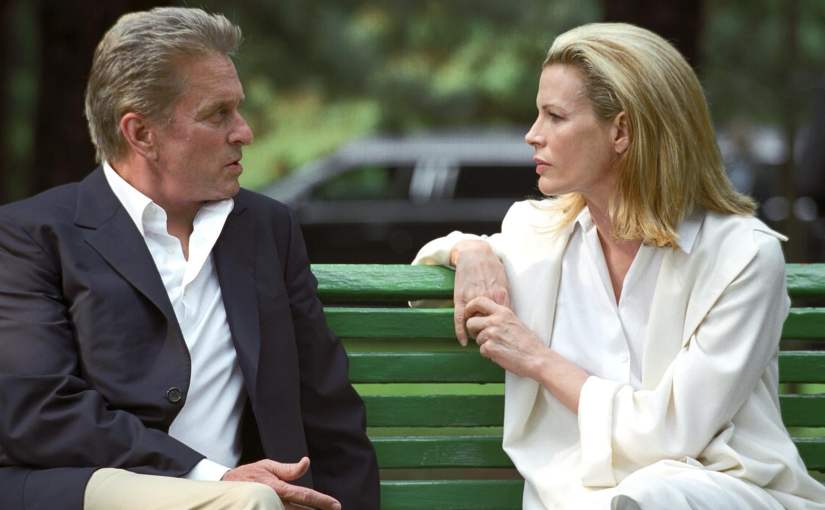
Director Clark Johnson works adequately with the sunglasses, dark suits and ties adorned by Douglas and his antagonist former colleague and friend played by Kiefer Sutherland.  Douglas portrays Pete Garrison, an elder agent who has commendations for heading off the Reagan assassination.  Amazing that President Reagen was even shot because on top of Michael Douglas, I believe Clint Eastwood and Kevin Costner were also there on that fateful day.  Sutherland is Dave Breckinridge. He wasn’t there because he was just a teenager in 1981.

There’s troubling bubbling up in this Presidential cabinet, particularly because black and white photographs have mysteriously landed on Garrison’s desk depicting his clandestine tryst with the First Lady, played by Kim Basinger.  An agent partner of Garrison’s is shot dead on his front porch.  Then Marine One is taken out by a missile.  Obviously, someone has the President (David Rasche) in their sights.  Therefore, it must be a mole.  Who’s the likely traitor?  Pete Garrison is suspect numero uno, and so Michael Douglas is in the spotlight doing a subpar Jason Bourne treatment of resourcefulness to prove his innocence and uncover who framed him.

The Sentinel is not a terrible movie by any means.  It’s just this flavor of film has been done countless times before it came out in 2006, and thereafter.  Eva Longoria plays a former student of Garrison and now partner to Breckinridge and together with Sutherland they do the staple run with guns drawn down the streets of D.C. and the black sedan daytime drives while trying to stay hot on Garrison’s trail.  For some extra spice, Pete and Dave had a falling out some time ago and when we discover what that’s about it’s not very savory.

What keeps Johnson’s film from entering the lexicon of other grade A thrillers is that the true bad guy is completely apparent long before the plot unravels itself.  You know who’s spiking the voodoo doll within the first five minutes of the picture.  Why did Clark Johnson have to give this character the most oblivious close up?  That’s a failure on the director’s part, I’m afraid.  The Sentinel is short of plausible red herrings.  Someone told me recently that the best part of a magic trick is when you forget you are watching a magic trick.  Well in this movie, you know how the rabbit pops out of the hat.

There are obligatory shootouts. There’s also the big speech the President gives at the end when the bad guy is about to make a deadly move at the podium. As well, naturally there’s another typical Michael Douglas affair in a long line of on-screen Michael Douglas affairs.  Kim Basinger, I’d like to introduce you to Sharon Stone, Demi Moore, and Glenn Close.

Michael Douglas and Kiefer Sutherland (more or less doing his Jack Bauer schtick) have a magnetism on screen that’s upheld their long careers.  However, The Sentinel is not evidence of their worthiness.  Watch this film after you’ve exhausted all the other movies belonging in this category, and you just need to see who Michael Douglas is sleeping with this time, while the President gets saved one more time.   

THE ROAD WARRIOR

By Marc S. Sanders

An Australian post-apocalyptic desert wasteland is the setting of George Miller’s B movie classic The Road Warrior.  It’s a film deliberately short on depth, but big on mash ‘em up, bash ‘em up high-speed hot rods, muscle cars, motorcycles and one big rig truck.

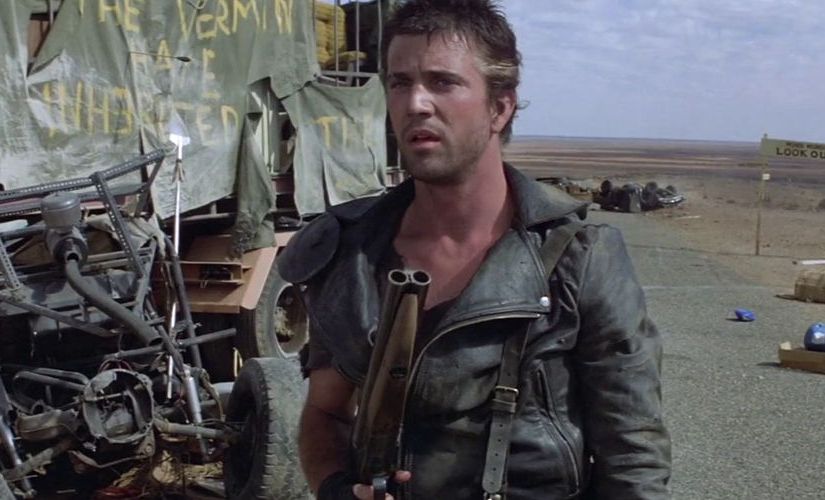
Mel Gibson returns as Mad Max, the leather wearing drifter driver who patrols the endless roads.  A brief narrative at the beginning recaps some of the events of Miller’s first film in this series, Mad Max, explaining that the governments worked against one another, riots ensued, and a nuclear holocaust left little of the population to survive with a shortage on the most precious commodity, fuel.  Max was a policeman whose wife and child were slaughtered by the way, but that’s not relevant here.

The center of the film focuses on a small community of people dwelling in maybe the last known functioning oil refinery.  However, barbarians led by The Humungous (Kjell Nillson) who wears a hockey mask and S & M straps over his bare body are intent on taking over the precious area.  The Humungous’ second in command is a red mohawked freak named Wez (Vernon Wells).  Everyone else in the gang is dressed in the same thematic sex play costume wear with their ass cheeks on display. 

Following some episodes of havoc, Max, along with his dog named Dog, form a contract with the oil refinery dwellers to get the big rig, fuel it up and attach it to a tanker for a journey across the wasteland towards a paradise of ocean blue oasis.

Max has sixteen lines in the whole film.  I’ve expounded on this movie more than he ever could.  In fact, Dog has more dialogue. George Miller knew he wasn’t writing anything of multi dimension or fleshed out characterizations.  You can hardly understand anything that The Humongous has to say or bellow.  It doesn’t matter.

What’s important is the demolition derby footage contained in The Road Warrior.  It’s thrilling.  Bodies get bashed by metal and caught in barbed wire.  Explosions go off in huge fireballs against a scorching sun.  Max fires his sawed-off shotgun at these gonzo gangsters.  They fire crossbow arrows in return.  Some of them use inventive gladiator kinds of weapons with sharp blades and spikes. 

Miller’s frames per second accelerate the various chases.  Multiple collisions end up in a sand dune or turning someone’s ugly sunburned face into hamburger.  The editing of these scenes is magnificent.  Every crash is pieced together cohesively.  Zoom in close ups are spectacularly orchestrated and the cinematography holds up for welcome daylight action where you can easily make out who is who and what is where. 

The inventions of these junk machine jalopies are quite fun too.  Syd from Toy Story must have taken inspiration from this movie when he assembled his freakazoid toys that tormented poor Woody.  Other than Max’s black muscle car and some motorbikes, everything else looks drilled and fused together for relentless mayhem.  Sedans, SUVs, and station wagons would never survive.

George Miller’s world may seem a little prophetic these days.  It’s not that there’s such a rarity of gas, but the need among the masses to hoard fuel is there considering the inevitable price hikes spread around the globe.  Oil will always be a precious dependent.  Environmentalists, I feel for your crusade but be damned. Oil powers so much in and out of this planet.  Electric cars and the few power-up stations are not the dominant alternative yet and won’t be for a while.  Their longevity has not been proven.  Even the disposal of their expired parts has not yet been considered.  So don’t hate me Elon Musk.  I’ll happily eat my words one day, though, I’m sure.

As thin as the storyline may be, George Miller created this dystopian era for Mad Max to drift through and I commend the imagination of the MacGuffin.  Oil is what we rely on, and the setting of The Road Warrior may not be so far-fetched if it ever came to be that we were short on it.  However, I’m not running out to get my masochistic leather body armor just yet.

Wez, The Humungous and their bandit barbarian warlords may be fearless nut jobs, but I get their motivation.  You never know when rush hour may rear its ugly head in a post-apocalyptic age.  So, you better fuel up your Harley, BMW and Toyota because the boss is still gonna want you sitting at your desk by nine.

MISSION: IMPOSSIBLE FALLOUT

By Marc S. Sanders

Mission: Impossible Fallout is the best of the so far seven films in the series.  It is carried not only by the stunts that Tom Cruise insists on risking his middle-aged self to perform, for the sake of his fans. As well, the film’s casting and the puzzle twisting script from Christopher McQuarrie, writing with inspiration from his famed Oscar winning screenplay for The Usual Suspects is a treat for the eyes and mind.  If this were a novel, I’d quickly be turning each page to see what comes next.  Like McQuarrie’s well-known invention of Keyser Soze, this movie questions Who is John Lark?  Is Ethan Hunt (Cruise) John Lark? 

Hunt chooses to accept the mission of locating this unidentified Lark who is interested in purchasing enough plutonium to wipe one third of the world population, likely in and around Pakistan and China.  However, the CIA doesn’t trust Hunt’s cavalier instincts and insists he partners up with a hulking Henry Cavill playing an agent named Walker.  Benji and Luther (Simon Pegg, Ving Rhames) are back for hacking, field work and some clever mask trickery.  Ilsa Faust (Rebecca Ferguson), the dubious British MI6 agent from the prior film (Rogue Nation) is a welcome surprise and just as perplexing with her actions.  The big bad, Solomon Lane (a snake like Sean Harris), also returns.

Like all the M:I films, Fallout operates with the same kind of formula.  We have to accept the promise that there’s a world ending MacGuffin.  Ethan and the team are assigned to find who has it and who wants to buy it and can use it.  All of this is written outside of the lines of planning out the action scenes these pictures are recognized for.  It’s as if Cruise, with his producer hat on, sketches stunts with skydives, cars, motorcycles, trucks and helicopters and then assigns his writer/director to apply words for the donut filling within the movie.  Mustn’t forget a reason to include a running sequence for Ethan to perform on rooftops.  Fortunately, all of it works best here, more than in any of the other films.

What sells these pictures, and again Fallout is the best example, is the photography and editing applied to these scenes.  Two sequential car/motorcycle chases occur throughout the streets of Paris.  (Look!  I see our honeymoon hotel, The Hotel Regina located across from the Louvre, as Ethan races by in a BMW!!!!!)  A smashing three-person fist fight in an impeccably white men’s room is a brawl for the ages. 

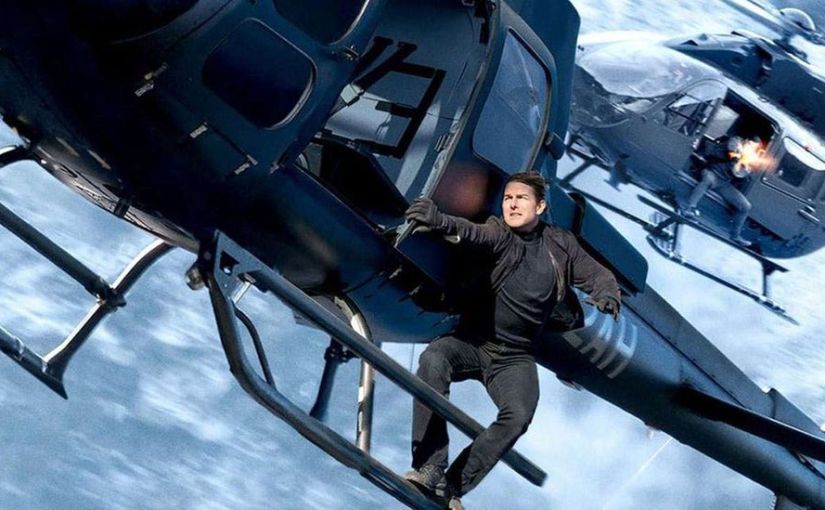
The highlight of this installment is a helicopter chase above and within a mountain valley that first focuses on Tom Cruise himself climbing a rope up, up, up to a chopper and swinging his legs onto the railing to get a foothold.  There’s time dedicated to him falling and inching his way back into the vehicle.  Then it becomes a chopper chase followed by a collision that ends with the remains wedged within a narrow mountain crevice.  What a set piece this is!  Absolutely outstanding camera work.  The wide and close editing, sound and visuals work so perfectly in sync with one another.  I don’t want to watch the making of documentary for this picture.  The trickery of McQuarrie’s camera crew is such a treat.  I’d rather savor the finished product on repeat viewings.

Juxtaposing against this chopper fight are two other scenarios involving Ethan’s teammates.  This is where I’m especially grateful for Christopher McQuarrie’s writing.  Two bombs are rigged in line with each other, and a detonator also must be retrieved by Ethan.  The whole team has to work cohesively, otherwise it is sayonara to much of the Asian continent if both devices explode.  McQuarrie’s “impossible mission” is orchestrated beautifully with suspense cranked way up.  His imagination for adventure allows a magnificently edited third act.  To date, I consider the stakes here to be the highest in the entire series.

The presence of this collection of actors is marvelous with recognition deserving of Henry Cavill donning an untrusting mustache and looking like a brutal, blunt instrument against the superspy Ethan Hunt.  Cavill also plays CIA agent wisely.  He’s got a stoic expression for most of the film but that is because he trusts the audience will assume what a dangerous threat he can be.  Cavill occupies one of the best characters in the seven films.

Mission: Impossible Fallout is truly one of the most thrilling pictures you’ll find.  What’s most important is the action serves the story.  Action just for the sake of action is tiring like in the Fast/Furious films.  There has to be a cost and a tangible feeling to the speed, obstacles and pain that good action scenes serve their characters and the story as a whole.  When Ethan falls from a helicopter or has to jump out a window, I grip both arm rests and let out a collective bellow with the audience.  Films with the grandest of adventure must draw out responses like that.  Otherwise, it’s all just a ho hum journey to the end credits.  Fallout is anything but a stroll.  It’s an absolute balls to the wall, explosive crowd pleaser.

MISSION: IMPOSSIBLE DEAD RECKONING PART 1

By Marc S. Sanders

The object of the Mission: Impossible films is not to wow its audience with thought provoking questions of politics or Cold War intrigue or even daring and uncompromisingly evil villains (apart from Phillip Seymour Hoffman).  The elements of espionage coursing through the TV series are non-existent in the film adaptations.  I’m not watching a film based on a John LeCarre spy novel.  By the time the seventh installment has arrived, titled Dead Reckoning Part 1, the goal of the film series is to sketch out the set ups for one action piece after another.  Only they must be bigger, bolder, and seemingly that much more impossible to overcome for their hero, Tom Cruise (playing a guy named Ethan Hunt).  The action is once again top notch.  The glues that bind these displays of bravado together, you know where the characters have to talk and give us a semblance of a plot, is as nil as the scotch tape that assembles a stretch of film reel into a running time length of nearly two hours and forty-five minutes.

The locales are as grand as any travel getaway. We go through a labyrinthine airport.  A techno night club works as a meeting place for a bunch of characters. There are journeys to the Arabian Desert, Rome, Venice, and a beautiful ride along the famed Orient Express.  Shot on digital, this movie is a gorgeous travelogue.

Let’s get the problems out of the way, though.  The MacGuffin that Ethan Hunt and his trusty pals Benjy and Luther (Simon Pegg, Ving Rhames) have been assigned to recover is two parts of a specially designed key.  One part is supposedly with the disavowed MI6 agent Ilsa Faust (Rebecca Ferguson).  The other half is questionable as to who possesses it, but a thief known only as Grace (Hayley Atwell) may be significant in finding it.  Put the two halves of the key together and it will unlock something that no one seems to know of, or where it is located.  Here’s my first issue.  The audience does know what the key unlocks because it is shown in the first three minutes of the film.  So, while the cast of characters act dumbfounded, we know all along.  So, there goes any curious interest I may have for wanting to follow through with this. 

The other problem is that the same conversation happens over and over and over again.  Lines like (and I’m paraphrasing here, or maybe I’m not) “If this key gets into the wrong hands…” and “Whatever this does unlock, Ethan, could spell the end of the world…” or “It’s important that both halves of the key are not put together…”  or “Whatever this does unlock…”  (See?  Even I just repeated myself in this write up.) Except, we know what it unlocks!!!!!  The same exchange of dialogue occurs over and over.  The redundancy exhausts itself.  It occurs so much in fact that it’s writer/director, Christopher McQuarrie, relied upon the repetitive dialogue to stretch this next M:I chapter into two films instead of one (Part 2 is scheduled to be released in 2024).  I don’t recall the context of any of Ving Rhames’ lines going further than what I have presented here, for example.

The film is also a little too character heavy.  I never understood why two agents (Shea Wigham, Greg Tarzan Davis) are constantly pursuing Ethan.  Just was not clear for me. Heightened suspense?  That’s the best excuse I can think of.  The White Widow from the prior film (Vanessa Kirby) also appears.  Not much purpose to her.  Cary Elwes is the deputy director, there at the beginning and later towards the end, but again I was not entirely certain of his contribution to the story.  Even Ilsa Faust does not seem to have much value, except to work as a step in Ethan’s ongoing trajectory for the key.  I think Rebecca Ferguson had no more than five lines in the whole picture.

Finally, Ethan Hunt seems to be up against an omnipotent enemy, an AI program known as The Entity.  The humans doing the bidding of this phantom program consist of a goatee wearing Esai Morales and his henchwoman, played by Pom Klementieff.  She looks straight out of a James Bond picture and makes for a good car chase through the stone cobbled streets of Rome in a tank like Hummer.  Morales is as boring as most of the other the M:I villains.

What works for the film is what Tom Cruise really wants to impress you with though.  Riding a speeding motorcycle off a mountain and parachuting his way down.  That’s actually a near sixty-year-old Tom Cruise performing that feat.  Very impressive.  The car chase with a handcuffed Cruise and Atwell in a puny yellow Fiat versus an unbeatable Hummer and an army of Italian police vehicles is fun on the level of Roger Moore’s Bond films.  Most impressive for me is the final act where the famed Orient Express train tumbles off a bridge with a gap in the middle, car by car with all the furnishings, piano included, pouring out while Ethan and Grace hold on for dear life. 

It’s the high stakes stunts that work.  Whatever smidge of a story there is fails though.  The script by McQuarrie and Erik Jendresen lacks so much that the cliffhanger the film ends on doesn’t leave me yearning for more because it only hearkens back to the beginning.  The characters catch up to what the audience has known for the last three hours.  So, I’m not losing sleep wondering with what happens next.

Of course, I’ll go see the Part 2 installment.  Tom Cruise won’t let me down in whatever daredevil achievements he’s dreaming of doing next.  However, am I going to these movies to watch Mission: Impossible, or to watch an aggressively updated version of Circus Of The Stars?

MISSION: IMPOSSIBLE ROGUE NATION

By Marc S. Sanders

Mission: Impossible Rogue Nation is as stunt filled as its predecessor. Perhaps even more.  The difference for me though, is that it is better than Ghost Protocol.  The stunts and action are at least equal in both films, but Rogue Nation also plays with its characters while not stopping at certain points to explain what must happen next.  Sure, the movie talks, but it speaks with developments and surprise, rather than starting the story all over again from square one (a shortcoming for me with the prior film).  Much of that is thanks to a new character, a disavowed British Intelligence Agent named Ilsa Faust played with perfect unsurety and mistrust by Rebecca Ferguson.  She’s the actress keeping me interested beyond the magnificent action scenes because I want to uncover what her game really is all about. 

Rogue Nation opens soon after Ghost Protocol ended.  A hearkening back to the original TV series has finally introduced the nefarious and clandestine organization known only as The Syndicate.  No one has been identified as heading this mysterious group.  A face or name has yet to be linked.  None of the major governments, including America, even believe they exist.  Tom Cruise as Super Spy Ethan Hunt is the only one certain that this Syndicate is responsible for a series of terrorists’ attacks and government overthrows occurring throughout the world.  By the way, I always call him Super Spy, because nothing gets past Ethan Hunt.  Not only can he run fast enough to hop onto a cargo plane taking off a runway, but he even has a talent for drawing as well as reading lips in various languages. Amazing!!!!  Incredible!!! Astounding!!!! ETHAN HUNT – SUPER SPY!!!!!

Don’t ask how we get there, but Ethan recruits his trusty pal and computer hacker Benjy (Simon Pegg) to attend an opera in Vienna where the leader of this shadowy Syndicate may be.  Complications and fistfights, along with sniper rifle assassination attempts ensue backstage during a performance, and now Ethan has convinced Benjy that his hunches must be true.  Ilsa is also there, but is she trying to kill Ethan or just fend him off, or is she working alongside of him?  Ferguson plays the role with a perfect poker face, and it helps keep the movie running along while wanting to find out more information.

Every Mission: Impossible film has that one especially heightened action set piece.  This time, Ethan has three minutes of inhaled oxygen while he enters an underwater vault to hack into a “safe deposit box.”  Benjy gleefully sees the simplicity in this.  “Well you can do that!”  As an extra bonus, we are treated to a kinetic motorcycle chase through Morocco.  The sound editing alone with revving engines and cars screeching, machine gun fire, and horns blasting is impressive enough.  Accompany it with well placed camerawork (nothing is blurry or shaky like in many other action films) and you have a set piece that’ll keep you alert.  Who needs dumb Fast/Furious junk when this stuff tops it?  Kudos to writer/director Christopher McQuarrie.

There are some standard motifs to Rogue Nation.  Once again, there’s a government official or two who does not trust Ethan Hunt’s intentions and thus he’s number one on the Most Wanted list.  How many times has this guy saved the world, already?  Give him a break! Also like before, most recently in the last installment, the IMF team has been shut down.  That does nothing for me anymore.  I wouldn’t expect anything less.  No IMF team, but Ethan and Benjy still get a hold of the most inventive gadgets and tricked out cars they can find.  So what’s the big deal if the IMF is on the chopping block?  Still, I like how this picture wraps its storyline up and defeats the villain.  It’s different and a welcome surprise.  Ilsa Faust’s character arc tidies itself up nicely as well.

Amazing stuff happening in this fifth chapter of the film franchise.  As long as Tom Cruise and company get more daring and aggressive with the impossible missions that need to be overcome, the staying power of these films holds.  Mission: Impossible Rogue Nation is a fantastic piece of filmmaking.

MISSION: IMPOSSIBLE GHOST PROTOCOL

By Marc S. Sanders

When JJ Abrams took the reins of IMF adventures with Mission: Impossible III, he brought his penchant for meet cute romance between Tom Cruise’s super spy and his love interest Michelle Monaghan. It worked well as a new dynamic in the high-octane series. In the follow up film, noted Pixar director Brad Bird takes over with his own touch of tongue in cheek wry humor courtesy of Simon Pegg, as well as a little bit from Cruise and some side characters.

This is a great installment opening with a fun prison break moment accompanied by some Frank Sinatra in the background to earn your appreciative grin. An energetic credit theme sequence featuring Lalo Schifrin’s adventurous theme song follows with a spark on a fuse. I get so wired when I hear the Mission: Impossible Theme.  From there, Bird offers up challenges like putting a spin on the now familiar ID retina scan by any typical spy computer.  There are shootouts, of course. More running – lots of running courtesy of Tom Cruise – a sandstorm, a Kremlin covert operation and a climactic chase for a briefcase within a weird multilevel movable parking garage filled with cars to crash, bash, and drive off high level platforms.

The main centerpiece reaches for the sky however with the world’s tallest (I think) building, the Burj Khalifa in Dubai. I love this scene. Not just because Cruise is doing the stunt of climbing the glass tower himself, but it screams of hilarious moments that belong in Bird’s other great accomplishment, his Incredibles films.  The photography is unbelievable in this sequence even when watching it on a 4K flat screen at home.  This one scene can be taken out of the context of the film and treated like a short story adventure.  The goal that Ethan Hunt is trying to accomplish is to quickly hack into the building computer.  Seems so trivial for the enormous lengths he goes through, but then we wouldn’t get the scene!!!!  So, scale that glass Ethan and let’s see how you get yourself out of this one.  A highlight of not only the film series, but Tom Cruise’s amazing career.

Simon Pegg is hilarious against the reluctance of Cruise’s straight man along with an out of touch Jeremy Renner. There’s a sticky glove that won’t work for Cruise as he scales the outside of the building, but Bird milks the joke while also using Renner, who is of no help but invites nervous glee and desperation.

Especially with Ghost Protocol, the film seems to begin, conclude, and then begin again.  Over and over, the players are explaining what must happen or needs to be done, or what the next step in the mission is.  So, there’s a lot of stops and starts with exposition through the course of the film.  What does it all spell out?  I hardly care.  All I know is the heights of danger are that much bigger, because all IMF agents, including Ethan Hunt and team, are now disavowed following an attack on the Kremlin in Russia. 

I don’t try too hard to piece everything together in the M:I films. Other than Phillip Seymour Hoffman in Abrams’ film, the villains have not been altogether memorable. The breathtaking action is much more fun than the stories. Though this film talks a little too much, something is always happening. This occurs in nearly every installment of the franchise, save for John Woo’s short-changed Mission: Impossible II.

This is a franchise that hasn’t self-destructed.  Cruise and company choose to up the ante with each new installment.  I hope the films continue on that course.