AIR FORCE ONE

By Marc S. Sanders

On the day I write this article, July 12, 2024, the new trailer for Captain America: New World Order premiered and Harrison Ford (whose birthday is tomorrow; Happy Tiding Dr. Kimble, Dr. Jones, Captain Solo, Mr. President, Dr. Ryan) is back in the Oval Office playing the President of the United States.  Don’t know what kind of Commander In Chief he’ll be this time around.  He might be as heroic as James Marshall from Air Force One. Then again he could be a challenge of hulk like proportions.  However, let’s at least fantasize that we have Mr. Marshall running for the top job this year against both the criminal buffoonery and geriatric disqualifications we are left to choose from.  Just look at James Marshall’s qualifications. 

Following an American Special Ops capture of a Russian radical, Marshall is bestowed an honor from the Soviet government. His acceptance speech insists his administration will never negotiate with terrorists.  Now that the line has been drawn, away he goes with his staff, his wife (Wendy Crewson) and pre-teen daughter aboard the most protected and safest plane in the world, Air Force One.  Yet, an element of careful process does not go according to plan and Gary Oldman’s team of Russian radicals hijack the plane with demands to free their leader from captivity.  Oldman’s screaming hysterical character, Ivan Korshunov, won’t have it so easy though because his team of men failed to capture the President.  As well, it requires the Vice President (Glenn Close) and Secretary of Defense (Dean Stockwell) who are on the ground to coordinate with Russia to free the prisoner.  Oldman’s response is to kill a hostage every half hour and if that does not work, then just blow up the plane.

This is not good.  BUT WAIT!!!!!  Is that…?  Could it be???  Is the President alive, sneaking around the bowels of the plane while taking out one terrorist at a time?  Raise your fist for Harrison Ford!!!!

‘Murica!!!!!!

There are two narratives going on with Air Force One.  One is the standard Die Hard formula action onboard the plane.  Then there is the endless debates of authority between the Vice President, the Secretary of Defense and the military leaders about if the President is in a proper state of mind to lead and act upon his aggression with a high level of threat to the country at stake, and more personally his wife and daughter in harm’s way?   None of this is nothing new.  It’s all familiar from the likes of many late 80’s and 90’s action pictures.  The politics are much more simplified than what you’d find in a Tom Clancy novel.  There’s even time for a which color wire to cut scene.  Yet, the movie is entertaining.

Director Wolfgang Peterson is best at showing the real star of the picture and that is Air Force One itself.  He’s got long shots down endless corridors and aisles. Within the underbelly, as well as the hollowed-out cockpit, there’s more for us to explore amidst the gunfire.  We see where the weapons are stored as well as the luggage and food supply.  We get to watch the football game in the President’s office too.  Heck, before the terrorists reveal themselves they are given a tour of the massive plane as their guide boasts that it is even impervious to a nuclear blast.  Color me impressed in Patriotic Red, White and Blue.

I think some of the acting is a little overdone at times. Not by Ford, but by almost everyone else.  Watching the debates within the government conference room, I’m seeing a little too much melodrama around the table.  A little too much hand clasping, pacing around the room, whispering,  and deep sighing.  On the plane, Oldman goes over the top but he’s one of our best character actors and its expected from him.  He’s the evil villain after all.  On the ground though, Dean Stockwell has done better work elsewhere, with much more complicated material. 

I like the idea of including political debates and a response to an unfathomable crisis like this, but a lot of the dialogue from guys like Stockwell, Phillip Baker Hall and Bill Smitrovitch comes off as textbook boring.  Same goes for Close, but she fits the role perfectly.  Let her be Ford’s running mate and they got my vote.  The only thing that upholds these scenes are due to Peterson’s hyper Steadicam.  So, when one more person in a suit makes a mad dash into the room, the director sweeps his camera right over there to get the latest news. 

Harrison Ford is doing his standard everyman/tough guy routine, always knowing how to stay one step ahead of the bad guys. President Marshall is much more capable than his entire trained Secret Service Squad and it’s fortunate that he gets the convenient shard of broken glass to cut the tape that binds his hands.  How often do we see that in movies?  The film definitely belongs to Ford, but it’s also nice to see some familiar faces participating like Xander Berkley, William H Macy and Paul Guilfoyle. 

The most unforgiving moment of the film occurs in the final minutes.  I don’t spoil everything by saying the plane nosedives into the sea, but this crash has to land at the top of some of the worst CGI ever assembled.  Yes, I know this was back in 1997, two years before what George Lucas accomplished with, at the time, pioneering effects on his return to Star Wars.  However, the final climax to Air Force One looks so obscurely animated and unfinished, it begs for the screenplay to find another way to wrap up its simplistic story.  It is downright terrible.  I recall it looking terrible on the big screen.  It looks just as bad on a 65” flat screen.  A toy plane crashing into a bathtub would look more convincing.

Air Force One is solid action.  Nothing more.  It’s not a thinking picture or one needing deep concentration and analysis. It does make you yearn for Harrison Ford to at least consider a run for the Oval Office, though.  He’d still be better than what will be on the ballot this year.

BEVERLY HILLS COP: AXEL F

By Marc S. Sanders

It took thirty years for Eddie Murphy’s best on screen character, Detroit Detective Axel Foley, to make a return.  He should have waited another thirty years. 

Reader, I got what I expected from Beverly Hills Cop: Axel F.  Yes, it was better than the third film in the franchise, but then again so was Morgan Stewart Is Coming Home (a Jon Cryer flick, directed by Alan Smithee).  There are moments in this latest flick, offered up by Netflix, that work, but it’s not enough to save the picture.

With Murphy producing, the smartest tactic the film takes is to gather up most of the surviving members of the other films, Judge Reinhold, John Ashton, Paul Reiser and Bronson Pinchot.  The problem is they are hardly used.  Axel F opts to go in the direction of feelings for the wisecracking cop from Detroit who always wreaks havoc in 90210.  Axel has a daughter named Jane Saunders (Taylour Paige).  I certainly know her last name because in the few moments that Murphy is shooting off his mouth, he takes time to repeat her last name and actually spell it out.  S-A-U-N-D-E-R-S.  Yes.  That’s a whole scene.  This is supposed to be comedy?  Saunders is not ranked up there with Focker.  That’s for sure.

Axel’s buddy Billy (Reinhold) is a private detective now and he’s come upon some kind of conspiracy.  He recruits Jane (a Beverly Hills criminal attorney) to represent a kid who is being framed.  When Axel gets word that Jane is being threatened, out to California he goes, but then Billy turns up missing and I mean missing throughout the whole movie.  Now Axel has to uncover the bad guys while trying to reconnect with Jane.  Of course they are estranged.  Axel also partners up with Jane’s ex, a cop named Bobby, an unfunny Joseph Gordon-Levitt.  Every so often Axel also marches into Taggert’s office (John Ashton) to just remind us that Taggert is back. 

Beverly Hills Cop never functioned on complex mysteries or storylines.  The films hinged on Eddie Murphy’s schtick, which used to be very, very funny and addicting.  As well, the smart route was always taken when the comedy of the first two pictures didn’t just rely on Murphy.  There was also material for Ashton and Reinhold, and on the side was Reiser and Pinchot as well. 

The glaring error in Axel F is that Murphy hardly does anything with these guys.  Instead, there are repetitive conversations with Paige’s character and how Axel put his career ahead of being a father.  Twice within the script, they remind one another that he’s been a father as long as she’s been a daughter.  How much thought was put into this dialogue?

The Cinemaniacs gathered together to watch Axel F, and we all agreed the film would be a half hour shorter had the storyline with Jane been completely stricken from the script.  Who says Axel Foley had to have a daughter?  The guy already has enough members within his world to work with.  Ashton, Reinhold and Murphy do not share a single moment together until an epilogue scene before the closing credits.  This is as egregious as when the new Star Wars pictures opted never to have Han, Luke and Leia reunite.  You got everyone back for Axel F and you opt not to use them or use them together.  Why?  This kind of success couldn’t have been served up better and yet it’s squandered.

Part of the fun in Axel Foley is his ability to con his way into a place.  At one point he returns to the Beverly Hills hotel from the first picture.  He approaches the counter and as he’s about to start a routine, but then he says fuck it, never mind and just chooses to pay for a room.  The script and Murphy could not have made their laziness in making this movie more apparent. 

Another staple was always the outrageous chases that would happen with unconventional vehicles.  The best moment in Axel F is when Murphy and Levitt pilot a police helicopter.  Levitt gets terrified and I think a little sick.  Murphy shoots his mouth off and here is a reason to watch Axel’s return.  Other moments do not work as well including a snowplow truck careening through Detroit and a big rig crashing through the glass front doors of a mansion.  There’s also a three-wheel motor scooter that does some tricks.  I recognize the attempts at recapturing the big moments from the first two films, but the editing does not work as well with a beginner director named Mark Molloy.  Martin Brest and Tony Scott were the MVPs who cemented the success of those other pictures.

I could not help but also take issue with some minor details.  Harold Faltermeyer was the symphonic composer of the other films.  You’ll certainly recognize his tunes this time around but they are annoyingly mixed with unnecessary overlays.  At times, the needle drop of music is so distracting to what you are watching that you might think there is something wrong with your sound system. 

In addition, and I can’t believe I’m saying this about a Beverly Hills Cop film, but the costumer had to be someone who was just fired from Old Navy.  Murphy dons a Detroit Lions jacket and a pair of jeans that look two sizes too big on him.  His clothes look so baggy on his frame.  As well, for some reason, he’s given a bright orange t-shirt to wear against the black and blue Lions coat and it could not be a worse eyesore.  Any color you want and you choose orange?

Miguel’s input was that it was better than three, but what kind of endorsement is that really?  Over the last decade, the franchises that were so beloved in the 1980s are making returns with the near geriatric stars of those films.  Some work (Top Gun: Maverick, and yes Indiana Jones).  Some definitely do not (that last Die Hard movie, Rambo and Terminator).  Axel F slides into the latter category.  It has some moments to laugh at along with send ups of some of the franchises best songs.  Yet, while I’m happy to hear the picture open to Glenn Frey’s “The Heat Is On,” it’s also indicative of little thought applied to making this movie. 

Ultimately, though, why did this picture have to get so watered down with an uninteresting father/daughter soap opera while neglecting the other favorites of this franchise?  What will these filmmakers do next?  Reinvent the Three Stooges, only the trio will be split up, and you’ll only follow Larry around for two hours?

KELLY’S HEROES

By Marc S. Sanders

There’s gold in them thar Nazi castle.  Hence the plot is set in motion for a World War II romp called Kelly’s Heroes.  It’s easy to get acclimated to the lightheartedness of this comedic war picture from director Brian G Hutton (Where Eagles Dare). 

The movie opens during a dark and rainy evening within a German occupied France. The on-screen credits pop up revealing an all-star cast of tough guy actors who are also quite funny.  Clint Eastwood is the title character who sits behind the wheel of a jeep. When the Nazis take notice, he hits the gas, makes a sharp left through the muddy road, and zooms away while avoiding shell fragments coming down on him. The film’s catchy theme song marches in – “Burning Bridges” performed by the Mike Curb Congregation.  The chorus of singers speak as a soldier who does not even care about authority or the rules of war.  The lyrics are rather simple to understand, and you want to just join in on the revolutionary merriment.  The song enters the film again and again over the next two and a half hours, reminding you to just enjoy the ride against this tragic capsule of time from the first half of twentieth century history.  Hawkeye Pierce couldn’t have said it better.

In his capture, Kelly has brought back a Nazi commandant and when he sees a fourteen-karat gold bar in the German’s possession, it’s easy to surmise that there must be more where this came from.  Turns out there is a stash worth roughly sixteen million dollars crated in a bank vault in the center of a stopover town, located across enemy lines in war torn France.  Kelly and his squad, led by Big Joe (Telly Savalas), are under heavy fire and forced to retreat for safety, but that isn’t going to stop him from making a snatch and grab.

Joe has been given orders to get the unit to safety and allow them a three-day reprieve of R & R.  However, he’s just as enticed as Kelly and gradually a small team of men assemble to pull off the heist.  First, they’ll need tanks to fight off the nearly indestructible Nazi Panzer machines they expect to encounter.  Fortunately, Crapgame (a scene stealing Don Rickles) and Kelly come across the hippie loving Oddball (another scene stealer – Donald Sutherland) who can supply the tanks they need and fend off what stands in the unit’s way.  What’s also important is Oddball find a bridge for the squad to cross before the allies destroy it.  That’s not so easy.  Sutherland is somewhat of a spaz; maybe an ancestor of Cosmo Kramer.

Meanwhile, a blood and guts two-star General Colt (Carroll O’Connor) is screaming for results from his subordinates.  When he intercepts the guys’ communications, he can’t help but be impressed with their progress and strategies of attack.  He’s ready to go into the field with a handful of medals for every American soldier that’s giving a damn. 

The looniness of Kelly’s Heroes is hilarious. Eastwood carries his signature quietness about him.  So, he’s the straight man leaving the loudmouth material for Savalas, Rickles, and a bevy of supporting actors.  Plus, there’s O’Connor in his own side story.  Sutherland is another kind of comedy – the free spirit who appears to have taken one too many shells to the noggin. 

It’s not a slapstick kind of movie.  It operates like the doctors from M*A*S*H.  These draftees have no loyalty to a cause.  They look out for each other.  They know how to survive the battles and they know that some will not make it.  Brian Hutton does not forget the frightening impact of war.  A memorable scene occurs when the unit realizes they are dead center in a mine field, offering up the life and death factor blended in both the comedy and drama that comes with a heroic war picture. 

There are some inconsistencies to Kelly’s Heroes.  Often, it feels like some scenes that would connect certain dots must have been edited out of the final print.  As the men come close to the to the bank where the gold is stashed, two of the soldiers are already in the overlooking bird’s nest tower giving a low down of the area to Kelly and Big Joe.  Yet, how did those guys ever get up there?  It’s not a terrible violation.  There are sequences like this that make the movie feel a little uneven. Clint Eastwood even went on record expressing his disappointment with the film as there were excised moments that drew more out of Rickles and Sutherland’s characters, and a few of the other supporting characters played by Gavin MacLeod (The Love Boat, The Mary Tyler Moore Show), Stuart Margolin (a very underrated character actor who had memorable episodes on the M*A*S*H tv series) and a young Harry Dean Stanton (here credited only as Dean Stanton). 

This film was shot in Yugoslavia simply because the country still had possession of many tanks and vehicles from the story’s time period.  The art design and battlegrounds are very impressive.  Before CGI, Brian G Hutton and his team were reenacting a lot of these loud, bombastic battle scenes complete with big fireballs of explosions along with the aftermath wreckage left behind of rubble and blasted out walls and craters.  Hutton positions his cameras either on top or right behind the cannons and guns mounted on the tanks.  So, you are actually getting a first person view of these massive war machines driving across the plains while shooting off their firepower.  The filmmakers did not hold back on making World War II look authentic in its battle wear.  I’ll be bold enough to say the settings are comparable to what Spielberg accomplished with Saving Private Ryan, and what Eastwood depicted in Letters From Iwo Jima.  The lens is just not as serious as those films.

The cast is a magnificent fraternity of brazenly funny tough guys, in the same vain as The Dirty Dozen, though much more lighthearted.  They’re a motley sort who all stand out among their similar appearances in green army fatigues and netted helmets. 

Kelly’s Heroes is a lighthearted comedic adventure where the heist is what you come to see against a historical backdrop when nothing was ever sensationalized fun.  History offers up a cruel world of pain and suffering, but who says we can’t enjoy ourselves through all the blood, guts and misery as our heroes ride off into a ravishing orange sunset?

Go for the gold and catch up with Kelly’s Heroes.

THE EQUALIZER

By Marc S. Sanders

I guess Liam Neeson and Gerard Butler were unavailable when Antoine Fuqua and Denzel Washington collaborated to make the first installment of The Equalizer trilogy, based on the CBS television series that starred Edward Woodward.  This film is nothing special with a nothing special kind of script, a nothing special hero and a nothing special collection of Russian Mafia villains.  The kills are nothing special either.  The action is nothing special.  The explosions are nothing special, even when they are started by a trip wired microwave.

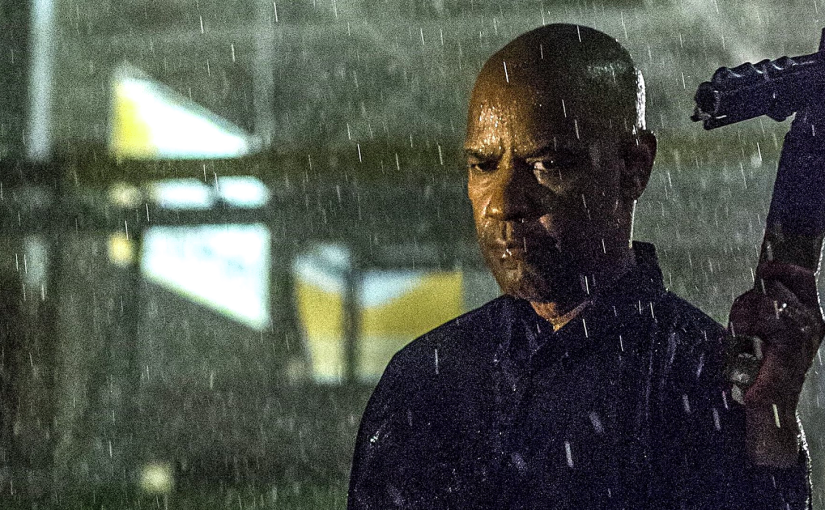
Robert McCall (Washington) lives a quiet life by himself, while working at a jumbo home improvement store (think Home Depot or Lowes – big places for lots of not so special action to take place at the conclusion of a not so special movie).  Turns out McCall, who also lives with OCD, is a retired special ops commando.  Robert uses his down time to read one of a hundred books that should be read before you die, while sitting quietly in a coffee shop each night.  He also volunteers his assistance with getting people to improve their lives.  A plump co-worker named Ralphie (the go to name for fat guys) played by Johnny Skortis is on Robert’s strict diet regimen to lose enough weight so that he can be promoted to the store’s security guard position.  Skortis occupies the best and most interesting character in The Equalizer.  During the final action sequence, it’s what Ralphie does that earned my one cheer during the course of the picture.

Robert also becomes acquainted with a young lady named Teri (Chloë Grace Moretz) who has aspirations of becoming a singer but is weighed down by her call girl commitments to members of the Russian mob.  When Robert sees that Teri has been beaten and is in serious trouble, he doesn’t wait to be asked for help.  He just does what is necessary to even the score.

That about does it for The Equalizer

No.  Seriously.  That’s all there is to it.  And so I’m very disappointed. 

First, Denzel Washington does not even look like he’s trying.  His demeanor to this character is no different than what he did in the lousy Man On Fire, directed by Tony Scott.  The script to this film is not challenging in the slightest.  Like Man On Fire, The Equalizer is simply a series of scenes where Robert torments his villains.  David Harbor is a corrupt Boston cop who gets trapped in his own car, while Robert runs a garden hose from the exhaust pipe to the inside with the engine running.  Where is the entertainment in this?  Washington sits in a chair while he mechanically opens and closes the car window and Harbor gasps for breath.  McCall is inventive with his methods but it does not lend to any story progression or character depth.  I guess Robert McCall is an artiste – one who specializes in torment, torture and death.

The climactic showdown, within the store, is a great set up for some tête-à-tête methodology to happen, but all of it is executed with little interest.  Here’s where I asked myself a question.  McCall nabs a guy in a makeshift kind of bear trap down aisle 10 (I guess).  The thug gets his neck caught in a barb wire noose and up he goes to the second level of pallet platforms for McCall to stare the guy down while the blood squirts out from his throat.  There’s four or five heavily armed other guys roaming the store, but McCall can take a break to stare this guy down for his last breaths.  If this trap works so well with this one guy, then why not set up six or seven more of these MacGyver contraptions and let each machine gun toting baddie go through the same routine?  I know.  I know.  Miguel would respond, “because then there would be no movie!”  Yet, what does that say about The Equalizer that my mind drifts to this idea?

Later in the sequence, McCall easily walks up to another thug from behind and delivers a power drill to the back of his head.  Then he puts the drill back on the shelf.  Again, if this worked so efficiently and covertly, why not just do it again? And what is so exciting about a power drill anyway if Jason Vorhees isn’t using it?

A nail gun is used a few minutes later and Fuqua opts to just have Washington shoot one nail after another into his opponent.  Bang – Nail – Cock! Bang – Nail – Cock!  There’s no pun or one liner.  There’s just a bad guy who falls to one knee, then an arm goes down.  The machine gun lets off a few rounds and drops to the floor. There goes the other knee and then he’s dead.  Washington just observes the guy die while the sprinkler system drenches him stylistically in slow motion. 

I look at The Equalizer and I think back to the ‘80s actioners from Schwarzenegger, Van Damme, Stallone (some of them), Jackie Chan and even Seagal.  The Rock had fun with a few of these action pieces too.  Go check out The Rundown.  There was a pizzaz to the hero’s methodologies back then.  It wasn’t just a brutal killing and bloodletting.  A one liner accompanied the kills.  It made you cheer and applaud.  Those pictures worked like symphonies of dialogue and ultra cool action that John Wayne never accomplished.  Robert McCall is boring.  Just boring.  An absolute bore.

The villain of this effortless piece is also boring.  Marton Csokas did not advance his career with the lack of anything beyond his Russian dialect and three-piece suits used in this picture. 

Antoine Fuqua has yet to wow me.  Though I know he’s an accomplished director, Training Day always feels like it comes up short with the three or four times I’ve watched it looking for its merits. The critically poor procedural of The Equalizer only lessens his promise for growth and potential.

Denzel Washington has resorted to uninspired characters a few times now. He still earns accolades with pictures like the recent The Tragedy Of Macbeth (a Best Actor nomination) and on stage (I was in the third-row orchestra when I saw him do a forty five minute monologue in The Iceman Cometh on Broadway.  Amazing!).  Still, he just recently completed the third installment of the Equalizer series. Ugh!  Why?  Why Denzel?  Why are you trying to be another past his prime, tired Liam Neeson in these cheapo action pictures?

What I wouldn’t give for another Crimson Tide kind of thriller.

MAGNUM FORCE

By Marc S. Sanders

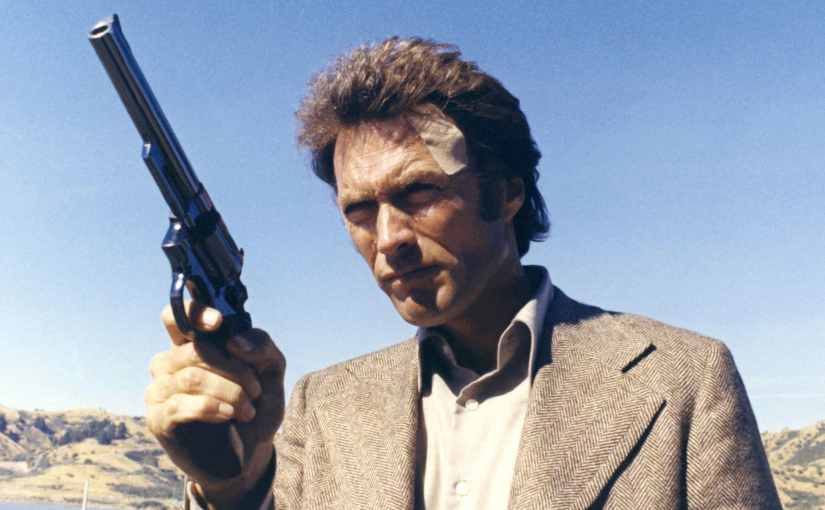
If you don’t know by now, I’m a huge admirer of Clint Eastwood’s work. His talents broach so many facets.  He acts.  He produces. He’s likely even better when he’s in the director’s chair.  He actually sings and he has even orchestrated his own music for some of his films.  Ever since I was first introduced to him at a young age when he played Dirty Harry Callahan and Fido Beddo, partnered with Clyde the orangutan, I was fascinated by his coolness and confidence in his stature on screen.  Whether he’s raising a fist, donning a scowl, giving a smirk or a squint of his narrow eyes or using his most famous prop, a .44 Magnum handgun, as an extension of his right arm, I’ve always been magnetically drawn to what he does on screen.

Online, a common question is asked: What is your favorite Clint Eastwood movie?  If I have to choose one, I guess it would have to be Magnum Force, the follow up to Dirty Harry.  Yet, I always believed Magnum Force could not operate without hitching on to the impact and message from Dirty Harry.  I can’t just like The Godfather Part II without liking the first film.  I can’t just love The Empire Strikes Back without liking its box office predecessor.  Same goes for The Lord Of The Rings pictures.

Magnum Force works so well because it questions what celebrated the Harry Callahan character that Eastwood portrayed two years prior.  This is a San Fransisco cop who defies authority when he knows that a danger must be suppressed without the inconvenience of bureaucratic red tape and police procedurals that ultimately will work in the criminals’ favor if not taken care of immediately.  As the first film demonstrated, it is easy for us to side with Harry’s desperation because we know the crazed killer is on the loose and he is only going to kill again and again while never surrendering or negotiating.  This second follow up film (in a series of five) tests the ideology of Eastwood’s character. 

A series of grisly murders are occurring within the city and it appears that a traffic cop is committing the acts.  The victims are the worst mobsters and pimps within San Fransisco who time and again have been overlooked for their crimes and/or have been released from trial or prisons based on technicalities.  A handful of characters within Magnum Force remind us that someone is saving the taxpayers a lot of money each time the body count increases. 

There’s a slight mystery to this film.  Harry encounters four rookie cops (David Soul, Robert Urich, Kip Niven and Tim Matheson) who seem very likable.  They are admirable of Harry’s reputation.  Harry is impressed by their shooting skills in particular.  Another traffic cop is an old friend of Harry’s, a guy named Charlie McCoy (Mitchell Ryan) who is on the edge and might pose a threat if he continues working the streets.  Any of these men could be suspects to these vigilante murders as it is soon realized that the scene of some of these crimes are similar. Often, cars are pulled over for traffic violations.  As well, ballistics indicate that the weapons of choice are normally a .357 Magnum, the standard issued firearm for a police officer.

The debate with Harry’s philosophy, firmly established in the prior film, is staged against that of his superior, Lt. Briggs.  He’s played by Hal Holbrook who is one of the best antagonists in all of Eastwood’s films.  They play so well against one another.  Early on, Briggs declares he’s never once had to pull his gun out of his holster.  Callahan sarcastically salutes the lieutenant by reminding him that men have got to know their limitations and that’s where the measure of asking what is ultimately necessary in fighting crime.  Where does it begin and when does it end?

Harry Callahan is that unusual cop who is frowned upon for the actions he takes in his own hands.  Other cops in movies played by Stallone or Gibson go to extreme measures simply for the cinematic action of it all.  Callahan is never thanked or given any serious commendations for what he executes with his .44 Magnum, a weapon that is as outside the lines as Harry himself. 

The difference between Harry and whoever this vigilante is must be deciphered and much of Magnum Force’s grey area is all that is seen.  Eventually, the black vs white clarity reveals itself and a telling lesson presents itself between what Harry Callahan stands for and what guise a vigilante operates under.  At the risk of revealing too much, the best scene of the picture occurs between Holbrook and Eastwood’s characters as they sum up the entirety of the film before the climax.  This film is over fifty years old and still the assortment of mindsets found within Magnum Force are worth pondering. Callahan is put to the test one time before in a haunting parking garage.

Beyond what’s worth considering among these many dangerous philosophies, this is a solid action picture with thrilling and well edited shoot outs among the cops and robbers.  A hilarious plane hijacking is derailed by Harry when he poses as a pilot.  Later there’s a store robbery that is undone and then there is a warehouse port exchange of gunfire that puts Harry and his partner in unexpected danger. 

There is an interesting target competition between the cops that implies what Harry suspects.  I like this scene in particular because it gives an inside look into how police officers interact and admire one another when not on the streets.  Yet, when one particular cop cannot get a thought out of his mind, it carries over into the action of the moment.  At the combat range, Harry fires his gun at one particular target that may cause you to sit up in your chair a little.  Often, Eastwood performs with little to no dialogue in his films and this is one very informative moment.

As much as I’m a big fan of Magnum Force, the penultimate scene always sticks in my craw a little.  Callahan is pursued on foot within the bulk of a freighter.  There is very little light provided in this sequence as Harry moves down one corridor or around a corner elsewhere.  It’s hard to see what is happening and who is where or who I am looking at.  For such a thrilling movie, this is a bit of a letdown as overall much of the action of this movie is driven by the plot.  Nothing feels random in Magnum Force.  Everything moves towards more story development or realizations.  Yet, I have to be somewhat forgiving only because this darkened scene occurs after all of the cards are put on the table and all the hero has to do is survive.

Just before the foot chase, there is a thrilling car chase with Eastwood actually doing the driving that takes us through the well-known twists of Lombard Street.  Director Ted Post wisely covers this from an overhead shot.   The car careens up and down the steep slopes of San Fransisco’s avenues and there are plenty of intense close ups of Eastwood behind the wheel accompanied by the screeching tires, bullets bouncing off the windshield and motors humming.  I have declared it before, the best place to have a car chase is in San Fransisco.  Surprisingly, this pursuit hardly ever gets categorized with the great ones like Bullitt, The French Connection, Ronin or The Seven Ups.

If you have never seen Magnum Force, check it out.  It is off color at times, but the exploits of Harry Callahan and the scum he’s forced to associate with were never about political correctness.  Still, there is much to debate, argue, and lend some serious thought to, especially in a newly unsteady climate of police acceptance and procedure.  My one recommendation though is to watch it as a double feature with the original Dirty Harry to truly see the two sides of Harry Callahan’s coin. 

NOTE: An interesting fact I just realized at the end of Dirty Harry, the cop shoots the bad guy with his right hand.  Later, he tosses his badge, but with his left hand.  Especially with Magnum Force as a follow up film, I see the internal struggle of Harry Callahan pitting his gun up against the mindsets that come with his badge.

FURIOSA: A MAD MAX SAGA

By Marc S. Sanders

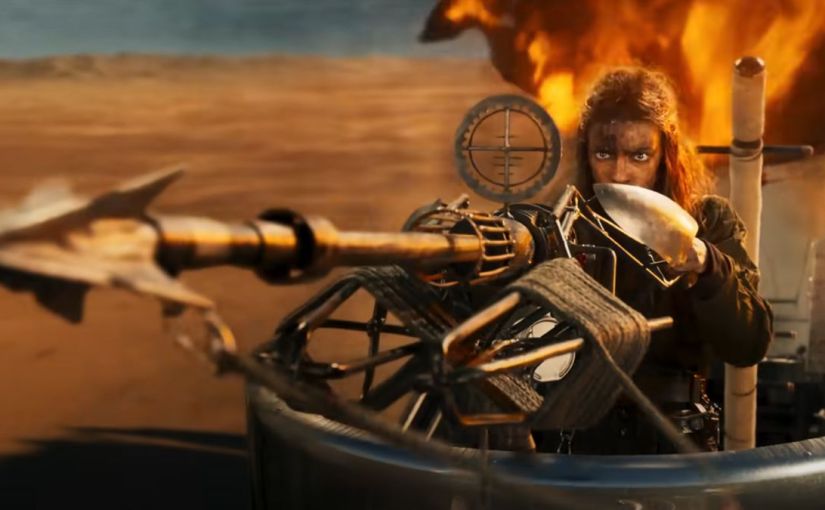
George Miller has never gone deep with his Mad Max movies.  The director treasures the inventions of his auto chases and the tricked out diesel junk contraptions that participate in high speed pursuits through his apocalyptic desert wasteland.  The more outrageous the vehicles and the crazier the stunts are, the more fulfilled Miller appears to be with his filmmaking.  However, the fifth film within this gonzo world of barbaric S & M dressed drivers invites us to explore the past of a surprisingly treasured character,  introduced in the prior film.  Her name is Furiosa and this time we see what she experienced as a young child (Alyla Browne), followed by what she learns as a young adult (Anya Taylor- Joy).  This fifth film in the franchise serves as a prequel to the last film, Mad Max: Fury Road.

As a pre-teen, Furiosa is abducted by the bandits who serve under the pompous and proud Dr. Dementis (Chris Hemsworth, playing his Thor role as if the Marvel character was a celebratory villain). A thrilling prologue covers this sequence of events with rescue efforts from the would-be heroine’s mother to save Furiosa and bring her back to their secret home of green vegetation located beyond the desert plains.  There are heart stopping motorcycle chases with the warrior mother bearing a sniper rifle and fighting with her last breath through the whole sequence.  Charlee Fraser portrays the title character’s mother. Thanks to her performance, she had me convinced me that the rescue will deem successful, accompanied by Miller’s reliable direction.  An absolutely thrilling opening.

Dementis rides his esteemed tri-motorcycle chariot steed, inspired by the sword and sandal adventures of Ben Hur and Gladiator.  A hilarious over the top vehicle to see Chris Hemsworth piloting.  His biker gang is in tow along with young Furiosa as they journey to the Citadel, first seen in Fury Road.  Dementis puts his conceit against that of Immortan Joe (Lachy Hume) the skeleton masked ruler of The Citadel for a chance at…what else?  Conquest and power.

Furiosa grows up a few years and gets mentored by a trucker named Praetorian Jack (Tom Burke).  I still love these character names by the way.  The truck chase is the highlight of the picture, with paragliding motorcycle riders swooping in like large attack birds trying to sabotage the weaponized rig full of delightful surprises that’ll make you shout “OH!!!” in the middle of the theater.  It is sequences like this that audiences adore in the Mad Max pictures. 

Unlike the other films though, Furiosa gets a little lethargic during the story set ups which are angles that never anchored the other better installments, The Road Warrior and Fury Road.  Reintroducing the Immortan Joe character is not as interesting this time and this desert picture gets a little too waterlogged when he enters the story.  He just doesn’t feel very necessary.  The two younger Furiosas and the self absorbed Dementis are plenty with just enough story opportunities to make a solid movie.  Retreading on other characters slow this fifth installment down a bit.

The whole cast looks great.  Anya Taylor-Joy is the best bad ass version of a younger Charlize Theron, who originated the role.  She hardly has any lines but her expressions on camera beneath the war paint, grease, dirt and long hair extensions look awesome.  Though the lead actress is hilariously dwarfed by Hemsworth’s Dementis, they make for a great dichotomy of hero vs villain.  She’s the quiet reserved David.  He’s the proud Goliath.  This is a dream casting pair.

Practical stunts are done once again and George Miller does impressive work with his camera.  His tactics for filming action scenes demonstrate why a Michael Bay normally fails.  Nothing is a quick take edit.  You watch these motorcycle riders and Furiosa hold onto to the bottom of the speeding truck and Miller will circle the camera, with no cuts in the take, so we see what is happening next to both sides of her profile.  The camera will then swoop up to see who’s running and holding on to the top of rig or who is parasailing from a great height while tethered to some kind of buggy vehicle below.  Amazing work.

However, seeing Furiosa on a large Dolby screen, it’s not hard to see a computer enhanced finish applied to the photography.  It’s very glossy and nowhere is it grainy like the very early Mad Max films from over forty years ago.  Yet, as dirty as these vehicles and characters are, the cleanliness of the cinematography sometimes does not clash well with what’s on the screen.  It’s a little distracting honestly and that was a surprise to me considering how perfect Fury Road looks on my 65-inch flat screen at home.  This one looks a little too perfect.  This might be that film where less may have been more.  

The background story work on Furiosa is not a terrible grievance.  The final print of the picture is acceptable.  All of it is definitely worth watching and I hope box office picks up following a sluggish opening weekend because I encourage anyone to see Furiosa: A Mad Max Saga on a big screen first.  I just think George Miller and company may have leaped much further than necessary this time around.

MAD MAX: FURY ROAD

By Marc S. Sanders

After watching Mad Max: Fury Road, you will feel like you need a shower.  Strike that, you will need a shower in aloe first, then a traditional shower and then a weeklong bath in aloe.  It’s a baked in environment that gives you the feel of grainy sands and burning sunbeams.

George Miller’s return to the gonzo, apocalyptic diesel future franchise is exciting from the moment the Warner Bros logo appears with the vroom vroom blaring through your sound system’s speakers.  Miller hardly surrenders the breakneck speed of his two-hour picture to let an audience catch a breath, and because the director is so unforgiving it makes this a tour de force of action entertainment that other adventure films can only strive to at least match.  Still, the movie has next to no story, and that’s fine.

Up until this 2015 reinvention, Mel Gibson was the Aussie Road Warrior donned in leather fighting to survive against lawless bandits coming from any direction in the sand swept plains of an earth afterlife.  Now Tom Hardy takes over the role.  Frankly, it could have been anyone who got recast in the part.  Hardy has few lines and for half the film his face is caged in a grotesque, steel bar mask while he is strapped to the front of a hot rod, gear grinding, amalgamation of a vehicle, simply to be a kind of three-dimensional hood ornament.  This Max is suffering through high-speed chases with his head trapped in animalistic headgear and his arms and legs bound behind his back while he’s tethered to this four-wheeler.  It’s brutal and we can feel how tortuous it is for Hardy’s character.  Yet, we love it!!!!  Keep it going, George!

The real star of Fury Road is Charlize Theron as a one arm rebel caked in black grease with a shaven head.  Her name? Imperatour Furiosa.  What a name!!!!!  Furiosa attaches a steering wheel to the driving hilt of an 18 – no 20, maybe 24-wheeler (it could even be 36) big rig with a big ball of fuel hitched to the back. She detours away from a band of outlaw drivers ruled over by Immortan Joe (Hugh Keays-Burn).  Yes!  His name is Immortan Joe. 

In tow with Furiosa are Joe’s pregnant concubines whose fetuses are declared his property.  These lovely lasses dressed only in bed sheets have names like Capable, Cheedo The Fragile, The Dag, Toast The Knowing and The Splendid Angharad (Riley Keogh, Courtney Eaton, Abby Lee, Zoë Kravitz and Rosie Huntington-Whitley).  What is the point of listing off these ladies’ identities? Well, the script for the film doesn’t do so. Yet, the end credits do in a heavy metal kind of font, and it is clear that George Miller is proud of every name, every piece of junk that flies through the air in one crash and bash after another, and every flame that exhausts out of a pipe or even a death metal rock guitar orchestrated by a guy simply known as The Doof Warrior (played by a musician named Iota).  Incidentally, The Doof Warrior is garbed in red long johns and tethered by chains to a big rig with the biggest, blastiest speakers known to man.  The Doof Warrior serves no purpose except to scratch on the guitar while flames shoot out of the stem.  I’m laughing as I type this all out.  This whole display is thankfully ridiculous while all of these figures have the most outlandish and greatest names of all time!!!!

When Furiosa diverts away in the mighty big rig with the pregnant women, Joe follows suit with his endless band of albino crazies in one tricked out vehicle after another.  One car has the chassis of a Mercedes wedged on to the fattest wheels ever conceived.  Another is a Chrysler (I think) resting atop a pair armored tank tracks.  Joe’s automobile looks like it got disqualified from a monster truck rally because it was caught taking diesel steroids. 

Anyway, Mad Max eventually catches up with Furiosa and the ladies.  His last name is not something simple like Jones, Smith, Sanders or Rodriguez.  It’s ROCKATANSKY!!!!!  BOOM! That is awesome!!! A one-time underling of Joe’s, named Nux (Nicholas Hoult), eventually sways over to the heroes’ side as well, and the pursuit carries on.  Furiosa’s destination is a location of green, beyond the desert wasteland.

It’s a wonder that Mad Max: Fury Road was applauded so much in 2015.  However, take a moment to consider the construction of this two-hour operatic noise fest and you cannot help but salute all the merits that went into the final product.  First the nominated visual effects are primarily practical with little to no CGI.  If George Miller is going to make another Mad Max film, he’s going all the way.  The cinematography is gorgeous in a tan, orange, and yellow sun burning desert, while the night scenes are unhidden due to a pure, bright blue.  The interior of the truck seems cramped and uncomfortable, and yet Miller leaves enough room for the viewer to sit inside and uncover every hidden firearm plus get up close with the driver and the lady passengers.  There’s even a cool weapon found in the stick shift.  Wait until you see that!  The editing is relentless with perfectly captured close ups of so many character drivers and passengers all in a matter of seconds.  Plus, wide overhead shots and extended ground captions make it easy to understand just how many vehicles are included in this endless demolition derby.  I’m talking hundreds of monster machines ready for weaponized destructions. The choreographed action scenes of gun shots firing and vehicular collisions is like a ballet of a perfect derby show.  Monster razor blades are given their due, along with an assortment flame throwers. Also, kamikaze suicidal albinos are ready to act like destructive grenades.  Not one scene or shot in a Transformers CGI picture of metal vomit comes close to a millisecond of George Miller’s craft.

No other film could be as deserving of Academy Awards for sound, cinematography and editing as well as nominations for Best Picture and Best Director.  Even the warped-out S&M costume designs and make up are eye popping; merits that also earned Oscars.  You might have a fondness for art house cinema like Fellini or perhaps a Daniel Day-Lewis piece that invests in the method of caliber acting performances, but you cannot deny the artistic efforts vested by George Miller, his editor wife Margaret Sixel, and the rest of the crew. Mad Max: Fury Road was placed on so many top ten lists in the year 2015, and its because the film succeeds in the best of technical achievements. 

George Miller operates like that nasty kid named Sid from the Toy Story pictures.  He assembles his set pieces in the most tricked out, ugly and grotesque combinations of auto body parts, gives them engines that breathe fire and roar like vicious beasts that smell like diesel and then collides them altogether in a wide open plain.  Try to imagine Miller as a young child with his Matchbox cars on his bedroom floor.  His parents might have had some concern while observing his play activity.  What’s appreciated though is that this director never settled for simple with his Mad Max films and he never repeated what he’s already demonstrated.  No car crash looks the same.  No single shot is  repetitive.  This is how a director of any film genre should operate.  When they take attentive care to every frame they capture with their camera, then they get a Mad Max: Fury Road

One of the best films of the twenty-first century!

NOTE: I originally saw this film in 3-D in the theaters.  Wanna know my sentiments towards 3-D? Well, I hated this film after I saw it.  I gave up five minutes into the piece because the 3-D was unforgiving in distraction and dark beyond comprehension and measure.  Watching Mad Max: Fury Road again, a number of years later in a standard 4K on my 65-inch flat screen, you can likely tell by my write up that my sentiments have drastically changed for the picture.  It’s also telling to note that the new prequel film Furiosa is not being presented in 3-D.  Unless it is a James Cameron film or a special exception like Ridley Scott’s Prometheus, modern 3-D is as big a failure as the new formula Coke was back in the 1980s. 

KINGDOM OF THE PLANET OF THE APES

By Marc S. Sanders

The revival of the Planet Of The Apes films within the last decade and a half remain impressive.  Moreover, the first film, Rise Of The Planet Of The Apes, led to a global epidemic that wiped out most of humanity, well before we ever heard the term COVID, or used the word pandemic in our everyday vernacular.  That first film was guided by James Franco with fast food science summarization, but it was a thrilling film in context of storytelling and most especially in the visual effects delivered by WETA (who worked on Peter Jackson’s Tolkien films) convincing audiences that apes inherited a superior intelligence to overthrow the dominant human species.  A chimp character named Caesar led the rebellion and he was masterfully played by Andy Serkis.  Caesar did for the retelling of Planet Of The Apes what Wolverine did for X-Men.

In this 2024 fourth installment titled Kingdom Of The Planet Of The Apes, Caesar has now passed away and this universe jumps many generations into the future.  The new ape hero is Noa played by Tampa native Owen Teague.  The mannerisms of Noa are just as convincing as what we saw in Caesar, even if the character is not written with as much nuance or magnetic care that we found in Serkis’ performance over the prior three films.

In this film, practically all of humanity is wiped out.  This ape population, Earth location unknown, has formed a bond with the bird community and Noa and friends find adventure while retrieving eggs from high birds’ nests to be used for a symbolic ceremony within their village.  

However, just as real-life human history teaches us, other ape factions adopt man’s nature to control and conquer.  Noa finds himself on a horseback sojourn to rescue his village members who were harshly taken from camp.  Along the way he meets wizened orangutan Raka (Peter Macon) who apprises Noa of the legend of Caesar.  Curiously, a mute teen girl (Freya Allen) is found as well.  They engage in a united trek that will test them as encounters with danger present themselves.  In particular, they come upon the sadistic tribe overruled by the mighty gorilla Proximus Caesar (Kevin Durand).

All of these ape portrayals are marvelous to observe.  The expressions and change in facial features plus the flex of limbs and torsos with involuntary motion are unbelievable to see as the characters deliver their dialogue and converse or debate with one another.  The hand-to-hand combat interactions are perfectly enacted. You remain impressed through the course of the entire film, even if the picture is unnecessarily longer than it needs to be.

Kingdom moves episodically through Noa’s eyes.  The movie begins with one story.  Then as additional characters are introduced it moves on to something else until it gets to a mildly sinister (PG fare, really) telling of Proximus forcing his chimp followers to heed his command by opening a large steel vault door of a beached ocean cruiser from the long-lost days of human occupation.  What’s in the vault?  Well, I was never expecting much, but Proximus believes the contents to be revolutionary. By commanding under a misleading guise of what the original Caesar stood for, he’s a vicious figurehead to the apes he holds hostage.

The interesting aspect to Kingdom is by this fourth film we know who the real Caesar was.  Though, Noa was never educated on the messianic purpose of that leader.  So, we find Proximus to be a deceitful evangelist to his underlings. While it’s not a major requirement to know what occurred in the prior films, it helps to know what Caesar stood for versus how he is regarded in this further future.  Ministers deceive biblical teachings and the figures within the holy text to capture their congregations’ impressions.  Proximus functions in a similar way.

The prior films kept a divide between the apes and the few human survivors as a means to set up conflicts.  With Kingdom, we witness beyond what Caesar oversaw generations later, and how divisions within the ape species serve only to live quietly or govern with a domineering crown and the symbol of a legend to deliver an updated mantra.

Socially speaking, like the best Ape films and going back to the French novel adaptation from Pierre Boule (known for also writing The Bridge On The River Kwai), these stories work when they explore new aspects of intelligent developments within the ape communities.  Some function with selfishness and a need for power.  Others lean towards love, friendship and a moral compass.  Blend these ideals together and in turn comes conflict – the nucleus of effective storytelling.

Kingdom Of The Planet Of The Apes is perhaps the weakest of the four most recent films.  The film is too long with unnecessary exposition.  Noa is not the hero that Caesar was. Though some turn up, humans are primarily absent from the whole film, and they are still the best opponents against the ape communities.  

The cliffhanging ending keeps me excited for more subsequent tales because I’ve not grown tired of this franchise yet.  These films are more dazzling than James Cameron’s two Avatar films combined.  

I must confess I was hoping this movie would address some hanging threads that stem all the way back to Rise Of The Planet Of The Apes.  Still those topics have regrettably not been addressed and I hope those moments were not just some random wink ‘n nod.  Specifically, I’m referring to the rocket that astronauts launched in the direction of Mars just before the virus spread across the planet and Caesar’s band took over Earth.

There’s a good story in Kingdom Of The Planet Of The Apes.  I was just hoping for a few other angles than some of what were offered up this time around.

THE PROFESSIONAL (Léon)

By Marc S. Sanders

The cult following that has come with Luc Besson’s first American made film seems unwarranted to me.  It’s currently listed as number 40 on IMDB’s top 250. I have no idea why. I recognize the artistic style of the picture, but what is here to relish beyond an enlightening introductory performance from would be Oscar winner Natalie Portman?

To watch Besson’s use of the camera makes me feel like a viewer from the director’s native France.  The setting is Little Italy, New York and it has a feel to it like Besson just stepped off the plane and decided to hone his lens on a condensed city section, but lacking an education of its culture or history.  The Professional certainly doesn’t look or feel like Dog Day Afternoon, When Harry Met Sally…, or Die Hard With A Vengeance.  (Perhaps the music from Éric Serra altered my mood.)  I never took issue with this aspect of the movie. It is unfortunate however that Besson’s film comes off too perverse in its storytelling, especially with its character blend.

Portman is Mathilda, a spunky kid who survives the murder of her family when a corrupt, drug dealing DEA agent named Stansfield (a way over the top Gary Oldman) carries out the slaughter after her father fails to pay a debt.  Fortunately, as Mathilda is returning home and coming upon the bloody aftermath, Stansfield and his crony of killers opt not to take her out too as they believe she belongs with the occupant of her neighboring apartment.  Léon lives there and happens to be a skillful hitman and weapons expert who pulls Mathilda inside to safety.  He’s played by Jean Reno.  These killers who massacre by day have no care to eliminate the other tenants living on the same floor, including a little old lady.  Why?  I don’t know.  Maybe they called in sick on the day assassination school covered “Chapter 6: Leave No Witnesses.”

Besson does not apply much brainpower to the script he wrote and directed.  Oldman’s characterization could not be more obvious with how unhinged he behaves.  His department colleagues who take less than a minute and a half to question him don’t even raise an eyebrow.  While the storyline can be dismissed as a pulpy kind of graphic novel come to life, isn’t it lucky that if your family is going to get shot up, you have a professional hitman living right next door? I mean c’mon.  This is only the set-up of the picture, within the first ten minutes, and my suspension of disbelief never arrived.  

The most egregious lack of consideration falls within the relationship between Reno and Portman’s characters though.  She’s twelve.  He’s in his late thirties or early forties, but his silence implies it is time for assisted living.  When they are not relocating from apartment to apartment, trying to stay out of sight of Oldman’s gang, they are valuing the life of Léon’s beloved plant, drinking milk and demonstrating the fine art of sniper operations.  That’s fine – it’s the stuff of Tarantino fare.  

However, when the pair decide to entertain each other with Portman doing routines of Madonna and Chaplin for play fun, there’s a cringey temperature to the picture.  Besson was seeking out a relationship between a random man and child without any element of sexual proclivities involved and yet, it’s there.  In another writer/director’s hands, there would have been a stronger attempt to develop a paternal relationship between the two characters.  Yet, Natalie Portman doing a childlike song and dance performance of “Like A Virgin,” with Jean Reno’s Léon acting unaware seems artificial and perversely moving in the wrong direction.  When danger crosses their path later and they both say “I love you” to one another, I can’t help but question how this bond might have turned out if they were never forced to separate and save themselves from the bad guys while continuing to live a quiet life with a house plant and gallons of milk.

The final third of The Professional has the inevitable shootout and explosions.  Out of context, it looks good but again this is New York.  So, when Stansfield brings in the firepower of the entire city police to force Léon and Mathilda out of the tenement building, shouldn’t someone be questioning someone?  Anyone? It’s ridiculous.  None of the neighbors run for cover or are given warnings to divert away as a small rocket launcher is propped up for blasting the front door open, along with anyone inside.  

The Professional contains a boring, inappropriate middle section accompanied with a ridiculous opening and ending.  Therefore, I have trouble locating the merits for this piece.  I can recognize the potential of Natalie Portman in her performance.  Yet, if this were the first film I ever saw Gary Oldman in, I might not be so prone to watching anything by this best of the best character actors.  “EVERYONE!!!!” he screams, shouts, screeches, and bellows all at the same time.  Whether you’ve seen the film or not, most cinephiles relish in that sound byte from him on social media. I’d argue it’s in no way a salute to the actor.  Frankly, it’s indicative of the material when a guy as accomplished as Gary Oldman cannot uncover enough of a quirk in a bad guy from a very unimaginative script.  It’s not your fault Gary, so much as it is Mr. Besson’s.

Jean Reno has a cool looking, silent poise to Léon, the professional hitman, but there’s nothing lent to him to work with except a pair of opaque, circular sunglasses, milk, a plant and at least as many guns and ammo as found in The Matrix.  Reno functions on little dialogue and no background save for a few scenes he shares with Danny Aiello as the mob boss who frequently hires him for jobs.  Reno’s scenes with Natalie Portman only demonstrate how inappropriate their connection as actors in a scene are, as well as how their characters are supposed to serve each other. 

The faults of The Professional ultimately lie with its puppet master, Luc Besson.

THE FALL GUY

By Marc S. Sanders

Indulge me please while I spout off a number of movie titles. 

I am big fan of Emily Blunt.  She justifiably earned her first Oscar nomination for Oppenheimer.  She was Mary Poppins – a damn good one.  She’s good in her husband John Krasinski’s A Quiet Place monster movies.  Have you seen Sicario? The first one?  You should!  As well, there’s the role that put her on the map with The Devil Wears Prada.  Just a great actress with a huge repertoire of sensational performances under her belt.

I am also a big admirer of Ryan Gosling.  Magnificent in the long-awaited Blade Runner sequel.  He’s a dancing wunderkind and musical genius as well with films like La La Land.  You ever seen The Nice Guys where he partnered with Russell Crowe?  Another one you should see.  Also find him in The Ides Of March, directed by George Clooney.  He got his umpteenth nomination for Barbie recently, but let’s face it, after that Oscar show performance for Best Song the man only overshadowed what he blew our eyes out with, and now I believe they should bow to his dancing feet for hosting duties.  Plus, the guy is now the pinnacle live action Beavis to go with Mikey Day’s Butthead.  Is there nothing this guy can’t do?

I think back to all of these sensational cinematic achievements, and I am dumbfounded that when this pair finally, at long last, team up it is for wasteful bash up/smash up junk like a television adaptation of the Lee Majors’ ABC action series The Fall Guy.  It’s been a long time since I was so bored watching a stunt filled two-hour flick with zero spice or flavor.  There are fire balls aplomb in this movie and I don’t think Gosling ever feels the burn.

I’ve seen the Die Hards and the Lethal Weapons with the fight scenes and car chases and bombastic explosions. Amid all nine of those pictures (well maybe not the last Die Hard movie) the action usually drove at least some semblance of story, suspense and amazement.

The Fall Guy, directed by former stuntman David Leitch, proudly declares itself a stunt movie because the hero, Colt Seavers (Gosling) is a stunt man for action movies.  However, the audience is shortchanged on…well…the stunts.  I remember Miguel and I watching The Fast And The Furious for the first time.  We both agreed the movie failed because it did not provide what it was selling, namely car chases and car stunts.  At least not enough of them.  Instead, we got Paul Walker and Vin Diesel getting all Terms Of Endearment like and we asked ourselves, when are they going to get in a car and drive.

Consider the opening sequence of The Fall Guy.  First I’m dazzled by a well-done Steadicam shot the runs at least four minutes as it follows Colt talking on his cell phone as he struts from his movie set trailer then on into the lobby of a sky rise building, through a crowd of movie extras, crew and cameras, up an elevator and then over to a platform ledge where a harness is strapped to his uniform and he is suspended high above the ground below, while facing up.  A fall is gonna happen, right? And it does, but then we do not see the finish of the fall.  This one shot walk for Gosling cuts the legs out from under us. Just as the fall is about to finish, it cuts to the guy in a stretcher being wheeled into an ambulance. 

Now you can insist to me that is the start of the story.  Colt breaks his back in a stunt fall gone wrong and thus he’s now retired and surely 18 months later, he will be called back to do his best bidding and set the wheels in motion for the rest of the movie.  Okay.  Fine.  I’m with you.  The hero comes out of retirement for one last job. Yet, THE RYAN GOSLING just did the actual fall and we couldn’t see THE RYAN GOSLING finish the fall.  This wasn’t a stunt double as far as I could tell.  I’ve used this analogy before, but this is like Moe throwing the cream pie at Curly, only you don’t get to see the pie make impact with Curly’s face.  I feel cheated, and I felt cheated during most of The Fall Guy.

This approach is done often during Leitch’s film.  He’ll put Colt into a stunt sequence but then cut away to something else.  Later in the movie, Colt gets into a fist fight with some bad dudes while trying to hang on to a runaway truck and trailer careening through the streets of Sydney, Australia.  Colt throws punches.  He gets punched.  He falls.  He hangs on.  He gets up again.  Wash, dry, repeat.  The problem is that Leitch opts to cut away after each punch or fall to Emily Blunt doing a rendition of “Against All Odds” in a karaoke bar.  This whole action scene is chopped up for no purpose that keeps me in the film.  It’s like when I would have to ask my kid to stop interrupting while the grown ups are still talking.  I love watching Emily Blunt sing.  I love watching Ryan Gosling do his version of what a kamikaze Mel Gibson used to do in his younger years.  Can we just have one thing at a time though?  This kind of juxtaposition is not intriguing or beguiling or whatever the filmmaker wants it to be, and it does no favors for either lead.

The story is pretty simple and pedestrian. Nor does it follow the theme of the TV show that everyone has forgotten or that this generation has ever heard of.  Blunt plays Jody Moreno, a maybe former flame/middle school crush of Colt’s.  Unbeknownst to her, the producer (Hannah Waddingham) of the science fiction film Jody is directing has reached out to Colt a year and a half after his broken back accident to come to Australia and not only work on the set but also track down the star (Aaron Taylor-Johnson) of the picture who has disappeared without a trace.  Colt is not very bright and he’s especially not a detective of any sort. 

Once this is all set up, The Fall Guy flip flops from the search, over to Colt getting set on fire repeatedly on the set, and then back to the search, followed by the inevitable twist, which is in no way a twist because the surprise seems known as soon as movie begins. 

I was not expecting utter brilliance here, but I was hoping for substance.  Gosling and Blunt are two of the biggest stars out there right now and can have their pick of the litter in what they do next.  It only makes sense that these two should pair up for a movie, but this is what they choose?  The script has less wit or intelligence than a coloring book that has yet to be scribbled in by a four-year-old.  I remember the hype around a picture called The Mexican with Julia Roberts and Brad Pitt, the biggest stars of the time finally teaming up, and just like it is with The Fall Guy, they had zero chemistry, and they barely shared any scenes together.  When they did, they hardly acknowledged each other.  Filmmakers cannot just stop working when they get the marquee names to sign a contract for the film.  They gotta work to live up to the hype that comes with these capably appealing actors.

In his pursuit, Colt gets drugged and then we see a unicorn standing next to him for a long sequence.  The audience sees the unicorn, but Colt hardly acknowledges it.  I don’t get where the ha ha ha is supposed to come from this bit.  I think the writers were maybe going for an Airplane!/Naked Gun gag.  Colt gets thrown through glass walls.  He tells us he was part of the Miami Vice stunt show at Universal Studios by simply wearing a jacket that says it, but so what?  There’s no dimension to any of this. (I did appreciate hearing the theme song during a very brief nighttime boat chase.)

Aaron Taylor-Johnson (Avengers: Age Of Ultron, Kick Ass, and one time James Bond candidate) is another fine actor, not doing his best work.  He’s a jerk here with bleach blond locks and nothing to do.  He’s just unlikable and unfunny.  Hannah Waddingham?  Never heard of her, but I can only imagine she’s got something better lined than this obnoxious movie producer role with an annoying over the top Australian accent.  If she’s really Australian, then I’ll have to surrender to the fact that I just don’t know the down under dialect.  Frankly, she’s just terrible. 

Never thought I’d say this but Gosling and Blunt had a thousand times more chemistry when they did that presentation at the 2024 Oscars jabbing at the Barbenheimer trend and shamelessly promoting the upcoming release of this film.  In this movie, they look like they are not making eye contact with one another or listening to what the other actor is saying. I don’t blame them, though.  I call foul on David Leitch for lousy directing.

The most interesting thing about the film adaptation of The Fall Guy are post credit behind the scenes footage where I got to see all of these stunts in their uninterrupted entirety, but without the glossy cinematography finish.  However, an Easter egg scene shows up with THE LEE MAJORS and the other blond Heather from the 1980s, THE HEATHER THOMAS.  She is given blond wig and probably an unseen muzzle because she has no dialogue to say except stand there in a cop’s uniform with her butt and boobs sticking out.  Majors is left to be dull, like he probably was in the final season of the show when it was jumping the shark.  If the writers of this movie just used a tenth of their imagination, they could have kept Lee Majors as the original Colt Seaver who mentors Gosling into being THE FALL GUY of today.  Why couldn’t Lee Majors have a substantial role in this picture?  It would have worked.  However, that is not likely because there’s barely a plot, character, or even stunt scene that implies the makers of this movie have that kind of capable imagination. 

Find another movie for Emily Blunt and Ryan Gosling. STAT! They are so much more worthy then the building they jumped off of only to land in this fire ball blasted junk resting below.