
by Miguel E. Rodriguez
DIRECTOR: Henri-Georges Clouzot
CAST: Simone Signoret, Véra Clouzot, Paul Meurisse, Charles Vanel
MY RATING: 10/10
ROTTEN TOMATOMETER: 95% Certified Fresh
PLOT: The wife and mistress of a loathsome school principal plan to murder him with what they believe is the perfect alibi.
[NOTE: If you have not yet seen Diabolique, READ NO FURTHER. I will try not to give spoilers, but discussion of the story may give unwanted hints or clues. Beware.]
Am I giving Diabolique, Clouzot’s classic of French suspense, a perfect rating because it fooled me? No. Is it because of the acting? Not quite, although Véra Clouzot is an obvious standout. In my mind, the lion’s share of the credit for my perfect rating goes to the impeccable screenplay and the masterful direction from H.G. Clouzot, director of other French classics like Wages of Fear (1953) and Le corbeau (1943). The story is so good that Hitchcock famously regretted not grabbing the movie rights from the novel on which the movie is based, so he made sure he purchased the rights to the author’s next novel almost immediately. [Fun fact: the movie of THAT book yielded Hitchcock’s legendary Vertigo (1958).]
The story of Diabolique will come as no great surprise to any modern moviegoer. As soon as key facts about the major players were revealed, my mind immediately went to Ira Levin’s Deathtrap (1982), which was CLEARLY inspired by Diabolique, as were many others. What makes Diabolique such a standout is that it was first. Before Psycho, before Peeping Tom (both 1960), before Don’t Look Now (1973), Diabolique wowed and shocked audiences in equal measure.
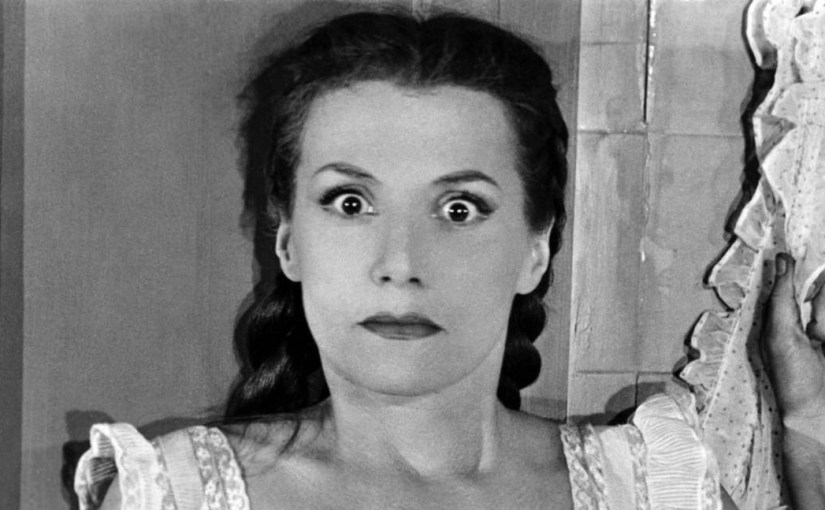
Diabolique’s method is deceptively simple. With admirably economic storytelling, Clouzot presents us with the three main players: the headstrong mistress, Nicole (Simone Signoret); the timid, sickly wife, Christina (Véra Clouzot, the director’s real-life spouse); and the detestable man they both share, Michel (Paul Meurisse). The three of them run a boys’ boarding school, with Michel as the headmaster. Michel is immediately set up as despicable. The first time we see Nicole, she is sporting a black eye behind some shades, already seeming to plot with Christina. A little later, Michel forces Christina to choke down some rotten fish served for their meal (he got a bargain at the market for day-old fish…eeyuck). When she loudly wishes she were dead, Michel evokes Ebenezer Scrooge: “Hurry up, then. We’ll arrange a nice funeral and be well rid of you. The school won’t notice, and I’ll feel much better.” Charming.
So, when the two women hatch a plot to get rid of Michel, we’re on board, because who WOULDN’T want to get rid of this jackass? But in classic fashion, nothing goes down the way it’s supposed to. First, there’s a problem with noisy plumbing (I’m being purposefully vague here). Then there’s the broken handle on the large trunk. Then there’s the pesky body that simply won’t behave the way a dead body should. Then there’s the empty hotel room, and the Prince-of-Wales suit, and the schoolchild who claims he saw the headmaster at a time and place where he ABSOLUTELY should not have been…and so on.
Despite the fact that I kind of called what was happening and why, I still thoroughly enjoyed Diabolique, the same way that I enjoy watching some of my favorite films over and over again. Here’s a plot that we’ve all seen repeatedly, but it’s done so well that you just have to sit back and admire its audacity. Nothing is overdone, no one strains for any kind of effect, the characters are who they are, simple without being simplistic, if that means anything. They’re intelligent people, not placeholders, so when they can’t figure out what’s going on, we believe it.
I loved the fact there was no musical score except for the opening and end credits. That was amazingly effective, especially in scenes toward the end that relied heavily on the kind of shots and editing that reminded me of movies like M and Nosferatu. And I haven’t seen water used so atmospherically since Brian De Palma’s Femme Fatale (2002).
Depending on how you define “twist”, it could be argued that Diabolique was the first movie to contain a full-on twist ending, one that redefines everything you saw previously and compels you to go back and watch the movie again to pick up on clues you missed the first time around. (A case might be made for Mildred Pierce [1945] being first, but that film’s ending is not quite as insane as Diabolique’s.) For that reason alone, and because it accomplishes it so well, this movie is worth seeking out. Just don’t let anyone spoil it for you.
 2 UNPAID MOVIE CRITICS!!!!