
By Marc S. Sanders
I guess Liam Neeson and Gerard Butler were unavailable when Antoine Fuqua and Denzel Washington collaborated to make the first installment of The Equalizer trilogy, based on the CBS television series that starred Edward Woodward. This film is nothing special with a nothing special kind of script, a nothing special hero and a nothing special collection of Russian Mafia villains. The kills are nothing special either. The action is nothing special. The explosions are nothing special, even when they are started by a trip wired microwave.
Robert McCall (Washington) lives a quiet life by himself, while working at a jumbo home improvement store (think Home Depot or Lowes – big places for lots of not so special action to take place at the conclusion of a not so special movie). Turns out McCall, who also lives with OCD, is a retired special ops commando. Robert uses his down time to read one of a hundred books that should be read before you die, while sitting quietly in a coffee shop each night. He also volunteers his assistance with getting people to improve their lives. A plump co-worker named Ralphie (the go to name for fat guys) played by Johnny Skortis is on Robert’s strict diet regimen to lose enough weight so that he can be promoted to the store’s security guard position. Skortis occupies the best and most interesting character in The Equalizer. During the final action sequence, it’s what Ralphie does that earned my one cheer during the course of the picture.
Robert also becomes acquainted with a young lady named Teri (Chloë Grace Moretz) who has aspirations of becoming a singer but is weighed down by her call girl commitments to members of the Russian mob. When Robert sees that Teri has been beaten and is in serious trouble, he doesn’t wait to be asked for help. He just does what is necessary to even the score.
That about does it for The Equalizer.
No. Seriously. That’s all there is to it. And so I’m very disappointed.
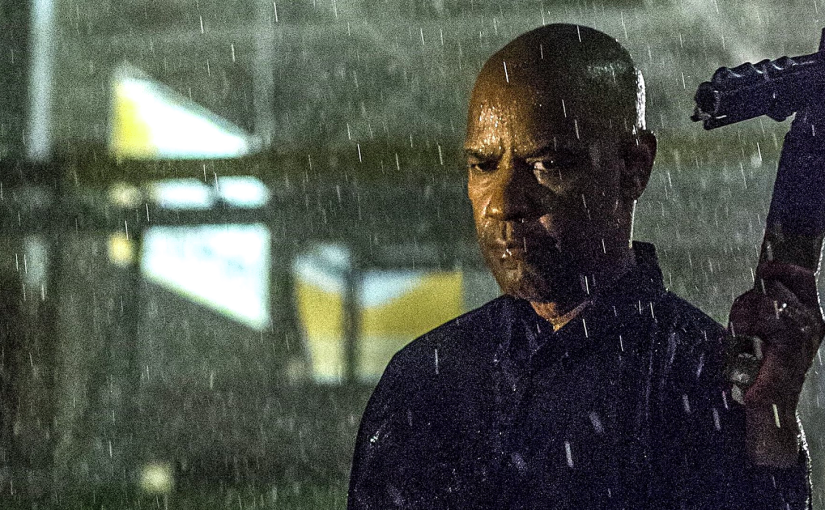
First, Denzel Washington does not even look like he’s trying. His demeanor to this character is no different than what he did in the lousy Man On Fire, directed by Tony Scott. The script to this film is not challenging in the slightest. Like Man On Fire, The Equalizer is simply a series of scenes where Robert torments his villains. David Harbor is a corrupt Boston cop who gets trapped in his own car, while Robert runs a garden hose from the exhaust pipe to the inside with the engine running. Where is the entertainment in this? Washington sits in a chair while he mechanically opens and closes the car window and Harbor gasps for breath. McCall is inventive with his methods but it does not lend to any story progression or character depth. I guess Robert McCall is an artiste – one who specializes in torment, torture and death.
The climactic showdown, within the store, is a great set up for some tête-à-tête methodology to happen, but all of it is executed with little interest. Here’s where I asked myself a question. McCall nabs a guy in a makeshift kind of bear trap down aisle 10 (I guess). The thug gets his neck caught in a barb wire noose and up he goes to the second level of pallet platforms for McCall to stare the guy down while the blood squirts out from his throat. There’s four or five heavily armed other guys roaming the store, but McCall can take a break to stare this guy down for his last breaths. If this trap works so well with this one guy, then why not set up six or seven more of these MacGyver contraptions and let each machine gun toting baddie go through the same routine? I know. I know. Miguel would respond, “because then there would be no movie!” Yet, what does that say about The Equalizer that my mind drifts to this idea?
Later in the sequence, McCall easily walks up to another thug from behind and delivers a power drill to the back of his head. Then he puts the drill back on the shelf. Again, if this worked so efficiently and covertly, why not just do it again? And what is so exciting about a power drill anyway if Jason Vorhees isn’t using it?
A nail gun is used a few minutes later and Fuqua opts to just have Washington shoot one nail after another into his opponent. Bang – Nail – Cock! Bang – Nail – Cock! There’s no pun or one liner. There’s just a bad guy who falls to one knee, then an arm goes down. The machine gun lets off a few rounds and drops to the floor. There goes the other knee and then he’s dead. Washington just observes the guy die while the sprinkler system drenches him stylistically in slow motion.
I look at The Equalizer and I think back to the ‘80s actioners from Schwarzenegger, Van Damme, Stallone (some of them), Jackie Chan and even Seagal. The Rock had fun with a few of these action pieces too. Go check out The Rundown. There was a pizzaz to the hero’s methodologies back then. It wasn’t just a brutal killing and bloodletting. A one liner accompanied the kills. It made you cheer and applaud. Those pictures worked like symphonies of dialogue and ultra cool action that John Wayne never accomplished. Robert McCall is boring. Just boring. An absolute bore.
The villain of this effortless piece is also boring. Marton Csokas did not advance his career with the lack of anything beyond his Russian dialect and three-piece suits used in this picture.
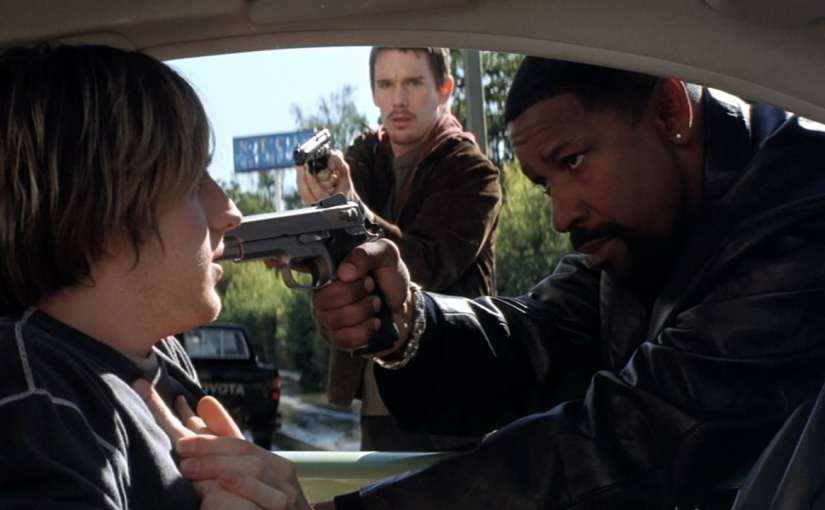
Antoine Fuqua has yet to wow me. Though I know he’s an accomplished director, Training Day always feels like it comes up short with the three or four times I’ve watched it looking for its merits. The critically poor procedural of The Equalizer only lessens his promise for growth and potential.
Denzel Washington has resorted to uninspired characters a few times now. He still earns accolades with pictures like the recent The Tragedy Of Macbeth (a Best Actor nomination) and on stage (I was in the third-row orchestra when I saw him do a forty five minute monologue in The Iceman Cometh on Broadway. Amazing!). Still, he just recently completed the third installment of the Equalizer series. Ugh! Why? Why Denzel? Why are you trying to be another past his prime, tired Liam Neeson in these cheapo action pictures?
What I wouldn’t give for another Crimson Tide kind of thriller.
 2 UNPAID MOVIE CRITICS!!!!