
INSOMNIA

By Marc S. Sanders

Insomnia is an unusual kind of crazed killer pursuit because the hero is initially implied to be compromised, and before the first act of the picture ends, we see that he truly is not as noble as he is described.  This Christopher Nolan film, one of the few that neither he nor his brother Jonathan wrote, is headlined by three Oscar winners and they beautifully absorb this insightful script from writer Hillary Seitz.

Al Pacino is a celebrated Los Angeles Detective named Will Dormer.  When we see him arriving aboard a propeller plane into the foggy town of Night Mute, Alaska with his partner Hap Eckart (Martin Donovan), he looks weary and worn out.  Greeted with warm welcomes by a fan of his is Ellie Burr (Hilary Swank) and his old friend Chief Nyback (Paul Dooley).  Will has been special requested to investigate the murder of a young girl found in a trash heap, strangled to death.  Happenings like this do not occur often in Night Mute.  So, it is best to use the assistance of an expert.

Right away, Will is ready to get to work by visiting the girl’s boyfriend at school.  What he doesn’t realize is that it is ten o’clock at night. At this time of year, a midnight sun lasts twenty-four hours over this little getaway.  After he’s had a chance to investigate the victim’s body and go over the autopsy notes, the discovery of her bookbag leads to the prime suspect, mystery writer Walter Finch (Robin Williams).  A raid on his home near the beach is initiated and it does not go as planned.  Will screws up while chasing down the guy who gets away. 

While it seems that with some cover up, Will can keep his terrible error in judgment to himself, Walter knows everything. Now, with taunting phone calls in the middle of broad sunlit evenings, Will’s insomnia is becoming a hinderance as he tries to do his job while suppressing his own personal guilt and egregious acts.

The duality of Pacino versus Williams is reminiscent of Eastwood against Malkovich in In The Line Of Fire.  It works very well especially because of the departure that Robin Williams takes from his usual fare.  Ironically, he portrayed another creepy guy in the year of this release with a movie called One Hour Photo.  Williams is just a different kind of cut from Al Pacino and that’s why their conflict works well.  Pacino’s gruff tone, which is all too familiar within the second half of his career, has a roughness against the smooth and calm demeanor that Robin Williams relies on with his dialogue.  Walter Finch appears relaxed, rested and neat.  Will Dormer is wrinkled, tired, and lonely with guilt.  This killer has an inescapable edge over the cop, and thus Insomnia stands apart from the other fare of its time from the likes of Fincher, Demme or the Scott brothers’ respective films.

Christopher Nolan captures a creepy and uncomfortable setting for an environment bright with daylight amid a corner of the world that still embraces the nature of Earth.  He is thorough explorer with his go-to director of photography, Wally Pfister.  Clouds and the blurs of fogs keep moments unclear.  The sun blaring through windows is disorienting.  You can also feel the chill of Alaska, even if you are like me and have never visited the state. 

Though the film was primarily shot in Canada, there are amazing bluish/white overhead shots of snow-capped mountains and expansive rocky lakes surrounded by green woods.  A foot chase midway through the picture uses this unusual environment as Dormer chases after Finch across an expanse of floating logs that trap him underwater.  As Pacino desperately looks for an opening to the surface, Nolan really makes you feel like you are drowning amid this unexpected trap.  (Try to watch Insomnia on with at least a 5.0 surround sound.)

Hilary Swank’s role appears like a forgettable partner early on, but her significance opens up later in the story as more is revealed.  I look at her character of Ellie and it occurs to me that a theme of mentorship builds the backdrop of Insomnia.  Ellie has studied Will’s most famous cases and he’s much like a celebrity in her presence.  Finch is a well-known author that built a connection with the murder victim who avidly read his novels.  This film is a good reference to the adage that perhaps it is best to never meet your heroes.

I was very surprised by the directions that Insomnia takes, and quite early on.  There are unexpected moments that occur very quickly after the exposition is covered.  Nolan’s film is not a carbon copy of the tough cop working to nab the intelligent killer that’s on the loose.  Bodies do not just turn up before the final showdown, and the office Captain does not unleash on the detective threatening to pull him from this case.  What you observe in Insomnia is not what you have seen a thousand times before. 

Will Dormer is in an unsolvable conundrum of doing the right thing, but can he afford to surrender to his own misgivings after a decorated thirty-year career?  I could not predict how he would get himself out of this situation where Walter Finch, his antagonist, has got the clear advantage. 

Insomnia is a well thought out script superbly brought to vision by Christopher Nolan.  A thinker’s thriller.

NOTE: It’s a nice touch to call Pacino’s character “Dormer” which in French and Latin means “to sleep.”
TWISTERS

By Marc S. Sanders

Reader, often The Two Unpaid Critics will debate the merits or lack thereof in a film.  Usually, one likes the piece while the other does not.  It’s rare though when we both find fault with a movie but for entirely different reasons…and we argue about it.

Fair warning, a poorly constructed declaration is coming your way:

Twisters is better than Twister.  

However, this is like saying cat shit is tastier than dog shit.  

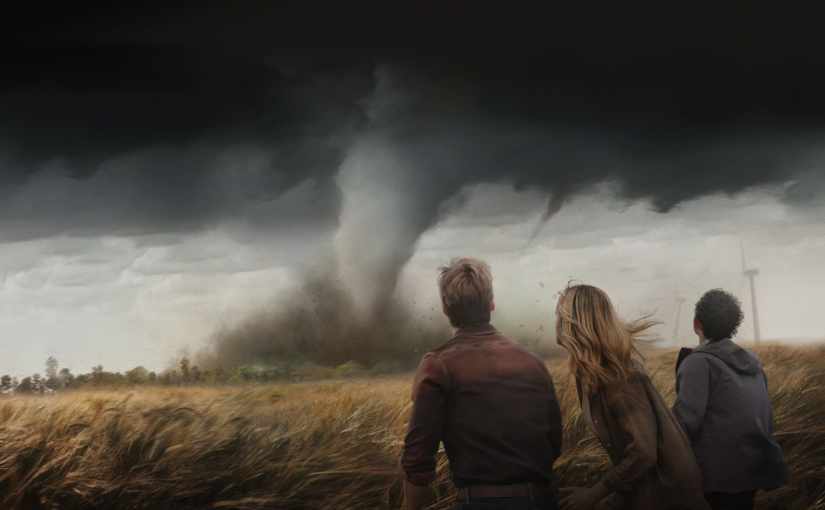
Understand, I had a grand ol’ time watching Twisters with Miguel by my side as the experience quickly gravitated to a Riff Trax viewing.  This apparent sequel to the stupidity that was released thirty years ago teaches us more about the nature of tornadoes.  Though when I insist that observation to Miguel, my comrade put me to the test and my giggles took hold of me because I couldn’t utter a single scientific fact.  Okay.  So it’s not that much brainier. Yet, it is brainier!!!

Twisters offers a background and a traumatic dimension to Kate (Daisy Edgar-Jones) who loses all but one of her entire collection of friendly storm chasers in the film’s prologue, and then weepily monologues about it later.  That’s what I wanted from Helen Hunt in the first movie.  Miguel rightfully questioned why she even needed to speak.  We were firsthand witnesses to this early tragedy.  

CURSES!!!! You foiled me again, Mig.

Okay, so with my arguments shredded to pieces within our debate, I heed to the fact that I am no Jack Kennedy.  Yet, at least I could laugh at how utterly ridiculous Twisters is.

Kate is requested back to her home state of Oklahoma to locate powerful tornadoes that now can be studied with new triangular sensors, each respectively called Scarecrow, Tin Man and Lion.  That garbage can called Dorothy has been put out to pasture.  There’s also a Wizard van. Cute wink and nod names.  No Glinda. No Witch. No Munchkin. No Flying Monkey. How lazy can a tornado movie get?

This corporation with the high-tech gear is competing against a convoy of redneck grunge daredevils led by Tyler, The Tornado Wrangler (Glen Powell).  He fits the persona with the cowboy hat that Brad Pitt wore in Thelma & Louise, along with the flannel shirts and a big ass belt buckle below his ripped chest.  

Tyler’s off road pickup is tricked out with anchors to drill in the ground holding his vehicle in place while he drives right into the middle of a storm.  He’ll also launch fireworks straight up into a funnel.  Whatever it takes to impress his You Tube followers.  

Get this!  Tyler is one of the most educated people in the world on meteorology.  Has to be true!!!! Absolutely has to be, because Glen Powell would never agree to portray a daredevil redneck without a brain to complement his chestnut hair and five o’clock shadow.

Twisters fails at suspense, but unintentionally wins at outrageous comedy when the movie opts to have its terrible tornadoes attack Americana.  As soon as they show small town USA with the little league softball game, I broke out laughing.  I was waiting for the homemaker to put out a pie on her windowsill.  Where’s Bob Seger singing “Like A Rock” from those Chevy commercials?  Tyler, Kate and the gang race to save everyone in town single-handedly without ever calling emergency services.  Only ONE COP appears in the whole movie. Fortunately, once the storm moves on from its devastation, there’s a complete clear road with absolutely no debris for the Tyler’s gang to drive on through. I mean does this movie think for itself or what?

We are treated to people flying away and a water tower toppling over.  A movie house rips apart while Frankenstein shows on the screen.  There’s the inevitable moment when a character gets a leg stuck under wreckage while the others try to get him free but can’t lift him out as the storm bears down.  But wait!!!! At just the last second– I saw this in episodes of The Incredible Hulk and CHiPs and…um…well…Twister!

Earlier in the film, Tyler and Kate have an opportunity to settle their differences while taking in a rodeo.  Of course, Tyler the redneck meteorologist and Tornado Wrangler used to be a rodeo clown as well.  

Then!!!!

What’s this?  

“We gotta get these people to safety??”  

“Is there a basement around here?”

Apparently, Oklahoma is running low on basements.  Not a single basement anywhere in the state where the wind comes sweeping down the plains!!!!!  

Twisters fails because it is paint by numbers, and it shouldn’t be.  It should never be this transparent. The most unpredictable of weather phenomena is so laughably unsurprising when it should be dazzling and frightening and nail biting.  None of it is new.  Everything you expect to happen, happens.

This picture even fails at lending a nasty bad guy to its screenplay.  The rich old guy with the bolo tie, a true indicator of villainy, tours around the devastation. He’s offering to buy the properties of people who have lost their homes so that further profitability can be made with ongoing research into tornado activity.  Yeah.  This guy is a regular Darth Vader or Hannibal Lechter, alright.  Hang him in the town square and then stone his rotting carcass.  Seriously, what’s so wrong with this guy’s intentions?  Kate is disgusted for some reason, but if I just lost my house and my farm and my crops and my flat screen and all my blu rays, heck yeah, I’ll take this fat cat’s money.  

Miguel refused to write a review for Twisters.  However, I’m taking free liberty to share his compounded thoughts. As the end credits rolled over home movie footage of the happy cast, he declared this film is devoid of any kind of suspense, whatsoever.  He’s not wrong, and neither am I.  

Twisters is better than Twister but for all the wrong reasons.

THE IRON CLAW

By Marc S. Sanders

A compelling sports movie requires that uphill battle that must be overcome.  Rocky achieved that standard.  Raging Bull might not have reached a plateau for its protagonist to defy his faults, but Jake LaMotta’s demons were effectively on display. Reminiscent of that film, is The Iron Claw – the wrestling film that reenacts that supposed cursed theme linked with the famed all star Von Erich family. 

Writer/Director Sean Durkin opens his film with the patriarch of the family, Fritz Von Erich (Holt McCallany), in the ring and putting his signature move, THE IRON CLAW, on an opponent.  The title of the picture occupies the screen in big letters, and we jump to the late 1970s where the four sons of Fritz are having breakfast.  Fritz tells the youngest, Michael (Stanley Simons), that he needs to start working out, building his physique to catch up to his impressively built brothers if he wants to compete like them.  Fritz makes it clear he loves Mike the least but the rankings can change if he works at it.  Durkin’s breakfast scene sets off the pattern of the film where the four boys will have to live under the mantra of their father’s iron claw of unwavering expectations. 

The stand out role belongs to Zac Efron as Kevin Von Erich.  If he does not earn at least an Oscar nomination, then people have not been paying attention.  Kevin is establishing a name for himself in the nearby Texas wrestling federation, and Fritz sees opportunity for him to carry the torch of the family into national and worldwide championships.  What Fritz could not accomplish in his youth, he will ensure his sons complete.  If it is not Kevin, it’ll be one of the other boys.  Kevin is protective of his brothers, as best he can against their father.  The mother, Doris (Maura Tierney, another under the radar performance), makes it her mission to stay out of her husband’s controlling design of mentoring in a household where almighty God will lead the way, and handguns represent the American freedom to bear.

The other brothers consist of Kerry (Jeremy Allen White) and David (Harris Dickinson).  Kerry was on his way to Olympic gold in shot put until the United States opted to withdraw from the games.  Thereafter, Fritz directs his boy’s focus on wrestling as well. Kerry eventually finds himself in the center ring spotlight too. Durkin’s film shapes out each boy’s destiny as cause and effect based on the outcomes of the other boys.

I do not want to share much more.  While I had heard of the Von Erich family, I was not familiar with what they encountered during the boys’ young adult upbringing and within the spotlight.  Sean Durkin writes well drawn characters based on the real-life figures.  Fritz was a villain, a harsh antagonist, who was not so much a father as he was a chess player using his sons as pawns to win and win again.  If a setback occurred, then he turned to another athletic boy in his regiment to step up and fill a void.  If one of the boys were progressing, then he became the father’s primary focus, while another was pushed down a notch.  Holt McCallany is astonishing in this role. Fritz was a coach and hardly a father.  Any scene he occupies defines the obedience his character expects of his family.  Along with many others involved in the film, he is worthy of Oscar recognition as well.

Zac Efron has gone full method with a chiseled body and a mop top haircut that is a full departure from his pretty boy athletic physique.  As Kevin, what he’s done with his body should garner applause, but Efron’s character is tormented with never accomplishing enough, while accepting his father’s oversight when opportunity presents itself with one of his other brothers.  Kevin and his siblings are absolutely forbidden to cry at loss or setback.  This only allows the pain to remain unhidden on Efron’s face.  With no dialogue, the lead actor puts his insecurities and suffering on display whether he’s in the ring, working out or crouched in bed.  This is a stellar performance, in line with Robert DeNiro’s unforgettable portrayal of Jake LaMotta – a tortured, yet talented soul and athletic fighter imprisoned within inescapable circumstances.

Efron has terrific chemistry with Lily James as Pam, Kevin’s wife.  She is an impressive actress worthy of more attention to her career.  Lily James is not the headliner of this picture, but her response to scenes with Efron and a particular one with Maura Tierny make her acting partners all the more effective.

As the mother to these powerful men, Maura Tierny mostly hides in the background.  Should there be a chance she earns an Oscar nomination, the scene where she simply stares despondently at a black dress offers enough evidence.  This one standout moment deserves a lot of attention.

Sean Durkin is worthy of enormous accolades.  He has an ability to depict multiple stories occurring in one caption.  There’s a dizzying moment where Kevin, Kerry and David are working through their own respective progress.  Durkin blends the three athletes together, where you eventually see one hulking, flexing chest.  Above, are the blurred, sweaty faces of the three men meshed together and over one another, while working through their regimental exercises.  Their faces are layered upon each other.  

A later scene will show Kevin and Kerry practicing in an outdoor ring, with Kerry fighting a hard physical challenge.  In the foreground of this nighttime exercise, is a flashlight moving through the fields.  A subsequent moment will explain that significance.  Sean Durkin beautifully balances several biographies within this famed family.  You are viewing multiple stories at once, and nothing is ever distracting. This amounts to outstanding writing and directing that demands multiple layers.  

I became aware later that there is another son who remains unaccounted for in this picture.  Apparently, that story was cut for pacing issues.  I’m not sure I’d say it’s unfair to disregard that person within the confines of this picture.  Most biographical films take certain liberties to assemble an engaging structure, and frankly the destiny of that son is similar to what occurs with others in the movie.  Durkin opted to avoid appearing repetitive in his storytelling.  So, I stand by this decision.  

The Iron Claw is certainly the most surprising film of the year for me.  Based upon what happened within the Von Erich family, it seems so apparent that a movie would eventually be generated.  Yet, falling into melodramatic schmaltz with a drama like this is an easy trap.  Sean Durkin dodged that obstacle with a sensational cast.  There is not one weak performance in this picture.  You could make a separate film out of each perspective offered.  It’s fortunate that Durkin found a way to balance everything beautifully.

The Iron Claw is one of the best pictures of the year.

PRIMAL FEAR

By Marc S. Sanders

If you explore the career of Edward Norton, you may find a common theme of duality in many of his roles.  Certainly, The Incredible Hulk (man vs literal green monster).  There’s also the heist film The Score where he is an aspiring thief with a talent to take on a mentally handicapped persona.  American History X offered a wide transition from downright evil to wholesome redemption from the worst of sin.  Even the remake of The Italian Job shows one kind of jerky guy early on, and later there’s another kind of cad on display.  Yet, Norton’s role as a church choir boy named Aaron Stampler in his first film, Primal Fear, is maybe his most apparent, and it remains an astonishing performance.

I had read William Diehl’s novel long before the movie was even made.  My impression of the film is that it is well cast.  Early on in the story, Aaron is apprehended following the grisly murder of Chicago’s Archbishop.  His clothes are covered in the priest’s blood and he’s captured on the news trying to outrun the police.  This looks like an open and shut case, which is why hot shot attorney Martin Vail (Richard Gere) wants to take on defending Aaron, pro bono. 

Simply the name of Gere’s role, Martin Vail, could not be more appropriate.  He thrives on vanity and pride, ensuring that when he gives an interview it is none other than a cover story.  Gere is perfectly handsome and his energy is so right for the part.  He wears his suits with natural and self-assured swagger.  When Martin attends a benefit dinner in the first few minutes of the picture, everyone in the room knows who he is, whether they only at least admire the guy, or downright despise the ego he proudly carries.  Only Martin Vail will insist that young Aaron with a boy scout, puppy dog expression could be innocent.  Everyone else has deemed his client as “The Butcher Boy.”

The accused is a simple kid who was brought in off the streets by the Archbishop.  He’s a nobody.  It’s the victim who is prominent, and one of the first strategies that Vail engages in is putting the deceased Archbishop on trial because it could lend to just what he needs for exoneration – reasonable doubt.  That could mean other prominent figures in the city will get caught in the web. 

Like many mysteries and courtroom dramas before and after Primal Fear, red herrings abound.  The side stories dealing with botched real estate investments within minority neighborhoods feel like they sprung from a completely different cloth, like an episode of L.A. Law.  What keeps them above water though are the performances of the supporting cast with John Mahoney and Stuart Bauer, respectively portraying the state district attorney and a Hispanic well-established mobster that Vail represents.  Somehow, Diehl’s murder trial story circles back to these guys and what the Archbishop had to do with them.

A twisted sex scandal within the church also comes into play.  After all, where there’s murder there is motive.  The math is not that simple though.

To lend a little more conflict to the film is the prosecuting attorney Janet Venable.  She is played by Laura Linney, maybe doing a little over acting, who once had a tryst with Martin.  Honestly, it comes off as an unnecessary subplot, perhaps only there to give quick witted resentful dialogue for Janet to serve at Martin, while Gere puts on the teasing smirk to send back over the net.  The opposing counsel try to psych one another out, but we all know that Martin is the smarter attorney of the two. 

Primal Fear hinges on Edward Norton first and Richard Gere second.  Norton’s performance is written, and thereby performed, to come in under the radar for the first half of the film.  Aaron is a quiet, frightened, uncertain kid from the backwoods of Kentucky.  Gere and the supporting cast populate much of the first half of the movie.  Later, Aaron offers up a surprise delivery that turns the film on its heel, and the story takes on a whole new trajectory. 

Gere is superb with the conceit of the character.  Director Gregory Hoblit places Martin Vail front and center during transition shots where he gives statements to the press while entering the courthouse.  It’s a subtly effective way to uphold how proud and cocky the attorney is.  When the surprise from Norton comes around though, even a hot shot, intuitive lawyer like Martin can’t immediately figure out what to do next.  The surprise works even though it comes out of nowhere.

Primal Fear offers a lot of standard stuff from other typical courtroom thrillers.  Some players are introduced that could lend to why the crime occurred.  Some are there to distract you.  Some are there to circle back around in the third act.  There’s a ping pong volley of objections and witness testimony.  There’s the blood splattered crime scene investigation.  We’ve seen it all before.  Nevertheless, I don’t hold any of that against the film.  I still get a thrill out of standard car chases and shootouts the same way I stay alert through another courtroom mystery.  It’s fast paced and until the puzzle is completely assembled, I’m engaged especially if the cast is working on all cylinders. 

The end leaves you thinking though because just when you believe all the pieces have been put back into place there’s one hanging thread that is left unraveled and you may be asking yourself how that got past me.  That’s when you know you are watching an entertaining movie.  If you have to think about it long after it is over, then the movie got one over on you.  Primal Fear accomplishes that feat.