DEAD AGAIN

By Marc S. Sanders

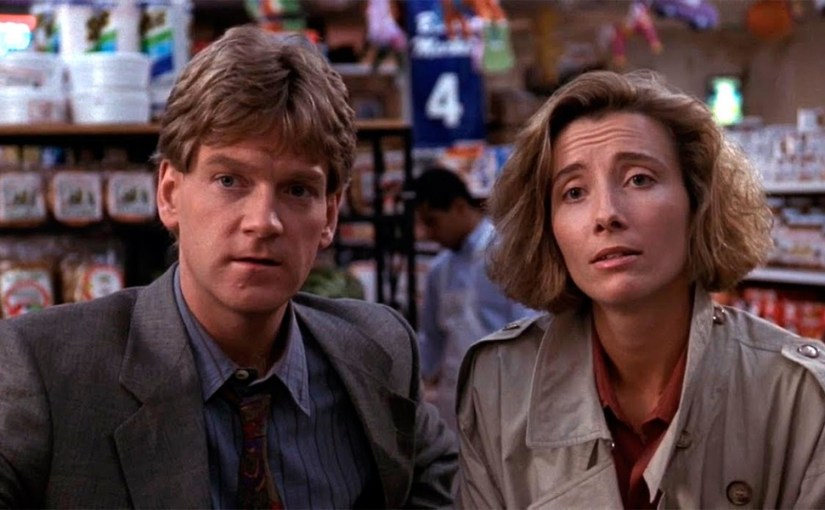
Kenneth Branagh is inventive director.  Arguably, his most uncelebrated film is the noir inspired mystery, Dead Again, which features himself and his wife at the time, Emma Thompson, in the leading roles. 

Branagh and Thompson do double duty, playing multiple parts in two different time periods.  In a 1940s post war Los Angeles, they are Roman and Margaret Strauss.  Roman is a composer.  Margaret is a musician in his company.  They quickly fall in love and live in the limelight of glitz and glamour amid the gossip magazines of the time.  Their life together only becomes juicier when Roman is sentenced to death for the murder of Margaret.  The weapon of choice, a pair of scissors.

In present day 1991, Branagh portrays a private detective named Mike Church who ends up being responsible for an amnesiac, Thompson, who can’t even speak when she’s found.  The woman has unexplainable dreams that recall moments of Roman and Margaret’s life together only to end up as terrible nightmares.  A curious hypnotist (Derek Jacobi) enters the story to lend aid to Mr. Church and the woman.  He serves as a guide, bringing her back to the times of the celebrity couple, helping her to find clues that perhaps could lead to her true identity and uncover exactly why she is haunted by these dreams.

Additional characters enter the storyline as well.  There’s Wayne Knight as a humorous sidekick for Church.  In the flashback 1940s, there’s Andy Garcia as a handsome Pulitzer winning journalist who follows the escapades of Roman and Margaret.

Dead Again is not a long movie, and that lends to how good a film it is.  It’s a lean picture that sets up its clues the moment it starts.  Branagh gives you a background tutorial with newspaper headlines that flash up within the opening credits.  The two time periods are separated with the 1940s shown in gorgeous black and white, while the modern scenes are presented in color.  Branagh puts on a German accent for Roman.  Thompson is English for Margaret.  In the present day, they are Americans.  Of course, it is acknowledged that the respective characters look alike and that allows for possibilities of reincarnation, karma and past lives to enter the frame. 

The screenplay from Scott Frank gets you curious.  What connection could these two wildly different couples have with one another?  What don’t we know about the murder of Margaret at the hands of her husband, Roman?  Who really is the woman that Thompson is portraying in modern times?  How is it possible that a private dick like Mike would coincidentally end up with this “Margaret lookalike” amnesiac?

The cast is having a lot of fun with the puzzle, particularly Derek Jacobi.  His old English mannerisms offer a relaxing storyteller’s narrative to the film.  It feels as if his hypnotist carried over from an Alfred Hitchcock film.  I also appreciate how far apart the respective characters that Branagh and Thompson play.  Not only am I watching a thrilling mystery, but I’m looking at skilled, well-trained actors demonstrating a wide range of performance work.  At times, it’s as if I’m watching two different movies.  How exactly are they going to intersect, though?

I originally saw Dead Again in theatres and was taken with it immediately.  I did not see the end coming and when the veil was lifted, my eyes went wide open.  It has a terrific plot twist.  Branagh, known at the time as a celebrated Shakespearean actor/director, introduced a sweeping, mystery yarn that relishes in fun escapism like Hitchcock or Orson Wells would apply to film noir.  It only makes sense, looking back over thirty years later, why the director opted to turn his craft towards rejuvenating the classic Agatha Christie stories (Murder On The Orient Express, Death On The Nile) for film.  We are better for his contributions.

Now, Dead Again is a film that deserves the attention from a new generation of movie lovers.
AN EDUCATION (2009, Great Britain)

by Miguel E. Rodriguez

Director: Lone Scherfig
Cast: Peter Sarsgaard, Alfred Molina, Rosamund Pike, Dominic Cooper, Olivia Williams, Emma Thompson, Carey Mulligan
My Rating: 9/10
Rotten Tomatometer: 93% Certified Fresh

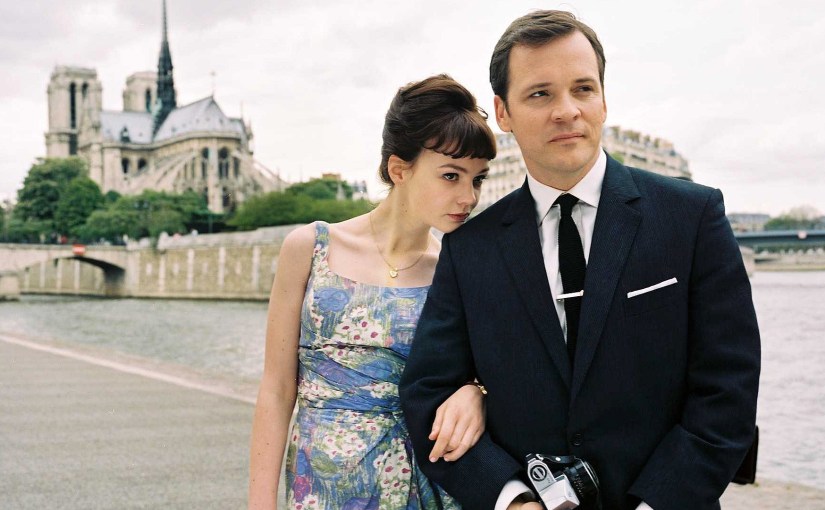
PLOT: A coming-of-age story about a teenage girl in 1960s suburban London, and how her life changes with the arrival of a playboy nearly twice her age.


Lone Scherfig’s An Education, written by famed British author/screenwriter Nick Hornby, is yet another example of how my preconceived notions of a film are often very wrong.  Based on the plot description above, I assumed I was in for what I call a “spinach movie”: something that’s good for you, but not a lot of fun to eat.  I thought the film would be dark and deep, delving into unsavory territory involving a predatory older man putting the make on an underage girl.  Lessons would be learned, but it would be an uncomfortable watch.

For about the first half of the film, I felt I was mostly right.  It’s 1962 in England, and Jenny (Carey Mulligan in her first major role) is a sixteen-year-old student who is studying hard to pass her A-levels – I think I got that right – with flying colors, which she hopes will give a favorable impression to the admissions board at Oxford.  Her father (Alfred Molina) supports her plans…or rather, he supports HIS plans for her.  He gives several impassioned speeches about the importance of getting a higher education, making sacrifices, dropping her cello hobby, etcetera, all in the service of getting those Oxford-level grades.

One day, Jenny gets caught in the rain and is rescued by David (Peter Sarsgaard), a charming older man driving an irresistible maroon sportscar.  He isn’t just charming, he’s effortlessly charming, turning the exact right phrases to put Jenny at ease.  The morning after he drives her home, he leaves a bouquet of flowers at her doorstep.  He bumps into her again quite by accident, or “accident”, and asks her on a date for dinner and a concert.  For this, he must convince Jenny’s very suspicious father…which he does with silver-tongued ease.

Jenny is caught up in this whirlwind of attention from a much older man who is clearly well off with sophisticated friends, Danny and Helen (Dominic Cooper and Rosamund Pike).  Jenny’s father, Jack (Alfred Molina), is torn between his protective instincts and the idea that Jenny might have met a man who could make her dreams of Oxford…moot.  Why worry about the expense of university when a rich husband can keep his daughter well cared for?

Despite the father’s (and my own) forebodings, Jenny is genuinely enjoying herself.  She loves music, so David takes her to a concert.  She loves art, so David takes her to an art auction.  She loves learning and speaking French, so David takes her to Paris.  His method of getting Jenny’s father to agree to this overnight trip is simultaneously simple and diabolical.  Jenny is having fun for what seems to be the first time in her life.

She’s having so much fun that, for a while, I wasn’t quite sure what the movie was advocating.  Is it supporting this relationship?  She has a very frank conversation with David regarding her wish to remain a virgin until her seventeenth birthday.  David agrees…then, in one of the ballsiest (and creepiest) moves I’ve ever seen from a guy in a movie, he asks her to give him a “peek.”  What is going on?!?  This guy is clearly a cad.  But he’s so nice to her…and she’s having fun…!

Put it this way: I was prepared to throw something at the television by this point.

Around the midway point, though, the movie finally makes its true purpose known.  It’s not about judging Jenny, which is too easy to do, or even judging David, which is ridiculously easy to do.  The film is based on a memoir by a British journalist named Lynn Barber, which made some of the revelations about David’s past and how he makes a living easier to swallow, knowing that it’s based at least partially on fact.  It also made all the “icky” parts in the first half of the film a little more palatable.  When you realize that someone really went through this, it puts everything in a different light.  I had the same epiphany during Schindler’s List; the concept that this all actually happened brought a deeper level to the viewing experience that I hadn’t expected.  (It’s also what made Fargo so much more entertaining than your average crime film, but that’s another story…)

Anyway, this happens and that happens, and before you know it, Jenny has made the kinds of decisions that would make grown men and women tremble with anxiety. The movie’s title takes on a whole new meaning.  It’s not just about Oxford anymore.  It’s about studying at the University of Life, where the only way to know if you passed your test is if you’re still willing to take the next one, and the next, and the next.  Even David learns a thing or two.  Maybe.  It’s a little inconclusive when it comes to that guy.  What a jackass.

So…is it any good?  Yes, it is.  It’s got brilliant performances working from a Nick Hornby script that switches easily among pathos and embarrassment humor (witness the predicament of Jenny’s other suitor at her 17th birthday party) and even a little suspense.  I tend to think of Hornby as Britain’s answer to Cameron Crowe.  Hornby’s books and screenplays walk that same tightrope time after time (About a Boy, High Fidelity, the original Fever Pitch – soccer, not baseball), just like Crowe’s best work (Jerry Maguire, Say Anything, Almost Famous, which I don’t particularly love, but I do acknowledge its craftsmanship).  By the time I got to the end of An Education, the double- or triple-meaning of the title is fully realized.  Everyone has learned something.  Not all of it has been good.  It doesn’t all tickle.  But, except possibly for David, everyone has taken what they’ve learned, good or bad, and put it to good use.  That’s a satisfying ending.

[Side note: after this movie was over, I found myself thinking of Licorice Pizza and its plot regarding an underage boy and an adult woman. I can imagine my friend and partner-in-crime reading my favorable review above and asking me, “If you like this movie, how can you not like Licorice Pizza?” (He really loved Licorice Pizza.) The difference is that, by the time An Education is over, the characters have EVOLVED. Discuss.]

LOVE, ACTUALLY

By Marc S. Sanders

Love, Actually is like a warm favorite blanket to snuggle up in. Richard Curtis writes and directs a collection of the greatest British actors (along with American Laura Linney) in a kaleidoscope of love and relationships against the backdrop of beautiful London, England during the five weeks leading up to Christmas.

I won’t list my favorite characters or actors. In a film this treasured, this loved and this appreciated, that would be like picking your favorite child. It’s impossible when every single storyline is perfectly executed with thought and tenderness.

The stories of love uncovered, love that’s lost, love based in friendship, and love drowning in heartache beautifully jump from one to the next and then back again. Curtis is wise to not show all of the facets of each story early on. Some stories reveal more about themselves later that’ll leave you hurting for those that are not so merry and those that offer plenty of cheer.

I’m especially happy that Curtis did not compromise in the language or subject matter of his tales. Strong language at times makes for some memorable dialogue and nudity presents a normality to how we really are with those we have affections for.

It’s fair to say everyone in life experiences some variation of love. Yes! I mean everyone. Richard Curtis reminds you that love is a natural instinct, and so we can not focus on the easily recognized gloom of our world. To have these stories captured around Christmas time only enhances what we treasure, or what we wish we didn’t have to endure at times. Curtis’ blazing soundtrack helps along the way.

Love is hard. Love is challenging. Love will sweep you off your feet and love will destroy everything you thought you had. However, love will never leave you with complete regret. It’s never the love we have for someone that we regret. It’s only a wish to have it wholesome, healthy, happy and pure.

Love, Actually is all around.

LATE NIGHT (2019)

by Miguel E. Rodriguez

Director: Nisha Ganatra
Cast: Emma Thompson, Mindy Kaling, John Lithgow
My Rating: 7/10
Rotten Tomatometer: 79% Certified Fresh

PLOT: After being accused of hating women, the female host (Thompson) of a popular late-night talk show makes a “diversity hire” for the writer’s room: Molly Patel (Kaling), whose straight-talking instincts put her at odds with her boss and co-writers.


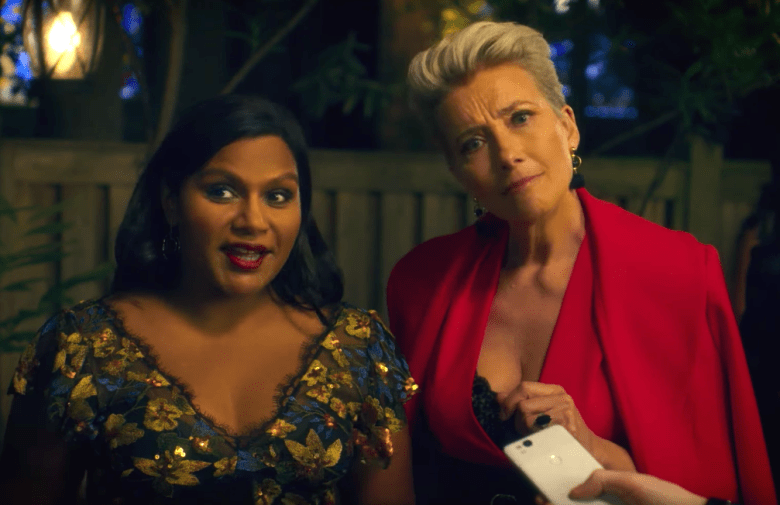
On the whole, Late Night is like the best movie Judd Apatow hasn’t made yet.  It’s funny (not explosively funny, but pointedly funny), smart, and actually has something relevant to say about a host of topics, but mostly it’s about women: women in the workplace, in Hollywood, in positions of power, in traditionally male-dominated industries, even women and sexual indiscretions.

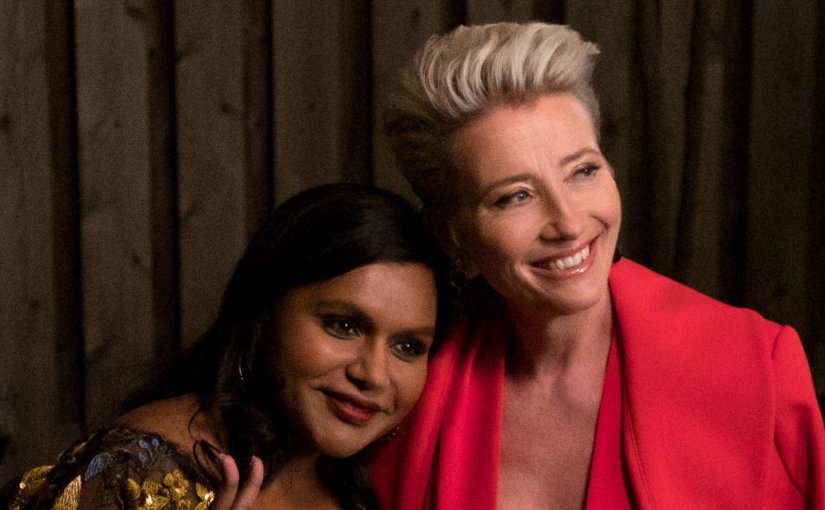
Mindy Kaling (who also wrote the screenplay) plays Molly Patel, a chemical plant worker who lands an interview for a writing job at one of the most popular (fictional) late-night shows on television, and also the only one hosted by a woman: Katherine Newbury, played with style and wit by Emma Thompson.

(For the record, I could watch Emma Thompson read the phone book, and I would say that was also done with style and wit, and I’d probably be right.  But moving on…)

Molly’s interview is perfectly timed, because Katherine desperately needs a “diversity hire” after she is accused of hating women.  The fact that her writer’s room consists of all white men does not help her case, so Molly is hired more or less on the spot.  IMDb tells me that Mindy Kaling once interned for the Conan show, so I personally have no idea how accurate the characterizations are of these writers, but I got the feeling they were pretty spot on.  For example, when she’s first introduced to the room, a couple of the guys immediately ask her for sandwiches and coffee.  In another twist, she uses the ladies room, only to discover that, since there are so few women employed there, all the male writers use the ladies room as well…but only when “duty” calls. (…he said as he chuckled to himself.)

We have the makings of what could have been a great comedy.  As it is, we have a pretty good comedy.

My issues are at the screenplay level.  The story is awesome, the characters are awesome, and the screenplay does make some sharp criticisms of the current status quo.  (The best and funniest scene occurs when Katherine takes to the streets, a la Conan or Jimmy Fallon, and does a “White Savior” bit; it sounds terribly racist when I write it out like that, but I assure you, it’s hilarious and not a bit racist.)  But…there were times when I thought the screenplay was pulling its punches.

For example, there’s a moment when Katherine decides to deliver a politically charged joke in her monologue (it’s a doozy, by the way).  Given the plot developments by that time, I thought there would be more of that kind of material later on.  But there isn’t.  Alas.

There are lots of moments like that, when the screenplay felt like it was building to some kind of climactic, powerfully-written dialogue or monologue that would really lay into the characters and the audience, like an Aaron Sorkin script, or even like a comedy from earlier this year, Long Shot.  But it never QUITE happens.

(Okay, there IS one scene that does deliver a great payoff…it’s played out on an empty stage between two of the main characters, and it has as much heartfelt emotion and drama as any Merchant Ivory film.)

I liked this movie.  I felt like there was MORE that could have been said and done with this material that could have elevated it even more. But it is ultimately a feel-good movie that has some very funny scenes and has a lot to say. 

LATE NIGHT

By Marc S. Sanders

Mindy Kaling is a terrific writer. I first discovered her on The Office, where she scripted many of the best episodes as well as performed in front of the camera. She’s hilarious. She wrote and produced the film Late Night from 2019, and while I think it’s incredibly smart with ideas on prominent female identities and the status quo of race and gender within a fictional late night television industry, it does not forgive itself for wrapping up its ending in a pretty, pink bow.

Emma Thompson is fierce as Katherine Newberry, a late night network tv host approaching 30 years in the business. She’s become a staple for the 11:30 slot, even if she hasn’t kept up with the times of Twitter and You Tube. The network is ready to cut ties with her as she has become too outdated with her material, the guests she has on, and whatever semblance of a routine she’s awarded from her team of writers, that are all white males that might not have outgrown their fraternity years but only now complain about their miserable married or single lives. It’s brought to Katherine’s attention that she doesn’t like women. To mix it up, she demands her office manager hire a woman, any woman, immediately.

Enter Mindy Kaling, as Molly Patel, with zero experience in writing or television who leaves her job at a chemical plant. Like all office films that always seem to take place in New York, the new person does not get on great with the boss, endures some humiliation, cries, but then gets a brave epiphany that catches the boss’ attention out of nowhere. Molly writes a funny pro choice/anti Republican joke for Katherine’s monologue. It eventually goes over swimmingly.

A well acted side story occurs when we get to see some pains that Katherine has while living with her loving husband, Walter, played by John Lithgow, who has Parkinson’s disease. They have some outstanding scenes together. So while the Katherine Newberry with the tough exterior works her writing team to the bone to save her reputation and show, she is also dealing with a terribly sad domestic life. Unfortunately, a one time affair that she had with a writer unnecessarily creeps its way into the film. When it becomes material for public tabloid, her show is all but dead. Now by and large, Late Night is a comedy, so how do you think this film will end? Happily of course.

I don’t take issue with a happy ending. I love them, and it’s often why I go to the movies to escape. However, this is the cutthroat business of television. Shows get cancelled frequently. Kaling’s script even demonstrates that with the network president. As well, Katherine’s demeanor demonstrates this when she fires a writer simply for asking for a raise and to spend more time with his kid. Throw in a couple of lines, however, give a monologue from the heart for your audience and suddenly the show is saved! I wish it would work this way but I doubt it really does.

Another angle the film explores is Molly as an Indian American woman intruding upon a white male dominated occupation. The story had me convinced that she overcomes these demographic obstacles. I bought it. What was hard to accept was the “one year later” epilogue where the show’s staff is made up of every variation of gender and race demographic imaginable with Thompson’s character doing a quick walk through the office to the studio. Every desk is occupied by a different looking person. How touching…and unconvincing. Again, I wish it was that easy to flip a perspective on an office staff, in just one year. Yet I don’t think it’s all that simple. This is where Kaling’s script is pandering way too much.

The performances are excellent. Kaling and Thompson have great scenes together. Lithgow with Thompson as well. Following the reveal of the affair, there’s a magnificent scene between them where they come to a resolve. Only, I think this moment belongs in another film. The affair storyline is not correlated enough to the rest of the picture. I would have abandoned it altogether and simply focus on Katherine, Molly and Walter’s struggles; surviving the business, entering the business and living with illness. The affair intrudes on the last act of the film and as soon as it bleeds, Kaling’s script patches it up too neatly. Thus, we get a happy ending that just doesn’t feel very authentic.

Mindy Kaling needs to work even further. I think she’s one of the brightest writers I know of today. She writes what she knows; about working in television and being an Indian American woman thereby bringing those facts about her background as new strengths for storylines. She only now has to be careful about not patching up the conflicts she masterfully creates with simply a cherry on top. She might turn the APPLAUSE sign on for her audiences, but that is not necessarily going to get the crowd on their feet and clapping.