
AVENGERS: INFINITY WAR

By Marc S. Sanders

Avengers: Infinity War is a really FAT movie. Like ORCA FAT (thank you Keyser Soze), because it is chock full of so much to see. If this equated to gorging on junk food, after two hours and forty minutes, I would have a diabetic cardiac arrest immediately following the credits. Is this a film that is worth that handicap, however? You bet it is.

There is an ensemble of top Hollywood talent portraying a huge cast of characters, once again, and thus another installment has surfaced in the franchise that allows them to have various moments to shine. Producer Kevin Feige with all of Disney’s support, has mastered the formula to ensemble casting and production, as good as when George Clooney and company performed under Steven Soderbergh’s direction in the Ocean’s 11 remake. Thousands of special effects shots do not overpower the stage presence of the actors. The Marvel movies succeed because a story is always written first. Then witty dialogue comes thereafter, and then valid, convincing shock value. The special effects are the final ingredient. This is what the Transformers franchise and (yes, I’ll even own up to it) the Star Wars prequel trilogy (about ¾ of it) failed to achieve. This successful formula gives merit to the (at the time) biggest opening weekend ever, worldwide, and Avengers: Infinity War deserves the accolades.

How good is it? Well, reflecting back to May 1980, when sitting in a crowded theatre watching the ending to The Empire Strikes Back, by comparison I think audiences have finally been served up a cliffhanger (10 years in the making) that is just as effective. How is this all going to wrap up from here? How is this all going to be resolved? Reader, I don’t know if the next chapter will be satisfying. I don’t know if we will feel cheated like Annie Wilkes from Stephen King’s Misery. Presently, however, I’m turning an ending like this over in my mind; the same way I did with my pals in 1980 debating the survival ratio of Han Solo and if Darth Vader has told the truth, and if that was Vader’s brain or head that I saw, and who is this “another” that Yoda referred to….and that, my friends, is what makes a spectacular film. I don’t care if it gets watered down in the hype and McDonald’s promotions and toys. If you can mull over a movie long after it has ended, for days, even months and years, then a film like The Empire Strikes Back and Avengers: Infinity War has more than served its purpose.

Josh Brolin provides a villain with a justification to his madness. He’s not just twirling his mustache to be mischievous and sinister. He has a destiny to fulfill, and his portrayal of the mad titan Thanos does not compromise. This is a beast of a purple villain with size 52 boots and gold-plated armor with a chin that looks like it was clawed by Wolverine. Thanos cries, actually cries, while committing his crimes. He’s not just cackling. He flat out says that he executes his actions all so that he can relax and retire. Isn’t that what we are all trying to do, anyway? Nothing wrong with that. Guy sounds like a CEO to a large corporation. Maybe Thanos is updated to resemble an Elon Musk. 

All of the other actors from main staple Robert Downey Jr to Chris Pratt to Chadwick Boseman to Zoe Saldana and Chris Hemsworth, and so on, remain consistent to what we’ve seen of various prior installments. Their gimmicks continue to avoid becoming stale. Audience applause is cued by their appearances. These are well loved characters.

As an avid comic book reader of the silver age (1980s), Avengers: Infinity War presents itself as of one those annual limited series runs that were special because they were MAIN EVENTS!!!! My favorite back then was Marvel’s Secret Wars. Typically, a comic book from the 1980s would average about 18-22 pages with advertisements sprinkled in. Nearly every scene in this film equates to one issue of a limited run of a main event. That is a why a fat movie like this succeeds. The cast of characters are separated in various story lines. The scenes are given their time to flesh out and develop to move the subplots and overall story along. Each scene is like reading a new 18 page issue comic book. If I’m watching a comic book film, by golly, I want to see how a comic book is brought to life in a cinematic medium. Marvel’s films succeed greatly over DC’s films (produced by Warner Bros) because they rely on the source material. They know they got the goods. Cast it right, adapt it properly and go with that. If it ain’t broke, don’t fix it. A wealth of material (nearly 70 years) and Marvel/Disney uses it all. (How does DC/Warner Bros miss the mark so often?)

Of all of the Avengers films, Infinity War is definitely the best one. Ironically, I wasn’t expecting it to be. I was waiting for this stuff to get old and tiring. It just hasn’t faltered yet. It hasn’t gotten lazy yet. It all seems so fresh still. It’s a fantastic cinematic accomplishment. Sure, its main story is a guy chasing down six different colorful MacGuffins. So what! It’s simple. It allows the characters to stand out from there. An organized plotline like this doesn’t take much effort or time to explain its purpose. It states its conflict early on, and then the show stopping moments present themselves. One after the other after the other until a monster of an ending that is so jaw dropping, head shaking, thrilling and gasping, satisfyingly arrives. 

More importantly, the MacGuffin search drives the motivations and fleshes out the film’s main character, Thanos. This Marvel installment belongs to Josh Brolin as Thanos. Everyone else serves as his antagonists. What matters is that the bad guy wins this time, just like demonstrating that an Empire will strike back. Ironic that Spider-Man makes a humorous correlation to that celebrated franchise from almost forty years ago.

Avengers: Infinity War ended up in my top 10 list of 2018, and still holds as the best film in the Marvel Cinematic Universe.

THE HUNGER GAMES: THE BALLAD OF SONGBIRDS AND SNAKES

By Marc S. Sanders

The Hunger Games: The Ballad Of Songbirds And Snakes is a stellar prequel to Suzanne Collins’ well-known franchise approach to reality television within a barbaric dystopian setting.  Francis Lawerence returns to direct this characterization of the would-be antagonist Coriolanus Snow played by unknown Tom Blyth in a blazing performance of innocence eventually corrupted by a warped environment of law.

The story takes place just over sixty years before Collins’ first trilogy that centered on the heroine archer Katniss Everdeen.  A vicious annual tournament known as “The Hunger Games” has reached its tenth year and interest in the programming has waned.  Rebellion throughout the twelve districts of Panem is getting stronger and the idea of selecting children to compete in a battle royale to the death is frowned upon. 

The elite students, which include Coriolanus and his best friend Sejanus Plinth (Josh Andrés Rivera), have been assigned to a new development in the Games.  They are to serve as mentors to the selected contestants.  Sejanus, who is the son of one of Panem’s wealthiest entrepreneurs, protests the games altogether.  He’s outspoken and determined in his efforts to put an end to the event.  Yet, his father’s wealth always bails him out.  Coriolanus does not seem to have an opinion on the matter.  He’s more curious about the showmanship of the contestant that he’s been assigned from District 12, a wildcat by the name of Lucy Gray (Rachel Zegler, giving a magnificent presence to her role).

Lucy Gray is a free-thinking troublemaker wearing a wardrobe of colors and design.  She is a bursting talent with a guitar as well and an attitude to boot.  While the other contestants appear malnourished, poor, sad and legitimately pitiful, Lucy has a guise of confidence and independence.  She certainly stands apart from her competition when they are all locked up in a zoo cage for the public and press to look upon as hype ahead of the grand tournament.  Lucy is not a skilled fighter, but even without Coriolanus’ guidance she knows how to develop a following.

Elsewhere, there are the puppet masters.  There’s Dean Casca Highbottom (Peter Dinklage), the inventor of the games, and teacher to the mentors.  He stresses a promising future for the best mentor performance, but there is to be absolutely no cheating.  As well, Viola Davis plays a devil of a villain as a Dr. Volumnia Gaul.  Think of her as the equivalent to the Nazis’ Dr. Mengele who experiments with new inventions of hideous creatures and process.  Her towering canister of colorful snakes is chilling anytime it appears on screen.

The Ballad Of Songbirds And Snakes has a long running time for a science fiction piece catered for young adults.  However, it confirms the error that was made with Collins’ film adaptation of her third novel, Mockingjay, which was split it into two films for the sake of greedy revenue commercialization to line Lionsgate’s pockets.  Because this prequel is contained as one piece, Tom Blyth is invited to perform a thrilling character arc of a poor, but intuitive, and good-natured young man who is eventually transformed into an evil personification. 

Lawrence’s film has multiple opportunities to end and roll the credits.  However, it carries on and becomes a journey for its principal characters, Lucy Gray and Coriolanus Snow are much like in the same vein as Vito and Michael Corleone in The Godfather.  Novels often have the luxury of spanning a wide berth of time to inch their way towards a protagonist’s destiny.  Movies tend to want to hurry things along.  With Francis Lawrence’s film we are granted the time to see how Lucy Gray performs during the leadup to the games as a character of confidence that a public is willing to follow and bet on, but most importantly care about.  Accompanying her is Lucy’s mentor, Coriolanus Snow, who is curious and concerned for Lucy’s wellbeing.  While being separated from one another for large portions of time, the two characters convincingly fall in love. 

The second act of the film is the sport in an arena, far from the technologically sophisticated nature found in the other films.  In this prequel chapter, it is simply an in the round stone coliseum of wreckage following a rebellion strike with barbaric weapons left in the center to grasp for advantage. 

The third act, which in another director’s hands might have been saved for a churned-out sequel, follows the aftermath of where the characters go from here.  Coriolanus becomes an infantryman in District 12 along with Sejanus.  A whole new design is introduced late into the film, and it is as if we’ve begun a brand-new episode of a franchise series.  What keeps The Hunger Games installments feeling fresh is that we are granted both the events preceding the games as well as what’s occurring thereafter. 

The cast is outstanding.  Viola Davis and Peter Dinklage have those jaded and unusual appearances suitable for this disturbing setting.  Davis especially absorbs the scenery whenever she is on screen.  Her costume wear, hair and makeup only enhance her chilling performance.  Jason Schwartzman does a superb interpretation of Lucky Flickerman, an ancestor of Stanley Tucci’s flamboyant character from the other films, and the MC for the games.

Rachel Zegler lends her talents for song and guitar to the film, and I loved every second of it.  I know she is currently not favorable in the public eye based on comments she has made.  However, if she continues to follow a course of picking smart roles and playing them as well as she does here, and like she did in Spielberg’s West Side Story, then she is destined to becoming an elite leading actor in the likes of Julia Roberts and then later Anne Hathaway.  I loved every song she performed in the film as well.  She lends a twang to her vocals that blend beautifully with her guitar strings.

Tom Blyth is so trusting with his boyish complexion and bleach blond curly mop top.  He fits well into the destitute role of the son of a dead would have been tyrant.  His wardrobes are described as hand made at home, even with small bathroom tile pieces serving as fashionable buttons on his dress shirt.  Blyth, while humble, wears everything with confidence, remaining the exact opposite of the President Snow we knew from Donald Sutherland’s performance in earlier films.  This Coriolanus is someone I can trust.  Someone I do not question.  Yet, when the end of the film arrives, I’m left surprised by the outcome of the character even though I know what’s expected of him.  It’s a positively inventive characterization from Suzanne Collins, interpreted with a subtle balance between protagonist and antagonist from Tom Blyth.  This guy might have been a better casting choice for Anakin Skywalker in the Star Wars prequel films. 

I’m angry at myself for not having yet read The Ballad Of Songbirds And Snakes.  I imagine it’s a crackling good read.  The film concludes with doors open for questions that leave me curiously thinking, four days after having seen the picture.  I can only hope there are additional films to come that explore even more deeply into Suzanne Collins’ rich tapestry of dystopia and the complex characters that occupy it.

The Hunger Games: The Ballad Of Songbirds And Snakes is one of the best pictures of the year.

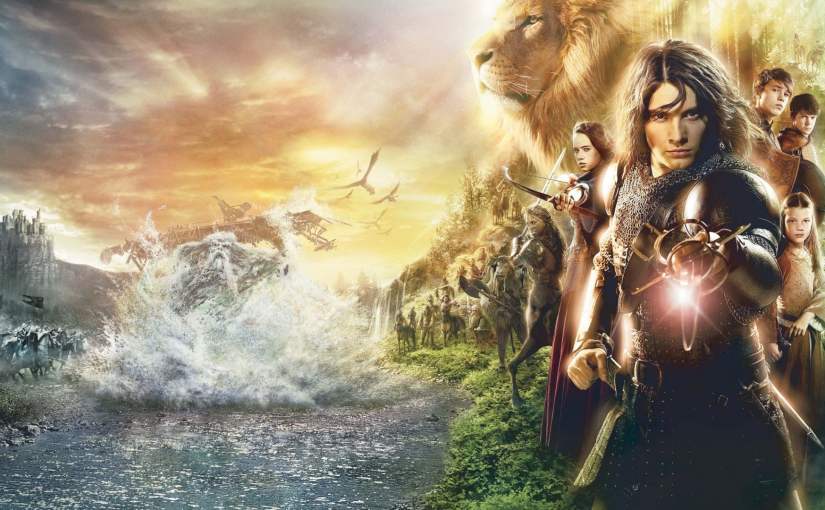
THE CHRONICLES OF NARNIA: PRINCE CASPIAN (2008)

by Miguel E. Rodriguez

Director: Andrew Adamson
Cast: Ben Barnes, Georgie Henley, Skandar Keynes, William Moseley, Anna Popplewell, Peter Dinklage, Warwick Davis, Liam Neeson, Eddie Izzard
My Rating: 9/10
Rotten Tomatometer: 66%

PLOT: The Pevensie siblings return to Narnia, where they are enlisted to once again help ward off a tyrant and restore the rightful heir to the land’s throne, Prince Caspian (Barnes).


If The Chronicles of Narnia: Prince Caspian had been released in a world without the Lord of the Rings trilogy and the Harry Potter franchise, I believe (but cannot prove) it would have been hailed as one of the great works of fantasy cinema, with deeply drawn characters, political intrigues, spectacular battle scenes, and scores of wondrous creatures, some of the best put on film.  Unfortunately, we don’t live in that world, and despite scoring over $400 million at the box office, it fell far shy of its 2005 predecessor, The Lion, the Witch and the Wardrobe, and was declared a failure.

I don’t mean to suggest that previous franchises are to blame for this so-called failure, but in re-watching it, it’s virtually impossible not to compare Prince Caspian to its epic predecessors, especially Lord of the Rings.  Look at the visuals of the final epic battle in front of Aslan’s How.  A massive army slowly advances on a stone-built fortress, while giant catapults hurl boulders from a safe distance.  Narnia?  Or the Battle of Pelennor Fields in The Return of the King?  At one point, a small army of sentient trees intervenes.  Narnia?  Or the Battle of Orthanc at the end of The Two Towers?  Susan Pevensie wards off numerous attackers using only a bow and arrow.  Shades of Legolas, wouldn’t you say?

Whatever.  It takes a conscious effort of will, but I believe it is possible to enjoy Prince Caspian on its own merits rather than judging it by comparison.  Once you can do that, this is a highly enjoyable adventure.  It captures the spirit of the source material, while also combining a childlike enthusiasm for all things fantastic, from centaurs to minotaurs to talking badgers, with a dark, mature storyline involving Game-of-Thrones-level castle politics.

In Prince Caspian, the Pevensie children are living their lives in 1942 London when they are once again magically transported back to Narnia, where they once ruled as beloved kings and queens.  However, time seems to move much faster in Narnia; whereas only a year has passed in the real world since they returned to London, over a thousand years have elapsed in Narnia.  During that time, the castle where they sat in power has been reduced to overgrown ruins that are barely recognizable.  Narnians (magical creatures) are forced to live in hiding.  And Aslan himself is nowhere to be found.

I found this particular story element rather powerful, but it’s hard to pinpoint why.  If I had to guess, it’s because it’s almost like a post-apocalyptic tale.  “We used to live here, when things were good.  Now something terrible has happened, and everything we’ve known is reduced to ruin.  What do we do now?  How do we rebuild?”  That kind of thing.  I guess.

Anyway, I won’t bore you with a full summary, which you can find online.  There’s a prince who’s been exiled by his greedy uncle, a talking mouse voiced by Eddie Izzard – an outspoken atheist appearing in a movie based on a work of Christian fiction, how ‘bout that? – daring rescues, single combat, an ingenious trap, and a provocative ending that suggests at least one Earthly traveler may have visited Narnia even before the Pevensies.

I think this is one of the most underrated and unfairly dismissed fantasy films in recent years.