DJANGO UNCHAINED

By Marc S. Sanders

Quentin Tarantino’s scripts have never been shy with using the N-word or any other colorful terminology.  He turns harsh and biting vocabulary into rhythmic stanzas of dialogue.  When he films these scripts, he’s not bashful with the buckets of blood splashed all over the set either.  His interpretation of violence works in a kind of slapstick fashion among his seedy one-dimensional characters.  Normally, I never get uneasy with his approach.  I know what to expect of the guy.  Yet, as well cast, written and formulated his Oscar winning film Django Unchained may be, I wince at both his word play and physical carnage.  I think Tarantino gets a little too comfortable with his slave era storylines and the African American actors he stages in his set ups.  A good portion of this Western may be thrilling, but it’s also cringy like watching a drunk uncle at a three-year old’s birthday party, and I defy viewers not to squint at the movie if they so much as live day to day with even the smallest shred of kindness in their hearts.

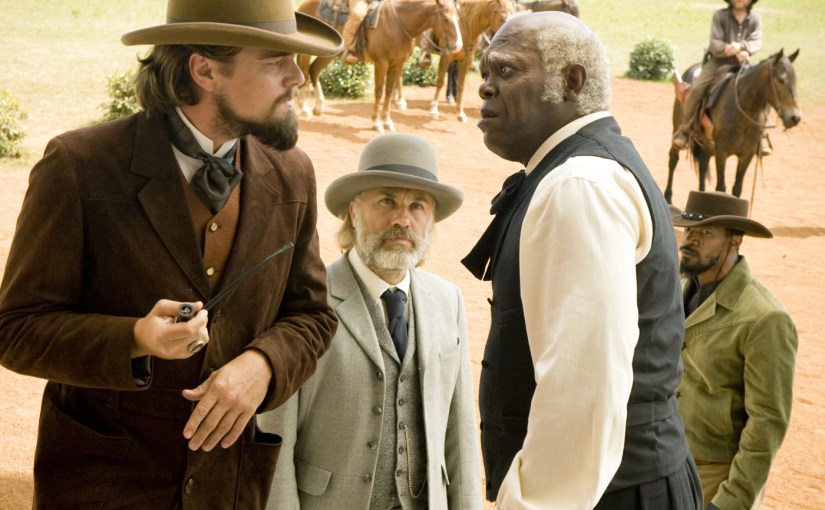
Django Freeman (Jamie Foxx) is released from slavery by the former dentist now bounty hunter, Dr. King Schultz (Christoph Waltz, in his second Oscar winning performance cast by Tarantino).  Django is a good man, though uneducated and mostly illiterate.  Once he assists the doctor with locating and collecting a bounty, the two make an arrangement to stick together through the winter collecting further ransoms.  In return for the former slave’s help, Dr. Schultz will assist in rescuing Django’s wife, the German speaking Broomhilda (Kerry Washington).  She is believed to be held at the infamous Mississippi slave plantation known as Candyland, owned by the ruthless Calvin Candie. He is played by Leonardo DiCaprio in one of his best roles while also delivering one of his most unforgiving portrayals.  Calvin Candie is a mean son of a bitch slave owner who has too much fun with investing in slaves for brutal Mandingo wrestling matches that don’t finish until the loser is dead in bloody, bone cracking fashion.  

All of these figures belong at the top of Quentin Tarantino’s list of sensational character inventions, particularly Django.  He has more depth than most of the writer’s other creations.  This guy goes from an unkempt, nearly naked, tortured and chained slave to a free man proudly wearing a bright blue court jester costume on horseback.  His third iteration places him in a gunslinger wardrobe comparable to a Clint Eastwood cowboy and when the conclusion arrives, Django is meaner, more confident and instinctively wiser, glamorously dressed (purple vest with gold inlay designer seems) like a graphic novel superhero ready to take on an endless army of redneck slave abusing outlaws.  Django is taught everything he needs to know from Doc Schultz.  Christoph Waltz and Jamie Foxx stand as an impressionable mentor/student pair.  They are the spine of Django Unchained.

The villainy of the piece belongs to DiCaprio and his head slave in charge, known as Steven, played by the director’s go to player for happy street slang and N-word droppings, Samuel L Jackson.  Steven is Jackson’s best career role because as an old, decrepit and frightening individual it’s this portrayal which looks like no other part the actor has ever played.    Both actors are funny, and you can’t take your eyes off of their unlimited grandstanding, but they will leave you feeling terribly uncomfortable.

I think what is most unsettling about Django Unchained is that the cruelty persists for nearly the whole three hour run time, and it is more so at a shameless attempt of comedic, pulpy entertainment, rather than just insight and education.  A Schindler’s List finds no glee in the torment that kept the Holocaust alive.  Tarantino didn’t even go to great heights with Inglourious Basterds because that film featured ongoing grisly heroics with his assortment of vengeful protagonists.  The Nazis were never celebrated in that film at the cost of innocent Jewish lives that faced peril and threat.

In Django Unchained, it’s hard to watch the Negro characters and extras getting brutally whipped while bound by inescapable chains.  Kerry Washington’s nude character is yanked out of a sweat box on the Candyland plantation and while I’m watching it, I ask myself if I’m too much of a prude.  No.  I don’t think I am.  This teeters on torture porn. The N-word is now being used way too freely to stab at the slaves for gleeful poetry. It grows tiring and, yeah even for a Quentin Tarantino picture downright ugly and offensive. I imagine Tarantino grinning behind the camera every time DiCaprio or Jackson happily drop another N-bomb.

Quentin Tarantino has been applauded time and again for his excessive abuse and tortuous murders committed by his characters.  Because he’s courageously gone so far before, the line of acceptance is either pushed out farther or maybe in the case of Django Unchained it is entirely erased.  

My compliments to a well-known humanitarian like Leonardo DiCaprio for energetically acting through this bastard of a role that requires a twisted pleasure in watching two husky black bruisers beat the bloody tar out of each other in a formal drinking parlor.  Later in the picture, a weeping slave is shredded to pieces by ravaged, bloodthirsty dogs.  These fictional scenes staged by Tarantino and his filmmakers come off a little too real and even by the director’s standards much too over the top for the temperature of this film’s narrative.  

What could these extras cast to play these slave and Mandingo roles have really been thinking while shooting this picture?  Did these men recognize the racially poetic humor in Tarantino’s verbiage? Did they find a commitment to demonstrate a once historic atrocity for a lesson learned? I doubt it. Did these actors simply succumb because they needed the work?  Believe me.  I empathize.  Yet, Tarantino took this film to a very uncomfortable extreme for a movie intended on following his reputable and always admired lurid material.  Here, despite my reverence for his work, I think Quentin Tarantino goes unnecessarily over the line.  The whippings and dog torture are quite uneven from what The Bride commits in Kill Bill when a Crazy 88 henchman gets spanked with a sword and there’s nothing to compare to whatever sick, graphic novel atrocities occur in his later western, The Hateful Eight – both are PG rated compared to what is offered in Django Unchained.

Much of Tarantino’s signature comedy works.  The Ku Klux Klan of the late 1850s are represented with brilliant stupidity by a cameo appearing Jonah Hill and a racist, foul speaking, plantation owning charmer played by Don Johnson, known by what else but Big Daddy.  The filmmaker turns these guys into bumbling stooges who can’t even wear their hoods properly. And yes, they also freely drop the N-word in cruel like fashion. I get it, Mississippi and Southern Plantation owners were not the Mickey Mouse sort, and I’m not asking for whitewashing what the real-life despicable characters stood for or how they carried themselves. Still, when all of this compounded together, it goes too far. In a drama like 12 Years A Slave, I see an authenticity to an ugly slave era. In Tarantino’s world, I see a kid who learned a bad word and dad said go ahead son, play with the machine gun but make sure the vocabulary ammo will riddle the entire script to pieces.

Django Unchained is a gorgeous looking picture.  Tarantino goes to the outdoor plains following the interiors of Pulp Fiction and Jackie Brown.  Jamie Foxx and Christoph Waltz’ cowboy antics look marvelous riding on horseback or even simply camping by the fire as well written exposition is revealed on cold moonlight evenings.  

I can watch this western on repeat and feel a free-spirited energy when Django steps out in his cowboy outfit with boots, spurs, the hat, and a brand-new saddle to ride off on his steed while Jim Croce’s uplifting “I Got A Name” cues into the picture.  I love how Jamie Foxx appears as a super heroic action star, especially in the final act of the movie.  I can absorb the sadism of DiCaprio’s downright mischievous evil, particularly when he uses a bone saw and skull prop to make a point.  I feel like I’ve gained a comforting friend in Christop Waltz’ kindly sensible Doc Schultz, and I welcome a very funny and altogether different Samuel L Jackson that finally arrives.  

It’s the filling within these strong moments and characterizations that is very hard to swallow.  Django Unchained is that great picture that still should have been made but with a modicum of caution. Perhaps one of the Weinsteins, or maybe even these powerhouse, marquee actors who led this piece should have shared some constructive input with the writer/director.

Django Unchained is fun, but it’s not entirely fun.

THE QUICK AND THE DEAD

By Marc S. Sanders

The Quick And The Dead is a gritty, stylish western that boasts a who’s who of great actors.  Some of which went on to magnificent careers.  I wish the story was a strong as the cast list though.  It’s watchable.  It’s intriguing. It’s also too repetitious.

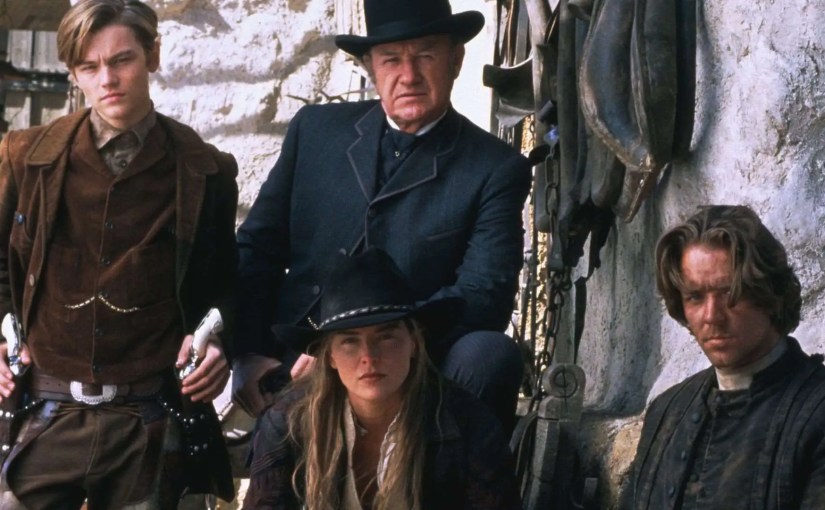
Sharon Stone is Elle.  Otherwise known in these parts as The Lady.  Two minutes into the picture and my suspension of disbelief is withering away.  Not because this gunslinger cowboy is a cowgirl, but because Stone does not look like she fits in the Old West.  Her blond locks are shampooed and conditioned.  Her complexion perfectly made up without a hint of grime or dirt or sunburn.  Stone looks like she took one step off the Oscars red carpet and onto this set. Her costume with a scarf, leather pants, black rimmed hat, and spurred boots looks like its attempting its own kind of Clint Eastwood stranger.  Frankly, it appears to have leaped off the pages of an Old Navy catalogue.

Below Stone on the credit lineup is a much more redeemable list of characters.  Gene Hackman is Mayor Herod who has amped up his level of sinister from his Oscar winning performance in Unforgiven.  There’s also Ace Hanlon played by Lance Henrickson with a rare on-screen giddy grin, whose personal deck of cards consists of aces of spades for every man he’s killed. Sgt Cantrell is the flamboyant personality with the handlebar mustache, deep voice and toothy grin that actor Keith David proudly bears.  A kid named Leonardo DiCaprio plays up the youthful cockiness of an outlaw named The Kid.  All these folks are gunslingers participating in the sport of gunslinging.  Last one left standing is the winner.  Midway through though, Herod will up the ante and deem that the last one left alive is the winner.  Each one challenges another until a final winner is recognized.  One reluctant participant is played by a very youthful looking Russell Crowe.  Cort is a former fast draw, who is now a remorseful preacher for all of the killings he’s committed.  Herod is not entirely convinced and will antagonize Cort to throw his hand in the game.

Sam Raimi directs and Sharon Stone produces this slick small town modern day High Noon.  The problem though is that Raimi and screenwriter Simon Moore choose to only send up the climax of that classic Gary Cooper western over and over.  Time and again, two opponents line up at opposite ends of the street.  The townsfolk observe with close up tension shots.  The hands twitch their fingers next to the holsters and when the clock strikes twelve, the guns go off.  Raimi often gives you the impression that the one expected to live is the one who is going to topple over dead and then an edit shows the match went exactly like you thought it would. 

This whole supporting cast has enough presence and charisma to keep my attention, but the set ups are the same over the course of the film.  Cut in between are discussions within the saloon or the hotel rooms where Herod or the Lady rest.  Cort remains chained in the town square.  When the movie breaks away it goes to flashbacks of Stone’s character as a child when she once crossed paths with the devilish Herod. 

I like the polish that Sam Raimi brought to The Quick And The Dead.  Before Quentin Tarantino was glamourizing his pulp fiction to his own two dimensional westerns and war movies, Raimi was daring enough to let us look through literal bullet holes from the front to the back of his victims.  Holes through the hand, the chest and the head.  It’s fun.  There are also countless closeups of haunting music from Alan Silvestri as a new stranger enters a saloon to click his spurs on the wooden floor.  Quick draw action is how these pistols perform too.  Hangings are a part of any day as well.  All of this is familiar and standard to the B movies brought to us by Sergio Leone’s spaghetti westerns during the mid twentieth century, but now we have a modern day cast and some glossy cinematography.

I was ready for a worthy salute.  It just comes up short due to a lack of any depth in story.  Gunslinging quick draws are not as dynamic as a gunfight at the OK corral.  How much different is one dual draw going to be from the last one we watched five minutes ago?  Raimi’s camera points from behind each challenger.  The music builds louder and louder.  Zoom in shots of townsfolk cut in.  The minute hand on the clock tower moves closer and closer to the roman numeral twelve, and then…BANG BANG!!! (I’ve said this before, haven’t I?  Well, so does the movie.)

The Quick And The Dead is worth seeing especially for another scenery chewing villain from the great Gene Hackman.  I’ll never tire of watching him.  To see the beginnings of Russell Crowe and Leonardo DiCaprio’s potential is a real treat as well.  They all certainly have some acting moments that I loved digging up from this time capsule.  Character actors Keith David and Lance Henrickson break from the standard personas you’ll find on the rest of their resumes.  I just needed more of a variety to this town setting they got play in.  The déjà vu is too overdone.

Sharon Stone usually looks like she’s giving a so so community theatre audition.  It’s hard to take her seriously, the same way I would had Uma Thurman, Susan Sarandon or Geena Davis been cast as The Lady.  Those actresses work for their appearance to be appropriate for the setting of their films.  Look at Sharon Stone here in the dusty Old West.  Then look back to what Sarandon and Davis did in Thelma & Louise.  You’ll see right away, practically anyone else would have been more suitable for the lead of The Quick And The Dead.

KILLERS OF THE FLOWER MOON

By Marc S. Sanders

Killers Of The Flower Moon reflects on a period in Oklahoma history that I imagine has hardly been told.  In the early 1920s, the Native American residents, consisting of four tribes, came into a blessing of wealth when oil was discovered on the land they occupied in Osage County.  Almost immediately, white folk from all over the country migrated to this area and built up an infrastructure of capitalism that included private practices, pool halls, movie houses, law enforcement, pharmaceuticals, and even cab drivers.  However, they didn’t want to just stop at developing the area.  They wanted to seize it and they proceeded to do so by wiping out the Native American residents.  Family lineages were all but erased as the whites married into the race and gradually found ways to kill and bring about surprising deaths that would ultimately allow them to legally inherit what was rightfully owned by the Indian people.

Director Martin Scorsese has introduced a new kind of historical education with a film that I believe will be my favorite picture of the year.  I was mesmerized by every photographic shot, closeup, edit, and musical accompaniment contained in this movie.  Everything works so well. 

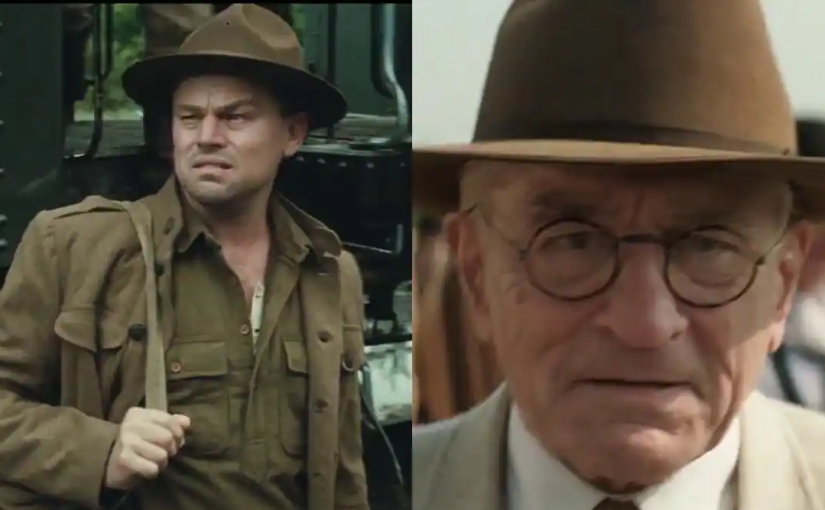
Robert De Niro reunites with the director for the tenth time; an amazing legacy of a partnership spanning fifty years.  He portrays William “King” Hale.  King is a kindly old fellow on the surface, but his intelligence shows as he strategizes how to take over more and more of this area.  He oversees a control of the white gentlemen folk, leading them into quick marriages with the young women of the tribes.  From there, they have children and over time will gradually purify the bloodline.  It’s a ruthless and scheming tactic and it successfully works thanks to how taciturn Mr. Hale is.  De Niro might win his third Oscar for this role.  This character joins that exclusive fraternity of the best villains in cinematic history, ranking up there with The Wicked Witch, Harry Lime, Norman Bates, Darth Vader, Joker, Daniel Plainview and Hannibal Lecter.

Early on in the epic film, The King’s nephew, Ernest Burkart (Leonardo DiCaprio) has returned from the war to work under his uncle.  Ernest starts as a cab driver and meets Molly (Lily Gladstone), the Native American woman he will take as a bride and establish residence together.  DiCaprio does some of his best work following a very boastful career of roles.  He’s also sure to get at least an Oscar nomination.  This is already his sixth film with Scorsese.  Ernest is not very bright, but with The King’s guidance and instruction he’ll also come to own much of this territory.

Mysterious deaths of unexpected natures occur within the tribes of Osage County, particularly in Molly’s family.  Over the course of the film, one relative after another perishes until what’s left of her bloodline is practically only herself.  The children she bears are a mix of Molly and Ernest.  Molly knows something is amiss.  She is starting not to feel well, and her suspicions speak to her.  Others in the community are also suffering peculiar deaths following doctor’s visits or evenings of drunken binging.  An investigation is warranted before it becomes too late.

Lily Gladstone will become a surprise hit at Oscar time as well.  A breakthrough role where her feared silence and bravery matches well against the deceit emanating from the King and even the poorly hidden conniving of her husband Ernest.

Scorsese builds his film with suspense and shock.  A quiet beat of instrumental music haunts certain scenes.  Who will be the next target of the King’s bidding?  The King hides behind his empathy for loss by attending funeral services and allowing the survivors to cry into his shoulder.  On another side, he instructs Ernest to carry out an assignment to some flunky to make a murder appear like a suicide.  A shot in the back of the head will not send a convincing cause and effect though, and the King and Ernest must make up for that. 

The King is everyone’s friend in Osage County, but he’s also a puppet master Grim Reaper.  With the circular rim glasses that DeNiro wears along with his peaceful beige suits, it’s a wonder that this man is an executioner using the hands of others to carry out his bidding.  He dances in the middle of town during festive gatherings.  It even amuses the Sheriff’s office when he voluntarily offers himself up following a warrant for his arrest.  At the risk of getting politically sided, DeNiro was recently interviewed during a press junket for the film.  His animosity towards President Trump is no secret.  I was in the audience at Radio City Music Hall when he led a unified roar of “Fuck Trump” during the Tony Awards.  Still, the skilled actor said he used the enmity he harbors to his advantage for this role.  In the latter half of the film, William “The King” Hale preaches in a similar approach to Trump.  There are figures in our history who just know what buttons to push and absorb massive amounts of influence while earning respect through fear. 

Killers Of The Flower Moon covers a wide berth of its period in history.  Scorsese takes an inspired approach by cutting away on occasion with black and white footage and photographs of the Native Americans coming along with their good fortune and then on to how the white “immigrants” of this area enter this land and assume a daily life within the community, whether they were welcomed or not.  All is depicted from how Osage County quickly changed following the discovery of “black gold,” to how Ernest becomes wise to the advantages of power. 

Leonardo DiCaprio has a great undertaking.  Ernest is not very bright.  He can hardly read.  He’s not subtle with his approach like his uncle.  Yet, the actor maintains an expression of no choice to abide by but what he’s been told is right.  DiCaprio does this incredible expression with long frowned lips and a fat chin that stands out from beneath his nose.  It almost seems like a barrier to finding the humanity he may have once had when he was an infantryman fighting with the allies in Europe.  It is just a haunting performance.

The third act picks up with J Edgar Hoover’s newly established Bureau of Investigation entering the story to investigate the odd happenings in Osage.  Jesse Plemons again plays that guy that you have seen somewhere before.  Often, he occupies similar kinds of roles, and still, I like what he contributes to this picture as Investigator Tom White.  Screenwriter Eric Roth lends the character simple, plainly worded questions for Plemmons to work with and it seems to come off as nothing intimidating.  Rather, the presence of Tom White on Ernest’s doorstep, with Molly mysteriously sick in the bedroom, is enough to rattle Ernest, the King, and the whole county.

It’s no secret that Killers Of The Flower Moon has a long running time at nearly three and a half hours.  However, it is necessary.  This widespread crime is not done in just minutes.  How it is gradually orchestrated needs to be seen, followed by those that uncovered how sinister it became.  Then attention needs to be given to how biased the trials of Ernest and The King had become.  Men who conspired with the King and Ernest serve on the jury.  A lot of unfair wrongs occurred during this time spanning what I believe was at least a decade and a half. 

Roth and Scorsese bring the conclusion of the film with a welcome invention.  In a time where Netflix, Dateline, 20/20 and ABC News thrive off true life crime documentaries that become so addicting, the filmmakers resort to a radio show to sum up what happened to the main players of this devastating episode in twentieth century American history with the director making a cameo to offer his final words for the main victim of the piece, Molly Burkhart.  This bookend to the film has stayed with me since I finished watching the movie, and I applaud Scorsese and Roth for their execution.  Newsmakers of today go for the most sensationalized crimes that have occurred; the ones that leave the most shock and awe and even audaciousness.  What happened in Osage County is unforgivable.  Likely a genocide of bloodlines that were unjustly ceased so that what was rightfully theirs to own could be seized.

Killers Of The Flower Moon is a drama that had to be told because the motivations that led to the series of crimes happens not only to Native Americans, but to practically any other demographic across the globe.  This is a captivating story and one of the best films Martin Scorsese has ever made.

Again, this will likely be my favorite film of the year and Oscars are deserved for DeNiro, DiCaprio, Gladstone, Roth, Scorsese and for Best Picture of the Year. 

NOTE: As I watched this movie, I could not help but think of the film August: Osage County, the motion picture adapted from Tracy Letts’ Pulitzer Prize winning play.  There is one Native American character in the film who is hired to serve the white family living on a wide expanse of land in present day 2013 (2007 for the play).  The first time I watched the movie, I could not recognize the purpose of the character.  On a second viewing, following a conversation among the dysfunctional family of characters about Native Americans, it was much clearer.  Having now watched Scorsese’s film, this picture serves as a great companion piece to watch afterwards.  I’ll be directing a stage production of this soon and much of what I learned from both films will be incorporated into my interpretation.  Even the architectural designs of the homes in both films, interior and exterior, are uniquely similar. 

Look for my review of August: Osage County (featuring Julia Roberts and Meryl Streep) on this site as well.

TITANIC (1997)

By Marc S. Sanders

James Cameron’s Titanic will always remain a timeless piece.  Audiences adore the relationship between the two lovers from different worlds, Jack and Rose, who meet aboard the maiden, and final, voyage of the doomed cruise liner.  Maybe more importantly, the craftsmanship of this film is still beyond compare.  Many know that when this picture was in the making, its budget ran way over and endless rumors of waterlogged technical challenges were rampant through media reports.  Titanic was predicted to sink James Cameron’s career.  Instead, it was the grand Hollywood underdog that no one expected.

I recall seeing the film twice in theaters during the Christmas season of 1997.  I was not so enamored with the script or the fictional love story that Cameron conjured as the central narrative for the real-life tragedy that took approximately fifteen hundred lives on April 15, 1912.  The visual effects were the marvel to watch, and what I patiently waited for, during the second half of the picture.  I had to tread water through the first half though.

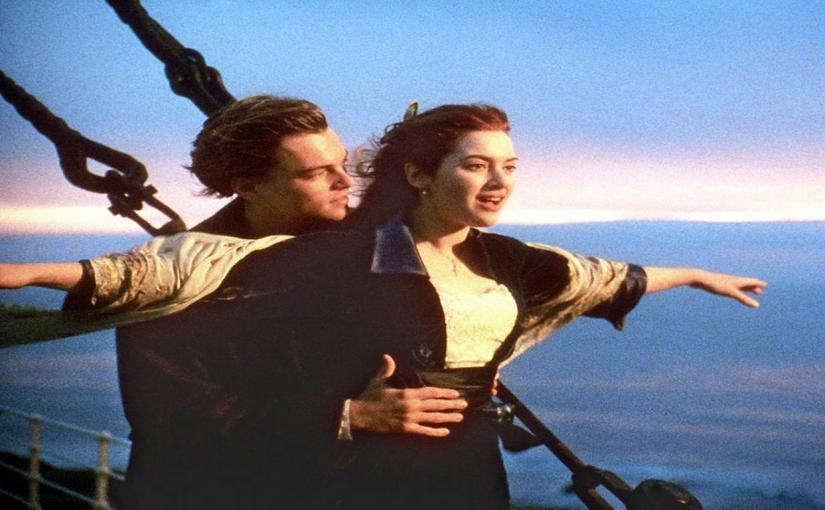
A hardly known, but already Oscar nominated (What’s Eating Gilbert Grape?),  Leonardo DiCaprio portrays Jack Dawson, the poor member of the ship’s steerage company who falls in love with an aristocratic young woman named Rose Dewitt Bukater.  Rose is played by Kate Winslet, who’s uncomfortable with the snobbishly wealthy first class section of people she’s forced to associate with by mandate of her possessively cruel, and supercilious fiancée named Cal (Billy Zane) and her mother, Ruth (Frances Fisher).  Call it a Romeo & Juliet love story.  Two lovers are forbidden to be with one another.  Yet, they are going to do it anyway.  It’s simple and nothing dimensional.  It seems to have parallels to Disney’s rated G interpretation of Beauty & The Beast.  Fortunately, what saves the storyline are the performances and chemistry of DiCaprio and Winslet.  These are not even the best roles of either actor’s storied careers.  Yet, they are anything but unlikable. 

The relationship they share aboard Titanic, as it makes its way from Europe to the United States, is told in flashback by a 101 year old woman (Gloria Stuart) to a marine exploration crew who have been meticulously searching through submerged remains of the ship on the ocean floor of the Atlantic.  The most important element to come from this section is a wise choice by Cameron to include an informatively brief analysis of how exactly the ship took on an overabundance of ocean water following a collision with an iceberg, and how it gradually began to sink, weigh down, and split apart before finally concluding with a straight dive down into the murky, cold depths.  I must note that film critic Gene Siskel acknowledged this storytelling device upon the film’s initial release. He hailed this sequence because it offered an early “blueprint” of what audiences could expect to happen and witness during the film’s second half.  We all know the ending to the film, but how exactly did it happen?  The quick breakdown helps.

Ahead of the tragedy, Cameron and his set designers offer a grand, functioning piece of machinery that is absolutely impressive to modern audiences, even over a century later.  The decks and hallways are wonderous.  The forward and aft locations seem familiar and solid.  The CGI on this reinterpretation of Titanic is undetectable.  If this film was going to live up to its name, it most certainly has done so.  This ship looks tremendous and strong and indestructible just as the architect and engineer (Victor Garber, Jonathan Hyde) written into the script proudly lay claim to.  The famous moment of the film where Jack supports Rose on the forward bow of the ship with a sunset sky in the background is positively gorgeous.

I do have reservations with the film though.  I think both stories, the forbidden romance and the demise of the ship, in Titanic work.  However, when spliced together, the picture leaves me feeling uneasy.  James Cameron has weaved his fictional romance, appropriate for used, yellow stained paperback books, with a horrifying tragedy.  It’s what you would find in those cheesy Irwin Allen disaster epics from the 1970s.  When Cal’s anger over Jack’s intrusion comes to a boil, he pursues the couple, firing a pistol at them while the ship is continuing to sink.  Jack is apprehended and handcuffed in the lower deck and his doom seems imminent as the water level grows higher.  A priceless blue diamond serves as a MacGuffin that goes back and forth to deliver the operatic divide of these characters.  These are all cinematic inventions painted upon a well-known historical tragedy simply for the sake of adventure and suspense. 

I also found it unconvincing that the only person aboard the ship to question the contingency planning and safety measures ahead of any potential disaster is young Rose, who has no insight into mariner regulation or procedure.  Of all people, it only occurs to Rose that Titanic is not equipped with sufficient lifeboats for all twenty-two hundred people on board.  For storyline options, these avenues written by James Cameron sometimes take me out of the film. 

What I hold fascinating though is where the film depicts the eventual panicked response of the passengers and crew.  We see the captain appear helpless in his defeat against the nature of the ocean running its course over the ship he commands.  A string orchestra chooses to simply perform amid the ongoing disaster, which I have read actually happened.  Most breathtaking is how all the extras in the film react to the growing shift of the ship.  Their slant becomes steeper.  The people do their best to shuffle through the flooding, eventually having to keep their heads above water.  Helpless children are abandoned.  For an emotional punch, the steerage in the below decks is gated off from reaching the top of the ship, and giving themselves a chance at survival on a life boat.  James Cameron accounts for every response and detail that likely occurred during the sinking of the ship.  It’s captivating to witness, despite how tragic the outcome.

Though I do not care for the mix of the love story and the real-life submergence of the ship, Titanic has many strengths beyond what James Cameron achieved with the most up to date technology in visual effects, at the time.  Billy Zane is a villain that you love to hate.  Truly an underrated antagonist in the history of film.  David Warner is an intimidating henchman.  Kathy Bates is a welcome Unsinkable Molly Brown, the crass wealthy woman who sets herself apart from the pretentiousness of her lady peers.   

The exceedingly three-hour running time allows you to become completely familiar with the ship from stem to stern and again the set pieces are magnificent, whether you are hobnobbing with the wealthy up top or the steerage down below.  Every pipe or rope or stairway or hallway or chandelier serves a purpose.  The costumes and makeup designs are appropriate, including the frozen complexions on the bodies that float on the ocean surface following the tragedy.  Cameron’s use of the camera is amazing as he offers wide, expansive shots of nothing but dark ocean with hundreds of people suffering towards their demise. Thus driving home the point that there’s nowhere to find salvation and relief from the bitter cold air and sea water.  These poor people faced unimaginable challenges while competing with panicked crowds, and lack of foresight from those in charge of this newly designed technological wonder.  The movie covers everything that worked against these passengers.

Titanic is an incredible accomplishment. There’s much to see and absorb.  The last time I saw the film was nearly twenty five years ago and much of the footage never escaped my memory.  James Cameron left an indelible impression on moviegoers.  Regardless of the misgivings the film holds, Titanic has held its rightful place as an all-time landmark in cinematic achievement.

NOTE: I took advantage of seeing a newly restored 4K version in 3D at my local movie theater.  I have never been a huge fan of 3D as I often find it murky and distracting from the story.  Had Titanic been offered in standard 2D, that is what I would have gone to see.  Fortunately, this re-release is an exception to my impression with 3D presentations.  The picture is glorious, and I highly recommend the film be seen while it remains in limited release.  Titanic in 3D should not be missed.

THE WOLF OF WALL STREET

By Marc S. Sanders

When a person carries on with his/her life knowing full well that practically every action is illegal, immoral and harmful, it’s a story that must be told. Jordan Belfort, The Wolf Of Wall Street is such a person.

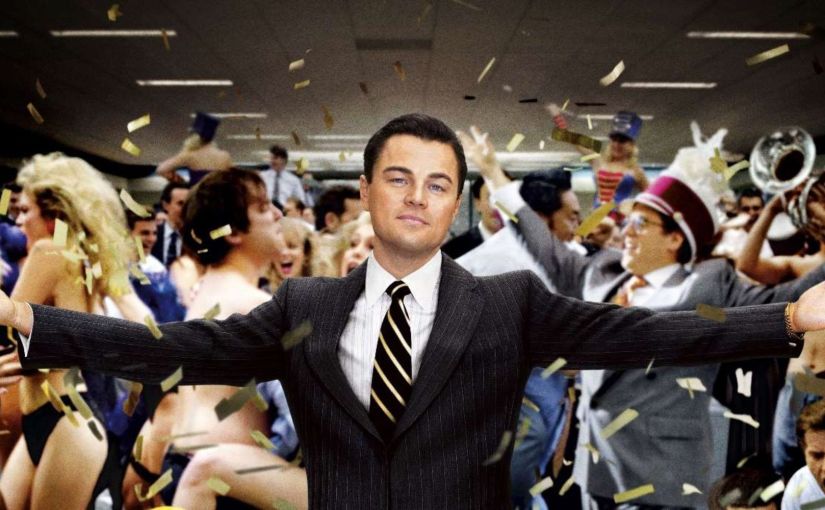
Leonardo DiCaprio explodes with rages of drug use, drinking, more drug use, banging prostitutes, even more drug use and pink slip stock trading along with some drug use. To get this manic, this wild, and this crazy requires a certain kind of energy to perform. The real Jordan Belfort must have had a massive amount of stamina to live this life. After all, he’s still alive today. DiCaprio, portraying the on-screen persona, throws himself into it. There’s no way he got to this pinnacle of hyperactivity on cue, with director Martin Scorsese’s call for action. DiCaprio had to thrust himself into this debauchery. It takes a certain skill to not let up on this. Pay attention to a hilarious scene where his quaaludes have paralyzed him to the point where he can’t even crawl to, much less open the door to his car. It’s a hilarious display of crippling physicality. DiCaprio maxed out on his Belfort portrayal, thereby earning his Oscar nomination. I thought he should have won that year. He lost to his cameo co-star, an excellent Matthew McConaughey for Dallas Buyers Club.

DiCaprio is so good that he yanks the entire cast into comparable craziness as well. Jonah Hill plays Jordan’s sidekick Donny: a buffoon of a guy who’ll whip out his member at inopportune times for attention and display. Hill doesn’t hold back either in his earned second nomination as well.

Scorsese, with a script by Terrance Winter based on Belfort’s book, is not concerned with necessarily showing a story arc where characters question their actions. Instead, he focuses on the hubris of all of this. Crashed helicopters, crashed cars, crashed planes and crashed luxury yachts not to mention endless office orgies, including one in first class on a commercial flight to Switzerland. It’s filmed very well, and while it is one over the top thing after another, it is nonetheless very funny and very entertaining.

The nerve of this guy, right? Yet that’s the thing about The Wolf Of Wall Street. Right from the get-go, Belfort is strongly urged to let up as the FBI easily closes in, and he doesn’t. It’s kinda crazy, really. Belfort put himself in an unwinnable situation and his addiction to money, drugs, ridiculous sex, and the ease by which he does it all calls to him to stay in the game until the lights just turn off.

This film marked the highly visible introduction of Margot Robbie as Jordan’s wife. She’s excellent with a New York accent (Robbie’s Australian) who loves the money and glamour but is not so stupid. Following up with a nominated role in I, Tonya (which she should have won against an aggravating Frances McDormand in Three Billboards…) and offering the best moments of Suicide Squad, it is easy to believe that she could go toe to toe with DiCaprio here. They have great arguments on screen together; funny but true.

Scorsese offers up his signature narrative voiceover from DiCaprio just as he did before in Goodfellas and Casino. His editor Thelma Schoonmaker is great at keeping the energy alive by taking advantage of the legendary director’s quick cuts and great music samplings.

The cast is just right with memorable moments from Jon Bernthal as Jordan’s tough guy friend and errand boy, Brad. (Bernthal is a great character actor all together. Check him out in Baby Driver, too.). Kyle Chandler is the modest element as the FBI agent who brings it all down. He knows he doesn’t have to exert himself too much. Belfort is doing all the work for him. Still, he spells it out harshly and honestly. No bullshit. He just cuts to the chase.

Other great appearances include Rob Reiner, Jon Favreau, Jean Dujardin, Joanna Lumley and I have to recognize Stephanie Kurtzuba. She offers a scene not widely recognized, as a disciple of Belfort’s team who is full of pomp, and confidence that far exceeds any of the guys alongside her. It occurs midway through and it’s an important moment because it really shows the power of influence Belfort had with his stockbrokers. He made them criminal millionaires overnight and to them he’s a Messiah. When Kurtzuba’s moment occurs, she solidifies the power of Belfort’s misdeeds.

It’s very easy to succumb to this lifestyle. Scorsese and Winter show how easily and quickly lots of unclaimed cash can be made at the expense of innocent people. It’s really fascinating. There’s no dimension to Belfort and his cronies of losers who would follow him anywhere despite the cost and the damage. That’s okay for me here. Simply because it fascinates me that he had the chutzpah to continue on with this immoral trajectory.

The Wolf Of Wall Street is a no holds barred, great film.

THE DEPARTED

By Marc S. Sanders

Martin Scorsese finally won his Best Director Oscar with the 2006 Best Picture The Departed, from a script written by William Monahan. The film is a remake of a Hong Kong crime drama called Infernal Affairs.

Also known as the one film in Scorsese’s library with a linear plot, The Departed depicts the stories of two guys who grew up in the south end of Boston and joined the police academy to serve. Only difference is one is recruited to go undercover within the Irish mob, while the other is recruited by the same mob to become a highly respected police officer and supply an unlimited wealth of information to his criminal boss.

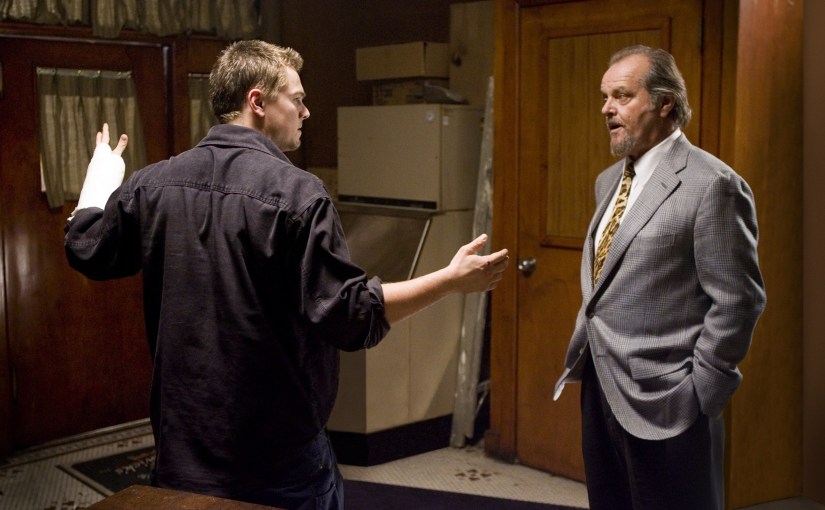
Leonardo DiCaprio is the undercover cop Billy Costigan. Matt Damon is the criminal cop Colin Sullivan. Jack Nicholson is the Irish mob boss in the middle, Frank Costello.

The Departed works because Scorsese and Monahan allow the audience in on every deceit playing against the characters. Pleasantly surprising is that there are even twists to this layered story, and cellular flip phones assist all the players with trying to remain in hiding or hoping to one up and trap the other. However, because everyone is getting tipped from their own respective sources, people are either not ending up dead, or arrested or caught red handed. As Costigan builds his case against Costello, Sullivan is worming his way to protecting his cover in the police force while also tipping off his true boss.

Performances from DiCaprio, Damon and Nicholson are what you’d expect. Nicholson is chewing the scenery again appearing like the devil incarnate while hamming up the facial expressions. Damon is great at playing it like the Boy Scout cop in well-tailored suits, clean shaven and flirtatious within his department and earning respect among his peers, that is until it all seems to unravel. DiCaprio is wired as the cop who needs to show he’s a dangerous hood to be trusted among the mob cohorts. However, he’s getting more paranoid and unwound at the risk of being made.

Thelma Schoonmaker (one of my favorites) does a balanced approach edit to showing a parallel among the cops. She will insert a happening of Costigan for a snippet and then segue to Sullivan appearing to do honest police work, or reaching out to Costello with a warning of what’s coming for him.

Great support also comes from Ray Winstone as Costello’s right hand man, and Alec Baldwin, Anthony Anderson and Martin Sheen, all within the police department.

Ironically, the one Oscar nominated performance was bestowed upon Mark Wahlberg and I grew tired of his presence quickly as the cop who berates Costigan endlessly with yelling and fast one liners that involve someone’s mother. Could we just move on from this please?

I also found Vera Farmiga as a police psychologist to be mostly unnecessary until a contrived ending point needed to arrive. Her character naturally has affairs with both Damon and DiCaprio, who also attend her office for sessions. Of course they do! Whenever the film sidetracks to one of them with Farmiga, The Departed stalls for a moment. Her character carries no stake in the plot line and offers no further dimension to DiCaprio and Damon’s characters.

The film works best as the complications compound on each other. A great moment occurs between the cops when one of them picks up a bloody cell phone to dial back the most recent call. Silence on both ends of the line, and the moment just plays out until someone speaks or hangs up.

Moments like that is suspense similar to when a man is intruding in a dark house. However, this is suspense delivered by Martin Scorsese, and Martin Scorsese will film suspense that is anything but typical. Martin Scorsese’s suspense leaves you breathless.

ONCE UPON A TIME…IN HOLLYWOOD (2019)

by Miguel E. Rodriguez

Director: Quentin Tarantino
Cast: Leonardo DiCaprio, Brad Pitt, Margot Robbie, Timothy Olyphant, Dakota Fanning, Bruce Dern, Luke Perry, Al Pacino, Kurt Russell
My Rating: 10/10
Rotten Tomatometer: 84% Certified Fresh

PLOT: A fading television actor and his stunt double strive to achieve fame and success in the film industry during the final years of Hollywood’s first Golden Age in 1969 Los Angeles.


Quentin Tarantino’s ninth film is a little bit like Beethoven’s Ninth Symphony.  It’s big, bombastic, and goes the long way around the barn to get to the finale, but in the end it all makes sense and is a transcendent experience.

Let’s see, where do I start?

First of all, the film’s evocation of 1969 Los Angeles is like Mary Poppins: practically perfect in every way.  I’m no fashion scholar or visual historian, but every exterior shot of the city was pretty convincing to my layman’s eyes.  The movie theatres, the movie posters, the restaurants (anyone else remember “Der Weinerschnitzel”?), the cars, those HUGE sedans sharing the road with VW Bugs and M/G’s…it’s clear they did their homework.

There’s the performances by the two leads.  Tarantino once said he considered himself the luckiest director in modern history because he was able to get DiCaprio and Pitt to work on the same film.  Can’t argue with him on that score.  They carry the film in a way that few other tandems could have.  (Newman and Redford come to mind.) Mind you, DiCaprio and Putt don’t look much like each other, considering one has to be the other’s stuntman, but you get the idea.

Above all, there’s the story.  DiCaprio plays Rick Dalton, a former leading man from ‘50s TV westerns who is now playing colorful bad guys in ‘60s TV westerns.  Brad Pitt plays Cliff Booth, the stuntman who’s been taking the dangerous falls for Dalton for years.  Dalton happens to live next door to Roman Polanski and Sharon Tate on Cielo Drive in the Hollywood Hills.

All the trailers, and all the industry buzz, reveal that the Manson family and Sharon Tate play a part in the film.  That’s no spoiler.  Given what we know about those events, the movie plays like Gimme Shelter, the landmark documentary about the ill-fated concert at Altamont that was actually due to take place a few months after the events of this film.  It’s all very suspenseful, in the sense that we know what’s coming, but we’re just not sure how the movie is going to approach it.  So every scene with poor Sharon Tate in it is overshadowed by the fact that we know her ultimate fate in history.

It’s like the famous Hitchcock analogy of suspense.  Two people are eating at a restaurant when a bomb suddenly goes off under their table…that’s surprise.  Put those same two people at the restaurant, where the audience knows there’s a bomb under the table, but it doesn’t go off right away as the two people eat and converse and have dessert, and we’re wondering will they leave BEFORE the bomb goes off or not…?  That’s suspense.

And that’s the genius of this movie, with Tarantino’s sprawling, winding screenplay.  We get to know Rick Dalton and Cliff Booth intimately, we get the rhythms of their relationship, of Dalton’s mood on set, of Booth’s quiet acceptance of his role as Dalton’s sole support system.  We are treated to lengthy scenes showing Dalton at work on the set of a TV western, so we can appreciate the vast differences between an actor and their characters.  There’s a brilliant backstage scene between Dalton and a child actor who is impossibly, hilariously advanced for her age, and who winds up giving Dalton some goodhearted advice.

And interspersed through it all is Sharon Tate.  Sharon Tate bopping to music at home.  Sharon Tate picking up a female hitchhiker on her way into town.  Sharon Tate almost passing, then backing up to admire with youthful excitement, her name on the marquee of a movie theatre, right next to (gasp) Dean Martin’s name!  Sharon Tate dancing, walking, smiling, drinking…living.  She’s the diner at the restaurant, and the Manson family is the bomb we know will eventually go off.  It casts a pall over the proceedings, but not in a bad way.  It’s an interesting way to bring the reality of the situation into focus from time to time.

And now I have to end this review before I inadvertently give away certain, ah, plot elements that elevate Tarantino’s film from a mere character study or period piece into the heady heights of cinematic transcendence.  I have not myself read any reviews of the film, so I can only guess that whatever negative reviews are out there probably center on the film’s finale, or perhaps on its meandering script.  All I can say, or will say, is that I am firmly on Tarantino’s side on this one.  The way the conclusion was written and filmed is the kind of thing that people will still be talking about years from now.

So just take it from me.  If you’re a movie fan, and ESPECIALLY if you’re a Tarantino fan, this is right up your alley.  It’s easily his most slowly paced movie since Jackie Brown, but that just gives you time to e-e-e-ease into the characters, like putting on a tailored suit piece by piece.  This film, like Beethoven’s Ninth, is a masterpiece.

ONCE UPON A TIME IN…HOLLYWOOD

By Marc S. Sanders

There’s no question the most different of Quentin Tarantino’s directorial efforts is his latest film, Once Upon A Time In… Hollywood. Already described as his “love letter to cinema of the late 60s,” his 9th effort also implies the end of the Hippie Era by devoting a portion of time to B movie actress Sharon Tate, infamously murdered by Charles Manson’s followers when she was 8 months pregnant with Roman Polanski’s child.

Margot Robbie plays a near, gorgeous exact replica of Tate. She’s deliberately short on dialogue and I like to believe it’s because Tarantino treasures her as an innocent angel who was loving the atmosphere of Hollywood. She’s preserved of being nothing but likable. She dances with glee in her bedroom in the Hills or in public at the Playboy Mansion. One day she visits the local cinema to see her performance in “The Wrecking Crew” with Dean Martin. Tarantino shoots close ups of Robbie loving her footage as a pratfall klutz while listening to the audience reaction. She’s loving every second of the experience. People love her and she sees the love she has for people. Critics took issue with Robbie’s lack of dialogue. Not me. The performance is all there. Robbie is wonderful to look at with responses of pure happiness and celebration.

The main focus of the film is on Rick Dalton played by Leonardo DiCaprio with a huge range of drama, comedy and well intentioned over acting when Tarantino is wanting to spoof the TV western for fun. We see a collection of Dalton’s work, most especially on the fictional black and white TV western that airs Sundays at 8:30 on NBC (cue Dalton’s cowboy hat close up accompanied with “BONG, BONG, BONG!).

Rick is realizing he’s becoming past his prime. Marty Schwarz, his agent and a producer, played by Al Pacino warns Rick that he’s at a point where he’s only going to be the villain of the week on The Green Hornet and Batman. Rick does not take this well. Using his stunt double pal, Cliff Booth (Brad Pitt) to talk to, Rick is consumed with insecurity and alcoholism.

Tarantino wants to depict an era in Hollywood on its way out. A fictional character like Rick and the well known fate of Sharon Tate symbolize this turning point.

A third example is with Cliff. Rumored to have killed his wife, Cliff has trouble finding stunt work on a set. So he’s happy enough to just drive Rick around in his Cadillac, and fix his antenna. A great moment occurs when Cliff antagonizes a cocksure fist of fury Bruce Lee to a fight. Bruce doesn’t do so well against Cliff. Bruce Lee maybe not be what he once was, or what audiences ever perceived. Times they a changin’.

This is not the aggressive film that Tarantino is mostly known for. It’s primarily calm as we see these characters navigate around Hollywood locals, listening to The Rolling Stones and the Mamas & The Papas, and various product advertisements. Rick and Cliff are suffering a little. Suffering at the loss of what they were and the world they are forced to enter, nor what they are accustomed to. Sharon is ready for what’s next. Yet, will she get the opportunity to carry on?

The ending is bound to leave people divided. It’s different and very, very unexpected. It makes no difference how you feel about it. What matters is if it generates a response, and based on the theatre where I saw the film, yes! Yes, there is a massive response to what occurs.

Tarantino’s Once Upon A Time In… Hollywood is not his best film. There were moments where I thought it was a little slow and the film lacks the dialogue punch that many know Tarantino for. There’s really not one memorable line that stayed with me. I guess that’s what the trade off is when you finally are served multi dimensional characters that Tarantino has hardly offered before.

It’s the best non Tarantino film that Quentin Tarantino has ever directed.