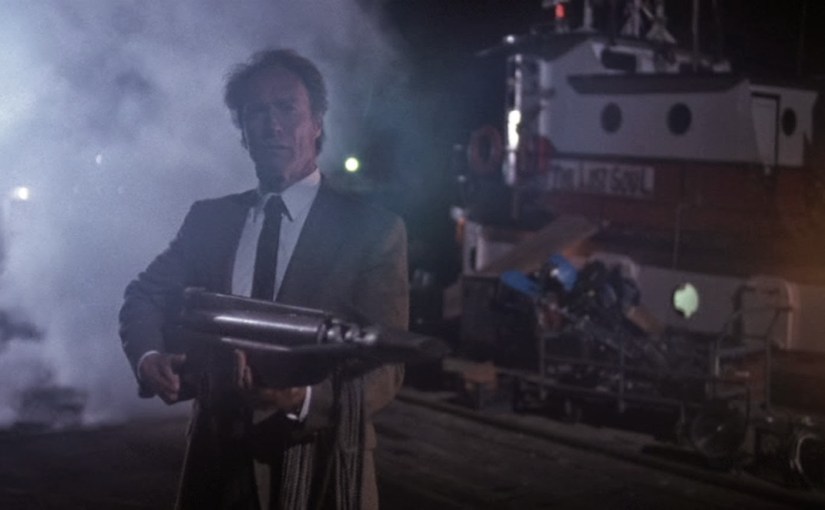
THE DEAD POOL

By Marc S. Sanders

Sometimes five is too much.  It was for Clint Eastwood as Inspector Dirty Harry Callahan.  The Dead Pool was the fifth and final entry in the famed crime drama series.  Eastwood moves slower this time.  He does not come off as much of a rebel any longer.  Most notably, the story doesn’t have the feel of a Dirty Harry film.  The cop who was infamous for questioning the laws set in place seems to be just slotted into this film. 

The Dead Pool is directed by Buddy Van Horn, who had a long career as a stuntman and assistant director for many of Eastwood’s films, and other actors like Charlton Heston and Henry Fonda.  He does a ho hum job with the picture.  I don’t need to be treated to inventive shots or camera angles to enjoy a movie.  I have yet to visit San Francisco, but at least Buddy Van Horn provides enough locales to feel like I’m getting a serviceable tourist view.

A twisted game is being played in the underground scene.  People are making lists and betting on local celebrities they expect to die soon.  One name includes a heavy metal rock star played by James Carey, later to be known as Jim.  There’s also a snobby film critic who is a deliberate inspiration of Pauline Kael.  (Kael’s reviews were not too kind to many of Eastwood’s films over the years, particularly the original Dirty Harry.)  At the bottom of the list is Harry himself, who is surprisingly favored by the police department officials – first time that has happened – for putting away a powerful mob boss.  A side story consists of the boss giving orders out to his crew to take revenge on Harry and provide some escapist shootouts to move the film along. 

The police department want Harry to cooperate as their hero poster boy.  Harry doesn’t care for fame, though.  It’s not his style.  Yet, a persistent television reporter (Patricia Clarkson) wants his story.  A little romance is implied but Harry is not one for gossip fodder.  Unfortunately, Eastwood and Clarkson are really lacking chemistry here.

The rock star and the movie critic are murdered.  Harry must be next, and a horror film director (Liam Neeson) seems like the prime suspect because his dead pool list had included all three names. 

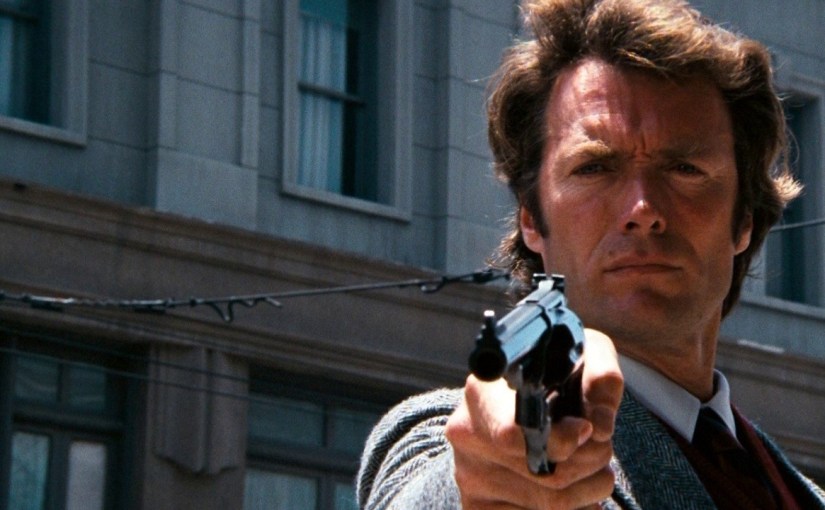
The Dead Pool is not a terrible movie, but it does not live up to other Dirty Harry installments. Primarily because it does not follow the character’s familiar mantra against the bureaucrats and the flawed system of prosecution and law enforcement that he’s always been challenged with.  At times, I’m looking at Eastwood and I’m asking myself who is this guy?  Sure, he’s got a few one liners of dry wit.  The famed eyebrow stare is there too, and the .44 Magnum as well.  However, Harry doesn’t seem to stand apart so much from everyone else as he did in the other films.  Beyond the giant gun, that is what made Harry Callahan so famous on screen. 

The investigation that Harry is assigned to with a Chinese American cop (Evan C Kim) is very bland.  We hardly get to know any of the victims or what they stand for, and when the true killer is revealed, it turns out to be a last-minute introduction of someone we’ve yet to see.  There’s no surprise to the culprit behind all of this. 

The series is also well known for the partners that Harry is forced to work with.  In The Enforcer, Tyne Daly brought out Harry’s regard towards women working in his dangerous field that demonstrated his initial frustration followed by his reluctant acceptance.  In the first movie, Remi Santori came about when it was okay to say that Harry took issue with all kinds of demographics, including Mexicans.  A chumminess nicely developed between those two guys as they tracked down the killer, together.  The second film, Magnum Force, offered a partner to also care about.  These are good side performers that colored in much of the Harry Callahan lore.  In this movie, Evan C Kim has one standout moment in the first ten minutes where he surprises everyone, especially Harry, with how he disarms a robber by use of martial arts.  It’s a great scene.  After that, though, he’s given nothing to do.  This actor had promise for more interactions with Eastwood.  It just never delivered.

The series started in the gritty times of 1971 when political correctness was not ever considered.  By the time the last two films were released in the 1980s of Ronald Reagan, who famously adopted “Go ahead.  Make my day,” for Gorbachev, there was a new wave of sensitivity abound.  I like to believe with the prior installment, Sudden Impact, Harry Callahan learned something new about himself with regards to the rights women had or were denied of while still applying his own code.  With The Dead Pool, the writing seems reluctant to go anywhere near a potential debate, and so it drips itself into a stale slasher movie with the cop ready to fire his six shooter.

The grand highlight of the film is a car chase on the hilly streets of San Francisco, which is the best place for a car chase, always.  What separates this one from the others is a little remote-controlled car that pursues Harry and his partner, ready to activate its equipped detonator at just the right moment.  The editing of this sequence is really fun, and it’s a great salute to Bullitt and other gritty, urban cop films, particularly the Dirty Harry movies.  This toy car flies over fruit stands and careens through sidewalks and over sewer holes.  Meanwhile Harry screeches down one hill after another trying to evade this pesky rapscallion.  It’ll definitely put a smile on your face while the moment lasts.

I recall being eager for another Dirty Harry movie.  I grew up loving many of Clint Eastwood’s films.  Dirty Harry is a favorite character of mine.  Yet, I also remember feeling really let down when my dad and I walked out of the theatre.  The Dead Pool just doesn’t have the same flavor as the other Eastwood products.  Again, it’s not the worst picture.  It’s standard cop fare coming in at a lean ninety minutes.  Eastwood and the rest of the cast are okay with what they’re doing.  I just would’ve changed the name of the main character listed at the top of the cast list.  He could have been Dirty John Doe for all I care.

PLAY MISTY FOR ME

By Marc S. Sanders

Before Fatal Attraction and countless other stalker/possessive lover thrillers that continue to monopolize all kinds of entertainment mediums, there was Clint Eastwood’s directorial debut, Play Misty For Me.  Watching it for the first time in modern day, I can say that it pushes all the standard buttons of this kind of thriller formula.  The over enthusiasm of the mentally disturbed stalker, the uninvited appearances at inopportune times, the late night phone calls, and of course the knife wielding.  Nevertheless, I remain impressed with Eastwood’s interpretation.

Eastwood also headlines the cast as a late-night disc jockey named David.  Each night he gets a call from a devoted fan named Evelyn (Jessica Walter) requesting he play the jazzy tune, Misty by Erroll Garner.  Included in Dave’s regular programming are stanzas from poetry that he reads to his listeners and endorsements of favorite hang outs and bars that he frequents within the breezy coastal town of Carmel-By-The-Sea, California.  (Years later, Clint Eastwood would be elected Mayor of this community.)  Naturally, Evelyn shows up at one such regular hangout and the two have a one night stand under the presumption of no strings attached.  Of course, there would not be much of a film if Evelyn adhered to that policy.  Thus, the pattern begins.

Evelyn follows Dave around town.  She shows up uninvited at his house ready to prepare a steak dinner.  She’s knocking on his door in the middle of the night, naked under an overcoat.  There are phone calls along with disturbing, unexpected outbursts as well.  Complicating matters for Evelyn is that Dave is on his way to rekindling a romance with a former flame named Tobie (Donna Mills).  Then, it really gets frightening.

For a first time director, Clint Eastwood really shows some expert skill in Play Misty For Me.  The film opens with an overhead shot above the cliffs adjacent to the coastline, and then the camera circles around through the sky and finally zooms in on Eastwood standing on a veranda looking out to the sea.  It’s a glorious scenic shot and the director carries this theme throughout the course of the film.  A locale that impresses me is The Sardine Factory.  It is where Dave and Evelyn first meet, and Eastwood’s friend, mentor and often director, Don Siegel makes an appearance as a bartender.  The Sardine Factory is still there to this very day. 

Eastwood seems to offer a tourist guide and a photographic devotion for this quiet little town, and it contrasts well with the disturbing storyline.  Carmel-By-The-Sea seems like a comfortable and trusting area to live.  Therefore, it is all the more easy for an intruder to lay claim within the unguarded setting.  This film might be from 1971, over fifty years ago, but it makes me want to go visit.  We are treated to live footage at the Monterey Jazz Festival, and it does not overstay its welcome.  Eastwood’s film work is gorgeous throughout the whole picture. Particularly during a midway music sequence featuring Roberta Flack’s The First Time Ever I Saw Your Face, playing over footage of Dave and Tobie spending time and making love together. 

Jessica Walter is especially good in her role as the menace to this man’s livelihood.  She’s alluring and relaxing with her first encounter with Dave.  Then, she’s upended by the disruption and unwelcome halt of her romantic tryst and outbursts come from out of nowhere.  Eastwood lives up to the thriller characteristics of the film by the way he shoots Walter in close ups that appear with no build up.  He includes shots of her face and brunette hair in nothing but darkness with an agonizing scream.  It’ll shiver you.  It just makes Evelyn’s appearances even more shocking. 

The film that comes to mind when I watch Play Misty For Me, is Adrian Lyne’s Fatal Attraction from 1987.  I think that would be the go-to response for most viewers today.  However, it would be unfair for me to say I know what happens next.  Yes, I did know where everything was leading to.  However, Eastwood’s film is the pioneering installment, released years ahead of the other film.  I’ve always had mixed feelings about Fatal Attraction honestly.  I can’t take my eyes off it, especially because of the performances from Michael Douglas, Glenn Close and Anne Archer, but I frown heavily on the slasher ending that was pasted on to film.  Glenn Close did too.   Now that I’ve seen Eastwood’s movie, it astounds me how much Lyne’s picture lifts from the 1971 thriller.  Both films incorporate references to Madame Butterfly.  There’s a suicide attempt for attention.  There are phone calls and knocks on the door in the middle of the night.  There’s another lover who may be in harm’s way.  There’s an abundance of similarities in both films.

I have to wonder.  Should I now go back and revise my review of Adrian Lyne’s film? 

THUNDERBOLT AND LIGHTFOOT

By Marc S. Sanders

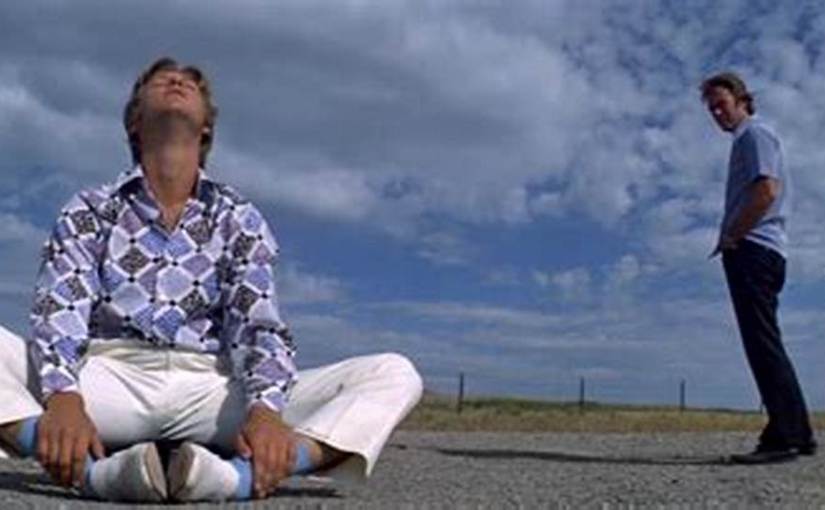
There are good Clint Eastwood films and there are bad Clint Eastwood films. You’d probably guess where I rank 1974’s Thunderbolt and Lightfoot (T & L).

I’m amazed. Director Michael Cimino, at the time, was really only known for polishing Eastwood’s Dirty Harry flick Magnum Force into a great crime drama of cop vigilantism. Then he does this picture, and how did anyone at Warner Bros trust him with The Deer Hunter a few years later? Sure, that film won Best Picture, but should anyone really have been surprised when the box office nuclear bomb, known as Heaven’s Gate came along, and bankrupted Orion Pictures? You think the producers of that turd said, “Fellas, we never considered Thunderbolt and Lightfoot. Hindsight 20/20. We shoulda known better.”

Back to the subject at hand. T & L is mindless of any coherence. Two criminals just happen to find each other randomly on some out of nowhere highway while running from the law (for Lightfoot) and a couple of bumbling henchmen (for Thunderbolt). Their respective crimes are unconnected. Eastwood’s quiet, familiar, tough guy demeanor (Thunderbolt) meets up with wild boy Jeff Bridges (Lightfoot) and then they eventually get to a plot of devising some kind of money heist with early adversaries George Kennedy and Geoffrey Lewis, former crime pals of Thunderbolt. However, they need to arrange to acquire a cannon, get on a job digging water lines for housing properties, work as ice cream delivery guys, hitch a ride in a redneck’s Dodge Challenger, and have Lightfoot dress in drag. There’s also a schoolhouse, no longer located where it once was, with a secret stash hidden behind a blackboard.

Doesn’t this seem like much too much effort for an ordinary bank heist in 1974? Security personnel and systems were probably not as sophisticated back then, no? Eastwood made an easier time of escaping from Alcatraz then all the work put in here.

The movie is sweaty, dirty, stupid, and it just doesn’t make sense really. Bridges actually got an Oscar nomination in the supporting actor category, up against nearly the entire cast of The Godfather Part II, for this film, and I’m…well…perplexed. How was that possible? Best guess, Cimino, who also wrote this dreck, decides to have Lightfoot die at the end. (There!!!!! I ruined it for you!!!!) Problem is I don’t know why or how. He’s not shot or wounded. There’s never an indication that he is ill. The script is too dumb to consider any kind of foreshadowing of his demise. The guys are just driving along with the money in backseat, and Lightfoot appears weak all of the sudden. Thunderbolt pulls over to the side and his partner just quietly dies in the passenger seat. Cimino cues up the Paul Williams music and the end credits appear. Bridges had a death scene. So, Bridges has to get a shot at Oscar glory. The math ain’t pretty but it’s the best logic that I can come up with.

GRAN TORINO

By Marc S. Sanders

I had a few reasons to watch this movie. One, a good friend, Greg Spiegel, had given this film his full endorsement on a number of occasions. Two, as some of you know, I’ve been a huge admirer of Clint Eastwood for as long as I can remember, since age 8 or 9 I imagine, when I saw his Dirty Harry films and even Fido Beddow in Every Which Way But Loose (and its sequel; those films are much better than maybe they are given credit for actually).

Eastwood matured as a filmmaker during the mid 80s and on into the present. He transitioned into films that delivered messages that sometimes even contradicted his past films as the gunslinger who never asks questions and always knew where to shoot. Films like Unforgiven and A Perfect World really showcase the tragedies of violence perfectly, and I think Gran Torino is worthy of being added to that list.

Eastwood plays Walt Kowalski, a racist Korean War veteran, who never left the war he used to fight in. The war comes home with him 50 years later to his Michigan neighborhood where he seems to be the only Caucasian American to live among a melting pot of other races; highlighted especially here are his Hmong neighbors who look past Walt’s prejudices to befriend him following his unintended gesture of protection from an intrusive gang. From there, Walt makes a bond with young Tao, a boy with no male influence in his life, and Tao’s sister.

Eastwood is probably the best director to direct himself. He knows how to position his camera and lighting, or lack thereof, to carve out the lines on his face and hide himself in haunting shadows to show a riddled history to Walt. He also adheres to similar themes that worked well in other films. A defiance to religion represented by a young minister looking to help Walt is reminiscent to the sarcastic approach Eastwood’s character used in Million Dollar Baby. The neglect of a protagonist’s family, and most especially, the connection of the pessimistic old man with the young child, barely adult, as well echos the Clint Eastwood/Hilary Swank pairing in that film. I don’t mind if it’s a repeat actually. Relationships like these are hardly shown in films these days, and I think they are important. Films like Harold & Maude and The Karate Kid show that gaps in generations are not an excuse to separate ourselves. (Heck, I even attempted it when I wrote my play, Arnie & The Itch.)

Eastwood has great, uncompromising racial affection (yes, those two words work nicely here) with his two Asian co-stars Bee Vang and Ahney Her, who are well cast in their own right.

Name calling is a method of maintaining a relationship in a film like this. The PC bandwagon is tossed out so the actors, especially the minority Asians, find something more wholesome to a prejudiced old coot.

The language is strong in Gran Torino, but I say it’s an important film to show to many kids to learn of a neighbor’s tolerance; of what goes on behind a closed door or even if that neighbor sits quietly on his porch with a dog by his side and a beer in his hand. We learn of the roads they have crossed, the battles they have fought, and the accomplishments they’ve made. Learn from these people. Learn from the humanity they carry; the honest humanity that may look offensive on the outside yet is present due to a tormented history inside.

I could say “these whipper snappers with their phones” but it’s honest frustration. It’s hard to learn what a person really is by means of a handheld device. To learn about a person, you have to eat with them, work with them, speak to them and even appreciate their 1972 restored Ford Gran Torino, automobile.

This was a great effort in performance and production from Clint Eastwood. I’m glad I watched it finally.

TROUBLE WITH THE CURVE

By Marc S. Sanders

Roles for the “aging has been” who is either about to retire or refuses to retire seem reserved these days to Robert Redford or Clint Eastwood.

Back in 2012, Eastwood gave up his director’s chair to star in a little known film about an aging baseball scout in Trouble With The Curve. I’ve seen him play this kind of role many times before like In The Line Of Fire, or Grand Torino.

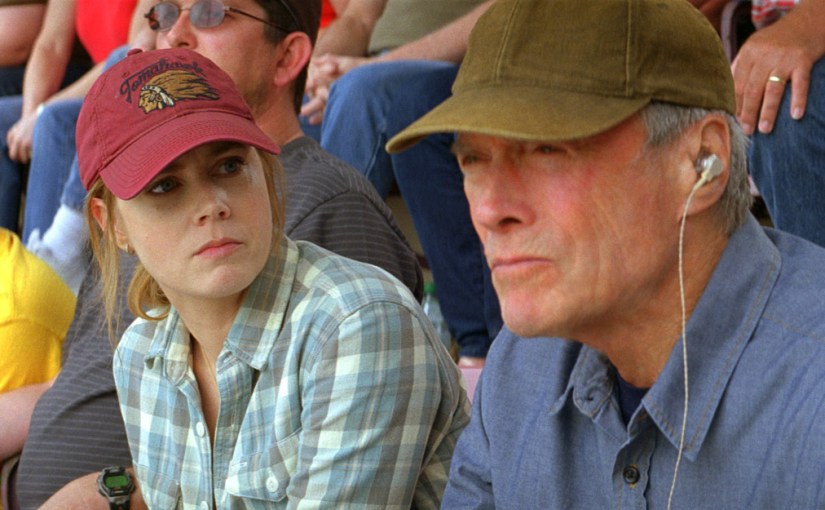
There’s nothing memorable about Trouble With The Curve, but it does feature some good scenes between Eastwood and Amy Adams as his tough as nails attorney/estranged daughter who forces herself upon his scouting trip to look after him when it seems his health, particularly his vision, is deteriorating. Adams is good as the underestimated baseball expert. She can recognize a 95 mph pitch and she can triumph over you in reciting RBI stats, batting averages, etc. Give her a bat and she can also cream a ball outta the park.

Justin Timberlake is the necessary pretty boy romantic interest for Adams, but he doesn’t offer much to the film in the way of humor or even sex appeal. This guy is a great actor beyond his music. (See The Social Network)

The movie belongs to Eastwood alone.

First time director and regular Eastwood crewman, Robert Lorenz does well with the baseball footage of young prospects and the end is satisfying as the argument weighs whether experience and instinct can still trump the power of technology.

Has baseball truly come to rely on what a computer says is the best first round draft pick? Wow…how sad.

THE ENFORCER

By Marc S. Sanders

It’s no surprise that Harry Callahan is a chavaunistic son of a bitch. He has never been one to be shy about his prejudices, after all. In 1976, viewers found it endearing in an ironic way. Today, the character would never be produced into a studio film.

The third entry in the popular Dirty Harry series called The Enforcer is good but does not hold up as well as I remember. By the end, Harry must upgrade from blowing the bad guy away with a bazooka. He can no longer settle for his trusty .44 Magnum. It makes sense. Make everything your protagonist normally does do the same thing he’s always done, only make it bigger, and more actiony!!!! Not much interest in the on-screen chemistry that Clint Eastwood will have with said bazooka though.

Fortunately, there’s a better angle here and that is through actor Tyne Daly, as Harry’s new partner. Daly is terrific as one of San Francisco’s first female Police Inspectors who has to live up to the muster of a violent city as she accompanies a violent cop. It’s a great character that draws out feelings in Harry. She gives him pause to care and think beyond himself. Eastwood and Daly are where the chemistry is really at.

Everything else is kind of a waste really. Callahan never goes toe to toe with the main bad guy, a leader of a militant group terrorizing the city. This villain is nothing great or exciting.

Still, beyond Daly there are some great action scenes such deescalating a liquor store hold up by plowing a squad car through its front door. Makes sense, right?

SUDDEN IMPACT

By Marc S. Sanders

The very first R rated picture I ever saw in theaters was the fourth installment of Clint Eastwood’s Dirty Harry franchise, entitled Sudden Impact.  I was eleven years old and I loved it.  My brother Brian took me with his best friend Nick.  Age 11 and I’m in a crowded theater on a Saturday night watching a brutally violent and sometimes funny crime drama with the cop who carries the .44 Magnum.  Looking back, it felt like a rite of passage.  It felt rebellious.  I’d now be the coolest kid in school as I recount for them everything I was allowed to see that their parents refused to even consider.

Brian introduced me to many of what remain my favorites this very day.  He introduced me to Jackie Gleason in The Honeymooners,and then at age 8 or 9 I must have watched the first of Eastwood’s series, Dirty Harry, on video tape.  At that age, you just want to get to the next shootout where Harry allows his bloodletting revolver do the talking while he finishes his hot dog.  I watched those first three films (Dirty Harry, Magnum Force and The Enforcer) over and over again.  As an adult, I more so appreciate the themes of the San Francisco cop, Harry Callahan.  He always had a low tolerance for the bureaucratic BS of court procedure and legal precedent.  He was always smart enough to know who the real bad guys were and that was enough to bring them in. If they didn’t cooperate, well then there were other means. 

The first two films in the series question Harry’s procedures and philosophies.  The third film, although entertaining to a degree, deviated from that.  The fourth film returns to test Harry’s beliefs in police enforcement and justice.  Only this time, it’s actually from the perspective of a gang rape victim, played by Sondra Locke.

Much of the first hour of Sudden Impact is episodic.  Scene after scene shows Harry’s encounters with various hoods that he has a connection too.  Harry disrupts a wedding to undo a vicious mobster.  Later, those guys try to take him down.  Some punk kids get off on a technicality in court.  They’ll have something to say to Harry as well, and just in case you need a little more action, there is that very memorable coffee shop robbery where Harry tempts all of us to “Go ahead.  Make my day.”  There’s also good laughs as Harry is gifted a bulldog he calls Meathead. 

Weaved within these various moments is a separate story focusing on a beautiful painter who has a knack for killing men with one bullet to the genitals and another to the head.  She has revenge on her mind following a gang rape of her and her sister ten years prior.  Eventually, Harry is assigned to investigate and he is on his way to a fictional neighborhood known as San Paulo (filmed in Santa Cruz).  Harry has to navigate around a difficult police captain (Pat Hingle) as the killings continue to happen out here.

I’ve always been fascinated with the Dirty Harry series.  Surprisingly, when I do internet searches on the films and character, I don’t find much that explores the measure of rights and law.  Yet, beyond the sometimes-comic book violence of the pictures there’s much to question and think about.  Is Harry right with his chosen actions?  After all, the films make clear that the bad guys are the bad guys.  The writing however, makes it a challenge when legality interferes and the rights of men and women are tested.  Sudden Impact does the same thing.  With Eastwood directing, he makes the viewers witnesses to what the Locke character is subjected too.  That should be enough, right?  Real life is not that clean cut though.  However, in an age of internet surfing and headline breezing, people are endlessly tried in the court of public opinion and not a court of law.

The first film in the series had Harry declare that the law is crazy.  The second film tested the protagonist when he uncovers that people supposedly on his own team were carrying out vigilante murders against the worst mobsters and pimps in the city, as a means to clean up the streets.  Now, another and more personal vigilante appears.  What makes Harry right and these others wrong?  I don’t think any of the five films in the series ever give a clear-cut answer.  That’s okay.  I’d be frightened if there were a direct response, because it remains a complex issue.  When the courts fail us, what is there left to do?

Do not mistake me.  I am not calling for violence.  I’m just questioning a system that is sometimes broken.    

Recently, a local trial wrapped up where a retired police officer shot a man in a movie theatre who became argumentative and belligerent when he wouldn’t turn off his cell phone.  Popcorn was thrown, a gun was drawn and a man was instantly killed.  The retired police officer was found not guilty by a jury of his peers.  The court of public opinion by and large have been outraged with this verdict.  The grieving widow felt as if justice was not served.  Followers of the story didn’t either.  Another story focused on a beloved teacher who was hit by a car in a school parking lot.  I actually got into a public Facebook debate with someone who said the driver should be punished to the full extent of the law.  I questioned if the driver is truly guilty of murder or manslaughter.  It could have just been an accident.  We are humans to a fault.  How do we know the teacher didn’t just step in front of the car without looking?  The opposing view insisted the driver had to be speeding.  Maybe.  Yet, at the time neither of us knew that.  A car going at 5 mph can just as easily crush a human to death as a car going at 30 mph.  I insisted to the person I was sparring with that she was riding a slippery slope of presumption without all of the facts disclosed.  A police report has yet to be publicly disclosed.  Circumstances always come into play.

I know I’m digressing.  With a Dirty Harry picture like Sudden Impact, it’s laid all out for you.  Harry will request that four robbers put down their guns before introducing his friends Smith & Wesson.  He’ll also consider the circumstances after a woman’s life has been permanently scarred with no one to side with her.  A police officer should not be judge and jury.  Yet, it’s reassuring those films like Sudden Impact or Dirty Harry will allow a comeuppance for the wrongdoers in the world. During the closing minutes of the film, Sondra Locke delivers a monologue that at least is worth consideration even if it’s not agreeable.  I don’t believe our society should turn into a wild west circus where you can get gunned down in a movie theater over thrown popcorn.  I do believe however, that evidence must be taken more seriously in many circumstances.  Suspicion must be valued more often. 

Sudden Impact might have a right-wing attraction to it.  It glorifies gun violence, for the sake of action entertainment.  Harry doesn’t just have a .44 Magnum.  Now, he also has a .44 Magnum Auto Mag!!!!  (Whatever that is!)  Ironically, this picture is primarily told from a woman’s point of view where she wants to be believed and she wants justice, much like many of the messages of the Me-Too movement that gained major traction in 2019.  It’s insisted that when a victim says they have been raped or assaulted, no matter how far back the incident occurred, it should be believed.  The argument is where’s the proof?  Like Harry Callahan though, proof is not always the end all be all.  Instinct and common sense sometimes have to prevail.  Again, it’s a slippery slope, but it’s also always worth questioning.  Harry Callahan is always worth questioning.

DIRTY HARRY

By Marc S. Sanders

The very first R rated film I ever saw was Dirty Harry. I was probably 7 or 8 when my brother introduced me to it, and it eventually led to my first R rated film to see in the theatres, Sudden Impact, the fourth film in the series.

The original installment had such an influence on me, and it remains as one of my favorite films. I did not necessarily understand at the time the complex, albeit simplistic summary, of the law and the barriers Harry Callahan breaks to get the bad guy. I was more impressed with the 44 Magnum he carried and sociopathic behavior of the serial killer, Scorpio.

All these years later, followed by numerous viewings, and I’m just grateful director Don Siegel’s film was actually made. Had it been considered today for a treatment, it would have never come to light. The film is too candid and frank in its liberties of racist undertones and the underworld of a seedy San Francisco during the 1970s. Harry just didn’t care about the sensitivity of any demographic. He also just didn’t care about what was at stake to capture a hardened, dangerous, apathetic killer. Arguably, and only in the fictional world of film, audiences were probably grateful for that. Cut the bullshit. We all know who the guilty party is. Let’s get him off the streets, regardless of what is mandated to avoid any further loss of life. At least through the first 4 of the 5 Dirty Harry films that has been the common theme. (I’m especially fond of Magnum Force for challenging Harry’s own code of law enforcement. There are great debates to think about in that film.)

Dirty Harry is a deliberately ugly film. Siegel shows the worst of people at times, including Harry. Yet, there are sick people on the streets like actor Andy Robinson’s Scorpio killer that treat murder, mayhem and extortion as a twisted game of insane pleasure. Robinson was perfect in this role, a precursor I thought for Heath Ledger’s Joker many years later. Only a guy like Dirty Harry Callahan is right to nab a guy like this.

The film offers great moral questioning on the rights of men whether they are clearly the culprit or not. Miranda and several amendments are appropriately referenced and questioned. Is it ever appropriate to exercise brute force on a suspect? Can a near impossible scenario justify any actions of that measure? “Well then the law’s crazy,” Harry says. Even by today’s standards you can’t help but wonder if Harry is right.

What would be Harry’s opinion of today’s ongoing theme of domestic abuse among NFL athletes? Fair trials, and innocent until proven guilty are necessary but (at least this is how I feel) the circumstances of these stories make it abundantly clear that the guy did it. He beat his girlfriend into oblivion. The evidence is so much easier to uncover these days. It’s easy for me to say this from the comfort of my own home and not on a jury box. What would Harry think? He always knew to see beyond the bullshit. Heck, if I ever got a chance to interview the guy, all he’d probably tell me is get out of here. He’s got work to do. Harry Callahan was never up for sharing anyway.

THE GOOD, THE BAD AND THE UGLY

By Marc S. Sanders

Sergio Leone closes out his Dollars trilogy with the epic The Good, The Bad, & The Ugly, respectfully portrayed by screen legend Clint Eastwood, tough as nails Lee Van Cleef and one of the great scene stealers, Eli Wallach.

It’s clear from the start that Leone had at least triple the budget he had when he made A Fistful Of Dollars. This installment offers broad landscapes, gutted out old west towns, locomotives, and an infinite amount of extras to capture an extraordinary Civil War battle over a bridge.

For the three main characters, the Macguffin is $200,000 buried in a grave, yet each one knows a different piece of information relative to its location.

Eastwood’s quiet temperament takes a back seat to Wallach’s boorish ugly bandit and the film stays on a fast pace trajectory because of it. Wallach is given great moments whether he’s hanging by a noose or taking a bath (“If you’re gonna shoot, shoot. Don’t talk.”) It is one of the all time great roles.

While Van Cleef was a huge attraction in a For A Few Dollars More, he surprisingly isn’t given much material here. That’s okay though. He makes the most of what he’s given and again he plays the man in black as cold and calculating. I’d like to uncover more films with Van Cleef. Such an interesting guy with as great a voice as say James Earl Jones or Morgan Freeman. Fortunately for him the Dollars films revived his career following a bout with alcoholism.

Eastwood just does his thing, and it’s great entertainment to see him in a standoff followed by a twirl of his pistol back in his holster. He just has such a presence. The legend he’s become was truly recognized with The Man With No Name.

Leone recruits Ennio Morricone to compose what has become one of the most recognized scores in film history. The whistle harmonica that pursues the three players is as familiar as Monty Norman’s James Bond Theme or John Williams Jaws opening. Morricone is fortunately still working and he is partnering up with Quentin Tarantino again (first time with The Hateful Eight) on his upcoming film Once Upon A Time In Hollywood. It makes sense really. The Good, The Bad & The Ugly is one Tarantino’s favorite films.

Leone made a gorgeous looking film. It’s any wonder that his resume consists of only 9 films altogether.

Sergio Leone was an inspiring master filmmaker and it’s easy to recognize elements of his films that appear to have inspired some of the greatest box office hits of present day. Funny, but whenever I see Eastwood blow an outlaw away with no questions asked, what comes to mind is Han Solo taking out Greedo in an off the map, lawless cantina. Those that know me, know what a high compliment that is for Leone’s efforts.

FOR A FEW DOLLARS MORE

By Marc S. Sanders

The bloody landscape of the Wild West continued in Sergio Leone’s second chapter of his Dollars trilogy. For A Few Dollars More improves upon the first installment, A Fistful Of Dollars. The plot is cleaner and joining Clint Eastwood’s Man With No Name is a very cool fellow bounty hunter dressed in black. Lee Van Cleef plays Colonel Mortimer, a former soldier armed with an array of weapons.

Mortimer and the Man form an uneasy alliance in order to track down the vicious Indio and his gang. The prize $10,000 for just Indio; a whole lot more for the entire gang.

Leone reminds audiences of the techniques he used in the first film. Yet he makes the tension grander with cut away close ups at his gunslingers’ eyes before a quick draw. A great middle moment occurs with a bank robbery. Leone strategically uses sharp edits on Eastwood, Van Cleef, Indio’s gang, the exteriors of the bank and the precious vault inside. Accompanied with Ennio Morricone’s whistler ballads, Leone continues his back and forth close ups of all involved in the scene only he speeds up the edits to build more tension and suspense. Finally, the scene is blown wide open with a moment I never expected. Great fun.

Eastwood does not invent anything new here. His costume is even the same as before. That’s the legendary image and that’s fine by me. Van Cleef is especially good. A real scene stealer with his crackling voice that tells of a past where his Mortimer character protected his boundaries by being the sharpshooter that he is.

Watching this for the first time only tells me that action films today work too hard throwing everything at you. Films today often don’t give enough about the character or the heroes. You don’t see what makes them tick. You don’t see a raw talent to the character. In this film, it is quick draw gunslinging. Look for a great scene where The Man and Mortimer meet for the first time in a quick draw duel of wits at night in the center of town. When you see how good they are with a six shooter, you believe it all.

Today, a hero’s talent is inherited by something gone awry normally. Leone leaves the mystery open as to how guys like Mortimer and The Man With No Name acquired their abilities. Why waste time on character background? Let’s just see what these cowboys can do.