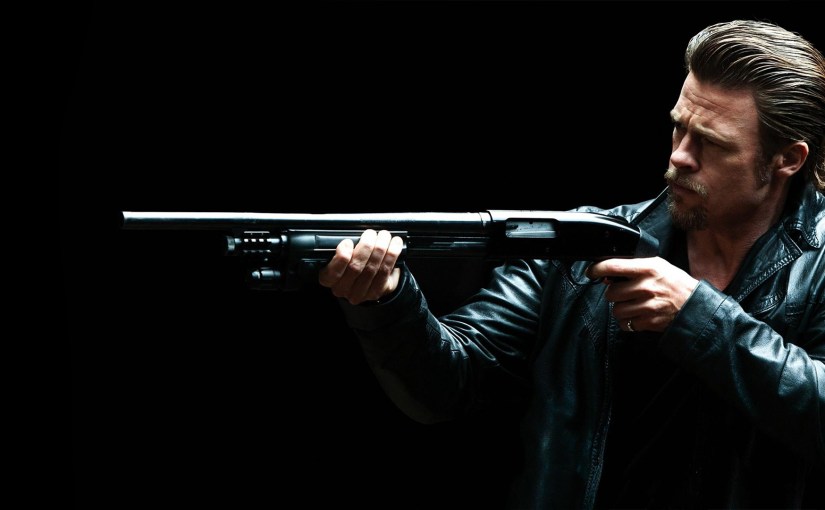
PREDATOR

By Marc S. Sanders

Predator is not only my favorite Arnold Schwarzenegger film, but it also remains as one of the best action films of all time.

The main reason for my praise stems from its cast consisting of the Austrian headliner followed by Carl Weathers, Jesse Ventura, Bill Duke and Sonny Landham. The cast is sensational because they take the science fiction material seriously by evoking their machismo gradually evolving into fear. Director John McTiernan displays all of this very well through quiet and covert close ups as each character sums up the possibility that they are being hunted for sport by an entity they are not familiar with.

McTiernan makes use of his setting to the point that the real-life dense jungle of trees amid thick humidity, within South America, is its own character. I don’t know how he did it but, in this film, McTiernan and his cinematographer capture flawless tracking shots of running over uneven grounds and roots, leaves and low hanging foliage. It’s really spectacular how it all moves fast without any chopped up quick cuts like a Michael Bay movie for example. In this movie, the chases are actual chases.

An outrageous Oscar crime is that this film lost its Visual Effects prize to Innerspace. That gnaws at me when you consider the vagueness of the Predator’s chameleon like invisibility shape. It leaves the viewer intentionally as confused as these expert Gung Ho military men are. They can’t quite make out what this thing is because McTiernan wisely follows Spielberg’s Jaws technique by not showing you the creature until all the cards are dealt. The viewer is left curious and aware but still in suspense. There’s a kaleidoscope of transparency in the figure that scopes these men but what is it, really? The best horror films present the horror by literally not showing you the horror.

I like how this rescue team is continuously displayed with their talents for covert sabotage, hand signals, caution and focus. The actors are actually setting up the booby traps and climbing and ground crawling.

It’s honestly a very well-acted piece most especially from, yes Schwarzenegger, as well as Bill Duke and his psychological trauma during the 2nd half of the film, and Sonny Landham as the Tracker Billy who can relay what transpired with a keen Native American sense of environment. It’s a great collection of characters all together.

Sadly, the majority of the follow up films in the franchise do not live up to what originated here. In the first installment, the story is condensed in an efficient 90 minutes that leaves enough time for one story of adventure and rescue before it gets to all its sci fi suspenseful showpieces. The follow up films never took advantage of the strengths used here from over 30 years ago.

Predator is a brilliantly edited, well shot, taut and a gripping yarn of imagination and fear.

From 1987, it hasn’t aged a bit.

THE VERDICT

By Marc S. Sanders

Sidney Lumet is a master filmmaker at shooting predominantly talkie films. In The Verdict by David Mamet, his best special effect is, at least, the just as legendary Paul Newman as washed-up alcoholic attorney Frank Galvin. Lumet opts to shoot Newman for the screen talent he is. Occasionally, his camera points up at Newman, who looks as if he will fall over. Lumet also makes Newman look great as he runs down a hallway, or with a stare of his familiar blue eyes. The chemistry of camera and performance are blended rhythmically.

Alcoholism has been depicted countless times, but Newman’s interpretation ranks at the top of the list. He can’t function without his drink whether it’s gaining a high score on pinball, flirting, reading a brief or even getting a fast protein fix by dropping an egg yolk in a beer. Paul Newman makes you wonder if Frank Galvin is going to pass out or fall asleep even while he’s barely practicing legal brilliance. He toes the line beautifully between coming undone and barely squeaking by. This is one of his best roles ever.

Frank is given a chance to salvage himself as goes up against the Boston Archdiocese and the hospital it owns in a case of medical negligence, who are represented by a conniving antagonist in the form of James Mason with his limitless resources, power, strategies and army of lawyers. If this were a silent film, I’d buy it with Mason twisting a handlebar mustache. He’s absolutely a man you love to hate.

The dialogue crackles against simply the inflection of vocals from Newman, Mason, an unexpected Charlotte Rampling as Galvin’s sudden love interest, a difficult judge played by Milo O’Shea, and Frank’s assistant played Jack Warden. The delivery of lines, the twisty double crosses, and conflicts play to the precision of great Shakespeare. So much so that when on the rare occasion these characters curse or the ominous cue of music steps in, it’s all shocking and applauded.

The settings are great for atmosphere too. Worn in leather chairs, polished cherrywood tables and courtrooms with their squeaky floors. This is a well-worn Massachusetts backdrop of legal reputation and intimidation.

Every member of the filmmaking team from Lumet to the cast, to the composer,Johnny Mandel, and David Mamet’s fantastic script have been thought out and measured to completion.

Some will say this film is dated (rotary phones, ladies’ hairstyles, wardrobe; year of release was 1982). I say its themes are still significant. Power is something that must always be overcome by a weak, flawed protagonist. Whether or not Frank Galvin can do it, matters not. It’s the struggle that’s important to follow in a film like The Verdict.

STAR TREK IV: THE VOYAGE HOME

By Marc S. Sanders

We owe a lot to H.G. Wells, author of The Time Machine.  Without Wells, Marty McFly would not become familiarized with a souped-up DeLorean, and Earth as we know it would be decimated by the year 2286 because a probe, in the shape of a Ring Ding pastry, from the far reaches of space could not find its humpback whale friends to say hello to.  If Star Trek IV: The Voyage Home is not the best of the film series, it is certainly the most fun and delightful.  (For the record, my personal favorite is Star Trek II: The Wrath Of Khan but sometimes I switch to Star Trek VI: The Undiscovered Country.)

Kirk, McCoy (William Shatner, DeForest Kelley) and company have managed to resurrect their comrade Spock (Leonard Nimoy, also returning to the directing chair). Now, they are enroute from the planet Vulcan to Earth awaiting trial for the crimes and violations they committed in the prior film.  However, they must follow a detour back in time to the year 1986 and pick up a pair of humpback whales.  The sea mammals are the only creatures that can speak with an alien probe and salvage the Earth from becoming destroyed.  The probe isn’t an enemy.  Its arrival is simply unsettling the planet’s oceans and core because it can’t communicate with whale life, that is now extinct by the time 2286 has arrived.

So, in a Klingon Bird of Prey that they took command of and dubbed the HMS Bounty, our favorite Federation crew, arrive in late 20th century San Francisco.  Problems lay ahead though.  Their dilithium crystals (fuel) are depleted, they are unfamiliar with the daily activities of life during this period, and just how are they to find a pair of mammoth whales by walking around the city?  As well, Spock is not exactly himself since his rebirth.  His knowledge is there, but his common sense that stems from his human half is lacking.  This leads to some funny engagements with the city folk as he develops a habit for some colorful language not commonly used in the 23rd century.  A scene on a city bus with a punk rocker is a terrific highlight. 

Well, within the film’s two-hour time frame a pair of whales is located at The Cetacean Institute and they are overseen by a spunky and emotionally caring guide named Gillian portrayed by Catherine Hicks.  Now the gang has just gotta get home to their time before it’s too late.

The script for The Voyage Home is really quite brilliant and such a pleasant surprise.  All of the characters have their own moments for humor to occur.  The best being that Chekhov and Uhura (Walter Koenig, Nichelle Nichols) have to find a nuclear power source to make up for the lack of dilithium crystals.  Imagine, during the time of Reagan/Gorbachev Cold War politics, a man with a heavy Russian accent politely asking a motorcycle cop where he may find the “nuclear wessels…NUCLEAR… WESSELS.” It’s also inspiring to place a cynically cranky Dr. McCoy in a city hospital only to question how medical practices were ever tolerated at this time. “Is this the dark ages?”

William Shatner and Leonard Nimoy make such a sincere pair of friends as Kirk and Spock.  Shatner is especially good in the Star Trek films because he performs with a way of sarcasm and whimsy.  He works like Errol Flynn, unreserved while he swings into the danger.  Yet, he’s also so sincere.  There’s a flirtatiousness to him that’s impossible not to like.  He’s just so personable.  You also feel for his Kirk when he wishes his old friend, Spock, would just return to the way he once was and simply address him as “Jim,” not Admiral.  I couldn’t help but relate to it as someone who may wish that with a relative suffering from dementia.  The loved one is still there, and yet he/she is not there.  That’s how Shatner touchingly approaches this relationship.  The chemistry between Shatner and Nimoy is unparallel.  The recasting of the roles in later years has not matched up.  The original actors just read each other’s timing perfectly like Laurel & Hardy or Felix & Oscar.  There’s Newman & Redford.  There’s Lemmon & Mathau.  There’s Shatner & Nimoy.

I always had my facts mixed up.  I was always under the impression that this film was nominated for a Best Screenplay Oscar.  It in fact wasn’t.  Yet, it really should have been.   The Voyage Home has a message on the importance of preservation of life and an urge to hold on to the integrity of our environment.  Thankfully, it’s not preachy.  There’s a combination of science fiction, adventure and humor at play here that I don’t think has ever worked better in what I’ve seen of the Star Trek universe of films and TV series. This is just a very, very smart film with good, insightful direction from Leonard Nimoy. 

Nearly forty years later and this picture still holds up.  So many of our planet’s species remain endangered.  Many are suspected to be extinct by the hands of man.  The Voyage Home touches upon these facts.  It still feels so up to date that you even get a lump in your throat at the top of the film when a dedication is made to the memory of the Space Shuttle Challenger crew.  The makers of this Star Trek installment really presented a timeless film with the help of time travel, and you don’t have to be a Trek fan to appreciate its merits.

ME AND YOU AND EVERYONE WE KNOW (2005)

by Miguel E. Rodriguez

Director: Miranda July
Cast: John Hawkes, Miranda July, Miles Thompson
My Rating: 8/10
Rotten Tomatometer: 82% Certified Fresh

PLOT: A lonely shoe salesman and an eccentric performance artist struggle to connect in this unique take on contemporary life.


There is a scene in Me and You and Everyone We Know, Miranda July’s directorial debut, where Christine, an aspiring artist played by July herself, has submitted a videotape of her experimental video shorts to a museum curator who’s looking for examples of new art in a digital world.  At the end of the video, July addresses the camera and bemoans the fact that the curator will probably never watch the tape or get that far.  She pleads: “If you are watching this, then just call this number, the number you see on your screen, and say, ‘macaroni.’  …Just ‘macaroni’ and hang up.  No questions asked.”

In that moment, in the middle of a movie where I was never bored but constantly off-balance, I connected with Christine.  I’m guessing other people do, too, but I’m just guessing.  Who among us has never wanted validation or confirmation from someone, anyone, the world, that, yes, I see you and I hear you?  That right there is one of the reasons I do theatre, man.  I don’t always talk about it, but it’s there.  And I appreciated seeing that heartfelt emotion acted out in such a quirky and direct way.

That’s just one of the charms of this movie that defies description.  It’s a romantic dramedy where the two ostensible romantic leads can function around other people, but just barely.  There is also a subplot about two young boys who are bullied by two witless teenage girls.  How witless?  They thoughtlessly flirt with a much older man who starts leaving sexually graphic notes on his living room window so the girls can see them as they walk to school.  I won’t even tell you how their bullying of the two boys leads to the kind of sexual experimentation I devoutly hope doesn’t happen…but probably does more than I would care to admit.

Now, I’m making this sound like a Larry Clark movie (Kids, Bully), but it’s not.  The main story involves Christine and Richard (John Hawkes), a recently separated father (of the two young boys).  Richard works at a shoe store and is a hopeless romantic, not just when it comes to love, but life in general.  He tells his co-worker, “I want to be swept off my feet, you know?  I want my children to have magical powers.  I am prepared for amazing things to happen.”  But his idealism sometimes moves him to do and say odd things.  Near the beginning of the film, as he’s preparing to move out of his house and into a small apartment, he runs out to his front yard, gets his kids’ attention, and carefully and methodically uses lighter fluid to set his hand on fire.  Why?  His explanation (if I remember it correctly) is semi-reasonable, but I can’t help thinking there might have been a better way to demonstrate his thought process.

Christine is an aspiring artist who makes short experimental videos in which she provides voice-overs to still photographs.  In my mind, they are examples of how she might relate to people in real life if she weren’t so terrified of how other people might respond if she reaches out to them in person.  Her day job is as a taxi service for the elderly – sort of a proto-Uber service.  One day she drives a client to the shoe store where Richard works.  Richard notices small scars on Christine’s ankles.  She says her shoes rub her ankles, but all shoes do that because she has low ankles.  Richard looks her dead in the eye and says one of the best lines in the film: “You think you deserve that pain, but you don’t.”

Something passes between them, and the rest of the film, as far as these two are concerned, is about getting these two dysfunctional people together.  There are obstacles, of course.  A sick kid, an unexpected visit from the ex-wife, some examples of logic that seems rude but really isn’t.  It’s hard to explain.  But theirs is the thread that holds the rest of this weird film together.

And weird it is…but in that good way, you know?  Richard’s two sons are Robby, maybe 7 years old, and Peter, probably about 12 or 13, right when the hormones are kicking in.  In their off time, Peter visits an online chat room where he starts interacting someone who calls themselves “Untitled.”  (He calls himself “NightWarrior.”)  Their conversation gets racy.  If you think this is improper or immoral to show in a film, allow me to direct you to my own experiences on AOL chat rooms when I was that age.  (That’s one of the things the movie gets exactly right: the teenage boy’s curiosity/fascination about sex.)  Thing is, Peter is doing the chatting with Robby right there next to him.  Robby has no idea what he’s reading.  When Peter jokingly asks Robby for something dirty to type, Robby launches into this incredibly detailed scatological description of what he thinks is dirty.  At first, I was a little shocked, but then I started laughing because this is something else the screenplay gets exactly right.  Ask a really little kid to say the dirtiest thing they can think of, and this is the kind of thing you’re most likely to hear.

The movie is full of little moments like that.  The main love story is tooling along, and suddenly a store-bought goldfish is left on top of someone’s car in a baggie.  We’re watching Christine agonize over whether to call Richard or not, and then those two teenage girls from before persuade Peter, the teenage son, to let them give him what they call a “Jimmy Ha Ha.”  It’s exactly what you’re thinking.  Why do they do this?  Because they want to settle an argument over which of them can do it better.  Where were those girls when I was in high school???

And don’t even get me started about what happens when Robby, the youngest boy, starts posing as NightWarrior and chats with Untitled on his own.  This exceedingly weird situation, which I can honestly say I’ve never seen in any other movie before, leads to a moment when Untitled asks to meet NightWarrior in person.  The payoff of this story thread is sure to divide audiences, but I found it both hilarious and oddly touching.

If I’m making the movie sound like a mixed bag, well, it is.  But nothing ever goes too far in the taste department.  The perv who leaves graphic notes on his window has an interesting reaction when his bluff is called.  The Untitled/NightWarrior stuff comes to a proper close, in my opinion.  And Richard and Christine?  Well…what kind of romantic dramedy ends with the lovers NOT getting together, right?

Bottom line: Me and You and Everyone We Know is constantly engaging, constantly weird, but never boring, never conventional.  It held my interest for 90 minutes.  That’s more than I can say for most romantic dramedies involving poop jokes and “Jimmy Ha Ha’s.”

A MAN ESCAPED (1956, France)

by Miguel E. Rodriguez

Director: Robert Bresson
Cast: François Leterrier, Charles Le Clainche, Maurice Beerblock
My Rating: 8/10
Rotten Tomatometer: 100%

PLOT: A captured French Resistance fighter during WWII engineers a daunting escape from a Nazi prison in France.


In an old Peter Benchley novel called Q Clearance, a White House staffer tries to get his chatty secretary to pare down her long-winded stories by saying (I’m paraphrasing here): “I want you to imagine the story you’re telling me is a nice big hamburger patty.  Now put that patty on a hamburger bun and cut off all the meat that doesn’t fit, and only tell me about what’s left.”

In a nutshell, that’s A Man Escaped.  In this prison break film, there are no overly dramatized shots or scenes or performances.  There is no musical score aside from snippets of a Mozart mass heard here and there.  There are no shots showing simmering tensions between our hero and the prison guards or his fellow prisoners.  We are only shown what’s outside the prison twice.  Everything beyond the walls is established by strategic use of sound effects: traffic, train whistles, dogs barking, children playing.  Director Robert Bresson is only interested in showing us the story.  No dramatics, no theatrics, just a good story well-told.  He used only non-professional actors, people who would get on with the business of telling the story without giving a “performance.”

Fontaine is a French Resistance fighter captured by the Germans in France in 1942.  He is brought to prison where he is beaten for trying to escape during his transfer.  A voiceover tells us everything we need to know about his surroundings, his cell, his neighbors, and his desperate desire for escape.  He smuggles a letter to his colleagues outside the walls via a prisoner who is allowed visits from his daughter.  But then that prisoner is transferred, and he is alone once again.

The film is meticulous in the details of his escape plan.  We learn in an opening title card that all the details are based on the memoirs of a resistance fighter who really did engineer an escape.  Even if some of the minute details were changed for the movie, all that matters is that it’s extremely plausible.  We see Fontaine sharpening the handle of a metal spoon to make a chisel; carefully loosening the wooden boards of his cell door; unspooling the chicken wire in his meager bedframe to create rope; even cannibalizing an air duct to create primitive grappling hooks.  When he’s forced to shatter a pane of glass, he dumps the shards into his politely named “slop bucket” and empties it into a well with the other prisoners.

Watching these details unfold, I was reminded of many other prison escape films that seem to have borrowed from A Man Escaped.  His method of disposing waste materials is referenced in The Great Escape and The Shawshank Redemption.  Chiseling through the door panels reminded me of Escape from Alcatraz and Eastwood tunneling through the wall.  At one point, Fontaine must time his efforts with a passing train whistle, just as Andy timed his efforts to thunderclaps in the sewers of Shawshank.  Just when you think you’ve seen it all, you realize somebody else did it first.  Discuss.

The planning of the escape is where the film generates most of its suspense, especially when Fontaine is informed he will be executed.  The next day, another prisoner, Jost, is assigned to his cell.  Fontaine is almost ready to make his escape.  Is Jost an actual prisoner or a snitch planted by the Germans?  In a chilling voiceover, Fontaine realizes he will either have to trust Jost with his plans or kill him when the time comes.  Does he have it in him to do that?  We wonder along with him.

There are bits and pieces of conversations among the prisoners in the shared washroom, and we hear from a preacher and a priest about various spiritual aspects of prison life and our natural tendency towards liberation over incarceration.  There is fruit for discovery there, but I must be honest, I don’t remember too much about it now.  A Bible verse is quoted about Nicodemus questioning the concept of being “born again,” but aside from the obvious similarities of salvation and escape, I’m afraid any larger implications didn’t stay with me later.  I was more impressed with the main storyline of Fontaine’s escape rather than with the spiritual and philosophical implications of imprisonment, communication, liberation, etcetera.  Maybe when I watch it again, I’ll have more to say on that topic, but not today.

A Man Escaped doesn’t have all the fireworks we have come to expect from a prison break movie, but it is still captivating to watch.  The idea that the nitty-gritty details of his plan are even partially based on fact is remarkable.  Ask yourself if you would have known how to make rope out of chicken wire and strips of cloth.  Heck, I have problems tying my own SHOES in the morning, let alone making rope.

COMING TO AMERICA

By Marc S. Sanders

Now Coming To America is a special kind of film. It’s rare movie where you’ll find a G rated story wrapped in R rated material and ultimately that is what Eddie Murphy and director John Landis brilliantly achieved.

Murphy plays Prince Akeem living a privileged life in the country of Zamunda where he has his own personal butt wipers and concubines who ensure him the royal penis is clean. He is now of the age where he is ready to meet his bride who has been groomed since birth to accommodate every need and preference the Prince has. However, Akeem is mature enough to realize that he wants to be married to someone who likes him for who he is, and not his wealth and stature. So with his best friend Simi (Arsenio Hall) in tow, they travel to Queens, New York under the guise of poor, humble people to find Akeem’s true love.

The story is Disney like and very simple. The gags are what has allowed Coming To America to hold on to its beloved longevity over thirty years later. It is one of Murphy’s last great films before he resorted to a lot of silly kiddie tripe like Daddy Day Care. This is a film that does a 180 flip on the Beverly Hills Cop storyline. In Cop, Murphy was the loudmouth offensive stranger in strange land. In this film, he remains a stranger, only this time the setting is full of loudmouths; this is Queens after all. Akeem is a lovable guy with good intentions and sensitivity. When he meets Lisa (Shari Headley) the daughter of a McDonald’s rip off franchisee (a hilarious John Amos), he becomes enamored and approaches with care despite her dating a jerk (Eriq La Salle) who inherited his family’s “Soul Glo” hair product enterprise.

The best attraction of the film however are Murphy and Hall’s various other characters they portray like Murphy as Randy Watson, lead singer of the band Sexual Chocolate (you know him as Joe the Policeman from the What’s Going Down? episode of That’s My Momma) and Hall as Reverend Brown who believes “There is a god someWHERE!!!” Not to mention the barbers who hang out beneath their apartment. Murphy and Hall are such a skilled pair of chemistry together. Why didn’t they do more films together? Harlem Knights? Ahem…let’s just not talk about that.

Landis was a good comedy director, a staple of the 1980’s films who would let the talents play for the camera and not try to reinvent the wheel. His approach here is the same as when he directed Murphy with Dan Aykroyd in Trading Places, or when he helmed Michael Jackson’s legendary Thriller music video. He knew these guys knew what they were doing. So, he just positioned the camera and let them go. Coming To America does run a little too long in some moments. I’m impressed by Paula Abdul’s choreography of tribal dancers, but I didn’t need to see all three minutes of it. A few of those moments run long, when all I want to do is get to the next gag or story development.

Still, if you are not a prude, I recommend Coming To America for a family viewing with your pre teen kids. I showed it to my daughter who is at the age when the sheer utterance of a curse word is hysterical; that’s a rite of passage in childhood as far as I’m concerned. The film contains no overt sexually active scenes, but there is some female nudity, and so what? My daughter knows what she is looking at. Bottom line Coming To America is a sweet Cinderella story that kids will love and adults will laugh at, over and over again until they know every line by heart.

THE FIRM

By Marc S. Sanders

Sydney Pollack was the first director to take a crack at adapting one of John Grisham’s best-selling books, namely the still most popular novel, The Firm. Wisely, and with a measure of risk, Pollack took the script from David Rabe, Robert Towne and David Rayfiel and maintained a true adaptation for the first hour of the film while inventing a new kind of second half that I think improves upon Grisham’s story.

Mitchell McDeere (a well cast Tom Cruise) is the most sought after Harvard law graduate in the country. A small Tennessee firm makes an offer to him that outbids any of the big leaguers. Considering that Mitch comes from a poor broken home with a brother (David Strathairn) currently in jail for manslaughter, the offer and treatment given to Mitch and his school teacher wife Abby (Jeanne Tripplehorn) could not be more enticing. A house, a car, school loan payoffs, and a near six figure salary in the first year is not something anyone would walk away from.

Once the happy, young couple are comfortable though, a curious FBI man (Ed Harris, an MVP of this stellar cast) inquires if Mitch finds it odd that this firm has four of its lawyers dead within the last ten years. The two most recent casualties perished in a boat accident.

The sharp minded Avery Tolar (another welcome performance from Gene Hackman) is assigned to make sure Mitch follows the path the firm expects of him. Avery also has his sights set on Abby. For a guy who has never been regarded as good looking, Hackman plays a pretty effective flirt.

The firm, led by a seasoned Hal Holbrook with a charming Mark Twain like bow tie, and a perfect henchman villain played by Wilford Brimley (definitely on my top list of best bad guys) are involved with the Mafia and their shady dealings of money laundering, racketeering, murder and embezzlement. Now Mitch is stuck.

The FBI want to use him to uncover the firm’s activities but that risks blowing his career and maybe his and Abby’s life. If he doesn’t cooperate, then the Feds will run him in with the rest of the gang.

A second hour focuses on a complicated way for Mitch to get out of this ordeal. It means a lot of white collar work and contrived timing in the script. Fortunately though, Pollack builds suspense with foot chases and some allies on Mitch’s side, including Holly Hunter as an hourglass figured, bombshell secretary to a private investigator (Gary Busey) that Mitch went to see. His plan involves traveling to and from the Cayman Islands, and making copies of legal documents to build evidence of mail fraud against the firm.

Mail fraud???? That’s right mail fraud. It’s not a sexy crime, but the script with Pollack’s direction and a hard pounding piano soundtrack from Dave Grusin manage to keep the suspense up and alert.

Pollack directs Cruise to sprint across downtown Nashville for some great sights and hideouts in broad daylight. Your adrenaline moves with the film even if you can’t connect all the dots of Mitch’s complex plan.

In fact, it’s best to just give up on following every little step Mitch and his team take to stay ahead of the firm. What works best is the seemingly no win scenario for Mitch and Abby. Pollack follows a Hitchcock trajectory. He leaves the bomb on the table but doesn’t detonate it right away. Thus the suspense holds steady.

So, the best kind of counsel I can give is to just enjoy The Firm as it runs through its paces. It’s a solid white-collar thriller.

THE PEOPLE VS GEORGE LUCAS

By Marc S. Sanders

Star Wars has evolved from a beloved franchise celebrated in detailed play sets, figures, bed sheets, costumes, plush toys, and t-shirts to a franchise still wrapped in all those materials, only now there is an animosity and regret among its populace of fans. Vitriol and love mix like oil and water towards its creator, George Lucas.

In the documentary The People vs George Lucas a lot of complaining and poking transpires in the medium of endless home movie fan films (the best one being a spoof of Misery where a fan holds an injured Lucas captive) to measure the stress and betrayal followers of the franchise feel for a creator.

As a lifelong fan of the galaxy far far away, I did not watch this documentary with a constant nod in accord and “preach/fight the power” mentality. I could only think some people really need to value something more than this. Go outside. Taste an apple. Ride a bike. Feel a breeze in the air. Talk to a girl or a boy your own age.

The documentary only works to a certain level of degree and that’s because it doesn’t live up to the promise the title suggests. It’s primarily a one sided 90 minute argument of various worldwide fans venting frustrations with little to offer from Lucas. It’s fair to say Lucas would never give these documentarians the time of day anyhow. Why should he have to, really? So stock footage interviews are used instead to a minimal degree. The “vs” never really shows and the ball only ever stays on one side of the court.

Complaints abound of who shot first, the special edition edits of the original films, Jar Jar Binks (the best sequence of the film) and Lucas’ refusal to release the original cuts of the Episodes IV-VI (that’s always been my biggest issue).

A ridiculous segment focuses on the reiteration of merchandise like thousands of different Darth Vader figures or endless new releases of the films in new boxed sets thus tempting fans to continue to buy. This is frustrating. Yet, somehow, some way this need to collect is all Lucas’ fault? That’s where the film loses me. When a person uses a scapegoat because of a weakness of free will, there’s not much I can empathize.

There’s moments to laugh at. The frustrations are not wrong but who cares to listen to someone who claims their childhood was literally “raped by George Lucas?”

I did appreciate how the film examines that sadly, in an ironic sense, Lucas became the monster he tried to avoid. When making the 1977 original he broke many standards of filmmaking in Hollywood refusing to answer to corporate cogs. He wanted independence of money grubbing and grasps. He achieved that mean to an end by simply becoming the biggest corporate cog of them all. Stock footage interviews show him admitting that. Ultimately, he never directed again until 1999 when he declared he would direct a trilogy of prequels. He did not answer to anyone, and no one questioned his methods. Thus, the world was treated to Jar Jar Binks. That’s what corporate America does. That’s what George Lucas did.

TRUE ROMANCE

By Marc S. Sanders

The structure built into the script for True Romance by Quentin Tarantino, directed by Tony Scott, is like the trunk of a solid oak tree with strong, sturdy branches representing its collection of seedy characters in off color scenes. Tarantino sets it up – an Elvis infatuated boy meets a rookie call girl (Christian Slater, Patricia Arquette). Boy marries girl, and then boy & girl find a suitcase filled with a fortune in uncut cocaine. A simple storyline that now allows a bunch of fun, short vignettes to be played out, all leading to one moment after the other within this universe of outlandish, lurid debauchery.

What works so well in True Romance is that literally from beginning to end, you are always meeting a new and incredibly interesting character. Each scene welcomes someone else into the fold. For that, you need an all-star cast. Gary Oldman, Samuel L. Jackson, Christopher Walken, Val Kilmer, Conchata Farrell, Dennis Hopper, James Gandolfini, Brad Pitt, Bronson Pinchot, Saul Rubinek, Michael Rapaport, Tom Sizemore, Chris Penn, Ed Lauter, Elvis & martial arts master Sonny Chiba. The list goes on and on. It should be noted that some of this cast were hardly bankable stars before this film, which flopped at the box office in 1993. Before the movie became a cult B movie obsession on home video and cable, it was blazing the trail of well-established careers for much of its talent.

Nearly every character can have a story of their own written about them. Take Gary Oldman in one of his best roles as the vicious looking pimp named Drexel, a white guy adopting a Jamaican gangsta accent with dreadlocks, gold caps on his teeth, a blind eye and wickedly curved scar down the side of his face. His appearance alone makes me beg to know this guy’s background in a whole other movie. Drexel’s introduction comes early when he pumps a shotgun into two hoods. Shortly thereafter he’s conversing with Clarence Worley (Slater), and we know who’s in charge of this scene. Oldman is only given about 10 minutes of screen time, but it’s hardly forgettable.

The same goes for Walken, as a well-dressed mafia don interrogating Clarence’s father (Hopper). This scene has become legendary for film lovers, and it carries into a stratosphere of intelligence and timing in performance duality. It remains one of the best scenes Tarantino ever wrote as we learn a probable origin of Sicilians from a doomed Dennis Hopper. This is an acting class at its finest.

Jeffrey L Kimball filmed the piece showing contrasts of a wintery cold and dirty Detroit versus a sun-soaked Los Angeles. It’s sharp photography of gorgeous colors schemes.

Hans Zimmer scored the soundtrack, deliberately saluting Terrance Malick’s Badlands where we followed a similarly young criminal couple played by Martin Sheen and Sissy Spacek. Zimmer’s fun, melodic tones to celebrate Arquette and Slater’s adventures is perfectly in tune with the two-dimensional charm of their new and happy relationship. Most of Tarantino’s script is not taken seriously. Zimmer was the right device for that.

A few spare moments are played with dread, though. Slater and Arquette are truly in love. So, Tarantino & Scott threaten what the film treasures. Arquette as a call girl named Alabama Worley is incredible throughout the film. She’s a silly, adorably cute Southern belle dressed in secondhand store accessories, such as a cow spotted patterned skirt with neon blue sunglasses, and red cowgirl boots. This is not someone you’d hire to manage your accounting firm or run a library. However, Arquette’s emotional range really comes through during a brutal beating scene with Gandolfini. It pains a viewer to watch the moment, but it comes long after we’ve grown to love her.

Later, towards the end, our favorite couple is again endangered during a three way Mexican standoff. It’s hilarious, and way off kilter, but then it also gets downright scary.

That’s the beauty of True Romance. It’s a well-organized mess of emotions from comedy to drama to violence and silliness. Tarantino has great set pieces put together in a connect the dots rhythm.

It’s an endlessly quotable film. It’s a visual film. It’s a literal roller coaster of dangerously amusing storytelling told with affection and gratuity. It’s also quite sweet.

True Romance remains one of my favorite films of all time.

VALERIE

By Marc S. Sanders

Stacey Souther’s short documentary, Valerie, explores the colorful life of Valerie Perrine. 

I must confess, up until I saw the film, the most I knew about Ms. Perrine was as “MISS TESCHMACHER!!!!!,” the adorable sidekick dame of Gene Hackman’s Lex Luthor from the first two Superman films.  Yet, in just 36 minutes, Souther offers a wealth of knowledge about the famed star that only motivates me to uncover her other accomplishments and films.  I already have her Oscar nominated turn in Bob Fosse’s Lenny, with Dustin Hoffman, cued up on my Roku.

Having watched Valerie twice, it stands to reason that this life could be covered quite well in a full-length biographical film adaptation.  I petition Souther to direct if that ever comes to light.  He provides a large selection of pictures and video footage that cover Perrine from childhood through her late teens and early twenties as a Vegas showgirl, on through her prime of adulthood in Hollywood films and then finally reaching her most recent years as she bravely lives with Parkinson’s disease.

On top of the photos, testimonials are weaved into the movie from co-stars like Jeff Bridges (The Last American Hero), directors like Richard Donner (Superman) and George Roy Hill (Slaughterhouse-Five), friends like David Arquette, Loni Anderson, Angie Dickenson, George Hamilton and Howard Hessman.  All have nothing but celebratory words of their experiences with her.  The comments are provided over film footage and photos of smiles and non-stop energy.  Souther makes it seem as if you could never be in a bad mood if you are standing next to Valerie.  Just watch her own the stage on The Tonight Show with Johnny Carson.  She belts out a scream of absolute fire that Johnny and Ed can’t help but applaud and cheer for. 

How fortunate that Stacey Souther was able to recover old interview footage and glimpses of times where Valerie offered up a comment on her philosophy of life.  In one televised interview, Valerie answers a question with “I have no worry about tomorrow…the fact that I don’t know what’s going to happen tomorrow, I’ve grown up with (it).”  Once the film concluded, this observation stayed with me.  Souther depicts Valerie in the past and her present time, as only being concerned with the now and never focusing on the unpredictability of what’s to come.  It takes real strength to approach each day you awaken with a purpose.  One time in her younger years, she’s captured answering a question with “It’s karma…look at the good things in life…”  Things like that are said to us all the time in fortune cookies or greeting cards, maybe.  When Valerie said it, I believed her.

Tragedy has also crossed paths in her lifetime having lost two boyfriends to violent and unexpected deaths.  Jay Sebring was one of the victims of the infamous murders committed by Charles Manson’s followers, which also included actress Sharon Tate and her unborn child.  According to the film, Valerie was actually meant to be at that gathering.  Yet was called away at the last minute for work.  These incidents are hard for her to recall, but it also opened a transitional door for Valerie to move on from Vegas and go to Hollywood for acting.  She may not have had any formal training, but that didn’t stop her from trying, and she succeeded.

Valerie is quite debilitated by the year 2014.  Her Parkinson’s wants to upstage her life and dominate her with uncontrollable shaking.  Still, she puts on her makeup and Souther inquires about her daily routine.  By this point it takes her a good forty-five minutes before she can finish applying.  It’s involuntary to notice her shaking before anything else, yet that doesn’t ever stop Valerie from maintaining a proper appearance. 

We see her eating a salad and her fork shakes in her hand as she brings it to her mouth.  Valerie comments on how this is not so easy when trying to eat soup.  Her delivery offers a sense of humor to this annoyance.  For my own attempt at empathy, I found it annoying for Valerie.  For the camera, Valerie will never admit it is annoying.  It’s just what she is living with today.

Valerie is described and admits to never having any inhibitions when she was a Las Vegas Showgirl, wearing revealing outfits or appearing topless.  She was also comfortable with the well-known Playboy shoot she did.  From this film, I learned that’s a skill of hers.  Because she does not carry insecurities, she is able to offer up the unglamourous life she endures today as a woman with Parkinson’s.  Souther captures moments where health professionals are getting her comfortable in bed and she may not be completely dressed.  There are times where she is lifted in a harness and it looks anything but graceful.  Often, she is responding to interview questions and her voice is raspy and shakes.  The film shows that Valerie Perrine does not carry one bit of bashfulness.  She has never been shy.  So, whether she’s breathtakingly beautiful or physically unhealthy, she does not perform for the camera.  She only shows herself. 

I have to praise Stacey Souther for an especially telling moment in his short film.  Valerie goes in for surgery in an attempt to alleviate the shaking and tremors she’s experiencing.  Like always, she welcomes Souther’s camera in the hospital room just before she’s to go under.  Soon after the procedure is completed, we learn that Valerie is suffering from a Transient Ischemic Attack (TIA).  Blood was not flowing properly to her brain and thus she was dealing with neurological issues like poor vision, confusion and frequent unconsciousness.  To get an idea of this moment, Souther fades his film in and out of blackness.  At one moment, Valerie is tasked with simply saying her name and counting to three, but she just can’t do it.  As best as a film medium can provide, we get a sense of how lost Valerie must be during this period.  It’s a frightening moment, but again I went back to how she was described best; lacking any inhibitions.  Other subjects would have insisted that sequences like this be removed from the final cut of the film.  For Valerie Perrine, if a film is going to cover her life of ups and downs, then it’s going to cover everything.  This is quite brave of both Valerie and her director, Stacey, to cover.

Valerie’s younger brother, Dr. Ken Perrine, recollects memories of a vivacious childhood, as well as accompanying her to the Oscars, and then witnessing the health challenges she’s been facing since before 2014.  He’s as forthright as his sister.  A hard moment to watch is when he describes what it’s like to leave her home on any given day.  He wonders will this be the last time he ever sees her.  The film explores the beginnings of her illness in 2014 and goes through 2018.  Now, in 2022, Valerie is still with us and this feeling has likely never escaped Ken’s subconsciousness.  Illness of any kind is hard on the victim, but it’s also so trying on the loved ones as well.

I found out about this film from Valerie’s Facebook page.  I was only following her because she was a member of the Superman cast.  When she posted about the completion and upcoming release date for this picture, I jumped at the chance for an advance screening so that I could offer up a review.  The fact that Valerie still connects with her fans by means of social media with pictures and anecdotes inform me that she still lives life to the fullest.  The Parkinson’s never pushed her into hiding.  She stays out front with her makeup applied, adorable headpieces to wear and with her friend Stacey by her side, a camera pointing right at her.  Valerie Perrine is nothing less than an exceptionally triumphant woman.

Valerie is available now to stream on Amazon, iTunes, Appletv, google play and Youtube.