MEET THE PARENTS

By Marc S. Sanders

Am I the only one who used to get tired of feeling sorry for Ben Stiller?  The go to formulas of his earlier comedies made him the unfortunate stooge.  The best of that batch was The Farrelly Brothers’ hilarious There’s Something About Mary.  Every gag, every cast member, every storyline was straight up side splitting.  Late last year, during the hurricane chaos in Florida I got around to watching Along Came Polly.  Poor Ben had to play basketball defense against a bare chested wookie hairball of a guy and his close up of misfortune carried the advertising campaign for that movie. 

Back in the year 2000, Stiller suffered through a terrible weekend with an intimidating Robert DeNiro frowning on his every move in Meet The Parents, also known as the first of a “Fockers Trilogy.”  Yeah, Meet The Parents is funny.  You shake your head at the absurd comedy that befalls Stiller’s character, Greg Focker. Though that isn’t even his real name at birthright.  Still, I can’t recall feeling so guilty for one guy’s misfortune that he can hardly ever help to avoid.  This guy is destined to never win, to never overcome, to never live without self-consciousness.

Greg Focker is ready to propose to his loving girlfriend Pam Burns (Teri Polo). First, he has to survive a weekend at her parents’ house where the other daughter is getting married.  Not so easy because first the airline loses his luggage and poor Greg has no clothes to wear, other than what Pam’s pot head brother can provide. Baggy jeans and baggy sweatshirt on a short and svelte Ben Stiller is one sight gag of many.  The guy also has to nonchalantly dismiss his uninviting surname and the fact that Pam’s father Jack (DeNiro) is unimpressed with his occupation.  Greg is not a nurse.  Greg is “a male nurse,” who opted not to go all the way for the MD, even after taking the exams. 

Jack and his wife Dina (Blythe Danner) are less than impressed with Greg’s housewarming gift.  Jack’s precious cat Mr. Jinx is a bit of a problem because Pam can’t keep her mouth shut that Greg is not fond of cats.  Doesn’t make him a bad guy, but does her cat loving father need to know this interesting tid bit, right away?  Pam’s ex-boyfriend Kevin (a hilarious Owen Wilson against Stiller’s pitiful expressions) can do absolutely no wrong – like nothing at all.  The biggest challenge for Greg though is Jack.  Whether it’s Taxi Driver or Meet The Parents or Rocky & Bullwinkle, Robert DeNiro is the embodiment of intimidation. 

Meet The Parents is funny, and it serves no purpose to surrender the many sight gags or one liners that are offered in the film.  I laugh.  I laugh hard when I watch this movie, but I hardly ever feel good about myself.  Poor Greg never catches a break.  He’s in a no-win situation and I’m just uneasy about the whole thing.  The guy chooses not to go swimming because he has no swimsuit. Then Kevin offers one and well…yeah…I’m on Greg’s side and it’s not funny for Greg.  If I was a guest in someone’s home only to wake up late when the whole family is dressed and finishing breakfast, and I’m wearing my girlfriend’s dad’s PJs, of course I’m going to feel insecure.  For the sake of the comedy in Meet The Parents, the set ups are simply awkward situations to laugh at that one guy in the room.  Poor Greg.  Poor, poor Greg. 

In fact, the real villain of Meet The Parents is not even DeNiro’s Jack Burns who has some secrets to hide.  Actually, the unsympathizing bad guy is Teri Polo’s character.  Pam never makes it easy for her boyfriend.  Greg rightfully asks why didn’t she wake him up or why didn’t she tell him her dad is not a florist, or why this and why that, and Pam is naïve to Greg’s justified concern, never empathizing with his position.  In fact, when he tries to explain his feelings, she’s nothing but insensitively dismissive. 

Yes.  It’s a comedy, but I was begging and begging and BEGGING Greg to just leave.  Leave this place.  LEAVE PAM FOR GOOD AND GET OUT OF THIS HOUSE.  You know, like we would tell the counselors in a Friday The 13th flick?  It’s not so much the father as it is his girlfriend who quickly nosedives Greg’s comfort into an inescapable hell.  You know how people love to say Jenny is the villain of Forrest Gump?  Well, I got one better.  Pam Burns is an unthoughtful, uncaring, spoiled brat of a daddy’s girl with nary a shred of consideration for others. 

I despise you Pam Burns – daughter of Jack and Dina Burns, rotten and heartless girlfriend to Greg Focker!!!!! 

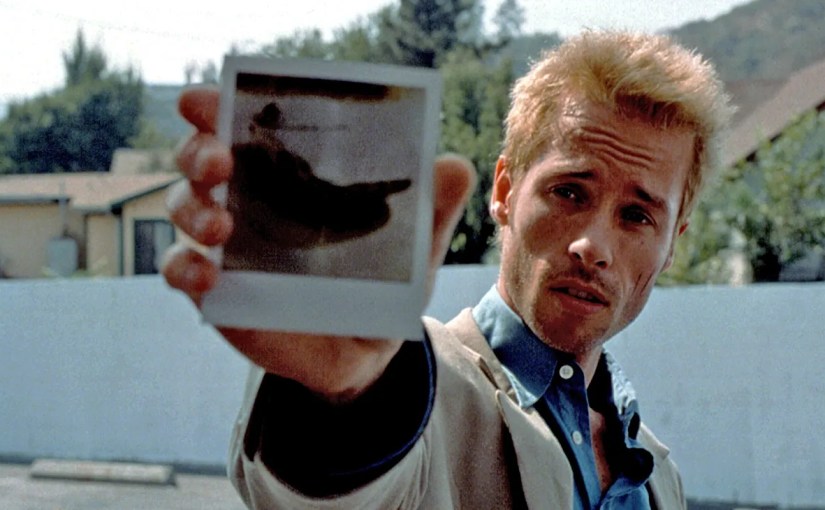
MYSTIC RIVER

By Marc S. Sanders

Two crimes, thirty years apart, pave the destiny for three childhood friends during their adulthood, while residing in the same Irish neighborhood of Boston.  Sean Penn is Jimmy, a former criminal.  Kevin Bacon is Sean, a police detective.  Tim Robbins is Davey, who was held captive and molested for four days following an afternoon when the guys were playing street hockey together.  Naturally, Davey was never the same but over the course of events in Clint Eastwood’s psychological crime drama, Mystic River, we learn that Jimmy and Sean likely changed too.

Jimmy’s daughter, Katie (Emmy Rossum), is found brutally murdered following an evening of bar hopping with girlfriends.  Sean and his partner Whitey (Laurence Fishburne) head up the investigation.  While the magnetic screenplay written by Brian Helgeland, based upon the novel by Dennis Lehane, relies on a who done it track, that seems to be less a priority as details unfold for the trio of men.  Jimmy and Davey’s wives (Laura Linney, Marcia Gay Harden) may be hiding some information.  A possible murder weapon invites some curious questions. There’s reason to question Katie’s boyfriend, and Davey’s odd behavior combined with his childhood trauma raises eyebrows as he was one of the last men to see Katie alive.

The less you know about Mystic River the better, but this engrossing cast which earned Oscars for Penn and Robbins, plus a nomination for Harden, is not the only stand out feature.  This film is one of Clint Eastwood’s best directing efforts; definitely one of my favorites.  

First, Eastwood hides many of his characters in dark shadows so the viewer never forgets that all these people have pasts they regret or would rather not resurface.  Sometimes, you hauntingly recognize the silhouettes of Sean Penn and Tim Robbins, each for different and unnerving reasons. Eastwood notably shoots himself this way often when he’s in front of his camera (Unforgiven, Sudden Impact, Million Dollar Baby).  It’s a brilliant photographic strategy that will make you fear or empathize with his flawed protagonists.

Second, Clint Eastwood shoots much of the Boston neighborhood with wide overhead shots in the daytime.  Interiors offer little light no matter the time of day.  Exteriors present the multi floor homes which are easy to see and showcase a labyrinth of crevices, yards and blocks where activity occurs.  

While the title of Lehane’s mystery is hardly spoken until a series of shocking revelations occur at the end, Eastwood ensures the setting of this Boston Irish populace is given much attention.  The more closely located these homes are up against one another, the less apt that any of the residents can truly see what’s going on under their nose.  These people live on top of each other with no room to spread out.  Their nearsightedness is practically blinding.

Furthermore, Eastwood composed the morose soundtrack for this piece. The director seems to speak to the audience because nothing good will likely arrive for any of these folks who grew up together like the generations before them.  Even a colorful Red Sox cap worn by Davey does not offer much cheer or Boston pride.  Eastwood’s musical compositions paint a modern-day setting encased in unimaginable heartache.  

Mystic River is not an easy film to watch.  Yet it’s not gory.  It’s not scary.  It’s the internal struggles of these characters that’s hard to imagine or observe. On the surface Lehane’s story seems reminiscent of most any other crime drama or Law & Order episode of the week.  The challenge is to watch these masterful performances, especially from Sean Penn, Tim Robbins and Marcia Gay Harden.  

We’ve seen moments where the father comes upon the crime scene of a murdered child.  However, Sean Penn delivers this staple with raw, unbearable heartache.  This actor invests his soul into the moment and reminds any one of us, whether we are a parent or child, of how wrenching it is to even imagine losing a loved one to senseless violence.  If I had to ever experience an episode like this, it might just take the entire police force to hold me down too.

Robbins and Harden are husband and wife, who get in over their heads when incidents of surprise occur.  Harden is especially ripped apart with what she knows and what she suspects.  Robbins embraces an inner child who has never outgrown a trauma that stubbornly stays attached to him, even if he’s a loving father.

As difficult as Mystic River is to watch, I’ll return to it on repeat because this cast and crew are at the top of their game.  Dennis Lehane has written other Boston crime stories (Gone Baby Gone with the film adaptation directed by Ben Affleck), particularly involving children, and he recycles his characters for future tales.  To my knowledge, I do not believe he’s ever written a sequel to Mystic River, but I’d love to see what happens to these people after the events of this film unfolded.  

Everything is revealed in Mystic River, except what happens next and I’m dying to know.  

THE HEIRESS (1949)

by Miguel E. Rodriguez

DIRECTOR: William Wyler
CAST: Olivia de Havilland, Montgomery Clift, Ralph Richardson, Miriam Hopkins
MY RATING: 10/10
ROTTEN TOMATOMETER: 100% Fresh

PLOT: In the mid-1800s, a naïve young woman falls for a handsome young rogue whom her emotionally abusive father suspects is the male version of a gold-digger.


[Author’s note: If you have not seen this film, but intend to do so, I urge you not to seek out spoilers.  The final resolution of this movie deserves to be seen in a vacuum, if you know what I mean.]

The AFI’s list of the 50 Greatest Villains in American film does not include Dr. Austin Sloper, played with indifferent cruelty by the great Ralph Richardson in William Wyler’s The Heiress.  This is a miscarriage of justice, as Dr. Sloper is one of the most ruthlessly harsh characters I’ve seen in a movie in many years.  The fact that he is successfully upstaged by Olivia de Havilland as his daughter, Catherine, is a triumph of screenwriting, directing, and pitch-perfect acting from both performers.  The fact that both performances nearly overshadow a charismatic young Montgomery Clift is something that must be seen to be believed.

The film starts in the mid-1800s in the Washington Square area of New York City.  It’s a time of horse-drawn carriages, corsets, and garden parties.  Catherine Sloper is a very plain, very shy, single woman who lives in a three-story brownstone with her widowed aunt, Lavinia (Miriam Hopkins), and her father, a financially successful doctor who will bequeath a $30,000-a-year inheritance to Catherine upon his death.  In addition to the $10,000-a-year she already receives from her mother’s inheritance, Catherine will be financially comfortable for the rest of her life.  Alas, her social graces are virtually nonexistent, and she is quite plain when compared to her late mother…as Dr. Sloper casually mentions from time to time, utterly oblivious to the effect this has on Catherine.

At a garden party, during which Catherine is socially humiliated by a thoughtless gentleman, she meets the well-dressed, well-behaved, and nearly penniless Morris Townsend (Clift), who makes it clear that he is utterly taken with her and would like nothing more than to spend the rest of the evening talking or dancing with her and no one else.  Her aunt Lavinia is ecstatic the next day, but Dr. Sloper is skeptical.  In his mind, no gentleman in his right mind would express romantic intentions towards his socially unsuitable daughter unless he simply wanted the money that comes with her, and he says as much to Mr. Townsend AND to Catherine.  The callousness of Dr. Sloper’s behavior is abhorrent, and I found myself thinking, “If this guy were drawn and quartered by the end of the movie, that would still be too good for him.”

The brilliance of the screenplay becomes apparent when Morris boldly announces his love for Catherine, to her complete stupefaction.  And when he actually proposes, that pushes her over the edge, and she falls head over heels in love with him, because he’s the first man who has ever shown anything more than polite tolerance towards her…including her father.  Dr. Sloper lays out his case for what he believes Townsend’s true intentions are: to take control of or squander her inheritance after they marry.

Dr. Sloper’s brutality knows no bounds…but you find yourself thinking: what if he’s right?  Certainly, Townsend is completely genuine in his love for Catherine, or at least seems to be.  He knows exactly what to say, and when and how to say it.  Is it an act?  He’s handsome enough to be an eligible catch for any number of society women in the city, so why waste his time on such a plain-Jane girl as Catherine?

This conflict occupies the main thrust of at least the first half of the film.  What transpires and how and when, I will not say.  I will say that the story led me in one well-traveled direction, took a left turn, then took another unexpected turn that left me kind of breathless at its audacity.  The movie as a whole has been compared in some circles to Scorsese’s The Age of Innocence (1993), and deservedly so.

Olivia de Havilland’s performance as Catherine is one of the greatest performances I’ve seen in any film of that era.  It trumps even her powerful turn in The Snake Pit a year earlier.  Clearly, de Havilland was anything but plain and awkward in real life, but careful makeup and performance nuances helped her bring off one of the most commanding roles of her career.  There is an emotional transformation that occurs at one point where she is able to affect a complete one-eighty in her character, and it never once feels histrionic or gimmicky.  She shares a scene with her father in which she has “found [her] tongue at last,” as he puts it, that I would rank as one of the greatest two-handed scenes I’ve ever watched.  The surgical application of language to inflict harm on another person is breathtaking.  Neil LaBute or David Mamet couldn’t have written it any better.

The Heiress left me feeling a little wrung out at the final credits.  I remember watching this movie many years ago, but nothing stuck with me except that ending.  Despite this foreknowledge, the movie still worked its spell on me, leaving me with a dropped jaw and a blown mind.  The ending is somehow definite and ambiguous at the same time, a screenwriting miracle.  (And I don’t mean in a Sopranos kind of way, either.)  The Heiress is officially one of my new favorite films.

HOOSIERS

By Marc S. Sanders

Hoosiers is a sports film offering nothing truly new or inventive.  What sets it apart though is that this high school basketball picture has Gene Hackman as the coach, Norman Dale.

Like so many films, this one occupies its opening credits with the cross country drive of the outsider arriving in small town USA with Jerry Goldsmith’s orchestral horns conducting the journey.  Welcome to the sweeping farmlands of Hickory, Indiana, 1951.  

Coach Dale has been hired by the local high school to lead the team of seven boys for the upcoming season.  Everything typical happens from there.  The potential love interest gives the guy the cold shoulder.  The town, who take such pride in the boys basketball team, find the coach unfit and work the first half of the story trying to vote him out. There’s the one kid who makes every shot and is stand offish, but just won’t play.    There’s a player who has strife with his father, the town drunk called Shooter (Dennis Hopper).  Coach gets kicked out of the games too.  Even Hackman’s recognizable short fits are here to stir it up with the referees.

Yet, is this team gonna get in shape and take it all the way to the championship?  I’ll let you decide if that’s rhetorical question.  

I dunno.  Maybe it’s because I’ve never been wild about basketball that Hoosiers just didn’t do much for me.  A film like Hoop Dreams or even the actor/players shown here impress me with their abilities to make one jump shot after another, while their capabilities to dribble appear like artistic forms of dancing.  The game however has never done much for me.  A team scores and then they go to other side the court where the other team scores.  For me, only the last few seconds of a basketball game seem important.  Otherwise, it’s a back-and-forth scrimmage to me.  Hoop Dreams lends more of a story within its tragic documentary footage than Hoosiers provides.

When I observe the team making plays on the court, there’s not much to open my eyes wider.  David Anspaugh was a new director when this movie was released. Much of the cuts within his footage are the players jumping and passing and Hackman’s sideline expressions where he slaps his play sheet before another cut to the cheering or booing crowd.  This is nothing but action takes. Where are the shortcomings and triumphs that come with cinematic athleticism?

Even the final game does not work like a story.  It’s all just a collection of basketball players making shots.  It never worked for me because I hardly know any of the kids.  The star player, Jimmy, literally has three lines in the film.  I could never pick out which young man was Hopper’s son because most of the team members are given such little attention.  It’s only when a scene or two finally presents itself for the father and son that I connect the dots, but that’s resigned for a quick last act.  The one I could always pick out was the short guy who is not very good and mostly sits on the bench.  The kid who prays too long?  Good gag, but when he’s not on one knee I don’t recall who he is among the crowd.  The players are not given distinct personalities. They are scarcely shown in close up and so I don’t know one from the other.  

Watch Teen Wolf with Michael J Fox.  Beyond the lead who is a werewolf, there are two or three others on the team that triumph, as well as faithful members of the school student body. Thus, that movie ending game becomes something entirely special and touching.

Gene Hackman is always an attraction even if some of the traits he lends to his characters are the same.  I love his grin and his quiet, sometimes sarcastic, cackle. When he throws a temper it’s not one that can be duplicated.  I’ve never seen someone who can do an exact impersonation of Gene Hackman.  He’s simply one of a kind. He’ll always be favorite actor of mine, no matter the material.

Dennis Hopper is very good as well.  He’s not just a drunk, but Shooter is a likable guy who looks worthy of a second chance.  Hopper’s body language defines all of that.  It’s not just the booze or the drying out moments that lend to the performance.  The celebrated actor is given scenes where the character is lost and helpless while trying to contribute moments of value to the basketball team.  Even the unpressed, oversized suit and greasy combover he wears tell a story.

Barbara Hershey seems underutilized.  For most of the film she proceeds with a scowl on her face, and I was never certain of her disdain for the Coach or the school where she teaches.  I could never confound exactly what her problem was anyway. At best, she’s here for an eventual on-screen kiss with the lead, but then the relationship doesn’t progress.  I read that much material went on the cutting room floor, and I can’t deny there’s an absence to her storyline.

Hoosiers is serviceable, but nothing it offers moved me and grabbed my attention.  This is a step by step sports film with every standard cliche included.  I didn’t stand up and cheer when that final shot swished through the basket in slow motion because I did that at the end of Rocky and The Karate Kid, and Teen Wolf too.  When The Bad News Bears ended I did a hard clap because those tykes had balls.  At the close of Slapshot, I couldn’t contain my laughter.  I couldn’t stop thinking about Hoop Dreams for good, long week. Other pictures focusing on athletics always possessed a way of making their stories special.  Hoosiers looks like it stole its play by play from those wunderkinds. 

TRIVIA: Look for Sheb Wooley, who portrays Hackman’s first assistant coach. He is the origin of the famous Wilhelm Scream uttered by Indiana Jones, several Stormtroopers and during the demise of various superhero villains.

WINCHESTER ‘73 (1950)

by Miguel E. Rodriguez

DIRECTOR: Anthony Mann
CAST: James Stewart, Shelley Winters, Dan Duryea, Stephen McNally, Millard Mitchell, Rock Hudson, Tony Curtis
MY RATING: 9/10
ROTTEN TOMATOMETER: 100% Fresh

PLOT: A cowboy’s obsession with retrieving his stolen rifle leads to a violent odyssey through the American West.


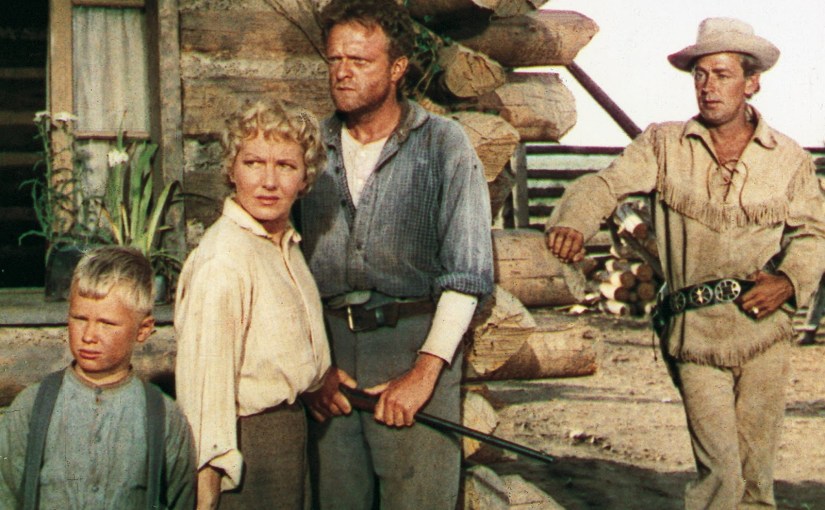
Even without knowing the full history of how the film impacted contemporary audiences, Anthony Mann’s Winchester ’73 still packs a punch.  Using an ingenious story structure, courtesy of a very Western MacGuffin, the film follows the path of a rare, expensive Winchester rifle from hand to hand for ninety taut minutes.  James Stewart is top billed, but he is on screen for less time than you’d think.  That’s actually a good thing in this case, as Mann’s focus is not on star power, but on metaphor and mythology.  (Although Stewart’s star power certainly doesn’t hurt, as he demonstrates in several key moments.)

The movie plops us right into the action with nary a flashback nor an expositional monologue in sight.  The legendary town of Dodge City is holding a shooting contest to celebrate Independence Day, 1876.  Sheriff Wyatt Earp (!) is officiating, and the prize will be a rare model of the Winchester ’73 repeating rifle.  Arriving in town that day is Lin McAdam (Stewart) with his partner, High-Spade Frankie Wilson (Millard Mitchell).

(Around this part of his career, Stewart’s trajectory was on the decline, as he was getting too old to play the aw-shucks-y kind of roles that were his bread and butter in the ‘30s and ‘40s.  Winchester ’73 was an opportunity to showcase his range, and he delivered.  Lin McAdam is not the villain, but neither is he the kind of character Stewart had ever played before.  It’s been written that, when audiences of the day saw Stewart get violent and pin a man to a saloon bar, there were gasps.)

Lin is none too friendly towards another man in town, Dutch Henry Brown (Stephen McNally), who reciprocates in spades.  There is clearly some kind of history, but what that history entails would take too long to explain, so the movie wisely doesn’t try.  They’re enemies, and that’s enough.  Somewhat predictably, they both enter the contest for the prize Winchester, but in the first of many twists, the contest doesn’t play out exactly as you would expect.  Then the rifle is stolen, Dutch and his pals skip town, and Lin and his partner give chase.

From there, the movie gets episodic.  There’s the Indian trader, the Indian himself, Young Bull (Rock Hudson in a fake nose and braids!!!), the obligatory feisty lady, Lola (a luminous young Shelley Winters) and her beau who behaves in a most unmanly manner, a run-in with some cavalrymen (featuring an unknown young actor billed as “Anthony Curtis”), and winding up with a real sleazeball, Waco Johnny Dean (Dan Duryea).  How the rifle makes its way from place to place I will not reveal, but it’s all perfectly feasible.

(I will leave it to wiser minds than I to discuss the racist portrayal of Indigenous Americans, including using Rock Hudson in “red-face” to play a tribal chief.  Yes, it’s shameful and unfortunate, but it happened, and I use the term “Indian” earlier because that’s how they’re referred to in the film, for better or worse.)

If I had to explain what this movie is actually about, beyond its brilliant plotting, I’m not sure I could do it.  I can report that it was engaging and crisp and surprising and almost demands a rewatch after the end credits, but aside from just being a darn good entry in the Western genre, it’s hard for me to pin down its message.  Is it a screed against the violence in the real West?  How some men searched for violence because it was in their nature, or because they felt it was their duty?  I mean…yeah, I guess, but that feels like just scratching the surface.  What were Mann and Stewart trying to say?

Maybe it’s one of those movies where the message depends on the viewer.  If you look at it as an anti-violence film with a bittersweet ending filled with moral ambiguity, it’s there.  If you look at it as just a travelogue or tapestry of the old West, made by a director who loves the genre and an actor sinking his teeth into a great role, that’s there, too.  (Mann and Stewart would go on to make seven more films together, five of them Westerns.)  There’s even melodrama and a hint of romance along the way, but never too much to drown everything else out.  For me, Winchester ‘73 is much harder to unpack than Unforgiven (1992), whose message is crystal clear from beginning to end.  Both movies are equally entertaining, though, don’t misunderstand me.

If any active readers have made it this far, feel free to let me know what the “true meaning” of Winchester ’73 is.  Whether I find out or not will truly not matter, because the movie is still hugely entertaining with or without an explanation.  I might have a tiny bone to pick with the final battle, with its foregone conclusion, but it comes with the territory, so I have to forgive it.  This is a great entry in the genre, featuring a star pushing his boundaries and a director who knew how to harness that energy.

VAMPYR (Germany, 1932)

by Miguel E. Rodriguez

DIRECTOR: Carl Th. Dreyer
CAST: Julian West, Maurice Schutz, Rena Mandel, Sybille Schmitz
MY RATING: 8/10
ROTTEN TOMATOMETER: 98% Certified Fresh

PLOT: A drifter obsessed with the supernatural stumbles upon an inn where a severely ill adolescent girl is slowly becoming a vampire.


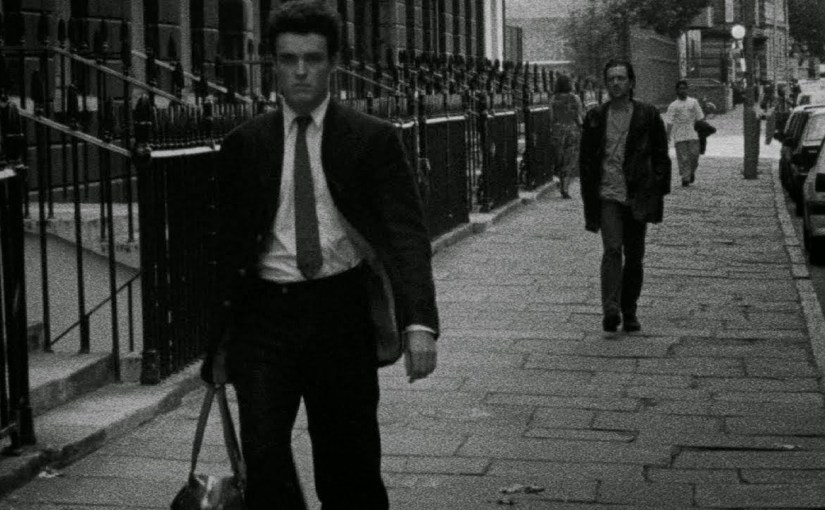
Carl Th. Dreyer’s Vampyr [pronounced “vom-PEER” in this German version] is not the scariest vampire film I’ve ever seen, but it is definitely one of the creepiest.  There’s a difference.  Dreyer’s film doesn’t move with the pacing seen in more standard horror fare.  Instead, it forsakes typical plot development for scenes that linger on the horrific or the unexplained.  In its own way, it is more directly related to the films of David Lynch than to any other contemporary monster movies of the time (Dracula or Frankenstein, for example, both 1931).

The story is fairly simple, but it belies the complex imagery that awaits the viewer.  A young drifter, Allan Grey, happens upon an inn from which he thinks he can hear animal sounds, or perhaps a young woman screaming.  The village doctor, who looks like a bespectacled long-lost relative of Doc Brown from Back to the Future, vehemently denies the presence any animals or young women on the property.  The innkeeper invites Allan to stay the night.  In the middle of the night, Allan’s sleep is interrupted by a mysterious visitor to his room who intones, “The girl must not die!”  The gentleman then leaves a package on Allan’s desk and writes a most portentous message: “TO BE OPENED ONLY UPON MY DEATH.”

What is this book?  What did Allan hear?  And how do you explain the shadows he saw on his way to the inn?  Shadows of people running along the lane – with no corresponding people attached to them?  Wouldn’t YOU like to know.

Vampyr is positively drowning in atmosphere.  Dreyer apparently shot many scenes with a piece of thin gauze over the lens, creating a misty layer that makes everything feel like a dream, even when Allan is awake.  Allan goes on frequent excursions around the inn and the surrounding property, and it’s here where most of the fantastical imagery is seen, especially when it comes to disembodied shadows.  In one mildly unsettling sequence, a shadow of a man with a peg leg descends a ladder and appears to sit on a bench…re-joining itself to a peg-legged man already sitting on the same bench.

There’s a lot more, but I don’t want to just write a list.  However, I am compelled to mention one sequence in particular that exudes as much creepiness as anything I’ve ever seen from this cinematic era.

It turns out there is, not one young woman at the inn, but two: Gisèle and Léone.  Léone is seen early on, confined to her bed with a mysterious illness, which we later learn has been brought on by her contact with a seldom-seen old woman who lurks somewhere on the property.  And there are some odd injuries on her neck…UH oh.

At one point, Léone awakes while Gisèle is alone with her.  I don’t remember what they discuss, but Léone goes into this weird sort of trance.  Without the use of any strange Chaney-esque makeup or camera tricks, Léone’s face becomes an object lesson in creepiness.  Her eyes open wide, her face breaks into a creepy grin, and she slowly moves her head from side to side, while Gisèle backs away in terror.  It might be the scariest sequence in the film, one which could easily compare to any subsequent monster or vampire movie.

Later, Dreyer throws more camera tricks at us in increasingly imaginative ways.  Allan dreams of a skeleton handing him a bottle of poison.  A dead man’s face appears in the sky during a sudden thunderstorm.  Dreyer includes camera moves that would fit right into any modern film.  And in a sequence that reminded me of Wes Craven’s The Serpent and the Rainbow (1988), Allan watches as his own body is sealed inside a coffin with a tiny square window for his apparently dead eyes to look out of.

If nothing else, Vampyr is an interesting artifact of cinema’s transitional era from silent to sound.  Even though there is a conventional soundtrack and we hear people’s voices as they speak, a lot of expository information is provided via title cards and long looks at passages from a book of vampire lore.  Given that the vampire mythology was then not as popular as it is today, I can forgive these beats that tend to bring the momentum to a halt.

While Nosferatu (1922) and the Bela Lugosi Dracula are much more famous, Vampyr is worth a look if you’re a horror fan.  While it doesn’t involve the kind of fear factor I tend to expect as a child of the 1970s and ‘80s, it is nevertheless creepy as hell. 

IPHIGENIA (Greece, 1977)

by Miguel E. Rodriguez

DIRECTOR: Michael Cacoyannis
CAST: Irene Papas, Kostas Kozakos, Tatiana Papamoschou
MY RATING: 9/10
ROTTEN TOMATOMETER: [Not scored]

PLOT: In ancient Greece, King Agamemnon, in order to appease the gods, is told he must sacrifice his favorite daughter, Iphigenia, before his troops can march to war.


To my mental library of favorite closing shots in cinema, I must now add the final image of the engrossing Greek film Iphigenia.  I won’t spoil it, but the hatred in the eyes, the set expression of the face, spell out exactly what will follow in the years to come without saying a word.  It’s cinematic, yes, but it’s also theatrical, expressing oceans of passion (good or bad) with a stare instead of a monologue.

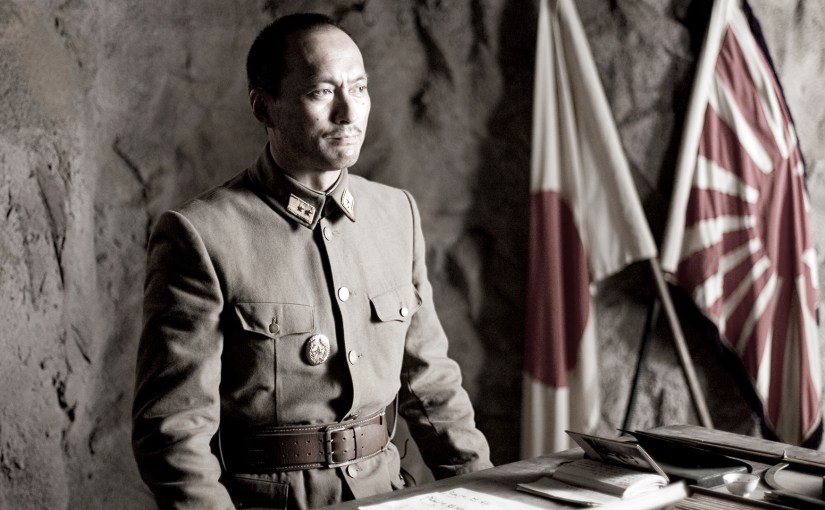
Director Michael Cacoyannis’ filmed adaptation of an ancient Greek tragedy by Euripides (Iphigenia in Aulis) does not immediately seem like the kind of film I would cotton to.  I’ve never read any of the ancient Greek plays, nor have I ever read the Iliad or the Odyssey, though I am familiar with their plots…barely.  This is not the kind of literature I have traditionally sought out, and I am content in my decisions.  But a weird thing happened while watching Iphigenia.  After a somewhat rocky start, I became enthralled with the language these characters were using.  I don’t mean the Greek language itself, but the subtitles used in the English translation.  I cannot say with any certainty how closely the subtitles mirror what is actually being said, but if they’re even just fairly accurate, then I now understand, at least to a small degree, why these plays have endured for millennia.

The story itself is one that has undergone countless interpretations and revisions over the course of history.  King Agamemnon (Kostas Kozakos) and his vast army are ready to set sail for war against the kingdom of Troy, but their ships are stranded by a lack of wind.  The seer Calchas informs Agamemnon that the winds will not blow until he sacrifices his eldest and favorite daughter, Iphigenia, to the goddess Artemis, who is withholding the winds because his men have offended her by killing a sacred deer.  (And now I know where the title of The Killing of a Sacred Deer [2017] comes from…knowledge really IS power!)

Agamemnon agonizes over this decision, but his hand is forced by the eagerness of his troops to sack Troy; he’s afraid they’ll mutiny if he doesn’t go through with the sacrifice.  He invents a pending marriage of Iphigenia to the great warrior Achilles to get Iphigenia to the encampment, but Clytemnestra (Irene Papas), her mother and Agamemnon’s queen, tags along unexpectedly.  The rest of the movie churns with gloriously over-the-top melodrama, as Clytemnestra rages at Agamemnon, Iphigenia pleads for her life, and Achilles swears to defend Iphigenia at all costs.  Agamemnon also argues with his brother, Menelaus, in a terrific scene during which they both change each other’s minds just a little too late.  In the meantime, the winds never blow, the Greek troops grow restless, and the seer waits a little too eagerly for the chance to carry out the impending sacrifice.

It was during Agamemnon’s argument with Menelaus that I really started to perk up.  This is not an easy scene to write or act out.  Even with English subtitles, the sentence construction and syntax were occasionally overworked.  I remember thinking at one point, “Huh…this is almost Shakespearean.”  Except these scenes were written roughly two thousand years before Shakespeare was born.  When that concept smacked me in the face, I started paying attention a little more to the style and the passion of the words.  And I can’t explain it, but everything acquired a new dimension.  It started to feel more like a play than a film.  It became – at the risk of sounding a tad abstract – poetic.

That feeling permeated everything after that scene.  Throwaway scenes felt more immediate, and really important scenes felt monumental.  Sure, there is some overacting, particularly from the actor playing Achilles, but really, it’s called for in this scenario.  When Clytemnestra promises her husband that, if he goes through with the sacrifice, she will accept his will but hate him for the rest of her life…I really felt it.  And it’s not just the language, but the zealotry of the acting on display, especially from Irene Papas, who must have salivated at the chance to play this fiery woman, a proto-feminist who accepts her duty as a queen but never lets the king forget who truly rules the roost.

And then there’s Iphigenia herself, played by a waifish, almost elvish actress I’d never heard of before seeing this movie, Tatiana Papamoschou.  In her first scenes, she’s almost too innocent to be taken seriously.  It’s only when Iphigenia learns of her father’s plans to murder her for the sake of war that Papamoschou’s acting style allows her to really embody the character, and she delivers a speech late in the film that is, for lack of a better word, biblical.  She accepts her fate and shames the men around her with the same surgical precision that can be found in the Gospels when Jesus accepts His own fate while dismantling the Pharisees with His words.  There are monumental themes at play behind the scenes, and “normal” dialogue just would not feel adequate.

And then there’s that final shot.  I did a tiny bit of research on the original play, and when you learn what historically happened to the main characters after the play’s events, that last look carries even more weight, foretelling decades of death and tragedy without saying a word.  That a foreign film of a 2,200-year-old play was able to affect me this greatly was very pleasantly surprising to me.  I doubt any newer version with today’s technology or modernized dialogue would affect me the same way.  Iphigenia was a very pleasant, surprisingly effective discovery.

BLUE COLLAR (1978)

by Miguel E. Rodriguez

DIRECTOR: Paul Schrader
CAST: Richard Pryor, Harvey Keitel, Yaphet Kotto, Ed Begley Jr.
MY RATING: 6/10
ROTTEN TOMATOMETER: 96% Certified Fresh

PLOT: Three financially strapped automotive factory workers rob their own labor union, but when they get more than what they bargained for, their friendship and loyalty are tested.


There may come a day when I revisit Blue Collar and revise my current opinion.  It’s not impossible.  I’ll be a different person five or ten years from now.  I may have a different job with different bosses and co-workers, or I may be living in a different neighborhood in a different house.  All sorts of things could change that will affect my perception differently.  Until that happens, though, this is what I think:

Blue Collar, the directorial debut of eminent screenwriter Paul Schrader, author of Taxi Driver (1976), Raging Bull (1980), and American Gigolo (1980), is a film with a good story to tell.  Not just good – important.  This is an important story about loyalty, friendship, and duty to your family.  Richard Pryor turns in a great performance, flexing his dramatic muscles as he seldom did, unfortunately.  Schrader’s screenplay, co-written with his brother, Leonard, and using source material from Sydney A. Glass, pulls no punches regarding corruption within the powerful auto workers union.  Character motivations are crystal clear from the opening scene to the final, cynical freeze frame.

But…but…I wish this story were contained in a film that made me care about these characters while the movie itself was playing.  Intellectually, I see the value of the story.  But as a moviegoer, I was less than moved.  Schrader’s direction is competent, but the film moves from beat to beat with the energy of a sloth.

Zeke (Richard Pryor), Jerry (Harvey Keitel), and Smokey (Yaphet Kotto) are three working-class friends on the line at an automotive plant in Detroit.  Their closeness is established in a bar scene that gave me hope for the rest of the film.  It plays almost like an Altman film, with some overlapping dialogue, simple but clear direction, and conversations that give us an instant picture of who these three disparate characters are.

It’s unclear what Smokey’s financial situation is until later in the film, but Zeke has back-taxes to pay because he has declared too many dependents for the last three years, and Jerry has a teenage daughter who is so desperate for expensive braces that she tries making some herself, with exactly the kind of results you’d expect.  Their union, which is supposed to help them, is a joke as far as they’re concerned; they can’t even fix Zeke’s broken locker door.  So, after Zeke makes some observations at the union’s local office, he and his pals hatch a plan to rob the office vault.

What they find there drives the rest of the plot, so I’ll tread lightly from here on out.  But the vault robbery is a good example of where the movie is lacking for me.  The plan is simple and relatively risk-free, but I was hoping for at least SOME suspense during the robbery.  A moment occurs when they’re about to be discovered, so they don their masks…but the masks that Zeke bought aren’t masks.  They are, in no particular order, plastic vampire fangs and a funny hat, a pair of sunglasses covered by an American flag design, and a pair of googly-eye glasses – you know, the ones where the eyeballs are attached to the glasses by long springs?  This crucial moment was ruined by the utter ridiculousness of their “costumes”; it felt like a transplant from some other Richard Pryor comedy about incompetent criminals.

After that, the screenplay feeds us important chunks of information, but there is no dynamic energy to the editing or the direction or something.  It just felt…boring.  Which is a shame because, again, there is a good story here.  The union local blatantly lies about the contents of the vault after the robbery.  An FBI agent tries to get Zeke, Jerry, or Smokey to spill what they know about union corruption, but they are too loyal to turn stool pigeon.  Zeke has to make some hard choices in one of the movie’s better scenes towards the end.  Smokey displays strength when threatened by union thugs, but he pays for it later.  And Jerry just wants to do the right thing without anyone getting hurt.

But there was just zero energy to the narrative.  I never felt carried along by the tide of the story.  And without that forward momentum, every scene felt like it was just marking time before the next.  To the degree that I understood the plight of these blue-collar workers, the movie just didn’t make me care enough to feel anything about it.  I did feel empathy for Zeke, mostly due to Pryor’s powerful, angry performance, but even that empathy was turned on its ear by the time we got to the closing credits.

There is, I guess, something to be said about how the screenplay is constructed so that, at any given point, you could say that any of the three main characters are the true lead of the film.  The story is truly balanced, and I give it credit where it’s due.  I just wish the storytelling was more dynamic.  Like I said, the day may come when my opinion of this movie will change.

Today is not that day.

…tomorrow’s not looking good, either.

MY COUSIN VINNY

By Marc S. Sanders

The American Bar Association’s publication, The ABA Journal, ranked My Cousin Vinny #3 on its list of the “25 Greatest Legal Movies.”  Surprised?  You really shouldn’t be.  

This “fish out of water” film follows a goodfella who did not pass the bar exam until his sixth try.  Now he’s defending his cousin and another UCLA college kid in an Alabama courtroom.  It’s Vinny’s first murder trial.  So he’s gotta learn the ropes of how to dress properly for court all the way up to discrediting material witnesses and demonstrating reasonable doubt to get his clients exonerated.  It’s a great courtroom picture because within the dense slapstick comedy there are authentic lessons to learn about being a member of the Bar and having confidence in yourself.

Bill and Stan (Ralph Macchio, Mitchell Whitfield) are roadtripping through southern America, en route to UCLA, when they get pulled over and framed for the murder of a convenience store clerk.  With no money or hope of retaining a reliable public defender, the young men turn to Bill’s cousin Vinny.  

Straight out of the five boroughs of New York wearing a black leather jacket, black boots and a slick pompadour, Vinny Mancini arrives in small town Alabama.  You know something?  If I didn’t know any better I’d say he looks and acts a lot like Joe Pesci.  With him is his long time fiancée, Mona Lisa Vito (Marisa Tomei, in her very well remembered Oscar winning role). Mona Lisa Vito!  I love when there’s some thought put into a character’s name.

The future looks grim for the accused as Vinny doesn’t know where to begin.  The iron horse Judge Chamberlain Haller (Fred Gwynne) habitually holds the guy in contempt because Vinny can’t shed his New York ways either in wardrobe or proper decorum. The prosecutor played by Lane Smith really doesn’t have to try hard at all.  Though he deliberately gets all Southern showy each time he faces the jury, made up of friendly locals.  In an unexpected and tender moment, the tough guy, Vinny, admits to Lisa that he’s “a-scared.”

I never cared for My Cousin Vinny since I had seen it in theaters.  However, there’s much I appreciated on only my second viewing of this film directed by Jonathan Lynn, an actual law scholar.  Lynn is always striving for an authenticity within the courtroom.  His protagonist might not know anything about being a litigator, but the director ensures that a genuine regiment of customary courtroom behavior, procedure, and theatrics will be upheld even if this is only a silly, little comedy flick.  

Outside the courtroom, there’s primarily an updated George and Gracie situational comedy at play.  Marisa Tomei is of cinema’s great scene stealers.  Mona Lisa Vito might look like an overly familiar character, but the actress’ performance is entirely unique.  She never plays Lisa as a dumb side character to her boyfriend who will not commit to marriage.  Lisa comes off generous, always offering to assist Vinny despite his rejections.  She’s also positively smart as a whip with her extensive knowledge of automotive repairs, and she’s a quick study of Alabama law.  When she gets put on the witness stand it hardly matters what she’s saying.  Marisa Tomei owns the expertise and defiance of Lisa.  Turn the scene on mute to watch her doing some of her best work would be equally effective.

Go look at Silver Linings Playbook when Jennifer Lawrence rhythmically dictates numeric football statistics at Robert DeNiro.  Both actresses won Oscars for these respective roles.  These performances stand apart from so many other second, third and fourth billed actresses because they are written with immense intelligence.  That’s what Tomei and Lawrence normally embrace first, ahead of costume and makeup.  The confidence from these actors is uncanny.  More women need to be cast in roles like these.  

Joe Pesci is doing his reliable, familiar schtick from Goodfellas, Raging Bull and Easy Money.  He’s in a what if scenario though.  What if there’s a movie with Jersey Boy Joe Pesci, but he’s put in Alabama country with roosters crowing and trains chugging into town at five in the morning? There can even be a communication gap between the Judge and Vinny for some padded laughs.  “What is a yoot?”

I was bored with this movie the first time I saw it.  I just didn’t think the humor was funny even if I recognized the attempts.  Over thirty years later, what I appreciate is the heart that feels much more apparent.  The hero feels weak and at a loss.  Only when he is given strength and support from a wisecracking, sexually frustrated girlfriend does he get the drive to behave like a lawyer he’s licensed to become.  I like Vinny.  I like Lisa.  Therefore, now I can laugh at their unfortunate dilemmas as they work towards an end goal – getting him to do his best at becoming a courtroom lawyer and hopefully reaching a not guilty verdict. 

I gotta give a shout out to the supporting cast.  Bruce McGill plays a familiar sheriff that we’ve seen before, but so what.  It’s the way he carries himself that I’m always welcome to see him in a movie.  Same goes for Lane Smith.  These guys are sophisticated Dukes Of Hazzard.  Fred Gwynne, most famously known as Herman Munster, was always a brilliant character actor.  He has the ability to be goofy and intimidating all in the same scene.  To place his towering stature against little Joe Pesci? Who needs dialogue? Watch Fred Gwynne’s moments in My Cousin Vinny.  He could’ve been Oscar nominated, and I would not have complained.  While Ralph Macchio is doing his typical routines (same things we saw in The Karate Kid, The Outsiders and so on), it’s Mitchell Whitfield playing his buddy who really stands out.  This is a nothing role but it’s as if this guy fell out of a Woody Allen or Neil Simon picture to claim his own territory among an outstanding cast.

My Cousin Vinny is one of those comfort films to put on when the stress is becoming too much in real life.  Everyone is so likable here.  There isn’t a villain to dual against.  Instead, it’s a conflict of cultures who must work together to uncover truths within a murder trial while also learning about what any one of us is actually capable of accomplishing. 

Vinny from da Bronx is a lawya???? 

FUGGETABOUTIT!!!!!

FALL

By Marc S. Sanders

Sometimes a movie will simply cover a circumstance.  The crew of Apollo 13 end up lost in space.  James Franco gets trapped behind a rock for 127 Hours.  Chrissy Watkins and Alex Kintner wind up abandoned in shark infested Open Water.  I recall Ryan Reynolds being buried alive in a coffin for ninety minutes.  Haven’t seen that one yet.  Not interested, honestly.  

Any of you curious to see what happens when two expert rock climbers neither of whom wear safety gloves, while one wears Converse All Star high tops, (Pass the grain of salt, please!) opt to climb a rusty 2,049-foot-high television antenna and get stuck at the top?  That’s about all there is to Fall, directed by Scott Mann.  

Granted, there is a thin slice of characterization layered on the crust.  Becky (Grace Caroline Currey) is severely depressed and maybe suicidal following a rock-climbing accident that took her beloved husband Dan (Mason Gooding) away from her.  Fifty-one weeks later, she still defies her father’s (Jeffrey Dean Morgan) pleas to help her.  Yet, her best friend Hunter (Virginia Gardner) urges Becky to accompany her while she records their climb up the infamous B-67 TV Tower, located in the Mojave Desert.  Hunter’s thousands of online followers will be in awe!

Subtle beats of conversation show that Hunter may be hiding a secret from Becky.  Frankly, if you’ve at least read a Dr. Seuss book, you’ll be much more intuitive than Becky, and know what the secret is.  So why should I waste the keystrokes spelling it out for you?

The climb up is pretty unchallenging as the young ladies are tethered together by about fifty feet of climbing rope.  The photography will dazzle you though. They’ve got their cell phones and a drone for some masterful sights of the wide expanse of desert and unlimited blue sky.  One water bottle between the two should be enough. The vultures are nothing to worry about as they are feasting on a near dead coyote down below.  Only thing is that we know something the girls don’t.  As the ascent gets higher into the upwards void, the frailer the rusted ladder becomes, and the more bolts and beams pop off.  You can guess what happens next and follow the film all the way down to its end.

What saves Fall from being a waste of time is Scott Mann’s use of his camera.  IMDb states that he insisted on not doing green screen work.  If he was going to be this daring, the climb up and the need for the ladies to hold out on a grilled, narrow platform high above had to be as authentically real as possible.  Mann’s team built a duplicate antenna on the top of a high mountain location, that reached as close to the structure’s actual height as possible.  So, the height matches that of the real structure.  The recreated antenna was apparently shorter though.  Hey, I was convinced of everything I was looking at from a scorching sun to heavy breezes to sunburns and running mascara and the eventual exhaustion, fear and despair the girls had to endure while trying to survive close falls and drops.  

The edits will make shout and gasp as one of the girls slips or barely holds on to a bar or rope or hand that could give way.  It’s not as impressive as some of the material in Cliffhanger.  Remember that opening?  The enormity of the elevation also does not compare to what Robert Zemeckis did across the open chasm between the World Trade Center Towers either (The Walk).  However, there’s much to look at and take in with a strong sense of vertigo and shortness of breath.

Becky and Hunter’s dilemma left me with trying to figure how they’ll get out this scenario.  You account for what they climbed up with and what might be at the top of the pole for them to use.  You also consider the injuries they suffer when they attempt a risk at gaining an advantage.  Most of what is tried seems apparent.  Though I question their short cut knowledge for charging a cell phone or drone battery.  

I was skeptical of their plight as well.  Expert climbers would wear gloves while climbing a rock or an old rusty two thousand foot high ladder.  Converse sneakers with no tread on the soles? C’mon!  As well, this giant, narrow thing is erect in the middle of the scorching, desert sun.  These girls ever experience going down an aluminum playground slide?  My hands were burning just looking at every rickety piece of this thing.  How did Becky and Hunter avoid painful skin tears and callouses? How did they not have any sort of involuntary reflex against touching what should be burning hot, rusted metal?

Despite the unnecessary, or maybe neglected liberties, the film takes, Fall is watchable. Just take your bathroom breaks during the two “it’s only a nightmare” scenes that look lifted straight out of Jaws: The Revenge. When will filmmakers realize how stupid and unnecessary an “it’s only a nightmare” scene is? The only time it worked was in Aliens. Beyond that, this stale uncreative kind of filler is there simply to muster a jump scare that does not advance a character or teeter a plot. Just stop with the nonsense.

Fall offers a situation I never want to end up in.  I’ve actually developed a fear of heights as I’ve gotten older.  Yet, I’d love to observe from the safety of my home theater how others like Becky and Hunter respond.  The ending is acceptable with a mild twist.  I think I would have embraced this fictional circumstance much more had the story been more frank with itself and the characters who were selected to play this foolhardy game.

One thing I’ve learned though. Nursery rhymes will not help you get your mind off the heights. Thing about what happened to Humpty Dumpty, or if we all play Ring Around The Rosie. Yikes!!!!!!!