TRON

By Marc S. Sanders

I was not raised on video games.  My father refused to allow us to have them in the house. While I was envious of every kid that owned an Atari 2600, dad didn’t want us to get addicted to them.  I wouldn’t know until later on how thankful I was for that rule he stood by.  I like arcade games for a once and a while escape, but once I reach the banana board (which isn’t often) on Ms. Pac Man, I’ve had my fill.

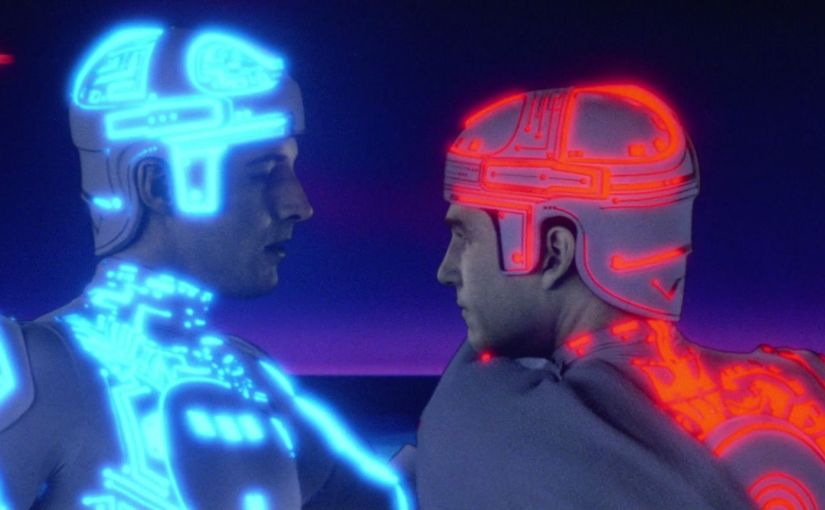
I recall seeing at least a few scenes of Walt Disney Studios’ Tron back when it was released on VHS.  Way back then, just like now, I just was never so impressed by it.  I can forgive the thin characterizations of really the only 5-7 actors with speaking roles.  Yet, the visuals and sound really do nothing for me.  What am I looking at?  Grids!  Just grids or endless squares.  A blank chess board looks more exciting to me.  The players in the film are dressed in what are presumed to be digitized armor that have carved out glowing blue and red lights.  Their human faces are grainy grays.  It all seems so flat to me, like that awful Pac Man adaptation Atari developed for their game consoles. 

Jeff Bridges plays Flynn, a game software developer done dirty by a corporate conglomerate led by a man named Dillinger (David Warner, the bad guy with the British accent).  Dillinger, along with a super computer intelligence known as the Master Control Program, have stolen Flynn’s intellectual property for dynamic new video games.  Since that time, Flynn has been making efforts to hack into the computer system and steal back what was originally his to begin with.  Master Control Program always fends him off, though.

A side story involves Bruce Boxleitner as Flynn’s colleague, Alan, working for the corporation. Alan has just developed a new security system known as TRON.  Dillinger puts a stop on the TRON program however.  Flynn, Alan and a third colleague named Lora (Cindy Morgan) break into the corporate computer lab one night, and before you know it, while attempting to hack in, Flynn is zapped right into the computer system, where he finds himself ensconced in a series of gladiator like games that were part of his original program write ups.

Master Control Program has the capability to erase Flynn from existence but insists on having him compete in the games that involve frisbees that deflect lasers and drive colorful racing cycles.  All of these games occur on this boring grid.

The actors mentioned above are utilized in the film much like The Wizard Of Oz.  They are introduced in the real world for the brief exposition portion of the film, and then later used to represent the TRON program (Boxleitner), as well as other elements that serve or perform under the eye of Master Control Program in the digital computer world.  The only real entity is known as a “user,” and that is Flynn.

I got sleepy watching Tron.  I think it is because like many video games it does not challenge me to figure things out or solve the dilemma. How can I envision Flynn escaping this world before he’s zapped out of existence?  I have no idea, because I’ve not been shown anything that demonstrates how this computer world functions.  Basic video games, at least from the early 1980s, were primarily about timing your button pushes and jerking the joystick accurately and timely.  Like the film Tron, they were never about application of the mind. 

No.  Movies are not meant for me to solve their riddles all the time.  Often, if I’m not trying to figure out how to resolve a story’s conflict, then I’m at least absorbed in the writing and performances of the cast.  The music might heighten the adventure or suspense.  The set designs will dazzle me.  Don’t get me wrong.  This Star Wars fanatic loves visual effects, but without any kind of story or suspense for the players and their outcome, what’s left to watch?  Tron is as dimensional as a blank index card for me. All these grids and lines are no more exciting than office stationery.

Tron from 1982 may seem very outdated, forty years later, but as a ten-year-old, I recall not being impressed either.  The sound design is annoying as when the digital players walk with clunk, clunk footsteps.  The objects on film are just sketched out, geometric glowing, colored lines on a black background. There is no depth, at all, to Flynn, Lora, Alan, Dillinger, or their computer counterparts.  In 1982, this might have been groundbreaking. For the Atari lovers this may have been the answer to many of their prayers.  I dunno.  Maybe I couldn’t relate or understand back then because my tyrant for a father denied me of an Atari game console.  I certainly don’t understand the fascination now. 

I have a 100-sheet pad of graph paper, here in my desk.  I’ll stand my Darth Vader action figure on a page and just stare at it for five minutes.  There!  Now, I can say I’ve watched Tron for a third time.
THE OMEN (1976)

By Marc S. Sanders

The best horror films don’t have to splash blood all over my popcorn.  I’m flattered that at times, a schlock monster fest will tantalize me with a half alive victim’s laced up intestines hanging out of the belly as they walk towards the camera.  Oh, my how long and endless and bloody they are.  Thank you so much for the garage sale autopsy.  Still, I hardly get impressed with that kind of junk.  Terror is most effective for me when the scares come from the mind of the characters and who occupies the surroundings. 

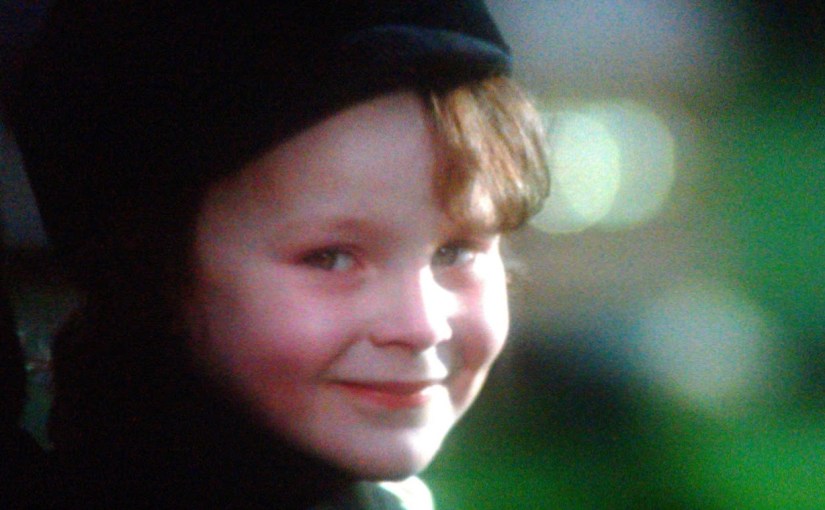
One of the best ways to scare the bejezzus outta me is when you make a child the monster.  Six year old Damien is a monster.  He’s no kind of kid that I would welcome in my house, and I’d think twice before throwing the little devil a birthday party or taking him to the zoo.  Damien may just be the Antichrist of Richard Donner’s 1976 film The Omen.

Gregory Peck made a long-awaited return to the cinematic screen as Robert Thorn, an American Ambassador to Great Britain.  His wife Katherine, played by Lee Remick, have a son named Damien, delivered on June 6, at 6pm.  Think about that point in time for a second and then maybe you’ll have an idea of where this film is going.  Think about the name Damien.  Does it perhaps sound like another word that’ll send shivers up your spine?

Robert and Katherine are a happy couple.  They feel blessed to have a child of their own and after Damien’s sixth birthday has arrived, odd trappings seem to occur.  Their nanny seems to know how to put a damper on the birthday party.  Rottweilers don’t take too friendly to the Thorns, and the replacement nanny, Mrs. Baylock (Billie Whitelaw), is…well…just watch the movie and you’ll see what Mrs. Baylock is like.  (I shudder just typing her name, Mrs. Baylock….gah!!!!!  I must forge ahead.)  As well, there is a priest who keeps visiting Mr. Thorn insisting he knows something about Damien that cannot be ignored.

What works to put the scare into The Omen is that it does not rely so much on supernatural stunts or effects.  It should never be so easy to presume that an angelic child could actually be the son of Satan.  Leave the clues, but don’t be so overt.  If it’s too obvious, then the film fails.  In order for the film to work successfully, put some doubt into what is or isn’t possible.

Lee Remick is quite good as the wholesome loving mother and wife gradually turning into a woman disturbed by her own child.  Try to imagine that dynamic for second.  It’s perfect movie material.  It’s been done before in films like The Bad Seed or in later years with the dreadful The Good Son.  To pull it off, to be disturbed and frightened of your own six year old boy, requires pacing in the script and a range of performance to get to that point and understand what the maternal character is going through. 

Gregory Peck is a seemingly likable politician.  Unheard of, I know.  I think Peck’s reputation contributes here.  He’s not so quick to accept that these odd occurrences add up to something supernatural.  If it is the case, he’ll find out for himself. 

Richard Donner, in his first cinematic film, sets up magnificent scenes.  There’s that birthday party I mentioned before.  So wholesome, and innocent, and eventually it becomes unforgettably tainted.  A trip to a cemetery at night never bodes well.  Of course, our experience with scary movies heightens our alertness when a tomb or a grave is investigated, but still, while we can expect something to happen, it’s the not knowing what happens that leaves us on edge. 

As I watched The Omen, with goosebumps all over, I was challenged with reasoning out how the film would resolve itself.  Thankfully, it leaves you thinking and perhaps trembling a little bit.  At least it did for me.  So much so, that before turning in for bed, I had to turn on an episode of Seinfeld to remind myself that though the devil or his offspring might be nearby, at the very least I can be amused by the ongoing sins of George Costanza.

DICK JOHNSON IS DEAD (2020)

by Miguel E. Rodriguez

Director: Kirsten Johnson
Cast: Dick Johnson, Kirsten Johnson
My Rating: 7/10
Rotten Tomatometer: 100% Certified Fresh

PLOT: A documentary filmmaker helps her father (and herself) prepare for the end of his life.


It’s been said that, to understand what a movie is really about, examine how the main characters have changed, and there you go.  When it comes to knowing exactly what a documentary is about, I would say: describe what you’ve learned after it’s over, and that’s what it’s about.

So, what did I learn when Dick Johnson Is Dead was over?

…that’s not so easy to describe.  Several years ago, documentary filmmaker Kirsten Johnson lost her mother to Alzheimer’s.  Not long after that, her aging father, Dick, started to show signs of memory loss.  She realized she was unprepared for how to deal with the reality that, one day, her father would die.  In the film, she describes how important he is to her daily life how the concept of losing him is “unimaginable.”  To help her process this looming fact of life, she decided to make a film about it.

But not just any film.  Aside from the expected footage of conversations with her father and her children and friends and family, Kirsten Johnson stages fictional scenes depicting her father dying or being killed.  Several times.  Starring Dick Johnson himself.  (And the occasional stuntman.)  In one scene, an air conditioner falls from an apartment building onto his head.  In another, he trips down a staircase, winding up at the bottom with a broken leg and blood pooling on the floor.  My personal favorite, adding a nice mystical touch, shows Dick napping in his favorite chair and ottoman…and he simply rises off the ground and out of the frame, chair and all.

What is going on here?  Kirsten’s father is naturally willing to go along with nearly anything his daughter asks him because, you know, it’s his daughter.  But how is this helping Kirsten?  How is this helping her father?  What am I, the viewer, supposed to get out of watching those scenes staging his death?

Most of them are clearly fake.  Kirsten sometimes leaves the camera and sound running while she shouts direction from just off camera; when the scene is over, you’ll often see assistants run on and help Dick stand up and clean the blood off him, or remove his costume, or help him back to his favorite chair between takes.  But a couple of them took me by surprise and were mildly unsettling.

This is hard for me to explain.  I felt as if Kirsten was somehow taking advantage of her father’s developing dementia to help her deal with his passing.  It seemed…unseemly.  Of course, he is a volunteer, and he was never put in any danger or forced to do anything uncomfortable.  But…something about it felt wrong.  It felt self-indulgent in a way.  “I am having a problem dealing with your death, so let me put you in a coffin in a church so I can feel what it’s going to be like when it’s for real.  This will help me with my process when you die.”  I am probably being completely unfair with that analysis, but I would be wrong to omit how I felt at times during this film.

But.  On the other hand…

There are scenes of such lyrical beauty that I was glued to the screen.  One scene Kirsten stages is her father arriving in heaven.  Dick finds himself surrounded by actors wearing big black-and-white cutout masks of people like Bruce Lee, Farrah Fawcett, and Sigmund Freud.  (One wonders if she asked Dick who he would like to meet in heaven.)  And then, in a wonderful moment, a door opens, and in walks his wife, Kirsten’s mother…again, just an actress wearing a big cutout mask, but the picture is of her from when she and Dick first met.  And they dance together.  (With the help of some fancy editing because Dick is not as nimble as he used to be.)

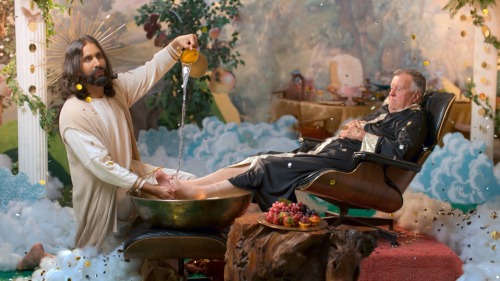
Dick was born with deformed toes, a fact of which he was ashamed for his entire life.  In another wonderful fantasy scene, Jesus Himself anoints Dick’s feet, and presto, his toes are normal again.  The look of shocked delight on Dick’s face is priceless.  …even though, you know, it’s not real, but still.


Interspersed with all this are scenes showing Dick’s slow decline in the real world.  He was once a successful psychiatrist, but he was finally forced to retire when he kept double-booking clients and not showing up for appointments.  He closes his office in Seattle, packs up, and moves in with Kirsten in her New York apartment, which is just a few doors down from the apartment where her two children live with their father and his husband.  (That scenario deserved, I thought, more explanation, but I got none…sounds like the setup for a long-running sit-com.)  Kirsten hires a caretaker with experience in caring for patients in their last stages of life.  Dick starts waking up in the middle of the night thinking he has to catch a train to work.  Multiple times.

These scenes are undeniably powerful because of the extraordinary access we get via Kirsten’s camera.  We see the amused confusion on Dick’s face when she asks him if he remembers getting up in the middle of the night…he doesn’t.  But he laughs.  “Oh, my, your father’s a wreck, sweetheart.”  It’s all doubly poignant because of how his wife succumbed to Alzheimer’s.  And here he goes down a similar road at the far end of his own life.  Powerful stuff.

…and then two extraordinary scenes occur.  I won’t spoil them.  They’re not exactly “extraordinary”, I guess, but the manner in which they occur and what we discover after they happen makes them extraordinary, to me.  And it’s here at the end of the movie that I really started feeling torn.  Yes, it’s a somber, effective look at Death with a capital “D” and how we choose to deal with it.  But…but…a part of me felt like it was shamelessly manipulative, especially those last two scenes.

Perhaps I’m the wrong audience for this movie.  Both of my parents are still alive.  I have not yet experienced that kind of loss.  I’m fifty-one years old as of this writing.  To paraphrase Indiana Jones, I’ve reached the point where life stops giving and starts taking away.  I’ve lost both sets of grandparents, two uncles, and more theatre friends and acquaintances I’d care to think about.  But I still have Mami and Papi.  I am blessed.  And I cannot for one second imagine how my ability to deal with either of their deaths would be improved by filming my mother in a coffin in a church, or by filming a scene where my father is killed after a fall.

I dunno.  It was profound and well made, and it clearly resonated with critics.  Maybe I’ll watch it again in ten or twenty or whatever years when I’ve lost at least one of my parents.  Maybe then I’ll be more in tune with Kirsten’s frame of mind.  Until then…I recommend Dick Johnson Is Dead if for no other reason than it’s one of the most unique documentaries I’ve ever seen.

THE LIGHTHOUSE (2019)

by Miguel E. Rodriguez

Director: Robert Eggers
Cast: Robert Pattinson, Willem Dafoe
My Rating: 8/10
Rotten Tomatometer: 90% Certified Fresh

PLOT: Two lighthouse keepers try to maintain their sanity while isolated on a remote New England island in the 1890s.


tone poem
NOUN, a piece of orchestral music typically in one movement, on a descriptive or rhapsodic theme


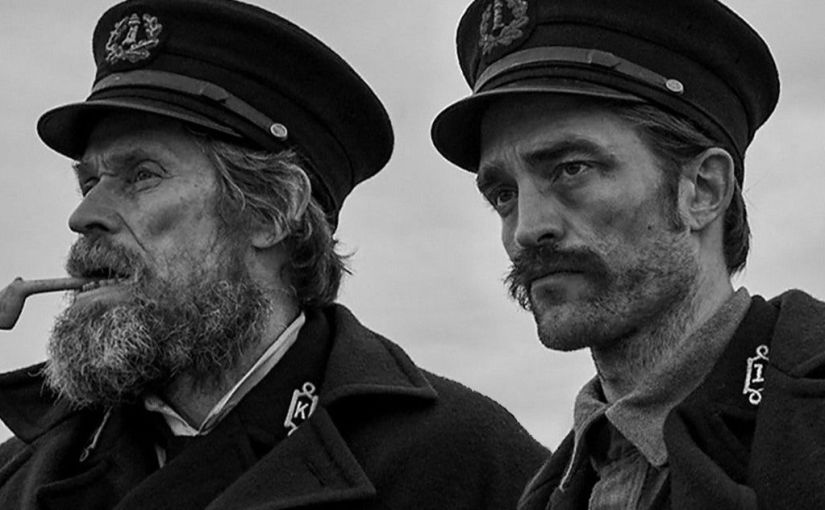
As I watched Robert Eggers’ The Lighthouse, that term “tone poem” kept leaping to my mind.  It’s not told in a standard or familiar fashion.  There are scenes where we’re not sure, until they’re over, whether they’re real or not.  The Willem Dafoe character, Thomas Wake, makes references to behavior in the past by the Robert Pattinson character, Ephraim Winslow, that Winslow never committed…or did he?  We are certain that Wake is the character who is going mad, if he’s not there already.  But what if it’s the other way around?  Or are they both going mad?

The mood or tone of the piece seems to be insanity and how one might get there given the right circumstances.  In many ways, it has quite a bit in common with another sensational tone poem of madness, Stanley Kubrick’s The Shining (1980).

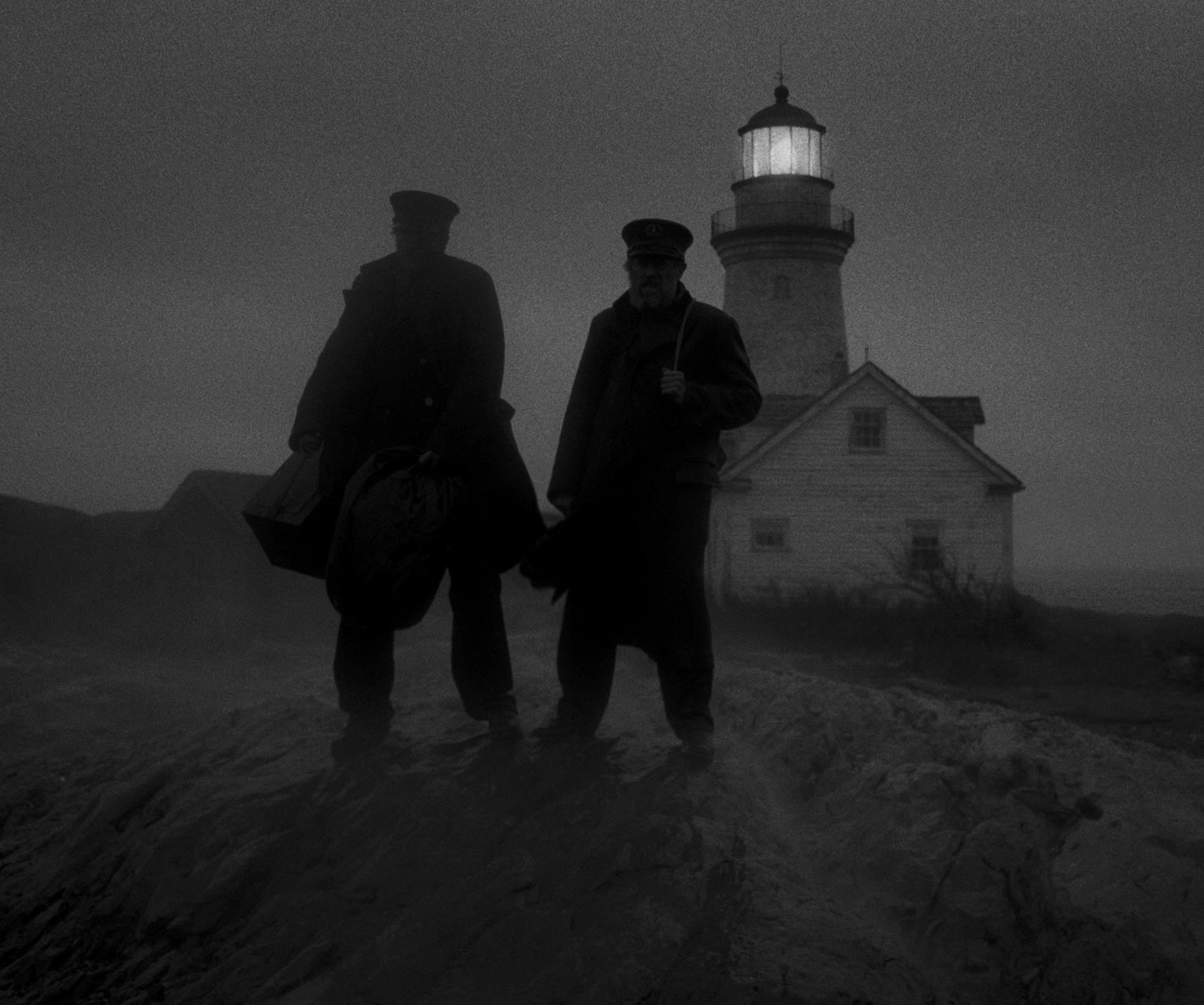
Two men, Wake and Winslow, are lighthouse keepers in the late 19th century.  They are brought to a remote island in the stormy waters off the New England coast and left to fend for themselves for four weeks until the next tender brings supplies.  Wake (Dafoe) is a crusty old veteran lighthouse keeper whose speech and mannerisms appear to be based on Long John Silver, right down to the gimpy leg.  Winslow (Pattinson) is a much younger and, let us be honest, handsomer gentleman who keeps to himself whenever possible.  He tends to his duties, sometimes grudgingly but mostly not, but wonders why Wake flatly refuses to share the duty of tending the actual light source at the top of the lighthouse.  That mystery lies at the heart of the film, but don’t expect all your questions to be answered by the time the credits roll.  Fair warning.

A key decision by director Eggers was to shoot in black-and-white and in a very old screen format, 1:19, so the picture area is a virtually square space in the center of the screen, with black bars on either side.  (The Coen brothers did something similar with their brilliant adaptation of The Tragedy of Macbeth [2021].)  This visual language creates a uniquely claustrophobic atmosphere, especially in scenes taking place in Wake’s and Winslow’s quarters.  The walls are closer together, the ceiling feels lower, and the actors’ faces seem much closer to the screen than normal.  Even exterior shots seem more constricted and confining.  Wide open sky doesn’t look as inviting as it might to someone essentially imprisoned on a storm-lashed island for four weeks.


Like all the best films, The Lighthouse begins its descent into madness slowly and gains momentum as time passes.  Winslow discovers a mermaid figurine stashed inside his mattress.  That night he dreams about a mermaid in the surf.  Or was it a dream?  We glimpse Wake standing naked at the top of the lighthouse, almost as if he’s worshiping the light itself.  When Winslow tries to get a closer look at what Wake is doing up there, he glimpses something…supernatural.  Or does he?  The film is brilliant at not only portraying mounting madness on the screen, but also at conveying the tone of madness in the cinematography and editing.  If we’re not quite sure what is happening, even when we see it happening, that’s on purpose.  The audience is meant to be kept off balance throughout the movie to put us in the heads of the two main characters.

Another factor that I found riveting was the acting workshop on display from both Pattinson and Dafoe.  We’ve seen this kind of thing from Dafoe before.  He chews the scenery with Nicolas Cage-like gusto, spittle flying, prosthetic teeth flashing in manic sneers, and that crazy piratical accent.  If it had been revealed during the film that his character’s last name was Osborne, and that he was a distant relative of Norman Osborne from Spider-Man (2002), I would not have been the least surprised.

But equally impressive is Robert Pattinson’s performance, which must be seen to be believed.  Here is an actor who is set for life after being a part of two of the most profitable film franchises in history (Twilight and Harry Potter) and who has just rebooted a third (The Batman [2022]).  But in this film, he easily keeps pace with Dafoe’s quirkiness, which is not easy.  As his character descends into madness (or does he?), Pattinson dances a jig while singing a sea shanty that devolves into complete gibberish.  He laughs like a loon.  He, ah, takes some time for himself while fondling that mermaid figurine from earlier.  It’s the kind of performance that might be described as “courageous.”  He swings for the fences with abandon.  In so doing, he helps to make The Lighthouse one of the most unique movies I’m ever likely to see.

But what is really going on at the top of that lighthouse?  Why do seagulls pester Winslow so often, seemingly unafraid of him in any way?  Why does he continue to dream about mermaids?  IS he dreaming them?  Is Wake actually a merman?  Did real foghorns sound like that?  Why is one seagull missing an eye?

Well, come on, I’m not actually going to ANSWER those questions, but those are questions that occurred to me.  The movie does answer quite a few of them, but not all.  The point of the movie, like The Shining, isn’t about solving the mystery.  It’s about conveying the mystery, creating a mood of dread, and wallowing in it for a good 110 minutes.  It’s not the happiest movie I’ve ever seen, but it’s definitely one of the most original films of the last ten years or so.

WAR OF THE WORLDS (2005)

By Marc S. Sanders

There’s a harsh reality to science fiction in the 21st century.  When the aliens arrive on Earth, a little girl will ask her dad “What is it?  Is it terrorists?”  Steven Spielberg’s interpretation of H.G. Wells’ War Of The Worlds covered that territory when it was released four brisk years after 9/11.  All these years later and there’s still some legitimacy to that sadly reasonable question.  I find it interesting that one of the most pioneering novels in sci fi was published just ahead of the twentieth century paving the way for endless approaches to alien arrivals and attacks on Earth.  When Spielberg approaches it on his third try, the trope may have been done to death, but now the reality of the response is updated and all too real, and brutally disturbing.

Tom Cruise is the lead in this adaptation, and he is arguably in the most vulnerable role of his career.  He plays a storage bin dock loader, only regarded as a half caring deadbeat and divorced dad to his teenage son (Justin Chatwin) and 10-year-old daughter (Dakota Fanning). After his ex-wife (Miranda Otto) drops the kids off for the weekend, there’s an uncomfortable game of catch in the backyard followed by the beginning of the mayhem.  What appears like a lightning storm evolves into dead batteries and no electricity along with odd wind currents and hammering echoes.  When the people all around the main characters in their New York neighborhood get vaporized, then naturally their first instinct is to think it’s terrorists.  In today’s science fiction, terrorists are real and aliens are not.

Later, once the extra terrestrials (not the friendly kind who consume Reece’s pieces) have viciously introduced themselves, Spielberg’s film resorts to demonstrating mass exodus of the people of Earth.  Military units advise folks to “keep movin’.”  When the attacks happen, people scatter in different directions.  When a ferry is leaving the mainland, helpless folks rush for the dock, desperately climbing over the gates and leaving loved ones behind.  Spielberg hasn’t forgotten about the unlawful occupations from world history.  He simply applies it to a Tom Cruise action piece.

Tim Robbins shows up as a crazed man hiding in a farmhouse basement with a shotgun ready to begin a one-man revolution.  Cruise tries to contain the hysteria.  A scene like this could have had Nazis or aliens circumventing on the floor above, as the central characters remain as quiet as the Jews used to do in the basement below.  The parallels are eerily the same. 

Still, I respect the reality of the piece.  For one thing, much of the film, scripted by Josh Friedman and David Koepp is pulled right from H.G. Wells’ pages, including the nice and tidy ending that eventually arrives.  Don’t knock it.  That’ how Wells wrote the story to begin with.  Spielberg and crew don’t invent their own new image of the invaders.  They are still the tall three-legged tripods towering over the people of Earth and blasting them with their “heat rays.”  My favorite touch of this film is using Morgan Freeman’s vocals as the bookended narrator reciting Wells’ novel text, nearly word for word.  It’s a welcome salute to the memorable radio show that Orson Welles lent to the story decades before. 

I consider this adaptation of War Of The Worlds to be an observational picture or a reactionary film.  Cruise is not super skilled with fighting techniques and weapons handling.  All he can do is watch and react.  He’s an everyman here, which is actually quite unusual for him when you gloss over his resume.  This is not Maverick or Ethan Hunt: Superspy.  His purpose is to watch and return his kids to their mother in Boston, assuming she is still alive.  The success of the mission here only depends on getting the kids back to mom. 

Dakota Fanning and Justin Chatwin go against the grain of so many other Spielberg kid characters.  They are not intuitive or inventive.  Especially for Fanning’s character, she is just a scared little girl.  Not a Goonie and not like Gertie, who is scared for the sake of humor with precocious one liners.  If aliens were attacking the Earth, this is how my kid would react. 

Once it is established that this movie is a Spielberg running man film, then you may be grateful for the realistic mentality of the story’s community.  You’ll also appreciate the amazing set pieces accompanied by John Williams’ original score that plays like a drive-in monster movie or a Twilight Zone episode.  The aftermath of a plane crash on a Jersey suburban neighborhood is very convincing.  A runaway train set ablaze intrudes upon the cast with great surprise.  A cracked piece of concrete that gets swallowed up below only to immediately vomit a tripod in the air for instant attack is eye popping. 

War Of The Worlds is a well-crafted film, and the thought was definitely invested in its approach ahead of making it.  Yet, I won’t say it’s fun escapism.  It’s a reminder of the unrelenting realities we live in now.  Sadly, it’s not reaching to say that maybe we live in a time where it is in fact every person for themselves.  Even Cruise’s son insists on going off on his own, abandoning both him and his sister with nary a care at all.  Unlike Close Encounters or E.T., there’s not much to laugh or grin at in this Spielberg alien film.

The 2005 adaptation of War Of The Worlds is certainly loyal to H.G. Wells.  It may be realistic in the human nature of its science fiction, but in the end, it is also a very bleak film.  There’s much to marvel at, but once the movie is over, as my colleague Miguel and I often recommend to one another, it’ll likely be best that you get outside and bathe in the warm sun under a blue sky, roll around in the grass with your dog, and taste an apple for the first time all over again.  It’s about all we have left to embrace what little is left of our sanity.

KISS THE GIRLS

By Marc S. Sanders

When you’re watching a movie and one character says “Now wait here. Let me handle this!” what do ya think is gonna happen? When you’re watching a movie and one character says “Kate, we’ve covered every inch of those woods. There’s no building there!” whatcha think? You think there actually is a building there?

Let me ask you this, what do you think happens in the film Kiss The Girls?

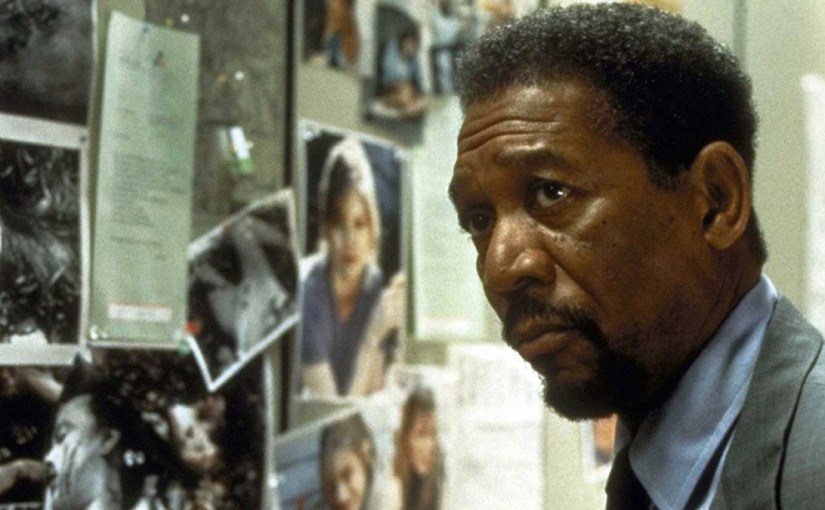
Yup! A whole lot of this nonsense and more that I could cover endlessly. Adapted from James Patterson’s best selling novel featuring his forensics detective hero Alex Cross, Kiss The Girls begins as an effective thriller focusing on the backgrounds of its two leads: dependable Morgan Freeman as Cross, and Ashley Judd as Dr. Kate McTiernan, a skilled surgeon with a specialty in kick boxing (that may come in handy later). At first, we see these characters handling snippets of storylines related to their careers. Cross defuses a suspenseful suicide situation. McTiernan has to console a family whose little girl was in a motorcycle crash. There’s good acting and emotion going on here and I was hoping the film would live up to the promise of these scenes; the characters’ expertise now being applied to Patterson’s main story. It doesn’t.

Instead, the movie just mires itself in plot holes and filler where one character insists on working alone while the other insists on not sitting idly by. This is not character development. This is ping pong volleying. Kate is kidnapped by a serial “collector” of smart, young, beautiful and highly intelligent women by someone regarded as “Casanova.” When Alex’ niece is one of the women taken, he travels from Washington DC to Raleigh, NC to join the investigation.

Soon after Kate has been taken, she manages to be the only one to escape from some hidden dungeon located in the woods. She joins Alex at every turn to find Cassanova and rescue the other captives. Okay. So that’s not a bad set up.

Where it falls apart is in the development. Kate managed to escape by jumping into a river where she’s retrieved by two kids. So wouldn’t law enforcement just sweep that entire area? I mean be really thorough, top to bottom! Surely, you’ll pick up footprints or scents from the dogs. Well, Alex says they did. Fortunately, his niece’s boyfriend finds the map. You know…the map that’s hidden in the library that no one else is aware of and shows this dungeon or whatever it is that’s there. Only one guy, ONE GUY, knows about this map????

When an hour and forty minutes has surpassed, you bet that map is gonna turn up. Remember, also when someone says wait in the car, the one thing you do is not wait. You know, this is a movie. So, Mr. Freeman, please spare me the act of surprise when Ms Judd walks into the bar you’re scoping out. This is all unnecessary, and boring and tired and old.

Kiss The Girls is another film with THAT TWIST! Was it really needed though? Just when the film apprehends the bad guy, and the ladies are recovered safely, there’s a gotcha moment in Kate’s kitchen with lots of knives and pots and pans to play with. Gary Fleder directed this 1997 disturbing thriller in a post age of The Silence Of The Lambs and Seven, which are far superior films. It’s not a film dependent on gore or torture porn, but it’s got the dark stone lined halls for haunted house creepiness. I’m good with that. It’s a thriller after all.

The film’s best assets, however, are Freeman and Judd. These are two top class actors who invest themselves in performance. If only they were working with a much more believable story.

It’s the implausibility in the script that make my eyes roll.

THUNDERBOLT AND LIGHTFOOT

By Marc S. Sanders

There are good Clint Eastwood films and there are bad Clint Eastwood films. You’d probably guess where I rank 1974’s Thunderbolt and Lightfoot (T & L).

I’m amazed. Director Michael Cimino, at the time, was really only known for polishing Eastwood’s Dirty Harry flick Magnum Force into a great crime drama of cop vigilantism. Then he does this picture, and how did anyone at Warner Bros trust him with The Deer Hunter a few years later? Sure, that film won Best Picture, but should anyone really have been surprised when the box office nuclear bomb, known as Heaven’s Gate came along, and bankrupted Orion Pictures? You think the producers of that turd said, “Fellas, we never considered Thunderbolt and Lightfoot. Hindsight 20/20. We shoulda known better.”

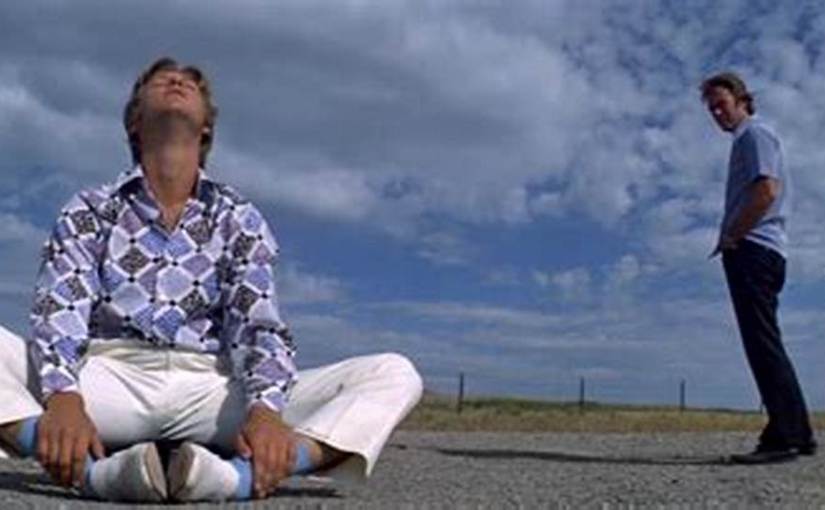
Back to the subject at hand. T & L is mindless of any coherence. Two criminals just happen to find each other randomly on some out of nowhere highway while running from the law (for Lightfoot) and a couple of bumbling henchmen (for Thunderbolt). Their respective crimes are unconnected. Eastwood’s quiet, familiar, tough guy demeanor (Thunderbolt) meets up with wild boy Jeff Bridges (Lightfoot) and then they eventually get to a plot of devising some kind of money heist with early adversaries George Kennedy and Geoffrey Lewis, former crime pals of Thunderbolt. However, they need to arrange to acquire a cannon, get on a job digging water lines for housing properties, work as ice cream delivery guys, hitch a ride in a redneck’s Dodge Challenger, and have Lightfoot dress in drag. There’s also a schoolhouse, no longer located where it once was, with a secret stash hidden behind a blackboard.

Doesn’t this seem like much too much effort for an ordinary bank heist in 1974? Security personnel and systems were probably not as sophisticated back then, no? Eastwood made an easier time of escaping from Alcatraz then all the work put in here.

The movie is sweaty, dirty, stupid, and it just doesn’t make sense really. Bridges actually got an Oscar nomination in the supporting actor category, up against nearly the entire cast of The Godfather Part II, for this film, and I’m…well…perplexed. How was that possible? Best guess, Cimino, who also wrote this dreck, decides to have Lightfoot die at the end. (There!!!!! I ruined it for you!!!!) Problem is I don’t know why or how. He’s not shot or wounded. There’s never an indication that he is ill. The script is too dumb to consider any kind of foreshadowing of his demise. The guys are just driving along with the money in backseat, and Lightfoot appears weak all of the sudden. Thunderbolt pulls over to the side and his partner just quietly dies in the passenger seat. Cimino cues up the Paul Williams music and the end credits appear. Bridges had a death scene. So, Bridges has to get a shot at Oscar glory. The math ain’t pretty but it’s the best logic that I can come up with.

THE GIFT

By Marc S. Sanders

Blumhouse Pictures had a monster year in 2017 with the release of Jordan Peele’s smash hit thriller Get Out.  It was by no means some slasher film for cheap scares.  It built on those typical shocks to deliver a message over a well-crafted three act storyline that commented on present day race relations while the action of it all knocked the hell out of you.  Get Out was one of my favorite films of that year.  

Having just watched Joel Edgerton’s The Gift from 2015, I see a pattern from Blumhouse.  This is a company intent on making high grade material on very small budgets.  This company knows how to spend its money wisely, while showing you something that looks familiar but is altogether new.

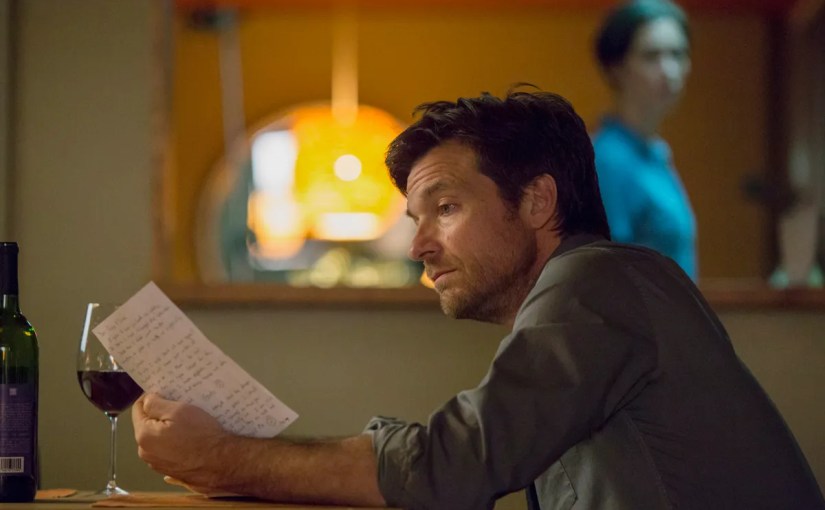
Edgerton wrote and costars in The Gift as a stranger who intrudes on the life of a happy couple with a promising future, played with great chemistry by Jason Bateman and Rebecca Hall.  

Casting Bateman and Hall was a smart move.  In other respective efforts from both actors, they are at their best by giving the less is more approach to their resume of performances.  In this film, they come off as nothing special really when the film begins; happy and minding their own business.  It’s important because it enhances the disruption of Edgerton’s character, Gordo “the weirdo.” All that Gordo is doing is being friendly by leaving gifts on the couple’s doorstep. Harmless, really, but I found my own instincts on alert. The question is, however, was I ever right to question my instincts in the first place.

The Gift is a top notch psychological thriller.  Do Edgerton and Blumhouse follow the same trite cliches of suspense films like this though? That’s what is eye catching about the film.  You really don’t know how developments are going to end up until the movie is completely over.  For the most part, this film is wildly unpredictable.

I really liked it.  It was a new kind of disturbed piece written with foreshadowed detail by Edgerton.  He writes with common, nervously laughable awkwardness for his couple to struggle with.  This new guy is only signing his cards with happy faces and leaving gifts.  What’s so wrong about that?  

Edgerton’s direction is just as fine with wide shots during the daytime suburban scenes to offer comfort for Hall’s housewife character, and a narrow lens to unsettle you as you peer down a dark endless hallway.  For cripes sakes, it’s only your house.  Is your new house really that scary?

The ending is satisfying for me even if I did predict an early scene would return to make its point later.  Narratively speaking though, I credit the screenplay for inventing something beyond a final fight that would probably include kitchen knives and crashes through windows followed by someone falling to his gruesome death from a great height, or drowning a villain in a bathtub before shooting him when he miraculously comes back to life. 

See, that’s what the other movies are doing. Films like The Gift and Get Out are completely doing something else entirely.

COLOR OUT OF SPACE (2019)

by Miguel E. Rodriguez

Director: Richard Stanley
Cast: Nicolas Cage, Joely Richardson, Madeleine Arthur, Tommy Chong
My Rating: 9/10
Rotten Tomatometer: 86% Certified Fresh

PLOT: A secluded farm is struck by a strange meteorite which has apocalyptic consequences for the family living there and possibly the world.


Some backstory…

Once upon a time, there was a film director named Richard Stanley.  He made a few unremarkable films in the early 1990s, toiling in relative obscurity, until he hit the big time in 1996 when he got the opportunity to direct his dream project: a remake of The Island of Dr. Moreau starring none other than Marlon Brando.  The story of that film’s troubled production inspired a documentary all by itself (Lost Soul: The Doomed Journey of Richard Stanley’s Island of Dr. Moreau [2014]).  Stanley himself was fired after only four days of shooting and replaced by John Frankenheimer.  Rumor has it that Stanley secretly convinced the makeup crew to turn him into one of the background mutants so he could keep tabs on his dream project.  After Moreau bombed, Stanley’s career imploded, and he never directed another feature film.

…until over twenty years later when an enterprising film production company expressed interest in allowing him to direct another dream project: an adaptation of an H.P. Lovecraft story from 1927 called The Colour Out of Space.  To say that Stanley redeemed himself with this film would be an understatement.  This is one of the scariest movies I’ve ever seen.  It was supposed to be the first part of a Lovecraftian trilogy, but alas, Stanley was accused of domestic abuse in March of 2021 and the trilogy was scrapped.  One hopes that someone like Guillermo del Toro or Jordan Peele might pick up the promising threads here.  [insert good mojo dance here]

Anyway, the movie.

Color Out of Space is, at first glance, an amalgam of previous horror films.  One can easily spot elements of The Thing (1982), Annihilation (2018), and David Cronenberg’s The Fly (1986).  But when you consider the screenplay has been adapted from a 95-year-old short story, the movie takes on a prescient nature.  Here are all the elements of a solid contemporary horror film, in a story that was published the same year sound was introduced to motion pictures for the first time.  Remarkable.

The Gardner family lives on a secluded farm in the forests of New England, where the nearest township, Arkham, is an hour’s drive away.  (No, Arkham isn’t a Batman reference, it’s Lovecraftian…which might explain why the very name “Arkham Asylum” has always felt a little creepy all by itself.)  One night, a meteorite lands with a crash in their front yard.  This is no ordinary meteorite.  It glows with an unearthly magenta light, and by the following morning it has disappeared.  Shortly thereafter, the youngest son, Jack, starts hearing strange noises outside.  Mrs. Gardner (Joely Richardson), who is recuperating from cancer surgery, keeps getting disconnected from her business calls.  Nathan Gardner (Nicolas Cage) takes a shower one day and discovers what looks like a cake of soap covering the shower drain.  He picks it up…and experiences something NO ONE wants to experience after picking up a cake of soap.

Things get stranger.  A local hydrologist takes some water samples and urges the Gardner family and their squatter, Ezra (Tommy Chong), who lives in a shack on the Gardner’s vast property, not to drink the water until he gets some test results.  Meanwhile, Jack, the youngest son, takes a peek down their well and watches as an alien-looking egg hatches and releases a magenta-colored praying mantis.  Mrs. Gardner gets distracted by…something…and has a kitchen accident with a knife.  Their daughter, Lavinia (Madeleine Arthur), who dabbles in Wiccan rituals, hears a noise that makes her sick to her stomach.  Time passes in fits and starts.

And the whole time, new vegetation has sprouted up around the well.  All the same magenta color…

Experienced moviegoers might be able to plot the film’s course from A to B to the climax, and they might be right on.  But Color Out of Space has one or two surprises up its sleeve that elevates it into the same level as other modern horror classics like Hereditary (2018) or The Babadook (2014).

There are scenes involving a small herd of alpacas – oh yeah, they raise alpacas – that are as unsettling as anything from John Carpenter.  At one point, mother and son are caught in the “grip” of the alien color/light.  What happens to them sets up one of the biggest jump scares I’ve ever had in my life.  I yelled so loud and long that my girlfriend ran to the back of the house wondering what was happening.

Color Out of Space is one of the most effective horror movies I’ve seen in a long time.  Naysayers may refuse to watch it because of Nicolas Cage’s presence, but I can assure you, his “hammy” talents are put to good use and are always in service of the story.  It’s not for everyone.  It’s not for the squeamish.  But for those who dare…Color Out of Space is a horror-film lover’s dream.

BACK TO THE DRIVE-IN

By Marc S. Sanders

I have a confession to make.  As much of a movie lover that I am, I have never seen a movie at a drive-in theater.  I should know better.  Fortunately, I had the honor of learning about this well-established culture of Americana while getting a private screening of a new documentary film called Back To The Drive-in, written and directed by April Wright.

Back To The Drive-in covers the resiliency of eleven different drive-in theaters spanning from Massachusetts, down to Texas, across to the state of Nebraska, and California beyond.  All of these institutions have likely been around longer than three times the age of most of their teenage and twentysomething employees.  They may be located in different areas of the greater United States, but many of these outdoor movie palaces have no choice but to contend with the same ailments that accompany a new age of living during the time of the Covid pandemic.  That’s the common theme April Wright covers as she turns on her cameras allowing the owners, their families and staff to discuss experiences, frustrations, worries and uncompromised passion for the drive-in.

The craft of Wright’s film is beautiful.  There are vast overhead shots of each drive-in that transition perfectly into the intimacy of a lived-in office or a concession stand down below.  As her film moves from one drive-in to the next, the chapters open like picture perfect post cards of an American institution that has survived for over 60 years.  My only familiarity with drive-in movies likely stem from episodes of the sitcom Happy Days, where Richie and Potsie would make out with their girlfriends in the front seat during the monster movie.  This insightful documentary, however, showcases how drive-ins operate in an age of new technology or lack thereof.  It also presents problems that have been ongoing since long before Covid arrived. 

The unpredictability of weather abounds for many of these owners. The most interesting story for me comes from the Wellfleet drive-in located near Cape Cod, Ma.  The owner, John Vincent, is a friendly enough gentleman, who tells of his history working for the drive-in first in the ticket booth while he was a teenager back in 1987, all the way up to now being a proud and concerned owner.  Warts and all, he loves the drive-in.  The offensive f-word for him, though, is fog.  With his business located near the ocean, it is hard to tell if the large outdoor screen will offer up a good enough picture for the Saturday night film.  Each time April Wright’s documentary returns to footage from Wellfleet, I was in suspense.  Mr. Vincent talks about how on a good night he’d have 300 cars parked ahead of the feature presentation.  On this night, with imminent fog, it’s lucky he has 117 cars.  Every time Wellfleet appeared in the film, the fog only looked thicker and thicker.  Fog has become an all too real fear.

A common problem for all of the drive-ins is the weather.  Another location is concerned about lightning in the area.  It goes with the territory that the managers and operators regularly monitor the weather apps.  I want to know what they did in the ‘60s to prepare for this uncertainty. 

Supply shortages, inflation, worker shortages.  All of these drive-ins face the same threats.  Wellfleet also contends with out-of-date technology where the speakers are burned out and the underground wiring needs repair.  Yet, that means digging up concrete at a huge expense.

As the time period focuses on the drive-in attractions in response to Covid, it seems to present a small favor for these businesses.  At the start of the pandemic, when new Hollywood pictures were being released in limited supply, there was at least the escapism of the drive-in for consumers who were exhausted over quarantining.  People could at least catch a classic flick like Back To The Future, and maintain social distancing within their own cars.  Still, Brian Smith who owns Coyote out of Fort Worth, Texas has to protect his teenage staff from angry, foul-mouthed patrons unwilling to cooperate with mask mandates while visiting the concession stand.  He talks about how he looks out for the kids who work for him, but even depression and the challenge to keep up with school is overwhelming. 

Now that vaccinations have provided relief from isolation, the struggle is all the more real for these business owners.  Ben and Nora Harroun who operate Galaxy Drive-in Ennis, Texas mention competing with streaming services for new film releases.

Other drive-ins attempt to reinvent what they have.  Field Of Dreams located in Ohio is offering up live concert entertainment.  Quasar in Nebraska was an I-70 drive-in refurbished by Rod and Donna Saunders with the latest technology and architectural designs.  Their friends said they were crazy to invest in this, but for the Saunders it is crazy to let an institution fade away.  Their retirement was meant to sustain the atmosphere accompanied with a drive-in movie.

There’s a culture to this industry.  These owners talk with one another and share their love for this uncertain and struggling industry.  Drive-ins seem outdated in an age of comfortable multiplexes and the convenience and safety of at home streaming.  They share each other’s pain while also appreciating the value a film like F9 (Fast & Furious) can draw on a Saturday night.  They take pride in the specialty food crafts they sell at the counter from funnel cakes to a delectable pulled pork sandwich for seven dollars.   To many of us, selling a box of Nerds candy or not selling chocolate products to avoid the risk of melting, might seem like a mundane awareness, easily taken for granted.  To these folks, it means the difference of the outcome of their current season in the age of Covid.  April Wright captures a young girl describing how she burned a scar into her finger on a popcorn machine.  These are proud war wounds, accepted within the ongoing challenge of keeping a business afloat and a decades long tradition alive.

April Wright’s documentary is breathtaking.  As her camera soars above the wide-open spaces of worn-out grass and cratered concrete with large movie screens at the edge, you absorb the history of places within the United States urging us to rediscover again.  Our eyes only opened a little during a desperate time in 2020, but these preservationists wonder if they will be able to hold on.  I won’t spoil the outcomes some of these businesses face during a footnote of coverage featured in the end credits, but perhaps a follow up piece is on the horizon from Ms. Wright.  These drive-in locales live with unstable fluidity.  Doubt, accompanied with hope, is what I walked away with following my viewing of the picture.  What will the American drive-in theater look like in a year from now?