GREAT EXPECTATIONS (1946, Great Britain)

by Miguel E. Rodriguez

Director: David Lean
Cast: John Mills, Valerie Hobson, Jean Simmons, Martita Hunt, Alec Guinness
My Rating: 8/10
Rotten Tomatometer: 100%

PLOT: A humble orphan boy in 1810s Kent is given the opportunity to go to London and become a gentleman, with the help of an unknown benefactor.


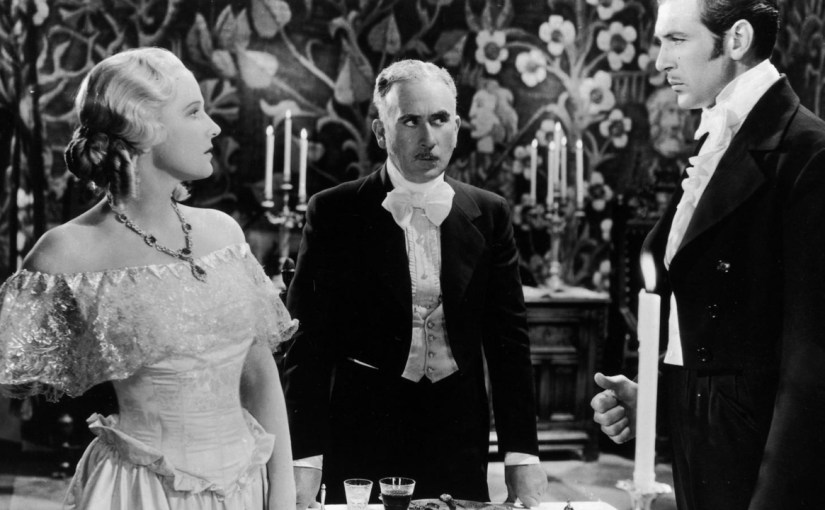
Before moving on to full-blown epics like Lawrence of Arabia and Doctor Zhivago, Sir David Lean’s reputation was already assured with his small-scale masterpieces like Brief Encounter [1945], Oliver Twist [1948], and Summertime [1955], one of the finest Katharine Hepburn films you’ve probably never heard of.  Among these little gems is another Dickens adaptation, Great Expectations [1946], co-starring an impossibly young Alec Guinness.

Having never read the source novel nor, in fact, seen any of the other adaptations (there are at least five others, according to IMDb), I was able to go in “cold” with no preconceived notions or, ahem, expectations of my own.  What I found was a surprisingly engaging melodrama full of gothic overtones and the kinds of coincidences and contrivances that are rife in Dickens’ literature.  Yet they do not feel like contrived literary devices.  They feel like the kinds of coincidences, large or small, that populate our ordinary lives.  (I’ll bet the narrator at the beginning of Magnolia LOVED Dickens.)

The movie opens with a young boy, Pip, visiting the graves of his mother and father.  These opening scenes set the tone: dark skies, bare trees creaking in the incessant wind, and an unexpected encounter with an escaped convict who demands food and a file, for the shackles still hanging from his wrists.  Pip is terrified and complies.  Later the convict is captured and has the opportunity to give up Pip as one who aided a criminal, but in an oddly moving scene, he merely says he stole the food with no one’s assistance.

Later, Pip is introduced to the lovely young Estella (Jean Simmons in one of her earliest roles), who lives in a sprawling, decaying mansion owned by the eccentric old Miss Havisham (Martita Hunt).  Miss Havisham has summoned/hired Pip because it amuses her to watch children play, but more importantly because it also amuses her to watch Estella flirt with and continuously berate Pip as being a commoner, a blacksmith’s son, and someone who is otherwise unworthy of Estella’s affections.  The reasons for Miss Havisham’s cruel games may be guessed at by the dilapidated state of the wedding dress she wears day and night and by the crumbling, molding wedding cake sitting on a cobwebbed banquet table.  (Miss Havisham’s mansion is one of the creepiest gothic locations I’ve ever seen.  I half-expected the story to take a macabre turn, a la Edgar Allen Poe, with a deserting bridegroom rotting away under the floorboards or something.)

Time passes, and in the first of those melodramatic contrivances of which Dickens is so fond, Pip is granted the chance to go to London to become a gentleman.  His livelihood will be sponsored by a handsome annual stipend from an anonymous benefactor through a corpulent attorney named Mr. Jaggers.  (Dickens has some of the greatest character names in literature: Jaggers, Magwitch, Herbert Pocket, Uncle Pumblechook, Mrs. Whimple…I love it.)  Pip enters this new stage of his life assuming, as we all do, that his anonymous benefactor is none other than Miss Havisham.  Makes sense, right?

Through the course of this second act, Pip falls in love with the beautiful but heartless Estella, who warns him she has no heart and only seeks to conquer and discard her many suitors.  This is her way of expressing genuine affection for Pip.  Would Pip rather she do the same to him?

He also meets and befriends his London roommate and business partner, Herbert Pocket, played by an inconceivably young Alec Guinness in his first major screen role.  This was, as they say, the beginning of a beautiful friendship, leading to collaborations between Lean and Guinness on The Bridge on the River Kwai, Lawrence of Arabia, and Doctor Zhivago, not to mention Guinness’ very next role as the odious Fagin in Lean’s own version of Oliver Twist.

The rest of the story, involving Jaggers’ mysterious maid, a test of Pip’s loyalty, the identity of his benefactor, and the wholly unforeseen fate of Miss Havisham, I leave for you to discover.  It all ends, it seemed to me rather abruptly, but it is satisfying.

To fans of Lean’s more ambitious films, a small film like this one hardly seems as if it were made by the same director.  In today’s terms, it might be like watching a small character-driven film made by the Russo brothers (Avengers: Endgame, Captain America: Civil War, etc.).  In his Great Movies Review for this film, Roger Ebert points out the difference between these two stages of Lean’s directing style:

“[Lean] was an editor for seven years before directing his first film, and his career stands as an argument for the theory that editors make better directors than cinematographers do. …What the earlier films have is greater economy, and thus greater energy, in their storytelling.”

Indeed, Great Expectations hurtles along breathlessly, not as quickly paced as a Marx Brothers comedy, but certainly without wasting a single moment on anything that is not necessary to move the story along, or at least provide just a small dash of character or color to the proceedings.  (One of my favorite small touches was the gruesome death masks hanging on the wall of Mr. Jaggers’ office.  For me, it was a kind of foreshadowing, alluding to the possible fate of the convict Pip encountered at the beginning of the film.) In his later epics, Lean’s pacing slows down in favor of presenting the viewer with grand desert or mountain vistas, so instead of watching a play, it feels like we’re at a museum. This isn’t a bad thing. It’s merely a different style of storytelling.

There is another, perhaps more famous, adaptation of Great Expectations out there, by the famed Mexican filmmaker Alfonso Cuarón, starring Ethan Hawke, Gwyneth Paltrow, and no less than Anne Bancroft as Miss Havisham, renamed Ms. Dinsmoor in this version.  It was updated to present day, some other character names were changed, and it is supposedly drenched in atmosphere.  I have yet to see it.  Until I do, Lean’s early masterpiece will remain my favorite version of this timeless tale, abrupt finale and all.

HOUSE OF GAMES (1987)

by Miguel E. Rodriguez

Director: David Mamet
Cast: Lindsay Crouse, Joe Mantegna, J.T. Walsh, Ricky Jay
My Rating: 8/10
Rotten Tomatometer: 96%

PLOT: A psychiatrist is led by a smooth-talking grifter into the shadowy but compelling world of stings, scams, and con men.


I’m sitting here trying to figure out how to summarize the story of David Mamet’s House of Games without giving away plot points, and it’s virtually impossible.  Mamet’s screenplay is composed almost entirely of double-crosses, triple-crosses, short cons, long cons, and the kinds of surprises that are greatly diminished in their description.  Remove one surprise, and the whole thing collapses like a house of cards.

A distinguished psychiatrist, Margaret Ford (Lindsay Crouse) pays a visit to a handsome con artist, Mike (Joe Mantegna), on behalf of one of her clients, who is distraught because of how much money he owes to Mike.  Dr. Ford is unexpectedly intrigued by Mike’s business methods, Mike senses this, and takes her to a back room where he and some other gentlemen are playing poker.

(These men don’t talk much, but when they do, it’s almost exclusively in poker patter.  “A man with style is a man who can smile.”  “Damn cards are as cold as ice.”  “The man says you gotta give action to get action.”  “Everybody stays, everybody pays.”  It’s like they learned how to talk from watching endless episodes of the World Series of Poker on ESPN2.)

Mike makes a deal with Margaret: if she helps him beat the hot player (Ricky Jay) at the table, he’ll tear up her patient’s marker.  The hot player has a tell when he’s bluffing.  Mike will go to the restroom.  If the hot player shows the tell, Margaret will tell Mike, and Mike will beat him because he’ll know he’s bluffing.  Mike goes to the bathroom, the hot player reveals his tell, and Margaret tells Mike when he comes back.  The hot player raises the pot, but Mike can’t cover it.  Margaret comes to the rescue: she’ll stake Mike with her own money.  But, uh oh, turns out the hot player wasn’t bluffing…and now Margaret owes $6,000 to a total stranger.

And that’s where I have to stop. If you think I’ve given too much away, you’ve got to trust me – I haven’t.  That’s barely the preface.  What follows is a character study of a woman who suddenly realizes that, after a lifetime of helping patients, she needs some kind of release, a change in routine.  Mike can provide this much-needed change.  The fact that it involves conning innocent people out of their hard-earned money is incidental.

Her fascination lies in Mike’s method.  For a great con to work, you can’t take someone’s money.  They have to give it to you.  They have to trust you to do the right thing.  The trick is working out how to gain the other person’s confidence without them realizing what’s happening.  We are shown two or three examples, and they’re all brilliantly sneaky.  At one point, Mike tells Margaret the cardinal rule of the con: “Don’t trust nobody.”  After watching this movie, I can’t say I agree 100% with this credo, but a healthy dose of skepticism never hurt anybody.

So how does Margaret square that credo, or anything about Mike’s lifestyle, with her profession?  She helps people for a living.  Her livelihood depends on getting strangers to trust her, but not to take their money…although let’s not forget she is well paid for her services.  Is her fascination with Mike an acknowledgement of the similarities between the two of them?

The screenplay doesn’t provide easy answers.  When we get to the final shot of the film, we can clearly see the choices Margaret has made, but it’s still unclear as to why she made them.  This is one of those movies where the complexities only really come alive during lively discussions afterwards.

Before watching it for this review, the last time I had seen House of Games was over thirty years ago.  At the time, I was unimpressed.  I originally gave it a 2 out of 10 on the IMDb website.  It was slow, the actors looked like they were giving bad performances, and nobody talked like real people talked.

Since then, I’ve had the opportunity to see not one, but three films by a French director named Robert Bresson.  (Bear with me here, I do have a point.)  Bresson, who was active mainly in the ‘50s and ‘60s, was famous for his method of shooting scenes over and over again, take after take, until all emotions had been drained from the actor.  His philosophy, in a nutshell, was that, in a film, the story isn’t everything, it’s the only thing.  If a screenplay couldn’t carry an emotional impact just by virtue of the story alone, if he had to rely on someone’s specific performance to make the movie work, he wasn’t interested.  The results are films that are curiously compelling, despite their utter lack of anything modern audiences might recognize as a typical acting performance.  His films are routinely included on the most prestigious lists of greatest films ever made; seven of them made it onto the 2012 critics’ poll by Sight & Sound magazine, a feat unequaled by any other director.

Sitting down to watch House of Games for the first time in three decades, after having seen Bresson’s films for the first time, I think I see what David Mamet was going for, in this, his directorial debut.  The actors aren’t quite dead-panning the entire time, but their performances (with one or two necessary exceptions) are pared down to the bare minimum of emotion.  Vocally, they’re angry, curious, flirtatious, what have you.  Facially, they’re ciphers.  Which, if you’re a good con man, that’s exactly what you want to be: a blank slate for the unlucky mark to interact with, then forget immediately.

I think back to those poker players and their mournful aphorisms, always said in nearly monotone.  And then I think to the film’s finale when Margaret believes she might be able to turn the tables on Mike (long story), and as the frantic words come out of her mouth, there’s not a smidgen of emotion on her face.  Like…a poker player.  Neat.

ALL ABOUT MY MOTHER (1999, Spain)

by Miguel E. Rodriguez

Director: Pedro Almodóvar
Cast: Cecilia Roth, Marisa Paredes, Penelope Cruz, Antonia San Juan
My Rating: 8/10
Rotten Tomatometer: 98% Certified Fresh

PLOT: A single mom fulfills her son’s last wish by going on a search for her estranged husband, whom she has not seen since before her son was born.


Whatever you might think personally of director Pedro Almodóvar’s films, you can’t say he doesn’t have range and/or versatility.  In one of his previous films, Women on the Verge of a Nervous Breakdown [1988], he takes potentially dark material (a suicidal woman’s quest to find out why her lover abruptly left her) and turns it into farce (police officers accidentally eat drug-laced gazpacho intended for another suicide attempt).  In All About My Mother, winner of 1999’s Oscar for Best Foreign Film, Almodóvar takes potentially farcical material (a mother searches for her estranged husband, who happens to be a transvestite named Lola, and makes friends with a pregnant nun) and turns it into solid, albeit soapy, melodrama that is rather unique in its matter-of-fact treatment of its transvestite characters and situations.

Manuela (Cecilia Roth), a single mother and part-time actor, takes her teenaged son, Esteban, to see a local production of A Streetcar Named Desire in Spanish.  (The night before, they watched All About Eve together, so she’s clearly teaching him right.)  Esteban is so taken with the performance of Huma Rojo (Marisa Paredes), the lead actress playing Blanche, that he waits outside the stage door to get her autograph.  Huma absently gets in a cab and drives away, Esteban runs after her, and is struck dead by a car in traffic.  In a scene of poignant irony, Manuela must sign some official forms to release her son’s body as an organ donor, just days after portraying a grieving mother in a hospital video about…becoming an organ donor.

Manuela discovers her son’s journal in which he is literally writing all about his mother, and he mentions his sadness because he never knew his father, and his mother has told him nothing about his father his entire life.  So begins her quest to locate the long-lost father, whom she refers to as either Esteban or Lola, depending on the context.

After she travels across Spain to Barcelona, her first encounter is with an old friend, a transvestite hooker named Agrado, which roughly translates to “liking” or “agreeable.”  Agrado helps Manuela find a job through the social services of a nunnery, where they meet Rosa (Penelope Cruz), a nun dedicated to assisting hookers of all sorts escape their scandalous lives and find wholesome work elsewhere.  Rosa talks about leaving soon to go to El Salvador to assist in similar work there…but alas, she soon finds out she is pregnant herself.

Meanwhile, Manuela also connects with Huma, the actress whose autograph her son was seeking.  Soon she is hired as an assistant and even, through circumstantially suspicious events, manages to appear onstage as an emergency substitute for Nina, the actress portraying Stella, who is also having an on-again/off-again fling with Huma…

And so on and so on.  At times, All About My Mother feels a little too much like a telenovela, those famous Spanish-language soap operas whose plotlines pack more melodrama into one episode than Dynasty did in an entire season.  But as wacky as the situations got, the movie never gets out of hand, so to speak.  It never wallows in the trashy elements, like a John Waters or Russ Meyer movie, for example.  It simply presents the situations, and the characters face it, deal with it, and move on with their lives.  If I find the situations trashy or overly sensational, that’s my problem, at least in Almodóvar’s world.

That’s one of the charms of this film.  There is a running gag where Agrado, the transvestite hooker – pre-op, by the way – gets hit on by both men and women, and neither gender seems to care about her seemingly incompatible sets of equipment, if you get my drift.  (The guy even offers to do to her what she would normally do to him.  I don’t remember the exact line, but at one point the guy says something like, “Hey, if you think it will relax me, I’ll try anything.”)  In virtually any other movie, that scene would be milked for laughs, or it might be the defining scene for the Agrado character.  But instead, it showcases the…I’m not sure what word I’m looking for here…the “non-issue” attitude that everyone in the movie has to transvestites, gays, lesbians, or any other sexual orientation that might otherwise be a distraction in most American films.  Manuela’s husband is himself a transvestite hooker.  Okay, she accepts it, everyone accepts it, even Rosa the pregnant nun accepts it, and let’s get on with the story.

There is a remarkable scene where Agrado has gotten a job as an assistant to Huma, the actress, and for various reasons a performance has to be cancelled.  Agrado goes in front of the curtain, informs the audience, and offers to tell her life story as compensation for anyone who wants to stay.  She proceeds to itemize every bit of cosmetic surgery she has had done to herself in the past few years in order to become…herself.  Eyes, nose, breasts, jaw reduction…all so she can be more authentic.  “And one can’t be stingy with these things, because you are more authentic the more you resemble what you’ve dreamed of being.”

And then the movie moves on.  It’s a bravura moment that might have been the centerpiece of another film, but in this one, it’s just a dash of character color that deepens everything around it.

I should also mention the lighting style throughout nearly the entire film.  On a few occasions, we are treated to scenes from that stage production of Streetcar, and we clearly see the theatrical lighting.  But in many, if not ALL interior scenes throughout the rest of the movie, the lighting is roughly similar to that of a stage production, or maybe a TV production.  Nothing is lit like I have come to subconsciously expect.  Instead, it all has a kind of heightened reality to it, or maybe “un-reality”, which paradoxically makes it more engaging to watch instead of being distracting.  I think I’m being a little contradictory, but it’s the best description I can provide.

Pedro Almodóvar has been directing shorts and feature films since 1974 and shows no signs of slowing down.  I can’t promise I’ll eventually watch everything he’s ever done, but of the two films of his I’ve seen, this one is my favorite so far.  There’s an abundant love of theater, theatricality, and especially for his characters in his work.  You or I may not like all of them, but he doesn’t seem to care.  Almodóvar seems to be arguing there is humanity in everyone, not exactly a groundbreaking message, but certainly one that was still not widely accepted, even as recently as 1999, and even less so today, unfortunately.  He’s saying, “Look at someone, and don’t see their differences.  See them.  And get on with your life.”

ARRIVAL (2016)

by Miguel E. Rodriguez

Director: Denis Villeneuve
Cast: Amy Adams, Jeremy Renner, Forest Whitaker, Michael Stuhlbarg
My Rating: 9/10
Rotten Tomatometer: 94% Certified Fresh

PLOT: When 12 alien spacecraft descend to Earth at seemingly random points around the globe, a linguistics expert (Adams) is recruited to interpret the aliens’ speech in order to find out why they are here, among other things.


“If you could see your whole life from start to finish, would you change things?” – Louise Banks (Amy Adams), Arrival

That seemingly simple question lies at the heart of Denis Villeneuve’s sci-fi brainteaser, Arrival.  Surrounding it is a film of uncommon grace, beauty, and intellectual stimulation that deserves comparison to Kubrick’s 2001 or Tarkovsky’s Solaris.  When I first saw it in 2016, I’ll admit to some slight confusion at the end, but after many repeat viewings, I believe I understand it fully enough to call it a masterpiece.

After a prologue where we witness a montage of her losing a daughter to an unnamed but ravaging disease, we see Dr. Louise Banks (Amy Adams) teaching linguistics at a university.  Classes are interrupted when news breaks of not one, but TWELVE alien spacecraft suddenly appearing at random points around the globe.  Eventually, the military contacts her and reveals that contact has been made between us and the aliens, but to say we can’t comprehend their language is an understatement.  She and a top-notch mathematician, Ian Donnelly (Jeremy Renner) are flown to the US sites in Montana and are given an impossible task: decipher the alien language and ask them why they’re here.

The design of the aliens and their ship are visual masterstrokes.  The ship, in fact, bears a striking resemblance to the famous Cloud Gate sculpture, aka “The Bean”, in downtown Chicago.  (Google it if you’re unfamiliar with it.)  But imagine it standing vertical on end, matte gray-black instead of chrome, and hundreds of feet tall.  Ominous and delicate at the same time.  The aliens themselves…well, I won’t spoil it for anyone who hasn’t seen it, but I will say they are called “heptapods” by the scientists.  Seven legs.  Cool.

The US researchers and military are connected via satellite to every other landing site around the globe, each attempting to make a communications breakthrough, but it’s Dr. Banks who realizes the aliens may have a form of written communication.  Using a whiteboard and simple words at first, she can have very limited conversations with the heptapods.  But when Banks is finally able to ask the all-important question, “Why are you here”, the answer she gets throws the military and government representatives into a tizzy and they cut off all communications to the other landing sites.

Meanwhile, Dr. Banks has periodically been having extremely vivid visions or memories of her daughter at random moments.  At one point, she is struggling to remember the scientific term for a “win-win” situation, and the memory comes back to her in a flash from a previous conversation with her daughter.  Although it is odd that we hear the term first in the present, and then she remembers it in the past…but enough about that.

Arrival may strike some as slow and plodding.  I suppose they’re right, in a sense.  It lacks any of the deliberately manipulative editing of, say, a Spielberg or a Scorsese film, where the cuts are specifically designed to grab the audience member by the collar and propel them to the film’s high and low points.  By contrast, Arrival takes its time.  It stands back and presents us with all the information we need to really, actively watch the film and work those brain cells.

[The score of Arrival deserves special mention.  In a film whose story arc involves linguistics and translations, it’s appropriate that, at key moments, the score includes multiple human voices harmonizing in ethereal chords or pulsing in a rhythm that sounds utterly alien, not just foreign.  A brilliant touch.]

What gives Arrival that extra push is that question Dr. Banks asks at one point in the film.  “If you could see your whole life from start to finish, would you change things?”  This question, when it comes, has poignant undertones that were not even hinted at in previous scenes.  And I find it to be incredibly moving, every time.  In fact, I wonder if I’m not really the prime target audience for this movie.  I wonder if it’s most effective for people who have lost loved ones to disease or accidents – untimely, unbearable deaths.  For those people, I cannot even begin to imagine how they would answer, or if they agree with Dr. Banks’s answer to her own question.

For myself, I have been blessed in this life, knock wood.  I have lost family members, but mostly to old age, although two uncles were taken by cancer in their fifties and sixties.  But I found myself thinking about this question today more than any other time, for some reason.  If I could magically go back in time, while retaining all my current knowledge, would I change things?

It’s deceptively easy to say “yes”, especially when it concerns the big things.  Sure, I would probably not stay as silent as I did when I learned a dear friend was being molested in high school and college.  No, I would probably not have gotten romantically involved that one time with the absolute wrong person.  No, I would most certainly not have skipped work that one day to see Spider-Man 3.  I would have remembered my driver’s license that one time I was pulled over.  I would have rearranged my schedule to go with my father and sister to Spain that one time.  And on and on.

But…if I hadn’t done some of those things…I may not be where I am now.  In a wonderful relationship with my best friend.  Working at a job that has its challenges but is rewarding and accommodating enough for me to do theater.  Surrounded by a support structure of friends that is second to none.  Able to leap tall buildings in a single bound.  Just kidding.

Your answer may differ from mine, or from Dr. Banks’s answer in the film.  That’s fine.  We all have our own reasons for our own answers to that question.  What’s wonderful about Arrival is its ability to couch that existential question in a top-notch sci-fi drama that, in its own unflashy way, is every bit as exciting and though-provoking as ten Independence Days.  It looks great, sounds great, acted great…what more could I ask for?

THE QUIET MAN (1952)

by Miguel E. Rodriguez

Director: John Ford
Cast: John Wayne, Maureen O’Hara, Ward Bond, Victor McLaglen
My Rating: 6/10
Rotten Tomatometer: 91% Certified Fresh

PLOT: A retired American with a secret in his past returns to the village of his birth in 1920s Ireland, where he falls for a spirited redhead, whose brother is contemptuous of their union.


John Ford’s The Quiet Man won two Academy Awards, one of them for Ford himself as Best Director, his fourth Oscar in that category, a feat which has yet to be equaled by any other director since.  It is on the National Film Registry, on the AFI’s list of “100 Years, 100 Passions”, and is included in the invaluable annually updated book of 1001 Movies You Must See Before You Die.  It currently carries a 91% Certified Fresh rating on the Rotten Tomatoes website and is JUST outside of the IMDb’s top 250 most highly rated films.

(And, as movie nuts will be happy to tell you, this is also the film E.T. is watching on TV when he’s drunk at home and Elliot is at school with the frogs…)

I mention all of this because I want to stress the amazing “pedigree” of The Quiet Man, a film which many have called John Wayne’s finest, one in which the familiar Wayne swagger is on display, but without the kind of Western bravado that was so integral to his success in the movies.  Yet, despite this rather impressive list of accomplishments, The Quiet Man is not quite as timeless as I hoped it would be.  It’s a relic of romantic attitudes that went out of style with the sexual revolution, the Me-Too movement, and – I’ll just say it – common sense.  It has its moments, of course, but aside from one genuine laugh-out-loud moment and a fistfight for the ages, it’s a bit of a chore.

John Wayne plays Sean Thornton, a man looking to escape his past by reconnecting with Ireland, the land of his birth, some time in the 1920s.  In the process, he falls madly in love with Mary Kate Danaher, a fiery-headed and fierce-tempered lass played by Maureen O’Hara.  Such is the chemistry between these two lovebirds that when they first lay eyes on each other, the normally stoic Mary Kate can barely walk ten feet before turning back to stare at Sean’s goofy grin…once, then twice, then THREE times.  Sean asks an old friend, “Hey, is that real?  She couldn’t be…!”  Yeah.  They talk like that all through the picture.

Anyway, one thing leads to another, and they start courting.  But Mary Kate’s elder brother, Will (played by Victor McLaglen with a face that looks like it was put together by a committee of blind men), is against their union because Sean plans to buy a parcel of land he’s been angling to get for himself.  And because this is the ‘20s, the elder brother’s word is law, so no romance for Sean and Mary Kate.  Until, that is, the townsfolk intercede on behalf of the lovebirds.  Small village, you know…the kind where everybody’s private business is an open secret.

The rest of the story is fairly predictable.  Marriage, Will still objects, a new home, the bride’s determination not to consummate the marriage until she gets her dowry, the false crisis, the big fight between Sean and Will at the climax, and so on.  The movie rises and falls on the chemistry between Sean and Mary Kate and the obstacles to their happiness.  Some formulas are old because they still work, and it is competently exploited in The Quiet Man.

For me, though, I must be honest and say that I was never quite engrossed in the story and atmosphere as I would have hoped.  For one thing, John Ford shot much of the film on location in Ireland, an extravagance not commonly indulged in during the 1950s.  However, there are insert shots here and there that were obviously staged and filmed on a studio set.  They are so obvious they became a distraction, something that has never really bothered me in other films of that era.

For another, the attitudes between men and women in The Quiet Man are hopelessly dated, so much so that I’m surprised this film still enjoys such a high rating on IMDb.  For example, there’s a famous scene where Sean intercepts Mary Kate as she’s about to leave on a train because Sean won’t ask her brother for her dowry.  Sean pulls her from the train and drags her home.  Literally drags her.  As they cross a green field, Mary Kate loses her balance and falls, but Sean barely breaks stride, and she is pulled along the grass like so much flour in a sack.  [The making-of documentary on the blu ray reveals the field was littered with sheep droppings which were not removed at Ford’s insistence.  Ah, showbiz.]  One of the female townsfolk witnesses the scene and yells to Sean: “Sir!  Sir! …here’s a good stick, to beat the lovely lady!”  Say what???

Now look: I’m not advocating for “cancellation” of The Quiet Man.  I’m just saying that you should be warned.  It’s a product of its time as much as Gone with the Wind or Some Like It Hot, full of attitudes and jokes that could never be filmed today except as parody or satire.  I get that, intellectually.  For the sake of this story (there’s a lot I’m leaving out), this scene was a necessary beat so Mary Kate could be finally convinced of Sean’s love and determination, equal to hers in every way.  But scenes like that are so glaring that they took me out of the story, and eventually all I saw was this bully who was pulling this poor woman across poop-littered grass.  What can I say.

Now.  Having said all that…I must admit there is one scene that had me laughing out loud at its daring.  It’s so forthright and downright bawdy, I’m frankly amazed it was allowed to make it into the film at all.  I was about to write a full description below with SPOILER ALERT at the beginning, but I won’t.  It involves a misunderstanding between the local matchmaker and broken furniture.  You’ll know it when you see it.  It was such a risqué joke that theaters in Boston edited it out of their film reels when it was released.  I laughed out loud pretty dang hard.

That brilliant joke aside, The Quiet Man is a serviceable film, showcasing two stars, Wayne and O’Hara, at or near the height of their powers, but who are at the mercy of a melodramatic script that is nearly a parody of itself.  I’m not sorry I watched it, you understand.  It’s a piece of Americana as ingrained in cinema history as Singin’ in the Rain.  But on the whole…I would rather watch Singin’ in the Rain for the fiftieth time than watch The Quiet Man again.  At least, not so soon.  Maybe in a few years.

THE TRUMAN SHOW

By Marc S. Sanders

Perhaps The Truman Show directed by Peter Weir demonstrates that no matter what time period a person exists in, he/she/they will never be limited to life within a television set.  Life is meant for more than just stories coming from an electric box.

Jim Carrey portrays Truman Burbank who is the star of the addicting and ratings bonanza 24/7 television program known as The Truman Show.  Since his birth, Truman has been observed by the world.  His parents are actors.  His friends are too.  Co-workers and neighbors and townsfolk as well.  His wife Meryl (Laura Linney) is just an actor.  It’s all fake.  Yet, for Truman it’s all real.  He has no idea that he is a worldwide guinea pig meant for complete observation.

Now that Truman is in his thirties, though, he is becoming wise to the fact that something doesn’t feel right.  Every day, for example, is no different than the one before.  It’s all routine.  He kisses his wife on his way out the door.  He waves to his neighbors.  He always teeters on selling an insurance policy to two dweeby twin brothers.  He picks up a magazine at a local stand in the center of his harbor island town.  He responds positively to his boss and then he comes home and mows his lawn. 

It’s only when odd occurrences appear that Truman starts to think and for the television show’s creator, Christof (Ed Harris), that’s a dangerous risk for the longevity of the program.  Christof manipulates everything that happens to Truman thereby manufacturing his fear of the ocean.  An episode from long ago focused on Truman’s near fatal drowning accident with his “father” who went missing.  That fear keeps Truman contained and unable to explore beyond Christof’s inserted limits.  His program allows for sponsorships like the six pack of beer that Truman’s best friend Marlon (Noah Emmerich) always carries or the household products that Meryl uses at “home.”

Peter Weir’s film is concerned with discovery.  Efficiently speaking, he presents the script written by Andrew Niccol with a “how it works” narration as part of a fast moving first act.  When we, the viewers of the film (not the viewers of the show within the film) are accustomed to Truman’s normalcy, then we perk up when we see something out of place like a set door that reveals a backstage catering counter for cast and crew.  We find it amusing when the weather doesn’t work properly and it only rains directly over Truman, and nowhere else.  What would Truman make of a stage lamp falling out of nowhere from a clear blue sky? Christof would not even think to imagine. Even more disturbing is when one of the program’s actors does not cooperate with the illusion, like a girl named Lauren (Natasha McElhone) when she attempts to reveal the truth to Truman as they genuinely become attracted to one another.  Suddenly, “her father” whisks her over to a mysterious place called “Fiji,” and Truman becomes fixated on visiting that locale one day.

Unlike Paddy Chayefsky’s Network, I don’t consider The Truman Show to be brilliantly prophetic.  Ever since the television was invented, we’ve become addicted to the images emanating from the box in the center of our living rooms.  So, I guess I’m not as fascinated with this film as others have claimed.  The viewers depicted in the movie like regular bar patrons, old ladies who are sewing throw pillows and blankets while watching on their sofas, and parking garage security guards working out of their enclosed booth, are hooked.  They’d never even think of falling asleep or changing the channel.  We are not however, and are left with observing Jim Carrey doing another silly role sprinkled with some sensitivity and an intelligence that is slowly becoming aware.

Perhaps Weir and Niccol are toying with the idea of God, and his play toy that he calls man or in this case Truman (True-Man).  God has the will to control a person and keep him contained, but his invention will eventually develop a mind of its own.  Intelligence breeds defiance and a want for freedom.  History continues to show that.  Therefore, man will build up the gumption to sail across the treacherous seas in search of what’s out there beyond what the eye can see.  God will test and test and test.  Man will either pass or fail, again and again.

In this age of endless reality tv programs, far be it for me to say that the set up of The Truman Show is unlikely.  Yet, it still does not seem possible.  It’s ridiculously over the top.  (Watch me eat my words one day.)  So, Peter Weir’s picture is a fantasy, I guess.  However, is it a fantasy I really care about?  Unlike the viewers of the program within the film, I never cared about Truman.  I never cared about Christof, Truman’s antagonist.  I definitely don’t care about the actors in the tv show.  Sure, Niccol’s script is an idea: “What if a guy was born and raised and lived within a television show?”.  However, is this an idea that is worth running through with?  What’s to gain from the picture? I guess I missed a number of episodes or a couple of seasons to empathize or follow the ongoing story. 

Having seen all the episodes of The Sopranos or Breaking Bad or even Cheers and The Big Bang Theory, I was there from the beginning.  So, I was concerned with the outcome of Tony Soprano and Walter White and whether Sam & Diane would make it as a couple.  Truman Burbank is just another Jim Carrey caricature that I just don’t care about.  So, you’ll have to excuse me if I go check out what’s on the other channel instead.  Maybe Jeopardy is on.

MURIEL’S WEDDING (1994, Australia)

by Miguel E. Rodriguez

Director: P.J. Hogan
Cast: Toni Collette, Bill Hunter, Rachel Griffiths
My Rating: 9/10
Rotten Tomatometer: 79% Certified Fresh

PLOT: A young social outcast in Australia steals money from her parents to finance a vacation where she hopes to find happiness, and perhaps love.


For years and years, I had always assumed Muriel’s Wedding was your stereotypical romantic comedy.  I mean, come on, it’s got Wedding right there in the title.  The story involves a quirky young woman, obsessed with weddings, who runs away from home to find a new life for herself.  Who knows…maybe she’ll get married herself?

But what am I saying, of COURSE she gets married…once again, it’s in the title.  So, based on that bit of logic, I never made any serious effort to watch this movie.  The rom-com has never been my absolute favorite genre.  For me to enjoy one, it has to really stand out in some way.  Either it must be REALLY different (Stranger Than Fiction), or it must be a shining example of the genre (The Philadelphia Story), or it must be so well written that it sneaks past my defenses (Jersey Girl – I know, I don’t get it either, I just responded to it, leave me alone).  I never imagined Muriel’s Wedding would meet any of those criteria.  On the surface, it didn’t look like much.

Welp…I was wrong.  Be warned because some story spoilers may follow, though I will do my best to be obtuse where necessary.

The plot: Muriel (Toni Collette, in the role that put her on the map) is a painfully awkward, overweight young woman who lives for weddings.  At the opening of the film, she is one of many women fighting for the tossed bouquet at a friend’s wedding, and the look on her face is of pure religious ecstasy.  She wears a hideous leopard print outfit completely out of place with…well, everyone.

Her home life is one of middle-class desperation.  She and her family live in a hopelessly hopeful seaside town called Porpoise Spit.  Her parents are in a loveless marriage, she and her oldest brother are on the dole (that’s “welfare” to us Yanks), and one of her sisters seems capable of greeting her only with the same phrase over and over again: “You’re terrible, Muriel.”  She has “friends”, but when they’re on their way to celebrate their newlywed friend’s discovery that her new husband is already cheating on her (long story), they tell Muriel point blank they don’t want her around anymore because she’s a drag on their image.  Muriel’s reaction to this news is as pitiful and heartbreaking as anything I’ve ever seen on film.

It was around this time that I started to wonder if the word Wedding in the film’s title was some kind of perverse code word for “suicide.”  What’s going on here?  There’s comedy here, but it’s comedy of awkwardness, the kind of comedy that can be painful to watch.

Through an improbable, but satisfying, chain of events, Muriel steals quite a bit of her father’s money, goes on an impromptu vacation, and meets an old schoolmate, Rhonda (Rachel Griffiths, in her film debut), who gets Muriel to open up a little.  For the vacation resort’s talent show, they lip-synch and dance to “Dancing Queen” by Abba in white stretch pants, a scene that must have at least partially inspired the makers of Mamma Mia!  Instead of returning home after her vacation, Muriel moves to Sydney and tries to reinvent herself.  At her low points during this time, she finds herself irresistibly drawn to the wedding gowns on display at the local bridal shops…

The rest I leave for you to discover.  One of the joys of this movie is how one thing leads to another in completely unexpected ways.  This was, without a doubt, one of the most unpredictable films of any kind that I have ever seen.  I can’t tell you how delightful it is whenever I find a movie that avoids cliches and narrative pitfalls and continually surprises me.

For example, there’s a scene involving – how can I say this without giving too much away – two people clumsily making out, a broken window, two naked men, and a malfunctioning beanbag cushion that had me laughing uproariously.  And then, just when I thought the scene was over, a curveball gets thrown that made me gasp audibly, as if I were watching footage of a dog getting run over.

The whole movie is like that.  For an hour and forty minutes, I was completely and utterly in the dark about what might be coming next.  The screenplay is bloody ingenious.  It starts with what looks like a generic rom-com premise, leads you down the garden path, then removes the path, and then removes the garden.  There are genuinely tender moments, and moments of delight (Muriel’s reactions during her first date are sheer perfection), and one or two shocking moments, and, and, and…  You get the idea.

Muriel’s Wedding gets high marks for its honest performances and its unfailing unpredictability.  The posters and especially the trailers paint the film as an “uproariously funny” comedy, and it is…at the funny parts.  There are also loads of dramatic surprises, and tender moments, and utterly unexpected plot twists.  It’s one of the most original movies I’ve ever seen.

NIGHTMARE ALLEY (2021)

by Miguel E. Rodriguez

Director: Guillermo del Toro
Cast: Bradley Cooper, Cate Blanchett, Toni Collette, Willem Dafoe, Rooney Mara, David Strathairn
My Rating: 6/10
Rotten Tomatometer: 80% Certified Fresh

PLOT: An ambitious carny with a talent for manipulating people with a few well-chosen words hooks up with a female psychiatrist who is even more dangerous than he is.


No good movie is too long; no bad movie is short enough. – Roger Ebert

Nightmare Alley is director Guillermo del Toro’s longest film to date at exactly two-and-a-half hours.  Going by Ebert’s dictum above, I have to say that it was too long by maybe a half hour or more, but that doesn’t make it a “bad” film.  Just a poorly edited one.

The story revolves around a Depression-era drifter with a troubled past who becomes a carny with the kind of flea-bitten traveling circus that tours all the urban hotspots of Iowa and Kansas, and which is almost all sideshows: a psychic (Toni Collette), a giant (played by del Toro regular Ron Perlman), a rubber man, a girl impervious to electrical currents (Rooney Mara), and a geek show, among other things.  What’s a geek show, you ask?  Why, that’s where people pay two bits to watch a man bite the head off a live chicken.  We are shown one such performance in the opening minutes of the film.  It’s hard for me to believe people were entertained by this, no matter how long ago it was.  I mean, the geek did not look like he was having much fun…although he did seem to be having more fun than the chicken.

Anyway, to make a long story short, the carny, named Stanton (Bradley Cooper), befriends the psychic and her husband (David Strathairn) and reveals that he has always been a student of human behavior, and with a few quick observations, he can make factual statements about someone that boggle the mind.  One thing leads to another, and eventually he leaves the carny behind, with the electrical-current girl, Molly, in tow.  Soon he is headlining nightclubs and posh bars with his mind-reading act, with Molly as his assistant.  One night a beautiful psychiatrist with a level-headed gaze (Cate Blanchett) sees one of his performances and suggests a con: she will provide detailed information about her rich and powerful patients on the sly, and he will do command performances for these elites, making them both rich.  What happens next, I leave for you to discover.

(I must be honest: this is not the kind of film I was expecting from del Toro.  A character study of tragic greed and hubris?  Where are the monsters?  The supernatural nightmares of the title?  But I’m always telling people to criticize the movie the filmmakers made, and not the movie you wish they had made.  I press on.)

I’m finding it hard to summarize my thoughts here.  The movie looked great.  I mean, it looked amazing.  At one point, Stanton runs into the carnival’s funhouse looking for someone, and it’s filled with the kind of over-the-top prop demons and fake ghosts that made me hope we would get a later sequence where these things came alive in some horrifying way.  But no, it’s just intended as throwaway scenery, glimpsed once and never seen again.

There is an extended sequence where Stanton tries to revamp Molly’s act as the “Electric Girl”, coming up with new costumes, new props, new patter (patter is important with sideshows), and it’s a relatively lengthy sequence which felt like it was setting something up.  And, yeah, there’s kind of a payoff, but not the kind I felt it was building towards.

The movie left me with a vague sense of frustration throughout.  We are fed gobs of information about the tricks used by sideshow psychics, the sad ploy used to hire the geeks, the psychic’s husband looms large in the story and then abruptly becomes a non-factor, and it just went on and on and on.  Then in the “riches” part of the rags-to-riches story, Stanton has become insufferable, a believer of his own press releases, willing to put his livelihood (and his life) in jeopardy for that one last big job.

This is all very intriguing stuff, on paper.  But as executed and written, there seemed to be unnecessarily long scenes with loads of information being dumped on us with nothing moving the action forward.  I would pay money to watch Cate Blanchett read a Denny’s menu, but even her extended “therapy” sessions with Bradley Cooper felt interminable.  I felt like those random crowds in Monty Python and the Holy Grail periodically yelling, “GET ON WITH IT!”

To be fair, the Stanton character does eventually get his comeuppance, in literally the final ten minutes of the film.  Full disclosure, I will say without spoilers that it is very gratifying, it had me and some random dude behind me exclaiming loudly in the movie theater, and it features some of the best acting Bradley Cooper has ever done.  But…it came long after I had started shifting in my seat and wondering if I would miss anything important if I ran to get some more candy.

I give Nightmare Alley a 6 out of 10, mainly because it looks so damn good.  del Toro has yet to make a movie that doesn’t look masterful (yes, even Blade II is a beauty to behold).  Also, the acting all around is top notch.  There’s talk Cooper may get an Oscar nod, which wouldn’t surprise me.  But it boils down to a very, VERY long drive for an all-too-short day at Denouement Beach.  A ninety-minute movie crammed into 150 minutes.  Alas.

THE 355 (2022)

by Miguel E. Rodriguez

Director: Simon Kinberg
Cast: Diane Kruger, Penélope Cruz, Jessica Chastain, Lupita Nyong’o, Bingbing Fan
My rating: 5/10
Rotten Tomatometer: 25% (…oof…)

PLOT: When a highly advanced technological googah falls into mercenary hands, a wild card CIA agent joins forces with three international agents on a mission to retrieve it.


I can’t speak for my colleague, Marc, but sometimes it’s harder for me to write about mediocre films than about films that are either outstanding or truly terrible. It’s harder to muster up the motivation to break down a movie that’s not bad or great, but merely so-so.

That’s the situation in which I find myself, sitting down here to write about The 355, a female-led action-thriller from director Simon Kinberg, whose previous writing credits are like a roll call of woulda-shoulda-coulda superhero movies: xXx: State of the Union, X-Men: The Last Stand, Jumper, X-Men: Apocalypse, the ill-fated 2015 reboot of Fantastic Four, and so on. (Full disclosure: he did write the 2005 comedy thriller Mr. & Mrs. Smith, which I believe is highly underrated, but that might be due more to the onscreen chemistry of Angelina Jolie and Brad Pitt than the script.)

The 355 (the title is explained only in the film’s final five minutes, so be patient) is standard Bond/Bourne stuff: an advanced technological doodad has surfaced and every bad guy on Earth wants it. It’s a fancy-looking USB drive that, once connected to any laptop in the world and properly decrypted, can access literally any network and/or mainframe in existence. As proof, the device’s inventor uses it to first crash a military transport jet flying overhead and then, as an encore, cuts the cable to his house. Personally, I would have reversed that lineup, but that’s just me.

(If this plot device sounds familiar, well, that’s because it is, as anyone who remembers the movie Sneakers will attest…but whatever.)

The device is stolen, and the good guys need to get it back before the bad guys do. Enter the main characters of the film: Mason Browne (Jessica Chastain) for the CIA, Marie Schmidt (Diane Kruger) for German intelligence, Khadijah Adiyeme (Lupita Nyong’o) for MI6, and poor Graciela Rivera (Penélope Cruz), a therapist who is in the wrong place at the wrong time. There’s some nonsense about them fighting each other at first, then banding together when they belatedly realize they’re on the same side.

The first major action scene is really well done, I have to say. There’s a foot chase through Parisian streets and subways that is as well done as any similar chase in the Bourne trilogy or any given Bond film. For that matter, ALL of the action scenes are competently executed…but that’s about it. There’s no flash or style, no real sense of originality.

There’s one sequence in particular that takes place in and around a fish-packing warehouse that, after a few minutes, became extremely muddled, and I lost track of who was chasing whom, and why, and how. The camera just seemed to be recording the action without getting me invested. It was curiously bland and detached.

The story itself was vaguely disappointing and unsatisfying, as well. It serves as the very definition of “by-the-numbers.” Virtually every cliche from better spy films are evident. The partner (Sebastian Stan) who’s dead…or is he? The trustworthy boss…or is he? The villain (Bingbing Fan) who lurks in the background…or is she a villain?

Now, there are uncountable films that have used these cliches to better effect, but it’s especially disappointing in The 355 because, throughout the movie, the story felt as if it was on the verge of talking about some truly interesting topics, specifically as it relates to women. There are subplots about how Mason, the CIA agent, has no personal attachments, while Khadijah, the MI6 agent, has a lover, and Graciela, the therapist, has a whole family waiting at home for her. Marie, the German spy, has some REAL problems that I won’t get into here. The story dances around the social perception of what women should or shouldn’t do with their lives. You want to be a secret agent full time? Okay, but you’ll get judged for not wanting to start a family. You want to start a family? Okay, but you’ll get judged for not being as professional or as dedicated as others in your line of work. You want to try to do both? Fine, but just when you think it can work, it doesn’t, so you should have come down on one side or the other. It’s a no-win scenario, and it happens all the time.

The movie dances with exploring this concept further, and then dances away in favor of more cliches and unnecessary plot twists. There’s even a whole sequence that feels as if it was lifted directly from one of the Ocean’s movies. Any one of them, take your pick.

There is also a moment when, out of NOWHERE, the stakes are raised in dramatic and horrifying fashion, so much so that it felt completely out of place. I was reminded, oddly, of a scene in the 2006 remake of The Hills Have Eyes where one of the mutant baddies slowly waves a gun over an infant in a crib. To me, it felt like overkill, and that’s the feeling I got with this off-putting twist. Was it necessary? It was shocking, true, and effective, but was it necessary? I don’t believe it was. I would have believed these women were motivated enough without bringing in outside pressure. And, to be honest, it felt like it was punishing those women who dared to have a life outside of their profession and rewarding those women who didn’t. No doubt there are other interpretations, but that’s how I saw it.

All in all, The 355 wasn’t downright unpleasant or super thrilling. It wasn’t exactly a waste of time, but it didn’t exactly blow my hair back, either. I don’t think it’s quite as bad as that Tomatometer would suggest, but…

Yeah…wait for streaming.

THE TRAGEDY OF MACBETH (2021)

by Miguel E. Rodriguez

Director: Joel Coen
Cast: Denzel Washington, Frances McDormand, Alex Hassell, Brendan Gleeson, Corey Hawkins, Stephen Root
My Rating: 8/10
Rotten Tomatometer: 93% Certified Fresh

PLOT: William Shakespeare’s tragic tale of murder and guilt gets a stylistic re-telling with moody direction from Joel Coen and powerhouse performances from its two leads.


I am of two minds when thinking about Joel Coen’s take on William Shakespeare’s Macbeth.

First, I must admit I am no Shakespeare scholar. I can count on one hand (maybe two) the number of filmed Shakespeare adaptations I have seen, and I can count on one finger how many theatrical productions I’ve seen. I’ve only read two of the Bard’s plays beginning to end: Othello and Julius Caesar. I have acted in a production of the popular Shakespeare parody The Compleat Workes of William Shakespeare (Abridged), but I doubt anyone would find that an acceptable credential.

So I must be honest and say that, when it comes to the nitty gritty specifics of the dialogue in The Tragedy of Macbeth, I was lost for, oh, 50-60% of the time. Like, “out to sea” lost. I am moderately familiar with the story, so in those times I was lost, I was able to glean what was going on or what was being said in context. I know who Banquo and Macduff and poor Duncan are, and so was able to follow their various comings and goings as revealed in the frequent chunks of expositional dialogue.

[Full disclosure: If the name of the Ross character is ever actually mentioned in the film, I must have missed it…for the duration, I wondered what his name was, and he is a vital character in certain scenes.]

But I have to say, whatever I missed in the dialogue was more than compensated for by the sensational visual language of the film, and by the stunning performances from the two leads.

First, it was shot in glorious black-and-white, and it was all shot on soundstages, giving the director (Joel Coen, working for the first time without his brother Ethan) and cinematographer (Bruno Delbonnel [Amélie, Across the Universe]) absolute control over the lighting and shadows. The resulting visuals look like something out of the early silent films of Fritz Lang and, especially, F.W. Murnau, with compositions that must have taken hours and hours to set up, with high-contrast shadows creating elaborate framing devices on walls and floors. When Macbeth famously sees a dagger before him, it’s accomplished by shining a reflective light on a highly polished door handle. In the few shots that take place outside the castle, more often than not shadows are moving slightly in the frame, as if the sun or the clouds were in constant motion. Those shadows always seem to be sliding down over the characters, perhaps mirroring Macbeth and his lady’s constant downward spiral towards their fate.

Another factor in the visual look of the film was the decision to frame it in the standard 1:33 ratio, sometimes known as the “Academy” ratio. Basically, instead of watching the film on a rectangle-shaped viewing area, you’re watching it on a square set in the middle of the screen. One might think that doing so would limit the possibilities of visual expression, but not so. For me, it had the effect of making everything a little more claustrophobic, which I think is important in cementing the state of mind of our two main characters. As the guilt over their evil deeds threatens to overwhelm them both, the smaller screen is a constant, subtle reminder that their options are limited, and becoming fewer as time goes on.

All in all, a visual feast, in a nutshell.

But what makes The Tragedy of Macbeth even more delightful to watch are the performances. To be sure, everyone involved acquits themselves incredibly well. (Keep your eyes open for a young man named Harry Melling, aka “Dudley Vernon” from the Harry Potter film franchise.) But the two that shine brightest are Denzel Washington as Macbeth and Frances McDormand as Lady Macbeth.

Lady Macbeth is as quietly vicious and malicious as they come, and it helps that her attitudes are quite at odds with McDormand’s kind, open features. It is a little startling to see the face of good-hearted Marge Gunderson fiercely exhorting Macbeth to commit regicide in sharp, clipped tones, her whispers piercing the air between them like poison darts. Her despair at her husband’s inability to calmly deal with the guilt is clearly evident; when he reveals he went above and beyond what was originally planned, her shocked “are-you-kidding-me” looks are worth pages and pages of dialogue. And, of course, in the late stages of the story, when madness finally overtakes her, when no amount of washing will wipe the blood from her hands, her animalistic howls of anguish are almost worth the price of admission.

But the highlight of the whole venture (for me, anyway) was watching Denzel Washington demolish the screen as Macbeth himself. Words fail me. I haven’t seen a performance this amazing and praiseworthy since Daniel Day Lewis in There Will Be Blood. I may not be a Shakespeare scholar, but I know enough to understand that making it flow as easily as normal speech takes a great deal of research and rehearsal and collaboration. What I would not GIVE to see him reprise this role on stage somewhere! He navigates the twists and turns of Shakespeare’s tortured syntax as easily as if he was telling a story about his day at work. As with any great performance, there are peaks and valleys, and his teeth-clenching, fist-pumping outbursts are used as periodic punctuation marks, not entire sentences. There is a brief scene where he angrily berates a messenger, and his seventeenth-century taunts and name-callings are as surgical and cutting as anything from Mamet. It’s a miraculous performance, and I would not be surprised in the least if he gets another Oscar nomination. (The same goes for Frances McDormand…what a duo!)

(I would be remiss if I did not also mention the performance by a little-known actress, Kathryn Hunter, as the famous Witches. Her voice and face open the film, and if there’s any justice, it will go down as one of the great opening sequences of the movies. There are portions of her performance that must have taken great courage and trust in director Coen, to make sure she did not come off as simply a kook. She does not. She is one of the most ineffably creepy individuals in a movie in quite some time. I dare not say more without ruining the effect. But she was breathtakingly successful.)

When I walked out of The Tragedy of Macbeth, I can clearly remember thinking, “Well, great movie, but one that I wouldn’t purchase for my home video library, because how can it possibly equal the experience of seeing these precise visuals married to these insane performances, on a big screen?” But the more I think about it, the more I think I will pick up a copy when it becomes available, for a couple of reasons. First, a little extra culture never hurt anyone, and second, it will be worth the purchase price just to see Washington and McDormand tear up the screen as the Macbeths again, not to mention those stunning visuals, AND those creepy witches. This movie is really growing on me.