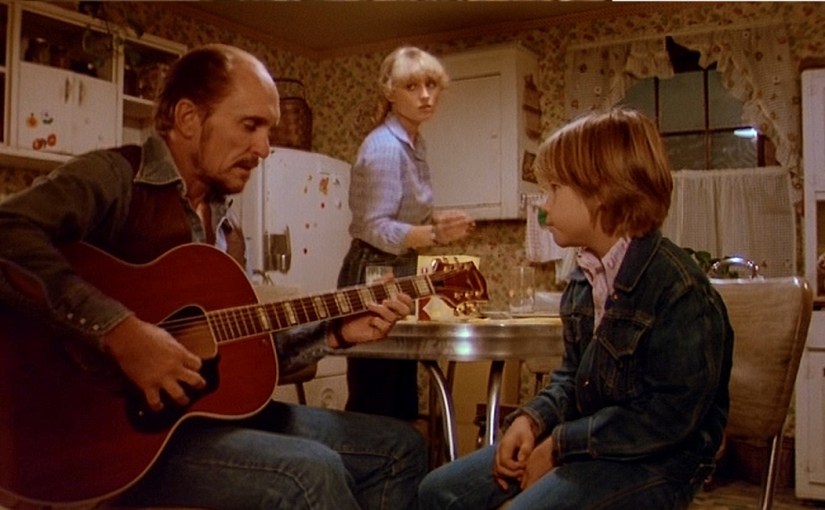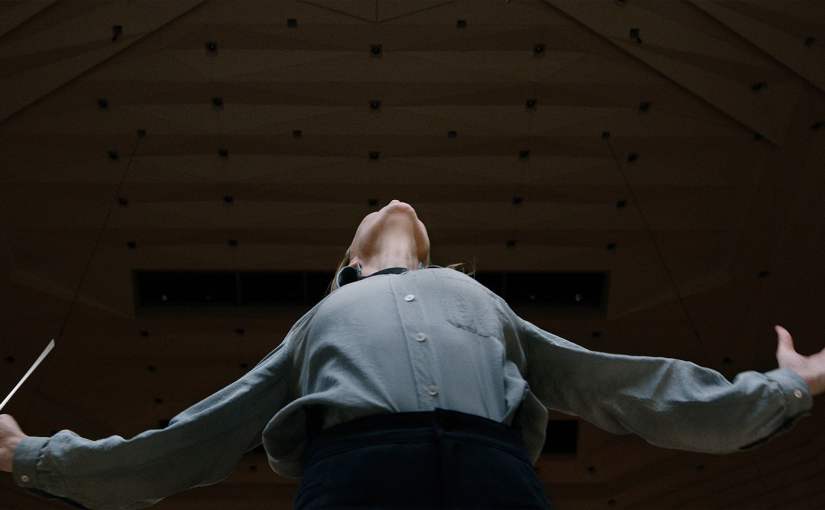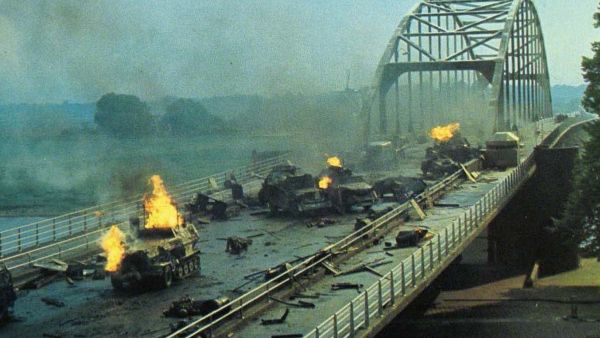
MIGUEL’S 100 FAVORITE MOVIES OF ALL TIME: #10-1

by Miguel E. Rodriguez

At last. The acme. The zenith. The tippest of the top. The ne plus ultra.

As part of a challenge from Jim Johnson, I created a ranked list of 100 of my favorite movies. To reiterate, this is not necessarily “definitive” by any stretch of the imagination. I mean, please…can I switch numbers 35 and 88? Absolutely. But lists are lists, and here we are.

Per the rules, here are my top 10 most favorite movies of all time, followed by a complete list of all 100 for the curious. Feel free to argue/tell me how wrong I am in the comments.


10. THE TRUMAN SHOW (1998) – Another Peter Weir film that is hypnotic and compelling, especially during the final sequence when I thought I would levitate from my seat in the theater out of pure joy. I’m not exaggerating. As someone who had a strict religious upbringing, I identified strongly with Truman, someone who experiences life, love, and the world only as far as the people pulling the strings will allow. I felt his wonder and curiosity and slow realization that there just might be life outside of Seahaven, the island home he has never left since he was born. When the true nature of Truman’s world was revealed, I wasn’t exactly shocked (the trailers did an uncommonly good job of spoiling that surprise), but I felt a kinship to his situation. And when he finally overcomes his fears and heads into the unknown…I all but cheered. This movie was an acutely personal experience that I will never forget. Others may not have felt the same thing, and that’s fine. But for me, The Truman Show is absolutely in my top-ten.

9. CASABLANCA (1942) – One of the greatest movie-going experiences of my life was seeing the 50th-anniversary screening of a new print of Casablanca at Tampa Theatre in 1992. I had still not seen this so-called classic, so I figured, why not now? I went with a friend of mine who HAD seen the movie, and we sat in the balcony. Surprisingly, I do not remember the acoustics interfering with the movie’s dialogue as much as it normally does. I heard every line crystal clear…and I also heard the full house cheering with every famous line. “I was misinformed.” “Round up the usual suspects.” “Play it, Sam.” At first, I was annoyed, but as the movie went on, I was amazed at how caught up in the story I was getting, despite how clichéd a lot of it was. By the end, as Rick and Renault walked off together, I was sold on Casablanca’s place in Hollywood history, and it has been a favorite of mine ever since. I have heard and read numerous arguments against Casablanca, and those good folks are entitled to their clear, concise, and well-stated opinions…no matter how wrong they are.

8. DR. STRANGELOVE or: HOW I LEARNED TO STOP WORRYING AND LOVE THE BOMB (1964) – George Carlin once said that you can make a joke out of literally any subject, no matter how dark or taboo. Stanley Kubrick’s satirical take on nuclear holocaust is a case in point. What started out at the screenplay level as a straight-up thriller morphed into a Python-esque comedy where statistics about warheads and megadeaths rub shoulders with an American President named Merkin Muffley and an eccentric German scientist whose right hand seems to have a life of its own. Peter Sellers pulls off a hat-trick by playing three vastly different characters, some of whom share screen time, and making each one so unique that, when I first watched it, I had a hard time believing they were all played by the same actor. Kubrick shoots some thrilling combat footage, foreshadowing what he would later accomplish with Full Metal Jacket 24 years later, then contrasts it with scenes like the one where George C. Scott’s character gets so keyed up while describing the capabilities of his long-range bombers that he forgets he’s describing how the apocalypse might literally begin. (Dr. Strangelove was so effective at combining humor with the unthinkable that, when Fail Safe was released 10 months later, it was not quite as successful as it could have been because audiences could not take it seriously.) This movie reaches my top 10 for its sheer audacity and wit in the face of material that seems incapable of supporting a comic premise.

7. IT’S A WONDERFUL LIFE (1946) – Breathes there the man with soul so dead they have not yet seen It’s a Wonderful Life? If so, I pity that man. Frank Capra’s ultimate Christmas movie has turned many people off, it seems, by the thoroughly depressing plotline during the first 80% of the film (approximately). George Bailey, an everyman with dreams of traveling the world, is forced to put those dreams on hold to save the family business. In the process, he meets and marries the love of his life, has four kids, and flirts with bankruptcy every fiscal year. When a crucial bank deposit is misplaced, putting his entire livelihood in jeopardy, George contemplates suicide – on Christmas Eve, no less. So, yeah, this ain’t exactly the Marx Brothers. What turns It’s a Wonderful Life into a true classic and a perennial favorite is the last 20% of the movie, where George’s guardian angel appears and offers him a gift: the chance to see what the world would be like without him. In a lesser film, that plot point would provide the engine for at least half of its running time. Capra wisely realizes that George’s “redemption” only means anything if we see just how far and fast he falls, and what’s at stake, and so his redemption scenes function more like punctuation marks at the end of a sentence. The rapturous finale is, let’s face it, corny as hell…but by God, it works. Best. Christmas. Movie. EVER.

6. SCHINDLER’S LIST (1993) – I will never forget a moment when watching Schindler’s List for the first time, when Schindler is observing the evacuation/extermination of a Jewish community from a nearby hill. As Schindler keys in on a little girl in a red coat, German soldiers line up several Jews single file, then fire their pistols at one end just to see how many Jews the bullets will kill before losing power. I distinctly remember thinking, “Wow, how horrible,” but I also remember a faint smile on my face, because I was also thinking, “Wow, here’s a movie that isn’t going to pull any punches.” …and then I had a sobering moment when I reminded myself, wait, this isn’t just a director lining up a shot to make a point about the horrors of war…someone probably witnessed this exact moment, which made it into a book, which made it onto film. That realization opened my eyes and brought a whole new clarity to everything that had come before and would come after. What makes Spielberg’s film even more astonishing is that he and screenwriter Steven Zaillian, sorcerers that they are, managed to somehow bring just the right level of entertainment to the screen without feeling they were downplaying the seriousness of the subject matter. Perfect example: when the little boy points out who killed the chicken – it’s an awful, awful scene, but the punchline gets a laugh, and it doesn’t feel out of place. Schindler’s List is some kind of miracle and should be required viewing for…well, everyone.

5. AMADEUS (1984) – When I was just hitting my teenage years, I wasn’t listening to a lot of pop radio, so my dad got me into classical music by buying a box set (on cassette!) of Beethoven’s nine symphonies. I got familiar with the style and flow of classical music, and started slowly realizing the connection between movie scores and classical music, etc. And then Amadeus started airing on cable. The first thing I remember is coming across it towards the end, during the scene where Mozart is dictating his music to Salieri. I had no idea what I was watching, but the way that scene represented classical music being broken down into its component parts, and how a composer must know each little section inside and out to make sure everything works when it all comes together…that scene blew me away. Then I watched Amadeus from the beginning, and I was mesmerized from start to finish. I identified with Salieri’s frustration: “God, I am your true servant, yet you allow this vulgar man to flourish while I toil in obscurity.” Sure, I was only 13, but that captured one of my eternal questions when it came to religion in general. But even aside from the movie’s grand themes, Amadeus embodies the word “sumptuous.” Not until Sofia Coppola’s Marie Antoinette had I ever seen a movie with such exquisite sets and costumes. And I had to wait until I saw a “making-of” documentary to be convinced that old Salieri and younger Salieri were played by the same person. Amadeus uses some of the greatest music ever written to support a story with which anyone can identify: Am I destined to only recognize greatness without ever achieving it myself? A stone-cold classic.

4. PINOCCHIO (1940) – Animation has held a special place in my movie-loving psyche ever since I discovered how laborious the animation process is, particularly when it comes to hand-drawn animation. The idea that every single frame was painstakingly drawn, painted, and photographed was mindboggling to me, especially when animated movies seemed so free in movement and the characters looked convincingly heavy and real. What sorcery is this? The high-water mark of hand-drawn, or ANY, animation is and shall remain Walt Disney’s second feature film, Pinocchio. I’ve seen this movie dozens of times, if not scores, and it never ceases to amaze me. Look at Pinocchio’s facial expressions in any given scene. Look at how Monstro the whale evokes immense size and weight. Look at that fantastic underwater section as sea creatures of all shapes populate every corner of the frame. And especially consider the story that pulls no punches when it comes to dramatic impact. Nowadays, many films aimed at kids are all sugar and sweet and give mere lip service to danger and/or peril. Compare them to Pinocchio, a movie that puts the hero in creepy danger (Stromboli), then creepier danger (Pleasure Island and those donkeys), then in utter mortal danger (Monstro’s pursuit). This may be an animated film, but it refuses to talk down to its audience, children or otherwise. Pinocchio is a classic that has rarely been equaled (opinions vary), but which will never be surpassed. Change my mind. [Spoiler alert: you won’t.]

3. CITIZEN KANE (1941)The Bridge on the River Kwai [1957] was one of the first movies that convinced me that “old” movies could be as thrilling as modern films. But the first movie that convinced me that older films could be BETTER than modern films was Citizen Kane. After years of hearing about it by reputation, I rented a copy from Blockbuster and was thunderstruck at how engrossed I was after the first five minutes…and that’s just the newsreel. From there on, the mystery of Kane’s life and his cryptic dying word just got better and better, visually and story-wise. Especially visually. Volumes have been written about Welles’s vision and his close collaboration with cinematographer Gregg Toland to accomplish some of the most iconic and virtuoso shots in the history of cinema, so I won’t go into details here. The visual aspect of this film is as closely related to its success as any other element. Certainly, it’s filled with brilliant performances and breathtaking rapid-fire dialogue that feels lifted from an Aaron Sorkin screenplay. But it’s the camerawork that caught my attention more than anything else the first time around, and it still amazes me today. I have yet to see a black-and-white movie that demonstrates more visual virtuosity than Citizen Kane. (And to those who claim it’s “boring”…um…I literally have no response to that…)

2. HAROLD AND MAUDE (1971) – When I was performing in a show in my mid-20s, I had fallen into a kind of depression, or at least a deep funk. Due to a variety of factors in my life at the time, I felt redundant, powerless, talentless, and terribly cynical about the world in general. A fellow cast member noticed my pain and brought in a VHS copy of Hal Ashby’s Harold and Maude for me to borrow and watch. He told me, “I recognize myself in you from 20 years ago. So, trust me when I tell you that this movie will change your life.” I was naturally skeptical, but I took it home and watched it…and I am not exaggerating when I say, Harold and Maude literally changed my life. Maybe not overnight, but it absolutely changed my perspective on a great many things. The story is quirky, to say the least: a depressed young man from a very rich family stages fake suicides and attends funerals for strangers to pass the time. At one of these funerals, he meets a lively 79-year-old woman who shares his fondness for funerals, but who has a very different outlook on life. She takes him under her wing, encourages him to not to take life so seriously, teaches him to appreciate the little things, and so on. He falls in love with her unshakeable positivity…and with her, romantically. What happens next, I shall not reveal, but when I reached the film’s final sequence, I was transported. When it was over, I felt I was seeing the world around me with blinders off. It is no exaggeration to say that, without Harold and Maude, I would not be where I am today: in a stable relationship with the woman I love for over 20 years, in a job that I – well, “love” is a strong word – a job that I ENJOY as opposed to one that I don’t, a sturdy support structure composed of my closest friends and family, and making enough money to pay the bills while still being able to travel and indulge in my passion (acting) on the side. “Harold, EVERYONE has the right to make an ass out of themselves. You just can’t let the world judge you too much.” Words to live by.

1. LAWRENCE OF ARABIA (Great Britain, 1962) – This has been my favorite film of all time since seeing it on TNT over 30 years ago. Even in a non-letterboxed format (sacrilege!), the majesty of David Lean’s magnum opus was undeniable. Then I saw it on a 2-volume letterboxed VHS, and I got to see even more of the desert scenery and carefully planned details in the corners that I missed on network TV. On DVD, things got even better. But THEN…the Blu-ray came out…and I was blown away. Now I could see the Bedouin through Lawrence’s binoculars. I could see the tiny speck on the horizon before it resolved itself into the figure of a man on camelback. The sand and dust and smoke and blood all reached a level of detail that made me fall in love with it all over again. (And I don’t think I can talk about seeing it on the big screen in 70mm for its 50th anniversary without making this a novella.) This movie hits all the bases. Visually, it’s simply magnificent. This was the early 1960s, so Lean took the gigantic movie cameras of the day to the real Jordanian deserts and shot virtually everything in the film on location…IN THE DESERT. The widescreen compositions and movement are unparalleled. Story-wise, this is, of course, the story of a man’s life against an epic backdrop, so right away you’ve got me. The details of Lawrence’s life during the Arabian campaign during World War I are provided with just enough information to let the audience know exactly what’s going on without overwhelming you with a deluge of minutiae. But the real engines driving the film (aside from David Lean, of course) are the powerhouse performances from the cast: Omar Sharif, a fiery Anthony Quinn (regrettably in “brownface”, but fiery nevertheless), and of course Peter O’Toole as Lawrence. With his piercing stare, lanky frame, and soft-spoken presence, Lawrence comes across as just slightly north of mad, but his conviction and tactical brilliance in the field make him an invaluable asset for the British…until he decides Arabia should be free from ALL rule, not just Turkish, and sets out to LIBERATE Arabia. The feeling I’m left with after watching all 227 minutes of Lawrence of Arabia is the same one I get after finishing a long, extremely entertaining novel. I can’t imagine a scenario in which I will ever get tired of watching this film. Lawrence of Arabia is as close to cinematic perfection as anyone is likely to get, and it is my absolute favorite film of all time.


TOP 100 FAVORITE FILMS OF ALL TIME:

  1. Lawrence of Arabia
  2. Harold and Maude
  3. Citizen Kane
  4. Pinocchio
  5. Amadeus
  6. Schindler’s List
  7. It’s a Wonderful Life
  8. Dr. Strangelove or: How I Learned to Stop Worrying and Love the Bomb
  9. Casablanca
  10. The Truman Show
  11. The Red Shoes
  12. Pan’s Labyrinth
  13. Cloud Atlas
  14. Master and Commander: The Far Side of the World
  15. Raiders of the Lost Ark
  16. The Godfather
  17. The Godfather: Part II
  18. Parasite
  19. Close Encounters of the Third Kind
  20. Blade Runner 2049
  21. The Last Emperor
  22. Prometheus
  23. The Exorcist
  24. Wall*E
  25. Children of Men
  26. Requiem for a Dream
  27. United 93
  28. Spirited Away
  29. The Deer Hunter
  30. The Bridge on the River Kwai
  31. Saving Private Ryan
  32. Pulp Fiction
  33. Baraka
  34. Nostalgia for the Light
  35. Sunrise: A Song of Two Humans
  36. Network
  37. Chinatown
  38. Midnight in Paris
  39. The Remains of the Day
  40. Being John Malkovich
  41. Notorious
  42. Psycho
  43. Breaking the Waves
  44. To Be or Not to Be [1942]
  45. Match Point
  46. The Iron Giant
  47. Up
  48. Once Upon a Time… in Hollywood
  49. Look Who’s Back
  50. Inglourious Basterds
  51. Double Indemnity
  52. One Flew Over the Cuckoo’s Nest
  53. Crouching Tiger, Hidden Dragon
  54. The Apartment
  55. The Piano
  56. The Sting
  57. Fight Club
  58. Magnolia
  59. Jaws
  60. Aliens
  61. Roma
  62. Ready Player One
  63. Everything Everywhere All at Once
  64. Inside Out
  65. Rogue One: A Star Wars Story
  66. The Social Network
  67. Stranger Than Fiction
  68. Life Is Beautiful
  69. Incendies
  70. Who Framed Roger Rabbit
  71. Toy Story
  72. Lost in Translation
  73. Bound
  74. Skyfall
  75. The Lord of the Rings: The Return of the King
  76. Whiplash
  77. Get Out
  78. The Babadook
  79. Hotel Rwanda
  80. Promising Young Woman
  81. The Dark Knight
  82. Hearts of Darkness: A Filmmaker’s Apocalypse
  83. Dark Days
  84. A Separation
  85. Monterey Pop
  86. Run Lola Run
  87. There Will Be Blood
  88. Dark City
  89. Hoop Dreams
  90. Finding Nemo
  91. Little Miss Sunshine
  92. Hereditary
  93. Scott Pilgrim vs. the World
  94. Logan
  95. Love Actually
  96. Atonement
  97. Joker
  98. Star Trek [2009]
  99. Avatar
  100. I, Daniel Blake

MIGUEL’S 100 FAVORITE MOVIES OF ALL TIME: #25-11

by Miguel E. Rodriguez

Part 4 of a 5-part series counting down the list of my 100 favorite movies of all time. I started to run off at the mouth the closer I got to #1, so the top 10 will get their own post. Let’s get started:


25. CHILDREN OF MEN (2006) – One of my favorite sub-genres of science fiction is anything to do with a post-apocalyptic Earth, or an Earth approaching some kind of apocalypse. Children of Men, from visionary director Alfonso Cuarón, uses an ingenious plot device of sudden female infertility to depict a near-future global society facing extinction within a generation. This plunges our hero, Theo, into a conspiracy surrounding an explosive secret and those who will kill to keep it. Cuarón uses subtle CGI effects to show the viewer some advanced everyday technology, and to present three astounding long-take tracking shots where the camera placement sometimes appears physically impossible. This clinical description does the movie no justice. It’s full of ideas, questions to ponder, and gorgeous imagery. It’s one of the finest science-fiction films of the first half of our young century.

24. WALL*E (2008) – …and speaking of great science-fiction films of our century… Pixar hit yet another home run with this sci-fi comedy about a diminutive robot, designed to clean up Earth’s trash, who busily goes about his duties even though no humans remain. They have long since vanished, some 700 years earlier, from the face of their terminally polluted planet. And when a strange spaceship unexpectedly lands nearby one day…well, on the off-off chance you’ve never seen it, I’ll stop there. As is nearly always the case with Pixar, the visual splendor and detail are complemented by adorable characters and a plot that is much more than just a clothesline on which to hang those characters. I watched it recently, having not seen it in quite some time, and I had forgotten some of the little story details. When Wall*E forsakes his own welfare in favor of the “directive”…I gotta tell ya, I got a tiny bit choked up. This may be Pixar’s crowning achievement. When they make a movie better than this one, I’ll let you know.

23. THE EXORCIST (1973) – I have been seeing more and more pundits and “Greatest Movies” lists that cite Rosemary’s Baby as the scariest movie ever made. I have seen Rosemary’s Baby, and I’m here to tell you: Rosemary’s Baby is to The Exorcist as Alfalfa from the Little Rascals is to Henry Cavill. The Exorcist is flat out the scariest movie I have ever seen. Yes, scarier than The Descent, The Babadook, Hereditary, Alien, Jaws, all of them. The reason is only partially due to the subject matter, regarding a little girl who seems to be possessed by an unspeakably evil spirit and the priest who must wrestle with the demon while wrestling with his own self-doubts. The other reason The Exorcist is so effective is director William Friedkin’s decision to shoot the scariest scenes almost as if a documentary crew were filming it spontaneously. It’s hard to put into words, but it makes those scenes feel so real, it becomes almost disturbing to watch. Even now, after having watched it multiple times, those initial scenes where Regan’s possession really takes hold are still capable of making me wince. (And to those who might still decry the movie on religious grounds, I would invite them to actually watch the movie and see WHO ACTUALLY WINS.)

22. PROMETHEUS (2012) – During the Covid lockdown, I found myself watching certain films over and over again: Interstellar, Arrival, The Martian, and a few others. One of those films (which is still on heavy rotation) was Prometheus, Ridley Scott’s long-anticipated prequel to his landmark 1979 film, Alien. I won’t say Prometheus is a perfect film. (There’s only one of those, as you’ll see.) But I will say it’s that rare breed of sci-fi horror that delivers on just about every level. Terror: this will scare the bejeebers out of you, full stop. Visual: Prometheus boasts some of the very best visual effects, practical and CGI, I’ve ever seen. Intellectual: not content with just frightening the hell out of the audience, Prometheus tackles the greatest questions of our existence. Are we here for a reason? If something or someone out there created us…why? And who created THEM? And how great a role should one’s spiritual belief play in seeking the answer to that question? Improbably, all those elements blend together in a supremely re-watchable movie experience. Best prequel ever? It’s certainly in the top three.

21. THE LAST EMPEROR (Great Britain, 1987) – Bernardo Bertolucci’s masterpiece is a glittering example of one of my favorite kinds of dramas: an intimate examination of one person’s life against an epic background. And it doesn’t get much more epic than China in the last years of its imperial glory in the early-to-mid-1900s. Depicting the life of Pu Yi, the titular emperor, from the age of 2 until his death, The Last Emperor miraculously gained permission to shoot inside the fabulous Forbidden City in Beijing, the first Western film to do so. As a result, Pu Yi’s day-to-day life as a revered, but essentially powerless, figurehead gains enormous impact from such a massive, exotic backdrop. But the spectacle would be meaningless without its heart, the story of this poor child, raised to be a ruler, then cast out to fend for himself in a world he has never experienced, and which is about to undergo massive changes. Others may complain about this movie’s length, but I find it mesmerizing every time I watch…it’s like falling into a favorite book. But like a really THICK book.

20. BLADE RUNNER 2049 (2017) – This is another film that was in HEAVY rotation during Covid lockdown. It’s a sequel that I never knew I wanted, that I never thought could work, but director Denis Villeneuve succeeded beyond my wildest expectations. In a future Los Angeles that looks just as bleak as the one from the original Blade Runner (yet still paradoxically beautiful), new versions of replicants who can’t disobey are used as blade runners themselves to hunt down older renegade replicants. One such cop makes a world-shattering discovery that will lead him to track down the one person who might be able to tell him if he was made…or born. Filled with the kinds of trademark visuals for which Villeneuve has become justly famous (look at 2021’s Dune) and aided by a terrific story that meshes with the first movie as neatly as you please, Blade Runner 2049 is a sensory and cerebral delight that rewards repeat viewings as much as the original Blade Runner did…and does.

19. CLOSE ENCOUNTERS OF THE THIRD KIND (1977) – I was six years old when this movie came out. I didn’t get a chance to see it in theaters, but I remember watching it for the first time when it was aired as an ABC Sunday Night Movie. It was three hours long, so I had to ask Mami and Papi for permission to watch the whole thing. And, man…talk about having your mind blown. I mean, Star Wars had done pretty much the same thing a year earlier, but there was, and is, something about Close Encounters that reaches something primal in my heart and soul. Sure, I was terrified by Barry’s abduction – who wouldn’t be! – but the concept of UFOs coming to Earth and communicating with something as universal as music, and the look of those ships, and that enormous mothership…man, there were times I really wanted to be Roy Neary. I TOTALLY would have jumped aboard in my school days. Close Encounters of the Third Kind is my absolute favorite sci-fi film of all time.

18. PARASITE (South Korea, 2019) – Parasite may be the greatest “head-fake” in modern film history, at least as of the end of 2022. What starts as a social comedy/satire about class divisions in modern society becomes…well, it’s still a comedy/satire, but to say it suddenly goes in a different direction is putting it mildly. Describing the plot would be pointless, as half of the enjoyment of the film is delighting in the U-turn it executes at a crucial moment. Don’t be put off by the subtitles (this is a South Korean film…the first foreign film, in fact, to win both Best Foreign Film AND Best Picture at the Oscars that year). If anything, the subtitles serve the story by making it feel more like an anime film, which it sort of resembles in the last half. This is yet another movie that Alfred Hitchcock would have loved. (I mean…there are no blonde bombshells, but I’m giving him the benefit of the doubt.)

17/16. THE GODFATHER: PART II (1974) and THE GODFATHER (1972) – Probably the greatest double-act in movie history. [I am compelled to acknowledge the existence of The Godfather: Part III (1990) as the concluding chapter of the Corleone saga, but I don’t have to like it.] Francis Ford Coppola’s adaptation of Mario Puzo’s massive bestsellers tells the story of one of the most paradoxical characters in filmdom: Michael Corleone, a passionate family man who mistakenly believes that love for his family is equal to the ruthlessness with which he pursues wealth and power. The first film is notable for, among MANY other things, Marlon Brando’s iconic performance as Michael’s father, Don Vito Corleone, stuffed jowls and all, but look at the movies as a whole, and it’s clearly Michael’s story. Godfather II is even more ambitious, combining Michael’s rise in the world of organized crime with a flashback to Vito Corleone’s origins in Little Italy. Made at the height of Hollywood’s second Golden Age, The Godfather I and II are manifestly well-acted and directed, but they also look phenomenal, with opulent set design and costumes supplemented by Gordon Willis’s legendary cinematography which took advantage of natural lighting and shadows, and which earned him the nickname, “The Prince of Darkness.” Combining my favorite sub-genre of drama (Life-of-a-Man-Against-Epic-Backdrop) with gorgeous visuals and expert storytelling, The Godfather I and II are my favorite crime dramas of all time.

15. RAIDERS OF THE LOST ARK (1981) – The next time someone says, “All remakes are garbage,” remind them that the greatest action thriller of all time was conceived as a tribute to the old Republic action serials from the 1930s and ‘40s, which thrilled Steven Spielberg as a child. In what may be the best-ever example of putting old wine in a new bottle, Raiders of the Lost Ark took ancient action tropes and gussied them up with the best VFX money could buy and, as a bonus, created one of the most enduring action heroes ever. Careening from booby-trapped caves in South America to the most isolated tavern in Nepal to a Nazi archaeological dig in Egypt, Raiders is a shining example of Howard Hawks’ legendary definition of what makes a good movie: Three good scenes and no bad ones. Pretty much ALL of the scenes in Raiders of the Lost Ark are good ones, so…mission accomplished.

14. MASTER AND COMMANDER: THE FAR SIDE OF THE WORLD (2003) – I don’t do much channel-surfing anymore, but I can absolutely guarantee you that if I were to channel-surf, and I came upon this movie, at virtually any point in its running time, I would stop and watch to the end. There has always been something compelling or hypnotic or SOMETHING about Peter Weir’s movies that tend to make me stop and stare (apologies to OneRepublic), and this movie is no exception. Adapted from a popular series of novels, unread by me, Master and Commander follows Captain “Lucky” Jack Aubrey and his crew aboard the sailing warship HMS Surprise during the Napoleonic Wars. Tasked with sinking a French privateer, Lucky Jack pushes his crew, his ship, and his close personal friendship with the ship’s doctor to their limits. No movie I’ve ever seen has depicted life aboard a sailing ship with such detail and, during battle, such a potent combination of excitement and fear. All due respect to the Pirates of the Caribbean franchise, but I can’t think of any other film that has come close to the convincing reality on display in this, one of Peter Weir’s best films.

13. CLOUD ATLAS (2012) – This one was a surprise for me. I went into Cloud Atlas with moderate expectations because the Wachowskis had not had a hit since the Matrix franchise ended nearly 10 years earlier. To say my mind was blown is an understatement. In an editing feat rivaled only by that in Everything Everywhere All at Once, Cloud Atlas connects six similar, yet vastly different storylines separated by decades or centuries starting in 1849 and stretching to a post-apocalyptic 2321. Any further explanation of the plot would require a full review – which, conveniently enough, can be found here: https://2unpaidmoviecritics.com/2021/11/27/cloud-atlas-2012/. Cloud Atlas reached into my soul and became something that transcended itself and became more than just a movie-watching experience. I know that sounds sappy and woo-woo and cliched, but it’s true. I found myself asking the kinds of questions that belong in a philosophy class, or at a Starbucks coffee klatch, or in bed at night contemplating life, the universe, and everything. That doesn’t happen to me very often, so when a film brings that kind of thinking to the forefront, I don’t take it lightly.

12. PAN’S LABYRINTH (Mexico, 2006) – Hands down my favorite foreign language film of all time. Director Guillermo del Toro may have finally won his Oscar for The Shape of Water (2017), but Pan’s Labyrinth will stand as the pinnacle of his career until something better comes along. Telling an even darker and more suspenseful version of Alice in Wonderland than the one in Miyazaki’s Spirited Away, Pan’s Labyrinth spins a fantasy tale rooted in the real world: in Spain, an 11-year-old girl and her pregnant mother move to the countryside to be with her new stepfather, a sadistic captain in Francisco Franco’s army. One night, at the center of a crumbling labyrinth behind her house, she meets a friendly but menacing-looking faun who assigns her with three tasks…and more than that I shall not say. According to del Toro, the making of this movie nearly killed him, but the results were worth it. I like to think of it as the best Stephen King story that Stephen King never wrote. And I’m talking about vintage King, the good stuff. (And by the way…the “Pale Man” is one of the most flat-out horrifying fantasy creatures ever created.) Some of the more gruesome and sadistic material is understandably hard to stomach, but it’s all worth it for that majestic final sequence that, under the right circumstances, will get me choked up.

11. THE RED SHOES (Great Britain, 1948) – Some of my love for this film has to do with the unexpected nature of the ending, but mostly it’s because it’s one of the most beautiful movies ever made, and it’s one of the greatest backstage movies I’ve ever seen. Granted, it’s all about ballet, but I love, love, LOVE the various rehearsal scenes showing the orchestra getting notes from the composer/conductor, the dancers being put through their paces, and so on. The first time I saw it, I had not yet seen many films that showed the nitty-gritty of the rehearsal process, and I found it oddly thrilling. That’s not truly the point of the film, but those are the kinds of details that make it great. The main story is a tale as old as time, where an aspiring ballet dancer meets an impresario who offers to make her a star…but only at the expense of her personal life, for how else can one achieve, not just fame, but GLORY, without leaving something behind? The centerpiece of the film is a 15-minute sequence depicting a ballet scene in which the ballet dancer performs on stage, then slowly moves into fantasy where her passions and her fears threaten to overwhelm her. It’s literally impossible to describe in words; you should see it for yourself. [This would make an interesting “contrast-and-compare” double-feature with Black Swan (2010).]

MIGUEL’S 100 FAVORITE MOVIES OF ALL TIME: #50-26

by Miguel E. Rodriguez

Counting down my favorite 100 films of all time in answer to a challenge from Jim Johnson. Here’s part 3, numbers 50-26.


50. INGLOURIOUS BASTERDS (2009) – Quentin Tarantino’s gleefully revisionist World War II revenge fantasy/thriller makes no claims at historical accuracy, except when it comes to popular German films in the 1940s. If you can accept that fact, then just sit back and bask in the non-stop pyrotechnics, both visual and verbal. ESPECIALLY verbal. The dialogue in this film rivals Pulp Fiction as some of the best QT has ever written. Christoph Waltz is a revelation as the main villain. And the finale will keep you laughing when you’re not gasping at the rampant violence. You know. Typical Tarantino stuff.

49. LOOK WHO’S BACK (Germany, 2015) – There are dark comedies and there are DARK comedies. Look Who’s Back is a DARK comedy about the completely unexplained materialization of Adolf Hitler in modern-day Germany. Think of the Sacha Baron Cohen comedies that film the main character interacting with real people, then imagine that the main character isn’t somebody who THINKS he’s Hitler, he IS Hitler. The comedy takes a dark turn as he suddenly becomes a media darling all over again and when the real people being filmed start agreeing with some of his policies. It’s been said that satire is impossible to define. Look Who’s Back comes pretty damn close.

48. ONCE UPON A TIME… IN HOLLYWOOD (2019) – Tarantino’s ninth film is a lot like Beethoven’s Ninth Symphony: It’s big, bombastic, and goes the long way around the barn to get to the finale, but in the end it all comes together and becomes a transcendent experience. What had been reported in the trades as a movie about the Manson murders starts out as a Goodfellas-esque travelogue of late-sixties Hollywood, with Sharon Tate merely a bit player on the sidelines. The beauty of the film is how it involves you in the story of a fading star and his long-suffering stuntman while the terrible fact of what’s about to happen lurks in the background. Taken as a whole, it’s a love letter to “old” Hollywood with a middle finger to Manson and his cronies thrown in for good measure.

47. UP (2009) – A widowed senior citizen keeps a promise to his dead wife (shown in a heartbreaking prologue) by literally flying his house to South America using thousands and thousands of helium-filled balloons. Ridiculous, right? Did I mention the stowaway? And the dogs who can speak English through an electronic translator? And the mountain lair of a madman? How did this material work? I can’t explain it. I can only report that it’s one of the best animated films I’ve seen, with several emotional beats that rival anything in Terms of Endearment or any other classic “weepie.” Yet another triumph from Pixar.

46. THE IRON GIANT (1999) – Due to a horrible ad campaign that dumbed the material down to the level of an MTV video, this modern classic sank at the box office and vanished from memory except from the minds of its creators and the critics who praised it to no avail. Thankfully, it’s been rediscovered by a new generation of animation fans who recognize greatness when they see it. Brad Bird’s story of a giant metal robot stranded on Earth and befriended by a little boy has unavoidable similarities to Spielberg’s E.T., but it still feels brand new. And that ending still has the power to choke me up a little bit. “Superman…”

45. MATCH POINT (2005) – Call this the Woody Allen movie for people who hate Woody Allen movies. (Or just Woody Allen, for that matter.) In this loose adaptation of 1951’s A Place in the Sun, a struggling tennis pro falls in love with and marries the daughter of a wealthy family, but when his lust is triggered by an absurdly sexy Scarlett Johansson, he finds himself willing to do anything to be with her…as long as he doesn’t lose the affluence of his wife’s family. This starts out as a soapy drama, but it undergoes an astonishing makeover into an examination of how much our lives are governed, whether we like it or not, by pure chance or luck. If you can guess the twists in this film before they happen, you should be playing the lottery.

44. TO BE OR NOT TO BE (1942) – Taken on its own merits, To Be or Not to Be is one of the funniest comedies ever made. But also consider that, while it takes potshots at Nazi Germany and Hitler himself, the characters and the movie never let you forget there is real danger afoot. And also consider that this film was made and released just after America had entered World War 2. It would be akin to making and releasing a screwball comedy about Osama Bin Laden in January 2002. That extra level of subtext makes this original version of To Be or Not to Be one of my favorites of all time. (Don’t get me started on the Mel Brooks remake…God love Mel, but ugh.)

43. BREAKING THE WAVES (Denmark, 1996) – Lars von Trier is celebrated for his eclectic, taboo-breaking films, but I feel those attention-grabbing films tend to distract from what may be his greatest film, Breaking the Waves. The story focuses on a naïve young woman who marries a rough oil-rig worker. When the worker is paralyzed in an accident, he tells her to go out and have sex with other men and come back and tell him stories about her various trysts. Other reviews of this film seem to forget that he has a very good reason for doing this…but watch the movie and see what I mean. This is one of the most spiritual films I’ve ever seen. Not religious…SPIRITUAL. It’s transcendent.

42. PSYCHO (1960) – Every slasher movie from Halloween to the upcoming Scream VI can trace its point of origin back to Alfred Hitchcock’s most frightening film. By smashing traditional norms of Hollywood storytelling (wait – she’s DEAD??!!), Hitchcock not only breathed life (ironically) into the horror genre, but also put audience members on alert: even the stars can get killed, so check your expectations at the door. I still remember myself literally holding my breath as Lila walked down into that corn cellar… And if that final exposition-laden monologue at the end spells things out a little too clearly…well, when you consider the audience at the time, I give it a pass.

41. NOTORIOUS (1946) – Now THIS is Hitchcock’s true masterpiece. In a story generously “borrowed” from by John Woo’s Mission Impossible: II, a suave spy coerces the beautiful daughter of a jailed Nazi sympathizer to get chummy with one of her father’s friends in hopes of uncovering a plot involving…well, it’s one of Hitch’s famous MacGuffins, ‘nuff said. The clockwork script is one of the masterworks of the screenwriting form. And don’t forget that wowie-zowie tracking shot soaring from the top of a chandelier and ending on a close-up of a crucial key. If I say any more, I’ll give something away. Notorious is far and away my absolute favorite Hitchcock movie.

40. BEING JOHN MALKOVICH (1999) – Remember what I said earlier about 1999 having a bumper crop? Here’s another case in point. Spike Jonze’s surreal serio-comic masterpiece has all the trappings of a rejected Twilight Zone episode, but somehow it manages to transcend its slapstick tendencies and becomes something incredibly insightful, asking unanswerable questions about what it truly means to be human. Or alive. I’m not doing it justice. Look, so this guy finds a portal on the 7th-and-a-half floor of a building, a portal that mysteriously carries you into the head of John Malkovich. You know, that guy who played a jewel thief in that one movie…?

39. THE REMAINS OF THE DAY (1993) – In the annals of tragic romances, this one takes the cake for me. A no-nonsense butler and a slightly more impulsive head of housekeeping on a stately British manor, sometime before World War II, slowly bond, all appearances to the contrary. But the butler’s sense of duty to his master forces him to keep any ideas of romance at arm’s length. (There’s also a subplot about his boss being a Nazi sympathizer, necessary but sometimes distracting.) The emotional dance between Anthony Hopkins and Emma Thompson is powerful to behold; it reminds me of Lost in Translation in terms of paying attention, not to what is being said, but to what is being withheld. When that bus pulls away at the end, with someone weeping…I didn’t cry, but my heart broke all the same. The fact it won zero Oscars is astonishing.

38. MIDNIGHT IN PARIS (2011) – Hands down my favorite Woody Allen movie of all time. In classic fantasy fashion, Gil, a disaffected novelist in Paris with his fiancé, wanders the streets alone at night and inexplicably finds himself in the 1920s, rubbing shoulders with the likes of Hemingway, the Fitzgeralds, Cole Porter, Gertrude Stein, Picasso, and Salvador Dalí, to name a few. As a fan of all things nostalgic, this is heaven for Gil…but when morning comes, he’s back in the present. The message of the film resonates with me: it’s easy to look back and say, “Those were the days.” But back then, those folks looked back even farther and said the same thing. Bottom line: our glory days weren’t 20 or 30 years ago. We’re in our glory days right now. (You know what, just click here to read my review: https://2unpaidmoviecritics.com/…/midnight-in-paris-2011/ )

37. CHINATOWN (1974) – One of the darkest film noirs ever made. I’m not talking about the scenery, which is mostly drenched in the stark sunlight of the California desert, but the material. A cut-rate private eye in 1937 Los Angeles stumbles backwards into a labyrinthine plot involving orange groves, water reservoirs, and “apple cores.” At the heart of the mystery is Evelyn, a cool-as-ice femme fatale with more than enough secrets of her own to power TWO movies. To describe the film’s ending as “fatalistic” does disservice to the word: it’s a f*****g DOWNER. But I wouldn’t have it any other way. A happy ending for this movie would have felt incredibly phony. (It’s been said the screenplay by Robert Towne is still used as an object lesson for screenwriting classes.)

36. NETWORK (1976) – Screenwriter Paddy Chayefsky’s prescient satire about the lengths to which a TV network will go to maintain a ratings hit doesn’t feel as satirical as it did 46 years ago. In a time when some evening news programs are little more than talk shows without the live audience, the “Howard Beale News Hour”, featuring psychics, gossip, and endless op-eds, feels less like satire and more like a documentary. But even if Network didn’t have that clairvoyant vibe, it would still be one of the funniest, most literate movies about the entertainment business since Sunset Blvd. Not to mention it’s only one of two films to win three of the four acting categories at the Oscars. Talk about a powerhouse.

35. SUNRISE: A SONG OF TWO HUMANS (1927) – If you’ve never seen a classic silent drama before, this is the place to start. (I’d recommend Buster Keaton and/or Harold Lloyd for total rookies, but I digress…) F.W. Murnau’s powerful melodrama stirred my emotions like no other silent film has, before or since. I could cite the camera’s freedom of movement at a time when movie cameras weighed as much as a medium-sized horse. Or the liberal use of visual effects to convey the state of mind of the characters in ways that rendered dialogue pointless. Or the emotional power of the story about a married man driven to madness by a city woman of questionable morals, but who comes to his senses on the brink of murdering his wife. There’s more to it than that, of course, but the combination of story, technique, and direction makes for an unforgettable experience.

34. NOSTALGIA FOR THE LIGHT (France/Chile, 2010) – This one is going to be hard for me to pin down in a short paragraph. The subject matter and storytelling method combined to create one of the most sobering, most thought-provoking documentaries I’ve ever seen. One half of the storyline involves Chilean women combing the Atacama Desert for the remains of loved ones who were “vanished” by Pinochet’s regime during the 1970s. The other half presents astronomers using powerful observatories in the same desert to probe the night sky for answers to the origins of our universe. How the two stories are linked, I leave for you to discover. This movie was made to inspire long talks around the water cooler.

33. BARAKA (1992) – This movie is the single best argument ever made for purchasing and owning a big-screen TV with a powerful sound system. A five-person crew shot footage on 70mm cameras in 24 countries across 6 continents for 14 months. The result is one of the most transcendent film experiences I’ve ever seen. With no dialogue and an ethereal musical score, the viewer is treated to some of the most fantastic images ever captured on film. The overall effect of the movie is one of overwhelming realization that we are all traveling together through space and time on a chunk of uniquely life-giving space rock. I’m not making sense. Just read my review: https://2unpaidmoviecritics.com/2021/11/26/baraka-1992/

32. PULP FICTION (1994) – Watching Pulp Fiction for the first time was like riding a brand-new rollercoaster at night wearing a blindfold. I had absolutely no idea where it was going, but I was having a blast getting there. Its influence on future generations and filmmakers is undeniable. Its non-linear structure confounded some viewers (including me) the first time around, but like taking a second look at a painting, everything comes together upon repeated viewings. The shocking violence, the salty language, the tracking shots, the faultless dialogue, the Gimp, the gold watch, the twist contest…I could go on and on. If Once Upon a Time in Hollywood is QT’s equivalent of Beethoven’s Ninth, Pulp Fiction is Beethoven’s Fifth. (If you’re not a fan of classical music, Wikipedia is your friend.)

31. SAVING PRIVATE RYAN (1998) – Followers of the Oscars (me included) have yet to forgive the Academy for not awarding Best Picture to this gritty, ultra-violent tribute to the soldiers of the “Greatest Generation” who landed at Normandy on D-Day. It’s yet another showcase of Spielberg’s mastery of the cinematic form, presenting stomach-churning tension and blood-soaked battle scenes in a way that still manages to entertain without cheapening the message. Saving Private Ryan can lay legitimate claim to being the best World War II movie ever made.

30. THE BRIDGE ON THE RIVER KWAI (1957) – Now, having SAID that…David Lean’s epic World War II adventure tale NARROWLY edges out Saving Private Ryan in my rankings for the same reason Jaws edges out Aliens: the earlier film accomplishes the same objectives as the newer film, but with fewer resources in the visual effects and technology department. In my eyes, they’re equals, but I must play by the rules, so…there you have it. Anyway, The Bridge on the River Kwai was one of the first epic “old” films I ever saw, along with Ben-Hur and West Side Story. I was stunned by the finale, which was edited so well it felt like a modern film, not a film from the classic era. (And yes, that was a real train on a real bridge over a real river.)

29. THE DEER HUNTER (1978) – The best movie about the Vietnam War I’ve ever seen. That’s right. I said it. Go ahead and list all the other greats in this sub-genre, but none of them cover all the emotional bases we see on display in The Deer Hunter. Director Michael Cimino’s masterwork gives us the home life of the soldier, the soldier in combat, and the soldier trying to assimilate back home, all in unsparing detail. History buffs deride the infamous Russian Roulette sequence, but I see it as a metaphor for the chances any combat soldier took on any given mission in that jungle. I could go on, but I won’t. Click here instead: https://2unpaidmoviecritics.com/…/18/the-deer-hunter-1978/

28. SPIRITED AWAY (2001) – Picking my favorite Miyazaki film was no chore at all. This was the first one of his films I had the opportunity to see on the big screen, and it was stunning. Still is. The story is basically Alice in Wonderland by way of Terry Gilliam: a young girl must figure out a way to restore her parents to human form (long story) by working for a powerful witch who runs a bathhouse for creatures from the spirit world. The various spirits and creatures who visit and inhabit this bathhouse run the gamut from little soot sprites to giant walking turnips to talking frogs to three disembodied heads. The whole movie is a riot of color and imagination…and about 99% hand-drawn, at a time when CGI had established itself as the new box-office king of animation. Miyazaki has created some amazing films, but Spirited Away set a bar that he has since approached, but never surpassed.

27. UNITED 93 (2006) – I can count on two or three fingers, depending on my mood, that can bring me to the verge of tears (or past it) every time I watch them. United 93 is at the top of that list. I was skeptical when I first heard about it, thinking it was still too soon for Hollywood to cash in on the story of that tragic day. But United 93 is not just a film. It’s a genuine tribute, starring a handful of people who were involved in the background, including Ben Sliney, the newly-hired Ops Manager of the FAA…September 11, 2001, was literally his first day on the job. The decision to shoot the movie in a semi-documentary style was inspired and is one of the reasons it’s able to pull me into the story every time. It feels immediate in a way that other films on the same subject have never been able to capture, and that’s why that final sequence brings me to tears every time. Any movie that can do that deserves a place on this list.

26. REQUIEM FOR A DREAM (2000) – Darren Aronofsky’s tour de force. Requiem for a Dream reaches a point where you want to look away, but you just can’t. There have been many movies about addiction, but I can’t think of any I’ve seen that put all the consequences on display like this movie does. Three connected storylines show the spiral from those initial highs down to the deepest lows…and then below that…and then below THAT. It’s wrenching and the ending is a downer, but it’s a visual feast. Aronofsky uses flawless editing to convey every character’s state of mind, especially when it comes to the mother and that refrigerator. Friends have asked me, “What’s the POINT of this depressing movie, and why do you love it so much???” The point of the movie, I guess, is to serve as a warning: anyone who has ever even considered doing hard drugs should be forced to watch this movie first. Why do I love it? Because it’s electrifying filmmaking, even considering the subject matter. But…maybe don’t watch it on an empty stomach.

…to be continued…

MIGUEL’S 100 FAVORITE MOVIES OF ALL TIME: #75-51

by Miguel E. Rodriguez

Part Two of my answer to Jim Johnson’s challenge to rank my 100 favorite movies of all time. To recap from my previous post: this was more or less arbitrary, I have WAY more than 100 favorite films, these rankings are not set in stone, but since this is how lists work, here we go.


75. THE LORD OF THE RINGS: THE RETURN OF THE KING (2003) – The third chapter gets the edge because of its epic battle sequences during the Battle of the Pelennor Fields. It’s with this movie that Peter Jackson brings all the story threads together for one of the greatest wrap-up films in history. (What’s that, you say? Too many endings? That’s just, like, your opinion, man…)

74. SKYFALL (2012) – While the new Casino Royale (2006) firmly established Daniel Craig as the new Bond, Skyfall dove even deeper into the hitherto unknown origins of 007. It also upped the ante for any and all Bond films forever after with a memorable villain (a creepy Javier Bardem, whose interest in Mr. Bond may not be purely professional) and a series of plot twists that would surprise even Joss Whedon. If a perfect Bond film is possible, this comes closest to it. [All due respect to Goldfinger which, while laying the groundwork for every Bond film thereafter, qualifies as a GREAT film without necessarily being one of my FAVORITE Bond movies. Crucial distinction.]

73. BOUND (1996) – Before the Wachowskis wowed the movie world with the Matrix trilogy, they created one of the best pure thrillers in recent memory, one that shakes up traditional gender roles without making that fact a plot point. Two women, one a petty thief, one a mobster’s moll, get romantically involved and plan to steal $2 million from the mobster, but as with all simple plans, complications arise, leading to a scene with a corpse in the bathtub, two cops in the living room, and a blood-soaked carpet. Hitchcock would have LOVED this movie. [Unsolicited plug: you might also want to check out 1978’s The Silent Partner, not affiliated with the Wachowskis, but it’s right up that same alley, plot-construction-wise.]

72. LOST IN TRANSLATION (2003) – The genius of this movie is not in what is being said by the main characters, but in what ISN’T being said, the pregnant pauses punctuating their conversation, each one laden with the threat of tipping their relationship over the edge from casual acquaintance to mutual cheating. This is not everyone’s cup of tea, but I speak from experience when I tell you this movie gets the vibe and emotionally charged silences JUST right. (And Bill Murray has never been better.)

71. TOY STORY (1995) – Pixar burst onto the scene with this movie that made you forget it was all done on computers. In 1995, that was NOT easy to do…but that’s another column. The story of Woody and Buzz Lightyear – Woody and Buzz, uh-huh-huh, huh-huh – trying to get back home after getting lost struck a chord with audiences and critics alike and began a remarkable string of box-office successes that continues to this day. (Well…except for Cars 2 and Cars 3…but we’re not going to talk about them…)

70. WHO FRAMED ROGER RABBIT (1988) – In the same vein as Toy Story, Who Framed Roger Rabbit accomplished what was considered impossible at the time: make an entire movie where animated characters walk and talk side by side with human counterparts. While it’s a little more commonplace today, thanks to computers and motion-capture technology, in 1988 everything had to be done completely analog with hand-drawn animation and onscreen props and stand-ins that would be obscured by the animated characters. The result is an animation aficionado’s dream, with icons like Bugs Bunny and Mickey Mouse sharing a scene together, not to mention MY two favorite characters of all time in a piano duel. There will never be another movie like this one.

69. INCENDIES (Canada, 2010) – Before director Denis Villeneuve broke onto the Hollywood scene with Sicario and Arrival, he was creating smaller-scale films in Canada and France. One of those is Incendies, an intense character study of the extent of a mother’s love. Describing the plot might destroy the fragility of its structure, which leads you down a garden path to one conclusion, then neatly pivots into something else entirely. It’s a mystery, a melodrama, and an urgent plea for peace, all at once.

68. LIFE IS BEAUTIFUL (Italy, 1997) – Many attempts have been made to find humor in the unspeakable, some successful (Jojo Rabbit), some not so much (Jakob the Liar). Roberto Benigni’s masterpiece succeeds in ways no other movie can touch. It finds ingenious ways to present hilarious slapstick humor against a backdrop of impending doom, and then challenges itself to take its cinematic conceit all the way to its logical conclusion. When that final scene played out, I nearly wept with joy. NEARLY.

67. STRANGER THAN FICTION (2006) – Will Ferrell has never portrayed more depth of character than he did in this surreal fable about an IRS accountant who suddenly starts hearing a disembodied voice narrating his every move as if he were a character in a novel. The explanation for the voice, the heartbreaking subtext when he says, “I think I’m in a tragedy”, and how his favorite wristwatch is involved combine to create a movie experience that transcends its simple trappings and becomes rather profound.

66. THE SOCIAL NETWORK (2010) – Boy, did I not want to see this movie when it came out, even though it was directed by David Fincher. A feature-length commercial for how great Facebook is? No, thank you. Then the reviews started coming in, I went to see it anyway, and…wow. Aaron Sorkin’s rapid-fire dialogue combines with Fincher’s impeccable direction in ways I did not expect. The result is one of the most intellectually and visually stimulating biographies I’ve ever seen.

65. ROGUE ONE: A STAR WARS STORY (2016) – This movie worked WAY better than anyone, including me, expected it to. Partially bridging the gap between Episodes III and IV, Rogue One provides a thrilling backstory on the Rebel missions and operatives that delivered the Death Star plans into the hands of its most trusted messenger. From the new characters to the inspired inclusion of re-edited footage from Episode IV, Rogue One is a jewel in the crown of the Star Wars Cinematic Universe.

64. INSIDE OUT (2015) – Yet another Pixar success story. This one goes directly into the brain of a 12-year-old girl as she struggles to work out her feelings about her family pulling up stakes and relocating. Her feelings are portrayed as individual characters: Anger, Disgust, Fear, Joy, and Sadness. What sounds like a cutesy-tootsy Disney-marketable concept evolves into something heart-wrenching as Joy tries to suppress Sadness, with devastating results. Any movie that successfully argues for the necessity of sadness in one’s life deserves recognition.

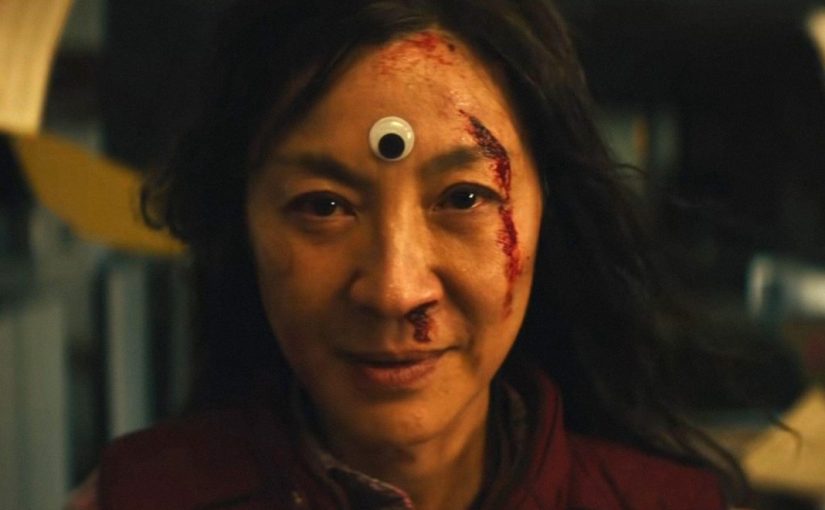
63. EVERYTHING EVERYWHERE ALL AT ONCE (2022) – Much like Scott Pilgrim vs. the World, Everything Everywhere All at Once defies description. How many films have you seen or even heard of that combine surrealism, absurdism, comedy, science fiction, philosophy, slapstick humor, martial arts, and hot dog fingers? HOT DOG FINGERS, PEOPLE. There are virtually infinite ways this movie could have gone wrong. Its success is a testament to the actors and director, yes, but also to the editor, who deserves recognition at Oscar time.

62. READY PLAYER ONE (2018) – Okay, this movie isn’t particularly deep or insightful, but it stands as one of the most sublime movie-going experiences of my life. My entire childhood, or at least the pop-culture part of it, was put on display, and seeing it made me feel like a kid all over again. I saw it three times in movie theaters, and every time I had the most ridiculous grin on my face. (Hello, old friends…) I’m not sure how audience members who are not part of my generation feel about it, but I think it’s magical.

61. ROMA (Mexico, 2018) – I do so enjoy being wrong about a movie – at least when it works in my favor. Roma’s plot description makes it sound like a “spinach” movie: good for you, but not the best meal ever. But right from the opening credits, Alfonso Cuarón’s semi-autobiographical period piece sucked me in and kept me involved until the final credits. The experience of watching Roma is like looking through someone’s old family album of black-and-white photographs and seeing them come to life and walk and talk. Nostalgia at its finest.

60. ALIENS (1986) – James Cameron’s 3rd-most-highly-anticipated sequel (after Terminator 2 and Avatar: The Way of Water) can make a legitimate claim to being the best movie in his filmography, especially if you have access to the Director’s Cut that brings even more depth to an already stacked movie. Ripley returns to the planet where she first encountered the bloodthirsty Xenomorph, this time with a squad of Colonial Marines in tow. What unfolds is one of the most successful exercises in sustained suspense and action ever made. To shamelessly quote Roger Ebert: “I’m giving the movie a high rating for its skill and professionalism and because it does the job it says it will do. I am also advising you not to eat before you go to see it.”

59. JAWS (1975) – Since I can’t give two movies the same rank, I’m putting Jaws just ahead of Aliens, but in my opinion they’re equals. Jaws gets the slight edge based on the technological limitations of its day, which makes its success as a suspense thriller even more admirable. Spielberg’s adaptation of Peter Benchley’s runaway bestseller performs a neat slight-of-hand that so many contemporary thrillers forget about: not truly showing the shark until the final reel. The result is a thrill machine that lodged in the collective subconscious of an entire generation…and scared a lot of them out of the water for good.

58. MAGNOLIA (1999) – One of the best films from a year that rivals 1939 as Hollywood’s best year of all time. (Seriously, look at 1999’s output some time.) Paul Thomas Anderson’s magnum opus tells the story of a group of characters whose connections are not immediately obvious to the characters themselves, each of them living their own lives and crossing paths with each other only rarely. It’s all capped with a meteorological event that is based on fact, but which struck many viewers as too improbable to believe. No matter. The acting and direction on display in Magnolia makes it feel like a Robert Altman screenplay directed by Martin Scorsese. Yeah. It’s that good.

57. FIGHT CLUB (1999) – So, yeah, remember what I just said about 1999 being a great year? Here’s more proof. I’ll leave aside the philosophical discussions (is it fascist? pro-social-terrorism? absurd macho posturing?) and I’ll just make the point that, when I first saw it, I had NO idea what it was about, and after intending to only watch the first hour, I was immediately sucked in and watched it all the way through. It was jaw-dropping and eye-opening. And funny. And irreverent. And transgressive. And arresting. I’ll never forget that first time watching it. And I won’t stop recommending it to anyone who hasn’t seen it.

56. THE STING (1973) – There has never been a screen duo as charismatic or who exhibited more chemistry than Paul Newman and Robert Redford. It’s one of the great cinematic tragedies that they only made two films together. But at least one of them is The Sting, a stunning period-piece comedy/drama about a couple of grifters who team up to take down a mob boss who killed a colleague of theirs. The costumes, production design, and top-notch acting would mean nothing without its clockwork script that carefully lays out the details, so nothing is overwhelming or left out. Well…ALMOST nothing is left out…

55. THE PIANO (New Zealand, 1993) – I know Jane Campion has had a long, illustrious career, but none of her films have had more of an impact on me than her semi-tragic romance, The Piano. The love story is basic enough, even a little soapy, and some viewers may be distracted by the occasional graphic nudity, but after the initial shock, I realized that those graphic scenes were entirely necessary to convey the shock the heroine herself feels in those situations. But what really got me was that final sequence with the piano and the rope…I still get a little goose-bumpy whenever I see it play out. On just about every level, The Piano is one of the cinema’s greatest romances.

54. THE APARTMENT (1960) – Many directors would figuratively kill to have Billy Wilder’s track record: The Lost Weekend, Double Indemnity, Some Like It Hot, Stalag 17, Sunset Blvd., etcetera, etcetera. The Apartment is one of his best, a romantic serio-comedy that daringly, for its time, involves a man who loans his apartment out as essentially a whorehouse, an emotionally abusive married boss who blackmails his employees and strings a poor elevator girl along in a pointless (for him) affair, and an attempted suicide. Credit the screenplay and the performances by Jack Lemmon and Shirley MacLaine for somehow making the combination of light and dark material work flawlessly. (For those keeping score, it also has one of the best closing lines in cinema.)

53. CROUCHING TIGER, HIDDEN DRAGON (Taiwan, 2000) – Director Ang Lee’s tribute to the martial arts films of his youth plays like the far-East version of Raiders of the Lost Ark. The surprisingly deep and affecting story is balanced by some of the most visually astonishing fight scenes ever created, with heroes and villains gliding over rooftops and balancing on bamboo stalks. Plus…probably the greatest girlfight since Ripley took on the alien queen, as Michelle Yeoh and Zhang Ziyi face off with a dizzying assortment of swords, sticks, and knives for what feels like 10 minutes. Stellar entertainment from top to bottom.

52. ONE FLEW OVER THE CUCKOO’S NEST (1975) – Milos Forman’s adaptation of Ken Kesey’s novel, a touchstone of ‘60s counterculture, is as life-affirming as it is depressing, if that makes any sense at all. The gruesome violence in the final reel is justified and tempered somewhat by the fact that (SPOILER ALERT) McMurphy is unable to achieve his goal. Anyway, that’s just the final reel. Everything leading up to that moment is pure gold. There have been many, many films about a lone voice rebelling against an oppressive system, but few are as funny, poignant, and provocative as this one.

51. DOUBLE INDEMNITY (1944) – Billy Wilder’s definitive film noir. While Bogey and The Maltese Falcon essentially jump-started the genre, Double Indemnity clarified it, refined it, and disturbingly succeeded in getting audiences to root for the bad guy, like Hitchcock would do to even greater effect in Psycho, sixteen years later. This movie has everything: the voice-over, the flashbacks, the cheesy tough guy talk (“She was a tramp from a long line of tramps”), and, per the Hays code, the bad guys eventually getting what they deserve. But don’t fool yourself into thinking that makes the movie predictable.

…to be continued…

MIGUEL’S 100 FAVORITE MOVIES OF ALL TIME: #100-76

by Miguel E. Rodriguez

This is the first part of my answer to a “challenge” from my friend, Jim Johnson, to me and my other Cinephiles: Thomas Pahl, Anthony Jason, and Marc Sanders. The challenge: in the wake of the most recent Sight and Sound listing of the 100 Greatest Films of all time, to create my own ranked list of my 100 favorite movies of all time.

This list was not created without some major heartbreak, and I reserve the right to say, at any point in the future, that my ranking has changed. By nature, these lists are intended to engender discussion and (ahem, Marc) argument.

I make no claim that these are the GREATEST films of all time. These are merely my FAVORITE movies of all time. You won’t find much Bergman or Italian neo-realism or anything like that on my list. These are movies that reached into my soul and stirred something there like few other films have.

These 100 films do NOT represent ALL of my favorite films by any stretch of the imagination. (A rough estimate of ALL of my FAVORITE films goes to about, oh, let’s say 1,207.) But since the challenge is to pick only 100…sacrifices had to be made. As my fellow Cinephiles have heard me say multiple times: I REGRET NOTHING.

Anyway, here’s the first 25. Numbers 100 to 76 of my 100 Favorite Movies of All Time.

100. I, DANIEL BLAKE (Great Britain, 2016) – A heartbreaking evisceration of the unnecessary bureaucracy in the British social services system. This movie made me sad and mad at the same time.

99. AVATAR (2009) – Say what you will about the screenplay, this is one of the best big-budget visual effects extravaganzas in years. Turn up the volume, adjust the brightness, and leave your brain behind.

98. STAR TREK (2009) – Purists may and will squawk, but J.J. Abrams’ re-imagination of Gene Roddenberry’s timeless universe punches up the visuals (and the lens flares) without sacrificing what made Trek timeless in the first place: a damn good story.

97. JOKER (2019) – Speaking of reimagining a classic, Joker mixes Taxi Driver, The King of Comedy, and Batman and, against all odds, winds up with a brilliantly compelling take on what drives the greatest comic book villain of all time. (Joaquin Phoenix’s Oscar-winning performance is stunning.)

96. ATONEMENT (2007) – Part love story, part redemption story, Atonement is a sumptuous period piece that performs one of the greatest “head-fakes” since Psycho: making us think it’s about one thing when it’s really about something else. I won’t say anymore lest I give anything away. If you know, you know.

95. LOVE ACTUALLY (2003) – One of the very few romantic comedies on my list, and for good reason: it combines the inherent corniness of being in love with the devastating effects of love gone wrong. Haters can debate that sequence with the “flashcards” all they want. This movie is a warm blanket and a hot cup of cocoa on a cold day.

94. LOGAN (2017) – In the annals of comic book films, few characters have been given a better final curtain than the one provided to Hugh Jackman’s iconic interpretation of the Wolverine. At last, we get to see the real effects of those adamantium claws on human flesh and bone, but the blood-soaked action is tempered with a real story. (gasp!)

93. SCOTT PILGRIM VS. THE WORLD (2010) – This gets points for its non-stop humor and pure originality at just about every level. I defy anyone to accurately describe the plot and style in 25 words or less. (“Bread makes you FAT?!”)

92. HEREDITARY (2018) – It wasn’t until about 2 weeks after seeing this movie, when I couldn’t get its imagery out of my head, that I realized Hereditary is one of the most effective and flat-out frightening movies I’ve ever seen. The very end may be a bit of a head-scratcher, but so what? I guarantee you’ll still be thinking about that last sequence for days.

91. LITTLE MISS SUNSHINE (2006) – You just want to hug this movie after it’s over. Or maybe hug the filmmakers in gratitude for providing one of the warmest, funniest family comedies – with an edge! – in years. You may never hear “Super Freak” the same way again.

90. FINDING NEMO (2003) – One of Pixar’s major triumphs, evoking no less than Bambi in the opening scene, and evolving into a road/odd-couple movie for the ages, with Ellen DeGeneres’ Dory stealing every scene she’s in. EVERY. SCENE.

89. HOOP DREAMS (1994) – One of the most celebrated documentaries ever made (that got shut out of the Oscars, Google that story if you’re unfamiliar with it). Filmmakers follow two inner city kids and their families for years – YEARS – as they each pursue that elusive dream of one day playing in the NBA…with varying results.

88. DARK CITY (1998) – A man wakes up in a hotel bathroom with no memory, blood on his forehead, and a dead woman in the bedroom. What follows is a visually stunning sci-fi tale that continually surprises and entertains. (Avoid the original cut…find the Director’s Cut if you can, the one that eliminates the spoiler-laden voiceover at the beginning.)

87. THERE WILL BE BLOOD (2007) – One of a precious handful of films that genuinely inspire me to be a better actor. The movie itself is hypnotic and entertaining, but it’s the Oscar-winning performance from Daniel Day-Lewis that propels the film into the stratosphere. One of the greatest acting performances of all time.

86. RUN LOLA RUN (Germany, 1998) – Call it an MTV-esque illustration of “The Butterfly Effect”. Franka Potente and her shocking red hair sprint through city streets three separate times, each with subtle variations that have enormous consequences on the outcome each time. Sounds ridiculous, but the overall effect is greater than the sum of its parts.

85. MONTEREY POP (1968) – This landmark concert film captures the last gasp of “The Summer of Love” before Woodstock and Altamont ushered in the ‘70s. Here in Monterey, in a veritable sea of peace symbols and “longhairs,” Jimi Hendrix lit his guitar on fire, Pete Townshend SMASHED his, Janis Joplin put herself on the map, and Ravi Shankar gave one of the most electrifying musical performances ever captured on film. Seriously. It’ll give you goosebumps.

84. A SEPARATION (Iran, 2011) – Another great “head-fake” movie: what starts out as a simple domestic drama morphs into a powerful statement about what happens when religious ideology gets tangled up with law enforcement. The final scene where a difficult choice must be made is one of the most powerful finales I’ve ever seen.

83. DARK DAYS (2000) – This little-seen, little-known movie is a masterpiece of documentary filmmaking. Director Marc Singer (no relation to the actor from Beastmaster) followed the lives of several homeless people who live in the train tunnels underneath New York City. The ingenuity of these people must be seen to be believed: they have access to fresh water (albeit very COLD), electricity, building materials, pets…and wait till you hear what single item they sell the most of to make some cash. If a “regular” movie ended the way this documentary does, it would be accused of shameless manipulation. Look it up.

82. HEARTS OF DARKNESS: A FILMMAKER’S APOCALYPSE (1991) – The ultimate behind-the-scenes DVD extra. Eleanor Coppola – Francis’s wife – shot hours and hours of home video on the various sets of Apocalypse Now during its long, troubled production. After judicious editing, she emerged with one of the most intimate portraits of a director, and a film, and a cast, in crisis. After watching Hearts of Darkness, you’ll wonder how Apocalypse Now ever made it to screens.

81. THE DARK KNIGHT (2008) – Christopher Nolan raises the stakes and the spectacle with this, the best of the Nolan Batman trilogy. While the story and actors get their due (especially Heath Ledger as maybe the creepiest Joker ever), the real draw here are the sensational action sequences, starting with that bank heist and reaching a thrilling apotheosis with the Batpod chase. Comic book movie bliss.

80. PROMISING YOUNG WOMAN (2020) – To make a thriller that not only thrills but also has something relevant to say is never easy. Screenwriter and first-time director Emerald Fennell made it look easy. I defy anyone who watched the movie to claim they saw that ending coming. Nuff said.

79. HOTEL RWANDA (Great Britain, 2004) – This gets on the list, not just because of its message of hope, but also because of the disturbing reality of some of the most frightening scenes. Set during the horrific ethnic cleansings in Rwanda in 1994, a hotel manager turns his hotel into a haven for Tutsi refugees, at extreme risk to himself and his family. As he talks his way out of one tense situation after another, the sense of imminent danger is palpable in a way few other films have accomplished. Philip Seymour Hoffman may have won the Oscar that year, but I personally believe it should have gone to Don Cheadle for his career-best performance as Paul Rusesabagina.

78. THE BABADOOK (Australia, 2014) – A ghostly creature terrorizes a widowed mother and her precocious, borderline autistic son. At the end of the film, the mother’s method of dealing with this creature is one of the great revelations in horror movies because it resolves the story AND makes a compelling statement about the nature of grief: it is necessary and must be given a voice…before it consumes you. And, oh yeah, by the way, the movie is SCARY AS ALL HELL.

77. GET OUT (2017) – Jordan Peele takes the basic structure of all the best Twilight Zone episodes and applies it to another one of those ingenious “head-fake” movies that make you think they’re about one thing and turns out to be something altogether different and creepier. Its buried – well, maybe NOT so buried – subtext about race relations and phobias in America may not occur to you until watching it for a second time. When it hits…its as potent as any Spike Lee movie.

76. WHIPLASH (2014) – Watching a music teacher with distasteful methods berate and belittle his students for nine-tenths of a movie’s running time may not sound like a good time, but it’s all necessary to accommodate that whopper of an ending, which I did NOT see coming. The beauty of the movie is, the teacher uses that same logic to justify his abusive methods, asking the question: can great art only be achieved through great suffering? Whiplash has provided an answer. Is it THE answer? Discuss.

To be continued…

THE WORST PERSON IN THE WORLD (Norway, 2021)

by Miguel E. Rodriguez

Director: Joachim Trier
Cast: Renate Reinsve, Anders Danielsen Lie, Herbert Nordrum
My Rating: 9/10
Rotten Tomatometer: 96% Certified Fresh Fresh
Everyone’s a Critic Category: “Watch a Film with Subtitles”

PLOT: The chronicles of four years in the life of Julie (Renate Reinsve), a young woman who navigates the troubled waters of her love life and struggles to find her career path, leading her to take a realistic look at who she really is.


I love “what-if” scenarios.  There is a whole line of comic books, Marvel and DC, dedicated to intriguing “what-if” questions.  What if Peggy Carter took the super-soldier serum instead of Steve Rogers?  What if Bruce Wayne’s parents had not been killed?  And so on.

Joachim Trier’s The Worst Person in the World is a what-if scenario for film geeks.  What if…Woody Allen wrote a romantic comedy about a woman in her 30s on a road to self-discovery?  And then what if Ingmar Bergman took a crack at the screenplay and decided it was too happy, so he added some material about death?  And then…what if David Fincher directed it on 35-mm film with the bare minimum of CG effects?

Julie (Renate Reinsve, who won Best Actress at Cannes for this role) is a 30-something woman who cycles through career paths before finally settling on photography.  She meets, falls in love with, and moves in with Aksel (Anders Danielsen Lie), a comic-strip creator and author in his 40s.  They are happy together, share deep conversations, discuss kids (he wants them, she doesn’t), and spend time with his family at their lake house.

But then one night Julie walks home from a business function with Aksel and, for reasons she doesn’t quite understand, crashes a fancy party.  Here she meets Eivind (Herbert Nordrum), a charming fellow with a broad smile.  They talk.  There is a clear connection, but they are both in committed relationships.  They decide they will not cheat.  But…what defines cheating?  Does drinking from the same bottle of beer constitute cheating?  What about sharing a secret?  What about smelling each other’s sweat?  How far this little game goes, I will not reveal, but it did not end where I thought it would.  Their meet-cute ends with them walking home in opposite directions, neither giving the other their last names so they won’t be tempted to search for each other on Facebook.  Will they meet again?  Don’t make me laugh.

The Worst Person in the World is brain candy.  I am on the record as stating that I have been, somewhat unsuccessfully, avoiding films with heavier subject matter over the years.  (I can think of no situation in which I would willingly sit and re-watch The Conformist [1970], for example, to see what I missed the first time I slept through it.)  However, over the years I have seen and reviewed some heavy films that were highly rewarding: Amour [2012], Incendies [2010], and Nomadland [2020], to name a few.  The Worst Person in the World is not quite as gut-punching as those other films, but it was intelligent and funny and startling in all the right places, and what more could you ask for in a romantic comedy/drama?

The David Fincher element I alluded to earlier comes from the visual style of the film.  Director Joachim Trier loves to include primary colors, especially white, in his compositions, which is apparently a big no-no when it comes to cinematography.  The result of this choice is that anything containing colors of any kind really <pops> on the screen, while lending a kind of antiseptic feel to some of the scenes, as well.  For some reason, I associate that combination of clinical distancing with popping colors with Fincher.  (The Girl with the Dragon Tattoo [2011] comes to mind.)

There’s also a celebrated sequence in which Julie, still in a relationship with Aksel but unable to stop thinking about Eyvind (especially after bumping into him again unexpectedly), conjures a fantasy in which she runs to meet him where he works while the entire world around her remains frozen in place.  The effects in this sequence are flawless, especially when you realize that the only CG effects were those removing visible supports that kept a couple of bicycles and human limbs suspended in midair.  Everything else was done 100% real, in-camera, with real people simply frozen in place.

The effect of this scene is magical.  It evokes that giddy period we (hopefully) all remember when a brand new love has taken hold of us, and the rest of the world goes on hold while we hold hands and kiss and share a sunset and talk and walk and kiss again and time stands still, or goes too fast, depending on your point of view.  The brilliance of this movie is that it evokes those glorious feelings…and the whole time, in the back of the viewer’s mind, is that reminder: “But they’re cheeeatiiiing…”

The movie’s title immediately made me think Julie was the titular “Worst Person”, and for a while it seems to be true.  She can’t decide on a career, she knows she doesn’t want kids with Aksel but can’t really explain why, she impulsively flirts with Eyvind, she writes an internet-famous/infamous article wondering how a woman can be considered a feminist if she engages in oral sex.  But after watching the movie, I don’t believe that’s the movie’s intent.  I think we’re supposed to see how other people, including myself, might make the mistake of thinking Julie is a terrible person.  On the contrary, she’s just as confused and inarticulate about relationships and feelings as I am, as any of us are.  As she breaks up with someone, she makes what might sound like an emotionally cruel statement: “Who knows?  Maybe we’ll get back together again in the future.”  But in reality, she’s just refusing to rule anything out.  Badly phrased?  Perhaps.  But she is being as honest as she knows how to be.

(I haven’t even discussed the sequence where Julie ingests some “magic” mushrooms and goes on a drug trip for the ages, involving cartoon characters, aging, a touch of body horror, and the kind of face painting you’ll NEVER see at a theme park.  The movie even pokes fun at the shock of some of this imagery by inserting a shot of a movie theater full of people visibly cringing…a neat bit of meta-humor/commentary on the value of shocking your audience.)

The Worst Person in the World is worth your time if you’re a fan of love stories that don’t pander in any way, shape, or form.  Director Joachim Trier has gone on record as saying it’s a “romantic comedy for people who hate romantic comedies.”  That’s about right.  Don’t look for a conventional happy ending or a conventional main character.  These are just people searching for connection, who even when they’ve found it, never stop looking.  For better or worse.


QUESTIONS FROM EVERYONE’S A CRITIC

Best line or memorable quote?
JULIE: If men had periods, that’s all we’d hear about.

How important is it to you to watch a film in its native language?
Very. But not always. For example, I would not have wanted to watch a dubbed version of The Worst Person in the World. However, I have no issue with watching a dubbed version of something like Akira [1988] or Spirited Away [2001]. It comes down to the medium. For live action, I feel it’s most important to know the precise meaning behind what the characters are saying, and it’s difficult to get that from watching someone’s lips not moving in synch with the sounds coming out of their mouths. However, with animation, I want to drink in the visuals as much as possible, and that’s not as easy to do when you’re trying to read subtitles.

Do you feel subtitles lessen the overall movie experience?
Not at all. Look at Tarantino’s Inglourious Basterds [2009]. In that film, subtitles were absolutely essential to the plot, especially the opening sequence at that French farmhouse. There are those who disagree, but that’s my opinion. (But don’t get me started on those who insist on watching English films with English subtitles on…that’s another story.)

CAMP (2003)

by Miguel E. Rodriguez

Director: Todd Graff
Cast: Daniel Letterle, Joanna Chilcoat, Robin De Jesus, and introducing Anna Kendrick
My Rating: 8/10
Rotten Tomatometer: 64% Fresh
Everyone’s a Critic Category: “Watch an Early Film of a Famous Actor or Actress”

PLOT: Teen drama enthusiasts attend a summer drama camp and perform in several productions while dealing with an alcoholic musical director and their own messy lives.


Todd Graff’s film Camp plays like Meatballs [1979] crossed with Waiting for Guffman [1996].

A bunch of theatre-geek teens attend Camp Ovation, a summer drama camp where the campers rehearse and perform a different show every two weeks.  And I’m not talking Aladdin Jr. or Annie.  Among this camp’s productions are Follies, Promises Promises, and a color-blind presentation of Dreamgirls.  (It’s exactly as weird as it sounds.)

A brief prologue introduces the main characters, including Michael (Robin de Jesus), a gay boy who gets beaten up by classmates when he attends his junior prom in full drag.  Ellen (Joanna Chilcoat) is a plain-but-pretty girl with a self-image problem exacerbated by the fact she has to beg her brother to be her date to her own prom.  The appropriately-named Vlad (Daniel Letterle) is a handsome young man who doesn’t seem to have any overt personal problems.  At his camp audition, when he accompanies himself on guitar while crooning “Wild Horses”, one of the camp counselors is beside herself: “An honest-to-God STRAIGHT boy!”

There’s also the introduction of a mousy young lady named Fritzi, played by a 16-year-old Anna Kendrick in her film debut.  We all know how attractive she is in real life, but when we first meet her, she is in complete “Princess Diaries” mode: long straggly hair, flannel skirt, and acting as personal flunky for Jill, the blond camp floozy who doesn’t let anyone forget how pretty and talented she is.

Vlad is the eye of the storm at Camp Ovation.  Ellen is attracted to him, Jill wants to make out with him, Michael is burning to know if he’s gay or straight, and he’s not afraid to speak his mind.  He’s also an emotional demon-child, an incurable flirt in both directions, so everyone is off-center around him.  That’s the “A” story.

One of the flaws of Camp is that there are one too many “B” stories.  Maybe two too many.  There’s Bert Hanley, who composed a musical decades ago that is still performed today, but who has not written anything since.  He’s coming in to assist with the camp’s productions, but things look grim when he shows up two days late, drunk, and with a suitcase full of booze bottles.

There’s Michael’s ongoing issues with getting his unsupportive parents to attend one of the camp’s performances.  One of the movie’s high points occurs when Michael is performing in Romeo and Juliet, sees the empty chairs in the audience where his parents are supposed to be, and launches into his own interpretation of Shakespeare’s tale.  Bernstein and Sondheim would have approved.

There’s a hilarious subplot that is never fully explored where the camp introduces a sports counselor.  At a drama camp.  This bit is granted two brief scenes, then never heard from again.  Alas.

There’s Jenna, a young girl whose parents wanted her to attend “fat camp” instead of drama camp, so they compromised: Jenna will attend Camp Ovation with her jaws wired shut.  I will leave it up to you to discover how she performs onstage through clenched teeth.  (This subplot does get a very satisfying resolution by movie’s end, it must be said.)

Most of these subplots are good enough to support an entire movie by themselves.  In Camp, however, you get a little whiplash going from comedy to drama to teen angst to revenge back to comedy to performance and so on and so on.  While watching it again, I noticed more than ever how many times the editing seemed to be working around chunks of dialogue that probably had to be cut for time.  Somewhere out there is Todd Graff’s 3-hour director’s cut of this movie, in which every story is given enough time to breathe, expand, and evolve.

So…why do I give this movie an 8/10 rating with so much not going for it?  Purely personal reasons.

Camp is a movie about theatre geeks, made by theatre geeks, for theatre geeks.  The film’s director, Todd Graff – who coincidentally played “Hippy” in The Abyss [1989] – was a drama camp counselor himself, and the film is loosely based on his experiences.  There is virtually zero crossover appeal for this film.  Near the beginning of the film, Fritzi is trying to jog Jill’s memory where they’ve met before: “We were in Night Mother last summer, remember?”  That joke only lands if you know how many people are in the cast of Night Mother, and what the plot is, and how ludicrous it is to imagine that show being performed at a summer camp.

For all his shortcomings, Vlad has a scene that speaks directly to me.  He confesses to Michael that he has OCD.  Without medication, he counts the letters in the words in people’s sentences.  (I count syllables.)  He talks about how his affliction is “always there.”  But when he’s performing onstage…it’s not.  Not only does that speak to me directly regarding OCD, it’s also a metaphor for anyone who has felt like an outsider for some reason or another.  Offstage, you might have self-image problems or obsessive behavior or shyness.  Onstage, those things magically fall away.  I don’t use that term lightly: “magically.”  I don’t know how else to describe what happens in that boundary between offstage and onstage.  Anyway, that’s cool to me, personally.

The movie has a suitable climax, but for me, the real centerpiece of the movie comes when a group of the kids and some of the adult band members meet in secret to rehearse and perform a song that Bert Hanley (remember him from earlier?) wrote but never published.  As they perform, the cynical Hanley overhears it and struggles with himself whether to let them play or to walk in and stop the performance.  It’s a cliched moment, to be sure, but the song itself is rousing and borderline inspirational, and when the scene’s payoff occurs, it’s almost cheer-worthy.

And let’s not forget what happens between Fritzi and Jill.  After some harsh words are said, Fritzi exacts her revenge and performs a show-stopping number from a Sondheim musical.  It’s here where Anna Kendrick’s screen and stage presence are both on full display.  For years afterward, Penni and I would see her in other movies and recognize her based solely on her performance in this movie, and particularly this scene.  (Of course, we couldn’t remember her name for a while…she was always “that girl from Camp.”  It wasn’t until after she appeared in Scott Pilgrim vs. the World [2010] that her name finally stuck.)

And, of course, there’s that cameo from a surprise audience member at the camp’s final production.  (Hint: their car’s license plate reads 4UM.)

Camp may not have the name-recognition of so many other teen comedies, but this one speaks to me directly.  I’m not any one of those kids at this camp, but there’s a part of me in all of them.  I loved the musical numbers.  I enjoyed the theatrical in-jokes.  (“There’s this new thing called ‘drums,’ you’ll love it.”)  And maybe there’s also a part of me that wishes I had attended one of these camps in the summer instead of Bible camp two years in a row.  Just sayin’.

THE BLACK STALLION (1979)

by Miguel E. Rodriguez

Director: Carroll Ballard
Cast: Kelly Reno, Mickey Rooney, Teri Garr, Clarence Muse, Hoyt Axton
My Rating: 8/10
Rotten Tomatometer: 90% Fresh
Everybody’s a Critic Category: “Watch a Film Starring Animals”

PLOT: After being shipwrecked off the coast of Africa in the 1940s, a boy bonds with a magnificent Arabian stallion and trains him to race after their rescue.


Horses are great, but they are not my favorite animals.  That honor goes to the great white shark.  (They fear nothing; the only things they are even cautious around are larger great whites…but I digress.)  I always hear and read about how magnificent and majestic and spiritual horses are.  I have never denied their intelligence, but I never jumped on the bandwagon with folks who believe they are angels on four legs.  And I’ve never really gotten into horse racing, at least not on an ongoing basis.

But there is one movie that combines the mystique of horses and horse racing with poetry, grace, and true art.  Carroll Ballard’s The Black Stallion is one of the most beautiful films ever made.  The visuals are so good and well-edited that fully 28 minutes of the movie are presented with zero lines of dialogue spoken.  After a fearsome shipwreck, Alec Ramsay (Kelly Reno) finds himself stranded on a desert island along with a magnificent unnamed black stallion whom he later simply calls the Black.  During this shipwrecked portion of the movie, all dialogue is dropped, and we simply watch as Alec and the Black overcome their initial fear of each other and bond.

It is in these scenes that The Black Stallion truly shines.  There is one particular sequence that will stick in my memory forever.  After some days and weeks alone, Alec tries to get the Black to eat food directly out of his hand.  In a nearly unbroken take, we watch as the Black warily approaches Alec, then turns away, snorting and stomping, then turns back, taking one cautious step after another, getting closer and closer…and it all looks completely organic.  It’s one of the greatest acting performances by any animal in any film I’ve ever seen.  In that scene, the Black exhibits more proficiency at acting on camera than I’ve seen in a few human actors I could name.

When I first saw this movie at 8 years old, I couldn’t fully appreciate the ingenuity of this portion of the film.  All I cared about was how invested I was in seeing Alec bond with the Black.  I didn’t care about cinematic theory and editorial processes and visionary cinematography.  But it’s all there in full view, presenting a visual story clearly and cleanly.  Buster Keaton would have loved this movie, I think.  (At least, the silent portions, I would imagine.)

The Black Stallion piles on one visually exhilarating scene after another involving Alec gradually gaining enough trust from the stallion to the point the Black allows Alec to ride him.  And then they are both rescued and returned home to America, and it’s here the movie seems to stumble just a bit.  After the grand vistas of their desert refuge, the white picket fences and tree-lined avenues of 1940s suburbia is a tad underwhelming.  When the Black gets spooked by garbagemen and runs off, we do get a nice contrast of seeing this semi-mythical creature of a bygone age galloping past storefronts and hurdling fruit crates.

Alec chases the Black and eventually finds him in a seemingly deserted barn owned by one Henry Dailey, an ex-jockey played to utter perfection by Mickey Rooney.  To say Rooney’s performance in The Black Stallion is “natural” is an understatement.  And to older audience members familiar with Rooney’s performance as a jockey in the 1944 film National Velvet, this must have been like seeing the remaining members of the Ghostbusters reunite in Ghostbusters: Afterlife (2021).  When he trains Alec how to ride the Black, you get this incredible sense of a man tapping a massive reservoir of knowledge for the benefit of the next generation.  I don’t know if I’m accurately describing this facet of Rooney’s performance, but if you watch the movie, you’ll see what I mean.

As do so many other movies featuring horses (not all, but many), The Black Stallion culminates with a horse race, this one pitting the Black against the two fastest horses in the country.  As we are fed information about how and why this race comes about, I particularly noticed how one phrase was repeated at least twice: “They’ll never let him run…he doesn’t have any papers.”  No doubt there are horse enthusiasts who know what that means.  I haven’t the foggiest clue what they’re talking about, but the cool thing is…it doesn’t matter.  It doesn’t matter now, and it certainly didn’t matter when I saw it as a kid.  It’s enough to know that “papers” are something other horses have, but the Black doesn’t, and that seems pretty important to some people, no matter how fast he runs.  It’s just another way The Black Stallion is constructed to appeal to audiences of all stripes, be they equestrian aficionados or rank amateurs.  There are not a lot of films that can do that, and I don’t know if The Black Stallion gets recognized enough for that accomplishment.

The climactic horse race ends exactly how you would expect it to end.  Formulaic?  Of course.  But what a race!  The cinematography, editing, Oscar-winning sound design, and carefully restrained use of the musical score all combine to create a moment every bit as thrilling as any NASCAR race.  Even now, watching the movie for this review, I fell into the moment all over again, smiling with delight as Alec and the Black pound their way around the track, hooves thundering on the dirt, pumping my fists when Alec discards that pesky helmet and goggles, and those other horses ahead of them get closer and closer…

Any lover of horses owes it to themselves to find and watch The Black Stallion.  Kids will get a kick out of it, but adults will, too, perhaps on another, more nostalgic level.  (That could just be me projecting based on my own childhood memories, but I stand by it.)


QUESTIONS FROM EVERYONE’S A CRITIC

  1. Which character were you most able to identify with?  In what way?
    Well, for me, there’s no question I identify with Alec.  I still remember how I felt watching this movie for the first time.  I mean, I didn’t necessarily want to BE Alec, but he was my entry into the world of the movie.  I knew how he felt when he was trying to convince his mother to let him ride in a race.  I knew what he must have felt at the very beginning of the movie when his curiosity about the Black overcame his very real fear of such a powerful animal.  And I thrilled when he raised his hands in triumph during the horse race.  (Kind of an easy answer, to be honest, but…there you go.
  2. If you were to make a movie starring animals, what animals would you choose, and why?
    …well, as I mentioned before, great white sharks are my favorite animals, but they are notoriously difficulty to film, as shark cinematographer “Three-Fingers” Joe will tell you.  I’d have to go with dogs.  Much easier to train, plus every day they see you arrive on set, they’ll treat you like they thought you’d be gone forever.  My film would be a comedy/sci-fi story involving a cat’s brain being transplanted into a dog’s body.  Maybe get Paul Rudd to do the voice of the dog.  …it’s a work in progress.

GET OUT (2017)

by Miguel E. Rodriguez

Director: Jordan Peele
Cast: Daniel Kaluuya, Allison Williams, Catherine Keener, Bradley Whitford
My Rating: 10/10
Rotten Tomatometer: 98% Certified Fresh
Everyone’s a Critic Category: “Watch a Low-Budget Blockbuster” [Budget: $4.5 million.  Worldwide Gross: $255 million.]

PLOT: A young African American visits his white girlfriend’s parents for the weekend, where his simmering uneasiness about their reception of him eventually reaches a boiling point.


Many years ago, I attended a wedding in New York.  After the ceremony was over, I stepped outside to watch it snow.  After a couple of minutes of me standing outside alone wearing a tux, a very polite man walked up to me, held out his keys, and said something like, “The blue Buick in the second row, please.”  After I explained to him that I was not, in fact, the valet, he apologized profusely and went back inside, clearly embarrassed.  (I’ve always regretted what I should have done: just taken the keys, gotten in the car, and driven it out of the parking lot while waving goodbye. Yes, I would have returned it, but imagine the look on that guy’s face…!)

I have been lucky and, yes, privileged enough that, in fifty-one-and-a-half years of living on planet Earth, that is only the second time I have ever been the target of overt racism, intentional or not.  I will never ever know what it’s like to have to think twice before walking alone at night while wearing a hoodie.  I’ll never know what it’s like to literally fear for my life when a cop signals me to pull over.  The beauty of Jordan Peele’s Get Out is that it addresses the issue of what it’s like to be African-American today in a way that is so entertaining that the subtlety of the screenplay is only apparent when you watch the movie a second or third time.  Unless you’re African-American, in which case the symbolism and sly satire is not so subtle.

After a brief terrifying prologue, we meet Chris Washington (Daniel Kaluuya in his breakout role) who is about to visit his girlfriend’s parents for the first time.  His girlfriend, Rose (Allison Williams), is white.  He wonders if her parents are aware he’s black: “I don’t wanna get chased off the lawn with a shotgun.”  Rose casually dismisses his concerns: “First of all, my dad would have voted for Obama a third time if he could’ve.”

On the drive to her folks’ house, a startling and intensely creepy incident/accident occurs followed by a tense moment involving a white police officer asking to see Chris’s driver’s license even though he wasn’t driving.  Rose valiantly tells the officer off for profiling, and he lets them off with a warning.  This is just one of the many ways the screenplay probes and exploits the inherent fears of the average viewer.  Even if Chris had been white, it would still be a foreboding scene.  Because of the additional racial tension, the scene crackles with suspense.

Things get progressively weirder from there.  Chris meets Rose’s parents, Missy (Catherine Keener) and Dean (Bradley Whitford), along with their groundskeeper and maid, Walter and Georgina, both of whom are black.  Walter and Georgina’s behavior is just plain odd.  Their sole purpose seems to be to make Chris (and the audience) say, “What the f**k” repeatedly.  Dean directly addresses Chris’s apprehension: “I know what it looks like: a white family with black servants.”  His explanation of why they’re there answers Chris’s questions without really answering them if you follow me.

It would be unfair of me to describe any further plot details.  I’m sure those of you who’ve seen the movie would agree.  But I will issue a SPOILER WARNING for the remainder of the review.  Consider yourself warned.

Get Out is one of the most original, most effective modern horror films I’ve seen since The Descent (2005) and The Babadook (2014).  I have rarely been so glued to a screen.  The way director Jordan Peele ratchets up the creepiness levels is virtually unparalleled.  Here is a first film that rivals M. Night Shyamalan’s The Sixth Sense (1999) in terms of how to manipulate an audience.  Look at the moment when Chris sneaks out of the house for a cigarette, looks around, and suddenly spies Walter, the groundskeeper, running towards him in the night.  No, not running…sprinting.  Silently.  When I watched this for the first time on my own, I literally said, out loud, “What the s**t…???”  I can’t remember when I’ve seen anything like that in a suspense film.

Take the moment when Chris gets involved in a late-night discussion with Missy (Rose’s mom) that turns into an impromptu therapy/hypnosis session.  When Missy calmly says, “Sink,” and Chris actually does, and we see him floating in some kind of limbo, I felt the same kind of transfixed curiosity that I felt while watching Under the Skin (2013).  I had absolutely no clue what was happening or why, and I couldn’t wait until I could get answers.  When those answers come, they are both gratifying and suitably horrific.  Remember those old commercials for the American Negro College Fund?  The tagline was, “A mind is a terrible thing to waste.”  You will never think of that line the same way again after watching Get Out.

Peele was wise enough to include some comic relief in the form of his best friend, Rod (Lil Rel Howery), who works for the TSA and ironically gets closer to the truth of what’s going on at Rose’s house than he or anyone else realizes.  If the movie has a single weak spot, though, this might be it.  Rod is so comic it feels as if he was lifted directly from a romantic comedy.  Sometimes his delivery and dialogue feel a little too much like he’s trying for laughs rather than just being himself.  This is a minor quibble, though…he is funny as hell, especially during a phone conversation between him and Rose.

The bottom line, as if you couldn’t tell, is that Get Out is a sensational movie, containing more levels than “Super Mario Bros.” and more food for thought than a Judd Apatow dramedy.  It’s one of those movies where, if I hear anyone hasn’t seen it, not only do I recommend it unreservedly, but I immediately ask if I can watch it while they watch it for the first time.  Just to see their reactions.


SELECTED QUESTIONS FROM EVERYONE’S A CRITIC

  1. Do you feel a larger budget would make this film better or worse?
    …that’s a tough question.  As you can see from my 10/10 rating, the movie is just about perfect as it is.  What might change with a larger budget?  A more realistic-looking deer corpse?  A wide-angle shot of…something…burning?  Maybe they wouldn’t have gone with Daniel Kaluuya, or maybe Rose would have been played by, I dunno, Emmy Rossum or Lily James.  So, I guess my answer is, a bigger budget would make this film worse.  The filmmakers made the choices they made because of their limitations, and those choices resulted in a masterpiece of the genre.  It’s like Salieri says in Amadeus when describing Mozart’s music: “Displace one note, and there would be diminishment. Displace one phrase, and the structure would fall.”
  2. Were you surprised by the ending?  What would you do differently?
    Because of how the very ending of the film is structured, yes, I was surprised by the ending.  In fact, on the blu-ray, we can see the original filmed ending, and it’s what I feel might have been a more realistic ending.  As it is, the new ending is very satisfying on an emotional level, but I will always wonder how that original ending might have been received by general audiences.  Probably not well.  Imagine putting your hero up a tree, story-wise, then setting the tree on fire…but instead of getting him out of the tree, firemen chop the tree down and the hero is falsely arrested for arson.  Something like that can work – look at Body Heat (1981) and the original director’s cut of The Descent.  But Get Out provides a much more cathartic resolution and gets a smile on your face when you walk out the theater instead of shaking your head ruefully.


On the next “episode” of Everyone’s a Critic: “Watch a Film Starring Animals.”  I’m leaning towards The Black Stallion, but stay tuned…

THE WAR OF THE WORLDS (1953)

by Miguel E. Rodriguez

Director: Byron Haskin
Cast: Gene Barry, Ann Robinson, Les Tremayne
My Rating: 7/10
Rotten Tomatometer: 89%
Everybody’s a Critic Assignment: Watch a Movie “Classic”

PLOT: A small town in California is attacked by Martians, touching off a worldwide invasion.


I admire the 1953 version of The War of the Worlds most when I try to imagine myself back in that era as someone seeing it for the very first time.  For me, 69 years is still an almost unimaginable gulf of time.  In 1953, TVs were not quite a luxury item anymore, but a color TV definitely was.  Little kids still wore coonskin caps and watched The Howdy Doody Show for fun.  The very concept of UFOs was only six years old.  And the Cold War was a direct threat to our national security and our general peace of mind.

Into this culture came a film that, while thoroughly cheesy by today’s standards, nevertheless captured the paranoia of a nation.  Unstoppable creatures from another planet!  Wreaking havoc wherever they go!  Not even the mighty A-bomb can defeat them!  And who could resist those terrifying movie posters?  “A mighty panorama of earth-shaking fury!”  I would have been BEGGING my parents to give me ticket money.

Is a plot summary even necessary for this classic story?  A fiery meteor plunges to Earth near a small California town, but instead of making a crater, it carves a gully as it slides to a stop.  A scientist hypothesizes it might be hollow inside.  Presently, an alien spacecraft emerges from the meteor, bearing a fearsome weapon that looks like a cobra’s head and rains destruction and death on anything in range.  Forsaking Wells’ original vision of Martian tripods, this version presents sleek, manta-ray-shaped spacecraft supported by nearly-invisible electromagnetic currents.  Or something like that. Reports start coming from around the globe of other meteors and other spacecraft, and it quickly becomes apparent they’re not interested in friendly negotiations.  To paraphrase the stentorian commentary that bridges some scenes, this is the beginning of the end of civilization as we know it.

The heroes of this film are Dr. Clayton Forrester (Gene Barry) and Sylvia van Buren (Ann Robinson).  To put it kindly, their acting skills are…adequate.  To be fair, they weren’t working with a stellar screenplay, but the filmmakers wisely decided the real star of the movie should be the Martians and the Oscar-winning special effects.  As a result, Clayton is reduced to either giving scientific explanations of the Martians, while Sylvia’s main purpose is to look scared, scream loudly, and fry some eggs for Clayton in the middle of a war zone.  (I’m not making that last part up.  It’s not exactly Aliens.)

Regarding those special effects, sure they’re dated, but consider that, at the time, Hollywood studios regarded effects-heavy films as financial losers.  At least, that’s what they thought before The War of the Worlds.  It did so well that one of the head honchos at Paramount – one Cecil B. DeMille – presented the extraordinarily effects-heavy The Ten Commandments (1956) just three years later…and it broke box-office records.  The current trend is to blame Jaws (1975) and Star Wars (1977) for singlehandedly creating our insatiable appetite for special-effects extravaganzas, but look back far enough and there’s plenty of blame to go around, in my opinion.

Full disclosure: I still prefer Spielberg’s whiz-bang 2005 remake of War of the Worlds with its actual tripods and its CGI explosions and its callbacks to the 1953 original, including a cameo by Barry and Robinson, to satisfy cinephiles.  But this version, while dated, still has enough charm to remain effective.  Mostly.  (My favorite part is when the “hatch” on the meteor starts unscrewing; right about then is when I would’ve bought a ticket to Australia.)


QUESTIONS FROM EVERYONE’S A CRITIC

  1. Best line or memorable quote?
    When Dr. Forrester speculates how the Martians’ death ray works: “It neutralizes meson somehow. They’re the atomic glue holding matter together. Cut across their lines of magnetic force and any object will simply cease to exist! Take my word for it, General, this type of defense is useless against that kind of power! You’d better let Washington know, fast!”  It’s formulaic nonsense that’s only once or twice removed from calling an alien mineral “unobtainium”, but it’s delivered with the kind of conviction that only exists in the movies.
  2. What elements of this film do you feel have helped it become a movie classic?
    On a surface level, I’d say the quaintness of its visual effects.  Comparing them to the films of today is like comparing a paper airplane to the space shuttle.  But its also how the film captures the pop culture of the day.  The War of the Worlds fed on the fears and paranoia of a nation and stuck in the minds of millions of moviegoers and continues to do so today.  The 1953 film was influenced by the Cold War.  Spielberg’s remake was at least partially fueled by a nation’s fear of global terrorism.  Perhaps in another 20 or 30 years, some other enterprising filmmaker will once again send Martians to Earth to lay waste to its cities as a commentary on some future phobia or event.  …perhaps a global pandemic…?  Nah, too on the nose…