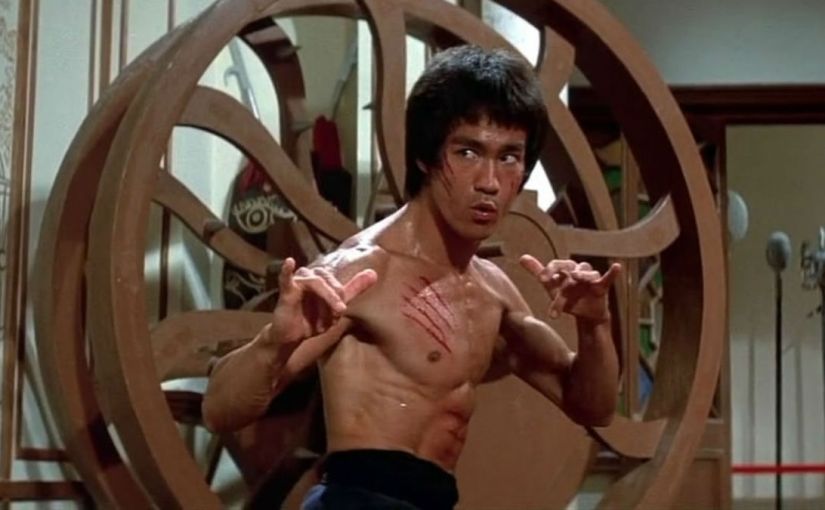
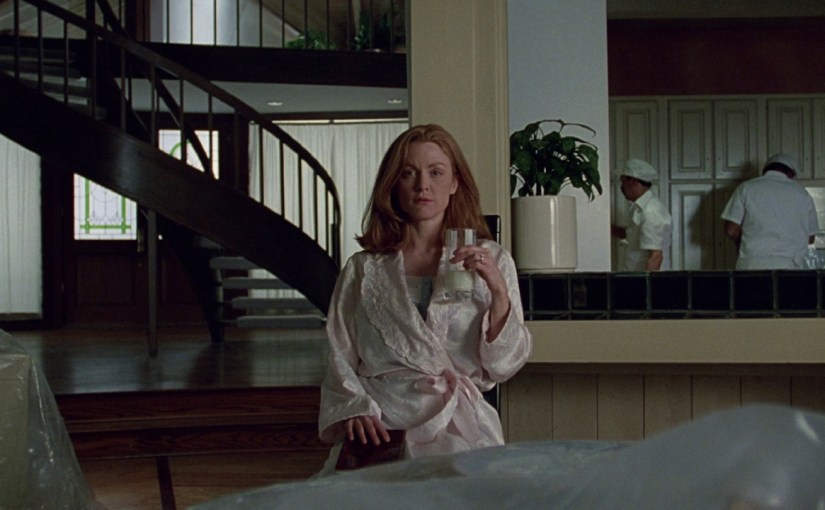
THE BANSHEES OF INISHERIN (Great Britain, 2022)

by Miguel E. Rodriguez

DIRECTOR: Martin McDonagh
CAST: Colin Farrell, Brendan Gleeson, Kerry Condon, Barry Keoghan
MY RATING: 9/10
ROTTEN TOMATOMETER: 96% Certified Fresh

PLOT: Two lifelong friends find themselves at an impasse when one abruptly ends their relationship, bringing unexpected consequences for them both.


Is The Banshees of Inisherin slow?  Yes.

Is The Banshees of Inisherin sad?  Yes.

Does the movie have a sad ending or a happy one?  Yes.

These are not normally the trademarks of a movie I rush out to see.  In fact, I didn’t see The Banshees of Inisherin at a movie theater for those very reasons.  I had heard that, yes, it is well-written and extraordinarily well-acted, but that it was a bit of a slog.  I had hoped Banshees would be another film like In Bruges, one of the finest dark comedies ever made, but that did not seem to be the case.  So, I stayed away.

Well, I have just finished watching it at home, and I can confirm the film’s slowness and unavoidable moments of sadness, but they are contrasted with unexpected comic beats.  (I was going to say “unintended,” but they were surely intentional, further confirming the ingenuity of the screenplay by director Martin McDonagh.)  I can also confirm that this is one of the most unpredictable stories I’ve ever seen, and I mean literally, like ever.  At first, I was comparing it to Melville’s short story “Bartleby, the Scrivener”, but that turned out to be woefully inadequate.  The Banshees of Inisherin does have the structure of a fine short story, but there its similarities to Melville ends.  I’m not sure if Banshees has a chance of winning the Oscar for Best Picture, but it’s certainly one of the strongest contenders for Best Original Screenplay.

Pádraic (Farrell) lives on the fictional island of Inisherin, off the Irish coast, in the early spring of 1923.  He is stunned one day to learn that his best friend, Colm (Gleeson), has abruptly decided to end their lifelong friendship, cold turkey.  Colm doesn’t want to talk to Pádraic for any reason whatsoever, nor does he give a reason, at least not initially.  When Pádraic persists in speaking to Colm, Colm gives him a warning: Every time he talks to or bothers Colm in any way from here on, Colm will cut off one of his own fingers and give it to Pádraic, until he stops or until Colm has no fingers left.

It was at this point that I sat up and started really paying attention.  I’ve lived long enough to know the specific kind of grief and consternation that occurs when a long-term friend abruptly cuts off all contact for reasons that are not at all clear.  So I felt Pádraic’s pain, I saw it in his face, when he realized how serious Colm was with his threat.  At that moment, I drew mental lines: Pádraic was the protagonist, and Colm was the antagonist.

Of course, Pádraic is the good guy.  He’s nice!  His adult sister, Siobhan (Kerry Condon), confirms it!  I mean, sure, he’s a little dull, and maybe not all that smart, and maybe he has a pet miniature donkey that he lets in the house when his sister isn’t looking, and he’s never heard of Mozart, but is that a crime?  Is that reason enough to end a friendship?  Pádraic doesn’t think so.  I didn’t think so!  Pádraic is so full of righteous anger that he confronts Colm.  Colm is dumbstruck.  Their conversation ends in a bit of an impasse.  And then, the next morning, as Siobhan prepares breakfast, they hear a thunk on the front door…aaand you’ll have to watch the movie for further plot developments.

(While I watched The Banshees of Inisherin, my girlfriend wondered if I was watching some kind of slapstick comedy with the volume of laughter coming from our movie room.  My explanation of why I was laughing, and what I was laughing at, didn’t quite translate.)

What is Banshees trying to say?  In my opinion, perhaps it’s this: you can’t go through life worrying about what other people think of you.  When Colm lays down the law, Pádraic should have just sucked it up and moved on with his life, right?  I was originally comparing their situation to something that might happen on social media, when someone expresses a very negative view of your post or opinion or whatever.  What do you do?  Latch onto it and let it gnaw away at you?  Post rebuttal after rebuttal until you change their mind?  (Spoiler alert: you won’t.)

As I said, that kind of thinking made Pádraic the good guy and Colm the bad guy.  But then Pádraic starts making some very bad, very DUMB decisions.  He starts listening to the advice of the closest thing they have to a village idiot, Dominic (Barry Keoghan), who suggests that Pádraic just needs a new approach: tough love.  At that point, if he’s dumb enough to take advice from a moron, whatever happens next is on him, right?  So now the balance changes.  Now Pádraic is the bad guy/dumbass and Colm is the good guy.  Just leave him alone, dude.

(For the record, Colm does explain his decision, which may shed some light on his own state of mind.  Depression?  Despair?  The screenplay offers clues, but nothing truly definitive.)

All through the film is Pádraic’s sister, Siobhan, who functions as the audience surrogate.  “You’re all f*****g boring!  With your piddling grievances over nothin’!”  She is as dumbfounded as we are at Colm’s stubbornness.  Not to mention at her brother’s foolish attempts to reconnect with someone who clearly doesn’t want to be bothered.  There are a couple of moments when it seems as if all is forgiven, but alas, it is not to be.  Siobhan’s solution to rid herself of their bickering is as simple as it is final.

When the credits rolled, I found myself wondering what kind of review this was going to be.  I liked the movie.  But it is slow and sad.  But its massive unpredictability sucked me in as inevitably as if I were watching Kill Bill or Interstellar.  That’s the key factor to The Banshees of Inisherin.  You may think you know what’s about to happen, but just try to guess exactly how the movie ends, and see how wrong you are.

MONTY PYTHON’S LIFE OF BRIAN (1979)

by Miguel E. Rodriguez

DIRECTOR: Terry Jones
CAST: Graham Chapman, John Cleese, Terry Gilliam, Eric Idle, Terry Jones, Michael Palin, Carol Cleveland
MY RATING: 9/10
ROTTEN TOMATOMETER: 96% Certified Fresh
Everyone’s a Critic Category: “Watch a Controversial Film”

PLOT: Born on the very first Christmas in the stable next door to Jesus Christ, Brian of Nazareth spends his life being mistaken for a messiah.

[EDITOR’S NOTE: Let the record show this was originally going to be a review of Mel Gibson’s The Passion of the Christ, but the author had just seen 2 or 3 dramatic films in a row and apparently decided it was time to switch gears a bit.  Complaints about this adjustment may be directed to the author’s colleague, Marc Sanders, who promises to reply to each and every complaint at about the same time hell freezes over. ]


Life of Brian is widely considered Monty Python’s tightest, most well-written film, even if it’s not quite as hysterically funny as Monty Python and the Holy Grail.  I agree.  I can speculate that this is due to the subject matter, and so great care needed to be taken to ensure that viewers would not mistakenly think the film was poking fun at the Jesus Christ Himself.  On the contrary, right from the very opening, it’s quite clear this movie is not about Jesus, but about the poor sod who was born in the stable next door and the deluded individuals who continually mistake HIM for a messiah as a grown man.  (“…how shall we f*** off, oh lord?”)

But that didn’t stop the mighty train of offensensitivity from rolling right along.  To wit:

  • Norway banned the film for a year.
  • Ireland banned it until 1987.
  • A town in Wales banned it until 2009, after a cast member was elected Mayor.
  • A town in Britain banned it until 2015.

However, no amount of bans and protests could prevent Life of Brian from becoming an integral part of the cinematic comedy landscape.  At the annual Venice Film Festival, the Premio Brian (Brian Award) is awarded to the most rationalist/atheist movie presented at the festival.  It was named the funniest comedy of all time by the BBC’s Channel Four, beating out Groundhog Day and The Full Monty.  In 1982, during the Falklands War, sailors aboard a severely damaged British vessel started singing “Always Look on the Bright Side of Life” while awaiting rescue.  You can’t BUY that kind of publicity.

After a brief prologue in which the Three Wise Men visit the wrong manger by mistake (“We were led by a star!”  BRIAN’S MOTHER: “Led by a bottle, more like!”), we jump ahead to when Brian is just about Graham Chapman’s age, struggling to hear the Sermon on the Mount from a distance (“Blessed are the cheesemakers?!”).  Much like Holy Grail, the film is punctuated by sketches, some of which are pauses in the action, but most of which still manage to carry the story forward.  That’s quite a feat when you consider their subsequent film, The Meaning of Life, was composed entirely of self-contained sketches, albeit with a common theme.  The fact that the Pythons were able to rein themselves in and keep things relatively lean is rather admirable.

If I kept relating plot developments and summaries of sketches and funny quotes, I would be here all day:

  • The “Biggus Dickus” scene.
  • The stoning.
  • The unexpected Latin lesson.
  • “What have the Romans ever given us?”
  • Graham Chapman’s willy.  (Hey, it’s a memorable scene, shut up.)

If I must be honest, though, I was never, and still am not, a fan of the film’s ending.  Yes, I get the supreme, absurd irony of the situation juxtaposed with that cheerful song, but…to be honest, it’s always felt like the Pythons said, “Okay, so we’re here, aaaaand…now what?  Any ideas?  No?  Okay, let’s end the movie.”  Perhaps they always meant to end it that way.  So be it.  But I’m selfish.  I wanted just a little more.  …although, now that I think about it, I’m not sure what kind of mileage you could get out of a bunch of people at a tomb waiting for someone to emerge, but never does.  There’s a joke there, somewhere, but I’m not the one to tell it.

There is one scene that I found VERY interesting.  It never stood out before, but it does now.  People are fond of saying, “Well, you could never make Blazing Saddles today.”  Perhaps, but I bet the chances are even slimmer of someone trying to make Life of Brian today, and even if someone did, the scene in question would probably not make it to the final cut.

Picture this: Four members of the People’s Front of Judea (NOT to be mistaken for the Judean People’s Front…those splitters) are trying to decide something when one of the male members, Stan, reveals he wants to be a woman and asks everyone to start calling him “Loretta.”  The others ask him why, and he says, “I want to have babies…It’s every man’s right to have babies if he wants them!”  “But you can’t HAVE babies!” retorts Reg, “you haven’t got a WOMB!  Where’s the fetus gonna gestate, you gonna keep it in a box?!”  They eventually agree that Stan/Loretta can’t actually HAVE babies, but they will fight for his RIGHT to have babies.  “It is symbolic of our struggle against oppression!”  (“…symbolic of his struggle against reality…” grumbles Reg.) [Ed. note: view the full scene here: https://www.youtube.com/watch?v=jlo7YZW8vPA ]

If you ask me, in today’s society, if that scene were to appear in a contemporary film, even in an obviously comic context like this one, it would become an even bigger controversy than “Nipplegate.”  Forget about all the religious overtones and perceived (but non-existent!) blasphemy.  All it would take is for one person to call that scene out, and Monty Python would be on the road to social cancellation faster than you can say, “Carla’s your uncle.”

ANYWAY.  As a lifelong fan of the Pythons, I consider Life of Brian their high-water mark in terms of storytelling and contextual comedy.  If it’s not quite as funny as Holy Grail, well, I ask you, what is?  Any arguments about the movie being blasphemous are easily deflated by pointing out it’s not about Jesus.  It’s about this other idiot and the group-thinking idiots who follow him.  Case closed.


QUESTION FROM EVERYONE’S A CRITIC

Best line or memorable quote:
(Talk about being spoiled for choice…it’s a little out of context, but if you know, you know:)
“He has a wife, you know.  Do you know what she’s called?  Incontinentia.  …Incontinentia Buttocks.”

After watching the film, can you see both sides of the controversy surrounding it?
I can acknowledge that two sides exist (or existed), but the anti-Brian argument is pointless because, once again for the cheap seats, the movie is not about Jesus.  It can’t be blasphemous if it barely even mentions His name.  My two cents.

TENDER MERCIES (1983)

by Miguel E. Rodriguez

DIRECTOR: Bruce Beresford
CAST: Robert Duvall, Tess Harper, Betty Buckley, Wilford Brimley, Ellen Barkin
MY RATING: 8/10
ROTTEN TOMATOMETER: 84% Fresh
Everyone’s a Critic Category: “A Movie that Won the Oscar for Best Original Screenplay”

PLOT: A broken-down, middle-aged country singer gets a new wife, reaches out to his long-lost daughter, and tries to put his troubled life back together.


Tender Mercies does not feel like a movie that was released the same year as WarGames, Octopussy, and Return of the Jedi.  It has more in common with the spare, character-driven films of the early ‘70s like Five Easy Pieces [1970] and The Last Picture Show [1971].  It’s a movie where not much seems to happen, at least on the surface.  Underneath the barren landscapes and big skies, however, great truths about life and acceptance are on display.

Anchored by an Oscar-winning performance from Robert Duvall, Tender Mercies tells the story of Mac Sledge (Duvall), whom we see at the opening of the film collapsing in a drunken stupor on the losing end of a fight in a rinky-dink roadside motel in rural Texas.  The next morning, broke and abashed, he makes an arrangement with the widowed motel owner, Rosa Lee (Harper): he’ll do odd jobs at the motel for room, board, and $2 an hour.  Rosa Lee’s son 10-year-old son, Sonny, watches this situation unfold impassively and asks Mac some very direct questions: “Did you used to have money?”  “How’d you lose it?”  “You think my dad would’ve liked you?”

The filmmakers (directed by Bruce Beresford, Oscar-winning screenplay by Horton Foote, who also wrote the screenplay for To Kill a Mockingbird [1962]) make some interesting choices for everything that follows.  There is a gentle scene between Mac and Rosa Lee where he shyly asks her, “You ever think about gettin’ married again?”  She says she has.  “Would you ever think about marryin’ me?”  She says she will think about it.  And in the very next scene, it’s made clear that time has passed, they got married, and have been married for several months.  In another film, that kind of “condensed storytelling” would go into the negative column in my book, but not here.  Instead, it feels…right.  We don’t need to show any further details of their courtship, their wedding, Sonny’s feelings about it one way or the other, etcetera.  Those extra scenes would have delayed the narrative structure, showing us things we don’t need to see, but which we can easily deduce.

There’s another scene (I’ll try to tread lightly here) where Mac gives a heartfelt, but still masterfully underplayed, speech to Rosa Lee about how he was in a bad drunk driving wreck years before, and how God saw fit to bring her into his life, but to do so meant her husband had to die, and so on.  “See, I don’t trust happiness.  I never did, I never will.”

When he finished, and Rosa Lee stood there taking it in, in my head, I imagined her replying with something like, “Well, Mac, you don’t have to trust happiness, you just have to trust me”, or “yourself”, or some similarly corny platitude.  Instead, in what must have been superhuman restraint on the part of the screenwriter, Rosa Lee simply stands there, processes what she just heard…and walks offscreen, leaving Mac alone with his thoughts.

That was a big moment for me.  It seemed to me to be a gesture from the filmmakers that this is not a movie about processed dialogue and ancient story arcs and the kind of emotional beats you might expect from a film.  Instead, it felt like I was looking at real people, reacting realistically to real dialogue.  Rosa Lee could have drawn the scene out, but instead she seems to realize there is nothing she can say that will make things better for Mac.  She loves him, but she knows this is something he’ll need to work out for himself, and no amount of sermonizing will help him towards that goal.  It’s a small moment, and it doesn’t occur until late in the film, but it’s this moment that convinced me Tender Mercies had a lot to say in between the pauses and transitional shots of country roads and straight horizons.

There is a lot more to the story, but the film presents very little of it with the kind of forward momentum we’ve come to expect as moviegoers.  Instead, we are treated to new developments almost as if we are intruding on these people and their lives.  Even in a scene at a crowded Opry house where we see Mac’s previous wife, Dixie (Betty Buckley!), belting some good old-fashioned, Parton-esque country tunes, the shot choices and editing still feel almost like we’re voyeurs as we watch Mac listening to one of Dixie’s ballads, then leaving, not quite in disgust, but clearly uncomfortable.  It’s in the aftermath of this concert we get the first solid information on his estranged daughter (Barkin), who would be about 18 years old by now.  Dixie screams at Mac, “She doesn’t remember you!  All she remembers is a mean drunk!”  This scene was so well-realized that I started having flashbacks to some of the fights my own parents got into before their divorce.

I don’t mean to suggest the movie does not have an arc.  It absolutely does.  But Tender Mercies does such a good job of “burying the lead” that I didn’t fully get what the movie wanted to say until the very last scenes featuring two characters tossing a football back and forth.  Mac’s life seems to be back on track.  His music career seems about to be resurrected.  Mac might still have trust issues when it comes to happiness.  Perhaps all we can do is appreciate the small moments of happiness we have while we can.  If sadness or tragedy comes, let it come.  It will hurt for a time, but it will also make those small moments all the more precious.

If that sounds clichéd, well, maybe it is.  Tender Mercies does a much better job of delivering that message than I could ever do, proving once again: a movie is not about what it’s about, it’s HOW it’s about it.


QUESTION FROM EVERYONE’S A CRITIC

Unless you read the script, you can only judge a screenplay by the movie. Based on the movie, do you feel this script deserved the award for Best Screenplay? Explain.
Great question!  For the record, the other nominees that year were the screenplays for The Big Chill, Fanny and Alexander, Silkwood, and WarGames (that last one kinda surprised me).  I am a little surprised Tender Mercies edged out The Big Chill, a movie with far more prominence than this little Texas character study from an Australian director, but I would say Tender Mercies certainly deserved the award based on the movie by itself.  Much like Lost in Translation [2003], the screenplay relies more on silences and context to deliver its message rather than on showy dialogue or melodramatic plot developments (to be fair, there is one sort-of melodramatic plot twist in Tender Mercies, but it’s handled so well it doesn’t play that way).  Sure, Tarantino and Sorkin might deliver high-quality screenplays that are flashier and certainly wordier, but to craft such a high-quality film in such a minimalist style is admirable and deserves recognition.

NOPE (2022)

by Miguel E. Rodriguez

DIRECTOR: Jordan Peele
CAST: Daniel Kaluuya, Keke Palmer, Brandon Perea, Michael Wincott, Steven Yeun, Keith David
MY RATING: 7/10
ROTTEN TOMATOMETER: 83% Certified Fresh

PLOT: Residents of a lonely gulch in inland California bear witness to an uncanny and chilling discovery.


After watching Nope, the third feature from Jordan Peele (Get Out, Us), I found myself curiously unable, or unwilling, to sit down and write a review for it.  What more can I add, I thought, to the volumes that have already been written about it?  What insights can I share that aren’t revealed in the making-of documentary on the Blu-ray?  How can I analyze a movie that can literally be boiled down to, “What if Close Encounters turned into Jaws?”  What good would it do to figuratively take this movie apart and critique its individual components?  It’s a roller-coaster, pure and simple, much like Jurassic Park III [2001].  How do you review a roller-coaster ride and try to compare it to other roller-coaster rides in terms of a review?

“I found the first hill of Rip-Ride Rocket much more intense than the slingshot approach of Hulk or Rock-N-Rollercoaster, but each has something to offer in terms of inversions, smoothness, and on and on and on…”

It just feels pointless, for reasons that are proving themselves difficult to pin down.  So, instead of a “normal” review, here are random thoughts, in no particular order:

  • The “true” nature of the UFO – oops, sorry, UAP, I had to look that up – stretched my disbelief suspension to the limit, but I will admit, it’s certainly original.  I can’t think offhand of any other movie or book I’ve watched or read that even considered that explanation for all those unexplained sightings in the books.  Once that was established, every successive appearance of the “spacecraft” became even more ominous and/or menacing.
  • I loved how the movie is littered with clues or easter eggs that either give a hint to the film or sort of comment on what we’ve seen before.  There is an early scene when OJ (Kaluuya) and Em (Palmer) are walking outside with a magnificent setting sun behind them behind the clouds, and hand to God, I remember noticing one particular cloud that looked…off.  Also, there’s another scene when a horse runs off and OJ watches it through the gaps of a wooden shed, and the visual impression is that of a zoetrope, the machine that made the opening images of the running horse possible.  Or even look at the screenshot at the top of this article…quick! What does that lampshade look like to you?
  • There was something about the design of the UAP that bugged me throughout the movie, not necessarily in a bad way, but it just seemed weird.  Why would something that is [SPOILER REDACTED] need what looks like fabric when seen up close?  Is it a sail?  That seems most likely.  In the latter stages of the movie, the “anomaly” doesn’t seem quite as mobile or speedy as it did when its “sail” was intact.  It’s an interesting design concept.
  • One of the scariest moments for me had nothing to do with the UAP itself.  It’s the scene in the exhibition area where the lights seem to be turning on by themselves.  The payoff for the scene seems predictable in hindsight, but as the scene progressed, I was BESIDE myself.  You can ask my best friend, Marc, who watched it with me.  When that shapeless mass by the light switch suddenly started to “unfold”, I echoed OJ: “Nope!  Gotta go, goodbye!”  It is a brilliantly executed scene.
  • I’ll need to watch the movie again to fully understand how that little parachute managed to scare off the UAP.  I assume it has to do with actual horse training, and with some research I could find the answer myself, but the movie does very little to explain it to the viewer.  Or maybe it does.  Like I said, I need to watch it again.
  • I loved how the flashback with the chimpanzee seems utterly incongruous at first.  And I loved how creepy and horrifying it is.  It’s a brilliant framing device (if I’m using that term right) that kept me guessing as to its real purpose right up to the end, or CLOSE to the end.  And did I mention how horrifying it is?  That moment when it’s resting…and then looks RIGHT AT THE CAMERA…chilling.
  • Someone somewhere had said that Keke Palmer was robbed of an Oscar nomination.  With all due respect to Ms. Palmer…she did an admirable job, but I didn’t see anything in the film that would have had me reaching for my Oscar ballot.  But I will give her props for her opening speech to that film crew.  The special features on the Blu-ray reveal that she delivered MANY different variations (fourteen, according to IMDb), much like you see so many other actors do in broad comedies, just to find the exact right version or take.
  • Much like Us, Nope feels like it bit off a little more than it could chew when it comes to the resolution of the film.  Everything leading up to the last 10 minutes or so is gangbusters, honestly, even the silver-helmet guy.  But as everything started to wrap up, I began to feel as if I’d seen all this before, just in different ways, in many different films.  Perhaps I’m being unfair.  Perhaps I’m criticizing the movie for what it isn’t instead of reviewing what it is.  I don’t know.  As it is, also like Us, Nope is one helluva roller-coaster ride that ends, not with a bang, but with a “pop.”
  • Allow me to shamelessly quote Roger Ebert, again: “If you have to ask what something symbolizes, it doesn’t.”

EXPLORERS (1985)

by Miguel E. Rodriguez

DIRECTOR: Joe Dante
CAST: Ethan Hawke, River Phoenix, Jason Presson, Robert Picardo, Dick Miller
MY RATING: 7/10
ROTTEN TOMATOMETER: 72% Fresh
Everyone’s a Critic Category: “Watch a Family-Friendly Film”

PLOT: Three friends try to unravel the mystery of these strange dreams they’ve all been having, at the same time.


I’m probably biased, but one of the best times to be a teenaged movie fan had to be the 1980s.  In the wake of his stupendous earlier successes, Steven Spielberg began to produce movies, letting other directors do the heavy lifting while he contributed behind the scenes.  This led to Gremlins, The Goonies, Young Sherlock Holmes, and of course, Back to the Future.  All in a two-year period.  Awesome.

In an attempt to replicate the success of these box-office favorites, director Joe Dante (The Howling, Gremlins) presented a film unabashedly aimed at its target audience, starring a cast of unknown, but immensely likable, teenagers, including two young men making their Hollywood debut: Ethan Hawke and a nerded-up River Phoenix.  While Explorers lacks the polish and sophistication of its predecessors, it is undeniably charming and, for a while at least, even a little spooky, even if the ending flies spectacularly off the rails.

Ben Crandall (Hawke) is a teenage kid obsessed with 1950s sci-fi movies.  He’s been having these strange dreams filled with what look like electrical schematics.  He draws these pictures as best he can and shows them to his best friend, Wolfgang (Phoenix), a science prodigy.  Ben also makes friends with Darren (Jason Presson), the stereotypical kid-from-the-wrong-side-of-the-tracks, and brings him along when Wolfgang decides to turn on the machine he built using Ben’s drawings.

What this machine eventually enables them to do is fly around inside a converted Tilt-a-Whirl car using an Apple II computer to steer.  (Did I mention this was made in 1985?)  One night, though, a phantom signal takes control of their little craft and starts sending it up, up, up…into space?  I wouldn’t dream of saying.

As a fourteen-year-old kid watching this movie, I strongly identified with the idea of receiving a message from space, not to mention being able to fly in a makeshift spaceship.  To say I envied those kids on screen is a monumental understatement.  Their dialogue may not have been as refined as it could have been, and the sub-plot about Ben’s crush on the “gorgeous blonde” in his class is a little ham-handed (not to mention that plot point never really goes anywhere), but I didn’t care.  SPACE, man!  Just imagine being able to go to SPACE!  What a bunch of lucky kids!

Well, naturally, after a couple of false starts, the three of them actually make it to space, where they have a close encounter of the…goofy kind.  If you’ve seen the movie, you know what I’m talking about.  You see, the aliens who were sending these schematics have been listening to and watching decades worth of TV signals.  So that’s how they communicate with our heroes.  Close Encounters it ain’t.  And the way these aliens look…any sense of wonder at being in space and communicating with an alien species gets torpedoed by the fact these guys look like a kid’s version of an alien.  Even Ben realizes something’s amiss when he says, “They don’t make any sense.”

So, yeah, Explorers is no Contact.  But let’s be fair, it was never meant to be.  Sure, it does kind of lead you down that garden path, but the final reels leave you in no doubt that this is sci-fi comedy, not drama.  It has not aged as well as its Spielberg-produced contemporaries.  But I watch it today, and I still get that little thrill of discovery when they turn that machine on for the first time.  And flying around in a spaceship that you built?  Who wouldn’t find that idea exciting?  Am I right?


QUESTIONS FROM EVERYONE’S A CRITIC

Which character were you most able to identify with or connect with?  In what way?
Shoot, are you kidding?  Ben, played by Ethan Hawke.  He was my age at the time.  Loved movies.  Loved sci-fi.  Wanted to be an astronaut.  Had a crush.  (Christine Day.  Went to my church.  Red hair.)  And also thought those aliens at the end made no sense.  Man, that was ME.

What elements do you feel are necessary to create an entertaining family-oriented film?  Do you feel this movie had those things?
Explorers has everything necessary to create an entertaining family-oriented film…in the first half.  The second half goes for easy laughs and cheapens what could have been something wondrous.  Alas.

TÁR (2022)

by Miguel E. Rodriguez

DIRECTOR: Todd Field
CAST: Cate Blanchett, Noémie Merlant, Mark Strong, Allan Corduner
MY RATING: 10/10
ROTTEN TOMATOMETER: 91% Certified Fresh

PLOT: A renowned composer/conductor’s career and personal life take an unexpected turn after she embarks on a project to make a live recording of a prestigious, difficult symphony by Mahler.

[SPOILERS FOLLOW…BE WARNED]


In his invaluable book Making Movies, Sidney Lumet wrote: “Movies are very powerful.  You’d better have a lot to say if you want to run over two hours.”

I found myself remembering that quote as Tár began with three long scenes spanning 35 minutes of running time, in a film that runs 2 hours and 38 minutes.  In the first scene, a man interviews Lydia Tár (Cate Blanchett), a prestigious and fiercely intelligent composer/conductor in a field traditionally dominated by men.  That scene runs at least ten minutes and is full of esoterica about composers, conducting, music theory, etcetera.  It’s wonderfully shot and acted…but despite my fanboy-level of admiration for Cate the Great, I started to wonder, “What have I gotten myself into?”

There is the briefest of breaks.  The second long scene takes place in a restaurant as Tár lunches with a colleague who seems interested in conducting as well, but who is not quite at Tár’s level…and she knows it, AND she never quite lets him forget it.  This scene is also filled with jargon and musical references that I didn’t quite get, but I found it interesting because here, Tár is no longer “performing” for the interviewer.  She’s more herself.  And she reveals herself to be, not only a tad self-involved, but also coldly calculating and decisive in her words and actions.

And then…the third scene.  Tár is teaching a class in music conducting at Juilliard.  In an astonishing unbroken take that lasts at least ten minutes, if not more, she demonstrates a mastery of the subject matter, but again reveals herself to be more overbearing and arrogant than we saw her at the top of the film.  One of her male students reveals he doesn’t care for Bach because he was a cis white male whose sexual proclivities resulted in 20-some-odd children.  In a wonderfully roundabout way, she asks him what Bach’s personal life has to do with chords and key changes.  It’s a brilliant dismantling of so-called “cancel culture,” though I’m not sure how much water her argument holds when it comes to, say, politicians or musicians espousing Nazism.  But it’s food for thought.

It’s that third scene that finally hooked me, and I was with Tár the whole rest of the way.  It was almost like an overture in three separate movements.  Given the subject matter, that can hardly be a coincidence.

I was not a literature major, but to a relative layman like me, Tár resembles nothing less than a Shakespearean tragedy.  It’s an intimate story told on a grand stage.  A towering figure, powerful, intelligent, passionate, makes questionable decisions based on her ego, her hubris, and her inability, or unwillingness, to allow humility into her life. Writer/producer/director Todd Field (making his first feature film since 2006) shoots his film in what appears to be mostly natural light, lending a Kubrickian feel to virtually every shot.  This enhances the film in a way that I can’t describe accurately…you’ll have to watch the movie to see what I mean.  The result is a movie that, yes, is “Oscar-bait”, but it’s too easy to dismiss it that way.  Tár stayed with me mentally the way only one other movie in the last few years has done: Hereditary.  The two could not be more different story-wise, but they both have a marvelous visual quality that, when combined with the dialogue and superlative acting, gives the impression of something pulsing beneath the surface.  This is top-notch filmmaking.

Throughout the movie, there are hints that, in spite of (or BECAUSE of) her meteoric rise to the lofty heights of her profession, there were casualties along the way.  These casualties seem to be haunting Tár in subtle ways.  Early in the film, we get glimpses of a woman with red hair.  Who is she?  We’re not told; she eventually disappears.  Tár receives an anonymous gift that, upon opening, she immediately throws into the trash.  What was the inscription?  On her morning jog through a tree-filled park, she hears blood-curdling screams, but she is unable to find the source.  (Easter egg alert: the screams were actually taken from the soundtrack of The Blair Witch Project…kinda cool.)

As Tár went on, I was continually fascinated, but I found myself coming back to that Lumet quote and asking: What is this movie saying?  What is Todd Field getting at?  That people in power should be more careful of how they treat others, especially friends and lovers?  Not exactly breaking news.  But as with so many other movies, it’s not WHAT the movie is saying, but HOW it’s saying it.  The movie’s length allows us to sort of settle into the routine of Tár’s life with her partner, her loyal assistant, her adopted child, her piano, her rehearsals, her infatuation with the new cellist, etcetera, so that when something out of the ordinary happens, you sit up and take notice.

As fate would have it, I recently sat down to watch another movie with a similar strategy: Jeanne Dielman, 23, quai du Commerce, 1080 Bruxelles, a 1975 Belgian film that just recently won the top spot in Sight and Sound’s decennial critics’ poll.  For three hours, we observe a single mother going through the motions of “everyday” life – cooking, cleaning the house, feeding her teenage son, and daily assignations with men who pay her for sex.  The strategy of the movie is to establish the heroine’s routine drudgery so that when the smallest element is out of place, it takes on extraordinary meaning.

In my humble opinion, I believe Tár takes that strategy, refines it, and presents it for a more contemporary audience, take it or leave it.  For me, it worked.  The more I think about it, the more impressed I get.  I have a general rule about disliking movies with unlikable characters in the lead, but there are so many exceptions nowadays I’m thinking of demoting it to a guideline instead of a rule.  Cate Blanchett’s Tár is in every single scene of the film, and she has the trappings of being a fascinating dinner guest, but she is not someone I would want to be friends with.

Take her relationship with her assistant, played by Noémie Merlant (whom you may remember as the lead in Portrait of a Lady on Fire).  One day the assistant finds herself in line for a promotion.  Tár gives the promotion to someone else for her own petty reasons, and when the assistant resigns, Tár immediately resorts to anger and fury.  She has a revealing line where she says something to the effect of, “She KNOWS how much I depend on her!  She did this on purpose!”  Tár is so clueless about how terribly she treats people around her, she doesn’t even realize it when she accidentally admits how much she needs her assistant.  This is not a nice person.

This makes her tragic story arc fairly satisfying.  She begins to imagine phantom noises in her apartment at night.  Some are explained away; others aren’t.  An off-camera suicide occurs, and she is summoned to a deposition.  The press gets hold of the story, and suddenly she finds herself in the process of becoming cancelled, which makes her opening teaching session that much more ironic.

I’m rambling at this point.  I’m trying desperately to get my feelings of the movie across without giving too much of the plot away.  This was a thoroughly enjoyable character study, shot and written and performed in a way that made every moment impactful and mesmerizing.  As a fan of classical music, I LOVED the scenes where she conducts a German orchestra.  She has a speech about how a conductor must literally obliterate herself in the service of the music, and I found that equally applicable to stagecraft.  There is so much to like in this movie it’s difficult to know where to start or how to finish.

What is Tár telling us that is so important that it takes 2-and-half hours to tell?  Maybe it’s something different for everyone.  Maybe the better question is: What does it tell you?

BOUND (1996)

by Miguel E. Rodriguez

DIRECTORS: The Wachowskis
CAST: Jennifer Tilly, Gina Gershon, Joe Pantoliano, Christopher Meloni
MY RATING: 10/10
ROTTEN TOMATOMETER: 89% Certified Fresh
Everyone’s a Critic Category: “Watch an Independent Film”

PLOT: A petty thief and a mobster’s girlfriend get romantically involved and plan to steal $2 million from the mobster, but, as with all simple plans, complications arise.


My girlfriend and I have found ourselves walking out of a lot of movies over the last 5 or 6 years talking animatedly with each other about how we would have done something differently.  For example: At the end of Avengers: Infinity War, we came up with an amazing lost opportunity to have Black Widow be one of the characters who got “blipped.”  Then, when Bruce Banner discovers her fate, his shock triggers him to finally “hulk out” again, but out of grief instead of anger.  Now THAT would have been a tearjerker.

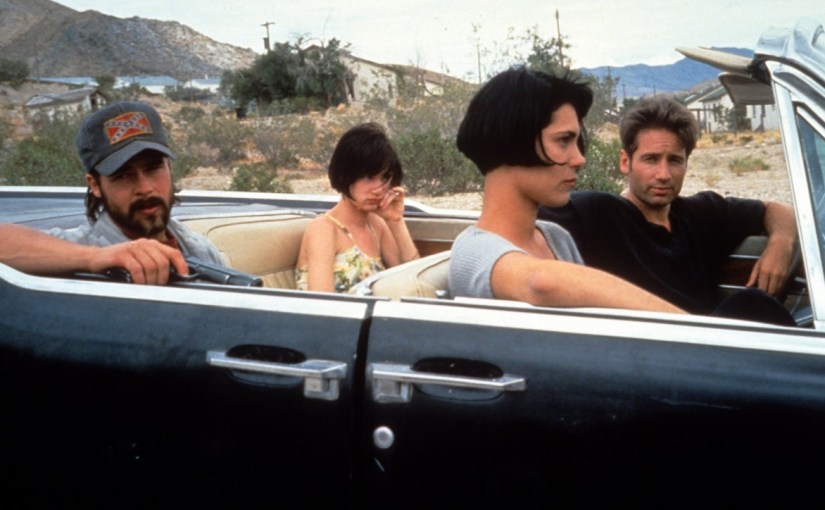
By contrast, Bound is one of those letter-perfect thrillers where the plot has been worked out so neatly, so thoroughly, and everything proceeds with such perfect logic, that it’s impossible to see how anything in the movie could have happened in any other way.  I can see no way how this thriller shot on a shoestring with such exquisite creativity could have been improved by a bigger budget or bigger stars.  It recalls the heyday of film noir – Double Indemnity, The Big Sleep, Pickup on South Street – but it also feels fresh and modern, due in no small part to the fact that the protagonist couple is composed of two women.

But before I get to the nuts and bolts of the movie, let’s talk about that same-sex plot device for a second.  Corky (Gina Gershon) is a petty thief fresh out of the slammer.  Violet (Jennifer Tilly) is arm candy for a mid-level Mafia hood named Caesar (Joe Pantoliano).  I can vaguely remember when this movie came out in the mid-‘90s, and this lesbian relationship caused a minor sensation.  It even included – gasp! – a sex scene.  An explicit sex scene!  Not pornographic, mind you, but nothing more or less explicit than the coitus featured in other notorious sexy potboiler/thrillers, like say, Basic Instinct or Fatal Attraction or Jagged Edge.

One of the things that makes Bound so cool is that the whole lesbian angle, even though it’s a huge part of the plot, is never really…what’s the word I’m looking for…exploited in any kind of way that might now be described as progressive or, dare I say, woke.  There are no melodramatic scenes showing anyone getting fired because they’re gay, or being bullied because she’s gay.  Nor is the movie making any kind of statement that that kind of ugly behavior doesn’t exist.  To me, Bound is simply saying, “Here is a great thriller, and the two romantic leads are women.  We are showing people that it’s possible for a movie to be a superior genre film with two clearly gay characters as the leads.  Let’s get on with it.”  If the main couple had been a man and a woman, the overall effect of the movie might have been diminished to a degree, but the underlying story is so good, the movie might still have worked.

Then again, it probably wouldn’t have the notoriety that turned it into a cult classic, so what do I know.

Anyway, the movie.  In a tale as old as noir itself, Corky and Violet hatch a scheme to steal $2 million from Caesar.  How that plan leads to an astonishingly tense scene with a trio of corpses in a bathtub and two policemen in the living room standing on a blood-soaked carpet is only one of the delicious little joys on display in this film.

Take the little details.  The $2 million in question gets unexpectedly splattered with some unlucky bastard’s blood.  Caesar is forced to literally launder the money, then steam-dry every single $100 bill with an iron and hang them up throughout the apartment like the most expensive load of laundry in history, resulting in one of the coolest, most surreal shots in any neo-noir I’ve ever seen:


Then there are the wicked little visual innuendos scattered throughout the movie as subtle – and sometimes not-so-subtle – references to Corky and Violet’s sexual preferences.  At one point, Corky visits a lesbian bar called…wait for it…The Watering Hole.  That’s one of the not-so-subtle jokes, but one which I did not “get” until maybe the third or fourth time watching the movie.  Sometimes I am not…smart.  Or how Corky is unscrewing the pipe in the U-bend under a sink to retrieve an earring.  As Violet, wearing a tight skirt, stands provocatively close to Corky while she works, we get a close-up of Corky’s hands as water from the sink suddenly splashes onto them.  Or note the shot that slowly pulls out from inside the barrel of a revolver.  (You know, maybe NONE of these visual jokes are subtle…I might just have been really dumb when I first saw the movie…)

And the dialogue…if there were a way for me to phoneticize a chef’s kiss in prose, I would.  (<mwah>…that’ll have to do.)  It puts a modern spin on the best of the old film-noir tough guy talk, that heightened kind of realism that really only exists in the movies.  Take this bit when Corky is talking to Violet, formulating her plan to steal the money from Caesar:

“For me, stealing’s always been a lot like sex.  Two people who want the same thing: they get in a room, they talk about it.  They start to plan.  It’s kind of like flirting.  It’s kind of like…foreplay, ‘cause the more they talk about it, the wetter they get.  The only difference is, I can f*** someone I’ve just met.  But to steal?  I need to know someone like I know myself.”

Nobody actually talks like that, but that’s one of the greatest passages in any crime movie, ever.  I could cite example after example, but I don’t want to ruin any surprises.

Another beautiful example of how well this screenplay was constructed is how it plays with your expectations, especially if you’re a fan of the classic noir genre.  In classic noir, a hero or heroine comes up with a plan, only to be betrayed by random chance or their own hubris.  Sometimes someone who seemed trustworthy at first reveals themselves to be nothing but a conniving opportunist.  Bound addresses that concept head-on in a conversation between Corky and Violet, where they talk about trust and ask each other very specific questions.  “How do I know you won’t just run once you get the money?”  “How do I know you didn’t just plan this whole thing to get me to do your dirty work for you?”  In classic noir, these kinds of questions usually lead to mistrust, betrayal, and a very non-Hollywood ending, and so the Wachowskis almost seem to be telegraphing what’s going to ultimately happen.  But believe me: nothing in this movie telegraphs anything.  Not even those snatches of conversation we hear in Corky’s head at the very top of the film when we first discover her bound and gagged in a closet.

And even THAT’S not really giving anything away…that’s how inventive this screenplay is.

I would be remiss if I didn’t also mention the sound design of Bound.  Watching it the first time around, it’s subtle enough to be unnoticeable.  Watch it again, though, and really listen, and you can hear the unmistakable way the Wachowskis manipulate sound effects to create a unique atmosphere in the same way they would go on to do in the Matrix trilogy.  There are many instances where, for example, in the two or three seconds before a phone rings, you’ll hear the ring in a crescendo, quiet at first, then peaking at the exact second the phone rings.  It’s a little hard to describe in a review but trust me.  Watch it at least once while paying attention to the sound, and you’ll hear a lot of things that sound exactly like The Matrix.

(Which might mean that Bound actually takes place in the Matrix universe…?  …nope, not pulling on that thread.)

There’s quite a bit more I could say about Bound, but I think I would start spoiling some of its real surprises if I did.  Put it this way: I recently compiled a list of my 100 favorite movies of all time, as a “challenge” from one of my fellow cinemaniacs.  Bound wound up at #73, ahead of movies like The Lord of the Rings: The Return of the King, The Dark Knight, and Finding Nemo.  I don’t know if that cuts any ice if you haven’t seen Bound yet, but if you haven’t, it’s my sincerest hope that I have encouraged you to seek out this movie on Amazon or Ebay and make it part of your collection.  You won’t regret it.


QUESTIONS FROM EVERYONE’S A CRITIC

Why did you choose this particular film?
One, I’m not sure a lot of people realize this was an independent film (released through Gramercy Pictures, now defunct), and two, it’s a movie that doesn’t get mentioned enough, or at all, when folks list their favorite crime dramas.  This movie deserves way more recognition than it currently gets, in my opinion.

Best line or memorable quote:
“You know what the difference is between you and me, Violet?”
“No.”
“Me, neither.”

A BRIDGE TOO FAR (1977)

by Miguel E. Rodriguez

DIRECTOR: Richard Attenborough
CAST: Sean Connery, Ryan O’Neal, Gene Hackman, Michael Caine, Anthony Hopkins, James Caan, Maximilian Schell, Elliott Gould, Denholm Elliott, Laurence Olivier, Robert Redford, and MANY others
MY RATING: 7/10
ROTTEN TOMATOMETER: 63% Fresh
Everyone’s a Critic Category: “A Movie Set During an Historic War”

PLOT: A detailed account of an overly ambitious Allied forces operation intended to end the war by Christmas of 1944.


In September of 1944, in an attempt to land a finishing blow to Germany following D-Day, Allied forces launched Operation Market Garden, a bold offensive that would drop over 30,000 soldiers behind enemy lines.  The objective was to capture and hold three strategic bridges in the Netherlands, over which a massive column of British tanks would then roll straight into the Ruhr, the heart of Germany’s industrial complex.  Neutralize the Ruhr, and taking Berlin would be inevitable.  However, as with so many other simple plans in history, multiple factors led to the operation getting bogged down at the third bridge, and after massive Allied casualties, the offensive was abandoned.

Based on a bestselling novel by Cornelius Ryan (who also wrote the novel The Longest Day), the movie of A Bridge Too Far resembles the actual Operation Market Garden, not just in appearances, but also in its ambition, scope, and ultimate failure to achieve its goal.  However, as a pure combat movie, I give it credit where it’s due.

First off, look at this cast.  There had not been an assemblage of so many of Hollywood’s leading men since 1962’s The Longest Day (“42 International Stars”, that movie’s posters proclaimed).  Naturally, most of the actors are pitch perfect in their roles, with one glaring exception.  Whoever thought Gene Hackman was just the right guy to play a Polish general was either desperate or foolhardy, or both.  Hackman is a talented actor, without question, but his attempt at a Polish accent is a MAJOR distraction from whatever he’s saying.  Every once in a while, it even pulls a disappearing act, not that it matters.

ANYHOO.  The all-star cast.  To offset the lengthy running time, the story is told in semi-episodic fashion, which makes me wonder if someone hasn’t thought about rebooting this movie as a Netflix/HBO/streaming miniseries.  I’d watch it.  Within each of these episodes, it helps if we remember right away that Michael Caine is the leader of the tank column, Sean Connery is heading up one of the ground units, Anthony Hopkins is holding the bridge at Arnhem, and Elliot Gould is the cigar-chewing American trying to get a temporary bridge put together, and so on.  It’s a rather brilliant way of using visual shorthand to keep the audience oriented during its nearly three-hour running time (including an intermission at some screenings).

There is one “episode” featuring James Caan that has literally – LITERALLY – nothing to do with the plot.  He plays an Army grunt who has promised his young captain not to let him die.  After a grueling ground battle, Caan finds his captain’s lifeless body and, after improbably running a German blockade, holds an Army medic at gunpoint, forcing him to examine his dead captain for signs of life.  I read that, unlikely thought it may seem, this incident really did happen as presented in the film (more or less).  All well and good.  But what does it have to do with capturing bridges?  I’m sure the story is in the novel, but the movie takes a good 10-to-15-minute detour from the plot to follow this bizarre story.  Did director Richard Attenborough think we needed comic relief or something?  I remember liking that story as a kid, but watching it now…is it necessary?  Discuss amongst yourselves, I’ll expect a summary of your answer at tomorrow’s class.

I want to mention the combat scenes in A Bridge Too Far.  First off, I never served in the armed forces.  Well, never in combat.  I was in the Air Force for about a week.  (Well, Air Force boot camp in Oklahoma for about a week…LONG story.)  So, my observations of the combat scenes are less about historical accuracy and more about how they compare to other films.  While some of the combat portrayed is rightfully horrific in its own way – the river crossing in those ridiculous canvas boats, the slaughter of the paratroopers, the seemingly endless holdout at Arnhem – a lot of the combat, particularly the tank shelling and the skirmishes at Arnhem, is…I have to say, it’s kind of fun to watch.  There’s something, I don’t know, charming about it all.  It reminded me of how I used to play with my army men and Star Wars figures, or how I used to run around with neighborhood friends wearing plastic helmets and pretending we were “good-guys-and-bad-guys” while throwing dirt clods at each other and making fake explosion noises.  It was movies like A Bridge Too Far that shaped my young impressions of what wartime combat was like, and whether it was realistic or not was irrelevant.

Anyway, enough nostalgia.  Here’s the sad truth: A Bridge Too Far, despite its thrilling combat and all-star cast, falls short of delivering a truly meaningful war film.  There are half-hearted attempts to drum up some dramatic impact with scenes in a makeshift field hospital and a speech in Dutch from Liv Ullman wearing her best “isn’t-war-awful” expression, but for some reason those scenes fall flat.  (I did like the “war-is-futile” scene with that one soldier who runs out to retrieve the air-dropped canister, only to discover…well, I won’t spoil it, but it’s a good scene.)

After writing almost 1,000 words, I’m no closer to explaining why A Bridge Too Far falls short.  It’s still an entertaining watch, but I’ve really got to be in the mood for it.  It’s rather like reading a historical novel that isn’t particularly thrilling like a Crichton or a Clancy, but it does deliver some eyebrow-raising information.  It doesn’t hit me in the heart, but it does feed my brain.  Maybe that’s not such a bad thing in the long run, but if movies are about stirring emotions, I must say: A Bridge Too Far is no Saving Private Ryan.

(Sure, I probably could have just said that instead of writing this long-ass review, but where’s the fun in that?)


QUESTIONS FROM EVERYONE’S A CRITIC

Best line or memorable quote:
“Remember what the general said: we’re the cavalry. It would be bad form to arrive in advance of schedule. In the nick of time would do nicely.”

Would you recommend this film?  Why or why not?
Ultimately, I would recommend it to film buffs who have not yet seen it.  If nothing else, it’s an interesting time capsule movie.  This would be the last time for a VERY long time that anyone would attempt to make an epic film with a truly all-star cast.  …come to think of it, I can’t think of a major, epic drama since A Bridge Too Far with an actual A-list cast.  Can you?

MIGUEL’S FAVORITE MOVIES/TV SHOWS OF 2022

by Miguel E. Rodriguez

Another challenger arrives! This challenge comes from Anthony Casale who asked us (me, Marc Sanders, and the estimable Mr. Thomas Pahl) what our 10 favorite movies and/or TV shows were from the 2022 calendar year.

Below are my answers, along with a few cherished honorable mentions. Let me know how I did in the comments. And thanks for reading!


10. BABYLON – Recipe for making the movie Babylon: Take three parts Singin’ in the Rain, three parts Boogie Nights, two parts Moulin Rouge!, two parts The Artist, and a dash of Goodfellas.  Throw everything into a Cuisinart and mix it all together into a frenetically-edited dough.  Smooth it out into a bread pan, being careful to leave a VERY few uneven spots.  Throw it into an oven that’s hotter than a poor guy locked in a sound booth.  Bake until everything is a golden brown with a tinge of debauchery, insanity, and highly questionable morals.  Serve while sizzling.  (Wait…is this a good review or a bad review?  The answer is: yes.)

9. CLERKS IIIAs a fan of all things Kevin Smith…well, MOST things Kevin Smith…this was one of my most highly-anticipated films of 2022.  I was not disappointed.  Clerks III retains all the irreverent humor from the first two installments, wrapped in a surprisingly touching screenplay that goes so meta it becomes almost impossible to identify what’s fiction and what’s autobiography.  Mr. Smith has sometimes said he CAN make “good” movies when he wants to.  It would seem this good movie escaped the editing room without him realizing it.

8. LIGHTYEAR – Okay, I’m not going to change anyone’s mind about this movie, so just move along if you didn’t like it.  As for me, I didn’t just like it, I loved it.  I thought it was an intriguing thought experiment that fits extremely well into the Toy Story-verse.  (If that’s not a word, it should be.)  Not only was the story compelling on its own, but the filmmakers also threw in multiple throwbacks and Easter eggs referencing specific moments and shots from the first two Toy Story films.  I will acknowledge the negative opinions of this film, but I cannot say I understand them.  This was a treat.

7. HOUSE OF THE DRAGON, Season 1 – Due to the trash fire that was the final season of Game of Thrones, my hopes were very, very low for House of the Dragon.  Rumors abounded: it’s been axed, it’s been delayed, it’s been transferred to Netflix, etcetera.  So, I was very pleasantly surprised when I found myself drawn back into the Thrones-iverse (patent pending) with this prequel series set nearly 200 years before the original.  Like the original, the very first episode reaches out and grabs you, then settles in for palace intrigue, bloodshed, betrayal, and boobs.  (It’s not porn…it’s HBO.)  I couldn’t tell you any of the names of the main characters if pressed right at this moment, but while it plays, it’s compelling television.  I hope the remaining seasons can live up to the promise of this first one.

6. TURNING RED – One of Pixar’s best, funniest movies since Inside Out.  Most of the negative reviews of the movie that I read had one thing in common: they all called the lead character “irritating.”  Well…the lead character is a rebellious, hormone-stricken 13-year-old girl.  Of COURSE, she’s irritating.  That just makes her character feel more real and grounded.  Some folks also had problems with a kid’s movie addressing feminine hygiene, however briefly.  Well, gee whiz, heaven forbid we introduce a daily – monthly? – fact of life into a film.  That element of the movie made it feel like an animated film written by John Hughes.  This is not a bad thing.  (Read my full review here: TURNING RED (2022) – 2 UNPAID MOVIE CRITICS!!!! )

5. SUCCESSION, Season 3Succession is basically Game of Thrones without the dragons, incest, nudity, and gory violence.  All the other elements are there: power struggles, betrayals, conspiracies, double-crosses, family loyalty, explosive secrets, etc.  Season Three was just as entertaining as the first two seasons, with more twists and turns than the Monaco Grand Prix.  Brian Cox’s performance as the family patriarch, Logan Roy, stands with the best work he’s ever done.  His brood of conniving children are every bit his equal…but they just can’t seem to get him out the door.  Every time they think he’s cornered, he pulls a Houdini by being even more lowdown than they would ever suspect.  It’s a breathtaking feat of writing, acting, and direction.  My favorite HBO series since, you guessed it, Game of Thrones.

4. TOP GUN: MAVERICK – The sequel NOBODY wanted…but when it finally arrived, miracle of miracles, it was actually good.  No…not just good.  It was GREAT.  The film’s creators wisely realized they needed to inject this sequel with a healthy dose of nostalgia for fans of the original 1986 film.  (Thirty-six years previous!)  As one of those fans, let me tell you: when the first notes of the “Top Gun Anthem” started playing over the opening credits, a ridiculous grin was plastered on my face, and it stayed there for almost the whole movie.  Attention must be paid to the fact that virtually all the cockpit scenes in the film are 100% real, filmed with the real actors in the real cockpits of real Navy jet fighters.  The effect of this method cannot be overstated.  The aerial combat scenes felt absolutely authentic, creating a vibe that green/blue-screen trickery simply cannot duplicate.  True, the story/screenplay isn’t exactly Oscar material…but who cares?  What a ride!  (Trivia note: this is one of the most financially successful sequels of all time, if not THE most successful.  Total global box office take from May thru December 2022: nearly $1.5 billion.  I think this Tom Cruise guy may have a future in movies…)

3. ANDOR, Season 1 – It’s finally here: the Star Wars series for people who hate Star Wars.  Purists have been heard to lament the fact that Andor has very little in it to identify it as part of the Star Wars universe.  No Jedi.  No lightsabers.  Very little mention, if any at all, of the Force.  Only one space “battle”, if you’d even call it that.  As for me, I thought all those absences worked in Andor’s favor.  Created by Hollywood veteran Tony Gilroy (screenwriter of, among many others, the Jason Bourne franchise, Michael Clayton, and wouldn’t you know it, Rogue One), Andor presents us with a more realistic version of the Star Wars universe.  Did you know there are desk jobs in the Imperial bureaucracy?  Well, why wouldn’t there be?  Fighting a rebellion costs money – where does that money come from?  Who funds it?  A highly placed senator has a plan, but she must find a way to keep it a secret, not just from Imperial oversight, but also from her husband and daughter.  These people couldn’t give two figs about the Force; they’re just trying to stay one step ahead of the bad guys.  There are so many brilliant details, I could literally go on and on.  Andor is the most compelling new series I watched all year.

2. THE BATMAN – Wow…and I thought Joker was dark.  A serial killer goes on a spree, leaving behind notes and riddles for the Batman.  Putting his considerable deductive skills to work, Bruce Wayne follows the clues, but the killer manages to stay one step ahead.  Do these seemingly random murders have a connection?  Does the killer have a master plan?  Is water wet?  What made this new version so thrilling was the fresh screenplay, yes, but also the visual style.  This new version of Gotham City seems to inhabit the same universe as Blade Runner, where the rain is more or less perpetual, and the nights are lit like an early episode of Miami Vice.  Robert Pattinson’s take as a younger, but equally tortured, Bruce Wayne felt even more “organic” than Christian Bale’s Batman.  Pattinson pulls off a younger, even angrier vibe, and it’s interesting to see that part of the Batman’s evolution.  The serial killer’s methods and personality felt like something right out of Se7en.  Colin Farrell’s Penguin is a master class in knowing just how far is too far to go with a big character.  Zoë Kravitz as Selina Kyle is every bit as dangerous as her predecessors.  And holy crap, that Batmobile…?  DAYAM.  Nolan’s The Dark Knight is still my favorite Batman film overall, but The Batman stands as an impressive example of the right way to reboot.

  1. EVERYTHING EVERYWHERE ALL AT ONCEFar and away the single best movie I saw from 2022.  I’ll keep it short by saying, read my full review here: EVERYTHING EVERYWHERE ALL AT ONCE (2022) – 2 UNPAID MOVIE CRITICS!!!!


    HONORABLE MENTIONS, in no particular order:
    The Bob’s Burgers Movie
    Doctor Strange and the Multiverse of Madness
    Stranger Things, Season 4
    The Fabelmans
    She-Hulk, Season 1
    The Menu
    Strange World
    Avatar: The Way of Water
    Solar Opposites, Season 3
    Moon Knight, Season 1

MARY AND MAX (Australia, 2009)

by Miguel E. Rodriguez

Director: Adam Elliot
Cast: Toni Collette, Philip Seymour Hoffman, Barry Humphries, Eric Bana
My Rating: 10/10
Rotten Tomatometer: 95% Certified Fresh
Everyone’s a Critic Category: “Watch a Stop Motion Film”

PLOT: A tale of friendship between two unlikely pen pals: Mary, a lonely eight-year-old girl living in the suburbs of Melbourne, Australia, and Max, a forty-four-year-old severely obese man living in New York.


“Mary Dinkle’s eyes were the color of muddy puddles. Her birthmark, the color of poo.”

Thus begins the narration of one of the most poignant movies I’ve ever seen, Mary and Max, a 2009 stop-motion animated film made in Australia.  It never got a wide release in America; were it not for the fact it appeared on the IMDb list of the top 250 favorite films worldwide, I might never have heard of it.  Thank goodness I found a copy online and bought it…one my best “blind-buy” purchases ever.

At this point in an earlier draft of this review, I launched into a plot description which veered into a discussion about the movie’s color palette, its tone, its agenda, etcetera.  But that somehow didn’t feel right, and I got bogged down.  What I really want to impart upon you, the reader, is how it made me feel.

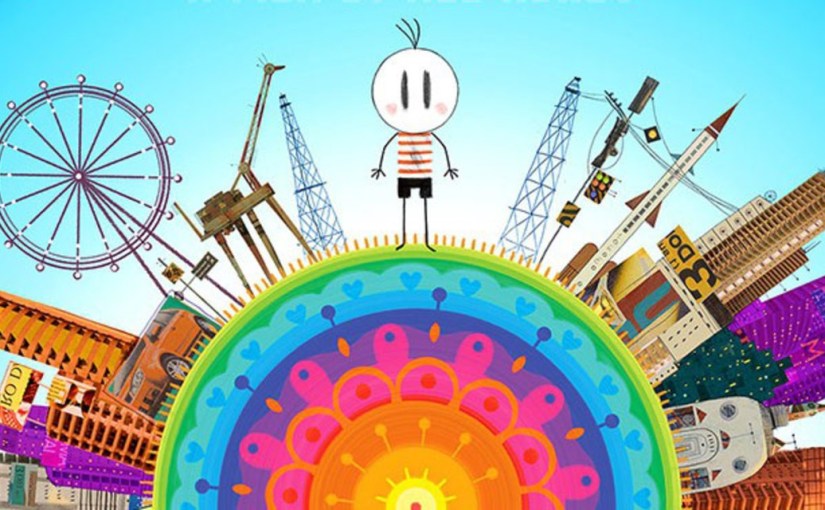
It’s a drama about mental illness wrapped in the trappings of a Tim Burton-esque dark comedy.  What this means is, some of the visuals are right out of The Nightmare Before Christmas: oversized flies with googly eyes, suicidal goldfish, main characters whose body shapes resemble vegetables more than people.  But the story and emotional beats rival any Merchant Ivory film or James L. Brooks weepie.

Eight-year-old Mary Dinkle, who lives in Australia, starts up a pen-pal correspondence with Max Horovitz, a 44-year-old obese single man with undiagnosed (at least initially) Asperger syndrome.  After his initial panic attack at receiving a letter from a complete stranger, which throws his carefully controlled equilibrium out of whack, he writes her back, and they wind up having a decades-long correspondence.  She has no friends due to her prominent forehead birthmark.  He has no friends because he can’t relate to people.

The movie is mostly an unseen narrator bridging gaps between their letters, while the letters are read as they’re being written/typed by Mary and Max.  The relationship between the two is as touching as anything I’ve ever seen on film.  She sends him a hand-drawn picture of herself, which he keeps in his mirror to remind himself how people are supposed to look when they’re happy.  He sends her his recipe for chocolate hot dogs (a chocolate bar in a hot dog bun).  She asks him all the important questions, like: if a taxi drives backwards, does the driver owe YOU money?  He explains a long gap in their correspondence: “I was hospitalized, won the lottery, and my next-door neighbor died.”

These two lonely souls reaching out to each other just made me feel sunny inside, even amid the small tragedies they each faced.  Mary’s father dies.  Max keeps having to buy goldfish.  Mary falls in love with the Greek boy across the street, a boy who stutters, wants to be an actor, and, when they become engaged, makes her wedding dress for her.  Uh, huh.

The way in which the stories of these two people were written to complement each other without being identical is a delicate balancing act that threatens to veer into farce, then rights itself at the last second.  As I say, it’s hard to describe.

A turning point occurs when Mary gets a bit older, goes to school, studies mental disorders, and writes a book about her American pen-friend with Asperger’s.  She sends him the very first copy…but Max’s reaction is not what she anticipated.  She falls into a depression…

And here the movie takes a brilliantly dark turn.  I remember watching it for the very first time thinking, “Are they really telling THIS kind of story in a stop-motion film?”  Yep, they are.  There is a key scene where Mary has a kind of fever-dream hallucination choreographed to a haunting version of “Que Sera, Sera”, and my jaw dropped.  I cannot claim to have intimate knowledge of mental illnesses, but this scene just feels right.  This is a great representation of what someone’s mind might look and sound like on the brink of a terrible decision.

I realize I’m not making this movie sound like a lot of fun.  I can assure you that it is entertaining and fun, with a nasty (in a good way) habit of getting a chuckle while juxtaposing it against a scene of subtle awfulness.  The way Mary’s mother dies gets a laugh…but only as you’re listening to her death throes in the background.  The way Max’s various goldfish die is alternately funny and gruesome, or both at the same time.

And the REAL kicker is the final sequence, where Mary finally discovers where Max has kept all her letters through the years.  This moment is one of the greatest revelations I’ve ever seen, and I nearly shed a tear when she did.

Portrayals of mental illness in films have had varying degrees of success.  For every Rain Man, there’s an I Am Sam.  With Mary and Max, the filmmakers used the stop-motion medium to present hard-hitting material without totally getting bogged down in the inherent trauma or pathos of the illness being portrayed.  It’s an ingenious combination, but I’ll be damned if I can explain exactly WHY it works.  It just does.  Mary and Max remains one of the most unique animated films I’ve ever seen.  Seek this one out if you can.


QUESTIONS FROM EVERYONE’S A CRITIC

Were you surprised by the ending? What would you do differently?
I was bamboozled by the ending. I do sort of wish we had some idea of what happened to Mary after her trip, but I guess that’s okay. I wish her well in her future endeavors, wherever she may be.

Why do you think stop-motion was chosen for this film rather than animation?
As I mentioned, I believe it was to leaven the deep, potentially dreary material with the inherent oddness of the medium. Even a man in a wheelchair with no legs looks undeniably goofy…but it’s tragic. But he looks kinda funny.