THE SPY WHO LOVED ME

By Marc S. Sanders

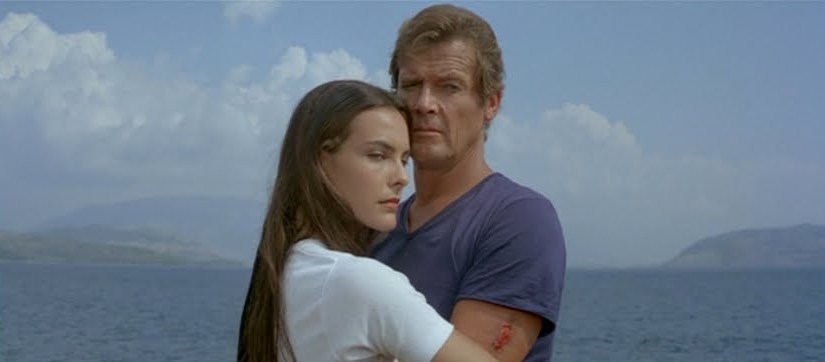
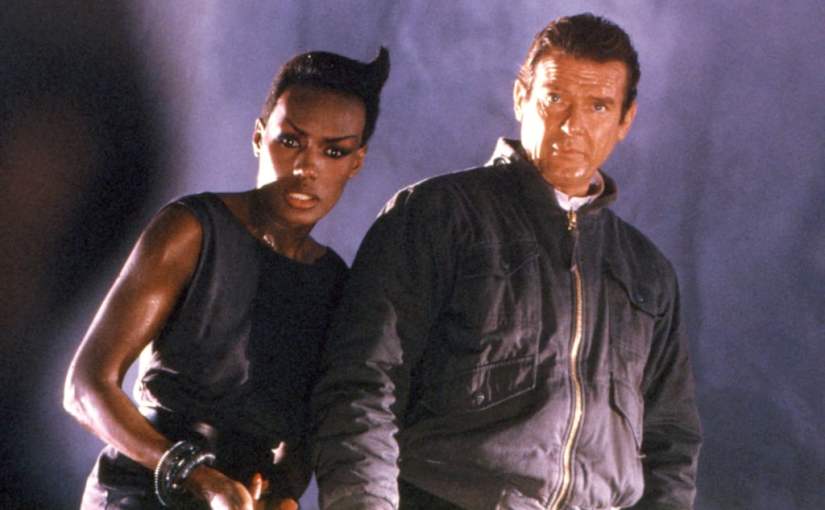
The Spy Who Loved Me remains as my most favorite movie going experience ever. It was the first Bond film I saw in a movie theatre. I was 5, accompanying mom and dad to a dinner party. Upon leaving the party close to midnight, dad says to mom “Linda, let’s go see James Bond.” Mom’s reply was “Walter, it’s midnight and we have Marc with us.” Dad won the argument by simply saying “C’mon Linda!” So he pulled into The Forum movie theatre located off Route 4 in Paramus, NJ.

At the time, my youth didn’t allow me to comprehend really what was going on, but I clearly remember being thrilled during the pre title sequence as Bond (Roger Moore) dons his yellow snow suit to evade KGB agents trying to kill him off while skiing in Austria. I’ll never forget the ski jump/parachute ski dive off the mountain to close out the scene. Still one of the greatest stunts ever performed in a Bond film.

Beyond that, I cherish the memory of mom covering my eyes each time the vicious henchman Jaws bared his metal teeth and the maze running through the Egyptian construction site. 007 in his tuxedo with Russian Agent Triple X (Barbara Bach, one the best Bond girls) in her navy evening gown. Bach was gorgeous, intelligent and perfect in the role.

The Spy Who Loved Me is superb in so many ways. It returns to the Cold War threats that a megalomaniac takes pleasure in. This time it’s Stromberg (Curt Jurgens) who manages to apprehend nuclear armed submarines from Russia, Great Britain and eventually the United States. His plan is to destroy the world and start a new civilization beneath the sea. Honestly, I think that might take a little more effort than the capabilities of three submarines.

Triple X must now form an alliance with 007, only she has vengeance on her mind following the loss of her lover during the earlier ski pursuit. Bond must survive Stromberg and Jaws, as well as his Russian partner.

There’s so much that Director Lewis Gilbert, with Producer Albert Broccoli (first time working without Harry Saltzman) offers here. Bond drives a Lotus Esprit turned submarine, while also outrunning helicopters, motorcycles and Jaws who seems invincible. He also gets a cool new gadget vehicle to play with-a put it together yourself Jet Ski. Who woulda thunk it?

Jaws (Richard Kiel) is menacing but he’s also a great running gag, almost like the Wile E. Coyote from Looney Tunes. Throw him off a train, drop a building on him or fly his car off a mountain and he’ll come out of it with just a dust off of his shoulders.

Gilbert gets great scenic footage of Cairo, Egypt, Sardinia, and the snowy mountains of Austria. Stromberg’s ocean base is really cool to see too. Just avoid the elevators if you can.

Again, The Spy Who Loved Me has some of the best of everything-Bond Girl, a terrific soundtrack from Marvin Hamlisch as well as his musical accompaniment on the film’s Oscar nominated song from Carly Simon (“Nobody Does It Better”), Jaws, and it’s arguably Roger Moore’s best work in the role.

I could watch The Spy Who Loved Me a hundred times and never get tired of it.

Nobody Does It Better.

THE MAN WITH THE GOLDEN GUN

By Marc S. Sanders

Bond. James Bond going Mano y Mano against Francisco Scaramanga, also known as The Man With The Golden Gun.

Regarded as one of the least successful films in the franchise, Roger Moore’s second outing as 007, with Guy Hamilton directing his fourth installment, is really fun and devious.

Scaramanga (Christopher Lee) is former KGB who lives on his own island where he takes pleasure in carrying out gun duels with anyone up to the challenge. Professionally though, he works independently charging a million dollars to anyone requesting an assassination by means of his golden gun with accompanying golden bullets. Though it seems now the expert marksman is reaching out to Bond as a worthy competitor.

Bond doesn’t even know what Scaramanga looks like. So, he jets off to Beirut, then Thailand, Taiwan and eventually the villain’s own private island located in the seas off the coast of China. Also, there is Scaramanga’s latest toy, consisting of unlimited solar energy, a device he could sell to world powers globally for the highest bid while also bankrupting the oil industry.

Bond has encounters with a quirky henchman again. This time it’s a deadly midget named Nick Nack (Herve Villacaize, Fantasy Island). He’s a lot of fun as he teases both Bond and his boss, Scaramanga, in a fun house obstacle course as they carry out their best efforts to survive.

Two Bond girls (Maud Adams and Britt Eckland) allow Moore to balance the ladies in a hiding game within his hotel room while trying to keep them from running into each other. It’s light farce.

The Man With The Golden Gun also features one of the greatest automobile stunts ever captured on film, an alleyoop flip over a ravine with a broken bridge. Needs to be seen to be believed.

What keeps this film from highest of regard though is the return of Clifton James as Louisiana Sheriff J.W. Pepper for some cheap laughs that didn’t work when we saw him the first time in Live And Let Die. He’s a pest who’s contrived to show up in Taiwan of all places and coincidentally run into Bond again. Really? Seriously? There’s no reason for this annoyance to be here.

Still there’s lots of good moments including Bond vs two sumo wrestlers as well as fighting his way out of a deadly dojo with the assistance of some karate skilled school girls. Then there’s Scaramanga’s flying car which is extra cool.

007 embarks on an adventure that still holds up. Christopher Lee is loving his villainy and Roger Moore continues with the part well. He’s a sharp guy.

The Man With The Golden Gun is a film worth revisiting.

GOODFELLAS

By Marc S. Sanders

Goodfellas is my favorite film by Martin Scorsese. It’s a fast-paced roller coaster narrative of Irish street kid Henry Hill’s experience in the mob, dramatized from his real life as part of the Gambino crime family of New York.

“How am I funny?,” the Lufthansa heist, Spider takes it in the foot and then in the chest, Morrie’s Wigs, the piano montage from Derrick And The Dominos, Billy Batt’s demise followed by an early morning breakfast stopover at mom’s, and Henry’s helicopter paranoia. All of these elements are assembled to depict the perceived glamour and undoing of street level hoods, proud to steal and dress in the finest threads while bedding dames behind their wives’ backs.

Scorsese along with Nicholas Pileggi uncovered something special when they adapted Wiseguy (Pileggi’s book) for the screen. I think they struck a nerve because they showed these guys as men doing a routine living. There was a process to their deeds. Give a cut of your theft to the man above and keep the rest for yourself. Above all else, stay off the fucking phone. Get out of line and get whacked, unless you’re a “made guy.” This is all code, normal to Henry and his cohorts (Robert DeNiro as Jimmy Conway; Joe Pesci as Tommy DiSimone).

Moreover, the wives understood this behavior as well. Henry’s wife Karen (Lorraine Bracco) knew these guys were not 9 to 5 husbands and the more it occurred, the more normal it all seemed. Including when the FBI presented a warrant to search the premises. Just let them in and go back to rocking the baby to sleep while watching Al Jolson on the box.

Scorsese took the best approach by not judging the actions of these raw criminals. They dressed well, but they weren’t reluctant to draw blood if an insult was tossed their way. Pesci, in an Oscar winning best performance, represents that philosophy. Scorsese, with his regular editor, Thelma Schoonmaker, are not shy about the violence. Watch how Jimmy and Tommy beat up a “made guy.” DeNiro just stomps his dress shoes into the guy’s face over and over. Pesci pistol whips him, but before he can shoot him, he breaks the gun…on the guy’s face. The romance of gangster life quickly undoes itself in moments like this. As Henry notes, your friends come at you with smiles before they whack you.

Ray Liotta is Henry, the primary narrator and centerpiece of the film. Most of the story is from his perspective. I’m sorry that Liotta didn’t get much award recognition. He really deserved it. His voiceover narration is superb. It gives a feeling like I’m talking to Henry in a bar with his tales of Mafia code and life in the criminal underworld. His voiceover is conversational. He’s also got great expressions of disregard, anger, and intense, raging fear on screen. When Henry is at his worst, his eyes are dry red, and his skin is pale and craggily. None of that is just makeup at work. That’s Ray Liotta performing with an exhausted energy in character. Watch the scene following his 3rd act incarceration where he argues with Karen over the last of their drug supply being flushed down the toilet. It’s not so much a party anymore. The manic response couldn’t feel more real as he slams his hand against the wall and then crouches up into a weeping ball of helplessness in the corner, on the floor.

Liotta and Bracco have sensational chemistry together in scenes of their courting nature when they first meet, followed by the ongoing, bickering abuse that enters their married life. There’s a great hysteria to them. Bracco got a nomination for her role. She deserved it.

Scorsese is a master at filming basic gestures as well to show the nature of these mob guys and their crimes. A key folded in a paper is then inserted into a knob and a stash is walked off with. A blood-soaked revolver is placed in a tin box and then Schoonmaker cuts over to the customary stomping of a glass at a Jewish wedding. Every prop and detail are connected.

Even better is Martin Scorsese depicting the wise guys’ incarceration midway through the film. Watch how the head mob boss Pauly (Paul Sorvino) slices onion with a razor for dinner complete with steaks broiling, pork sauce bubbling and even lobster ready to be boiled. Scorsese and Pileggi found it important to depict how attractive this life could be, despite a stretch in the joint or the violence that might come. Pay off the right guys and you could live like kings.

The master director doesn’t stop there. His selection of doo wop and rock period music paints the historical palette of the 50s through 80s. Music was being played and life was happening all the while an underhanded way of crime and violence occurred.

One of the best blends of film and song occurs during the classic one-shot steady cam where Henry escorts Karen through the back way of the famed nightclub, Copacabana. It’s one of the greatest scenes ever in movies. The walk journeys downstairs, through the kitchen, past wait staff, cooks, bouncers, people necking and to a front and center table to see Henny Youngman’s stand-up routine. The sequence is accompanied by the song “And Then He Kissed Me.” It’s a great character description to display a young guy, proud of his gangster image, with a whole world ahead of him and everyone offering their respects while he hands out twenty-dollar bills like gift coupons. This young guy had power, and the girl holding his hand couldn’t be more impressed.

Goodfellas is one of the greatest mob movies ever made. It’s one of my favorite films. It’s genuine in its grit and language. Every F-word uttered is necessary to translate the regard for code, or the blatant disregard for the law, loyalty within a crew, or even the ethics of marriage. It astounds me that it didn’t win Best Picture in 1990, losing to Dances With Wolves. Perhaps it got cancelled out with fellow mob nominee The Godfather Part III.

Regardless, the film struck a chord and pioneered a new way of showing criminals in celebration of themselves while sometimes encountering the inconvenience of the law or the women in their lives or worse, the betrayals among themselves. At any given moment you might rat on your friend and not keep your mouth shut.

Without Goodfellas, The Sopranos might not have been as welcomed into the pop culture lexicon. Maybe even the films of Quentin Tarantino or Guy Ritchie or Paul Thomas Anderson, or even other Scorsese projects yet to come.

Goodfellas is an electrifying film of unabashed humor, realistic and shocking violence, and authentic culture within a well established crime syndicate.

Goodfellas is a must see film.

PLANES, TRAINS AND AUTOMOBILES

By Marc S. Sanders

The Tuesday Before Thanksgiving Tradition blazes on for another year as Steve Martin and John Candy travel from New York City to Wichita, Kansas and then who knows where all while trying to reach their final destination of Chicago, Illinois in time for Thanksgiving dinner.

Despite the fact that Planes, Trains & Automobiles was made in 1987 before the age of cell phones, personal navigation systems, Priceline .com and Ubers, it remains a timeless classic of inadvertent comedy. Travel is still as frustrating, maybe more so now, and family kinship is still treasured.

Martin plays Marketing Executive Neil Page, forced to succumb to the unwanted company of Shower Curtain Ring Salesman Del Griffeth (Candy). One inconvenience after another delays Neil from getting home to his family for the holiday. Del wants to be helpful, yet he is anything but.

The roles are perfectly cast. One of the best on screen couples of all time. I imagine had John Candy not passed away so young, he would have been paired up with Steve Martin at least one more time.

Writer/Director John Hughes is a master at taking simple circumstances (detention on a Saturday, skipping school, traveling) and blossoming it into episodes of relatability amplified in both comedy and drama. His knack for dialogue is a huge factor in his scenes. Consider the best scene in the film between Martin and favorite character actor Edie McClurg where 19 F- bombs are tossed over the mix up of a rental car. It happens all the time to any one of us, and Hughes took advantage of the frustration and built comedy that comes from it. Its not funny when you are in the moment. It’s funny when you recall the moment later on. It’s a brilliant scene.

Nut grabbing, taxi races, ride hitching in 1 degree weather, bed sharing with what you think are pillows, burning cars, wrong way driving, encounters with death and the devil, “The Canadian Mounted,” and a perfect excuse to use Ray Charles’ rockin’ “Mess Around” all point to a reason for a climax that arguably (on the first time any of us saw the film) we never expected or considered. If you don’t choke up, you have no soul.

Hughes was all too familiar with the meaning of Thanksgiving when he wrote Planes, Trains & Automobiles. I like to think those that see the film are even better for having watched it.

It’s a very funny movie, but it’s very special movie as well. Give thanks, offer what you can, when you can, and Happy Thanksgiving. 

LETHAL WEAPON 2

By Marc S. Sanders

Richard Donner, Mel Gibson and Danny Glover successfully triumphed in 1989’s summer of sequels with Lethal Weapon 2. It was a big box office smash thanks to the pairing of the two leading men making a memorable team with Donner expounding on the beloved humor that the first film provided.

The story is ho hum; South African drug dealers with diplomatic immunity. The top henchman, nick named “Adolf,” has a mysterious connection to kamikaze cop Martin Riggs (Gibson). Nothing so shocking though, and somewhat contrived.

The big star addition here is Joe Pesci as Leo Getz, the sleazy accountant who has embezzled half a billion dollars from the South Africans. Pesci is such a rare talent and he comes up with his own routine of comedy. He is as unique as any of the great comics like Milton Berle or Jackie Gleason or Jerry Lewis. Mind you this film was released before Home Alone and Goodfellas, and after Raging Bull. So, his addition to the franchise was a great surprise.

Getz is a fast talking material witness that Riggs with his partner Roger Murtaugh (Glover) are assigned to protect. However, with the cops’ nose for constant action, it’s not easy protecting the little guy when he won’t shut up or sit still.

“Lethal Weapon 2” is more an assemblage of fun set ups with run on gags. There’s Murtaugh’s daughter appearing in a condom commercial, much to his chagrin. There’s his wife’s new station wagon that is progressively getting wrecked thanks in part to Riggs’ crazy ways. Then there is Roger stuck on a bomb rigged toilet as another reason to damage his family’s home. The Three Stooges would be proud of this material.

There’s nothing new here really, but what makes it entertaining is the ongoing chemistry between Gibson and Glover, with Pesci. It’s apparent that these guys had to go off script at times from a screenplay by Jeffrey Boam, based on the characters created by Shane Black.

Donner does as expected with some great action scenes like a car chase to open the film and a careening tow truck that has Riggs hanging from the fender. There’s shootouts galore, as well.

The beautiful Patsy Kensit has a small romantic storyline with Gibson. It wouldn’t have been missed if it didn’t make the final cut, but it’s here and it’s serviceable.

Yeah, there are some contrived elements to Lethal Weapon 2 and the villains are not the greatest, but the heroes hold the film together, like a fun party on a Saturday night at your best pal’s place.

LETHAL WEAPON

By Marc S. Sanders

The opening scene to Richard Donner’s 1987 film, Lethal Weapon, always intrigues me. Following an opening credit flyover of Los Angeles at night played to the tune of “Jingle Bell Rock,” a beautiful young, topless woman snorts some cocaine, steps out on a balcony and leaps to her death. It was a great hook for the beginning of a script written by Shane Black. How does a random suicide jump connect to heavily armed mercenaries with an interest in heroin shipments? Two cops at odds with one another will find out.

Mel Gibson and Danny Glover hit the payload of a new and long lasting cinematic franchise playing suicidal cop Martin Riggs and by the book family man Roger Murtaugh; one of the very best on screen pairings since Neil Simon’s “The Odd Couple.” Riggs is ready to die at any given moment following the loss of his loving wife. There’s an effective dramatic moment where Gibson plays a very drunk Riggs, and loads a bullet into the chamber of his Baretta. Donner gets one unsettling take of a man in despair biting down on the weapon, holding it to his forehead and under his chin. It’s pretty frightening. Gibson is great in this moment, red faced and uncontrollably tearful.

The first of the four films remains the best as Black’s story is continuously pealing back layer after layer. There’s something new to the main plot in nearly every scene. A banker is involved. A nightclub as well, and a prostitute’s house is detonated and of course there’s the girl who dove off her balcony. Shane Black seamlessly connects all the dots.

More so, there’s something to the cops relationship in nearly every scene. We see Riggs & Murtaugh begin with a major divide in working together. Riggs has a cavalier attitude of nothing to lose. Murtaugh is content with turning 50, but might not get to enjoy his new year at the expense of his new partner’s reckless behavior. How does Riggs rescue a suicide jumper? Not the way you’d expect I imagine. Efficiently, a trust is built among the two men with Donner doing a fine job of escaping the main storyline for a nice family meal. It’s humorous and charming but necessary to really appreciate these characters. Then the ribbing among the two guys happens. Jokes about Roger’s wife’s cooking and a contest of target practice at the shooting range allow the audience to feel like they just made two new best friends.

On the other side are two worthy villains played by Mitchell Ryan, and more prominently Gary Busey. They play ruthless shadow company soldiers from the Vietnam era ready to eliminate anyone who interferes with their drug dealing venture. Busey is especially good and ruthless. It’s a shame that gossip magazines and a crazy lifestyle have mostly dominated his public life over the years. He’s so good in this role. He had already been an Oscar nominee by the time this film was released. You have to wonder why did it all go so wrong for him. Gary Busey might have been a top billing movie star.

Richard Donner had already been a well established director with Superman The Movie, The Goonies, and The Omen. His action film was even more a testament to his skills. Action scenes are so well filmed in “Lethal Weapon” whether they take place in a Christmas tree lot, a desert outskirt, a nightclub or on Hollywood Boulevard. Credit should also go to Michael Kamen’s music, adventurously dramatic with an air of mystery at times. He works in accompaniment with Eric Clapton too.

I take one issue with Lethal Weapon. The final scene, a jiu jitsu fight between Gibson and Busey in front of the entire police force abandons the story. Nothing new is left to happen. Ever since I saw the film in theaters I asked myself why is this here. Two tough guys just punching the hell out of each other. There’s no development here. There’s no way a moment like this would ever occur. In addition, the editing is choppy at times and I can’t tell who is hitting who. It’s not a terrible violation, but it’s not all that interesting either.

Barring this ending scene, Lethal Weapon is just a well assembled film of action, humor, drama, suspense, and story. At the time, Shane Black was paid a record sum for his script. I still believe it was worth every penny.

LOVE, ACTUALLY

By Marc S. Sanders

Love, Actually is like a warm favorite blanket to snuggle up in. Richard Curtis writes and directs a collection of the greatest British actors (along with American Laura Linney) in a kaleidoscope of love and relationships against the backdrop of beautiful London, England during the five weeks leading up to Christmas.

I won’t list my favorite characters or actors. In a film this treasured, this loved and this appreciated, that would be like picking your favorite child. It’s impossible when every single storyline is perfectly executed with thought and tenderness.

The stories of love uncovered, love that’s lost, love based in friendship, and love drowning in heartache beautifully jump from one to the next and then back again. Curtis is wise to not show all of the facets of each story early on. Some stories reveal more about themselves later that’ll leave you hurting for those that are not so merry and those that offer plenty of cheer.

I’m especially happy that Curtis did not compromise in the language or subject matter of his tales. Strong language at times makes for some memorable dialogue and nudity presents a normality to how we really are with those we have affections for.

It’s fair to say everyone in life experiences some variation of love. Yes! I mean everyone. Richard Curtis reminds you that love is a natural instinct, and so we can not focus on the easily recognized gloom of our world. To have these stories captured around Christmas time only enhances what we treasure, or what we wish we didn’t have to endure at times. Curtis’ blazing soundtrack helps along the way.

Love is hard. Love is challenging. Love will sweep you off your feet and love will destroy everything you thought you had. However, love will never leave you with complete regret. It’s never the love we have for someone that we regret. It’s only a wish to have it wholesome, healthy, happy and pure.

Love, Actually is all around.

ARGO

By Marc S. Sanders

Ben Affleck’s third directorial effort Argo is his best. It makes me wonder why he followed this with playing Batman, a done to death cinematic character.

Argo showed promise of another great actor/director in the same vein as Orson Wells, Woody Allen, Robert Redford and Clint Eastwood. I’m sure Affleck will direct again but a Batman commitment certainly sidelines you. I hope he’ll direct again. I’m a big fan of his previous films, The Town and Gone Baby Gone.

The story tells of one aspect of the Iranian hostage crisis that spanned the end of 1979 through 1980. Six employees of the riot stormed American embassy in Iran manage to escape and hide in the Canadian ambassador’s home. Slowly but surely their hideaway will be revealed and they will inevitably be taken prisoner. Affleck plays CIA operative Tony Mendez who is tasked with getting them out. His plan, with assistance from John Goodman as legendary Hollywood makeup artist, John Chambers, and Alan Arkin as producer Lester Siegel, will make up a cockamamie story about producing a fake science fiction Star Wars rip off film called, you guessed it, Argo. They will do marketing write ups, poster advertising, and even a costumed table read at the Beverly Hills Hotel, all with the intent to just appear authentic as a film studio seeking out production locales in exotic Iran. The six hostages naturally are the film’s crew.

Affleck directs two acts here with two different narratives using both masks of theatre. Namely comedy and tragedy. The pleasure comes in watching Arkin and Goodman pair up to bring the Hollywood flavor that’s necessary. It’s great fun, especially when watching Arkin (in an Oscar nominated role) shyster his way with character actor Richard Kind to buy the Hollywood script-these two guys are like Oscar and Felix. Goodman is great as the been there done that Hollywood insider. He says “You can teach a Rhesus monkey to be a director.”

The drama comes with Affleck’s talent for delivering taut tension from his directing especially but also from his own performance as well as his cast of six hostages consisting of Tate Donovan, Scoot McNairy and Kerry Bishe. Bryan Cranston is also good as Mendez’ comunica from home. Cranston is just good in anything.

The tension builds with intimidating locals screaming of their loyalty to the Ayatollah as well as the eventual airport security. It’s all very nerve racking.

The critique for the the film lies in its own admission of historical inaccuracies. The escape was not as tense as the film suggests. More importantly, the caper was really primarily pulled off by the Canadian Ambassador, Ken Taylor (great actor Victor Garber). No. Canada is not given enough credit in the film. Still, here is a rare exception where I don’t mind. I guess because the suspense Affleck offers up is at its peak. You really shake your head at it all.

Forgive the cliche but Argo is a nail biting, edge of your seat thriller. At best, I can be grateful for learning about the true story following seeing the film. It’s a story that was kept hidden for 17 years. In these times of hardship and turmoil in America, it’s fortunate that a success can finally be celebrated.

Argo was undoubtedly worthy of its Best Picture Oscar win, and Ben Affleck should have at least been nominated for Best Director.

Fun Fact: Argo is produced by two former Batmans: George Clooney and Ben Affleck.

DIE HARD 2: DIE HARDER

By Marc S. Sanders

I think we’ve debated enough about whether Die Hard is considered a Christmas movie. So what about the next installment, Die Hard 2: Die Harder?

Truthfully, who cares?!?!?

Director Renny Harlin (Cliffhanger with Sylvester Stallone) takes over from John McTiernan and he does a capable job of depicting a frenetic Christmas Eve at Dulles Airport in Washington DC, sprinkled with the latest in early 90s technology like fax machines, pagers, tasers and even a reference to Radio Shack. But by golly, the film still remains modern as The Simpsons is shown on local TV.

The ingredients are pretty much the same as the first film and while Alan Rickman is sorely missed, William Sadler does alright as a cold hearted Colonel on a mission to aid an escape of a powerful drug overlord. Bruce Willis’ John McClane will not allow that to happen.

Willis is maverick and defiant again though this script doesn’t allow for better one liners that the first film offered. He’s doing his same one man army schtick though with an endless supply of bullets for his service weapon, and it’s nice to return to form.

Harlin is a good action director featuring snow mobiles, shootouts, shootouts on snow mobiles and exploding planes and satellites. Amazingly enough though, a crowded Christmas airport is unaware of all these massive fires and explosions going off all over the nation’s capital and all proceeds as normal until it’s broadcast on TV in the last act of the film. Meh!!! Everyone has Christmas on their mind.

Heck…well then I guess Die Hard 2 (with the inventive subtitle Die Harder) is in fact a Christmas movie. Glad that’s settled.

Happy Holidays. Let it Snow!

DIE HARD

By Marc S. Sanders

The long lasting appeal of Die Hard really stems from so many sources. Most importantly though is the performance of Bruce Willis.

Watching it this evening in a theatre commemorating its 30th anniversary, I found myself still laughing and relishing the fantastic set pieces of editing for great sound and visuals from Director John McTiernan. Yet, tonight Willis is what stood out for me. There’s not much dimension to New York cop John McClane but there is a great transition from being a reserved nervous flyer to an estranged husband with feelings of awkwardness at his wife’s Christmas party and finally to deliriously unhinged and reckless when faced with going up against a superbly brilliant villain from Alan Rickman, his very first film role. Willis goes wild against Rickman’s team of terrorists that hail from all different nationalities and races. (Hans Gruber was an equal opportunity employer.) The mouth on McClane doesn’t hold back for any kind of authority. It’s fun. It’s hilarious and you can’t help but pound your fist in the air with a “right on!”.

Rickman is great as well. His well tailored and groomed persona is a perfect counterbalance to Willis’ lack of class and style. Both are at the top of their game but using different devices to fight with. The playing field of a high rise tower is equal for them. Yet their tactics are different.

McTiernan offers up plenty in side humor from ego minded FBI guys both named Johnson (love that joke) to conniving reporters, to a coked up yuppie hostage and henchmen who all carry themselves differently. McTiernan bravely stops the approach to action to allow his audience to realize the setting on Christmas Eve with great note reminders from a film score by Michael Kamen and even a run through the roses only to have a kick ass swat officer get pricked. A terrorist takes a moment to snack on a Nestle Crunch before a firefight. Porno pictures on the walls of a construction area give Willis an opportunity to offer a glimpse. Great lines as well are so celebrated (“Yippee Kai Yeah Mother Fucker”).

But Willis is the real fun stuff as he gets into hand to hand combat with terrorist Alexander Godunov, he offers a promise to “kill ya, and cook ya” with his “had enough” delivery.

Roger Ebert always took issue with naivety of the law enforcement officials in the film especially actor Paul Gleason as an dumb antagonist. That’s okay and he’s not wrong. However, this is Die Hard where an 80s Los Angelos offers gas for .74 cents and ever relies on their characters getting caught up in a scenario they never fathomed. Had Die Hard been made in post 9/11 it wouldn’t carry that smirk inducing charm. It wouldn’t be fun.

We were fortunate to get one of my favorite Christmas movies when it did come before the age of cell phones and social media.

There were action films long before Die Hard. Yet the original 1988 film set the standard by what most films of action offered in subsequent years. More often than not, they were all fun films in their own right but whether you liked those films or not, they often remain comparisons against Die Hard. That’s the best compliment any film could receive.

FUN TRIVIA: Die Hard is the first of McTiernan’s teddy bear films. Can you name the other one that shows a giant teddy bear with its hero?