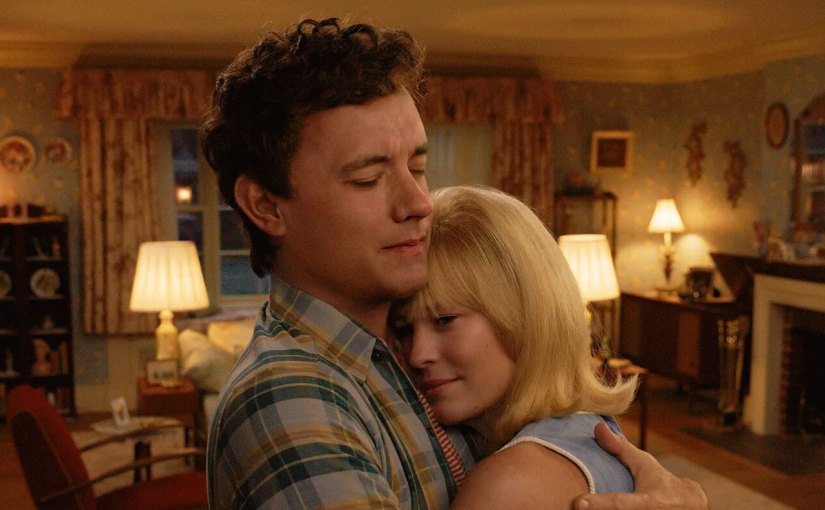
ZURAWSKI V TEXAS

By Marc S. Sanders

The topic of the harrowing documentary Zurawski V Texas is abortion.  However, the debate is a different angle than I believe either side of the ongoing argument is accustomed to. 

Filmmakers Maisie Crowe and Abbey Perrault provide extensive up to date coverage on attorney Molly Duane who represents a growing contingent of women who suffered complications during their pregnancies.  The diagnoses might have varied but the commonality was that in most cases these circumstances became life threatening to the point where medical professionals deemed the best resolution was to follow through with an abortion so that an unhealthy child is not delivered and forced to suffer a brief life in agony.  At least just as pertinent is to preserve the health and often save the lives of the mothers.

Amanda Zurawski from Austin, Texas is the first mother to make a claim. Thereafter, a parade of other women sought out her attorney, Molly Duane, to testify of their experiences and plead with the Texas courts to make exceptions to the state’s altogether blanket outlaw of abortions performed within the state.  As soon as the prologue begins, we see Amanda testifying of her suffering at a congressional hearing.  Close ups jump to the expressions of the government officials who appear intent on listening to Amanda’s plight where she describes having gone into septic shock with her life in serious jeopardy.  It’s a very sad story, but Amanda demonstrates that she’s a stronger warrior than these men that she is facing.  They can do nothing but sit there speechless.  Who knows if they are even listening to the woman on the stand.

Later, as Amanda and Molly take their case to another court, the want to be mother describes how one of her fallopian tubes had to be closed up and her uterus needed to be reconstructed.  Because she was not permitted needed abortion, she is unable to try again with another pregnancy. 

Two other women are also focused on in the documentary. 

Samantha Casiano is forced to carry to term, and then at the end of nine months, deliver an anencephalic baby with no chance of living.  The experience comes at a cost of Samantha’s mental health and her marriage when her husband becomes withdrawn.  Following this incident, Samantha follows through with a tubal ligation to avoid the risk of going through this ordeal again.

Another plaintiff is Austin Dennard, an OB-GYN doctor, who as a patient left the state of Texas to terminate her pregnancy following a risk-laden diagnosis.  She eventually becomes a mother, but now she is a doctor not permitted to aid her patients with their ordeals. 

A struggling roadblock continuously reiterated in Zurawski V Texas is the threat that any medical professional faces should they perform or assist in an abortion, regardless of the reasoning behind it.  Molly Duane and her clients are arguing that if there any exceptions to Texas’ unreasonably strict laws that forbid abortions, it is unclear.  The ladies are petitioning for a clarified explanation which never comes.  Can’t they just get a straight answer on why exceptions for continued health care can not be executed?

I watched this documentary after I have already done my early voting ahead of the 2024 election.  Amendment 4 is on the state of Florida ballot and it’s a clear Yes or No vote of whether abortions should be made legal.  Zurawski V Texas goes beyond the typical Pro Life vs Pro Choice debate that will never satisfy this entire country.  This age old argument is split down the middle, and now politicians and lawmakers seem to weaponize the topic to earn constituents’ favors and votes.  In fact, it is the only reason I can figure for why Ken Paxton, the State of Texas Attorney General is always on the trail of each Molly’s wins within the Texas courthouses. 

Molly will win her arguments while standing in front of one judge after another, but then the uncompromising Paxton will overrule the judgment literally within hours afterwards.  Just as you are about to clap for her success, “Five hours later” appears on the screen.

The documentary covers the ladies’ families and friends who ask how can someone be Pro Life, while outlawing a medical procedure to save a life.  Ken Paxton is the villain of this frightening story because any shred of reasoning from him is never provided while he exercises his stubborn authority.  It’s monumentally unfair.

In the film, when Molly Duane takes the case to the Texas Supreme Court, it is astounding to see members of the court question why Molly and her clients are not going after the doctors who are denying the care that is needed.  It’s a direct insult to the intelligence of these women who are suffering physically, mentally, professionally and even domestically.  There are plenty of health care providers on the side of committing abortions to save the lives of the mothers and avoid any further suffering of embryos and newborns that cannot survive.  However, how can doctors be expected to perform when the state threatens them with criminal charges, license suspensions, fines and incarcerations? 

These professionals have earned the training to save lives.  Yet a governing body is not allowing them to make fundamental, ethical and appropriate decisions for best interests of their patients. 

Most documentaries will at least tell you in a byline that the producers reached out for comment from the other side, and usually that contingent declines to speak on the subject.  I cannot assume that the filmmakers reached out to the opposition of this topic.  People like Ken Paxton or even Governor Gregg Abbott and Senator Ted Cruz of Texas.  The film makes no claim to that idea.  So, I wish there was an attempt to get an answer from the opposing parties.  Still, we get footage of the naivety with governing figures asking questions that lack merit or substance, and worse, we get Paxton’s closeminded and unexplained reasoning for his overturning on cases legally ruled in favor of Molly Duane’s clients. 

Maisie Crowe and Abbey Perrault have assembled an informative film that hopefully will influence votes and ongoing petitions for this important argument.  The day after I post this article is Election Day, November 5, 2024.  Abortions do not just fall exclusively into the category of reproductive rights and the right for women to decide what they want and do not want to do with their bodies.  There’s even more at stake than that.

Zurawski V Texas presents a health crisis that never, ever should be a predicament.  Our doctors have the knowledge and experience to do what is necessary to save the lives of mothers who carry with no fault or mistake or lack of sound judgment.  They are women who chose or planned to become pregnant.  Sadly, complications interfered like it can in any kind of health situation.  Complications can occur during an appendectomy.  Are doctors supposed to stop what they’re doing and check to be sure they won’t go to prison before they proceed any further?  The same could be said with heart surgery or brain surgery.  There are resolutions for these patients to escape terrible, life threatening risks.  Yet, the weaponizing of a political argument for campaign wins stands in firmly in their way and disregards the simplicities of what can save human lives.

Last week, I declared one of the film’s at the 2024 AFI Film Fest was the best I’d seen this year, so far.  That was Clint Eastwood’s Juror #2.  Days later however, Zurawski V Texas stands at the top of the list.

This documentary might focus solely on the state of Texas, but the scenarios warn of a nationwide epidemic if the stringent rulings of our governing bodies continue to neglect basic health while the figures of authority work to prolong their political careers, at the cost of their constituent’s lives. 

Zurawski V Texas is without a doubt the most important film made this year. 
UNSTOPPABLE (2024)

By Marc S. Sanders

The Oscar winning film editor of Argo, William Goldenberg, finally directs his first film and it’s a winner.  The true story of Anthony Robles, the one-legged NCAA world champion wrestler is brought to the screen in Unstoppable.  While the story is paint by numbers for a typical sports movie, because it is adapted from his real-life experiences during his time at Arizona State University, it cannot help but be embraced.  The cast is sensational as well, with not one weak link.

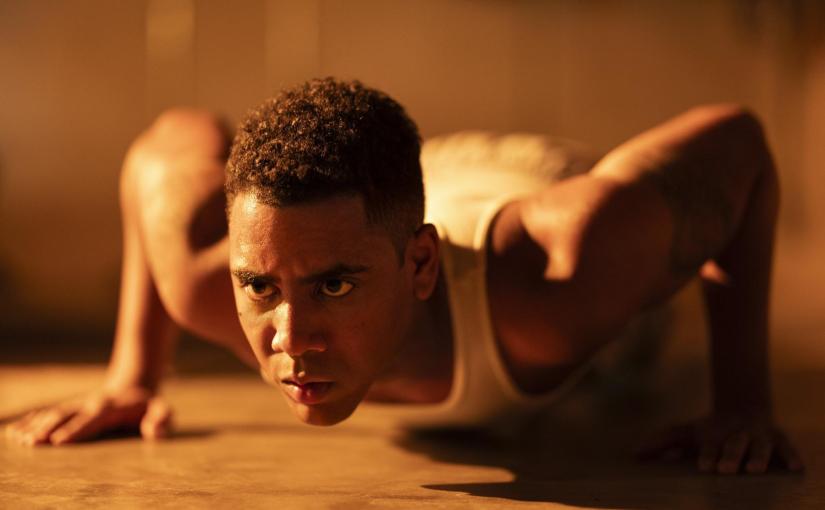
Anthony Robles (Jharrel Jerome, the Emmy winner of the HBO miniseries When They See Us) is a good kid.  Anthony is loved by his brothers and sisters, and his mother.  They cheer him on to persist and win.  He’s a hero to his younger siblings.  Anthony also gets much encouragement from his high school wrestling coach, Michael Peña, and his co-worker that he cleans airplanes with, played by Mykelti Williamson.  Still, he has a troubled domestic life.  His stepfather is an intimidating tyrant.  Bobby Cannavale plays one of the harshest villains in recent memory.  A towering monster with a voice that’ll make you wince.  He’s verbally abusive and eventually we learn physically as well to Anthony’s mother Judy (Jennifer Lopez). 

As the film begins, following a winning match, Anthony receives an all expenses paid ride to a Pennsylvania college.  However, that school does not contend in the NCAA and despite everyone telling him to take the free ride, he has his eyes set on Arizona State.  Even ASU’s Coach Shawn Charles (Don Cheadle, and dang is he ever good) is not confident in Anthony making the final cut for the team.  Yet, Anthony defies what everyone else thinks and scrounges up the monies with his family’s support to attend the local university.  Now the challenge is to make the team against all odds with his crutches to support him through rocky terrain hikes and laps around the track while carrying heavy weights.  How does a man with one leg stand upright and manage to climb mountainous terrains in the desert heat while staying in pace with the rest of the candidates?  How does he even hold a thirty-pound weight while running the track on crutches?  Anthony Robles will show you.

Unstoppable does not offer anything new or inventive.  Anthony even reflects on the fictional character Rocky Balboa a few times.  There are challenges to overcome, not just for Anthony, but for Judy as well.  The bank wants to foreclose on their home and her husband is monster of a jerk.  Plus, there’s Anthony’s handicap which can never serve as an excuse for falling behind with the rest of his squad. 

Some matches are lost.  There are scary episodes at home.  There’s the imposing undefeated champion that Anthony will eventually have to face.  There are the loving moments between mother and son.  It’s all textbook, and the ending is predicted as soon as the film begins.  Still, had I known Anthony Robles personally while growing up, I’d be saying this story is prime for a movie or a book and that is what became of it. 

At the 2024 AFI Film Festival, there was a Q&A following the film’s presentation.  Jennifer Lopez, Jharell Jerome, William Goldenberg, and Judy and Anthony Robles were in attendance.  To watch the film and then hear of these people’s real-life experiences afterwards is astonishing.  Both mother and son came from rock bottom scenarios mired in debt and abuse.  Now, long after Anthony has finished his career as a champion wrestler, we see that the two continue their crusades.  I won’t spoil what they went on to next.  The film provides a footnote ahead of the end credits, but it is nothing short of inspiring.  The Robles demonstrate that anything is possible and nothing works as an excuse.

Jennifer Lopez and Jharrel Jerome share a lot of beautiful scenes together.  Lopez might be easy fodder for gossip columns, but she is truly a wonderful actress.  Jerome reminds me of when I first saw Cuba Gooding Jr in Boyz In The Hood, which was an astonishing debut of a promising career.  This guy needs to be cast in a lot of beefy roles going forward.  He’s a sensation. 

William Goldenberg has made an under the radar film, but it has box office success written all over it like The Karate Kid or Rocky.  His vast experience in editing allows for a well-paced two hours so that even if you know what is coming next, you remain enthralled and wanting to cheer on the protagonists. 

The film will be streaming on Amazon Prime soon, and that is perhaps it’s only disappointment.  Again, as I have written in other recent columns, a movie like Unstoppable belongs in the theatres first and seen with well attended audiences who will clap and cheer at both Judy and Anthony’s triumphs.  Some of my fondest memories are watching the heroes I grew up with played by Ralph Macchio and Sylvester Stallone finally achieving that hard-to-reach gold crown, and suddenly there’s an overwhelming cheer from the audience within the darkness of the theatre.  Remember when Rocky sprinted up the 72 steps of the Philadelphia Museum Of Art?  A cued response almost seems edited into the context of the film.  That kind of experience is absent from the private confines of a living room.

Unstoppable has joined the lexicon of amazing sports stories.  You can’t help but cry while you are cheering.

TWO PEOPLE EXCHANGING SALIVA (FRANCE)

By Marc S. Sanders

For a short film with a running time of only thirty-five minutes, Two People Exchanging Saliva (aka DEUX PERSONNES ÉCHANGEANT DE LA SALIVE) offers a lot to tell within its absurdist universe thanks to writers/directors Natalie Musteata and Alexandre Singh.  Reflecting on the film, which I saw during the After Dark collection of shorts at the 2024 AFI Film Festival, my list of imagery grows longer and longer and I am grateful for it.  There’s much to remember, even nearly a full week after seeing the film.

Shot within a department store located off the Champs-Élysées within the heart of Paris, the film is a gorgeous black and white presentation with striking lighting to illuminate a wide collection of settings.  Shoe racks never looked so ethereal.  A staircase leading upward feels very curious.  Piles of cardboard boxes feels terrifying before I even know what they are to personify.  Yet, the oddities that Musteata and Singh introduce are what tempts you to learn more about the rules they have set up for this fictional cosmos.

Malaise (Luàna Bajrami) is a salesperson at this store and like the rest of the staff, she must exhale her breath directly into the nose of a security guard before starting her shift.  She is suppressed by a domineering supervisor, Pétulante (Aurélie Boquien).  It cannot be more apparent that Pétulante feels threatened by her best customer’s favorability for Malaise.  That customer is Angine (Zar Amir Ebrahimi).  Among these three ladies, this comes off like a common soap opera love triangle that has been seen many times before.  Yet, the writers/directors throw some spice at this centerpiece.

Within this world, kissing is outlawed, punishable by death.  Hence the necessary requirement for a breath smell.  Ingest some garlic or other reprehensible aromatic food to divert any temptation from breaking the law.  Furthermore, products are sold at a cost of slaps to the face.  Several players exhibit the scabs and bruises, as well as nosebleeds, that evidence their purchases.  Looking at Angine it’s easy to see she is certainly a high-priced shopper.

With these set ups in place, the story can take off and rely on bold imagery.  We witness Malaise’s fear of what can happen if she commits to her attraction for Angine when the apparent crime of kissing occurs within the store.  We fear that Pétulante will pounce on prohibitive kissing in order to win her prized client back while getting her underling, Malaise, permanently out of the picture.  We see the great lengths of tormented slapping Angine endures in order to have another shopping experience with the innocent Malaise. 

The film serves reminders of the nature of punishment if a kiss is committed between two people.  The criminals are literally boxed up and disposed in a junk heap of other boxes that encase people just like them.  Musteata and Singh’s most powerful shots are of this pile of boxes dumped into a landfill toppling one over the other.  It’s like something from George A Romero film, like Night Of The Living Dead.  No big effects here.  Nothing that looks like a large expense beyond collecting a enormous supply of cardboard boxes.  Yet, when piled together in an outdoor area under the shine of their black and white cinematography from Alexandra de Saint Blanquat, it’s terribly haunting.

My wife and I got to speak with Natalie Musteata and Alexandre Singh on a few occasions during the 2024 AFI Film Festival.  They explained how the idea of this dystopian universe came to them while quarantining in their New York home during Covid.  They went through the steps of obtaining financial backing and they discovered that it would be more cost effective to shoot the picture in France than in the United States.  As well, they had access to a department store in Paris after it had closed for the night.  They went through the process of setting their scenes, rehearsing their actors, coordinating lighting and camera positioning within the few hours available to them before sunrise when the store would reopen.  Listening to them, I could envision the tight scheduling pressures they must have experienced in making this film.

I also find it interesting that they assembled this film during Covid. Simply shaking hands with others was highly discouraged to avoid a spread of disease. Highly charged debates on reproductive rights are so prominent right now too.  In Two People Exchanging Saliva, it’s not hand shaking that is impermissible, it’s something much worse, but also more intimate – kissing.  As well, in order to live off of materialism, one must fall victim to an abuse of their bodies, and they have the marks to show for it just beneath their eyes and across their profiles.  In this world, people are limited and exposed to the will of a domineering enforcement.  I salute the allegories found in the short film.  It may sound silly on the surface.  Natalie and Alex even laughed while explaining the plot of their film before we had a chance to see it.  Still, it is not altogether farfetched.  When can we live truly independently without a threat of punishment, when all we want is a will to live and love with one another?

Two People Exchanging Saliva was the winner of the Grand Jury Prize at the 2024 AFI Film Festival, and I could not be happier for the filmmakers’ accolades.  It’s worthy of its merits.  If you can find this outstanding short film I highly encourage you to take a little over a half hour out of your day to experience something entirely unique, while beautifully presented. 

Seek out your local art houses for a film short festival coming soon.  Two People Exchanging Saliva should be included in any collection that’s being offered.  Now I’m hoping an Oscar nomination is on the horizon for Natalie and Alex.  Bon Chance!!!!

JUROR #2

By Marc S. Sanders

Since Unforgiven, director Clint Eastwood has sought out projects that have an intrinsic message or a question of morality.  That film seemed to channel the second half of his career that has spanned over a half a century.  Before, many of his films sensationalized the quiet killer or the silent tough guy with the six shooter gunplay and cracking fists. After the movie won Best Picture in 1992, movies like A Perfect World, Letters From Iwo Jima and Mystic River were not developed for simply the sake of escapist entertainment.  There was something to ponder after the stories wrapped up. 

Eastwood’s latest film, and supposedly his last, is Juror #2 and to the best of my recollection, I believe it is the first time the actor/director brings his experience to a courtroom.  Some of his more recent efforts have been questionable and not up to his best standards (Cry Macho), but Juror #2 is one of the best films he’s directed, and perhaps the best picture I’ve seen this year so far. 

Nicholas Hoult plays Justin Kemp, an expectant father with his wife Allison (Zoey Deutch).  He has just been selected for jury duty in a Savannah, Georgia courthouse.  Justin is Juror #2.  The case centers on trying a man for the murder of his girlfriend who was found bloodied and bruised in a rocky, wooded canal beneath a bridge.  Earlier that night, the couple were witnessed at a local watering hole having a drunken argument.  She walked off in the dead of night in the pouring rain.  The man was seen going after her.

Coincidentally, Justin was at this same bar.  He drove off in his car around the same time, but he accidentally hit what he thought was a deer.  The incident was hardly considered again until the opening statements were heard in court a year later.  Suddenly, the young man is putting two and two together and questioning if in fact he hit a deer.  Now Juror #2 embarks on a test of morality while sometimes adopting a Twelve Angry Men narrative.  Justin might appear as noble as Henry Fonda, but is he the culpable one?

Juror #2 assembles a good cast of characters.  Toni Collette is the prosecuting attorney, Faith Killebrew, who is also campaigning for an important election.  Collette has that deep southern twang, but the earth tone suits she wears along with her firm body language exude a tough exterior.  You believe Collete’s character is compartmentalizing this trial away from her chances of election.  The opposing attorney, Eric Resnick (Chris Messina, who I’d like to see in more films), is apt to imply the true motive behind Faith’s pursuit of trying his client.  Is it for personal gain, because Eric truly believes his client is innocent.  The evidence and facts add up to reasonable doubt.

Eastwood, with a script by Jonathan A Abrams, places his film in a variety of on set locations around Savannah.  Personally, it was fun recognizing certain areas following a recent weekend getaway my wife and I took to the storied town.  There are flashback pieces to the night in question at the bar and the crime scene.  Beautiful locales within the historic squares of Savannah are also covered in addition to the river boats near the docks.  Much of the picture occurs in the jury room where the group of twelve deliberate.  Leslie Bibb is charming as the Jury Foreperson.  However, Justin tries to find ways to allow his peers to consider other possibilities.  The only one on his side is a well-cast J.K. Simmons.  Simmons has the deep crackling voice that absorbs you into what he’s believes versus everyone else in the room.  Against him are jurors played by Cedric Yarbough and Chikako Fukuyama, also well cast.  What seems like an easy wrap up case of declaring a guilty verdict turns into a dead heat of 10 to 2, and eventually even Faith the prosecutor is personally questioning what occurred.

Juror #2 is very well cast film.  None of the actors are stand out marquee names, which works as an advantage.  They all appear common.  They don’t look like movie stars and thus it is easier to buy them in their roles.  After seeing the film at the 2024 AFI Film Festival, the gentleman sitting next to me had to surrender to a friendly debate we had.  He tried to point out plot holes in the film but I had an answer for each element he questioned.  Juror #2 is solid in its storytelling.  The motives that characters like Justin and Faith and even the respective jurors stand by all have a validity to their lines of thinking.  Therefore, Abrams’ script works well at arguing two sides of the same coin and the picture concludes with an opportunity to think about it long after it’s over.  Hanging threads to solid conundrums are a favorite factor of mine.

A story currently circulating in the trade papers is that Juror #2 is only being released in fifty theatres nationwide.  This is Warner Brothers’ decision and it’s a terrible shame.  When the debate of streaming versus exclusive theatrical releases is continuously being put into question, this is a sure sign of movie theatres eventually becoming obsolete. What a pleasure it was to watch Clint Eastwood’s film among crowd at the famed Grauman’s Chinese Theater (aka TCL Theatre) in Hollywood, California.  The audience was completely engaged, applauding as names appeared in the credits and laughing at the intended cues provided by the director and screenwriter.  To see a film, any film in a theatre, is a unique experience when it can be embraced among a crowd of movie lovers. 

If Robert Zemeckis’ Here can be released nationwide in thousands of venues, there is no reason why a well-made Clint Eastwood picture can not have the same treatment.  Movie houses were never designed to offer only the latest Marvel or Transformers film.

My hope is that the ongoing, widespread positive reception that Eastwood’s final film is receiving is noticed thereby building some traction for Warner Brothers to consider going wider with exposure.  At the very least, the famed studio owes it to arguably its most prized filmmaker and actor.  Time after time, the WB logo appears just ahead of Eastwood’s own Malpaso studio credit.  There is no Warner Brothers without Clint Eastwood and to close out his legendary career commands a bigger recognition. 

At the very least, Warner Brothers needs to recollect what occurred with a film like The Shawshank Redemption.  No one saw it in theatres and it had a terrible initial box office.  Some argue it was the title that turned people off.  Maybe.  Yet, think about the admiration that movie continues to garner thirty years later.  Warner Brothers needs to pay more attention to the quality they possess in their library.

At any rate, my hat off to Mr. Clint Eastwood – a pioneer filmmaker and one of the last survivors of a filmmaking yesteryear.  He began directing in 1971 with the thriller Play Misty For Me, and at age 94, he has only enhanced his meticulous dedication to drawing a crowd in while directing sensational casts.  Along with Harrison Ford and Steven Spielberg, I have followed Clint Eastwood’s career all my life.  Beginning with seeing Dirty Harry at age 8, I grew up on his imposing stature and his reliance on silent performances.  The first R rated film I saw in theatres was Sudden Impact.  Beyond being a Producer, Director and Actor, he is also a film composer.  Clint Eastwood is one of the few multi-talented people within the history of Hollywood, but no one compares to him.  You’re likely never to hear someone say that guy reminds me of Clint Eastwood, because there is only one Clint Eastwood. 

I am only blessed because I still have yet to see every one of his films.  If Juror #2 is his last effort, it’s a noble and solid ending to his run.  Yet, I’m glad I know I still have more to uncover in Clint Eastwood’s celebrated career.

NOTE: The murder victim is portrayed by Francesca Eastwood, Clint’s daughter.  As well, look for a blink and miss it moment where the director makes his way down a staircase while JK Simmons and Toni Collette share a scene together.  Eastwood is full bearded but there is no doubt that’s the guy.

PERSONAL NOTE: On the closing night of the 2024 AFI Film Festival, I had the pleasure to meet actors Cedric Yarbaugh, Amy Aquino and Zele Avradopoulos following the film and it was such a treat to hear how much they appreciated Mr. Eastwood as a director. All three were consistent in their admiration for the filmmaker describing him as patient, quiet, and a master of his craft who continuously worked with the same crew on one film after another. It was a real treat to chat with them. I also saw Nicholas Hoult walk by me three times and because I simply didn’t recognize him, I regret not asking him for a quick chat and photo as well. Yet, he and Toni Collette introduced the film which included a quick impersonation of Clint on the phone offering the role to him. Everyone was positively charming. This was such a memorable moviegoing experience. I’ll treasure the memory always.

HERE

By Marc S. Sanders

I get a thrill out of being in a location occupied by someone from the past.  Last week, I toured Paramount Studios and sat on the bench that Tom Hanks did when he shot Forrest Gump.  There’s something exciting about it.  Time capsules or a recovery of an ancient burial are fascinating to me.  Just once I’d love to hold in my possession Action Comics #1, Superman’s very first appearance.  Often, items like this are preserved behind glass in museums to witness and study.

Robert Zemekis is a “What if?” director.  What if a man was marooned on a deserted island or what if you could communicate with extra-terrestrials from another galaxy?  What if live humans could interact with cartoon characters? He reunites with Hanks as well as Robin Wright for his newest film called Here.  The picture attempts to answer what precisely happened in one specific, exact location since the dawn of Earth.  

The film opens with the violent creation of the planet, complete with molten rock and falling meteors stirring about, along with an ice age, and a prehistoric period.  Then it is on to further points in history that the script from Eric Roth will occasionally return to, such as the plight of a Native American tribe and then later close to a post-Revolutionary War era where a house with a large bay window in the living room is erected and a famed historical figurehead is referred to.  We witness the activities on both sides of this living room’s bay window, and what was there before it.

There are brief views of folks living in the early twentieth century when new technology like airplanes are fresh, and eventually a Lazy Boy becomes essential to any home.  

Primarily though, there are three generations of a twentieth century family lineage that starts with Paul Bettany as a PTSD alcoholic World War II veteran, and his housewife Rose (Kelly Reilly).  Tom Hanks portrays Richard, their eldest child who aspires to become a career painter before his plans are interrupted by marrying his pregnant girlfriend, Margaret (Robin Wright).  Life, however, gets in the way of his dreams.

Finally, we are brought to a more current point with an African American family living through challenging times of police brutality and Covid.

Over the course of the whole movie, Zemeckis has you believe that his camera never moves once from this specific place.  He narrates the activities that occur in this broad scope of time with pictures within pictures.  Rectangles or squares will appear to show what happened later in life or back in the past on this specific spot and then transition the scene to that new period episode he wants us to witness.  Where the fireplace is located, a squirrel climbed the bark of a tree that was once there.  Where the sofa is now, there worked a slave laborer from the 1700s, or its where a Native American smoked a pipe before then.

If Here was any longer the novelty might have worn off.  Fortunately, the characters with the most interesting storylines are given to Bettany, Reilly, Hanks and Wright.  The challenges of living long lives raising children, dealing with job security, health, love, loss and stress are carried by them.  We grow accustomed to how the family lineage evolves, particularly with Thanksgiving dinners, Christmas photos, marriage, graduations, and children growing up.  

It helps that the latest trend of visual effects, de-aging and aging the players, works convincingly in this picture.  I attended a live conversation at the 2024 AFI Film Festival between Tom Hanks and Robert Zemeckis, and the actor revealed that to get himself back to the age of seventeen and then a thirtysomething all the way to a man in his eighties required Zemeckis’ team to collect thousands of images and footage from the actors’ extensive careers.  Everything was then seamlessly assembled for effective performances.  I think the trickery works.  If it didn’t, then it’s likely Here would not succeed.

My one issue with the film is the glaring omission of substantial storytelling for the African American family compared to the amount of time devoted to the family who lived in this home before them.  The African American characters do not appear fleshed out enough.  They only serve to remind us of current, complicated times that we recently endured or are still living through.  Roth and Zemeckis did not go deep enough with this group, only to bookend it with an unimpactful death.

Here works like a warm blanket to snuggle up with.  I believe it is worth a second and maybe a third watch in order to catch all the little changes in details that vary as time travels through this piece of land that eventually became a living room.  The TVs and what’s on changes from the Beatles first appearance on The Ed Sullivan Show to The Three Stooges to CHiPs (neat wink and nod moment here; tell me if you know what I am thinking of) and Katie Couric and so on.  The furniture gets updated.  So do the phones. What occurs across the street in front of the two-story colonial house changes.  Though we are only seeing one room during the entire running time, it’s near impossible to pinpoint what was there before from left to right and top to bottom. What’s there now and what will be there later is part of embracing the experience of Here.  However, what kept my attention is how Eric Roth and Robert Zemeckis invent ways to keep different time periods connected.  It’s relative to how Zemeckis did numerous minute and detailed face lifts to Hill Valley in his Back To The Future trilogy.

By the end of Here, there’s opportunities to relate to how many of these people end up with their long lives.  They experience all the ingredients of life through love, frustration, happiness, illness, loss, anger, sadness and eventually death.

Here is a deliberate experimental film, and for most of the picture, its attempts at modifying the stage of performance truly work.  Where it falls short is not allowing equal attention to all of the stories that enter this locale.  Then again, if the movie were to go any longer, time might have come to a mundane standstill.  It’s simply a blessing that I had just enough time being Here.

UNIVERSAL LANGUAGE (FRENCH/PERSIAN)

By Marc S. Sanders

Writer/Director Matthew Rankin’s Universal Language is the selected Canadian submission for the 2024 Academy Awards consideration in the category of Best Foreign Language Film.  Though the picture was shot on location in Quebec and Winnipeg, many of the characters are of Persian heritage in this absurdist piece that moves along three different trajectories before they all collide with one another.

I had the opportunity to see Universal Language at the 2024 AFI Film Festival. Rankin, who also leads one of the storylines, opens the film with brilliant comedy as an eighth-grade classroom of unruly children are quickly silenced by an angry teacher who blames his students for his own tardiness and then unleashes on a latecomer who is unable to read the blackboard because a turkey has supposedly run off with his eyeglasses.  The child sincerely stands by this excuse.  The humor of this introductory scene, which I only wish could have gone longer, relies on the outrageous over the top temper of the teacher and the melancholy response from the students.  None of them seem to fear this guy.  One of them is even daring enough to dress like his idol Groucho Marx complete with a prop cigar and the mannerisms, as he aspires to become a comedian.  The teacher wraps up his frustration by sentencing the whole classroom to stand in the tiny closet at the back of the classroom until the boy is able to obtain a new pair of eyeglasses or at least gives up on his silly turkey story.

One classmate, Negin, and her sister Nazgol take the long walk home through the snow-covered paths and come upon a five hundred dollar Rubie bill that is buried under the ice.  There is no way to get it out, but if they do, they can use the money to buy their classmate a new pair of glasses, and thus class can resume and they will be free of their closet detention.  They’ll need something sharp to crack the ice like an axe, and so a search begins.

Elsewhere, Matthew (Matthew Rankin) quits his job with the Quebec government in possibly one of the funniest “I quit” scenes since Albert Brooks angrily stormed out of his boss’ office in Lost In America.  Neither scene from each movie are remotely similar, but they are terribly hilarious.  Rankin is so hilariously smart when he cuts from his perspective to that of the supervisor and the joke delivers on what is mounted on the background walls that mirror the greenish drab room.  For an accompanying soundtrack, there is poor schlub hysterically crying within a cubicle.  It’s the second of a series of great scenes within this picture.  Anyway, Matthew opts to purchase a large bottle of sleeping pills, dispose of his wallet, passport and keys and board a bus to visit his mother who he has not seen for several years.  Unexpected circumstances take place as this scenario moves forward.

Lastly, there is Massoud who is a tourist leader escorting a group on the most mundane and sublime journey through the locales of Quebec, such as a small patch of grass in the middle of a highway exit fork in the road.  He encourages his group to stand for a thirty-minute moment of silence in front of a cemetery that is wedged within this area.  Traffic speeds on by though. 

Universal Language might have been a dystopian kind of setting in another filmmaker’s hands.  However, Matthew Rankin prefers to draw inspiration from his own upbringing within Quebec and Winnipeg where the buildings are drab earthtones of tan, gray and brown, outlined in white from the snowfall that doesn’t seem to melt or the cold that never rises to a warmer temperature.  I had a brief moment to speak with Mr. Rankin following the film, using my limited knowledge of French and then English. He told me that he has a deep appreciation for this kind of appearance that the Canadian towns offer.  When I was in Quebec earlier this year, I witnessed the exact opposite actually, a town full of vibrancy and color. 

Fortunately, Rankin found a story of absurdist, sometimes subtle, humor to emote the dullness of these people’s lives.  People don’t really live like this, do they?  Universal Language makes a convincing argument.  So, I can’t be sure. 

First Rankin and his cinematographer were wise to shoot the picture on what seems like 16mm film which adds a noticeably grainy layer to the picture.  Rainbows and bright sunlight are not what delivers cheer to these people, and this looks like a movie you would find on your grandmother’s Zenith TV set from the 1970s.  Then, there is an acceptance to how Massoud and the two sisters, Nagin and Nazgol, live within this realm where a Persian governance has taken over a Canadian province.  No one complains or revolts, but there is no chance for a life of luxury among these inhabitants, only acceptance. 

When the three stories finally intersect there is a realization to how they move on beyond the confinements of the film.  Turkeys abound, the money is recovered, only to take on a new destiny.  Something becomes of the missing eyeglasses and Matthew encounters a new development when he arrives at his childhood home. 

Universal Language sort of works like three bedtime stories rolled into one.  There are visual symbols and props to consider in addition to the principal players.  Most significant to me is the fact that I do not believe there is one solitary answer or point that Rankin’s film offers.  Much of the picture is left up to each individual viewer’s interpretation.  For example, while my wife and I strongly appreciate the movie, we still had very different perceptions of the film’s conclusions in relation to the building storylines.

A film that is titled Universal Language only welcomes open minded discussion. 

FAMILIAR TOUCH

By Marc S. Sanders

Director Sarah Friedland took seven years to get her film Familiar Touch towards completion.  It’s a very personal film about an elderly woman who must adjust to residing within the memory care unit of an assisted living facility.  Friedland assembled this piece with a lot of intimate care and sensitivity. 

Familiar Touch grabs you as soon as you see the back of actor Ruth’s (Kathleen Chalfant) head with thinning grey hair.  She is sorting through her small closet looking for a particular outfit.  Finally, she opts for the dress in the obvious dead center.  She retrieves a slice of bread from her toaster and places it in the drier rack with other dishes.  Then, she finishes preparing a sandwich by trimming one of her plants and sprinkling the stems over the tomato.  Without any dialogue, Sarah Friedland has already provided enough exposition to understand the challenges this woman is facing. 

Shortly after, Steve (H Jon Benjamin) arrives to have lunch with Ruth, and her conversation goes from flirtation to inquiring about what Steve does for a living and then asking if he’s met any girls lately.  Steve reminds his mother that he is married.  Two strangers with a history are occupying this scene followed by an awkward car ride over to Bella Vista, Ruth’s new home.

Familiar Touch operates observationally.  It’s not a linear plot, but rather a dive into how someone continues life with a loss of memory.  Memory loss whether it be dementia or Alzheimer’s does not finalize life for someone though.  Friedland’s script provides opportunities for continued purposes for Ruth. 

Kathleen Chalfant is quite dynamic in her role.  One day, Ruth saunters into the facility’s kitchen, washes her hands and prepares a fruit salad.  Then, she is arranging lovely breakfast dishes for the residents and her caretaker Vanessa (Carolyn Michelle).  When Vanessa’s colleague enters to chat with her, Ruth censors him, insisting that Vanessa needs to study for her nursing exams.  This moment, arriving at the center of the film, is a standout.  Chalfant is disarming and out of control with the lifestyle she is forced to live, but then her history comes present and we learn what Ruth specialized in during her radiant years. 

I was able to attend a Q & A session following this film showing at the AFI FEST 2024 in Hollywood.  The audience consisted of many elderly residents of Bella Vista who served as extras in the picture.  One person, who the director was familiar with, complimented the slow pace of the film and correlated to how the stride of life is allegorically reflected in Sarah Friedland’s final edit.  The gentleman next to her commented on the title and how we lose touch with people as life goes on.  That allowed me to reflect on the relationship between Vanessa and Ruth.

Carolyn Michelle and Kathleen Chalfant have beautiful scenes together.  Friedland captures a long, warm embrace as Vanessa confesses a deep loss she personally experienced.  Ruth, who should be challenged with comprehending much any longer, can still recognize sorrow in others.  She serves a purpose to Vanessa’s healing.

I especially appreciated the colors of the picture.  Food is an important prop in the picture considering Ruth’s penchant for fine cuisine with handwritten recipes and published books.  A red cabbage is treasured as a RED cabbage when you see it on film.  A head of white lettuce appears especially bright.  Scrambled eggs look savoring in yellow.  Sarah Friedland lent some recognition to her cinematographer, Gabe Elder, who masterfully finds a pleasing contrast between the pale complexion of Chalfant and the vividness of what her character can do with appetizing art.  The colors are breathtaking.  Ruth’s art remains vibrant while her lifestyle maybe isn’t as tantalizing as it used to be.

Even a swimming exercise in the facility’s pool is glorious to watch.  Friedland and Elder have shots that work nicely with closeups of Ruth peacefully floating on the water’s surface while also providing overhead angles of this small pond of bright blue against her red bathing suit.  A final call for “Momma” concludes the scene as Vanessa appears upside down on screen to tell Ruth it’s time to come out.  It’s simply a scene of absolute comfort where illness or aging of any sort cannot overcome or intrude.

Familiar Touch is a beautiful piece of intimate filmmaking.  It’s a study of illness but it is not narrated by doctors or science.  Sarah Friedland’s script works away from the technical effects of Ruth’s ailments.  I don’t even recall precisely what she was diagnosed with.  It’s not important.  Instead, what is essential is how life continues from here with a new kind of mentality that is a far cry from what was once a more vibrant and self-dependent way of living.  I love that creative choice.

Familiar Touch is a beautiful, colorful piece of filmmaking.

BLACK HERCULES

By Marc S. Sanders

Black Hercules is a new documentary short showing at the AFI Film Fest 2024 in Los Angeles, California.  Directed by Emmy nominated director Rodney Lucas, the film manages to provide an in-depth exploration into body builder Craig Monson.  Mr. Monson was raised in the South Central area of Los Angeles where like many people of color he experienced the challenges of oppression and unfair treatment in an often unjust legal system.  Yet, Black Hercules takes an optimistic approach in part because of Craig Monson’s proud recollection of his life.  He did not live an easy life, but he only smiles about his ongoing survival.

In just under ten minutes, Rodney Lucas’ camera covers Craig as an elderly man, who still works out every day maintaining a muscular and healthy figure with a signature grey goatee that only feels as welcoming as Santa Claus.  This is someone I could have a beer with on a Sunday afternoon while listening to his various anecdotes.  With Craig’s voiceover describing his past encounters, Rodney Lucas offers a plethora of home movie footage and photographs that paint a colorful and engaging life that has been well lived among personal hardships.

I could easily tell how much Craig valued his mother.  In South Central, there are no luxuries like an indoor gym with top of the line weights and equipment.  Therefore, Craig’s mother made a gym in their backyard for both her son and the neighboring black men to work on building up their bodies.  The equipment they relied on are described as “concrete weights.” 

As Craig continues on, you not only get an idea of the challenges he faced, but a descriptive sense of what South Central is like.  Rodney Lucas provides quick cuts of people in the community dancing and working in the local beauty shop.  In order to survive, Craig had to resort to dealing dope and weed.  Eventually, he was incarcerated for five years within the infamous San Quentin Penitentiary.  He might have committed drug related crimes, but was his punishment just?  Nevertheless, Craig Monson makes the most of his time there where he earns the respect of his fellow inmates as one of the physically largest residents while helping them to work out as well.  His confidence in himself and the body he’s proud of is only infectious to his fellow peers within prison.

A new chapter arises for Craig upon his release and suddenly this ex-convict is working out with none other than Arnold Schwarzenegger, an actor on his way to stardom with his role in The Terminator.  Though spectators would cheer for the famed Austrian, Craig proudly declares that he was actually bigger than the super star. 

I recently had the opportunity to interview Rodney Lucas who has a deep passion for documentary shorts.  He explained that originally this film consisted of over eighteen minutes of footage, but he’s a filmmaker who prefers to take out a lot of the padding that resorts to only enhancing a message. Mr. Lucas finds a way to get a point across or a description included in a condensed period of time.  That’s where I truly appreciated how the short film wraps up.

A terrific and subtle invention of the film is the framing of the moving picture.  The cut of the film appears as if it is paper or photographs torn from a scrapbook or out of a spiral notebook.  With a wealth of pictures from Mr. Monson’s life and some home movies, Rodney Lucas finds a way right from the start of the film to show a scrapbook narrative of this man’s life.  The editing of the film briskly moves from childhood home life to time in prison and then onto the various show stages where Craig makes a name for himself in the world of bodybuilding competition.

With provided competition video, Craig Monson tells of how he had been adorned with titles of Mr. America Of Pasadena, Mr. Los Angeles, Mr. Orange County and so on.  Yet, he would always come in second place.  As one of the few black bodybuilders competing at the time, he could never achieve first place.  One tale that will make viewers smile though is when he knew the audience considered him the best, despite the final judging, and then later a first-place trophy was delivered to his hotel room. 

Black Hercules is an uplifting story of survival with a strong defiance to remain proud and confident in oneself.  Rodney Lucas found that exceptional subject. Anyone else who lived a life like Craig Monson’s would likely choose to carry on with anger, bitterness and regret.  Yet, Craig Monson had no regrets.  Now, an older man that Rodney confirmed for me was still working out on a daily basis, Mr. Monson declares without compromise that the life he’s lived thus far has been a “helluva run” and he will be remembered forever.

This is a triumphant film destined to inspire a health and drive for bodybuilding, but more importantly to maintain a life of confidence and self-assurance.   

Anyone who sees Black Hercules will never forget Craig Monson. 

Seek out opportunities to see Black Hercules and I invite you to check out the trailer for the film here: https://wdrv.it/0692c7495

JOKER: FOLIE à DEUX

By Marc S. Sanders

Joker: Folie à Deux is an unnecessary sequel.  A lethargic bore.  That is its one problem, and it infects the merits the film clings to but never gets off the ground.

It amuses me, with a pinch of vitriol, that at the closing credits the picture is said to be based on characters published in DC Comics.  My perspective still stands as it did with Todd Phillips’ first film.  These characters are not consistent with any variation that appears with any superheroes/super villains who occupy the assorted comic books.  It is especially true in this new installment.  Just because the players are named Joker, Harley Quinn and Harvey Dent does not translate to where these folks stemmed from.  Joker: Folie à Deux stands on the shoulders of a hot, pop culture, geek property simply to bank on the residuals.

This sequel picks up two years after the original Joker left off.  Arthur Fleck (Joaquin Phoenix, returning to his deserved Oscar winning role) is imprisoned and awaiting trial for the murder of five people including the famed talk show host he shot on live television.  He’s abused both physically and verbally by the prison guards led by actor Brendan Gleeson, who is a better actor than this unoriginal dreck has to offer.  His attorney played by Catherine Keener believes in upholding a defense by reason of insanity.

Arthur normally keeps quiet while endlessly smoking cigarettes (boring stuff). Everyone else talks.  None of this goes nowhere for a very, very long time.  The one positive that enters his life is a fellow inmate named Lee Quinn played by Lady Gaga, another actor worthy of better material.  Lee is being held for setting fire to her parents’ house.  The two develop a quick kinship.

Within his psyche, does the clown image of Arthur’s Joker personality let loose in morose song and dance performances with Lee, also known as Harley.  Uplifting musical montages of classic numbers would normally invoke toe tapping cheerfulness.  Yet, that is not what happens for this disturbed man. Numbers like That’s Entertainment, Get Happy, and What The World Needs Now are given somber and depressing interpretations for these sad sack clowns to sing.  Singer Lady Gaga is not belting out the numbers.  Rather, she puts on a weakened, hoarse inflection to her performance.  Joaquin Phoenix works in tow with his co-star. YOU HAVE LADY GAGA!!!! YOU HAVE JOAQUIN PHOENIX WHO CAN ALSO SING (Walk The Line)!!!!! WHY WON’T YOU LET THEM REALLY, REALLY SING??????

The overall problem with Joker: Folie à Deux is that it remains very stationary.  Director Todd Phillips and Phoenix will set up a performance scene with building intensity of the original score.  You hear the treble of the string instruments build and build.  The camera will zoom on Arthur while signing a book or smoking cigarette as he gets taunted, and you think the animal inside is going to unleash, but then it doesn’t and the moment pancakes flat out.  Nothing means anything in this picture, and it looks like the script is being made up as the film goes along.

About halfway through the movie, the Catherine Keener character is simply dispatched from the film altogether with one line, never to be seen or focused on again. I guess this is supposed to be an impactful moment, but it seems to occur because the screenplay by Scott Silver and Todd Phillips had a bout of writer’s block and decided to “let’s try this!”.  I got to know this person, only to realize she’s pointless.  This is what an edit looks like within a finished product. 

The difference between this film and its predecessor is the Arthur Fleck character actually does not appear in every single scene of the movie this time.  The last film focused on Fleck’s internal struggle with an alternative personality and the cruel world he’s forced to live in.  This film seems to observe Arthur as a subject from the outside.  I believe Joaquin Phoenix has less dialogue this time as we get to hear from his attorney and the prison guards and Lee, and how each of them respectfully perceives Arthur.  So, I credit the film for going in that different direction.  It’s an alternate narrative.  Yet, there’s no advance in Arthur’s plight or story development.  The film just meanders and meanders.  You’d be drunk about ten minutes after the movie begins if you paced yourself by how often a cigarette is lit.  At the very least, Phoenix and Gaga could have exhaled smoke rings for a little fun.  Only Big Tobacco will be this film’s biggest fan.

Look there’s Harley Quinn!  Look there’s Harvey Dent!  He’s the one that becomes Two-Face, right?  Ha!  They said the word Gotham.  Oh, and check it out!  Arthur and Lee are being held at Arkham Prison!  Hold the phone!  Did I hear that witness’ last name is Kane, as in Batman creator Bob Kane? 

So what?

If you are seeking another DC Comics vehicle, look further please.  Joker: Folie à Deux is a possessor of someone else’s intellectual property and the film should surrender it.  Name drops from the universe of Batman does not constitute another variation of the celebrated Clown Prince of Crime.  As good as Joaquin Phoenix’ performance was in the first film (here, in the second film it is nothing special, just the same old same old), his Joker does not belong anywhere in the fraternity house that is shared with the likes of Romero, Nicholson, Ledger and yes even Leto.  Lady Gaga is doing the best she can here.  Beyond the sleepy song and dance numbers, this role is not up there with some of her other memorable performances though.  She is Lee, but she is not Harley Quinn.  No one will remember Lady Gaga for this film.

The original Joker was a box office smash that truly hinged on a very special and impressive performance from Joaquin Phoenix.  It also relied on the Joker label which Hollywood will never have enough of, despite Batman’s impressive vastness of villainous rogues.  That first film garnered a worldwide box office of over a billion dollars.  It stands to reason that Warner Bros would demand a follow-up film for more bucks to stuff under the mattress.  Whatever this new picture earns is not merited on anything but the theft of the brand names it incorporates.  This is a shameless cash grab that surges only to the top of that uncelebrated list. 

I recommend movie goers find a real Gotham City to step into.  Joker: Folie à Deux takes you on an endless detour you can’t find your way out of.

MEGALOPOLIS

By Marc S. Sanders

Francis Ford Coppola’s Megalopolis is undeniably the director’s most ambitious project of his long career.  Like other films, Coppola put up the entire $120 million to finally make the picture, including selling his well-known vineyard to make it happen.  Every penny he invested is well spent.  Especially seeing it on IMAX, this is an absolutely gorgeous motion picture, like James Cameron’s Avatar films.  I mean…wow do the colors pop and shine.  

However, as beautiful as the visuals are in Coppola’s self-described “Fable” (it literally says that in the title card), it is mostly devoid of substance beyond the paint by numbers debates that cause conflict among these very strange characters.

In New Rome City, an alternative reality to the Big Apple (the Statue of Liberty holds the torch in her left hand), Caesar Catalina (Adam Driver) is a “designer” who recently invented Megalon, a substance that he believes is the answer to a utopian future.  It’s indestructible and it can be molded to serve practically any purpose.  For example, you don’t even have to walk to where you’re going.  Step on the Megalon puddle and it will move you there.  Not much of a departure from the flat movable floors you find in nationwide airports.  This is one of Megalon’s major innovations, designed to impress me?

Megalon can also be used for healing, and it has the ability of transparency.  It is more durable than wood, steel or concrete.  It’s truly the next greatest wonder of resources.  Frankly, I was more dazzled by the Vibranium found in Wakanda.

As Caesar the artist pushes his agenda for absolute Utopia, the hardened Mayor Franklyn Cicero (Giancarlo Esposito) is the opposing side of the argument declaring Utopia to be an impossibility.  Caught in between the two figures is Julia (Nathalie Emmanuel), daughter of Cicero and in love with Caesar.  Gotta have a soap opera element to this piece so the stubborn divide between these two men remains firmly in place.

Just as in typical political rings, the Mayor works to smear Caesar the idealist who is solely focused on his end goal design.

Outside the boundaries of their public quarrel are other overly colorful and garish looking characters such as the banker Hamilton Cressus III (Jon Voight), his wife, the gossip reporter Wow Platinum (Aubrey Plaza), Constance Cassius Catalina who is Caesar’s mother (Talia Shire), a lone, crazed revolutionist and nephew to the Mayor called Clodio Pulcher (Shia LeBeouf) and Nush “The Fixer” Berman (Dustin Hoffman).

These names are exhausting.  Coppola’s film is even more tiresome.  The filmmaker truly must believe he is the second comings of both Nostradamus and William Shakespeare.  The ego of this picture could not be more apparent.  The director’s head must be THAT BIG to believe he has the nerve to tell this story of such biblical proportions.

Much of those character names, and the actors who play them, are here for show and tell.  Their value to this piece is nowhere near as prized as anyone living in Harry Potter’s world, though. Megalopolis only takes time to calm itself down when the three principal players have scenes isolated to themselves or when they only occupy the screen together.  Otherwise, this movie serves as vehicles for much of the cast to be adorned with updated and trendy Roman costume wear, from fig leaf crowns to golden armored chest plates.  At times, LeBeouf is so unrecognizable in hair, makeup and clothes you don’t even realize you’re looking at him.  

The performances are all over the place.  I never once believed that whatever Dustin Hoffman was talking about that he knew what he was even saying or representing.  Shia LeBeouf mostly runs with the privilege of getting to say “Fuck Caesar!” while finding motivation only in whatever weird appearance he’s dressed in.  Adam Driver can lead a picture for sure, but here he looks like he showed up for filming with a bewitching overnight hangover.  

This is a film that cannot be ignored for its technical achievements at Oscar time.  For no reason other than aesthetics, Driver and Emmanuel will share a scene while balancing themselves on swinging steel construction beams high above the city. The view is spectacular.  All undeniably eye opening.  You also cannot look away from the costumes or scenic art direction.  The sound mixing in an IMAX theater totally envelops you in this weird world.  It’s a digital film’s dream just like James Cameron banks on.  

Still, maybe none of these efforts will be recognized because frankly much of the visuals, audio and physical construction make zero sense or relevance to the central storyline that Coppola is striving for.  Namely, the possibility for Utopia versus the practicality of simply living through life with the necessity for economics, technology, healthcare, fuel and on and on and on.

Of all films I thought about while watching Megalopolis, my mind went to William Shatner’s Star Trek V: The Final Frontier.  Shatner had the idea to have the Enterprise crew meet face to face with the almighty God.  Well, if you’re going to deliver God to a movie house, without George Burns or Morgan Freeman in the role, you’re setting yourself up to disappoint at least half or maybe even one hundred percent of your audience.  When you factor in the tremendous assortments of beliefs and religions, I’d argue no two people who believe in God, see the ethereal, omnipotent entity in the same way.  The same goes for Utopia.  How can Francis Ford Coppola be so audacious as to believe audiences will accept Caesar’s vision of a perfect land?  

Reader, he can’t!

My Utopia is different than your Utopia.  This is practically an untouchable subject and Francis Ford Coppola is far from the fabled prophet that the world needs or will draw their attention to.

Still, I remained as open minded as I could with Megalopolis all the way towards the ending that finally arrived.  The Utopia shown on this giant IMAX screen was told by the film’s narrator (Laurence Fishburne, also paying Caesar’s chauffeur) that the world was showered in gold dust.  A far cry from the Bible’s claim of arriving upon a land of milk and honey.  Why should I ever need the nourishment of milk and honey when I can have gold dust?

Think about that for a second.  Gold Dust.  I know.  The narrator is being allegorical.  Still, couldn’t that be interpreted as a little too materialistic for the Utopia we yearn for?  Gold is only a precious metal the same way a diamond is only a precious stone, or the Atari 2600 is now an expired precious commodity among former twelve year old kids in the 1980s.  

I have little shame.  I’m an admitted materialistic kind of guy.  My Mustang and my flat screen TV and my Star Wars collectibles mandate that I am. Yet, none of these possessions have ever delivered me into a paradise of perfection.  The Mustang needs precious fuel to operate.  Try as I might, I can’t collect everything.  My flat screen TV is still on the fritz.  (DAMN YOU BEST BUY GEEK SQUAD!!!)

Coppola contradicts himself with the conclusion of his fantasy opus.  He pans over the extras who occupy this film with big toothy grins of enormous gratitude while the very well dressed and bejeweled surviving characters of his story seem to be shot from an elevated stage above me, the viewer, and all who occupy a brightly lit Times Square located within the heart of New Rome City.  I am meant to look up to these giants!!! 

THIS IS UTOPIA???  

No!  I could never accept this interpretation of grand decadence as the enigmatic paradise we have all envisioned in dreams and discussion and literature.  Shouldn’t Utopia consist of a life where stress is absent, and pain is a foreign unfamiliar word and feeling? I’m not even giving Utopia its fair due.  It’s practically impossible to describe, but I’m at least certain that the rich shades of gold and black glamours within a Times Square shopping district is not the way to go.  Yet, Francis Ford Coppola is suggesting this is all that it is.  A Times Square showered in gold dust.

Frankly, I normally would give much more credit to the man who pioneered the stellar Godfather films along with the bombastic Apocalypse Now and the intimate The Conversation.  He’s never been more short sighted though, than when he finally made his “fable,” Megalopolis.

The greatest flaw and tragedy of Megalopolis is the very broad contradiction that Francis Ford Coppola declares within his fictional, fantasy-like prophecy.  Once the “fable” is all over, I feel like I paid an enormous amount of money for a cult like weekend seminar meant to brainwash me into broadening heights of positivity and awareness, showered in gold dust of course.  

Where’s The High-Level Minister Coppola?  

I’d like my money back because this preach is no more believable than an L Ron Hubbard doctrine.  Battlefield Earth just might be a little more convincing Megalopolis.