AMERICAN FICTION

By Marc S. Sanders

Cord Jefferson directs his first film and it’s a winning combination of Tootsie with the prose of Alexander Payne.  

American Fiction follows author/literature professor Thelonius Ellison, otherwise known as Monk (Jeffrey Wright).  He’s encouraged by his university to take some time off as his patience with the mindset of students and colleagues has reached its tipping point.  Upon his return to visit his mother (Leslie Uggams) and sister Lisa (Tracee Ellis Ross), he realizes that mother is beginning to suffer from Alzheimer’s disease.  An unexpected tragedy also strikes, and now Monk has to figure a way to afford round the clock care for mother.

A side story also gnaws at Monk. His literary agent, Arthur (a hilarious John Ortiz) encourages him to write a book about “black life,” much like the current bestselling novelist Sintara Golden (Issa Rae).  Her book is celebrated, particularly by the middle/upper class white demographic, for its “authenticity” in urban black dialect and situations.  Monk is disgusted by this kind of reception.  He may be black, but he’s simply a novelist. Best to take his hard cover novels out of the African Studies section at the bookstore.

After a drunken binge of adopting Sintara’s approach, Monk writes a book, under a gang like pseudonym, as simply a gag to demonstrate how foolish consumers and the top publishers can truly be.  Arthur submits the manuscript to potential publishers and immediately fortune finds him.  A publisher is so moved by the book’s plight, she wants to gear it as a summertime bestseller and Hollywood wants to adapt the story.  It’s also a serious contender for a literary award, of which Monk is on the judging panel.  To Monk’s reluctance, he must don a persona of a fugitive criminal author, unwilling to disclose his identity or location.  White consumerism eats all of this up.  At best, all of this hoopla is covering the cost of his mother’s care. Otherwise, he despises being a part of this charade in front of his new girlfriend, Coraline (Erica Alexander) and his family which also includes his gay, undependable brother, Cliff (Sterling K Brown, another winning actor in this outstanding cast). 

American Fiction works on several levels, but the balance is between satire and relatable drama.  There’s a past that defines Monk’s character.  It defines what irritates him as a black man who is encouraged to digress from the sophisticated intelligence and formal education he possesses.  No one encourages him to live up to his disposition as simply a good writer.  Because he’s black, he can only be regarded as a black writer.   

Jeffrey Wright breaks free of his well-known character actor performances (James Bond films for example) to lead this stellar script adapted from a novel called Erasure by Percival Everett.  He wears multiple hats in this film, which include tender moments shared with Erica Alexander and Leslie Uggams, as well as more challenging debates with the sibling characters while addressing a common family problem of dealing with an elderly parent’s care.  His siblings sardonically address him as “Detective Dictionary” when engaged in a debate. As well, Wright’s comedy works as he’s the irascible author who is flabbergasted at how seriously his little prank takes him so far.  It disgusts him that this novel, this deliberate smack in the face to what readers embrace as black literature, generates a sensation. The further it’s regarded in hype, the deeper Monk has to hide as that urban gangster fugitive.

Thelonius “Monk” Ellison is one of the best characters to come out of 2023.  Ironically, the first film I saw this year was a dreadful comedy called You People with Eddie Murphy and Jonah Hill.  That film attempted to poke fun at what presumed were the stereotypes of blacks and Jews when in fact it had no discernible concept.  American Fiction explores how black life and culture is perceived by a white populace only to genuinely demonstrate an unfair delusion, and it works perfectly.  It’s a very smart script with intelligent and likable characters, and the dialogue is never pandering but absolutely forthright.  

American Fiction pokes fun at perceptions.  How Hollywood addresses black history and culture and a sad truth of what garners attention for fiction with black characters and storylines.  For black actors and authors, like any of their industry peers regardless of race/demographic, there’s more than just stories focusing on life in the ghetto or on a southern plantation.

Cord Jefferson’s screenplay reveals a midlife crisis for Monk that allows a provocation to consider what is genuine in black and white people.  At the same time, while Monk only wants to reveal a false delusion, he also has to live up to unwanted responsibilities as a son, a brother and a boyfriend.  Jeffrey Wright is worthy of an Oscar nomination for his role.  

Nearly every scene in Jefferson’s film can prompt you to hit pause and think about what was just said or demonstrated.  This movie is also very, very funny in its honest truth of what consumers absorb.  Yes! I do believe Hollywood would likely make a revenge slasher horror picture on a Louisiana cotton plantation, complete with Ryan Reynolds as a slave owner getting beheaded by an Afro blade.  

American Fiction is one of the ten best films of 2023. 

PAST LIVES (2023)

By Marc S. Sanders

Facebook is a blessing and a curse for me.  It sustains a social media addiction that’s been hard to crack.  Fortunately, I never signed up for X (or Twitter), Instagram, My Space, or Snap Chat.  So, I can’t necessarily be as bad as other peers I know who are bringing on early arthritis by grasping their androids and iPhones to keep up with twenty different apps all at the same time.  The best thing to come out of Facebook, though, is access to reach across the planet and catch up with people of my past, from elementary school to high school, to college and past occupations.  Regularly, I speak to Israel, Australia, Canada, England, France and South America, as well as about thirty to thirty-five states.  Celine Song is a new writer/director who springs off the social media craze to cover a twenty-four-year span between a South Korean girl and boy.  

At age 12, Nora (Greta Lee) chooses to emigrate to Canada, and once she reaches her early twenties, she’s a budding playwright in New York City.  Hae Sung (Teo Yoo) is sad to see his friend go off to begin a new life while he remains in Seoul, eventually enlisting in the army followed by becoming an engineer.

After twelve years apart, they curiously find one another on Facebook and get hooked on Face Timing each other during every waking opportunity. It’s no matter that the time difference doesn’t ideally accommodate both of them.  They are happy to forgo sleep to keep up.  The problem is their future ambitions and lack of funds prevent them from seeing one another personally. Alas, there’s only so much substance to their rekindled romance that began as affectionate puppy love in middle school so many years ago.  Nora announces she’s ending the activity as it is time to move on.

Another twelve years pass.  Nora is married to Arthur (John Magaro, so memorable in The Big Short).  Hae Sung has just broken up with a girlfriend and opts to meet up with Nora for a visit to The Big Apple.

I know reader.  It appears as if I’ve recounted the entire film, but honestly I have not.  The magic of Past Lives does not thrive off the next story development.  Its strength falls within the various conversations that occur between the three characters.  Three quarters of this film is spoken in Korean, and an emotional tug latches on to you.  

My father and I were once waiting in the terminal of LaGuardia Airport, and we could not help but observe and conjure up made up backgrounds of the different walks of life who passed us by.  Celine Song wisely seats these three characters at a bar – two South Koreans and just off to the side is the melancholy Jewish guy.  Voiceovers begin to hypothesize what’s the story behind these individuals.  Initially, I was not even sure if there was a connection.  Maybe one of the three is an extra.  Then, the film opts to show us who is who and what is really happening here.  Who is talking, who is listening and what could the topic of conversation actually be.

I could never do justice by describing the near poetic and yet genuine dialogue that Nora, Hae Sung and Arthur deliver.  Sometimes it consists of what if scenarios.  There’s time to allegorically consider a Korean legend that comes from degrees of different generational connections.  

The best caption of the piece is when Celine Song aims her cameras at a fork within the pathways of Seoul, South Korea.  On the right, one character takes a flight of stairs.  On the left is a walkway going slightly west.  The two children will likely never see or speak to one another again once they say goodbye and follow down a separate route.  It’s heartbreaking, and this is only in the first ten minutes of the movie.  

Separation will alter relationships as well.  Nora learns to speak English.  Hae Sung relies on his Korean.  For him to even respond to Arthur is near impossible as much as they respect the value each man has in Nora’s life.  It will always be awkward among these three.  Nora can have a conversation with either man out loud, but any given moment one of the men will never comprehend the context of the discussions.

There’s an impossible outcome for Nora,  Arthur and Hae Sung, and what is so relatable is that I believe a situation like this affects many of us.  We all go on different trajectories in life that require us to shed portions of our past.  We can reminisce and reflect.  We can collect updates of those who have long been gone.  Yet, we can never get back what we once treasured, and I believe that is the sad, but true point of Past Lives.  We can only find comfort in memories while fantasizing over what could have been if I didn’t move away or I chose not to become an engineer, or I opted to marry or not marry.

Celine Song’s debut film succeeds with a very sensitive script built on genuine emotions of love, fear, loss and inner conflict.  It’s a special gift that she cast her piece with three actors who treat the dialogue with kid gloves.  Sometimes, before anyone speaks or says another word, there’s a silence, and you’ll find that you can still hear what Greta Lee, Teo Yoo and John Magaro are saying to themselves.  Past Lives is one of those films that asks you to read between the lines.  Fortunately, Celine Song doesn’t make the challenge that difficult because the filmmaker reins you in as quickly as her story begins.  When it ends, though, it’s much harder to let go.

AQUAMAN AND THE LOST KINGDOM (2023)

by Miguel E. Rodriguez

DIRECTOR: James Wan
CAST: Jason Momoa, Patrick Wilson, Yahya Abdul-Mateen II, Amber Heard, Nicole Kidman, Randall Park, Temuera Morrison, Dolph Lundgren
MY RATING: 7/10
ROTTEN TOMATOMETER: 35%

PLOT: When Black Manta seeks revenge on Aquaman for his father’s death, Aquaman forges an uneasy alliance with his imprisoned brother to defend Atlantis and his family.


“They say everybody’s good at something.  Me?  I talk to fish.  …Some people think that makes me a joke.  But I don’t care.”

Those lines, spoken in narration by Aquaman at the beginning of Aquaman and the Lost Kingdom, admirably sum up just about every comic book fan’s opinion of Aquaman and his dubious powers over the course of his existence.  The genius move on the part of the DC Extended Universe was casting Jason Momoa as the King of Atlantis.  As I wrote in my review of Aquaman (2018): “Hell, I wouldn’t laugh at a guy who looks like that.  ‘You talkin’ to fish?  Ping away, Muscles!’”

So, you’ve got the right guy for the role, no worries there.  The problem now is how to use him.  Based on Aquaman and the Lost Kingdom, it would seem they used up all the best ideas in the first movie.  I wouldn’t call Lost Kingdom a rehash of Aquaman, necessarily, but it doesn’t exactly stake out new territory.  (Well, except for when they visit the underwater version of the Star Wars cantina, complete with a live band, seedy characters, and a pirate overlord who looks like Jabba the Hutt with fins for hands.  That was new.  I mean, sort of.)

Putting it another way, Aquaman and the Lost Kingdom does not transcend, or even seem to ATTEMPT to transcend, the boundaries of the comic-book-movie genre.  The filmmakers did add some witty banter between Arthur and his imprisoned brother, Orm (Patrick Wilson), that was a nice source of comic relief.  Orm’s almost complete ignorance of life on the surface world leads to some funny scenes involving such basic concepts of what to eat and how to run.  But aside from that, a rundown of the plot seems redundant because you’ve heard and seen it all before.  “Bad guy from first movie shows up, more powerful than before, threatens life on Earth for personal vendetta against good guy.  Good guy learns to get along with semi-bad-guy brother to defeat good guy.”

With that in mind, though, knowing full well that the movie followed the comic-book-movie formula step-by-step…I must truthfully report that I had a good time.  I enjoyed it.  I could intellectualize endlessly about the bankruptcy of the story, the bloated visual effects, the overly-preachy finger-wagging to climate-change deniers (Black Manta’s plan is to raise global temperatures in order to release an army of mutant henchmen from their icy prison in Antarctica; he has a line where he says something like, “I’m only continuing what we’ve been doing for decades.”  Shaaaame on us).  But…again, I must admit, I had fun.

At some point, when it comes to comic book movies, I have to start asking myself: what more do I want from a comic book movie?  If I expected every single comic book film to be as good as Superman or The Dark Knight or The Batman or even the first Shazam!, I would be sorely disappointed.  It’s impossible to have that kind of track record, quality-wise.  To be sure, there have been disappointments (Black Panther: Wakanda Forever, Venom, Wonder Woman 1984, and many others).  But none of those films were even close to being as much fun as Aquaman and the Lost Kingdom.  Others will no doubt disagree.  Understandable.

But I still had fun, and no amount of critical dismantling of the plot will change that.

SALTBURN (2023)

by Miguel E. Rodriguez

DIRECTOR: Emerald Fennell
CAST: Barry Keoghan, Jacob Elordi, Rosamund Pike, Richard E. Grant
MY RATING: 9/10
ROTTEN TOMATOMETER: 71%

PLOT: A scholarship student at Oxford finds himself drawn into the world of a charming and aristocratic classmate, who invites him to his eccentric family’s sprawling estate for a summer never to be forgotten.


What is Saltburn?

I sit in front of my keyboard and try to figure out a way to write a review of Saltburn that doesn’t spoil its surprises in any way.  I ponder.  I rack my brain.  As of this writing (January 2024), the film has already been released theatrically and in the public eye for almost three weeks.  Any avid filmgoer who hasn’t seen it has heard rumblings about some kind of dark undertones and risqué material in writer-director Emerald Fennell’s follow-up to her astounding debut film Promising Young Woman.  The trailers reveal nothing except a plot that seems almost too similar to another film released over a month ago, The Holdovers.

Having just watched it last night, I can say that Saltburn is a pure thriller, masquerading as a dark comedy about class warfare, heavily influenced by The Talented Mr. Ripley and, say, Howards End, but that’s just plotting.  With this movie, it’s all about style and delivery, both verbally and visually.

First, a plot summary.  Young Oliver Quick (nice Dickensian name), played by Barry Keoghan, is a scholarship freshman at Oxford University in the long-ago year of 2006.  Virtually friendless except for an antisocial math whiz, he notices the strikingly handsome Felix Catton (Jacob Elordi, unknown to me), a very rich…what, junior?  Senior?  Probably a senior.  People of all genders are attracted to him like bees to honey.  Oliver is instantly attracted to him, but that doesn’t stop him from making out with one of Felix’s paramours given the opportunity.  He is nothing if not opportunistic.

After a meet-cute involving a flat bicycle tire, Felix gradually folds Oliver into his flock of hangers-on, much to the dismay of Felix’s cousin, Farleigh (who is brown-skinned…that will be important later), and to Oliver’s math friend, who cryptically tells Oliver, “He’ll get tired of you.”  One thing leads to another, and Felix winds up inviting Oliver to stay at his – there’s no other word for it – palatial manor house, Saltburn.  There, Oliver meets Felix’s aristocratic, idiosyncratic family: Felix’s mother, Elspeth (Rosamund Pike); his father, Sir James (Richard E. Grant); his sister, Venetia (newcomer Alison Oliver); a “friend of the family”, Pamela (Carey Mulligan); and the creepiest butler since that guy in the men’s room with Jack Nicholson in The Shining.

Here at Saltburn, and at Oxford, Fennell proves to be a master at creating a certain kind of mood.  There is an air of…something in the offing.  You know how some animals supposedly know when an earthquake or a tornado is coming?  That’s what the movie feels like during its first half.  I kept expecting a gruesome murder to occur, or for Oliver to discover a literal skeleton in a forgotten closet, or an explosion, I dunno, something.  I don’t know how much of that is due to my expectations after Promising Young Woman and how much to the carefully modulated camerawork and editing, but either way, the mood was there, permeating the screen with a sense of foreboding.

Oliver revels in his proximity to Felix, and I remembered with some chagrin my own formative years as a geeky teenager.  Trust me, I recognize hero worship when I see it.  At Saltburn, they sleep in separate rooms with a common bathroom, but there’s no shower, just an old-fashioned bathtub in the middle of the room.  At one point, Oliver hears…noises…coming from the bathroom and takes a peek inside, where he sees Felix lying back in the filled bathtub and – well, I’m given to understand that in Catholic schools, it was called “interfering with yourself.”

And it’s here I must stop with any kind of summarizing.  It’s here where Saltburn abandons its masquerade as a comedy of manners and becomes something else entirely.  It’s still comic, in my opinion, but it becomes less about manners and more about Machiavelli.  Oliver may present a meek façade, but he reveals the ability to do some very quick thinking indeed, especially in a moonlit scene involving Felix’s sister, Venetia, and during a karaoke party when Farleigh suggests a song for Oliver to sing that hits a little too close to home.

I admired how the movie turned my expectations on their head…twice.  There were a couple of times when, I must admit, my conspiratorial thinking led me to a couple of conclusions that turned out to be right in the end, which is something I don’t really like to do.  I don’t like to be that guy who goes to see The Sixth Sense and thinks, “You know, I don’t see how Bruce Willis could have survived that gunshot…”  I want to revel in the mystery, to live in the moment of the film and let its surprises work organically.  When a movie does its job well, I don’t even have to think about it.

What’s cool about THIS movie is that I managed to pick up on little “clues” about what was happening, or about to happen, but as the movie progressed, other things occurred (especially Felix’s little field trip with Oliver), and I found myself thinking, “Nah, never mind.”  And that is pretty ingenious, I think.  To lead the viewer down the garden path, make a left turn, get back to what looks like the main road so you think you know where it’s headed, then to pull a sudden U-turn into something else entirely?  That’s masterful misdirection.  I dunno, I fell for it hook, line, and sinker.  Call me crazy.

I haven’t even really touched on what will no doubt be the most famous elements of this movie.  That would be the scenes involving the bathtub, the cycle of the moon, a surprise midnight visit, a freshly dug grave, and Oliver’s, er, choreographic inclinations.  With the exception of that last one, which occurs too late to mean anything to the plot except as a wonderful ribbon to tie it up with, these scenes were, yes, shocking, but not in a hostile way.  Or even a Hostel way, if you take my meaning.  They were not intended to disgust or horrify the audience.  Or perhaps they ARE meant to horrify, but not in the kind of way that a serious horror movie disgusts people, like The Thing or Hellraiser.  It’s very tongue-in-cheek.  I’d like to believe there was a certain kind of glee in Emerald Fennell’s face when she watched her actors performing those scenes, knowing the material might completely turn some people off to the film without hesitation.  I found them to be yet another example of misdirection.  The off-putting nature of those scenes sort of lulled me into thinking one thing was happening and that the movie would then follow that thread into a more predictable conclusion.  But it didn’t.

I know, I’m being maddeningly vague.  The movie is new enough that I don’t want to risk spoiling anything.  There are supposedly some moths that, once touched by human hands, can never fly again.  Or is that butterflies?  Either way, I don’t want to deprive this movie of flying high in the eyes of a first-time viewer.  It’s refreshing to see a movie that seems to be following all the mile markers towards one thing, when it was really leading you somewhere else.  Saltburn is a treasure.

THE IRON CLAW

By Marc S. Sanders

A compelling sports movie requires that uphill battle that must be overcome.  Rocky achieved that standard.  Raging Bull might not have reached a plateau for its protagonist to defy his faults, but Jake LaMotta’s demons were effectively on display. Reminiscent of that film, is The Iron Claw – the wrestling film that reenacts that supposed cursed theme linked with the famed all star Von Erich family. 

Writer/Director Sean Durkin opens his film with the patriarch of the family, Fritz Von Erich (Holt McCallany), in the ring and putting his signature move, THE IRON CLAW, on an opponent.  The title of the picture occupies the screen in big letters, and we jump to the late 1970s where the four sons of Fritz are having breakfast.  Fritz tells the youngest, Michael (Stanley Simons), that he needs to start working out, building his physique to catch up to his impressively built brothers if he wants to compete like them.  Fritz makes it clear he loves Mike the least but the rankings can change if he works at it.  Durkin’s breakfast scene sets off the pattern of the film where the four boys will have to live under the mantra of their father’s iron claw of unwavering expectations. 

The stand out role belongs to Zac Efron as Kevin Von Erich.  If he does not earn at least an Oscar nomination, then people have not been paying attention.  Kevin is establishing a name for himself in the nearby Texas wrestling federation, and Fritz sees opportunity for him to carry the torch of the family into national and worldwide championships.  What Fritz could not accomplish in his youth, he will ensure his sons complete.  If it is not Kevin, it’ll be one of the other boys.  Kevin is protective of his brothers, as best he can against their father.  The mother, Doris (Maura Tierney, another under the radar performance), makes it her mission to stay out of her husband’s controlling design of mentoring in a household where almighty God will lead the way, and handguns represent the American freedom to bear.

The other brothers consist of Kerry (Jeremy Allen White) and David (Harris Dickinson).  Kerry was on his way to Olympic gold in shot put until the United States opted to withdraw from the games.  Thereafter, Fritz directs his boy’s focus on wrestling as well. Kerry eventually finds himself in the center ring spotlight too. Durkin’s film shapes out each boy’s destiny as cause and effect based on the outcomes of the other boys.

I do not want to share much more.  While I had heard of the Von Erich family, I was not familiar with what they encountered during the boys’ young adult upbringing and within the spotlight.  Sean Durkin writes well drawn characters based on the real-life figures.  Fritz was a villain, a harsh antagonist, who was not so much a father as he was a chess player using his sons as pawns to win and win again.  If a setback occurred, then he turned to another athletic boy in his regiment to step up and fill a void.  If one of the boys were progressing, then he became the father’s primary focus, while another was pushed down a notch.  Holt McCallany is astonishing in this role. Fritz was a coach and hardly a father.  Any scene he occupies defines the obedience his character expects of his family.  Along with many others involved in the film, he is worthy of Oscar recognition as well.

Zac Efron has gone full method with a chiseled body and a mop top haircut that is a full departure from his pretty boy athletic physique.  As Kevin, what he’s done with his body should garner applause, but Efron’s character is tormented with never accomplishing enough, while accepting his father’s oversight when opportunity presents itself with one of his other brothers.  Kevin and his siblings are absolutely forbidden to cry at loss or setback.  This only allows the pain to remain unhidden on Efron’s face.  With no dialogue, the lead actor puts his insecurities and suffering on display whether he’s in the ring, working out or crouched in bed.  This is a stellar performance, in line with Robert DeNiro’s unforgettable portrayal of Jake LaMotta – a tortured, yet talented soul and athletic fighter imprisoned within inescapable circumstances.

Efron has terrific chemistry with Lily James as Pam, Kevin’s wife.  She is an impressive actress worthy of more attention to her career.  Lily James is not the headliner of this picture, but her response to scenes with Efron and a particular one with Maura Tierny make her acting partners all the more effective.

As the mother to these powerful men, Maura Tierny mostly hides in the background.  Should there be a chance she earns an Oscar nomination, the scene where she simply stares despondently at a black dress offers enough evidence.  This one standout moment deserves a lot of attention.

Sean Durkin is worthy of enormous accolades.  He has an ability to depict multiple stories occurring in one caption.  There’s a dizzying moment where Kevin, Kerry and David are working through their own respective progress.  Durkin blends the three athletes together, where you eventually see one hulking, flexing chest.  Above, are the blurred, sweaty faces of the three men meshed together and over one another, while working through their regimental exercises.  Their faces are layered upon each other.  

A later scene will show Kevin and Kerry practicing in an outdoor ring, with Kerry fighting a hard physical challenge.  In the foreground of this nighttime exercise, is a flashlight moving through the fields.  A subsequent moment will explain that significance.  Sean Durkin beautifully balances several biographies within this famed family.  You are viewing multiple stories at once, and nothing is ever distracting. This amounts to outstanding writing and directing that demands multiple layers.  

I became aware later that there is another son who remains unaccounted for in this picture.  Apparently, that story was cut for pacing issues.  I’m not sure I’d say it’s unfair to disregard that person within the confines of this picture.  Most biographical films take certain liberties to assemble an engaging structure, and frankly the destiny of that son is similar to what occurs with others in the movie.  Durkin opted to avoid appearing repetitive in his storytelling.  So, I stand by this decision.  

The Iron Claw is certainly the most surprising film of the year for me.  Based upon what happened within the Von Erich family, it seems so apparent that a movie would eventually be generated.  Yet, falling into melodramatic schmaltz with a drama like this is an easy trap.  Sean Durkin dodged that obstacle with a sensational cast.  There is not one weak performance in this picture.  You could make a separate film out of each perspective offered.  It’s fortunate that Durkin found a way to balance everything beautifully.

The Iron Claw is one of the best pictures of the year.

MAESTRO

By Marc S. Sanders

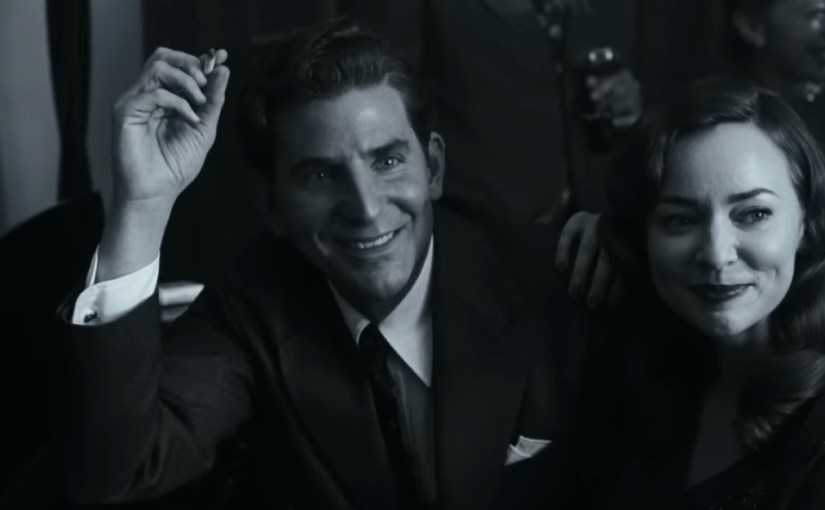
Bradley Cooper’s second directorial film suffers from the same ailments as his first film.  Like his interpretation of A Star Is Born, Maestro is not as good as the sum of its parts.

Constructively speaking Maestro is a gorgeous looking picture with a first half in a comfortable, historic black and white followed by its second half in vibrant colors.  The acting from Cooper, as Maestro Leonard Bernstein is well performed.  Carey Mulligan is sensational at no matter what age she is portraying actress Felicia Montealegre, the conductor’s wife.  Within the scenes they share together there is a beautiful rhythmic exchange of dialogue, written by Bradley Cooper and Josh Singer.  Cooper also looks powerful as he reenacts the conductor in front of his choruses and orchestras.  There are also inspiring shots that start out vague and unclear only to come into a full blossom as Cooper’s camera maintains an unbroken focus on an image. 

All that being said, none of it matters because the script from Cooper and Singer is muddied.  While Mulligan and the actor/director are in the midst of marital argument on Thanksgiving day, much is hard to understand as they naturally speak over one another, and what can be made out seems to mean nothing as they fight over people and issues that I do not believe are ever touched upon in the picture.  A scene like this looks like an actor’s dream piece, but it is hollow of substance. 

Like A Star Is Born, there are characters that enter Maestro for long winded scenes and then are never heard from again.  Either Bradley Cooper does not feel the weight of their importance, or he mistakenly presumes the audience will catch on.  An outdoor brunch with Felicia, Leonard, another couple and I believe a mentor or agent of Leonard’s seems well written, but I have no idea who those people are or what kind of influence they carry.  I was hoping to realize later, but those three amount to nothing.  Was the other couple supposed to be Leonard’s parents, and perhaps they were meeting Felicia for the first time?  I’m just not sure.

Bradley Cooper is a master with his camera.  An important moment in Bernstein’s life is when he gets the call to perform at Carnegie Hall when the other conductor calls in sick.  With its black and white imagery, a young and enthusiastic Leonard answers a phone call while a black square, with light from behind, occupies three quarters of the screen.  I was wondering if that was a stage curtain that needs to be lifted.  I was half right.  It’s a window curtain to the apartment Leonard shares with his gay lover.  The film moves into high energy as the would-be composer slaps his lover’s bottom and leaps down the stairs with a quick edit into the theater.  Mike Nichols would be proud. 

Another moment that struck me was Cooper pointing his camera up into the tall reaches of his apartment building staircase.  It’s quite dark.  You may have trouble realizing what you are looking at but then his son drops a paper airplane “good luck” note down to his father on the bottom floor.  These images blossom into something as alive as I would imagine the director/co-writer/actor regards Bernstein.

So, there is much to praise in Maestro.  Unfortunately, the assembly of these shiny, inventive, and magnificent pieces of film do not mesh very well together.  Bernstein led a homosexual lifestyle, even going so far as to welcome a lover into the home he shared with Felicia.  Carey Mulligan is excellent with expressions of resentment towards this other life that her husband follows.  However, the storyline never feels fully fleshed out.  We never get an opportunity to see the value or the menace of the other relationships that Leonard holds on to.  A so-so moment is accompanied by Bernstein’s saxophone opening to West Side Story.  The piece is used as a subtle tool of deceit and ignorant cruelty by Leonard while escorting his apprentice/lover in the home he shares with an angered Felicia in the foreground.  We presume the threat that Felicia likely feels, but it never comes to the surface. 

Bernstein’s career is glossed over as well.  Who pushed him to move on to bigger moments and acquire greater crescendos in his life?  I’d like to think it was Felicia, but I’m not certain.  Felicia has conversations with Leonard’s sister (Sarah Silverman) and other acquaintances, but what is she really alluding to or really talking about?

The most impressive moment in the film is when the Maestro conducts the London Symphony Orchestra at Ely Cathedral.  (I’ll own up and say I looked up what this scene was on IMDb.)  Bradley Cooper does a masterful reenactment of Berstein, dripping in shaggy grey hair sweat, dressed in a three-piece tuxedo with baton in hand.  This is a major multi talent working in films today.  Cooper studied film footage of the scene over a six-year period to get this six-and-a-half-minute unbroken moment caught on film.  It’s positively mesmerizing and I could watch this over and over again.  I’m waiting for the side-by-side comparison to appear on You Tube soon. It is reminiscent of what Rami Malek did as Freddy Mercury at the Live Aid concert at Wembley Stadium in the film Bohemian Rhapsody

Still, this scene much like a lot of the footage in Maestro seems to just be wedged in there.  There’s a balletic flow to some moments in Cooper’s film and then there are times that come out of nowhere and I’m left to wonder how exactly we arrived and what was truly going on in Bernstein’s life when he conducted at this historic moment time.  I’m watching a blazingly fine impersonation of Bradley Cooper doing Leonard Bernstein but I’m lacking the sub conscious dimension a biographical film should have at this point in a historical figure’s life.

Carey Mulligan is laying everything out to portray Felicia and her best moments come in the last third of the picture when the poor woman is struck with breast cancer that has spread to most of her body. We witness how she lives with the illness along with her separated husband by her side.  I’ve seen ill women before in films.  I know I sound crude by saying it’s nothing new.  I’m still allowed to be impressed though.  It’s a huge feat to bring a performance to this kind of level.

The makeup work is marvelous too.  Raw footage of the real Leonard Bernstein is shown before the end credits, and I’m impressed with how much Cooper looks in comparison.  The aging of him and Mulligan over the decades since the late 1930’s all the way through the mid 1980’s is perfectly captured.  At one moment, Carey Mulligan looks just like my mother.  I choked up a little bit when Felicia gazes upon Leonard at the Ely Cathedral.  Same hairstyle.  Same eyes.  Same expression.  Mom would have even worn a soft blue evening gown like that in the mid-1970s.

I wanted to like Maestro more than I did.  I almost feel guilty for not liking it as much.  There is magnificent camera work, sensational acting, wonderous music and perfect impressions on display, but the puzzle just did not have all of its pieces assembled together properly.  Sadly, Maestro lacks the focus it needs, either for the famed conductor’s amazing career or for his relationship with Felicia with his not so concealed homosexual lifestyle on the side.  Bradley Cooper put together a million magnificent moments, but it caused him to overlook the enduring structure of his subject.

POOR THINGS

By Marc S. Sanders

A sexually explicit rendering of Mary Shelley’s Frankenstein is brought to life by Yorgos Lanthimos’ film, Poor Things.  The strongest element of the picture is certainly Emma Stone’s uncompromising performance as Bella Baxter.  It’ll at least get an Oscar nomination.  The film will likely collect an abundance of nominations as well for it’s fantastical imagination in art direction, garish costuming and makeup and directing.  Maybe there will be some accolades for Willem Dafoe and Mark Ruffalo as well.  The adapted screenplay of Alasdair Gray’s novel, written by Tony McNamara, is a contender too.  It’s already being hailed by many outlets as a top 10 picture for 2023.  Yet, I grew tired of the novelty, and bored with the excessive sexual exploits of Bella.

Bella was once a pregnant woman who deliberately plunged herself off a London bridge to escape her misery.  Godwin Baxter (Willem Dafoe), who Bella appropriately recognizes as simply God, discovers her lifeless body in time to conduct an experimental procedure.  Replace Bella’s brain with that of the unborn child she carries and raise her from there.  God is scarred and altogether bizarre, and recruits a medical student named Max (Ramy Youssef) to observe the reborn girl’s progression and behavior; a grown woman with that of an infant who is learning to speak, walk, eat, and behave for herself.  After a while it is decided by God that Max will become engaged to Bella.  However, another man enters the picture, Duncan Wedderburn (Mark Ruffalo), who convinces Bella to accompany him on a sojourn.  God permits the idea as an opportunity for Bella to learn what is out there and not restrict her.  It is at this point, that Lanthimos’ film transitions from a blue tinge monochrome photography to vibrant color as Bella and Duncan travel to destinations such as Lisbon, Alexandria, and Paris, where Bella abandons a destitute Duncan to join a Parisian brothel.  Bella sees opportunity.  She can earn money for allowing men to put their things inside her.

I could not help but think of films like Forrest Gump, The Curious Case Of Benjamin Button and even Pinocchio while watching Poor Things.  An unwise subject discovers an independence to witness how a world around her functions.  As she learns, she matures, and she realizes she does not need to be held down by any party.  Shelley’s monster also broke free of its master’s clutches, tried to acclimate itself, but was revolted against for its grotesqueness on the outside and simply for being misunderstood.  Bella does not encounter such a fate.  Instead, she discovers acceptance but only at what she’s worth monetarily speaking with a simple attraction limited to individual thought.

Poor Things is constructed in the narrative themes of Yorgos Lanthimos’ preferred way of filmmaking.  Just like The Favorite, it’s deliberately weird and proud of it.  Nothing appears conventional.  You could substitute the settings for Paris, London and even the cruise ship that Bella and Duncan travel on for set pieces in Wonka.  It’s all fantasy with an adoption of real-world locales.  I surmise Lanthimos excuses these outlooks as a perception of Bella.  The settings look like they were spawned from a pop-up children’s book.  It’s all so different but I found it to be tiring. If someone were to argue that it is inventive as opposed to another stale backdrop of London Bridge or the Eiffel Tower, I wouldn’t debate them. Yet, I was growing tired of the piece. 

Moreover, the second act of the film concentrates abundantly on Bella’s adventures within the brothel.  Bella discovers the comfort of self-pleasure.  Later, the sensation is enhanced by the possibilities of getting satisfied by the company of a man.  The audience chuckled.  So did I, but I also squirmed quite a bit.  Bella insists to God that she wants to “go adventure,” and God allows her his blessing.  Yet, I found these series of sexual encounters to be overly exploitive.  Nothing is held back on what Emma Stone performs for the camera as a concubine for one needy, stinky, and ugly gentleman caller after another.  She takes it the traditional way, the oral way, the way from behind and much more.  She is captured with S & M straps across her nude body and the Oscar winning actress goes all the way to sending the scenes home.  It’s as if Yorgos Lanthimos needs to deliver his point, but it’s not enough to try it once, twice, or even three times.  I get it already.  Bella is used for whatever fetishistic imagination the male mind can fathom and more importantly she thrives off of the stimulation. She happily recounts how a pineapple can be used in the bedroom.  It’s even better that she can get paid for this lifestyle.  It sounds amusing while I type this all out, but I was not entirely comfortable watching it either.  I’ve seen enough porn in my day to not be shocked, and I wasn’t shocked.  Yes, I was amused at times.  Look, I don’t have ice water running through my veins.  Eventually, though, I was just bored.

Godwin Baxter is an interesting character as played by an always reliable Willem Dafoe.  Early on, we see how in addition to his experiment with Bella, God has toyed with the ideas of blending different breeds of animals together.  Roaming his estate are the likes of a dog crossed with a chicken and a pig crossed with…you know what I can’t even remember after seeing the film only once.  There was also a duck crossed with something.  Kind of sophomoric material and I think Lanthimos would accept that observation as a compliment.  Oh yeah, there was a goat crossed with something too; was that the pig?  What I think lacks from Poor Things, however, is to probe if these kinds of experiments should even be conducted and I cannot recall a conversation that goes in that direction.  Max seems taken aback by what he witnesses but he never investigates further.  This is all most unusual (a serious understatement) and it’s hardly ever questioned. Even Jeff Goldblum tossed a contrary opinion at the idea of Jurassic Park.

I suppose I wanted more from Poor Things.  Beyond sexual pleasure and what can be gained from it, isn’t there anything else that naïve Bella has to learn about?  I guess in conjunction, she also learns how to earn a wage and a gumption to stand up for herself.  What about love and the fear of death?  What about what else occurs within the world around her?  What about loss, or betrayal?  As well, Godwin’s occupations never go further than what we see he is capable and daring enough to do.  How do others consider his experiments?  What residual effects stem from his accomplishments?

I’m glad I saw Poor Things.  I think I’d like to see it again actually because I may gain a greater understanding from the attempts the script strives for in accordance with Lanthimos’ vision.  I know this film is not for everyone, though.  It’s proudly peculiar, but its plodding in its glee to step very far over a line that most filmmakers wouldn’t dare go.  It has my salute for what it has set out to do.  Nonetheless, I’m not sure I’m a fan of the material it served, though.

MAESTRO (2023)

by Miguel E. Rodriguez

DIRECTOR: Bradley Cooper
CAST: Carey Mulligan, Bradley Cooper, Matt Bomer, Sarah Silverman, Maya Hawke
MY RATING: 8/10
ROTTEN TOMATOMETER: 80% Certified Fresh

PLOT: This love story chronicles the lifelong relationship of conductor-composer Leonard Bernstein and his wife, actress Felicia Montealegre Cohn Bernstein.


Bradley Cooper’s Maestro is a film of scope and depth and tremendous technical artistry, both in front of and behind the camera.  The performances from the two leads contain some of the best acting I’ve ever seen, especially their argument during a Thanksgiving Day parade.  But I cannot deny that, for reasons I’ll try (and probably fail) to explain, I did not feel emotionally invested in the story until the final two or three reels, when something occurs that, if it were fiction, could easily be dismissed as a shameless attempt at Oscar-baiting.  The fact that this really happened lends these final scenes an emotional weight that was missing from everything that came before.

The story is straightforward, but beautifully told, visually.  After a brief prologue, we meet a young Leonard Bernstein (Bradley Cooper), in bed with his male lover (hope that’s not a spoiler), as he gets an early morning phone call that will change his life forever.  This opening scene sets the visual tone for the first half of the film: standard 1:1.33 framing as opposed to widescreen to give it a classic feel, as well as gorgeous black-and-white cinematography.  Indeed, this opening shot alone looks like it could hang in a museum of modern art and not look out of place.

Everything proceeds breathlessly from there, with some conversations held at speeds that would make the Gilmore Girls dizzy.  After a series of early musical triumphs, he meets the woman that will become the polestar of his personal life: actress Felicia Montealegre Cohn (Carey Mulligan, in a performance that will almost certainly win her an Oscar nomination).  After some verbal sparring/flirtation, it becomes clear to them, and to us, that they are meant for each other, despite his later dalliances with male fans and hangers-on.

I especially liked a scene during this early section where Felicia and Lenny – as his friends and family called him – dine with some older friends (or family? I can’t quite remember), and an older gentleman gives him some advice: “They’ll never give Leonard Bernstein an orchestra in America.  But Leonard S. Burns…”  I loved that scene because I loved how Bernstein’s entire career is a rebuke to that well-meant but wrong-minded sentiment.

This gentleman advises Bernstein to give up writing scores for musicals, but Felicia disagrees.  That sets up a wonderful sequence where Felicia and Lenny watch a rehearsal of the stage musical On the Town, with sailors leaping balletically, and then in a fantasy reminiscent of The Red Shoes, Bernstein himself becomes one of the sailors, and the dance becomes a micro-miniature of their relationship and his early successes.  It’s a thrilling little cutaway that had me grinning the whole time.

From there, the movie jumps forward chronologically in leaps and bounds, giving only a cursory glance at the 1960s before settling more or less for the rest of the film in the mid-to-late 1970s, with Bernstein’s face becoming the craggy icon that I personally remember from my own youth, while Felicia Bernstein somehow looks just as beautiful as she did thirty years and four children ago.  I would blame that on movie magic, but I mean, we are talking about Carey Mulligan here, so they get a pass.  And then the last act of the film arrives and we get a glimpse perhaps of why Mulligan receives top billing over the actor-star-director Cooper.  And that’s all I’ll say about that.

As I said, the movie looks amazing.  Obviously the period décor and costuming are all spot on, but the cinematography and direction – what theatre or film studies majors would call mise-en-scène – are just incredible to behold.  Another shot that stands out in my mind is a scene where Bernstein is conducting, and we get an angle where we are looking into the wings, but his undulating shadow looms large, and standing in that shadow, but still illuminated, is Felicia.  Verbal descriptions won’t do them justice, just see for yourself.

But as I mentioned, I just wasn’t invested in the story from an emotional standpoint.  I felt like I was watching an extremely inventive and ingenious exercise in moviemaking.  I suppose I could compare it to the recent sci-fi film The Creator, if that doesn’t get me accused of hyperbole.  Both films show supreme confidence in staging, cinematography, and direction.  But like The Creator, Maestro feels like something is missing where its heart should be for the first 75% of its running time.  Things happen, arguments take place, children are born, Lenny gets a little sloppy with his paramours, but I never felt like any of it really meant anything to me as the viewer.

I tried asking myself, “What statement is the film making?”  And I couldn’t answer that question, aside from fulfilling its purpose in presenting the facts of a story in almost documentary-like fashion.  But the performances and cinematography are so stunning that I must acknowledge that fact with a higher rating than I would normally give a film that doesn’t really grab me emotionally.  (EXCEPT for the last 25%, I mean…I don’t want to give anything away, but the last reels are heart-tugging.)

So, do you want to see this movie?  Well, certainly not if you are an absolute acolyte of Leonard Bernstein.  You’ll see some pretty cool stuff musically, but Maestro does not paint an altogether flattering picture when it comes to his personal life.  But if you want to see one of the best-acted, best-directed, best-LOOKING films of the year…Maestro is your ticket.

LEAVE THE WORLD BEHIND

By Marc S. Sanders

Anxiety and the unknown are the themes of Sam Esmail’s apocalyptic Leave the World Behind.  Actually, I can’t even be sure it’s apocalyptic or not until the end arrives.  Even then I wasn’t so sure.  

A family (Julia Roberts, Ethan Hawke as the parents, Farrah Mackenzie, Charlie Evans as the kids) make an impromptu getaway from New York City and rent a luxurious upstate air B & B for the next five days.  Upon arrival they are quickly relaxed amid all the amenities and beautiful outdoor pool.  A visit to the beach is refreshing until an oil tanker arrives from the deep ocean waters and drifts upon the shore with no warning.  Strange, but okay.  No need for that to ruin the vacation.

Then other unexpected occurrences happen.  A charming gentleman dressed handsomely in a tuxedo and his formally dressed daughter appear on the doorstep of the home in the middle of the night.  They are played very well by Mahershala Ali and Myha’la.  The man claims that he’s the owner of the house and while attending a concert in the city, they needed to make a quick exit and the best place to hold up was at this house.  Conveniently, he does not have any ID to prove his identity along with no specific personal items in this home he claims to own, not even the title ownership papers.  No photos of family tucked away anywhere.  He does have a key to the liquor cabinet, however.

Quickly, the scene is set where the internet goes down.  Federal blue screen warnings appear on every television channel.  Cell phones don’t work.  Deer, lots and lots of deer, appear in the backyard and then disappear.  Pink flamingos wade in the pool.  Elon Musk’s white Tesla cars have a stand out scene.  Roberts then recalls seeing a grizzled Kevin Bacon collecting an abundance of supplies when she made an earlier shopping trip in the local town.  

The paranoia starts to set in beginning with Julia Roberts’ character Amanda.  Amanda declares early on that she fucking hates people.  Hawke’s husband character, Clay, is not ready to hit any panic button and is happy to accommodate the strangers on the doorstep and just wait for the internet to be restored with a logical explanation.  Ali’s character, known as G.H., lends a welcome smile but it’s clear he’s not sharing all that he’s thinking or maybe what he knows.  

Sam Esmail’s film wants to provide a demonstration of how people respond when they don’t know all that’s going on, particularly when modern technology fails us.  A more relatable inconvenience is suggested as Mackenzie’s character Rose is frustrated that her streaming channel shut down just as she was starting to watch the final episode of the sitcom, Friends.  I felt her anguish immediately as my daughter consumes the trials and tribulations of Ross and Rachel on a repetitive cycle.  Ironically, streaming goes down and now the girl can’t watch Friends.  Netflix is the distributor of this film.  Yet, I think they just gave a ringing endorsement for a dying medium.  If only this girl collected the DVDs.  

My problem with Leave the World Behind is the slow pace of it all.  This is one of those movies where its triumphs hinge upon the final five minutes or so.  Either you applaud what sums up the last two and a half hours you invested, or you roll your eyes at where the picture drops you off with the urge to throw your popcorn at the screen.  

Watching Leave the World Behind brought back experiences of shows like Lost or The Walking Dead.  The set ups are brilliantly intriguing from one development to another.  The follow through on each new happening amounts to nothing or at least not anything where I can suspend my disbelief.  Questions are answered with questions.  It’s like calling an insurance company for information following a car accident.  You just want to slam the phone down.

When Ali’s character chooses to check on a neighbor, he sees a watch embedded in the sand nearby.  He picks it up only to get a fright that makes us jump.  The viewer sees nothing else and we are led to believe that Ali sees nothing else, until Esmail goes to a wide overhead shot showing the massive wreckage of a commercial airplane crash, complete with black smoke and flames and endless amounts of luggage and debris.  It’s hard for me to buy a scene like this.  G.H. doesn’t smell any burning fire nearby?  He doesn’t hear anything? He doesn’t see any other debris left mere inches away from the wristwatch only until Esmail’s direction goes from closeup to wide?  I cannot accept the character’s tunnel vision.  My eyes would go towards the crashed plane before I’d ever discover a wristwatch.  It’s just eerily quiet.  The director’s manipulation is a set up shock for me, the viewer, to grab my attention.  Yet, it backfires because it’s completely implausible.  There are many moments like this in the film.

Other than Marhershala Ali (who I still insist should be considered a viable candidate for the next James Bond or a 007 adversary), the rest of the cast is not dynamic enough.  Julia Roberts is working a little too hard.  Ethan Hawke is not working hard enough.  The dialogue is often boring arriving at no conclusions.  Thankfully, most scenes are enhanced by unusual camera angles from Esmail’s artistic freedoms with his lens.  It’s reminiscent of the deliberately weird structure that Stanley Kubrick often did with The Shining.  Nevertheless, it’s exhausting after a while.

Sam Esmail’s work is no doubt shown through long ponderous imagination.  I certainly felt Julia Roberts’ frustration on display, but still, I got the point.  I see no reason to repeat the same lines at higher volume.  I got the point of a lack of trust between the two parties being brought together.  However, I just got tired of the act.  The racial elephant in the room is even suggested.  Though I wish it wasn’t. People quickly forget that George Romero’s Night Of The Living Dead steered clear of any racial factor, and just look at the legacy of that film from the era of the Civil Rights Movement.

The ending that arrives seems inevitable.  Without revealing anything literal, it is doom and gloom.  However, I might have had more appreciation if suddenly the TV and internet got restored and these odd occurrences all just happened to be one big nothing.  At the very least, then I’d understand that this whole freaking planet would just go nuts without their You Tube, Instagram and Netflix.  

You might have had a conversation at one point in the last decade or so that began as “How did we ever manage to survive before the internet?”  The truth is we did just fine.  The adults in Leave the World Behind never stop to remember that though. 

MAY DECEMBER

By Marc S. Sanders

A blaring piece of pounding piano music from Marcelo Zarvos hearkens awake the silent opening few seconds of Todd Haynes’ May December against that of a caterpillar/butterfly terrarium.  I don’t like the music and I’m immediately reaching for the volume control on my remote.  It’s only as the film progresses, however, that I develop a grateful appreciation for the often-disruptive soundtrack.

Julianne Moore and Charles Melton are Gracie and Joe Yoo, the relationship referenced in the film’s title.  Twenty years prior, Gracie, at age 36 who already had children and a husband of her own, had an affair with Joseph, a 13-year-old seventh grader at the time, in the storage area of a Savannah GA pet shop where they worked together.  Gracie went to prison for the crime of statutory rape and delivered their baby while serving her sentence.  Once her term was finished, the two continued their relationship and got married, bearing a set of twins, a boy and girl.

As the twins are approaching graduation, a television actress named Elizabeth (Natalie Portman) has arrived in town to do observational research and interviews to prepare for her portrayal of Gracie in a made for TV account of what occurred.  On the surface, all seems calm with the past put behind everyone.  Townsfolk will say that Gracie and Joe are so appreciated and loved in the community, and they love each other.  However, the script from Samy Burch will reveal otherwise as Elizabeth develops different kinds of connections with Gracie and Joe, respectively, as well as others she speaks with in town, including Gracie’s attorney, her ex-husband, the pet shop owner, and Gracie’s now adult son from her first marriage.  His name is Georgie (Cory Michael Smith) who was close friends with Joe until the affair was revealed, and now let’s everything hang out avoiding any kind of subtlety.  He’s even candid about what he believes occurred in Gracie’s childhood that could have dictated why she committed her act.

Todd Haynes’ picture is a complete character study of a story that many would regard as sordid or seedy trash material to talk about over dinner with friends.  People like Gracie and Joe may seem real to any of us who live in another part of the country.  We will never have any kind of relationship with them.  They are meant for cover stories in People magazine and The Inquirer.  It’s soap opera junk or trashy romance novels brought to reality.  It’s easy to judge the kind of person Gracie in particular is because what she has done is wrong and disturbing.  All these years later and they are still receiving packages on their doorstep that contain feces.  Gracie committed a terrible crime, but what does an act like this say about someone who would go to that length, so many years later? 

The performances in this film are astounding.  Charles Melton especially.  Samy Burch writes a disturbing and well-drawn character with Joe.  He’s thirty-six years old now, in 2015 when this story takes place, and as his children are graduating and are about to make their home an empty nest, he seems so much more immature than them.  A telling scene occurs when his son takes out a joint and practically instructs Joe on how to use it.  Joe coughs uncontrollably.  He gets ill, and it is his son who is calming him down.  Gracie also appears to treat Joe like the child she bedded all those years ago, instructing him to straighten up the house and put away his butterfly garden, or not to get into bed because he reeks of the BBQ he used earlier in the day.  Joe lives in an adult body, but he skipped his progressive years to go straight into marriage and fatherhood, and therefore he has not had an opportunity to grow up.

Julianne Moore plays delusional all too convincingly.  She might have confessed guilt to her crime.  She served her time, but as her attorney and Georgie will imply, none of that means anything if she still believes she did nothing so terrible.  She’s now married to Joe, who is now well past legal age and has had a twenty-year relationship with him, as well as the children they share.  Gracie happily accepts her new role as a baker in the community.  Yet, it doesn’t even occur to her that some acquaintances merely place orders just to keep her occupied.  Either Gracie chooses to wear blinders or she’s truly unaware of how she’s considered; still remaining a pariah within her social circle.  It’s devastating when someone cancels a cake order, tells her to keep the money that was paid for the work, but is also told that the cake no longer needs to be baked.  Especially now, as her children from her second marriage are leaving the home for college, she is realizing that she has no worth or value to anyone anymore.  No one even wants to sample her cake any longer.  Part of me wants to say it serves her right, but with Julianne Moore’s performance, it’s also terribly heartbreaking.  There are acts we commit in our lives that we will never, ever recover from.

Natalie Portman adds another accomplished performance to an outstanding resume.  Todd Haynes assists with demonstrating how manipulative and subtle Elizabeth, the starlet actress, is supposed to be.  When she first arrives at the couple’s home for a summer barbecue, Haynes captures Elizabeth with no jewelry on and wearing a hat and sunglasses that she never takes off.  Gracie, Joe and the others come to greet her and offer her a hot dog, but Elizabeth doesn’t reveal herself.  She keeps herself hidden.  She’s begun a camouflage as she initiates her observations.  As the story moves on, we get to see how perhaps a Julliard trained method actor prepares.  She begins to apply her makeup just like Gracie would.  Elizabeth dresses like Gracie.  She wears her hair like Gracie.  Elizabeth duplicates Gracie’s hand gestures captured in news articles.  Most significantly, she develops a bond with Joe, just like Gracie did.  A crumpled-up letter from Gracie that Joe has held on to since they began their affair twenty years ago, is reintroduced later in the film that Elizabeth pounces on.  Todd Haynes captures an unbroken take of Portman reciting the letter in a mirror and it’s an eye-opening moment for the character.  Suddenly, I don’t see Elizabeth anymore.  I see Gracie, and Natalie Portman is playing the predatory sex deviant.

By 2015, this story is a been there/done that.  The general public has stopped caring.  Only a few still carry an anger with those packages that are left on the doorstep.  Otherwise, there’s nothing left to share or care about.  Yet, May December does a fine job of showing the residual detritus of what’s come from such an illicit affair.  Gracie’s husband before the affair will say he’s over the betrayal and humiliation, but clearly he’s not.  Gracie now has two families.  The first family from a standard marriage with adult and teen children she greets as if they are neighborhood kids.  She’s on the outside of what she used to have as a mother. Then there is the second family consisting of the college age daughter she delivered while in prison and the twins that came thereafter.  An awkward moment occurs in a restaurant when the two families run into one another.  No one is well recovered from Gracie’s transgressions, even if she served her time.

Reflecting back on the music, I wondered why it made such a presence in this intimate, quiet drama.  It literally pounds at you every time it is reintroduced.  I believe it first serves as an abundance of the cheesy melodrama that naturally spawns from an unwell story like this.  Elizabeth is set to appear in a television movie adaptation of this ripped from the headlines account, much like a Lifetime movie of the week which shamelessly thrives on this kind of gossip trash.  The music seems to tell me to “LOOK AT WHAT SHE DID!!!!!!”  Later though, Marcelo Zarvos’ composition seems to remind me that this is not just “another story” as Elizabeth freely dismisses it when talking to Joe during a personal crisis of insecurity.  Joe immediately snaps back at her that this is not just some story.  “This is (his) life!!!!!” 

Before Todd Haynes’ film begins, terrible acts have occurred.  During the course of the movie, we see that terrible results remain.  The narrative of May December is kept interesting because we don’t learn everything at once.  There is exposition to uncover as soon as the film begins all the way to the very end where Gracie undoes all of Elizabeth’s prep work with a curveball truth.  Then, we witness Elizabeth do one take after another on a soundstage with a pet shop prop snake twisting around her arms as the seduction of a young, teenage boy is reenacted.  I don’t think Elizabeth got a convincing grasp on what makes Gracie and Joe tick, and now she questions what she invested in and what she sacrificed of herself in order to learn about the character she committed to portraying.

It’s disturbing what Gracie did.  Perhaps it’s at least as ominous that it is now being duplicated for the sake of entertainment in front of a worldwide audience.