NIGHTMARE ALLEY (2021)

by Miguel E. Rodriguez

Director: Guillermo del Toro
Cast: Bradley Cooper, Cate Blanchett, Toni Collette, Willem Dafoe, Rooney Mara, David Strathairn
My Rating: 6/10
Rotten Tomatometer: 80% Certified Fresh

PLOT: An ambitious carny with a talent for manipulating people with a few well-chosen words hooks up with a female psychiatrist who is even more dangerous than he is.


No good movie is too long; no bad movie is short enough. – Roger Ebert

Nightmare Alley is director Guillermo del Toro’s longest film to date at exactly two-and-a-half hours.  Going by Ebert’s dictum above, I have to say that it was too long by maybe a half hour or more, but that doesn’t make it a “bad” film.  Just a poorly edited one.

The story revolves around a Depression-era drifter with a troubled past who becomes a carny with the kind of flea-bitten traveling circus that tours all the urban hotspots of Iowa and Kansas, and which is almost all sideshows: a psychic (Toni Collette), a giant (played by del Toro regular Ron Perlman), a rubber man, a girl impervious to electrical currents (Rooney Mara), and a geek show, among other things.  What’s a geek show, you ask?  Why, that’s where people pay two bits to watch a man bite the head off a live chicken.  We are shown one such performance in the opening minutes of the film.  It’s hard for me to believe people were entertained by this, no matter how long ago it was.  I mean, the geek did not look like he was having much fun…although he did seem to be having more fun than the chicken.

Anyway, to make a long story short, the carny, named Stanton (Bradley Cooper), befriends the psychic and her husband (David Strathairn) and reveals that he has always been a student of human behavior, and with a few quick observations, he can make factual statements about someone that boggle the mind.  One thing leads to another, and eventually he leaves the carny behind, with the electrical-current girl, Molly, in tow.  Soon he is headlining nightclubs and posh bars with his mind-reading act, with Molly as his assistant.  One night a beautiful psychiatrist with a level-headed gaze (Cate Blanchett) sees one of his performances and suggests a con: she will provide detailed information about her rich and powerful patients on the sly, and he will do command performances for these elites, making them both rich.  What happens next, I leave for you to discover.

(I must be honest: this is not the kind of film I was expecting from del Toro.  A character study of tragic greed and hubris?  Where are the monsters?  The supernatural nightmares of the title?  But I’m always telling people to criticize the movie the filmmakers made, and not the movie you wish they had made.  I press on.)

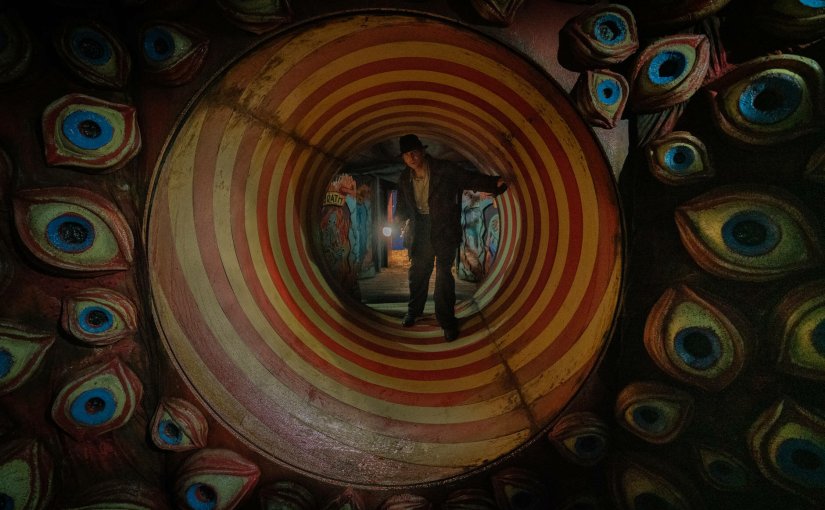
I’m finding it hard to summarize my thoughts here.  The movie looked great.  I mean, it looked amazing.  At one point, Stanton runs into the carnival’s funhouse looking for someone, and it’s filled with the kind of over-the-top prop demons and fake ghosts that made me hope we would get a later sequence where these things came alive in some horrifying way.  But no, it’s just intended as throwaway scenery, glimpsed once and never seen again.

There is an extended sequence where Stanton tries to revamp Molly’s act as the “Electric Girl”, coming up with new costumes, new props, new patter (patter is important with sideshows), and it’s a relatively lengthy sequence which felt like it was setting something up.  And, yeah, there’s kind of a payoff, but not the kind I felt it was building towards.

The movie left me with a vague sense of frustration throughout.  We are fed gobs of information about the tricks used by sideshow psychics, the sad ploy used to hire the geeks, the psychic’s husband looms large in the story and then abruptly becomes a non-factor, and it just went on and on and on.  Then in the “riches” part of the rags-to-riches story, Stanton has become insufferable, a believer of his own press releases, willing to put his livelihood (and his life) in jeopardy for that one last big job.

This is all very intriguing stuff, on paper.  But as executed and written, there seemed to be unnecessarily long scenes with loads of information being dumped on us with nothing moving the action forward.  I would pay money to watch Cate Blanchett read a Denny’s menu, but even her extended “therapy” sessions with Bradley Cooper felt interminable.  I felt like those random crowds in Monty Python and the Holy Grail periodically yelling, “GET ON WITH IT!”

To be fair, the Stanton character does eventually get his comeuppance, in literally the final ten minutes of the film.  Full disclosure, I will say without spoilers that it is very gratifying, it had me and some random dude behind me exclaiming loudly in the movie theater, and it features some of the best acting Bradley Cooper has ever done.  But…it came long after I had started shifting in my seat and wondering if I would miss anything important if I ran to get some more candy.

I give Nightmare Alley a 6 out of 10, mainly because it looks so damn good.  del Toro has yet to make a movie that doesn’t look masterful (yes, even Blade II is a beauty to behold).  Also, the acting all around is top notch.  There’s talk Cooper may get an Oscar nod, which wouldn’t surprise me.  But it boils down to a very, VERY long drive for an all-too-short day at Denouement Beach.  A ninety-minute movie crammed into 150 minutes.  Alas.
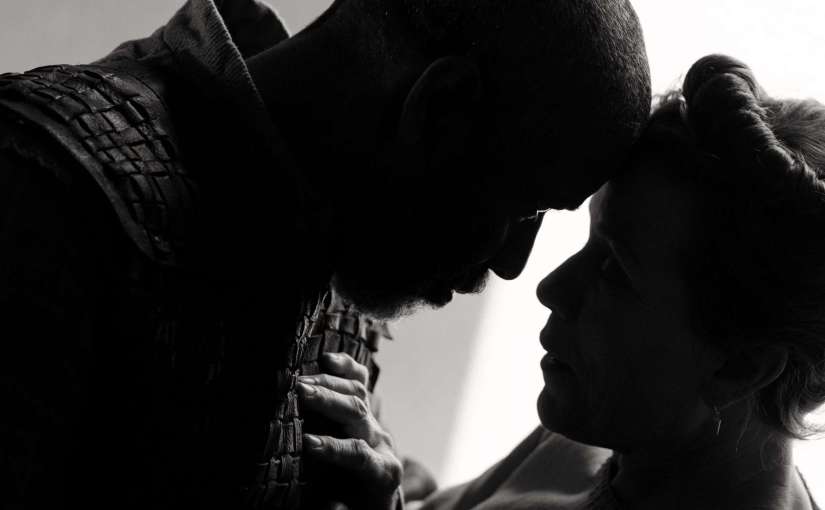
THE TRAGEDY OF MACBETH (2021)

by Miguel E. Rodriguez

Director: Joel Coen
Cast: Denzel Washington, Frances McDormand, Alex Hassell, Brendan Gleeson, Corey Hawkins, Stephen Root
My Rating: 8/10
Rotten Tomatometer: 93% Certified Fresh

PLOT: William Shakespeare’s tragic tale of murder and guilt gets a stylistic re-telling with moody direction from Joel Coen and powerhouse performances from its two leads.


I am of two minds when thinking about Joel Coen’s take on William Shakespeare’s Macbeth.

First, I must admit I am no Shakespeare scholar. I can count on one hand (maybe two) the number of filmed Shakespeare adaptations I have seen, and I can count on one finger how many theatrical productions I’ve seen. I’ve only read two of the Bard’s plays beginning to end: Othello and Julius Caesar. I have acted in a production of the popular Shakespeare parody The Compleat Workes of William Shakespeare (Abridged), but I doubt anyone would find that an acceptable credential.

So I must be honest and say that, when it comes to the nitty gritty specifics of the dialogue in The Tragedy of Macbeth, I was lost for, oh, 50-60% of the time. Like, “out to sea” lost. I am moderately familiar with the story, so in those times I was lost, I was able to glean what was going on or what was being said in context. I know who Banquo and Macduff and poor Duncan are, and so was able to follow their various comings and goings as revealed in the frequent chunks of expositional dialogue.

[Full disclosure: If the name of the Ross character is ever actually mentioned in the film, I must have missed it…for the duration, I wondered what his name was, and he is a vital character in certain scenes.]

But I have to say, whatever I missed in the dialogue was more than compensated for by the sensational visual language of the film, and by the stunning performances from the two leads.

First, it was shot in glorious black-and-white, and it was all shot on soundstages, giving the director (Joel Coen, working for the first time without his brother Ethan) and cinematographer (Bruno Delbonnel [Amélie, Across the Universe]) absolute control over the lighting and shadows. The resulting visuals look like something out of the early silent films of Fritz Lang and, especially, F.W. Murnau, with compositions that must have taken hours and hours to set up, with high-contrast shadows creating elaborate framing devices on walls and floors. When Macbeth famously sees a dagger before him, it’s accomplished by shining a reflective light on a highly polished door handle. In the few shots that take place outside the castle, more often than not shadows are moving slightly in the frame, as if the sun or the clouds were in constant motion. Those shadows always seem to be sliding down over the characters, perhaps mirroring Macbeth and his lady’s constant downward spiral towards their fate.

Another factor in the visual look of the film was the decision to frame it in the standard 1:33 ratio, sometimes known as the “Academy” ratio. Basically, instead of watching the film on a rectangle-shaped viewing area, you’re watching it on a square set in the middle of the screen. One might think that doing so would limit the possibilities of visual expression, but not so. For me, it had the effect of making everything a little more claustrophobic, which I think is important in cementing the state of mind of our two main characters. As the guilt over their evil deeds threatens to overwhelm them both, the smaller screen is a constant, subtle reminder that their options are limited, and becoming fewer as time goes on.

All in all, a visual feast, in a nutshell.

But what makes The Tragedy of Macbeth even more delightful to watch are the performances. To be sure, everyone involved acquits themselves incredibly well. (Keep your eyes open for a young man named Harry Melling, aka “Dudley Vernon” from the Harry Potter film franchise.) But the two that shine brightest are Denzel Washington as Macbeth and Frances McDormand as Lady Macbeth.

Lady Macbeth is as quietly vicious and malicious as they come, and it helps that her attitudes are quite at odds with McDormand’s kind, open features. It is a little startling to see the face of good-hearted Marge Gunderson fiercely exhorting Macbeth to commit regicide in sharp, clipped tones, her whispers piercing the air between them like poison darts. Her despair at her husband’s inability to calmly deal with the guilt is clearly evident; when he reveals he went above and beyond what was originally planned, her shocked “are-you-kidding-me” looks are worth pages and pages of dialogue. And, of course, in the late stages of the story, when madness finally overtakes her, when no amount of washing will wipe the blood from her hands, her animalistic howls of anguish are almost worth the price of admission.

But the highlight of the whole venture (for me, anyway) was watching Denzel Washington demolish the screen as Macbeth himself. Words fail me. I haven’t seen a performance this amazing and praiseworthy since Daniel Day Lewis in There Will Be Blood. I may not be a Shakespeare scholar, but I know enough to understand that making it flow as easily as normal speech takes a great deal of research and rehearsal and collaboration. What I would not GIVE to see him reprise this role on stage somewhere! He navigates the twists and turns of Shakespeare’s tortured syntax as easily as if he was telling a story about his day at work. As with any great performance, there are peaks and valleys, and his teeth-clenching, fist-pumping outbursts are used as periodic punctuation marks, not entire sentences. There is a brief scene where he angrily berates a messenger, and his seventeenth-century taunts and name-callings are as surgical and cutting as anything from Mamet. It’s a miraculous performance, and I would not be surprised in the least if he gets another Oscar nomination. (The same goes for Frances McDormand…what a duo!)

(I would be remiss if I did not also mention the performance by a little-known actress, Kathryn Hunter, as the famous Witches. Her voice and face open the film, and if there’s any justice, it will go down as one of the great opening sequences of the movies. There are portions of her performance that must have taken great courage and trust in director Coen, to make sure she did not come off as simply a kook. She does not. She is one of the most ineffably creepy individuals in a movie in quite some time. I dare not say more without ruining the effect. But she was breathtakingly successful.)

When I walked out of The Tragedy of Macbeth, I can clearly remember thinking, “Well, great movie, but one that I wouldn’t purchase for my home video library, because how can it possibly equal the experience of seeing these precise visuals married to these insane performances, on a big screen?” But the more I think about it, the more I think I will pick up a copy when it becomes available, for a couple of reasons. First, a little extra culture never hurt anyone, and second, it will be worth the purchase price just to see Washington and McDormand tear up the screen as the Macbeths again, not to mention those stunning visuals, AND those creepy witches. This movie is really growing on me.

THE MATRIX FRANCHISE

By Marc S. Sanders

Miguel and I went to see the The Matrix Resurrections last night and honestly, when I woke up this morning, I had forgotten I’d even seen it.  That’s because, other than the original Matrix film, the subsequent chapters are about as special as cheap food court Chinese food.  When you get home from the mall, you recall what you may have window shopped, but you never reflect on what you had for lunch; well maybe your gut does later on, and that’s certainly not doing you any favors. 

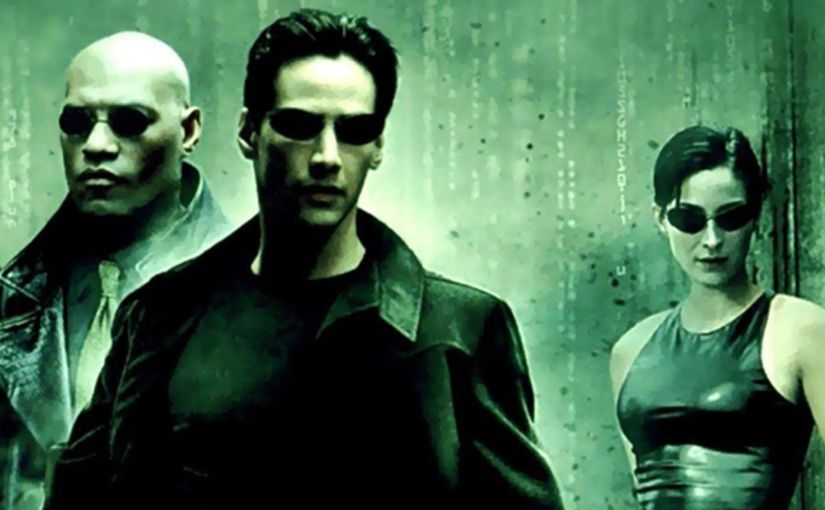
When The Wachowskis introduced the world to The Matrix way back in 1999, it was one of the biggest surprises in films.  No one saw its uniqueness coming.  Everyone was focused on the over hyped resurgence of Star Wars, or a kid who desecrated a pie, or a hand held video film that was seemingly terrorizing audiences.  Yet The Matrix arguably may have had the best longevity that year.  It seemed like a combo sci fi/super hero picture with the players looking ultra-cool in designer sunglasses and leather night club outfits.  Guns and jiu jitsu flew off the screen, but it was done in a new visual kind of way.  Bruce Lee would have likely been a part of this picture had he been alive.  When someone took a kick to the face, it was edited super cool looking sloooooowwww motion.  Bullet time became a thing with projectiles warping through the space between characters and these players, especially Keanu Reeves as the messianic Neo and Carrie Anne Moss as Trinity, would bend and twist and twirl acrobatically (again in slow motion style) to dodge machine gun fire and endless shrapnel.  The look of the film remains absolutely superb.  Nothing (other than maybe the film’s sequels) has duplicated what was accomplished here. 

As well, the original Matrix stands apart from the other three because it actually told a story and developed its protagonist and his mentor (Laurence Fishburne as Morpheus) into fleshed out characters.  It also went so far as to describe what the Matrix is, and what the world outside of that realm represents.  Like all humans, Neo, also known as Thomas Anderson, was actually under the control of a machine-like community designed to sustain a world known as the Matrix, and…well…that’s just bad!  There was solid storytelling here with setting and character development that was later accompanied by well-choregraphed action and pulse pounding club music.  When the film ended, audiences couldn’t wait for more and Warner Bros happily greenlit two more films that were shot back-to-back.  Only the train derailed from there.

Gearing up for the 2021 installment, directed by Lana Wachowski, I watched the first three films again.  Other than the first film, I had forgotten much of what occurred in the 2nd (The Matrix Reloaded) and 3rd (The Matrix Revolutions) pictures.  I realize now that I only forgot what really wasn’t there.  Substance!  Of the two films, Reloaded is likely better, thanks especially to an outstanding highway car chase involving sci fi effects of the characters bouncing off of big rig trucks, motorcycles and car roofs.  A pair of characters dressed in evil white leather with dreadlocks morph in and out of the vehicles and concrete streets as well.  The scene comes late in the film and only wakes you up from the meandering ahead of it.  Truly, it’s hard to comprehend what the hell is being explained in this second film.  The Wachowskis almost would prefer you be impressed with the monosyllabic vocabulary that’s exchanged with each character.  Dialogue doesn’t advance the story any further from where the first film left off.  All that I gathered was our band of rebels who successfully broke free from the slave-controlled Matrix are regrouping at the promised land of Zion, and the machines (squid like metal robots with countless red light bulbs) are advancing for an attack.  Morpheus, Trinity and Neo take it upon themselves to reenter the Matrix (because they look so much cooler there) and do who knows what.  Near the end of the film, Neo walks down a long hallway, opens a number of doorways and encounters the one supposedly responsible for the Matrix, an older gentleman known as The Architect.  This moment was intended to be a highlight of the film and yet it was anything but.  This architect spews out word diarrhea at an alarming rate that only clouds your mind further and further.  The guy has a great radio voice and has an antithetic appearance against the heroic looking Neo, but what in the hell are we supposed to do with any of this?  What’s the point?

On to Revolutions which begins exactly where Reloaded left off.  This is a picture that could have had a running time of thirty minutes at best.  The robots are finally attacking Zion.  One character who seems like he should be important or necessary to the Matrix storyline saddles up in a robot suit equipped with massive machine guns and The Wachowskis make the poor choice of feeding their audience a good seven or eight minutes of this guy spraying endless amounts of bullets in an upwards direction towards the infinite swarm of octopi robotic armies.  His guns never run out of ammo.  He just bellows as he continues to fire.  Where’s the story here?  Where’s the innovation that the first film offered?  Also, what goes up, must come down.  Shouldn’t some of that ammunition have dropped down in a hail storm eventually?  Reader, if I have to ask that last question then you know there’s not much to pay attention to in this film.

The wisest character of the Matrix films, Morpheus, is given very little to say or do in either film.  Fishburne stands in the background and let’s everything happen around him.  He’s not utilized to explain anything like he was in the first picture.  His skill for teaching the audience has been completely diminished.  Whatever he had to offer was exhausted following the first picture.  With Revolutions, especially, the filmmakers rely on B characters that we’ve never really gotten a chance to know or remember or adore like Yoda or Jabba or even Boba Fett in the films that followed the original Star Wars. In fact, Revolutions seems more concerned with its extras than any other film I can recall.  So much so that when a major character from the first film has a death scene, you hardly care for the loss.  There wasn’t much to expound on the character after the original film.  Revolutions only relies on the war nature of the human armies against the monochrome metallic squid race.  Beyond shooting at one another, where’s the conflict?  Ms. Pac Man and Frogger have more depth than any of this.

That’s the problem with these films.  A discovery was made with the 1999 installment and the filmmakers opted to capitalize on the effects and not the challenge of story. 

Furthermore, and this goes back to the original film when I first saw it in theatres, I was always of the mindset that I’d rather live in the Matrix.  After all that Morpheus has revealed to me, the Matrix still seems like the better place to reside.  The real world consists of living on a dirty, dreary ship and eating slop for food while wearing torn sweaters and having electrical plug orifices running down my spine.  Who wants that?  A Judas character from the first film turns on his crew by telling the evil Agent Smith that he will bring them Neo as long as in return he doesn’t know that he’s under the control of the Matrix and he can savor the taste of a juicy steak again.  Now I’m with this guy.  Aren’t The Wachowskis as well, though?  More footage and highlights take place in the computer mainframe of the Matrix than outside of it.  Thereby, more cool looking action sequences can happen and the cast appears more glamourized.  The films want us to fear the horrors of the Matrix on the humans by showing them plugged into wires while drowning in a pod like puddle of KY jelly embryonic ectoplasm.  You know what?  What I don’t know won’t kill me.  So, leave me be.  Perhaps the argument would have been more convincing had the environments been reversed.  Put the rebels as slave dilemma in the real-world areas and the utopian setting within the Matrix.  Then I might buy the problem here.

The newest film, Resurrections, is nothing special and nothing new.  It’s rather boring actually.  Revolutions was boring too.  It only kept me awake because it was two hours of headache inducing noise.  With the new 2021 film, apparently a new Matrix has been developed and thus a new Neo and Trinity have been conceived.  The antagonist is represented by Neil Patrick Harris and that’s about it.  Miguel pondered much, following the picture as to what was going on.  That’s not a good sign for a popcorn action flick, and it’s consistent with what was done with the 2nd and 3rd films.  What the hell is anyone talking about. Once again, dialogue moves to a beat of answering questions with questions. Even the allies speak to one another that way, and if it is not a question, then it is a cliché of some sort.  Don’t these people want to help one another?  If so, then speak to each other like your four years old and get to the point.  The action scenes drone on and on.  A goal of the picture is to keep Neo from finding Trinity because if they do, then the Matrix crashes.  Okay.  That’s simple enough.  Yet (spoiler alert), when they do find each other, somehow this new Matrix continues on.  Huh??????  The movie just betrayed me, and I don’t like that. 

Miguel attempted to conjure up the idea that Lana Wachowski was trying to demonstrate her transition from a man to a woman and this new picture was a representation of that.  Could that be true?  Maybe, but it never occurs to me while I’m watching the picture.  Am I watching The Matrix Resurrections because it’s the newest Wachowski film?  No.  This isn’t a Quentin Tarantino or Christopher Nolan piece.  This is leather and gunfire and sunglasses and noise, all depicted in a green DOS computer hue lens.

The Matrix was always worthy of a sequel; a subsequent follow up that explored imagination and perhaps more background.  What has Neo not yet uncovered.  Yet, the series as a whole continues to deny those opportunities and simply settles for cool looking visuals that get overly exhausted and tired.  No new skills are featured with each passing film.  Over the course of the series, the big bang, so to speak, of the first Matrix never reveals itself.  Instead, we are mind controlled viewers relegated to depend on overlong dialogue with no point and no where left to explore.  We are simply gifted with Neo punching Agent Smith and/or infinite duplicates of Agent Smith with no one getting weakened or wounded or defeated.  Look no further than an early fight scene in Reloaded.  The scene goes on forever.  The editing is amazing.  So is the choreography but after four minutes of this, it’s time to show some progress.  The Wachowskis limit their imagination to just having Neo fly away.  Scenes like this only allow me ample time to exit the theatre for a bathroom break and return having not lost out on any storytelling.  My friends, you can find plenty of bathroom breaks in this series of films.

The Matrix Reloaded, The Matrix Revolutions, and The Matrix Resurrections should never have been made.  Producer Joel Silver and Warner Bros would argue otherwise though.  Their wallets continue to get fatter, but at the cost of controlling moviegoers’ appetite for something more when all they really got was dry rice and overcooked orange chicken from the food court.

WEST SIDE STORY (2021)

By Marc S. Sanders

Okay!  Let’s get the comparison out of the way first.  Steven Spielberg’s interpretation of West Side Story far exceeds the original 1961 version from Robert Wise and Jerome Robbins that won the Best Picture Academy Award.  I strongly encourage you to see this new film in theatres before it’s gone.  If you miss it, be sure that when you watch it at home, you have the highest upgraded flatscreen with the most enhanced sound system imaginable.  West Side Story of 2021 is a gift of sight and sound.

What Spielberg accomplishes with an updated and outstanding script from Tony Kushner is a more fleshed out, grittier and honest account of territorial entitlement and heated prejudice when the west side of New York City was on the brink of catering to a wealthy white populace and the Puerto Rican community had become established as Americans, even if they were never considered equals.  )The best promise the Puerto Ricans have here for a life is to live as doormen and housekeepers.)  The music and lyrics are more meaningful than ever before.  The characters are given more depth.  The settings become characters themselves.

West Side Story is another example of solid evidence that Steven Spielberg is our greatest modern director.  He not only focuses on the positions his characters hold, allowing them to act with passion and humor and heartache and despair, but he also takes advantage of the props and settings allowed to him beyond limits.  To watch classic numbers come alive not just with the outstanding vocals and dancing, but to see everything in the frame serve a purpose is so gratifying. 

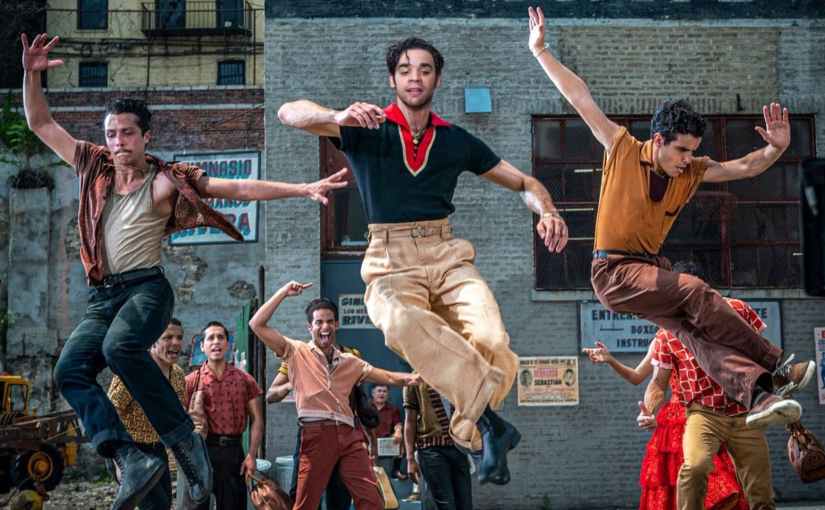
When the Jets strut and ballet down the city streets claiming their elite status in song, Spielberg makes sure these guys literally stop traffic.  Unlike the mundane placement of the winning song “Officer Krupke,” in the original film which only happens on a sidewalk, Spielberg place the boys in the police station where the props of papers and office supplies along with the furniture pieces serve to lampoon the city judge, the cops, the psychiatrists and even themselves.  Maria (20-year-old sensation, Rachel Zegler) owns her rendition of “I Feel Pretty” while the picture enhances the performance with a run through the dress department of Gimbell’s.  Clothes and accessories fly off the racks to send Maria’s enthusiasm of love and happiness into the heavens.  Kushner and Spielberg make a very wise modification to have “Cool” performed by the romantic lead Tony (Ansel Elgort) as a means to calm down his buddy, Riff – leader of the Jets (Mike Faist), before going into a head-to-head rumble with Maria’s brother, Bernardo, leader of the Puerto Rican gang known as the Sharks. Spielberg places these guys on a rickety old dock complete with wide gaps in the floor for the boys to leap over along with smooth planks to slide around on while tossing a gun around like it’s a football.  These characters teetering on manhood beautifully display their recklessness for danger and pride.

Rita Moreno is the significant attraction early on as she fills the Doc mentor role in the local drug store.  Wise & Robbins’ film never made Doc into much of a mentor.  Moreno fills that void.  She portrays a new character named Valentina, the widow of Doc, and the film’s tool of sensibility during these troubled times.  Kushner creates a fleshed-out character who explains that while she married a Gringo, she remains a Puerto Rican and there’s no room for bloodshed.  She has learned to live with others, and now Tony and Bernardo and Riff and the rest need to do so as well.  In another writer’s hands, this might come off preachy.  Not with Kushner’s dialogue though.  The background of Valentina is paved out early on and her elderly physicality can only do so much.  She can’t disarm the toughies, but she won’t stand for their stupidity either.  It’s Moreno’s presence that brings the chaos to a halt even if she knows it’ll never end the senseless war.  She is sure to get an Oscar nomination and like her win as Anita in the original film, she’s likely to win the award here as well.  (The only Hispanic woman to win an Oscar since 1961, and she’s likely to repeat that accomplishment again.)

Another fleshed out character that I really appreciated is that of Chino (Josh Andres Rivera), the nerdy student and best friend to Bernardo.  He’s studying accounting and calculator repair, but Chino wants to join the Sharks and fight for their cause. Bernardo, the tough guy boxer, wants none of that for his friend.  He wants Chino to date Maria.  There’s multi dimension to Chino now that I never saw before, and it is so very necessary.  The character puts a heartbreaking seal on the end of the film or play, whichever you are watching.  With Spielberg’s film, we get more of Chino’s motivation.  We now can understand why it is Chino that really delivers the final punch of the show.

Ariana DeBose plays Anita, Bernardo’s wife, and she’s spectacular as well.  I could watch her lead “America” through the colorful, daylight city streets over and over again.  In her yellow dress, with red lace underneath, and her magnificent energy, she’s a powerhouse of magnetism.  She leads a company of dancers with such a drive.  Again, Spielberg uses the environment of these characters to build them up and Anita dueling with Bernardo during this song in broad daylight (as opposed to just an evening rooftop from the original) is sensational.  Clotheslines and soft fabrics of pink, yellow and blue even sway to the pounding drum of the number from Leonard Bernstein, along with Stephen Sondheim’s original lyrics.

Having seen this film twice, I now recall when I watched it the first time how inappropriate it really was to have Natalie Wood cast as Maria in Robert Wise’s film.  Beyond the fact that she was never an accomplished singer or dancer, she is certainly not the correct ethnicity.  Her skin complexion was actually bronzed for the role and she lip synched her dialogue and singing.  Obviously, she was a marquee name at the time and the bills had to be paid while profits were collected.  Still, what an insult to point of the piece.  West Side Story’s conflicts hinge on racial and ethnic divides.  With Spielberg’s film, he went so far as to not even include subtitles for the Spanish dialogue.  I don’t speak Spanish, and yet while I can not translate, I could understand the emotions and motivations among the Puerto Rican populace.  Why should subtitles be provided?  Why should whites play Hispanics?  It’s a disgrace to consider, especially in a film that relies on ethnic identity.  Often, the Puerto Ricans are reminded by the cops or among themselves to speak in English.  Yet they continue on with the primary language.  Bravo.  Just because the soon to be famed Lincoln Center will be erected on these grounds doesn’t erase a heritage.  You can not whitewash a culture within a melting pot, and you cannot change a mentality that really doesn’t need to be altered.  Puerto Rico is America and Puerto Rico, within the confines of this film’s New York is here to stay.  Spielberg, the Jewish, typically non-musical director, ensures an equal playing field among the divided cast.

The chemistry among the cast has to be celebrated.  The Jets and Sharks work in pitch perfect precision with one another.  You only need to watch the high school dance to recognize that.  Moreover, look at the balletic fight scenes among the Jets in blue and the Sharks in red.  Elgort and the physically much shorter Zegler work beautifully as a couple forbidden to love, much less talk with one another.  Spielberg makes up the odd height differential by placing Tony on a ladder below Maria, who stands assuredly on a balcony or simply by seating Tony while Maria stands, thereby allowing their duets to work nicely in sync as they beautifully gaze upon one another.

2021’s version of West Side Story is an absolute masterpiece.  It is one of Steven Spielberg’s best films.  It’s entertaining, funny, celebratory and authentically heartbreaking. It’s the film I never, ever realized was needed to be conceived again.  West Side Story was the very first stage musical – Broadway musical – I ever saw and it always remained my favorite.  Yet, until I finally saw what Steven Spielberg could do with West Side Story, I actually never realized I hadn’t seen all of West Side Story.

LICORICE PIZZA (2021)

by Miguel E. Rodriguez

Director: Paul Thomas Anderson
Cast: Alana Haim, Cooper Hoffman, Sean Penn, Tom Waits, Bradley Cooper
My Rating: 7/10
Rotten Tomatometer: 92% Certified Fresh

PLOT: The story of Alana Kane and Gary Valentine growing up, running around and going through the treacherous navigation of first love in the San Fernando Valley, 1973.


You know that old saying, “You’ll either love it or hate it”?  I’m afraid that doesn’t apply to Paul Thomas Anderson’s latest film, Licorice Pizza.  At least not for me.

The plot: Gary, an impossibly precocious and business-savvy 15-year-old child actor, still in high school (the movie opens with him getting his yearbook pictures taken), develops a crush on Alana, a 25-year-old production assistant, and pursues her – and pursues her and pursues her – while she wrestles with her own emotions and the fact that, dude, he’s fifteen years old.  He calls a shaky truce on his emotions so they can remain friends, and in the process they…let me see if I can remember it all…go on several auditions, help Gary’s mom with her public relations business, open their own business selling waterbeds, fly to Texas (?) and back, fall in and out of “like” with each other several times by attempting to form physical relationships with people their own age, meet an actor who is clearly meant to be William Holden, and by the end of the movie they finally seem to be mutually in love with each other.  Sort of.  Maybe.  It depends on your point of view.  But moving on…

For all its faults, Licorice Pizza did keep me grinning for virtually all of its longish running time, and it also made me laugh out loud many times.  Only in a Paul Thomas Anderson – or maybe also a Tarantino movie – could you have a scene where a mixed-race couple (white husband/Asian wife) have a conversation in which the white husband speaks the most atrociously absurd, cringeworthy pidgin Japanese to his wife, and it gets an earned laugh for the sheer audacity of the scene.  Is it offensive?  Certainly, if this happened in real life, the husband would be cancelled faster than an all-Latino sitcom.  (Ba-ZING.)  But I’ve gotta be honest, that was one of the great belly-laughs in the film.  I found it funny in the same way that Robert Downey Jr. in blackface in Tropic Thunder was funny, in that the people committing the offenses are clearly dumber than sacks of sand and so have absolutely no idea they’re being morons.  But I’ll leave the Theory-of-Comedy discussion for another review…

In true P.T. Anderson fashion, the dialogue is as sharply written as anything by Sorkin or Mamet.  Not a second is wasted on unnecessary exposition or explanation.  (Although, to be fair, a LITTLE more explanation would have been preferred…more on that later.)  Each scene gets to the point, either directly or indirectly, with surgical precision.

There are some editing jumps that will keep a viewer on their toes.  The movie shows a scene of Gary testing a waterbed for the first time, then jumps to him hawking them at a “Teen Fair”, then suddenly he has his own storefront, sales reps, and a bank of telephone operators.  We can only assume that he had the capital, the licenses, and the business logistics to not only make this happen but to clearly be successful at it, at least for a while.  I mean, he is fifteen years old, so why wouldn’t he know how to do all this, right?

[Actually, now that I think about it, there IS a precedent for this plot: Rushmore, Wes Anderson’s 1998 film about another precocious 15-year-old boy who falls in love with a much older woman and spends most of the rest of the film attempting to woo her while she wrestles with her emotions and her desire for a relationship with someone who was born in the same decade as she was.  Do with that information what you will.]

When the age gap between Gary and Alana was explained very clearly at the beginning of the film, I was pretty sure the two of them could never be in a relationship, and I was taken out of the movie a little.  However, as the movie progressed, the film’s charm and effortless wit made me forget how far apart they were.  Gary behaves in such a way that I forgot just young he’s supposed to be, and I forgot just how old Alana is supposed to be.  The film expertly took me by the hand and got me rooting for them to be together, despite how – let’s not mince words – illegal it would be for them to be together.

SPOILER ALERT, SPOILER ALERT, SPOILER ALERT, YOU HAVE BEEN WARNED.

SPOILER ALERT.

So the movie does its job, that I’ll grant you.  But when the film ends, and Gary and Alana kiss and go running off screen together, and Alana finally says, “I love you, Gary”, and the credits started rolling…I stared at the screen, raised my arms in supplication to the scrolling credits, and said, “Say WHAT…?”  Because it was at that point, after the abrupt ending, that I started to have questions.  Lots and lots and LOTS of questions.

If Gary is a high school student – and he is a high school student – when did he ever go to class?  The film never shows us.  One could make the case of, well, you have to ASSUME he’s going to class.  Okay…but when?  In between auditions and plane flights to a live taping of a musical number in front of a live audience and opening not one but two small businesses where his employees seem to be composed entirely of his school-age buddies?  And one of these businesses involves him buying a large quantity of pinball machines to start an arcade.  Where is this money coming from?!  His acting paychecks?  He’s not a major star.  He’s a minor bit player, at best.  And yet, not only can he finance two small businesses on his own (he has a mother, but we only meet her twice), but the maître d’ at a local restaurant knows him by name and treats him like Hollywood royalty – he even has his own table at this place.

And let’s talk about that ending.  She says, “I love you, Gary”, and they run off screen.  What does this mean?  Does this mean she’s about to embark on a physical relationship with an underage boy?  One could say, “Well, of COURSE she’s not going to start going steady with him or anything.  She’s twenty-five and he’s fifteen!  The idea’s absurd and icky!  No, there’s no way anything like that can happen between the two of them, so this ending is just her affirming her love for him in a platonic way because that’s all they will ever be able to be to each other: devoted friends.”

Yeah, but…are we just supposed to make that assumption out of thin air?  The entire movie has been working on getting these two characters together, and it ends (quite suddenly) with that happening, and…we’re just supposed to think, “Yeah, but they’re not TOGETHER-together”?  If that’s the case, I feel there should have been a little more information to make that clearer.

I’m reminded of something I read where a college professor is teaching film students about Hal Ashby’s prescient film Being There.  MORE SPOILER ALERTS, kind of unavoidable here…but the film ends with a humble gardener with an IQ in the double-digits walking serenely out onto the surface of a lake.  The professor asks his students what this final scene means.  And the students say, well, there’s a sunken pier just out of sight under the water, or the water is quite shallow, or they even theorize that the scene isn’t really happening, it’s just in the gardener’s mind.

The professor pounds on his desk and says, “No, no, NO!  What you see is what you get.  The guy is literally walking on water.  Nothing in the film mentions a sunken pier or low water levels, and we’ve never seen any of his dreams before now.  Any explanations you’re giving for why he’s walking on water, aside from his ability to actually do it, is just you bringing something the scene that isn’t there.

That’s what I think about the ending of Licorice Pizza.  It’s problematic because, to me, it doesn’t matter what I think happens at the end when she proclaims her love and they run off.  The movie is clearly indicating they DO wind up in a relationship.  We can infer all we want about what may have happened after the cameras cut, but we are left with what the film has presented to us.  And that left me feeling weirdly uncomfortable.

To be sure, there are movies out there, acknowledged masterpieces, that depend heavily on the viewer doing some heavy lifting.  The one that comes to mind the most for me is 2001: A Space Odyssey, a film whose ending is suitably awesome and beautiful…but what in the Sam Hill does it MEAN?  Do enough reading and analysis and there are conclusions to be made that make sense and which elevate that film.

But Licorice Pizza is no 2001.  This is just not the kind of movie that lends itself to that kind of theoretical dissection.  If there are buried truths to be discovered, fair enough, but how much digging am I expected to do?  As the great man once said, “If you have to ask what something symbolizes, it doesn’t.”

First impressions are very important. And my first impression of Licorice Pizza is that, while it’s solidly acted and directed, and the dialogue is pitch perfect, the story itself leaves something to be desired.

[P.S.  A friend of mine said that if you were to switch the genders in this movie, it would never have been made.  I might agree, were it not for the fact that there have already been several films already made about that very topic, that is, an adult man in an inappropriate relationship with a much younger or underage woman.  American Beauty, Lolita, Lost in Translation, etcetera.  Maybe Lost in Translation is not the best example, as both characters are legal adults, but you get my point.  Frankly, I thought the gender switching in Licorice Pizza was kinda refreshing…up to a point.]

LICORICE PIZZA

By Marc S. Sanders

Can you ever imagine topping your pizza with licorice?  Seems weird, odd and just…well…no!  That’s the message of Paul Thomas Anderson’s winning film Licorice Pizza.

As I watched the picture, I knew that many would not get the point.  They may become bored or even think this is a weird movie.  That’s what I thought when I first saw Anderson’s 1999 film, Magnolia.  I loved that film, but that ending is…yeah…waaaaaay out there. 

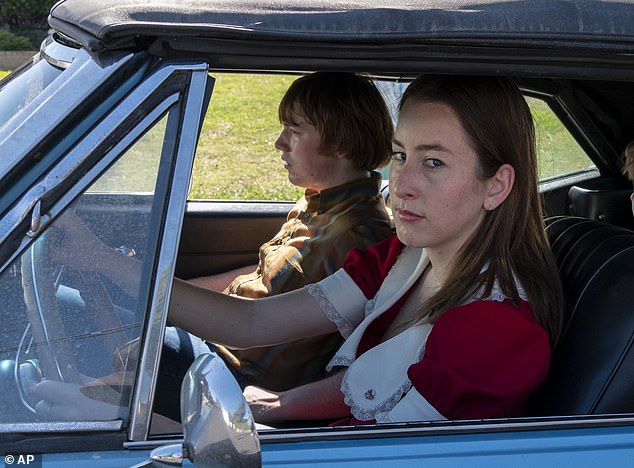
Anderson’s script centers on a 15-year-old boy named Gary Valentine (Cooper Hoffman; son of Phillip Seymour Hoffman) and the girl-SCRATCH THAT-woman, I mean, that he becomes enamored with named Alana (Alana Haim).  Gary approaches Alana at his high school where he is about to have his class picture taken.  She’s there working in a dead-end assistant position with the photographer.  Fast dialogue takes place in this opening scene where Alana can’t take this kid seriously even though he’s a seasoned child actor, known throughout the San Fernando/Encino, California landscape among known casting directors and agents.  Eventually, the relationship blossoms as Alana serves as an adult escort for Gary who has to go on a television program.  (Mom was not available to accompany underage Gary; hence the word escort.)  Soon after, it’s established that though Gary seems more mature than a typical 15-year-old because he’s had a career during most of his young life, Alana is in a limbo of not reaching adulthood yet, despite the number of her age.

Gary’s worth as an actor is expiring as he’s not the cute precocious kid that Hollywood is looking for anymore, and so he’s on his way to his next venture, never allowing himself to be set back.  Why not sell the newest innovation of the early 1970’s?  Waterbeds!  Meanwhile, Alana does her best to move on to her next life changing chapter by dating an actor her age.  However, things don’t work out.  He was born Jewish, like her family, but he defiantly announces he’s an atheist over Shabbat dinner and will not recite the kiddush prayers. 

The contrast in Gary and Alana’s progress through life in 1973 couldn’t be further separated from one another.  Anderson writes these two characters as they are going in opposite directions.  They are 10 years in age apart from one another.  Gary doesn’t allow himself to be defeated when one business venture after another doesn’t pan out.  Alana is short tempered and easily stuck in a rut, however, when things don’t go her way.  This is the running theme of Licorice Pizza.

Other folks that I’ve discussed this film with find it weird that a 15-year-old boy and a 25-year-old woman are hanging together and drawn to one another.  Yeah, it’s weird, but it happens.  Out there, there are unusual relationships or friendships.  Spend a month working in a community theatre like I have and then tell me weird relationships don’t happen.  Forget about whether they are legal or not.  Forget about if it’s perverted.  (Though, truly it really isn’t depicted in a perverted manner in Anderson’s film.) There’s a relationship between Alana and Gary where romance and attractiveness are certainly tested, but that doesn’t mean it’s ever consummated. 

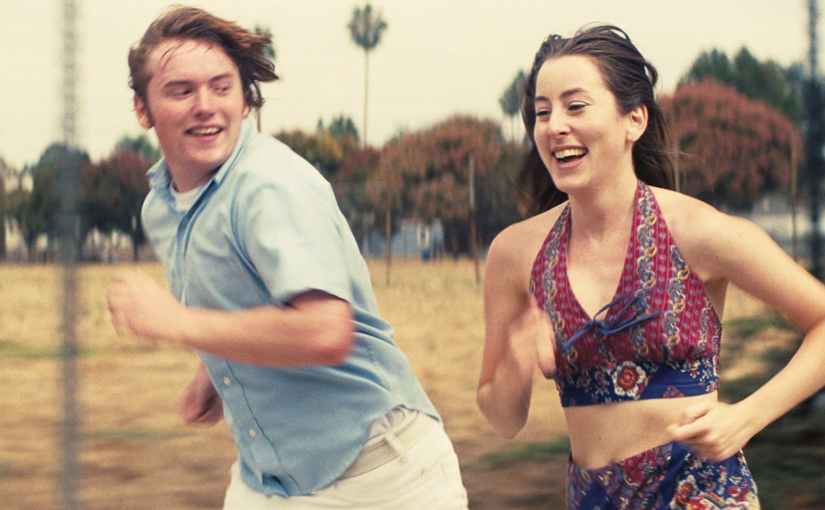
The fact that the relationship between the two characters is difficult on them and the audience is the point of Licorice Pizza.  Anderson is a brilliant writer/director here because he has an ongoing visual theme happening.  Often during the film, both characters are filmed running towards something.  They are either running towards one another or something else or they are running away from each other.  Gary and Alana seemingly know that this relationship could never come to an intimate, loving, romantic relationship.  After all, he’s fifteen!  She’s twenty-five!  Yet, what Paul Thomas Anderson demonstrates is that no matter how physically fast you can run or how far you can run, these two characters will never, ever catch up to one another. 

Gary yearns for Alana because lust interferes in most boys at age fifteen.  Alana needs Gary, however.  She tries and tries new opportunities to stimulate her daily lifestyle beyond Gary, like volunteering on a politician’s campaign or attempting to get in the good graces of a well-known Hollywood actor (a brief, yet memorable appearance from Sean Penn).  Dating a man closer to her age also doesn’t work out.  She’s outgrowing her Jewish home life that she’s still stuck in as well.  Alas, it doesn’t ever work out for her. 

The actress, Alana Haim, who takes on the role is surprisingly skillful.  She’s tough and sad and lost.  Anderson may have written the character, but Haim evokes the emotions that progress her listless story arc.  Each time, something happens to Alana, I couldn’t help but feel such despair for her.  I’ve been there.  When I graduated high school!  When I graduated college!  When I broke up with a girl!  When I had to move into an apartment!  When I became a father!  How many of us truly go on to the next plateau knowing exactly what to do?  Some folks like Gary, can do that.  Others like Alana just can’t.  I think more people have been in her spot than they care to admit.  Paul Thomas Anderson is brave enough to not present Alana’s triumph so easily or quickly.  Movies don’t always have to show the happily ever after ending.

Gary moves from one chapter to another as well.  Because he’s a well-known kid actor of yesteryear, he’s granted more resources than Alana, even though he’s ten years younger.  He always gets a table at the local restaurant.  He knows all the casting directors.  He knows how to get around and get things started.  Audiences are smarter and likely know that whether Gary is selling waterbeds in a run-down business shop or later turning the place into a pinball arcade (now that pinball machines are legalized; which I never knew they were illegal to begin with), he won’t become such a successful entrepreneur.  Yet, that never fazes Gary.  This is just the next big thing that occurs to Gary.  So, he’ll just give it a go.  The confidence Alana lacks in herself, Anderson gifts with the Gary character.  Cooper Hoffman makes a grand debut with Anderson’s direction and character foresight.  He’s definitely not performing in his father’s shadow here.

Licorice Pizza carries so much symbolism in the point to the story that you might not even realize how apparent it is until later when you reflect back on the film. Obviously, Paul Thomas Anderson is very careful to insist how far apart these two people are, not just in age, but in how they carry themselves and their lifestyles.  However, he does not stop with just the two main leads.  A side gag has a guy who’s the owner of a Japanese restaurant discuss an advertising campaign with Gary’s mother.  A suggestion is proposed by Gary’s mom.  The man then “translates” to the woman simply by repeating the same thing in English with a terribly awful Japanese accent and then the Japanese woman sitting next to the man speaks in her native tongue.  The man carries himself as if he understands the woman and translates back to Gary’s mom in his own Americanized dialect.  It’s shockingly funny how wrong and insulting this guy is.  This guy knows nothing about Japanese cuisine or culture or what they say or what interests them and yet he’s trying to make a business venture out of it.  It’s wrong and highly inappropriate (which makes the scene very funny), but it exists. It’s garish to watch this behavior, but there are thousands of insensitive people doing thousands of insensitive things every day; people who couldn’t be further apart from practicing what they truly were not destined to preach.  If you stop and think for a second, you can’t deny that this is one more weird thing out there in the world that’s odd and yet probably exists somewhere down the street or in another state or another time.  This guy has a connected with a Japanese woman without any concept of understanding or appreciation.

The title of Anderson’s film is never literally addressed.  (Later, I read that Licorice Pizza was actually the name of a popular record store in California way back when.)  Yet, my mind periodically went to its significance while watching the movie.  Try eating pizza with a thick, doughy crust and topped with tough, taffy texture like licorice topped on it.  I’ve never done it, but I’d imagine it’s hard, very hard, to swallow.  So, while Alana and Gary are certainly friends, the hormones of a fifteen-year-old boy and the lonely, lost nature of a twenty-five-year-old woman becoming involved with one another are hard to digest as well.  No matter how Gary and Alana approach their connection to one another it just does not work.  Alana falls off a motorcycle at one point. Gary runs to her.  We see that all the time in movies.  But what’s he going to do when he reaches her to offer aid?  What more can Gary do except to say “Are you okay?”  Gary gets arrested during another time in the film.  Alana runs after the police car Gary is handcuffed in, and tells him it’s going to be okay.  Yet, what is she really going to do?  She doesn’t know anybody like a lawyer or an adult that can help.  She doesn’t have the capability of helping him.

Run as fast as you want.  Run as far as you want.  Gary and Alana can never, and will never, catch up to one another.  They’ll never meet at an appropriate age, always living a decade apart.  They’ll never share a commonality with each other that promises a loving and intimate relationship.  So, while Licorice Pizza has a silly, comedic name, it’s truly a tragic story of impossible love. 

Licorice Pizza is definitely one of the best, most inventive and sensitive films of the year.

HOUSE OF GUCCI (2021)

by Miguel E. Rodriguez

Director: Ridley Scott
Cast: Lady Gaga, Adam Driver, Jared Leto, Al Pacino, Jeremy Irons, Salma Hayek
My Rating: 5/10
Rotten Tomatometer: 61%

PLOT: An outsider marries into the Gucci family, and her unbridled ambition triggers a downward spiral of betrayal, revenge, and violence.


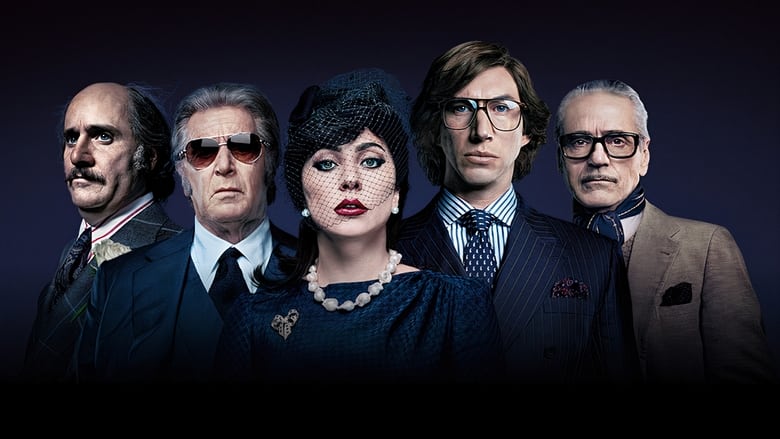
Watching Ridley Scott’s House of Gucci was a curious experience.  I could see glimmers of a great entertainment through bars of slow pacing, a meandering story, and unanswered questions.  The performances are top-notch, no question, but they are at the service of a movie that doesn’t seem interested in meeting their level of passion.

Inspired by true events, the movie tells the story of Patrizia Reggiani, a young woman from humble beginnings who meets and eventually marries Maurizio (Adam Driver), one of the heirs to the Gucci fashion empire.  Patrizia is played with fury and fire by Lady Gaga, who seems destined for another Oscar nomination.  Her character is portrayed as a latter-day Lady Macbeth, someone who sees through the deceptions of her new husband’s business associates and manipulates people and events for her family’s benefit.  In true tragic form, her ambitions threaten to derail everything she loves.

Adam Driver plays Maurizio as a rather slow fellow who disinherits himself so he can marry Patrizia but finds a way back into the fold via his uncle, Aldo (Al Pacino), who sees Maurizio as a good substitute for his own disappointing son, Paolo.  Paolo is played by Jared Leto, in another of the film’s performances destined for Oscar recognition.  Buried underneath flawless makeup and a skin cap, Leto portrays Paolo as a self-deluded buffoon whose fashion designs aren’t so much daring as unfortunate.  (Apparently, pastels and brown were never meant to mix…who knew?)

I mention the performances because they are the sole highlights of the film.  For two-and-a-half hours, these performances play against a backdrop of one dreary scene after another. Sure, the performances are fun to watch, but at the end of the day, if they don’t have anything interesting to say, it gets a little boring.  We get behind-the-scenes intrigues and betrayals that seem to owe more than a little to earlier crime epics by Scorsese and Coppola, but there was nothing to get really excited about.  Nothing grabbed me.

Ridley Scott’s films are normally way more imaginative than this.  They look better.  The cinematography is usually more inspired.  I’m not talking about his action or sci-fi epics, either.  I mean his small-scale triumphs like Matchstick Men or Thelma & Louise.  What happened here?  Was he not inspired by the story?  There is great material here, more than enough back-stabbing and lying and cheating to go around.  Yet everything is subdued, and plods, and inspires more yawns than anything else.  I didn’t experience any kind of excitement or passion one way or the other for any of the characters, or for the story.  It just didn’t make me care.

By the time House of Gucci is over, we’ve seen betrayals, marital infidelity, divorce, back-stabbing business deals, sex, and murder.  I have a friend who wrote a stage play that has almost all of those things, and it was WAY more entertaining than this film.

NO TIME TO DIE

By Marc S. Sanders

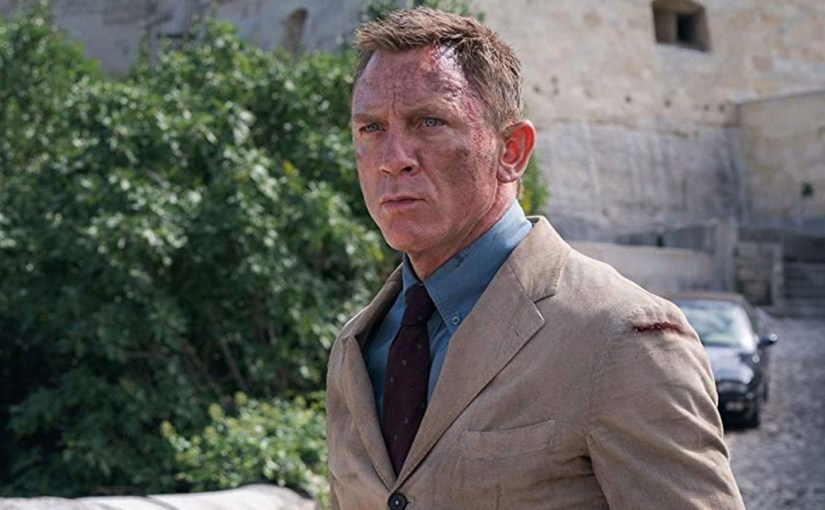
Any die-hard James Bond fan should absolutely love Daniel Craig’s final outing in No Time To Die.  Not only does the film work as a salute to the more serious aspects of past Bond films (not just Craig’s installments), but it is working with its tongue placed firmly in its cheek.  That is not to say that I still did take issue with a few narrative choices the film steers into.

Years have gone by for Craig’s interpretation of the famed secret agent.  He’s comfortably in love with Madeleine Swann (Lea Seydoux) from the prior film Spectre, and known daughter of Mr. White, one of Bond’s prior adversaries.  Suddenly though, Spectre seems to be back with a vengeance.  The imprisoned Blofeld (Christoph Waltz) somehow seems to be involved and 007 puts his guard back on opting not to trust Madeleine or anyone ever again.  The story jumps to five years later and Bond’s CIA friend, Felix Leiter (Jeffrey Wright) has convinced him to come out of seclusion and assist with recovering a kidnapped scientist who holds the formula to a deadly nanobot virus manufactured through plant life.  Bond travels to Jamaica to complete the mission.  From there, the story gets more complicated and more interesting.  Though I dare not spoil what comes next.  This film has a lot to tell in the near three hour running time.

Daniel Craig always had some sort of challenge with the general public while playing James Bond.  First, how dare he be blond?  James Bond is not blond.  He survived that ordeal to continue to make more films.  His second film suffered in storytelling due to a writer’s strike.  During press junkets for his fourth film, Craig was quoted out of context noting that he’d rather “slit his wrists” than play the character again.  As well, his films broke convention in the long running EON Production series, as each film served as a continuing story with much more serious, dramatic and sorrowful undertones than was ever presented before.  None of these challenges seemed fair to me.  After 25 films, you gotta stir the pot a little bit on a character that has been on screen for nearly 60 years.  It’s not enough that his gadgets change with the times of technology. 

I divert into this observation because No Time To Die offers some shocking developments for the Bond character, but when you return back to Craig’s first film, Casino Royale, you really start to understand why this latest picture goes in this wildly off direction.  In other words, the four films Craig performed in prior to this 2021 installment seemingly spell out the inevitable conclusion of his tenure as James Bond.  So, reader, when you go to see this last film from arguably the most controversial actor to play 007 to date, give some thought to what has already been covered before and maybe you’ll agree it beautifully makes a lot of sense.

As an action film, No Time To Die works solidly.  There’s amazing stunts and vehicles with car chases galore and nail biting shootouts.  I think this film has the longest pre-credit sequence of all the films and it’s amazing where one of the feature attractions is the famed Aston Martin DB5 against a slew of Range Rovers and motorcycles.

Rami Malek fills in as the lead villain eerily known as Safin, complete with the signature facial deformity, a shattered kabuki mask and a hell bent determination to destroy the world by means of turning people’s DNA against themselves.  Just go with it.  There’s not much weight to this dastardly mission.  It’s Malek’s performance that works. 

A new agent is also in the works and what’s this?  She is identified as 007????  Again, the newer films bravely go against convention to keep it interesting. Lashana Lynch plays Nomi.  This character was angled extensively in trailers and press junkets but honestly doesn’t live up to the hype enough.  The actor is fine.  She’s just not given much to make any kind of impact.  Ana de Armas is the actor who really makes a splash in a brief moment dressed in a gorgeous evening gown while giving high kicks to bad guys and armed with an adorable naivety about her and a killer machine gun.  Her character is reminiscent of the Bond girls who elevated the tongue and cheek elements of the series.  In a three hour film, more room should have been left for de Armas to play.

Moneypenny (Naomie Harris), Q (Ben Whishaw), Tanner (Rory Kinnear) and M (Ralph Fiennes) all return making for a solid support team for Bond.  It needs to be noted how well cast the Craig films always remained. During the five film series, each one of the characters had their memorable moments for sure.

The regrettable ingredients in No Time To Die lie in the lacking treatments of Lashana Lynch and Ana de Armas for sure.  Forgivable for the most part however.  Still, the story steers into one angle that I wish it didn’t when a young child is brought into the fold.  Children in serious peril was never part of the Bond formula.  So, while this is another new convention for the long running series, I think it was a poor choice.  I see the necessity of the young character to the story, but was it ever really necessary to put a child amid massive gun play, car wrecks and explosions.  There was something a little unsettling about that aspect of the film and the imminent danger to the girl really isn’t needed to heighten any kind of suspense.  Rather than play dramatically, it moves a little too disturbing.  Early on in the film, another child is placed in disturbing peril as well.  The story options here just don’t seem altogether appropriate.

No Time To Die is an appreciated conclusion to Daniel Craig’s version of the character.  There are great puns for Bond to deliver.  His interactions with Q and M are biting and fun.  His love story portrayal with Madeleine works more solidly here than in the last film they shared together, and his tete a tete with the villains, Blofeld and Safin, are equally strong.  These different relationships broaden the dimensions of Bond.  He’s no longer a cookie cutter character.  There’s a motivation to the guy. 

Having seen the film twice, I have an even further appreciation for this new film.  Hans Zimmer comes in to do the original score and particularly salutes the unexpected favorite among fans, On Her Majesty’s Secret Service with select notes and rhythms from that film.  Granted the script for No Time To Die makes obvious references as well.  I also appreciated the wink and nods to Bond’s very first adventure, Dr. No.  There was just a lot of smart, subtle honors presented here. 

Still, the best reference is left for one of the best lines in the film.  When Bond meets Felix’ partner ahead of a mission, Daniel Craig as 007 has to ask “Who’s the popular blond?”  After five hugely successful films, over a fifteen-year span, any one of us better know that the only blond that matters is “Bond.  James Bond.”

ETERNALS

By Marc S. Sanders

Was I dozing on and off during Marvel’s latest film, Eternals, or was I becoming interested and uninterested during a bloated running time of two and half hours?

As an avid comic book reader during the 70s and 80s, especially Marvel comics, I must admit I don’t know much about the team of gods known as The Eternals.  So, I went into this film kind of blind.  Reader, I don’t feel any more educated having seen the film.  These expressionless number of characters arrive on Earth 7000 years ago and apparently, they are assigned with protecting the planet’s course of events through history by fending off CGI monsters knowns as the Deviants, and that’s all they are supposed to do.  Allow the dinosaurs to perish.  Let Hitler do his thing.  Have Thanos snap his fingers.  Just take care of the Deviants. 

You know what the Deviants look like to me?  An early stage of computer graphics that we would see on a behind the scenes DVD documentary contained on the second disc of a Jurassic Park 25th anniversary edition.  The geeky visual effects wizard would show this deviant on his lap top as an early concept of a raptor or T-Rex.  I dunno.  Maybe it was the screening I saw at a Regal Cinema that soured me on the visuals in Eternals.  Everything seemed so dim and unlit at times.  When the Eternals are taking refuge in a woodsy campsite, that looks as simple as the Honey I Shrunk The Kids playground in Disney World, and a dino like Deviant roars and picks up a character with it’s tentacles only to toss the person into a wood shed, I felt like I was watching one of those 3D amusement park rides.  The computer animation blended with the human actors never flowed convincingly in this film.  This is maybe the worst looking special effects film in Marvel’s library of films. Nothing looks natural here. 

A small sect of the characters is interesting.  Most are quite boring actually.  Take Ikaris for example.  This guy, played by Richard Madden, flies and shoots powerful yellow laser blasts from his eyes.  Otherwise, there’s nothing I can say about his background.  He’s so unentertainingly morose and blah.  Sersi (Gemma Chan) is just the same, and yet she’s supposed to be more optimistic.  Almost twenty-four hours later and honestly, I forgot her powers or what she’s about.

Angelina Jolie is here too.  Moving on.  Salma Hayek is here as well, and yeah, moving on.

The most interesting character is the one causing controversy in the news over being the first Marvel super hero to have a gay kiss.  That’s only a fleeting moment and truly unworthy of causing any kind of uproar.  (Find something better to get pissed about people! Men fall in love with one another.  This is nothing new.) Brian Tyree Henry plays Phastos, who specializes in advancing technology over time that somehow becomes knowledge to the humans of Earth without him taking credit for it.  Phastos has a funny situation as he balances being a god on the planet for the last 7000 years, while also being a current day family man.  More so, he’s a tragically sad character.  The best moment (not scene, because regrettably it is not explored long enough) depicts Phastos gazing upon Hiroshima in 1945 following the dropping of the atomic bomb.  He can not help, as a god, to feel responsible for this outcome, while being consoled that this is not his responsibility to accept.  Remember Phastos, you’re just here to fend off dumb looking, unfinished monsters.

The other good character is Kingo (Kumail Nanjiani) – the god who eventually goes on to be a conceited and well-loved Bollywood actor/director.  Nanjiani is best used as the humor factor of the film with his tag along assistant cameraman (Harish Patel) who films all of the ongoing action for a possible documentary.  This is a good setup for a joke that doesn’t materialize well enough.

Marvel lent too much responsibility to its director Chloe Zhang, who to my knowledge does not have much experience with the big budget extravaganza films that’s expected of these installments.  Zhang was a large contributor to the script.  I’m going to take a guess and presume she’s not the comic book expert that say, Sam Raimi or Kevin Smith are.  She’s an Oscar winning director (Nomadland) who is a master photographer, but a film like Eternals tells me that if you take her out of the natural environments and put her in fantasy land computer graphics, you are not going to get the same thing.  This is like asking a guy who flips burgers at McDonald’s to prepare a $200 well aged Filet Mignon.  With Zhang directing this film, reader you are just not getting your money’s worth.

Everything seems very flat in Eternals.  The script is repetitive.  The narration of the story is that the team gradually reunites with one another following the unexpected death of one of their members.  When the characters do meet up with each other though, they explain the same news again and again and again.  This might be the way it is in real life when your 99-year-old grandfather kicks the bucket and you make one phone call after another.  However, in a film that luxury is not necessary to move the picture along.  Audiences are much more intelligent than this film gives credit.  They’ll make the safe assumption that when Phastos comes on the scene, he’ll have been caught up to date.  Yet, the picture ignores that opportunity of convenience, and just needlessly stretches the running time.

Eternals is not The Avengers.  These guys are boring.  They are written boring.  For the most part, they are acted boring.  There’s no sarcasm or biting insults among them.  There’s hardly any affection among them either, or even hate.  Think even beyond the Avengers for great team ups. Consider Daniel Radcliffe, Emma Watson and Rupert Grint in the first Harry Potter film, or Han, Luke and Leia in the original Star Wars trilogy.  There’s a chemistry to those characters that’s not in the Eternals; a love/hate relationship of jabs and hugs among the peers.  Even when they sit around a table for dinner, the most interesting thing the Eternals can talk about is who is going to take over the Avengers now that Iron Man and Steve Rogers are no longer around.  These folks have been separated from themselves for the last couple of thousand years or so.  Don’t they wanna catch up with one another, and maybe talk about themselves and what they’ve been up to?

The other issue with the film is the constant time jump from the times of B.C. to present day back to B.C. to early 20th century to present day and on and on.  This isn’t a Quentin Tarantino film where the fun is in piecing these moments together.  These time jumps have no impact.  I’d argue that it might have been more effective to just begin at the Eternals’ arrival on Earth and go through time chronologically.  Take me on a 7000-year journey.  Let me see what I can uncover.  For an observational director like Chloe Zhang, this is a missed opportunity here.  She could have demonstrated how the Eternal characters develop over time and get mixed up in side stories like becoming a private school teacher, or a loving dad or a film maker.  Then you have an arc to each of these misfits.  You’ll even have an arc to the planet Earth, and that could be very cool.  Don’t know what I mean?  Look at Zhang’s Nomadland from last year or Terrence Malick’s The Tree Of Life, or even Kubrick’s 2001: A Space Odyssey.  Eternals could have better demonstrated how history has an impact upon itself.

Within the Marvel lexicon, this is not a necessary film.  It quickly dismisses the biggest story that came down the pike with the Thanos character causing all kinds of trouble, and then settles into its own mire.  In other words, who asked for this picture?  I have to wonder if Marvel films are finally jumping the shark or crawling from under the dumpster (remember Glenn from The Walking Dead).  Have they used up all of the hot properties, that Disney owns at least, and are now settling for these minor characters?  Maybe or maybe not.  After all, the best parts of Eternals, for this comic book reader at least, were the post credit scenes.  Still, I didn’t pay $12.00 to wade through two and a half hours of sleep-inducing material just so I could catch a glimpse of two vague teaser moments either.

SHANG CHI AND THE LEGEND OF THE TEN RINGS

By Marc S. Sanders

Marvel’s installment of Shang Chi And The Legend Of The Ten Rings boasts a good cast and set up for an Asian superhero and his band of allies.  I only have one question, couldn’t some of this stuff have waited for the sequel?

Dave Callaham and Andrew Lanham wrote an adventurous screenplay for Destin Daniel Cretton (Just Mercy) to direct.  It’s fun and frolicking with magnificent action set pieces that take place on an out of control metro bus on the streets of San Francisco (where every out of control vehicle or car chase work best) and later on a high rise scaffolding in Macau.  While some sequences easily reveal the CGI work at play, the edited choreography of these martial arts scenes work beautifully. 

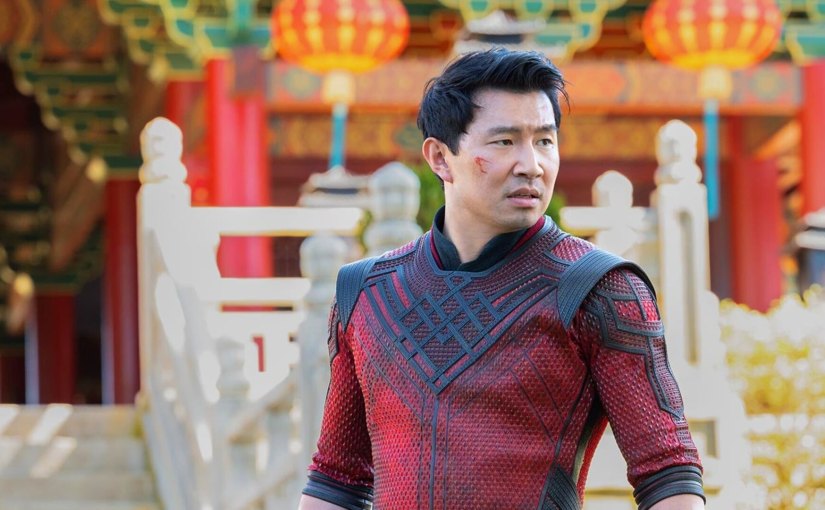
During the bus sequence, spread eagle jumps and high kicks and low punches by Shang Chi (Simu Liu) are done like a fine dance number as he fights off a gang of thugs who are mysteriously after the pendant he wears around his neck.  Comedienne Awkwafina plays Shang’s best friend Katy who rides the bus crazier than Sandra Bullock ever did.  Later the pursuit of the MaGuffin pendant leads into a meet up with Shang’s equally capable sister Xu Xialing (Meng’er Zhang) and the high-rise scaffolding fight occurs.  Marvelous work in both of these scenes.  The CGI is certainly forgivable.

After that, the film calms itself down to bridge some exposition that was revealed in the prologue of the film.  Shang and Xialing seem to have some parental issues.  Their father Xu Wenwu (Tony Leung) somehow acquired a set of ten magically powerful rings that he wears on both forearms.  Like other rings in fantasy/adventure films, these items take out armies and do nothing but conquer.   For once, could these powerful items just make a cup of hot tea or a decent wax job on my car?  When Wenwu uncovers a hidden majestic location to take over, he meets and becomes smitten with Ying Li (Fala Chen).  They fall in love and you’d think they’d live happily ever after, but if that were the case then there would be no movie.    

Beyond what’s described here, not much else mattered to me with this film.  The rings might as well have been Thor’s hammer or Captain America’s shield, or a Maltese Falcon.  A large, epic and very, very long climactic battle takes place so that one of Hollywood’s better known Asian actresses (Michelle Yeoh) can come into the picture and fight.  There’s also a return of a relatively unfavorite character from the Marvel Cinematic Universe, Trevor Slattery (Ben Kingsley), the fake out terrorist from Iron Man 3, that pissed off a collection of die hard Marvel geeks yearning for an appearance of the known villain called The Mandarin.  Shang Chi reminds us that this once reputably “threatening” villain is named after an orange.  Yup!  Get over it.  He’s as scary as an orange.  Moving on!  Beyond these appearances, are kaleidoscopes of colorful fantasy creatures like flying serpent dragons and furballs with wings and no face, as well as lion like four legged creatures.  Plenty of stuff for Disney/Marvel to merchandise.

I was seeing a story in Shang Chi, and then I wasn’t.  The long battle sequence goes on and on and on as a means to show off new toys and stuffed animals for the kids.  It all looks very good but it doesn’t lend credence to any storytelling like say in The Lord Of The Rings fare, where an Org could progress a story.  Here, it’s all overkill. 

The strength of Shang Chi And The Legend Of The Ten Rings lies in an enthusiastically fun cast and the outstanding martial arts moments that are presented.  The fantasy material is too much icing on the cake.  The graphics are good and all but couldn’t that fantasy stuff have been held for another film later on perhaps?  Go with one thing first and then another thing next, because after a while I forgot what kind of movie I was watching and why.

The cast is fine in their roles.  Just fine though.  Simu Liu has the athletic build for the title character.  He looks sharp in the costumes and fight sequences.  Though the fantasy material really takes away from the ranges that we could have appreciated from as an actor.  It’s clear this script is not giving him the same rightful opportunities for good super hero acting that was awarded to Robert Downey Jr or Brie Larson.  Equally same goes for Tony Leung and Meng’er Zhang.  They kind of plain jane.  Awakwfina is given the most to play with for the escapist humor as a fun loving karaoke singer and crazy valet driver.  Later, she quickly becomes an expert archer.  Good stuff there. 

Let’s face it the Asian community sect within Hollywood is not as well represented as it should be by now.  Box office numbers of the past have more than justified a need for Asian culture to be front and center in mainstream films.  There’s been some highlights in the past, most namely with the work of Bruce Lee and Jackie Chan, and films of merit like Crouching Tiger, Hidden Dragon and Crazy Rich Asians.  It’s pleasing to know that Marvel Comics created a character like Shang Chi back in the late 1970’s.  It just wasn’t capitalized back then as a marquee name like the Hulk or Spider-Man.  Still, Disney and Marvel could have tried a little bit harder here.  Just when I thought we were getting some dimension and checkered past subject matter for Shang Chi and his family to struggle with, Cretton’s film diverts into visual CGI fantasy Candy Land with no depth or substance. 

My recommendation on the next installment, is for Marvel and Disney to dig deeper.  I know there’s a wealth of storytelling here.  So, use a bigger shovel that’ll dig itself all the way to China.