BLACKKKLANSMAN

By Marc S. Sanders

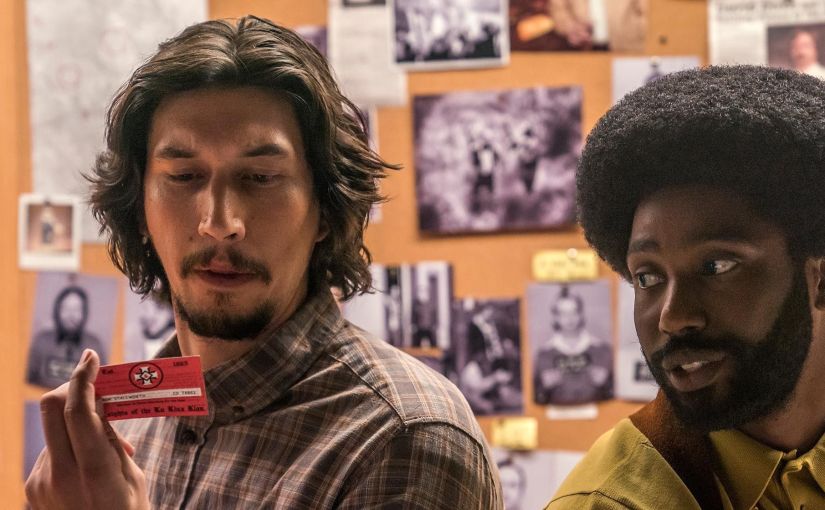
Spike Lee has finally received a Best Director Oscar nomination for his film BlacKkKlansman. It is based on the book by Ron Stallworth. In the 1970s, Stallworth was the only black police officer in the Colorado Springs police department. He was always ready to face the backlash and criticism for his afro and skin color. He also orchestrated an infiltration of the Ku Klux Klan while developing a trust with their Grand Wizard and eventual Presidential candidate David Duke.

John David Washington (son of Denzel) portrays Stallworth with high intelligence, instinct and even tolerance to stay focused on the end goal of incriminating Klan members out to do more than just march. Stallworth partners up with Flipp Zimmerman, a Jewish cop who will make his presence as Stallworth among the ranks of the Klan. Call it a Cyrano set up. Stallworth does the talking over the phone. Flipp stands in their presence.

I’ve usually been hot and cold on Spike Lee. Forgive me but when a “Spike Lee Joint” debuts in theatres, my subconscious immediately expects a very biased and unfair viewpoint of racial tensions in America. I don’t care for Lee’s outspoken statements in the media at times and I shake my head at some of his misguided actions. That’s another conversation that I welcome to have with anyone at another time. However, Lee takes a very aware and balanced approach here. The film opens with Alec Baldwin as an evil messenger of hate attempting to record a sermon for his disciples. Lee films Baldwin very disturbingly among different color hues and jittery close ups and wide angles. It’s nauseating and it should be.

Then Stallworth’s story begins and he is assigned to go undercover at a former Black Panther member’s (played by Corey Hawkins, who I loved in the revival of 24) speaking event on a college campus. The police expect this will be an orchestration of violence among the black community but Stallworth sees it is anything but that. Lee commits a beautiful filmmaking effort as he shows the faces of black people listening to the speech in spotlights as Hawkins continues on. These are college students simply looking for a way to never succumb to anyone who considers them inferior. The speaker does hold the white man accountable, yes, and I don’t care for that as I’m a white man with no instinct of superiority. Therefore, don’t lump me in with a small sect of misguided people, please. Still, the scene is effective and relatable. America has its ugly histories and America is not settling for insensible and uncaring treatment of its people either.

From here, the film takes on a more linear story as Stallworth and Zimmerman build their case.

Lee offers good debates among his cast of characters. Stallworth becomes attracted to an activist named Patrice, played very well by Laura Harrier. Here’s hoping to a long, successful career for her. Patrice believes the police are the enemy and even questions if Stallworth will remain a police officer following this case. Stallworth takes pride in being a cop. Black Life vs Law Enforcement.

Stallworth and Zimmerman bear witness to the mentality of the Klan. Over and over the Klan members suspect Zimmerman of his Judaism. He denies it and goes to great lengths to disprove his heritage and yet the Klan continues to question him, despite some high level members truly believing his guise of white supreme devotion. White Supremicists vs. Judaica & Black Life.

Lee has offered a powerful film that left my wife and I up until two in the morning discussing its dynamics; discussing how many things have changed for the good since the 50s; discussing how many have gotten better, have gotten worse and how some things have sadly resurfaced in recent years.

BlacKkKlansman reminds me that Lee is truly an accomplished filmmaker. Beyond his messages and viewpoints, Lee knows how to edit a scene and offer inventive camera angles and direction. He’s a prize student of film, now a teacher. This latest effort is a reminder of how Lee’s production of Malcolm X in 1991 was robbed of recognition at the Academy Awards, a true injustice.

BlacKkKlansman is Spike Lee’s best film since Malcolm X and one of the best films of 2018.

ANNIHILATION

By Marc S. Sanders

Science Fiction/Horror for the thinking viewer is the best way to describe this film.

Director Alex Garland has found a way to make a viewer’s eyes pop, not just with fear but with the unimaginable. This is as good an effort or better than his other well known film, Ex Machina. I foresee it will not be long before Garland is recognized among the ranks of today’s most notable and popular directors like Del Toro and Nolan.

This is not a run of the mill monster movie. This is fictionalized science that seems foreign and strange, yet makes complete sense by the time the credits roll. All questions are thankfully summed up despite a hanging thread or two to relish in deep thought long after the film has ended.

Natalie Portman strongly leads a nearly all female cast to uncover the purpose and functionality of “The Shimmer.” She does so, but at what expense? She’s great and believable in her role with lots of dimension by way of her career as a Johns Hopkins professor/former army infantry soldier and through periodic dreams of sin she feels guilty over.

Jennifer Jason Leigh does her best no nonsense disturbing creep. Gina Rodriguez makes good transitions in levels of sanity.

Like Black Panther, I’d argue this is also a front runner for art direction as an encapsulated swamp is overrun with strange pastel plant life, mixed up animal life and cinematic lens flare. Yes, here the lens flares serve a narrative purpose which is why the cinematography should also be given some recognition.

I’m looking forward to seeing this again to uncover what I missed the first time.

Annihilation turned out to be one of the biggest surprises of 2018.

CHRISTOPHER ROBIN

By Marc S. Sanders

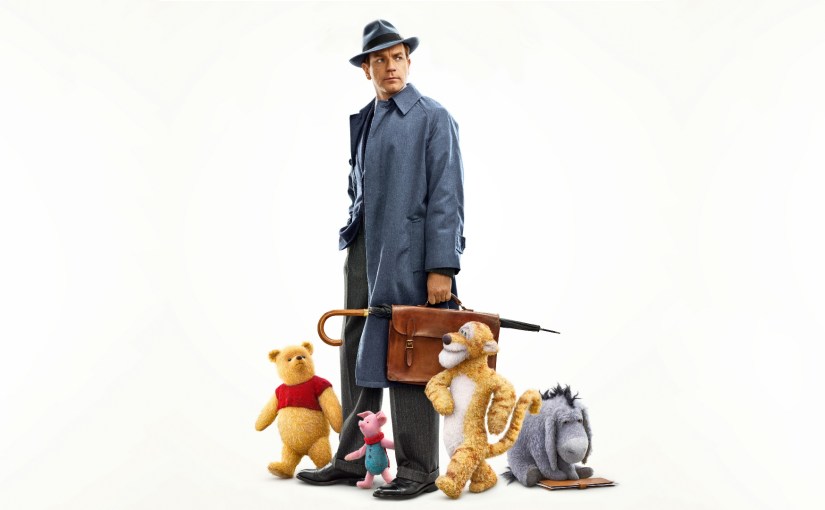
Disney’s Christopher Robin is a live action interpretation of a classic story that I approve of. Like Maleficent, it’s a film that is based on new, original material with familiar and beloved classic characters of the Disney machine-unlike recent reinventions of Beauty & The Beast and Aladdin. Those films are just the same with minor tweaks that don’t generate enough hype or interest for me. (No—I will not be seeing The Lion King. I already saw it back in 1992.)

Marc Forster (Quantum Of Solace and Finding Neverland) directs while never losing sight of the fact that Winnie The Pooh, Tigger, Piglet, Eeyore, etc all stem from classic children’s literature by A.A. Milne. The film opens with a backstory on the title character starting with his playful adolescent connection to Pooh & Friends, followed by his departure from them into a strict boarding school and then into adulthood (played sweetly by Ewan MacGregor). Christopher falls in love with Evelyn (Hayley Atwood) and before their child is born he is sent off to war only to return as a no nonsense efficiency manager for a luggage company. He has forgotten his friends who live and do nothing (which always leads to something) in 100 Acre Woods. Worse, Christopher never laughs nor hardly acknowledges his daughter Madeline. He is not a child anymore.

This is the film that Steven Spielberg probably wanted when he directed Robin Williams and Dustin Hoffman in 1991’s Hook. It just came off too clunky and messy at the time.

As the story continues, Forster is not so covert in his symbolism of Christopher Robin shedding his crotchety adult persona and returning to his childhood whimsy. Christopher crawls through the hole in the tree, muddies his suit, loses his briefcase and disregards his paperwork.

I found myself rooting for Christopher’s new found happiness and his revived love for his wife and daughter. I loved the stuffed animal interpretations of the Pooh characters (with voice work from Jim Cummings, Brad Garrett and Toby Jones). Yet, the tears at the sweetness of it all never arrived. As quick as the film began, it was never a challenge to realize how it would all turn out.

So no surprises to be had in Christopher Robin, but an original story to appreciate nonetheless. That’s good enough for me.

A WRINKLE IN TIME

By Marc S. Sanders

Oprah Winfrey has a big head.

I don’t mean a big head as in a large ego. I mean Oprah Winfrey has a BIG HEAD. So BIG that I caught every sprinkle of glitter in her eyebrows and lipstick that it looked like it came out of the discount basket at Justice For Girls. Why do I focus on this first and foremost? Well…because that is about where the scope of imagination stops in Ava DuVernay’s direction of A Wrinkle In Time.

Remember the first time you saw The Wizard of Oz? Remember when Dorothy walks out of her monochromatic home and into the brightly lit Munchkinland? Judy Garland walked cautiously. Spoke carefully (“Toto, I have a feeling we’re not in Kansas anymore.”) There was a reaction to all of the grandeur and strangeness. Now, over 82 years later, many fantasies on film refuse to take inspiration from that timeless cinematic moment. A Wrinkle In Time definitely doesn’t.

In Duvaraney’s interpretation, Reese Witherspoon, dressed in a white king size bedsheet with hideously bright orange hair can just appear in the living room of a home and no one has nary a response to the unusual. There is neither panic, nor a “wow,” not an eye bulge, not a large swallow of gulp. Nothing. The protagonist, Meg, and her mother just say who are you (actually I’m not sure they even said that), and Reese puts on her over exaggerated smile and cheerful vocal inflection and speaks in some kind limerick dialogue. She walks out the front door, disappears into the night, and no one says anything; no one ponders anything. There is no imagination in the filmmaking here, nor in the scriptwriting. This is a fantasy, right?

Mindy Kaling is another fantasy character in garish makeup and costume. She quotes expressions from various poets and artists from history. Why? I don’t know. What does she lend to Meg’s mission? Yawn!!!! Nothing.

Zach Galifianakis accepted the role of another weird character that Johnny Depp probably turned down, and would have likely been offered to Robin Williams had he still been alive. Zach has nothing to say either.

Meg has a little brother named Charles Wallace. I know this because the script hammers away this kid’s name over and over again. Charles Wallace. Charles Wallace. CHARLES WALLACE!!!!! Not just Charles. This kid is always addressed as CHARLES WALLACE!!!! There’s a drinking game in the making. Give the movie 15 minutes and I promise you, you will be heavily intoxicated after hearing CHARLES WALLACE again and again and AGAIN!!!!

All of these claims go back to my one main, sole issue with this film. A complete lack of imagination and awareness of its fantasy.

DuVernay films Oprah as a towering 20 foot presence (literally) and fills in every void of space on the screen with her head. “CHARLES WALLACE” is about all Meg says to her little brother; there’s no sibling connection. Lastly, the most glaring error, is there is no reaction to the wonder of this fantasy. Were any of the actors informed there would be more to the green screens they were filming in front of?

So, it’s a nay for me. If you are going to do a fantasy make sure everyone in the production gets the memo please.

Oh yeah, Meg is on a mission to find her missing father in the universe of time or something like that. Yeah. That whole thing never mattered much to me. It didn’t really seem to matter much to Meg either.

READY PLAYER ONE

By Marc S. Sanders

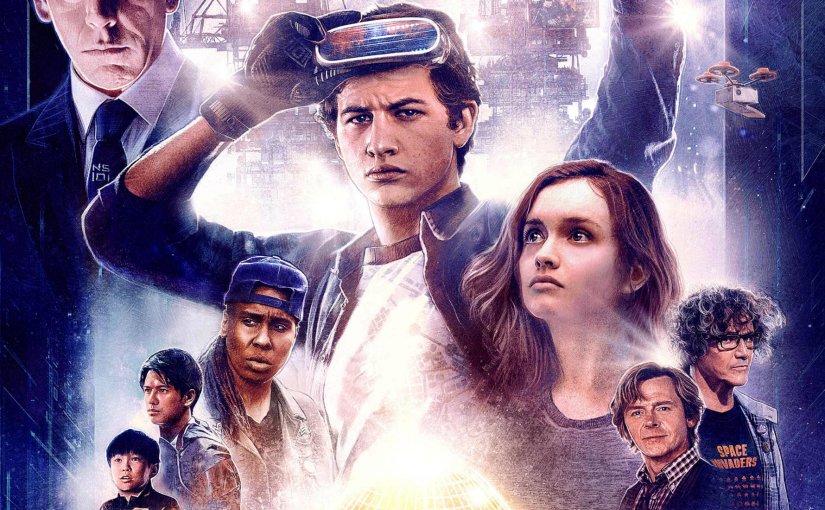
Steven Spielberg’s masterpiece, Ready Player One is the best Easter Egg to search for today.

As a huge fan of Ernest Cline’s novel chock full of pop culture salutes, this latest effort from Steven Spielberg is the film I was looking forward to the most in 2018; more than Solo and definitely more than Avengers: Infinity War.

The film adaptation almost completely succeeds. It is very well cast and the expansive imagination of Spielberg and his crew get everything right. It’s the greatest amusement park for the eyes. When there are not hidden gems to look for, I still found the young cast of characters portrayed by talented unknowns to be engrossing, and more importantly endearing to those cinematic kids of the ‘80s from John Hughes films, as well Spielberg’s other classics.

Authenticity was also truly a priority for Spielberg. I dare not spoil the highlight of the film’s second act but let’s just say the attention to detail was perfection to every minute crammed on the screen. You can’t help but laugh, grin and slap your knee. In fact, you really do it through the whole film practically, but Act 2 really reaches for the skies.

Now the one issue I have. Like Spielberg’s Jurassic Park, the villain was pulled back in their deviousness from the original source material. The danger did not feel threatening enough for me. Here the antagonist is this large conglomerate run by a CEO, and I’m afraid that’s all that Ben Mendelsohn is sadly reduced to. The stakes didn’t seem high enough. Cline’s novel made sure that your life could end as you got closer to solving the puzzles of the “Oasis,” the interactive virtual world that everyone willingly engulfs themselves in. The threat was more convincing in the novel. In the film, I’m afraid it’s a little too watered down.

Still, Ready Player One is incredibly fun with an awesome soundtrack; “Staying Alive” by The Bee Gees will always be the greatest song to bless any film, ever. This film especially supports that argument.

“LET’S SAVE THE OASIS”

SUSPIRIA (2018)

by Miguel E. Rodriguez

Director: Luca Guadagnino
Cast: Dakota Johnson, Tilda Swinton, Chloë Grace Moretz
My Rating: 8/10
Rotten Tomatometer: 66%

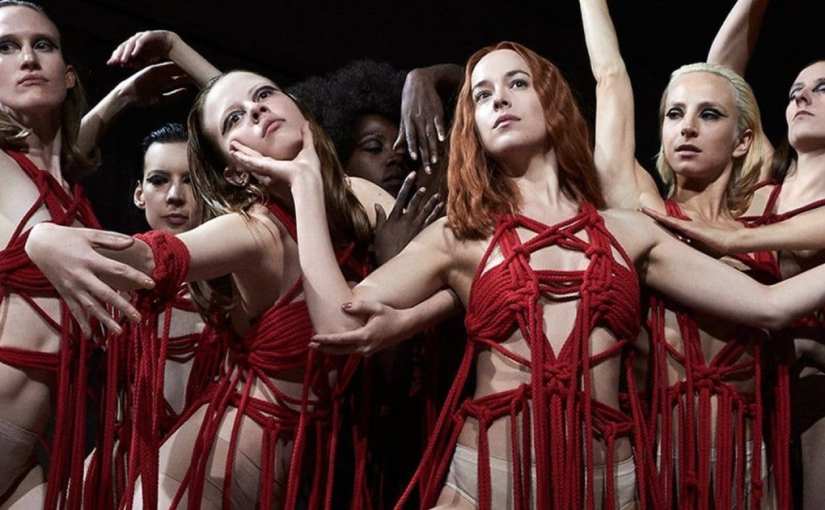
PLOT: Berlin, 1977 – A young American woman (Johnson) joins an elite ballet troupe run by Madame Blanc (Swinton), but sinister events occur that lead her to believe that not all is as it seems…


[SOME SPOILERS FOLLOW – CONSIDER YOURSELF WARNED]

In 1977, Italian director Dario Argento released a horror film called Suspiria.  I have never seen it, but I am aware of its place in film history.  A brief scan of Wikipedia provides these tidbits:

  • It’s #18 on Entertainment Weekly’s list of the 25 scariest films ever.
  • One website called it “the closest a filmmaker has come to capturing a nightmare on film.”
  • It is frequently cited for its use of vibrant colors, particularly when it comes to the copious amounts of blood present.
  • It is director Argento’s highest-grossing film in the U.S.

I mention all this to reassure readers that, even though I have NOT seen the original, I am aware of its legacy.  I also want to stress that I do not believe a thorough knowledge of the original is necessary for enjoyment, because this was one of the most supremely disturbing horror films I’ve ever sat through.  I don’t know how closely it follows the original, but who cares?

The movie is entertainment, but portions of it are so grotesque that I found myself wondering, “Should I be enjoying this?  What’s wrong with me if I am enjoying this?”  I have a couple of issues with the ending, which I can’t discuss without spoiling some key plot developments, but aside from that, this was a riveting film…but, again, a very disturbing one.

The plot: A young woman, Susie, travels from Ohio to join an elite ballet troupe in Berlin, run with an iron hand by the imposing Madame Blanc, played by the shape-shifting Tilda Swinton.  Susie thoroughly impresses Swinton at the audition, and is hired almost immediately and shown to her dorm room (all the dancers and instructors live under one roof).  The next day, a fellow dancer, Olga, storms out of a rehearsal after expressing concern about Patricia, another dancer who has gone missing, and suggests Madame Blanc had something to do with her disappearance.

This sets up the first of several intensely disturbing sequences in the movie.  Olga tries to leave the dormitory, but gets turned around and winds up trapped in a small rehearsal space, one floor below the main rehearsal space.  Blanc asks the new girl, Susie, to dance a particularly demanding routine.  As Susie throws herself into the dance (with some striking choreography), Olga, one floor below, suddenly finds herself flung through the air by unseen forces, apparently in concert with Susie’s movements above.  She gets tossed around like a life-size voodoo doll, from one wall to the other, down to the floor and up again, and I found myself thinking of poor Chrissy Watkins from Jaws as she was shaken from side to side before being eaten alive.

I haven’t even mentioned the grotesque things that start happening to her limbs.  Or how the dance instructors use meat hooks for clean-up afterwards.

And that’s just in the first two acts of the movie.

A sense of foreboding suffuses nearly every shot of Suspiria.  It’s a stress sandwich that doesn’t have the kind of cathartic scream moments one might expect from the horror genre.  With Suspiria, it’s all about the slow burn, followed by moments of revelatory horror and eye-popping imagery, particularly when it comes to Susie’s dream sequences and the final revelation of what happened to Olga and Patricia.

But I STILL haven’t mentioned the climax.  [AGAIN…SPOILER ALERT.]

All of the quease-inducing tension and visuals are nothing, NOTHING, I say, when compared to the finale, a grand guignol nightmare of blood, violent death, disembowelment, and gratuitous female nudity.  It was at that point that I realized: this is one of those films that you dare each other to watch, just to see how long the other will last before turning it off or throwing up.  The first couple of minutes of the climax involve more blood and off-putting makeup than any two Saw movies.  And then, just when you think it’s over, the REALLY bloody part begins.

(There is a key question to which I did not get a satisfactory answer, thus my rating of 8 instead of 10.)

I honestly don’t know who to recommend this to.  Horror aficionados, obviously, though many of them may be purists with no desire to see a 40-year-old masterpiece of the genre get the modern treatment.  I stress again that I don’t believe knowledge of the original is necessary to enjoy (if that’s the right word) this movie.  If it were made in a vacuum, with no original from 1977, I believe Suspiria would be able to stand alone as a new horror classic.

Just don’t eat anything before watching it.

SPIDER-MAN: INTO THE SPIDER-VERSE (2018)

By Miguel E. Rodriguez

Directors: Bob Persichetti, Peter Ramsey, Rodney Rothman
Cast: Shameik Moore, Jake Johnson, Hailee Steinfeld, Mahershala Ali, Lily Tomlin, Kathryn Hahn, Liev Schrieber
My Rating: 10/10
Rotten Tomatometer: 97% Certified Fresh

PLOT: In an alternate New York City, Miles Morales is bitten by a spider that has been strangely affected by scientific experiments being conducted by Kingpin. He soon meets other Spider-People from OTHER alternate realities who were dragged to Miles’ reality by those same experiments…


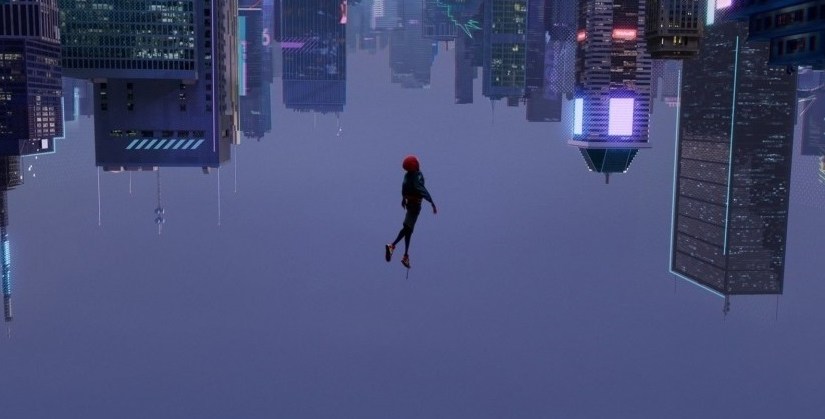
Right from the opening credits, an intense, fan-boy-level love of the Spider-Man characters (and comic books in general) radiates from the heart of Spider-Man: Into the Spider-Verse like those little squiggly lines of “spider-sense” that instinctively tells the various spider-people that they are in the presence of other spider-people.  It tells the other fan-boys, fan-girls, and fan-adults that here, at last, is a cartoon comic-book movie worthy of standing with the live-action giants of the MCU, both in terms of visual spectacle and in terms of an extremely solid, well-told story.

When I saw the first trailers for this film, I instantly dismissed it as yet another cinematic screening of a forgettable, straight-to-video animated feature.  The style looked like some kind of mish-mash of CG figures and hand-drawn faces, trying way too hard to be different without actually being effective.  The story was ultra-cheese, the kind of thing that even comic-book writers would find old-hat: a trans-dimensional rift allows Spider-People from different alternate universes to interact with each other at the same time.  And one of them is a literal cartoon pig called Spider-Ham.

Right.

So the movie gets released, and one day I take a peek at the ol’ Rotten Tomatometer, and it’s like at 95 or 96 percent.  And I’m STILL skeptical because the Tomatometer is only really accurate about 80% of the time.  But it continues to get buzz, and everyone on Facebook who sees it posts saying, “WOW, was that a good movie!”  It suddenly becomes the must-see movie of the holiday season.

So.  We saw it today, and just got home.  And WOW, was that a good movie!  It is fulfilling in just about every way a movie can be.  It had loads of humor; it was brilliantly original; it was visually stunning; it had real, EARNED dramatic moments; and it has the best credit-cookie since Ralph Breaks the Internet.

A lot of the film’s impact comes from that stunning visual style, which I initially dismissed.  As much as Sin City and Watchmen before it, Into the Spider-Verse takes great pains to recreate the look and feel of a comic book in as many ways as possible.  Speech panels appear occasionally.  Sound effects are manifested as words: “bap!” and “BOOM” and “bagel!”  (Yes, that is one of the sound effects.)  A lot of backgrounds are made to look as if they’re printed off-kilter, much like some comic books used to be printed back in the stone age.  This non-realistic style allows the filmmakers to create a crazy climax that would be virtually impossible with a live-action film; the CG would look too crazy to take seriously.

Aside from the visuals, there’s also the stunning originality with the screenplay.  For example, given the fact of many (infinite, really) alternate universes, the variations the screenwriters use are truly ingenious, particularly when it comes to the villains.  Kingpin makes an early, ENORMOUS appearance (he looks like the Hulk in a business suit), and he has a henchman that I really should have recognized earlier.  And the cleverness of Doc Ock’s arrival had me shaking my head in admiration.

The storytelling takes the time to let us get to know the inner workings of the main characters, a rarity in a non-Pixar film.  Miles Morales (the focal point of the story) is a high-school kid, loves his Latina mom and African-American dad, doesn’t love his new private school, loves bonding with his ne’er-do-well uncle…these connections are solidified in our minds so when the moment comes when a family member’s life is on the line, you feel it, man.  It’s not just drawings going through the motions.

It’s very hard for me to discuss the humor without giving away some of the best jokes.  You just have to trust me on this one, besides being one of the best comic-book movies of the year, it’s also one of the funniest.  (I LOVED the fake movie posters in Times Square.)

In closing, I can only apologize to the movie gods for completely dismissing this movie on the basis of the trailer.  Ever since that happened to me with Fight Club, I’ve tried to avoid making that kind of snap judgement.

ROMA (2018)

By Miguel E. Rodriguez

Director: Alfonso Cuarón
Cast: Yalitizia Aparicio, Marina de Tavira, Diego Cortina Autrey
My Rating: 10/10
Rotten Tomatometer: 96% Certified Fresh

PLOT: A year in the life of a middle-class family and their maid in Mexico City in the early 1970s.


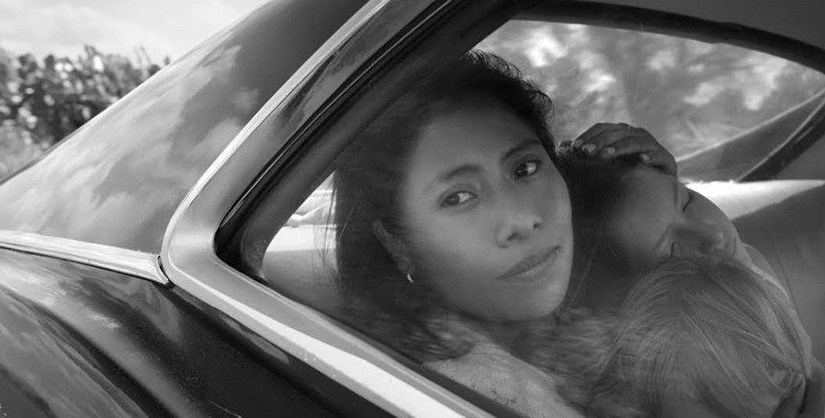
The closing credits of Alfonso Cuarón’s intensely personal, emotionally powerful Roma state unequivocally (in Spanish) that the entire movie was shot on 65mm film.  This is an important choice with a movie that communicates its emotional beats with strong, crisp visuals that don’t feel like a traditional movie.  To me, Roma feels like looking through an old, well-preserved photo album of a family I don’t know.  But the closer I look at the pictures, the more I can intuit how their lives are no less important or vital than my own.

More than most films, Roma exemplifies one of Roger Ebert’s core beliefs about film.  He said that movies “are like a machine that generates empathy. It lets you understand a little bit more about different hopes, aspirations, dreams and fears. It helps us to identify with the people who are sharing this journey with us.”

That’s how I felt watching Roma.  I never really felt like I was watching a film.  Director Cuarón (who served as his own cinematographer) uses his camera and shrewd editing to create the idea that I was looking at a fondly remembered memory instead of a traditional, plot-furthering movie sequence.  I didn’t grow up in Mexico or have a maid, but within just a few seconds of the opening scene – hell, during the opening CREDITS – I was sucked into the world of the film.

Another important element of this movie’s success is the exquisite sound design.  Over the opening credits, we see nothing except a close-up of some sort of tiled surface.  Soapy water spills over it a couple of times. We hear a mixture of street sounds, but not a busy street.  At one point a jet airliner flies far overhead, visible in the sky as reflected in a puddle of water. We can hear birds, and people talking and shouting in the distance, and a street vendor, and the occasional dog barking, and…it succeeds in placing you firmly in the world of the movie. It all feels completely organic, not engineered.

I’ve just realized I haven’t said a word about the plot.  The story, in itself, is nothing extraordinary.  We follow several months in the lives of a middle-class family in Mexico from 1970 to 1971.  They have a maid, Cleo, who discharges her duties with efficiency, who is beloved by the family children, who has a life of her own outside of her employer’s household.  Through various personal upheavals, both in her own life and the life of the family she works for, they all grow incredibly close.  …and I can almost hear your eyes glazing over as you read those words.

But, as is the case with every other film, what’s important is not WHAT this movie’s about, it’s about HOW it tells the story.  And Roma, if nothing else, solidifies Alfonso Cuarón’s standing as one of the great modern masters of cinematic storytelling.  In his hands, this humdrum story of middle-class life becomes a hymn to nostalgia. There’s a brief scene of everyone gathered around a television set, watching a variety show.  The sight of their smiling faces, illuminated by the screen, triggered a memory of my own family sitting around the TV back in ancient history, before VCRs and even cellphones(!), and watching the ABC Movie of the Week, like The Towering Inferno or Grey Lady Down.  It’s rare for a film to affect me like that.

I have to tread carefully here, because I want to mention a key event that occurs in the latter half of the film.  It’s immensely harrowing, all shot in one take (indeed, IMDb tells me it was shot only ONCE and not repeated).  In any other movie, I would say that it’s the kind of thing a screenwriter would throw in as a shamelessly manipulative plot twist, designed solely to elicit unearned emotions from the audience.  In Roma, however, the movie has so thoroughly worked its magic that the event, when it happens, is not shameless, but shocking and heartbreaking.  I was not watching an actor or actress.  I reacted as if I was watching a home movie of a real person going through a traumatic event, and it was devastating.  THAT’S the kind of rare cinematic event that I live for.

Roma is a black-and-white film shot in Spanish, with English subtitles, and which leans heavily on visual storytelling.  This may not be your cup of tea.  But if you like film at all, if you like the kind of movie where you can drink in the visuals like you were at a museum where the pictures breathed and lived and loved, then you owe it to yourself to see Roma as soon as possible.

THE FAVOURITE (2018)

By Miguel E. Rodriguez

Director: Yorgos Lanthimos
Cast: Olivia Colman, Rachel Weisz, Emma Stone, Nicholas Hoult
My Rating: 10/10
Rotten Tomatometer: 94% Certified Fresh

PLOT: In early 18th century England, a frail Queen Anne (Colman) enjoys the attentions of her close friend, Lady Sarah (Weisz), but when Sarah’s cousin (Stone) arrives at court, a subtle power struggle ensues.


This movie is a TRIP.  Imagine that someone crossed the sex-driven antics in Dangerous Liaisons with the cat-fighting in All About Eve, directed by someone who idolizes Stanley Kubrick and David Fincher.  It’s that good.

Where to begin?

I loved the story.  It’s a basic power struggle/love triangle, but told with immense wit and originality.  Queen Anne indulges in sexual dalliances with her closest confidante, Lady Sarah.  Then Abigail appears, a distant cousin to Lady Sarah; she’s hired as a scullery maid and slowly works her way into Lady Sarah’s confidence as her handmaiden.  When the Queen starts to show a preference for Abigail over Lady Sarah, oh, the fur doth fly.

Rarely has it been so much fun to see such bad people behaving so badly.  At first, I was rooting for Abigail, who is only doing what seems necessary to survive, but then it becomes obvious that there ARE no good guys in this movie.  Abigail proves herself just as capable of social atrocities as Lady Sarah or Queen Anne herself.  Normally, I HATE movies with no clear heroes, but the screenplay and camerawork kept me constantly engaged and entertained.  I think I had a smile on my face continuously after the 30-minute mark.

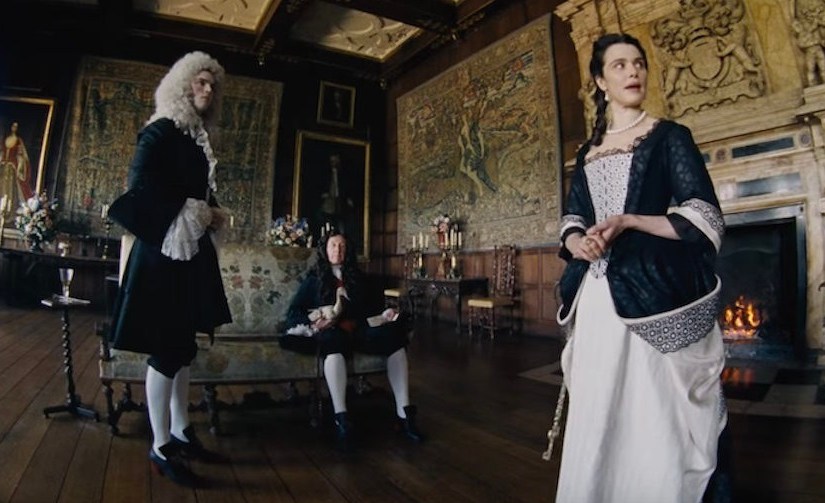
And let’s talk about that camerawork.  I’ve never seen one of this director Yorgos Lanthimos’s films before, but if they share the same visual inventiveness as THIS movie, I am going to seek them out.  The list of directors working today with visual styles unique to them is relatively short, so to find this fresh take on moving pictures was a delightful surprise.  There are a couple of places where extremely-wide-angle “fish-eye” lenses are used, distorting the picture on the edges so it looks like you’re looking at the scene through the bottom of a Coke bottle.  I found that particular device odd, calling attention to itself, but it worked.  It sort of created this idea that we’re looking at a staged performance rather than attempting to mimic or capture strict reality, which makes some of the behavior of the main characters more palatable than they might be in another film.

There are one or two moments that are so over the top, they might have derailed another film.  At one point, two characters dance during a formal party, as the Queen looks on.  It starts out daintily enough, like you’ve seen in countless other 18th-century films, the mincing steps back and forth, a little bow here, a curtsy there.  Then, as the music continues…something happens.  The man lifts the woman and swings her around on his hips like a swing dance.  They start to move their hands like in the “Vogue” video.  At one point, I’d swear the man started a rudimentary breakdancing move.  What’s going on here?  Why is this jarringly anachronistic dance intruding on the proceedings?

My first reaction while watching the movie was to just laugh in disbelief, while asking, “What IS this?”  Looking back on it now, I’d guess the purpose was to put ourselves into the mind of the Queen, whose perception of the dance starts to degrade the angrier she gets.  Regardless of its true purpose, it’s thoroughly weird but hilarious.

(Also, the screenplay contains some of the greatest zingers I’ve heard in a very long time, although I doubt some of them are historically accurate.  Not that I’m a historian, of course, but I remain unconvinced that British royals in the 1700s ever used the term “vajoojoo.”)

I’ll be honest, I was not previously aware of the actress Olivia Colman, who portrays the fragile, temperamental Queen Anne, before this movie, but I’ll be looking out for her from now on.  She more than holds her own with two Oscar winners (Emma Stone and Rachel Weisz).  Colman’s Queen Anne is a spoiled brat whose petulance is tolerated because, you know, she’s the Queen.  I loved a moment when she walks past an unsuspecting footman and yells at him, “Look at me!  Look at me!!!”  He turns and looks, and she immediately yells: “HOW DARE YOU LOOK AT ME!!!”  Right there, early on, her character is indelibly defined.

The depths to which all three women sink to exact their own particular brands of revenge upon each other will astonish you.  While the ending is not the one I quite hoped for, it’s extremely satisfying in a “be careful what you wish for” kind of way.  This movie was a delicious romp, and is definitely worth your time.

AQUAMAN (2018)

By Miguel E. Rodriguez

Director: James Wan
Cast: Jason Momoa, Amber Heard, Willem Dafoe, Patrick Wilson, Nicole Kidman, Dolph Lundgren
My Rating: 8/10
Rotten Tomatometer: 63%

PLOT: Arthur Curry learns that he is the heir to the underwater kingdom of Atlantis, and must step forward to lead his people and be a hero to the world.


Take the best parts of Tron: Legacy, Tomb Raider, and Disney’s animated Atlantis, and you’ll get an idea of how much fun Aquaman is.  For some people, saying it’s one of the best of the films set in the DC Universe isn’t saying much (peep that mediocre Tomatometer score), but speaking as someone who thoroughly enjoyed Justice League and Man of Steel and Wonder Woman, I had LOADS of fun watching an aquatic Dr. Doolittle kick some serious ass.

Admittedly, some of the underwater scenes are a little tricky.  It’s hard to take some of the weighty dialogue seriously when the people doing the talking are floating instead of standing, with their hair moving around like seaweed.  It’s the kind of thing that works great in animated movies or comic books, but to see it onscreen…it takes a little getting used to.

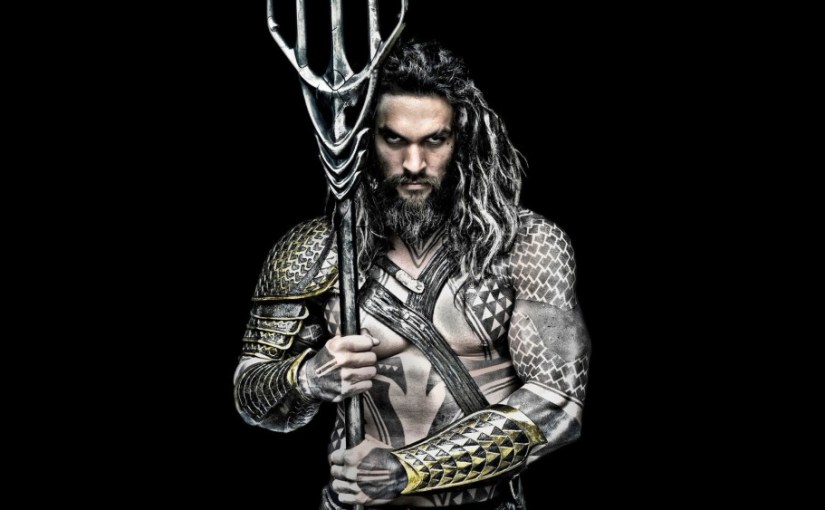
Once you get past that initial hurdle, though, this movie really cooks.  Jason Momoa was the best possible choice to make the much-maligned Aquaman character relatable to mass audiences.  He may not have the cocky delivery of a Robert Downey Jr. or a Chris Pratt, but he throws a mean glare, and, bro, dude is CHISELED.  When THIS guy emits sonar waves to talk to whales, it’s not a joke.  Hell, I wouldn’t laugh at a guy who looks like that.  “You talkin’ to fish?  Ping away, Muscles!”

The story is as ancient as Atlantis itself.  Arthur Curry returns to the land of his lineage to reclaim his birthright, but first he must overcome several trials before he can emerge triumphant.  Ho hum, been there, done that, bought the T-shirt.  But this movie really dresses it up and dazzles us with phenomenal sights.  Atlantis itself looks like someone mashed up Pandora from Avatar with the digital cityscapes in Tron: Legacy.  The various fight and battle scenes are handled extremely well, balancing clarity with incredibly elaborate CG fireworks.

(It was also nice to see one of Aquaman’s nemeses, Black Manta, rendered in a way that was EXTREMELY faithful to the source material, big head and big eyes included.  Of the actor portraying him, let it be said he was extremely adequate to the task, without really transcending the role he was given.)

Whatever gripes people may have, I would imagine it’s with being tired of overblown superhero movies, or the relatively few story gaps in the movie. (How did they get out of the desert?  How did Black Manta contact the Atlanteans in the first place?  If this is a sequel to Justice League, why are there no appearances or mention of the other members whatsoever?)  I can understand those gripes, but for me, the spectacle and the fun cancelled them out.

It’s not a perfect superhero movie; I wouldn’t quite rank it with the best Marvel films. But I gotta be honest: I had a blast.