ARLINGTON ROAD

By Marc S. Sanders

Arlington Road is a disturbing and all too real glimpse into how domestic terrorism in the United States operates.  The film from director Mark Pellington becomes more intriguing with repetitive views. Evening news shows and commentators’ programs airing nightly on outlets like FOX, CNN and MSNBC will delve ad nauseam into the hows, whys, and whos of a startling attack upon a populated area within the country.  Theories are pronounced, explored, and fault is found with someone, somewhere.  The protagonist of the film suggests that a name and face must be declared to ensure the country is at peace once again and punishment is rightfully delivered.

What surprises me about Pellington’s film is that it was released in 1999, two years before 9/11.  The worst, modern tragedy at that time was the Oklahoma City bombing.  School shootings were not even as prominent; practically unheard of.  We were only on the brink of Columbine High School’s terrible massacre.  At this precursor moment in time, I have to believe it was especially complex and required meticulous strategizing to bomb a government building.  

When I watched Arlington Road for the first time in theaters, I went with a last resort option for a ritual Sunday movie outing with dad.  We had seen everything else that was playing.  Title is lousy.  (Really lousy – Arlington Road??? That’s the best name they could come up with???) The marquee actors are meh to my twenty-seven-year-old psyche.  (Where’s Harrison Ford or Tom Cruise or Schwarzenegger???). Who’s the director????  Well, for dad and I this film was a huge surprise because of its taut, compelling screenplay and magnificent performances from Jeff Bridges, Tim Robbins and Joan Cusack.  The acting is what stands out the most while you forgive all of the conveniences that intersect to keep the story on its tracks.  

However, when I watch the picture on repeat viewing every couple of years, I realize that other than a random encounter in a parking garage for two characters, everything had been well planned ahead by the villains.  Roger Ebert and even the other unpaid critic, Miguel, took issue with minor happenstances that occur at just the right time.  Well, sorry to disappoint them but Arlington Road has an explanation for nearly every detail that seems contrived when in fact it was all part of a villains’ orchestrated construction.  The bad guys are especially smart in this movie.

Jeff Bridges plays Michael Faraday, a college professor who teaches a history class about domestic terrorism in relation to bombings, shootings, and assassinations.  He lectures his students about the faults and responsibilities of the FBI and other law enforcement departments.  He also provides insight into the people responsible for these heinous acts and often questions if these nefarious figures were lone wolves capable of such madness or were they scapegoats or were there others involved to help carry out these acts.  

Michael is a widower and a father to a ten year old son named Grant (Spencer Treat Clark).  After his FBI wife is killed in the line of duty, Michael has not fully come to grips with the loss.  He is dating Brooke, a former graduate student (Hope Davis), but he is clearly obsessed with what went wrong on that fateful day when his wife perished.

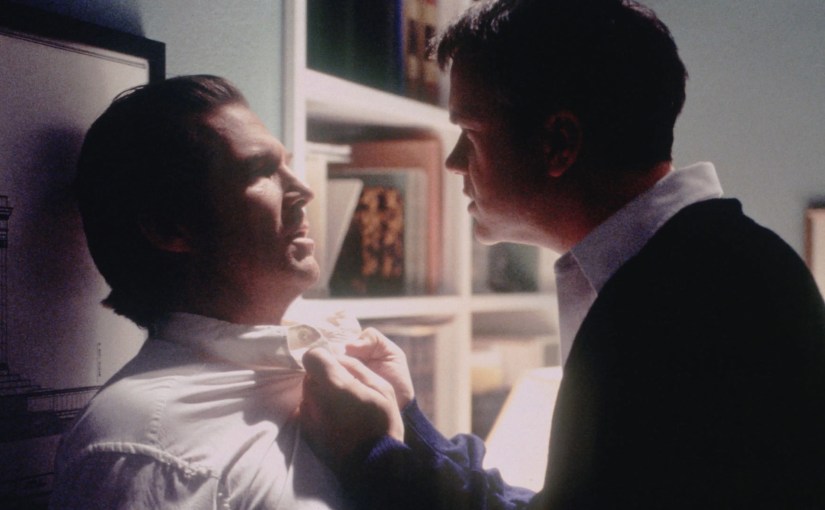
Oliver and Cheryl Lang (Tim Robbins, Joan Cusack) are the happy neighbors who recently moved in across the street.  Michael becomes acquainted with them when he saves their son’s life following a fireworks accident.  The Langs quickly become enmeshed within Michael’s space with child sleepovers, barbecues and evening dinners.  However, the friendlier the Langs seem the more suspicious Michael feels about them.  

Oliver’s backstory seems inconsistent with what Michael observes.  Soon, the professor’s hysteria becomes increasingly amplified.  As wholesome as Oliver and Cheryl are with big, toothy grins and neighborly charm, could they actually be plotting for an act of violence to occur?  As Michael becomes more skeptical around them, Grant, Brooke, plus his wife’s former FBI partner, seem all the more dismissive.  Whatever Michael is beginning to believe is nowhere near as apparent as his own expressive paranoia with big outbursts and unkempt appearances.  Jeff Bridges delivers a manic performance that leaves you breathless and uncomfortable.  He’s so focused on how unhinged this guy is even when he’s just trying to move on with a new normal as a surviving spouse and parent.

One of the many strengths of Arlington Road is reliant upon its ongoing build.  More is learned with each passing scene.  When you feel like you’ve grasped everything, new material presents itself and the actual truths may be more disturbing than what’s already been revealed.  

Joan Cusack is freaky frightening.  She performs to the camera with wool over the viewers’ eyes and she says so much by doing so little.  Before you die, the last thing you want to see is a Joan Cusack with a crooked, unwelcome grin. I salute the simple costuming of Tim Robbins character.  He dresses like Mr. Rogers with a lanky, thin build covered by earth tone sweaters and khakis.  He’s so plain and corny that its terribly awkward. These friendly neighbors hide in plain sight.  

On a first view, Arlington Road may feel like a paint by numbers formula with a few jump scares as the hero sneaks around for clues along with a high stakes chase through Washington DC.  However, I encourage anyone to watch Mark Pellington’s thriller more than once.  The first time you are focused on Bridges, Robbins and Cusack.  The second time you are likely to find what explains the conveniences of the characters and the story.  Then you realize that Pellington and screenwriter Ehren Krueger have done thorough research into what realistically upholds the actions of these characters and situations.

Arlington Road only suffers from a terrible and misleading title.  It’s simply unattractive.  However, the film is compelling and authentically conceived long before a dark trend of American terrorism and mass violence dominated social media and evening newscasts.  It’s a mixed compliment to suggest that the cast and filmmakers got so much right with a topical story that was not yet so commonplace.  

This is an absolutely engaging thriller that I only wish was more fictional and exaggerated than it actually is.
AMERICAN BEAUTY

By Marc S. Sanders

Lester Burnham declares in less than a year he’ll be dead.  When we meet him, he’s masturbating in the shower, sleeping in the back of the family vehicle on the way to work, and declaring that his wife Carolyn used to be lovely.  Heck, he’s acting like he’s dead already.  His life has nothing new or exciting to pursue.  His daughter, Jane, doesn’t give him the time of day.  He’s threatened with being laid off from his magazine call center job that he’s held on to for nearly twenty-five years.  What’s to live for anymore? 

I guess what’s complimentary about poor Lester is that at least he’s honest with himself.  All the other neighbors, except for the gay couple known as Jim & Jim, are just as unhappy it seems and might as well be dead too.  A common theme running through the suburban landscape of American Beauty centers on a sense of mental awakening. Who revives sad, lost folks like Lester and Carolyn?  Perhaps it’s the generation sneaking up behind them, who are on the cusp of taking their place in young adulthood. 

Lester is played by Kevin Spacey, in his second Oscar winning performance.  Carolyn is portrayed by Annette Bening who is way overdue for a trophy.  Jane the daughter is played by Thora Birch.  The headliners of this cast are outstanding in how different and disagreeable they portray a broken family that is forced to live in an unstimulating home while trudging through a lifeless marriage.  Look at the set designs within this film.  There’s an endless amount of blank walls within the interiors of the homes.  Almost no artwork or pictures are to be found. 

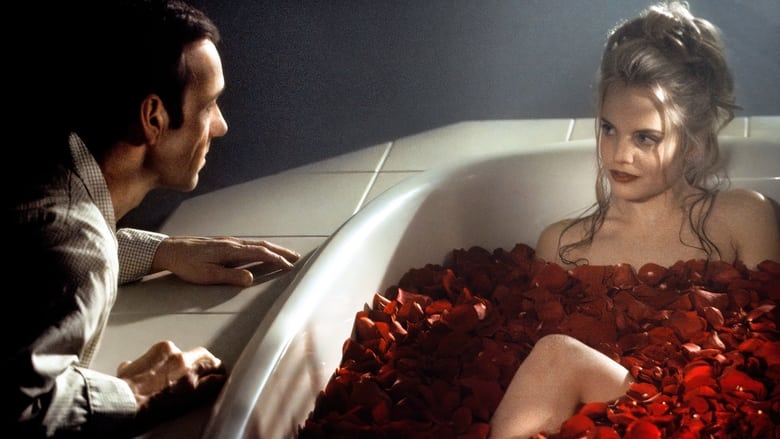
Lester pines and fantasizes about Jane’s best friend Angela (Mena Suvari) getting rained on with red rose petals while she lies naked in a pure white bathtub.  Carolyn, the real estate agent who can’t make a sale, sidles up to the dashing Buddy Kane (Peter Gallagher), her competition. Next door is Chris Cooper in a hospital cornered role as retired Marine Colonel Frank Fitts, with his near comatose wife Barbara played by Allison Janey, and their eighteen-year-old resourceful drug dealing son, Ricky (Wes Bentley). He takes advantage of his camcorder at any opportunity to collect the beautiful images found within the world he occupies and observes.  That could mean he’s capturing Jane in her bedroom window which faces his own.  Later, he’ll show you the freedom of a plastic shopping bag dancing within an autumn breeze.  An old shopping bag has more life among a breeze and brown leaves than Lester, Carolyn, Frank or Barbara.

There is a mystery to American Beauty that seems quite odd.  We know that Lester will die soon, but how and why? Maybe there’s a twist, because that outcome seems more and more impossible as we see Lester discover a spirited mindset to go after what he wants, when he wants and declare that he’s not going to allow himself to take shit from anyone particularly in his boring dead end job or from his unaffectionate wife.  Ricky, the kid with tons of money and electronics equipment, has nothing to lose because he’s not committed to anything at age eighteen and he can just quit an ordinary table-waiting job at any given moment.  Why didn’t Lester have the gumption to ever be like Ricky?   It seems so simple.

There’s a blink and miss it sign hidden in plain sight.  Pinned to the wall of Lester’s work cubicle is the message “Look Closer.”  Director Sam Mendes and writer Alan Ball gives the audience a subtle wink to dig within the cracks of suburban life sidewalks.  These homes may appear perfect on the outside, with neighborly neighbors, but if you watch with a more critical eye you’ll find an emptiness that has been unfilled for too long.  The filmmakers make it easy for you to uncover what eats away at the upper middle-class way of living.  Dinner with Lawrence Welk playing in the background is anything but uplifting.  It’s imprisoning.

When one member of this community opts to seize his moment, no matter if he’s motivated by a kid’s rebelliousness and the drugs he buys off of him, or the fact that he thinks a beautiful teenage blonde has the hots for him, he sets out to change.  He exercises and builds up his body, buys the dream sports car he’s always wanted, quits his job and grows to not caring how this may disturb his unloving wife. 

American Beauty seems to remind us how alive we can be when we are younger and not as restrained by the commitments it takes to live like adults with debts and parenthood and jobs and marriage.  Look closer though because couldn’t we live as well or more aggressively when middle age arrives?

The irony of Alan Ball’s script is that a boring guy like Lester Burnham discovers exciting things about himself just as the end of his life is approaching.  All he needed was stimulation.  He never saw his death coming, and you might forget he told you he will soon be dead, but American Beauty works to show how necessary it is to live each day to the fullest. 

I sound hokey.  I know.  Yet, that’s the direction of this film’s trajectory.  On the side, you observe those people who do not pursue what will fulfill their own lives and desperately need a modification.  Lester was limited to branch out. So is Colonel Fitts and his very sad wife.  So is Carolyn, and Jane and Angela, and maybe so is Ricky.  All of these people uphold facades about themselves to preserve a happiness on the outside when they really feel worse within. 

Sam Mendes is brilliant at drawing upon the subtle messages and insecurities of Alan Ball’s neighborhood characters.   About the only people that Sam and Alan do not dig deeper with is the gay couple.  I guess since they are happily out of the closet, what is left for them to conceal?

I could not help but compare Mendes’ Oscar winning film to Robert Redford’s.  American Beauty is more forthright than Ordinary People. Redford’s film draws out the ugly honesty of the family nucleus when an unexpected tragedy interferes.  Then it takes the entire film before the spouses take off their masks and truly declare how they regard each other.  It’s crushing to realize a sad truth. 

American Beauty rips off the layer right at the beginning, though.  A tragedy does not awaken these people to the natures that embarrass them.  Simply a hellbent, fed up mindset gets one guy going, and if that one member opens his eyes, then so will others because a simple disruption in ordinary life is next to impossible to live with.  Both films are so wise in how they criticize the very people these films were likely catered for.

What do these two Oscar winners say?  They tell the middle class, middle age American to simply look closer.

GO

By Marc S. Sanders

Character perspective is so vital to a story.  It becomes even more important when you are telling multiple tales.  When you have a collection of five or six characters in your screenplay and they each have a circumstance that overlaps with one another, a smart way to narrate one reckless evening is by chopping up the time period into multiple plotlines.  Numerous stories offer several perspectives and then you may appreciate what director Doug Liman accomplishes with one of his earliest career films, Go.

Go focuses on an assortment of early twenty-somethings scrounging for money while also taking in the nightlife during an evening close to Christmas.  Two supermarket cashiers, Ronna and Simon (Sarah Polley, Desmond Askew) have different things on their mind.  Ronna, who is exhausted having worked double shifts, is on the verge of getting evicted from her apartment because she has no money to pay the rent.  Simon just wants to go with his buddies for a good time in Las Vegas, but he’s got to work.  So, the two swap shifts. 

The script follows the Ronna avenue first where she meets up with some acquaintances of Simon’s looking to score some ecstasy.  Ronna thinks of a get rich quick scheme to meet with Simon’s drug supplier, Todd (Timothy Olyphant), and then sell to Simon’s buddies directly.  Naturally, it doesn’t work out so neatly.

The second act of the film focuses on Simon with three buddies (Taye Diggs, Breckin Meyer and James Duval).  Because Simon is written as happy go lucky, but also careless, he’ll get into his own kind of adventures and mischief.  It can only happen in Vegas.

The third act turns the viewpoint over to those acquaintances that approached Ronna, two soap opera actors named Zach and Adam (Jay Mohr, Scott Wolf).  These guys weren’t just looking to score some drugs.  They’re up to something else entirely.

I’ve never been one to take to movies where the characters are intoxicated or high through most of the film.  I can only handle so much of Seth Rogen’s drug episode schtick like with Pineapple Express, released years after Go.  What’s most appealing about Liman’s film, however, is that you are moving along one path, and then suddenly you are reversed and driving down the other side of the fork in the road.  This routine occurs again for a third time. 

Much like Quentin Tarantino’s Pulp Fiction, you can argue that the writer/director could simply take the straight route from beginning to end.  Yet is that really interesting?  Would Pulp Fiction have worked as well or better than its final composition?  Don’t we usually see that approach in everything else out there?  As well, these characters are not following a storyline that contains gripping material with symbolism or intense dialogue and circumstances.  So, how exactly do you heighten a kid buying drugs off another kid while keeping the viewers’ attention span?  You stir the pot.  (No pun intended.)

Following a rage dance club effect of opening credits, Liman does a close up of Katie Holmes as Claire, Ronna’s friend.  She’s talking to someone, who we can’t see, about how fun the surprises are with opening Christmas presents.  Go works from beginning to end because it turns in surprise encounters that you would never expect.  Call it a butterfly effect.  A flap of the wings leads to this encounter which leads to that encounter and so on.  If you are taken with the film, you just might smirk with pleasant surprise when you uncover who Claire is actually speaking to.

Early on in the film, we will see a one-sided conversation on the phone.  Later we will see the other side of that same call and I get a kick out seeing a story running parallel to another story I just got done seeing. (Forgive the redundancy of that sentence, but that’s the point!)

Another moment will have a character draw a gun on another character, only a hit and run with a car disrupts the moment.  Thankfully, we’ll meet the personalities behind that car later on.  As the picture becomes more and more clear, you might cheer “Bravo!” at the invention of Go.

As noted before, Doug Liman’s movie has been compared to the drive behind Pulp Fiction.  I understand the temptation to make that association.  However, this movie stands on its own.  Where Tarantino will show perspective of different characters, he will branch off into forward thinking with new events.  Go steers its focus to parallel plot points.  We see what’s occurring in Los Angeles right now with Ronna.  Later, we will see what’s happening in Las Vegas at that very same time with Simon.  Tarantino picks up where we left off.  Liman documents what’s happening elsewhere.  While these two characters are going along their own paths simultaneously in different parts of the universe, what happens to one of them will bear on what happens to the other as the trajectories continue. 

I might be making this out to be fancier than it ever needed to be, but it’s a kick ass good time, nonetheless.  The soundtrack is absolutely fun.  You get absorbed in the settings, almost wanting to be in the Christmas night club party with strobe lights and neon colors, or the Vegas casinos and strip joints.  The personalities and dialogue are super smart and witty with hilarious comebacks.  “If you were any more white, you’d be clear!”

At the time Go was released in 1999, from a marketing perspective, it did not appear all that attractive.  Lots of club music and symphonics surround the picture.  The most marquee name in the film, probably still, is Katie Holmes who is not exactly on the same level as an Angelina Jolie or even a Jennifer Lawrence of today.  Yes.  Nearly twenty-five years later many of these young actors are more recognizable.  I dare you to come up with their names though as soon as you see them in the picture.  However, because I’m not watching Tom Cruise or Brad Pitt, I have no expectations of how any of these various storylines are going to turn out.  When the film leaves the Ronna storyline, are we going to get to see what happens to her next?  Will Simon get back from Vegas?  Lots of questions abound as the film moves on.

While Go is reveling in its debauchery, it’s performing as a smart machine that hits all the right notes where it will lay the groundwork for comedy, but then segue into serious material where the protagonists find themselves in a situation they might not be able to escape.  Go is a movie that keeps you alert, even if you’re high, during one sleepless and irresponsible night. 

FIGHT CLUB

By Marc S. Sanders

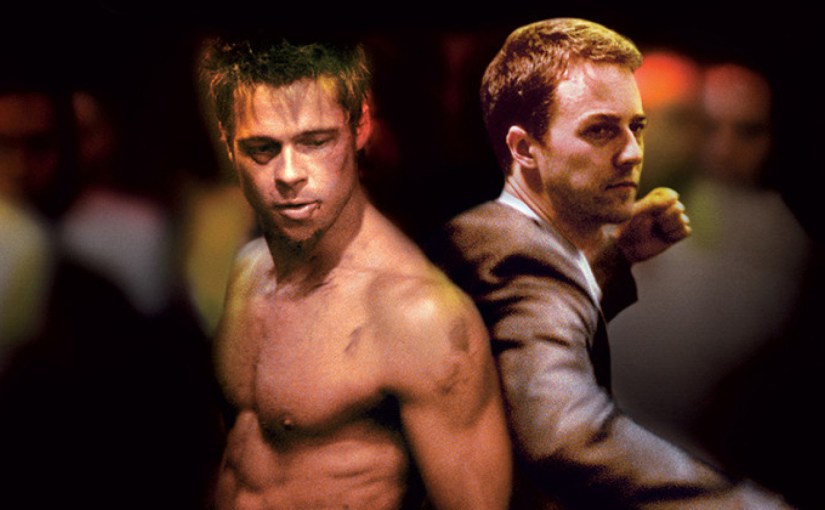
David Fincher’s Fight Club is a deliberately ugly and dreary film. It has to be to evoke the insomnia its narrator (Edward Norton) suffers from, as well as his lonely depression that offers no answers for his purpose to exist or to be loved by another person.

To alleviate his need for something fulfilling, the narrator resorts to attending support groups for men suffering from illnesses and debilitating diseases like testicular cancer. There he meets a former body builder named Bob (the singer Meat Loaf) who has developed floppy breasts after going through hormone therapy. Bob follows the processes of the self help group and embraces on to Norton’s character as a means of support; stuffing his face into Bob’s breasts. The narrator eventually becomes accustomed to this maternal practice and the ritual of attending these meetings as a regular process. However, he feels he is getting upstaged by Marla (Helena Bonham Carter), a punk looking girl with dark eyeliner and wild jet-black hair.

Even though Marla and the narrator negotiate who attends what meetings and on what night, Norton meets another punk like reckless character known as Tyler Durdin (memorably played by Brad Pitt) who manufactures and sells soap but also edits film reels, sneakily inserting penis images into family films. Tyler also works as a waiter at a high-end restaurant where he proudly adds a little of “himself” to all the courses that are served.

The narrator only works at a boring desk job where his boss uses any opportunity to look down upon him and chastise him on his performance or appearance, but never recognizing anything further within his nature. The boss could care less about him. Naturally, the narrator becomes in awe of Tyler’s behavior. Tyler is a rebel and offers much more beyond Bob’s comfort. Tyler serves a purpose for the narrator to pursue.

When Tyler challenges the narrator to hit him as hard as he can it eventually leads to a new kind of gathering for both of them, a support group known as Fight Club. Men from all over soon gather underground to partake of letting out their aggressions with bare knuckle fists and wrestling. Anyone attending gets a therapeutic vibe from bleeding and bruising themselves upon one another. The narrator certainly feels better.

Going a step further leads Tyler and the narrator to fight back against a system of order and capitalism. Their philosophy picks up traction and soon a form of revolution is taking place across the entire country. Somehow, the narrator is taken off guard by this new belief system.

There’s a lot to consider and question in Fight Club, though I’m not sure I care for the film as a whole to debate its message. Sometimes it feels like it’s not moving anywhere. Norton’s character learns things about his own consciousness and need to falsely subject himself as a cancer survivor or as an underground brawler because he has nothing else really going for him. I get that, but why should I care or like it?

Tyler Durdin resides in a broken down house on the other end of the city that is leaking from every pipe and it’s electricity could ignite another fire that maybe this decrepit dwelling survived once before. Tyler is happy with his home and happy to share it with the narrator as well as Marla whom he has endless sex with. Tyler doesn’t want the fancy trappings. It’s revolting to even possess such materialism and suck off the tit of a capitalist regime. With the narrator at his side, he encourages a fight against the power of commercialism and wealth. Find a way to destroy the structures of what the country has built itself into, perhaps.

That’s the message of Fight Club. I just can’t lay claim that I cared for the execution of the revolt. I’m supposed to laugh at Tyler’s antics at times like when he steals the gross liquid fat from liposuction patients to manufacture the soap he sells. Yes, we get a moment where the bags of fat leak and splatter all over the place. It was just never amusing for me. I found no symbolism in this passage. It’s just absolutely disgusting. When Tyler happily pisses in someone’s soup, I don’t think it’s funny either. I don’t like Tyler. I don’t envy him or want to be him. I don’t find anything to cheer for with him. I’ve got more admiration for John Bender in The Breakfast Club than I do for Tyler Durdin. I might respect what he stands for to a degree as we are a culture brainwashed by advertising and commercialism. I just don’t care for the actions taken by this so-called martyr on behalf of the self-described unfortunates like Norton’s narrator.

I also find it ironic and quite hypocritical that Fincher’s film is a call to stand up to materialism and commercialism and yet the cast is headlined by Brad Pitt, arguably one of the biggest box office stars of the last 30 years, complete with his name above the title and his image front and center ahead of Edward Norton’s on the film posters that promote the film. Pitt is also the guy you see first, last and all over the middle of any of the film’s trailers and advertisements.

Now tell me, is that not a contradiction in terms?

STAR WARS EPISODE I: THE PHANTOM MENACE

By Marc S. Sanders

22 years after the first Star Wars film made a ginormous cultural impact on the world, George Lucas finally returned to the franchise to make the first film of a new prequel trilogy with Star Wars Episode I: The Phantom Menace. It was hyped beyond measure, and it sold gazillions in ticket sales but was nevertheless a letdown for diehard fans and pretty much everyone else. I don’t think it’s a terrible movie. I just don’t understand how necessary the film is.

There’s a lot of irrelevant moments here. Early on two Jedi step off a ship, and a droid introduces herself to them and says “this way please,” and the three figures literally walk out of frame. This takes up time that I don’t understand. Why couldn’t the three just end up in the room they were supposed to be in? There are a lot of “so what?” moments in The Phantom Menace, and it all weighs the film down, hindering a story.

Listening to an audio commentary a number of years ago, one of the visual effects makers pats himself on the back of a shot midway through the film that consists primarily of CGI characters and sets. That was when I realized the conception of The Phantom Menace was completed with a short-sighted intent. Sure the scene might have been a technical breakthrough in 1999, but where’s the story? Fact is, there is no story and little regard for the celebrated franchise in Episode I. Lucas and his team were more concerned with shooting new CGI discoveries blended with human interaction. They offered next to no regard for intelligent plot and storytelling. The film suffers because of Lucasfilm’s hubris.

Consider the pod race. There’s a moment where young Anakin’s (Jake Lloyd) racer falls apart at high speed and he’s gotta get it back together. He uses a magnetic tool to get a cable plugged back in. If this child is “the chosen one” and potentially “dangerous,” why not show the child potentially use the force to bring the cable back in place? Why not show moments where unexplainable power emits from Anakin, to what would imply the inevitablity we are aware will eventually happen?

Lucas is also all over the place in his storytelling and characters. From the Shakespearean manipulator, Senator Palpatine, to the immature cartoon like Jar Jar Binks. I think they all serve a purpose to entertain. Yet while adults and die hard fans will relish the return of Ian McDiarmid (a terrific actor) they’ll be bored to death with actor Ahmed Best in the Jar Jar role. This I expect happens in vice versa with 8 year olds seeing their toy figures come to life. There is a silly charm to Jar Jar, but what 8 year old wants to pay attention or even comprehend debates among galactic senators over taxation and trade? It’s as if Bugs Bunny entered the halls of Congress, or Othello walked in on a pie throwing melee among the Three Stooges. At almost every point in The Phantom Menace something doesn’t belong or seems out of place.

The film moves far away from the tradition of the original trilogy. For the first time the human characters are enormously flat. Liam Neeson, Natalie Portman, Ewan McGregor…all flat, all bland. There’s no snarkiness to them. No sarcasm. Before The Phantom Menace when was it ever said that the Jedi order was so formal in their ways? It doesn’t feel very fun to be a Jedi, like it did for Alec Guinness and Mark Hamill before.

The two redeeming qualities of this film belong to the pod race which is thrillingly edited in sound and visuals. There’s some fun shots of each racer, the pit droids, the crowds in the stands and even Jabba The Hutt. The film really comes alive here much like the memorable cantina scene from the original Star Wars. The other best feature is the villain, the apprentice to the phantom menace, the red and black tattooed Darth Maul played by the agile martial artist Ray Park.

Lucas didn’t use Park enough in the film. With his double bladed lightsaber, the two on one dual Park has with the Jedi characters towards the end is one of the greatest sword fights in film. I would’ve welcomed an additional five minutes of this scene. Shamefully, this would be Ray Park’s only appearance in the film franchise, as well as Darth Maul. This was a great blend of actor and character. Lucas abandoned a good thing too soon.

Yes! I have much to complain about The Phantom Menace. Yet it is not all bad as a whole. I love the political trickery that McDiarmid displays and the senate meeting among the delegates is a nice foreshadowing for what we know will come of it. Visually, it’s a treat as well. (Again, though, what kids are going to be entertained by all of that?) The pod race and lightsaber dueling are masterful as well. There’s some good material here. There just could’ve been a whole lot more….and a whole lot less overall.

NOTTING HILL

By Marc S. Sanders

Notting Hill written by Richard Curtis (Love, Actually) and directed by Roger Michell is a pleasant surprise of a romantic comedy. It’s not a perfect film but it certainly loves every one of its quirky supporting characters, as well as its two straight romantic leads played by Julia Roberts and Hugh Grant.

Grant plays Will Thacker who lives in the Notting Hill district of London where every proprietor is a charming little shop of some form or other; a quaint street where merchants appear on the sidewalks during the weekends selling their art or homemade jams or coffee products. Will owns a travel book shop located across the street from his flat that is whimsically recognized by its big blue front door. His wife left him for another man and now he’s relegated himself to living with a roommate called Spike (character actor Rhys Ifans doing a British equivalent of Cosmo Kramer, Seinfeld’s neighbor).

One day the superstar celebrity Anna Scott (Roberts) simply strolls into Will’s store. They have a quiet moment and he sells her a travel book about Turkey that he didn’t recommend she purchase. Moments later they run into each other down the street when Will spills orange juice all over Anna. From there, a meet cute relationship begins to unfold. It’s not so simple for the pair though as Anna’s enormous celebrity is hard to negotiate; hard for Anna, not hard for Will.

Anna is at ease when she can have a quiet dinner to celebrate Will’s sister’s birthday with his friends or when she can escape her turbulent life of gossip magazines and paparazzi by taking shelter at Will’s flat, even if grungy looking Spike walks in on her taking a bath.

I like Notting Hill. However, the quiet moments shared between Grant and Roberts sometimes carry on too long. Oh my gosh!!!! Will someone say something already????? Hugh Grant has made characters that trip over their words and stumble with what to say into a master craft. Julia Roberts is one actress that a camera loves especially when she’s distressed. A crying moment in any one of her films will milk the scene for every blush, or glassy eye or tear and whisper she can offer. She’s a terrifically skilled actress in almost any film she does. Eventually, we have to move on from all of this though. My patience for some scenes were just running way too long for me at times. Kiss already!!!! Make love already!!!! Scream at each other already!!!!

Fortunately, there’s much escape to be had with the supporting cast, especially Ifans as Spike who is the most absent minded, lovable, dirty underwear wearing and sloppy prig imaginable. Emma Chambers is just as fetching with her scarlet pigtailed haircut as Will’s sister, Honey. Tim McInnery, Gina McKee, James Dreyfus and Hugh Bonneville round out this madcap collection. The birthday dinner party is a great scene for this ensemble as a comedic but relaxed chemistry blends nicely during a competition to see who is suffering the most to earn the last brownie on the dessert plate. The group is unsure how to include a movie star like Anna in their simplicity but Julia Roberts pulls off a trick that even had me fooled. Simply put, for the whole cast, there’s just that much more life and vibrancy when they are all together and it’s not just relegated to only Roberts and Grant in a scene.

Another special moment occurs later when the couple have split up once again. To depict time fleeting by, Roger Michell offers up a transition of Will wearing one outfit but walking through the hustle and bustle of Notting Hill as the weather and seasons seamlessly change all around him from sunlight to rain to snow and spring sunlight again. You even get a glimpse of Honey starting a flirtatious relationship at the beginning of the sequence and by the time it’s over a minute later Honey is breaking up with the guy. It’s a wonderful moment of wordless narration to show Will’s struggle with moving on as time continues to pass by. More importantly, it allows the titled setting to be a character of its own. This is a great example of showing a lovesick character unable to move on while life has no patience to wait for him to catch up.

I like Hugh Grant and Julia Roberts whether it’s in Notting Hill or one of their many other fine movies. I can’t deny the chemistry they have in this film. It works. I only wanted a little more life to the material that was handed to them. Still, Notting Hill is charming and simply a very sweet romantic comedy.

ALL ABOUT MY MOTHER (1999, Spain)

by Miguel E. Rodriguez

Director: Pedro Almodóvar
Cast: Cecilia Roth, Marisa Paredes, Penelope Cruz, Antonia San Juan
My Rating: 8/10
Rotten Tomatometer: 98% Certified Fresh

PLOT: A single mom fulfills her son’s last wish by going on a search for her estranged husband, whom she has not seen since before her son was born.


Whatever you might think personally of director Pedro Almodóvar’s films, you can’t say he doesn’t have range and/or versatility.  In one of his previous films, Women on the Verge of a Nervous Breakdown [1988], he takes potentially dark material (a suicidal woman’s quest to find out why her lover abruptly left her) and turns it into farce (police officers accidentally eat drug-laced gazpacho intended for another suicide attempt).  In All About My Mother, winner of 1999’s Oscar for Best Foreign Film, Almodóvar takes potentially farcical material (a mother searches for her estranged husband, who happens to be a transvestite named Lola, and makes friends with a pregnant nun) and turns it into solid, albeit soapy, melodrama that is rather unique in its matter-of-fact treatment of its transvestite characters and situations.

Manuela (Cecilia Roth), a single mother and part-time actor, takes her teenaged son, Esteban, to see a local production of A Streetcar Named Desire in Spanish.  (The night before, they watched All About Eve together, so she’s clearly teaching him right.)  Esteban is so taken with the performance of Huma Rojo (Marisa Paredes), the lead actress playing Blanche, that he waits outside the stage door to get her autograph.  Huma absently gets in a cab and drives away, Esteban runs after her, and is struck dead by a car in traffic.  In a scene of poignant irony, Manuela must sign some official forms to release her son’s body as an organ donor, just days after portraying a grieving mother in a hospital video about…becoming an organ donor.

Manuela discovers her son’s journal in which he is literally writing all about his mother, and he mentions his sadness because he never knew his father, and his mother has told him nothing about his father his entire life.  So begins her quest to locate the long-lost father, whom she refers to as either Esteban or Lola, depending on the context.

After she travels across Spain to Barcelona, her first encounter is with an old friend, a transvestite hooker named Agrado, which roughly translates to “liking” or “agreeable.”  Agrado helps Manuela find a job through the social services of a nunnery, where they meet Rosa (Penelope Cruz), a nun dedicated to assisting hookers of all sorts escape their scandalous lives and find wholesome work elsewhere.  Rosa talks about leaving soon to go to El Salvador to assist in similar work there…but alas, she soon finds out she is pregnant herself.

Meanwhile, Manuela also connects with Huma, the actress whose autograph her son was seeking.  Soon she is hired as an assistant and even, through circumstantially suspicious events, manages to appear onstage as an emergency substitute for Nina, the actress portraying Stella, who is also having an on-again/off-again fling with Huma…

And so on and so on.  At times, All About My Mother feels a little too much like a telenovela, those famous Spanish-language soap operas whose plotlines pack more melodrama into one episode than Dynasty did in an entire season.  But as wacky as the situations got, the movie never gets out of hand, so to speak.  It never wallows in the trashy elements, like a John Waters or Russ Meyer movie, for example.  It simply presents the situations, and the characters face it, deal with it, and move on with their lives.  If I find the situations trashy or overly sensational, that’s my problem, at least in Almodóvar’s world.

That’s one of the charms of this film.  There is a running gag where Agrado, the transvestite hooker – pre-op, by the way – gets hit on by both men and women, and neither gender seems to care about her seemingly incompatible sets of equipment, if you get my drift.  (The guy even offers to do to her what she would normally do to him.  I don’t remember the exact line, but at one point the guy says something like, “Hey, if you think it will relax me, I’ll try anything.”)  In virtually any other movie, that scene would be milked for laughs, or it might be the defining scene for the Agrado character.  But instead, it showcases the…I’m not sure what word I’m looking for here…the “non-issue” attitude that everyone in the movie has to transvestites, gays, lesbians, or any other sexual orientation that might otherwise be a distraction in most American films.  Manuela’s husband is himself a transvestite hooker.  Okay, she accepts it, everyone accepts it, even Rosa the pregnant nun accepts it, and let’s get on with the story.

There is a remarkable scene where Agrado has gotten a job as an assistant to Huma, the actress, and for various reasons a performance has to be cancelled.  Agrado goes in front of the curtain, informs the audience, and offers to tell her life story as compensation for anyone who wants to stay.  She proceeds to itemize every bit of cosmetic surgery she has had done to herself in the past few years in order to become…herself.  Eyes, nose, breasts, jaw reduction…all so she can be more authentic.  “And one can’t be stingy with these things, because you are more authentic the more you resemble what you’ve dreamed of being.”

And then the movie moves on.  It’s a bravura moment that might have been the centerpiece of another film, but in this one, it’s just a dash of character color that deepens everything around it.

I should also mention the lighting style throughout nearly the entire film.  On a few occasions, we are treated to scenes from that stage production of Streetcar, and we clearly see the theatrical lighting.  But in many, if not ALL interior scenes throughout the rest of the movie, the lighting is roughly similar to that of a stage production, or maybe a TV production.  Nothing is lit like I have come to subconsciously expect.  Instead, it all has a kind of heightened reality to it, or maybe “un-reality”, which paradoxically makes it more engaging to watch instead of being distracting.  I think I’m being a little contradictory, but it’s the best description I can provide.

Pedro Almodóvar has been directing shorts and feature films since 1974 and shows no signs of slowing down.  I can’t promise I’ll eventually watch everything he’s ever done, but of the two films of his I’ve seen, this one is my favorite so far.  There’s an abundant love of theater, theatricality, and especially for his characters in his work.  You or I may not like all of them, but he doesn’t seem to care.  Almodóvar seems to be arguing there is humanity in everyone, not exactly a groundbreaking message, but certainly one that was still not widely accepted, even as recently as 1999, and even less so today, unfortunately.  He’s saying, “Look at someone, and don’t see their differences.  See them.  And get on with your life.”

THE IRON GIANT

By Marc S. Sanders

Before he became known as a Mission: Impossible director or the guy who brought The Incredibles to the screen for Disney/Pixar, Brad Bird made the animated film The Iron Giant for Warner Bros. Animation. It’s absolutely brilliant in its visual drawings, storytelling, characterizations and period setting awareness.

The film takes place in a small town off the coast of Maine in the year 1957. The race for space has declared a winner as the Russians’ satellite, Sputnik, is the first to orbit the planet. The threat of the Cold War is no longer a secret. It’s out in the open as classrooms are exposed to danger drill warning films where children must hide under their desks in the event that a nuclear holocaust occurs. The film they watch is an absolutely hilarious sequence about what was a pretty serious subject matter at the time.

One student gleefully takes in the residual flying saucer flicks on TV, that spawned from this quagmire of paranoia occupying America at the time. His name is Hogarth Hughes, voiced by Eli Marienthal. When his TV antenna turns up missing one night, Hogarth goes off into the woods where he discovers a giant robot munching on the metal of a nearby power plant and in danger of electrocution when he gets tangled in the wires. The robot (Vin Diesel) is unfamiliar with earth and recognizably innocent, but quickly trusts Hogarth as a friend.

Young Hogarth is thrilled upon his discovery but knows his mom (Jennifer Aniston) would never approve of him keeping the robot, much less even a small pet. A government bureaucrat named Kent Manley (Christopher McDonald), complete with the fedora hat and trench coat, becomes suspicious of Hogarth. Kent’s Cold War guard drives him to uncover this 50-foot-tall robot with his own eyes. Find the threat and eliminate it at all costs. When he eventually gathers the evidence, he calls in the military to wage war right in the heart of the small Maine town.

There is much humor in The Iron Giant which truly stems from the intelligence gifted to all of the characters. Hogarth, as a kid, is first a teacher as the robot learns to pronounce basic vocabulary. The Iron Giant who has the capability to shape shift his body into a blaster kind of weapon, is not aware at first of the destruction he can leave behind until Hogarth makes him understand. Early on, Hogarth learns that the giant feeds on metal, but he must show his friend the best way to satisfy his hunger. It’s not with railroad tracks, that’s for sure.

Hogarth also matches wits with Kent. A great scene has the G-man and the kid defying each other to stay awake, rather than go off into the night in search of the giant. The clock just ticks away. Their eyes get more and more droopy. The laughs come from the animated characterizations and editing.

Hogarth’s mother, Annie, is never regarded as naive even if she’s unaware of her son’s new secret friend. A great scene has Hogarth doing his best to hide the giant’s metal hand in his bathroom. Hogarth has to do some quick but believable thinking to cover up what’s crawling around the house. Annie is a mom concerned her son might be violently ill, but trusts him when he insists he’s alright. I like that. Mom regards son as an equal. She respects his privacy but regrets it when she steps out of bounds to peek in on him in the bathroom. It’s sweet and smart, but funny too.

The Cold War is likely not a familiar subject matter for most kids, and yet there’s something to learn here. Russia and America were on the dawn of new technology. The nuclear age was upon us. The question was will they or won’t they act upon that technology. As well, will the two countries act in response to simply the threat of having such power at their fingertips? That’s what The Iron Giant of the film represents. When the giant, metal eating man is uncovered what response will it generate?

As the film progresses, kids can see why a resort to violence is truly not the answer. For how we appear might not offer an explanation on the surface. We need to familiarize ourselves with one another before truly declaring an enemy in our midst. So many movies only exist because one character just won’t speak up. Brad Bird’s film, adapted from Ted Hughes’ book The Iron Man, goes against that convention. A beatnik character by the name of Dean (Harry Connick Jr) who helps Hogarth and his new friend actually explains how the robot is not a dangerous figure who wants to destroy our planet. It then becomes a means of debate for the purposes of violence between the Army General (John Mahoney) and Kent Mansley, the government official. Do they believe the giant won’t become destructive?

I like to think a moment like this offers a subtle suggestion for the people in positions of power that are in charge to justify whether to go to war or not. It might be simplistic animation and the suspense is heightened by the time the film reaches this moment, but it’s another opportunity for viewers, especially kid viewers, to decide for themselves of what is right and wrong. Is defense or engaging in offense a more appropriate action?

Too often in family films, the kids are geniuses, maybe a little too smart or inventive, and the adults and parents are nitwits as a means for slapstick gags. Not the case here. Every character has an intelligent perspective. That’s what sets The Iron Giant ahead of other subpar family films.

Credit also has to go to the animation. There’s depth to everything seen from the main street of the town to the ocean side harbor to the woods where the giant hides. The sketches are so well defined, you want to look in the windows or sneak around the next tree. This is masterful direction. While an animated film is never shot in an actual location, Brad Bird makes sure you’ll see every corner of the New England locales that are conceived for his film.

Everything about The Iron Giant is a crowning achievement in animation. One of the best of its medium for sure.

MAGNOLIA

By Marc S. Sanders

Ernie Anderson was the cool voiceover for the ABC television network that would introduce upcoming programs for years. He was a staple of the television industry from the 1970s through the ‘90s. I promise that you or your parents know his sharp, recognizable tempo. So, it makes sense that his son Paul Thomas Anderson would center his multiple story crossover film Magnolia around the television industry, within a 10-block radius in the Hollywood Area. Magnolia presents the off-chance coincidences that somehow happen and the unusual phenomena that can occur when never expected.

Anderson’s three hour epic offers storylines centered around former and present day game show quiz kids (Jeremy Blackmon, William H Macy), the game show host stricken with cancer (Phillip Baker Hall), the drug addicted daughter he’s estranged from (Melora Walters), the dying game show producer (Jason Robards), the producer’s son who is a motivational speaker for men to sexually conquer women (Tom Cruise), and the producer’s gold digging wife (Julianne Moore).

Because the narrative of the film has a biblical theme specifically referencing Exodus 8:2, there are also two good natured guardian angels involved. John C Reilly as a sweet but clumsy police officer proud of his work, and a sentimental hospice nurse played beautifully with bedside sympathy by Phillip Seymour Hoffman.

Anderson’s film opens with three stories of random coincidence that resulted in the deaths of three different men. More than likely most people would say these tall tales of legend could only occur in a movie. Yet, the voiceover narrator , Ricky Jay, says they did not, and thus begins one specific day with torrential downpours of rain, where all of these random characters will come in contact with a personal experience of monumental impact that will change their individual lives forever. Oddly enough, all these people are somehow connected to one another and are within blocks of each other located near Magnolia Blvd in the Hollywood Hills.

Like Boogie Nights, Paul Thomas Anderson directs a film of very weighty emotions that thematically focuses on the sins of fathers that carried over to the futures of their children. The game show is titled “What Do Kids Know?” which likely symbolizes what they didn’t know while at the behest of their parents during their youth. What they know now about their fathers is a burden to bear in insecurities, drug abuse and outright cruelty for the opposite sex. Every character represents some aspect of this ongoing theme during Magnolia. It’s a lot, a whole of information, but fortunately it moves at a very swift pace with an energetic steady cam and dramatic notes of instrumental soundtracks.

Anderson consistently shows different references to Exodus 8:2 by either using the numbers in clocks or decks of cards or temperature readings of the weather or on marquee signs. It’s almost like a scavenger hunt when seeing the film on a multiple viewings.

MAYBE A SPOILER ALERT:

“But if you refuse to let them go, behold, I will plague all your country with frogs.”

Sure. Most recognize the Bible verse as Moses’ decree to Pharaoh to release the Jews from Egypt. I like to think Anderson used Magnolia to release his beloved, but damaged, characters from their own sins or the sins of their fathers. Set them free even if it could be by means of confession, judgment, offering and begging for forgiveness, or journeying towards a personal salvation.

The smart device that Anderson uses is the angelic music of Aimee Mann. Often I talk about how I love when film characters would spontaneously dance. In Magnolia, the cast surprisingly breaks into song with Mann’s confessional number entitled “Wise Up.” It more or less summarizes each individual plight that all the various characters must endure. Magnolia is only an even better film because of Mann’s music.

Magnolia is a beautiful film that I draw many personal parallels from, especially having now lost both of my parents and being by my father’s bedside during his difficult final days of illness.

It is very touching, sometimes funny, and sometimes a difficult film to watch with a belief in random coincidence that is only stronger after watching it.

Like the film insists “we may be through with the past, but the past ain’t through with us.” After Magnolia finishes, you won’t be through with Paul Thomas Anderson’s film. It’s a film that will stay with you.

THE INSIDER

By Marc S. Sanders

When I think of Michael Mann’s The Insider from 1999, I cannot get over how deep it is with its storytelling. Inspired by true events and based upon a Vanity Fair article, I consider the adjective “deep” because it’s really a one-story trajectory, but it covers so many different facets; so many different industries and how they operate and sometimes overlap with one another. The tobacco industry, journalism in both television and print, state law and even the deterioration of an American household. Michael Mann shows how one simple action can balloon into something bigger affecting others all at once. You gotta get through one thing before you swim deeper into the bottomless pool of policy, contracts, ethics and threats.

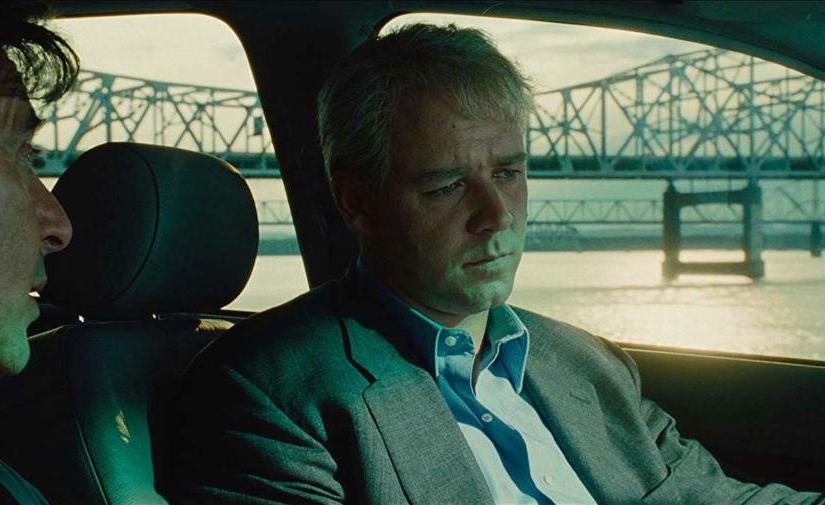
Russell Crowe portrays Jeffrey Wigand, a top leading chemist with the Brown & Williamson Tobacco Company. Upon realizing that he has detrimental information should it go public, the company fires him and compels him to sign a confidentiality agreement not to reveal any of his research or activities while in service to them. That won’t suffice for the incredibly powerful tobacco company though, as Dr. Wigand receives threats that include disturbing emails, possible prowlers and a bullet that mysteriously turns up in his mail box.

Wigand crosses paths with Lowell Bergman (Al Pacino), a producer with 60 Minutes at CBS Television. Bergman works often with famed interviewer Mike Wallace (Christopher Plummer, who should have been nominated, much less won an Oscar). Wigand gets more and more motivated to go on Bergman’s show and tell everything about how the tobacco industry manipulates cigarette manufacturing to make it all the more addicting.

Bergman wants the story but he wants to play it carefully. Toeing the the line of maintaining Wigand’s confidentiality agreement might require a deposition by the scientist in a state courtroom so that his testimony will be public record. In other words, get a state to subpoena him and then the interview can happen because what Wigand says in an interview is already public record.

It’s complicated. Not so much for the viewer though. It’s complicated for Jeffrey Wigand. Russell Crowe emotes his rock and hard place situation with terrible anguish and a short temper. Michael Mann gets great closeups that capture the stress like deep wrinkles and dark circles under the eyes along with pale white skin, a big gut, wrinkled dress shirts, and rough shaves. The stress also carries over to his southern gentile wife (Diane Venora in an entirely different role from Mann’s Heat) and his two girls. They are collateral damage here. Wigand could also lose medical coverage on top of his salary and the threats of civil liability. Jeffrey Wigand is an ant under the very large heel of Big Tobacco.

Lowell Bergman also has obstacles from within his own camp. Journalistic integrity is tested with Wigand’s interview. It’d almost be better if Wigand was lying. That way Big Tobacco could not sue CBS for breach of a confidentiality contract. The more truth he tells, the greater the liability. Considering that CBS Corporate is in the middle of a buyout that could be very profitable for a select few, CBS is disregarding Bergman’s reputation for bringing in experts and informants that have made 60 Minutes the most watched news program on television.

These are the dilemmas that comprise Mann’s near three-hour film. What’s as interesting is the in between material. With Mann sometimes shooting with a documentary like approach, we catch glimpses of how a journalist will pass a colleague in a rotating lobby door and they’ll make arrangements to exchange one story in a time slot for another. These are mere seconds, but it paints a colorful setting that the news never sleeps. We see how Big Tobacco (represented by a slimy Michael Gambon) can subtly intimidate one man in a corporate office. We see a trio of lawyers take a phone call from a private jet they are piloting to consider Wigand as a material witness. We see how one of those lawyers (Bruce McGill) will handle an objection during his questioning of a witness (an unforgettable scene). We see how Wigand must adjust with his family to downgrade to a smaller home with old dusty kitchen cabinets and how it all gradually weighs down his marriage. We see how Bergman has to be covert with meeting Wigand in a hotel lobby. We also see how Big Tobacco can issue a smear campaign and how Bergman has to go across the street to a newspaper colleague to first ask for a deadline of print to be pushed back, and later how he grants a story to the paper to reveal shady dealings and how to refute what’s already been falsely claimed. There’s even a deal that indirectly involves the infamous Unabomber. It’s these little details that keep the film’s pulse alive.

Even before all of this begins, Mann demonstrates the lengths Bergman and Wallace will go to for 60 Minutes. They go deep into the Middle East to get an exclusive interview with the Head Sheik for the Hezbollah terrorist group. Christopher Plummer as Mike Wallace is marvelous here as he stands up against an irate bodyguard strapped with a machine gun to argue about how close he will sit next to the Sheik. If you want the story, the true story, you have to be genuine and be fearless with risk.

I can’t say enough good things about The Insider. It’s truly an education to watch the film with blazing cinematography in blues and grey hues from Dante Spinotti. Mann is always known for his coolness with film, dating all the way back to the MTV vibe of Miami Vice to Thief with James Caan, and his LA crime drama Heat. The tradition carries on here.

As well, the dialogue is so crisp from a script by Mann and Eric Roth. Pacino is memorably given an opportunity to sum up the machinations of CBS corporate in the third act of the film. The Mike Wallace character is not written as a television personality with a cue card. He’s got real, good, seasoned intelligence in his words. Plummer just enhances the script.

The Insider ranks at the top of the list of films focused on journalism next to features like Sidney Lumet’s Network, Tom McCarthy’s Spotlight and Alan J Pakula’s All The President’s Men. It explores the danger that can come from truths that need to be told which others never want disclosed. It covers the methods by which parties are recruited to help get the truth and the lengths operatives will go to, to squash a story.

The Insider is a gripping, magnificent film.