THE GODFATHER PART III

By Marc S. Sanders

Francis Ford Coppola and Mario Puzo finished out their Corleone trilogy in 1990 with The Godfather Part III. Not so much a sequel, this third film feels more like an epilogue jumping towards Michael Corleone’s (Al Pacino) elder years as the Don of the most powerful Mafia family in the late 70s/early 80s.

Michael seems exhausted with his rule as he suffers from diabetes as well as remorse for his past sins; especially feeling the guilt of ordering the execution of his brother Fredo.

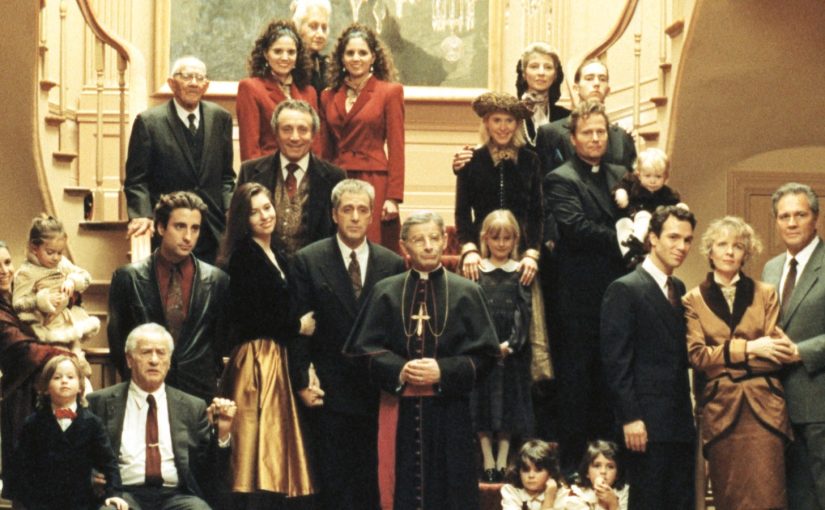
Still, he is drawn to crime, but on a more sophisticated and righteous nature by taking advantage of the Roman Catholic Church. Michael intends to purchase the powerful bank associated with the church but that’ll have to fall in line with the Pontiff’s agreement. It doesn’t help that the Pope is in failing health. The setup of all this lends to another grand opening where Michael earns a prestigious award from the church in the same tradition of an austere celebration of many guests that lend to character set ups for the film. A Godfather movie is not a Godfather movie without a grand reception to open the film.

The most interesting character is Michael’s nephew, Vincent (Andy Garcia), a fierce hot head like his father Sonny. He wants to work for Michael desperately while fending off a street hood boss (Joe Mantegna). An older don also comes into play by the great character actor, Eli Wallach. Diane Keaton as ex-wife Kay is also here but more or less to quietly bicker with Michael. Sister Connie is here, too, with Talia Shire. The Connie character always changes from each movie. Here she’s a deadly black widow. There’s also Michael’s daughter Mary (Sofia Coppola, contrary to popular opinion, I insist she’s very good in the role). Is Mary a legitimate cover for the family as the spokesperson for a fundraising effort? Is the possibility of Vincent and Mary (as cousins) getting intimate a terrible risk?

I like this film and hold it in high regard. Namely because Coppola and Puzo took an approach straight out of the news when there was an embezzlement scheme occurring within the Vatican bank. The problem for many I believe was that the plot of this grand scheme was not flashy or bloody enough, even if a participant is revealed to be hanging from a London bridge with fraudulent receipts falling out of his pockets…which actually happened in real life.

The film allows many opportunities for Michael to allow his anguish in guilt to flow. Fans grew used to a fierce Michael Corleone from the first two films. The elder Michael here would rather not get involved. Hence the introduction of Garcia’s character. He’s very good in the role. Yet there’s not much dimension to Vincent. He’s a scary violent guy, and a contradiction to what Michael seeks. Yet, thats about all there is. I would have wanted more dimension to this role; the guy destined to carry on the reign.

Sofia Coppola is fine in her part and undeserving of the lashing she received upon the film’s release. She’s Michael’s young daughter; a young adult dangerously close to the fray. The one innocent constant within the family. For me, I found a dramatic stake in her character.

The ending is very powerful. Slowly methodical as the family assembles in Sicily to see Michael’s son’s stage opera debut. There are elements that are consistent with the other films’ endings, but this violent conclusion comes with quite a shocking result. I was really moved by it.

Coppola didn’t measure up to the first two films with this effort. I agree with that. Still, The Godfather Part III is worthy of holding its place in the saga. It carries the traditions of the prior films in set up and music and operatic narrative. Be patient with its slow pace because I think the ending will grab you.

THE GODFATHER PART II

By Marc S. Sanders

The first film to use the number 2 (or Roman numeral II, in this case), in its title and the first sequel to win Best Picture is Francis Ford Coppola’s continuous adaptation of Mario Puzo’s Corleone family legacy in The Godfather Part II. It is worthy of all of the accolades it collected as an individual film. Yet, it does not best the first film.

Unlike the 1972 classic, Part II does not provide much character arc for anyone. We’ve already seen Michael (Al Pacino, silently ferocious here) change from good college boy and war hero to the evil puppet master Mafioso he eventually became. This film shows him exercising his threateningly murderous deeds as he works in conjunction with a sly Nevada Senator, a Jewish Miami mob boss (an excellent performance from Lee Strasberg) from the time of his father’s reign, and another mob guy from New York (Michael V Gazzo). We get a whiff of all these guys early on during a commencement celebration for Michael’s son. Coppola keeps this a running theme of grand openings in all three films. It’s a great method of introductions each time.

Following the party, an assassination attempt is brought against Michael. But who did it? Problem is this is where the foundation of the film is not so strong. It’s never really made clear who betrayed Michael. That’s a little bothersome.

Coppola depicts another storyline altogether with the early 20th century origin of Vito Corleone flawlessly played by Robert DeNiro who hardly speaks any English while communicating in a Sicilian variant of Italian. Young Vito immigrates to America following an escape from the Sicilian Don that murdered his family. In New York we witness his rise to power. Famed Cinematographer Gordon Willis washes out these flashback images to enhance a pictorial history accompanied by Angelo P. Graham’s art direction of early brick and mortar architecture and the muddy streets of early Little Italy, New York. It’s a time travel back to a historical age. It’s magnificent.

Back in the 1950s, Puzo and Coppola bring authentic fiction to real life history as Michael considers a go at a business enterprise in Cuba. However, will the rebellion uprising interfere with his plans, and what will it cost him? As well, there’s a great sequence where he has to testify before a congressional hearing in response to suspicion of criminal activities. Coppola used the infamous McCarthy hearing footage as inspiration for this predecessor to what C-Span would eventually look like.

Yet, there’s another story to become involved with as Michael must contend with his dim witted older brother Fredo. John Cazale is superb as the guy who wanted more but was limited by the influence of competing factions and his loyalty to his brother. Pacino and Cazale always had great chemistry together. A great conversation moment occurs in the third act following a terribly surprising twist. One of the best scenes in the film occurs on the porch of the Corleone compound.

More story elements come into play as Michael attempts to balance his married life with Kay (Diane Keaton). She’s pregnant again. Yet, what will that mean for the future of the family?

The sequel to The Godfather assembles another stellar cast. So good, that the film garnered three Oscar nominations in the Supporting Actor category alone (DeNiro, Gazzo, Strasberg) as well as a nomination for Pacino as Best Actor and Talia Shire (Supporting Actress) as Connie, Michael’s sister. That nom left me a little dubious only because there’s not much material for Shire to play with here.

Coppola’s detail is at the top of his game again. The film, like the first, feels like a true life biography.

Puzo offers heartbreaking moments, most especially in the film’s shocking end which leads to a flashback assembly of characters from the first film. That scene alone plays as a great reminder of what Michael once was before becoming the hideous monster that closes the story. Puzo’s whole Godfather franchise hinges on well defined, crushing tragedy.

The Godfather Part II is nothing short of mesmerizing and wholly engaging. You can watch it over and over again. It’s layered in rich storytelling and narratives that provide endless amounts of material for a family meant to be mired in secrets, deliberately hidden in the dimly lit rooms that Willis photographed.

It’s a treat to be the fly on the wall wherever Michael and his family move to next.

THE GODFATHER

By Marc S. Sanders

Probably the greatest character story arc in all of film is of Al Pacino’s portrayal of Michael Corleone in Francis Ford Coppola’s The Godfather based upon Mario Puzo’s best-selling novel. (The film is a thousand times better than the book.)

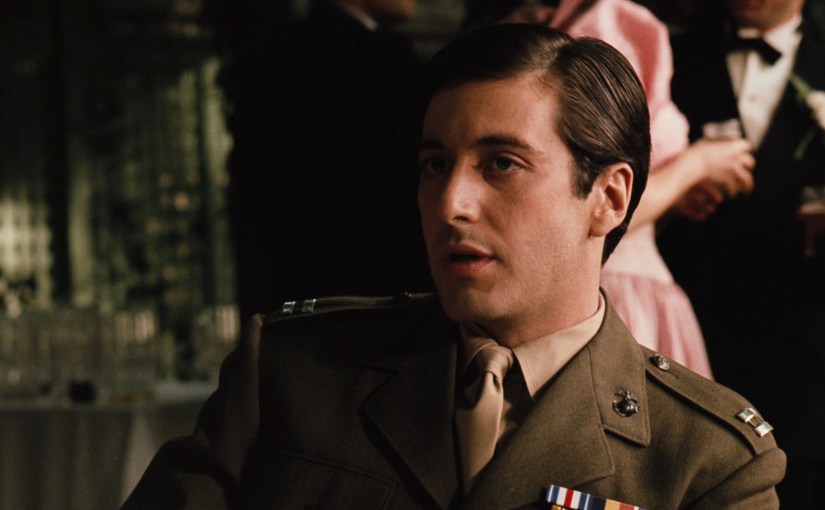
Michael is the youngest of three sons intended for a legitimate life separate from his Mafia family. The masterful opening sequence of his sister’s lavish wedding show him courting his eventual wife, Kay (Diane Keaton), and never feeling proud of the actions of his notorious father, Vito (Marlon Brando), nor his brother Sonny (James Caan) or their consigliere, Tom (Robert Duvall). He’s an innocent war hero in uniform with an open mind of an untarnished future. It is only when bad blood circumstances are tested that he feels forced to strike with the same intent that the Corleone family is infamous for.

Coppola presents quiet, subtle moments of expression in Pacino on camera. You see the change in Michael sneak up on you and you see a character develop into something else entirely. What starts as a false impression to appear as if he’s carrying a gun in his pocket, soon after leads to murder, by means of nothing personal but “strictly business.” From there, he retreats and hides until he is blessed with carrying on an evil legacy.

Yes, the first chapter in the operatic trilogy of crime, is mostly known for a grandstanding performance by Marlon Brando but the story relies on Pacino as Michael. Michael Corleone at least must be one of Al Pacino’s greatest roles. He arguably has one of the most impressive resumes in all of film. Here is where it jump started.

The direction by Coppola is a film student’s required studying. With Puzo’s script, the best idea was to open the film with a wedding. As the film offers so many characters and much back story among all of the guests, the interaction and workings of the family are efficiently condensed into this 25 minute opening sequence. Don Vito meets with people needing favors while outside the home, the crew is dancing, doing their jobs and minding who is watching. By the end of this opening you have a full grasp of the family tree and who works for who and what their characters are like. Sonny is the hot head. Michael is the innocent. Fredo (the middle son played by John Cazale) is not doing much but being a cut up, Momma Corleone is the valued matriarch and Tom is the well managed advisor. You even get a glimpse of some “very scary guys,” some competing hoods, who’s cheating on who, and some people who need help with citizenship and film casting.

Art direction from Alex & Dean Tavoularis is magnificent, depicting a post WWII New York, and a historical Sicily stagnant in open plains, romance and murderous pasts.

The cinematography is better today than it was originally. Gordon Willis returned decades later to (for lack of better word) lighten up the picture. The interiors remain dark in secret and comfort, but the characters are more illuminated. The Blu Ray restoration is a fantastic return to the classic film and its two sequels.

The Godfather is endlessly quotable and never dull no matter how many times you watch it. Puzo’s screenplay plays like the biography of a real person and family, much like his adaptation for the screen of 1978’s Superman: The Movie. It is an American classic rich in a history we believe has been told and carrying on the tradition over the course of a 10-12 year period.

I return to praise Pacino to remind you how his appearance even changes as he gradually builds his strength and accepts his title of Don. I feel like I’m looking at two physically different people from the beginning in his Marine uniform with boyish looks, to his independent walkabout way during his Sicily retreat, to a more broad shouldered, slicked back hair, dark suit tailored appearance during the film’s third act. It’s an uncanny transformation that is built on performance and expert direction and writing from Coppola and Puzo. I still get chills as Michael in his college boy sports jacket volunteers himself to satisfy a family vengeance. Coppola zooms in on him slowly as he sits in a leather arm chair, arms at his side, legs folded. We are seeing a new man in charge for the first time. It’s chilling.

The Godfather is one of the greatest pictures that will ever be made. It’s a perfect chemistry of technical achievement, attentive storytelling and sensitive, yet powerful performances from probably the best cast ever assembled.

I’m amazed that I know of some friends who still have yet to see it.

The Godfather is the film that everyone should see before they die.

THE SILENCE OF THE LAMBS

By Marc S. Sanders

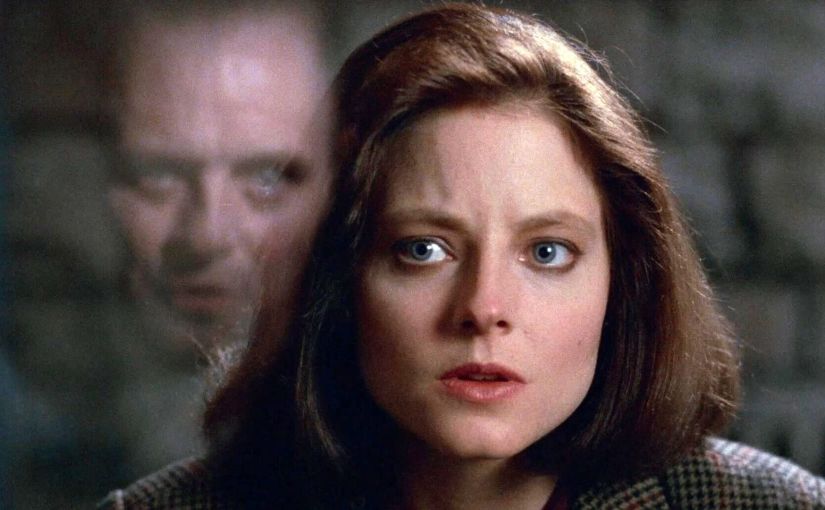
Everyone remembers Anthony Hopkins’ memorable turn as the infamous Dr. Hannibal Lecter in The Silence Of Lambs.  He was “Hannibal The Cannibal;” a renowned and brilliant psychiatrist who was eventually captured for being the one who ate his victims with sophisticated glee.  The real attraction, though, is how director Jonathan Demme delivers the film adaptation of Thomas Harris’ best selling novel through a lens that only finds one strong heroine amid a sea of intimidating men.  The heroine is the intuitive, but petite Clarice Starling.  The men are nearly everyone else cast in the film, and I mean everyone all the way down to the extras; the extras, here, are a perfect example how necessary they are towards any film’s palette.

Ever since the film was released in 1991, the dialogue of Ted Tally’s script is worthy of repeating and mimicking in social circles.  Lecter remains spoofed in nearly every pop culture medium.  Hopkins’ character is unforgettable and he’s been ranked among the greatest film villains of all time with the likes of Darth Vader and Harry Lyme.  It’s a worthy honor.  His timing is subtle and mischievous while he remains silently dangerous.  You can’t take your eyes off the actor and you can’t erase the devilishly fun and evil character from your sub conscious.  Opposite this performance though is Jodie Foster in a top billing role as an FBI trainee named Clarice Starling, assigned to interview and maybe study Lecter as a means to a solid lead in finding a serial killer that has been identified in the media as “Buffalo Bill.”  Bill has been skinning and killing girls with large physicalities, around the east to mid-west portion of the United States.

So, there is a detective story at play here as Hannibal aids Clarice in her search for the killer, but only under his rules.  Demme paints the film with Clarice ably performing her job no matter the towering strength or perverted fantasies found in nearly any man.  An outstanding image early on shows her small frame entering an elevator.  She has been summoned to her supervisor’s office from the outdoor obstacle course.  She is sweaty, and looking tired.  The elevator is full of a dozen men in red uniform polo shirts that hug every muscle; they are strong, fit and healthy.  Clarice stands front and center and she has no reluctance to stand among this exclusive group.  Later in the film, Clarice is invited by her supervisor, Jack Crawford (Scott Glenn in a deservedly dark and quiet performance), to investigate one of Bill’s victims that turned up in the swampy waters of West Virginia.  The coroner’s examination room is filled to the max with sheriffs who believe they serve a purpose to stay there to witness what’s uncovered.  The strength of Clarice is really shown here as she shoos them away.  The men’s facial expressions tell us they don’t care for this request, but Clarice isn’t going to allow them to remain.  Most importantly are her encounters with the head of the Baltimore psychiatric ward that houses Lecter.  He is known as Dr. Chilton played by Anthony Heald.  Chilton – a great character name that clearly colors in the twisted perversion of this guy.  Chilton is happy to boast of his prized attraction, Lecter, as if he’s a rare tiger and he has no reluctance to hit on Clarice when she comes to visit with Lecter.  Always, Clarice will not allow herself to be succumbed, patronized or victimized by any of these towering figures of masculinity in what is unfairly regarded as a man’s world in law enforcement, crime or psychiatry.  Starling easily reminds Chilton that she was a student at the University of West Virginia, not a charm school.  With Tally’s script, Jodie Foster uses these deflective techniques of her character without effort.  Her methods of fencing with these men are a natural ability.  Even when she’s in film transition periods of training at the Academy, Clarice can maintain her stance against a hard-hitting male boxer pounding away at her boxing shield.  She just won’t fall over. As well, she doesn’t wince as the male students give her a glance from behind when she’s jogging on the grounds. 

Demme is an outstanding director who uses these interpretations of this woman to drive his film.  This very same year, 1991, Ridley Scott directed Thelma & Louise.  In that film, the title characters had to realize that they didn’t have to take any shit from a man.  They started out weak, though, and had no choice but to eventually get stronger.  Here, it’s already part of the woman’s instinctive nature. 

Hannibal Lecter is shown to be well versed in the finer things of art, literature, music and, forgive me, cuisine.  At one point, Demme focuses on a picture Lecter has sketched depicting Clarice in an almost angelic nature.  I’ve never forgotten that image.  Nearly all of the settings in The Silence Of The Lambs include stairways that always lead us in the down direction, to an assortment of various hells.  Clarice, the pure angel with nary a fault beyond limited experience as an FBI agent peels the onion away on her quest for a killer by entering into the treacherous depths beneath her; pits of hells.  The opening shot of the film has Clarice pulling herself up with a rope on an obstacle course as if she is ready to enter the heavens, ready to stand above everything, but then she is summoned to Crawford’s office located at the Department of Behavioral Sciences at the FBI.  She has to take an elevator down and then various stairways further down into a labyrinth of claustrophobic offices with no windows, surrounded by cinderblock and populated with men in uncharacteristic suits that don’t appear warm or cuddly.  Crawford may seem like her ally, but really, he’s using her as a sacrificial pawn on a chess board putting her in an arena with psychotically dangerous prisoners, in particular, the worst of them all, Hannibal The Cannibal. 

When Clarice goes to visit Hannibal, she is escorted by Dr. Chilton, who relishes in describing how careful he handles his prized thing, and willingly shows what this monster is truly capable of by providing an unwelcome photograph of how Lecter brutalized a female nurse.  This conversation is played upon a much more frightening descent of unlimited stairways and bars that clang loudly and are painted red and rusted, eventually leading to a stone walled dungeon for these unimaginable beings of death and perversion.  Clarice is left all alone to navigate her way down a long corridor until she reaches Lecter’s cell.

Yet, an even more frightening third descent into hell occurs in the final act as Clarice’s pursuit leads to Buffalo Bill.  Bill’s home is dark, lurid, filthy and maze like; but always seeming to go down further and further into one doorway after another and down one staircase after another, including a deep well where his latest victim is kept.  Like the other descents, Clarice uses her femineity as a tool of strength to survive.  I can claim without any hesitation that Clarice Starling is one of the greatest heroines in the history of film. 

The one man who rattles her, and weakens her, though is Hannibal Lecter.  Watch their tete a tete when they meet for the first time.  Starling demonstrates some overconfidence against Lecter’s seemingly polite demeanor.  With her white trash Virginia dialect, she even gets a little smarmy with the Doctor, but then he disarms her immediately with a comeback that shakes her very core.  Demme’s reliance on close ups for both characters serve this scene and others so well.  Clarice’s encounters with Hannibal are the most important and vital moments in the film because they are the only opportunities for Jonathan Demme and Ted Tally to show the main character’s weakness.  Every hero has to have a weakness if they are to remain compelling.  Clarice is not, in fact, undefeatable. 

The film could have simply worked as a basic detective story.  Put up the clues and the narration of the picture will eventually assemble all together for a resolution where the bad guy is captured.  Yet, Thomas Harris’ character creation uses Hannibal as a defiant obstacle blocking the path for Clarice.  Hannibal lacks much stimulation in a cold, specially designed prison cell.  He’s maybe only honored with impenetrable plexiglass to contain him as opposed to traditional bars.  He needs to be enthralled.  On the surface, Clarice appears as a frail prey that he can take his time munching on.  He’s happy to help Clarice catch Buffalo Bill with the case files she provides, but in exchange he wants to uncover what haunts her psyche.  Such a strong character Clarice is, but she has to be willing to weaken and expose herself to desperately find a dangerous killer.  Can she do it?  She’s never allowed herself to do that before.  And thus, we come to comprehend the obscure title of this film and the book it stems from.  (Anthony Hopkins actually thought it was a children’s fantasy when he was sent the script to read over.)

This write up is not necessarily a review, but a means to honor the careful film and storytelling technique that Jonathan Demme strives for with The Silence Of The Lambs.  You might say, yeah, there’s a lot of walking in this picture, but pay attention to the direction of the walking.  Always going down, somewhat reminiscent as Little Red Riding Hood entering a dark and spooky forest and encountering the biggest and baddest wolf.  Jodie Foster might be in a company of men here, but the film works as a dual of femineity vs masculinity.  It’s strange to believe that Demme actually had Michelle Pfeiffer in mind for the Starling role initially, a more than capable actress, but one who at the time was more glamourous (The Fabulous Baker Boys and The Witches Of Eastwick).  Beyond the silly Disney films, Foster was known for lurid pieces like Taxi Driver and her first Oscar winning role as a rape victim in The Accused.  Clarice Starling is a character beyond a pop culture appearance of the time, and Jodie Foster emanates that portrayal.

The writing of The Silence Of The Lambs is so intelligent.  There’s a witty, yet deliberately poor taste, of sarcasm to Hannibal Lecter as he thrives off his superior intellect over Jack Crawford and the FBI.  It’s only enhanced when he’s dealt a lowly, formally white trash female student to play with.  Ted Tally offers precise timing in the dialogue with Clarice and Hannibal.  Thomas Harris’ drive to further a cameo appearance of Lecter in a prior novel (Red Dragon) with this book is a gift to readers and eventually movie watchers.  The Silence Of The Lambs doesn’t follow formula with a Law & Order technique of ballistics and witness interviews.  It drives into other directions to feed its development. 

Jonathan Demme’s film is pioneering.  I recall seeing it in theatres with other high school friends.  I was not enthused to see it.  The title was too odd.  The picture was primarily a talking piece.  There were gross and unwelcome images within the film.  It’s very ugly at times.  I was frankly accustomed to the likes of Dirty Harry and Lethal Weapon films for my cops pursuing the robbers ideals.  I recall not even liking the film when we left, and I couldn’t comprehend its appeal that followed for the remainder of nearly an entire year, all the way up to when it was awarded the five main categories of Oscar wins (Actress, Actor, Screenplay, Director and Picture).  I definitely wasn’t accustomed to a strong character like Clarice.  Later that year, I saw Thelma & Louise and fell in love with their eventual triumph.  I needed to be spoon-fed their initial weaknesses at first.  Who was this Clarice in this picture, though?  I could not identify her strength that displayed right from the get go.  I wasn’t even 18 years old at the time and now I can say I just wasn’t mature enough for this film back in 1991.  Now, it’s thankfully clearer, though I still appreciate its subtlety so much. Jonathan Demme had such a clear vision of where he was taking this film and because it’s not dated, The Silence Of The Lambs stands as thriller, and an intelligent thought provoking piece that stays with you for a long time after each viewing.

THE STING

By Marc S. Sanders

Find me a better combination of script, cast, direction, score, art direction and costume and I guarantee it’ll take you some time and effort.

The Sting, directed by George Roy Hill and written by David Ward, is the kind of movie where you uncover something new every time you watch it. It’s because the film is all in the minute details to assemble the beginning to the middle to the end. The film is wisely edited in step by step chapters; The Set Up, The Wire, The Shut Out and eventually on to the satisfying The Sting.

The audience is even set up but you’ll have to watch to see how. I dare not spoil it.

Cars, trains, drug stores, diners, a carousel, dames, gangsters, Bunko Cops, Grifters; all are elements needed for the best confidence men superbly played by Robert Redford and Paul Newman, along with a supporting cast like no other, Eileen Brennan, Harold Gould, Charles Durning, Ray Walston, Jack Kehoe and the best villain, or rather “mark,” Robert Shaw.

This is one of my favorite movies. When I first saw it, I was probably age 10 or 12. I understand next to nothing of what was going on. It was the music that drew me in first followed by the sharp suits designed by the legendary Edith Head. The movie’s script is its greatest asset but visually it is just as fun. The 1930s Chicago setting is a character in and of itself. Newman cheats beautifully at poker against a temperamental Shaw, and gets him!!! “You owe me 15 grand pal.” When I first saw it, I didn’t know what he was doing or how he did it. How did he switch hands? I was enamored with the hands that were dealt and the poker chips on the table, but I loved it when the better cheat won out.

The second iteration of the Hill/Newman/Redford trifecta (following “Butch…& Sundance…”) is just plain fun. It was the fun that earned it a Best Picture Oscar.

No other film has come close to duplicating it. Maybe the Clooney/Pitt/Damon version of “Ocean’s 11”? I don’t know. However, if you love that film, you owe it to yourself to watch “The Sting.”

The Sting is…”the quill!”

LIVE AND LET DIE

By Marc S. Sanders

I dunno. For me, the suave sophistication with the tongue in cheek persona of James Bond doesn’t mix well with the ‘70s cinematic themes of Blaxploitation and island voodoo rituals with snake bite human sacrifice. Live And Let Die was never a favorite of mine in the series. Still, it has some merits; even pioneering moments that set the standard for the next 20-25 years of 007. The gadgets are getting cooler (like a handy Rolex watch with a super magnet and buzz saw) and better, more natural looking action.

Harry Saltzman & Albert Broccoli present a film where the action scenes are the most authentic yet. A car chase with a double decker bus doesn’t feature the background film scroll seen in the rear window of an automobile, like prior films.

There’s a particularly long sequence featuring a boat chase through the Louisiana bayou. Great stunts and well edited footage here, although it features one of the most annoying characters in the whole series, redneck Sheriff GW Pepper (Clifton James, who always played the same role like in Superman II and even The A Team). This scene is an absolute blast of fun as Bond commands a speed boat while trying to evade a handful of bad guys in pursuit. Cars are wrecked. Boats are wrecked, and a bride to be wails aloud as her wedding is ruined. It’s just fun.

Roger Moore slips comfortably into the role of the Britain’s most celebrated secret agent. He’s handsome, for one thing, and his humor is dry enough that even in the face of death a pun is well delivered.

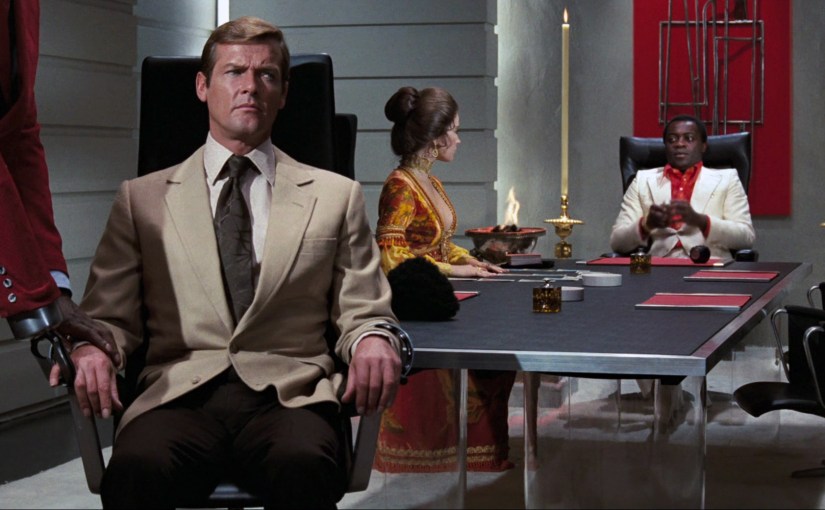
Yaphet Kotto plays Kananga, a far cry from the Cold War villains of Blofeld and Goldfinger. Turns out this guy just uses a couple of bars as a front for his heroin dealing enterprise while he dons a neighborhood crime boss image of “Mr. Big,” looking more like a villain of Shaft. He’s nevertheless good. Though he starts out the role quite subdued, he gleefully comes alive in the second half of the film when Bond intrudes on his secret lair.

Tom Mankiwietz’ script is lacking though. The pre title sequence gets me curious why three agents are inventively killed, but then the story mires itself in Kananga relying on Tarot card reading from the first virginal Bond girl, the High Priestess known as Solitaire. (Jane Seymour’s first screen role.) This offers no suspense or substance. We wait for cards to literally be turned over. Not exactly nail biting. Seymour is beautiful, but the intelligence and sex appeal of the character is flat.

There are also scarecrows and Caribbean island voodoo that are hardly threatening and belong in a horror film, not a Cold War era Bond adventure.

All of this weird material was twisting the series a little too far off course.

Live And Let Die does add a great henchman to 007’s rogue gallery; that of the imposing Tee Hee with enormous height and his steel lobster claw arm. He’s a fun bad guy that happily deserts Bond in a hungry alligator swamp.

Director Guy Hamilton’s third Bond film is not a total bust. It’s well cast in villains and Roger Moore is a perfect successor. Location shots of New Orleans and Jamaica (subbing for Kananga’s Caribbean island) are cool to see. The Harlem, New York footage really doesn’t belong here, though. It also has one of the best, most often played songs in the whole series, compliments of Paul McCartney & Wings. Again, it suffers however from a short sighted script.

Bond will be better served in missions yet to come.

THE LAST PICTURE SHOW

By Marc S. Sanders

Peter Bogdonovich’s classic adaptation of Larry McMurtry’s The Last Picture Show is a display of the ends of things that perhaps at one time had life.

The film opens on the main street of the fictional town of Anarene, Texas in November 1951, just as the Korean War was occurring.

A strong gust of wind blows while a mute, mentally handicapped boy fruitlessly sweeps a dusty street, and a junky pick up truck careens down carrying Duane Jackson (Jeff Bridges) and Sonny Crawford (Timothy Bottoms); both on the brink of adulthood with no future in sight. Anarene is a town that has a past and only a few remnants of a present represented by a pool hall, a diner and movie house. All three are owned by Sam “The Lion” (Ben Johnson in an Oscar winning performance). Sam is old and wise. The town speaks through Sam, who is well aware nothing of promise is offered here anymore. So it’s no surprise that all the remaining townsfolk can occupy themselves with are their televisions and sexual conquests.

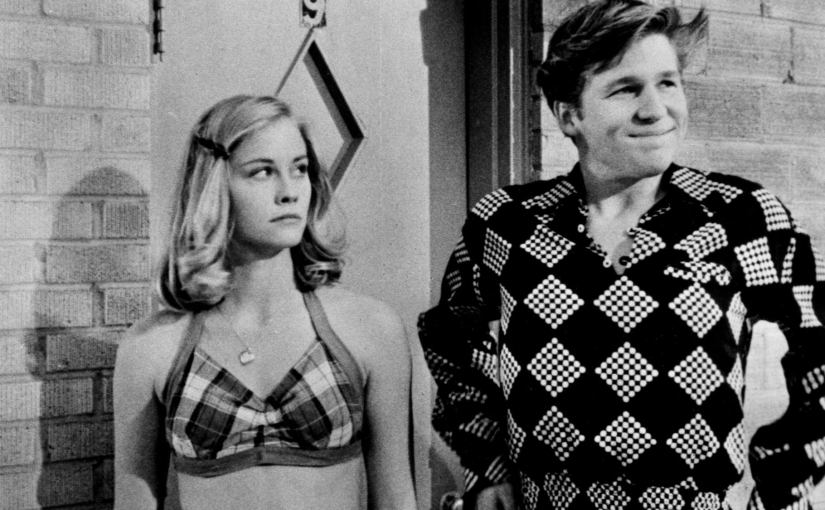
Variations of perspectives that are sexual in nature continue to symbolize what is dying in Anarene. Cybill Shepherd in her very first role portrays Jacy, the pretty girl. Her innocence will be lost as soon as she gives away her virginity. It matters little to her how that happens. Bogdanovich offers a great scene where Jacy attends a swimming pool skinny dip party. Jacy is pressured into standing on a diving board to undress in front of the revelers. I looked at this moment as a teetering balancing act. Jacy is bordering saying goodbye to her youth forever. She does undress all the way only to almost trip off the board. For the moment, Bogdonovich saves the character’s present state as she narrowly avoids falling in the water.

Later, on a whim during New Year’s Eve, Sonny and Jackson go off to Mexico with little money in their pockets and no plan in mind. When they return, an unexpected turn of events has occurred. The fate of this town is withering away with the breeze that’s always intruding. The mute boy will occasionally sweep the street again but accomplish nothing from it.

The films in the movie house represent those that were once celebrated but are now almost never noticed as these families are becoming more glued to the next common household appliance, the television with variety hour shows.

The music never changes or grows up. Hank Williams Sr, occupies the minds of folk who maintained this town at one time and are slowly dying off. The next generation does not have much appreciation for it.

I could go on. Every scene in The Last Picture Show brings about another example of an ending. Bogdonovich was meticulous in his symbolic method of McMurty’s story.

I love that the film, released originally in 1971, was shot in black & white because it shows the story in a historical context; this is what’s left of what once was. The sexual situations don’t hold back in nudity. It’s wise as I thought the nudity clashed with the black & white; it was almost intrusive. The nudity is overcoming the home life heartland that small towns like Anarene used to be remembered for. Sadly, the characters have a hard time accepting this fate.

Cloris Leachman portrays Ruth Popper, the wife of the high school coach who she suspects of being gay. She engages in an affair with young Sonny and her big moment comes when she frustratingly throws a coffee pot at the wall in a rage. She’s terrified that Sonny could never retreat to her pace of life. He’s apt to move on from her. She’ll be stuck with a closeted gay husband in an unstimulating environment. Time has become stagnant for Ruth within the confines of a lifeless marriage and a dead town.

A new way of life awaits. Destiny for Jacy, Sonny and Duane do not include Anarene in their plans.

Eventually Sonny and Duane attend a showing of John Ford’s “Red River” featuring John Wayne. The next morning, after the movie house has closed forever (no one buys tickets anymore), a new fate awaits, maybe even death. Worse yet, maybe for one of them, there is no fate. Maybe, for one of them all that’s offered is an absence of life while residing in Anarene, Texas.

I didn’t realize how much material I absorbed until after The Last Picture Show was over. Peter Bogdonovich provided more for me to think about then I was aware of. The initial slow pace of the film seems mundane at first until you understand that people like Ruth and Sam have memories they experienced but will never carry forward. It’s sad. Their history had meaning at one time. The legacy of their past, however, has no future.

The Last Picture Show is on AFI’s 100 best movies from 2007. It deserves to be as Bogdonovich deftly shows how a past withers away from a nowhere future. His set pieces and direction of characters show the suffering they endure with an unsure end they can not escape.

I haven’t stopped thinking about The Last Picture Show since it ended.

FANTASTIC BEASTS: THE CRIMES OF GRINDELWALD

By Marc S. Sanders

The Wizarding World franchise of Harry Potter and Fantastic Beasts has suffered its first absolute failure, and much of it is owed to staple director David Yates, and more importantly JK Rowling.

I’ve been saying it for years. The wealthiest woman in the world possesses an incredible imagination, but it serves as an Achilles Heel because ALL of that creativity is thrown into her works along with the kitchen sink, the kitchen and 30 or 40 bedrooms. It’s much too much.

The Crimes Of Grindelwald is mired in overly long confusion. A week ago, I more or less praised the prior installment but I noted that it seemed as if 5 different stories were going on at once and none of them had anything to do with the other. The new film doesn’t just suffer from the ailment. Rather, it is slaughtered by it. It seemed like there were 50 stories going at once. None of them were very interesting. Everything seemed bland, and all of it was near indecipherable.

The lead is once again played by a charismatic, yet innocent looking Eddie Redmayne as beast caretaker Newt Scamander. Redmayne has the mannerisms down. He fits comfortably in the early 20th century England, the costume works well on him, but he speaks in gibberish it seems. As well, Rowling has written his role so as not to reveal everything he knows. He feels incomplete. In this film, he also feels irrelevant to anything that is going on. I couldn’t figure out his purpose. His random pet beasts’ appearances offer nothing to progress anything or anyone. They are helpless creatures. He is assigned early on in tracking down prison escapee Grindlewald, played with disappointing reservations by Johnny Depp and yet I don’t recall a showdown between them or an acknowledgement of each other.

Grindlewald is a disappointing character. He’s bent on making the magical world full of pure blood magic folk. That’s all we know ahead of his albino threatening appearance. Sure he’s got a past with a young Dumbledore (a well cast Jude Law), but hardly anything is written for Depp to play with. He’s flat. He doesn’t amp up the evil. This is Johnny Depp, formerly Jack Sparrow and a half dozen Tim Burton characters before???? He has few lines in a very long picture. He does not declare his cause really. His motivations are only explained in long drawn out scenes by some boring magic politicians. All talk in these scenes, no magic and thus very dull.

There’s an early prison escape for Grindelwald but thanks to David Yates and his team, it is very hard to follow who is disappearing and reappearing and how it’s all happening. Like the whole film, the cinematography is very dark (and this wasn’t even 3D). Everything is so dim in this film. It’s as if Yates was not confident in his spookiness he demanded all camera lamps be turned off while the dry ice machine is turned on. This is including in the daylight scenes. The editing of this opening scene is choppy at best. Visual effects are masked with dark blurs and loud sounds and music to heighten danger that just doesn’t feel very urgent.

The cast is way too large. My favorite character from the prior film, Stanley Kowalski (Dan Fogler) is given nothing to do and considering his memory of magic had been erased, his purpose for returning is poorly explained. This time, there’s nothing cute or charming written about Kowalski. You’d have the same film whether he was here or not. He serves no point and when he’s given material to fawn over Queenie (Alison Sudol) his love interest, and also pointless, it amounts to nothing. Katherine Waterston as Tina, Newt’s love interest American partner, as well serves no meaning. She’s there because she must be paired up with Newt.

So Rowling as before on other occasions brings back the four main characters from the first film and just gives them nothing to do. Rowling is notorious for side stories in her Harry Potter novels. Fans really love that it paints an ongoing landscape of this world. Here however, her original screenplay oversteps.

The Crimes Of Grindelwald is not funny or whimsical. Nothing is jaw dropping or fun for the whole family. (This is a franchise spawned from young adult novels??????) It all feels like edited junk from all the other films thrown into this one. There’s nothing new here in tricks or treats. Grindelwald ignites beautiful glowing blue fire at the end. So? We’d seen that already.

The film is obese on characters and side tracks. It is poorly filmed in foggy settings and gloomy skies, and the editing is a patchwork moldy blanket of irrelevance.

As you try to find the stitching between all the stories, you realize that you are working too damn hard. What I’d give for a little magic right now!

GOOD BOYS

By Marc S. Sanders

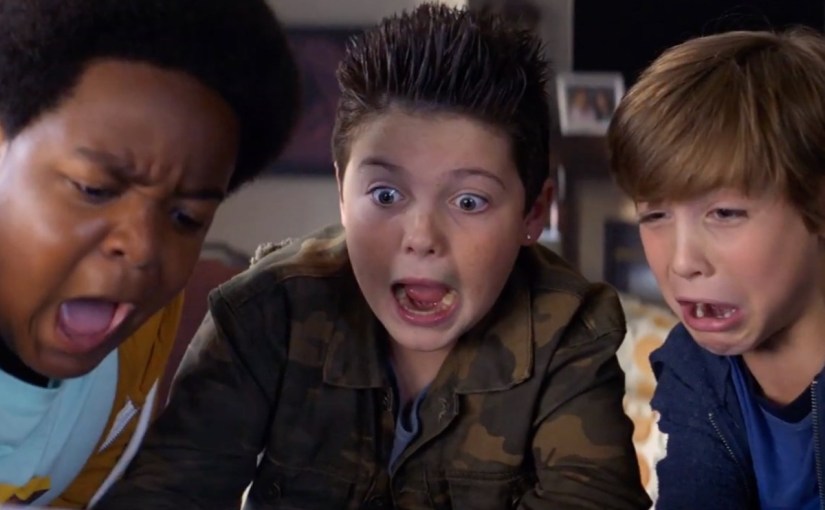
Jacob Tremblay, Keith L Williams and Brady Noon are the sixth grade Good Boys, a film directed and co-written by Gene Stupnitsky and produced by Seth Rogen and Evan Goldberg. This is a hard (very hard) R rated kids comedy adventure. Call it a prequel to Superbad.

Before sixth graders become aware of beer pong parties, the most important thing on their mind is perhaps a kissing party. At least it’s most important to Max (Tremblay). For Lucas (Williams, the MVP of the three kids) he’s broken up to learn his parents are getting a divorce. Thor (Noon, who needs a few more acting lessons) is feeling insecure on a scale of social popularity when all he really wants is to audition for the spring musical.

After Max loses his dad’s valuable drone while the boys are spying on some high school girls in a backyard, they end up stealing their girls’ “mollie” in an effort of blackmail to get the drone back. There’s the spine of the story.

My colleague Miguel E Rodriguez reviewed this film last year. He praised the picture for not making the gags the point of the film. However, I can’t agree with that observation. The thin plot of Good Boys serves as opportunity for one gross out or ridiculous gag after another. Okay. So the boys are unfamiliar with sex toys, particularly “a-nahl beads” or they mistake dad’s sex doll for a “CPR” doll. So when Max practices kissing on the doll, he’s confused as to why the lips feel so sticky.See, I found the main story to be getting the drone back before Max’ dad discovers it’s missing. So then why must I be subjected to imagining how much the beads smell like shit? Why must I see the kids try to cross a busy highway to get to the mall? These are detours, away from the plot. Yeah, they’re funny, but as funny as they are, they push me away from the ends that will justify their means.

An epilogue features one of the kids faking a snort of cocaine. Why? Miguel: these are set up gags. These are exactly the opposite of how you describe their ultimate purposes. None these jokes serve the plot. When I watch “The Goonies,” I get kids who pursue a chance at obtaining a treasure. The mission gets held up by booby traps. Those traps serve as obstacles to the mission at play. Anal beads and a sex doll are not obstacles. They are diversions.

If you want gags to come genuinely from the story then don’t make the mollie or the drone the MacGuffin. Make the sex toys the MacGuffin. These are no more than funny gags. Ultimately, they’re Saturday Night Live skits forced into a film. I laughed yes, but I also grew tired of these bits, that occurred every three to four minutes. What about the drone???? What about the mollie???? I dunno. Maybe with a better trio of boys, I’d be more invested in the film.

Tremblay is the most well known actor (from Room with Brie Larson). Brady Noon is supposed to be the wanna be rebel (he gets an earring), but the sensitive guy on the inside. Williams is the kid who still adheres to good behavior and is not so ready to move on from sleepovers with “Magic The Gathering” card games. Keith L Williams is the best performer of the three in fact. Great physical comedy and timing, as well as some authentic anguish. When the other two boys cry, it’s terribly, TERRIBLY, fake. The problem is the chemistry of three boys is lacking.

Stupnitsky’s coverage of scenes look like rehearsals before the real cameras started rolling. At times, it feels as if the boys, particularly Noon and Tremblay, are trying to think of their next line. When they can’t get the line right, I sense a fast thinking improv that includes shouting the F word. That’s not very funny for very long.

Foul mouthed pre teens are nothing new. Seen it before in The Bad News Bears and once again I say The Goonies. I’m not going to salute Good Boys because these three kids are given carte blanch to utter the F word on an endless cycle. That gets old. Boys uncover sex toys and handle them and naturally act perplexed by what they’ve found; okay, but is there anything more to that?

By no means is Good Boys acceptable for kids to watch. On the other hand, those that can watch a hard R rated flick like this might get a little tired of its material. I know I did. So then who is this film really aimed for? Best guess I could come up with would be a guy I know named Miguel E Rodriguez.

DRIVING MISS DAISY

By Marc S. Sanders

Mainstream films released by big studios suffer from a major problem these days.  Too often, they don’t allow their characters to breathe.  Films today rush to the climax or the action or the cliffhanger that’ll whet our appetites for a sequel or a crossover or a toy product.  Bruce Beresford’s Driving Miss Daisy escaped all of those conventions.  In fact, I’d argue that Beresford made a buddy picture with his Best Picture Winner based upon Alfred Uhry’s well received play.

Daisy Werthan (Jessica Tandy, who won the Oscar, and held the record for oldest recipient) is an insistently independent old southern Jewish woman living in Georgia.  She drives her car where she wants to and whenever she wants to go somewhere.  However, following an accident in her driveway, her son Boolie (Dan Aykroyd in a very surprisingly good performance) breaks the hard truth to Daisy that her driving days are over since it’s likely no insurance company will ever affordably cover her.  Boolie recruits Hoke Colburn (Morgan Freeman in one of the most gentle and delicate performances of his amazing career) to chauffer the proud woman around her Georgia neighborhood.  Naturally, Daisy does not take well to Hoke at first.

The film begins in the 1950’s and then spans roughly 20 years from that point.  I love how Beresford presents the passage of time.  The cars that Hoke carries Daisy in change as the years go by.  As a new car is shown parked in Daisy’s garage, the relationship and eventual friendship of Hoke and Daisy become stronger and, on some occasions, franker and more honest.  With Hans Zimmer’s energetic score that seems to accelerate the speed of the automobiles Hoke drives, Driving Miss Daisy feels like a very sweet and tender film.  It is.  Moreover, it’s an alive picture.  However, the film does not ignore the prejudiced mentality that’s embedded within the south.  A telling moment occurs when Hoke is driving Daisy to a family gathering in Alabama.  Why would an elderly black man with an elderly Jewish woman sitting in the back seat be met with such disdain by policemen who question their presence while eating lunch on the side of the rode?  I won’t repeat the officer’s comment here, but it is ugly and a sad reflection of how things were.  Are things still that way?

Uhry’s script adaptation from his play does not stop there though.  He questions Daisy’s own stance.  She takes no issue with black people catering to her and her home on regular basis, and she becomes enamored with Martin Luther King’s inspiring wisdom.  So, when she is given the opportunity to see Dr. King speak in person, it only makes sense that Hoke will question why he was invited last minute to join her.  After so many years of servitude, why did Daisy wait until Hoke literally drove up to the location of the speech to invite him in?  I’d argue that it never occurred to Daisy, and I think Alfred Uhry believed that is part of the problem.

Both Daisy and Hoke experience anti-Semitism and racism in the mid twentieth century south.  Ironically, the film demonstrates that common victimization is one reason why they need one another.  I’m thankful that Beresford does not show a burning synagogue for dramatic effect.  Instead, he relies on Uhry’s dialogue as Hoke breaks the news to Daisy when they are on their way for morning Shabbat services.  How does Daisy feel in this circumstance?  The synagogue can be rebuilt.  The horror of knowing this kind of hate exists will never be erased.  That’s the terrible shock.  As well to empathize, Hoke describes how as a child he saw his uncle get lynched and hung from a tree.  Daisy and Hoke unite in the hate that surrounds them.

The performances of Freeman, Tandy and Aykroyd are exquisite.  Their dialect for each of their respective characters rings so true of the Georgian southern regions they stem from.  Freeman has an enunciation that rings of a black man who never learned to read.  He even develops a laugh that seamlessly works into his dialogue and reaction to Daisy’s stubbornness.  His posture is marvelous as an elderly gentleman who will walk slowly while hunched over.  It just looks so natural. Aykroyd is in no way doing one of his comedy characters.  He carries the gut of a well-fed southern man who’s become successful with his family business while not taking every fit that his mother has so seriously.  If any of us have had to tend to an elderly relative, then we can certainly relate to Boolie’s position.  Tandy is wonderful at method acting; it should be studied in performance art classes.  She was an elderly woman already when cast in the role.  Yet, as the years carry on through the story, she changes her gait to how this woman’s bones might become more brittle, or how she might speak slower or smile or frown or chew her food.  She has such a fire in every one of her scenes.  A heartbreaking scene where she appears to be having a frantic form of dementia is very eye opening as she paces her historic two-story home looking for papers she graded years earlier as a teacher.  The younger Freeman (playing a far older man) has to keep up with Tandy in this moment; even Beresford’s steady cam has to move quickly to keep focus.

Recently, I had reviewed Terms Of Endearment, and I alluded to the fact that not enough films about middle age people are focused upon, or at least given the commercial attention that they should be given.  Why is that?  So many middle age and elderly characters are so interesting.  I said it before.  Look at The Golden Girls sitcom.  After all, characters with more years behind them have had more moments to live and breathe. Actually, they have a longer history with more nuances and meaningful events they have already encountered, as opposed to twenty somethings with hot cars, pecs and guns.  Film studios are missing out on a wealth of great storytelling. 

Driving Miss Daisy is well paced story of friendship and fear, and often natural comedic material within its three lead roles.  It’s never boring.  It’s only more and more interesting as the years of the story pass by.  It’s simply an endearing buddy picture of the finest quality.