THE CHAMBER

By Marc S. Sanders

Having recently read John Grisham’s fifth novel, The Chamber, I opted to watch the film adaptation directed by James Foley. 

First, allow me to say that Grisham’s novel is primarily stale and boring.  That’s only because his nearly five-hundred-page best seller is occupied with a lot of legal procedurals and tactics necessary to get a convicted, racist murderer off of death row before his scheduled date of execution.  Grisham permits moments where his characters can bond, become forgiven or get even more revolting with each other.  In between though are efforts of appeal after appeal.  It’s likely how it works.  A motion is carried out.  It’s rejected.  On to the next in line.  In fiction though, this is terribly redundant. 

James Foley’s film does not work that way, however.  In fact, it’s a much worse experience.

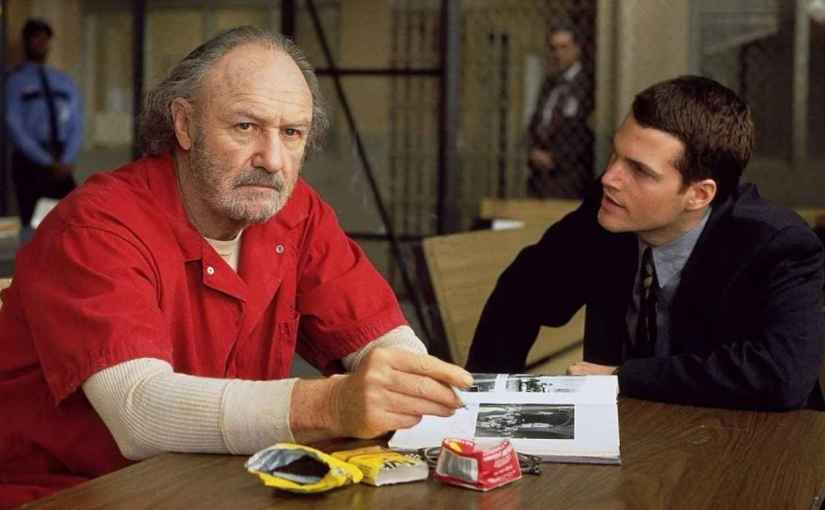
A grey bearded Gene Hackman with oily, stringy hair and tobacco-stained teeth is Sam Cayhall.  He’s a former member of the Ku Klux Klan who is sentenced to the gas chamber for the murder of two young Jewish boys who accompanied their father, a Mississippi civil rights attorney in 1967.  The father lost both legs and years later he took his own life.  Sam is considered solely responsible for bombing the lawyer’s office building. 

Chris O’Donnell plays Adam Hall, a twenty-six-year-old attorney eager to take on Sam’s case and get him off death row.  Sam will finally meet his grandson but he won’t be very welcoming.  Adam is adamantly against capital punishment and he’s repulsed by his grandfather’s past, but that is not enough to send the old man to the chamber.

IMDb trivia documents that screenwriter William Goldman (Butch Cassidy And The Sundance Kid, The Princess Bride) walked away from the film after six drafts.  Another credited screenwriter used a pseudonym to keep his name disassociated with this picture.  John Grisham considers The Chamber the least favorite of his film adaptations thus far.  I can imagine the suffering with trying to assemble something compelling on film.  Frankly, I don’t think it could ever be accomplished.  This stuff is either boring or ugly or both.  Try and project it on a screen and it will not deliver a message like Schindler’s List or Do The Right Thing.

Gene Hackman suffers the most from this film.  His character is clearly there, but the script and directing and even his primary scene partner, Chris O’Donnell, are not up to par.  Hackman puts in the energy with an old man white trash dialect.  He has the expected hateful outbursts of a Klansman.  His appearance is convincing too.  However, nothing he has to say is important.  He’s actually not hateful enough, even if he’s freely uttering the N-word or being derogatory towards the Jewish people who run the legal firm that Adam works for.  As well, the script does not offer empathy for him or enough remorse of his past sins. 

Chris O’Donnell is supposed to be the idealized grandson in the mid-1990s who feels shame for his family’s history of Klan participations and crimes going all the way back to his great, great grandfather.  Hardly any opportunity is offered for the young actor to feel this way.  He barely gets angry or empathetic when he shares scenes with Hackman.  Instead, his moments are wasted with a young staff member of the Governor, played by Lela Rochon. She has too large a role, especially when Gene Hackman could be doing more. The two prattle on about topics that result in no consequence. 

Faye Dunaway plays Hackman’s daughter, now a wife to a Southern aristocratic banker.  She’s a recovering alcoholic, which is assumed to be a residual cost of her father’s misdeeds.  Dunaway, this once great actress, has no connection to either Gene Hackman or Chris O’Donnell.  It’s as if she is not listening or properly responding to either of them when she appears.  Then again, O’Donnell is not lending his best towards Hackman either.  He’s very flat, very plain.  His character from Scent Of A Woman went on to legally represent his racist grandfather.  His Robin, the acrobatic DC superhero, has more personality and drive than this guy.

Thematically, John Grisham builds his thrillers off of what southern American law mandates.  Precedents become obstacles for his protagonists to overcome, or the characters have to learn to embrace what’s at their disposal.  However, it’s tempting to hinge on racial divides to serve as antagonism.  That’s tricky because if you emulate the hate and racism too much, then it looks glamourized. 

James Foley provides many exterior shots of uniformed modern-day Nazis and Klansmen marching outside of Sam’s penitentiary.  Others are there to applaud the death penalty for the old coot.  These are just visuals though.  They say nothing except enhance the image and platforms these sects stand for.  If a film is to bring prejudice to the forefront, then the screenplay or book better have something important to say.  Let’s study the science of hate and where it stems from.  Let’s focus on those who fight against such cruelty.  The Chamber just marches itself towards an inevitable conclusion with nothing gained in the process.

Fortunately, the author’s novel uses its five hundred pages to span the last four weeks before Sam Cayhall is to be executed, and in that time his grandson learns more of what transpired in the convict’s past.  Then the author delves into how Adam grapples with what he learns.  James Foley’s film only flashes back to one very ugly incident.  From there, it’s hardly discussed and it is definitely not focused on enough.  Foley stages the murderous events but his film has nothing to say about any of these things afterwards.  Adam hardly ever gets disgusted or even a little angry.  Sam never regrets or even champions what he’s responsible for.  These are just scenes from a book reenacted for a Hollywood film, and devoid of any emotional weight.  Do something guys!!!!!  Shock me!!!!

I have to credit what Gene Siskel and Roger Ebert observed about the film.  The racist, former Klan member, Sam Cayhall, steps out of his cell and walks down the hallway. A series of hands belonging to African American prisoners shake Sam’s hand through the bars, and they pump their fists in allegiance for their fellow prisoner.  In what world would this happen where the black occupants applaud the cellmate racist buddy?  Forgive the term, but I’d expect they would lynch this guy for what he did before entering this prison.  This kind of staging is an insult to the intelligence of what hate stands for in this country, where it was back in 1996, or nearly thirty years after the movie was released.  Why is The Chamber whitewashing what really happens? 

I was not fond of either the novel (a boring drag of a read) or the film (an insult lacking insight or sensitivity), but at least John Grisham did his homework. Racism is not to be sugar coated for what is genuinely ugly in this world.
THE PELICAN BRIEF

By Marc S. Sanders

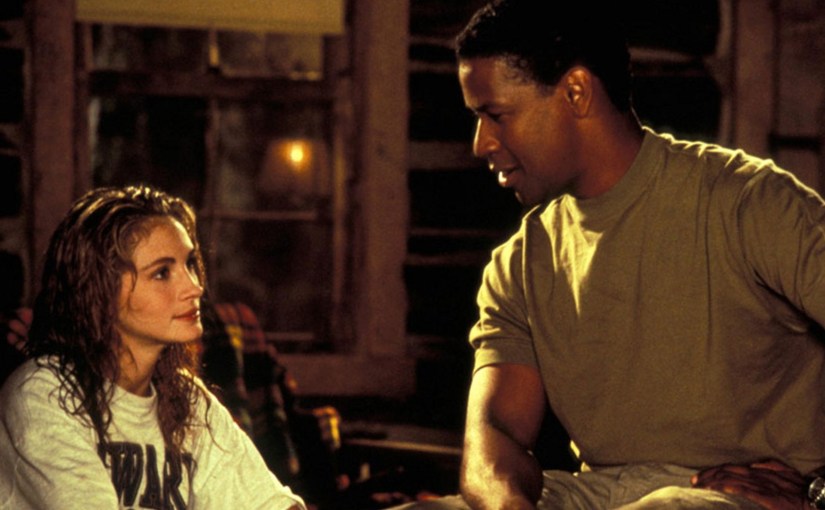
Tulane Law Student Darby Shaw (Julia Roberts) is unbelievably lucky. She can find herself being pursued by one white guy in a suit after another over the course of a two hour movie and will be fortunate enough to escape every threat by sheer chance. It’s only to her benefit when she is being chased by two assassins in a creepy downtown parking garage that someone left an angry doberman in a car to startle the killers. As well, it’s really a blessing that Darby has caught on that if an engine sputters when turning the ignition it can only mean one thing – car bomb! GET OUT!!!!!

Darby is the main protagonist of The Pelican Brief directed by Alan J Pakula, adapted from John Grisham’s best-selling novel. When the eldest and the youngest Supreme Court justices are murdered, Darby conceives of an outrageous conspiracy stretching all the way to the President and documents the whole rundown in the so-called Pelican Brief. She shares the document with her law professor who shares it with his government friend who shares with the CIA who shares it with…and so on and so on.

Pakula is an under celebrated director when you consider his better thrillers like Presumed Innocent, Klute, and especially All The Presidents Men. Here though, I think he got a little lazy with his screenplay and direction. The Pelican Brief is a little too paint by numbers.

Sure, the film has suspense. I think Grisham’s story has some convincing weight to it where wealth and government won’t stand for the platforms of environmental causes and therefore people have to die. Still, while the meat of that story eventually surfaces, we are left with A LOT of buildup before Darby gets involved. Just a lot of white guys in different office buildings walking down hallways, entering doorways and talking on the phone. Every so often we come across a DC crack reporter, Grey Grantham (Denzel Washington) who gets a phone call from a potential informant. When that guy gets scared and hangs up, thank goodness Darby just happens to call two seconds later regarding the same story. Good on you Grey for being by that telephone.

That’s my problem here. Pakula just works in the lucky conveniences to keep Grey and Darby on the trail. Neither of them ever truly escape a bind on their own. Neither of them ever truly dig the hole any deeper without something COMING UPON THEM to help them along at just the right moment.

We learn a safe deposit box belonging to a dead character exists. Darby just strolls into the bank and posing as the widow, who is not a signer on the box, is just asked for her address and phone number. No proper identification necessary. Why didn’t anyone ever tell me it’s that easy? Folks, hide your valuables because I’m gonna be robbing you blind.

Pakula will even set up a good scenario where Darby thinks she’ll be meeting someone who can help but it’s an assassin ready to kill, only suddenly the assassin is killed while holding Darby’s hand in a crowded courtyard. Wow!!! Lucky again, Darby. I’m still fuzzy on who actually killed the guy. That didn’t concern Pakula though. It’s explained in a quick throwaway line before the credits roll. Pakula only had to get Darby out of danger again. So let’s see he’s got the barking doberman for something else, the engine sputter will be used later on. Hmmmm??? Meh!!! we’ll just have someone randomly kill this guy. Now run, Darby. RUN!!!

Notice I haven’t talked about performances. Well, there’s not much to them. The Pelican Brief boasts an impressive cast of character actors like Sam Shepherd, Anthony Heald, John Lithgow, Stanley Tucci, Robert Culp and John Heard. Yet, these guys, along with Roberts and Washington are flat. Just reciting their lines when the cues call for them. There’s nothing very exciting to any of them really. Very monotone. Roberts is beautiful yet depressing even before she gets caught up in the mystery. Washington, while handsome, does not seem to have the gusto that Pakula’s reporters did when he directed Hoffman & Redford. Grey is too neat, physically fit and tailored for an always on the job, aggressive reporter looking for a scent.

There was a better movie to be made here, thanks to some convincing motivations that were started with Grisham’s novel. Unfortunately, Pakula just didn’t devote enough respect to the original author’s imagination.

THE FIRM

By Marc S. Sanders

Sydney Pollack was the first director to take a crack at adapting one of John Grisham’s best-selling books, namely the still most popular novel, The Firm. Wisely, and with a measure of risk, Pollack took the script from David Rabe, Robert Towne and David Rayfiel and maintained a true adaptation for the first hour of the film while inventing a new kind of second half that I think improves upon Grisham’s story.

Mitchell McDeere (a well cast Tom Cruise) is the most sought after Harvard law graduate in the country. A small Tennessee firm makes an offer to him that outbids any of the big leaguers. Considering that Mitch comes from a poor broken home with a brother (David Strathairn) currently in jail for manslaughter, the offer and treatment given to Mitch and his school teacher wife Abby (Jeanne Tripplehorn) could not be more enticing. A house, a car, school loan payoffs, and a near six figure salary in the first year is not something anyone would walk away from.

Once the happy, young couple are comfortable though, a curious FBI man (Ed Harris, an MVP of this stellar cast) inquires if Mitch finds it odd that this firm has four of its lawyers dead within the last ten years. The two most recent casualties perished in a boat accident.

The sharp minded Avery Tolar (another welcome performance from Gene Hackman) is assigned to make sure Mitch follows the path the firm expects of him. Avery also has his sights set on Abby. For a guy who has never been regarded as good looking, Hackman plays a pretty effective flirt.

The firm, led by a seasoned Hal Holbrook with a charming Mark Twain like bow tie, and a perfect henchman villain played by Wilford Brimley (definitely on my top list of best bad guys) are involved with the Mafia and their shady dealings of money laundering, racketeering, murder and embezzlement. Now Mitch is stuck.

The FBI want to use him to uncover the firm’s activities but that risks blowing his career and maybe his and Abby’s life. If he doesn’t cooperate, then the Feds will run him in with the rest of the gang.

A second hour focuses on a complicated way for Mitch to get out of this ordeal. It means a lot of white collar work and contrived timing in the script. Fortunately though, Pollack builds suspense with foot chases and some allies on Mitch’s side, including Holly Hunter as an hourglass figured, bombshell secretary to a private investigator (Gary Busey) that Mitch went to see. His plan involves traveling to and from the Cayman Islands, and making copies of legal documents to build evidence of mail fraud against the firm.

Mail fraud???? That’s right mail fraud. It’s not a sexy crime, but the script with Pollack’s direction and a hard pounding piano soundtrack from Dave Grusin manage to keep the suspense up and alert.

Pollack directs Cruise to sprint across downtown Nashville for some great sights and hideouts in broad daylight. Your adrenaline moves with the film even if you can’t connect all the dots of Mitch’s complex plan.

In fact, it’s best to just give up on following every little step Mitch and his team take to stay ahead of the firm. What works best is the seemingly no win scenario for Mitch and Abby. Pollack follows a Hitchcock trajectory. He leaves the bomb on the table but doesn’t detonate it right away. Thus the suspense holds steady.

So, the best kind of counsel I can give is to just enjoy The Firm as it runs through its paces. It’s a solid white-collar thriller.

THE RAINMAKER

By Marc S. Sanders

Francis Ford Coppola didn’t just call his film The Rainmaker. He called it John Grisham’s The Rainmaker. I understand the significance as a large portion of the film relies on voiceover narration from its main character, Rudy Baylor (played very well by Matt Damon).

The film focuses on much of the underpinnings of the legal system within the state of Tennessee. Rudy gives insight into his position of ethical practice – he’s fresh out of law school but doesn’t have a license yet – versus the large giant sell out attorneys (a towering, sharp dressed and slick Jon Voight) that represent goliath parties like big time insurance companies. Grisham’s novel, along with Coppola’s screenplay, also leave room in the beginning of the film for the sleaze of the law practice with Rudy’s first employer who goes by the moniker “Bruiser,” played by an oily Mickey Rourke.

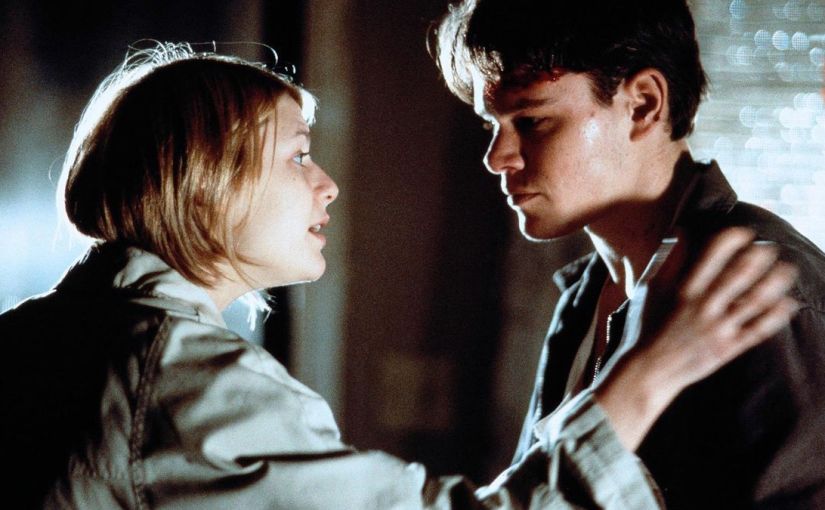
Rudy has not even passed the bar exam at the start of the film but he’s already got three cases in progress. He has agreed to completing a will for a kind old lady (Teresa Wright) who is adamant about leaving her estate to a television evangelist. He also volunteers himself to protecting a young woman named Kelly (Claire Danes) from an abusive husband. His biggest case is going after a million dollar insurance company for wrongfully denying a claim filed by one of it’s ill insured. Rudy knows the insured is justified to sue and it could be a huge and necessary windfall for him and his unlicensed, corner cutting partner (Danny DeVito), but it’s only him against a grand army of legal gods lead by the great Leo F. Drummond, Esq. (Voight).

Grisham and Coppola wanted to depict a drive for doing right by the law and the people it’s meant to protect. Damon’s portrayal of Rudy represents that ideal. His father hated lawyers and he grew up in a home life that never responded favorably to the merits of officers of the court. Rudy defies what his father frowned upon. Despite his inexperience in a courtroom and his ability to respond with objections and cited legal rules, he knows he’ll be a good lawyer simply because he can distinguish between right and wrong. He doesn’t need to sink as low as Drummond’s cronies by bugging the opposition’s office. Will Rudy’s righteousness be enough though? He’s so dang honorable in his profession that it might just be the ultimate means of his defeat.

Same can be said for Rudy’s will to protect Kelly, the young, abused wife. Precedents of law keep her husband on the streets no matter how bruised and bloody she gets time and again. This man is a monster, but no higher power is looking upon this victimized wife to legally protect her, and this man will continue to beat her until one day she’s dead. Rudy wears his heart on his sleeve for this woman and again can only serve as an honorable servant of the court. When he steps out of that line a little by risking his life to save this woman, he’s testing his own sworn code that he’s respected while others have dismissed it.

John Grisham’s The Rainmaker is one of those under the radar films not celebrated enough. I recall it being shown in limited theatre capacity, and it hardly did well at the box office, but it’s really a remarkable piece as it shows an unconventional and honorable attorney, reminiscent of Harper Lee’s Atticus Finch but set in modern day. Nearly everyone around Rudy, from his own father, that he describes to the students he attended law school with, to even the even the fool of a judge (Dean Stockwell) who swears him in as well as his own partner (DeVito in a hilarious, quick solving, underhanded role), are beyond any moral compass and yet Damon ensures Rudy Baylor sticks to his convictions.

Coppola’s film is not a legal thriller. It’s an observation of how the established perceive the law and the one fish who treads water above the bottom feeders, allegorically shown in Bruiser’s fish tank, seek out big rewards. For Rudy, the client matters. For everyone else, only the money matters.