TOOTSIE

By Marc S. Sanders

Tootsie is my favorite comedy of all time.  At age ten I saw it on Christmas Eve with my family and beyond the Star Wars and Rocky films, I had yet to see an audience respond, or more specifically laugh, so uncontrollably for two hours straight.  I might not have recognized all of the innuendo and I was not yet alert to the idea of women feeling belittled while knowing they should be entitled to equal respect, but the performances, especially from Dustin Hoffman were entirely genuine.  Tootsie still remains the only film where I can forget that a man, a not so attractive or sexy man, is convincingly disguising himself as a woman who possesses internal strength and gusto.

Whether directing or acting on screen, Sydney Pollack was not someone well known for overseeing comedy at the time.  Yet, that’s an attribute to the end product of this celebrated movie.  Other than a typical Bill Murray routine in an uncredited role, no one in this picture is waving their hands in the air to insist they’re funny.  The humor of Tootsie bears from true, raw emotion, fear and desperation.  No one is doing Saturday Night Live sketches and building up to the next punchline.  Despite the cross dressing, Tootsie is not even a farce.  A guy gets a job wearing the necessary garb and modifying his verbiage, but only to earn enough money to survive.  However, it also doesn’t help that he’s falling for his co-worker.  

Dustin Hoffman is an actor living in New York City named Michael Dorsey.  He’s a great, learned performer, especially on the stage, who lives with his playwright buddy Jeff (Murray) in a crummy apartment in the meat packing district.  They need to raise enough money to put on Jeff’s play in Syracuse.  

The problem is that Michael can no longer get cast in anything.  Not on stage or even in a commercial.  His agent (Pollack) says it point blank that nobody will hire him.  He’s just too difficult with short bursts of temper and no tolerance for others who work in the field.  

So, Michael surrenders to desperation and puts on the guise of a character actress named Dorothy Michaels.  As quick as she stands up for femininity against a chauvinistic TV director (Dabney Coleman) she is cast on the most watched daytime soap opera.  As long as Michael can perform off and on camera as Dorothy he should be able to earn more than enough money for Jeff’s play.

Complications arise though when he becomes protective of his co-star, Julie (Jessica Lange, in her Oscar winning role), against her unfaithful boyfriend, the TV director.  Julie’s widowed father, Les, is falling for Dorothy though, and then there is Michael’s friend Sandy (Teri Garr) who lost out on the part that he earned, and to keep things maintained has been seduced by Michael into a romantic relationship beyond just their friendship.

With me so far?  I hope so because there’s even more obstacles to overcome.  Tootsie is very economical in its story development, but it’s also a very crowded film.

Don McGuire and Larry Gelbart (TV’s M*A*S*H) wrote this Oscar nominated script with a brilliant collection of characters.  The blessing is while it sounds like farce, Tootsie is never delivered with a slapstick tongue.  In order for the film to work, Dustin Hoffman especially had to portray Michael Dorsey as a guy with natural ticks, motivations and fears.  He accomplishes that because Michael always ensures that Dorothy is as real as she can ever be.  When Dorothy hails a cab or shops for clothes the southern accent must hold while perusing through the city streets in heels.  Michael gets frustrated over what to wear for a dinner visit at Julie’s apartment.  Especially when Julie opens up her heart, Hoffman is precise to make sure Dorothy approaches with a low whispered approach to simply be a consoling girlfriend.  

The comedy arrives when Michael has no other choice but to break this strong powered female persona.  Dorothy will call for a cab but if it just won’t stop, then a deep voiced, bellowing New Yorker will come out of this woman’s mouth with an angry “TAXI!!!”  I like to believe that Sydney Pollack deliberately arranged for Dorothy to yank a Woody Allen lookalike out of a cab that was about to be taken from Dorothy too.  Dustin Hoffman knows Michael Dorsey is such a committed method actor that he has to convince all eight million people in New York he is strong willed Dorothy Michaels – a character actress capable of playing the new Hospital Administrator on Southwest General

There are so many fleshed out pairs of relationships in Tootsie – all going beyond the cross dressing of the film’s main character.  All of these people could get along forever if only for the fact that some characters have befriended a man while others truly believe they have made a connection with a woman.  How long can we have it both ways?  The facade has to undo itself, right?  True.  Thankfully it occurs at the end when every single character can have it explained to them all at once.  I’ve never forgotten the roars of laughter from my mom, dad and grandmother as the end of Tootsie arrived.  Well-placed close-up shots of every actor who had a speaking role in this movie is covered (well except for Sydney Pollack as Michael’s agent). On Christmas Eve in 1982, the packed movie house at the Forum Theater on Route 4 in Paramus NJ only amplified the shocking reactions.  Tootsie is a reason why you sit among a crowd at a movie theater.  

This is Dustin Hoffman’s all-time best performance.  He was nominated against fierce competition from Paul Newman in The Verdict, Jack Lemmon in Missing, and Ben Kingsley in Ghandi (who took home the trophy). Michael Dorsey/Dorothy Michaels is a much more challenging role than what Hoffman superbly accomplished in his two Oscar winning roles (Kramer Vs Kramer, Rain Man).  Robin Williams or Tom Hanks could have played Michael Dorsey who invents Dorothy Michaels.  Yet, what Hoffman emotes are the natural tics of a guy who is constantly broke while he charms an array of women at his birthday party, only with the intention of bedding them and hardly ever listening to what these ladies have to say.  When Hoffman puts Michael literally in a pair of woman’s shoes though, he begins to identify the lack of respect that women endure on a daily basis.  

Watch Dustin Hoffman’s body language.  He becomes angered with his agent upon learning that he lost out on a role which somehow leads to a debate about whether a tomato should walk or talk or sit or stand.  That back and forth is outrageously hilarious.  Having seen Tootsie hundreds of times though, I now appreciate how a schleppy looking Michael hustles across the streets of New York, avoiding traffic and then marches down the hallway to his agent’s office.  Hoffman twitches his head and shrugs his shoulders as if he’s prepping to give the agent a piece of his mind.  Hoffman is so absorbed in this guy he’s playing.  I am not recognizing any other kind of Dustin Hoffman that I’ve seen anywhere else.

Sydney Pollack is also attuned to the cutthroat atmosphere of desperate theater folk trying to survive in this concrete jungle.  Tootsie opens with a montage of quick episodes for Michael.  He is leading a workshop while being candidly ugly with his fellow thespian students about how challenging it is to get work.  In between, are auditions that he goes on where there is one reason after another why he can’t land a role.  Michael Dorsey is an incredibly skillful actor, but that means nothing for this role or that role.

On this most recent viewing I caught on to a detail that never occurred to me.  Bill Murray as Jeff, the broke playwright, is snacking on lemons and wincing while he talks to Michael.  Now I don’t know if this is in the script or if this was Pollack or Murray’s idea.  Nevertheless, it’s a brilliant detail.  These guys are so broke that they have resorted to smuggling lemon slices out of the restaurant they work at to live off of.  Another actor or filmmaker would have used an orange or cookies.  Who snacks on lemons?  Only those with nothing else to rely on.  

Makeup bottles with spirit gum, cannisters of fake blood, prosthetic teeth, props and sloppily hung costume wear are all given focus beyond the broad comedic storylines.  Sydney Pollack pans his camera over all of these items with no actors in frame because he wanted to ensure that being an actor or a playwright in New York is nothing glamorous.  It’s a world of unending torment. All of these nuances and details justify the extremes that Michael has to go through to achieve his goal.  

Jessica Lange never plays her role for laughs.  Her portrayal of Julie, the beautiful, blond celebrity of daytime television, is authentic and she inherits a new girlfriend to confide in. Finally, Julie can share what she values and holds dear.  You can’t not fall in love with someone who only treasures the best parts of her young life and yet only seeks a companion to chat with.  A humble celebrity is hard to find and that is one reason Michael falls hard for her.  Lange is outstanding while being so heartfelt.

Teri Garr’s comedy stems from the insecurities of actors.  Sandy is described as someone who wants to commit suicide at a birthday party.  Doing community theater for over thirty years I know precisely who this person is.  I’ve been this person, and I’ve encountered hundreds of these people.  It’s hard to be a big fish in the small pond of community theater.  Imagine trying to hold on to your sanity when you have to compete with all of New York.  Teri Garr was rightly Oscar nominated for what could have been a throwaway part. Like Hoffman she also has these little gestures that suggest her lack of confidence. After she sleeps with Michael and he’s getting ready to leave, Garr peaks at her naked chest hidden underneath the sheets.  It’s as if she’s wondering was I not attractive enough.  She’s hurting. No matter if she just had sex with one of her favorite people, she is still suffering.

Charles Durning is familiar for having the tough guy, intimidating persona because he’s usually so much larger than life.  However, he offers a sweetness to this guy who’s ready for companionship.  You don’t want Michael or Dorothy to let him down.  Les doesn’t deserve to get hurt.

Again, as I described any of these characterizations, none of it is funny.  They are wrapped in sensitivity. There’s a lonely sadness to people like Michael, Jeff, Julie, Sandy and Les.  Yet, when this variety of sorrow and anguish collide, while poor Michael is only trying to make some money, does it all combust in hilariously, unwinnable scenarios of tremendous proportions.

Tootsie is an amazing film.  It is one of the smartest, most insightful scripts ever written and it is blessed with a cast and director who mastered how to live in an unforgiving and unsympathetic industry.  This picture offers lessons in the human spirit while demonstrating the lengths and boundaries that must be broken in order to survive.  By practically not performing as a comedy, it only becomes that much more funnier and wiser.  

Tootsie is a perfect film!

MY COUSIN VINNY

By Marc S. Sanders

The American Bar Association’s publication, The ABA Journal, ranked My Cousin Vinny #3 on its list of the “25 Greatest Legal Movies.”  Surprised?  You really shouldn’t be.  

This “fish out of water” film follows a goodfella who did not pass the bar exam until his sixth try.  Now he’s defending his cousin and another UCLA college kid in an Alabama courtroom.  It’s Vinny’s first murder trial.  So he’s gotta learn the ropes of how to dress properly for court all the way up to discrediting material witnesses and demonstrating reasonable doubt to get his clients exonerated.  It’s a great courtroom picture because within the dense slapstick comedy there are authentic lessons to learn about being a member of the Bar and having confidence in yourself.

Bill and Stan (Ralph Macchio, Mitchell Whitfield) are roadtripping through southern America, en route to UCLA, when they get pulled over and framed for the murder of a convenience store clerk.  With no money or hope of retaining a reliable public defender, the young men turn to Bill’s cousin Vinny.  

Straight out of the five boroughs of New York wearing a black leather jacket, black boots and a slick pompadour, Vinny Mancini arrives in small town Alabama.  You know something?  If I didn’t know any better I’d say he looks and acts a lot like Joe Pesci.  With him is his long time fiancée, Mona Lisa Vito (Marisa Tomei, in her very well remembered Oscar winning role). Mona Lisa Vito!  I love when there’s some thought put into a character’s name.

The future looks grim for the accused as Vinny doesn’t know where to begin.  The iron horse Judge Chamberlain Haller (Fred Gwynne) habitually holds the guy in contempt because Vinny can’t shed his New York ways either in wardrobe or proper decorum. The prosecutor played by Lane Smith really doesn’t have to try hard at all.  Though he deliberately gets all Southern showy each time he faces the jury, made up of friendly locals.  In an unexpected and tender moment, the tough guy, Vinny, admits to Lisa that he’s “a-scared.”

I never cared for My Cousin Vinny since I had seen it in theaters.  However, there’s much I appreciated on only my second viewing of this film directed by Jonathan Lynn, an actual law scholar.  Lynn is always striving for an authenticity within the courtroom.  His protagonist might not know anything about being a litigator, but the director ensures that a genuine regiment of customary courtroom behavior, procedure, and theatrics will be upheld even if this is only a silly, little comedy flick.  

Outside the courtroom, there’s primarily an updated George and Gracie situational comedy at play.  Marisa Tomei is of cinema’s great scene stealers.  Mona Lisa Vito might look like an overly familiar character, but the actress’ performance is entirely unique.  She never plays Lisa as a dumb side character to her boyfriend who will not commit to marriage.  Lisa comes off generous, always offering to assist Vinny despite his rejections.  She’s also positively smart as a whip with her extensive knowledge of automotive repairs, and she’s a quick study of Alabama law.  When she gets put on the witness stand it hardly matters what she’s saying.  Marisa Tomei owns the expertise and defiance of Lisa.  Turn the scene on mute to watch her doing some of her best work would be equally effective.

Go look at Silver Linings Playbook when Jennifer Lawrence rhythmically dictates numeric football statistics at Robert DeNiro.  Both actresses won Oscars for these respective roles.  These performances stand apart from so many other second, third and fourth billed actresses because they are written with immense intelligence.  That’s what Tomei and Lawrence normally embrace first, ahead of costume and makeup.  The confidence from these actors is uncanny.  More women need to be cast in roles like these.  

Joe Pesci is doing his reliable, familiar schtick from Goodfellas, Raging Bull and Easy Money.  He’s in a what if scenario though.  What if there’s a movie with Jersey Boy Joe Pesci, but he’s put in Alabama country with roosters crowing and trains chugging into town at five in the morning? There can even be a communication gap between the Judge and Vinny for some padded laughs.  “What is a yoot?”

I was bored with this movie the first time I saw it.  I just didn’t think the humor was funny even if I recognized the attempts.  Over thirty years later, what I appreciate is the heart that feels much more apparent.  The hero feels weak and at a loss.  Only when he is given strength and support from a wisecracking, sexually frustrated girlfriend does he get the drive to behave like a lawyer he’s licensed to become.  I like Vinny.  I like Lisa.  Therefore, now I can laugh at their unfortunate dilemmas as they work towards an end goal – getting him to do his best at becoming a courtroom lawyer and hopefully reaching a not guilty verdict. 

I gotta give a shout out to the supporting cast.  Bruce McGill plays a familiar sheriff that we’ve seen before, but so what.  It’s the way he carries himself that I’m always welcome to see him in a movie.  Same goes for Lane Smith.  These guys are sophisticated Dukes Of Hazzard.  Fred Gwynne, most famously known as Herman Munster, was always a brilliant character actor.  He has the ability to be goofy and intimidating all in the same scene.  To place his towering stature against little Joe Pesci? Who needs dialogue? Watch Fred Gwynne’s moments in My Cousin Vinny.  He could’ve been Oscar nominated, and I would not have complained.  While Ralph Macchio is doing his typical routines (same things we saw in The Karate Kid, The Outsiders and so on), it’s Mitchell Whitfield playing his buddy who really stands out.  This is a nothing role but it’s as if this guy fell out of a Woody Allen or Neil Simon picture to claim his own territory among an outstanding cast.

My Cousin Vinny is one of those comfort films to put on when the stress is becoming too much in real life.  Everyone is so likable here.  There isn’t a villain to dual against.  Instead, it’s a conflict of cultures who must work together to uncover truths within a murder trial while also learning about what any one of us is actually capable of accomplishing. 

Vinny from da Bronx is a lawya???? 

FUGGETABOUTIT!!!!!

MRS. MINIVER

By Marc S. Sanders

To watch a classic film, usually reserved for Turner Classic Movies, is to get a history lesson while realizing that people’s perceptions have hardly changed.    In the early 1940s as World War II was occurring, happiness in many corners of the world was still moving forward.  Presently, I believe that happens today.  For example, Israeli hostages are only now being released from Hamas.  Until the conflict is over though, a childhood friend of mine chooses to run every Sunday morning.  He declares that he runs because they can’t.  This friend is not a soldier bearing arms.  He is acknowledging a violent and frightening conflict that persists.  On the side, he’s a devoted New York Yankees fan.  In 1942, when William Wyler’s Oscar winning film Mrs. Miniver was released, the well to do characters were performing comparably as Europe was in the thick of staving off the Nazi militia.

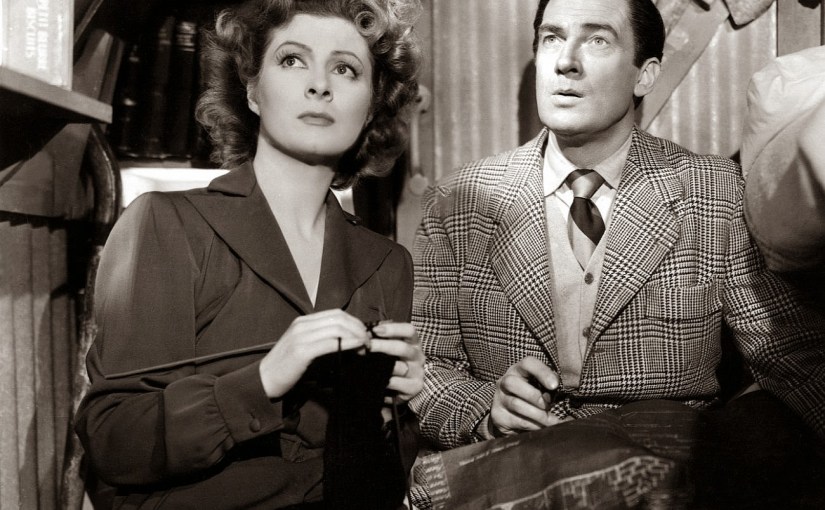
Mrs. Miniver opens on a bustling metropolitan district in England.  The title character, Kay Miniver (Greer Garson), is in a mad rush for something.  She hops on and off the double decker bus and weaves her way through the crowd.  Finally, she arrives at the destination.  The glamorous hat she’s had her eye on is still available to purchase.  Her only dilemma now is what will her husband think when he learns of the extravagant purchase.

Upon her arrival home, Clem Miniver (Walter Pidgeon) hides from his wife in a brand new convertible.  When she goes in the house, he makes a decision.  It’s expensive, but he must have the car and so he buys it.

In this tranquil part of England, the most immediate concern among these well to do people is deciding whether or not to treat themselves to gifts that will bring them joy.  Talk of a German invasion seems like a possibility, but the Minivers, with their two young children and their twenty-year-old son at Oxford, insist on living comfortably and happily.

Lady Beldon (May Whitty) is the elderly and intimidating aristocrat who suffers a terrible dilemma.  It seems the bell ringer, Mr. Ballard (Henry Travers), has grown a beautiful rose that looks like no other.  He cherishes it so much that he names the flower “Mrs. Miniver.”  The real person is honored for the personal recognition.  Yet, Lady Beldon’s concern is her yellow rose will not win this year’s prize trophy cup at the village flower festival.  Her granddaughter Carol (Teresa Wright) gracefully asks Kay if she’ll convince Mr. Ballard to withdraw his entry so that her grandmother can win once again.  She’s elderly, she’s accustomed to winning each year, and it would mean the world to her.

This request will also lead to a romance for Carol with the Minivers’ son Vin (Richard Ney), who has just enlisted in the Royal Air Force so he’s ready to fight the Axis forces of World War II.

All of this seems frivolous during the first half of Mrs. Miniver.  These people live comfortably but gradually grow a little more unsettled as they soon hear planes flying overhead their homes while the sounds of battle play off in the distance.   The possibilities of war coming to their front door seems to be an unlikely scenario.  The battles and bloodshed are out of sight, but only partially out of mind. 

I appreciate the editing of this film.  Clem is woken in the middle of the night to join the other neighboring husbands at the local saloon.  They are being requested to join the historic small boat rescue at the battle of Dunkirk.  The men down a drink and sail off without hesitation.  No one gives protest or stands behind their wealth or stature.

Midway through the picture, Kay is reading a bedtime story to her children in a dimly lit room.  We never see the entirety of this cramped space.  The scene simply begins with no transition.  The walls appear to be made of aluminum and then I realize the Minivers have taken shelter in an underground bunker.  Soon, they will be living through one unimaginable night of shelling and bomb dropping. Director William Wyler never turns off the camera through the extended sequence.  The bunker shakes and rattles.  The children cry in fear.  Dirt rains down them.  Books and belongings fall among the family. The pounding explosions carry on outside.  It seems to never end and the concern over a lady’s fashion hat or a beautiful new automobile are distant memories.

When Vin and Carol arrive home from a honeymoon, the Minivers home is wrecked.  So is Clem’s boat following the Dunkirk incident.  However, they happily remain living there with the youngest child playing a welcoming number on the piano.  

Amid all of these episodes, the people of this small English town uphold their positivity, but they never lose sight of what is nearby.  It’s just a house.  The Minivers are surviving and remain together.  Their biggest concern is that one day Vin won’t return from battle. Yet, time and again he does with hugs and kisses for everyone.

I’ve provided a lot of what occurs in Mrs. Miniver because I was not entirely sure of the purpose of all of these happenings until the final act is served and surprising outcomes arrive.  For much of the film, William Wyler delivers an impression of life away from the front lines.  These people live with a devotion to help their country and abandon comfort when necessary. Flower festivals, gleeful children, young romance and materialistic tranquility will carry on regardless of terrible interruptions of war.

Amid turmoil in our present state with political divides, unjust prejudice, natural disasters, and a resurgence of Cold War threats, I can’t help but wonder if many of us live like this family.  I believe we do, and I see nothing wrong with that.  We have to escape and live happily no matter what terrible future might befall us because otherwise what is the purpose of living?  Still, we choose to remain alert and especially empathetic and ready to aid our fellow neighbors when the need arises.

Visually, a shocking set design for the final scene of Mrs. Miniver sends a message that is only enhanced by a sermon delivered by the town minister.  I learned later that this speech was written at the last second by William Wyler and the actor portraying the minister (Henry Wilcoxon).  It perfectly demonstrates the overall purpose of the entire film.  Mrs. Miniver is the story of a fight for ongoing freedom; an independence to live and to treat oneself happily and lovingly.  People perish during the course of the picture.  The minister explains with convincing validity why they had to die so undeservedly and unexpectedly.  It’s an ending that really touched me, and upon the movie’s conclusion a message appears urging Americans to buy war bonds.  

This speech had such an impact at the time that it circulated in propaganda films and on radio airwaves as a means to deliver a shared triumph among the Allied masses.  It reminded people that simply because you live at home, does not mean you are exonerated of the fight for continued freedom.  The fight is not exclusive to hoisting a rifle or dropping bombs from planes.  A unified front of country must be upheld.  

Mrs. Miniver begins as a romanticized film of people living glamorously and happily but it effectively segues to a reality of uncertain times.  I went from questioning what is its purpose to an understanding of a reason to live and to strive.  

EMILIA PEREZ (FRANCE)

By Marc S. Sanders

I never watched a telenovela from start to finish.  At best, the only footage I’ve seen are on GIF scenes that tease at the over exasperated expressions (bulging eyes, big teeth, big hairstyles, lots of lipstick) of the actors and the characters they are portraying.  The Funny Or Die You Tube clips draw their comedy by having the straightest voiceover summarize a season of these miniseries. The stories were not meant for humor, but on the surface, I can’t help but think they are operating with a Naked Gun tongue firmly in an Airplane! cheek. 

Emilia Pérez looks like a telenovela compiled into a two-hour film, but as outrageous as the storyline and the sequence of events play out it’s anything but silly.  I held an appreciation for the circumstances that writer/director Jacques Audiard set up so that the insurmountable conflicts appeared convincing, and most especially overwhelming.  Emilia Pérez performs like an episode of Three’s Company – the one with the misunderstanding – but there are complications that border on bloody violence, life, and death.

Zoe Saldana portrays Rita, a defense attorney for Mexico’s worst criminals, and she despises the purpose she serves for the murderous scum she represents as she assists in getting one thug exonerated after another.  Early on in the picture, Saldana espouses her remorse through song and dance all within the middle of a courtroom, because as you quickly learn Audiard’s film is a movie musical. 

Shortly after the opening number Rita is summoned by Manitas, the most powerful head of the Mexican drug cartel.  He has unlimited resources and cash, and he hires Rita to do a worldwide search for the finest physicians to complete his sex change operation.  Once that is complete, the two will arrange the publicly known death of Manitas, send his wife Jessi (Selena Gomez) and their two children off to hiding in Switzerland, and the drug czar will be replaced by the woman Emilia Pérez.  Emilia and Manitas are portrayed by real life trans actress Karla Sofía Gascón.

Four years jump by, and Emilia catches up with Rita, who remains the only person to know of the ruse that took place.  Emilia wants Rita to deliver Jessi and the children back to her.  The former father will now pose as the wealthy aunt and they will live together in Mexico, going forward. 

Rita discovers a new kind of respect for Emilia as the bloody past of this individual have ceased since her sex change.  As such, Emilia recalls that her former self was responsible for countless murders and kidnappings, many of which took place under her command.  Now she seeks redemption by making herself public with a well-funded campaign that will focus on the recovery of missing people and set up proper burial arrangements so next of kin can have closure.  Emilia reveals a common burial site where hundreds of bodies were secretly laid to rest.  No one questions how she knows of this area.  Yet, she becomes a philanthropic woman who has earned the respect of millions within Mexico.  The irony is that she recruits other cartel lords to make sizable donations to this cause.  If anything, it makes them look more noble in a public eye.

Elsewhere, simplicity does not hold for her relationship with Jessi.  I won’t reveal what occurs because it lends to an ending you might expect.  All three leads embrace different perspectives of this storyline, and it only heightens the complexities of the film.

Jacques Audiard is of French descent, and after seeing the film I learned that many have taken issue with him overseeing this project.  He does not speak Spanish, has no Mexican heritage and according to many has not embraced a true account of Mexican culture or activity.  The movie was also submitted for Oscar contention as the French candidate in the Best Foreign Film category. I’m glad I did not learn of these objections until after seeing Audiard’s film, though.  It did not interfere with my take on the picture, and I believe it should not cloud your viewpoint if you intend to see it.  (It’s currently showing on Netflix.)  There were moments in the film that I predicted would occur such as where a boy on a bicycle is heading with a plastic shopping bag in tow.  By that moment, I knew what was to be revealed inside the bag. 

The film is soap opera like, especially with the musical numbers that are included.  I’d think the songs were composed by Lin Manuel Miranda if I didn’t know better because the lyrics work like dialogue much like you would see in Hamilton or In The Heights.  I was taken with the singing performances of Saldana, Gascón, and of course Gomez who works part time as a professional singer anyway.  It’s almost operatic how they and other cast members express their conflicting feelings in character.  Out of context of the film, I don’t think any of these songs work or would draw an attraction to leave the radio tuned in.  The songs are storytelling, but not memorable or catchy with chorus versus.

While I did not mind the song portions, I never missed them when scripted dialogue, primarily in Spanish with English subtitles, was being played.  I guess you could say the music makes the film different.  A different kind of telenovela, a different kind of crime drama, a different kind of soap opera, and certainly a different kind of musical.  Whether you take to the assembly of the film or not, you cannot deny that Emilia Pérez stands out within any one of these categories.

The film is up for the most Oscar nominations in the year 2024, thirteen in total.  One thing that is odd though is that Zoe Saldana is competing in the Best Supporting Actress race while Karla Sofía Gascón is up for Best Actress.  Even though Gascón plays the title character, I insist it should be the other way around. Saldana occupies most of the running time of the film and as complicated as the character Emilia Pérez is, I found Saldana to be more conflicted as Rita, the outsider looking in with all the secrets held tight in her subconscious.  The best way to share her struggles with the audience is to sing them aloud.  The long-time action movie star (Guardians Of The Galaxy, Avatar) sets the stage for the whole movie, as soon as the five hundred million studio logos get their street cred at the beginning of the film.  (I empathize with Peter Griffin on Family Guy.) Saldana is marvelous in this picture.  A stunning performance.

As Emilia Pérez, Karla Sofía Gascón pulls off an intricate stretch as she convincingly plays two very different roles.  Had the film not told me, her character could have easily been the second coming of The Crying Game. Unlike Saldana though, once Emilia is brought into the film I didn’t so much see a performance as I heard the problematic narrative that came from the script.  I don’t recall any special moments or scenes that wowed me to the point of an Oscar nomination.  It’s certainly one of the most unique roles to come along in films lately.  So I guess that’s where the justification for special recognition stems from.

Selena Gomez is a powerhouse in her role.  She was worthy of a nomination that regrettably did not come.  As I understand she cannot speak Spanish fluently and was challenged at times with the dialogue and the singing involved.  Beyond Saldana’s introductory number, Gomez has the standout song with her portion of El Trio.  Gomez has so many dimensions to this character, as the bubbly airheaded and spoiled wife of the drug czar, who then transitions to a sorrowful and cold caricature after time has passed since her husband has been killed, and later she is vengefully outraged.  This is such a standout performance from her lighter material found in Disney programming and Only Murders In The Building.  She’s quite fierce.

I liked Emilia Pérez.  Artistically speaking, I question the worthiness of some of the recognition though.  It’s up for Best Cinematography.  Often the picture is grainy, which I believe was deliberate, but intent does not imply the highest order of artistic measure.  Maybe it is earning praise due to the transitions during the musical numbers.  Nevertheless, this film does not look as sharp as Dune, Alien: Romulus or The Brutalist

As well, I did not find anything special for its nomination in Sound.  Perhaps the sound lends to the music embedded throughout the film.  I don’t know.  I can’t figure what was merited here, when there are arguably dozens of other films that likely deserved more recognition. 

The creative licenses are where the strengths lie in Emilia Pérez.  The editing and directing are good with expansive footage of Mexican locales, and transitioning film work during the song and dance portions.  It has a screenplay that grabbed me right away.  The compounded conflicts that arise feel fresh as one new development introduces itself after another. None of the material is so much for shock value like you would find in a telenovela.  The crises all seem to make sense. 

It’s not easy once a gender transition is complete, especially for a murderous drug lord.  Likewise, it’s not going to be easy for the immediate family or the one person who carries all the secrets that no one else does.  Regardless of his background, Jacques Audiard’s film lays enough groundwork and attention for each of these women’s perspectives.  He’s simply a storyteller who triumphs with impressionable tales to unfold. 

A BEAUTIFUL MIND

By Marc S. Sanders

The genius was always easier than living with the monsters in his mind.  So was the dilemma that consistently plagued Nobel Prize winning Professor John Nash.

Ahead of seeing A Beautiful Mind for the first time, what you don’t know about Professor Nash is what will dazzle you the most when Ron Howard uncovers the mysteries he lived with during graduate school and on through his fellowship at MIT and with his enduring and loving marriage to his wife Alicia (Jennifer Connelly in an Oscar winning role).  John Nash is masterfully portrayed by Russell Crowe in a celebrated, nominated performance.

Dr. Nash comes off like a genius savant when Howard’s film introduces him in 1947 at Princeton University.  The director adopts a technique of presenting much of Nash’s depths and highlighting patterns and numbers in magazines or on chalk boards or even within the reflections that appear before his eyes in bright sunlight.  On a clear night, see if you can find an umbrella within a starry sky. 

For many of us, I presume it’s hard to decipher what it means to live the life of a mathematical genius. Ron Howard with Akiva Goldsmith’s hailed adapted screenplay does not expect anyone to comprehend formulas or equations.  The filmmakers simply ask you to witness how discovery is processed.  Nash writes endlessly on his dorm room windows.  He fills up every inch of the chalk boards at his disposal.  He tears apart articles in magazines and wallpapers his room and office with them.  Even when he is not writing, he is computing how situations will end up best towards his and his peers’ advantage. There’s one curvaceous, blond woman standing in the center of a bar for one of the men to hopefully have a tryst with, but then who will be left to pair with the dark-haired ladies that surround her?  Nash finds the logic in all of the men abandoning the blond.  The genius realizes what none of us can see.  Go for what no one would ever expect to have occurred.

Despite the professor’s odd ticks, unwelcome vernacular and his lack of social skills, a well-established livelihood works out for him.  He falls in love with a former student that he marries, Alicia, and he obtains a fellowship for himself and two Princeton comrades to practice out their theories at MIT.  Personal companionship arrives with his former roommate, Charles (an energetic Paul Bettany), and his niece.  On the other hand, John has also been recruited to become a code decipherer for the government and he must answer to a mysterious gentleman named Parcher (Ed Harris) who is using John to stay a step ahead of the Soviets.   John’s work must remain top secret and as his clandestine activities become more threatening and intense, so does the paranoia get increasingly overwhelming.

I’ve only covered the first act of A Beautiful Mind because when the truth of John Nash’s purpose and how he is regarded is revealed, this biography becomes something much further from how it began.  Akiva Goldsmith’s trickery in his script is capable of surprising an audience when some veils are lifted for both the primary subject of this piece and those who come in and out of John Nash’s life.  This is a true story but it’s incredibly surprising that a mathematical wizard like John Nash could be living a whole other life that makes little sense at first.

Ron Howard is doing some fine work here reaching for material that might feel familiar with other cinematic geniuses in film ranging from the fictional Will Hunting to more recently real-life figures like Mark Zuckerberg. Characters like these stand out for their quirkiness and oddities.  With Russell Crowe’s brilliant characterization of awkwardness in his uneven walk and how he carries his papers and briefcase, it is not hard to adapt to the man on film.  What he says and how he speaks would leave any one of us to roll our eyes at his behavior.  You’d likely chortle at John just as his Princeton classmates do.  Later though, you understand how valuable his accomplishments are to a greater good, and at the same time you become alarmed at how Dr. Nash is being used both from his own perspective as well as by those figures who unexpectedly enter his life and will not just leave.

Jennifer Connelly’s role does not amount to much at first.  With her alluring looks that have graced other films in her earlier career, she initially comes off as a token spouse to the main character and you remind the person sitting next to you that is actress Jennifer Connelly who got her start in Labyrinth with David Bowie, and Once Upon A Time In America with Robert DeNiro.  Yet, as more dynamics are revealed about her husband does the character Alicia show through, and she has no choice but to survive with her spouse’s torment.  Connelly has a scene that will crush you when she must unleash her frustrations in the middle of the night as well as sporadically throughout the film. She has to be carefully observant of her husband’s behavior for the safety of their child and herself.  Ron Howard sets up scenes that haunt Alicia only, and his wide camera work is absolutely eye opening as it lends to her personal performance.

It’s fascinating to observe John Nash’s willpower as he persists to live with personal demons while upholding the demands of his genius.  This film works on so many levels of enhanced editing and perspective, but without unforgettable work from Russell Crowe, Jennifer Connelly, and a supporting cast of character actors like Christopher Plummer, Josh Charles, Judd Hirsh, Ed Harris and Paul Bettany it could not sustain its staying power. 

A Beautiful Mind is a thoroughly effective biography.

ON THE WATERFRONT

By Marc S. Sanders

Terry Malloy innocently calls up to his friend Joe’s window and tells him to go to the roof of his apartment building to check on the pigeons.  Only what happens to Joe when he gets there is not what Terry expected setting off a complex dilemma of morality and preservation of life.

In one of Marlon Brando’s most famous roles, Terry Malloy is an ex-prize fighter who now carries out menial tasks for the New Jersey mob bosses that have a foothold over the longshoremen and their union contracts.  Terry listens to what his mobster brother Charley (Rod Steiger) tells him to do.  As long as he keeps his mouth shut, he’ll be selected each day on the dock for work and he’ll never have to lift a finger.  Just let things be and keep quiet.

Charley’s boss is Johnny Friendly (Lee J Cobb), who is ruthless with his control over the area. The guys have to surrender to the demands of Johnny and his toughies because it is no secret what really happened to Joe and who was responsible.  The cops can investigate and ask questions, but they’ll get nowhere.  It’s up to Father Barry (Karl Malden) to talk some sense into the fellas, and considering Terry was one of the last guys to see Joe alive, he’s the best option to overthrow Johnny’s reign.  If Terry shows up for a subpoena, it could put Johnny and his goons out of business.

Another conflict of interest for Terry is that he has taken to Joe’s sister Edie (Eva Marie Saint) who also knows of Johnny’s corruption.  She just has not realized that Terry might have been indirectly responsible.

Marlon Brando looks everything like a movie star should.  His slicked back hair and dark eyes shadowed by his thin eyebrows and the way he carries himself in a plaid winter coat is held in a permanent memory just as James Dean and later pop culture figures like Fonzie, or Tom Cruise and Brad Pitt evolved.  It sounds silly but there’s a reason Madonna lends recognition to the classic actor in her club song Vogue, and this is one of many films in his early career to reference for the honor. 

Eva Marie Saint is wonderful as the young woman in pain and confusion following the death of her brother.  Edie is as least as conflicted as Terry due to her immediate attraction to the tough guy’s charms while still bent on discovering who had her kind brother killed and why.  Brando and Saint have a magnificent scene together when the truth comes out and Leonard Bernstein’s music comes to a halt of silence.

On The Waterfront has an irony of life imitating art.  Mind you, I’m not here to provide a history lesson and wallow in political divisions.  I find it interesting that Terry Malloy’s dilemma is whistle blowing the corruption that occurs, while also being intimidated to keep quiet.  Patterned similarly is what director Elia Kazan infamously became known for when he testified during the Joseph McCarthy hearings against people in Hollywood suspected of having communist ties.  A Union community is designed to protect its members, but sometimes the dynamics lead to just one who is singled out to expose what is not cooperating legally and accordingly.  (Some of the actors were against working on this film because of what Kazan committed but they were bound by studio contracts.)

I am aware of how much On The Waterfront is hailed as a perennial classic.  The cast is an outstanding collection of actors beginning of course with Brando, Malden, Steiger and Cobb.  Following television appearances, this was Eva Marie Saint’s first film, and there are other uncredited actors who had not made their mark yet including Martin Balsam, Michael V Gazzo, and Fred Gwynne.  The film boasts Oscar nominations for five actors (two wins, for Brando and Saint respectively) as well as wins for Best Picture, Director and Screenplay.  All that being said and yet I cannot say I felt invested in the film. 

The characters’ plights and pains simply did not connect with me.  Actually, while I believe I’m expected to yearn for Terry Malloy’s pain and regret where he declares he “…coulda been a contender…,” I felt sorrier for his brother Charley. 

In that well-known scene between the two brothers in the back of the cab, it is Charley who is really torn.  Charley is tied to his mob boss, Johnny Friendly, but he has to convince his brother to do what is best to protect the mob he’s committed to, or it could get both of them killed.  That famous scene is owned more by Steiger than Brando.  An interesting fact is that Rod Steiger had to perform most of that scene without Marlon Brando there.  The lead actor would leave the set at 4pm sharp each day, leaving Steiger to do his half of the scene with a stand in reading Brando’s lines.  It caused a bitter rift between the two actors.  Yet, the next time you catch the film, have a look at who is really doing the heavy lifting.

I might have gotten trapped trying to understand the way the union operates and how the mob manipulates everything to their advantage.  I’m lost in some of the early dialogue and how people go about doing what they do.  Maybe what I should have done is relax my train of thought and take in how the protagonist is pulled in many different ways, none of which seem like a winning solution. 

Out of context there is a selection of great scenes on display.  Karl Malden is magnificent when he urges the longshoremen to stand up to the brutality and intimidation they are under.  His concentration is amazing as he is pelted with trash while holding his composure.  This scene won him his Oscar nomination.

Lee J Cobb is a memorable antagonist. The concluding scene between his Johnny Friendly and Terry stands as a final battle between hero and villain and the residual effects of what was shot of that bout have been honorably repeated in many films thereafter. 

There’s an obvious influence that stemmed from On The Waterfront.  Clearly, much of the material had an enormous influence on future filmmakers like Lumet, Scorsese and Coppola.  Perhaps that’s the reason it did not grab me.  Those future directors turned the motifs that Kazan provided into flashier segments of color and trick camera work.  Even the inclusion of harsh language in those grittier, later films left me with a more convincing authenticity.  Then again, I was shocked to see Terry Malloy tell Father Barry to go to hell.  Pretty bold for 1954, and still somewhat shocking within the context of the piece.

On The Waterfront is actually based on fact from happenings at the docks off of Hoboken, NJ where most of the film was shot.  To watch it today is to look back at what high stakes dramatization and dilemmas of ethics surrounded by death and crime must have looked like.  It does feel outdated to me, showing a period that is long past, but it paints its truth very, very well. 

GONE WITH THE WIND

By Marc S. Sanders

Gone With The Wind is probably the first of the sweeping epic.  It spans a transitional period in history from the American Civil War and through the aftermath known as Reconstruction.  Contained within these historical contexts are the prominent Georgian Southern Plantation residents. They court and romance one another ahead of the war. They celebrate with welcome glee, ready to fend off the horrible Yankees of the North who desire to put an end to black slavery.  Nearly ninety years later Victor Fleming’s film, based on Margaret Mitchell’s bestseller, is an impressive piece of movie making with set designs and shots that remain superior to many modern films of today. 

At the top of the character pyramid is young Scarlett O’Hara (Vivien Leigh), the spoiled Southern Belle of a wealthy Irish plantation owner.  Her spoiled livelihood pines only for the noble and dashing Ashley Wilkes (Leslie Howard).  Yet, he has committed himself to his cousin and Scarlett’s best friend Melanie (Olivia de Havilland).  Enter Rhett Bulter (Clark Gable), a self-made wealthy prospector who is taken with Scarlett. She gives him the coldest of shoulders as she waits for Ashley to leave Melanie and have him all to herself. 

Before the soap operas of radio and television arrived, there was Rhett and Scarlett in a competition of romantic swordplay. As you watch Gone With The Wind, you see how the relationships change with marriages and children, along with death as a cost of war.  If it wasn’t for how well this collection of actors perform, all of this storytelling would feel quite hammy by today’s expectations.  Yet, Clark Gable is undeniably handsome and confident as Rhett.  His stature is so impressively consistent with that pencil thin perfect mustache to enhance his proud grin.  He doesn’t wear the costumes of 1860 regality.  The costumes wear Clark Gable.  If the film were ever to be remade, no one could match what Gable delivered.  Vivien Leigh is also unforgettable.  Scarlett is hard to like, though amusing in how she holds to her convictions of rejecting Rhett’s advances while still obsessing over Ashley.  Sometimes you want to shake this spoiled brat down to reality.  Yet, as the film demonstrates, reality shellshocks the young lady as the war overcomes and she must learn to fend for herself and those closest to her.  Viviene Leigh is radiant, and she epitomizes this character amid the vibrant colors of her dresswear and her piercing eyes that focus on what is important to her.  Whether it is schoolgirl flirtations or determined survival, Viviene Leigh is always focused on Scarlett’s stubborn strengths, which at times are also her weaknesses.

The construction of Gone With The Wind is what stays with me most.  Knowing what we know of our country’s bloody history, it’s surprising to see how excited the men of the South are to enlist in the Confederate Army, defending their ways of Southern gentility and slave ownership.  Yet, even for a film, Victor Fleming does not shy away from the atrocities of war.  Before Oliver Stone demonstrated the false heroism that a man like Ron Kovic expected to find in Vietnam (Born On The Fourth Of July) or even what could be found in the first acts of All Quiet On The Western Front, Gone With The Wind was there to flip the coin first.  The same men who bucked their horses and fired their pistols in celebration of going off to fight either never returned or they came back to a thinly spread, elderly doctor ready to sever their limbs. 

The most unforgettable shot of this film occurs when naïve Scarlett traipses across a long block of wounded men to find the doctor and insist he tend to Melanie who is about to deliver a child.  The number of extras and the amount of detail and design in this one scene is astounding.  It’s truly a walk back in time and it never glamourizes an unforgiving history.  You cannot help but be marveled at this wide shot; one of the best I’ve ever encountered.

Following this moment, Scarlett is forced to grow up as Sherman’s forces advance through Atlanta and Savannah burning everything in sight, including what’s most precious, her plantation home known as Tara.  The art design of Tara should be studied in film school.  Victor Fleming’s crew show a beautiful expanse of land and prominence to open the film, just ahead of the Civil War, then it is followed by a pillaged and burn stained remnant of invasion that could not be fended away.  Fleming also captures stunning silhouettes of Scarlett and others with the foreground bathed in a burnt orange sunset or a grey and gloomy sky.  An unleafed oak tree is off to the side lending to the foreground and implying a current barrenness of what was once a luxurious South.  Just ahead of the film’s intermission, Victor Fleming completes his canvas on film showing a defiant Scarlett with a raised fist delivering her self-sworn testimony to reviving Tara for a new day.  It’s just another unforgettable moment in all of film history.

The length of Gone With The Wind feels overwhelming clocking in at just under four hours.  Still, the picture moves and progresses through historical landscapes and the developments of young Scarlett as she moves from her unquestioned reliance from Mammy, her house servant (Hattie McDaniel, the first African American to win an Oscar) and on to her courtships and marriages.  During her transitions, she must contend with lack of food, money and resources for herself and the slaves she’s grown up with at Tara, as well as the other plantation widows and wives.  Scarlett also must grow up quickly to find ways to fend off tax demands of Union Carpetbaggers.  All of these character developments hold my interest much more than the battle of the sexes engaged between her and Rhett.  These characters are wonderful.  Pure cuts of cinema grandeur.  However, I was caught up more in their recoveries following an undeniable defeat at the hands of war and what little was left behind.

When the film returns to the soap opera chapters, it is not so much that I am admiring Vivien Leigh, Clark Gable, Olivia de Havilland or Leslie Howard.  I am much more engaged in the backgrounds they occupy.  The rubble of carnage followed by the grand reconstructions that remedied their new situations.  Rhett and Scarlett fight for common ground in their eventual marriage, have a child and then emotionally toy with one another.  It’s nothing boring.  However, it is a lot of same old, same old and Margaret Mitchell’s sweeping epic finds sad resolutions to their dilemma of uncommon grounds with each other.  Arguably, these resolves in the storylines are a little too convenient as the story works to draw your tears while keeping you engaged in the drama.  Gone With The Wind is so legendary though, and still one of the biggest revenue earning films of all time. It is likely had I seen this film at the end of the 1930s when technicolor films were rare treats, that anything put on the screen would take me away in the splendor and heartache.  I reflect on the film after watching it for a second time and I still do not like Scarlett.  However, I admire what she endures and how she persists.

In 1939, Victor Fleming directed both The Wizard Of Oz and Gone With The Wind, two films with only the commonality of technicolor achievements.  They remain two of the greatest cinematic triumphs of all time and will always carry that honor.  I’d argue that Fleming was a Francis Ford Coppola, or a James Cameron or George Lucas of his time.  A pioneering and aggressive filmmaker looking to invent a new way to absorb moving images on a screen, accompanied by grand instrumental soundtracks and actors who complimented zoom ins and outs with his camera.  Victor Fleming is a director who truly remains unmatched.  When you watch these two films, you are carried off into unfamiliar times and places. You are forced to observe beyond what appears closest to you.  The immediate stories do not stop with Dorothy or Scarlett.  Look at Munchkinland or war-torn Savannah as far as your eye can take it. Fleming has something all the way back there, that far out, for you to see and collect in your consciousness.

Today, Gone With The Wind is accepted as a piece with an asterisk next to its title.  The treatment of African Americans in the film along with their dialects and appearances is held into question.  Should these people be depicted in this manner?  Ahead of the film, streaming on MAX currently, there is a warning label of what some may consider inappropriate content even though the film remains preserved in its original final edits.  It should be.  How blacks were cast in films and how blacks were treated in history can not be changed and if we are to improve on our future of filmmaking and the histories that have yet to come, then the worst thing we could ever do is disregard the errors of our ways and whitewash over how any people were regarded and what our perspectives looked like.  Hattie McDaniel’s character may be the most beloved and memorable character in Gone With The Wind.  She’s a scene stealer whenever Gable or Leigh share a moment with her.  It speaks volumes that she could win the Oscar during a time when overt prejudice was never subtle. She was not even permitted in the theatre to accept her trophy. Clark Gable almost didn’t attend the ceremony in protest of her restriction.  McDaniel held that he go in honor of the film.  Still, Ms. McDaniel insisted that she’d rather play a maid on screen a hundred times over than live the life of a real maid fulfilling the servitude of someone else’s demands. 

Ahead of the challenging progress that came over twenty years later with the civil rights movement, McDaniel demonstrated a need for people of color to connect and relate to any kind of movie watcher.  Gone With The Wind would not have the reputation it has always held without Hattie McDaniel or Butterfly McQueen (as Prissy, another house servant).  To wit, these actors upheld what was being fought for within the Civil War and how those of the deep south lived and treated one another.  While we should be sensitive to how blacks were treated at this time, I am also grateful for their contributions into a historical depiction of a violent and unfair period.

Gone With The Wind takes commitment to watch.  Yet, it is such an important masterpiece in filmmaking.  It carries an immense significance that I believe it is one of a select number of films that must be watched in everyone’s lifetime.  I expect to still be breathing when the film reaches its one hundredth anniversary, and while some critics and skeptics poke at its shortcoming in sensitivity, I also hope that those who wish not to censor or erase an often-cruel history will give the picture its ongoing salutes and applause.  I’ll be at that Fathom event in the movie theater for that one hundredth anniversary.  This film was made to last a full century after its debut and then to last another hundred years thereafter.

It’s a masterful, epic and unforgettable piece of movie making.

AIRPORT

By Marc S. Sanders

Burt Lancaster described his participation in what would become the first of a batch of 1970s all-star disaster epics as the worst picture he’s ever done.  He declared it “the worst piece of junk ever made.”  Perhaps because of this assessment we were eventually blessed with the Airplane! spoofs a decade later.  

Airport is a sudsy soap opera drama from novelist Arthur Hailey.  It’s an indiscreet invitation to make fun of it, but I doubt it was meant to be regarded that way in 1970.  Then, Airport was likely celebrated as that new kind of picture like The Godfather, Jaws and Star Wars would pioneer in their own rights.   

The film was a box office smash for Universal Pictures, garnering an acting Oscar for kindly old Helen Hayes along with nominations for Best Picture, Cinematography and Screenplay.  It spawned three more films following its success.  Yet, it’s terribly cornball, drowning in floods of cheese, and coated in the thickest of sap.  You better swallow that Maalox now.  This airport is all backed up!

Lincoln International Airport is getting blanketed in one of the treacherous, most blinding snowstorms imaginable.  So naturally it’s the right time to launch passenger airlines into the night sky while also welcoming jets to land.  Were harsh weather conditions not so alarming fifty years ago for air travel?

Well, this blizzard is going to be the first of several problems starting with a plane stuck in the snow right in the middle of the airport’s major runway.  Burt Lancaster is Mel Bakersfield, Lincoln’s Controller, who once again puts aside his family and his troubled marriage to oversee the matter.  He recruits the grizzled, cigar chomping Joe Petroni (George Kennedy) to clear that runway.  Mel firmly believes Joe is the only man who knows what the hell to do.  (Best I could tell is that Joe picks up a shovel like everyone else.) Mel’s other issue is that his pesky wife is disrupting his happy affair with Tanya Livingston (Jean Seberg), the no nonsense, yet perky appearing, blond airline executive with the mini uniform dress hemline.

Further upholding the proud chauvinism of this picture is everyone’s favorite lounge singing lizard Dean Martin as Vern Demerest.  These names!!!! If this movie wasn’t taking place at an airport, I’d swear it was a news station.  Vern also has an inconvenient marriage now that he’s learned his cutie stewardess Gwen Meighen (Jacqueline Bisset) is pregnant.  Cue the squeaky violin music as Vern offers to cover the abortion.  Shocking!!!! Gwen might want to have the child, but she’s gracious enough not to make it an obligation for Vern.  She’s gonna let her dreamboat wonder of a man be, so he remains a doting husband on the side.

So we got melodrama for the airport staff, the pilot, the stewardess… Hmmm…Oh yeah!  The passengers!!!!

A mentally ill, down on his luck man (Van Heflin) spends six dollars cash on a life insurance plan for his wife Inez (Maureen Stapleton) before boarding Vern & Gwen’s plane with a dynamite bomb in his briefcase.  Can Inez warn Mel, Tonya and everyone in time before the plane takes off?

Of course, this kind of stressful tension requires some adoring comic relief, and Helen Hayes as kindly old Mrs. Ada Quonsett delivers an Oscar winning performance.  She takes pleasure in being a habitual stowaway on one flight after another.  Gosh darn it if Tonya is going to make sure to put a stop to this lady’s shenanigans.  

The Cinemaniacs (Miguel, Thomas, Anthony and I) watched this together and Mig pointed out the cinematography first.  It’s dull like straight out of a Sunday night TV movie.  Thomas reminded us that this was in the same vein as most of Arthur Hailey’s material, like Hotel – the book that became a movie that became a TV series.  The soap opera occupies the first two thirds of the picture.  Then a potential threat of disaster occurs, and you work to guess who lives and who dies.  

Directors George Seaton (also screenwriter) and Henry Hathaway work to get the audience invested in these people first while trying to educate us on the most up to date operations in a fully functioning airport.  If George Kennedy’s character is not shoveling snow on a runway and giving it all he’s got in the stuck plane’s cockpit, he’s telling the others what to expect from a potential bomb explosion aboard a jet.  And Look!!! There’s telephones in Mel and Vern’s cars.  Push button ones too.  All over the airport are red phones next to white phones.  There’s luggage.  There’s blankets and pillows for everyone on board the plane. There are also unsuspecting women wearing minks and smuggling jewelry into the country, but the seasoned custom security guard has got a good eye. He can see everything, except for the guy with the bomb. And there’s snow.  Lots and lots of snow but the cabs make it to the airport in the nick of time.  There’s also a message about the need for updating construction on our country’s airports with the most sophisticated traffic controls and operations imaginable.  Should the money be spent?  On top of all this, how are Mel and Vern’s wives and families holding up?

Maybe it’s unfair.  It’s hard to embrace Airport when I have already grown up watching the ZAZ team brilliantly spoof the picture with the Airplane! films.  Yet, I’m confident that had I seen Airport upon its initial release, I likely would not hail the romances of Lancaster, Seberg, Martin and Bisset as the next iterations of Rick and Ilsa.  The dialogue and scenarios are eye rolling at best.  The chemistry sputters as soon as we see the characters for the first time.  The men are twenty five years older than the women, but the love is supposedly passionate?

The extras who are granted snippets of dialogue look like they are reading cue cards and the major players truly look bored.  Watch the cast when the bomb goes off on the plane (like you didn’t think it wouldn’t happen).  There’s no adrenaline from Dean Martin.  He looks lost without his signature scotch and cigarette. The passenger extras never got the memo that they are supposed to be on board a plane with a gaping hole in the rear lavatory.  The priest on board slaps the guy next to him, but I need more convincing of the panic that is supposed to persist.

Fifty years later, the legacy of Airport hinges on only one purpose and that is to give it the ol’ Mystery Science Theater 3000 treatment.  More importantly, once you finish watching it, about all you want to do next is watch Airplane! 

“The cockpit!  What is it?”

“It’s the little room at the front of the plane where the pilots sit, but that’s not important right now.”

ELMER GANTRY (1960)

by Miguel E. Rodriguez

DIRECTOR: Richard Brooks
CAST: Burt Lancaster, Jean Simmons, Arthur Kennedy, Shirley Jones
MY RATING: 9/10
ROTTEN TOMATOMETER: 94% Fresh

PLOT: A fast-talking traveling salesman convinces a sincere evangelist that he can be an effective preacher for her cause.


Elmer Gantry pulls a double, then a triple-fake.  It’s a good thing they stopped at three because you can only subvert an audience’s expectations so many times before they hold it against you.  It starts as a tired (but well-executed) formula, then it turns that formula on its head, and then, just when you think you’ve gotten a stereotypical Hollywood ending, it pulls one more rabbit out of the hat.  In a way, it reminded of The Blue Angel (1930) in the way it presents a clearly hypocritical man to the audience, warts and all, and gets us to feel a little sympathy for him at the end, despite his wicked ways.

The film is also the most intelligent film I’ve seen about religion and Christianity since Robert Duvall’s The Apostle (1998).  It contains the best scene/exchange on the topic I’ve ever seen, between a fire-and-brimstone preacher and a non-believing newspaper reporter.  Both sides score points, but in the end, neither one wins, which I believe is just as it should be.  But I’m getting ahead of myself.

We first meet Elmer Gantry (Burt Lancaster) as he’s telling a dirty joke to some prospective clients in a bar, sometime during the Prohibition era.  The impression he gives right away is that of a huckster, a fast-talking, fast-thinking heel who’ll do whatever it takes to make a sale.  His conversation is interrupted by two nuns soliciting donations.  As a lark, he grabs their collection plate and exhorts the bar patrons to give all they can.  He’s pulling a cynical prank, but his words are surprisingly effective.  And no wonder: we later learn he was expelled from a theological seminary some years ago.  He knows the words, but not the music, but that’s enough for folks to turn out their pockets for him.  No one is more surprised by this outcome than Elmer himself.

Later, after visiting a Negro church service and hoboing around on a train, he visits a traveling revival led by Sister Sharon Falconer (Jean Simmons).  He is immediately smitten by her beauty – because, hello, it’s Jean Simmons – and realizes the only way to get to her is through her vocation.  With some of his trademark fast-talking, he flirts with one of Sister Sharon’s followers and uses what he learns to get closer to Sharon.  He agrees to deliver a mini-sermon at one of her very well-attended revival services to prove his good intentions, but something unexpected happens: the crowd responds to his words as if he were a bona-fide preacher.  Soon he’s touring with Sister Sharon from town to town as crowds get larger and larger.

Meanwhile, we get to see the inner workings of the business side of this religious venture.  We watch as various preachers and pastors debate the merits of inviting Sister Sharon and Gantry to a “big” city, Zenith.  (I learn from Wikipedia this city name is fictional, created by the author of the book on which the film is based…didn’t know that.)  Committee members are uncertain whether Sharon’s and Gantry’s message will increase church rolls in a metropolitan area as opposed to their previous, more rural locales.  I loved this scene because it feels authentic.  Whether it’s realistic or not is not for me to say.  But I can easily imagine well-intentioned religious leaders (and maybe some NOT so well-intentioned) sitting around and discussing, not just the spiritual expectations of such a revival, but also the FINANCIAL expectations, as these men do in the film.

Elmer Gantry is filled with scenes and dialogue that held my attention for the film’s duration.  Growing up as I did in a Christian church environment and graduating from a Christian college, I recognized virtually all of Elmer’s tactics, as well as Sister Sharon’s tactics, in using exactly the right words, gestures, and tone to play a congregation like a fiddle.  The difference is, Sister Sharon genuinely believes she’s been touched or called by God to this vocation, while Gantry is expertly going through the motions as a means to an end.

 (On a personal note, I should mention that Burt Lancaster’s mannerisms and speech patterns as Elmer Gantry strongly reminded me of the pastor of the Southern Baptist church I attended for many years, from his physical appearance to his, pardon the expression, shit-eating grin.  But that’s another story…)

There is one scene that I must specifically mention and dissect.  A Zenith newspaper reporter, Jim Lefferts (Arthur Kennedy), writes an article in which he expresses his skepticism of Gantry’s and Sister Sharon’s motives, as well as of revivals in general.  He writes:

“What qualifies someone to be a revivalist?  Nothing.  Nothing at all.  There is not one law in any state in the Union protecting the public from the hysterical onslaught of revivalists.  But the law does permit them to invest in tax-free property, and collect money, without accounting for how it is used.  What do you get for your money?  Can you get into heaven by contributing one buck or 50?  Can you get life eternal by shaking hands for Jesus with Elmer Gantry?”

(The Lefferts character is asking questions in this article that are as relevant now as they were in 1960, or 1920, or even going back to ancient times when Jesus whipped the moneylenders from the church.  To put it another way, as one dissenting church elder says in the film, “Religion is not a business.  And revivalism is not religion.”)

Sister Sharon and Gantry show up at the newspaper office to officially protest the article to Lefferts and his editor.  Sharon objects to the article’s implications about misusing collection money.  Lefferts calmly asks if Sister Sharon is ordained.  She is not, in fact, sanctioned to preach by any church body.  She points out that neither was Peter or Paul or any of the apostles.  Lefferts retorts:

“Ah, but they said that they lived with the Son of God, were taught by Him, were sanctified by Him.  What gives you the right to speak for God?  …How did you get His approval?  Did God speak to you personally?  Did He send you a letter?  Did you have a visitation from God?  A burning bush, perhaps?  Where in the New Testament does it say that God spoke to anyone except His Son?”

Then Lefferts quotes First Corinthians to show how the Bible says it’s shameful for women to speak aloud in church.  I’m watching that scene, and I’m going, BOOM, game, set, and match to Lefferts.  I remember asking these very same questions when I was younger and having normal doubts about the way church was structured.  Not about women speaking in church, I knew that was archaic and outdated, but I would always hear preachers and evangelists say, “God spoke to me.”  And I wanted to ask, “Well, what did His voice sound like?  Did He have an accent?  Did He speak English?”  But we weren’t SUPPOSED to ask those kinds of questions, we just had to take their word for it because, after all, they’re up there in the pulpit, and I’m down in the pews just listening.

But here’s where Elmer Gantry shows its colors as a film that may SEEM like it’s taking sides, but it really isn’t.  Lefferts finishes his takedown of Sister Sharon, but Elmer has a trick up his sleeve.  He turns Lefferts’s argument against itself by asking why he quoted the Bible if he doesn’t really believe the Bible is factual.  If Lefferts doesn’t believe in the six days of Creation or in the miracle of the loaves and fishes, then how can he use the scripture against Sister Sharon?  It’s a rather brilliant argument that almost feels lifted from Inherit the Wind (released the same year as Elmer Gantry.)

My admiration of this scene stems from the fact that both sides make excellent points, and the scene ends in a kind of stalemate where Lefferts won’t retract the article, but the newspaper offers to run a response to the article.  (Naturally, Gantry wheedles it up to a series of radio broadcasts instead.)  It would be tempting in a movie that is predominantly anti-religion to portray religious proponents as Bible-thumping, spittle-spraying zealots without a brain in their heads.  While Elmer certainly takes cues from that behavioral playbook, he is clearly not a moron, and that is refreshing.

Those who have seen the film before may note that I haven’t even touched on the one Oscar-winning performance from the film.  Shirley Jones plays a prostitute named Lulu Baines, and she has the film’s most unforgettable line as she recounts how a young man once took advantage of her behind a church pulpit one Christmas Eve: “He rammed the fear of God into me so fast I never heard my old man’s footsteps!”  What part she has to play in Elmer’s story, I will not reveal, just in case anyone’s reading this who’s never seen the movie.  She reveals unexpected depths and makes unexpected choices in the last couple of reels that seal both Elmer’s and Sister Sharon’s fates.

Whew!  This was another long one.  Elmer Gantry by its very nature engenders discussion and debate.  There’s even an opening title crawl advising patrons that, while the filmmakers believe that “certain aspects of Revivalism” demand further scrutiny, everyone is free to worship as they please, and patrons should prevent impressionable children from watching the movie.  Perhaps they were afraid children would believe that all religions and evangelists proceed from secular motives, which would lead to all kinds of uncomfortable conversations with their parents, churchgoing or otherwise.  In my opinion, those kinds of conversations can only benefit both the children and the parents.  I believe Elmer Gantry is one of the finest treatments of religious beliefs and activities I’ve ever seen, specifically because, by the time we get to the end credits, I’m still not 100% sure whose side the movie is on.  I think it’s up to us to look at the movie as a whole and make our own decisions.

GHOST

By Marc S. Sanders

For a perfect blend of the supernatural, suspense, mystery, drama, romance and comedy, the first film that will always come to mind is the surprise hit film Ghost from 1990.  One of the zany Zucker brothers, Jerry to be more precise, who introduced the world to slapstick spoof (Airplane!, The Naked Gun) directed this film turning Demi Moore into a ten-million-dollar actress, placing Patrick Swayze ahead of his Dirty Dancing looks and earning Whoopi Goldberg a very well-deserved Academy Award.  Ghost was a film for all kinds of movie goers.

Sam Wheat (Swayze) is an up-and-coming New York City business executive who loves his new live-in girlfriend, Molly (Moore) even if he can only say “Ditto!” when she tells him she loves him.  Shortly after the picture begins Sam is gunned down following an evening at the theatre.  Unbeknownst to Molly and anyone else living on earth, Sam’s spirit lives on though, and he realizes that he was not the victim of some random mugging/murder.  Now, Sam must find out who arranged to have him killed and why, while also protecting Molly from becoming a victim.

Along the way, Sam crosses paths with a phony con artist, working as a medium, named Oda Mae Brown (Goldberg) who turns out to be the real thing when she can actually hear Sam’s voice and communicate with him.  Sam must recruit Oda Mae to be a go between for him with Molly and everyone else necessary to follow up on in order to resolve the mystery of his sudden death.

Ghost succeeded in every category of filmmaking.  Rewatching the film decades later, I believe Demi Moore should have gotten an Oscar nomination.  Her close ups on camera with beautiful, muted colors from Adam Greenberg’s cinematography are masterful.  Greenberg should have been nominated too.  He’s got perfect tints of pearl whites both on the cobble stone streets of New York with the outer architecture of the apartment buildings, as well as within the studio apartment where the couple lives.  He strives for an ethereal look with his lens. Gold often occupies Molly’s close ups with dim lighting.  Blues and blacks and steel glinting shines follow Sam’s trajectory. 

Look at the lonely scenes that Moore occupies in the couple’s apartment.  There’s a haunting image of isolation with no dialogue capturing the young actress at the top of a staircase when she eventually rolls a glass jar off the top and it shatters below.  It’s one of the moments that defines a sorrowful character, and not many cry on screen better than Demi Moore.  Later, Sam is engaging in a pursuit through the subway system and races down a steep blue escalator in the dead of night.  Zucker places Greenberg’s camera at the bottom of the escalator to show the depth of hell that Sam may be risking continuing his chase.  The images and transitions of this whole movie from scene to scene are stunning.

I mistakenly recall Whoopi Goldberg as just a comedienne doing her stand up schtick in this film.  Not so.  Goldberg looks radiant on film and while she starts out comically as the script calls for, she eventually resorts to sensitive fear of what her paranormal partner demonstrates as real within this fantasy.  There are so many dimensions to this character.  She’s silly.  She’s exact in her nature for what’s at stake and the dialogue handed to her from Bruce Joel Rubin’s Oscar winning script compliments the actress so well. Goldberg never looks like she’s working for the awards accolades. Yet, she earned every bit of recognition that followed her.

Patrick Swayze makes more out of the straight man role than what could have been left as simple vanilla.  His spirit character uncovers more and more about his afterlife and what happened to him as the film moves along. With each discovery, you’re convinced of Sam’s surprises and what he becomes capable of as a ghost.  Long before superhero films became the novelty, Sam Wheat operates like one who has to learn of his origin and then acquire his new talents and powers to fend off the bad guys.

Jerry Zucker, working with Rubin’s script, Greenberg’s photography and Oscar nominated editing from Walter Murch, along with haunting yet sweet scoring from Maurice Jarre, builds a near perfect film.  The narrative of Ghost shifts so often from comedy to crime to drama to romance and the various natures of the piece hinge so well off each other.  That’s due to storytelling and the editing necessary to smooth out any wrinkles.  You become absorbed in Jerry Zucker’s direction, especially with the movie’s most famous scene where Demi Moore and Patrick Swayze are sensually doing pottery together accompanied by Bill Medley’s rendition of “Unchained Melody.”  Watch that scene with someone you love or take it in on a late Saturday night by yourself with no one to distract you with cackles and eye rolls.  You’ll see how effective Zucker’s work is along with Swayze and Moore upholding the scene in a dark, empty apartment.  Take it as seriously as the scene was originally constructed.  (Then go watch Zucker’s Naked Gun 2 ½ for a chuckle.)

The mystery of Ghost works well with surprises if you are watching it for the first time.  You build trust with a character only to realize it is a ruse for something else.  I do not want to give too much away.  For viewers who have never seen the film, maybe you’ll see an early twist as soon as the film begins.  Maybe not.  Either way, Ghost performs very naturally, unlike a forced kind of twist that M Night Shyamalan too often relies upon.  I do advise that you not watch the trailer that was used for Ghost as I believe it deals out too many of the film’s secrets.

There are movies that I watch over and over again because I love to relive the special moments they offer.  Ghost has those kinds of gifts and yet I have not seen it in ages.  I’m glad.  To experience the picture again was such a treat.  While I recalled all of its secrets, this time I was able to take in the various technical achievements and the assembly of the piece, along with outstanding performances. 

I have no problem saying that Ghost possesses the best performances within the vast careers of Demi Moore, Patrick Swayze and Whoopi Goldberg.  Ghost still holds up. It deserves a rewatch and an introduction to new generations.