THE SHAPE OF WATER

By Marc S. Sanders

I love fantasy and science fiction for one simple rule. A writer/director’s imagination can be limitless. Rules for a good fantasy are normally established in the exposition, and as long as those rules are not violated, a viewer will accept the narrative all the way to the end. The Shape Of Water is loyal to its set up.

Director/Co-Writer, Guillermo Del Toro continues his reputable streak of very adult (yet playful) fantasy. In 50 years, I would not be surprised if Disney/Pixar remade this film and Pan’s Labyrinth for younger PG audiences simply because the roots of the stories are so well played out.

Here is a Cold War love story between an alien and a good soul played by Sally Hawkins doing her best mute. Hawkins is bright eyed and wonderful. She’s a character that doesn’t judge and only recognizes despair for salvation. I thought she was great at conveying her performance through the limits of only facial expression, sign language, sex and self pleasure in a bathtub. Try to avoid snickers at that last description. It really is an honest, necessary reflection of a lonely innocent woman. I appreciated the writing and performance there.

Michael Shannon is back on screen playing a frightening villain…again. The reasons for his ruthless intentions were never clear to me, but either Shannon is that good an actor or he’s gotta be like this in real life. This is not a guy I’d ever want to cut in line at Starbucks, much less audit his books. He’s scary good.

Didn’t find much point to Richard Jenkins lonely neighbor except to drive a van, eat pie, be unemployed and be a token homosexual. Same with Octavia Spencer. Was she channeling a more subtle Whoopi Goldberg from Ghost? Don’t get me wrong. Jenkins and Spencer are fine actors here, and their characters are likable, but they don’t add much to the story except to be Hawkins’ sidekicks. Too much story was devoted to them though unnecessarily. Del Toro and his co-writer might have used them for too much filler.

Del Toro doesn’t stop with the new material as the two hours swim on by at a nice pace. We are treated to a wonderful Busby Berkeley song and dance moment that is just inviting to be spoofed by the Wayans or Zucker brothers, sensual nudity is there, not for perversion, but to send home the message that though this relationship is weird, it’s also the real deal. I bought it all the way through. Racism and gay prejudice are perhaps unnecessary in a film like this but there is key lime pie. Cats are consumed. Cold War espionage is on hand with Russian spies, dirty American government politics is there too, and oh yeah, there’s an amphibious alien who seems like any one of Spielberg’s extra-terrestrials we’ve seen before. Yet, I’ll take this one as well because he’s narrated into a very mature love story that is hard not to like.

As quick as the movie begins, you know how it is going to end. Again I don’t mind. Most of the execution rescues the story’s predictability.

Del Toro won Best Director and the film was awarded Best Picture at the Oscars. It’s not what I would pick, but there could be worse choices from that year’s selections.

I liked The Shape Of Water. Most of it at least.

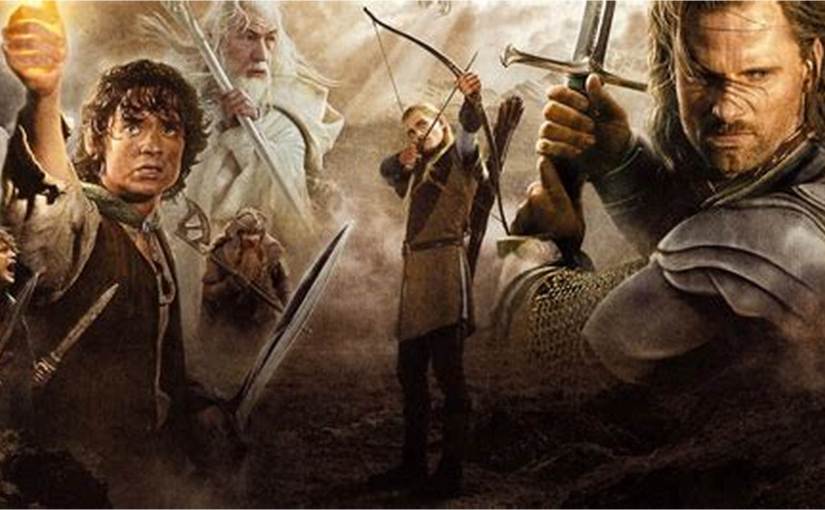
THE LORD OF THE RINGS: THE RETURN OF THE KING

By Marc S. Sanders

I remember film critic Gene Siskel once said that to take issue with the length of a film is not entirely fair. After all, you are getting more movie for your buck. Would Siskel have felt that way about The Lord Of The Rings: The Return Of The King? Peter Jackson closes out the film adaptation of JRR Tolkien’s sweeping fantasy with an epic that allows you to marvel at everything you see, but does that mean we want to feel as overly exhausted as its main protagonist, Frodo Baggins, feels? Trust me. Poor Frodo looks wiped.

More battles are enacted in the third film. Jackson just changes the dynamics up a little bit. Now armies don elephants with a number of enormous, curved tusks. Another army has a different looking giant troll. Haven’t seen elephants before. Haven’t seen that kind of troll yet either. As well, there is another King who is apprehensive to cooperate in the fight against Sauran and his Orc minions. There’s also a green glowing ghost army. Meanwhile, Frodo and Sam (Elijah Wood and Sean Astin) continue their journey to Mount Doom where the almighty Ring must be destroyed. Gollum (Andy Serkis) remains as their untrustworthy guide.

Jackson seemingly covers every page written by Tolkien. I’m talking about depicting every dream each character has or line they utter or slow motion expression they offer, or walk that they take. Peter Jackson is a completist.

The Return Of The King won Best Picture along with a bevy of other Oscars. Seemingly it should have won anyway. The first two films were recognized with Best Picture nominations as well. For the third film to win was to honor the entire trilogy and its achievements in filmmaking. The Lord Of The Rings trilogy reinvented movie making as a whole. The bar was set so much higher following its release and huge reception of these films.

That being said, it takes endurance to stay with the picture. Most especially with The Return Of The King as the film has multiple endings. Just when you think it’s over, it’s not, and it’s tedious and a little frustrating. Jackson seemed to have too hard a time saying farewell to his digital Middle Earth with its endearing characters.

The length is a problem I have with the film, but none of it seems wasteful either. Every caption and scene carry an importance to it. At least that’s how Jackson wants you to feel. The question is, if a number of momentary scenes had not been woven into the final edit, would I miss it, and my answer would be likely not.

THE POWER OF THE DOG

By Marc S. Sanders

Don’t blame Jane Campion.  Blame me. 

The ending to The Power Of The Dog feels ambiguous, but writer and director Campion invites you to think and ponder.  It also helps that I have a good friend who shed some light on how the film actually wrapped up.  I’m grateful because I appreciated the picture even more.  Ironically, my friend didn’t care for the movie.

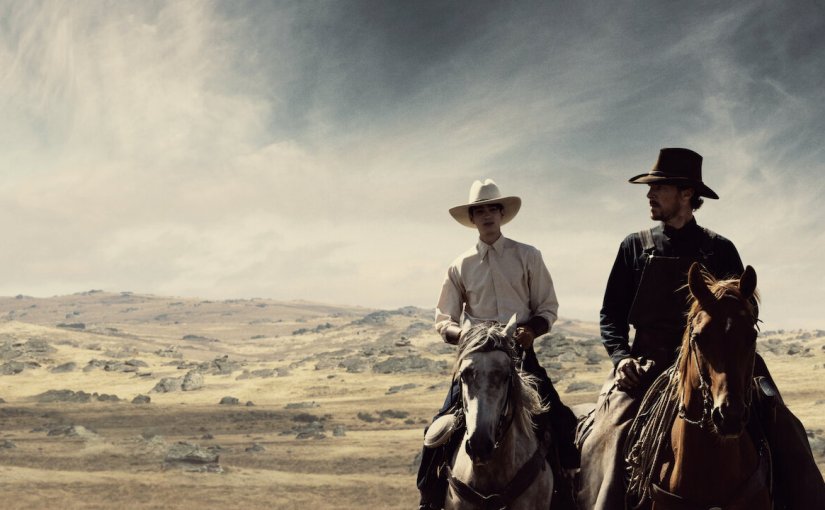
Technically, Jane Campion directs an absolutely breathtaking film with majestic cinematography and art design of open Montana fields taking place in 1926.  Tech work can only take me so far though, and I appreciated the four different perspectives of the headlining cast that includes Benedict Cumberbatch, Jesse Plemons, Kirsten Dunst and Kodi Smit-McPhee. 

Cumberbatch is Phil, a cowboy relic of the Old West.  He’s an expert horseman donned with spurs on his boots, and leather padding on the jeans along with the worn in staple cowboy hat.  He also has a fearful and intimidating temper.  Maybe that’s because his era is soon to be passed by and he’s not designed or updated for anything else.  Plemons is George. Phil’s subdued, business wise brother who knows his way around their Montana ranch, and more importantly knows how to build connections that’ll provide fiscal and political support, while he drives his Ford buggy to get from one place to the next.  Dunst is Rose, the artist of appetizing delicacies and designs who marries George.  She manages the kitchen of her restaurant and can play piano; not exceptionally well but her love for the instrument is what matters.  Her son is Peter, played by Smit-McPhee, a lanky and weak, yet book smart, young adult with his focus on the science of medicine.  He aspires to be surgeon.  So, as the 20th century is now over a quarter complete, these four individuals represent what once was, what is now, what is trending and what will become.

Campion sprinkles her film in more atmosphere than telling dialogue.  The gist of the story is how Phil’s tormenting presence scares both Rose and Peter.  A hair-raising scene occurs midway while Rose attempts to play a song on the piano, only to be drowned out by Phil’s cruel banjo interpretation from the top of the staircase.  Cumberbatch is really scary here as the bear teasing the cub to poke him.  Rose tries again and again to play only to be further interrupted by Phil.  A banjo is an instrument of a bygone era, the Old West.   The piano is the more sophisticated and elegant device to use now within the decorated designs of a reading room.

The future is also upon the characters.  Young Peter purchases a pair of sneakers to wear; not exactly the most appropriate for a horse ranch, nor are his suppressed homosexual yearnings.  Still, the future carries forth as he studies the latest in medicine and surgical practices, whether it is through dissection of a rabbit or studying the most up to date medical journals.

George is the symbol of transition.  He was raised like his brother Phil to be a rancher, but he knows that time has passed.  Currency, technology and longevity are necessary and it is not wise to remain stagnant in a time gone by.  It’s practical to develop connections with the Governor of the state, to drive himself and Rose in a car as opposed to by horseback.  To carry on the family name, it is also prudent he marries and builds a new generation.

I appreciated the subtle visuals and behaviors that Campion weaves into her adaptation from the novel by Thomas Savage.  Over the course of two hours, I was always learning something new, whether it be about the characters or the period setting.  Most telling is the fact that the past can not live in an updated future such as Phil with his suprising and deeply inhibited attraction to Peter.  As well, the future is not going to adjust well to the past like when Peter is trying to learn horse and ranch handling from a teasingly cruel Phil while wearing a ridiculous cowboy hat, white sneakers, and factory tailored jeans.  Furthermore, even if you’re only a frequent movie watcher, you likely are aware that Westerns would pit cowboys against Indians.  Rose demonstrates with her talents for craft how Native Americans are appreciated in this still young new century.  Phil and his ranchers would never imagine such relations to ever exist.

Our history is not comfortable with our eventual future, and our future can not fathom how we ever lived within our past.

Because these two worlds can never mesh in accordance with each other, a loss will have to be committed.  In another storyteller’s hands, The Power Of The Dog, might have resulted in a gun shot, or a stabbing or an illness to eliminate what cannot survive.  As well, long speeches of dialogue would spell out what must cease to continue and what must continue to flourish and go on.  With Campion’s lens, and with Savage’s work, it works atmospherically, however.  The environment of the Montana landscape along with life on a transitioning horse and cattle ranch serve the conflicting time passages and the characters who are relegated to a past, or a present, or a future. 

Don’t watch The Power Of The Dog with expectations of simplicity or quotable dialogue.  I value Campion’s approach to not spoon feed me.  Rather, take in the visuals of the four main characters’ behaviors.  Allow yourself to become more observant of the nature of how things end up.  Powerfully speaking, Jane Campion shows that some people will work well together, while others will crave to blend effectively, and sadly some can never live within another environment or time period, much less someone else’s.

The Power Of The Dog offers a thought-provoking message of loss and reflection while gazing into what’s just beyond.  It’s a very well-made film.

THE LAST EMPOROR

By Marc S. Sanders

Finally, I invested myself in watching Bernardo Bertolucci’s Oscar winning Best Picture The Last Emperor. Honestly, as breathtaking as the undertaking to make this sweeping epic is, it was the first and likely last time I will ever watch the film.

This three hour plus biographical picture focuses on a young child named Puyi, plucked from nowhere to become the next Emperor of China. He is destined to reside in Peking, The Forbidden City amid rich tapestries and deep Chinese culture at the start of the twentieth century. Oddly enough, the would be Emperor is a prisoner of his own surroundings for nearly his entire life. He is forbidden to go beyond the walls of Peking. Later in his adult life, he is a political prisoner and war criminal in the now regarded People’s Republic of China. Puyi was never granted an opportunity to think for himself or act upon his devices. He is forced to become an adaptable symbol to ongoing representations of the country that harbors him.

I watched this film with my wife. The next day we discussed it with my colleague Miguel who regards the picture as one of the best films he’s ever seen. I can not dismiss his viewpoint, but personally the depth of Betolucci’s efforts for maximum authenticity pushed my interest away from the film.

I embrace character arcs in films. It’s what keeps each passing moment of a movie refreshingly interesting. I do not deny the change in the Emperor’s story arc. Puyi changes as his country changes on both a political or militaristic platform. Yet, the film has vague segues in its changes as well.

Characters appear and disappear. Moments in history occur with no build up or explanation. It was challenging to follow who is who, and what has just happened.

Early on, we see how Puyi as a child interacts with his younger brother, Pujie. Much later in the film, Pujie reappears when they are adults. I am not going to pretend I’m a sophisticated enough moviegoer to realize this is the brother we saw as child over an hour earlier in the film. It took some time to realize who this guy was.

I’m also not going to pretend I know enough about Chinese history and culture to comprehend the traditional customs and ceremonies that occur, or China’s relationship that developed with Japan, or China’s significance during World War II.

That’s my problem with the film. Was I supposed to take a college course on Chinese history before watching The Last Emperor? The film is expository for sure, but it presumes the viewer will recollect at what point in history this moment or that moment occurs.

The film flashes forward and back to when Puyi was a prisoner of war in 1952. In prison, he eventually becomes reformed, but it became frustratingly complicated to understand exactly why he was even sentenced.

Following the film, I referenced Wikipedia to grasp the sequence of events. The historical change of this one man certainly merits a film to be made, much like Malcolm X or Born On The Fourth Of July. However, those films had a more comprehensive narration for me and the ongoing changes that the central figures experience are more well defined as the years pass and the people around them change.

The Last Emperor felt unclear to me in its storytelling while still immersing me in a land I’d imagine is unfamiliar to most viewers. For centuries “The Forbidden City” was not open for a public to encounter. If that’s the case, I believe Bertolucci needed to define what he captured much more clearly. Who’s to know what we are looking at, or what significance this setting has if most of the world population has yet to see what is here?

The Last Emperor requires a high threshold of patience and focus to grasp what it presents. It should be seen for the locales that are filmed, which were completely unseen by me personally. You’ll also get some tidbits of Chinese history, for sure.

All I can recommend is not to be so hard on yourself, when you find yourself lost at times in the film.

NO COUNTRY FOR OLD MEN

By Marc S. Sanders

Joel and Ethan Coen have an odd collection of films under their belt. No Country For Old Men, an adaptation of Cormac McCarthy’s novel is no exception. You’re likely to meet the oddest hit man you’ve experienced in a film. (Reader, I’m going under the presumption you’ve never encountered a normal or odd hit man in real life. If you survived long enough to read this passage, you are truly blessed.)

Anton Chigrh follows a discipline that likely no one ever taught him. His code is to continue until he finds what he’s looking for and dispose of any lead in his ongoing quest. His weapon of choice-an air gun hose connected to an oxygen tank. It’s instant in serving its purpose. Its sound is quick and jarring.

Javier Bradem delivers an Oscar winning performance as Chigrh in search of $2 million when Llewelyn Moss (Josh Brolin) takes possession of it after coming upon the sight of a drug deal gone bad.

Tommy Lee Jones is perhaps one of the old men in the title. A Texas sheriff not surprised by the carnage he comes upon, but not of much use either. I think he regrets that he can never do more or better and simply can only surmise what’s already been done. I gathered that especially from a scene depicted in a hotel room during the third act of the film. His approach on the scene and his need to sit down translate that for me. His periodic anecdotes during the course of the film seem to say so as well. This sheriff has likely never rescued anyone from harm despite how intuitive he may be.

The Coen Brothers are never shy with blood. A lot of directors are not, really. Yet with the Coens, it seems the bloodshed is disturbingly honest. The instant splatter and flow following another act by Chigrh couldn’t be more truthful. They tell this tale very well, never concerning themselves with how unsettling they can be. Sun filled deserts are not comfortable. Evenings are sleepless. Blood is dark, thick, sticky, messy.

Moss is a hunter who has no idea what he’s up against. Brolin plays him with quiet reservation. He could not resist the urge to take the bag of money, but he also knows he’ll pay for it as well. When he realizes there’s no way to escape, by even crossing the border, he can only try to kill the devil incarnate. He’s likely aware of how this will all play out though.

Among this trio of fine actors (with Woody Harrelson also briefly in the fold), the film is nevertheless celebrated for Bardem. Whenever the story returns to Chigrh, you sit up in your chair a little more alert. He’s got disturbing dialogue exchanges with those he encounters and Bardem’s method makes you wish you never have to decide your fate with a coin toss.

No Country For Old Men is not an action film. The pace takes its time, invested in three men with respective histories who cannot change what their meant for. No incident will change their lifestyles. They are meant to be an assassin, a washed-up lawman, and a poor country hunter. Until they die, no moment in time will alter their caricatures. That’s what I took from the Coens’ Best Picture winner.

I appreciate its honesty.

DANCES WITH WOLVES

By Marc S. Sanders

The western motif of filmmaking really comes alive with the 1990 winner for Best Picture, Dances With Wolves starring Kevin Costner in his astounding directorial debut. Until now, this film eluded me. I just never got around to seeing it. Watching it now is to recognize the parallels of current events in the year 2020. A Native American Facebook friend of mine recently lauded the takedown of a statue of Christopher Columbus. At the risk of sounding like I’m taking political side (I insist that I’m not!), I think understand her position a little more. I’m not saying I agree or disagree with this topic. I’m just saying I understand.

After committing what was seemingly an act of suicide, but instead is recognized as heroic in the eyes of the Union army during the Civil War, John Dunbar (Costner) is offered the pick of location for his next post. He opts for Fort Sedgwick because he wants to witness the frontier out west before it will likely be taken over by the white Americans. As Dunbar waits for fellow infantrymen to arrive, he gets the old fort into shape with his trusty horse Sisco. He also encounters companionship in a lone wolf he names Two Socks. The wolf only gradually learns to trust Dunbar, but that’s a project for the infantryman to occupy himself with. That, and keeping his personal journal.

Shortly after he’s settled in, he comes upon a Sioux Indian named Kicking Bird (an excellent Graham Greene). He and Dunbar are the first to develop trust with one another. Eventually, Dunbar’s good nature allows him the opportunity to rescue a white woman who lives with the Sioux tribe known as Stands With A Fist (Mary McDonnell). She has attempted to kill herself following the death of her husband. As the film continues, she becomes the translator between Dunbar and the other Indian leaders, allowing the story and relationships to move along.

The script by Michael Blake is fascinating simply because we are granted plenty of opportunities for the tribespeople to speak in their native tongue. Forgive me, I thought for a little about Hollywood’s most famous Indian, Tonto, and his laughably limited English. Here, language is instead limited for the white man as Costner does his best charade of buffalo to find initial common ground with the tribe’s holy man played by Greene.

Hollywood westerns seem to equate American Indians as savages, the bad guys of the films, complete with tomahawks and bow and arrows and bellowed battle cries for expression. Not here. Dunbar’s loneliness at the fort without another white man in sight does not allow for the ease of prejudice to interfere. Instead, he is a character who must learn to be accepted by the greater populace. When he is, he realizes that his true name is Dances With Wolves and not John Dunbar. That’s a fascinating character arc of change. The setting and the community within that location change the character. I was really moved by it.

As well, there is struggle and disagreements among the Indian population. Perhaps it truly is in the nature of humanity to be that way. The Sioux tribe must contend violently with the Pawnee tribe in a struggle to protect their territory and their food and supplies. Yet, that is wholly different from what drives the war that Dunbar has heroically served in. It’s not until Dunbar fights alongside his Sioux friends that he realizes he’s not an infantryman. This is another example of Costner effectively directing himself to find a new and enriching identity for his character.

A third example of character change stems from the eventual and expected love story that unfolds between Dunbar and Stands With A Fist. It’s something I’ve seen in countless other films. However, Mary McDonnell is quite good as the white woman whose English is close to being entirely replaced by the Native American tongue. She seems so indoctrinated within the Sioux tribe that when she first comes on the screen I questioned if she was a natural born Indian or an actual white woman.

Costner’s film is full of magnificent imagery. Gorgeous landscapes of the filming locations of South Dakota are like perfect paintings of open fields and endless blue sky. The blu ray transfer I watched was eye popping.

One of the greatest moments was a sequence involving a buffalo stampede. Costner with cast all on horseback ride within, as well as parallel to the animals and if ever a widescreen shot should be appreciated, this is a moment to turn to. The score moves beautifully with the pounding of the horses and buffalo stampeding across the open plains.

A personal sidenote is in regards to John Barry, the film’s music composer. I know this is an unfair criticism but at times his score is so strikingly similar to his work on various James Bond films that it was a distraction for me. Other times, Barry’s work lent well in some of the action scenes.

Nonetheless, what an incredible achievement that Costner commanded. He gives a terrific performance, but his direction is what truly stands out. Particularly, with the battle scenes and animal footage, I questioned how he managed to accomplish all of it. It’s just spectacular.

Dances With Wolves is certainly worthy of the accolades it attained and the reputation it still holds. The production value is easy to admire and unforgettable. Beyond that though, is the converse nature the film adheres to as a Hollywood western. The culture of a Native American tribe never seemed so authentic to me as it does here, accompanied with their sense of humor or even their temptation at playful gossip when observing the central love story between Dunbar and Stands With A Fist. We see what the Sioux tribe does to survive, yes. Still, we also see how they interact with one another and converse, as well as how they respond to a new neighbor, for example.

Dances With Wolves is an authentic masterpiece of a modern western. It’s a must-see film.

THE DEPARTED

By Marc S. Sanders

Martin Scorsese finally won his Best Director Oscar with the 2006 Best Picture The Departed, from a script written by William Monahan. The film is a remake of a Hong Kong crime drama called Infernal Affairs.

Also known as the one film in Scorsese’s library with a linear plot, The Departed depicts the stories of two guys who grew up in the south end of Boston and joined the police academy to serve. Only difference is one is recruited to go undercover within the Irish mob, while the other is recruited by the same mob to become a highly respected police officer and supply an unlimited wealth of information to his criminal boss.

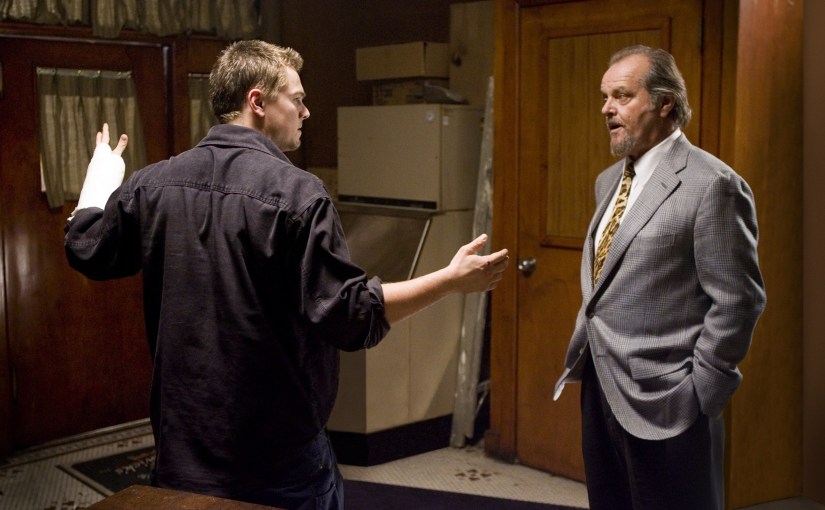
Leonardo DiCaprio is the undercover cop Billy Costigan. Matt Damon is the criminal cop Colin Sullivan. Jack Nicholson is the Irish mob boss in the middle, Frank Costello.

The Departed works because Scorsese and Monahan allow the audience in on every deceit playing against the characters. Pleasantly surprising is that there are even twists to this layered story, and cellular flip phones assist all the players with trying to remain in hiding or hoping to one up and trap the other. However, because everyone is getting tipped from their own respective sources, people are either not ending up dead, or arrested or caught red handed. As Costigan builds his case against Costello, Sullivan is worming his way to protecting his cover in the police force while also tipping off his true boss.

Performances from DiCaprio, Damon and Nicholson are what you’d expect. Nicholson is chewing the scenery again appearing like the devil incarnate while hamming up the facial expressions. Damon is great at playing it like the Boy Scout cop in well-tailored suits, clean shaven and flirtatious within his department and earning respect among his peers, that is until it all seems to unravel. DiCaprio is wired as the cop who needs to show he’s a dangerous hood to be trusted among the mob cohorts. However, he’s getting more paranoid and unwound at the risk of being made.

Thelma Schoonmaker (one of my favorites) does a balanced approach edit to showing a parallel among the cops. She will insert a happening of Costigan for a snippet and then segue to Sullivan appearing to do honest police work, or reaching out to Costello with a warning of what’s coming for him.

Great support also comes from Ray Winstone as Costello’s right hand man, and Alec Baldwin, Anthony Anderson and Martin Sheen, all within the police department.

Ironically, the one Oscar nominated performance was bestowed upon Mark Wahlberg and I grew tired of his presence quickly as the cop who berates Costigan endlessly with yelling and fast one liners that involve someone’s mother. Could we just move on from this please?

I also found Vera Farmiga as a police psychologist to be mostly unnecessary until a contrived ending point needed to arrive. Her character naturally has affairs with both Damon and DiCaprio, who also attend her office for sessions. Of course they do! Whenever the film sidetracks to one of them with Farmiga, The Departed stalls for a moment. Her character carries no stake in the plot line and offers no further dimension to DiCaprio and Damon’s characters.

The film works best as the complications compound on each other. A great moment occurs between the cops when one of them picks up a bloody cell phone to dial back the most recent call. Silence on both ends of the line, and the moment just plays out until someone speaks or hangs up.

Moments like that is suspense similar to when a man is intruding in a dark house. However, this is suspense delivered by Martin Scorsese, and Martin Scorsese will film suspense that is anything but typical. Martin Scorsese’s suspense leaves you breathless.

ORDINARY PEOPLE

By Marc S. Sanders

Psychiatry is regarded as a stigma within the world of Ordinary People.

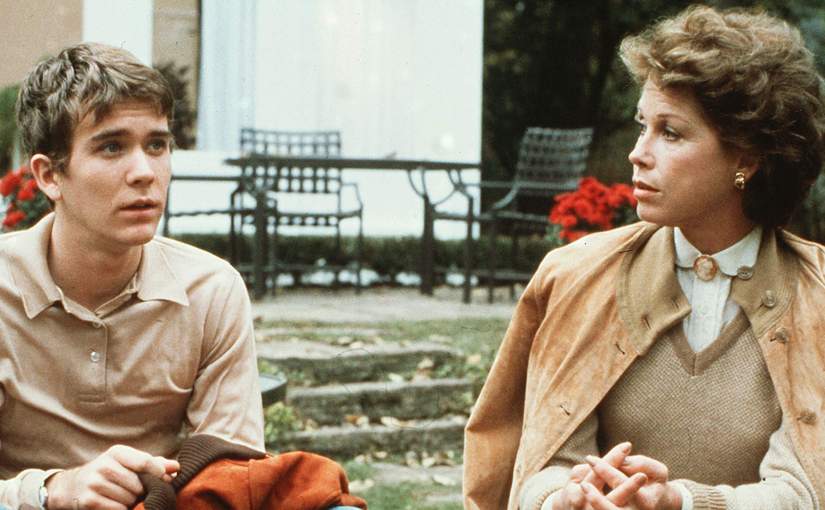
Robert Redford’s Oscar winning directorial debut centers on a troubled high school student named Conrad (Timothy Hutton in an Oscar winning role) who finally gets the gumption to see Dr. Berger (Judd Hirsch) following a suicide attempt brought on by the guilt he carries when he could not rescue his older brother, Buck, in a stormy boating accident. His parents, Beth and Calvin (Mary Tyler Moore and Donald Sutherland), accept this action with differing viewpoints.

For Beth it’s shameful and unnecessary to see a doctor. Her stance is made all the more clear when her own mother frowns upon this, especially with this doctor being a Jew. On the other hand, Calvin looks at it as an opportunity for a breakthrough. This doctor could really be good for Conrad. Beth is embarrassed when Calvin has a few drinks at a neighborhood dinner party and shares these developments with some friends.

For a WASP community, seeing a psychiatrist is not regarded well. It shows that Beth’s image of a perfect lifestyle is tainted. Any problems they have should be resolved in the home. What never occurs to Beth, however, is the resentment she fails to hide for her second son. There’s nothing breaking through Beth’s exterior to allow her true feelings to come out. By contrast, Conrad gradually lets his inner struggle loose and the film shows that it helps, as challenging as it could be.

In 1980, the prior year’s Best Picture winner was Kramer vs Kramer. Three years later it would be Terms Of Endearment. Hollywood was recognizing an audience’s interest in the domestic life. The Vietnam War was now in the past. Reagan economics were taking over and middle-class America seemed to be doing well. Redford’s adaptation of Judith Guest’s novel with a screenplay by Alvin Sargeant showed what was happening behind closed doors. Dramatic moments occur and they can offer a terrible shock in the moment but as days move on, so does everyone around you. You make efforts to do so as well, but you’re still weighed down by that one moment of loss.

Redford directs Hutton with quiet moments of anguish. Quick cut flashbacks offer a glimpse of what’s running through Conrad’s mind. Fortunately, it doesn’t run too long and upstage Hutton’s performance. Timothy Hutton is astonishing with his twitches and stutters and struggle to simply sit still. His blank stare of his blue eyes covey his deep depression. When a girl classmate takes notice of him, you feel the remedy of his sessions starting to make a difference. Where his mother refuses to recognize his need for love, someone else does and you feel better about yourself as well.

There’s always a reason to live. Dr. Berger reminds Conrad of that. Judd Hirsch is right for his role against the waspy wealth of Conrad’s upbringing. He encourages a “not giving a shit” attitude to how people perceive Conrad. We all want a mother’s love, but it doesn’t always work out that way. We want to be accepted at school. That might not work out either. With his sloven stature and chain-smoking manner, Hirsch is very convincing in reminding Conrad to say it’s okay to tell someone to fuck off, and most importantly to stop punishing himself for saying it.

Mary Tyler Moore and Donald Sutherland work incredibly well at conflicting with each other while also convincing us that before this terrible accident they likely complimented one another perfectly. Yet, as the film explains, life gets messy. The question is how best to respond when the mess appears and stays with you. Conrad finds the benefits in seeing a therapist like Dr. Berger. Beth will hear nothing of the idea. A magnificent scene done with one tracking camera comes out of nowhere while Beth and Calvin are playing golf with relatives. A slight mention of their son by Calvin gradually explodes into what really sets Calvin and Beth apart from one another. All of their sub conscious thoughts explode on a crowded golf course in front of the community they’ve absorbed their history and marriage within. Redford gets the best beats out of his actors because the shields that maintain their personas will only hold for so long. It’ll break down at a time when it’s never opportune or convenient. This scene occurs near the end of the film as we see Conrad’s recovery, while Beth and Calvin are still mired in both individual and shared heartache and resentment. It’s a crescendo moment that the film builds to for these characters.

Within film discussions, Ordinary People is often sadly regarded as the film that once again denied Martin Scorsese of a well-deserved Oscar (for arguably his greatest work Raging Bull). I don’t think that’s fair, however. Some might say Ordinary People may be dated. However, now that I’ve finally seen the film, I can’t deny it’s importance. Mental health has become more apparent through all kinds of different social classes. Yet we still hide ourselves, and are encouraged to shelter ourselves under a facade of happiness. That can’t always be true for any of us. We, as humans, all suffer. We all feel pain or embarrassment or sadness. If anything, a piece like Ordinary People reminds us that we are all typical, and must succumb to dealing with issues far beyond our mental capacity at one time or another.

OUT OF AFRICA

By Marc S. Sanders

Sydney Pollack’s Out Of Africa might seem like a whirlwind romance if you’re only looking at the top billed names of the cast, Robert Redford and Meryl Streep, but it’s much more than that. It’s an education of the African continent beginning in 1913 when World War I was on the brink, and the British monarchy appeared to become territorial of its lands.

Karen Blixen (Streep) is a Danish Baroness who marries a Swedish nobleman, Baron Bror Blixen (Klaus Maria Brandauer) out of simple convenience. She plans to begin a cattle farm outside of Kenya to manage with Bror. To her unfortunate surprise, Bror has invested her monies in harvesting coffee on the land, which is much more difficult to produce at the altitude where they settle. Bror is also not so concerned with growing to love Karen and would much rather hunt on safari and be a womanizer, while welching off of Karen’s enterprise.

Karen grows to love Africa with its wildlife, as well as the local people whom she does not object to them squatting on her property. She provides medical aid and schooling for the children, too.

Karen also encounters the dashing adventurer, Denys Finch Hatton (Redford). Denys comes in and out of her life where he welcomes her on expeditions that are up close with lions and rhinos. He also takes her in his biplane to get God’s perspective of the lush scenery, a major centerpiece of the film. Denys, however, is not concerned with offering the full commitment Karen seeks. He’s happy to carry on with his safari treks only to return on occasion.

Clocking in at nearly three hours, Pollack’s film gives plenty of time and footage to absorb gorgeous landscape views of Africa from above and across the plains. The cinematography is on par with some of the best I’ve ever seen in a motion picture, compliments of David Watkin. The colors of sky with green, brown and yellow landscapes are breathtaking. Sunsets are spectacular with Redford’s silhouette in the foreground. Herds of cattle consisting of oxen, gazelles and lion feel so up close and personal. The production design of Karen’s home and coffee farm are also noticeably authentic. The home feels comfortable.

Out Of Africa is based on the stories told from Isek Denisen, Karen’s pseudonym. Like many of these sweeping epics, I find that I need to get accustomed to the nature of the film first. Dialects, when done authentically like Streep always strives for, are challenging for me to understand initially. The African people are hard to understand at times. As well, this is a period picture in a territory that I’m mostly unfamiliar with. So, I find that I have to adjust to the habitat and culture of the characters. Frankly, the first half hour or so was a little tough for me to stay with the picture. Once I got my footing with the film, though, I could not get enough. I felt terrible for Karen when she contracts syphilis. I was truly annoyed with how the Baron treats Karen with such disdain. It’s also heartbreaking when Karen and Denys are in disagreement with one another, simply because I loved the chemistry between Redford and Streep. Later setbacks feel tragic, especially as you feel like you’ve traveled through the progress and impactful differences that Karen affectionately made for Africa and its people.

Out Of Africa is an outstanding piece of filmmaking. It’s another example of a film where the setting is as much a character as the leads who carry the story. Sydney Pollack and his crew, which includes grand horn and string chords from Oscar winning composer John Barry present a captivating story that also feels rich in a documentarian point of view. A restored copy of the film on a large flat screen TV is a must see.

ROCKY

By Marc S. Sanders

Rocky is a story about a bunch of losers.  It really is. It’s actually a film that does not represent or follow the standard ho hum formula that so many other well-recognized sports films that are so familiar, since it premiered on screens in 1976. 

If you examine Rocky, what you’ll find is a story about a boxer by the name of Rocky Balboa (Sylvester Stallone in a role that broke through everything for him), who is not shown doing much boxing or even training.  Instead, the southpaw boxer known as The Italian Stallion, is displayed as a heavy collector for a loan shark in and around the south side of a dirty Philadelphia.  Early on in the film, Rocky delivers monies to the loan shark and his driver asks Rocky “Did ya get the license plate?”  Rocky asks for what, and the driver snaps back with “For the truck that ran over your face.”  It’s delivered with a little humor but it’s also sad.  Is there anyone to uplift poor Rocky’s spirits?  His one-time trainer, Mickey (Burgess Meredith), kicks him out of the gym because he’s tired of Rocky at age 30 wasting his life with the scum of the streets.  Rocky lives in a filthy apartment barely making scratch from underground fights.  About the only redeeming quality Rocky seems to show is his tender loving care for his two turtles, Cuff and Link.  So, it is surprisingly charming when he sweet talks a mousy, petite woman named Adrian (Talia Shire, truly in an underrated performance) for a date. 

Adrian is also a loser, or at least she’s treated like one by her brother, Paulie (Burt Young).  He’s constantly putting her down for her looks and lack of men in her life and any other opportune moment he can find.  It’s the only way that Paulie can build confidence in himself; by putting his sister down.  Beyond that, all he has going for him is his job in the meat locker.  His one dream is for Rocky to give him a job working for the loan shark.  Such aspirations.

By luck, Rocky is called upon by the Heavyweight Champion of the World, Apollo Creed (Carl Weathers), to fight him in the ring.  Anyone else would jump at this chance.  For Rocky, it’s just a way to earn a fast $150,000 and use his face as a punching bag for Creed on live television.

All of these characters within this circle come out of their shells once Rocky is given the opportunity of a lifetime.  The first win for Rocky is when he wins over Adrian on an adoring, near penniless date when he takes her ice skating on Thanksgiving night.  They’re only given ten minutes to skate together.  The transition thereafter is quite revealing.  Director John G. Avildsen transforms Adrian’s appearance by removing her ugly glasses and hat.  Rocky is pleasantly surprised by the red winter coat she wears later in the picture.  Adrian becomes more talkative and expressive.  Initially, she couldn’t even look Rocky in the eye.  When Rocky gives her a shout out at a press conference on TV, Adrian laughs and cuddles up next to Rocky.  Someone has finally treasured her and she adores it so appreciatingly.  Shire really demonstrates a nice character arc, where she comes out from under the strong arm of her brother to find her independence and make choices for herself.  An amazing scene occurs near the end between Shire and Young.  The pent-up frustration the siblings have for one another finally boils over.  This scene is what won both of these actors their Oscar nominations.  It’s a moment in all of the Rocky films that doesn’t get enough recognition.

Mickey is the one who gives tough love to Rocky.  He shares with Rocky his own battles in the ring during the first half of his near 50 years in boxing.  All of the blood and sweat didn’t amount to much beyond the gym he has for the local fighters.  What he earned as a fighter was a cauliflower ear and no family except the poor kids who go in and out of his southside gym.  Now he has a chance at the big time and he has to win over Rocky’s affections so that he can train him properly for the fight that’s coming up.

The biggest loser of course is the title character.  Credit must first go to Stallone for an outstanding insightful script that looks much deeper than any of the numerous sequels that followed this film.  The original Rocky is not about punches.  The script eventually transitions into determination with Rocky giving a sorrowful monologue to Adrian acknowledging he’s a loser with no chance at beating Creed.  At the very least, all he wants to do is settle for going the full 15 rounds with the champion and never falling down on the mat for a count of 10.  Only then can Rocky triumph with a personal victory.

Rocky won the Oscar for Best Picture and Avildsen won Best Director in 1976, beating out incredible films like Network, Taxi Driver and All The President’s Men.  I’ve thought about this endlessly over the years.  Why did it win?  I mean look at the competition it had.  The script for Network is one of the most admired and amazing scripts in Hollywood history; now it’s regarded for how prophetic it has become.  The other two films gave brutally honest, yet cynical portraits of the lack of innocence in the United States.  These other films rightfully question if America is the greatest and most thriving country in the world.  Just writing this, I think I answered my own question, though I will endlessly ponder anyway.  Rocky is the one positive entry of nominated films that year.  Rocky Balboa put aside the differences he had with others and overcame the adversity of those that would antagonize and guide him down the wrong paths. 

It’s totally cliché now to say this but Avildsen’s film, Rocky, is an awe-inspiring triumph.  It’s still okay to identify the picture as such, because it was the first to do what only so many imitations thereafter tried to duplicate.  The outcome of the fight within the film was not about winning the belt and the fortunes of money.  It was a breakthrough from a wasted life – the life of a loser; the lives Rocky, Adrian, Paulie and Mickey were all sadly living before the chance opportunity of supporting one another came to pass.  As Bill Conti’s unforgettable soundtrack closes out the picture, you are not just crying for Rocky and Adrian as they profess their love for one another in the middle of a crowded boxing ring.  You are crying because you realize you can believe in changing your life with will, stamina, endurance, personal strength, confidence and then…finally…love.