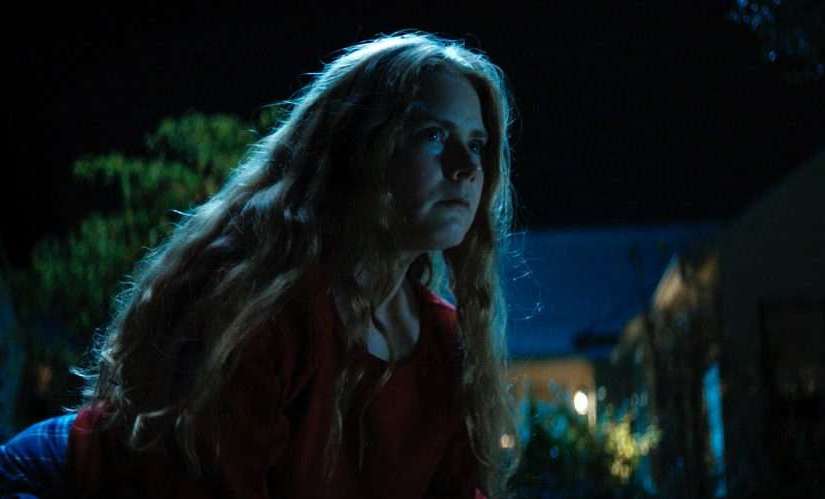
THE BLUE ANGEL (Germany, 1930)

by Miguel E. Rodriguez

DIRECTOR: Josef von Sternberg
CAST: Emil Jannings, Marlene Dietrich, Kurt Gerron, Rosa Valetti
MY RATING: 10/10
ROTTEN TOMATOMETER: 96% Certified Fresh

PLOT: An elderly professor’s ordered life spins dangerously out of control when he falls for a nightclub singer.


There are so many things I admire about The Blue Angel that I hardly know where to begin.  The cinematography, the story, the acting, the unbearably tragic arc, the dichotomy of the main character, the debut performance of Marlene Dietrich…just ridiculously top notch all around.  The final 20 minutes or so of the film are so searingly tragic and raw that there were times when I wanted to look away, not out of disgust, but out of social embarrassment.  I’m fully aware of Emil Jannings’s Nazi sympathies, but love him or hate him, this is one of the greatest performances I’ve seen from any film of this period.

[Fair warning, I’m about to really run off at the mouth about this one, so make yourselves comfortable.]

Jannings plays Professor Immanuel Rath, a fussy, stuffy little man who teaches at a local school in Germany somewhere around 1924.  Director von Sternberg directs Rath’s introductory scenes almost as if he were using sound only reluctantly.  With a bare minimum of dialogue, we watch Rath’s morning process as he prepares his clothes just so, eats his breakfast just so, carries his books just so, and arrives at his classroom like Gandalf: never late, never early, but precisely when he means to.  His upper-high school students, all male, respect him just enough to stand at attention upon his arrival, but are rebellious enough to write graffiti on his notebooks, turning his name from “Rath” to the German word for “trash.”

One day, he discovers that several of his male students are in possession of scandalous little postcards picturing a sensuous burlesque performer whose lower regions are covered by a little tuft of actual feathers pasted onto the card.  Blow on the card just right, and her little feather skirt rises to reveal – well, nothing terribly scandalous by today’s standards, but certainly not family friendly in 1924.  Rath is incensed.  How dare these students profane their minds with such affronts to decency?  (We get a brief glimpse of his hypocrisy as he experiments with the feather skirt himself when no one is watching.)

Rath discovers that some of his students have been frequenting a burlesque house called The Blue Angel to see the girl on the postcard.  Her name is Lola Lola, portrayed by Marlene Dietrich in the role that made her a star.  It’s all here: the skimpy outfits, those long legs, the pouty face, sitting backwards on a chair, and the singing voice that eventually led to concert hall appearances in later years when her acting career waned.

Enraged by the thought of his students attending something as inappropriate as a burlesque show, Rath storms to the Blue Angel that very night to try to catch them red-handed.  All his wrath evaporates, though, when he spies Lola in the flesh while she performs.  From that moment, he is doomed.  He winds up in Lola’s dressing room where Lola, seasoned performer that she is, treats him as if he were a rich patron, showering him with compliments and, daringly, gifting him with a pair of her underpants.  Talk about chutzpah.

Predictably, Rath’s students see him at the Blue Angel, and his authority in his classroom starts to wane.  He returns there to give Lola’s underwear back, winds up in a box seat, and watches as she trills the song (in German) “Falling in Love Again.”  She sings directly to him.  He is smitten.  He drunkenly stays the night in her boudoir (nothing happens) and is late to school the next day.  At this point his authority over his students utterly vanishes, he announces his plans to propose to Lola, and his superior essentially fires him from his post.

It’s here where we get one of the first real masterstrokes in von Sternberg’s direction.  Rath carefully empties his desk drawer, fussy as always, picks up a few books, stands, and then slowly looks over the empty classroom.  As he stands, the camera slowly dollies back away from him, increasing our awareness of how large the empty room is, and putting a visual exclamation point on just how momentous his decision is.  He’s throwing away his vocation, everything he’s ever known, and perhaps there’s a moment during this camera move when he is thinking to himself, “What the hell am I doing?”  I’m not doing it justice verbally, but it’s a sensational moment, reminding me of the famous moment in Taxi Driver when Scorsese’s camera tactfully dollies off Travis Bickle during an embarrassing phone call.

The second half of the film involves Rath’s rash proposal to Lola, her improbable acceptance, and his slow inevitable decline.  Up to now, von Sternberg’s direction has been impeccable, using dialogue only when necessary, relying on Emil Jannings’s imposing presence and impressive non-verbal acting, and on Marlene Dietrich’s inimitable beauty and sensuality to underscore their scenes together.  Now, in the tragic second half, von Sternberg REALLY impresses.

Without going into too much detail (you deserve to be as wowed by this movie as I was), let me just list some moments that stood out to me, moments that felt as fresh and moving as any other movie I can think of.

THE WEDDING RECEPTION: At Rath and Lola’s reception, a magician conjures eggs from under Rath’s nose.  The kittenish Lola playfully clucks like a hen.  Rath, besotted beyond reason, smiles and crows like a rooster.  The sight of him making such a ridiculous noise filled me with unease, a reaction I am still unable to completely unpack.  Did I feel sorry for Rath?  Maybe, but why?  He has brought this on himself.  Lola isn’t to blame for his unseemly behavior, though it is all too easy to see how she could be seen as the “villain” of the film.  That is wrongheaded, in my opinion.  If there is a villain in the movie, a person who brings about every bad thing that happens to Rath, it’s Rath himself.

THE EDITING: At one point, Rath discovers that Lola still carries large numbers of those feathery postcards to sell at her performances.  He is adamant: “While I have a penny to my name, you will never sell another one of these postcards!”  Lola’s response is simple, but both wise and somehow chilling: “Well, bring them with us anyway…you never know.”  The camera fades out, and in the very next scene, Rath is sitting at a table, watching Lola perform, and as her song ends, he carefully gathers up the postcards before him and goes table to table, hawking them.  With one single edit, von Sternberg captures not only how wrong Rath was, but also how quickly he has fallen from a place of petty pride to a lowly peddler.  The effect was startling and disheartening at the same time.

THE CALENDAR: Lola is preparing for another performance.  Rath is helping her with a primitive curling iron, but she complains that it’s too hot.  To cool it down, Rath turns to a small day-to-day calendar on the wall, pulls a sheet off, and touches it to the iron to, I guess, burn off some of the heat.  One isn’t enough, so he pulls another sheet off.  We watch as the calendar’s sheets disappear one by one, then in a montage of burning sheets and curling irons as March turns to April turns to November turns to December, and quick as a flash it’s suddenly 1930…four years later.  This astonishing sequence has as much impact as that moment in Cast Away when we fade out on Tom Hanks in the cave and fade back in with the title card FOUR YEARS LATER.

THE FINALE: Wow, I’m really going to have to tread carefully here, but the last 15-20 minutes seal the deal and make The Blue Angel one of the greatest classic films I’ve ever seen.  There is enough heartbreaking pathos and awkwardness and humiliation to satisfy any fan of melodrama.  It’s practically operatic, right down to the image of an anguished clown (long story, watch the movie and see what I mean).  Rath’s rooster crows make an encore appearance, but the circumstances under which he makes those noises are just…I’m having trouble finding the right words.  It’s genuinely hard to watch.  Lola’s portion of responsibility in this sequence is undeniable, but honestly, it’s like that fable about the scorpion and the frog that ends with, “What’d you expect me to do?  I’m a scorpion.”  She is no more evil or immoral than a shark or an earthquake.  In the end, Rath’s hypocrisy and intolerance are rewarded with a comeuppance that is richly deserved, but also pathetic and pitiful, in the most literal sense of those words.

The Blue Angel is one of the most uncompromising depictions of a tragic arc that I’ve ever seen, but it also manages to make the tragic figure inexplicably sympathetic, despite his hypocrisy.  It is achingly, wonderfully sad and melodramatic and heartbreaking, tempered by the occasional song from Marlene Dietrich as well as just being able to gaze upon her from time to time.  Watching it for the first time is an experience I will not soon forget.  I hope I haven’t spoiled too much of it for you if you’ve never seen it, either.  If you haven’t, I urge you to seek it out immediately.  (The German version whenever possible…I’ve seen clips of the English version, and it simply does not carry the same weight as the German version.)

IT’S A GIFT (1934)

by Miguel E. Rodriguez

DIRECTOR: Norman Z. McLeod
CAST: W.C. Fields, Kathleen Howard, Jean Rouverol, Tommy Bupp, Baby LeRoy
MY RATING: 9/10
ROTTEN TOMATOMETER: 94%

PLOT: A henpecked New Jersey grocer makes plans to move to California to grow oranges, despite the resistance of his overbearing wife.


I have pondered and pondered for almost a week now, and I still have no idea how the title of It’s a Gift relates to its plot, unless it refers to the comic abilities of the film’s star, W.C. Fields.  Perhaps it refers to the bequest of a dead uncle that sets the plot in motion.  Or maybe it’s a situation where the studio heads couldn’t think of a title and just picked one that was languishing on a stack of papers somewhere.

Not that it matters.  It’s a Gift is a tiny gem of a comedy with a plot as inconsequential as its title.  As fate would have it, this is the only W.C. Fields movie I’ve seen, but I’m prepared to bet that this is the best W.C. Fields I’m likely to see.  The only other one on my radar is The Bank Dick (1940), but it’s hard for me to imagine how it could top It’s a Gift for pure slapstick comedy.  Or not slapstick exactly…it’s a weird, wonderful combination of slapstick with theatrical farce, like The Three Stooges or the Marx Brothers but with a shortened leash.  In this movie, Fields is not a wacky character like Groucho or Curly…he’s us, and that makes it more effective.  (That was part of Buster Keaton’s genius, too, but that’s for another review…)

Fields plays Harold Bissonette (pronounced “Bee-so-NAY”), a cosmically patient man living in New Jersey with an overbearing wife, Amelia; a thoughtless teenage daughter, Mildred; and a rambunctious young son, Norman.  How rambunctious?  He wheels around their apartment on roller skates; when Harold tells him to stop, he obliges by removing only one skate.  If I had tried that with my parents, I wouldn’t be alive to talk about it.

Harold’s relationship with his family is defined by their total indifference to what he wants and his desire to avoid conflict at all costs.  Right at the outset, when he tries to shave in the bathroom, his daughter blithely steps between him and the mirror so she can do her hair and brush her teeth.  Rather than raise an objection (which he clearly wants to do), he improvises by hanging a travel mirror from the pull chain on the overhead light bulb.  The mirror spins slightly, leaving him no option but to shave in stages whenever the mirror faces him.  This scene beautifully defines both characters with barely a word spoken.  [Marc, if you’re reading this, this kind of thing is right up your alley.]

The plot involves a dead uncle who has left Harold a decent chunk of change.  Harold’s wife, Amelia, looks forward to moving to a nice house and buying some nice dresses, but Harold has something else in mind.  He wants to move the family to California and raise oranges on an orange grove he’s bought from his daughter’s boyfriend, or the boyfriend’s father, or something, it doesn’t really matter.  What matters is, the boyfriend discovers the orange grove is a wreck, but Harold refuses to listen and moves ahead with his plan.

Before they move to California, though, there are two hysterical sequences to get through.  One takes place at the general store Harold runs in town.  His day at the store plays out as one of the worst (and funniest, for us) days of his life.  It involves an angry customer demanding kumquats, which is funny all by itself because in real life, it’s impossible to demand kumquats and be angry.  Try it sometime.  There’s also a regular customer, Mr. Muckle, an elderly gentleman who is blind and hard of hearing; he carries an ear trumpet and a large cane which he swings indiscriminately in front of him, destroying anything breakable in his way.  There is something Matthau-esque in Harold’s desperate attempts to get those kumquats while also keeping the deaf Mr. Muckle away from his light bulb display.  And then there’s the clueless assistant and the meat locker and the child in the overhead basket and a barrel of molasses and so on and so on.  No WONDER Harold wants to get out of town.  Another day at that store and they’d have to carry his customers out in a hearse.

The second sequence, and by far the funniest in the whole film, involves Henry trying to get some sleep on the front porch because his wife won’t stop nagging him about using all their inheritance to buy an orange grove.  This marvelous set piece involves him trying to sleep on a rickety porch swing while his upstairs neighbor engages in conversation with people below, a baby drops grapes on his noggin through a hole in his ceiling/the baby’s floor, the swing threatens collapse at any moment, a random coconut manages to bounce down three flights of stairs, and he is “accosted” by an insurance salesman.  What makes this scene work so well is not the slapstick nature of the scene, which plays out like a Looney Tunes cartoon, but Harold’s dogged determination to get some damn SLEEP, despite the universe’s intention to make it utterly impossible.  Fields here proves himself a master of understated reactions.  Where the Stooges or perhaps even Groucho would resort to yelling or lobbing insults, Fields projects a world-weariness, as if this kind of thing is always happening to him, HAS always happened to him, and WILL happen to him in the future.  He loses his temper only once, and even then, he doesn’t resort to yelling: he just goes inside and gets his shotgun.

This and the grocery store scene are the highlights of the film.  After they pack everything into their car and hit the road, it becomes a series of episodes before they finally arrive at the orange grove he bought, which is, as promised by his daughter’s boyfriend, a wreck.  What happens next, I wouldn’t dream of revealing, except to say it’s as implausible as it is satisfying.

While It’s a Gift will never be mentioned in the same breath as anything by Capra or Wilder in the screenplay department, it works impeccably as a vehicle for W.C. Fields and his often-imitated/never-quite-duplicated brand of comedy.  (Walter Matthau came close.)  I haven’t seen enough of his films to be scholarly in my approach, but I can report that it made me laugh much more than I thought it would.  That’s all I can really ask for in a comedy, so I’m not going to try to break it down too much.  I’ll just roll with it, like Harold.

MAN WITH A MOVIE CAMERA (Soviet Union, 1929)

by Miguel E. Rodriguez

DIRECTOR: Dziga Vertov
CAST: Mikhael Kaufman, Elizaveta Svilova
MY RATING: 9/10
ROTTEN TOMATOMETER: 98% Certified Fresh

PLOT: This highly influential quasi-documentary captures a day in the life of a Russian city, as well as the cameraman doing the filming.


Film scholars more highly educated than I may be able to dispute this, but I think Man with a Movie Camera qualifies as the most “meta” film ever made: a movie about the making of itself.  Filmmaker Dziga Vertov, who cut his teeth on Soviet newsreels, cobbled together three years of footage of everyday life in Moscow and condensed it into a 68-minute quasi-documentary/newsreel that acts as a virtual wormhole into the past, revealing people and activities and life that is not that far removed from our own experiences.  Spliced into this footage are shots of the film’s cinematographer carrying the camera around on a tripod, setting it up, and shooting the footage we’re seeing, sometimes putting himself in mortal danger for the sake of getting the perfect shot.

Vertov used every camera trick available at the time, including [bear with me while I consult IMDb]: double exposure, time lapse/fast motion, slow motion, freeze frames, jump cuts, split screens, Dutch angles, extreme close-ups, reversed footage, and even stop motion animation.  The resulting film is extremely reminiscent of two of my other favorite films, Koyaanisqatsi (1982) and Baraka (1992), though the reverse is clearly more accurate.  When those two movies were hailed as art house masterpieces, fans of Vertov’s film must have been thinking, “Yawn, been there, done that.”

I’m sure entire books and even college courses have been written and designed around Man with a Movie Camera with its metatextual layers and its impossible-to-overstate influence on filmmakers up to and including the present day.  (There was even a small scene that reminded me of those spinning-atom “flashbacks” in Oppenheimer [2023].)  As a wise man once said, “Better to be remain silent and be thought a fool than to speak and remove all doubt.”  I won’t attempt to approach this beautiful movie from an intellectual standpoint.  Rather, I want to convey the emotional effect Vertov’s techniques succeeded in creating in me as I watched.

Basically, the movie can be broken down into several chapters.  We first see a city asleep: Moscow, mostly, though some sequences were shot in Odessa, Kiev, and Kharkiv.  Early morning streets are deserted except for street sweepers and homeless folks on park benches.  Department store mannequins stare blankly onto empty sidewalks.  A young woman lies in bed asleep.  We see a car pull up to a building and pick up a passenger: a cameraman, who is “played” by the film’s cinematographer, Mikhail Kaufman.

The city awakes.  Store shutters are thrown open.  Electric streetcars and motorbuses pull out of their “stables” and head for the city.  The young woman from earlier gets out of bed and, as the quaint phrase goes, “performs her ablutions.”  In a couple of interesting sequences, homeless men on the street awake to discover a cameraman filming them.  Invasion of privacy?  Exploitation?  Perhaps.  But of the two men I recall seeing filmed this way, one of them simply made no reaction, while the other smiled and laughed, then rolled over to snooze for a few more minutes.  Hey, a cameo’s a cameo.

Then the city gets to work.  People arrive at their factory jobs.  Vast machinery is switched on.  Steel mills rumble to life, and smoke belches from towering smokestacks.  We see the cameraman climbing the crude ladder on the side of one such smokestack with no visible safety equipment.  My palms got a little sweaty just watching it.

The city streets become unbelievably congested with mobs of people, herds of streetcars, and only crude manually operated street signals to maintain order.  Trains pull in and out of train stations right on schedule – presumably.  In one absurdly dangerous shot, we watch as the cameraman places his camera directly on the track in front of an oncoming train and then remains behind the camera for as long as possible, checking focus or whatever, as the train gets closer and closer and CLOSER…then we cut to a shot of the train rolling over us as if the camera was right on the ground underneath the train.

(In the first of several such sequences, we then see a series of shots showing the cameraman has dug a hole in the middle of the tracks large enough to fit him and the camera so he can still crank the film while the train rolls over him.  First the magic, then the explanation.)

Here and there in the middle of all this, we also get shots of the film’s assistant editor, Elizaveta Svilova, laboriously poring through endless feet of film, searching for the perfect shot or the perfect splicing point, cutting and pasting, and sometimes storing small reels on shelves marked with categories like “Factory” or “Street” to be used later.  We’re really getting a look at how the sausage is made here.  But to what purpose?  Perhaps Vertov is going to great pains throughout the movie to demonstrate to the audience that the magic of montage and any emotional reactions they may experience while watching is the result of intensely hard work by manual laborers much like themselves.

Vertov even exhibits a wicked sense of timing and dark humor.  We see a short scene in which a man and woman visit a city office to sign a marriage certificate, all smiles and nerves.  This is followed shortly by another couple, who are NOT smiling, visiting the same office…this time to sign a divorce certificate.  At this point I started to wonder if these scenes were being staged.  But there is a third sequence set in the same office, where a woman hides her face from the camera with her purse.  This time they are signing a DEATH certificate.  We’re then treated to a mixed montage showing a wedding, a live birth, and a funeral: ashes to ashes, dust to dust.  Manipulative?  I guess you could make that case, but that does not diminish its power one little bit.

The raw power of the freeze frame is utilized to great effect in several shots of athletes, horses pulling carriages, and children watching a magician.  Time lapse footage shows clouds scudding past a statue, a technique that would not be widely appreciated until over fifty years later.  Workmen push heavy wheelbarrows and walk directly over the camera, followed immediately by a shot showing the cameraman lying on the ground filming the workmen as they walk over him.  This kind of juxtaposition does not ruin the film’s impact, however.  For me, it emphasized something I tend to forget: this movie – in fact, ALL movies – are created by someone with an idea and a movie camera and the chutzpah to do what it takes to make it happen.

Another idea that deserves mentioning is that Vertov created a compelling and enduring film out of vignettes of everyday life in the city.  No melodramatic scripts, no overacting, no impossible coincidences…just life.  Maybe Vertov was reminding the audiences of his day that their lives, their recreation, their struggles, were no less enthralling or exciting than anything that could be dreamed up by a Hollywood screenwriter.  “You want to see something interesting?” he seems to ask.  “Look no further than yourselves and your family and your neighbors.  You are more interesting and unique than you believe yourselves to be.  Watch…I’ll show you.”

To summarize: Man with a Movie Camera is nearly a century old, but it has lost none of its power over the years because of the director’s utilization of groundbreaking techniques that are still being used – and, in some cases, copied – in today’s film industry.  Even more so than any of the silent films by Chaplin or Keaton, it feels like a time machine, beaming images to us today from a bygone world with none of our modern luxuries but all the emotions and experiences that make us human.  There is a quick sequence showing a hospital nursery, giving us closeups of several newborns.  I found myself wondering…it’s been 95 years since the movie was made and released.  It’s conceivable that one or more of those babies might still be alive today.  I don’t really know what that would mean in the grand scheme of things, but wouldn’t that be something?

THE SWIMMER (1968)

by Miguel E. Rodriguez

DIRECTOR: Frank Perry [reshoots directed by an uncredited Sydney Pollack]
CAST: Burt Lancaster, Janet Landgard, Marge Champion, Kim Hunter, Joan Rivers (!)
MY RATING: 8/10
ROTTEN TOMATOMETER: 100% Fresh

PLOT: A well-off ad man visiting friends in a suburban town impulsively decides to swim home via all his neighbors’ swimming pools.


The decidedly odd The Swimmer starts out like it’s going to be one of those pretentious mid-to-late ‘60s “art films” featuring attention-getting zooms, quick edits, and a kitschy/dreamy score that oozes “soap opera” from every note.  (Incidentally, this was Marvin Hamlisch’s first film score.)  It starts mundanely enough, but then it veers imperceptibly into vaguely Lynchian territory, until by the end we’re no longer sure what’s real.  If the payoff doesn’t quite live up to the build-up, I’m prepared to forgive it because of the film’s daring originality, Burt Lancaster’s nude scene notwithstanding.  Hope I didn’t spoil that for you.

Based on an acclaimed story by John Cheever, The Swimmer opens with those ostentatious zoom shots/quick edits of forests and woodland creatures before we meet Ned Merrill (Lancaster), visiting a friend and swimming in their pool.  The neighborhood is decidedly upper-middle class.  The conversation between Merrill and his friends is banal to the point of tedium.  “You ever see such a glorious day?”  “You old son of a gun!”  “Ned Merrill!  How are you, sport?”  Who talks like this?  The dialogue evokes the kind of vibe you’d get from reading a screenplay written by a moderately talented middle-schooler, or perhaps by an advertising executive with no sense of how people talk in the real world.

After some more boring pleasantries and treacly politeness and observations of how nice the weather is, Ned has a brainwave.  He and his wife and daughters live in a house on a hill a mile away.  Or two.  Or five.  It’s never really made clear.  Anyway, he realizes that his friends and neighbors, all of whom have pools, form a river that he can use to swim all the way home.  He never explains where this decision comes from, but whatever, off he goes, to the consternation of his neighbors.

That’s the plot in a nutshell.  For the rest of the film, Ned will visit his neighbors one by one, popping in unexpectedly, take a lap in their pool, and jog off to the next one.  Along the way, he’ll have encounters with his neighbors that will range from friendly to strained to flirty to outright hostility, and two unsavory encounters that involve borderline sexual harassment.  By the time he reaches his goal, everything we’ve seen before will be redefined in light of new information.  I had an idea of what would happen, but I was wrong.  Sort of.  See for yourself.

The Swimmer is a borderline one-trick-pony movie, like Primal Fear.  As good as that movie is, and as good as Edward Norton’s performance is, after watching it the first time, all the suspense is gone.  But The Swimmer is so much odder than anything I’ve ever seen that it gets some kind of award just because of its oddness.  We’re invited to simply watch a man swim in other peoples’ pools and talk to the owners.  At one such encounter, Ned marvels that their 20-year-old daughter, Julie, has grown up so much.  He mentions his own daughters, Ellen and Aggie, probably playing tennis at home.  Julie suggests driving to Ned’s home to meet them…but Ned changes the subject.  This will occur repeatedly.  Ned will mention his wife or daughters, someone will ask how they are, and Ned will abruptly move to the next topic.  (It’s this behavior that made me think I knew what was going on, but as I said, I was wrong.)

The encounter with Julie takes an odd turn: he invites her to join him on his swim, and she agrees.  After crashing a neighbor’s pool, and Ned hurts his leg jumping over a hurdle meant for horses (long story), Ned and Julie share an odd conversation where she confesses she used to like smelling his shirts when she was much younger.  Ned takes in this information and starts flirting with Julie, who is at least 30 years his junior, to the point where it looks as if something unsavory is about to happen.  Nothing does, but the scene itself is a very strange detour, even in the middle of this strange movie.

While Ned’s encounters with his neighbors are all different in one way or another, the first few all have the same thing in common: they’re all trite, by which I mean their dialogue with Ned is filled with lines and sentences that sound, well…scripted.  Not a word of it sounds or feels genuine.  I suppose one could interpret this triteness as an indictment of modern suburbia, where one house and one pool is so like the next as to be indistinguishable from each other.  The same could be said of the people.  One guy brags about his pool’s water filter: “It filters 99.99.99% of all solid matter out of the water.”  Another house features an enormous sliding roof so people can…go swimming while it rains, I guess?  We are treated to scenes of luxury that border on decadence.  At one party, caviar is served, and the guests scoop it up as if it were onion dip.  I was reminded of a line from The Philadelphia Story about “the privileged class enjoying its privileges.”  Is The Swimmer a clumsily disguised diatribe against consumerism?  Sure, why not.

At the end of the day, while The Swimmer does have a buried subtext that is not fully revealed right away, I’ll admit the subtext is not what compels me to recommend it.  I recommend it because it is a cleverly constructed “head-fake” movie, making me think it was about one thing when it was about something else altogether.  Viewers more astute than I may have guessed what was going on, and more power to them.  For myself, my theory was proven wrong at the finale.  The Swimmer gets points for originality, with deductions for the cheesy score and hammy acting.  The back of the Blu-ray describes the movie perfectly: “…a feature-length ‘Twilight Zone’ by way of The New Yorker.

(P.S.  If you have “seeing Burt Lancaster’s bare ass” on your Movie-Watching Bingo card, this movie will help you fill it.  You’re welcome.)

THE TWO OF US (France, 1967)

by Miguel E. Rodriguez

DIRECTOR: Claude Berri
CAST: Michel Simon, Roger Carel, Paul Préboist, Alain Cohen
MY RATING: 10/10
ROTTEN TOMATOMETER: 94% Fresh

PLOT: In German-occupied France during World War II, a Jewish child is sent away from his family and conceals his religious affiliation from the anti-Semitic elderly man that takes care of him.


What are we to make of Pépé Dupont, the grandfatherly old man at the center of Claude Berri’s film The Two of Us?  Here is the kind of craggy, crotchety, yet endearing old man we’d like to turn into when we get to be his age.  He loves his 15-year-old dog almost as much as he loves his wife, if not more.  He’s a vegetarian who doesn’t like it when his wife cooks rabbit for dinner.  “Cannibal!” he exclaims.  He makes friends easily with Claude, the little 9-year-old boy who comes to live with him and his wife in the French countryside in late 1943, sent away by his Jewish parents who feared for his safety during the German occupation of Paris.

But Dupont makes some comments at the dinner table about Jews that makes it very clear: he is anti-Semitic.  He quotes statistics about how the percentage of Jews in political office is vastly higher than the percentage of Jews in France.  The little boy, Claude, is instantly cautious and tentatively asks Dupont, how can you tell if someone is a Jew?  “Why, by their smell, and their large noses, and their flat feet that keeps them out of the army, but look how fast they run to make money!”

These scenes and others like them are intentionally jarring because they emerge from a man who is utterly unaware he’s talking to a Jewish child.  Dupont’s deep-seated bigotry is as much a part of him as his beloved dog, Kinou, but it is so blindingly wrongheaded that he completely overlooks the fact that Claude is Jewish himself.  It’s a situation that is both funny and heartbreaking at the same time: funny because we laugh at the ignorance of someone blinkered by his prejudices, and heartbreaking that such attitudes are harbored by a man who would otherwise be the perfect picture of a loving grandfather.  (Or surrogate grandfather in this case, but you get the idea.)

The Two of Us is based on the actual experiences of director Claude Berri, which makes the film even more poignant.  Over the course of the film, little Claude will cautiously befriend Dupont, but he is careful to never let Dupont’s wife wash him (it wouldn’t do for her to see he has been circumcised).  He memorizes the Lord’s prayer.  He assumes a new last name – Longuet instead of the more Jewish “Langmann.”  Over time, he even becomes bold enough to tweak Dupont’s ignorance.  When Dupont says all Jews have large noses and curly hair, Claude gleefully points out Dupont’s own bulbous nose and frazzled hair and runs away in mock terror: “You’re a Jew!”

Perhaps I’m making this film sound like a dreary exercise in pointing out the obvious – anti-Semitism is wrong, DUH – but it’s far more than that.  Berri’s film is very careful to never, ever include a scene in which Dupont is shown the error of his ways.  The closest we get is when Dupont’s son refuses to enter his house because Dupont supports the Vichy (pro-German) Prime Minister Pétain as opposed to Charles de Gaulle.  Aside from that, we are simply allowed to observe Dupont’s behavior and Claude’s reactions.  Berri is smart enough to realize that people (generally) know right from wrong on an instinctive level and do not need to be preached at.  So few films dare to assume their audiences have a brain that it’s a relief when one is discovered, waiting in some long-forgotten corner of cinema history.

The dichotomy between Dupont’s beliefs and his obvious affection for Claude define the word “provocative.”  It forces us to realize that not all bigots are loud-mouthed blowhards.  They can be just as charming and effusive and loving as your best friend’s favorite uncle or aunt.  Is Dupont evil in The Two of Us?  Some of his core beliefs are rotten, for sure, but I started to take pity on him a little bit.  Like so many other racists, his attitudes were probably taught to him by his own parents, and he simply accepts them as reality without realizing how deeply wrong he is.  The phrase “the banality of evil” has perhaps been overused of late (especially in the wake of Jonathan Glazer’s brilliant film The Zone of Interest), but it occurred to me time and again during scenes showing Dupont playing with Claude, doing chores with Claude, helping Claude with his first crush, and so on.  We get lulled into the idea of a wonderfully jolly fellow…and then he says something anti-Semitic, and it all comes crashing down again.

Not only that, but we get hints and omens of what is occurring on the wider world stage during the war.  At Claude’s new school, children’s heads are checked for lice.  When they are discovered on another boy’s head, the teacher immediately sits him down and shaves his head, right then and there, using a pair of uncomfortable-looking clippers, to the amusement of the other schoolchildren.  As the boy’s hair falls to his feet in clumps, and the other kids are laughing, Berri cuts to Claude, who observes the process without a trace of emotion.  What is he thinking?  Is he aware of the concentration camps?  Or were they still just rumors to everyone else in France in 1943?

The Two of Us feels like a Fellini film (poignant reminiscences of childhood) cross-bred with a Stanley Kramer message picture, minus the sermonizing.  It shifts between delight and solemnity with no warning, making each shift stand out that much more, and enhancing the storytelling by making us passive observers, letting us make our own judgements without guidance from an overanxious screenplay.  This movie was made to be discussed around the water cooler, or on a podcast, or in a movie chat room, just so we can try to wrap our heads around exactly what this film is trying to say by making the kindly old man at the center of the film the source of all of its moral and ethical conflict.

THE TAKING OF PELHAM ONE TWO THREE (1974)

by Miguel E. Rodriguez

DIRECTOR: Joseph Sargent
CAST: Walter Matthau, Robert Shaw, Martin Balsam, Hector Elizondo
MY RATING: 9/10
ROTTEN TOMATOMETER: 98% Certified Fresh

PLOT: An NYC transit chief must outmaneuver a gang of armed professionals who have hijacked a New York subway train and threatened to kill one hostage per minute unless their demands are met.


How?  How is it possible that it’s taken me this long, until fifty years after its release, to finally watch the original The Taking of Pelham One Two Three?  Until now, my knowledge of the film included only its title, its basic plot, and the fact it was remade with John Travolta and Denzel Washington.  Now that I’ve seen the original, my desire to watch the remake has dwindled from microscopic to zilch.  This is one of the most thrilling heist films I’ve ever seen, and its influences are clearly felt in the best thrillers in the decades since its release, from Die Hard to Speed to Reservoir Dogs.

In the first half of the 1970s, widely regarded as one of New York City’s worst decades (at least by me, anyway), four armed men methodically hijack a subway train, decouple the engine from the rest of the train, and bring it to a stop between stations.  Their leader, known only as Mister Blue (Robert Shaw), radios the transit system authorities with his ultimatum: deliver one million dollars to the train in one hour and leave quietly or he and his companions will kill one hostage for every minute the money is late.

The chaos that ensues is sprinkled with the kind of humor I did not expect from any cop thriller made before Die Hard.  The transit chief, Lt. Garber (Walter Matthau as an unlikely but strangely convincing action hero), must interrupt a tour he is giving to a visiting cadre of Japanese subway officials.  Colorful dialogue is provided to the transit system engineers and administrators as their carefully maintained schedule is destroyed by the hijackers.  One of Garber’s associates shows where his priorities lie when, in the middle of a hostage crisis, he complains, “Jesus…you realize the goddamn rush hour starts in an hour?!”  This and many other moments provide welcome comic relief, but they are also firmly grounded in the reality of career officials under a great deal of stress.  There is never a moment that doesn’t feel exactly right.

When it becomes clear the hijackers mean business and will have no compunction about following through on their threats, important logistical questions arise.  Where will they get the million dollars from?  The bedridden city mayor (who bears an uncanny resemblance to Ed Koch, four years before the real Koch was elected) doesn’t know.  The hijackers want it in specific numbers of bundles of fifties and hundreds.  How long will it take to assemble the money correctly, assuming they even GET the money?  Lt. Garber raises an interesting question: where will the hijackers go once they get their money?  They can’t simply get off at the next station, and they can’t leave the controls of the train while it’s in motion, thanks to the “dead man’s switch” that prevents such a thing.  What’s their end game?  Another transit official, played by Jerry Stiller, has the answer: “They’re gonna fly the train to Cuba.”

These and many other questions (including why the train is called Pelham One Two Three) are answered during the film’s running time, although one of them is answered without getting too specific because either it really is impossible to do so, or the filmmakers had no desire to lay out a step-by-step procedural for budding criminals.

One of the most important factors in the film’s success is its slam-bang pacing.  I’m not saying it’s cut together like Run Lola Run or an MTV video, not at all.  But the flow of the film is meticulously managed to keep the suspense going even when not much is happening on the train for their one-hour waiting period.  This is accomplished by having a local beat cop happen upon the train and provide close-cover reconnaissance to the transit authorities.  There’s also suspense among the passengers, obviously, as they plead with their captors.  (They provide more comic relief when one of them asks how much their captors are asking for their release.  “One million dollars,” one of them answers.  The hostage takes a perfectly timed beat, then says, “That’s not so terrific.”  Welcome to New York, ladies and gentlemen.)

Everything comes together so efficiently, so elegantly, that it’s a bit depressing that the film’s director, Joseph Sargent, would return to his roots and make a string of TV movies with only one other high-profile film to his name 1987’s Jaws: The Revenge.  That these two movies were made by the same director is mind-boggling.

I do have one quibble, though, and I will do my best to spoil as little as possible.  It involves a showdown where one man has a gun and the other doesn’t, and the infamous “third rail” in New York’s subway system.  If someone can successfully explain to me why one of those two men makes the choice he does, I will be happy to mail them a shiny new penny.  As it stands, that man’s decision made zero sense to me.  It almost felt like the screenwriter had written himself into a corner.  It was the one questionable moment in the entire film for me, but it did not ruin the movie, for what it’s worth.  It’s still an amazing ride.

The Taking of Pelham One Two Three deserves to be mentioned on any list of great ‘70s thrillers like The French Connection and Dog Day Afternoon, especially the latter with its tricky mix of humor and suspense.  It grips you with its realism and credibility right from the opening scenes and barrels along with barely a minute to breath right up to the literal final image.  This is superior filmmaking, and any fan of film, at any level, needs to add this to their must-watch list.

ROCCO AND HIS BROTHERS (Italy, 1960)

by Miguel E. Rodriguez

DIRECTOR: Luchino Visconti
CAST: Alain Delon, Renato Salvatori, Annie Girardot, Claudia Cardinale
MY RATING: 8/10
ROTTEN TOMATOMETER: 90% Fresh

PLOT: An impoverished family from rural southern Italy moves north in search of a better life in Milan, a “big city” that puts their familial bonds to the test.


Movies like Visconti’s celebrated Rocco and His Brothers are much-needed reminders that films need not provide explosions or alien invasions to be interesting or exciting.  I won’t say it’s perfect (several scenes could have been trimmed and still been effective), but I was as absorbed in the story as I am when reading a particularly good novel.  (For some reason, I was reminded of my headspace while reading Donna Tartt’s The Goldfinch; the story and style grabbed hold of me and had me riveted the whole time, despite the fact my preferred tastes run to Crichton, Clancy, and King.)

Since I make no claims to be a historian, filmic or otherwise, I cannot vouch for the verisimilitude of Rocco and His Brothers in terms of Italy’s social and demographic picture in the late 1950s/early 1960s.  I seem to remember reading something somewhere about how this period reflected to some degree the Dust Bowl era in the United States when displaced midwestern families flocked to the West coast in search of better lives.  In the world of this film, we are led to understand that families like the Parondis, faced with financial hardships, were migrating north to Milan and other larger, modernized cities.  Some folks were able to adjust, others were not, and that was that.  The Parondis – Mamma Parondi and her five sons – are determined to make the move work no matter what.

The tone of constant struggle is set near the beginning when the Parondis arrive in Milan and, ominously, no one meets them at the station.  The eldest brother, Vincenzo, was supposed to be there, but he was distracted by a gathering of his girlfriend’s family.  When the Parondis arrive unannounced to the gathering, they are initially met with open arms, but innate prejudices about “country folk” get the better of everyone and they leave in a huff.  They find cheap lodging and the brothers make their first bits of money by shoveling snow.  A revealing scene shows the mother rousing her sons out of bed in the middle of the night at the first sign of snowfall so they can beat everyone else to the jobs.  Rocco and his brothers are reluctant at first, but they rally together and stay positive because, well, they must.  These strong ties will be tested as never before by the time the credits roll.

The film is broken up into sections, one for each brother.  The first section, “Vincenzo”, shows how his life seems to have changed for the better after relocating himself to Milan some months before the rest of his family, but their sudden arrival puts a crimp in his personal life when he is obliged to move in with them.  The next, very lengthy chapter focuses on Simone, a handsome, outgoing fellow who is spotted by a boxing coach and achieves local fame by winning a high-profile match soon after he begins training.

Shortly after this win, the family gets entwined with a local prostitute named Nadia who arrives unexpectedly on their doorstep in need of some clothes.  Before long, she becomes involved romantically with Simone, but tells him outright that she’s not interested in anything long-term, despite his obvious desire to be near her whenever possible.  The affair ends, and Nadia leaves town after having a crucial conversation with Rocco.

The third chapter, “Rocco”, follows Rocco after he serves a brief tour of duty in the military, after which he fatefully reconnects with Nadia after over a year.  They fall in love, and Nadia surprises herself by truly falling for Rocco despite her previous wishes not to be involved in anything permanent.  But when Simone discovers their relationship, events are set in motion that are as devastating as they are unexpected.

(The last two chapters, “Ciro” and “Luca”, focus on the fallout of the previous three sections.)

Rocco and His Brothers feels like it was adapted from an Italian opera.  It wouldn’t surprise me in the slightest if I learned that someone had turned it into an opera.  There are emotions and reversals and shocks and tragedies on display here that rival anything on American daytime television, but it rarely feels like soap opera.  Yes, there are some moments when the characters and the filmmakers take the time to deliver speeches that don’t seem to spring out of any true motivation other than to pound home the point the director is trying to make at that stage in the film.  (I’m thinking especially of Ciro’s final scene.)  But I am inclined to forgive these momentary lapses in momentum because, in retrospect, they lend emotional weight to the characters.  Novels can achieve this with a paragraph or two detailing the inner thoughts of their characters, but in film, the characters have to tell you what they’re thinking, verbally or nonverbally, or the audience gets lost.

I have hinted only vaguely about certain tragic aspects of the story.  This is because Visconti and his editor took great pains to allow them to arrive organically in a way that took me completely by surprise, so it would be wrong of me to give those surprises away.  For those of you who have seen the film, you know what I’m talking about.  It’s these moments that elevate Rocco and His Brothers into something more than a mere soap opera.  Some of the acting will strike modern audiences as exercises in histrionics, especially as exhibited by Mamma Parondi and Nadia.  To that I would say: “What do you want from opera, subtlety?”

Rocco and His Brothers is one of those elusive films that I’d heard and read about for some time now, and I’m grateful that I’ve finally seen it.  I’ll be honest, it’s not exactly a film I’ll take down and rewatch multiple times in a year, but it’s worth seeking out if you’re looking for a good old-fashioned family drama that’s not quite a tear-jerker, but it’s certainly no bed of roses, either.  Martin Scorsese once deemed it one of 39 foreign films every moviegoer should see before they die.  And if you can’t trust Marty, who can you trust?

THE BITTER TEA OF GENERAL YEN (1932)

by Miguel E. Rodriguez

DIRECTOR: Frank Capra
CAST: Barbara Stanwyck, Nils Asther, Toshia Mori, Walter Connolly
MY RATING: 10/10
ROTTEN TOMATOMETER: 86% Certified Fresh

PLOT: During the Chinese Civil War, an American missionary is gradually seduced by a courtly Chinese warlord holding her captive in Shanghai.


When I hear people talking about the “pre-Hays-Code era” of Hollywood, I conjure up seldom-seen images of nearly-nude starlets bathing or swimming or dancing in unison, as filmmakers and studios took advantage of the proven formula: Sex Sells.  But it never really occurred to me that some filmmakers would be able to use that freedom to make films that not only showed a little bit of skin, but also took the time to tell a story that appealed to mature adults in ways that seem fresh and alive nearly a century later.

Frank Capra’s The Bitter Tea of General Yen is a contemporary “Beauty-and-the-Beast” tale of an American missionary, Megan (Barbara Stanwyck), who travels halfway around the world to Shanghai to marry her childhood sweetheart, Bob (Gavin Gordon), also a missionary.  It’s set in an unspecified year during the Chinese Civil War [1927-1949] when turmoil rocked the city and hundreds of thousands of refugees filled the streets.  A remarkable opening shot shows hundreds of extras flowing past the camera as Shanghai burns in the background, while a houseful of Americans prepares for Megan’s wedding, untouched and unbothered by the human misery thirty feet from their doorway.  (I was reminded of the idyllic family scenes in Spielberg’s Empire of the Sun where English families held birthday parties oblivious to the impending chaos in Japan leading to World War II.)

Bob insists on postponing his wedding to Megan so he can help rescue some orphans stranded in a burning section of the city.  During the rescue effort, they are separated; in a surprisingly violent scene, Megan is struck on the head by an angry civilian and is knocked unconscious.  She wakes up on a train and finds herself under the care of General Yen (Nils Asther), a famous warlord, reputed to be more bandit than soldier, but who is unfailingly courteous and polite to Megan, even as he informs her that he is unable to return her to Shanghai for security reasons, effectively making her his prisoner.

This scene on the train is a masterpiece of visual storytelling.  Yen sits in a chair and is tended to by Mah-Li (Toshia Mori) who seems to be more than just Yen’s servant.  In an unspoken passage, Mah-Li puts a pillow under Yen’s head, covers his legs with a blanket, and reclines on a chaise.  Megan, with her head bandaged, observes this ritual, then notices Yen staring intently at her.  She becomes acutely aware that she is showing a small patch of bare leg through her covers.  As slowly as possible, she gently pulls the covers up to cover her leg.  Mah-Li observes all of this, Megan watches Mah-Li, and they all go to sleep, each one of them knowing exactly what has been stated without saying a word.  Brilliant.

In a bold move, once Megan is under Yen’s care/protection/whatever, the film never cuts back to her fiancé or to any of the missionaries.  In fact, Yen refers to a Chinese newspaper article which states that Megan is missing and presumed dead.  So that takes care of that.

In another scene of startling violence for its time, Megan wakes up one morning in her private room to the sound of gunfire.  Yen’s soldiers are executing prisoners in a courtyard across the way.  Megan is horrified and complains to General Yen, who promptly orders the soldiers away: “They are taking the rest of them down the road, out of earshot.”  Megan calls him cold-blooded, but he reasonably says he has no rice to feed any prisoners: “…isn’t it better to shoot them quickly than let them starve to death slowly?”

The theme of the film establishes itself in this and other scenes.  Megan, a Christian missionary who believes that people can and must be good for the sake of their souls and their fellow man, finds herself at odds with (and strangely attracted to) a soldier who is brutal by necessity and has no illusions about any innate goodness to be found in any man during a time of war.  There is a powerful scene when she argues with Yen, and in a heated moment utters a racial slur, and as soon as she says it Yen goes silent and squints at her, and she realizes she has crossed a line.

This is not the kind of moral and ethical complexity I expected from a melodrama made only five years after the advent of sound.  I saw the name of Frank Capra and the weirdly evocative title, and I imagined a potboiler with outdated attitudes and cheesy dialogue and racial stereotypes galore.  I could not have been more wrong.  Yes, the title character is played by Nils Asther, a Swedish actor in “yellowface,” but I had to remind myself that, in the time the film was made, this was de rigueur for most films dealing with Asian characters (the highly popular Charlie Chan films starred white actors in the role for years).  I don’t endorse the practice, but it is a fact that must be acknowledged.  And, it must also be said, Nils Asther’s performance as a Chinese man is quite convincing.

The Bitter Tea of General Yen gives us espionage, intrigue, forbidden romance, high melodrama that teeters on the verge of soap opera but never gives in to that temptation (not like Gone with the Wind would do in 1939 with, let’s face it, a rather similar character arc for the two romantic leads).  It’s a film that could be remade today, almost word-for-word, and I have no doubt it would feel right at home with today’s hip audiences.  So many other films of that era feel obviously dated by their dialogue or their performances.  The Bitter Tea of General Yen suffers none of those drawbacks.  It’s a modern classic that just happens to be over 90 years old, that’s all.

[Author’s Note: there is, in fact, one sequence which I’ll call “The Dream Sequence” that feels uncomfortably over-the-top in its depiction of the vilest racial stereotypes associated with Asians.  However, given the context of the scene, who’s having the dream, why they’re having it, and the dream’s resolution, it fits perfectly with the story.  I can’t find it in myself to “cancel” this film based on this sequence.  Just in case anyone was wondering.]

TUESDAY (2023)

by Miguel E. Rodriguez

DIRECTOR: Daina Oniunas-Pusic
CAST: Julia Louis-Drefyus, Lola Petticrew, Arinzé Kene (voice)
MY RATING: 10/10
ROTTEN TOMATOMETER: 82% Fresh

PLOT: A mother and her teenage daughter must confront Death when it arrives in the form of an astonishing talking bird.


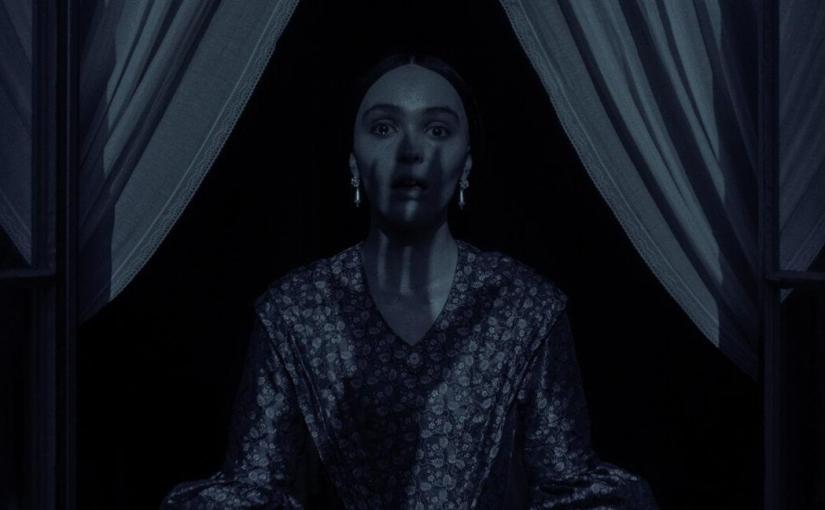
Movies about death are a dime a dozen.  Movies about “Death” with a capital D, as a character, are a bit rarer, and for a movie to make its mark in this subgenre, the personification of Death incarnate must be something interesting or unusual.  Terry Gilliam’s The Adventures of Baron Munchausen portrayed Death in the expected way, a skeletal figure cloaked in black and carrying a scythe, but it could also disguise itself.  Meet Joe Black dressed Death in a tux and gave it Brad Pitt’s face and body – perhaps unlikely, but good for ticket sales.  And in the most famous movie version of Death, it was a pale man in black who played chess with Max von Sydow in Ingmar Bergman’s uber-classic, The Seventh Seal.

But no movie that I’ve ever seen has ever approached the character of Death itself the way Tuesday does.  In this film, Death is a bird.  A parrot with dirty gray feathers.  A parrot that can change size at will, sometimes as tall as a house, sometimes as tiny as a toad (or smaller), and sometimes just parrot-sized.  And, as we eventually discover, it can talk and mimic voices.

Tuesday looks and feels like an early Spike Jonze film, back in the days of Being John Malkovich and Adaptation.  It is filled with imagination and unexpected plot turns and laden with meaning, but it never feels pretentious or preachy.  It tells a familiar story – we must make peace with Death one way or the other – but the uniqueness of Death’s form and what happens after it reveals itself had me riveted for the entire running time of the film.

In this film, Tuesday is a 15-year-old girl (Lola Petticrew) who is dying of an unspecified disease that has relegated her to home-hospice care with an attentive, if slightly impersonal, nurse (Leah Harvey) and her mother, Zora (Julia Louis-Dreyfus, giving the performance of her career).  Zora has not seemed to get past the first stage of grief, denial.  She literally sneaks past Tuesday’s room so she can leave the house just as the nurse arrives, without having to speak to her.  Instead of going to work, Zora spends her day going to pawn shops and coffee shops and sleeping on park benches.

On one such day, Tuesday looks up and sees…this parrot.  The overall vibe of this parrot is hard to describe.  It looks beat up, it’s dingy, it’s blind in one eye, but there is a sense of menace to it.  Tuesday immediately intuits what the parrot is and why it’s there.  As it approaches her to perform its duty, Tuesday stops it by telling a joke.  (It’s the one about the cop who stops a guy who has twelve penguins in his car.)  The parrot takes it in and…laughs.  I’ve never been in the same room with a laughing psychotic, but I would imagine it would sound pretty much the same as when Death laughs.

And then the parrot opens its mouth and talks to Tuesday.  They have a conversation.  And suddenly Death seems to suffer some kind of panic attack, as the voices of all the creatures on Earth whose time has come assault Death’s ears.  Tuesday instinctively coaches it through a breathing exercise.  The voices go away.  She recommends a bath.  They bond.  She pages through a history book and gets Death’s commentary on dead historical figures.  Stalin: “An absolute prick!”  Jesus: “Oh, He LOVED irony.”  It mimics Jesus’ voice.  Whatever you think Jesus’ voice really sounded like, I promise you will be surprised.

Also, don’t get the idea that this is an all-out comedy because of the above dialogue.  Keep in mind that this is Death we’re talking about.  Death’s voice, when it speaks, is low, gravelly and menacing, even when it’s cracking jokes.  At one point, Tuesday plays an old song on her computer, and Death, being eternal, is familiar with it.  It even sings along and dances.  At least, as far as any parrot CAN dance.  Yet even in this moment of levity, there is still that sense of menace in the offing because of that brilliantly chosen voice, provided by an actor named Arinzé Kene, who is unknown to me, but if I ever see that he recorded an audiobook, I’m buying it.

This whole time, I’m watching the movie thinking to myself, WHERE is this GOING.  I was fascinated by this exceedingly odd couple.  The direction by first-timer Daina Oniunas-Pusic is just as assured and risky as anything by Spike Jonze or Sofia Coppola.  I was worried that it was going to veer off into a weird tangent where Death falls in love with Tuesday, but nothing like that happens.  Death knows its function, and so does Tuesday, so the problem now is how to deal with Tuesday’s mother, who is clearly not prepared to deal with Tuesday’s death, imminent or otherwise.

…and from here on out, I am going to give no more story specifics.  To say that I went into this movie cold is an understatement.  Trust me, the colder you are, the better it will be.  The ultimate message of the film, as I said, is not that far removed from any number of other films.  I would even compare it to the first Inside Out from Pixar, which demonstrated that sadness is an ultimately necessary part of becoming who we are.  Tuesday also uses a CG character (in the real world) to remind us that the only way to make peace with who we are is to make peace with where we’ll all be in 100 years.  The final words of the film are a call to action to everyone watching.

[Ed. Note: Tuesday is one of those so-called rarities, a completely original studio film, released in movie theaters before heading to a streamer, that’s not a sequel or insanely high-budget.  It’s intelligent, compelling, and non-stop surprising.  And it had absolutely zero publicity, at least in my area.  I saw no trailers, no posters, no internet hype.  According to boxofficemojo.com, it has grossed a little over $320,000 since its domestic release on June 7th.  Not exactly setting attendance records.  If you’re interested in seeing it in theaters, I’d say your window is extremely limited at this point.]

THE FRIENDS OF EDDIE COYLE (1973)

by Miguel E. Rodriguez

DIRECTOR: Peter Yates
CAST: Robert Mitchum, Peter Boyle, Richard Jordan, Steven Keats, Alex Rocco
MY RATING: 9/10
ROTTEN TOMATOMETER: 98% Certified Fresh

PLOT: After his most recent arrest has him looking at a long prison sentence for repeat offenses, an aging Boston gangster must decide whether or not to snitch on his friends to avoid jail time.


When scrolling through movie titles online or on your favorite streaming service, you might be forgiven for thinking that a 1973 movie with a title like The Friends of Eddie Coyle is a dialogue-driven character study by John Sayles or John Schlesinger, about a group of friends gathered at a hunting cottage or a class reunion or something.  Imagine my surprise when I watched it, and it turned out to be a nearly-forgotten gem of early ‘70s crime films.  (I’d call it a neo-noir, but it was released over fifty years ago now, so I’m not sure the term “neo” applies anymore.)  Featuring spare, economical storytelling reminiscent of other crime classics like Rififi [1955] or The Killing [1956], The Friends of Eddie Coyle is indeed a character study, but one that manages to downplay even Robert Mitchum’s heroic persona.

Eddie Coyle is getting old, and he knows it.  He’s currently facing up to 5 years in jail when he goes in front of a judge in a few days, but his old associates still rely on him to obtain “clean” firearms to use in pulling bank robberies.  The first time we see him doing this thankless job, he tells his cocky young supplier a story about why he has extra knuckles on his left hand, a speech that might have been written by a multiverse version of Quentin Tarantino.  (In fact, the bank robberies are accomplished when Eddie’s friends hold the bank manager’s family members hostage, so he’ll open the vault without question, a method paraphrased by “Pumpkin” in the opening scene of Pulp Fiction.)  Mitchum delivers this mini-logue with his trademark brand of world-weariness and menace, leading us to believe at the outset that he’s a man not to be trifled with, when in fact he’s little more than a glorified gofer for his bosses.

The film oozes a 1970’s atmosphere in every frame, but somehow it doesn’t feel all that dated.  There are no long zooms or extended chase sequences.  The most suspenseful scenes are the two bank robberies and one aborted car chase that is over as soon as it starts.  (I actually thought that was pretty clever, subverting our expectations by ending the chase after about fifteen seconds; this method was also put to good use in 2003’s not-as-bad-as-you-think S.W.A.T.)  The dialogue feels more modern, laced with f-words and racial epithets that, again, feel more at home in a Q.T. film than in a Robert Mitchum movie.  For my money, there may be a few movie-watching experiences that can top hearing Robert Mitchum telling someone to go f— himself, but I can’t think of what they are right now.

Director Peter Yates (Bullitt, Breaking Away) never once strains for effect, never showboats.  Like John Huston’s The Asphalt Jungle, it is content to merely set the stage and observe what happens, letting the events and the characters drive the plot instead of contrived action scenes or fancy camera movements.  Instead of becoming bored, I was drawn into Eddie’s dilemma, his conflict between loyalty to his so-called friends and his desire to stay out of prison.  Complicating matters is the fact he has a wife and three school-age kids; they all live in a tiny townhouse where you can touch both walls of the kitchen with your arms outstretched.  This is a wrinkle uncommon in most gangster films, where the heavies lead unattached lives.

When Eddie approaches a federal agent (Richard Jordan) and asks if the New Hampshire judge will look favorably on Eddie’s sentencing if he agrees to squeal on his gunrunner friend, I felt a little sorry for him, and that’s a neat trick.  Because of Mitchum’s presence, you almost automatically want to root for him to do the right thing, but because of the character he’s playing so well, I just got the feeling that things were not going to end well for him, and I was right.  After getting a taste of what Eddie has to offer in terms of high-profile arrests, the federal agent leaves him dangling, telling him the judge will keep him out of jail if he keeps ratting on his buddies.  Poor Eddie is in an impossible situation, and the irony is, when he finally makes his decision, it’s already too late…but I don’t want to spoil anything.  It’s a brilliant catch-22 that left me feeling even sorrier for Eddie than I did before.

The whole movie is like that.  We’re shown right up front that Eddie is a criminal.  But the hands-off filmmaking approach allows the viewer to make up his own mind.  You could, I suppose, watch this movie in one of two mindsets: either you empathize right away with Eddie and his predicament, or you can take him at face value and watch the movie waiting to see if he gets what’s coming to him, both for being a crook AND for squealing on his friends.  Either way, I think the movie’s resolution satisfies both interpretations, which is not an easy task.

If you sit down to watch The Friends of Eddie Coyle, just remember that it’s not The French Connection or Heat or anything splashy or flashy.  It’s a grim, gritty crime drama with a bona fide legend playing a petty thug instead of a crime lord.  Mitchum fits the bill, and the movie fits Mitchum.  The Boston environments – all shot 100% on location – mirror the way Eddie walks and talks: gray, blank, tired.  Beneath that grimy coating, though, is a rather brilliant character study of a man whose life has brought him to a crossroads where he must decide what’s more important to him, his friends or his life.  (His decision kinda surprised me, I’ll be honest.)