MYSTIC RIVER

By Marc S. Sanders

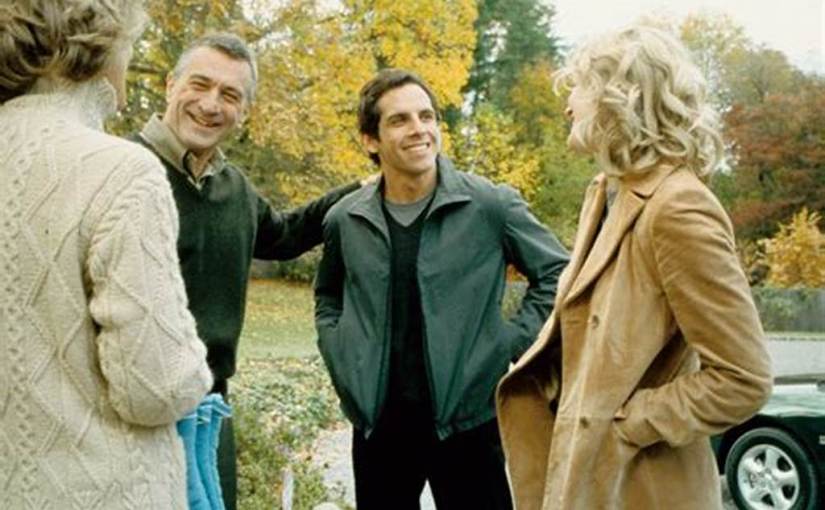
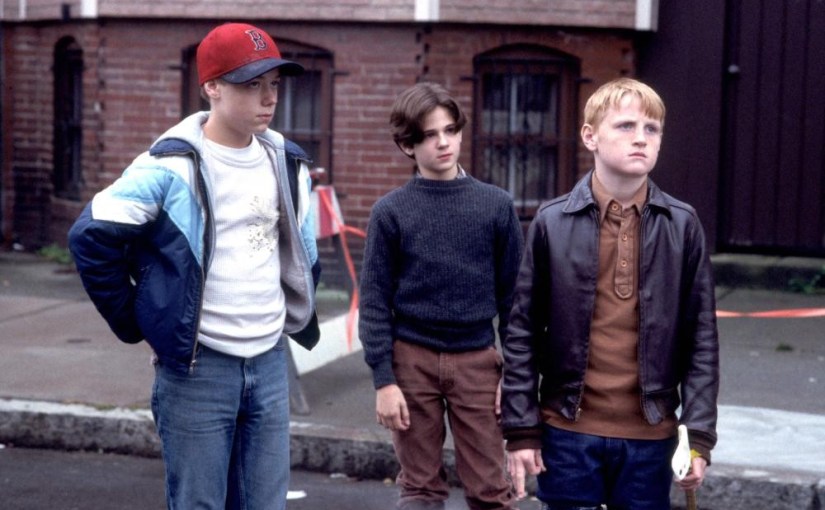
Two crimes, thirty years apart, pave the destiny for three childhood friends during their adulthood, while residing in the same Irish neighborhood of Boston.  Sean Penn is Jimmy, a former criminal.  Kevin Bacon is Sean, a police detective.  Tim Robbins is Davey, who was held captive and molested for four days following an afternoon when the guys were playing street hockey together.  Naturally, Davey was never the same but over the course of events in Clint Eastwood’s psychological crime drama, Mystic River, we learn that Jimmy and Sean likely changed too.

Jimmy’s daughter, Katie (Emmy Rossum), is found brutally murdered following an evening of bar hopping with girlfriends.  Sean and his partner Whitey (Laurence Fishburne) head up the investigation.  While the magnetic screenplay written by Brian Helgeland, based upon the novel by Dennis Lehane, relies on a who done it track, that seems to be less a priority as details unfold for the trio of men.  Jimmy and Davey’s wives (Laura Linney, Marcia Gay Harden) may be hiding some information.  A possible murder weapon invites some curious questions. There’s reason to question Katie’s boyfriend, and Davey’s odd behavior combined with his childhood trauma raises eyebrows as he was one of the last men to see Katie alive.

The less you know about Mystic River the better, but this engrossing cast which earned Oscars for Penn and Robbins, plus a nomination for Harden, is not the only stand out feature.  This film is one of Clint Eastwood’s best directing efforts; definitely one of my favorites.  

First, Eastwood hides many of his characters in dark shadows so the viewer never forgets that all these people have pasts they regret or would rather not resurface.  Sometimes, you hauntingly recognize the silhouettes of Sean Penn and Tim Robbins, each for different and unnerving reasons. Eastwood notably shoots himself this way often when he’s in front of his camera (Unforgiven, Sudden Impact, Million Dollar Baby).  It’s a brilliant photographic strategy that will make you fear or empathize with his flawed protagonists.

Second, Clint Eastwood shoots much of the Boston neighborhood with wide overhead shots in the daytime.  Interiors offer little light no matter the time of day.  Exteriors present the multi floor homes which are easy to see and showcase a labyrinth of crevices, yards and blocks where activity occurs.  

While the title of Lehane’s mystery is hardly spoken until a series of shocking revelations occur at the end, Eastwood ensures the setting of this Boston Irish populace is given much attention.  The more closely located these homes are up against one another, the less apt that any of the residents can truly see what’s going on under their nose.  These people live on top of each other with no room to spread out.  Their nearsightedness is practically blinding.

Furthermore, Eastwood composed the morose soundtrack for this piece. The director seems to speak to the audience because nothing good will likely arrive for any of these folks who grew up together like the generations before them.  Even a colorful Red Sox cap worn by Davey does not offer much cheer or Boston pride.  Eastwood’s musical compositions paint a modern-day setting encased in unimaginable heartache.  

Mystic River is not an easy film to watch.  Yet it’s not gory.  It’s not scary.  It’s the internal struggles of these characters that’s hard to imagine or observe. On the surface Lehane’s story seems reminiscent of most any other crime drama or Law & Order episode of the week.  The challenge is to watch these masterful performances, especially from Sean Penn, Tim Robbins and Marcia Gay Harden.  

We’ve seen moments where the father comes upon the crime scene of a murdered child.  However, Sean Penn delivers this staple with raw, unbearable heartache.  This actor invests his soul into the moment and reminds any one of us, whether we are a parent or child, of how wrenching it is to even imagine losing a loved one to senseless violence.  If I had to ever experience an episode like this, it might just take the entire police force to hold me down too.

Robbins and Harden are husband and wife, who get in over their heads when incidents of surprise occur.  Harden is especially ripped apart with what she knows and what she suspects.  Robbins embraces an inner child who has never outgrown a trauma that stubbornly stays attached to him, even if he’s a loving father.

As difficult as Mystic River is to watch, I’ll return to it on repeat because this cast and crew are at the top of their game.  Dennis Lehane has written other Boston crime stories (Gone Baby Gone with the film adaptation directed by Ben Affleck), particularly involving children, and he recycles his characters for future tales.  To my knowledge, I do not believe he’s ever written a sequel to Mystic River, but I’d love to see what happens to these people after the events of this film unfolded.  

Everything is revealed in Mystic River, except what happens next and I’m dying to know.  

HOOSIERS

By Marc S. Sanders

Hoosiers is a sports film offering nothing truly new or inventive.  What sets it apart though is that this high school basketball picture has Gene Hackman as the coach, Norman Dale.

Like so many films, this one occupies its opening credits with the cross country drive of the outsider arriving in small town USA with Jerry Goldsmith’s orchestral horns conducting the journey.  Welcome to the sweeping farmlands of Hickory, Indiana, 1951.  

Coach Dale has been hired by the local high school to lead the team of seven boys for the upcoming season.  Everything typical happens from there.  The potential love interest gives the guy the cold shoulder.  The town, who take such pride in the boys basketball team, find the coach unfit and work the first half of the story trying to vote him out. There’s the one kid who makes every shot and is stand offish, but just won’t play.    There’s a player who has strife with his father, the town drunk called Shooter (Dennis Hopper).  Coach gets kicked out of the games too.  Even Hackman’s recognizable short fits are here to stir it up with the referees.

Yet, is this team gonna get in shape and take it all the way to the championship?  I’ll let you decide if that’s rhetorical question.  

I dunno.  Maybe it’s because I’ve never been wild about basketball that Hoosiers just didn’t do much for me.  A film like Hoop Dreams or even the actor/players shown here impress me with their abilities to make one jump shot after another, while their capabilities to dribble appear like artistic forms of dancing.  The game however has never done much for me.  A team scores and then they go to other side the court where the other team scores.  For me, only the last few seconds of a basketball game seem important.  Otherwise, it’s a back-and-forth scrimmage to me.  Hoop Dreams lends more of a story within its tragic documentary footage than Hoosiers provides.

When I observe the team making plays on the court, there’s not much to open my eyes wider.  David Anspaugh was a new director when this movie was released. Much of the cuts within his footage are the players jumping and passing and Hackman’s sideline expressions where he slaps his play sheet before another cut to the cheering or booing crowd.  This is nothing but action takes. Where are the shortcomings and triumphs that come with cinematic athleticism?

Even the final game does not work like a story.  It’s all just a collection of basketball players making shots.  It never worked for me because I hardly know any of the kids.  The star player, Jimmy, literally has three lines in the film.  I could never pick out which young man was Hopper’s son because most of the team members are given such little attention.  It’s only when a scene or two finally presents itself for the father and son that I connect the dots, but that’s resigned for a quick last act.  The one I could always pick out was the short guy who is not very good and mostly sits on the bench.  The kid who prays too long?  Good gag, but when he’s not on one knee I don’t recall who he is among the crowd.  The players are not given distinct personalities. They are scarcely shown in close up and so I don’t know one from the other.  

Watch Teen Wolf with Michael J Fox.  Beyond the lead who is a werewolf, there are two or three others on the team that triumph, as well as faithful members of the school student body. Thus, that movie ending game becomes something entirely special and touching.

Gene Hackman is always an attraction even if some of the traits he lends to his characters are the same.  I love his grin and his quiet, sometimes sarcastic, cackle. When he throws a temper it’s not one that can be duplicated.  I’ve never seen someone who can do an exact impersonation of Gene Hackman.  He’s simply one of a kind. He’ll always be favorite actor of mine, no matter the material.

Dennis Hopper is very good as well.  He’s not just a drunk, but Shooter is a likable guy who looks worthy of a second chance.  Hopper’s body language defines all of that.  It’s not just the booze or the drying out moments that lend to the performance.  The celebrated actor is given scenes where the character is lost and helpless while trying to contribute moments of value to the basketball team.  Even the unpressed, oversized suit and greasy combover he wears tell a story.

Barbara Hershey seems underutilized.  For most of the film she proceeds with a scowl on her face, and I was never certain of her disdain for the Coach or the school where she teaches.  I could never confound exactly what her problem was anyway. At best, she’s here for an eventual on-screen kiss with the lead, but then the relationship doesn’t progress.  I read that much material went on the cutting room floor, and I can’t deny there’s an absence to her storyline.

Hoosiers is serviceable, but nothing it offers moved me and grabbed my attention.  This is a step by step sports film with every standard cliche included.  I didn’t stand up and cheer when that final shot swished through the basket in slow motion because I did that at the end of Rocky and The Karate Kid, and Teen Wolf too.  When The Bad News Bears ended I did a hard clap because those tykes had balls.  At the close of Slapshot, I couldn’t contain my laughter.  I couldn’t stop thinking about Hoop Dreams for good, long week. Other pictures focusing on athletics always possessed a way of making their stories special.  Hoosiers looks like it stole its play by play from those wunderkinds. 

TRIVIA: Look for Sheb Wooley, who portrays Hackman’s first assistant coach. He is the origin of the famous Wilhelm Scream uttered by Indiana Jones, several Stormtroopers and during the demise of various superhero villains.

MY COUSIN VINNY

By Marc S. Sanders

The American Bar Association’s publication, The ABA Journal, ranked My Cousin Vinny #3 on its list of the “25 Greatest Legal Movies.”  Surprised?  You really shouldn’t be.  

This “fish out of water” film follows a goodfella who did not pass the bar exam until his sixth try.  Now he’s defending his cousin and another UCLA college kid in an Alabama courtroom.  It’s Vinny’s first murder trial.  So he’s gotta learn the ropes of how to dress properly for court all the way up to discrediting material witnesses and demonstrating reasonable doubt to get his clients exonerated.  It’s a great courtroom picture because within the dense slapstick comedy there are authentic lessons to learn about being a member of the Bar and having confidence in yourself.

Bill and Stan (Ralph Macchio, Mitchell Whitfield) are roadtripping through southern America, en route to UCLA, when they get pulled over and framed for the murder of a convenience store clerk.  With no money or hope of retaining a reliable public defender, the young men turn to Bill’s cousin Vinny.  

Straight out of the five boroughs of New York wearing a black leather jacket, black boots and a slick pompadour, Vinny Mancini arrives in small town Alabama.  You know something?  If I didn’t know any better I’d say he looks and acts a lot like Joe Pesci.  With him is his long time fiancée, Mona Lisa Vito (Marisa Tomei, in her very well remembered Oscar winning role). Mona Lisa Vito!  I love when there’s some thought put into a character’s name.

The future looks grim for the accused as Vinny doesn’t know where to begin.  The iron horse Judge Chamberlain Haller (Fred Gwynne) habitually holds the guy in contempt because Vinny can’t shed his New York ways either in wardrobe or proper decorum. The prosecutor played by Lane Smith really doesn’t have to try hard at all.  Though he deliberately gets all Southern showy each time he faces the jury, made up of friendly locals.  In an unexpected and tender moment, the tough guy, Vinny, admits to Lisa that he’s “a-scared.”

I never cared for My Cousin Vinny since I had seen it in theaters.  However, there’s much I appreciated on only my second viewing of this film directed by Jonathan Lynn, an actual law scholar.  Lynn is always striving for an authenticity within the courtroom.  His protagonist might not know anything about being a litigator, but the director ensures that a genuine regiment of customary courtroom behavior, procedure, and theatrics will be upheld even if this is only a silly, little comedy flick.  

Outside the courtroom, there’s primarily an updated George and Gracie situational comedy at play.  Marisa Tomei is of cinema’s great scene stealers.  Mona Lisa Vito might look like an overly familiar character, but the actress’ performance is entirely unique.  She never plays Lisa as a dumb side character to her boyfriend who will not commit to marriage.  Lisa comes off generous, always offering to assist Vinny despite his rejections.  She’s also positively smart as a whip with her extensive knowledge of automotive repairs, and she’s a quick study of Alabama law.  When she gets put on the witness stand it hardly matters what she’s saying.  Marisa Tomei owns the expertise and defiance of Lisa.  Turn the scene on mute to watch her doing some of her best work would be equally effective.

Go look at Silver Linings Playbook when Jennifer Lawrence rhythmically dictates numeric football statistics at Robert DeNiro.  Both actresses won Oscars for these respective roles.  These performances stand apart from so many other second, third and fourth billed actresses because they are written with immense intelligence.  That’s what Tomei and Lawrence normally embrace first, ahead of costume and makeup.  The confidence from these actors is uncanny.  More women need to be cast in roles like these.  

Joe Pesci is doing his reliable, familiar schtick from Goodfellas, Raging Bull and Easy Money.  He’s in a what if scenario though.  What if there’s a movie with Jersey Boy Joe Pesci, but he’s put in Alabama country with roosters crowing and trains chugging into town at five in the morning? There can even be a communication gap between the Judge and Vinny for some padded laughs.  “What is a yoot?”

I was bored with this movie the first time I saw it.  I just didn’t think the humor was funny even if I recognized the attempts.  Over thirty years later, what I appreciate is the heart that feels much more apparent.  The hero feels weak and at a loss.  Only when he is given strength and support from a wisecracking, sexually frustrated girlfriend does he get the drive to behave like a lawyer he’s licensed to become.  I like Vinny.  I like Lisa.  Therefore, now I can laugh at their unfortunate dilemmas as they work towards an end goal – getting him to do his best at becoming a courtroom lawyer and hopefully reaching a not guilty verdict. 

I gotta give a shout out to the supporting cast.  Bruce McGill plays a familiar sheriff that we’ve seen before, but so what.  It’s the way he carries himself that I’m always welcome to see him in a movie.  Same goes for Lane Smith.  These guys are sophisticated Dukes Of Hazzard.  Fred Gwynne, most famously known as Herman Munster, was always a brilliant character actor.  He has the ability to be goofy and intimidating all in the same scene.  To place his towering stature against little Joe Pesci? Who needs dialogue? Watch Fred Gwynne’s moments in My Cousin Vinny.  He could’ve been Oscar nominated, and I would not have complained.  While Ralph Macchio is doing his typical routines (same things we saw in The Karate Kid, The Outsiders and so on), it’s Mitchell Whitfield playing his buddy who really stands out.  This is a nothing role but it’s as if this guy fell out of a Woody Allen or Neil Simon picture to claim his own territory among an outstanding cast.

My Cousin Vinny is one of those comfort films to put on when the stress is becoming too much in real life.  Everyone is so likable here.  There isn’t a villain to dual against.  Instead, it’s a conflict of cultures who must work together to uncover truths within a murder trial while also learning about what any one of us is actually capable of accomplishing. 

Vinny from da Bronx is a lawya???? 

FUGGETABOUTIT!!!!!

FALL

By Marc S. Sanders

Sometimes a movie will simply cover a circumstance.  The crew of Apollo 13 end up lost in space.  James Franco gets trapped behind a rock for 127 Hours.  Chrissy Watkins and Alex Kintner wind up abandoned in shark infested Open Water.  I recall Ryan Reynolds being buried alive in a coffin for ninety minutes.  Haven’t seen that one yet.  Not interested, honestly.  

Any of you curious to see what happens when two expert rock climbers neither of whom wear safety gloves, while one wears Converse All Star high tops, (Pass the grain of salt, please!) opt to climb a rusty 2,049-foot-high television antenna and get stuck at the top?  That’s about all there is to Fall, directed by Scott Mann.  

Granted, there is a thin slice of characterization layered on the crust.  Becky (Grace Caroline Currey) is severely depressed and maybe suicidal following a rock-climbing accident that took her beloved husband Dan (Mason Gooding) away from her.  Fifty-one weeks later, she still defies her father’s (Jeffrey Dean Morgan) pleas to help her.  Yet, her best friend Hunter (Virginia Gardner) urges Becky to accompany her while she records their climb up the infamous B-67 TV Tower, located in the Mojave Desert.  Hunter’s thousands of online followers will be in awe!

Subtle beats of conversation show that Hunter may be hiding a secret from Becky.  Frankly, if you’ve at least read a Dr. Seuss book, you’ll be much more intuitive than Becky, and know what the secret is.  So why should I waste the keystrokes spelling it out for you?

The climb up is pretty unchallenging as the young ladies are tethered together by about fifty feet of climbing rope.  The photography will dazzle you though. They’ve got their cell phones and a drone for some masterful sights of the wide expanse of desert and unlimited blue sky.  One water bottle between the two should be enough. The vultures are nothing to worry about as they are feasting on a near dead coyote down below.  Only thing is that we know something the girls don’t.  As the ascent gets higher into the upwards void, the frailer the rusted ladder becomes, and the more bolts and beams pop off.  You can guess what happens next and follow the film all the way down to its end.

What saves Fall from being a waste of time is Scott Mann’s use of his camera.  IMDb states that he insisted on not doing green screen work.  If he was going to be this daring, the climb up and the need for the ladies to hold out on a grilled, narrow platform high above had to be as authentically real as possible.  Mann’s team built a duplicate antenna on the top of a high mountain location, that reached as close to the structure’s actual height as possible.  So, the height matches that of the real structure.  The recreated antenna was apparently shorter though.  Hey, I was convinced of everything I was looking at from a scorching sun to heavy breezes to sunburns and running mascara and the eventual exhaustion, fear and despair the girls had to endure while trying to survive close falls and drops.  

The edits will make shout and gasp as one of the girls slips or barely holds on to a bar or rope or hand that could give way.  It’s not as impressive as some of the material in Cliffhanger.  Remember that opening?  The enormity of the elevation also does not compare to what Robert Zemeckis did across the open chasm between the World Trade Center Towers either (The Walk).  However, there’s much to look at and take in with a strong sense of vertigo and shortness of breath.

Becky and Hunter’s dilemma left me with trying to figure how they’ll get out this scenario.  You account for what they climbed up with and what might be at the top of the pole for them to use.  You also consider the injuries they suffer when they attempt a risk at gaining an advantage.  Most of what is tried seems apparent.  Though I question their short cut knowledge for charging a cell phone or drone battery.  

I was skeptical of their plight as well.  Expert climbers would wear gloves while climbing a rock or an old rusty two thousand foot high ladder.  Converse sneakers with no tread on the soles? C’mon!  As well, this giant, narrow thing is erect in the middle of the scorching, desert sun.  These girls ever experience going down an aluminum playground slide?  My hands were burning just looking at every rickety piece of this thing.  How did Becky and Hunter avoid painful skin tears and callouses? How did they not have any sort of involuntary reflex against touching what should be burning hot, rusted metal?

Despite the unnecessary, or maybe neglected liberties, the film takes, Fall is watchable. Just take your bathroom breaks during the two “it’s only a nightmare” scenes that look lifted straight out of Jaws: The Revenge. When will filmmakers realize how stupid and unnecessary an “it’s only a nightmare” scene is? The only time it worked was in Aliens. Beyond that, this stale uncreative kind of filler is there simply to muster a jump scare that does not advance a character or teeter a plot. Just stop with the nonsense.

Fall offers a situation I never want to end up in.  I’ve actually developed a fear of heights as I’ve gotten older.  Yet, I’d love to observe from the safety of my home theater how others like Becky and Hunter respond.  The ending is acceptable with a mild twist.  I think I would have embraced this fictional circumstance much more had the story been more frank with itself and the characters who were selected to play this foolhardy game.

One thing I’ve learned though. Nursery rhymes will not help you get your mind off the heights. Thing about what happened to Humpty Dumpty, or if we all play Ring Around The Rosie. Yikes!!!!!!!

AMERICAN BEAUTY

By Marc S. Sanders

Lester Burnham declares in less than a year he’ll be dead.  When we meet him, he’s masturbating in the shower, sleeping in the back of the family vehicle on the way to work, and declaring that his wife Carolyn used to be lovely.  Heck, he’s acting like he’s dead already.  His life has nothing new or exciting to pursue.  His daughter, Jane, doesn’t give him the time of day.  He’s threatened with being laid off from his magazine call center job that he’s held on to for nearly twenty-five years.  What’s to live for anymore? 

I guess what’s complimentary about poor Lester is that at least he’s honest with himself.  All the other neighbors, except for the gay couple known as Jim & Jim, are just as unhappy it seems and might as well be dead too.  A common theme running through the suburban landscape of American Beauty centers on a sense of mental awakening. Who revives sad, lost folks like Lester and Carolyn?  Perhaps it’s the generation sneaking up behind them, who are on the cusp of taking their place in young adulthood. 

Lester is played by Kevin Spacey, in his second Oscar winning performance.  Carolyn is portrayed by Annette Bening who is way overdue for a trophy.  Jane the daughter is played by Thora Birch.  The headliners of this cast are outstanding in how different and disagreeable they portray a broken family that is forced to live in an unstimulating home while trudging through a lifeless marriage.  Look at the set designs within this film.  There’s an endless amount of blank walls within the interiors of the homes.  Almost no artwork or pictures are to be found. 

Lester pines and fantasizes about Jane’s best friend Angela (Mena Suvari) getting rained on with red rose petals while she lies naked in a pure white bathtub.  Carolyn, the real estate agent who can’t make a sale, sidles up to the dashing Buddy Kane (Peter Gallagher), her competition. Next door is Chris Cooper in a hospital cornered role as retired Marine Colonel Frank Fitts, with his near comatose wife Barbara played by Allison Janey, and their eighteen-year-old resourceful drug dealing son, Ricky (Wes Bentley). He takes advantage of his camcorder at any opportunity to collect the beautiful images found within the world he occupies and observes.  That could mean he’s capturing Jane in her bedroom window which faces his own.  Later, he’ll show you the freedom of a plastic shopping bag dancing within an autumn breeze.  An old shopping bag has more life among a breeze and brown leaves than Lester, Carolyn, Frank or Barbara.

There is a mystery to American Beauty that seems quite odd.  We know that Lester will die soon, but how and why? Maybe there’s a twist, because that outcome seems more and more impossible as we see Lester discover a spirited mindset to go after what he wants, when he wants and declare that he’s not going to allow himself to take shit from anyone particularly in his boring dead end job or from his unaffectionate wife.  Ricky, the kid with tons of money and electronics equipment, has nothing to lose because he’s not committed to anything at age eighteen and he can just quit an ordinary table-waiting job at any given moment.  Why didn’t Lester have the gumption to ever be like Ricky?   It seems so simple.

There’s a blink and miss it sign hidden in plain sight.  Pinned to the wall of Lester’s work cubicle is the message “Look Closer.”  Director Sam Mendes and writer Alan Ball gives the audience a subtle wink to dig within the cracks of suburban life sidewalks.  These homes may appear perfect on the outside, with neighborly neighbors, but if you watch with a more critical eye you’ll find an emptiness that has been unfilled for too long.  The filmmakers make it easy for you to uncover what eats away at the upper middle-class way of living.  Dinner with Lawrence Welk playing in the background is anything but uplifting.  It’s imprisoning.

When one member of this community opts to seize his moment, no matter if he’s motivated by a kid’s rebelliousness and the drugs he buys off of him, or the fact that he thinks a beautiful teenage blonde has the hots for him, he sets out to change.  He exercises and builds up his body, buys the dream sports car he’s always wanted, quits his job and grows to not caring how this may disturb his unloving wife. 

American Beauty seems to remind us how alive we can be when we are younger and not as restrained by the commitments it takes to live like adults with debts and parenthood and jobs and marriage.  Look closer though because couldn’t we live as well or more aggressively when middle age arrives?

The irony of Alan Ball’s script is that a boring guy like Lester Burnham discovers exciting things about himself just as the end of his life is approaching.  All he needed was stimulation.  He never saw his death coming, and you might forget he told you he will soon be dead, but American Beauty works to show how necessary it is to live each day to the fullest. 

I sound hokey.  I know.  Yet, that’s the direction of this film’s trajectory.  On the side, you observe those people who do not pursue what will fulfill their own lives and desperately need a modification.  Lester was limited to branch out. So is Colonel Fitts and his very sad wife.  So is Carolyn, and Jane and Angela, and maybe so is Ricky.  All of these people uphold facades about themselves to preserve a happiness on the outside when they really feel worse within. 

Sam Mendes is brilliant at drawing upon the subtle messages and insecurities of Alan Ball’s neighborhood characters.   About the only people that Sam and Alan do not dig deeper with is the gay couple.  I guess since they are happily out of the closet, what is left for them to conceal?

I could not help but compare Mendes’ Oscar winning film to Robert Redford’s.  American Beauty is more forthright than Ordinary People. Redford’s film draws out the ugly honesty of the family nucleus when an unexpected tragedy interferes.  Then it takes the entire film before the spouses take off their masks and truly declare how they regard each other.  It’s crushing to realize a sad truth. 

American Beauty rips off the layer right at the beginning, though.  A tragedy does not awaken these people to the natures that embarrass them.  Simply a hellbent, fed up mindset gets one guy going, and if that one member opens his eyes, then so will others because a simple disruption in ordinary life is next to impossible to live with.  Both films are so wise in how they criticize the very people these films were likely catered for.

What do these two Oscar winners say?  They tell the middle class, middle age American to simply look closer.

M*A*S*H

By Marc S. Sanders

Forgive me.  I’m not sure my position on Robert Altman’s film will be fair.  All my life, I think I deliberately eluded seeing the motion picture of M*A*S*H as I have been so accustomed to the classic television show that ran for eleven seasons on CBS.  As I expected the two properties couldn’t be further apart from one another.

Altman’s movie still carries a zippy kind of perspective to the horrors of war.  With their hands and surgical scrubs in the thick of gory, blood red surgery, the characters are so much more apathetic to the turnaround of wounded that arrive at the 4077th American mobile army hospital, located three miles from the explosive front lines of the bloody Korean War.  The well-known characters were first given live action roles here following the published novel by Richard Hooker.  

Most surprising is near the end of the film when two doctors realize they are being sent home. One surgeon who is in the midst of operating on a head injury actually instructs a colleague to take over.  This guy has his hands covered in brains and blood and chooses not to finish saving his patient’s life.  Alan Alda of the television show, as a writer, director or while portraying Hawkeye Pierce, would never respond in such a manner. Yet, this is the approach that Robert Altman chose to follow, having infamously always despised the TV series that eclipsed his film in popularity.

Altman’s movie is a slap in the face to the famed oxymoron called “military intelligence.” In 1970, we say bravo for finally saying something frank and honest while a Vietnam War has carried on far too long for not necessarily any of the right reasons.  It’s not so simple to declare war is hell.  It’s much more complicated and horrifying than that.

The film’s opening bylines are quotes by celebrated military leaders of the time, like MacArthur and Eisenhower.  However, these championed commanders are lampooned as we watch shlubby Hawkeye Pierce (Donald Sutherland) arriving in Korea.  He heads directly towards a General’s jeep and steals it, plain as day.  From there on, M*A*S*H operates like a precursor to Animal House with a series of hijinks and a lack of care for military leadership or the U.S.’s purpose in this conflict.  

About the only time, there is any care or forthright anger from anyone is when the jerky Major Frank Burns (Robert Duvall) chastises an underling.  Trapper (Elliot Gould) and Hawkeye punch his lights out and the schmuck ends up in a straightjacket.  Nonetheless, these guys could care less about criticizing and exposing the truth about the institution they have been drafted to serve.  Their purpose is not to make an ironic statement like a Doonesbury comic strip.  They just punch the commanding officer in the face and drink.  The TV show was at its strongest when it relied on the wit and delivery.  Trapper and Hawkeye never use irony or intelligence to belittle a buffoon.  They punch, or they embarrass an authority who’s taking a shower. Regretfully, it’s the dialogue that’s lacking. Robert Altman encouraged much improv on the set and overlayered conversations within his scenes. He found nothing organized or neat and pretty about war, including daily functioning. Chaos did not only reign on a battlefield.

The pace of M*A*S*H moves episodically, and it is likely what led to the idea of a half hour TV show that dominated the airwaves for the better part of eleven years.  A character called Painless contemplates suicide and so a Last Supper reenactment before he sends himself off is inserted. It’s a funny caption from these halfwits, but a storyline focused on deliberately ending a life does not connect with me in a humorous way here. Burt Reynolds, the dark comedy Heathers, and even more recently Tom Hanks toed the line of humor to be found in death by suicide. I think it worked better in those examples. With the somber, well known theme song of “Suicide Is Painless” that is forever linked with M*A*S*H, I just could not muster the laughs for this bit.

There’s also time to build comedy against another regular army brat like Major “Hot Lips” Houlihan (Sally Kellerman, also the best and most memorable of the cast).  The iterations of shower hijinks has been duplicated so often since the release of this picture. Therefore, this gag is dried up. It does not hold its impact fifty years later after dozens Porky’s movies. As well, there’s golfing off the helicopter pad, heavy drinking and a long, drawn-out final act of an overstayed football competition which leads to one of the first times the F-word was used in a mainstream American film.  

In 1970, Robert Altman delivered a bold, risky and daring film to counteract against a losing Vietnam War and the heroism of John Wayne’s bravado in war pictures.  The chutzpah to lash out against American politics likely felt relatable to many who saw different and more realistic images when they understood their young sons and daughters were not coming home and were thus forever changed.  Richard Hooker’s properties and stories lent an understanding to the animosity of those who forced the war on America’s children and loved ones.  War has never been consistent with the short film propaganda asking you to buy war bonds. M*A*S*H negated the heroism of Hollywood sensationalism found in machine gun fare and overtaking a hill while draped in green fatigues with shiny bronze ammunition hanging off their shoulders. These soldiers of war deserve our country’s utmost respect, but they did so much more than what John Wayne demonstrated. They offered up parts of themselves they would never get back.

M*A*S*H deliberately left out the heroes.  However, seeing the film for the first time, over fifty years later, I wish that at least we could follow the escapades of doctors who also directed a bed side manner to the pawns who were dying while upholding their leaders’ cause.  The doctors of Robert Altman’s interpretation hardly emulate a reason to care. 

The film interpretation of M*A*S*H is outdated of its time of release and the period in which it takes place.  I like to think we live more humanely than not just how our military leaders functioned.  I wished these physicians used their scalpels with a much less obtuse absence of empathy.  Hate the puppet masters, yes. Yet would it kill these guys to still care about the puppets? 

SING SING

By Marc S. Sanders

Coleman Domingo is that under the radar actor who is on his way to becoming a marquee name.  Of late, I’m loving everything he’s participating in. Check out the Netflix series The Madness and the acclaimed film Rustin for which he received a well-deserved Oscar nomination. His second Oscar nominated role in another of 2024’s best films, Sing Sing, is directed by Greg Kwedar.  As soon as this film begins, you will fall in love with Domingo’s role as he completes a stage performance in A Midsummer Night’s Dream.  However, the theatre that is bursting with applause is located within the infamous Sing Sing Maximum Security Prison.  Coleman Domingo portrays a resident here as wrongly imprisoned John “Divine G” Whitfield.

Divine G is a founder and one of a handful of prisoners who cope with their caged lifestyle as members of the Rehabilitation Through The Arts program (RTA).  Every six months, the RTA prepare a play to perform for the prison population and other local benefactors.  Their director is Brent (Paul Raci), a much smaller guy than anyone in the troupe, white, tattooed and on the tail end of a hippie middle age.  Yet, the men trust their leader and he is nothing but encouraging with theatre exercises to uphold their spirits and get everyone energized. 

A new member of the group does not appear to have much promise.  Clarence Maclin (played by Clarence Maclin) stems from a hard living street life of gang culture.  While he champions the suggestion of a comedy for the next production, he is nevertheless resistant to engage and perform as Hamlet with the famed To Be Or Not To Be monologue.  Divine G works to penetrate Clarence’s stubbornness and get him to recognize how the program can be beneficial and enriching.  Consider Divine a combination of Red and Andy from The Shawshank Redemption – a well-respected realist but also a teacher.  Divine even takes it upon himself to prepare Clarence for his upcoming parole hearing, while he’s getting himself ready, following new evidence that may exonerate him.

Brent collects ideas from all of the men who are enthused to stage ancient Egyptians, cowboys, pirates, Hamlet, and even Freddy Krueger.  Rather than pick one, Brent takes the weekend to write a 148-page script that has all of these elements.  The spine of the plot?  Time travel!  Makes sense, and as Clarence originally suggested, it most certainly is a comedy.

I read that Sing Sing is collectively owned by the cast and crew.  Many people who worked on this production play characterizations of themselves and use their actual names and prison monikers in the dramatization of this film.  They produced and wrote the screenplay, designed the characters based on themselves and their experiences, having been members of the RTA.  The auditions for the play you see in the film are the actual auditions the cast did to be part of the film. So, be ready to be impressed because these rehabilitated prisoners, now actors, are outstanding. 

Coleman Domingo in the leading role only makes the whole cast look even better.  He is absorbed in this environment.  B28, his assigned prison cell, looks like a sanctuary for the plays that he writes with inspiring and researched articles taped to his walls and a typewriter to click away on.  With his wise looking gold rimmed eyeglasses, he looks like a guy who knows every corner of every room, every chip on every wall, every blade of grass within the courtyards and auditoriums.  Divine G may not belong here, but he’s all the more familiar and depended upon by the men he resides with.  Partnered with Clarence Maclin, the two actors have duet scenes that work effectively with one relaxed in the comfort of hope and promise while the other is ready to give up on any kind of prosperity or semblance of a future.

Sing Sing is about the incarcerated men who put on plays to nurture the days of punishment they are sentenced to serve.  Yet, the actual film could also operate like a live stage play.  It has more of that feel than anything traditionally cinematic. These men converse and discuss like a committee seated in a circle while determining the next best thing for the program.  They are led by Brent in exercises that allow them to reflect on past moments in their respective histories.  They do the silly walks to shed insecurities that come with urging the brave face needed to perform in front of people.

An extra reward arrives during the end credits when personal cell phone footage shows clips of the various plays that have been produced among the prison population.  Everything from their inventive stage sets to their costumes and lighting along with their blocking is extraordinary.  To bring men who once lived among a world of violence towards the escape of theatrics seems unheard of.  I mean, really, a gang member can now perform Shakespeare? 

Films have the ability to show what’s unheard of and what’s daring. They are not just run of the mill Mission: Impossible movies with the wildest stunts imaginable.  A courageous feat also comes from the theatre. Sing Sing reveals the most unlikely people to accomplish what no one could ever envision they would relate to. 

Sing Sing is an inspiringly beautiful piece of performance work from every member of its cast, in addition to Oscar nominee Coleman Domingo.

SEPTEMBER 5

By Marc S. Sanders

September 5 is a sweeping account of how breaking news used to be assembled.  You had to be in the right place at the right time.  If you weren’t, then perhaps the sports department of your media conglomerate is, and they will get the story. 

The very first televised terrorist attack was broadcast at a sadly appropriate time.  The 1972 Olympics were being covered by the ABC television network.  For the first time, homes all across the world would be able to watch the games in color, from a satellite feed shared among the big three networks.  ABC had the broadcasting rights to the games though.  The setting is especially interesting to this story.  The Olympics are being hosted by Germany, primarily out of Munich.  This is an opportunity for the country to finally redeem itself, only twenty-seven years after World War II had come to an end and their country’s Nazi regime had been overthrown.  Germany had a lot to make up for.

The Sports Division of ABC news turn over in the wee hours of the morning of September 5.  Geoffrey Mason (John Magaro) slumps into the studio and relieves Roone Arlege (Peter Sarsgaard) following long hours of editing and covering competitions in swimming, volleyball, boxing, track and so on.  There’s minimal staff on shift as the athletes and coaches are asleep for the night, but then Geoffrey and crew believe they hear machine gun fire out of the direction of Olympic Park, and suddenly everyone is awakened and scrambling to put together the story fast. 

No other broadcasts are reporting on this alarming incident.  This is a story that comes at ABC Sports in their own time.  Had this happened today, amid an age of worldwide shrinkage with the existence of the internet, these guys would have been way behind.  In 1972 however, they can rely on Mariane Gebhardt (Leonie Benesch) a female German flunky of the sports division to translate the various radio communications between the terrorists and the German negotiators, and what plans are being put in place.  Nine Israeli athletes have been taken hostage in their hotel rooms with two believed to have already been killed.  The terrorists (believed to be a Palestinian militia group called Black September) demand that Israel release two hundred of their prisoners or they will kill a hostage every hour beginning at noon.

Forgive the cliché terminology, but September 5 is a taut, nail biting, documentary style thriller told only through the perspective of the ABC Sports division.  While the developments of the hostage situation feel urgent, for these unshaven guys in glasses and wrinkled shirts who are operating on little sleep and a lot of coffee, it is about getting the news out quickly and accurately, and just as importantly, first.  Geoffrey and Roone are constantly on the phones trying to learn whatever they can from Peter Jennings, the eventual famed ABC reporter, who is nearby the incident and at times hiding from the German police who are desperately trying to clear the area of the press.  The guys even send in a staff member with a smuggled camera and reels of film taped to his belly while he poses as an Olympic weightlifter.  The Germans forbid the press from trespassing but insist the games carry on.  So, the athletes and coaches are the only ones who can enter the area to prepare for competitions of the day.  Even Howard Cosell happens to be in a hotel staircase nearby and can provide feedback. 

In the news control room, the guys are literally putting walkie talkies next to microphones that broadcast live on air with Jim McKay who is behind the desk, talking to the world.  This is bare bones news broadcasting with unsophisticated technology to aid them in this short window of time.  The director of this film, Tim Fehlbaum, brilliantly captures the desperate inconveniences of reporting this way. 

Roone and Geoffrey also have to contend within their own ranks.  This is not a sports story.  This is a news story and so Roone must insist on keeping the story.  They are the only ones there.  How much more effective would a news division located on the other side of the world fare?  Therefore, Roone’s team are the only ones qualified to cover this developing story.  ABC News will not have access to this. 

Roone also has to improvise how the satellite feed is shared with their competitor, CBS Sports.  It’s a pain in the ass inconvenience and yet the resourcefulness and quick thinking of the control room staff find a way to uphold their claim on this story.

While watching this account, it matters little if we know the outcome of the September 5, 1972, Munich attack.  This film’s purpose is covering how the first few who knew about the situation responded. By the time the ninety-five-minute film is over a lot has been shared.  Tim Fehlbaum, with an Oscar nominated screenplay written by him along with Moritz Binder cover quite a bit.  The pace moves as fast as these people in the control had to move on that terrible day.  So, the information comes quick.  With real life archived ABC footage spliced within the film, you feel as if you are standing in the corner of this dark room with various tv screens, microphones, and telephones. 

You watch John Magaro feed information to Jim McKay, and then the picture cuts to real life footage of McKay at the desk.  It’s quite inventive how the script is accommodated to work in line with what Jennings, Cosell, McKay and others literally said as the crisis was being reported.

Having seen all ten Best Picture nominees for 2024, it is disappointing that September 5 did not make the cut.  Tim Fehlbaum’s picture certainly deserves more recognition and a slot over other contenders this year.  Still, the screenplay is a well-deserved accolade.  To interweave a fresh script that hinges on what was literally said on television screens around the world at that time is a marvelous strategy. 

September 5 is a crackling thriller of a terribly sad day.

NICKEL BOYS

By Marc S. Sanders

Colson Whitehead’s Pulitzer Prize winning novel, Nickel Boys, is now an Oscar nominated film for Best Picture and Best Screenplay. It is based on a true story that needed the exposure of a film.  However, a better adaptation than what director RaMell Moss did with it should have been completed. 

The Nickel School of Southern Georgia is the setting for a boys school where various forms of abuse took place during the civil rights era.  Apollo 8 was making new discoveries in space, but racial prejudice and crimes of adolescent abuse were not being revealed to a greater public.

Elwood (Ethan Herisse) is a bright student who has been accepted to a prestigious school for gifted learning.  Upon walking to his destination, on the outskirts of Atlanta, Elwood inadvertently gets blamed for a crime he did not commit and is sent to the Nickel Reform School.  The black students are relegated “to the other side of the nickel” in less favorable quarters than the white students. 

At the school, Elwood develops a friendship with Turner (Brandon Wilson) and together they do their best to survive the harsh challenges that go with living at Nickel.  Elwood remains positive that he will be able to leave the school one day and return to his loving grandmother Hattie (Aunjanue Ellis-Taylor).  Turner knows differently.  These boys are never leaving, and they will be compelled to obey the harsh tyranny of living at the school.

What helped me get through the near two and a half hour running time is that sadly this is an all too familiar story, especially for black youth.  The challenge though is the construction of the film.  RaMell Moss takes an unconventional approach where the viewer is the point of view of the two boys.  For about the first third of the picture, we are seeing what Elwood sees.  When he nods his head to the floor, the viewer sees the floor.  When he looks up to the sky, we look to the sky above him.  When he is listening or speaking to another person, like Turner or Hattie for example, that’s who we see.  The viewer is restricted to a forced tunnel vision of only what Elwood’s eyes focus on.  Frankly, as soon as the film began, I said to myself, “Oy.  Two and a half hours of this!”

Shortly after Elwood arrives at Nickel and sits down for breakfast, the perspective finally changes to Turner when the boys meet for the first time.  Now we get to see what Elwood looks like because we are looking through the eyes of Turner.  At this point, I told myself to either fall asleep, walk out or get accustomed to this different way of watching a movie.  I selected option number three and I’m glad I did because I started to become engrossed in the picture.  It’s compelling and absorbing. Granted I was still unsure of what this story was about as the film keeps the viewer very limited as to what is seen and told.  Arbitrary moments are shown through the eyes of the boys that do not necessarily progress the story.  These adolescent boys are not directly tormented as much as they are simply living in a captivity they do not fully understand.

A third person perspective is eventually put upon us.  We are watching the film at a different time, during an internet age, as we see a black man with dreadlock hair surfing the internet and pulling up articles about the Nickel Boys School that once existed.  I had an idea of who I was standing behind as he spoke with his girlfriend, but still I was not entirely sure, and other than an attempt at inventiveness, it puzzled me why the film veers occasionally into this direction.

Nickel Boys has an eye-opening story to tell but the experimental narrative of this picture does not entirely work.  It’s more frustrating than admirable.  RaMell Moss works with a very good cast of young actors who are focused on upholding the first-person perspective.  They are speaking the language of his camera.  Nevertheless, that doesn’t mean as a viewer that I like it.  These young actors deserve a more conventional means of telling this story.  I am confident they can handle that kind of direction just as well.

Nickel Boys ends with a mild twist.  While it might not have seemed necessary, and with Moss’ unusual approach I was not even sure what happened, it’s interesting for at least a beat.  However, to be sure I understood what occurred I turned to my resident Cinemaniac, Thomas Pahl, for assurance that I was accurate in what I think happened. 

I also took issue with RaMell Moss breaking his own rule of filmmaking.  The film limits itself to three different kinds of perspectives: a first-person view from either Elwood or Turner, and a third person sight from a character we meet in a more modern time.  Yet, for one concluding and significant moment that occurs near the end of this story, Moss changes his camera angle for a standard conventional approach.  Why do this?  Was Moss finally at the end of his rope and could not fathom how to demonstrate the story’s end unless he broke away from his own unique approach?  For me this shows the filmmaker could not stay consistent all the way through with the final cut of his picture.

Forgive the presumption, but I recall the Academy considering nominating films only if there is a minority representation contained somewhere within the finished edit.  I’m uncertain if that remains an unspoken rule or if it is set in stone.  Honestly, I think it’s simply considered with a lack of justified merit. 

I do not find Nickel Boys to be worthy of the best of 2024.  A handful of films that were not as recognized did not get the accolades this film received.  Is the picture being honored because it depicted a black experience?  I cannot help but wonder.  It is not a terrible film because there are parallel ideas happening alongside the main storyline and the cast is especially good.  Real life tragic stories are especially appealing to The Academy.  The direction of the piece takes away from much of the benefits of the film though. 

Garner up your patience with the limited view you will have watching Nickel Boys.  I also say this without sarcasm, maybe take a Dramamine.  When watching a production in a first-person narrative, often people are prone to motion sickness.  Surprisingly, it did not happen for me this time.  It should have because I cannot play updated video games that rely on this angle.  Yet, a friend had a different experience with Nickel Boys, and he said it took all his strength not to get up and exit the film.

IT HAPPENED ONE NIGHT

By Marc S. Sanders

If you want to stay on top of how the world of American cinema evolved over the last hundred years, within all its categories, you must find time to watch the one film that paved the way for the romantic comedy, as well as the travel comedy.  Frank Capra’s Oscar winning picture, It Happened One Night, is the first of three films to win Oscars for every major category: Best Picture, Director, Screenplay, Actor and Actress. Nearly a hundred years later, the accolades still feel worthy.

Claudette Colbert is wealthy heiress Ellie Andrews who dives off and swims away from the captivity of her father’s yacht and buses from Miami to New York to reunite with her new husband, King Westly (Jameson Thomas).  Her father, Alexander Andrews (Walter Connolly), never approved of this marriage and insists his spoiled daughter get it annulled once she is found.  A ten-thousand-dollar reward is up for grabs to the person who finds her.

Along the way, a rogue reporter, Peter Warne (Clark Gable) ends up next to this young lady on the bus.  Complications ensue where their money gets lost, bags are stolen, buses are missed, and buses get stuck.  Then this trip becomes a walking experience.  Ellie has agreed to stay by Peter’s side though.  He promises to get her to New York as long as he gets to write about her story firsthand amid the constant headlines that recount Alexander’s desperation to get his daughter back.

It’d be easy enough if only Peter and Ellie were not falling for one another.

Sounds familiar, doesn’t it?  Any Nora Ephron script has the elements of It Happened One Night.  Screwball comedies with Cary Grant and Katharine Hepburn seemed to follow a similar blueprint.  To the best of my knowledge, Frank Capra’s film was first though.  

A famous scene has Colbert and Gable on the side of the road trying to hitch a ride.  Colbert’s bare leg does the trick that Gable’s outstretched thumb could not.  Eventually, this scene for the ages evolved into Meg Ryan and Billy Crystal daring to fake an orgasm effectively while dining at Katz’s Delicatessen.

When Harry Met Sally… is what easily comes to mind while watching It Happened One Night.  Peter will tease this spoiled rich girl. Yet, he will also be gentlemanly enough to put up a blanket to divide a cabin room he shares with Ellie, allowing for some privacy.  In the middle of the night though, the two will stay up chatting from either side of their blanket wall, as both acknowledge sad voids within their personal lives.  It’s parallel to how Harry and Sally would chat on the phone from their respective apartment bedrooms while discussing their newly evolving friendship with Casablanca on TV.  

Ellie and Peter become relaxed as their sojourn continues.  They could be left in the middle of nowhere with no money or food, but Gable and Colbert’s chemistry show an easy comfort to each other.  That is what’s expected of any troubled travel film.  At first Ellie does not want to share a rear bench on the bus with Peter.  She’s married to King and the purpose of this runaway trip is to be back in her new husband’s arms.  Plus, this odd fellow on the bus feels unseemly.  His charm is overbearing to the socialite’s proper petiteness.  He’ll resort to munching on a carrot he finds in a patch. She can’t find the appetite for it. Time together breaks down barriers though, just as movies in later decades eventually accomplished with films like Midnight Run and Planes, Trains & Automobiles.  This kind of formula, with ongoing new settings and circumstances, is almost guaranteed to end in positivity once the mutual antagonism is behind the pair.  

For 1934, It Happened One Night was bold in its content, ahead of an eventual ratings system intent on upholding an acceptable level of conservatism.  Colbert’s leg is the most unforgettable.  Later, Peter feels it necessary to spank Ellie.  Then there is the fact that the two share a room together.  Comedic circumstances and shock lend to the humor of this scenario.  Plus, there’s Claudette Colbert undressing down to her slip while a bare-chested Clark Gable is only one side of a blanket away from her.  

Would It Happened One Night endure an endless admiration if moments like these were contained? I doubt it.  Frank Capra’s film hinges on sexual appeal that feels naughty and rebellious.  

The dialogue remains witty.  Clark Gable’s introduction in the film while on the phone with his editor is a precursor to what an outlandish Bill Murray might have done with the script. The material is sometimes quite brash, and the ending, which has been duplicated hundreds of times since, is a perfect example of romantic escapism.  

Over ninety years have passed but unexpected romance is what remains treasured.  When two people with nothing in common begin an unwelcome journey together, it’s still easy to hope they find a way to like each other.  They have to like one another first before they can even concern themselves with falling in love.  The progress of this east coast bus ride allows for the stages to develop naturally.  Frank Capra, Clark Gable and Claudette Colbert were the first to give it a shot and it works brilliantly and beautifully.