JOKER

By Marc S. Sanders

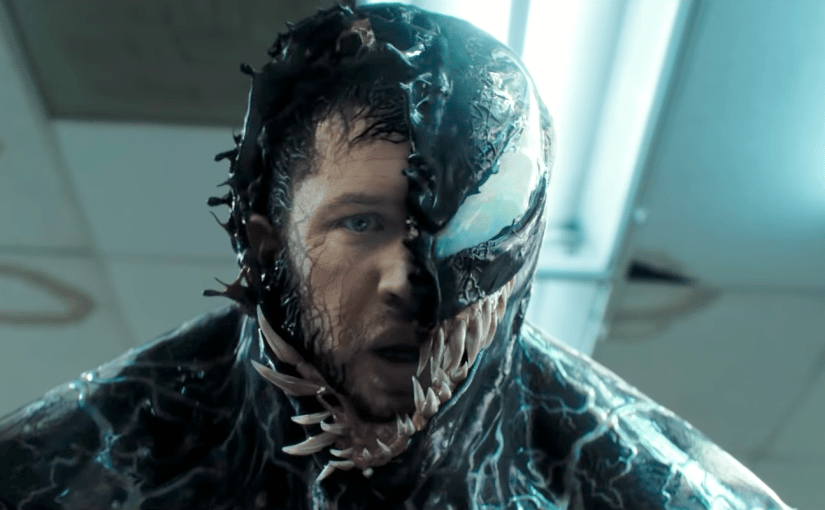
It’s important to understand first and foremost, Todd Phillips’ film Joker is really not a Batman story, a comic book story or even the derivative of a Batman comic book story.

Consider the Martin Scorsese pictures Taxi Driver and The King Of Comedy. Both films focus on two different characters descending into a variation of psychological madness. Yet the the titles of each film are pretty random, generic almost. Joaquin Phoenix plays wannabe comedian Arthur Fleck (to my knowledge never a DC comics character before this film) and this latest release from Warner Bros is billed as the origin of the Joker. Nevertheless, other than calling the setting Gotham City and having a billionaire character named Thomas Wayne with a son named Bruce, there is nary any calling to the mythos that fans are so familiar with. Why not just present this film with a title called “The Comedian” for example and run with it? Calling it Joker feels like a shameless cash grab. This is not a Batman villain tale, folks.

Joaquin Phoenix is astonishing in the lead role. He’s in every scene of the film and the method to own the character of Fleck is shown both physically and mentally. The known method actor must have lost at least 75 pounds to show weird, stretching contortions that easily shown his rib cage and pale complexion. Phillips films Phoenix at times where there is no dialogue either grimacing in a mirror, randomly dancing or simply leaning his head against a cold transit bus window. Surprise moments also come with head slamming against walls or glass doors. This was not all direction by Phillips. Phoenix had to have invented some of these instances.

Robert DeNiro is an obvious nod in casting as a Merv Griffin/Johnny Carson role meant to salute the Scorsese films of his heyday. When he was the man bordering on insanity, DeNiro performed with method material. Think back to when he’s Jake LaMotta in Raging Bull bashing his head against a wall while in solitary confinement.

While Joker certainly offers probably the best performance of the year in any category, it’s not a pleasant film to watch. It lacks any sense of wryness or humor. It’s a very depressing film about a man’s inevitable descent into madness. I couldn’t take my eyes off of Phoenix in the role, but like other comic book based films it didn’t leave me wanting more. I’m not eager for a continuation of this character.

If they wanted to a popular comic character story then I wish there could have been some more slight nods to the ingredients of this pop culture legacy. Couldn’t Arthur Fleck have been mugged by Oswald Cobblepot or sidled up alongside Mr. Zzazzz? How about a quick encounter with Selina Kyle or Edward Nygma? There’s just not enough evidence here for me to accept this is a Batman tale. Again Warner Bros banked on the title and not much else.

I got my money’s worth from Phoenix and I’m gunning for him to win the Oscar (not just nominated), but I can’t help but feel a little let down as well.

THE LAUNDROMAT

By Marc S. Sanders

Steven Soderbergh gets a little too inventive in his delivery of revealing “The Panama Papers,” in his new film The Laundromat now showing on Netflix.

His film is too convoluted deliberately to drive home the point of shell company, laundered fraud within the world. As such, it makes it very challenging to comprehend every point crammed into his short 90 minute film.

The two Panamanian attorneys behind the scheme, Mossack & Fonseca (played with great duet chemistry from Gary Oldman and Antonio Banderas) narrate the film by introducing different ways in which a shell company valued at everything on paper but tangibly nothing from an actual monetary standpoint.

Primarily, it focuses on Ellen Martin (Meryl Streep) a driven senior citizen who learns the truth of the plot when insurance does not compensate following the tragic accidental drowning of her husband on a boat tour.

Streep is brilliant as always. Such a natural with her monologues and her seemingly useless efforts to gain restitution for her loss.

The whole cast is excellent but the intentional confusion behind the story falls short of satisfying entertainment or enlightenment. I needed some moments where Soderbergh would give it to me straight. A diagram or a graph might have helped.

With The Laundromat Steven Soderbergh fails at becoming the next Jay Roach (The Big Short and Vice). Imagine if Roach actually got his hands on this script. Then there’d be a lot more buzz about this film. Oh well.

MALIFICENT: MISTRESS OF EVIL

By Marc S. Sanders

Maleficent: Mistress Of Evil has a strong cast and a serviceable approach for the sequel to Disney’s 2014 live action hit. Yet, the film falters anyway.

First, and this is always something that irks me, the sub title is completely inappropriate. (Like Star Wars: The Phantom Menace where the only menace was Jar Jar Binks, who was never my first choice to be a phantom.). The film carries a bait and switch title. Did the marketing department at the Happiest Place On Earth even watch the film? Angelina Jolie returns as the title character, still dressed in stereotypical evil black. However, the script penned by Linda Woolverton, Noah Harpster and Micah Fitzerman-Blue offer up an adoring struggle for her to keep up appearances. Never does the film imply that Maleficent returns to her evil impulses. Rather, she’s only characterized by Michelle Pfeiffer’s evil queen as such. So there’s a betrayal of advertising going on here.

The film directed by Jochaim Ronning is a Meet The Fockers variant. When Princess Aurora (Elle Fanning), who was unofficially adopted by Maleficent, gets engaged to the Prince, naturally the in laws have to become acquainted. As expected, dinner does not go very well and the King is spellbound, leaving Maleficent as the scapegoat forced into running underground where she meets up with her fellow fairy community ready to wage war against the human kingdom.

Pfeiffer’s queen uses this as an opportunity to convince the kingdom to wipe out the fairies. Yeah. You’ve heard this story a hundred times before.

I can forgive the redundancy of the storytelling. However, Rollins can’t get his film right. The cinematography is annoyingly murky in darkness and clouds and mist. Doesn’t matter if it’s the fairy kingdom, the castle or even the forest in daylight. Rollins serves up murky, dramatic effect for the sake of murky dramatic effect. It’s hardly visible. This film has Angelina Jolie and Michelle Pfeiffer. If I want to emit drama, I’m gonna rely on them to bring their game.

As well, and disappointingly, Jolie is hardly in the film, at least not enough to justify the title. Rather, Pfeiffer is here to chew up much of the scenes. There are long periods of storytelling where Jolie is nowhere to be seen. She actually doesn’t appear for at least the first 15 minutes. Again, like the title itself, the film under promises what it sells. I have no problem with Pfeiffer or Fanning. They’re really good. Yet, there’s just too many opportunities for them to exchange dialogue and threats, and not much else. Yes, you get to see the fairy kingdom, but they really are a miserable angry bunch for a family oriented film. The 3 fairies led by Imelda Staunton? Yup. They’re here…hardly though and they were the most fun of the last film. Maleficent’s sidekick, Diaval (Sam Riley) – the half man/raven? Well he’s only there when Maleficent is there (literal sidekick) and tell us he wishes he could be turned into a bear. What do you think happens? Incidentally, the CGI bear is nothing great, an uncolorful blur of roaring with a raven beak.

All of these elements present themselves but never follow through with any humor or fun or eye opening surprise. Instead we get a lot of Pfeiffer and Fanning.

The third act is straight out of Lord of the Rings with swords and shields and marching and charging. Meh. I was bored with all of this and the CGI of fairy flights and swoops looked blurry.

Clearly, Disney prioritized preparation of the film for IMAX and 3D. Can we let this go for a change, and just make a movie, please? It’s apparent, watching a 2D standard presentation of this film, where the 3D pops were to occur. Yet, it’s a lousy sacrifice for a simple view.

Maleficent: Mistress Of Evil is a shameless, opportune cash grab on Disney’s behalf. Crank out the sequel, prime it for 3D, get Jolie back for whatever time she’s available, and make sure to slap on a title that amps up the darkness that audiences relish and surefire goosebumps.

I like the story. The execution however fell very short however. No one will remember this sequel in a year from now.

ONCE UPON A TIME IN…HOLLYWOOD

By Marc S. Sanders

There’s no question the most different of Quentin Tarantino’s directorial efforts is his latest film, Once Upon A Time In… Hollywood. Already described as his “love letter to cinema of the late 60s,” his 9th effort also implies the end of the Hippie Era by devoting a portion of time to B movie actress Sharon Tate, infamously murdered by Charles Manson’s followers when she was 8 months pregnant with Roman Polanski’s child.

Margot Robbie plays a near, gorgeous exact replica of Tate. She’s deliberately short on dialogue and I like to believe it’s because Tarantino treasures her as an innocent angel who was loving the atmosphere of Hollywood. She’s preserved of being nothing but likable. She dances with glee in her bedroom in the Hills or in public at the Playboy Mansion. One day she visits the local cinema to see her performance in “The Wrecking Crew” with Dean Martin. Tarantino shoots close ups of Robbie loving her footage as a pratfall klutz while listening to the audience reaction. She’s loving every second of the experience. People love her and she sees the love she has for people. Critics took issue with Robbie’s lack of dialogue. Not me. The performance is all there. Robbie is wonderful to look at with responses of pure happiness and celebration.

The main focus of the film is on Rick Dalton played by Leonardo DiCaprio with a huge range of drama, comedy and well intentioned over acting when Tarantino is wanting to spoof the TV western for fun. We see a collection of Dalton’s work, most especially on the fictional black and white TV western that airs Sundays at 8:30 on NBC (cue Dalton’s cowboy hat close up accompanied with “BONG, BONG, BONG!).

Rick is realizing he’s becoming past his prime. Marty Schwarz, his agent and a producer, played by Al Pacino warns Rick that he’s at a point where he’s only going to be the villain of the week on The Green Hornet and Batman. Rick does not take this well. Using his stunt double pal, Cliff Booth (Brad Pitt) to talk to, Rick is consumed with insecurity and alcoholism.

Tarantino wants to depict an era in Hollywood on its way out. A fictional character like Rick and the well known fate of Sharon Tate symbolize this turning point.

A third example is with Cliff. Rumored to have killed his wife, Cliff has trouble finding stunt work on a set. So he’s happy enough to just drive Rick around in his Cadillac, and fix his antenna. A great moment occurs when Cliff antagonizes a cocksure fist of fury Bruce Lee to a fight. Bruce doesn’t do so well against Cliff. Bruce Lee maybe not be what he once was, or what audiences ever perceived. Times they a changin’.

This is not the aggressive film that Tarantino is mostly known for. It’s primarily calm as we see these characters navigate around Hollywood locals, listening to The Rolling Stones and the Mamas & The Papas, and various product advertisements. Rick and Cliff are suffering a little. Suffering at the loss of what they were and the world they are forced to enter, nor what they are accustomed to. Sharon is ready for what’s next. Yet, will she get the opportunity to carry on?

The ending is bound to leave people divided. It’s different and very, very unexpected. It makes no difference how you feel about it. What matters is if it generates a response, and based on the theatre where I saw the film, yes! Yes, there is a massive response to what occurs.

Tarantino’s Once Upon A Time In… Hollywood is not his best film. There were moments where I thought it was a little slow and the film lacks the dialogue punch that many know Tarantino for. There’s really not one memorable line that stayed with me. I guess that’s what the trade off is when you finally are served multi dimensional characters that Tarantino has hardly offered before.

It’s the best non Tarantino film that Quentin Tarantino has ever directed.

SPIDER-MAN: FAR FROM HOME

By Marc S. Sanders

Spider-Man: Far From Home is a good movie for all the wrong reasons.

People, it’s not much of a super hero movie. Rather, it teeters more on a teen angst comedy. The teen angst material works very well. I laughed a lot and I found all of this material very touching. Peter Parker struggles with a “like,like relationship” with MJ. His pal Ned is getting in good with another classmate, and his European vacation is getting upended because Nick Fury keeps getting in the way. Again, this is all funny and really cute material. I laughed often. Really enjoyable.

That being said, where’s Spider-Man? He’s hardly in the costume and he’s truly fighting a rather subpar villain. Then again, when I read the comics Mysterio (Jake Gyllenhall, doing the best he can here) was never a favorite of mine. Mysterio’s nefarious ways are a bit implausible. I don’t want to spoil what he’s exactly up to but I wasnt exactly feeling the suspense or admiring his schemes. It’s a little too over the top ridiculous.

The other hero, Nick Fury does not really live up to his character as well. He makes dumb decisions and believes the preposterous storyline a little too easily. Fury had never been written this way before. He’s not this stupid. It irritated me.

I like Tom Holland in the Peter Parker role, and the rest of the cast is good, especially Peter’s pals, Ned, Betty Brant, Flash and MJ. Jon Favreau is likable, and Marisa Tomei makes for a good younger Aunt May.

If only the producers went with a different villain in Spidey’s rogue gallery. Where the heck is Kraven The Hunter already????

I like the whole cast, but there was much to be desired here in the script. The 2nd act is a mess which left me wondering how could this be…if that just happened, and again….where is Spider-Man???

So yeah, Spider-Man: Far From Home is not what it could’ve been but rather something else altogether. That’s maybe good…and bad.

GODZILLA: KING OF THE MONTSTERS

By Marc S. Sanders

Godzilla: King Of The Monsters

Imagine our reaction upon learning that the cast of this epic features the following:

Academy Award Nominee: David Strathairn

Academy Award Nominee: Ken Wantanabe

Academy Award Nominee: Vera Farmiga

Academy Award Nominee: Sally Hawkins

The FBI Guy from The Wolf Of Wall Street: Kyle Chandler

Emmy Nominee: Millie Bobbie Brown

Emmy Nominee: Charles Dance

…and the guy from Speed and Terminator 2: Judgement Day and most importantly the 2nd episode of What’s Happenning!!!: Joe Morton

Here is a film where scientist Vera Farmiga justifies waking up 10 million ton monsters on earth because it will “SAVE THE EARTH FROM POLLUTION DUE TO OVER POPULATION.” (Ahem, couldn’t she have just called Thanos?”)

Here is a film where scientists reason that the only way to communicate with Gorjira (a bad ass looking three headed Hydra) is by humpback whale frequency. (Ahem…one more thing…couldn’t Spock simply travel back to the mid 1980s and pick up George & Gracie?)

Here is a film where Boston is brought down to rubble save one street conveniently available for a Hummer to race down so that Kyle Chandler and Vera Farmiga can race back to their house to find daughter Millie Bobbie Brown safely taking refuge.

Despair not though my friends.

Boston survived!!!

There was one sole remaining functioning traffic light still standing following the mass destruction. That’s all I need for self assurance.

Let me tell you something though. You get your money’s worth out of this mashed potatoes of a film. One of the best comedies of the year!!!

It was a lot of fun.

GLASS

By Marc S. Sanders

M Night Shyamalan’s Glass is mind numbingly stupid and unbearably boring. A slow moving slog of a movie that scrapes the bottom of a barrel of wasted, rejected plot devices.

This is apparently the 3rd in a series of super hero comic book inspired movies from Shyamalan, but it seems to lack the research into the true construction of a standard comic book or graphic novel. If Samuel L Jackson as the title character declares this is an “origin story,” when it’s clearly not, well then Shyamalan expects you to believe that at face value.

The three central roles played by Jackson, Bruce Willis and James McAvoy are meant to be super human beings. Sure, Willis as the hero David symbolized in green with a poncho has evident powers. Jackson as a villain in purple, however, does not possess any powers. He just masterminds disasters that in other films would be regarded as sabotage and terrorism. Where’s the super power in that? McAvoy as “The Horde” is just mentally ill who hulks out and climbs walls when his beast persona takes over. Yeah, that’s superhuman but for me it’s seems overshadowed by the mental ailments befalling McAvoy’s role as Kevin and 23 other personalities.

Shyamalan is ridiculously overconfident in being a comic book aficionado but has he ever read a comic book? Sorry but I didn’t recognize much in the form of a standard monthly super hero yarn here.

His script has no bite. It has no memorable moments and it has a 2nd act of 4 total that is simply Sarah Paulson sitting in a chair playing a psych doctor offering an explanation for the purpose of the three men. READER, this one has four characters sitting (never standing, never walking, never even turning their heads) in a large room listening to Paulson speak. I’d rather be at an insurance seminar. This scene goes on for a good 20 minutes and I dozed off and on. I literally could not keep my eyes open. Shyamalan typed a long monologue, for Paulson’s character to explain a theory, on a word doc and proudly never edited it.

Revelations are slapped on at the end because god forbid Shyamalan concludes a story without a twist. The ending is as dumb as the film’s 4 note string background which is as dumb as Shyamalan’s script and the film as a whole. It comes from nowhere. It offersno irony and it’s never implied anywhere.

There’s nothing that McAvoy, Willis, Jackson or Paulson should feel proud of here. They stare. They grimace. They make claims on a misguided screenwriter’s behalf that what’s presented is something grander than the absence of storytelling this film suffers from.

Glass is poorly written, poorly edited and poorly directed. It’s a film that’s about as necessary as a sequel to Top Gun.

(Oh shit!!!! Now I’ve done it!!!!)

FYRE

By Marc S. Sanders

Fyre is a newly released Netflix documentary directed by Chris Smith that displays the hubris of a young entrepreneur named Billy McFarland, a despicable human being.

It’s an interesting story simply because Billy had all the writing on the wall yet proceeded with duping Bahamian island workers, influencers, web app designers, musical acts and concert goers into investing millions of dollars and hours of time and service into a music fest, the “Fyre Festival,” that could never possibly happen. People lost wages, ended up stranded and starved. Ultimately people were duped by the attractiveness of Instagram and Facebook, and they wanted to live within the images of what they saw.

Chris Smith offers strikingly beautiful pictures of Billy living it up with rapper Ja Rule and gorgeous women on a private island he boasts that he purchased from Pablo Escobar. The rapper and Billy think up an idea to offer the greatest music fest ever conceived. Concert goers can experience the concert while mingling with super models and celebrities, partake in the finest foods from world renowned chefs, and reside in beautiful cabanas. Thousands of people invested thousands of dollars in what could only be an illusion offered by well edited sun soaked, blue water, and white sand film footage with tan bikini models and jet skis. What they got was cheese and lettuce on bread with a rain soaked hurricane tent and a soggy strewn about mattress.

Question was who’s paying for all these acts and talent? Whose booking all of this? What about bathrooms and where is everyone expected to reside during the event?

It was a pipe dream disaster from the get go and Chris Smith’s documentary shows the orchestrator of it all act with reckless abandon and false optimism.

It’s an interesting piece. McFarland is as corrupt as a Kenneth Levy or a Bernie Madoff. One associate describes Billy as a man who knows how to separate the cash from the consumer. I believe that after watching the film. To live a life of fantasy is tempting to all of us. We all at one point yearn for something greater. Billy McFarland pounced on that idea imbedded in everyone.

Fyre will serve as warning for a buyer to beware.

LEGEND OF THE MUSE

By Marc S. Sanders

In high school my favorite writer/poet of American literature was Edgar Allen Poe. He had the colorful, yet dark, ideas of men who drown their brilliance in their subconscious madness. Having recently been invited to watch a film called Legend Of The Muse, brought back many memories of staying up past my bedtime with a flashlight in hand reading some of Poe’s best short stories while under the covers.

This film focuses on an artistic painter named Adam (Riley Egan) who is a loner relegated to his studio apartment with a messy drop cloth and blank canvases. His pale complexion tells us that his only escape appears to be the dreams or hallucinations he has for the unfortunate demise of two thugs stuck in the woods with a flat tire. These men appear to be terrorized by a strikingly beautiful entity who appears and disappears, only to reappear again for some haunts that startle Adam out of his sleep. Only after awakening, does Adam get the inspiration to paint dark, macabre images of the beautiful, almost naked girl in his dreams.

An intimidating neighbor of Adam’s coerces him to drive him out to a wooded location where a drug delivery has gone wrong. It is there that Adam connects the dots between his dreams and what actually happened to those two men.

The Muse, this beautiful girl that we’ve caught glimpses of, takes up dwelling in Adam’s apartment, and as he becomes more adept and appreciated for his haunting and visual paintings, he becomes drawn to her with passionate, sexual escapades. The problem becomes that now no one can interfere with or threaten Adam or else the Muse will strike. As well, no one can become attached to Adam. Adam belongs only to the Muse.

Now this might sound like a Friday The 13th or Fatal Attraction kind of thriller. However, director and writer John Burr takes a different approach. For one thing, Adam as a protagonist is short on dialogue in the picture. It should be that way, as he’s a lonely and depressed person with no one to talk to or emote with. So Burr resorts to effective close ups of Riley Egan to highlight his isolation and state of mind. There are periods where the most frightening occurrences are Adam with his blank stares and canvases. How can he ever escape this void?  Being a playwright myself, I related to Egan’s performance, faced with debilitating writer’s block at times. The thrills of the picture pay off as Adam grows dependent on the Muse to eliminate his threats and inspire new art. It’s a nice arc for the character.

With even fewer lines (actually none), the Muse is played beautifully with a goose bump measure of fright from actress Elle Evans. There’s a more fanciful name for this possessive Muse known as “Leannan Si.” It’s apparent that John Burr was directing more so with imagery, rather than dialogue. His use of light, blood, paint, nudity and the eyes of Leannan Si stay with you and carry on a running theme throughout the film. His camera really works well with Elle Evans, with cinematography from Damian Horan. If this film would ever lead to a franchise, this could be the role Evans could profit off of for many years to come. It’s a much more sophisticated and artistic interpretation of a Freddy Krueger or Michael Myers like boogeyman. Evans seems to have invented a new kind of scare off of Burr’s screenplay.

I do not know much about how Legend Of The Muse was produced, perhaps on a small budget. Yet John Burr’s crew are resourceful within the limits of their production locations. The weakness of the film may fall within some members of the supporting cast who are given more dialogue than the two leads. Particularly, the various bullies that intimidate Adam may be trying too hard, and that took me away momentarily from the quiet sophistication of the picture. Some of them seemed like the bad guys of the week on an episode of The A Team.

Nonetheless, there are good performances from Jennie Fahn as an art gallery dealer who effectively narrates the purpose of Leannan Si’s relationship with the artist. Much like Poe, she’s poetic and eerie in her exposition. I also like actor Kate Mansi as Maria, the neighbor who takes an interest in Adam. John Burr was wise not to write either character as simple damsels in distress. There’s dimension to these ladies, much like the Muse. They are not just teenage girls running away from a killer. One provides the narrative from her character’s knowledge and experience. The other offers a motivation for Adam to invest in a personal relationship.

Considering the limited options we have amid the current pandemic, Legend Of The Muse is worth a rental to watch at home. If you find an open movie house in your area showing the picture…even better. It’s an atmospheric film with colorful imagination of a new kind of supernatural. John Burr is a visual director who makes good use of camera angles that effectively accompany the bright hues of yellow and white from Damian Horan who also does well with night scenes too. A spooky, synth like feel to the soundtrack from Alexander Rudd works nicely for building some suspense.

I’m aware I’m heavy on the compliments for this picture. Maybe more than other reviews. More importantly, I promise I’m being totally genuine as well. Why? Well, I’d like this film to build momentum and get an audience or a following. I think it deserves it as the hard work shows on the screen. I want this picture to succeed.

As I’ve admitted before, horror is far from my favorite genre. It unsettles me more often than not, and that’s usually not entertaining for me. Yet, Legend Of The Muse is not a bloodbath slasher film, either. The body count rises as the film progresses, sure. Yet, it lends to a developing story. It’s not just there to show me an accomplishment with grotesque makeup and pools of blood. Burr focuses his strengths for storytelling with Hitchcockian devices (particularly from Rear Window) and once again the best works of Edgar Allen Poe.

Legend Of The Muse should be sought out, and you can rent or purchase the film right now on Amazon Prime or Vimeo. It’s a great bedtime story for a rainy Saturday night.

THE CALL OF THE WILD

By Marc S. Sanders

I never thought I’d say it but a fully drawn CGI dog grabbed at my heartstrings with the 2020 film adaptation of Jack London’s literary classic The Call Of The Wild.

A gravelly voiced Harrison Ford narrates the ongoing journey of the St. Bernard named Buck who is kidnapped from his master’s home and eventually ends up in Alaska where a gold rush is in full swing. People from all places have come to the winter landscape during the turn of the century to purchase sled dogs as they venture off into the snow capped regions to uncover precious gold and get rich.

Buck is first recruited to drive two mail carriers (Omar Sy, Cara Gee; likable performances) through the Yukon. Though, he’s domesticated at first and not experienced with the command of “mush” and running in frigid temperatures to keep in step with seven other dogs, including the cruel canine leader known as Spitz. Soon, Buck vies for his place as leader with strength and determination and especially the respect he’s earned from the other dogs.

A second story puts him at the hands of a very cruel master named Hal (Dan Stevens). Buck and the other dogs suffer at his cruelty to continue the journey in search of gold only to get rescued by the frontiersman John Thornton (Harrison Ford). John and Buck’s relationship is the best and most touching piece of the film as it comes at a time when both characters need one another. John mourns the loss of his son as he decided to leave his wife. Buck is hurting physically while still perplexed at his Yukon surroundings.

I liked The Call Of The Wild. Though my suspension of disbelief was shattered as quick as it started. While it’s hard for me to accept that Buck will get Thornton to dry out on alcohol, as well as insist that he lead the pack by putting his foot-I mean paw- down, I could not help but be taken up in the midst of it all. Look, if Disney’s many animal characters can grab the emotions of countless moviegoers, then why can’t CGI “Buck” do the same as well. “Moving Picture Company” are the architects behind the CGI and they have achieved a nice blend of performance, emotion and effects with Buck and the other animals.

Harrison Ford responds well to the unreal animal that’s by his side. I bought it all whether they are on the canoe fighting the rapids or sharing a tent together or when Thornton sadly realizes that Buck is mapping out a new life in the wild, with a beautiful white Timberwolf. The director, Chris Sanders, periodically offers Buck a spirit to guide his destiny in the shape of beautiful yellow eyed, midnight black wolf as well.

I can’t say if this film follows London’s book precisely or goes completely off course. All I know is the film really took hold of me as I worried for Buck’s outcome. I left the film thinking of the silly, misbehaving Buck in the comfort of a master’s home all the way through the harsh elements of nature, and his encounters with the cruelty of man but also the respect of man. I really enjoyed The Call Of The Wild.